
The Real Cost of a Fix & Flip – What Do You Include in Your Analysis?
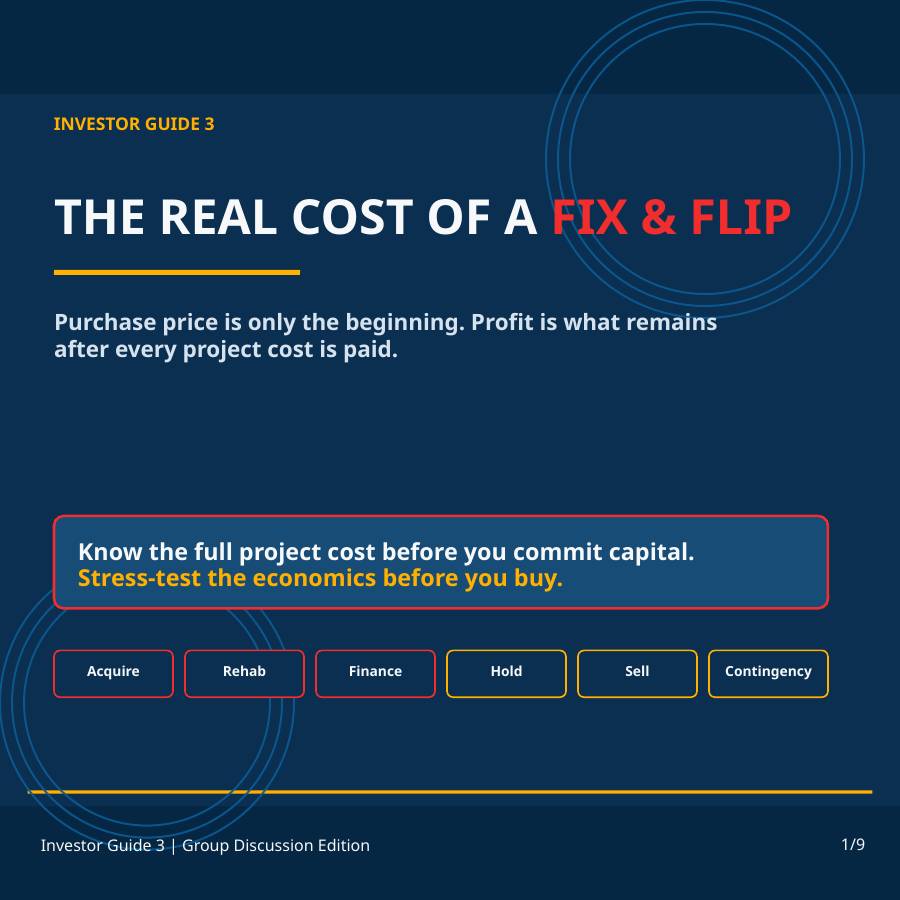
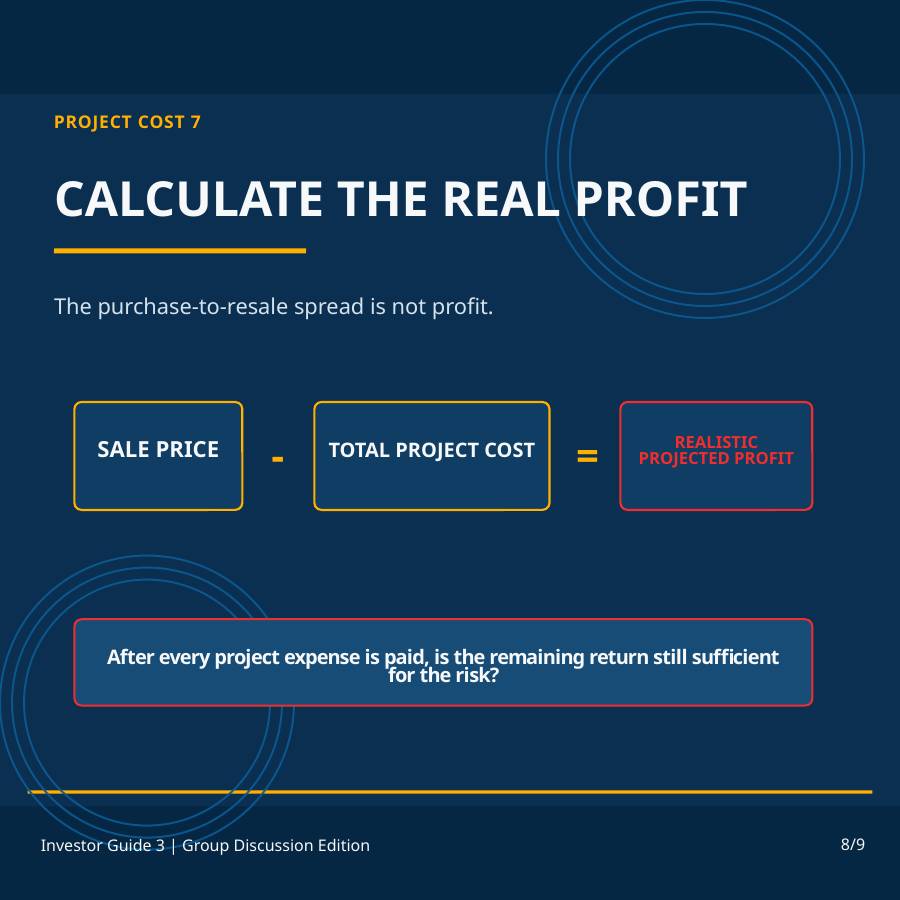
I've been looking at the real cost of fix and flips and I think one of the easiest mistakes is looking at purchase price, rehab and ARV and thinking the difference is profit.
Once you add closing costs, financing, holding costs, selling costs and unexpected repairs, that number can change pretty quickly.
For those of you who have done several flips, what cost has surprised you the most?
One of the easiest ways to overstate a flip is to treat the purchase-to-ARV spread as though it represents profit.
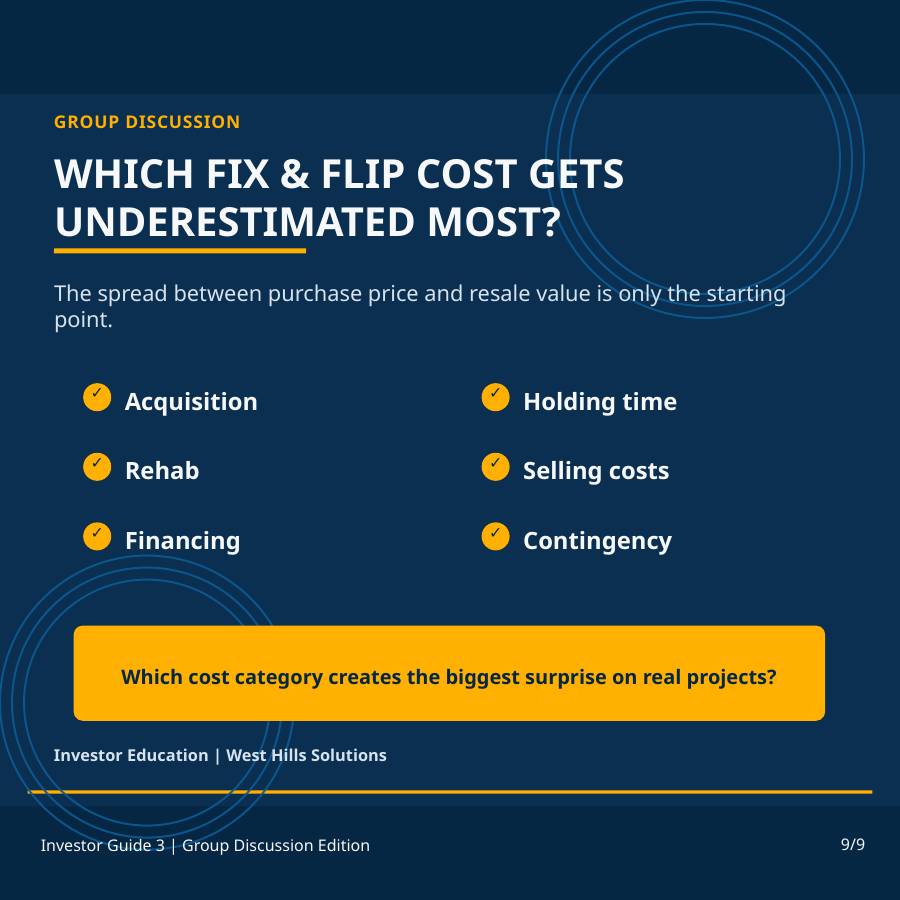
The project has to absorb several categories of expense before you know what may actually remain:
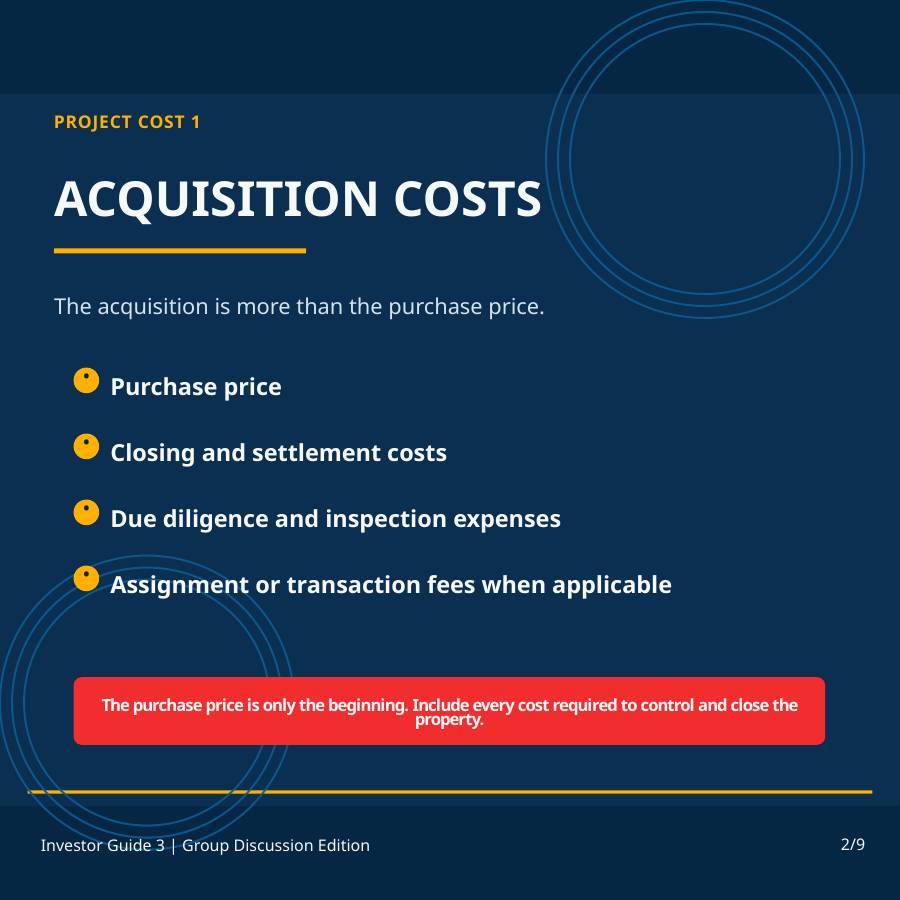
- Acquisition and closing costs.
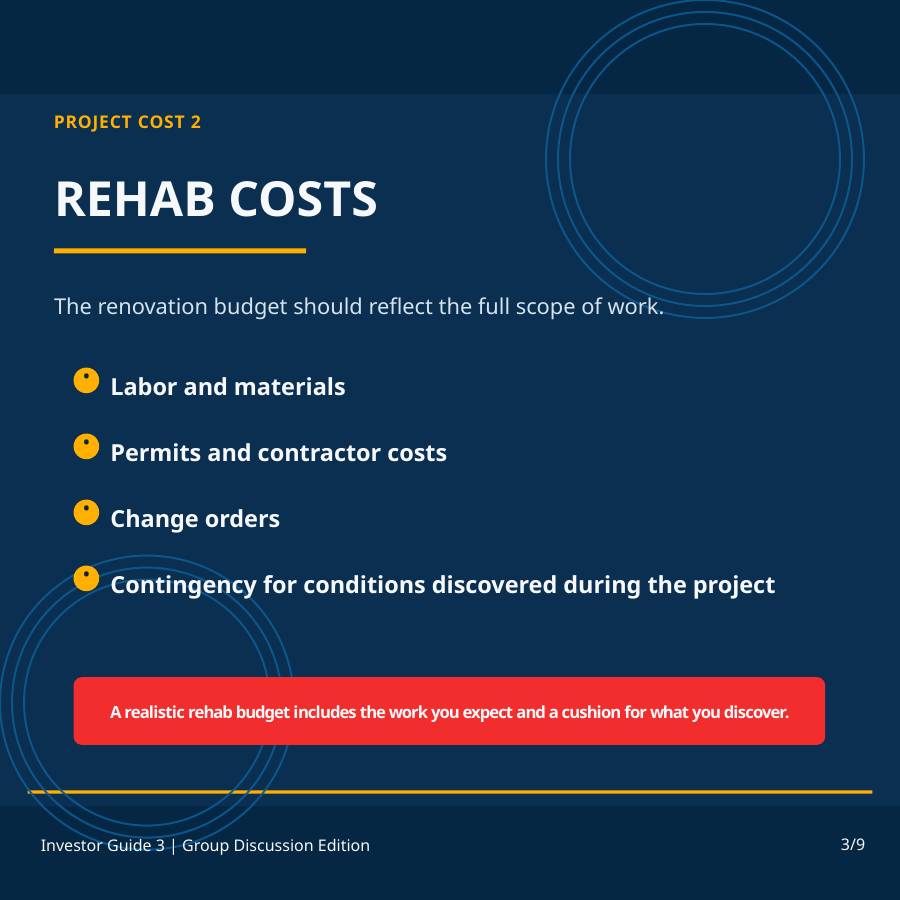
- Rehab labor, materials, permits, contractor costs, change orders, and contingency.
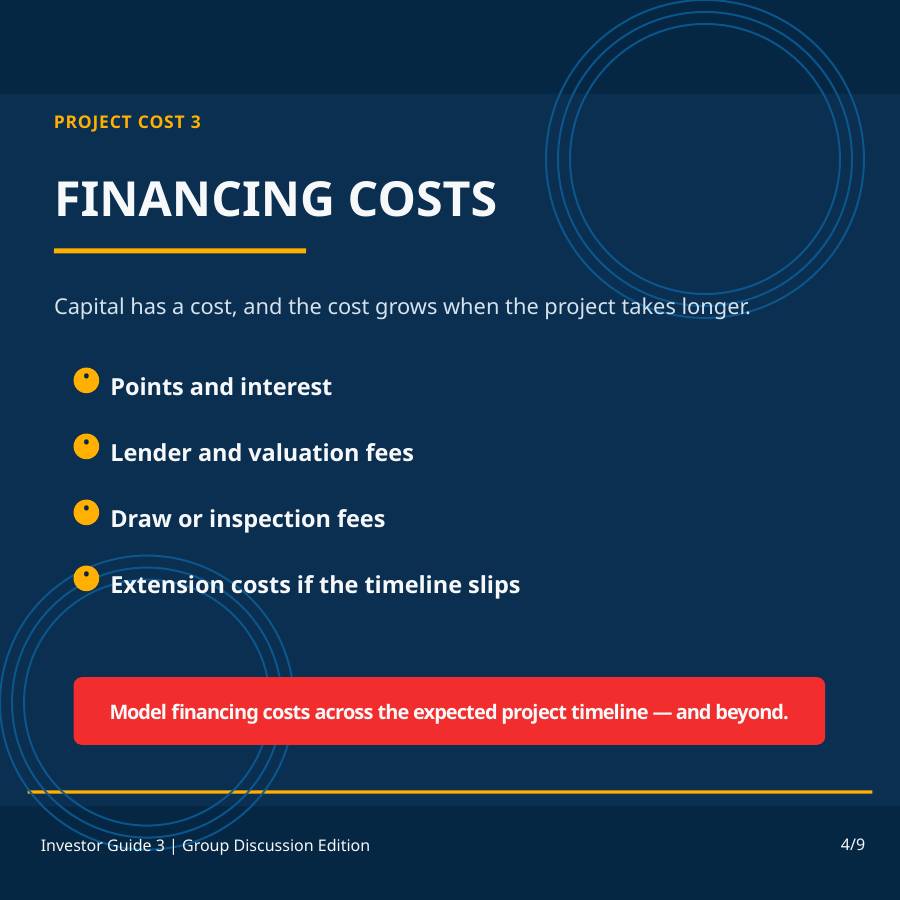
- Financing costs over the expected life of the loan.
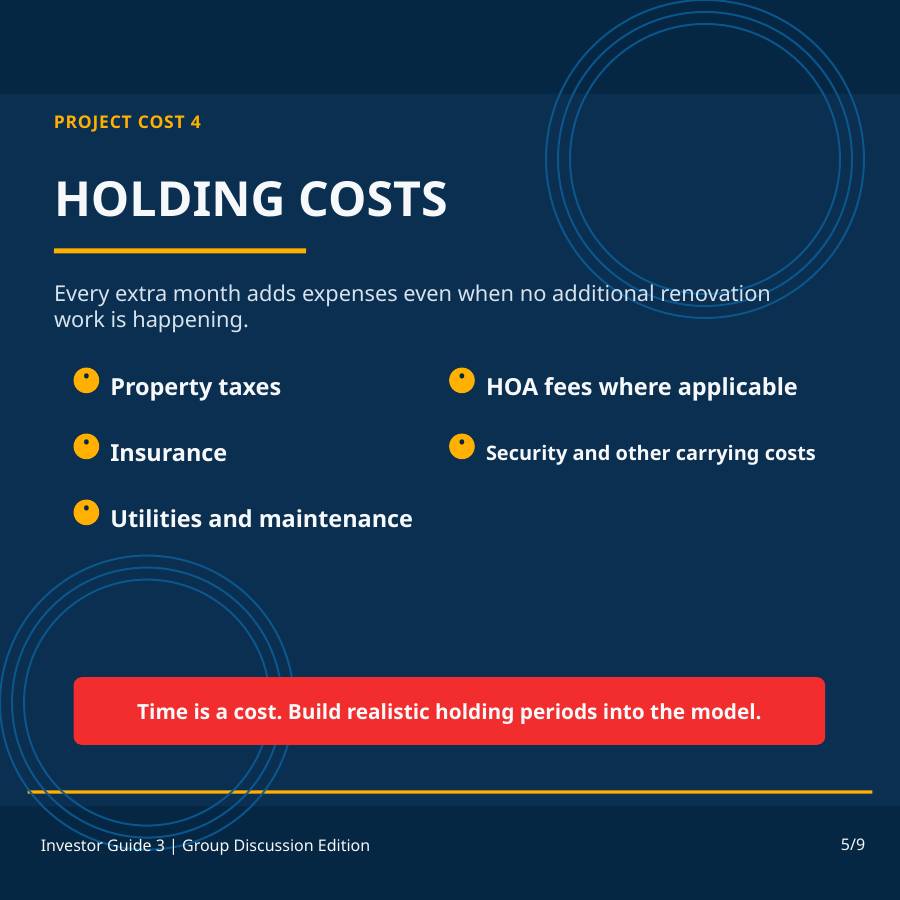
- Taxes, insurance, utilities, maintenance, and other holding costs.
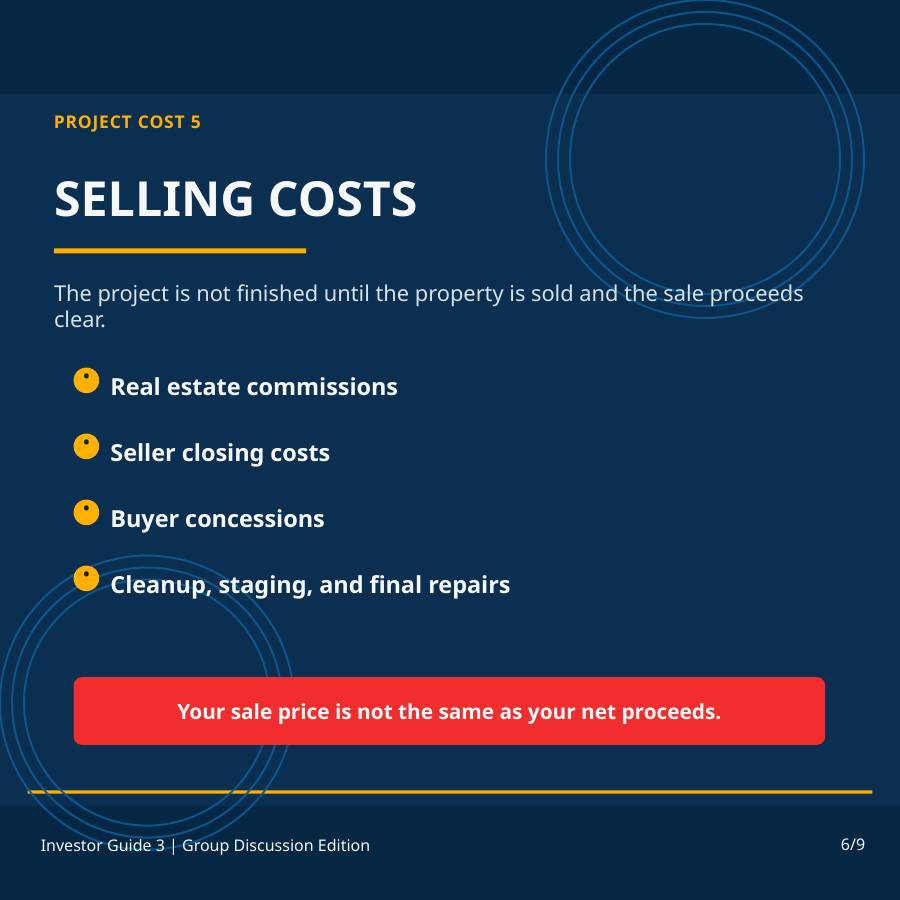
- Selling expenses and buyer concessions.
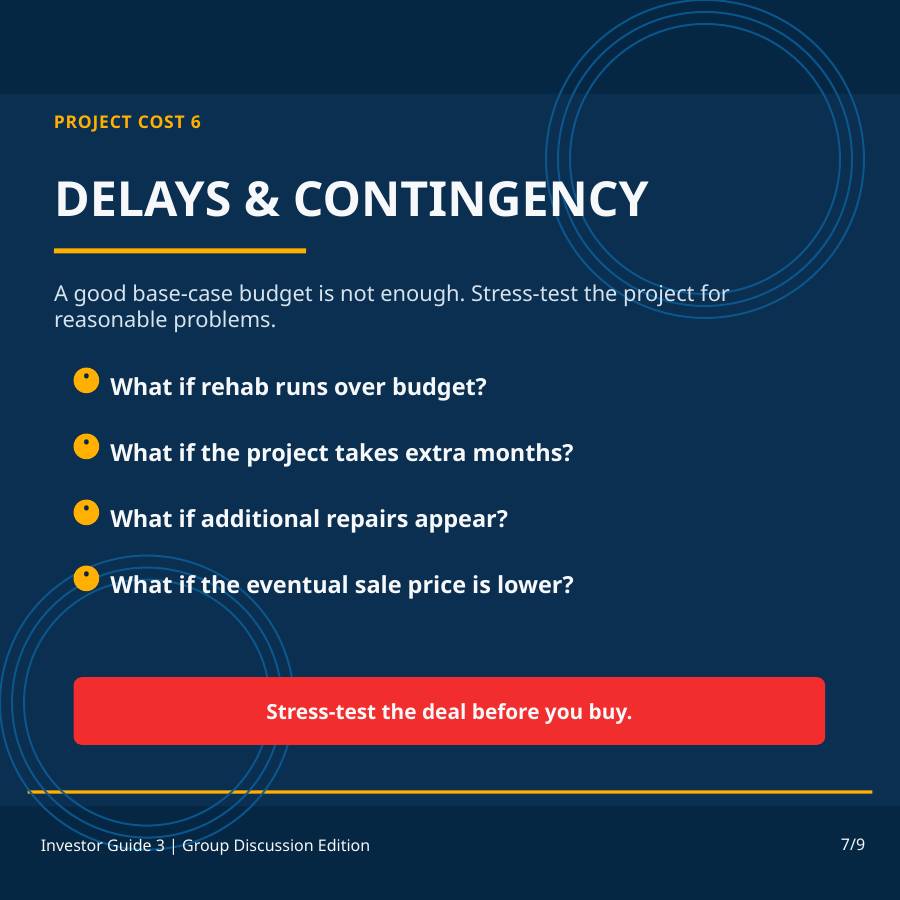
- The financial effect of delays or newly discovered repairs.
I also think it is useful to stress-test the deal rather than rely only on the base case: What happens if the rehab is over budget? What happens if the project takes three months longer? What happens if the eventual sale price is lower than projected?
The objective is not to prove that the deal works. It is to determine whether the economics still make sense when reasonable things go wrong.
Question for the group: Which cost category do you see investors underestimate most often — rehab, financing, holding time, selling costs, or contingency?
- Charles Walker