
Markets Are Pricing a Hike, Not a Cut, and Underwriting Has Not Caught Up
Last week's inflation data did something that should change how a lot of people are modeling the next twelve months, and I do not think it got the attention it deserved.
Two Inflation Reports, Two Different Conclusions
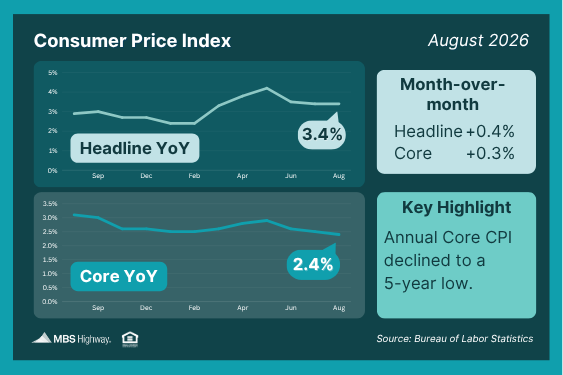
Headline CPI rose 0.4% in August, mostly gas and energy, with the annual rate flat at 3.4%. Core CPI rose 0.3% monthly and dropped to 2.4% year over year, which is the lowest in more than five years. If you only read that paragraph you would reasonably conclude the Fed is close to done.
Then the wholesale data landed. Headline PPI climbed from 4.8% to 5.4% year over year, coming in above expectations, and core PPI went from 4.3% to 4.6%. Diesel was a major driver. PPI is an imperfect leading indicator and the pass-through to consumer prices is neither reliable nor fast, but a rising producer series while core CPI is falling is exactly the kind of split that keeps a committee cautious rather than confident.
The Part That Cuts Against Consensus
Current market expectations put the odds of a 25-basis-point hike at the September 16 meeting above 80%.
I want to be direct about how much that matters, because a lot of deal models built in the first half of this year quietly assume a lower rate at refinance in twelve to eighteen months. That assumption is now running against the market's own pricing. Not a slower cut. A hike.
If your exit or your refinance math requires cheaper debt, this is your signal to run the scenario where the cost of capital is higher than today rather than lower. A deal that only works at a rate the market is currently betting against is not a conservative deal.
The Labor Market Will Not Save the Trade
Initial claims are still low around 206,000, so this is not a layoff cycle. But that number may be understating separations, since displaced workers increasingly move into freelance and gig income instead of filing. Continuing claims remain elevated at 1.77 million, which describes a market where you keep your job but struggle to replace it.
That combination is soft enough to be a drag on household formation and buyer urgency, but not weak enough to force the Fed's hand toward easing. It is the worst of both worlds if you were counting on labor weakness to deliver you a rate cut.
Where the Actual Opportunity Is
Existing home sales fell 2% month over month in August, the third consecutive decline, to a 3.98 million annual rate and 1.2% below August 2025. Inventory rose 3.2% from July and is 5.9% above a year ago.
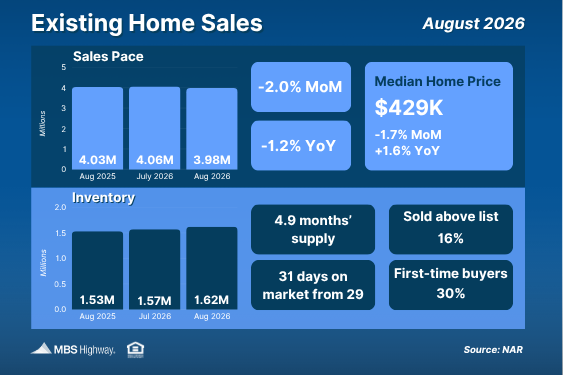
That is the number I would build around. Falling absorption with rising supply is a leverage shift, and leverage shows up in terms long before it shows up in an index. Longer days on market, more price reductions, more sellers willing to fund concessions or a rate buydown to get a deal closed. NAR's Lawrence Yun framed the sales dip as the normal inverse relationship with rates, and he is right, but the inventory build is the more actionable half of that report.
Worth noting the year is not negative: existing sales are still up 1.6% in 2026. This is a cooling, not a collapse, and you should not underwrite it as one.
Investor Takeaway
Underwrite to today's rate or worse, and stop treating a future cut as a base case when the market is pricing better than 80% odds of a hike this Wednesday. The opportunity in this data is not in the cost of capital, it is in the terms. Three straight months of falling sales against inventory up almost 6% year over year means sellers are carrying more holding risk than buyers are, and that is where your margin comes from right now: concessions, buydowns, repair credits, and price. Watch Wednesday afternoon closely, and watch Thursday's housing starts and Pending Home Sales for whether the supply build is being met by any demand at all.
- Derek Brickley
- [email protected]
- 734-645-7722
