What would you do?

What would you do?

Kasey HarrisPro Member
Member since 2026 · 4 posts · 7 votes
Hi all! Would love some input — what would you do in our shoes?   My husband and I are new to real estate investing and would love some outside perspective. We're in kind of a unique situation that there may be creative options we haven’t thought of, so any ideas are welcome!   Our situation: We’re Americans currently living in Australia - my husband took a position with a US company contracted with the Australian Navy. Because of this, our cost of living is low and we’ve been able to save aggressively. Over the past year we’ve saved $100K for a down payment, and we’re now planning our move back to the US to be closer to family.   We have flexibility, but also two family markets pulling us: • My family is in California (we’ve largely ruled this out - too expensive in desirable areas) • His family is in Maine, specifically the Falmouth/Cumberland area just outside Portland
Maine is looking promising to us. From what we can see, homes are appreciating, rents are rising, the rental market is undersupplied, and inventory moves fast. We’ve also already connected with a realtor in the area, and his family is local - meaning they could check out a home for us, facilitate the inspection, and help manage the property if we decided to rent it out.   We’re also open to other markets entirely -  Savannah, GA has caught our eye and since our jobs are flexible with location we don't have anything tying us down. 
Our finances:
We have $150k cash saved that we could use as a down payment, plus additional money in the market that we had planned on pulling as well. So we have some flexibility on how much we could put down depending on the strategy.   One asset we haven’t fully figured out how to use:
My husband has a VA loan benefit. We’ve been loosely thinking we could use it to buy a primary residence, live there for a year, then convert it to a rental and move or repeat. But we’re not sure if that’s the smartest play.   Our two big questions: 1. Should we buy a primary residence first, or jump straight into an investment home? (If the latter, what investment strategy would you employ)? 2. Are there markets we should be considering that we haven’t mentioned?   We’re genuinely open - not locked into any location or strategy.    I'd love any input or advice you have for us. Thank you!
6Reply
381 views

Most Popular Reply

Drew SygitBusiness Member
Property Manager · Royal Oak, MI · Member since 2012 · 12k+ posts · 9k+ votes
5mo
Quote from @Kasey Harris:
Hi all! Would love some input — what would you do in our shoes?   My husband and I are new to real estate investing and would love some outside perspective. We're in kind of a unique situation that there may be creative options we haven’t thought of, so any ideas are welcome!   Our situation: We’re Americans currently living in Australia - my husband took a position with a US company contracted with the Australian Navy. Because of this, our cost of living is low and we’ve been able to save aggressively. Over the past year we’ve saved $100K for a down payment, and we’re now planning our move back to the US to be closer to family.   We have flexibility, but also two family markets pulling us: • My family is in California (we’ve largely ruled this out - too expensive in desirable areas) • His family is in Maine, specifically the Falmouth/Cumberland area just outside Portland
Maine is looking promising to us. From what we can see, homes are appreciating, rents are rising, the rental market is undersupplied, and inventory moves fast. We’ve also already connected with a realtor in the area, and his family is local - meaning they could check out a home for us, facilitate the inspection, and help manage the property if we decided to rent it out.   We’re also open to other markets entirely -  Savannah, GA has caught our eye and since our jobs are flexible with location we don't have anything tying us down. 
Our finances:
We have $150k cash saved that we could use as a down payment, plus additional money in the market that we had planned on pulling as well. So we have some flexibility on how much we could put down depending on the strategy.   One asset we haven’t fully figured out how to use:
My husband has a VA loan benefit. We’ve been loosely thinking we could use it to buy a primary residence, live there for a year, then convert it to a rental and move or repeat. But we’re not sure if that’s the smartest play.   Our two big questions: 1. Should we buy a primary residence first, or jump straight into an investment home? (If the latter, what investment strategy would you employ)? 2. Are there markets we should be considering that we haven’t mentioned?   We’re genuinely open - not locked into any location or strategy.    I'd love any input or advice you have for us. Thank you!
FIRST:
If you want to be RE investors, then focus on buying a property that will be a great rental as opposed to a property you personally like!
- Be analytical, not emotional.

SECOND:
A really good option is buying a 2-4 unit property.

Live in one unit, rent the rest.

This will expose you to all the challenges of being a landlord, helping you decide if it's for you.

THIRD:
The challenge with the VA loan - it's 0% down & no MIP/PMI is great for starting out, but how does it help you?
1) Putting 0% down is HIGHLY unlikely to allow you to cashflow when you convert to a rental in 12-24 months. 
2) No MIP/PMI is great, but if you put 20% down you won't have it anyways.
3) Interest rates are the same as conventional, so no VA benefit
4) You MAY cashflow on a 3-4 unit property with less than 20% down
--- Especially if you find one with deferred maintenance/updates that you address while you're living in the property, which allows you to increase rents.

LOCATION:
A common issue, so Copy & Paste info below (pick what applies):

You’re ALWAYS better off investing locally, where it’s easier to:

  • Learn the market
  • Network to find deals
  • Network to find contractors
  • Be more hands-on
  • Driveby property to keep tabs on it
  • Network to find a decent Property Management Company (PMC)

Next best location is somewhere else you lived, where you have an existing network of family & friends to help you as accomplish the above list as needed.

One of the biggest mistake we see investors making in our market, over and over again, is not fully understanding Neighborhood/Property/Tenant Classes and how they impact your probability of success!

They all run their ROI numbers assuming Class A results – when buying Class B, C & even D rentals.

Then they’re shocked when their performance expectations aren't met😞

If you choose to invest OOS, and have little to no landlord experience, we highly recommend targeting Class B Neighborhoods/Properties/Tenants. If you target Class C, you better be prepared emotionally & financially for plenty of challenges.

You can find Class B properties in the Midwest to BRRRR, but it will take more digging and YOU will need to understand how to analyze & identify them - because a lot of agents, wholesalers, PMCs, etc. will try to sell you Class C or D misrepresented as Class B:

  • Many of them don't know/care what Class the properties are, so they're incompetent.
  • Others know exactly what they are doing, so should be labeled as crooks!
    EITHER WAY YOU LOSE!

Why is Property Class so important for investors to understand and apply in their investing strategies?

Because the Property Class dictates the Class of the tenant pool that the property will attract.

The Tenant Class greatly impacts rental income stability and property maintenance/damage by tenants.

Both Property Class and Tenant Class will affect what type of contractors, handymen and property management companies you should target and be willing to deal with a property.

The Property Class will also impact the maintenance & renovations you do to, “Maintain to the Neighborhood”.

Why is that important?

Well, if you buy & renovate a property in Class D area to Class A standards, what Tenant Class will actually rent it?

Or, if you put several Class D tenants in a Class A four-plex, what do you think will happen to the property?

So, if you fail to apply the correct assumptions to a property, your expectations won’t be met, and it may even be a financial disaster.

We use the following to rank Property Classes, in order of importance:

  • Property Tenant Pool: closely linked to location, but not always.
  • Property Location: closely linked to tenant pool, but not always.
  • Property Condition & Amenities: it’s important to, “Maintain to the Neighborhood.”

Key metrics for each Property Class:

Class A Properties:
Tenant Pool: Majority of FICO scores 680+, no convictions/evictions in last 7 years.
Tenant Default: 0-5% probability of eviction or early lease termination.
Section 8: Class A rents are too high and won’t be approved.
Vacancies: 5-10%, depending on market conditions.
Cashflow vs Appreciation: Typically, 3-5 years for positive cashflow, but you get highest relative rent & value appreciation.

Class B Properties:
Tenant Pool: Majority of FICO scores 620-680, some blemishes, no convictions/evictions in last 5 years.
Tenant Default
: 5-10% probability of eviction or early lease termination.
Vacancies
: 10-15%, depending on market conditions.
Cashflow vs Appreciation: Typically, 1-3 years for positive cashflow, balanced amounts of relative rent & value appreciation.
Section 8: Class B rents are usually too high for the Section 8 program.

Class C Properties:
Tenant Pool: Majority of FICO scores 560-620, many blemishes, but should have no convictions/evictions in last 3 years. Verifying recent 2-years of rental history very important! Same for 2-years of job/income stability.
Tenant Default: 10-20% probability of eviction or early lease termination.
Section 8: Class C rents usually meet program requirements, proper screening still recommended.
Vacancies: 10-20%, depending on market conditions and tenant screening.
Cashflow vs Appreciation: Should cashflow immediately, at the lower end of relative rent & value appreciation.

Class D Properties:
Tenant Pool: Majority of FICO scores under 560, little to no good tradelines, lots of collections & chargeoffs, but should have no convictions/evictions in last 12 months. Verifying last 2-years of rental history and income/employment extremely important to find the “best of the worst”.
Tenant Default: 20-30% probability of eviction or early lease termination.
Section 8: Class D rents meet program requirements, often challenges to pass Section 8 inspection.
Vacancies: 20%+, depending on market conditions and tenant screening.
Cashflow vs Appreciation: Typically, all cashflow with little, maybe even negative, relative rent & value appreciation.

Where did we get our FICO credit score information from?

Check out this chart:

FICO Score

Pct of Population

Default Probability

800 or more

13.00%

1.00%

750-799

27.00%

1.00%

700-749

18.00%

4.40%

650-699

15.00%

8.90%

600-649

12.00%

15.80%

550-599

8.00%

22.50%

500-549

5.00%

28.40%

Less than 499

2.00%

41.00%

Source: Fair Isaac Company

Make sure you understand the Class of properties you are looking at and the corresponding results to expect.

For example, Metro Detroit has 132 cities and the City of Detroit 183 Neighborhoods, which we’re analyzing and classifying to make better investing decisions.

Horror Stories from those that did NOT Understand What they were Buying:

https://www.biggerpockets.com/forums/48/topics/1137397-baltimore-a-path-to-never-ending-pain

https://www.biggerpockets.com/forums/432/topics/1231840-sell-at-a-loss-or-rent-at-a-loss

https://www.biggerpockets.com/forums/311/topics/840134-memphis-turnkey-tenant-turnover-costs

https://www.biggerpockets.com/forums/963/topics/1195280-experience-of-oos-investing-in-cleveland-after-15-years

See this reply in the discussion

18 Replies

Jump to latestLatest
  • Flipper/Rehabber · ME · Member since 2023 · 23 posts · 7 votes
    5mo

    Funny,   I'm looking at Savannah right now too (Thomas square area)...
    I'm from Maine and I've lived most of my life here.  Your description of the market in Cumberland (and York) county seems upside down to me.
    Appeciation has largely ended, expenses are high, rents dont cover costs, STRs are highly regulated, rent control laws (in Portland at least) are essentially governed by the renters and have been limited to about half inflation for years now and forevermore... 
    Winters suck, most of the housing stock is pretty old, and inefficient with high maintenance costs.
    The current value in my mind is as bad as anywhere I've seen.    Summers are nice though :D 

    Perhaps some real-estate pros who would be happy to get your commision will tell you otherwise, but I've sold most of my Maine holdinging (1031 into DST) because it's rough here.

    I don't know much about VA loans. Can you really convert a primary into an income property after one year with a VA loan?
    Even if that's the case, it's hard to cover the cost of ownership with rents around here.

    • Kasey HarrisPro Member
      OP
      Member since 2026 · 4 posts · 7 votes
      5mo
    • Kasey HarrisPro Member
      OP
      Member since 2026 · 4 posts · 7 votes
      5mo

      @Dan Adams 

      This is really helpful input. It’s great hearing from someone who’s familiar with the area.

      Most of what I know so far (which isn't much) is based on anecdotal insight from people I know locally who’ve bought or sold in the past 1–2 years, along with some market data I’ve been reviewing on BiggerPockets.

      And yes, the winters do suck lol. That's one of the biggest things holding me back. 

      I'd love to hear more about your experience with real estate investing in Maine.

      Thank you again!

    • Flipper/Rehabber · ME · Member since 2023 · 23 posts · 7 votes
      5mo
      Quote from @Kasey Harris:

      @Dan Adams 

      This is really helpful input. It’s great hearing from someone who’s familiar with the area.

      Most of what I know so far (which isn't much) is based on anecdotal insight from people I know locally who’ve bought or sold in the past 1–2 years, along with some market data I’ve been reviewing on BiggerPockets.

      And yes, the winters do suck lol. That's one of the biggest things holding me back. 

      I'd love to hear more about your experience with real estate investing in Maine.

      Thank you again!

      If you have specific questions I can try to answer them.
      If you want to be close to Falmouth and Cumberland, looking slightly to the north and west will be more affordable.
      I re-read your post, and my biggest piece of advice is:  DO NOT use an inspector recommended by either the buyer's or seller's agent.  There is way too much conflict of interest.  
      Remember that both Realtors make money when the house sells.  Realtors make no money when a house fails inspection, and then they have to start from scratch again.  The incentive for a good inspection is too great.
      There is no real recourse for a lousy inspection.

  • Ashish AcharyaBusiness Member
    CPA, CFP®, PFS · FL · Member since 2017 · 5k+ posts · 3k+ votes
    5mo

    Hey Kasey! This is a great plan. Savannah is a great area and definitely an up-and-coming market, especially with companies like Hyundai, Gulfstream, and Amazon bringing more jobs and growth to the area. That kind of expansion can create solid appreciation opportunities.

    Another thing I like about Savannah is the tourism side of it. Because it’s such a popular destination, there can be opportunities with Airbnb or VRBO if that makes sense for your overall income, financial situation, local rules, and tax strategy.

    A lot of people get into real estate for the passive income side and don’t always realize there can be tax strategy opportunities too. For example, if you qualify for Real Estate Professional Status (REPs) and meet the IRS requirements, long-term rental losses could potentially help offset W-2 or business income. In some cases, short-term rentals with the right level of participation may also create opportunities to offset non-passive income without needing REPS.

    Of course, it all depends on your income, how involved you’ll be, and your bigger financial picture, so it’s something to map out before making the move.

    Overall, I like your plan. I’d definitely spend some time learning more about the opportunities there, think through whether converting it makes sense, and work with a CPA who understands real estate so you can implement the right strategy from the start.

    Good luck, and happy to connect!

    INVESTOR FRIENDLY CPA®5241 Reviews
    TaxMD® | Tax Planning Software
  • Arman AhmedPro Member
    Real Estate Agent · Columbus Cleveland Dayton, OH · Member since 2024 · 2k+ posts · 938 votes
    5mo
    Quote from @Kasey Harris:
    Hi all! Would love some input — what would you do in our shoes?   My husband and I are new to real estate investing and would love some outside perspective. We're in kind of a unique situation that there may be creative options we haven’t thought of, so any ideas are welcome!   Our situation: We’re Americans currently living in Australia - my husband took a position with a US company contracted with the Australian Navy. Because of this, our cost of living is low and we’ve been able to save aggressively. Over the past year we’ve saved $100K for a down payment, and we’re now planning our move back to the US to be closer to family.   We have flexibility, but also two family markets pulling us: • My family is in California (we’ve largely ruled this out - too expensive in desirable areas) • His family is in Maine, specifically the Falmouth/Cumberland area just outside Portland
    Maine is looking promising to us. From what we can see, homes are appreciating, rents are rising, the rental market is undersupplied, and inventory moves fast. We’ve also already connected with a realtor in the area, and his family is local - meaning they could check out a home for us, facilitate the inspection, and help manage the property if we decided to rent it out.   We’re also open to other markets entirely -  Savannah, GA has caught our eye and since our jobs are flexible with location we don't have anything tying us down. 
    Our finances:
    We have $150k cash saved that we could use as a down payment, plus additional money in the market that we had planned on pulling as well. So we have some flexibility on how much we could put down depending on the strategy.   One asset we haven’t fully figured out how to use:
    My husband has a VA loan benefit. We’ve been loosely thinking we could use it to buy a primary residence, live there for a year, then convert it to a rental and move or repeat. But we’re not sure if that’s the smartest play.   Our two big questions: 1. Should we buy a primary residence first, or jump straight into an investment home? (If the latter, what investment strategy would you employ)? 2. Are there markets we should be considering that we haven’t mentioned?   We’re genuinely open - not locked into any location or strategy.    I'd love any input or advice you have for us. Thank you!

    If I were in your shoes, I’d think less about “perfect first home” and more about getting into a strong first deal with upside and manageable risk. Maine can work, especially with family support locally, but you’ll usually pay a premium for that safety net. A lot of out-of-state investors in your situation end up starting in Midwest markets instead because you can still find underpriced single-family and small multifamily deals that actually cash flow from day one, plus it’s easier to scale once you learn the game. The VA loan strategy can be powerful too, but I’d be intentional about not locking your only tool into an emotional purchase if the numbers don’t make sense. If your goal is long-term investing, I’d prioritize deal quality and entry price over location familiarity, then build your system from there.
  • Aaron ZimmermanBusiness Member
    Accountant · Chicago, IL · Member since 2018 · 2k+ posts · 1k+ votes
    5mo

    I would stay in Australia! Beautiful place. 

    In all seriousness, I'd look to house hack and use the va loan benefit. It seems like Maine is a good investment market for where you're looking, so if there's inventory available for a 2-4 unit, that's what I'd go with. Having a low down payment option with owner occupying is unparalleled. Bonus points if you can do value add with the existing cash you have on that house hack. Then repeat every year for as long as youd like. 

  • Drew SygitBusiness Member
    Property Manager · Royal Oak, MI · Member since 2012 · 12k+ posts · 9k+ votes
    5mo
    Quote from @Kasey Harris:
    Hi all! Would love some input — what would you do in our shoes?   My husband and I are new to real estate investing and would love some outside perspective. We're in kind of a unique situation that there may be creative options we haven’t thought of, so any ideas are welcome!   Our situation: We’re Americans currently living in Australia - my husband took a position with a US company contracted with the Australian Navy. Because of this, our cost of living is low and we’ve been able to save aggressively. Over the past year we’ve saved $100K for a down payment, and we’re now planning our move back to the US to be closer to family.   We have flexibility, but also two family markets pulling us: • My family is in California (we’ve largely ruled this out - too expensive in desirable areas) • His family is in Maine, specifically the Falmouth/Cumberland area just outside Portland
    Maine is looking promising to us. From what we can see, homes are appreciating, rents are rising, the rental market is undersupplied, and inventory moves fast. We’ve also already connected with a realtor in the area, and his family is local - meaning they could check out a home for us, facilitate the inspection, and help manage the property if we decided to rent it out.   We’re also open to other markets entirely -  Savannah, GA has caught our eye and since our jobs are flexible with location we don't have anything tying us down. 
    Our finances:
    We have $150k cash saved that we could use as a down payment, plus additional money in the market that we had planned on pulling as well. So we have some flexibility on how much we could put down depending on the strategy.   One asset we haven’t fully figured out how to use:
    My husband has a VA loan benefit. We’ve been loosely thinking we could use it to buy a primary residence, live there for a year, then convert it to a rental and move or repeat. But we’re not sure if that’s the smartest play.   Our two big questions: 1. Should we buy a primary residence first, or jump straight into an investment home? (If the latter, what investment strategy would you employ)? 2. Are there markets we should be considering that we haven’t mentioned?   We’re genuinely open - not locked into any location or strategy.    I'd love any input or advice you have for us. Thank you!
    FIRST:
    If you want to be RE investors, then focus on buying a property that will be a great rental as opposed to a property you personally like!
    - Be analytical, not emotional.

    SECOND:
    A really good option is buying a 2-4 unit property.

    Live in one unit, rent the rest.

    This will expose you to all the challenges of being a landlord, helping you decide if it's for you.

    THIRD:
    The challenge with the VA loan - it's 0% down & no MIP/PMI is great for starting out, but how does it help you?
    1) Putting 0% down is HIGHLY unlikely to allow you to cashflow when you convert to a rental in 12-24 months. 
    2) No MIP/PMI is great, but if you put 20% down you won't have it anyways.
    3) Interest rates are the same as conventional, so no VA benefit
    4) You MAY cashflow on a 3-4 unit property with less than 20% down
    --- Especially if you find one with deferred maintenance/updates that you address while you're living in the property, which allows you to increase rents.

    LOCATION:
    A common issue, so Copy & Paste info below (pick what applies):

    You’re ALWAYS better off investing locally, where it’s easier to:

    • Learn the market
    • Network to find deals
    • Network to find contractors
    • Be more hands-on
    • Driveby property to keep tabs on it
    • Network to find a decent Property Management Company (PMC)

    Next best location is somewhere else you lived, where you have an existing network of family & friends to help you as accomplish the above list as needed.

    One of the biggest mistake we see investors making in our market, over and over again, is not fully understanding Neighborhood/Property/Tenant Classes and how they impact your probability of success!

    They all run their ROI numbers assuming Class A results – when buying Class B, C & even D rentals.

    Then they’re shocked when their performance expectations aren't met😞

    If you choose to invest OOS, and have little to no landlord experience, we highly recommend targeting Class B Neighborhoods/Properties/Tenants. If you target Class C, you better be prepared emotionally & financially for plenty of challenges.

    You can find Class B properties in the Midwest to BRRRR, but it will take more digging and YOU will need to understand how to analyze & identify them - because a lot of agents, wholesalers, PMCs, etc. will try to sell you Class C or D misrepresented as Class B:

    • Many of them don't know/care what Class the properties are, so they're incompetent.
    • Others know exactly what they are doing, so should be labeled as crooks!
      EITHER WAY YOU LOSE!

    Why is Property Class so important for investors to understand and apply in their investing strategies?

    Because the Property Class dictates the Class of the tenant pool that the property will attract.

    The Tenant Class greatly impacts rental income stability and property maintenance/damage by tenants.

    Both Property Class and Tenant Class will affect what type of contractors, handymen and property management companies you should target and be willing to deal with a property.

    The Property Class will also impact the maintenance & renovations you do to, “Maintain to the Neighborhood”.

    Why is that important?

    Well, if you buy & renovate a property in Class D area to Class A standards, what Tenant Class will actually rent it?

    Or, if you put several Class D tenants in a Class A four-plex, what do you think will happen to the property?

    So, if you fail to apply the correct assumptions to a property, your expectations won’t be met, and it may even be a financial disaster.

    We use the following to rank Property Classes, in order of importance:

    • Property Tenant Pool: closely linked to location, but not always.
    • Property Location: closely linked to tenant pool, but not always.
    • Property Condition & Amenities: it’s important to, “Maintain to the Neighborhood.”

    Key metrics for each Property Class:

    Class A Properties:
    Tenant Pool: Majority of FICO scores 680+, no convictions/evictions in last 7 years.
    Tenant Default: 0-5% probability of eviction or early lease termination.
    Section 8: Class A rents are too high and won’t be approved.
    Vacancies: 5-10%, depending on market conditions.
    Cashflow vs Appreciation: Typically, 3-5 years for positive cashflow, but you get highest relative rent & value appreciation.

    Class B Properties:
    Tenant Pool: Majority of FICO scores 620-680, some blemishes, no convictions/evictions in last 5 years.
    Tenant Default
    : 5-10% probability of eviction or early lease termination.
    Vacancies
    : 10-15%, depending on market conditions.
    Cashflow vs Appreciation: Typically, 1-3 years for positive cashflow, balanced amounts of relative rent & value appreciation.
    Section 8: Class B rents are usually too high for the Section 8 program.

    Class C Properties:
    Tenant Pool: Majority of FICO scores 560-620, many blemishes, but should have no convictions/evictions in last 3 years. Verifying recent 2-years of rental history very important! Same for 2-years of job/income stability.
    Tenant Default: 10-20% probability of eviction or early lease termination.
    Section 8: Class C rents usually meet program requirements, proper screening still recommended.
    Vacancies: 10-20%, depending on market conditions and tenant screening.
    Cashflow vs Appreciation: Should cashflow immediately, at the lower end of relative rent & value appreciation.

    Class D Properties:
    Tenant Pool: Majority of FICO scores under 560, little to no good tradelines, lots of collections & chargeoffs, but should have no convictions/evictions in last 12 months. Verifying last 2-years of rental history and income/employment extremely important to find the “best of the worst”.
    Tenant Default: 20-30% probability of eviction or early lease termination.
    Section 8: Class D rents meet program requirements, often challenges to pass Section 8 inspection.
    Vacancies: 20%+, depending on market conditions and tenant screening.
    Cashflow vs Appreciation: Typically, all cashflow with little, maybe even negative, relative rent & value appreciation.

    Where did we get our FICO credit score information from?

    Check out this chart:

    FICO Score

    Pct of Population

    Default Probability

    800 or more

    13.00%

    1.00%

    750-799

    27.00%

    1.00%

    700-749

    18.00%

    4.40%

    650-699

    15.00%

    8.90%

    600-649

    12.00%

    15.80%

    550-599

    8.00%

    22.50%

    500-549

    5.00%

    28.40%

    Less than 499

    2.00%

    41.00%

    Source: Fair Isaac Company

    Make sure you understand the Class of properties you are looking at and the corresponding results to expect.

    For example, Metro Detroit has 132 cities and the City of Detroit 183 Neighborhoods, which we’re analyzing and classifying to make better investing decisions.

    Horror Stories from those that did NOT Understand What they were Buying:

    https://www.biggerpockets.com/forums/48/topics/1137397-baltimore-a-path-to-never-ending-pain

    https://www.biggerpockets.com/forums/432/topics/1231840-sell-at-a-loss-or-rent-at-a-loss

    https://www.biggerpockets.com/forums/311/topics/840134-memphis-turnkey-tenant-turnover-costs

    https://www.biggerpockets.com/forums/963/topics/1195280-experience-of-oos-investing-in-cleveland-after-15-years

  • Chris SeveneyBusiness Member
    Moderator
    Investor · VA · Member since 2015 · 21k+ posts · 19k+ votes
    5mo
    Quote from @Kasey Harris:
    Hi all! Would love some input — what would you do in our shoes?   My husband and I are new to real estate investing and would love some outside perspective. We're in kind of a unique situation that there may be creative options we haven’t thought of, so any ideas are welcome!   Our situation: We’re Americans currently living in Australia - my husband took a position with a US company contracted with the Australian Navy. Because of this, our cost of living is low and we’ve been able to save aggressively. Over the past year we’ve saved $100K for a down payment, and we’re now planning our move back to the US to be closer to family.   We have flexibility, but also two family markets pulling us: • My family is in California (we’ve largely ruled this out - too expensive in desirable areas) • His family is in Maine, specifically the Falmouth/Cumberland area just outside Portland
    Maine is looking promising to us. From what we can see, homes are appreciating, rents are rising, the rental market is undersupplied, and inventory moves fast. We’ve also already connected with a realtor in the area, and his family is local - meaning they could check out a home for us, facilitate the inspection, and help manage the property if we decided to rent it out.   We’re also open to other markets entirely -  Savannah, GA has caught our eye and since our jobs are flexible with location we don't have anything tying us down. 
    Our finances:
    We have $150k cash saved that we could use as a down payment, plus additional money in the market that we had planned on pulling as well. So we have some flexibility on how much we could put down depending on the strategy.   One asset we haven’t fully figured out how to use:
    My husband has a VA loan benefit. We’ve been loosely thinking we could use it to buy a primary residence, live there for a year, then convert it to a rental and move or repeat. But we’re not sure if that’s the smartest play.   Our two big questions: 1. Should we buy a primary residence first, or jump straight into an investment home? (If the latter, what investment strategy would you employ)? 2. Are there markets we should be considering that we haven’t mentioned?   We’re genuinely open - not locked into any location or strategy.    I'd love any input or advice you have for us. Thank you!

     Savannah GA and that area is one that is being talked about as poised for growth over the next decade. I would do that over maine and california. California while it continues to appreciate, its just really expensive. Maine I love (coming from massachusetts) but the weather is brutal. I think you would do better on appreciation and long term happiness in GA. This is just my 2 cents without knowing how important it is to be close to family etc. 

    7e investments53 Reviews
  • Member since 2021 · 82 posts · 79 votes
    5mo

    Hi Kasey — I've read every reply above and want to synthesize what your neighbors here are telling you, because the best answer is hiding inside three of their comments stacked together. You got exceptional advice; it just needs to be sequenced.

    Credit where it's due first:

    @Dan Adams is right about the Maine ownership reality. Cumberland County median is sitting around $594K with 2BR rents near $2,400–2,500. That's a price-to-rent ratio around 250. On a single-family at 20% down, you will not cashflow. His 1031-into-DST exit tells you what an experienced local operator thinks of the math. Take that seriously.

    @Ashish Acharya nailed the tax layer. If one of you can hit Real Estate Professional Status (750 hrs + more-than-50% of working time in real estate trades — tougher than it sounds), rental losses offset W-2. If not, the short-term rental "material participation" loophole (100 hrs and more than anyone else, average stay ≤ 7 days) lets you take losses against active income without REPS. Both of these favor Savannah over Maine because STR demand there is real (tourism + Hyundai contractors needing 30-day housing) and Portland ME is tightening STRs hard.

    @Arman Ahmed is right that a lot of OOS investors end up in Midwest markets for day-one cashflow. True — but you have family in Maine and a realtor already. Don't throw away a $10K–$30K/yr soft-cost advantage (free boots-on-ground, free property checks, faster inspections) to chase an extra 1% cap rate in a market where you know nobody.

    @Aaron Zimmerman gave you the structural answer: house-hack a 2–4 unit with the VA loan. 0% down, no MIP, and VA absolutely allows 2-4 units owner-occupied. This is the move.

    @Drew Sygit gave you the operating manual — read his Class A/B/C/D framework twice. For a first-ever rental 3,000 miles from you, target Class B. Not C. Full stop.

    @Chris Seveney is right that Savannah is poised for a decade of growth. Hyundai Metaplant just came online — 8,500 direct jobs plus ~6,900 supplier jobs — and Gulfstream is hiring 1,600 more for the G400 line. That's wage-driven demand, not speculation.

    The one thing everyone missed:

    Dan said Portland's rent control is "forevermore." That's true for most buildings — but Portland's ordinance explicitly exempts owner-occupied buildings of 4 units or fewer. Pair that with your VA 2-4 unit benefit and you have the rare Maine structure that legally escapes rent control: live in one unit, rent the other 2–3 at market, raise rents freely on turnover. Maine investors without the VA benefit can't touch this.

    Here's the sequenced play I'd run in your shoes:

    1. Primary residence first, house-hack, 2-4 unit, VA loan in Falmouth / Cumberland / Portland. You need somewhere to live when you land. Make that somewhere pay you. Family is local. Exemption applies.
    2. Underwrite it as a rental from day one. Each "other unit" must cover more than its share of PITI + reserves + management at today's rents. If you'd lose money when you move out, don't buy it.
    3. Hold 12 months minimum — this is the practical VA benchmark that protects you from occupancy-intent questions. You can technically leave sooner with a legitimate reason, but don't skate that line on your first deal.
    4. After 12 months, restore your VA entitlement (partial entitlement lets you use VA again) and buy your second property — this is where Savannah enters. Long-term rental near the Hyundai/Gulfstream wage zones, or STR if the numbers pencil.
    5. Put $30K–$50K of your cash into the Maine house-hack for reserves + cosmetic value-add, not down payment. VA lets you keep the capital. Keep the rest liquid.

    Don't do this:

    • Don't burn the VA loan on a pretty single-family you emotionally want. Drew's "analytical not emotional" rule is the one every new investor breaks.
    • Don't buy in Savannah sight-unseen as your FIRST deal. You have no network there. You have one in Maine.
    • Don't pull from the market to force a bigger down payment. VA's 0% down is the whole point of the benefit.

    The question to ask every property you tour:

    "If I moved out tomorrow, do the other units cover every penny of ownership at today's rents, with 10% vacancy and 10% maintenance baked in?"

    If no, next property.

    Good luck — you're in a genuinely strong position. You have a VA loan, family in two markets, cash reserves, and the discipline to ask before buying. Most people have none of those.

  • Justin R.Pro Member
    Rental Property Investor · San Anselmo · Member since 2015 · 659 posts · 600 votes
    5mo

    I happen to invest in both the greater Savannah area and Portland ME, including some of the surrounding areas. Both markets have their strengths and weaknesses.

    Portland has seen a lot of appreciation over the last five years, mostly from the COVID migration shift, and a lot of those people ended up staying. It is a beautiful area, the food is good, and I enjoy visiting. One of my personal rules is: if I would want to spend time in an area, there is a good chance other people will want to be there too.

    About 10 years ago, Portland was one of the most expensive markets in the country where you could still find true 1% rule opportunities. I was buying properties for around $500k and collecting over $6 a month in rent on duplexes and triplexes. At that time, it really was a unicorn market with both strong appreciation and strong cash flow.

    That has changed. NOI has definitely gone down. CapEx has always been high because many of the buildings are older, and the weather creates extra costs with things like snow removal, frozen pipes, and higher utilities. The rental laws that came in over the last few years are also a major issue. They are more ridiculous than what you see in San Francisco. The property tax system is also frustrating. Portland can go years without a major reassessment, then hit you with several aggressive ones close together. Depending on the the city's revenue needs, property taxes can move up very quickly.

    Savannah is a great market too, but it has its own flaws. The area has grown a lot and has a strong economy. Businesses want to move to the South because of the workforce, cheaper land and labor, and a more business-friendly environment. You also have the port expansion, the Hyundai plant, and steady tourism. In my opinion, some of the coolest areas to invest in are tied to historic districts, but that also means you need to be careful with regulations and renovation restrictions.

    Property taxes in Savannah are more middle of the road, and the state rental laws are fair. The big thing to watch is supply. You are competing against large institutions building new apartments and homes, so your older 1900s-era house has to compete against brand-new product in a market that has added a lot of new supply over the last several years.

  • Kerlous TadresBusiness Member
    Realtor · Columbus, OH · Member since 2023 · 1k+ posts · 1k+ votes
    5mo

    @Kasey Harris, From my experience, that VA loan is your biggest asset right now. I'd use it to house hack a duplex, live in one unit, rent the other, and let that rental income offset your mortgage while you build equity in an undersupplied market. After a year, convert the whole thing to a rental and repeat the process. The family support and boots-on-the-ground help you already have lined up is honestly worth more than most new investors realize.

    Kerlous Tadres | Reafco Real Estate540 Reviews
  • Alfath AhmedBusiness Member
    Real Estate Agent · Columbus, OH · Member since 2022 · 1k+ posts · 1k+ votes
    5mo
    Quote from @Kasey Harris:
    Hi all! Would love some input — what would you do in our shoes?   My husband and I are new to real estate investing and would love some outside perspective. We're in kind of a unique situation that there may be creative options we haven’t thought of, so any ideas are welcome!   Our situation: We’re Americans currently living in Australia - my husband took a position with a US company contracted with the Australian Navy. Because of this, our cost of living is low and we’ve been able to save aggressively. Over the past year we’ve saved $100K for a down payment, and we’re now planning our move back to the US to be closer to family.   We have flexibility, but also two family markets pulling us: • My family is in California (we’ve largely ruled this out - too expensive in desirable areas) • His family is in Maine, specifically the Falmouth/Cumberland area just outside Portland
    Maine is looking promising to us. From what we can see, homes are appreciating, rents are rising, the rental market is undersupplied, and inventory moves fast. We’ve also already connected with a realtor in the area, and his family is local - meaning they could check out a home for us, facilitate the inspection, and help manage the property if we decided to rent it out.   We’re also open to other markets entirely -  Savannah, GA has caught our eye and since our jobs are flexible with location we don't have anything tying us down. 
    Our finances:
    We have $150k cash saved that we could use as a down payment, plus additional money in the market that we had planned on pulling as well. So we have some flexibility on how much we could put down depending on the strategy.   One asset we haven’t fully figured out how to use:
    My husband has a VA loan benefit. We’ve been loosely thinking we could use it to buy a primary residence, live there for a year, then convert it to a rental and move or repeat. But we’re not sure if that’s the smartest play.   Our two big questions: 1. Should we buy a primary residence first, or jump straight into an investment home? (If the latter, what investment strategy would you employ)? 2. Are there markets we should be considering that we haven’t mentioned?   We’re genuinely open - not locked into any location or strategy.    I'd love any input or advice you have for us. Thank you!

     I personally would only move where I truly want to live. OOS investing is very easy and you can do it from anywhere so I don't think you have to specifically move somewhere (because you are from there) or because you know the area. 

    Choose a nice friendly state in the midwest (should be landlord-friendly) and where all the tech companies are buying and investing. Your highest ROI will be there. You can do BRRRR projects, buy turnkey deals for cashflow, or invest in larger asset classes to store money.

    I own 28 units in my market and did it by buying house-hack deals and the BRRRR method.

  • Investor · Austin, TX · Member since 2021 · 497 posts · 127 votes
    5mo

    I work with investors on structuring these kinds of setups (especially primary → rental transitions), so happy to share a few ways people typically approach this depending on their goals.

    Curious — are you leaning more toward living in the first property for a year, or are you open to going straight into an investment if the right deal shows up?

  • Kasey HarrisPro Member
    OP
    Member since 2026 · 4 posts · 7 votes
    5mo
    Definitely open to an investment first
  • Nicholas L.Pro Member
    Flipper/Rehabber · Pittsburgh · Member since 2018 · 6k+ posts · 5k+ votes
    5mo

    @Kasey Harris

    quick responses:

    -where to move to is a very personal decision.

    -starting in a primary and then converting to a rental when you move out can work.  you just have to run the numbers with it as a rental up front.  depending on how much you put down, even breaking even can work here.

    -out of state investing is definitely not easy.

    -long term rentals basically don't cash flow in the short term right now - anyone who says otherwise is selling something.

    hope this helps.  happy to dialogue further.  i myself have nothing to sell and champion no niche or market.

  • Rental Property Investor · Wilmington, NC · Member since 2019 · 69 posts · 51 votes
    5mo

    Hey @Kasey Harris, congrats on saving the downpayment and making the move back to the US! 

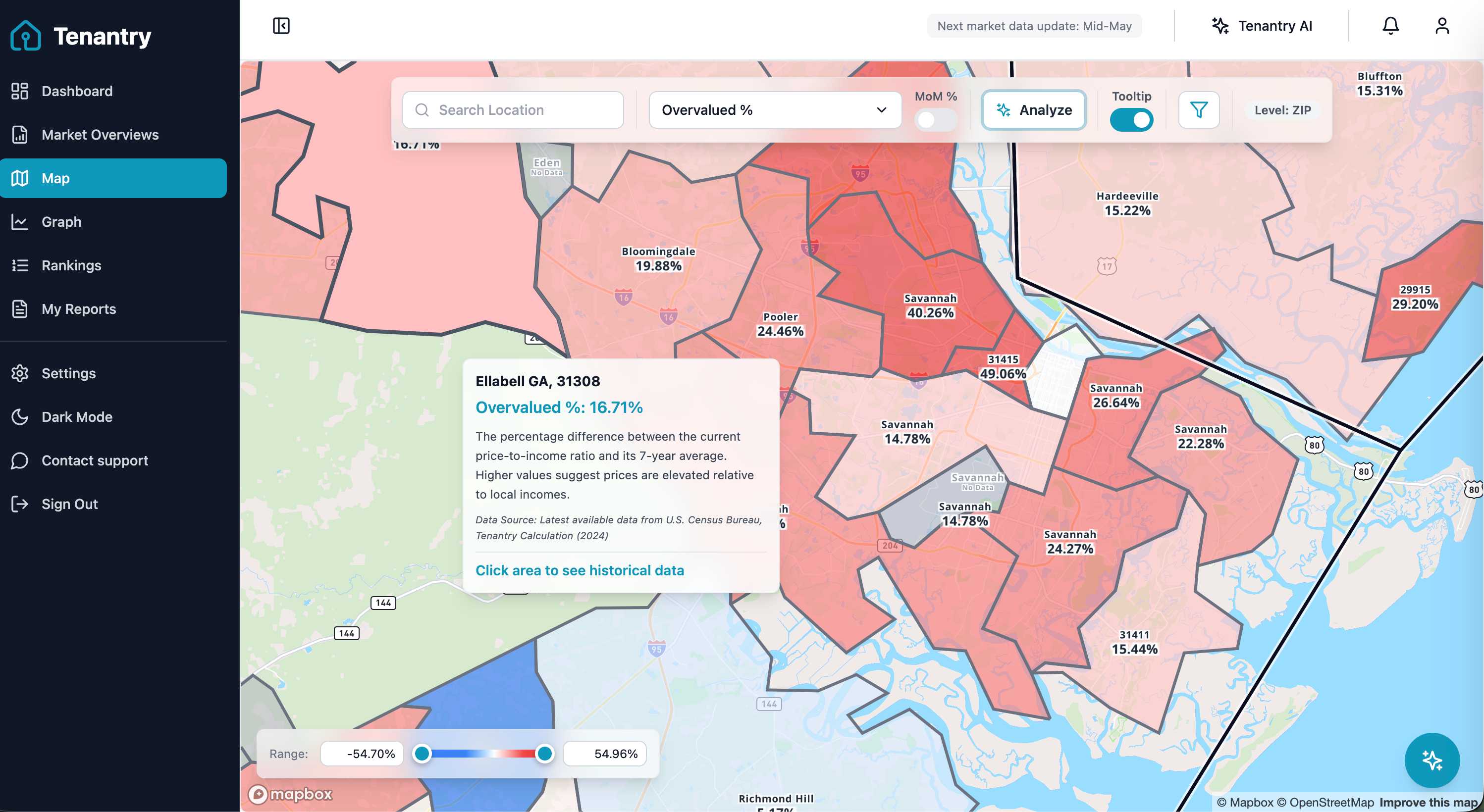
    I wanted to share this resource because I think it could help you nail down a market - Tenantry AI. It was built to help investors discover and compare markets for cash flow and appreciation. California, Maine, and Savanah are all very different markets, and also extremely broad targets, so Tenantry can help you nail down the metro/county/zip code that fits your criteria. 

    Hope this helps, and best of luck on the move!

  • Casey KeelerBusiness Member
    Property Manager · Windham, ME · Member since 2026 · 2 posts · 0 votes
    1d

    Hi Kasey! First off, from one Casey to another (just spelled differently!), I had to say hello! 😊

    I came across your post and was curious how things have progressed since you originally shared it. Did you and your husband end up finding any promising opportunities in the Falmouth/Cumberland area?

    I'm based here in Southern Maine and have recently become more involved in the rental property space through managing a single-family property and establishing my own boutique property management business.

    I've genuinely enjoyed learning more about the local market and connecting with others on similar journeys. I'd love to hear how things have worked out for you both and what you've learned along the way!

    Wishing you both continued success!

Join the conversationCreate a free account to reply, vote on answers and follow this thread.