Failed Leadership is why California is on fire.
Real Estate Broker · Cleveland Dayton Cincinnati Toledo Columbus & Akron, OH · Member since 2013 · 30k+ posts · 20k+ votes
California is on fire and they don't have enough water to stop it.
California is the richest state in the USA.
California has 3,427 miles of Coastline.
___
___
Make it make sense.
@James Wise you're right about California's bad leadership. But that's not why it's on fire.
Here is how I get my perspective: I was a firefighter in CA for about a decade in my former life. The house I'm sitting in right now is on a hill with 270 degree views and I can see about ten miles in each direction. Nearly every house I can see from here burned to the ground in 2017, including the house that was on this very lot and almost every house on this street. 5,300 in total. Thankfully, at that time I lived just a bit to the south and the winds blew the fire right by my house, missing by 3,000 feet. I woke up that morning to a wall of fire as far as I could see.
I drove to my office, everything around me was on fire including the landscaping and dumpsters in the parking lot--no firefighters around. But the office itself didn't burn.
The fire had traveled ten miles in about 3 hours. You can't get mutual aid (with a several hour ETA) in time to stop it. The calvary arrives just in time to mop up.
I have a second home in Maui, and as I look out in one direction the entire town I used to see burned to the ground in 2023. The wind blew that fire to our south, this time missing us by almost a mile. This is becoming all too familiar, and yet I'm extraordinarily lucky that I suffered no direct fire loss in any of these.
In both of these fires, hydrants didn't work. Firefighting resources were overwhelmed. Winds were near or exceeding hurricane force. The fire created it's own weather including "fire tornados".
Part of the reasons hydrants didn't work was some water storage was already depleted for maintenance. Power was shut off to prevent it from starting more fire (or was killed by the fire) and this power is what drives the municipal water pumps. Homes burned, leaving their water service lines severed and freely flowing water onto the ground, depleting the pressure. It's just chaos.
Suggestions above include:
To not rebuild and convert the land over to parkland. How do you buy out over 5,000 homeowners? Infeasible.
To build out of concrete block. Ok, but from my house I can see what used to be a K-mart about a mile away. It was made out of concrete block and it burned to the ground, along with a lot of other concrete and brick structures. My next door neighbor built their house out of poured in place concrete. Will it help? Maybe. The building codes are pretty strict. Ours is built with stucco siding, concrete tile roof, tempered windows, self-closing soffit and crawl space vents (they melt when exposed to heat). A lot of structures go up because the intense radiant heat from the wildfire ignites contents inside the home through the windows, or the embers enter the attics and crawl spaces through the vents--so just building from block won't be a cure.
Build with steel. These fires are so hot even the steel structures melted and burned. The winds were so strong and fire so hot there were cars turned upside down in driveways, and then melted.
The bottom line is that 100 mph winds combined with dry grass and just about any ignition source is unstoppable once it gets going. If the fire can be knocked down in its infancy you can save entire towns. And that's what usually happens--there are hundreds of fires no one hears about. But the ones that aren't stopped right away and get a head on them, when close to an urban area, with wind like this, will cause extreme devastation. No amount of water will stop it.
And don't even get me started on insurance. My $7,500 policy was "non-renewed" and I only got two quotes: $42K and $92K. Then by a stroke of luck I found another quote for $13K. If that carrier doesn't stay afloat it's pretty dismal.
California is on fire and they don't have enough water to stop it.
California is the richest state in the USA.
California has 3,427 miles of Coastline.
___
___
Make it make sense.
This is a tough one as I believe there were mistakes made but would it have had a significant impact on what happened? I do not know enough or want to look into it.
I will take this another direction though - should they actually rebuild those homes or should they re-evaluate the area and implement a plan to properly zone and master plan those areas to avoid this in the future. This area was always a very high risk and should they rebuild?
What if the federal government (if they have to step in) say no, we are not going to allow you to rebuild and instead of using the funds to rebuild use the funds to acquire the land and preserve it? Isn't california all about being more green?

to a point but keep in mind to mitigate fires in areas of dense brush the way its handled in CA is through controlled burns.. Probably not going to happen when folks live right up next to dense oil soaked brush ( natural oil in the leaves) . So it just grows to the point when conditions are right fire gets going then add in 60 to 100 mile an hour winds and there is NOTHING ANYONE could have done to stop this.. water or no water.. We seem to forget the 4500 homes that burnt down in the Oakland / Bezerkly hills this had to do with a ton of Eucalyptus trees which are like roman candles and those are what cause massive fires in Australia there native environment.
Or the 6k houses that burn down in Napa and Sonoma counties U just dont hear about it because it was not LA and the rich and famous.. the Napa fires are the exact same scenerio Atlas peak is solid brush and its burn 3 times in my lifetime but this time there was homes built right next to it and again freak winds downslope winds that caused this.. Many of my friends lost everything in that fire.. Lake county Northern CA where I lived and started my RE career also had massive fires that burnt over 700k acres went right through one of the developments my family did ( the Hunter Ranch) homes were destroyed there but not that many as those were 20 acre lots so maybe 10 houses..
Then you have whole town being burnt down up by chico and oregon had some bad ones and lost a few hundred homes..
Nothing to do with water everything to do with building in fire prone
These same areas have these fires every 20 to 30 years as the Shamece brush and manzanita brush grows back after being burnt to the ground.. it grows back to 10 to 20 foot tall and when that happens and it catches fire there is no stopping it. Until thousands of acres are burnt all over again.
I dont think CA have 3,427 miles of coast line unless your counting every little inlet and the entire SF bay etc etc.. more like 1200 miles. in a straight line.
California is on fire and they don't have enough water to stop it.
California is the richest state in the USA.
California has 3,427 miles of Coastline.
___
___
Make it make sense.
This is a tough one as I believe there were mistakes made but would it have had a significant impact on what happened? I do not know enough or want to look into it.
I will take this another direction though - should they actually rebuild those homes or should they re-evaluate the area and implement a plan to properly zone and master plan those areas to avoid this in the future. This area was always a very high risk and should they rebuild?
What if the federal government (if they have to step in) say no, we are not going to allow you to rebuild and instead of using the funds to rebuild use the funds to acquire the land and preserve it? Isn't california all about being more green?
to a point but keep in mind to mitigate fires in areas of dense brush the way its handled in CA is through controlled burns.. Probably not going to happen when folks live right up next to dense oil soaked brush ( natural oil in the leaves) . So it just grows to the point when conditions are right fire gets going then add in 60 to 100 mile an hour winds and there is NOTHING ANYONE could have done to stop this.. water or no water.. We seem to forget the 4500 homes that burnt down in the Oakland / Bezerkly hills this had to do with a ton of Eucalyptus trees which are like roman candles and those are what cause massive fires in Australia there native environment.
Or the 6k houses that burn down in Napa and Sonoma counties U just dont hear about it because it was not LA and the rich and famous.. the Napa fires are the exact same scenerio Atlas peak is solid brush and its burn 3 times in my lifetime but this time there was homes built right next to it and again freak winds downslope winds that caused this.. Many of my friends lost everything in that fire.. Lake county Northern CA where I lived and started my RE career also had massive fires that burnt over 700k acres went right through one of the developments my family did ( the Hunter Ranch) homes were destroyed there but not that many as those were 20 acre lots so maybe 10 houses..
Then you have whole town being burnt down up by chico and oregon had some bad ones and lost a few hundred homes..
Nothing to do with water everything to do with building in fire prone
These same areas have these fires every 20 to 30 years as the Shamece brush and manzanita brush grows back after being burnt to the ground.. it grows back to 10 to 20 foot tall and when that happens and it catches fire there is no stopping it. Until thousands of acres are burnt all over again.
I dont think CA have 3,427 miles of coast line unless your counting every little inlet and the entire SF bay etc etc.. more like 1200 miles. in a straight line.
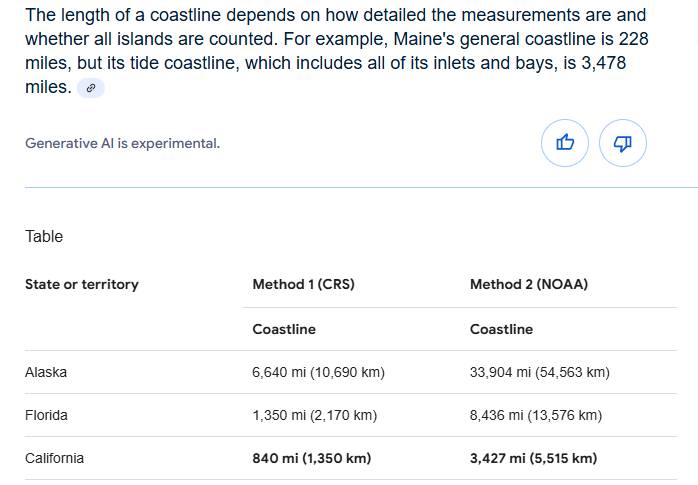
California is on fire and they don't have enough water to stop it.
California is the richest state in the USA.
California has 3,427 miles of Coastline.
___
___
Make it make sense.
This is a tough one as I believe there were mistakes made but would it have had a significant impact on what happened? I do not know enough or want to look into it.
I will take this another direction though - should they actually rebuild those homes or should they re-evaluate the area and implement a plan to properly zone and master plan those areas to avoid this in the future. This area was always a very high risk and should they rebuild?
What if the federal government (if they have to step in) say no, we are not going to allow you to rebuild and instead of using the funds to rebuild use the funds to acquire the land and preserve it? Isn't california all about being more green?
when I think about my friends that got burnt out in Napa Sonoma and Lake counties a few years back.. they all had insurance.. many their homes were paid for.. So when they got their insurance checks they moved some stayed in the same area some moved.. These folks were basically retired so they had a lot of options on moving etc.
Others with no insurance ( and I did not know anyone personally that was unisured) but you know there will be some those are the ones that will find this obviously very difficult.
My wonder is the solvency of the insurance companies These are total loss's not like many wind storms that the structure is still there etc.. Plus clean up of a burnt home needs to be done to hazmat standards and is expensive..
Once the smoke clears there will be vulture investors doing yellow letters to the lot owners you can count on that.
I believe Biden said the federal govt is going to pick up the bill for all the cleanup.
from a lot of reports I read, most of the private insurance companies got out last year and state insurance is where many were insured. I believe once that is exhausted the private ones pick up the tab but they noted it will get passed on to consumers.
where I see the issues are if this is now a one in every 5 or 10 or even 20 year event and it's a $1M home (cost to build not total value with land) then the insurance for these areas is not sustainable. You could see insurance policies in the six figures.
to a point but keep in mind to mitigate fires in areas of dense brush the way its handled in CA is through controlled burns.. Probably not going to happen when folks live right up next to dense oil soaked brush ( natural oil in the leaves) . So it just grows to the point when conditions are right fire gets going then add in 60 to 100 mile an hour winds and there is NOTHING ANYONE could have done to stop this.. water or no water.. We seem to forget the 4500 homes that burnt down in the Oakland / Bezerkly hills this had to do with a ton of Eucalyptus trees which are like roman candles and those are what cause massive fires in Australia there native environment.
Or the 6k houses that burn down in Napa and Sonoma counties U just dont hear about it because it was not LA and the rich and famous.. the Napa fires are the exact same scenerio Atlas peak is solid brush and its burn 3 times in my lifetime but this time there was homes built right next to it and again freak winds downslope winds that caused this.. Many of my friends lost everything in that fire.. Lake county Northern CA where I lived and started my RE career also had massive fires that burnt over 700k acres went right through one of the developments my family did ( the Hunter Ranch) homes were destroyed there but not that many as those were 20 acre lots so maybe 10 houses..
Then you have whole town being burnt down up by chico and oregon had some bad ones and lost a few hundred homes..
Nothing to do with water everything to do with building in fire prone
These same areas have these fires every 20 to 30 years as the Shamece brush and manzanita brush grows back after being burnt to the ground.. it grows back to 10 to 20 foot tall and when that happens and it catches fire there is no stopping it. Until thousands of acres are burnt all over again.
I dont think CA have 3,427 miles of coast line unless your counting every little inlet and the entire SF bay etc etc.. more like 1200 miles. in a straight line.
It would make more sense to build with concrete or block and have tile or metal roofs than standard stick built with asphalt shingles .
The biggest part of it is no consequences relative to the risk. If there wasn't any federal backstop of these kinds of disasters, the only kinds of housing you'd find in wildfire areas would be cheap, disposable, rebuildable for cheap. Instead you've got million dollar homes in areas that are ground zero for disaster like Jay said. As soon as there's no federal bailout for building in known and predictable disaster areas, either insurance will be priced to risk or people won't be able to get it at all and will have to be self insured for that risk. Both are fairer than what we do now.

It would make more sense to build with concrete or block and have tile or metal roofs than standard stick built with asphalt shingles .
I believe Biden said the federal govt is going to pick up the bill for all the cleanup.
from a lot of reports I read, most of the private insurance companies got out last year and state insurance is where many were insured. I believe once that is exhausted the private ones pick up the tab but they noted it will get passed on to consumers.
where I see the issues are if this is now a one in every 5 or 10 or even 20 year event and it's a $1M home (cost to build not total value with land) then the insurance for these areas is not sustainable. You could see insurance policies in the six figures.
https://abcnews.go.com/amp/Politics/biden-raises-federal-funding-initial-los-angeles-fire/story?id=117516448
Following - I'm based in California
>> Nothing to do with water everything to do with building in fire prone <<
If we're going to build in fire prone areas build with light gage steel!!!
Cinder blocks. Any material that will not catch fire. Aluminum roofs.
Mother nature has become denser & denser over time. Plant plants that are resistant to fires. kill the tall grasses.
Malibu homes burned right next to the ocean!!! As they did in Hawaii.
Water isn't the issue. It's building materials. Not willing to fortify homes to prevent catching on fire. Recent fires on east coast in NY. It's not just CA. It's global!
This isn't the first fire that destroyed large parts (or entire) cities/towns. hopefully when they rebuild, they will build homes that are better able to withstand fires. California isn't the only are hit by wildfires. In Canada we've had several towns destroyed-in some instances it was the entire town, others it was large parts.
Anytime something like this happens, there are problems that come to light. If we can learn from them and make sure they don't happen again, that is often the best we can do. In this case, the demand for water was higher than anyone would have ever anticipated combined with a few other things.
Rebuilding will take time especially as critical infrastructure was lost, but they will rebuild. hopefully the authorities do what they can to expedite the rebuilding (ie issuing building permits, inspections, etc). One of the small towns in BC (Lytton) that was lost to a wildfire a few years ago, has barely started to rebuild as the government is making it harder for them.
@James Wise you're right about California's bad leadership. But that's not why it's on fire.
Here is how I get my perspective: I was a firefighter in CA for about a decade in my former life. The house I'm sitting in right now is on a hill with 270 degree views and I can see about ten miles in each direction. Nearly every house I can see from here burned to the ground in 2017, including the house that was on this very lot and almost every house on this street. 5,300 in total. Thankfully, at that time I lived just a bit to the south and the winds blew the fire right by my house, missing by 3,000 feet. I woke up that morning to a wall of fire as far as I could see.
I drove to my office, everything around me was on fire including the landscaping and dumpsters in the parking lot--no firefighters around. But the office itself didn't burn.
The fire had traveled ten miles in about 3 hours. You can't get mutual aid (with a several hour ETA) in time to stop it. The calvary arrives just in time to mop up.
I have a second home in Maui, and as I look out in one direction the entire town I used to see burned to the ground in 2023. The wind blew that fire to our south, this time missing us by almost a mile. This is becoming all too familiar, and yet I'm extraordinarily lucky that I suffered no direct fire loss in any of these.
In both of these fires, hydrants didn't work. Firefighting resources were overwhelmed. Winds were near or exceeding hurricane force. The fire created it's own weather including "fire tornados".
Part of the reasons hydrants didn't work was some water storage was already depleted for maintenance. Power was shut off to prevent it from starting more fire (or was killed by the fire) and this power is what drives the municipal water pumps. Homes burned, leaving their water service lines severed and freely flowing water onto the ground, depleting the pressure. It's just chaos.
Suggestions above include:
To not rebuild and convert the land over to parkland. How do you buy out over 5,000 homeowners? Infeasible.
To build out of concrete block. Ok, but from my house I can see what used to be a K-mart about a mile away. It was made out of concrete block and it burned to the ground, along with a lot of other concrete and brick structures. My next door neighbor built their house out of poured in place concrete. Will it help? Maybe. The building codes are pretty strict. Ours is built with stucco siding, concrete tile roof, tempered windows, self-closing soffit and crawl space vents (they melt when exposed to heat). A lot of structures go up because the intense radiant heat from the wildfire ignites contents inside the home through the windows, or the embers enter the attics and crawl spaces through the vents--so just building from block won't be a cure.
Build with steel. These fires are so hot even the steel structures melted and burned. The winds were so strong and fire so hot there were cars turned upside down in driveways, and then melted.
The bottom line is that 100 mph winds combined with dry grass and just about any ignition source is unstoppable once it gets going. If the fire can be knocked down in its infancy you can save entire towns. And that's what usually happens--there are hundreds of fires no one hears about. But the ones that aren't stopped right away and get a head on them, when close to an urban area, with wind like this, will cause extreme devastation. No amount of water will stop it.
And don't even get me started on insurance. My $7,500 policy was "non-renewed" and I only got two quotes: $42K and $92K. Then by a stroke of luck I found another quote for $13K. If that carrier doesn't stay afloat it's pretty dismal.
California is on fire and they don't have enough water to stop it.
California is the richest state in the USA.
California has 3,427 miles of Coastline.
___
___
Make it make sense.
California is on fire and they don't have enough water to stop it.
California is the richest state in the USA.
California has 3,427 miles of Coastline.
___
___
Make it make sense.
@James Wise you're right about California's bad leadership. But that's not why it's on fire.
Here is how I get my perspective: I was a firefighter in CA for about a decade in my former life. The house I'm sitting in right now is on a hill with 270 degree views and I can see about ten miles in each direction. Nearly every house I can see from here burned to the ground in 2017, including the house that was on this very lot and almost every house on this street. 5,300 in total. Thankfully, at that time I lived just a bit to the south and the winds blew the fire right by my house, missing by 3,000 feet. I woke up that morning to a wall of fire as far as I could see.
I drove to my office, everything around me was on fire including the landscaping and dumpsters in the parking lot--no firefighters around. But the office itself didn't burn.
The fire had traveled ten miles in about 3 hours. You can't get mutual aid (with a several hour ETA) in time to stop it. The calvary arrives just in time to mop up.
I have a second home in Maui, and as I look out in one direction the entire town I used to see burned to the ground in 2023. The wind blew that fire to our south, this time missing us by almost a mile. This is becoming all too familiar, and yet I'm extraordinarily lucky that I suffered no direct fire loss in any of these.
In both of these fires, hydrants didn't work. Firefighting resources were overwhelmed. Winds were near or exceeding hurricane force. The fire created it's own weather including "fire tornados".
Part of the reasons hydrants didn't work was some water storage was already depleted for maintenance. Power was shut off to prevent it from starting more fire (or was killed by the fire) and this power is what drives the municipal water pumps. Homes burned, leaving their water service lines severed and freely flowing water onto the ground, depleting the pressure. It's just chaos.
Suggestions above include:
To not rebuild and convert the land over to parkland. How do you buy out over 5,000 homeowners? Infeasible.
To build out of concrete block. Ok, but from my house I can see what used to be a K-mart about a mile away. It was made out of concrete block and it burned to the ground, along with a lot of other concrete and brick structures. My next door neighbor built their house out of poured in place concrete. Will it help? Maybe. The building codes are pretty strict. Ours is built with stucco siding, concrete tile roof, tempered windows, self-closing soffit and crawl space vents (they melt when exposed to heat). A lot of structures go up because the intense radiant heat from the wildfire ignites contents inside the home through the windows, or the embers enter the attics and crawl spaces through the vents--so just building from block won't be a cure.
Build with steel. These fires are so hot even the steel structures melted and burned. The winds were so strong and fire so hot there were cars turned upside down in driveways, and then melted.
The bottom line is that 100 mph winds combined with dry grass and just about any ignition source is unstoppable once it gets going. If the fire can be knocked down in its infancy you can save entire towns. And that's what usually happens--there are hundreds of fires no one hears about. But the ones that aren't stopped right away and get a head on them, when close to an urban area, with wind like this, will cause extreme devastation. No amount of water will stop it.
And don't even get me started on insurance. My $7,500 policy was "non-renewed" and I only got two quotes: $42K and $92K. Then by a stroke of luck I found another quote for $13K. If that carrier doesn't stay afloat it's pretty dismal.
How many of these fires are arson? I keep seeing videos of people starting fires. (Including the guy with the blowtorch neighbors detained who wasn’t charged with arson but instead jailed on a “separate parole violation”.)
Read two statistics today that seem insane.
267,000 cases of arson in 2023 nationwide.
13,900 fires in JUST LA in 2023. (It didn’t list causes)
Some of that ocean front destruction is really weird. 4-5 homes destroyed everything around it is fine, and then a few blocks down another 4-5 homes. They have 4+ lanes of traffic with no fire damage on the other side, and ocean behind them.
.
I hate to be “that guy”. But it sure seems like as long as the federal government keeps bailing them out no policies will ever change.
When we had the Marshall Fire here on December 30th, 2021 which burned about 1,000 homes, no amount of water would have helped. Firefighters I know had to cut their hoses with their rescue knives and drive away as fast as they could to get away, no time to roll up their hoses. They told me they never trained for that, just reacted to save their own skin.
When the wind is blowing 100mph the fire moves very, very fast. Try flying a helicopter or a tanker, or even spraying a fire hose in winds that strong, it’s like pissing up a rope.
How many of these fires are arson? I keep seeing videos of people starting fires. (Including the guy with the blowtorch neighbors detained who wasn’t charged with arson but instead jailed on a “separate parole violation”.)
Read two statistics today that seem insane.
267,000 cases of arson in 2023 nationwide.
13,900 fires in JUST LA in 2023. (It didn’t list causes)
Some of that ocean front destruction is really weird. 4-5 homes destroyed everything around it is fine, and then a few blocks down another 4-5 homes. They have 4+ lanes of traffic with no fire damage on the other side, and ocean behind them.
.
I hate to be “that guy”. But it sure seems like as long as the federal government keeps bailing them out no policies will ever change.
I’m at ground zero homie. I can assure you it was wildfire. My 150’ eucalyptus is my weather vane. She cried all night. I saw over a dozen transformers explode, they should have cut power the afternoon this all started.
California is on fire and they don't have enough water to stop it.
California is the richest state in the USA.
California has 3,427 miles of Coastline.
___
___
Make it make sense.
As someone who grew up in California, this tells me two things:
1) you don’t know what you are talking about and are very comfortable with your ignorance;
2) you won’t even take two minutes to find facts.
If the hydrant system relies on electric pumps and in some areas there’s no power, then there is no water. If winds are 100 mph then you lose air support while embers gain massive trajectory. The state has had perpetual drought since I was a kid.
I know you won’t do it, but read the UNFCCC exec summary from the Kyoto Protocol written in the late 90s and specifically hone in on forecasts related to water scarcity and desertification. The term ‘climate change” is so politicized in the U.S. that people ignore decades of warnings. From flooding in the Midwest to bomb cyclones on the East Coast, drought in California, the weakened Gulf Stream winds…. all were suggested as risks years ago.
i can’t remember 100 mph Santa Ana wind speeds in the 80s, 90s, or 2000s. But that’s what is making embers fly across neighborhoods today.
Water is an issue nationwide. Florida and Georgia have been locked in court cases since Bush II; there are disputes over water rights from the Colorado River where agreements on utilization of flow as measured in acre-feet were made in 1800s and are no longer sustainable. Is there room to reprice water so it’s rational such that the heaviest users pay the highest rates vs today where the lightest users do, particularly in areas like CA? Yes is the answer. That said, water scarcity is not why my home state and favorite region look apocalyptic right now.
I believe Biden said the federal govt is going to pick up the bill for all the cleanup.
from a lot of reports I read, most of the private insurance companies got out last year and state insurance is where many were insured. I believe once that is exhausted the private ones pick up the tab but they noted it will get passed on to consumers.
where I see the issues are if this is now a one in every 5 or 10 or even 20 year event and it's a $1M home (cost to build not total value with land) then the insurance for these areas is not sustainable. You could see insurance policies in the six figures.
What started the fires? Negligent forest management, drug addicts, or illegals? DEI policies along with environmental, immigration policies is not sustainable for a non 3rd world country (my guess that is the point). I read an article I thought articulated this very well, we are seeing the collapse of a very complex system and this the fruit.
The only thing that spreads faster than a wildfire in a 100mph wind is everyone's "expert" opinion. The amount of ideologically inspired nonsense online is mind-boggling.
The only thing that spreads faster than a wildfire in a 100mph wind is everyone's "expert" opinion.
I think people visualize an amber quietly floating through the night sky like in an old Lassie movie. If you ever held a leaf blower into a burn pile you get a sense of what oxygen does to a fire. I can't even comprehend what a massive fire looks like in a 100mph wind - and the internet seems to think you can just stand there and spry it with water?
I was doing some research yesterday, a typical wildfire generates radiant heat of about 1,500F and with high winds can reach up to 2000F. Radiant heat is what you feel when you sit too close to a campfire. Wood has an ignition temperature of about 700F. So you don't need any flying ambers, at 1500F anything combustible will just spontaneously burst into flames.
I was thinking about the people I have seen on social who tried to wet down their house with a garden hose. At 1500F that film of water evaporates in 2 seconds.
But I was thinking only about the exterior, it did not even dawn on me that your furniture ignites from the radiant heat through the windows! OMG curtains, blinds,..
