
I looked at Austin code violation data and this stood out
I pulled a small batch of Austin properties with higher code enforcement activity, mostly because I’m trying to get away from the same recycled absentee/high equity/pre-foreclosure lists everyone seems to be working.
The thing that stood out was how many weren’t just one-off issues.
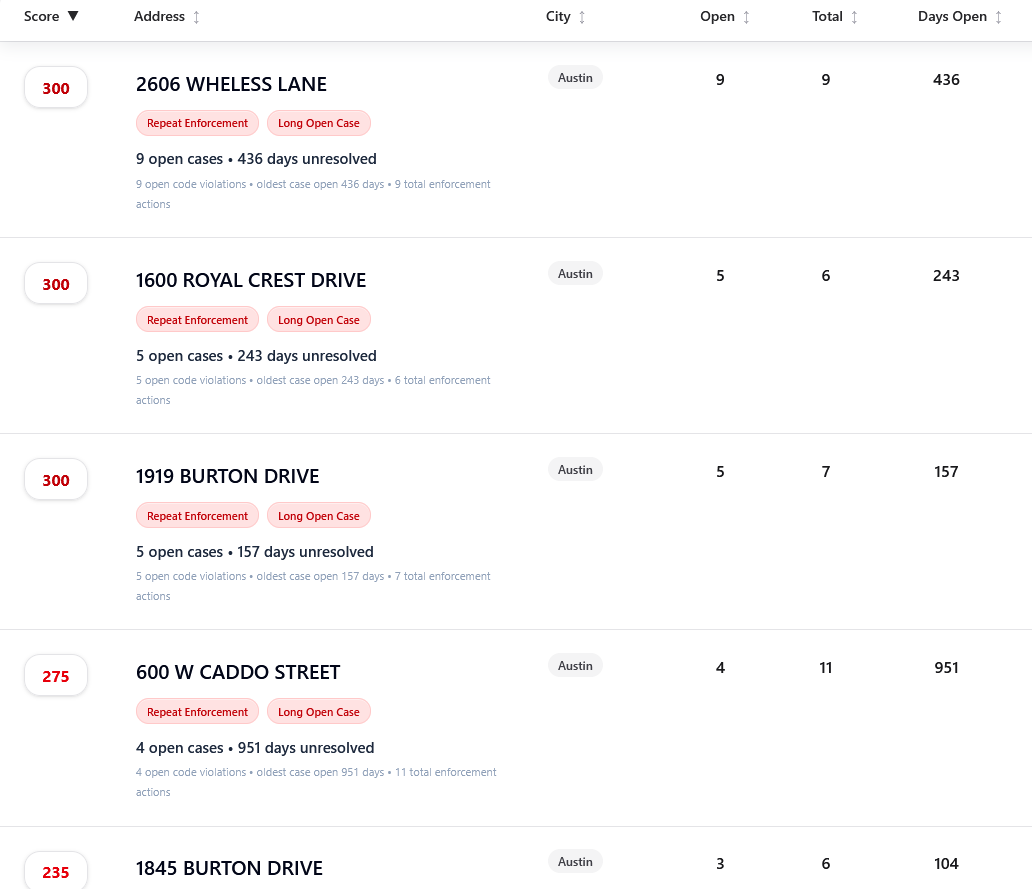
In the Austin batch I looked at, most of the interesting properties weren’t one-off violations. 14 had repeat enforcement tags, 10 had long-open case tags, and 8 looked like chronic properties. A few had multiple open violations that had been sitting for months. One had 4 open code violations with the oldest open case showing unresolved for over 900 days. Another had 2 open cases but 11 total enforcement actions.
Not saying every property like this is a deal. Some are probably just messy records, bad data, or owners who are already used to ignoring notices. But it does seem like a different type of signal than just pulling “absentee owner with equity” and blasting the same list as everyone else.
I’m curious how many wholesalers/investors are actually using city-level stuff like code violations, complaints, vacant registrations, or permits in their sourcing.
Is this something you’ve had success with, or is it too messy to be worth the time unless you have a system for it?
Most Popular Reply

 #4 Wholesaling Contributor
- Investor
- Austin TX
I think code violations are absolutely an underrated lead source. And with AI to help sort through the data it makes it very easy to find the most distressed properties. You can use a program like Twin AI to create an AI that will send out the open records requests to all cities on the first of every month and then another AI that will sort through the data and make a list of all the properties that meet your criteria for distress. It can also look for patterns across your lists--which zip codes have the most violations, which violations are the most common etc.
In order to have enough volume you'll have to make these requests for multiple cities. Repeat offender properties, properties with multiple open violations and properties that have been secured (boarded up) by code enforcement because they were vacant and accessible.
I think the reason most people don't use these lists is that everyone is looking for for the easy button. Everyone wants to download a list skip trace it and move on. As soon as extra steps are involved, it becomes "not worth it" which leaves plenty of opportunity for those willing to do the work.