

I like to interview entrepreneurs in these posts. By virtue of my job, I get to speak to some pretty awesome people from time to time — both in the real estate industry and out.
However, there’s one person who I’ve been wanting to sit down and grab coffee with for the past three years and hadn’t had the chance to: Former Fortune editor Elaine Pofeldt is a legit rockstar in the NYC-entrepreneurship scene and a total badass. For starters, she’s 5-foot-3, a mom of four, an entrepreneur, and a taekwondo black belt.
But she also created and ran Fortune‘s business plan competition, and judged Crain’s New York Business Perfect Pitch Competition — a Shark Tank-style competition at Columbia Business School.
Elaine Pofeldt is Still Killing It
So back in 2015, when I was running a publication and looking for editorial talent, her name would literally pop up everywhere (Google her yourself.) Fortune, CNBC, CNN Money, Forbes — you name it, I’d see it. Holy s**t, she’s like a freakin’ Barbara Corcoran, I thought.
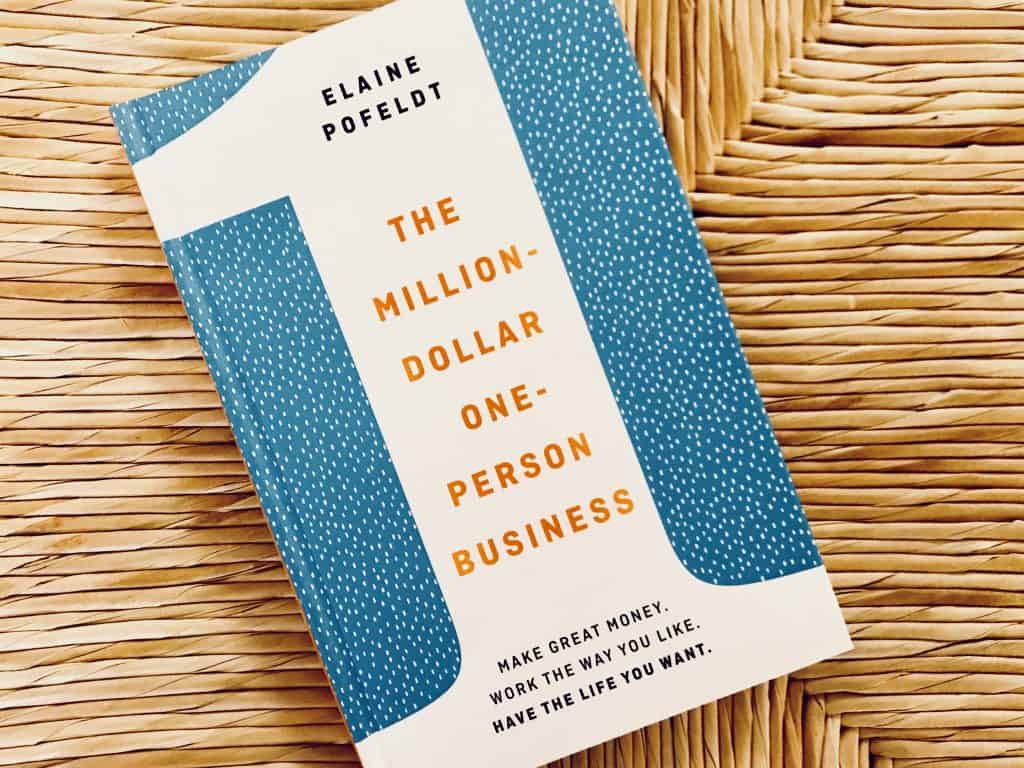
Fast forward to 2018, very little has changed: Elaine has written a bestseller The Million-Dollar, One-Person Business — a book recommended by Forbes, Entrepreneur, and even “The 4-Hour Workweek” author Tim Ferriss — detailing the new wave of bootstrapped seven-figure solopreneurs.
She’s still hosting panels with seven-figure rockstars. And still crushing it as an entrepreneur.
Yet somehow, in a twist of ultimate irony, I finally got the chance to sit with her. (Insane.)
After our interview, I seized the opportunity pick her brain on how to start (and scale) a lean business, and why real estate is a great avenue for first-time entrepreneurs.
Related: 7 Absolute Must-Read Real Estate Books for Beginning Investors

Photos courtesy of Eileen McNamee.
Here’s What Elaine Had to Say
BP: You’re one of the premier authorities on entrepreneurship and the freelance economy. WeWork is worth $20 billion. The gig economy is expected to double. Why this change?
Elaine Pofeldt: Big companies are increasingly realizing the value of adding freelancers to their bench, given the number of talented people who now freelance. At the same time, many more people are gravitating to the freelance lifestyle. This is contributing to demand for coworking spaces and other businesses that serve freelancers.
The idea that you can actually start and run a seven-figure business might sound crazy to some. How does this happen; how do you get to a one-person, million-dollar business?
Many of the entrepreneurs in the book have used automation and the help of freelancer and/or outsourced services such as Fulfillment by Amazon to extend what one person can do with no employees.
What makes a seven-figure entrepreneur tick? What’s their intangible?
Many of the entrepreneurs value their time over money and they structured their businesses so they could enjoy whatever they were passionate about in life — whether that was their family, a sport, traveling, or something else.
But What About Funding?
You talk about this in the book, but I want to touch on it anyway. A common complaint is funding: getting money to get started. What’s the ideal business to get into for a first-time entrepreneur, especially if you don’t have lots of funding in place?
It really varies by someone’s talents and skills, but e-commerce seems to have the lowest barriers to entry for the average person. However, there are many other areas where solo entrepreneurs and partnerships are breaking seven figures — among them professional services, personal services like nutritional coaching, informational marketing, real estate investment, and manufacturing.
Real Estate Entrepreneurship
You mentioned real estate investment, which is huge for our readers. Why’s that a good avenue for a first-time entrepreneur?
Taking the Leap
We have a lot of readers looking for ways to become entrepreneurs; some who may still be on the fence — whether it’s real estate or otherwise. What’s some advice you can give them to take the leap?

