I'm currently renting in Los Angeles and the rents are super high. I want to buy a property, but I am a little afraid especially after the treasury department said we are looking at early signs of a recession. I was working on buying a duplex for my first property, but the news stopped me. What should I do? Should I wait to see what happens? or Should I still buy? As a first-timer what do you recommend I do?
If you dont have the courage to buy during the hottest economy ever, why do you think you will have the courage to buy during a recession?
There never a bad time to buy, only a bad time to sell.
All these crazy people talking about "if the numbers make sense"
The numbers might make sense if the property is vacant and you get can top of market rents for both units without a ton of rehab. In California in premium markets you generally have to put work in to cycle tenants cuz #justcauseeviction #deferredmaintenance
Short Answer: If your concerned about market conditions buy the duplex and put a voucher tenant (section 8) and not a market tenant. Up in the Bay Area you don't know what the tenant portion will be until you agree to take them on. You can get a lead from what they are currently paying. If there is a market correction you have a guaranteed source of income that will likely not go away because it's now pretty difficult to get on housing in California in most cities.
If population in California in the markets you're interested in continues to increase you'll be slightly insulated from market corrections. The process of making the property perform in lots of rent control areas is not short so why not start now.
Generally speaking I thought there was rent control for most areas in LA proper? Inland empire might be different. There are owner occupied evictions at least in the bay area and recent city ordinances at least in the Bay Area require the owner to pay tenant relocation which is a sliding scale based on how many bedrooms the unit is a 2bd is 8700ish in 2019 in Oakland.
I don't know the specifics of your situation as you didn't talk about financing that you were looking at. FHA loans (3.5%) for owner occupied duplexes most of the time don't work because the rents aren't high enough which push you into a different loan program. At 10% down it usually won't cash flow because there is rent control in many cities in LA until you cycle tenants (possible cash for keys buy out)
Owner Occupant evictions at least in the Bay Area make it so you can't return the unit to the rental market for a couple of years (2 or 3 ) once you complete the work.
The Moral of the story:
I can applaud your desire to get a duplex. Check to see if the property that you're interested in is subject to rent control. If it is you should talk to a lawyer. Know that the lead time on lawyers of this type doing things for you is longer than you'll likely want it to be. Understand if the cities that you're interested in buying in have just cause eviction. If they do short of someone not paying rent you'll likely need to buy them out to increase the cash flow in the fastest way.
Now the pain:
If it's in a rent controlled / just cause eviction area it will cost to make the property perform the exact numbers are dictated by the tenants, their needs, and how you can negotiate.
Oh BTW: Rent Control / Just Cause (maybe vacancy control ) will come to more markets in California it's only a matter of time.
@Gadiel Del Orbe over the last 12 months I've had a few clients say they were concerned of a recession and that certain locations in the Los Angeles area (Inglewood) have hit their peak so they weren't willing to buy at that particular time.
The clients let me know that they wanted to wait for the market pricing to go lower in the area before buying. The last 12 months many of the properties I showed these clients sold at reasonable prices and properties continue to increase in value.
At the time I tried to convince these clients that while there may be a recession there are still good deals to be found in the market and that if purchased correctly there would be good appreciation going forward.
Today on espn.com there was an article that discussed the LA Clippers building their new stadium in Inglewood, CA and the amount of money they will be putting back into Inglewood. By investing back in the market the value of properties will continue to increase and if my clients would have purchased when they were supposed to they easily would have gained approximately $100,000 in equity over the last 12 months but their concerns of a recession and the market being priced to high limited their ability to make money.
While there is never a guarantee in real estate if you've done your due diligence, your working with a qualified agent and you buy correctly you should be okay. To be a successful real estate investor at one point you have to take action whether it is here in Los Angeles, out of state, or your buying for cash flow or appreciation just take action.
https://www.espn.com/nba/story/_/id/27588999/clips-arena-deal-include-100m-inglewood
HI Gadiel,
There is a lot of good feedback here already. If the government, economists, or anyone could predict recessions, there would not be any as then they could take preventive measures to avoid them. No one can predict what or when. Yes, there is something in the air, housing prices are high, the yield inversion curve, stock prices are high, the debt bubble, etc. The question is are you ready and prepared to buy now? Do you have the knowledge base, the network and support, the financial capabilities? Provided you make sound buying decisions, and are realistic, safe and even conservative with your numbers, then there is NO BETTER TIME THAN NOW.
Tomorrow is not promised, none of us can predict the future or where we will be or what will happen. You can only live in the now. As others said, when you look back at prices 5-10-15-20 years ago, there are a lot of us experienced investors that wish we bought more and at some points, probably everything we could, though still at that time, we purchased with a certain view or lens with criteria that made sense to us. I still buy today with that criteria and will not overpay for properties like some other newer investors that don't know any better due to all the hype in this business.
There is always reason to be cautious, though there are always opportunities within real estate investing in any market. I survived the last recession with few bumps and bruises, as I am in this for the long term. I have a business, and am in the process of building wealth so make sure you take this seriously as a business, and run it as such, with goals, and a plan and you will be fine. Starting out, I always recommend to network, and find others that are experienced to help guide and coach you. This will expedite your learning and help you minimize your mistakes. BEST WISHES!
I'm currently renting in Los Angeles and the rents are super high. I want to buy a property, but I am a little afraid especially after the treasury department said we are looking at early signs of a recession. I was working on buying a duplex for my first property, but the news stopped me. What should I do? Should I wait to see what happens? or Should I still buy? As a first-timer what do you recommend I do?
I wouldn't wait to see what happens. If you're worried about a recession then I'd study the market in your area or the area you want to purchase. What happened to the prices during the last recession? Are there properties available at a discount that you could acquire? Set up criteria for what works for your budget, your lifestyle, along with what works for your fear of a recession. Then keep looking. If you go in a shell and stop looking you'll most likely miss out on an opportunity.
All these crazy people talking about "if the numbers make sense"
The numbers might make sense if the property is vacant and you get can top of market rents for both units without a ton of rehab. In California in premium markets you generally have to put work in to cycle tenants cuz #justcauseeviction #deferredmaintenance
Short Answer: If your concerned about market conditions buy the duplex and put a voucher tenant (section 8) and not a market tenant. Up in the Bay Area you don't know what the tenant portion will be until you agree to take them on. You can get a lead from what they are currently paying. If there is a market correction you have a guaranteed source of income that will likely not go away because it's now pretty difficult to get on housing in California in most cities.
If population in California in the markets you're interested in continues to increase you'll be slightly insulated from market corrections. The process of making the property perform in lots of rent control areas is not short so why not start now.
Generally speaking I thought there was rent control for most areas in LA proper? Inland empire might be different. There are owner occupied evictions at least in the bay area and recent city ordinances at least in the Bay Area require the owner to pay tenant relocation which is a sliding scale based on how many bedrooms the unit is a 2bd is 8700ish in 2019 in Oakland.
I don't know the specifics of your situation as you didn't talk about financing that you were looking at. FHA loans (3.5%) for owner occupied duplexes most of the time don't work because the rents aren't high enough which push you into a different loan program. At 10% down it usually won't cash flow because there is rent control in many cities in LA until you cycle tenants (possible cash for keys buy out)
Owner Occupant evictions at least in the Bay Area make it so you can't return the unit to the rental market for a couple of years (2 or 3 ) once you complete the work.
The Moral of the story:
I can applaud your desire to get a duplex. Check to see if the property that you're interested in is subject to rent control. If it is you should talk to a lawyer. Know that the lead time on lawyers of this type doing things for you is longer than you'll likely want it to be. Understand if the cities that you're interested in buying in have just cause eviction. If they do short of someone not paying rent you'll likely need to buy them out to increase the cash flow in the fastest way.
Now the pain:
If it's in a rent controlled / just cause eviction area it will cost to make the property perform the exact numbers are dictated by the tenants, their needs, and how you can negotiate.
Oh BTW: Rent Control / Just Cause (maybe vacancy control ) will come to more markets in California it's only a matter of time.
So, don't buy in CA
I believe there is a huge difference between a recession and a depression which we were in 2008-12. That was a once in a lifetime occurrence. Last time I remember it was that bad was the in 1970's when interest rates were in the teens. I remember my dad bought a house with 15% interest. People still buy houses (retail) in good or bad markets, maybe just not as many. The Dodd-Frank legislation cut all, if not most of the crazy lending that was going on during that time. Historically, we've never had a recession/depression like 2008-12 where housing went down in every US city, usually it's regionally like LA in believe in the 80's. No you can't get the deals in volume like a couple of years ago, but it's always a good time to buy a deal.
Have a contingency plan if you fail to get renters. Be prepared to occupy one of the units which should carry your costs or nearly so for the duplex. Check your current lease if renting ti see how an early termination might be worked out and at what cost.
Just because it can be difficult to operate in California shouldn't sour people on the market as a whole.
Each market is nuanced.
The rents are high in California but so is acquisition cost. It may cost more to operate in, but if you are house hacking you have to live somewhere.
People live in California for a reason understand so it's important to understand the legal climate associated with the market your operating in. New York City has a history of abusive landlords and have a significant number of laws governing interaction between landlord and tenant.
You can mitigate fear through knowlwege and better understanding
While I respect, appreciate and understand where most of the answers are coming from, I want to point out one thing here to see if you can give insights how to prevent this.
If you see the stupidest purchase in the history below right before a major recession and know how to ever prevent it, please enlighten me ( and possibly some others like me).
When that purchase was made, all books, podcasts, articles and advice given at the time was about buying your own home and nothing else. Advice followed and disaster in finances occurred.
I just want to thank everyone. You guys helped me reach my decision. I am going to move forward in buying a duplex.
We chatted a bit about this when the recession fears were starting in earnest. Here is that post and sorry to repeat, but honestly not much has changed. This one speaks to Denver, so the prices reflected in the LA specific Case-Shiller index will look a bit different. There's definitely some nuances, but you will see they are quite similar. For example, Denver did not participate in the 04 runup, so the prices feel really high there, whereas LA partied pretty hard then. But, there are a lot of similarities and you can get some idea as to the potential downside and I totally agree with @Victor Saumarez that there is valuing in looking at them.
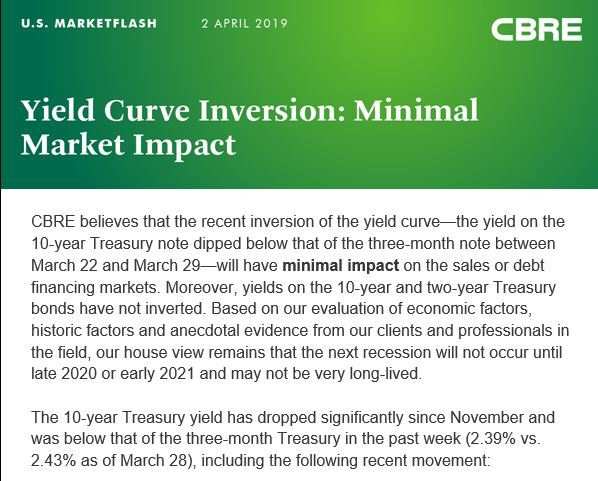
That's their take, and I agree. I am sure you learned from your macro classes that there is always a bear in the woods, and a reason not to do a deal. Real estate is intensely local, or in macro-speak: highly inefficient.
Rates DO affect refi, and hence overall transactions, but new home purchases are steady, and even boring. Ping me if you want charts on that.
Here's a bit more macro, and a last chart:
The red line all over the place is the 2-10 spread, probably the most accepted 'yield curve' indicator. Yeah, I ran it a couple weeks ago, so it doesn't show the inversion, but you get the point. Shaded areas are recessions, so you can see the problem with the indicator: size of the inversion doesn't really indicate length of recession, you can't 'time' off of it, etc etc. And, while this chart doesn't show it, as it was messy enough already, the size of the inversion doesn't portend the size of the recession. What's important here is the blue line in relation to all this. It is the Case-Shiller US national house price index, probably the best indicator of house prices. It's not perfect, but probably best, and I see you're from Colorado, so you may want to look at the Denver only price index (which I find fascinating, by the way). The point is: the blue line doesn't seem to pay attention to the red line, and quite frequently not the recessions either. 08-09 was an exception with a high degree of correlation, and we could discuss causation for a long time, but neither would disagree it was bad for all camps.
But; even here: you are not buying the index. You're very unlikely to ever gather enough data, or learn enough, or analyze enough macro to pull the trigger on investing in real estate. Stocks....maybe (but I doubt it). Real estate: no way. For real estate: study local, learn local, and invest local.
@Gadiel Del
Why is the sky always falling? If you make good investment deals it doesn’t matter what the economy is doing. We are in one of the best economiies ever. If you aren’t making money your doing something wrong.
@Gadiel Del Orbe good deals are in every market cycle. Listen to the podcasts and use that knowledge to interview real estate agents. It should be crystal clear who knows the business and who just says they do on FB. The good ones know the deals and are excited to have a new partner.
I heard of someone who's strategy is paying 20% down and buying a fixer upper and making sure it ends up at a 65 loan to value ratio after fixing it to be protected by the market tanking 35%. In other words you should be fine if you are getting a good deal to value add and protect yourself.
In August of 2019, Warren Buffet's company Berkshire Hathaway had a record $122 Billion of cash sitting on the balance sheet. Year to date, they have sold more investments than bought. Warren Buffet <-- The guy who seems to know everything about when to invest and when not to invest.
It seems like Warren should read this thread so he can take some advice and put his money back into the market lol.
It shouldn't surprise us that nearly all of the real estate agents and brokers, who have much to gain by the 'there's never a wrong time to buy' public perception - are touting the 'there's never a wrong time to buy' line.
After all, @Gadiel Del Orbe - if you want, I'm sure many would gladly represent you on the buyers' side!!!
Exactly! Whether it's an equity/stock, or any investment, price matters in a big way, relative to earnings. While we can be long term buy and hold investors, if we don't get something at the right price - we're losing.
The public sentiment here reminds me of Orlando in 2007. It's Florida, after all - nothing can go wrong. People just keep want to move there, and things just keep going UP UP UP. Luckily for me, I was a young engineer and prices were SO inflated that I was priced out of the market at my wages. And, luckily for me, I had just enough critical thinking skills to also sense that something was 'off' in that conventional wisdom. Sounds familiar....
@
@Jim Goebel makes a valid point. Without wishing to put the cat among the pigeons this very same scenario played out over and over before the previous crash; commission-takers will naturally take a different view from stake-holders who carry risk. It’s par for the course and we all accept that. So, the conversation needs to keep civil and scientific.
A couple of points; firstly, although RE is localized research shows there is ‘contiguity’, which means the effects of RE spills over into neighboring areas and beyond. This bubble is more widespread due to investor activity. Secondly, the monthly nut drives sales not the price per se so interest rates are fundamental to any discussion. Thirdly, it’s not necessarily home prices themselves that do the damage, but their effects on credit markets and the downward spiral this can create. A space to watch IMO is leveraged loans.
You can insulate yourself against recessions, but the most revered hedge against volatility has always been ‘value’ investing; buy low and sell high. The second most useful tool is diversification, which for many includes a wider asset allocation than just RE. However, diversification within RE has mileage. In a nutshell, you are looking for neutral or even negative correlations. There is no research on this to my knowledge, but it shouldn’t be impossible to find within RE.
Gadiel, I'll offer a slightly different perspective because, I hear you, I don't want to overpay for a property and then watch the market tank. Having said that, I think there are still options. If you're looking for a place to live, one option is to do as Brandon Turner always says, and house hack. Find a duplex, live in one and rent the other. If the cashflow covers expenses, then you’re essentially living for free and won’t mind as much if the market goes down.
Even if the house is strictly an investment, enough cashflow can make it worth it to buy now. I actually did an analysis, looking at what would happen if I had bought at the height of the market in 2006, road it all the way to the bottom and then back up to current levels vs. waiting until it bottomed and buying from there to the current levels. In the end, with the right cashflow, even if you bought at the absolute top and held, you ended up ahead.
My advice is don’t trip. Satisfy your own questions and research in the markets and asset types your are interested in. You’re either in or you’re out.
In August of 2019, Warren Buffet's company Berkshire Hathaway had a record $122 Billion of cash sitting on the balance sheet. Year to date, they have sold more investments than bought. Warren Buffet <-- The guy who seems to know everything about when to invest and when not to invest.
It seems like Warren should read this thread so he can take some advice and put his money back into the market lol.
Not to contribute to fear-mongering, but it is also quite possible that he's cash heavy so he can go shopping when everything is on sale...Food for thought.
What I led with still holds true though, get out there and get to it!
- JM
Here's how I look at it (Im a home owner, investor, prop manager/broker in LA)
You have to pay to live somewhere. If you have stable income and a good likeliness of keeping that through good times and slow times and if you have the means to buy now, start looking and jump on the right place when you find it. The value might drop but it will always come back and continue higher.
We don't know what the next recession will look like, what the banks will do as far as lending, how long it will last, or if we will see values drop meaningfully or at all. There is SO much demand here and so little available supply.
So if you have the cash, the desire, then start looking and when you find the right place, that will be a sign that the time is right. DM me if you have any thoughts or questions - happy to help you talk it through
Hello Gadiel,
I'm struggling with the same situation and well the only constant pattern I keep hearing from the investor that bought property in the 2000-2006 that did not lose their shirt is that they invested base on cash flow and not appreciation. Today I'm currently seeking rentals properties with an ROI of 12% after all expenses are paid, not easy but doable.
But most importantly educate your self first. Read, listen to podcast get and get infatuated with finding a solution to this problem, obviously you are not going to fix this problem for the world, you only need to fix it for your self. This will look something like this :
-Know your Budget. Know exactly how much money you have for your investment, this is important because is going to give you your lateral limits.
-Find your Market. You need to find a market that works for you this can be in your backyard or in a different state. Obviously, if this is not in your own city this will require more work on your part, but this is part of the game.
-Find your dream team. You need to find what @David Greene calls your core 4 (Deal finder, Property Management, the contractor, the lender) read this https://www.biggerpockets.com/...
Now, all this will take time don't rush it, the key is not to become impatient! and to enjoy the process of becoming a PRO.... Good luck
Reading subjections
Long-Distance Real Estate Investing
BRRRR
Retire Early with Real Estate.