3 trillion dollar printed in 2020 so far - effect on house price

3 trillion dollar printed in 2020 so far - effect on house price

Real Estate Broker · Redwood City, CA · Member since 2014 · 679 posts · 888 votes

Just checked the total US money in circulation M2, increased from 15.5 trillion end of 2019 to about 18.4 trillion, roughly 20% in the first 5 month of 2020.

Theoretically and historically, M2 is directly correlated with real estate price.

Would there be another dramatic jump in housing price in the next few years?

8Reply
219 views

Most Popular Reply

Real Estate Consultant · Chicago, IL · Member since 2014 · 720 posts · 439 votes
6y

@David Song, I grew up in Romania, a country that printed money after our Revolution in 1989, a country that had no jobs, and I'll always remember one instance. At the Revolution, my parents had enough money saved to buy a brand new car. They kept it in the bank not knowing what to do with them. At the same time, the government allowed everyone to buy from them the condo units we were living in. Some people chose to do it, some didn't. Luckily, my parents went to the bank, took a 100% loan which was allowed at that time, and started paying a mortgage.

Five years later, with the money saved in the bank for the car that we didn't use, all we could buy was a bicycle, while our mortgage payment and mortgage loan was a joke, as we used the same amount of mortgage payment from 5 years past to go to the grocery store and buy a loaf of bread, and my parents paid off the mortgage in full with one month salary, that's how much the money got devalorized. 

My parents lost their life savings from the bank to inflation, however, they gained a home as they were smart to take a mortgage. I look around at who created huge fortunes in those years, and it was the people that took loans to buy as much real estate as they could, and they took business loans to open up businesses and buy commercial properties. Generational wealth was treated by those people that took loans.

When I came to the USA 20 years ago I started researching and learning about Real Estate, and with the exception of my portfolio from 2007, everything else I buy with plenty of cash flow. Historically, Real Estate prices have doubled in value every 10 years, and with the inflation coming in 3-5 years, that price increase I thought I won't see it in a long time again - I can see it easily doubling again. When I visited Hong Kong a few years ago, a place of some of the highest real estate values in the World, I could see the size of their apartments and how the price keeps going up, and I can share that is happening in Chicago. We are having smaller and smaller apartments getting built and the price is higher per sqft than anything I've seen before. 

Inflation is coming in 3-5 years. My personal advice is to take all the mortgages you can take at the existing low interests, make sure you have plenty of cash flow, and go ahead and live your life. You'll wake up one day very wealthy. 

And you know what is the worse thing that can happen to you? If we all make a mistake, and prices don't go up that much, or not at all, the tenants have paid off your mortgages, you've enjoyed the cash flow and the depreciation and lived a really good life.

See this reply in the discussion

63 Replies

Jump to latestLatest
  • Specialist · OverTheRainbow · Member since 2020 · 607 posts · 909 votes
    6y
    Originally posted by @David Song:

    Just checked the total US money in circulation M2, increased from 15.5 trillion end of 2019 to about 18.4 trillion, roughly 20% in the first 5 month of 2020. Theoretically and historically, M2 is directly correlated with real estate price. Would there be another dramatic jump in housing price in the next few years?

    @David Song You are one of the few that get why that is important. I wouldn't expect a lot of responses. Most investors react to what they see affecting them, going on in their market. It's like gravity. It really doesn't bother anybody until it's working against them.

  • Real Estate Broker · Redwood City, CA · Member since 2014 · 679 posts · 888 votes
    6y

    @John Farady

    Lol. I just learned what M2 means. The historical curve of M2 is almost parallel to real estate price.

    Felt that is key to future price prediction.

  • Real Estate Broker · Portland, OR · Member since 2019 · 4k+ posts · 2k+ votes
    6y

    Oh a gut level, you'd think being awash in money would be inflation. However, that's not happening outside CRE much.

    In OR, 2009 was flat, but from 2011-2017 prices basically doubled.  However, stuff doesn't turn on a dime and is driven by a couple of things:

    1) Income growth of rents and vacancies

    2) Expense growth in comparison

    3) Cost of money which looks like its going to be low.

    Short answer - In most markets, there'll be upward pressure on pricing.  There'll be exceptions since we're overbuilt on lux stuff in Portland and not that many good employers here.  However, the suburbs don't have much new inventory so they still have price pressure.

    THink the main thing will be the nervousness of investors and appetite for risk.

  • Joe SplitrockPro Member
    Moderator
    Rental Property Investor · Sioux Falls, SD · Member since 2015 · 9k+ posts · 18k+ votes
    6y

    One of the advantages of real estate is that it is an inflation tracking investment. That being said, printing money doesn't necessarily lead to inflation. Especially in our current situation, where there is decreased demand in many areas. In other words, it not only matters that they are printing money, but also matters how people spend that money. 

    That all being said, logic says you can't just print that much money without some effect on something. The economy is amazingly complex, that is all I know for sure. 

  • Real Estate Broker · Redwood City, CA · Member since 2014 · 679 posts · 888 votes
    6y
    Agree.

    In 2009, the fed was also printing a lot of money to ease the short term economic depression.

    The effect of those printed money basically diluted the intrinsic value of Dollar, and showed it effect on Real Estate price from 2012 to 2019.

    The amount of Money artificially created this time by Fed in 2020, due to Covid19, is about 20% of the total M2. Theoretically, our Dollar value has been diluted by 20%, thanks to our Fed.

    If you have 1 M saved in a saving's account, the value has been reduced by 20% immediately.

    If you borrowed 1 M from the bank, in a mortgage, the intrinsic value of that 1 M also decreased by 20%. If other words, the bank lost their money value, where you hold the property.

    The property intrinsic value shall not be influenced by money printing, in theory. Therefore, the value of a 1M house will theoretical increase to 1.2 M, over the long term.

    Is this the reason that Rich get Richer, and Poor get Poorer?


    Originally posted by @Steve Morris:

    Oh a gut level, you'd think being awash in money would be inflation. However, that's not happening outside CRE much.

    In OR, 2009 was flat, but from 2011-2017 prices basically doubled.  However, stuff doesn't turn on a dime and is driven by a couple of things:

    1) Income growth of rents and vacancies

    2) Expense growth in comparison

    3) Cost of money which looks like its going to be low.

    Short answer - In most markets, there'll be upward pressure on pricing.  There'll be exceptions since we're overbuilt on lux stuff in Portland and not that many good employers here.  However, the suburbs don't have much new inventory so they still have price pressure.

    THink the main thing will be the nervousness of investors and appetite for risk.

  • Specialist · OverTheRainbow · Member since 2020 · 607 posts · 909 votes
    6y
    Originally posted by @David Song:

    Just checked the total US money in circulation M2, increased from 15.5 trillion end of 2019 to about 18.4 trillion, roughly 20% in the first 5 month of 2020. Theoretically and historically, M2 is directly correlated with real estate price. 

    Would there be another dramatic jump in housing price in the next few years?

    It gets a little complex of course but here are two facts to consider regarding Modern Monetary Theory

    There are more $100 bills in circulation than $1 bills, and it makes no cents

    https://www.washingtonpost.com...

    1. "According to data from the Federal Reserve; by 2017, the $100 note eclipsed the $1 to become the most widely distributed U.S. currency. Output is still climbing, and experts are perplexed."

    2. "The vast majority of these bills aren’t even here. A 2018 research paper
    from the Federal Reserve Bank of Chicago estimates as much as 80
    percent of the 12 billion $100 bills in circulation live outside the
    country.
    Some of this growth is likely a result of the U.S. dollar
    supplanting local currencies in unstable economic environments."


    There are reasons so much of our money is used world wide. We use that money to try to control events in other countries. A lot of people in the US rarely use cash anymore. They use credit cards, automatic transfer and the like. They don't ever touch $100 dollar bills. They limit their investing by thinking that way, but that is a different post.

    In my opinion things that affect housing prices on a national level are taxes and tax write offs by the government, access to lending through Fannie Mae, Freddie Mac,VA, FHA & USDA loans and of course interest rates. I believe most fluctuation in housing is localised and good state government and good municipal government will do what they can to encourage jobs, safety and prosperity for the locals who will then want to stay and buy homes and raise their families.

    I had some properties in Seattle and found the climate, shall we say "challenging" so I've sold them all. I can't find good investments in California anymore, for the same reasons Seattle is a bad place to invest, so I turned to Arizona and Texas. Those are turning out to be good cash flowing and appreciating properties with landlord friendly governments. The economies there are growing and I actually feel welcome.

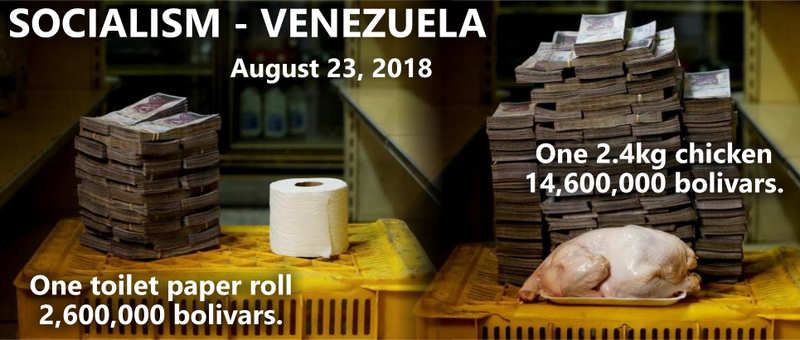
    I don't believe any of this was due to or affected by US monetary policy. But, I am concerned about what printing all of that money will do to the economy in the long run. Germany tried it in the 1930's, Argentina has tried it, Venezuela has tried it. And it has never turned out well. In fact, show me where printing unlimited money has turned out well and I'll give you a cartload of Zimbabwe trillion dollar toilet paper rolls.

  • Real Estate Broker · Redwood City, CA · Member since 2014 · 679 posts · 888 votes
    6y

    LOL. We will use dollar bill as toilet paper soon, unfortunately, the paper quality is really bad.

  • Real Estate Agent · Sandwich, MA · Member since 2014 · 974 posts · 636 votes
    6y

    @David Song

    Yes, the printing of all this cash will cause long term inflation. A dollar in the future will be worth less than a dollar today. Due to the inflationary environment, holding debt on an asset that can service its own debt helps you twofold:

    1. You get the benefit of the debt paydown as a result of profit from the asset

    2. You pay off your debt for the purchase price in future dollars that are worth less than today’s dollars. You’ll get the benefit of the asset increasing in relative dollars while your mortgage is a fixed payment based on historical dollar values and prices.

    In inflationary environments, savers are the big losers.

  • Accountant · Corte Madera, CA · Member since 2018 · 73 posts · 88 votes
    6y

    @David Song

    Thinking back Econ 101, yes the increase in money supply should create an increase in prices/inflation. But that is just a model...

    I’m by no means an expert, but I think the particular situation the US/world is in right now is unique. People say it’s not like 07/08 because we don’t have a housing bubble, which I can agree with. Instead we have the economy completely stalled out, with the fed reserve printing money like crazy in hopes of keeping things afloat. The issue is that too many people are saving. Yes people buying TVs with their stimulus checks made news headlines, but with no end to Covid in sight and future economic closures on the horizon, many consumers are weary and hoarding cash. Because of that I’ve read some people calling for deflation in the short run.

    Then you have the pace at which the economy recovers. If inflation were to take off ahead of what may be a slow economic recovery, we may experience stagflation.

  • Warsaw, IN · Member since 2017 · 229 posts · 270 votes
    6y

    @David Song in my opinion the dollars status as a world currency is distorting the inflationary pressure of an increased money supply-despite more printing, demand is still very high.

    Google “Dollar Milkshake Theory” by Brent Johnson for a more detailed description than I could ever provide.

    Great post!

  • Chicago, IL · Member since 2017 · 175 posts · 86 votes
    6y

    Great discussion.  Can't help but worry about retail in this situation.  

    If we do see massive inflation won't less purchasing actually hurt retail? What is the outlook for retail real estate? I already see stores closing in Chicago.

  • Real Estate Broker · Redwood City, CA · Member since 2014 · 679 posts · 888 votes
    6y

    @Mason Hickman

    Agreed.

    The COVID-19 caused really rapid increase of M 2 in a short period of time.

    Short term, the negative effect is obvious on rental late payment, disruption on various business, etc.

    I just felt like it might a huge positive effect on real estate price, unexpectedly to most people, due to M2 increase.

    Who knows, just gut feeling.

  • Real Estate Broker · Redwood City, CA · Member since 2014 · 679 posts · 888 votes
    6y

    @Connor O'Brien

    Nobody knows for sure.

    The short negative effect on retail is obvious negative.

    However, longer term, with so much money printed in such short time period, every asset class will likely increase in value, including stock market, real estate, etc. simply dollar is worth less.

    My amateur guess on Macro economy.

    I am not an economist by any means. Know nothing about Econ101.

  • Shawnee Mission, KS · Member since 2016 · 719 posts · 313 votes
    6y

    Right now, we have been going through deflation for long time for several reasons. It seems SE Asia props up the dollar so they can export their way to prosperity.

    The dollar will remain strong for some time lots of countries will make sure of that. Americans like to spend money on all kinds of STUFF, that is a strong engine that drives many countries’ economies.

    Oil is traded in dollars; it is still the most trusted currency in the world.

    USA real-state is going strong will remain so for some time. some areas over heated they will correct, your likely culprits San Francisco, New York New York, Denver Chicago etc..

  • Rental Property Investor · Portland OR · Member since 2018 · 2k+ posts · 3k+ votes
    6y

    I have no comment on monetary policy, but I will say that I know lots of folks that keep x number of 100$ bills in a safe place as emergency money.... so my assumption is this is why 100$ bills are “disappearing” 

  • Real Estate Broker · Redwood City, CA · Member since 2014 · 679 posts · 888 votes
    6y

    @Billy Smith

    The real million dollar question is will RE prices go up or down after Covid 19.

    Or shall we buy, or sell,, or stay neutral?

  • Rental Property Investor · San Francisco, CA · Member since 2013 · 1k+ posts · 1k+ votes
    6y

    I bet that we will have high inflation in the next several years, do to the increased money supply. That will bode well for RE investors that: 1- have fixed rate loans 2- have some leverage (debt). Basically everything will go up (incl. salaries, your rents, your property values, etc.) But because you have RE assets with the big costs fixed, you’ll benefit big time. And the difference between your new inflated rent profit vs. your (now also inflated) incidental expenses will be your expanded financial profit. 

  • Real Estate Broker · Redwood City, CA · Member since 2014 · 679 posts · 888 votes
    6y
    That's what I thought too.

    Just the temporary effect of Covid 19 and its devastating short term effect on small business is shown everyday on TV, people might lose the big picture of the enormous effect of monetary policy of RE price.

    In 2009, when the recession hit, the short term effect was even more devastating. The fed started printing money, then artificially boost the RE price in the following years.


    Originally posted by @Amit M.:

    I bet that we will have high inflation in the next several years, do to the increased money supply. That will bode well for RE investors that: 1- have fixed rate loans 2- have some leverage (debt). Basically everything will go up (incl. salaries, your rents, your property values, etc.) But because you have RE assets with the big costs fixed, you’ll benefit big time. And the difference between your new inflated rent profit vs. your (now also inflated) incidental expenses will be your expanded financial profit. 

  • Chris ChessariPro Member
    Investor · Bloomfield, CT · Member since 2014 · 5 posts · 2 votes
    6y

    Jobs, folks.  Jobs drives all economic engines.  Strong job market equals a strong economy.  Low employment means low demand for everything.  Can or will the government stimulate job growth with good pay?

  • Rental Property Investor · Usa · Member since 2020 · 74 posts · 80 votes
    6y

    I agree with most in this thread. Inflation is around the corner. Inflation is a gift and a curse. I’m hoping to complete my first brrrr strategy this summer. The Trump administration is holding on to a lot of money to dump into this country before this election. The final stimulus will probably be higher than the first. This will only devalue the dollar even more. The challenge is changing how Americans work due to COVID. How will we get 40 million people back to work?

  • Rental Property Investor · Woodstock, GA · Member since 2017 · 517 posts · 772 votes
    6y

    WHAT HAPPENED IN THE LAST 10 YEARS VS. NOW. 

    Great Recession

    ...led to massive liquidity in the bond market

    ...this allowed companies like Boeing to load up on debt

    ...this debt leads to share buybacks (record levels) that prop up stocks

    ...this debt leads to massive buying and hiring. 

    1) Propping up stocks allows main street folks (we're talking 35+ year olds...i.e the people buying houses) to afford more house

    2) Massive buying and hiring means a 'seller's market' on the job front as companies are hiring at rapid paces and paying more. More salaries (we're again talking about older population not millennials etc) means more money being spent. 

    RESULT: inflation. low unemployment. more people going to buy houses especially with low rates.

    ---

    TODAY: 

    1) Federal Reserve acting as 'backstop' for all bonds again. Now, even buying junk debt from companies like AT&T who are the most debt-bloated company in the world. 

    2) Rates again are low so it's easier for companies to borrow

    DIFFERENCE: 

    1) Stock buybacks are likely to be suspended for years to come. Stock market not propped up anymore. Wealth will be capped.

    2) Unemployment is still sky high. It usually takes about 48 months to get back to full employment if you look at 2001 and 2008. 

    That means less money in consumer's hands. 

    Less money in company's hands to prop up shares. 

    Less DEMAND for goods which slows hiring...and actually deflates prices. (all prices in the past 3 months have deflated except for food and other less mainstream niches)

    ----

    CONCLUSION: 

    It's a similar situation again. 

    We may see inflation starting in 3-5 years...but right now, we're likely in a stagnant economy. 

    Companies aren't going to go on a buying spree again until demand comes back. 

    We have a short memory...

    A lot of the 'run up' in inflation startecd in 2012-2013...that's 4-5 years after 2008. A lot of stagnation for a few years. 

    That's likely where we are for a few years. 

    Real estate included. 

    (many on BP like to think "real estate will never crash again due to low inventory." --- at some point, the buyer pool will dry up. Prices can't go up forever with money not being circulated.)

  • Real Estate Consultant · Chicago, IL · Member since 2014 · 720 posts · 439 votes
    6y

    @David Song, I grew up in Romania, a country that printed money after our Revolution in 1989, a country that had no jobs, and I'll always remember one instance. At the Revolution, my parents had enough money saved to buy a brand new car. They kept it in the bank not knowing what to do with them. At the same time, the government allowed everyone to buy from them the condo units we were living in. Some people chose to do it, some didn't. Luckily, my parents went to the bank, took a 100% loan which was allowed at that time, and started paying a mortgage.

    Five years later, with the money saved in the bank for the car that we didn't use, all we could buy was a bicycle, while our mortgage payment and mortgage loan was a joke, as we used the same amount of mortgage payment from 5 years past to go to the grocery store and buy a loaf of bread, and my parents paid off the mortgage in full with one month salary, that's how much the money got devalorized. 

    My parents lost their life savings from the bank to inflation, however, they gained a home as they were smart to take a mortgage. I look around at who created huge fortunes in those years, and it was the people that took loans to buy as much real estate as they could, and they took business loans to open up businesses and buy commercial properties. Generational wealth was treated by those people that took loans.

    When I came to the USA 20 years ago I started researching and learning about Real Estate, and with the exception of my portfolio from 2007, everything else I buy with plenty of cash flow. Historically, Real Estate prices have doubled in value every 10 years, and with the inflation coming in 3-5 years, that price increase I thought I won't see it in a long time again - I can see it easily doubling again. When I visited Hong Kong a few years ago, a place of some of the highest real estate values in the World, I could see the size of their apartments and how the price keeps going up, and I can share that is happening in Chicago. We are having smaller and smaller apartments getting built and the price is higher per sqft than anything I've seen before. 

    Inflation is coming in 3-5 years. My personal advice is to take all the mortgages you can take at the existing low interests, make sure you have plenty of cash flow, and go ahead and live your life. You'll wake up one day very wealthy. 

    And you know what is the worse thing that can happen to you? If we all make a mistake, and prices don't go up that much, or not at all, the tenants have paid off your mortgages, you've enjoyed the cash flow and the depreciation and lived a really good life.

  • Member since 2020 · 437 posts · 675 votes
    6y

    @David Song

    It would be good to understand how the $3 T is being allocated.

    Some of it sits between the PPP loans, Extended unemployment benefits, $1200 stimulus checks plus bail outs for select businesses like airlines.

    I dont think those monies will help RE. To me the the fundamentals still matter vs simple financial engineering.

    The fundamentals are job and household creations. At this point the American job creation machine has been severely impacted but household formation sits in an interesting place given millennials and their stages of life which over the next 0 - 5 years puts them in the prime home buying age group.

    That said majority of the country’s housing market is outside the affordable range for many millennials.

  • Rental Property Investor · Erie, PA · Member since 2015 · 1k+ posts · 2k+ votes
    6y

    A fun thread. I wish I would have seen it earlier but here I am! The question was posed about whether or not to sell real estate. Well, for me personally, if the dollar is going to lose value (it won't in the short term but it most certainly will in the long term) I would 100% either hold onto real estate or sell to 1031 into something better; simply selling to hold cash is a bad idea, IMO, unless a strategy is involved such as hoping to buy on a dip (and that dip must occur prior to inflation). 

    What frustrates me about government is both political parties simply print money as it's a short-term fix that's also a long-term problem (which is why I love the quote What if I told you the Left Wing and the Right Wing belong to the same bird?). 

    I was watching an interesting interview on this yesterday. Here's the link: https://www.youtube.com/watch?v=E2C3lLuNP6U

    The only well-known politician I know of who rails against government spending and debt is Rand Paul; but I feel like we're at the point of no return as far as paying back the debt is concerned. 

    When my parents bug about me not being married I joke I'm still saving up for my mail order bride. Now it seems having a spouse from another country and having dual citizenship is a good idea! :-)

  • Real Estate Broker · Redwood City, CA · Member since 2014 · 679 posts · 888 votes
    6y

    @Lumi Ispas

    Great to learn about your family experience. Similar things probably happened all over the world.

    We are in the middle of a major Tsunami or printed US dollar, and many people did not recognize its significance.

    Real estate will likely benefit, whereas savings account will suffer. borrowed money from the bank is how people get rich quick, especially during the historical period when money is being printed without any restriction. Just like your family got the apartment.

    US dollar has not been depreciating dramatically during recent years, but slow depreciation does occur. With rapid printing, a more rapid depreciation will occur, which will push up the real price prices, just like what happened in Romania.

Join the conversationCreate a free account to reply, vote on answers and follow this thread.