Why markets with low appreciation grow your net worth twice as fast

Why markets with low appreciation grow your net worth twice as fast

Investor · Indianapolis, IN · Member since 2014 · 208 posts · 137 votes

This post is for those who like digging into the details of how their investments work and optimizing their portfolios through math. TLDR: Your net worth will grow around twice as fast by passively investing in unsexy, low-appreciation markets in the South and Midwest than glitzy, high-appreciation ones in the Sun Belt or on the coasts.

The title might seem counterintuitive, but there's a firm basis for this claim. That's right--high-appreciation markets are not the ones to invest in if you want your net worth to grow passively. Your total return, specifically return on equity, is always lower in these markets, and therefore, your net worth grows more slowly. This is true even if the appreciation is eye-popping.

First, high-appreciation markets generally have low cap rates, meaning low cashflow. These are markets like Austin, Phoenix, Nashville. In Austin, for instance, a home purchased for $400k might rent for $2,200 a month. With a 30-year loan at 7%, a typical interest rate today, you'd have to put down around $255k, nearly 65% of the purchase price, to hit roughly $0 cashflow (at these round numbers, it comes out to around -$328). The upside is that if Austin continues appreciating at the same rate as the last decade, around 7% annually, you'll make $28,000 in appreciation and the principal paydown in the first year will be $1,473. That's a total gain of $29,145 on your equity of $255,000 or a total return on equity of 11.4%. Yes, in spite of the seemingly great appreciation rate of 7%, this return doesn't beat stocks by much, if at all. Again, 7% appreciation, total return of 11.4%.

Now, say you're in an unsexy market that lacks this eye-popping appreciation, but offers higher cap rates, meaning higher cashflow. We're talking places like Cleveland and Memphis. In Memphis, a single family home might sell for $150k and rent for $1500 a month. With a 30-year loan at 7%, you would have to pay the loan down to $115k (a down payment of $35k or around 23%) to keep the cashflow positive (it should end up at about $185). Memphis definitely appreciates, too--over the last decade, it actually appreciated as well as Austin, but since it has recently slowed, we'll use a more conservative rate of 4.5%. That makes for $6,750 in appreciation (4.5% of $150,000), principal paydown is $1,168, and the total gain here is $8,103 on equity of $35,000, or 23.2%. Yes, around 23% is a reasonable rate that you can expect your money to grow at in a place like Memphis--even with modest appreciation of 4.5%.

Though the specific figures will change, this pattern will hold true across any combination of high cashflow/low appreciation and low cashflow/high-appreciation markets. There are various things to be said about the merits of both, but for a passive investor interested in growth, the cashflow-intensive markets that don't appreciate as much are better.

I have assumed in these examples that you are not willing to take on negative cashflow. If you have very high income from other sources or very large reserves, you may be able to leverage yourself to the hilt and take on insane negative cashflow to profit from high appreciation. Also, if your goals are not maximum growth, you could think about parking your money in coastal or Sun Belt markets. I have not taken taxes into account--appreciation gains are not taxed until sale--nor volatility, which is greater for appreciation than cashflow. Also, to get the higher returns I've mentioned, you must be invested in more properties total, meaning more work for you or, preferably, your manager--that's what it takes to get this return. I'm sure that there will be quibbles with these numbers--I don't invest in either of these places and am interested in hearing from those who do if there are any small corrections. The point remains: for people looking for maximum passive growth, the less glamorous, low-appreciation, high-cashflow markets are the place to be.

Oh, to show the work:

Austin

Revenue

Annual revenue $26,400 ($2,200 x 12) less 7% vacancy ($1,848) = $24,552

Expenses

Property tax: $7,000 (1.75% of property value--Austin is high!)

Insurance: $2,300

Turns and maintenance: $4,000

Principal and interest on $145,000 (30 year loan at 7%) = $965 monthly/$11,580 annually

Cashflow: -$328

Principal paydown: $1,473

Appreciation (7% of $400,000): $28,000

Return on equity ($29,145/$255,000): 11.4%

Memphis

Revenue

Annual revenue $18,000 ($1,500 x 12) less 7% vacancy ($1,260) = $16,740

Expenses

Property tax: $1,275

Insurance: $1,100

Turns and maintenance: $5,000 (a little higher in Memphis due to rougher tenant base)

Principal and interest on $115,000 (30 year loan at 7%) = $765 monthly/$9,180 annually

Cashflow: $185

Principal paydown: $1,168

Appreciation (4.5% of $150,000): $6,750

Return on equity ($8,103/$35,000): 23.2%

24Reply
1,145 views

Most Popular Reply

Jay HinrichsBusiness Member
Real Estate Consultant · Summerlin, NV · Member since 2014 · 45k+ posts · 66k+ votes
1y

couple holes in your thesis.

1. I suspect a 400k house in Austin will rent for more than 2500.

2. I suspect a 150k house in Memphis will rent for a tad less than 1500. Also prop taxs could be higher there is double tax in Memphis City and county.

3. Most folks dont buy 400 to 500k SFRs for rentals..

4. 150k home in Memphis is going to have bad debt at some point so your not going to get all that revenue.

Now dont get me wrong I agree on most areas of Texas for out of state owners Prop taxs insurance soil issue exteme weather those are killers on homes.. to me Texans need to buy Texas homes as they dont have any income tax.

See this reply in the discussion

310 Replies

Jump to latestLatest
  • Real Estate Agent · Chicago, IL · Member since 2017 · 2k+ posts · 2k+ votes
    1y

    From someone who owns in both, the high cap rates are just on paper. The one good thing about cash flow areas is there’s a low demand so it’s easier to find value add plays but if your just buy and holding absolutely not the better investment. Real life they don’t cashflow like they do on Excel and 99% of the time a class A property will net higher looking at real numbers. Turnovers way less costly, often actually $0 on my class A units. Vacancy is close to 0 as you don’t even need wait for tenants to for sure actually vacate, with class A we do a move in/out same day. The wear and tear, evictions, etc. Is why some properties cheap and even if get lucky for a year or two these areas will bite you eventually. There’s a reason demand for class A cities investment properties is high and demand for “cash flow areas” tends to be much much lower. 

  • Ned CareyPro Member
    Moderator
    Investor · Baltimore, MD · Member since 2008 · 17k+ posts · 13k+ votes
    1y

    @Mike D. You wrote   
         "all other things being equal, markets that you can get a little cashflow on while taking advantage of appreciation with low down payments will always beat out the high appreciation markets with low to no cashflow."


    You are simply comparing a bad deal to a reasonable deal. Maybe a better title to the post would be "don't make bad deals." 

    An experienced investor that knows their market would not make the deal  ($400  price $2200 mo. rent) you mention in your first post.  That is just a bad deal and not a good investment.  That is total speculation.  That is a total crap deal and no one should make it. 

    The issue in my mind is not which market but which deal. You can buy crappy deals in any market. You can't fix stupid. If someone buys a bad deal in a high appreciation market it is not because it is a high appreciating market. It is because they don't recognize what makes a good or bad deal. ck and read @Jay Hinrichs

    • Investor · Indianapolis, IN · Member since 2014 · 208 posts · 137 votes
      1y
      Quote from @Ned Carey:

      @Mike D. You wrote   
           "all other things being equal, markets that you can get a little cashflow on while taking advantage of appreciation with low down payments will always beat out the high appreciation markets with low to no cashflow."


      You are simply comparing a bad deal to a reasonable deal. Maybe a better title to the post would be "don't make bad deals." 

      An experienced investor that knows their market would not make the deal  ($400  price $2200 mo. rent) you mention in your first post.  That is just a bad deal and not a good investment.  That is total speculation.  That is a total crap deal and no one should make it. 

      The issue in my mind is not which market but which deal. You can buy crappy deals in any market. You can't fix stupid. If someone buys a bad deal in a high appreciation market it is not because it is a high appreciating market. It is because they don't recognize what makes a good or bad deal. ck and read @Jay Hinrichs

      Essentially, yes! But there are people on this forum buying stuff like that and vehemently defending it. So if you want to see my post as an extended explanation of why it's a bad deal, that's fair! 

  • Chris ClothierBusiness Member
    Rental Property Investor · memphis, TN · Member since 2009 · 2k+ posts · 3k+ votes
    1y

    @Ned Carey

    I wanted to vote up this a few more times if I could.

    "all other things being equal, markets that you can get a little cashflow on while taking advantage of appreciation with low down payments will always beat out the high appreciation markets with low to no cashflow."

    You are simply comparing a bad deal to a reasonable deal. Maybe a better title to the post would be "don't make bad deals."

    An experienced investor that knows their market would not make the deal ($400 price $2200 mo. rent) you mention in your first post. That is just a bad deal and not a good investment. That is total speculation. That is a total crap deal and no one should make it.

    The issue in my mind is not which market but which deal. You can buy crappy deals in any market. You can't fix stupid. If someone buys a bad deal in a high appreciation market it is not because it is a high appreciating market. It is because they don't recognize what makes a good or bad deal."

    Bad deals are bad deals are bad deals.  Now, every investor gets to define a good and bad deal for themselves.  I've discussed plenty of deals here on BP where some really good investors, whom I respect and listen to their opinions, comment that they would never do the same deal.  I'm good with that.  No one is trying to get me to change, and I'm not trying to convince someone that my way is the best.  It's simply the way I like to invest, and I do it eyes wide open to risks and returns.

    I think what can get lost in a discussion like this is the respect to let people invest as they want to, and not try to convince each other who's right and who's wrong.  At the same time, I'm not a fan of the posts about how an investment went bad and the blame is laid everywhere but at their own feet.  Guess the road goes both ways.  Invest as you wish and own the outcome!  

    • Flipper/Rehabber · CA · Member since 2023 · 1k+ posts · 1k+ votes
      1y
      Quote from @Chris Clothier:

      @Ned Carey

      I wanted to vote up this a few more times if I could.

      "all other things being equal, markets that you can get a little cashflow on while taking advantage of appreciation with low down payments will always beat out the high appreciation markets with low to no cashflow."

      You are simply comparing a bad deal to a reasonable deal. Maybe a better title to the post would be "don't make bad deals."

      An experienced investor that knows their market would not make the deal ($400 price $2200 mo. rent) you mention in your first post. That is just a bad deal and not a good investment. That is total speculation. That is a total crap deal and no one should make it.

      The issue in my mind is not which market but which deal. You can buy crappy deals in any market. You can't fix stupid. If someone buys a bad deal in a high appreciation market it is not because it is a high appreciating market. It is because they don't recognize what makes a good or bad deal."

      Bad deals are bad deals are bad deals.  Now, every investor gets to define a good and bad deal for themselves.  I've discussed plenty of deals here on BP where some really good investors, whom I respect and listen to their opinions, comment that they would never do the same deal.  I'm good with that.  No one is trying to get me to change, and I'm not trying to convince someone that my way is the best.  It's simply the way I like to invest, and I do it eyes wide open to risks and returns.

      I think what can get lost in a discussion like this is the respect to let people invest as they want to, and not try to convince each other who's right and who's wrong.  At the same time, I'm not a fan of the posts about how an investment went bad and the blame is laid everywhere but at their own feet.  Guess the road goes both ways.  Invest as you wish and own the outcome!  

      Well put! '00 & '08 taught me some valuable lessons  ;)
    • Member since 2024 · 65 posts · 62 votes
      1y

      @Chris Clothier well said. I do like hearing everyone's opinions. I have my own. But I just wish everyone could reply with respectfulness and kindness- goes a long way. 

  • Zach LemasterBusiness Member
    Rental Property Investor · Denver, CO · Member since 2015 · 2k+ posts · 3k+ votes
    1y

    @Mike D. interesting thoughts. Thanks for sharing. Personally I've found that the majority of my net worth has come from appreciation over time in more expensive markets, but that was not obviously until about 10 years into owning assets across the country. I recommend a diversified approach across multiple markets for this reason. Candidly the tax benefits of REI in ANY location far outweighs returns from both cash flow and appreciation combined (since we accelerate depreciation on everything). Choose an asset class you like and enjoy, as that will keep you in the game longer, which is where the ultimate wins come from!

  • Joe S.Pro Member
    Investor · San Antonio · Member since 2020 · 3k+ posts · 3k+ votes
    1y

    @Mike 

    @Mike D.

    You have sponk for sure. 😂 

    I invested in lower priced markets starting out… It really was my best ( only) option At The Time… due to lower entry point ect…

    I now have a mixture of rental class so we shall see how it goes with time…🧐

  • Member since 2024 · 65 posts · 62 votes
    1y

    Thanks for posting. Not surprised to see so much debate. 

    im in the camp of needing some CF. A 5%cap rate in a 7% rate environment makes no sense to me. We've seen massive appreciation the last decade- will that continue? I doubt it. So much R/E lost 5% to 30% in the '08 crisis. If you were short on CF, you had no return for several years. 

    I invest in the Mid West too, and like the cash flow. I'd rather have cash in my pocket today to reinvest how I best see to it. Having paper equity and being able to borrow doesn't provide the same value as cash in the door today. I'm a high earning W-2 in a high tax bracket- even with all my CF, I barely pay taxes after depreciation, expenses etc. so really, it is a low tax opportunity for me to earn more cash to be reinvested in the best investment options at the time. 

    • Real Estate Broker · Minneapolis, MN · Member since 2011 · 5k+ posts · 6k+ votes
      1y
      Quote from @Tim W.:

      Thanks for posting. Not surprised to see so much debate. 

      im in the camp of needing some CF. A 5%cap rate in a 7% rate environment makes no sense to me. We've seen massive appreciation the last decade- will that continue? I doubt it. So much R/E lost 5% to 30% in the '08 crisis. If you were short on CF, you had no return for several years. 

      I invest in the Mid West too, and like the cash flow. I'd rather have cash in my pocket today to reinvest how I best see to it. Having paper equity and being able to borrow doesn't provide the same value as cash in the door today. I'm a high earning W-2 in a high tax bracket- even with all my CF, I barely pay taxes after depreciation, expenses etc. so really, it is a low tax opportunity for me to earn more cash to be reinvested in the best investment options at the time. 

      As it stands right now Tim, all indicators point to YES, a form of significant appreciation WILL be happening. And for a duration. 

      Now, I say a form of appreciation because when most think of appreciation they think that is the thing getting more valuable. 

      That is NOT true to what we just went through in recent years. Nor is it accurate to what's in play, now, and coming. 

      Yes, there is an aspect of that "it's more valuable" aspect. The fall-out of GFC has made a setup for lag in inventory. And really it's just that simple, that's where the "more valuable" part originates, supply/demand curve. 

      But the lions share is coming from your dollar, the currency of exchange, is worth LESS. 

      Proof? Here is simple proof literally anyone can do. I call it homefront economics. 

      Get a grocery receipt from 4/5yrs ago. Go to the grocery store and walk the isles and compare NOT JUST PRICES but also what the net volume of the product is now vs then. Beware, it's gonna be a shocker. 

      Because not only have prices significantly risen, but what you get has gotten significantly less. Yeah, double inflation really. 

      This is also why when we look to gold and BTC, that price rise is not just those items becoming more valuable themselves, remember your dollar is just a token of exchange. That token of exchange is getting worth LESS, it's purchasing power is dropping. 

      Look at gold vs a F150. Look back to 2018 and see how many ounces of gold it took to buy an F150. Now do the conversion today to how many ounces of gold it takes for an F150 now. You'll be surprised how little has changed. BUT the dollars to it all has changed a LOT. 

      That is the key. 

      The thing changing the most, by far, is not autos, gold, homes, food etc, IT'S THE DOLLARS PURCHASING POWER. 

      I believe I have a leg up on many today because I'm old, lol. Seriously, those of us Grandpa's, we have a leg up here because we have lived this before already. We experienced all this and how it plays out. So today I think we find it very easy to recognize and comprehend. Just wait until K-cars make a comeback. 

      Now in this cycle were now into, and Bessent has clearly spoken to, affordability will continue to compress. Assets will continue to rise in their "price" vs token of exchange. Unless that token is an asset such as gold. 

      BUT, keep in mind the affordability compression happening at same time so appreciation will not be universal across the board of all real estate. 

      The real estate more in the "affordable" range of median incomes will have outsized appreciation vs that moving further and further out in the rings of income demographics. 

      Will a 7k sqft "mansion" get cheaper? No, it's not to say that, to build those things will also climb but the resale to them will have collapsing volume and with it resale pricing will get more and more compressed. 

      And the lowest rung asset's, the C/D who's value connects directly as a conversion of what revenues are and net profit potential, those too will suffer.     Why? Because cost of operations rising, rising, rising. That ever increasing cost of operations increase combined with stress on increasing revenues makes for descending net profits. 

      And remember, the resale value is a multiple of it's revenue and net profit production capability. Less net profit = lower resale value. 

      So the profit is in the middle. The pain is in the outliers. 

      And the squeeze is on. The python is wrapped, and as tight as it feels now, it's only going to get tighter and tighter and tighter. 

      As I warned some time back, we are now into a "Python Economy". 

      The actions being taken, and that will come to pass, to lower cost of debt for the government, will constrict ever more on the general populace. 

      In years to come you will look back on today and think how you wish it was as "easy" to find a "good deal" as it is today...... 

      If you want to understand better what's to come, research post WWII economics, with an emphasis on the 80's. It can get a bit "wonky" to follow given the late 70's action of disconnecting from gold, but it shows the fundamentals very well and 80's shows a great insight of what's to come. 

      My advice, in general terms; Value-add.     That is by far the safest play, value-add.     And cash-poor / asset rich.    Of course this has the cavet of good inflation adjusting well positioned assets. And to not be cash-poor to the point of "oh, how do I pay my bills now" no, that's not what cash-poor means, it's a term of investment capitol not household capitol. And it doesn't mean cash $0 either. 

  • Real Estate Broker · Austin, TX · Member since 2012 · 1k+ posts · 1k+ votes
    1y

    The key is to recognize the cycles that we are in.

    Live below your means and invest in things that you know alot about and that has done very well over time. That is a summarization of Hetty Green (witch of wall street) the billionaire by today's standards investment philosophy who had real estate in Chicago, St. Louis and NYC and a ton of treasuries and who also bailed out NYC. She also provided mortgages at fair rates back then. 

    Don't overleverage. Leverage is golden for real estate but the debt has caused many a downfall. See Trammell Crow and Bill Zeckendorf for reference.

     Buy things that have withstood the test of time and done well and go all in when there are glaring opportunities. That is the nugget from the ultimate passive investor: Warren Buffet who is/was known for playing bridge for most of the day. 

    Build when there are opportunities.. Donald Bren, Donald Trump, Stephen Ross, Jorge Perez, etc. 

    There are many greats all around of us and in history. Study them and you surely will do well no matter the market that you are operating in. 

  • Henry ClarkPro Member
    Developer · Member since 2020 · 4k+ posts · 4k+ votes
    1y

    OP my family and I stay in a 40 mile radius from our house.   A. Because we can drive there and back in the evening when we still had a day job., B.  Team- bankers, electricians, GCs, excavators, Realtors, etc.  We stay in the same market.  We have buying power with them, since they know there will be a next deal.  We say we are doing another one, and they are ready.

    Are there better markets from both appreciation and cashflow?  By far.  Being on BP I’ve helped several people look at locations.  San Antonio, Tampa, Cincinnati, Boston, San Francisco, LA, and our Glenwood, Iowa.  We could make 2 to 4 times more appreciation and cashflow at those other locations.

    I tell people a few guides.

    1.  It’s your money, you’re right, even if you’re wrong.  I would rather lose money and learn than lose money with another persons model and risk assessment.

    2. Have you past your day job behind? Are you totally into REI? Then your REI model is successful. Grab ideas from other investors but don't change because they are right for their situation.

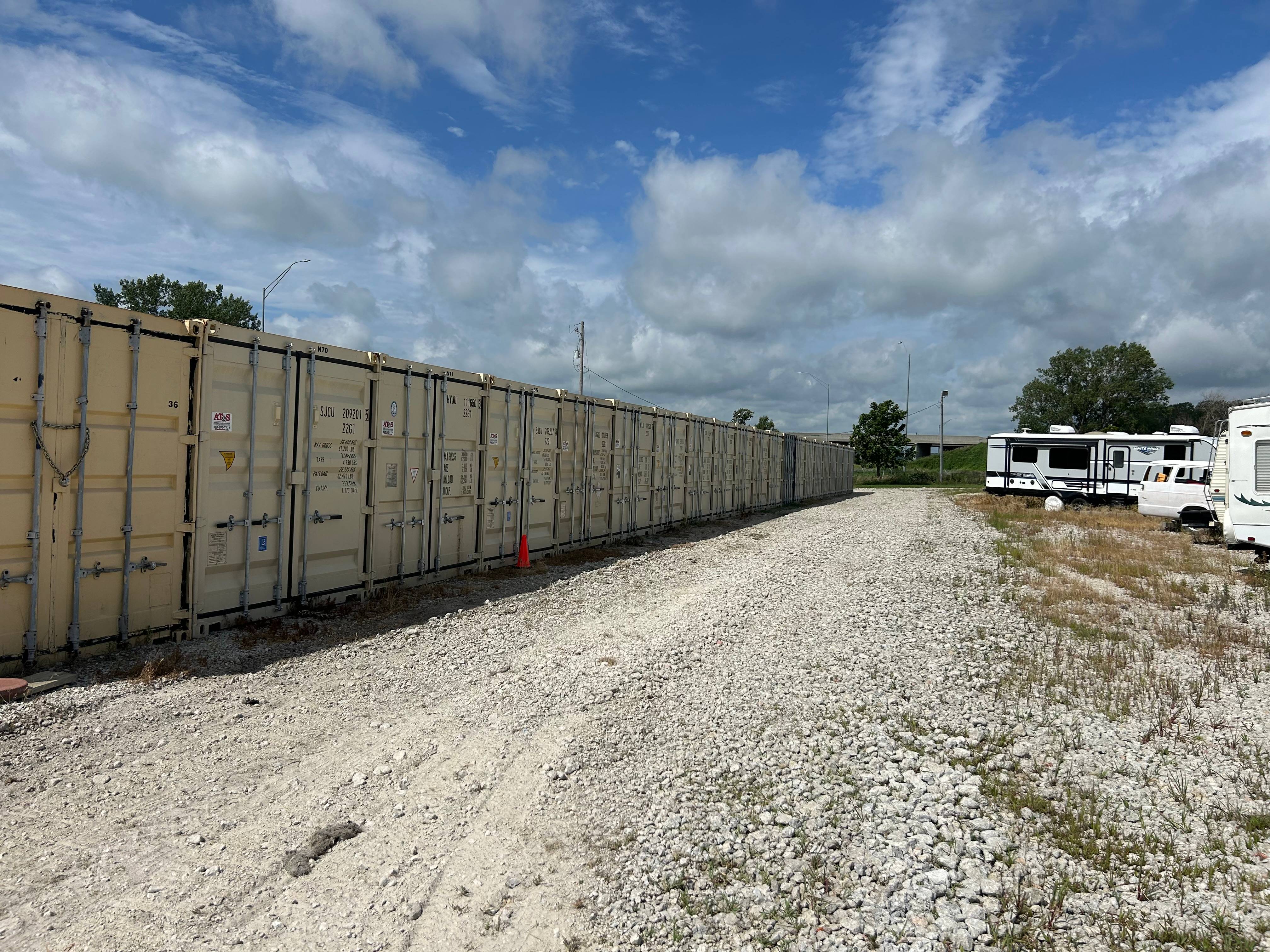
    Lunch is over.  Back to sweeping and putting locks and contracts into the 20 new containers we just got.  Another 30 next week.  Land, fence and road already paid.  Who doesn’t like a $3,200 set container renting for $65 per month with no property tax.  Plus year 1 write-off is back, so a lot less income tax this year.  Plus no toilets or soiled carpets. That same container in the markets I mentioned above would rent for $200 to $400 per month.   But I’ll stick to our home territory.  

    • Flipper/Rehabber · CA · Member since 2023 · 1k+ posts · 1k+ votes
      1y
      Quote from @Henry Clark:

      OP my family and I stay in a 40 mile radius from our house.   A. Because we can drive there and back in the evening when we still had a day job., B.  Team- bankers, electricians, GCs, excavators, Realtors, etc.  We stay in the same market.  We have buying power with them, since they know there will be a next deal.  We say we are doing another one, and they are ready.

      Are there better markets from both appreciation and cashflow?  By far.  Being on BP I’ve helped several people look at locations.  San Antonio, Tampa, Cincinnati, Boston, San Francisco, LA, and our Glenwood, Iowa.  We could make 2 to 4 times more appreciation and cashflow at those other locations.

      I tell people a few guides.

      1.  It’s your money, you’re right, even if you’re wrong.  I would rather lose money and learn than lose money with another persons model and risk assessment.

      2. Have you past your day job behind? Are you totally into REI? Then your REI model is successful. Grab ideas from other investors but don't change because they are right for their situation.

      Lunch is over.  Back to sweeping and putting locks and contracts into the 20 new containers we just got.  Another 30 next week.  Land, fence and road already paid.  Who doesn’t like a $3,200 set container renting for $65 per month with no property tax.  Plus year 1 write-off is back, so a lot less income tax this year.  Plus no toilets or soiled carpets. That same container in the markets I mentioned above would rent for $200 to $400 per month.   But I’ll stick to our home territory.  


       What a great post Henry. Im sore, tired & so tired of people (looking for the easy way) that im not a savy investor because I do physical work.

      You lifted my spirits! Bless you  :)

  • Henry ClarkPro Member
    Developer · Member since 2020 · 4k+ posts · 4k+ votes
    1y

    Hey BP.  I don’t watch podcasts. But if you get 3 or 4 of the above posters with different angles.  Let me know.  I would love to listen to.  

  • Chris ClothierBusiness Member
    Rental Property Investor · memphis, TN · Member since 2009 · 2k+ posts · 3k+ votes
    1y

    @James Hamling

    I appreciate this post.

    "The real estate more in the "affordable" range of median incomes will have outsized appreciation vs that moving further and further out in the rings of income demographics."

    I can't discuss some of these topics to the detail many posters like yourself can discuss.  I'm knowledgeable, but don't have the language and acumen to go deep in the nuance of a discussion like this. 

    However, as a knucklehead investor who claims experience rather than expertise, I have been discussing this exact concept with my team and every investor who contacts us for the past few years.  Now, I will invest in the upper end of the outliers and only with an eye toward accelerated depreciation and owning a forever portfolio.  

    When it comes to our balance sheet portfolio and what investors purchase from us, we concentrate on the middle, median priced homes that have the highest percentage of renter demand (because they are qualified to afford it) and the highest percentage of buyers (because they are qualified to afford it) as median priced homes sell to median income households (usually).  

    I also believe that classifying and discussing a market as a "cash-flow" market versus an "appreciation market" is a real disservice to passive investors and new investors.  It sets them up to miss the fundamental reason why they are buying something in the first place and what the actual, long-term value metrics are, as opposed to the short-term performance.  It causes investors to focus on cash flow, and in some cases, this may be detrimental for certain investors.

    • Real Estate Broker · Minneapolis, MN · Member since 2011 · 5k+ posts · 6k+ votes
      1y
      Quote from @Chris Clothier:

      @James Hamling

      I appreciate this post.

      "The real estate more in the "affordable" range of median incomes will have outsized appreciation vs that moving further and further out in the rings of income demographics."

      I can't discuss some of these topics to the detail many posters like yourself can discuss.  I'm knowledgeable, but don't have the language and acumen to go deep in the nuance of a discussion like this. 

      However, as a knucklehead investor who claims experience rather than expertise, I have been discussing this exact concept with my team and every investor who contacts us for the past few years.  Now, I will invest in the upper end of the outliers and only with an eye toward accelerated depreciation and owning a forever portfolio.  

      When it comes to our balance sheet portfolio and what investors purchase from us, we concentrate on the middle, median priced homes that have the highest percentage of renter demand (because they are qualified to afford it) and the highest percentage of buyers (because they are qualified to afford it) as median priced homes sell to median income households (usually).  

      I also believe that classifying and discussing a market as a "cash-flow" market versus an "appreciation market" is a real disservice to passive investors and new investors.  It sets them up to miss the fundamental reason why they are buying something in the first place and what the actual, long-term value metrics are, as opposed to the short-term performance.  It causes investors to focus on cash flow, and in some cases, this may be detrimental for certain investors.

      A 0 appreciation asset = cash-flow destruction EVERY TIME.  Because of inflation. 

      Inflation = purchase power of $ get's less over time. 

      Inflation = expenses increase over time. 

      0 appreciation + expense increase = negative returns 

      Appreciation is NECESSARY. 

      The relationship of inflation is absolutely necessary comprehension for any/every investor. With it, one will understand there is no such thing as a "cash-flow" vs "appreciation" market. There is only ascending, descending or a stagflation market. And to what degree. 

      Cash-flow, or lack there of, is just a result. 

  • Henry ClarkPro Member
    Developer · Member since 2020 · 4k+ posts · 4k+ votes
    1y

    OP.  My crystal ball says go with the more expensive properties “going into the future” no matter what your historical thesis is.  

    Perspective- We don’t do housing, we stay local, and we primarily do value add plus cashflow.  

    My perspective is low cost properties have a far less chance to proportionately increase in the future than high cost properties.  

    Personal perspective.

    A.   1991 bought 48 acres for $585 per acre.  2010 bought another 32 acres next to us for $7,000 per acre.  Did a subdivision and sold for $50,000 per acre.  As farm ground worth around $10,000 to $12,000.  Anyone would have gotten the same value increase except for the subdivision.  

    B.  Dow jones 1991 was 3,000 now up to 44,000.

    C.  1991 we built our house for $135,000.  2,100 sqft ranch, full basement, all brick.  Now worth about $700,000.   In the country in the Midwest.  

    My point to the above is none of them can occur in the next 34 years.  For them to increase at those same levels the wealth divide becomes astronomical.  Higher priced properties will have a greater chance for appreciation than lower cost ones.  Since lower income housing wages won’t keep up.  

    Will we see those same levels of appreciation?  Although I don’t think so.   The governments only way out is through selling more debt or printing more money.  $33T debt and the $100T unfunded liabilities won’t cost that much if they inflate money supply by say 12 fold.

    The good thing if the above happens for us.   Our asset values go up and our Longterm debt gets devalued.  Make money on both ends.  

    Buy $1mm and not $150k properties.  

    • V.G JasonPro Member
      Investor · Member since 2022 · 3k+ posts · 3k+ votes
      1y
      Quote from @Henry Clark:

      OP.  My crystal ball says go with the more expensive properties “going into the future” no matter what your historical thesis is.  

      Perspective- We don’t do housing, we stay local, and we primarily do value add plus cashflow.  

      My perspective is low cost properties have a far less chance to proportionately increase in the future than high cost properties.  

      Personal perspective.

      A.   1991 bought 48 acres for $585 per acre.  2010 bought another 32 acres next to us for $7,000 per acre.  Did a subdivision and sold for $50,000 per acre.  As farm ground worth around $10,000 to $12,000.  Anyone would have gotten the same value increase except for the subdivision.  

      B.  Dow jones 1991 was 3,000 now up to 44,000.

      C.  1991 we built our house for $135,000.  2,100 sqft ranch, full basement, all brick.  Now worth about $700,000.   In the country in the Midwest.  

      My point to the above is none of them can occur in the next 34 years.  For them to increase at those same levels the wealth divide becomes astronomical.  Higher priced properties will have a greater chance for appreciation than lower cost ones.  Since lower income housing wages won’t keep up.  

      Will we see those same levels of appreciation?  Although I don’t think so.   The governments only way out is through selling more debt or printing more money.  $33T debt and the $100T unfunded liabilities won’t cost that much if they inflate money supply by say 12 fold.

      The good thing if the above happens for us.   Our asset values go up and our Longterm debt gets devalued.  Make money on both ends.  

      Buy $1mm and not $150k properties.  


       In bold is all that needs to be said. It's the simplest, yet most refined, way to look at it.


      I know 20% Mike is dead set on proving he's right, but for his sake I hope he is in his little portfolio. With that said, Henry is indisputably right. 

    • Investor · Indianapolis, IN · Member since 2014 · 208 posts · 137 votes
      1y
      Quote from @Henry Clark:

      OP.  My crystal ball says go with the more expensive properties “going into the future” no matter what your historical thesis is.  

      Perspective- We don’t do housing, we stay local, and we primarily do value add plus cashflow.  

      My perspective is low cost properties have a far less chance to proportionately increase in the future than high cost properties.  

      Personal perspective.

      A.   1991 bought 48 acres for $585 per acre.  2010 bought another 32 acres next to us for $7,000 per acre.  Did a subdivision and sold for $50,000 per acre.  As farm ground worth around $10,000 to $12,000.  Anyone would have gotten the same value increase except for the subdivision.  

      B.  Dow jones 1991 was 3,000 now up to 44,000.

      C.  1991 we built our house for $135,000.  2,100 sqft ranch, full basement, all brick.  Now worth about $700,000.   In the country in the Midwest.  

      My point to the above is none of them can occur in the next 34 years.  For them to increase at those same levels the wealth divide becomes astronomical.  Higher priced properties will have a greater chance for appreciation than lower cost ones.  Since lower income housing wages won’t keep up.  

      Will we see those same levels of appreciation?  Although I don’t think so.   The governments only way out is through selling more debt or printing more money.  $33T debt and the $100T unfunded liabilities won’t cost that much if they inflate money supply by say 12 fold.

      The good thing if the above happens for us.   Our asset values go up and our Longterm debt gets devalued.  Make money on both ends.  

      Buy $1mm and not $150k properties.  

      Hey Henry. So let me see if I'm getting what you're saying. You gave an example of a house that appreciated steadily at about 5% per year (the one that was $135k in 1991 and is currently worth $700k). And you don't believe that kind of appreciation is going to continue--right?

      So, here's my suggestion, why don't you take a look at your return based on the equity that you have in the property? For example, if you bought the house in cash in 1991, and it didn't cashflow or generate any principal accumulation, your return on equity averaged 5%, exactly the appreciation rate, throughout all those years. It sounds great that a property went from $135k-$700k, but the return actually barely beats inflation and you would have come out ahead in stocks and bonds. My point is that wealth can be built more easily by getting a 20%+ return in your equity, exactly what's likely to happen in low cashflow markets.

      About your point that higher value properties are likely to appreciate better in the future. I'm no economist and won't pretend to have a super sophisticated understanding of the economics that drive appreciation in the USA. But I would point out that high-appreciation and low-appreciation areas seem to be equaling out somewhat as people become more mobile. The appreciation in most of the Midwest and the South has been so good since 2020 that it's really not even fair to call them low appreciation markets anymore. You can look at forecasts for, say, Los Angeles versus ones for Indianapolis. Pretty much everybody expects Indy to appreciate more over the coming say 5-10 years. That's definitely a big reversal. And this holds true across most coastal and "flyover" (I have the right to talk like this because I'm from the Midwest!) areas. The Sun Belt areas are probably going to appreciate better than either in the coming years, yes, but they cashflow so badly that you won't be able to invest in them unless you put down so much money that your overall rate of return comes out lower, regardless of the higher appreciation, like in my first couple examples.
  • Henry ClarkPro Member
    Developer · Member since 2020 · 4k+ posts · 4k+ votes
    1y

    @Mike D. I intentionally left out leverage (say 25% on REI versus zero on Stock Market- unless gambling doing options), revenue stream if this was a house rental or the farm ground was rented out, tax benefits, etc. Leveraged REI will always beat out other investments from an ROE standpoint.

    Your point about barely beating inflation, actually is my point for the OP.  

    My crystal ball says we won't see that level of inflation or value creation again.  Another point I did not bring in, the early 90's was still impacted from the super high inflation of the late 70's into 80's with the follow-up stagflation of the market until the early 90's.  We had a depressed starting point coming into the 90's that does not exist as of 2025.

    My point to the OP's question.  I would recommend investing in a high appreciation area versus a strong cash flow area (lower cost properties), because I think the Wealth Gap will get even greater in the next 10 to 20 years in the U.S.  

    Again, even though I don't think we will go into high inflation.  I also see the other side we are in National Debt overload.  A.  $30T debt, $130T Unfunded debt, B.  The US national debt averages 7 to 10 years.  It has been financed at a low interest rate.  The interest will almost double this year and next as we are halfway thru refinancing the debt.  The government will either sell debt or print money.  Causing inflation.

    With my thoughts of increased wealth gap, the higher end properties will keep up and the lower end properties won't be able to keep up with housing costs.  If I was to invest in lower housing costs today with the above thought, I would be opening up Trailer Parks and renting the lots out.

    Wherever the OP puts his money, I will always say he is right, since it's his money.

    • Investor · Indianapolis, IN · Member since 2014 · 208 posts · 137 votes
      1y
      Quote from @Henry Clark:

      @Mike D. I intentionally left out leverage (say 25% on REI versus zero on Stock Market- unless gambling doing options), revenue stream if this was a house rental or the farm ground was rented out, tax benefits, etc. Leveraged REI will always beat out other investments from an ROE standpoint.

      Your point about barely beating inflation, actually is my point for the OP.  

      My crystal ball says we won't see that level of inflation or value creation again.  Another point I did not bring in, the early 90's was still impacted from the super high inflation of the late 70's into 80's with the follow-up stagflation of the market until the early 90's.  We had a depressed starting point coming into the 90's that does not exist as of 2025.

      My point to the OP's question.  I would recommend investing in a high appreciation area versus a strong cash flow area (lower cost properties), because I think the Wealth Gap will get even greater in the next 10 to 20 years in the U.S.  

      Again, even though I don't think we will go into high inflation.  I also see the other side we are in National Debt overload.  A.  $30T debt, $130T Unfunded debt, B.  The US national debt averages 7 to 10 years.  It has been financed at a low interest rate.  The interest will almost double this year and next as we are halfway thru refinancing the debt.  The government will either sell debt or print money.  Causing inflation.

      With my thoughts of increased wealth gap, the higher end properties will keep up and the lower end properties won't be able to keep up with housing costs.  If I was to invest in lower housing costs today with the above thought, I would be opening up Trailer Parks and renting the lots out.

      Wherever the OP puts his money, I will always say he is right, since it's his money.

      Hi Henry. So, I am the OP. I want to make it clear exactly what the premise is, because this far into the thread some people are arguing about something else. Let's make sure everything is apples to apples. Leverage is part of the premise. You can very easily show that appreciation and rent growth are higher in expensive markets. I'm not arguing against statistics. What I'm saying is that by using leverage, you can get much higher overall return on equity in the less expensive markets. Dan H has been showing that if you're willing to incur enormous negative cashflow, you can get excellent returns in the more expensive markets, too. If someone has some way to deal with the extreme volatility and risk of that approach, they could do that. However, in any case other than that, it is definitely clear that returns using leverage are higher in less expensive markets, *even though* their appreciation and rent growth is lower. That's what I've been trying to say.

      I think you'd find most who are forecasting these things don't foresee a really large upside in the markets that are the most expensive right now. But, yes, we all have our own approaches and will find our own way and should respect what other people are doing. I think it is great if you want to invest in areas you think will appreciate well.

  • Real Estate Broker · Austin, TX · Member since 2012 · 1k+ posts · 1k+ votes
    1y

    @Mike D. There is so much conjecture in all of this. If you really want to test your premise then do it. Test it and then talk about the results. Buy in San Diego, Austin or any other higher appreciation markets and then buy in the low appreciation market with the same apples to apples product. Let's go from theory to the real estate real deal. 

    • Investor · Indianapolis, IN · Member since 2014 · 208 posts · 137 votes
      1y
      Quote from @Aaron Gordy:

      @Mike D. There is so much conjecture in all of this. If you really want to test your premise then do it. Test it and then talk about the results. Buy in San Diego, Austin or any other higher appreciation markets and then buy in the low appreciation market with the same apples to apples product. Let's go from theory to the real estate real deal. 


      I would love to do it and report back in ten years for the sake of science, but a) I’m not going to actually put my money into something I think is not a good investment and b) no matter how much I or other people, for or against, might care about this thread right now, they won’t in ten years. I do actually invest in low appreciation, high cashflow markets and am getting the returns I described—actually better, because I cut costs on maintenance and I didn’t factor that into my example because I knew it would lead to even more contentious discussions and be distracting.

  • Member since 2021 · 39 posts · 29 votes
    1y

    Dan brought this up earlier about a Dave Meyer thing… There has been this fallacy that lower appreciation markets have not appreciated anywhere near higher appreciation markets in the last few years.

    From my personal experience, a property in Fayetteville NC I’ve owned since 2021 has appreciated 65 percent. Appraisal was just done. And there was no value add on this one. Only thing I did was add gutters and some cleaning at first! 

    Not saying this will continue in the future but even lower appreciation markets have seen some big moves since Covid! 
     

    • V.G JasonPro Member
      Investor · Member since 2022 · 3k+ posts · 3k+ votes
      1y
      Quote from @Sean Martin:

      Dan brought this up earlier about a Dave Meyer thing… There has been this fallacy that lower appreciation markets have not appreciated anywhere near higher appreciation markets in the last few years.

      From my personal experience, a property in Fayetteville NC I’ve owned since 2021 has appreciated 65 percent. Appraisal was just done. And there was no value add on this one. Only thing I did was add gutters and some cleaning at first! 

      Not saying this will continue in the future but even lower appreciation markets have seen some big moves since Covid! 
       

       Percentages don't tell the whole story. Let's look at absolute value. Also, it's not really lower appreciation markets have had big moves; it's the dollar has become trash and the floor for a house has an artificial bid by an investor. For example, look at Detroit, Cleveland, etc., and those markets. It's not the economy, not the industries, not some new found weather pattern, or some new AI craze--it's simply lowest hanging fruit. 

      The primo markets, defined by folks not needing leverage to enter so the true wealthy, will reign the highest likely from an appreciation standpoint. The second is the one with rich buyers that are capable of buying with low LTV(those are certain pockets in very good cities), and down the line you go to the starter house in those cities--probably 25-33% below median price, in the path of progress, not affordable housing, likely needs 30-35% down to DSCR at flats but can get discount if distressed. Now, that's where you take your capital. Not Detroit.

    • Member since 2021 · 39 posts · 29 votes
      1y
      Quote from @V.G Jason:
      Quote from @Sean Martin:

      Dan brought this up earlier about a Dave Meyer thing… There has been this fallacy that lower appreciation markets have not appreciated anywhere near higher appreciation markets in the last few years.

      From my personal experience, a property in Fayetteville NC I’ve owned since 2021 has appreciated 65 percent. Appraisal was just done. And there was no value add on this one. Only thing I did was add gutters and some cleaning at first! 

      Not saying this will continue in the future but even lower appreciation markets have seen some big moves since Covid! 
       

       Percentages don't tell the whole story. Let's look at absolute value. Also, it's not really lower appreciation markets have had big moves; it's the dollar has become trash and the floor for a house has an artificial bid by an investor. For example, look at Detroit, Cleveland, etc., and those markets. It's not the economy, not the industries, not some new found weather pattern, or some new AI craze--it's simply lowest hanging fruit. 

      The primo markets, defined by folks not needing leverage to enter so the true wealthy, will reign the highest likely from an appreciation standpoint. The second is the one with rich buyers that are capable of buying with low LTV(those are certain pockets in very good cities), and down the line you go to the starter house in those cities--probably 25-33% below median price, in the path of progress, not affordable housing, likely needs 30-35% down to DSCR at flats but can get discount if distressed. Now, that's where you take your capital. Not Detroit.


       Yeah, I know. I totally get the percentages can be misleading. Was just pointing out that those other markets have been under appreciated which I still think is true. 

    • Dan H.Pro Member
      Investor · Poway, CA · Member since 2015 · 7k+ posts · 8k+ votes
      1y
      Quote from @Sean Martin:

      Dan brought this up earlier about a Dave Meyer thing… There has been this fallacy that lower appreciation markets have not appreciated anywhere near higher appreciation markets in the last few years.

      From my personal experience, a property in Fayetteville NC I’ve owned since 2021 has appreciated 65 percent. Appraisal was just done. And there was no value add on this one. Only thing I did was add gutters and some cleaning at first! 

      Not saying this will continue in the future but even lower appreciation markets have seen some big moves since Covid! 


       The post I referenced had many historical low appreciation markets out performing many historical high appreciation markets.   I forgot what the duration was but am almost sure it was more than a few years (i believe it was at least 5 years duration).

      The issue is that when you span out in duration, the numbers depict the appreciation  reality.  events like significant wars, GFC, COVID, Great Depression each affect the markets slightly differently.  These large events are not that rare and can have large effects on the appreciation if you use a short duration window such as 5 years or even in some cases 10 years.

      Neighborhoodscout has Fayetteville NC has 9 of 10 over the last 2 last years (10.42%/year, total 21.92%)   If you have 65% appreciation in 3 years you have far exceeded the market.  Do you understand why?  

      However the appreciation over the last 10 years Fayetteville NC scores 5 of 10 (6.58%,not bad, not good). Over 10 years, Fayetteville NC scores 3 of 10 on appreciation, 3.38%/year which is poor.

      This near term good appreciation may continue or it can be a transitory appreciation rate, only time will tell.  If it continues, Fayetteville NC could become a high appreciation market. 

      https://www.neighborhoodscout.com/nc/fayetteville/real-estat...

      San Francisco’s appreciation rate over the last 10 years is 1out of 10.  The work from home bartered their appreciation.  Are they now a low appreciation market.

      https://www.neighborhoodscout.com/ca/san-francisco/real-esta...

      My view is 5 years is definitely too short and 10 years, if it has a huge event such as Covid, GFC, etc, can be too short.  I believe 10 years from now, San Francisco will have good appreciation over those 10 years but time will tell if my forecast is accurate.  

      Good luck

    • Member since 2021 · 39 posts · 29 votes
      1y
      Quote from @Dan H.:
      Quote from @Sean Martin:

      Dan brought this up earlier about a Dave Meyer thing… There has been this fallacy that lower appreciation markets have not appreciated anywhere near higher appreciation markets in the last few years.

      From my personal experience, a property in Fayetteville NC I’ve owned since 2021 has appreciated 65 percent. Appraisal was just done. And there was no value add on this one. Only thing I did was add gutters and some cleaning at first! 

      Not saying this will continue in the future but even lower appreciation markets have seen some big moves since Covid! 


       The post I referenced had many historical low appreciation markets out performing many historical high appreciation markets.   I forgot what the duration was but am almost sure it was more than a few years (i believe it was at least 5 years duration).

      The issue is that when you span out in duration, the numbers depict the appreciation  reality.  events like significant wars, GFC, COVID, Great Depression each affect the markets slightly differently.  These large events are not that rare and can have large effects on the appreciation if you use a short duration window such as 5 years or even in some cases 10 years.

      Neighborhoodscout has Fayetteville NC has 9 of 10 over the last 2 last years (10.42%/year, total 21.92%)   If you have 65% appreciation in 3 years you have far exceeded the market.  Do you understand why?  

      However the appreciation over the last 10 years Fayetteville NC scores 5 of 10 (6.58%,not bad, not good). Over 10 years, Fayetteville NC scores 3 of 10 on appreciation, 3.38%/year which is poor.

      This near term good appreciation may continue or it can be a transitory appreciation rate, only time will tell.  If it continues, Fayetteville NC could become a high appreciation market. 

      https://www.neighborhoodscout.com/nc/fayetteville/real-estat...

      San Francisco’s appreciation rate over the last 10 years is 1out of 10.  The work from home bartered their appreciation.  Are they now a low appreciation market.

      https://www.neighborhoodscout.com/ca/san-francisco/real-esta...

      My view is 5 years is definitely too short and 10 years, if it has a huge event such as Covid, GFC, etc, can be too short.  I believe 10 years from now, San Francisco will have good appreciation over those 10 years but time will tell if my forecast is accurate.  

      Good luck


       Great stuff! Thank you for the info, Dan. I’ve owned the home for 4 years and the outsized appreciation compared to the rest of Fayetteville I believe is the neighborhood I bought in, which has outpaced other areas in the city. Part of that was luck but my realtor did a great job letting me know why he thought that area may be more up and coming. 

  • Rental Property Investor · San Francisco Bay Area · Member since 2022 · 1k+ posts · 1k+ votes
    1y

    This post generated over 100 comments...wow..  I agree with many of the comments about owning a higher quality asset in an appreciating market. I invest in the San Francisco Bay Area and Indianapolis metro area.

    My appreciation and net worth from my California properties far surpasses my Indiana ones. For context my appreciating properties in CA and the Class A Indiana were acquired in 2013 or before. Class C Indy purchased in 2023.

    I know a lot of multi-millionaires in the Bay Area who had middle class incomes (teacher, librarian, janitors, etc) who bought long ago (as in 2008 or going back to 1970s) with with just one or two rentals. This was when CA was more affordable and home prices weren't out of reach. 

    Example (not mine but someone I know): 

    - S.F. Bay Area home 3 bedroom, 2 bath 2100 sq ft (lower level living area brings it up to 2700 sq ft) purchased in 1960s for $68,000

    - listed for sale in 2014 for $1.25 million, bidding war, sold for $1.71million. 

    - New owner renovates it, listed in in 2021 for $2.5million, bidding war sells for $3.078 million. Owner #2 made $1.368 million (minus commission and closing costs) in 7 years. That's a pretty good return to me. 

    I tried to read every single post but stopped on page 4. I didn't see anyone mention this but in California our property taxes go up a max of 2% a year (from Proposition 13 passed in 1978). Long time owners (primary home owners and investors) benefit from this but newer buyers pay high property taxes. 

     I had an Indy property management company do an analysis of my 3 homes. Class A could keep for appreciation, doubled in value but my property taxes go up significantly, 17% the last assessment (at this rate the property tax will surpass my California properties in a few years - not joking). For the Class C homes, he said I'm unlikely to get a good return unless I get a great tenant and they stay for a long time and the properties stabilize (repair calls reduce). The tenants will likely be lower income for a very long time. I sold one of the Class C and the other one is still rented. By the time the Class C appreciates enough I'll be over 100 years old. 

    If I was going to be cash flow negative from the start, I would have bought one higher quality asset instead of 2 Class C homes. To the OP,  Mike D. meaning buying in Hamilton County suburbs (where my Class A) instead of east side of Indianapolis. 

     I think people who live in low cost markets do better investing there instead of investors who live 2000 miles away. I also think there are sub markets with lower cost markets and I recommended to CA investors to buy higher quality assets OOS not the cheapest house they can find. 

    • Investor · Indianapolis, IN · Member since 2014 · 208 posts · 137 votes
      1y
      Quote from @Becca F.:

      This post generated over 100 comments...wow..  I agree with many of the comments about owning a higher quality asset in an appreciating market. I invest in the San Francisco Bay Area and Indianapolis metro area.

      My appreciation and net worth from my California properties far surpasses my Indiana ones. For context my appreciating properties in CA and the Class A Indiana were acquired in 2013 or before. Class C Indy purchased in 2023.

      I know a lot of multi-millionaires in the Bay Area who had middle class incomes (teacher, librarian, janitors, etc) who bought long ago (as in 2008 or going back to 1970s) with with just one or two rentals. This was when CA was more affordable and home prices weren't out of reach. 

      Example (not mine but someone I know): 

      - S.F. Bay Area home 3 bedroom, 2 bath 2100 sq ft (lower level living area brings it up to 2700 sq ft) purchased in 1960s for $68,000

      - listed for sale in 2014 for $1.25 million, bidding war, sold for $1.71million. 

      - New owner renovates it, listed in in 2021 for $2.5million, bidding war sells for $3.078 million. Owner #2 made $1.368 million (minus commission and closing costs) in 7 years. That's a pretty good return to me. 

      I tried to read every single post but stopped on page 4. I didn't see anyone mention this but in California our property taxes go up a max of 2% a year (from Proposition 13 passed in 1978). Long time owners (primary home owners and investors) benefit from this but newer buyers pay high property taxes. 

       I had an Indy property management company do an analysis of my 3 homes. Class A could keep for appreciation, doubled in value but my property taxes go up significantly, 17% the last assessment (at this rate the property tax will surpass my California properties in a few years - not joking). For the Class C homes, he said I'm unlikely to get a good return unless I get a great tenant and they stay for a long time and the properties stabilize (repair calls reduce). The tenants will likely be lower income for a very long time. I sold one of the Class C and the other one is still rented. By the time the Class C appreciates enough I'll be over 100 years old. 

      If I was going to be cash flow negative from the start, I would have bought one higher quality asset instead of 2 Class C homes. To the OP,  Mike D. meaning buying in Hamilton County suburbs (where my Class A) instead of east side of Indianapolis. 

       I think people who live in low cost markets do better investing there instead of investors who live 2000 miles away. I also think there are sub markets with lower cost markets and I recommended to CA investors to buy higher quality assets OOS not the cheapest house they can find. 

      Interesting insights and I am in a similar situation to you. I own property in California as well and choose to do most of my investing in the Midwest in spite of the higher (historical) appreciation and rent growth in CA. The reason comes down to return on equity. Many if not most of the people arguing against my ideas, some of them very, very loudly, don't use or understand this concept. Basically, you take all sources of gain (cashflow, appreciation, and principal paydown) divided by your equity in the property (at purchase it's your down payment, and later as appreciation takes place it's whatever the current value of the property is minus your loan balance) and that gives you a percentage showing your total return. I pretty much guarantee that that's higher in the Midwest UNLESS you put down a small down payment in CA and deal with huge negative cashflow. If I were writing my post again I would clearly define this concept at the start since many investors don't understand this and I was just assuming they all did.

      If I were evaluating Class A vs Class C I would figure out the amount I need to put down to cashflow and then run an ROE calculation on both. Nothing wrong with Class A as long as you understand the difference in return and make a tradeoff you like. Its ROE will be much lower, but less volatile, less maintenance calls, less annoyance.

      Yes, the outskirts of Indy such as Hamilton County give truly amazing ROE due to even better cashflow and lower property taxes than Indy and for some reason are neglected by investors.

      Thanks for the feedback!
    • Rental Property Investor · New Braunfels, TX · Member since 2021 · 291 posts · 257 votes
      1y
      Quote from @Mike D.:
      Quote from @Becca F.:

      This post generated over 100 comments...wow..  I agree with many of the comments about owning a higher quality asset in an appreciating market. I invest in the San Francisco Bay Area and Indianapolis metro area.

      My appreciation and net worth from my California properties far surpasses my Indiana ones. For context my appreciating properties in CA and the Class A Indiana were acquired in 2013 or before. Class C Indy purchased in 2023.

      I know a lot of multi-millionaires in the Bay Area who had middle class incomes (teacher, librarian, janitors, etc) who bought long ago (as in 2008 or going back to 1970s) with with just one or two rentals. This was when CA was more affordable and home prices weren't out of reach. 

      Example (not mine but someone I know): 

      - S.F. Bay Area home 3 bedroom, 2 bath 2100 sq ft (lower level living area brings it up to 2700 sq ft) purchased in 1960s for $68,000

      - listed for sale in 2014 for $1.25 million, bidding war, sold for $1.71million. 

      - New owner renovates it, listed in in 2021 for $2.5million, bidding war sells for $3.078 million. Owner #2 made $1.368 million (minus commission and closing costs) in 7 years. That's a pretty good return to me. 

      I tried to read every single post but stopped on page 4. I didn't see anyone mention this but in California our property taxes go up a max of 2% a year (from Proposition 13 passed in 1978). Long time owners (primary home owners and investors) benefit from this but newer buyers pay high property taxes. 

       I had an Indy property management company do an analysis of my 3 homes. Class A could keep for appreciation, doubled in value but my property taxes go up significantly, 17% the last assessment (at this rate the property tax will surpass my California properties in a few years - not joking). For the Class C homes, he said I'm unlikely to get a good return unless I get a great tenant and they stay for a long time and the properties stabilize (repair calls reduce). The tenants will likely be lower income for a very long time. I sold one of the Class C and the other one is still rented. By the time the Class C appreciates enough I'll be over 100 years old. 

      If I was going to be cash flow negative from the start, I would have bought one higher quality asset instead of 2 Class C homes. To the OP,  Mike D. meaning buying in Hamilton County suburbs (where my Class A) instead of east side of Indianapolis. 

       I think people who live in low cost markets do better investing there instead of investors who live 2000 miles away. I also think there are sub markets with lower cost markets and I recommended to CA investors to buy higher quality assets OOS not the cheapest house they can find. 

      Interesting insights and I am in a similar situation to you. I own property in California as well and choose to do most of my investing in the Midwest in spite of the higher (historical) appreciation and rent growth in CA. The reason comes down to return on equity. Many if not most of the people arguing against my ideas, some of them very, very loudly, don't use or understand this concept. Basically, you take all sources of gain (cashflow, appreciation, and principal paydown) divided by your equity in the property (at purchase it's your down payment, and later as appreciation takes place it's whatever the current value of the property is minus your loan balance) and that gives you a percentage showing your total return. I pretty much guarantee that that's higher in the Midwest UNLESS you put down a small down payment in CA and deal with huge negative cashflow. If I were writing my post again I would clearly define this concept at the start since many investors don't understand this and I was just assuming they all did.

      If I were evaluating Class A vs Class C I would figure out the amount I need to put down to cashflow and then run an ROE calculation on both. Nothing wrong with Class A as long as you understand the difference in return and make a tradeoff you like. Its ROE will be much lower, but less volatile, less maintenance calls, less annoyance.

      Yes, the outskirts of Indy such as Hamilton County give truly amazing ROE due to even better cashflow and lower property taxes than Indy and for some reason are neglected by investors.

      Thanks for the feedback!
      I bought a house in central Michigan for my dad for $40,000 in 2000. It is now worth $100,000 25 years later. I bought my house in New Braunfels Texas in 2004 for $105,000. It is now worth $480,000. I bought several houses in 2016 in New Braunfels that are worth double what I paid for them. I'll sell you that house in central Michigan if you want but you aren't buying any that I own in New Braunfels.....
    • Investor · Indianapolis, IN · Member since 2014 · 208 posts · 137 votes
      1y
      Quote from @Mike Kirby:
      Quote from @Mike D.:
      Quote from @Becca F.:

      This post generated over 100 comments...wow..  I agree with many of the comments about owning a higher quality asset in an appreciating market. I invest in the San Francisco Bay Area and Indianapolis metro area.

      My appreciation and net worth from my California properties far surpasses my Indiana ones. For context my appreciating properties in CA and the Class A Indiana were acquired in 2013 or before. Class C Indy purchased in 2023.

      I know a lot of multi-millionaires in the Bay Area who had middle class incomes (teacher, librarian, janitors, etc) who bought long ago (as in 2008 or going back to 1970s) with with just one or two rentals. This was when CA was more affordable and home prices weren't out of reach. 

      Example (not mine but someone I know): 

      - S.F. Bay Area home 3 bedroom, 2 bath 2100 sq ft (lower level living area brings it up to 2700 sq ft) purchased in 1960s for $68,000

      - listed for sale in 2014 for $1.25 million, bidding war, sold for $1.71million. 

      - New owner renovates it, listed in in 2021 for $2.5million, bidding war sells for $3.078 million. Owner #2 made $1.368 million (minus commission and closing costs) in 7 years. That's a pretty good return to me. 

      I tried to read every single post but stopped on page 4. I didn't see anyone mention this but in California our property taxes go up a max of 2% a year (from Proposition 13 passed in 1978). Long time owners (primary home owners and investors) benefit from this but newer buyers pay high property taxes. 

       I had an Indy property management company do an analysis of my 3 homes. Class A could keep for appreciation, doubled in value but my property taxes go up significantly, 17% the last assessment (at this rate the property tax will surpass my California properties in a few years - not joking). For the Class C homes, he said I'm unlikely to get a good return unless I get a great tenant and they stay for a long time and the properties stabilize (repair calls reduce). The tenants will likely be lower income for a very long time. I sold one of the Class C and the other one is still rented. By the time the Class C appreciates enough I'll be over 100 years old. 

      If I was going to be cash flow negative from the start, I would have bought one higher quality asset instead of 2 Class C homes. To the OP,  Mike D. meaning buying in Hamilton County suburbs (where my Class A) instead of east side of Indianapolis. 

       I think people who live in low cost markets do better investing there instead of investors who live 2000 miles away. I also think there are sub markets with lower cost markets and I recommended to CA investors to buy higher quality assets OOS not the cheapest house they can find. 

      Interesting insights and I am in a similar situation to you. I own property in California as well and choose to do most of my investing in the Midwest in spite of the higher (historical) appreciation and rent growth in CA. The reason comes down to return on equity. Many if not most of the people arguing against my ideas, some of them very, very loudly, don't use or understand this concept. Basically, you take all sources of gain (cashflow, appreciation, and principal paydown) divided by your equity in the property (at purchase it's your down payment, and later as appreciation takes place it's whatever the current value of the property is minus your loan balance) and that gives you a percentage showing your total return. I pretty much guarantee that that's higher in the Midwest UNLESS you put down a small down payment in CA and deal with huge negative cashflow. If I were writing my post again I would clearly define this concept at the start since many investors don't understand this and I was just assuming they all did.

      If I were evaluating Class A vs Class C I would figure out the amount I need to put down to cashflow and then run an ROE calculation on both. Nothing wrong with Class A as long as you understand the difference in return and make a tradeoff you like. Its ROE will be much lower, but less volatile, less maintenance calls, less annoyance.

      Yes, the outskirts of Indy such as Hamilton County give truly amazing ROE due to even better cashflow and lower property taxes than Indy and for some reason are neglected by investors.

      Thanks for the feedback!
      I bought a house in central Michigan for my dad for $40,000 in 2000. It is now worth $100,000 25 years later. I bought my house in New Braunfels Texas in 2004 for $105,000. It is now worth $480,000. I bought several houses in 2016 in New Braunfels that are worth double what I paid for them. I'll sell you that house in central Michigan if you want but you aren't buying any that I own in New Braunfels.....
      I'm not buying in central Michigan, or in Texas, but thanks! By the way, what I'm saying here is something a bit different than this--please see comments on ROE and then I think it will make sense! 
    • Dan H.Pro Member
      Investor · Poway, CA · Member since 2015 · 7k+ posts · 8k+ votes
      1y
      Quote from @Mike D.:
      Quote from @Becca F.:

      This post generated over 100 comments...wow..  I agree with many of the comments about owning a higher quality asset in an appreciating market. I invest in the San Francisco Bay Area and Indianapolis metro area.

      My appreciation and net worth from my California properties far surpasses my Indiana ones. For context my appreciating properties in CA and the Class A Indiana were acquired in 2013 or before. Class C Indy purchased in 2023.

      I know a lot of multi-millionaires in the Bay Area who had middle class incomes (teacher, librarian, janitors, etc) who bought long ago (as in 2008 or going back to 1970s) with with just one or two rentals. This was when CA was more affordable and home prices weren't out of reach. 

      Example (not mine but someone I know): 

      - S.F. Bay Area home 3 bedroom, 2 bath 2100 sq ft (lower level living area brings it up to 2700 sq ft) purchased in 1960s for $68,000

      - listed for sale in 2014 for $1.25 million, bidding war, sold for $1.71million. 

      - New owner renovates it, listed in in 2021 for $2.5million, bidding war sells for $3.078 million. Owner #2 made $1.368 million (minus commission and closing costs) in 7 years. That's a pretty good return to me. 

      I tried to read every single post but stopped on page 4. I didn't see anyone mention this but in California our property taxes go up a max of 2% a year (from Proposition 13 passed in 1978). Long time owners (primary home owners and investors) benefit from this but newer buyers pay high property taxes. 

       I had an Indy property management company do an analysis of my 3 homes. Class A could keep for appreciation, doubled in value but my property taxes go up significantly, 17% the last assessment (at this rate the property tax will surpass my California properties in a few years - not joking). For the Class C homes, he said I'm unlikely to get a good return unless I get a great tenant and they stay for a long time and the properties stabilize (repair calls reduce). The tenants will likely be lower income for a very long time. I sold one of the Class C and the other one is still rented. By the time the Class C appreciates enough I'll be over 100 years old. 

      If I was going to be cash flow negative from the start, I would have bought one higher quality asset instead of 2 Class C homes. To the OP,  Mike D. meaning buying in Hamilton County suburbs (where my Class A) instead of east side of Indianapolis. 

       I think people who live in low cost markets do better investing there instead of investors who live 2000 miles away. I also think there are sub markets with lower cost markets and I recommended to CA investors to buy higher quality assets OOS not the cheapest house they can find. 

      Interesting insights and I am in a similar situation to you. I own property in California as well and choose to do most of my investing in the Midwest in spite of the higher (historical) appreciation and rent growth in CA. The reason comes down to return on equity. Many if not most of the people arguing against my ideas, some of them very, very loudly, don't use or understand this concept. Basically, you take all sources of gain (cashflow, appreciation, and principal paydown) divided by your equity in the property (at purchase it's your down payment, and later as appreciation takes place it's whatever the current value of the property is minus your loan balance) and that gives you a percentage showing your total return. I pretty much guarantee that that's higher in the Midwest UNLESS you put down a small down payment in CA and deal with huge negative cashflow. If I were writing my post again I would clearly define this concept at the start since many investors don't understand this and I was just assuming they all did.

      If I were evaluating Class A vs Class C I would figure out the amount I need to put down to cashflow and then run an ROE calculation on both. Nothing wrong with Class A as long as you understand the difference in return and make a tradeoff you like. Its ROE will be much lower, but less volatile, less maintenance calls, less annoyance.

      Yes, the outskirts of Indy such as Hamilton County give truly amazing ROE due to even better cashflow and lower property taxes than Indy and for some reason are neglected by investors.

      Thanks for the feedback!

       Here are the issues:

      1) you already have demonstrated multiple times that you do not know how to calculate ROE.  Anything you say on this matter has lost its credibility.  

      2) you already indicated that your cash flow analysis in the high appreciating markets (maybe all markets) included OO purchases in determining the property value. This perturbs your property cost upwards significantly that increases your negative cash flow calculation.

      The underwriting results are only as good as the underwriting inputs and algorithm.  Both your numbers and algorithm need work. 

      I could use virtually any reasonable leveraged LTV you desire and show a purchase from 2000 or 2010 in my market would crush the low appreciating markets. My market would have better cash flow and better appreciation over the hold.

      Good luck

    • V.G JasonPro Member
      Investor · Member since 2022 · 3k+ posts · 3k+ votes
      1y
      Quote from @Dan H.:
      Quote from @Mike D.:
      Quote from @Becca F.:

      This post generated over 100 comments...wow..  I agree with many of the comments about owning a higher quality asset in an appreciating market. I invest in the San Francisco Bay Area and Indianapolis metro area.

      My appreciation and net worth from my California properties far surpasses my Indiana ones. For context my appreciating properties in CA and the Class A Indiana were acquired in 2013 or before. Class C Indy purchased in 2023.

      I know a lot of multi-millionaires in the Bay Area who had middle class incomes (teacher, librarian, janitors, etc) who bought long ago (as in 2008 or going back to 1970s) with with just one or two rentals. This was when CA was more affordable and home prices weren't out of reach. 

      Example (not mine but someone I know): 

      - S.F. Bay Area home 3 bedroom, 2 bath 2100 sq ft (lower level living area brings it up to 2700 sq ft) purchased in 1960s for $68,000

      - listed for sale in 2014 for $1.25 million, bidding war, sold for $1.71million. 

      - New owner renovates it, listed in in 2021 for $2.5million, bidding war sells for $3.078 million. Owner #2 made $1.368 million (minus commission and closing costs) in 7 years. That's a pretty good return to me. 

      I tried to read every single post but stopped on page 4. I didn't see anyone mention this but in California our property taxes go up a max of 2% a year (from Proposition 13 passed in 1978). Long time owners (primary home owners and investors) benefit from this but newer buyers pay high property taxes. 

       I had an Indy property management company do an analysis of my 3 homes. Class A could keep for appreciation, doubled in value but my property taxes go up significantly, 17% the last assessment (at this rate the property tax will surpass my California properties in a few years - not joking). For the Class C homes, he said I'm unlikely to get a good return unless I get a great tenant and they stay for a long time and the properties stabilize (repair calls reduce). The tenants will likely be lower income for a very long time. I sold one of the Class C and the other one is still rented. By the time the Class C appreciates enough I'll be over 100 years old. 

      If I was going to be cash flow negative from the start, I would have bought one higher quality asset instead of 2 Class C homes. To the OP,  Mike D. meaning buying in Hamilton County suburbs (where my Class A) instead of east side of Indianapolis. 

       I think people who live in low cost markets do better investing there instead of investors who live 2000 miles away. I also think there are sub markets with lower cost markets and I recommended to CA investors to buy higher quality assets OOS not the cheapest house they can find. 

      Interesting insights and I am in a similar situation to you. I own property in California as well and choose to do most of my investing in the Midwest in spite of the higher (historical) appreciation and rent growth in CA. The reason comes down to return on equity. Many if not most of the people arguing against my ideas, some of them very, very loudly, don't use or understand this concept. Basically, you take all sources of gain (cashflow, appreciation, and principal paydown) divided by your equity in the property (at purchase it's your down payment, and later as appreciation takes place it's whatever the current value of the property is minus your loan balance) and that gives you a percentage showing your total return. I pretty much guarantee that that's higher in the Midwest UNLESS you put down a small down payment in CA and deal with huge negative cashflow. If I were writing my post again I would clearly define this concept at the start since many investors don't understand this and I was just assuming they all did.

      If I were evaluating Class A vs Class C I would figure out the amount I need to put down to cashflow and then run an ROE calculation on both. Nothing wrong with Class A as long as you understand the difference in return and make a tradeoff you like. Its ROE will be much lower, but less volatile, less maintenance calls, less annoyance.

      Yes, the outskirts of Indy such as Hamilton County give truly amazing ROE due to even better cashflow and lower property taxes than Indy and for some reason are neglected by investors.

      Thanks for the feedback!

       Here are the issues:

      1) you already have demonstrated multiple times that you do not know how to calculate ROE.  Anything you say on this matter has lost its credibility.  

      2) you already indicated that your cash flow analysis in the high appreciating markets (maybe all markets) included OO purchases in determining the property value. This perturbs your property cost upwards significantly that increases your negative cash flow calculation.

      The underwriting results are only as good as the underwriting inputs and algorithm.  Both your numbers and algorithm need work. 

      I could use virtually any reasonable leveraged LTV you desire and show a purchase from 2000 or 2010 in my market would crush the low appreciating markets. My market would have better cash flow and better appreciation over the hold.

      Good luck

       Fair points.

      The other thing to really discount is this tunnel vision view of ROE. ROE isn't why you invest, it's apart of why you invest. You don't invest for CoC, just cash flow, or just appreciation. You invest in physical RE with multiple things on the horizon; store of value, value add, utility, tax benefits. Those in some shape or form are appreciation, cash flow, and intrinsic value.

      If the focus of ROE is on real estate-- you're best off with value adds in primo areas. And re-financing. Those fixes alone are a huge uptick in ROE.

      Putting a new bathroom and bedroom in the hood Memphis or primo Memphis will cost you marginally the same, but the ROE is noticeably different. So even if we want to use ROE and cherrypick this, you're still better off in a better area because appreciation is an input for ROE. And interestingly enough, in these bad areas your rental appreciation does stagnate which actually is diminishing ROE. And in good areas, because they are scarce, your rental appreciate grows quicker(likely) and it's a net positive for ROE.

      The cash flow and debt paydown are simply functions of LTV and for that I'll continue to say if you want to buy low hanging fruits, go for it. Physical RE is very hard, pay me to wear the risk or let me buy scarcity. I'd take capital almost anywhere else then there in RE-- I want quality!

    • Flipper/Rehabber · CA · Member since 2023 · 1k+ posts · 1k+ votes
      1y
      Quote from @V.G Jason:
      Quote from @Dan H.:
      Quote from @Mike D.:
      Quote from @Becca F.:

      This post generated over 100 comments...wow..  I agree with many of the comments about owning a higher quality asset in an appreciating market. I invest in the San Francisco Bay Area and Indianapolis metro area.

      My appreciation and net worth from my California properties far surpasses my Indiana ones. For context my appreciating properties in CA and the Class A Indiana were acquired in 2013 or before. Class C Indy purchased in 2023.

      I know a lot of multi-millionaires in the Bay Area who had middle class incomes (teacher, librarian, janitors, etc) who bought long ago (as in 2008 or going back to 1970s) with with just one or two rentals. This was when CA was more affordable and home prices weren't out of reach. 

      Example (not mine but someone I know): 

      - S.F. Bay Area home 3 bedroom, 2 bath 2100 sq ft (lower level living area brings it up to 2700 sq ft) purchased in 1960s for $68,000

      - listed for sale in 2014 for $1.25 million, bidding war, sold for $1.71million. 

      - New owner renovates it, listed in in 2021 for $2.5million, bidding war sells for $3.078 million. Owner #2 made $1.368 million (minus commission and closing costs) in 7 years. That's a pretty good return to me. 

      I tried to read every single post but stopped on page 4. I didn't see anyone mention this but in California our property taxes go up a max of 2% a year (from Proposition 13 passed in 1978). Long time owners (primary home owners and investors) benefit from this but newer buyers pay high property taxes. 

       I had an Indy property management company do an analysis of my 3 homes. Class A could keep for appreciation, doubled in value but my property taxes go up significantly, 17% the last assessment (at this rate the property tax will surpass my California properties in a few years - not joking). For the Class C homes, he said I'm unlikely to get a good return unless I get a great tenant and they stay for a long time and the properties stabilize (repair calls reduce). The tenants will likely be lower income for a very long time. I sold one of the Class C and the other one is still rented. By the time the Class C appreciates enough I'll be over 100 years old. 

      If I was going to be cash flow negative from the start, I would have bought one higher quality asset instead of 2 Class C homes. To the OP,  Mike D. meaning buying in Hamilton County suburbs (where my Class A) instead of east side of Indianapolis. 

       I think people who live in low cost markets do better investing there instead of investors who live 2000 miles away. I also think there are sub markets with lower cost markets and I recommended to CA investors to buy higher quality assets OOS not the cheapest house they can find. 

      Interesting insights and I am in a similar situation to you. I own property in California as well and choose to do most of my investing in the Midwest in spite of the higher (historical) appreciation and rent growth in CA. The reason comes down to return on equity. Many if not most of the people arguing against my ideas, some of them very, very loudly, don't use or understand this concept. Basically, you take all sources of gain (cashflow, appreciation, and principal paydown) divided by your equity in the property (at purchase it's your down payment, and later as appreciation takes place it's whatever the current value of the property is minus your loan balance) and that gives you a percentage showing your total return. I pretty much guarantee that that's higher in the Midwest UNLESS you put down a small down payment in CA and deal with huge negative cashflow. If I were writing my post again I would clearly define this concept at the start since many investors don't understand this and I was just assuming they all did.

      If I were evaluating Class A vs Class C I would figure out the amount I need to put down to cashflow and then run an ROE calculation on both. Nothing wrong with Class A as long as you understand the difference in return and make a tradeoff you like. Its ROE will be much lower, but less volatile, less maintenance calls, less annoyance.

      Yes, the outskirts of Indy such as Hamilton County give truly amazing ROE due to even better cashflow and lower property taxes than Indy and for some reason are neglected by investors.

      Thanks for the feedback!

       Here are the issues:

      1) you already have demonstrated multiple times that you do not know how to calculate ROE.  Anything you say on this matter has lost its credibility.  

      2) you already indicated that your cash flow analysis in the high appreciating markets (maybe all markets) included OO purchases in determining the property value. This perturbs your property cost upwards significantly that increases your negative cash flow calculation.

      The underwriting results are only as good as the underwriting inputs and algorithm.  Both your numbers and algorithm need work. 

      I could use virtually any reasonable leveraged LTV you desire and show a purchase from 2000 or 2010 in my market would crush the low appreciating markets. My market would have better cash flow and better appreciation over the hold.

      Good luck


       Fair points.

      The other thing to really discount is this tunnel vision view of ROE. ROE isn't why you invest, it's apart of why you invest. You don't invest for CoC, just cash flow, or just appreciation. You invest in physical RE with multiple things on the horizon; store of value, value add, utility, tax benefits. Those in some shape or form are appreciation, cash flow, and intrinsic value.

      If the focus of ROE is on real estate-- you're best off with value adds in primo areas. And re-financing. Those fixes alone are a huge uptick in ROE.

      Putting a new bathroom and bedroom in the hood Memphis or primo Memphis will cost you marginally the same, but the ROE is noticeably different. So even if we want to use ROE and cherrypick this, you're still better off in a better area because appreciation is an input for ROE. And interestingly enough, in these bad areas your rental appreciation does stagnate which actually is diminishing ROE. So again ROE is not why you invest and it needs to not be so hung up on.

      The cash flow and debt paydown are simply functions of LTV and for that I'll continue to say if you want to buy low hanging fruits, go for it. I'd take capital almost anywhere else then there in RE-- I want quality!


       What? Value add in primo areas!

      shhh.....lol

    • V.G JasonPro Member
      Investor · Member since 2022 · 3k+ posts · 3k+ votes
      1y
      Quote from @Alan F.:
      Quote from @V.G Jason:
      Quote from @Dan H.:
      Quote from @Mike D.:
      Quote from @Becca F.:

      This post generated over 100 comments...wow..  I agree with many of the comments about owning a higher quality asset in an appreciating market. I invest in the San Francisco Bay Area and Indianapolis metro area.

      My appreciation and net worth from my California properties far surpasses my Indiana ones. For context my appreciating properties in CA and the Class A Indiana were acquired in 2013 or before. Class C Indy purchased in 2023.

      I know a lot of multi-millionaires in the Bay Area who had middle class incomes (teacher, librarian, janitors, etc) who bought long ago (as in 2008 or going back to 1970s) with with just one or two rentals. This was when CA was more affordable and home prices weren't out of reach. 

      Example (not mine but someone I know): 

      - S.F. Bay Area home 3 bedroom, 2 bath 2100 sq ft (lower level living area brings it up to 2700 sq ft) purchased in 1960s for $68,000

      - listed for sale in 2014 for $1.25 million, bidding war, sold for $1.71million. 

      - New owner renovates it, listed in in 2021 for $2.5million, bidding war sells for $3.078 million. Owner #2 made $1.368 million (minus commission and closing costs) in 7 years. That's a pretty good return to me. 

      I tried to read every single post but stopped on page 4. I didn't see anyone mention this but in California our property taxes go up a max of 2% a year (from Proposition 13 passed in 1978). Long time owners (primary home owners and investors) benefit from this but newer buyers pay high property taxes. 

       I had an Indy property management company do an analysis of my 3 homes. Class A could keep for appreciation, doubled in value but my property taxes go up significantly, 17% the last assessment (at this rate the property tax will surpass my California properties in a few years - not joking). For the Class C homes, he said I'm unlikely to get a good return unless I get a great tenant and they stay for a long time and the properties stabilize (repair calls reduce). The tenants will likely be lower income for a very long time. I sold one of the Class C and the other one is still rented. By the time the Class C appreciates enough I'll be over 100 years old. 

      If I was going to be cash flow negative from the start, I would have bought one higher quality asset instead of 2 Class C homes. To the OP,  Mike D. meaning buying in Hamilton County suburbs (where my Class A) instead of east side of Indianapolis. 

       I think people who live in low cost markets do better investing there instead of investors who live 2000 miles away. I also think there are sub markets with lower cost markets and I recommended to CA investors to buy higher quality assets OOS not the cheapest house they can find. 

      Interesting insights and I am in a similar situation to you. I own property in California as well and choose to do most of my investing in the Midwest in spite of the higher (historical) appreciation and rent growth in CA. The reason comes down to return on equity. Many if not most of the people arguing against my ideas, some of them very, very loudly, don't use or understand this concept. Basically, you take all sources of gain (cashflow, appreciation, and principal paydown) divided by your equity in the property (at purchase it's your down payment, and later as appreciation takes place it's whatever the current value of the property is minus your loan balance) and that gives you a percentage showing your total return. I pretty much guarantee that that's higher in the Midwest UNLESS you put down a small down payment in CA and deal with huge negative cashflow. If I were writing my post again I would clearly define this concept at the start since many investors don't understand this and I was just assuming they all did.

      If I were evaluating Class A vs Class C I would figure out the amount I need to put down to cashflow and then run an ROE calculation on both. Nothing wrong with Class A as long as you understand the difference in return and make a tradeoff you like. Its ROE will be much lower, but less volatile, less maintenance calls, less annoyance.

      Yes, the outskirts of Indy such as Hamilton County give truly amazing ROE due to even better cashflow and lower property taxes than Indy and for some reason are neglected by investors.

      Thanks for the feedback!

       Here are the issues:

      1) you already have demonstrated multiple times that you do not know how to calculate ROE.  Anything you say on this matter has lost its credibility.  

      2) you already indicated that your cash flow analysis in the high appreciating markets (maybe all markets) included OO purchases in determining the property value. This perturbs your property cost upwards significantly that increases your negative cash flow calculation.

      The underwriting results are only as good as the underwriting inputs and algorithm.  Both your numbers and algorithm need work. 

      I could use virtually any reasonable leveraged LTV you desire and show a purchase from 2000 or 2010 in my market would crush the low appreciating markets. My market would have better cash flow and better appreciation over the hold.

      Good luck


       Fair points.

      The other thing to really discount is this tunnel vision view of ROE. ROE isn't why you invest, it's apart of why you invest. You don't invest for CoC, just cash flow, or just appreciation. You invest in physical RE with multiple things on the horizon; store of value, value add, utility, tax benefits. Those in some shape or form are appreciation, cash flow, and intrinsic value.

      If the focus of ROE is on real estate-- you're best off with value adds in primo areas. And re-financing. Those fixes alone are a huge uptick in ROE.

      Putting a new bathroom and bedroom in the hood Memphis or primo Memphis will cost you marginally the same, but the ROE is noticeably different. So even if we want to use ROE and cherrypick this, you're still better off in a better area because appreciation is an input for ROE. And interestingly enough, in these bad areas your rental appreciation does stagnate which actually is diminishing ROE. So again ROE is not why you invest and it needs to not be so hung up on.

      The cash flow and debt paydown are simply functions of LTV and for that I'll continue to say if you want to buy low hanging fruits, go for it. I'd take capital almost anywhere else then there in RE-- I want quality!


       What? Value add in primo areas!

      shhh.....lol


       I am sure you know this better than anybody else. Go put a new hvac, water heater, and floors. Just basic fixes say back in 2014. Will cost you $25-35k, but you can smack $500k on the house in San Jose.

    • Real Estate Broker · Minneapolis, MN · Member since 2011 · 5k+ posts · 6k+ votes
      1y
      Quote from @V.G Jason:
      Quote from @Alan F.:
      Quote from @V.G Jason:
      Quote from @Dan H.:
      Quote from @Mike D.:
      Quote from @Becca F.:

      This post generated over 100 comments...wow..  I agree with many of the comments about owning a higher quality asset in an appreciating market. I invest in the San Francisco Bay Area and Indianapolis metro area.

      My appreciation and net worth from my California properties far surpasses my Indiana ones. For context my appreciating properties in CA and the Class A Indiana were acquired in 2013 or before. Class C Indy purchased in 2023.

      I know a lot of multi-millionaires in the Bay Area who had middle class incomes (teacher, librarian, janitors, etc) who bought long ago (as in 2008 or going back to 1970s) with with just one or two rentals. This was when CA was more affordable and home prices weren't out of reach. 

      Example (not mine but someone I know): 

      - S.F. Bay Area home 3 bedroom, 2 bath 2100 sq ft (lower level living area brings it up to 2700 sq ft) purchased in 1960s for $68,000

      - listed for sale in 2014 for $1.25 million, bidding war, sold for $1.71million. 

      - New owner renovates it, listed in in 2021 for $2.5million, bidding war sells for $3.078 million. Owner #2 made $1.368 million (minus commission and closing costs) in 7 years. That's a pretty good return to me. 

      I tried to read every single post but stopped on page 4. I didn't see anyone mention this but in California our property taxes go up a max of 2% a year (from Proposition 13 passed in 1978). Long time owners (primary home owners and investors) benefit from this but newer buyers pay high property taxes. 

       I had an Indy property management company do an analysis of my 3 homes. Class A could keep for appreciation, doubled in value but my property taxes go up significantly, 17% the last assessment (at this rate the property tax will surpass my California properties in a few years - not joking). For the Class C homes, he said I'm unlikely to get a good return unless I get a great tenant and they stay for a long time and the properties stabilize (repair calls reduce). The tenants will likely be lower income for a very long time. I sold one of the Class C and the other one is still rented. By the time the Class C appreciates enough I'll be over 100 years old. 

      If I was going to be cash flow negative from the start, I would have bought one higher quality asset instead of 2 Class C homes. To the OP,  Mike D. meaning buying in Hamilton County suburbs (where my Class A) instead of east side of Indianapolis. 

       I think people who live in low cost markets do better investing there instead of investors who live 2000 miles away. I also think there are sub markets with lower cost markets and I recommended to CA investors to buy higher quality assets OOS not the cheapest house they can find. 

      Interesting insights and I am in a similar situation to you. I own property in California as well and choose to do most of my investing in the Midwest in spite of the higher (historical) appreciation and rent growth in CA. The reason comes down to return on equity. Many if not most of the people arguing against my ideas, some of them very, very loudly, don't use or understand this concept. Basically, you take all sources of gain (cashflow, appreciation, and principal paydown) divided by your equity in the property (at purchase it's your down payment, and later as appreciation takes place it's whatever the current value of the property is minus your loan balance) and that gives you a percentage showing your total return. I pretty much guarantee that that's higher in the Midwest UNLESS you put down a small down payment in CA and deal with huge negative cashflow. If I were writing my post again I would clearly define this concept at the start since many investors don't understand this and I was just assuming they all did.

      If I were evaluating Class A vs Class C I would figure out the amount I need to put down to cashflow and then run an ROE calculation on both. Nothing wrong with Class A as long as you understand the difference in return and make a tradeoff you like. Its ROE will be much lower, but less volatile, less maintenance calls, less annoyance.

      Yes, the outskirts of Indy such as Hamilton County give truly amazing ROE due to even better cashflow and lower property taxes than Indy and for some reason are neglected by investors.

      Thanks for the feedback!

       Here are the issues:

      1) you already have demonstrated multiple times that you do not know how to calculate ROE.  Anything you say on this matter has lost its credibility.  

      2) you already indicated that your cash flow analysis in the high appreciating markets (maybe all markets) included OO purchases in determining the property value. This perturbs your property cost upwards significantly that increases your negative cash flow calculation.

      The underwriting results are only as good as the underwriting inputs and algorithm.  Both your numbers and algorithm need work. 

      I could use virtually any reasonable leveraged LTV you desire and show a purchase from 2000 or 2010 in my market would crush the low appreciating markets. My market would have better cash flow and better appreciation over the hold.

      Good luck


       Fair points.

      The other thing to really discount is this tunnel vision view of ROE. ROE isn't why you invest, it's apart of why you invest. You don't invest for CoC, just cash flow, or just appreciation. You invest in physical RE with multiple things on the horizon; store of value, value add, utility, tax benefits. Those in some shape or form are appreciation, cash flow, and intrinsic value.

      If the focus of ROE is on real estate-- you're best off with value adds in primo areas. And re-financing. Those fixes alone are a huge uptick in ROE.

      Putting a new bathroom and bedroom in the hood Memphis or primo Memphis will cost you marginally the same, but the ROE is noticeably different. So even if we want to use ROE and cherrypick this, you're still better off in a better area because appreciation is an input for ROE. And interestingly enough, in these bad areas your rental appreciation does stagnate which actually is diminishing ROE. So again ROE is not why you invest and it needs to not be so hung up on.

      The cash flow and debt paydown are simply functions of LTV and for that I'll continue to say if you want to buy low hanging fruits, go for it. I'd take capital almost anywhere else then there in RE-- I want quality!


       What? Value add in primo areas!

      shhh.....lol


       I am sure you know this better than anybody else. Go put a new hvac, water heater, and floors. Just basic fixes say back in 2014. Will cost you $25-35k, but you can smack $500k on the house in San Jose.


      It still blows my mind how few people grasp this "spread" factor to things. 

      Which cut's deeper, replacing HVAC in a cheap sec8 Ohio property, or an upper-middle class Tampa property???? 

      Ironically the Tampa HVAC reno is probably gonna cost more whole-dollars, and even still, will be a far smaller % of revenues. 

      And which get's more ROI..... This is obvious for all I hope.

      Isn't investing about the #'s? Are we not supposed to pursue the greatest return? 

      This is why I got out of sec8, well.... one of the many reasons. The low $ stuff is such a meat grinder, it chews up your sanity and your capitol. 

    • Investor · Indianapolis, IN · Member since 2014 · 208 posts · 137 votes
      1y
      Quote from @Dan H.:
      Quote from @Mike D.:
      Quote from @Becca F.:

      This post generated over 100 comments...wow..  I agree with many of the comments about owning a higher quality asset in an appreciating market. I invest in the San Francisco Bay Area and Indianapolis metro area.

      My appreciation and net worth from my California properties far surpasses my Indiana ones. For context my appreciating properties in CA and the Class A Indiana were acquired in 2013 or before. Class C Indy purchased in 2023.

      I know a lot of multi-millionaires in the Bay Area who had middle class incomes (teacher, librarian, janitors, etc) who bought long ago (as in 2008 or going back to 1970s) with with just one or two rentals. This was when CA was more affordable and home prices weren't out of reach. 

      Example (not mine but someone I know): 

      - S.F. Bay Area home 3 bedroom, 2 bath 2100 sq ft (lower level living area brings it up to 2700 sq ft) purchased in 1960s for $68,000

      - listed for sale in 2014 for $1.25 million, bidding war, sold for $1.71million. 

      - New owner renovates it, listed in in 2021 for $2.5million, bidding war sells for $3.078 million. Owner #2 made $1.368 million (minus commission and closing costs) in 7 years. That's a pretty good return to me. 

      I tried to read every single post but stopped on page 4. I didn't see anyone mention this but in California our property taxes go up a max of 2% a year (from Proposition 13 passed in 1978). Long time owners (primary home owners and investors) benefit from this but newer buyers pay high property taxes. 

       I had an Indy property management company do an analysis of my 3 homes. Class A could keep for appreciation, doubled in value but my property taxes go up significantly, 17% the last assessment (at this rate the property tax will surpass my California properties in a few years - not joking). For the Class C homes, he said I'm unlikely to get a good return unless I get a great tenant and they stay for a long time and the properties stabilize (repair calls reduce). The tenants will likely be lower income for a very long time. I sold one of the Class C and the other one is still rented. By the time the Class C appreciates enough I'll be over 100 years old. 

      If I was going to be cash flow negative from the start, I would have bought one higher quality asset instead of 2 Class C homes. To the OP,  Mike D. meaning buying in Hamilton County suburbs (where my Class A) instead of east side of Indianapolis. 

       I think people who live in low cost markets do better investing there instead of investors who live 2000 miles away. I also think there are sub markets with lower cost markets and I recommended to CA investors to buy higher quality assets OOS not the cheapest house they can find. 

      Interesting insights and I am in a similar situation to you. I own property in California as well and choose to do most of my investing in the Midwest in spite of the higher (historical) appreciation and rent growth in CA. The reason comes down to return on equity. Many if not most of the people arguing against my ideas, some of them very, very loudly, don't use or understand this concept. Basically, you take all sources of gain (cashflow, appreciation, and principal paydown) divided by your equity in the property (at purchase it's your down payment, and later as appreciation takes place it's whatever the current value of the property is minus your loan balance) and that gives you a percentage showing your total return. I pretty much guarantee that that's higher in the Midwest UNLESS you put down a small down payment in CA and deal with huge negative cashflow. If I were writing my post again I would clearly define this concept at the start since many investors don't understand this and I was just assuming they all did.

      If I were evaluating Class A vs Class C I would figure out the amount I need to put down to cashflow and then run an ROE calculation on both. Nothing wrong with Class A as long as you understand the difference in return and make a tradeoff you like. Its ROE will be much lower, but less volatile, less maintenance calls, less annoyance.

      Yes, the outskirts of Indy such as Hamilton County give truly amazing ROE due to even better cashflow and lower property taxes than Indy and for some reason are neglected by investors.

      Thanks for the feedback!

       Here are the issues:

      1) you already have demonstrated multiple times that you do not know how to calculate ROE.  Anything you say on this matter has lost its credibility.  

      2) you already indicated that your cash flow analysis in the high appreciating markets (maybe all markets) included OO purchases in determining the property value. This perturbs your property cost upwards significantly that increases your negative cash flow calculation.

      The underwriting results are only as good as the underwriting inputs and algorithm.  Both your numbers and algorithm need work. 

      I could use virtually any reasonable leveraged LTV you desire and show a purchase from 2000 or 2010 in my market would crush the low appreciating markets. My market would have better cash flow and better appreciation over the hold.

      Good luck

      Thank you, Dan.

      1) You're incorrect.

      2) If you want to use small multifamily in both markets, it will show that the same general principle applies.

    • Investor · Indianapolis, IN · Member since 2014 · 208 posts · 137 votes
      1y
      Quote from @V.G Jason:
      Quote from @Dan H.:
      Quote from @Mike D.:
      Quote from @Becca F.:

      This post generated over 100 comments...wow..  I agree with many of the comments about owning a higher quality asset in an appreciating market. I invest in the San Francisco Bay Area and Indianapolis metro area.

      My appreciation and net worth from my California properties far surpasses my Indiana ones. For context my appreciating properties in CA and the Class A Indiana were acquired in 2013 or before. Class C Indy purchased in 2023.

      I know a lot of multi-millionaires in the Bay Area who had middle class incomes (teacher, librarian, janitors, etc) who bought long ago (as in 2008 or going back to 1970s) with with just one or two rentals. This was when CA was more affordable and home prices weren't out of reach. 

      Example (not mine but someone I know): 

      - S.F. Bay Area home 3 bedroom, 2 bath 2100 sq ft (lower level living area brings it up to 2700 sq ft) purchased in 1960s for $68,000

      - listed for sale in 2014 for $1.25 million, bidding war, sold for $1.71million. 

      - New owner renovates it, listed in in 2021 for $2.5million, bidding war sells for $3.078 million. Owner #2 made $1.368 million (minus commission and closing costs) in 7 years. That's a pretty good return to me. 

      I tried to read every single post but stopped on page 4. I didn't see anyone mention this but in California our property taxes go up a max of 2% a year (from Proposition 13 passed in 1978). Long time owners (primary home owners and investors) benefit from this but newer buyers pay high property taxes. 

       I had an Indy property management company do an analysis of my 3 homes. Class A could keep for appreciation, doubled in value but my property taxes go up significantly, 17% the last assessment (at this rate the property tax will surpass my California properties in a few years - not joking). For the Class C homes, he said I'm unlikely to get a good return unless I get a great tenant and they stay for a long time and the properties stabilize (repair calls reduce). The tenants will likely be lower income for a very long time. I sold one of the Class C and the other one is still rented. By the time the Class C appreciates enough I'll be over 100 years old. 

      If I was going to be cash flow negative from the start, I would have bought one higher quality asset instead of 2 Class C homes. To the OP,  Mike D. meaning buying in Hamilton County suburbs (where my Class A) instead of east side of Indianapolis. 

       I think people who live in low cost markets do better investing there instead of investors who live 2000 miles away. I also think there are sub markets with lower cost markets and I recommended to CA investors to buy higher quality assets OOS not the cheapest house they can find. 

      Interesting insights and I am in a similar situation to you. I own property in California as well and choose to do most of my investing in the Midwest in spite of the higher (historical) appreciation and rent growth in CA. The reason comes down to return on equity. Many if not most of the people arguing against my ideas, some of them very, very loudly, don't use or understand this concept. Basically, you take all sources of gain (cashflow, appreciation, and principal paydown) divided by your equity in the property (at purchase it's your down payment, and later as appreciation takes place it's whatever the current value of the property is minus your loan balance) and that gives you a percentage showing your total return. I pretty much guarantee that that's higher in the Midwest UNLESS you put down a small down payment in CA and deal with huge negative cashflow. If I were writing my post again I would clearly define this concept at the start since many investors don't understand this and I was just assuming they all did.

      If I were evaluating Class A vs Class C I would figure out the amount I need to put down to cashflow and then run an ROE calculation on both. Nothing wrong with Class A as long as you understand the difference in return and make a tradeoff you like. Its ROE will be much lower, but less volatile, less maintenance calls, less annoyance.

      Yes, the outskirts of Indy such as Hamilton County give truly amazing ROE due to even better cashflow and lower property taxes than Indy and for some reason are neglected by investors.

      Thanks for the feedback!

       Here are the issues:

      1) you already have demonstrated multiple times that you do not know how to calculate ROE.  Anything you say on this matter has lost its credibility.  

      2) you already indicated that your cash flow analysis in the high appreciating markets (maybe all markets) included OO purchases in determining the property value. This perturbs your property cost upwards significantly that increases your negative cash flow calculation.

      The underwriting results are only as good as the underwriting inputs and algorithm.  Both your numbers and algorithm need work. 

      I could use virtually any reasonable leveraged LTV you desire and show a purchase from 2000 or 2010 in my market would crush the low appreciating markets. My market would have better cash flow and better appreciation over the hold.

      Good luck

       Fair points.

      The other thing to really discount is this tunnel vision view of ROE. ROE isn't why you invest, it's apart of why you invest. You don't invest for CoC, just cash flow, or just appreciation. You invest in physical RE with multiple things on the horizon; store of value, value add, utility, tax benefits. Those in some shape or form are appreciation, cash flow, and intrinsic value.

      If the focus of ROE is on real estate-- you're best off with value adds in primo areas. And re-financing. Those fixes alone are a huge uptick in ROE.

      Putting a new bathroom and bedroom in the hood Memphis or primo Memphis will cost you marginally the same, but the ROE is noticeably different. So even if we want to use ROE and cherrypick this, you're still better off in a better area because appreciation is an input for ROE. And interestingly enough, in these bad areas your rental appreciation does stagnate which actually is diminishing ROE. And in good areas, because they are scarce, your rental appreciate grows quicker(likely) and it's a net positive for ROE.

      The cash flow and debt paydown are simply functions of LTV and for that I'll continue to say if you want to buy low hanging fruits, go for it. Physical RE is very hard, pay me to wear the risk or let me buy scarcity. I'd take capital almost anywhere else then there in RE-- I want quality!

      You can certainly get high returns with value adds, but this post is about passive investing.

      Regarding this: "So even if we want to use ROE and cherrypick this, you're still better off in a better area because appreciation is an input for ROE. And interestingly enough, in these bad areas your rental appreciation does stagnate which actually is diminishing ROE. And in good areas, because they are scarce, your rental appreciate grows quicker(likely) and it's a net positive for ROE."

      What you're missing is that you aren't going to be able to invest in these high appreciation areas without a very significant down payment--otherwise you take on major negative cashflow--and that lowers ROE by increasing the denominator side. The appreciation will not typically come close to making up for it and my initial example shows why and how. If you are willing and able to deal with negative cashflow, that's another story, but most investors are not.

      Also, if investing in a true warzone area in a declining city, yes, the depreciation diminishes ROE. This argument might apply to certain areas of say Detroit or Gary Indiana and I would not advise investing there for that reason. By capturing modest appreciation in a growing area of say Indianapolis or Memphis, you do come out ahead.

    • Investor · Indianapolis, IN · Member since 2014 · 208 posts · 137 votes
      1y
      Quote from @Dan H.:
      Quote from @Mike D.:
      Quote from @Becca F.:

      This post generated over 100 comments...wow..  I agree with many of the comments about owning a higher quality asset in an appreciating market. I invest in the San Francisco Bay Area and Indianapolis metro area.

      My appreciation and net worth from my California properties far surpasses my Indiana ones. For context my appreciating properties in CA and the Class A Indiana were acquired in 2013 or before. Class C Indy purchased in 2023.

      I know a lot of multi-millionaires in the Bay Area who had middle class incomes (teacher, librarian, janitors, etc) who bought long ago (as in 2008 or going back to 1970s) with with just one or two rentals. This was when CA was more affordable and home prices weren't out of reach. 

      Example (not mine but someone I know): 

      - S.F. Bay Area home 3 bedroom, 2 bath 2100 sq ft (lower level living area brings it up to 2700 sq ft) purchased in 1960s for $68,000

      - listed for sale in 2014 for $1.25 million, bidding war, sold for $1.71million. 

      - New owner renovates it, listed in in 2021 for $2.5million, bidding war sells for $3.078 million. Owner #2 made $1.368 million (minus commission and closing costs) in 7 years. That's a pretty good return to me. 

      I tried to read every single post but stopped on page 4. I didn't see anyone mention this but in California our property taxes go up a max of 2% a year (from Proposition 13 passed in 1978). Long time owners (primary home owners and investors) benefit from this but newer buyers pay high property taxes. 

       I had an Indy property management company do an analysis of my 3 homes. Class A could keep for appreciation, doubled in value but my property taxes go up significantly, 17% the last assessment (at this rate the property tax will surpass my California properties in a few years - not joking). For the Class C homes, he said I'm unlikely to get a good return unless I get a great tenant and they stay for a long time and the properties stabilize (repair calls reduce). The tenants will likely be lower income for a very long time. I sold one of the Class C and the other one is still rented. By the time the Class C appreciates enough I'll be over 100 years old. 

      If I was going to be cash flow negative from the start, I would have bought one higher quality asset instead of 2 Class C homes. To the OP,  Mike D. meaning buying in Hamilton County suburbs (where my Class A) instead of east side of Indianapolis. 

       I think people who live in low cost markets do better investing there instead of investors who live 2000 miles away. I also think there are sub markets with lower cost markets and I recommended to CA investors to buy higher quality assets OOS not the cheapest house they can find. 

      Interesting insights and I am in a similar situation to you. I own property in California as well and choose to do most of my investing in the Midwest in spite of the higher (historical) appreciation and rent growth in CA. The reason comes down to return on equity. Many if not most of the people arguing against my ideas, some of them very, very loudly, don't use or understand this concept. Basically, you take all sources of gain (cashflow, appreciation, and principal paydown) divided by your equity in the property (at purchase it's your down payment, and later as appreciation takes place it's whatever the current value of the property is minus your loan balance) and that gives you a percentage showing your total return. I pretty much guarantee that that's higher in the Midwest UNLESS you put down a small down payment in CA and deal with huge negative cashflow. If I were writing my post again I would clearly define this concept at the start since many investors don't understand this and I was just assuming they all did.

      If I were evaluating Class A vs Class C I would figure out the amount I need to put down to cashflow and then run an ROE calculation on both. Nothing wrong with Class A as long as you understand the difference in return and make a tradeoff you like. Its ROE will be much lower, but less volatile, less maintenance calls, less annoyance.

      Yes, the outskirts of Indy such as Hamilton County give truly amazing ROE due to even better cashflow and lower property taxes than Indy and for some reason are neglected by investors.

      Thanks for the feedback!

       Here are the issues:

      1) you already have demonstrated multiple times that you do not know how to calculate ROE.  Anything you say on this matter has lost its credibility.  

      2) you already indicated that your cash flow analysis in the high appreciating markets (maybe all markets) included OO purchases in determining the property value. This perturbs your property cost upwards significantly that increases your negative cash flow calculation.

      The underwriting results are only as good as the underwriting inputs and algorithm.  Both your numbers and algorithm need work. 

      I could use virtually any reasonable leveraged LTV you desire and show a purchase from 2000 or 2010 in my market would crush the low appreciating markets. My market would have better cash flow and better appreciation over the hold.

      Good luck


      I've got a lot of patience but I'm tired of accusations that I'm a newbie or an idiot. I am a real estate investor, I invest profitably, and I'm not a newbie. If you want other people to agree with your assertion that I don't know how to calculate ROE, please back it up with evidence. This is how I calculate ROE. You are the one who said yesterday you didn't use ROE--James also found out what it was yesterday from my post quoting Frank Gallinelli on this, after an incredible flurry of bluster and insults and claiming it didn't exist--so maybe this is still new:

      Return on Equity = (cash flow + principal reduction + appreciation) ÷ equity

      If you disagree with that, please point out where and why it's wrong, or stop saying I don't know what I'm doing.

      Thanks.

    • V.G JasonPro Member
      Investor · Member since 2022 · 3k+ posts · 3k+ votes
      1y
      Quote from @Mike D.:
      Quote from @V.G Jason:
      Quote from @Dan H.:
      Quote from @Mike D.:
      Quote from @Becca F.:

      This post generated over 100 comments...wow..  I agree with many of the comments about owning a higher quality asset in an appreciating market. I invest in the San Francisco Bay Area and Indianapolis metro area.

      My appreciation and net worth from my California properties far surpasses my Indiana ones. For context my appreciating properties in CA and the Class A Indiana were acquired in 2013 or before. Class C Indy purchased in 2023.

      I know a lot of multi-millionaires in the Bay Area who had middle class incomes (teacher, librarian, janitors, etc) who bought long ago (as in 2008 or going back to 1970s) with with just one or two rentals. This was when CA was more affordable and home prices weren't out of reach. 

      Example (not mine but someone I know): 

      - S.F. Bay Area home 3 bedroom, 2 bath 2100 sq ft (lower level living area brings it up to 2700 sq ft) purchased in 1960s for $68,000

      - listed for sale in 2014 for $1.25 million, bidding war, sold for $1.71million. 

      - New owner renovates it, listed in in 2021 for $2.5million, bidding war sells for $3.078 million. Owner #2 made $1.368 million (minus commission and closing costs) in 7 years. That's a pretty good return to me. 

      I tried to read every single post but stopped on page 4. I didn't see anyone mention this but in California our property taxes go up a max of 2% a year (from Proposition 13 passed in 1978). Long time owners (primary home owners and investors) benefit from this but newer buyers pay high property taxes. 

       I had an Indy property management company do an analysis of my 3 homes. Class A could keep for appreciation, doubled in value but my property taxes go up significantly, 17% the last assessment (at this rate the property tax will surpass my California properties in a few years - not joking). For the Class C homes, he said I'm unlikely to get a good return unless I get a great tenant and they stay for a long time and the properties stabilize (repair calls reduce). The tenants will likely be lower income for a very long time. I sold one of the Class C and the other one is still rented. By the time the Class C appreciates enough I'll be over 100 years old. 

      If I was going to be cash flow negative from the start, I would have bought one higher quality asset instead of 2 Class C homes. To the OP,  Mike D. meaning buying in Hamilton County suburbs (where my Class A) instead of east side of Indianapolis. 

       I think people who live in low cost markets do better investing there instead of investors who live 2000 miles away. I also think there are sub markets with lower cost markets and I recommended to CA investors to buy higher quality assets OOS not the cheapest house they can find. 

      Interesting insights and I am in a similar situation to you. I own property in California as well and choose to do most of my investing in the Midwest in spite of the higher (historical) appreciation and rent growth in CA. The reason comes down to return on equity. Many if not most of the people arguing against my ideas, some of them very, very loudly, don't use or understand this concept. Basically, you take all sources of gain (cashflow, appreciation, and principal paydown) divided by your equity in the property (at purchase it's your down payment, and later as appreciation takes place it's whatever the current value of the property is minus your loan balance) and that gives you a percentage showing your total return. I pretty much guarantee that that's higher in the Midwest UNLESS you put down a small down payment in CA and deal with huge negative cashflow. If I were writing my post again I would clearly define this concept at the start since many investors don't understand this and I was just assuming they all did.

      If I were evaluating Class A vs Class C I would figure out the amount I need to put down to cashflow and then run an ROE calculation on both. Nothing wrong with Class A as long as you understand the difference in return and make a tradeoff you like. Its ROE will be much lower, but less volatile, less maintenance calls, less annoyance.

      Yes, the outskirts of Indy such as Hamilton County give truly amazing ROE due to even better cashflow and lower property taxes than Indy and for some reason are neglected by investors.

      Thanks for the feedback!

       Here are the issues:

      1) you already have demonstrated multiple times that you do not know how to calculate ROE.  Anything you say on this matter has lost its credibility.  

      2) you already indicated that your cash flow analysis in the high appreciating markets (maybe all markets) included OO purchases in determining the property value. This perturbs your property cost upwards significantly that increases your negative cash flow calculation.

      The underwriting results are only as good as the underwriting inputs and algorithm.  Both your numbers and algorithm need work. 

      I could use virtually any reasonable leveraged LTV you desire and show a purchase from 2000 or 2010 in my market would crush the low appreciating markets. My market would have better cash flow and better appreciation over the hold.

      Good luck

       Fair points.

      The other thing to really discount is this tunnel vision view of ROE. ROE isn't why you invest, it's apart of why you invest. You don't invest for CoC, just cash flow, or just appreciation. You invest in physical RE with multiple things on the horizon; store of value, value add, utility, tax benefits. Those in some shape or form are appreciation, cash flow, and intrinsic value.

      If the focus of ROE is on real estate-- you're best off with value adds in primo areas. And re-financing. Those fixes alone are a huge uptick in ROE.

      Putting a new bathroom and bedroom in the hood Memphis or primo Memphis will cost you marginally the same, but the ROE is noticeably different. So even if we want to use ROE and cherrypick this, you're still better off in a better area because appreciation is an input for ROE. And interestingly enough, in these bad areas your rental appreciation does stagnate which actually is diminishing ROE. And in good areas, because they are scarce, your rental appreciate grows quicker(likely) and it's a net positive for ROE.

      The cash flow and debt paydown are simply functions of LTV and for that I'll continue to say if you want to buy low hanging fruits, go for it. Physical RE is very hard, pay me to wear the risk or let me buy scarcity. I'd take capital almost anywhere else then there in RE-- I want quality!

      You can certainly get high returns with value adds, but this post is about passive investing.

      Regarding this: "So even if we want to use ROE and cherrypick this, you're still better off in a better area because appreciation is an input for ROE. And interestingly enough, in these bad areas your rental appreciation does stagnate which actually is diminishing ROE. And in good areas, because they are scarce, your rental appreciate grows quicker(likely) and it's a net positive for ROE."

      What you're missing is that you aren't going to be able to invest in these high appreciation areas without a very significant down payment--otherwise you take on major negative cashflow--and that lowers ROE by increasing the denominator side. The appreciation will not typically come close to making up for it and my initial example shows why and how. If you are willing and able to deal with negative cashflow, that's another story, but most investors are not.

      Also, if investing in a true warzone area in a declining city, yes, the depreciation diminishes ROE. This argument might apply to certain areas of say Detroit or Gary Indiana and I would not advise investing there for that reason. By capturing modest appreciation in a growing area of say Indianapolis or Memphis, you do come out ahead.


       No, I do get that. That's why I keep telling you my cash has options. Rather go to equities than go to bottom feeder places.

      Physical RE is hard and nasty, if I'm going through this pain, I better be getting those characteristics I've mentioned above. Otherwise, it's onto equities, timber, oil, Bitcoin, etc.

      Gary, Indiana isn't worth it.

    • Real Estate Broker · Minneapolis, MN · Member since 2011 · 5k+ posts · 6k+ votes
      1y
      Quote from @V.G Jason:
      Quote from @Mike D.:
      Quote from @V.G Jason:
      Quote from @Dan H.:
      Quote from @Mike D.:
      Quote from @Becca F.:

      This post generated over 100 comments...wow..  I agree with many of the comments about owning a higher quality asset in an appreciating market. I invest in the San Francisco Bay Area and Indianapolis metro area.

      My appreciation and net worth from my California properties far surpasses my Indiana ones. For context my appreciating properties in CA and the Class A Indiana were acquired in 2013 or before. Class C Indy purchased in 2023.

      I know a lot of multi-millionaires in the Bay Area who had middle class incomes (teacher, librarian, janitors, etc) who bought long ago (as in 2008 or going back to 1970s) with with just one or two rentals. This was when CA was more affordable and home prices weren't out of reach. 

      Example (not mine but someone I know): 

      - S.F. Bay Area home 3 bedroom, 2 bath 2100 sq ft (lower level living area brings it up to 2700 sq ft) purchased in 1960s for $68,000

      - listed for sale in 2014 for $1.25 million, bidding war, sold for $1.71million. 

      - New owner renovates it, listed in in 2021 for $2.5million, bidding war sells for $3.078 million. Owner #2 made $1.368 million (minus commission and closing costs) in 7 years. That's a pretty good return to me. 

      I tried to read every single post but stopped on page 4. I didn't see anyone mention this but in California our property taxes go up a max of 2% a year (from Proposition 13 passed in 1978). Long time owners (primary home owners and investors) benefit from this but newer buyers pay high property taxes. 

       I had an Indy property management company do an analysis of my 3 homes. Class A could keep for appreciation, doubled in value but my property taxes go up significantly, 17% the last assessment (at this rate the property tax will surpass my California properties in a few years - not joking). For the Class C homes, he said I'm unlikely to get a good return unless I get a great tenant and they stay for a long time and the properties stabilize (repair calls reduce). The tenants will likely be lower income for a very long time. I sold one of the Class C and the other one is still rented. By the time the Class C appreciates enough I'll be over 100 years old. 

      If I was going to be cash flow negative from the start, I would have bought one higher quality asset instead of 2 Class C homes. To the OP,  Mike D. meaning buying in Hamilton County suburbs (where my Class A) instead of east side of Indianapolis. 

       I think people who live in low cost markets do better investing there instead of investors who live 2000 miles away. I also think there are sub markets with lower cost markets and I recommended to CA investors to buy higher quality assets OOS not the cheapest house they can find. 

      Interesting insights and I am in a similar situation to you. I own property in California as well and choose to do most of my investing in the Midwest in spite of the higher (historical) appreciation and rent growth in CA. The reason comes down to return on equity. Many if not most of the people arguing against my ideas, some of them very, very loudly, don't use or understand this concept. Basically, you take all sources of gain (cashflow, appreciation, and principal paydown) divided by your equity in the property (at purchase it's your down payment, and later as appreciation takes place it's whatever the current value of the property is minus your loan balance) and that gives you a percentage showing your total return. I pretty much guarantee that that's higher in the Midwest UNLESS you put down a small down payment in CA and deal with huge negative cashflow. If I were writing my post again I would clearly define this concept at the start since many investors don't understand this and I was just assuming they all did.

      If I were evaluating Class A vs Class C I would figure out the amount I need to put down to cashflow and then run an ROE calculation on both. Nothing wrong with Class A as long as you understand the difference in return and make a tradeoff you like. Its ROE will be much lower, but less volatile, less maintenance calls, less annoyance.

      Yes, the outskirts of Indy such as Hamilton County give truly amazing ROE due to even better cashflow and lower property taxes than Indy and for some reason are neglected by investors.

      Thanks for the feedback!

       Here are the issues:

      1) you already have demonstrated multiple times that you do not know how to calculate ROE.  Anything you say on this matter has lost its credibility.  

      2) you already indicated that your cash flow analysis in the high appreciating markets (maybe all markets) included OO purchases in determining the property value. This perturbs your property cost upwards significantly that increases your negative cash flow calculation.

      The underwriting results are only as good as the underwriting inputs and algorithm.  Both your numbers and algorithm need work. 

      I could use virtually any reasonable leveraged LTV you desire and show a purchase from 2000 or 2010 in my market would crush the low appreciating markets. My market would have better cash flow and better appreciation over the hold.

      Good luck

       Fair points.

      The other thing to really discount is this tunnel vision view of ROE. ROE isn't why you invest, it's apart of why you invest. You don't invest for CoC, just cash flow, or just appreciation. You invest in physical RE with multiple things on the horizon; store of value, value add, utility, tax benefits. Those in some shape or form are appreciation, cash flow, and intrinsic value.

      If the focus of ROE is on real estate-- you're best off with value adds in primo areas. And re-financing. Those fixes alone are a huge uptick in ROE.

      Putting a new bathroom and bedroom in the hood Memphis or primo Memphis will cost you marginally the same, but the ROE is noticeably different. So even if we want to use ROE and cherrypick this, you're still better off in a better area because appreciation is an input for ROE. And interestingly enough, in these bad areas your rental appreciation does stagnate which actually is diminishing ROE. And in good areas, because they are scarce, your rental appreciate grows quicker(likely) and it's a net positive for ROE.

      The cash flow and debt paydown are simply functions of LTV and for that I'll continue to say if you want to buy low hanging fruits, go for it. Physical RE is very hard, pay me to wear the risk or let me buy scarcity. I'd take capital almost anywhere else then there in RE-- I want quality!

      You can certainly get high returns with value adds, but this post is about passive investing.

      Regarding this: "So even if we want to use ROE and cherrypick this, you're still better off in a better area because appreciation is an input for ROE. And interestingly enough, in these bad areas your rental appreciation does stagnate which actually is diminishing ROE. And in good areas, because they are scarce, your rental appreciate grows quicker(likely) and it's a net positive for ROE."

      What you're missing is that you aren't going to be able to invest in these high appreciation areas without a very significant down payment--otherwise you take on major negative cashflow--and that lowers ROE by increasing the denominator side. The appreciation will not typically come close to making up for it and my initial example shows why and how. If you are willing and able to deal with negative cashflow, that's another story, but most investors are not.

      Also, if investing in a true warzone area in a declining city, yes, the depreciation diminishes ROE. This argument might apply to certain areas of say Detroit or Gary Indiana and I would not advise investing there for that reason. By capturing modest appreciation in a growing area of say Indianapolis or Memphis, you do come out ahead.


       No, I do get that. That's why I keep telling you my cash has options. Rather go to equities than go to bottom feeder places.

      Physical RE is hard and nasty, if I'm going through this pain, I better be getting those characteristics I've mentioned above. Otherwise, it's onto equities, timber, oil, Bitcoin, etc.

      Gary, Indiana isn't worth it.


      There is nothing "passive" about being a Landlord. 

      And ever so more true the lower the price/quality class get's. 

      VOO is "passive". 

      I can invest from the bath-tub. Monitor at will or, never at all. And liquidate with the swipe of a button. 

    • Real Estate Broker · Minneapolis, MN · Member since 2011 · 5k+ posts · 6k+ votes
      1y
      Quote from @Mike D.:
      Quote from @Dan H.:
      Quote from @Mike D.:
      Quote from @Becca F.:

      This post generated over 100 comments...wow..  I agree with many of the comments about owning a higher quality asset in an appreciating market. I invest in the San Francisco Bay Area and Indianapolis metro area.

      My appreciation and net worth from my California properties far surpasses my Indiana ones. For context my appreciating properties in CA and the Class A Indiana were acquired in 2013 or before. Class C Indy purchased in 2023.

      I know a lot of multi-millionaires in the Bay Area who had middle class incomes (teacher, librarian, janitors, etc) who bought long ago (as in 2008 or going back to 1970s) with with just one or two rentals. This was when CA was more affordable and home prices weren't out of reach. 

      Example (not mine but someone I know): 

      - S.F. Bay Area home 3 bedroom, 2 bath 2100 sq ft (lower level living area brings it up to 2700 sq ft) purchased in 1960s for $68,000

      - listed for sale in 2014 for $1.25 million, bidding war, sold for $1.71million. 

      - New owner renovates it, listed in in 2021 for $2.5million, bidding war sells for $3.078 million. Owner #2 made $1.368 million (minus commission and closing costs) in 7 years. That's a pretty good return to me. 

      I tried to read every single post but stopped on page 4. I didn't see anyone mention this but in California our property taxes go up a max of 2% a year (from Proposition 13 passed in 1978). Long time owners (primary home owners and investors) benefit from this but newer buyers pay high property taxes. 

       I had an Indy property management company do an analysis of my 3 homes. Class A could keep for appreciation, doubled in value but my property taxes go up significantly, 17% the last assessment (at this rate the property tax will surpass my California properties in a few years - not joking). For the Class C homes, he said I'm unlikely to get a good return unless I get a great tenant and they stay for a long time and the properties stabilize (repair calls reduce). The tenants will likely be lower income for a very long time. I sold one of the Class C and the other one is still rented. By the time the Class C appreciates enough I'll be over 100 years old. 

      If I was going to be cash flow negative from the start, I would have bought one higher quality asset instead of 2 Class C homes. To the OP,  Mike D. meaning buying in Hamilton County suburbs (where my Class A) instead of east side of Indianapolis. 

       I think people who live in low cost markets do better investing there instead of investors who live 2000 miles away. I also think there are sub markets with lower cost markets and I recommended to CA investors to buy higher quality assets OOS not the cheapest house they can find. 

      Interesting insights and I am in a similar situation to you. I own property in California as well and choose to do most of my investing in the Midwest in spite of the higher (historical) appreciation and rent growth in CA. The reason comes down to return on equity. Many if not most of the people arguing against my ideas, some of them very, very loudly, don't use or understand this concept. Basically, you take all sources of gain (cashflow, appreciation, and principal paydown) divided by your equity in the property (at purchase it's your down payment, and later as appreciation takes place it's whatever the current value of the property is minus your loan balance) and that gives you a percentage showing your total return. I pretty much guarantee that that's higher in the Midwest UNLESS you put down a small down payment in CA and deal with huge negative cashflow. If I were writing my post again I would clearly define this concept at the start since many investors don't understand this and I was just assuming they all did.

      If I were evaluating Class A vs Class C I would figure out the amount I need to put down to cashflow and then run an ROE calculation on both. Nothing wrong with Class A as long as you understand the difference in return and make a tradeoff you like. Its ROE will be much lower, but less volatile, less maintenance calls, less annoyance.

      Yes, the outskirts of Indy such as Hamilton County give truly amazing ROE due to even better cashflow and lower property taxes than Indy and for some reason are neglected by investors.

      Thanks for the feedback!

       Here are the issues:

      1) you already have demonstrated multiple times that you do not know how to calculate ROE.  Anything you say on this matter has lost its credibility.  

      2) you already indicated that your cash flow analysis in the high appreciating markets (maybe all markets) included OO purchases in determining the property value. This perturbs your property cost upwards significantly that increases your negative cash flow calculation.

      The underwriting results are only as good as the underwriting inputs and algorithm.  Both your numbers and algorithm need work. 

      I could use virtually any reasonable leveraged LTV you desire and show a purchase from 2000 or 2010 in my market would crush the low appreciating markets. My market would have better cash flow and better appreciation over the hold.

      Good luck


      I've got a lot of patience but I'm tired of accusations that I'm a newbie or an idiot. I am a real estate investor, I invest profitably, and I'm not a newbie. If you want other people to agree with your assertion that I don't know how to calculate ROE, please back it up with evidence. This is how I calculate ROE. You are the one who said yesterday you didn't use ROE--James also found out what it was yesterday from my post quoting Frank Gallinelli on this, after an incredible flurry of bluster and insults and claiming it didn't exist--so maybe this is still new:

      Return on Equity = (cash flow + principal reduction + appreciation) ÷ equity

      If you disagree with that, please point out where and why it's wrong, or stop saying I don't know what I'm doing.

      Thanks.


       Man, no end to your lies and distortions Mike. 

      Look, pretty lofty claim but I am rather confident I have forgotten more about investing than you've ever known son. 

      I know darn well what ROE is and how your using it is WEIRD and bizarre. 

      ROE is a function utilized for things like syndications, or stocks, investment items when there is actual passive investors (in real estate these are called LP's) because it matters to them how there equity in the stake is being treated and returning. 

      When you are a property owner, when it is just you, the property, the tenant and a financing, the entire concept of return on equity makes 0 sense, ZERO. 

      As i said before, your clearly a keyboard hero trolling out of some inadequacy issues, and thus need the world to believe everything you do no matter how imagined, half-baked or just plain WRONG, is an act of brilliant genius. 

      It's annoying. That's it, just annoying. 

      You like to coin yourself threatening. Again, inadequacy issues. But I assure, your as threatening as a 7yr old debating thermo-dynamics. 

      You could have just presented your thesis, taken in the feedback, engaged with a desire to learn, discovered where and how your wrong, and why it matters, and effected an evolution point for self. 

      No, instead you want to tell us how grass is red, stop signs are green, and were all just moronic idiots in the shadow of your neglected greatness. 

      Well, ok, have fun with that. 

    • V.G JasonPro Member
      Investor · Member since 2022 · 3k+ posts · 3k+ votes
      1y
      Quote from @James Hamling:
      Quote from @V.G Jason:
      Quote from @Mike D.:
      Quote from @V.G Jason:
      Quote from @Dan H.:
      Quote from @Mike D.:
      Quote from @Becca F.:

      This post generated over 100 comments...wow..  I agree with many of the comments about owning a higher quality asset in an appreciating market. I invest in the San Francisco Bay Area and Indianapolis metro area.

      My appreciation and net worth from my California properties far surpasses my Indiana ones. For context my appreciating properties in CA and the Class A Indiana were acquired in 2013 or before. Class C Indy purchased in 2023.

      I know a lot of multi-millionaires in the Bay Area who had middle class incomes (teacher, librarian, janitors, etc) who bought long ago (as in 2008 or going back to 1970s) with with just one or two rentals. This was when CA was more affordable and home prices weren't out of reach. 

      Example (not mine but someone I know): 

      - S.F. Bay Area home 3 bedroom, 2 bath 2100 sq ft (lower level living area brings it up to 2700 sq ft) purchased in 1960s for $68,000

      - listed for sale in 2014 for $1.25 million, bidding war, sold for $1.71million. 

      - New owner renovates it, listed in in 2021 for $2.5million, bidding war sells for $3.078 million. Owner #2 made $1.368 million (minus commission and closing costs) in 7 years. That's a pretty good return to me. 

      I tried to read every single post but stopped on page 4. I didn't see anyone mention this but in California our property taxes go up a max of 2% a year (from Proposition 13 passed in 1978). Long time owners (primary home owners and investors) benefit from this but newer buyers pay high property taxes. 

       I had an Indy property management company do an analysis of my 3 homes. Class A could keep for appreciation, doubled in value but my property taxes go up significantly, 17% the last assessment (at this rate the property tax will surpass my California properties in a few years - not joking). For the Class C homes, he said I'm unlikely to get a good return unless I get a great tenant and they stay for a long time and the properties stabilize (repair calls reduce). The tenants will likely be lower income for a very long time. I sold one of the Class C and the other one is still rented. By the time the Class C appreciates enough I'll be over 100 years old. 

      If I was going to be cash flow negative from the start, I would have bought one higher quality asset instead of 2 Class C homes. To the OP,  Mike D. meaning buying in Hamilton County suburbs (where my Class A) instead of east side of Indianapolis. 

       I think people who live in low cost markets do better investing there instead of investors who live 2000 miles away. I also think there are sub markets with lower cost markets and I recommended to CA investors to buy higher quality assets OOS not the cheapest house they can find. 

      Interesting insights and I am in a similar situation to you. I own property in California as well and choose to do most of my investing in the Midwest in spite of the higher (historical) appreciation and rent growth in CA. The reason comes down to return on equity. Many if not most of the people arguing against my ideas, some of them very, very loudly, don't use or understand this concept. Basically, you take all sources of gain (cashflow, appreciation, and principal paydown) divided by your equity in the property (at purchase it's your down payment, and later as appreciation takes place it's whatever the current value of the property is minus your loan balance) and that gives you a percentage showing your total return. I pretty much guarantee that that's higher in the Midwest UNLESS you put down a small down payment in CA and deal with huge negative cashflow. If I were writing my post again I would clearly define this concept at the start since many investors don't understand this and I was just assuming they all did.

      If I were evaluating Class A vs Class C I would figure out the amount I need to put down to cashflow and then run an ROE calculation on both. Nothing wrong with Class A as long as you understand the difference in return and make a tradeoff you like. Its ROE will be much lower, but less volatile, less maintenance calls, less annoyance.

      Yes, the outskirts of Indy such as Hamilton County give truly amazing ROE due to even better cashflow and lower property taxes than Indy and for some reason are neglected by investors.

      Thanks for the feedback!

       Here are the issues:

      1) you already have demonstrated multiple times that you do not know how to calculate ROE.  Anything you say on this matter has lost its credibility.  

      2) you already indicated that your cash flow analysis in the high appreciating markets (maybe all markets) included OO purchases in determining the property value. This perturbs your property cost upwards significantly that increases your negative cash flow calculation.

      The underwriting results are only as good as the underwriting inputs and algorithm.  Both your numbers and algorithm need work. 

      I could use virtually any reasonable leveraged LTV you desire and show a purchase from 2000 or 2010 in my market would crush the low appreciating markets. My market would have better cash flow and better appreciation over the hold.

      Good luck

       Fair points.

      The other thing to really discount is this tunnel vision view of ROE. ROE isn't why you invest, it's apart of why you invest. You don't invest for CoC, just cash flow, or just appreciation. You invest in physical RE with multiple things on the horizon; store of value, value add, utility, tax benefits. Those in some shape or form are appreciation, cash flow, and intrinsic value.

      If the focus of ROE is on real estate-- you're best off with value adds in primo areas. And re-financing. Those fixes alone are a huge uptick in ROE.

      Putting a new bathroom and bedroom in the hood Memphis or primo Memphis will cost you marginally the same, but the ROE is noticeably different. So even if we want to use ROE and cherrypick this, you're still better off in a better area because appreciation is an input for ROE. And interestingly enough, in these bad areas your rental appreciation does stagnate which actually is diminishing ROE. And in good areas, because they are scarce, your rental appreciate grows quicker(likely) and it's a net positive for ROE.

      The cash flow and debt paydown are simply functions of LTV and for that I'll continue to say if you want to buy low hanging fruits, go for it. Physical RE is very hard, pay me to wear the risk or let me buy scarcity. I'd take capital almost anywhere else then there in RE-- I want quality!

      You can certainly get high returns with value adds, but this post is about passive investing.

      Regarding this: "So even if we want to use ROE and cherrypick this, you're still better off in a better area because appreciation is an input for ROE. And interestingly enough, in these bad areas your rental appreciation does stagnate which actually is diminishing ROE. And in good areas, because they are scarce, your rental appreciate grows quicker(likely) and it's a net positive for ROE."

      What you're missing is that you aren't going to be able to invest in these high appreciation areas without a very significant down payment--otherwise you take on major negative cashflow--and that lowers ROE by increasing the denominator side. The appreciation will not typically come close to making up for it and my initial example shows why and how. If you are willing and able to deal with negative cashflow, that's another story, but most investors are not.

      Also, if investing in a true warzone area in a declining city, yes, the depreciation diminishes ROE. This argument might apply to certain areas of say Detroit or Gary Indiana and I would not advise investing there for that reason. By capturing modest appreciation in a growing area of say Indianapolis or Memphis, you do come out ahead.


       No, I do get that. That's why I keep telling you my cash has options. Rather go to equities than go to bottom feeder places.

      Physical RE is hard and nasty, if I'm going through this pain, I better be getting those characteristics I've mentioned above. Otherwise, it's onto equities, timber, oil, Bitcoin, etc.

      Gary, Indiana isn't worth it.


      There is nothing "passive" about being a Landlord. 

      And ever so more true the lower the price/quality class get's. 

      VOO is "passive". 

      I can invest from the bath-tub. Monitor at will or, never at all. And liquidate with the swipe of a button. 


       Agreed, I should've stopped at that point.

      "Passive".

      That doesn't exist and sure as heck does not in Gary, Indiana. If anything, you want passive. Your best bet is actually again better properties in better cities.

    • Real Estate Broker · Minneapolis, MN · Member since 2011 · 5k+ posts · 6k+ votes
      1y
      Quote from @Mike D.:
      Quote from @Dan H.:
      Quote from @Mike D.:
      Quote from @Becca F.:

      This post generated over 100 comments...wow..  I agree with many of the comments about owning a higher quality asset in an appreciating market. I invest in the San Francisco Bay Area and Indianapolis metro area.

      My appreciation and net worth from my California properties far surpasses my Indiana ones. For context my appreciating properties in CA and the Class A Indiana were acquired in 2013 or before. Class C Indy purchased in 2023.

      I know a lot of multi-millionaires in the Bay Area who had middle class incomes (teacher, librarian, janitors, etc) who bought long ago (as in 2008 or going back to 1970s) with with just one or two rentals. This was when CA was more affordable and home prices weren't out of reach. 

      Example (not mine but someone I know): 

      - S.F. Bay Area home 3 bedroom, 2 bath 2100 sq ft (lower level living area brings it up to 2700 sq ft) purchased in 1960s for $68,000

      - listed for sale in 2014 for $1.25 million, bidding war, sold for $1.71million. 

      - New owner renovates it, listed in in 2021 for $2.5million, bidding war sells for $3.078 million. Owner #2 made $1.368 million (minus commission and closing costs) in 7 years. That's a pretty good return to me. 

      I tried to read every single post but stopped on page 4. I didn't see anyone mention this but in California our property taxes go up a max of 2% a year (from Proposition 13 passed in 1978). Long time owners (primary home owners and investors) benefit from this but newer buyers pay high property taxes. 

       I had an Indy property management company do an analysis of my 3 homes. Class A could keep for appreciation, doubled in value but my property taxes go up significantly, 17% the last assessment (at this rate the property tax will surpass my California properties in a few years - not joking). For the Class C homes, he said I'm unlikely to get a good return unless I get a great tenant and they stay for a long time and the properties stabilize (repair calls reduce). The tenants will likely be lower income for a very long time. I sold one of the Class C and the other one is still rented. By the time the Class C appreciates enough I'll be over 100 years old. 

      If I was going to be cash flow negative from the start, I would have bought one higher quality asset instead of 2 Class C homes. To the OP,  Mike D. meaning buying in Hamilton County suburbs (where my Class A) instead of east side of Indianapolis. 

       I think people who live in low cost markets do better investing there instead of investors who live 2000 miles away. I also think there are sub markets with lower cost markets and I recommended to CA investors to buy higher quality assets OOS not the cheapest house they can find. 

      Interesting insights and I am in a similar situation to you. I own property in California as well and choose to do most of my investing in the Midwest in spite of the higher (historical) appreciation and rent growth in CA. The reason comes down to return on equity. Many if not most of the people arguing against my ideas, some of them very, very loudly, don't use or understand this concept. Basically, you take all sources of gain (cashflow, appreciation, and principal paydown) divided by your equity in the property (at purchase it's your down payment, and later as appreciation takes place it's whatever the current value of the property is minus your loan balance) and that gives you a percentage showing your total return. I pretty much guarantee that that's higher in the Midwest UNLESS you put down a small down payment in CA and deal with huge negative cashflow. If I were writing my post again I would clearly define this concept at the start since many investors don't understand this and I was just assuming they all did.

      If I were evaluating Class A vs Class C I would figure out the amount I need to put down to cashflow and then run an ROE calculation on both. Nothing wrong with Class A as long as you understand the difference in return and make a tradeoff you like. Its ROE will be much lower, but less volatile, less maintenance calls, less annoyance.

      Yes, the outskirts of Indy such as Hamilton County give truly amazing ROE due to even better cashflow and lower property taxes than Indy and for some reason are neglected by investors.

      Thanks for the feedback!

       Here are the issues:

      1) you already have demonstrated multiple times that you do not know how to calculate ROE.  Anything you say on this matter has lost its credibility.  

      2) you already indicated that your cash flow analysis in the high appreciating markets (maybe all markets) included OO purchases in determining the property value. This perturbs your property cost upwards significantly that increases your negative cash flow calculation.

      The underwriting results are only as good as the underwriting inputs and algorithm.  Both your numbers and algorithm need work. 

      I could use virtually any reasonable leveraged LTV you desire and show a purchase from 2000 or 2010 in my market would crush the low appreciating markets. My market would have better cash flow and better appreciation over the hold.

      Good luck


      I've got a lot of patience but I'm tired of accusations that I'm a newbie or an idiot. I am a real estate investor, I invest profitably, and I'm not a newbie. If you want other people to agree with your assertion that I don't know how to calculate ROE, please back it up with evidence. This is how I calculate ROE. You are the one who said yesterday you didn't use ROE--James also found out what it was yesterday from my post quoting Frank Gallinelli on this, after an incredible flurry of bluster and insults and claiming it didn't exist--so maybe this is still new:

      Return on Equity = (cash flow + principal reduction + appreciation) ÷ equity

      If you disagree with that, please point out where and why it's wrong, or stop saying I don't know what I'm doing.

      Thanks.


      "If you want other people to agree with your assertion that I don't know how to calculate ROE, please back it up with evidence."

      Ok, here ya go: 

      Return on Equity (ROE) is a financial ratio that measures a company's profitability in relation to the amount of equity invested by its shareholders. In simpler terms, it indicates how effectively a company is using its shareholders' investments to generate profits. Here's how to calculate it: Return on equity formula ROE is calculated by dividing a company's net income by its shareholders' equity. The formula is:

      • Return on Equity (ROE) = Net Income / Shareholders' Equity

      Understanding the components

      • Net income: Represents the company's profit after all expenses, taxes, and interest payments have been deducted from revenue. You can find this on the company's income statement.
      • Shareholders' equity: Represents the residual interest in the company's assets after subtracting liabilities. In essence, it's what the shareholders own outright. You can find this on the company's balance sheet.

      Using average shareholders' equity For a more accurate representation of ROE, it's considered best practice to use average shareholders' equity over a specific period (usually a year) instead of just the equity at a single point in time. This accounts for fluctuations in equity throughout the year. You can calculate average shareholders' equity by adding the beginning and ending shareholders' equity for the period and dividing by two. Example Let's say a company has a net income of $500,000 and shareholders' equity of $2,000,000.

      • ROE = $500,000 / $2,000,000 = 0.25

      To express it as a percentage, multiply by 100:

      • ROE = 0.25 * 100 = 25%

      This means that for every dollar of equity invested by shareholders, the company generates 25 cents in profit. A higher ROE generally indicates more efficient management in generating income and growth from equity financing. Note: It's crucial to compare ROE to the industry average and other relevant financial metrics to get a comprehensive understanding of a company's performance.

    • Real Estate Broker · Minneapolis, MN · Member since 2011 · 5k+ posts · 6k+ votes
      1y
      Quote from @James Hamling:
      Quote from @Mike D.:
      Quote from @Dan H.:
      Quote from @Mike D.:
      Quote from @Becca F.:

      This post generated over 100 comments...wow..  I agree with many of the comments about owning a higher quality asset in an appreciating market. I invest in the San Francisco Bay Area and Indianapolis metro area.

      My appreciation and net worth from my California properties far surpasses my Indiana ones. For context my appreciating properties in CA and the Class A Indiana were acquired in 2013 or before. Class C Indy purchased in 2023.

      I know a lot of multi-millionaires in the Bay Area who had middle class incomes (teacher, librarian, janitors, etc) who bought long ago (as in 2008 or going back to 1970s) with with just one or two rentals. This was when CA was more affordable and home prices weren't out of reach. 

      Example (not mine but someone I know): 

      - S.F. Bay Area home 3 bedroom, 2 bath 2100 sq ft (lower level living area brings it up to 2700 sq ft) purchased in 1960s for $68,000

      - listed for sale in 2014 for $1.25 million, bidding war, sold for $1.71million. 

      - New owner renovates it, listed in in 2021 for $2.5million, bidding war sells for $3.078 million. Owner #2 made $1.368 million (minus commission and closing costs) in 7 years. That's a pretty good return to me. 

      I tried to read every single post but stopped on page 4. I didn't see anyone mention this but in California our property taxes go up a max of 2% a year (from Proposition 13 passed in 1978). Long time owners (primary home owners and investors) benefit from this but newer buyers pay high property taxes. 

       I had an Indy property management company do an analysis of my 3 homes. Class A could keep for appreciation, doubled in value but my property taxes go up significantly, 17% the last assessment (at this rate the property tax will surpass my California properties in a few years - not joking). For the Class C homes, he said I'm unlikely to get a good return unless I get a great tenant and they stay for a long time and the properties stabilize (repair calls reduce). The tenants will likely be lower income for a very long time. I sold one of the Class C and the other one is still rented. By the time the Class C appreciates enough I'll be over 100 years old. 

      If I was going to be cash flow negative from the start, I would have bought one higher quality asset instead of 2 Class C homes. To the OP,  Mike D. meaning buying in Hamilton County suburbs (where my Class A) instead of east side of Indianapolis. 

       I think people who live in low cost markets do better investing there instead of investors who live 2000 miles away. I also think there are sub markets with lower cost markets and I recommended to CA investors to buy higher quality assets OOS not the cheapest house they can find. 

      Interesting insights and I am in a similar situation to you. I own property in California as well and choose to do most of my investing in the Midwest in spite of the higher (historical) appreciation and rent growth in CA. The reason comes down to return on equity. Many if not most of the people arguing against my ideas, some of them very, very loudly, don't use or understand this concept. Basically, you take all sources of gain (cashflow, appreciation, and principal paydown) divided by your equity in the property (at purchase it's your down payment, and later as appreciation takes place it's whatever the current value of the property is minus your loan balance) and that gives you a percentage showing your total return. I pretty much guarantee that that's higher in the Midwest UNLESS you put down a small down payment in CA and deal with huge negative cashflow. If I were writing my post again I would clearly define this concept at the start since many investors don't understand this and I was just assuming they all did.

      If I were evaluating Class A vs Class C I would figure out the amount I need to put down to cashflow and then run an ROE calculation on both. Nothing wrong with Class A as long as you understand the difference in return and make a tradeoff you like. Its ROE will be much lower, but less volatile, less maintenance calls, less annoyance.

      Yes, the outskirts of Indy such as Hamilton County give truly amazing ROE due to even better cashflow and lower property taxes than Indy and for some reason are neglected by investors.

      Thanks for the feedback!

       Here are the issues:

      1) you already have demonstrated multiple times that you do not know how to calculate ROE.  Anything you say on this matter has lost its credibility.  

      2) you already indicated that your cash flow analysis in the high appreciating markets (maybe all markets) included OO purchases in determining the property value. This perturbs your property cost upwards significantly that increases your negative cash flow calculation.

      The underwriting results are only as good as the underwriting inputs and algorithm.  Both your numbers and algorithm need work. 

      I could use virtually any reasonable leveraged LTV you desire and show a purchase from 2000 or 2010 in my market would crush the low appreciating markets. My market would have better cash flow and better appreciation over the hold.

      Good luck


      I've got a lot of patience but I'm tired of accusations that I'm a newbie or an idiot. I am a real estate investor, I invest profitably, and I'm not a newbie. If you want other people to agree with your assertion that I don't know how to calculate ROE, please back it up with evidence. This is how I calculate ROE. You are the one who said yesterday you didn't use ROE--James also found out what it was yesterday from my post quoting Frank Gallinelli on this, after an incredible flurry of bluster and insults and claiming it didn't exist--so maybe this is still new:

      Return on Equity = (cash flow + principal reduction + appreciation) ÷ equity

      If you disagree with that, please point out where and why it's wrong, or stop saying I don't know what I'm doing.

      Thanks.


      "If you want other people to agree with your assertion that I don't know how to calculate ROE, please back it up with evidence."

      Ok, here ya go: 

      Return on Equity (ROE) is a financial ratio that measures a company's profitability in relation to the amount of equity invested by its shareholders. In simpler terms, it indicates how effectively a company is using its shareholders' investments to generate profits. Here's how to calculate it: Return on equity formula ROE is calculated by dividing a company's net income by its shareholders' equity. The formula is:

      • Return on Equity (ROE) = Net Income / Shareholders' Equity

      Understanding the components

      • Net income: Represents the company's profit after all expenses, taxes, and interest payments have been deducted from revenue. You can find this on the company's income statement.
      • Shareholders' equity: Represents the residual interest in the company's assets after subtracting liabilities. In essence, it's what the shareholders own outright. You can find this on the company's balance sheet.

      Using average shareholders' equity For a more accurate representation of ROE, it's considered best practice to use average shareholders' equity over a specific period (usually a year) instead of just the equity at a single point in time. This accounts for fluctuations in equity throughout the year. You can calculate average shareholders' equity by adding the beginning and ending shareholders' equity for the period and dividing by two. Example Let's say a company has a net income of $500,000 and shareholders' equity of $2,000,000.

      • ROE = $500,000 / $2,000,000 = 0.25

      To express it as a percentage, multiply by 100:

      • ROE = 0.25 * 100 = 25%

      This means that for every dollar of equity invested by shareholders, the company generates 25 cents in profit. A higher ROE generally indicates more efficient management in generating income and growth from equity financing. Note: It's crucial to compare ROE to the industry average and other relevant financial metrics to get a comprehensive understanding of a company's performance.


      OR do you really wanna nich down and talk specific to real estate which is intended for, say your a partner in a JV REI venture:

      Keypoint, Mike had said: "....Basically, you take all sources of gain (cashflow, appreciation, and principal paydown) divided by your equity in the property...."

      Calculating return on equity (ROE) in real estate 

      Return on Equity (ROE) is a key metric for real estate investors to gauge the profitability of their investment in relation to their equity stake. 

      In real estate, the formula for calculating ROE is: ROE = (Net Annual Cash Flow) / (Total Equity) * 100 Let's break down the components

      • Net Annual Cash Flow: This represents the property's annual income after accounting for all operating expenses, but before deducting principal payments on any mortgage or loan interest and taxes. It's crucial to distinguish this from gross income, which doesn't factor in expenses. To calculate it:
        • Subtract operating expenses (like property taxes, insurance, repairs, maintenance, management fees, etc.) from the property's gross operating income (including rent and other income sources like parking or laundry fees).
      • Total Equity: This is your ownership stake in the property. It's calculated by subtracting the outstanding mortgage balance and any other debts or liens on the property from its current market value.
    • Real Estate Broker · Minneapolis, MN · Member since 2011 · 5k+ posts · 6k+ votes
      1y
      Quote from @V.G Jason:
      Quote from @James Hamling:
      Quote from @V.G Jason:
      Quote from @Mike D.:
      Quote from @V.G Jason:
      Quote from @Dan H.:
      Quote from @Mike D.:
      Quote from @Becca F.:

      This post generated over 100 comments...wow..  I agree with many of the comments about owning a higher quality asset in an appreciating market. I invest in the San Francisco Bay Area and Indianapolis metro area.

      My appreciation and net worth from my California properties far surpasses my Indiana ones. For context my appreciating properties in CA and the Class A Indiana were acquired in 2013 or before. Class C Indy purchased in 2023.

      I know a lot of multi-millionaires in the Bay Area who had middle class incomes (teacher, librarian, janitors, etc) who bought long ago (as in 2008 or going back to 1970s) with with just one or two rentals. This was when CA was more affordable and home prices weren't out of reach. 

      Example (not mine but someone I know): 

      - S.F. Bay Area home 3 bedroom, 2 bath 2100 sq ft (lower level living area brings it up to 2700 sq ft) purchased in 1960s for $68,000

      - listed for sale in 2014 for $1.25 million, bidding war, sold for $1.71million. 

      - New owner renovates it, listed in in 2021 for $2.5million, bidding war sells for $3.078 million. Owner #2 made $1.368 million (minus commission and closing costs) in 7 years. That's a pretty good return to me. 

      I tried to read every single post but stopped on page 4. I didn't see anyone mention this but in California our property taxes go up a max of 2% a year (from Proposition 13 passed in 1978). Long time owners (primary home owners and investors) benefit from this but newer buyers pay high property taxes. 

       I had an Indy property management company do an analysis of my 3 homes. Class A could keep for appreciation, doubled in value but my property taxes go up significantly, 17% the last assessment (at this rate the property tax will surpass my California properties in a few years - not joking). For the Class C homes, he said I'm unlikely to get a good return unless I get a great tenant and they stay for a long time and the properties stabilize (repair calls reduce). The tenants will likely be lower income for a very long time. I sold one of the Class C and the other one is still rented. By the time the Class C appreciates enough I'll be over 100 years old. 

      If I was going to be cash flow negative from the start, I would have bought one higher quality asset instead of 2 Class C homes. To the OP,  Mike D. meaning buying in Hamilton County suburbs (where my Class A) instead of east side of Indianapolis. 

       I think people who live in low cost markets do better investing there instead of investors who live 2000 miles away. I also think there are sub markets with lower cost markets and I recommended to CA investors to buy higher quality assets OOS not the cheapest house they can find. 

      Interesting insights and I am in a similar situation to you. I own property in California as well and choose to do most of my investing in the Midwest in spite of the higher (historical) appreciation and rent growth in CA. The reason comes down to return on equity. Many if not most of the people arguing against my ideas, some of them very, very loudly, don't use or understand this concept. Basically, you take all sources of gain (cashflow, appreciation, and principal paydown) divided by your equity in the property (at purchase it's your down payment, and later as appreciation takes place it's whatever the current value of the property is minus your loan balance) and that gives you a percentage showing your total return. I pretty much guarantee that that's higher in the Midwest UNLESS you put down a small down payment in CA and deal with huge negative cashflow. If I were writing my post again I would clearly define this concept at the start since many investors don't understand this and I was just assuming they all did.

      If I were evaluating Class A vs Class C I would figure out the amount I need to put down to cashflow and then run an ROE calculation on both. Nothing wrong with Class A as long as you understand the difference in return and make a tradeoff you like. Its ROE will be much lower, but less volatile, less maintenance calls, less annoyance.

      Yes, the outskirts of Indy such as Hamilton County give truly amazing ROE due to even better cashflow and lower property taxes than Indy and for some reason are neglected by investors.

      Thanks for the feedback!

       Here are the issues:

      1) you already have demonstrated multiple times that you do not know how to calculate ROE.  Anything you say on this matter has lost its credibility.  

      2) you already indicated that your cash flow analysis in the high appreciating markets (maybe all markets) included OO purchases in determining the property value. This perturbs your property cost upwards significantly that increases your negative cash flow calculation.

      The underwriting results are only as good as the underwriting inputs and algorithm.  Both your numbers and algorithm need work. 

      I could use virtually any reasonable leveraged LTV you desire and show a purchase from 2000 or 2010 in my market would crush the low appreciating markets. My market would have better cash flow and better appreciation over the hold.

      Good luck

       Fair points.

      The other thing to really discount is this tunnel vision view of ROE. ROE isn't why you invest, it's apart of why you invest. You don't invest for CoC, just cash flow, or just appreciation. You invest in physical RE with multiple things on the horizon; store of value, value add, utility, tax benefits. Those in some shape or form are appreciation, cash flow, and intrinsic value.

      If the focus of ROE is on real estate-- you're best off with value adds in primo areas. And re-financing. Those fixes alone are a huge uptick in ROE.

      Putting a new bathroom and bedroom in the hood Memphis or primo Memphis will cost you marginally the same, but the ROE is noticeably different. So even if we want to use ROE and cherrypick this, you're still better off in a better area because appreciation is an input for ROE. And interestingly enough, in these bad areas your rental appreciation does stagnate which actually is diminishing ROE. And in good areas, because they are scarce, your rental appreciate grows quicker(likely) and it's a net positive for ROE.

      The cash flow and debt paydown are simply functions of LTV and for that I'll continue to say if you want to buy low hanging fruits, go for it. Physical RE is very hard, pay me to wear the risk or let me buy scarcity. I'd take capital almost anywhere else then there in RE-- I want quality!

      You can certainly get high returns with value adds, but this post is about passive investing.

      Regarding this: "So even if we want to use ROE and cherrypick this, you're still better off in a better area because appreciation is an input for ROE. And interestingly enough, in these bad areas your rental appreciation does stagnate which actually is diminishing ROE. And in good areas, because they are scarce, your rental appreciate grows quicker(likely) and it's a net positive for ROE."

      What you're missing is that you aren't going to be able to invest in these high appreciation areas without a very significant down payment--otherwise you take on major negative cashflow--and that lowers ROE by increasing the denominator side. The appreciation will not typically come close to making up for it and my initial example shows why and how. If you are willing and able to deal with negative cashflow, that's another story, but most investors are not.

      Also, if investing in a true warzone area in a declining city, yes, the depreciation diminishes ROE. This argument might apply to certain areas of say Detroit or Gary Indiana and I would not advise investing there for that reason. By capturing modest appreciation in a growing area of say Indianapolis or Memphis, you do come out ahead.


       No, I do get that. That's why I keep telling you my cash has options. Rather go to equities than go to bottom feeder places.

      Physical RE is hard and nasty, if I'm going through this pain, I better be getting those characteristics I've mentioned above. Otherwise, it's onto equities, timber, oil, Bitcoin, etc.

      Gary, Indiana isn't worth it.


      There is nothing "passive" about being a Landlord. 

      And ever so more true the lower the price/quality class get's. 

      VOO is "passive". 

      I can invest from the bath-tub. Monitor at will or, never at all. And liquidate with the swipe of a button. 


       Agreed, I should've stopped at that point.

      "Passive".

      That doesn't exist and sure as heck does not in Gary, Indiana. If anything, you want passive. Your best bet is actually again better properties in better cities.


      This whole post and OP is really, at it's heart, a case of over-complicating and under-comprehending. 

      When look at cash-flow in a relation to equity accrual in a property, as you get more equity that rate will go down. 

      So more returns = lower %. 

      I don't understand why he has not grasped this yet. This function of the math is why nobody uses this as any kind of metric for gaging if a deal is good or not. 

      It speaks to just 1 thing, the cash-flow. And ignores every other profit gaining metric an investment will hold. And it gives false readings or false notions because let's say a property is racking up huge appreciation, well that % is gonna drop off a cliff. Is making $48k a year on appreciation a bad thing? That's profit! 

      The only thing I come back to is it's weird and bizarre to me. I can't find a single way it's anything of use or value to a solo investor. 

      Now if I have LP's who are staked for 5yrs, yup, it matters to them. But that's comparing apples to hand grenades. And still, it's still only showing 1 singular return metric. It's a way to gauge JUST the cash-flow and to lend context of the cash-flow. 

      Which is why we, in JV's, show that along side the other metrics, and then an aggregate return. Which get's the the # that matters end of day, ROI. 

    • Member since 2021 · 39 posts · 29 votes
      1y
      Quote from @V.G Jason:
      Quote from @Mike D.:
      Quote from @V.G Jason:
      Quote from @Dan H.:
      Quote from @Mike D.:
      Quote from @Becca F.:

      This post generated over 100 comments...wow..  I agree with many of the comments about owning a higher quality asset in an appreciating market. I invest in the San Francisco Bay Area and Indianapolis metro area.

      My appreciation and net worth from my California properties far surpasses my Indiana ones. For context my appreciating properties in CA and the Class A Indiana were acquired in 2013 or before. Class C Indy purchased in 2023.

      I know a lot of multi-millionaires in the Bay Area who had middle class incomes (teacher, librarian, janitors, etc) who bought long ago (as in 2008 or going back to 1970s) with with just one or two rentals. This was when CA was more affordable and home prices weren't out of reach. 

      Example (not mine but someone I know): 

      - S.F. Bay Area home 3 bedroom, 2 bath 2100 sq ft (lower level living area brings it up to 2700 sq ft) purchased in 1960s for $68,000

      - listed for sale in 2014 for $1.25 million, bidding war, sold for $1.71million. 

      - New owner renovates it, listed in in 2021 for $2.5million, bidding war sells for $3.078 million. Owner #2 made $1.368 million (minus commission and closing costs) in 7 years. That's a pretty good return to me. 

      I tried to read every single post but stopped on page 4. I didn't see anyone mention this but in California our property taxes go up a max of 2% a year (from Proposition 13 passed in 1978). Long time owners (primary home owners and investors) benefit from this but newer buyers pay high property taxes. 

       I had an Indy property management company do an analysis of my 3 homes. Class A could keep for appreciation, doubled in value but my property taxes go up significantly, 17% the last assessment (at this rate the property tax will surpass my California properties in a few years - not joking). For the Class C homes, he said I'm unlikely to get a good return unless I get a great tenant and they stay for a long time and the properties stabilize (repair calls reduce). The tenants will likely be lower income for a very long time. I sold one of the Class C and the other one is still rented. By the time the Class C appreciates enough I'll be over 100 years old. 

      If I was going to be cash flow negative from the start, I would have bought one higher quality asset instead of 2 Class C homes. To the OP,  Mike D. meaning buying in Hamilton County suburbs (where my Class A) instead of east side of Indianapolis. 

       I think people who live in low cost markets do better investing there instead of investors who live 2000 miles away. I also think there are sub markets with lower cost markets and I recommended to CA investors to buy higher quality assets OOS not the cheapest house they can find. 

      Interesting insights and I am in a similar situation to you. I own property in California as well and choose to do most of my investing in the Midwest in spite of the higher (historical) appreciation and rent growth in CA. The reason comes down to return on equity. Many if not most of the people arguing against my ideas, some of them very, very loudly, don't use or understand this concept. Basically, you take all sources of gain (cashflow, appreciation, and principal paydown) divided by your equity in the property (at purchase it's your down payment, and later as appreciation takes place it's whatever the current value of the property is minus your loan balance) and that gives you a percentage showing your total return. I pretty much guarantee that that's higher in the Midwest UNLESS you put down a small down payment in CA and deal with huge negative cashflow. If I were writing my post again I would clearly define this concept at the start since many investors don't understand this and I was just assuming they all did.

      If I were evaluating Class A vs Class C I would figure out the amount I need to put down to cashflow and then run an ROE calculation on both. Nothing wrong with Class A as long as you understand the difference in return and make a tradeoff you like. Its ROE will be much lower, but less volatile, less maintenance calls, less annoyance.

      Yes, the outskirts of Indy such as Hamilton County give truly amazing ROE due to even better cashflow and lower property taxes than Indy and for some reason are neglected by investors.

      Thanks for the feedback!

       Here are the issues:

      1) you already have demonstrated multiple times that you do not know how to calculate ROE.  Anything you say on this matter has lost its credibility.  

      2) you already indicated that your cash flow analysis in the high appreciating markets (maybe all markets) included OO purchases in determining the property value. This perturbs your property cost upwards significantly that increases your negative cash flow calculation.

      The underwriting results are only as good as the underwriting inputs and algorithm.  Both your numbers and algorithm need work. 

      I could use virtually any reasonable leveraged LTV you desire and show a purchase from 2000 or 2010 in my market would crush the low appreciating markets. My market would have better cash flow and better appreciation over the hold.

      Good luck

       Fair points.

      The other thing to really discount is this tunnel vision view of ROE. ROE isn't why you invest, it's apart of why you invest. You don't invest for CoC, just cash flow, or just appreciation. You invest in physical RE with multiple things on the horizon; store of value, value add, utility, tax benefits. Those in some shape or form are appreciation, cash flow, and intrinsic value.

      If the focus of ROE is on real estate-- you're best off with value adds in primo areas. And re-financing. Those fixes alone are a huge uptick in ROE.

      Putting a new bathroom and bedroom in the hood Memphis or primo Memphis will cost you marginally the same, but the ROE is noticeably different. So even if we want to use ROE and cherrypick this, you're still better off in a better area because appreciation is an input for ROE. And interestingly enough, in these bad areas your rental appreciation does stagnate which actually is diminishing ROE. And in good areas, because they are scarce, your rental appreciate grows quicker(likely) and it's a net positive for ROE.

      The cash flow and debt paydown are simply functions of LTV and for that I'll continue to say if you want to buy low hanging fruits, go for it. Physical RE is very hard, pay me to wear the risk or let me buy scarcity. I'd take capital almost anywhere else then there in RE-- I want quality!

      You can certainly get high returns with value adds, but this post is about passive investing.

      Regarding this: "So even if we want to use ROE and cherrypick this, you're still better off in a better area because appreciation is an input for ROE. And interestingly enough, in these bad areas your rental appreciation does stagnate which actually is diminishing ROE. And in good areas, because they are scarce, your rental appreciate grows quicker(likely) and it's a net positive for ROE."

      What you're missing is that you aren't going to be able to invest in these high appreciation areas without a very significant down payment--otherwise you take on major negative cashflow--and that lowers ROE by increasing the denominator side. The appreciation will not typically come close to making up for it and my initial example shows why and how. If you are willing and able to deal with negative cashflow, that's another story, but most investors are not.

      Also, if investing in a true warzone area in a declining city, yes, the depreciation diminishes ROE. This argument might apply to certain areas of say Detroit or Gary Indiana and I would not advise investing there for that reason. By capturing modest appreciation in a growing area of say Indianapolis or Memphis, you do come out ahead.


       No, I do get that. That's why I keep telling you my cash has options. Rather go to equities than go to bottom feeder places.

      Physical RE is hard and nasty, if I'm going through this pain, I better be getting those characteristics I've mentioned above. Otherwise, it's onto equities, timber, oil, Bitcoin, etc.

      Gary, Indiana isn't worth it.


       Guys, I like hearing from both sides as it is educating. But Mike has stated multiple times he is not talking about bottom of the barrel cities like Gary. There are half decent cash flow type cities around the country that are not total war zones. 

    • V.G JasonPro Member
      Investor · Member since 2022 · 3k+ posts · 3k+ votes
      1y
      Quote from @Sean Martin:
      Quote from @V.G Jason:
      Quote from @Mike D.:
      Quote from @V.G Jason:
      Quote from @Dan H.:
      Quote from @Mike D.:
      Quote from @Becca F.:

      This post generated over 100 comments...wow..  I agree with many of the comments about owning a higher quality asset in an appreciating market. I invest in the San Francisco Bay Area and Indianapolis metro area.

      My appreciation and net worth from my California properties far surpasses my Indiana ones. For context my appreciating properties in CA and the Class A Indiana were acquired in 2013 or before. Class C Indy purchased in 2023.

      I know a lot of multi-millionaires in the Bay Area who had middle class incomes (teacher, librarian, janitors, etc) who bought long ago (as in 2008 or going back to 1970s) with with just one or two rentals. This was when CA was more affordable and home prices weren't out of reach. 

      Example (not mine but someone I know): 

      - S.F. Bay Area home 3 bedroom, 2 bath 2100 sq ft (lower level living area brings it up to 2700 sq ft) purchased in 1960s for $68,000

      - listed for sale in 2014 for $1.25 million, bidding war, sold for $1.71million. 

      - New owner renovates it, listed in in 2021 for $2.5million, bidding war sells for $3.078 million. Owner #2 made $1.368 million (minus commission and closing costs) in 7 years. That's a pretty good return to me. 

      I tried to read every single post but stopped on page 4. I didn't see anyone mention this but in California our property taxes go up a max of 2% a year (from Proposition 13 passed in 1978). Long time owners (primary home owners and investors) benefit from this but newer buyers pay high property taxes. 

       I had an Indy property management company do an analysis of my 3 homes. Class A could keep for appreciation, doubled in value but my property taxes go up significantly, 17% the last assessment (at this rate the property tax will surpass my California properties in a few years - not joking). For the Class C homes, he said I'm unlikely to get a good return unless I get a great tenant and they stay for a long time and the properties stabilize (repair calls reduce). The tenants will likely be lower income for a very long time. I sold one of the Class C and the other one is still rented. By the time the Class C appreciates enough I'll be over 100 years old. 

      If I was going to be cash flow negative from the start, I would have bought one higher quality asset instead of 2 Class C homes. To the OP,  Mike D. meaning buying in Hamilton County suburbs (where my Class A) instead of east side of Indianapolis. 

       I think people who live in low cost markets do better investing there instead of investors who live 2000 miles away. I also think there are sub markets with lower cost markets and I recommended to CA investors to buy higher quality assets OOS not the cheapest house they can find. 

      Interesting insights and I am in a similar situation to you. I own property in California as well and choose to do most of my investing in the Midwest in spite of the higher (historical) appreciation and rent growth in CA. The reason comes down to return on equity. Many if not most of the people arguing against my ideas, some of them very, very loudly, don't use or understand this concept. Basically, you take all sources of gain (cashflow, appreciation, and principal paydown) divided by your equity in the property (at purchase it's your down payment, and later as appreciation takes place it's whatever the current value of the property is minus your loan balance) and that gives you a percentage showing your total return. I pretty much guarantee that that's higher in the Midwest UNLESS you put down a small down payment in CA and deal with huge negative cashflow. If I were writing my post again I would clearly define this concept at the start since many investors don't understand this and I was just assuming they all did.

      If I were evaluating Class A vs Class C I would figure out the amount I need to put down to cashflow and then run an ROE calculation on both. Nothing wrong with Class A as long as you understand the difference in return and make a tradeoff you like. Its ROE will be much lower, but less volatile, less maintenance calls, less annoyance.

      Yes, the outskirts of Indy such as Hamilton County give truly amazing ROE due to even better cashflow and lower property taxes than Indy and for some reason are neglected by investors.

      Thanks for the feedback!

       Here are the issues:

      1) you already have demonstrated multiple times that you do not know how to calculate ROE.  Anything you say on this matter has lost its credibility.  

      2) you already indicated that your cash flow analysis in the high appreciating markets (maybe all markets) included OO purchases in determining the property value. This perturbs your property cost upwards significantly that increases your negative cash flow calculation.

      The underwriting results are only as good as the underwriting inputs and algorithm.  Both your numbers and algorithm need work. 

      I could use virtually any reasonable leveraged LTV you desire and show a purchase from 2000 or 2010 in my market would crush the low appreciating markets. My market would have better cash flow and better appreciation over the hold.

      Good luck

       Fair points.

      The other thing to really discount is this tunnel vision view of ROE. ROE isn't why you invest, it's apart of why you invest. You don't invest for CoC, just cash flow, or just appreciation. You invest in physical RE with multiple things on the horizon; store of value, value add, utility, tax benefits. Those in some shape or form are appreciation, cash flow, and intrinsic value.

      If the focus of ROE is on real estate-- you're best off with value adds in primo areas. And re-financing. Those fixes alone are a huge uptick in ROE.

      Putting a new bathroom and bedroom in the hood Memphis or primo Memphis will cost you marginally the same, but the ROE is noticeably different. So even if we want to use ROE and cherrypick this, you're still better off in a better area because appreciation is an input for ROE. And interestingly enough, in these bad areas your rental appreciation does stagnate which actually is diminishing ROE. And in good areas, because they are scarce, your rental appreciate grows quicker(likely) and it's a net positive for ROE.

      The cash flow and debt paydown are simply functions of LTV and for that I'll continue to say if you want to buy low hanging fruits, go for it. Physical RE is very hard, pay me to wear the risk or let me buy scarcity. I'd take capital almost anywhere else then there in RE-- I want quality!

      You can certainly get high returns with value adds, but this post is about passive investing.

      Regarding this: "So even if we want to use ROE and cherrypick this, you're still better off in a better area because appreciation is an input for ROE. And interestingly enough, in these bad areas your rental appreciation does stagnate which actually is diminishing ROE. And in good areas, because they are scarce, your rental appreciate grows quicker(likely) and it's a net positive for ROE."

      What you're missing is that you aren't going to be able to invest in these high appreciation areas without a very significant down payment--otherwise you take on major negative cashflow--and that lowers ROE by increasing the denominator side. The appreciation will not typically come close to making up for it and my initial example shows why and how. If you are willing and able to deal with negative cashflow, that's another story, but most investors are not.

      Also, if investing in a true warzone area in a declining city, yes, the depreciation diminishes ROE. This argument might apply to certain areas of say Detroit or Gary Indiana and I would not advise investing there for that reason. By capturing modest appreciation in a growing area of say Indianapolis or Memphis, you do come out ahead.


       No, I do get that. That's why I keep telling you my cash has options. Rather go to equities than go to bottom feeder places.

      Physical RE is hard and nasty, if I'm going through this pain, I better be getting those characteristics I've mentioned above. Otherwise, it's onto equities, timber, oil, Bitcoin, etc.

      Gary, Indiana isn't worth it.


       Guys, I like hearing from both sides as it is educating. But Mike has stated multiple times he is not talking about bottom of the barrel cities like Gary. There are half decent cash flow type cities around the country that are not total war zones. 

      Memphis is getting there. And I used the same example with Memphis. 

      Being specific on the cities is asking how much dirtier your dirt is. It's futile, the premise sticks. 
    • Member since 2021 · 39 posts · 29 votes
      1y
      Quote from @V.G Jason:
      Quote from @Sean Martin:
      Quote from @V.G Jason:
      Quote from @Mike D.:
      Quote from @V.G Jason:
      Quote from @Dan H.:
      Quote from @Mike D.:
      Quote from @Becca F.:

      This post generated over 100 comments...wow..  I agree with many of the comments about owning a higher quality asset in an appreciating market. I invest in the San Francisco Bay Area and Indianapolis metro area.

      My appreciation and net worth from my California properties far surpasses my Indiana ones. For context my appreciating properties in CA and the Class A Indiana were acquired in 2013 or before. Class C Indy purchased in 2023.

      I know a lot of multi-millionaires in the Bay Area who had middle class incomes (teacher, librarian, janitors, etc) who bought long ago (as in 2008 or going back to 1970s) with with just one or two rentals. This was when CA was more affordable and home prices weren't out of reach. 

      Example (not mine but someone I know): 

      - S.F. Bay Area home 3 bedroom, 2 bath 2100 sq ft (lower level living area brings it up to 2700 sq ft) purchased in 1960s for $68,000

      - listed for sale in 2014 for $1.25 million, bidding war, sold for $1.71million. 

      - New owner renovates it, listed in in 2021 for $2.5million, bidding war sells for $3.078 million. Owner #2 made $1.368 million (minus commission and closing costs) in 7 years. That's a pretty good return to me. 

      I tried to read every single post but stopped on page 4. I didn't see anyone mention this but in California our property taxes go up a max of 2% a year (from Proposition 13 passed in 1978). Long time owners (primary home owners and investors) benefit from this but newer buyers pay high property taxes. 

       I had an Indy property management company do an analysis of my 3 homes. Class A could keep for appreciation, doubled in value but my property taxes go up significantly, 17% the last assessment (at this rate the property tax will surpass my California properties in a few years - not joking). For the Class C homes, he said I'm unlikely to get a good return unless I get a great tenant and they stay for a long time and the properties stabilize (repair calls reduce). The tenants will likely be lower income for a very long time. I sold one of the Class C and the other one is still rented. By the time the Class C appreciates enough I'll be over 100 years old. 

      If I was going to be cash flow negative from the start, I would have bought one higher quality asset instead of 2 Class C homes. To the OP,  Mike D. meaning buying in Hamilton County suburbs (where my Class A) instead of east side of Indianapolis. 

       I think people who live in low cost markets do better investing there instead of investors who live 2000 miles away. I also think there are sub markets with lower cost markets and I recommended to CA investors to buy higher quality assets OOS not the cheapest house they can find. 

      Interesting insights and I am in a similar situation to you. I own property in California as well and choose to do most of my investing in the Midwest in spite of the higher (historical) appreciation and rent growth in CA. The reason comes down to return on equity. Many if not most of the people arguing against my ideas, some of them very, very loudly, don't use or understand this concept. Basically, you take all sources of gain (cashflow, appreciation, and principal paydown) divided by your equity in the property (at purchase it's your down payment, and later as appreciation takes place it's whatever the current value of the property is minus your loan balance) and that gives you a percentage showing your total return. I pretty much guarantee that that's higher in the Midwest UNLESS you put down a small down payment in CA and deal with huge negative cashflow. If I were writing my post again I would clearly define this concept at the start since many investors don't understand this and I was just assuming they all did.

      If I were evaluating Class A vs Class C I would figure out the amount I need to put down to cashflow and then run an ROE calculation on both. Nothing wrong with Class A as long as you understand the difference in return and make a tradeoff you like. Its ROE will be much lower, but less volatile, less maintenance calls, less annoyance.

      Yes, the outskirts of Indy such as Hamilton County give truly amazing ROE due to even better cashflow and lower property taxes than Indy and for some reason are neglected by investors.

      Thanks for the feedback!

       Here are the issues:

      1) you already have demonstrated multiple times that you do not know how to calculate ROE.  Anything you say on this matter has lost its credibility.  

      2) you already indicated that your cash flow analysis in the high appreciating markets (maybe all markets) included OO purchases in determining the property value. This perturbs your property cost upwards significantly that increases your negative cash flow calculation.

      The underwriting results are only as good as the underwriting inputs and algorithm.  Both your numbers and algorithm need work. 

      I could use virtually any reasonable leveraged LTV you desire and show a purchase from 2000 or 2010 in my market would crush the low appreciating markets. My market would have better cash flow and better appreciation over the hold.

      Good luck

       Fair points.

      The other thing to really discount is this tunnel vision view of ROE. ROE isn't why you invest, it's apart of why you invest. You don't invest for CoC, just cash flow, or just appreciation. You invest in physical RE with multiple things on the horizon; store of value, value add, utility, tax benefits. Those in some shape or form are appreciation, cash flow, and intrinsic value.

      If the focus of ROE is on real estate-- you're best off with value adds in primo areas. And re-financing. Those fixes alone are a huge uptick in ROE.

      Putting a new bathroom and bedroom in the hood Memphis or primo Memphis will cost you marginally the same, but the ROE is noticeably different. So even if we want to use ROE and cherrypick this, you're still better off in a better area because appreciation is an input for ROE. And interestingly enough, in these bad areas your rental appreciation does stagnate which actually is diminishing ROE. And in good areas, because they are scarce, your rental appreciate grows quicker(likely) and it's a net positive for ROE.

      The cash flow and debt paydown are simply functions of LTV and for that I'll continue to say if you want to buy low hanging fruits, go for it. Physical RE is very hard, pay me to wear the risk or let me buy scarcity. I'd take capital almost anywhere else then there in RE-- I want quality!

      You can certainly get high returns with value adds, but this post is about passive investing.

      Regarding this: "So even if we want to use ROE and cherrypick this, you're still better off in a better area because appreciation is an input for ROE. And interestingly enough, in these bad areas your rental appreciation does stagnate which actually is diminishing ROE. And in good areas, because they are scarce, your rental appreciate grows quicker(likely) and it's a net positive for ROE."

      What you're missing is that you aren't going to be able to invest in these high appreciation areas without a very significant down payment--otherwise you take on major negative cashflow--and that lowers ROE by increasing the denominator side. The appreciation will not typically come close to making up for it and my initial example shows why and how. If you are willing and able to deal with negative cashflow, that's another story, but most investors are not.

      Also, if investing in a true warzone area in a declining city, yes, the depreciation diminishes ROE. This argument might apply to certain areas of say Detroit or Gary Indiana and I would not advise investing there for that reason. By capturing modest appreciation in a growing area of say Indianapolis or Memphis, you do come out ahead.


       No, I do get that. That's why I keep telling you my cash has options. Rather go to equities than go to bottom feeder places.

      Physical RE is hard and nasty, if I'm going through this pain, I better be getting those characteristics I've mentioned above. Otherwise, it's onto equities, timber, oil, Bitcoin, etc.

      Gary, Indiana isn't worth it.


       Guys, I like hearing from both sides as it is educating. But Mike has stated multiple times he is not talking about bottom of the barrel cities like Gary. There are half decent cash flow type cities around the country that are not total war zones. 

      Memphis is getting there. And I used the same example with Memphis. 

      Being specific on the cities is asking how much dirtier your dirt is. It's futile, the premise sticks. 
      Hah. Well, he invests in Indianapolis. And as someone who lived there for 5 years, the difference between Indy and Gary is light-years. 
    • V.G JasonPro Member
      Investor · Member since 2022 · 3k+ posts · 3k+ votes
      1y
      Quote from @Sean Martin:
      Quote from @V.G Jason:
      Quote from @Sean Martin:
      Quote from @V.G Jason:
      Quote from @Mike D.:
      Quote from @V.G Jason:
      Quote from @Dan H.:
      Quote from @Mike D.:
      Quote from @Becca F.:

      This post generated over 100 comments...wow..  I agree with many of the comments about owning a higher quality asset in an appreciating market. I invest in the San Francisco Bay Area and Indianapolis metro area.

      My appreciation and net worth from my California properties far surpasses my Indiana ones. For context my appreciating properties in CA and the Class A Indiana were acquired in 2013 or before. Class C Indy purchased in 2023.

      I know a lot of multi-millionaires in the Bay Area who had middle class incomes (teacher, librarian, janitors, etc) who bought long ago (as in 2008 or going back to 1970s) with with just one or two rentals. This was when CA was more affordable and home prices weren't out of reach. 

      Example (not mine but someone I know): 

      - S.F. Bay Area home 3 bedroom, 2 bath 2100 sq ft (lower level living area brings it up to 2700 sq ft) purchased in 1960s for $68,000

      - listed for sale in 2014 for $1.25 million, bidding war, sold for $1.71million. 

      - New owner renovates it, listed in in 2021 for $2.5million, bidding war sells for $3.078 million. Owner #2 made $1.368 million (minus commission and closing costs) in 7 years. That's a pretty good return to me. 

      I tried to read every single post but stopped on page 4. I didn't see anyone mention this but in California our property taxes go up a max of 2% a year (from Proposition 13 passed in 1978). Long time owners (primary home owners and investors) benefit from this but newer buyers pay high property taxes. 

       I had an Indy property management company do an analysis of my 3 homes. Class A could keep for appreciation, doubled in value but my property taxes go up significantly, 17% the last assessment (at this rate the property tax will surpass my California properties in a few years - not joking). For the Class C homes, he said I'm unlikely to get a good return unless I get a great tenant and they stay for a long time and the properties stabilize (repair calls reduce). The tenants will likely be lower income for a very long time. I sold one of the Class C and the other one is still rented. By the time the Class C appreciates enough I'll be over 100 years old. 

      If I was going to be cash flow negative from the start, I would have bought one higher quality asset instead of 2 Class C homes. To the OP,  Mike D. meaning buying in Hamilton County suburbs (where my Class A) instead of east side of Indianapolis. 

       I think people who live in low cost markets do better investing there instead of investors who live 2000 miles away. I also think there are sub markets with lower cost markets and I recommended to CA investors to buy higher quality assets OOS not the cheapest house they can find. 

      Interesting insights and I am in a similar situation to you. I own property in California as well and choose to do most of my investing in the Midwest in spite of the higher (historical) appreciation and rent growth in CA. The reason comes down to return on equity. Many if not most of the people arguing against my ideas, some of them very, very loudly, don't use or understand this concept. Basically, you take all sources of gain (cashflow, appreciation, and principal paydown) divided by your equity in the property (at purchase it's your down payment, and later as appreciation takes place it's whatever the current value of the property is minus your loan balance) and that gives you a percentage showing your total return. I pretty much guarantee that that's higher in the Midwest UNLESS you put down a small down payment in CA and deal with huge negative cashflow. If I were writing my post again I would clearly define this concept at the start since many investors don't understand this and I was just assuming they all did.

      If I were evaluating Class A vs Class C I would figure out the amount I need to put down to cashflow and then run an ROE calculation on both. Nothing wrong with Class A as long as you understand the difference in return and make a tradeoff you like. Its ROE will be much lower, but less volatile, less maintenance calls, less annoyance.

      Yes, the outskirts of Indy such as Hamilton County give truly amazing ROE due to even better cashflow and lower property taxes than Indy and for some reason are neglected by investors.

      Thanks for the feedback!

       Here are the issues:

      1) you already have demonstrated multiple times that you do not know how to calculate ROE.  Anything you say on this matter has lost its credibility.  

      2) you already indicated that your cash flow analysis in the high appreciating markets (maybe all markets) included OO purchases in determining the property value. This perturbs your property cost upwards significantly that increases your negative cash flow calculation.

      The underwriting results are only as good as the underwriting inputs and algorithm.  Both your numbers and algorithm need work. 

      I could use virtually any reasonable leveraged LTV you desire and show a purchase from 2000 or 2010 in my market would crush the low appreciating markets. My market would have better cash flow and better appreciation over the hold.

      Good luck

       Fair points.

      The other thing to really discount is this tunnel vision view of ROE. ROE isn't why you invest, it's apart of why you invest. You don't invest for CoC, just cash flow, or just appreciation. You invest in physical RE with multiple things on the horizon; store of value, value add, utility, tax benefits. Those in some shape or form are appreciation, cash flow, and intrinsic value.

      If the focus of ROE is on real estate-- you're best off with value adds in primo areas. And re-financing. Those fixes alone are a huge uptick in ROE.

      Putting a new bathroom and bedroom in the hood Memphis or primo Memphis will cost you marginally the same, but the ROE is noticeably different. So even if we want to use ROE and cherrypick this, you're still better off in a better area because appreciation is an input for ROE. And interestingly enough, in these bad areas your rental appreciation does stagnate which actually is diminishing ROE. And in good areas, because they are scarce, your rental appreciate grows quicker(likely) and it's a net positive for ROE.

      The cash flow and debt paydown are simply functions of LTV and for that I'll continue to say if you want to buy low hanging fruits, go for it. Physical RE is very hard, pay me to wear the risk or let me buy scarcity. I'd take capital almost anywhere else then there in RE-- I want quality!

      You can certainly get high returns with value adds, but this post is about passive investing.

      Regarding this: "So even if we want to use ROE and cherrypick this, you're still better off in a better area because appreciation is an input for ROE. And interestingly enough, in these bad areas your rental appreciation does stagnate which actually is diminishing ROE. And in good areas, because they are scarce, your rental appreciate grows quicker(likely) and it's a net positive for ROE."

      What you're missing is that you aren't going to be able to invest in these high appreciation areas without a very significant down payment--otherwise you take on major negative cashflow--and that lowers ROE by increasing the denominator side. The appreciation will not typically come close to making up for it and my initial example shows why and how. If you are willing and able to deal with negative cashflow, that's another story, but most investors are not.

      Also, if investing in a true warzone area in a declining city, yes, the depreciation diminishes ROE. This argument might apply to certain areas of say Detroit or Gary Indiana and I would not advise investing there for that reason. By capturing modest appreciation in a growing area of say Indianapolis or Memphis, you do come out ahead.


       No, I do get that. That's why I keep telling you my cash has options. Rather go to equities than go to bottom feeder places.

      Physical RE is hard and nasty, if I'm going through this pain, I better be getting those characteristics I've mentioned above. Otherwise, it's onto equities, timber, oil, Bitcoin, etc.

      Gary, Indiana isn't worth it.


       Guys, I like hearing from both sides as it is educating. But Mike has stated multiple times he is not talking about bottom of the barrel cities like Gary. There are half decent cash flow type cities around the country that are not total war zones. 

      Memphis is getting there. And I used the same example with Memphis. 

      Being specific on the cities is asking how much dirtier your dirt is. It's futile, the premise sticks. 
      Hah. Well, he invests in Indianapolis. And as someone who lived there for 5 years, the difference between Indy and Gary is light-years. 

       Same thing could be said for Memphis and Nashville. 

    • Dan H.Pro Member
      Investor · Poway, CA · Member since 2015 · 7k+ posts · 8k+ votes
      1y
      Quote from @Alan F.:
      Quote from @V.G Jason:
      Quote from @Dan H.:
      Quote from @Mike D.:
      Quote from @Becca F.:

      This post generated over 100 comments...wow..  I agree with many of the comments about owning a higher quality asset in an appreciating market. I invest in the San Francisco Bay Area and Indianapolis metro area.

      My appreciation and net worth from my California properties far surpasses my Indiana ones. For context my appreciating properties in CA and the Class A Indiana were acquired in 2013 or before. Class C Indy purchased in 2023.

      I know a lot of multi-millionaires in the Bay Area who had middle class incomes (teacher, librarian, janitors, etc) who bought long ago (as in 2008 or going back to 1970s) with with just one or two rentals. This was when CA was more affordable and home prices weren't out of reach. 

      Example (not mine but someone I know): 

      - S.F. Bay Area home 3 bedroom, 2 bath 2100 sq ft (lower level living area brings it up to 2700 sq ft) purchased in 1960s for $68,000

      - listed for sale in 2014 for $1.25 million, bidding war, sold for $1.71million. 

      - New owner renovates it, listed in in 2021 for $2.5million, bidding war sells for $3.078 million. Owner #2 made $1.368 million (minus commission and closing costs) in 7 years. That's a pretty good return to me. 

      I tried to read every single post but stopped on page 4. I didn't see anyone mention this but in California our property taxes go up a max of 2% a year (from Proposition 13 passed in 1978). Long time owners (primary home owners and investors) benefit from this but newer buyers pay high property taxes. 

       I had an Indy property management company do an analysis of my 3 homes. Class A could keep for appreciation, doubled in value but my property taxes go up significantly, 17% the last assessment (at this rate the property tax will surpass my California properties in a few years - not joking). For the Class C homes, he said I'm unlikely to get a good return unless I get a great tenant and they stay for a long time and the properties stabilize (repair calls reduce). The tenants will likely be lower income for a very long time. I sold one of the Class C and the other one is still rented. By the time the Class C appreciates enough I'll be over 100 years old. 

      If I was going to be cash flow negative from the start, I would have bought one higher quality asset instead of 2 Class C homes. To the OP,  Mike D. meaning buying in Hamilton County suburbs (where my Class A) instead of east side of Indianapolis. 

       I think people who live in low cost markets do better investing there instead of investors who live 2000 miles away. I also think there are sub markets with lower cost markets and I recommended to CA investors to buy higher quality assets OOS not the cheapest house they can find. 

      Interesting insights and I am in a similar situation to you. I own property in California as well and choose to do most of my investing in the Midwest in spite of the higher (historical) appreciation and rent growth in CA. The reason comes down to return on equity. Many if not most of the people arguing against my ideas, some of them very, very loudly, don't use or understand this concept. Basically, you take all sources of gain (cashflow, appreciation, and principal paydown) divided by your equity in the property (at purchase it's your down payment, and later as appreciation takes place it's whatever the current value of the property is minus your loan balance) and that gives you a percentage showing your total return. I pretty much guarantee that that's higher in the Midwest UNLESS you put down a small down payment in CA and deal with huge negative cashflow. If I were writing my post again I would clearly define this concept at the start since many investors don't understand this and I was just assuming they all did.

      If I were evaluating Class A vs Class C I would figure out the amount I need to put down to cashflow and then run an ROE calculation on both. Nothing wrong with Class A as long as you understand the difference in return and make a tradeoff you like. Its ROE will be much lower, but less volatile, less maintenance calls, less annoyance.

      Yes, the outskirts of Indy such as Hamilton County give truly amazing ROE due to even better cashflow and lower property taxes than Indy and for some reason are neglected by investors.

      Thanks for the feedback!

       Here are the issues:

      1) you already have demonstrated multiple times that you do not know how to calculate ROE.  Anything you say on this matter has lost its credibility.  

      2) you already indicated that your cash flow analysis in the high appreciating markets (maybe all markets) included OO purchases in determining the property value. This perturbs your property cost upwards significantly that increases your negative cash flow calculation.

      The underwriting results are only as good as the underwriting inputs and algorithm.  Both your numbers and algorithm need work. 

      I could use virtually any reasonable leveraged LTV you desire and show a purchase from 2000 or 2010 in my market would crush the low appreciating markets. My market would have better cash flow and better appreciation over the hold.

      Good luck


       Fair points.

      The other thing to really discount is this tunnel vision view of ROE. ROE isn't why you invest, it's apart of why you invest. You don't invest for CoC, just cash flow, or just appreciation. You invest in physical RE with multiple things on the horizon; store of value, value add, utility, tax benefits. Those in some shape or form are appreciation, cash flow, and intrinsic value.

      If the focus of ROE is on real estate-- you're best off with value adds in primo areas. And re-financing. Those fixes alone are a huge uptick in ROE.

      Putting a new bathroom and bedroom in the hood Memphis or primo Memphis will cost you marginally the same, but the ROE is noticeably different. So even if we want to use ROE and cherrypick this, you're still better off in a better area because appreciation is an input for ROE. And interestingly enough, in these bad areas your rental appreciation does stagnate which actually is diminishing ROE. So again ROE is not why you invest and it needs to not be so hung up on.

      The cash flow and debt paydown are simply functions of LTV and for that I'll continue to say if you want to buy low hanging fruits, go for it. I'd take capital almost anywhere else then there in RE-- I want quality!


       What? Value add in primo areas!

      shhh.....lol


       Just over a year ago (May 2024) 8 finished a rehab in an area with PSF over $2k.   It was my first time tackling this old a unit (records show 1901 but I believe it was 1920 and they use 1901 for unknown dates).   I went more over my rehab estimate than I thought I would ever go over (I have done quite a few rehabs).  However, while not achieving the sweat equity I had forecast, I did pretty good because the value added was so much higher than costs.   For example we added a small half bathroom legally (with permits) out of existing space.   The comps show a half bathroom has a value of ~$50k in this area (anyone interested in checking, less than 100’ from the ocean in mission beach).  How much value does a half bathroom using existing space add in value in Detroit, Cleveland, or other low property value areas.  I suspect this half bathroom cost maybe 40% more to add than in cheap areas virtually entirely due to labor costs but probably added 400% more value (I used $10k valuation (a mostly guess but I would be surprised if I am significantly low if I can buy a full 3/2 for $150k) for a new half bathroom from existing footage in the cheap markets).

      People post where should they do BRRRR? to me the answer is where the greatest value is added for the cost and effort. This is in high value markets. Note I do believe after tenant is placed the high value market will also out perform the low cost market for long holds because this is what historically has happened. However, if I can make $100k to $1m on the sweat equity (Oaho: Renovation Aloha) is the cash flow going to ever make one of these look poor and if it does sell/flip it. Make $100k to $1m in a few months is not chump change. Do a few of these in parallel and it is significant income.

      The worst brrrr markets are the cheap markets because the value adds do not add as much value for their cost and effort.  

      This seems obvious, but it is incredible how often this is missed.   90% of the responses on best brrrr markets for some reason think the cheap markets are the best for brrrr when logic shows they are worst (add the least value for their cost cost and effort).

      Note I do not flip because I do not like tradition jobs.  Stop working, stop getting paid.   I like to use my knowledge to get paid while I do whatever I feel like doing.  However for most people a few hundred thousand every few months would be very satisfying (it would be for me also if it was without working).

      there is no need to keep it a secret as there are so many people pushing the opposite mindset that those that know are drowned out.   Not entirely a bad thing as there is already enough competition.

      Good luck

    • Real Estate Broker · Minneapolis, MN · Member since 2011 · 5k+ posts · 6k+ votes
      1y
      Quote from @Sean Martin:
      Quote from @V.G Jason:
      Quote from @Mike D.:
      Quote from @V.G Jason:
      Quote from @Dan H.:
      Quote from @Mike D.:
      Quote from @Becca F.:

      This post generated over 100 comments...wow..  I agree with many of the comments about owning a higher quality asset in an appreciating market. I invest in the San Francisco Bay Area and Indianapolis metro area.

      My appreciation and net worth from my California properties far surpasses my Indiana ones. For context my appreciating properties in CA and the Class A Indiana were acquired in 2013 or before. Class C Indy purchased in 2023.

      I know a lot of multi-millionaires in the Bay Area who had middle class incomes (teacher, librarian, janitors, etc) who bought long ago (as in 2008 or going back to 1970s) with with just one or two rentals. This was when CA was more affordable and home prices weren't out of reach. 

      Example (not mine but someone I know): 

      - S.F. Bay Area home 3 bedroom, 2 bath 2100 sq ft (lower level living area brings it up to 2700 sq ft) purchased in 1960s for $68,000

      - listed for sale in 2014 for $1.25 million, bidding war, sold for $1.71million. 

      - New owner renovates it, listed in in 2021 for $2.5million, bidding war sells for $3.078 million. Owner #2 made $1.368 million (minus commission and closing costs) in 7 years. That's a pretty good return to me. 

      I tried to read every single post but stopped on page 4. I didn't see anyone mention this but in California our property taxes go up a max of 2% a year (from Proposition 13 passed in 1978). Long time owners (primary home owners and investors) benefit from this but newer buyers pay high property taxes. 

       I had an Indy property management company do an analysis of my 3 homes. Class A could keep for appreciation, doubled in value but my property taxes go up significantly, 17% the last assessment (at this rate the property tax will surpass my California properties in a few years - not joking). For the Class C homes, he said I'm unlikely to get a good return unless I get a great tenant and they stay for a long time and the properties stabilize (repair calls reduce). The tenants will likely be lower income for a very long time. I sold one of the Class C and the other one is still rented. By the time the Class C appreciates enough I'll be over 100 years old. 

      If I was going to be cash flow negative from the start, I would have bought one higher quality asset instead of 2 Class C homes. To the OP,  Mike D. meaning buying in Hamilton County suburbs (where my Class A) instead of east side of Indianapolis. 

       I think people who live in low cost markets do better investing there instead of investors who live 2000 miles away. I also think there are sub markets with lower cost markets and I recommended to CA investors to buy higher quality assets OOS not the cheapest house they can find. 

      Interesting insights and I am in a similar situation to you. I own property in California as well and choose to do most of my investing in the Midwest in spite of the higher (historical) appreciation and rent growth in CA. The reason comes down to return on equity. Many if not most of the people arguing against my ideas, some of them very, very loudly, don't use or understand this concept. Basically, you take all sources of gain (cashflow, appreciation, and principal paydown) divided by your equity in the property (at purchase it's your down payment, and later as appreciation takes place it's whatever the current value of the property is minus your loan balance) and that gives you a percentage showing your total return. I pretty much guarantee that that's higher in the Midwest UNLESS you put down a small down payment in CA and deal with huge negative cashflow. If I were writing my post again I would clearly define this concept at the start since many investors don't understand this and I was just assuming they all did.

      If I were evaluating Class A vs Class C I would figure out the amount I need to put down to cashflow and then run an ROE calculation on both. Nothing wrong with Class A as long as you understand the difference in return and make a tradeoff you like. Its ROE will be much lower, but less volatile, less maintenance calls, less annoyance.

      Yes, the outskirts of Indy such as Hamilton County give truly amazing ROE due to even better cashflow and lower property taxes than Indy and for some reason are neglected by investors.

      Thanks for the feedback!

       Here are the issues:

      1) you already have demonstrated multiple times that you do not know how to calculate ROE.  Anything you say on this matter has lost its credibility.  

      2) you already indicated that your cash flow analysis in the high appreciating markets (maybe all markets) included OO purchases in determining the property value. This perturbs your property cost upwards significantly that increases your negative cash flow calculation.

      The underwriting results are only as good as the underwriting inputs and algorithm.  Both your numbers and algorithm need work. 

      I could use virtually any reasonable leveraged LTV you desire and show a purchase from 2000 or 2010 in my market would crush the low appreciating markets. My market would have better cash flow and better appreciation over the hold.

      Good luck

       Fair points.

      The other thing to really discount is this tunnel vision view of ROE. ROE isn't why you invest, it's apart of why you invest. You don't invest for CoC, just cash flow, or just appreciation. You invest in physical RE with multiple things on the horizon; store of value, value add, utility, tax benefits. Those in some shape or form are appreciation, cash flow, and intrinsic value.

      If the focus of ROE is on real estate-- you're best off with value adds in primo areas. And re-financing. Those fixes alone are a huge uptick in ROE.

      Putting a new bathroom and bedroom in the hood Memphis or primo Memphis will cost you marginally the same, but the ROE is noticeably different. So even if we want to use ROE and cherrypick this, you're still better off in a better area because appreciation is an input for ROE. And interestingly enough, in these bad areas your rental appreciation does stagnate which actually is diminishing ROE. And in good areas, because they are scarce, your rental appreciate grows quicker(likely) and it's a net positive for ROE.

      The cash flow and debt paydown are simply functions of LTV and for that I'll continue to say if you want to buy low hanging fruits, go for it. Physical RE is very hard, pay me to wear the risk or let me buy scarcity. I'd take capital almost anywhere else then there in RE-- I want quality!

      You can certainly get high returns with value adds, but this post is about passive investing.

      Regarding this: "So even if we want to use ROE and cherrypick this, you're still better off in a better area because appreciation is an input for ROE. And interestingly enough, in these bad areas your rental appreciation does stagnate which actually is diminishing ROE. And in good areas, because they are scarce, your rental appreciate grows quicker(likely) and it's a net positive for ROE."

      What you're missing is that you aren't going to be able to invest in these high appreciation areas without a very significant down payment--otherwise you take on major negative cashflow--and that lowers ROE by increasing the denominator side. The appreciation will not typically come close to making up for it and my initial example shows why and how. If you are willing and able to deal with negative cashflow, that's another story, but most investors are not.

      Also, if investing in a true warzone area in a declining city, yes, the depreciation diminishes ROE. This argument might apply to certain areas of say Detroit or Gary Indiana and I would not advise investing there for that reason. By capturing modest appreciation in a growing area of say Indianapolis or Memphis, you do come out ahead.


       No, I do get that. That's why I keep telling you my cash has options. Rather go to equities than go to bottom feeder places.

      Physical RE is hard and nasty, if I'm going through this pain, I better be getting those characteristics I've mentioned above. Otherwise, it's onto equities, timber, oil, Bitcoin, etc.

      Gary, Indiana isn't worth it.


       Guys, I like hearing from both sides as it is educating. But Mike has stated multiple times he is not talking about bottom of the barrel cities like Gary. There are half decent cash flow type cities around the country that are not total war zones. 


       Generally speaking the city doesn't matter. A properties Price:Rent ratio is a reflective thing. 

      It's not that, say, CA is just a "jerk" and so the Price:Rent is high just because. And say Iowa has a low Price:Rent ratio "just because". 

      Price:Rent is reflective of several factors, some of the biggest ones are Risk, Condition as in Deferred maintenance, Economy and economic forecast, and several others. 

      End of day, there is a reason a properties Price:Rent ratio is what it is. It's not random. 

      And it's not a thing where they are just giving away paychecks in this state, and squeezing investors in that state. Investors are not geographically bound. 

      The free market dynamics are of such that if any locality did, say DesMoines, for whatever reason put revenues on discount..... Buying activity would price it UP to the FMV.

      Remember, buyers not sellers set the price. 

      So what many lament is "too much" today, is actually just too-much to them. If it were actually "too-much" the price would come down because others would not be buying. 

      Again, buyers, not sellers, set the price. 

      Because sellers will always seek the most they can get. 

      There is a reason sellers in Miami can get much more then Indy. It's not random. 

    • Dan H.Pro Member
      Investor · Poway, CA · Member since 2015 · 7k+ posts · 8k+ votes
      1y
      Quote from @Mike D.:
      Quote from @Dan H.:
      Quote from @Mike D.:
      Quote from @Becca F.:

      This post generated over 100 comments...wow..  I agree with many of the comments about owning a higher quality asset in an appreciating market. I invest in the San Francisco Bay Area and Indianapolis metro area.

      My appreciation and net worth from my California properties far surpasses my Indiana ones. For context my appreciating properties in CA and the Class A Indiana were acquired in 2013 or before. Class C Indy purchased in 2023.

      I know a lot of multi-millionaires in the Bay Area who had middle class incomes (teacher, librarian, janitors, etc) who bought long ago (as in 2008 or going back to 1970s) with with just one or two rentals. This was when CA was more affordable and home prices weren't out of reach. 

      Example (not mine but someone I know): 

      - S.F. Bay Area home 3 bedroom, 2 bath 2100 sq ft (lower level living area brings it up to 2700 sq ft) purchased in 1960s for $68,000

      - listed for sale in 2014 for $1.25 million, bidding war, sold for $1.71million. 

      - New owner renovates it, listed in in 2021 for $2.5million, bidding war sells for $3.078 million. Owner #2 made $1.368 million (minus commission and closing costs) in 7 years. That's a pretty good return to me. 

      I tried to read every single post but stopped on page 4. I didn't see anyone mention this but in California our property taxes go up a max of 2% a year (from Proposition 13 passed in 1978). Long time owners (primary home owners and investors) benefit from this but newer buyers pay high property taxes. 

       I had an Indy property management company do an analysis of my 3 homes. Class A could keep for appreciation, doubled in value but my property taxes go up significantly, 17% the last assessment (at this rate the property tax will surpass my California properties in a few years - not joking). For the Class C homes, he said I'm unlikely to get a good return unless I get a great tenant and they stay for a long time and the properties stabilize (repair calls reduce). The tenants will likely be lower income for a very long time. I sold one of the Class C and the other one is still rented. By the time the Class C appreciates enough I'll be over 100 years old. 

      If I was going to be cash flow negative from the start, I would have bought one higher quality asset instead of 2 Class C homes. To the OP,  Mike D. meaning buying in Hamilton County suburbs (where my Class A) instead of east side of Indianapolis. 

       I think people who live in low cost markets do better investing there instead of investors who live 2000 miles away. I also think there are sub markets with lower cost markets and I recommended to CA investors to buy higher quality assets OOS not the cheapest house they can find. 

      Interesting insights and I am in a similar situation to you. I own property in California as well and choose to do most of my investing in the Midwest in spite of the higher (historical) appreciation and rent growth in CA. The reason comes down to return on equity. Many if not most of the people arguing against my ideas, some of them very, very loudly, don't use or understand this concept. Basically, you take all sources of gain (cashflow, appreciation, and principal paydown) divided by your equity in the property (at purchase it's your down payment, and later as appreciation takes place it's whatever the current value of the property is minus your loan balance) and that gives you a percentage showing your total return. I pretty much guarantee that that's higher in the Midwest UNLESS you put down a small down payment in CA and deal with huge negative cashflow. If I were writing my post again I would clearly define this concept at the start since many investors don't understand this and I was just assuming they all did.

      If I were evaluating Class A vs Class C I would figure out the amount I need to put down to cashflow and then run an ROE calculation on both. Nothing wrong with Class A as long as you understand the difference in return and make a tradeoff you like. Its ROE will be much lower, but less volatile, less maintenance calls, less annoyance.

      Yes, the outskirts of Indy such as Hamilton County give truly amazing ROE due to even better cashflow and lower property taxes than Indy and for some reason are neglected by investors.

      Thanks for the feedback!

       Here are the issues:

      1) you already have demonstrated multiple times that you do not know how to calculate ROE.  Anything you say on this matter has lost its credibility.  

      2) you already indicated that your cash flow analysis in the high appreciating markets (maybe all markets) included OO purchases in determining the property value. This perturbs your property cost upwards significantly that increases your negative cash flow calculation.

      The underwriting results are only as good as the underwriting inputs and algorithm.  Both your numbers and algorithm need work. 

      I could use virtually any reasonable leveraged LTV you desire and show a purchase from 2000 or 2010 in my market would crush the low appreciating markets. My market would have better cash flow and better appreciation over the hold.

      Good luck


      I've got a lot of patience but I'm tired of accusations that I'm a newbie or an idiot. I am a real estate investor, I invest profitably, and I'm not a newbie. If you want other people to agree with your assertion that I don't know how to calculate ROE, please back it up with evidence. This is how I calculate ROE. You are the one who said yesterday you didn't use ROE--James also found out what it was yesterday from my post quoting Frank Gallinelli on this, after an incredible flurry of bluster and insults and claiming it didn't exist--so maybe this is still new:

      Return on Equity = (cash flow + principal reduction + appreciation) ÷ equity

      If you disagree with that, please point out where and why it's wrong, or stop saying I don't know what I'm doing.

      Thanks.

      I agree with your ROE formula when applied to RE.  

      You roe calculations were done incorrectly.  Roe calculations include forecasted appreciation and growth.   Look at your roe numbers that you posted, they were done wrong.  Anyone that knows how to calculate ROE can see they were done wrong. Where is the appreciation in any of your roe calculations.  I did not say you were a newbie or an idiot.  I did post what is visible for all to see in this thread that you do not know how to calculate RE ROE.  Any conclusion someone makes on your intelligence or experience is not from anything i stated about either, because i did not state anything about either.  It is from your post that show that you did not know how to calculate ROE and me pointing it out.

      i do not disagree what you wrote as ROE formula applied to RE.  I disagree that is what you used.  Look at the roe you did on my elm unit.  Where is the appreciation?  The cash flow used was also incorrect at it was the initial cash flow and not the cash flow over the time you are calculating the ROE (where was rent growth?).  When I calculate ROE, it is with various exit points (in my case I never use an exit shorter than 10 years).  You have none of that in your roe.  As indicated you have demonstrated that you do not know how to calculate RE roe.

      if you do not know how to calculate RE ROE, any views you have about RE ROE are suspect.   Seems like a reasonable statement.   

      how about this?   Go up and find any post above where your roe used appreciation and rent growth in the calculation and I will admit you did that roe calculation correctly.   It is my opinion there is not once you did it correctly.  An opportunity for you to demonstrate otherwise.

      i do not know your experience or intelligence. I do know you have demonstrated that you do not know how to calculate RE roe. You also had a very incorrect method of obtaining rental property costs/values seeing you used OO properties in the calculation (which is what I suspected when I saw your Austin cash flow numbers - they did not look right to anyone except you and I was able to determine why they are so incorrect ( my initial theory was correct)).

      roe wrong
      cash flow calculation wrong due to including OO purchases in the value calculation.

      in my view these are both facts that can be determined by your posts in this thread.


      I am starting to feel you are a troll.  I will attempt to resist replying to any more of your posts with one exception.   If you find a post where your ROE included appreciation and/or rent growth, I will post stating that I missed you having done it correctly anywhere in this thread.  In summary I will admit being wrong about you not once doing it correctly (there will still be the instances that you did it incorrectly).

      because we recently updated the ROI (in the last couple weeks) on the property I used in this thread, I may post the IRR page so you can see the role of exit projections in the formula.

      have a great day


    • Real Estate Broker · Minneapolis, MN · Member since 2011 · 5k+ posts · 6k+ votes
      1y
      Quote from @Dan H.:
      Quote from @Alan F.:
      Quote from @V.G Jason:
      Quote from @Dan H.:
      Quote from @Mike D.:
      Quote from @Becca F.:

      This post generated over 100 comments...wow..  I agree with many of the comments about owning a higher quality asset in an appreciating market. I invest in the San Francisco Bay Area and Indianapolis metro area.

      My appreciation and net worth from my California properties far surpasses my Indiana ones. For context my appreciating properties in CA and the Class A Indiana were acquired in 2013 or before. Class C Indy purchased in 2023.

      I know a lot of multi-millionaires in the Bay Area who had middle class incomes (teacher, librarian, janitors, etc) who bought long ago (as in 2008 or going back to 1970s) with with just one or two rentals. This was when CA was more affordable and home prices weren't out of reach. 

      Example (not mine but someone I know): 

      - S.F. Bay Area home 3 bedroom, 2 bath 2100 sq ft (lower level living area brings it up to 2700 sq ft) purchased in 1960s for $68,000

      - listed for sale in 2014 for $1.25 million, bidding war, sold for $1.71million. 

      - New owner renovates it, listed in in 2021 for $2.5million, bidding war sells for $3.078 million. Owner #2 made $1.368 million (minus commission and closing costs) in 7 years. That's a pretty good return to me. 

      I tried to read every single post but stopped on page 4. I didn't see anyone mention this but in California our property taxes go up a max of 2% a year (from Proposition 13 passed in 1978). Long time owners (primary home owners and investors) benefit from this but newer buyers pay high property taxes. 

       I had an Indy property management company do an analysis of my 3 homes. Class A could keep for appreciation, doubled in value but my property taxes go up significantly, 17% the last assessment (at this rate the property tax will surpass my California properties in a few years - not joking). For the Class C homes, he said I'm unlikely to get a good return unless I get a great tenant and they stay for a long time and the properties stabilize (repair calls reduce). The tenants will likely be lower income for a very long time. I sold one of the Class C and the other one is still rented. By the time the Class C appreciates enough I'll be over 100 years old. 

      If I was going to be cash flow negative from the start, I would have bought one higher quality asset instead of 2 Class C homes. To the OP,  Mike D. meaning buying in Hamilton County suburbs (where my Class A) instead of east side of Indianapolis. 

       I think people who live in low cost markets do better investing there instead of investors who live 2000 miles away. I also think there are sub markets with lower cost markets and I recommended to CA investors to buy higher quality assets OOS not the cheapest house they can find. 

      Interesting insights and I am in a similar situation to you. I own property in California as well and choose to do most of my investing in the Midwest in spite of the higher (historical) appreciation and rent growth in CA. The reason comes down to return on equity. Many if not most of the people arguing against my ideas, some of them very, very loudly, don't use or understand this concept. Basically, you take all sources of gain (cashflow, appreciation, and principal paydown) divided by your equity in the property (at purchase it's your down payment, and later as appreciation takes place it's whatever the current value of the property is minus your loan balance) and that gives you a percentage showing your total return. I pretty much guarantee that that's higher in the Midwest UNLESS you put down a small down payment in CA and deal with huge negative cashflow. If I were writing my post again I would clearly define this concept at the start since many investors don't understand this and I was just assuming they all did.

      If I were evaluating Class A vs Class C I would figure out the amount I need to put down to cashflow and then run an ROE calculation on both. Nothing wrong with Class A as long as you understand the difference in return and make a tradeoff you like. Its ROE will be much lower, but less volatile, less maintenance calls, less annoyance.

      Yes, the outskirts of Indy such as Hamilton County give truly amazing ROE due to even better cashflow and lower property taxes than Indy and for some reason are neglected by investors.

      Thanks for the feedback!

       Here are the issues:

      1) you already have demonstrated multiple times that you do not know how to calculate ROE.  Anything you say on this matter has lost its credibility.  

      2) you already indicated that your cash flow analysis in the high appreciating markets (maybe all markets) included OO purchases in determining the property value. This perturbs your property cost upwards significantly that increases your negative cash flow calculation.

      The underwriting results are only as good as the underwriting inputs and algorithm.  Both your numbers and algorithm need work. 

      I could use virtually any reasonable leveraged LTV you desire and show a purchase from 2000 or 2010 in my market would crush the low appreciating markets. My market would have better cash flow and better appreciation over the hold.

      Good luck


       Fair points.

      The other thing to really discount is this tunnel vision view of ROE. ROE isn't why you invest, it's apart of why you invest. You don't invest for CoC, just cash flow, or just appreciation. You invest in physical RE with multiple things on the horizon; store of value, value add, utility, tax benefits. Those in some shape or form are appreciation, cash flow, and intrinsic value.

      If the focus of ROE is on real estate-- you're best off with value adds in primo areas. And re-financing. Those fixes alone are a huge uptick in ROE.

      Putting a new bathroom and bedroom in the hood Memphis or primo Memphis will cost you marginally the same, but the ROE is noticeably different. So even if we want to use ROE and cherrypick this, you're still better off in a better area because appreciation is an input for ROE. And interestingly enough, in these bad areas your rental appreciation does stagnate which actually is diminishing ROE. So again ROE is not why you invest and it needs to not be so hung up on.

      The cash flow and debt paydown are simply functions of LTV and for that I'll continue to say if you want to buy low hanging fruits, go for it. I'd take capital almost anywhere else then there in RE-- I want quality!


       What? Value add in primo areas!

      shhh.....lol


       Just over a year ago (May 2024) 8 finished a rehab in an area with PSF over $2k.   It was my first time tackling this old a unit (records show 1901 but I believe it was 1920 and they use 1901 for unknown dates).   I went more over my rehab estimate than I thought I would ever go over (I have done quite a few rehabs).  However, while not achieving the sweat equity I had forecast, I did pretty good because the value added was so much higher than costs.   For example we added a small half bathroom legally (with permits) out of existing space.   The comps show a half bathroom has a value of ~$50k in this area (anyone interested in checking, less than 100’ from the ocean in mission beach).  How much value does a half bathroom using existing space add in value in Detroit, Cleveland, or other low property value areas.  I suspect this half bathroom cost maybe 40% more to add than in cheap areas virtually entirely due to labor costs but probably added 400% more value (I used $10k valuation (a mostly guess but I would be surprised if I am significantly low if I can buy a full 3/2 for $150k) for a new half bathroom from existing footage in the cheap markets).

      People post where should they do BRRRR? to me the answer is where the greatest value is added for the cost and effort. This is in high value markets. Note I do believe after tenant is placed the high value market will also out perform the low cost market for long holds because this is what historically has happened. However, if I can make $100k to $1m on the sweat equity (Oaho: Renovation Aloha) is the cash flow going to ever make one of these look poor and if it does sell/flip it. Make $100k to $1m in a few months is not chump change. Do a few of these in parallel and it is significant income.

      The worst brrrr markets are the cheap markets because the value adds do not add as much value for their cost and effort.  

      This seems obvious, but it is incredible how often this is missed.   90% of the responses on best brrrr markets for some reason think the cheap markets are the best for brrrr when logic shows they are worst (add the least value for their cost cost and effort).

      Note I do not flip because I do not like tradition jobs.  Stop working, stop getting paid.   I like to use my knowledge to get paid while I do whatever I feel like doing.  However for most people a few hundred thousand every few months would be very satisfying (it would be for me also if it was without working).

      there is no need to keep it a secret as there are so many people pushing the opposite mindset that those that know are drowned out.   Not entirely a bad thing as there is already enough competition.

      Good luck


      Knowledge bombs Dan! You dropped the mic didn't you..... 

    • Investor · Indianapolis, IN · Member since 2014 · 208 posts · 137 votes
      1y
      Quote from @James Hamling:
      Quote from @V.G Jason:
      Quote from @James Hamling:
      Quote from @V.G Jason:
      Quote from @Mike D.:
      Quote from @V.G Jason:
      Quote from @Dan H.:
      Quote from @Mike D.:
      Quote from @Becca F.:

      This post generated over 100 comments...wow..  I agree with many of the comments about owning a higher quality asset in an appreciating market. I invest in the San Francisco Bay Area and Indianapolis metro area.

      My appreciation and net worth from my California properties far surpasses my Indiana ones. For context my appreciating properties in CA and the Class A Indiana were acquired in 2013 or before. Class C Indy purchased in 2023.

      I know a lot of multi-millionaires in the Bay Area who had middle class incomes (teacher, librarian, janitors, etc) who bought long ago (as in 2008 or going back to 1970s) with with just one or two rentals. This was when CA was more affordable and home prices weren't out of reach. 

      Example (not mine but someone I know): 

      - S.F. Bay Area home 3 bedroom, 2 bath 2100 sq ft (lower level living area brings it up to 2700 sq ft) purchased in 1960s for $68,000

      - listed for sale in 2014 for $1.25 million, bidding war, sold for $1.71million. 

      - New owner renovates it, listed in in 2021 for $2.5million, bidding war sells for $3.078 million. Owner #2 made $1.368 million (minus commission and closing costs) in 7 years. That's a pretty good return to me. 

      I tried to read every single post but stopped on page 4. I didn't see anyone mention this but in California our property taxes go up a max of 2% a year (from Proposition 13 passed in 1978). Long time owners (primary home owners and investors) benefit from this but newer buyers pay high property taxes. 

       I had an Indy property management company do an analysis of my 3 homes. Class A could keep for appreciation, doubled in value but my property taxes go up significantly, 17% the last assessment (at this rate the property tax will surpass my California properties in a few years - not joking). For the Class C homes, he said I'm unlikely to get a good return unless I get a great tenant and they stay for a long time and the properties stabilize (repair calls reduce). The tenants will likely be lower income for a very long time. I sold one of the Class C and the other one is still rented. By the time the Class C appreciates enough I'll be over 100 years old. 

      If I was going to be cash flow negative from the start, I would have bought one higher quality asset instead of 2 Class C homes. To the OP,  Mike D. meaning buying in Hamilton County suburbs (where my Class A) instead of east side of Indianapolis. 

       I think people who live in low cost markets do better investing there instead of investors who live 2000 miles away. I also think there are sub markets with lower cost markets and I recommended to CA investors to buy higher quality assets OOS not the cheapest house they can find. 

      Interesting insights and I am in a similar situation to you. I own property in California as well and choose to do most of my investing in the Midwest in spite of the higher (historical) appreciation and rent growth in CA. The reason comes down to return on equity. Many if not most of the people arguing against my ideas, some of them very, very loudly, don't use or understand this concept. Basically, you take all sources of gain (cashflow, appreciation, and principal paydown) divided by your equity in the property (at purchase it's your down payment, and later as appreciation takes place it's whatever the current value of the property is minus your loan balance) and that gives you a percentage showing your total return. I pretty much guarantee that that's higher in the Midwest UNLESS you put down a small down payment in CA and deal with huge negative cashflow. If I were writing my post again I would clearly define this concept at the start since many investors don't understand this and I was just assuming they all did.

      If I were evaluating Class A vs Class C I would figure out the amount I need to put down to cashflow and then run an ROE calculation on both. Nothing wrong with Class A as long as you understand the difference in return and make a tradeoff you like. Its ROE will be much lower, but less volatile, less maintenance calls, less annoyance.

      Yes, the outskirts of Indy such as Hamilton County give truly amazing ROE due to even better cashflow and lower property taxes than Indy and for some reason are neglected by investors.

      Thanks for the feedback!

       Here are the issues:

      1) you already have demonstrated multiple times that you do not know how to calculate ROE.  Anything you say on this matter has lost its credibility.  

      2) you already indicated that your cash flow analysis in the high appreciating markets (maybe all markets) included OO purchases in determining the property value. This perturbs your property cost upwards significantly that increases your negative cash flow calculation.

      The underwriting results are only as good as the underwriting inputs and algorithm.  Both your numbers and algorithm need work. 

      I could use virtually any reasonable leveraged LTV you desire and show a purchase from 2000 or 2010 in my market would crush the low appreciating markets. My market would have better cash flow and better appreciation over the hold.

      Good luck

       Fair points.

      The other thing to really discount is this tunnel vision view of ROE. ROE isn't why you invest, it's apart of why you invest. You don't invest for CoC, just cash flow, or just appreciation. You invest in physical RE with multiple things on the horizon; store of value, value add, utility, tax benefits. Those in some shape or form are appreciation, cash flow, and intrinsic value.

      If the focus of ROE is on real estate-- you're best off with value adds in primo areas. And re-financing. Those fixes alone are a huge uptick in ROE.

      Putting a new bathroom and bedroom in the hood Memphis or primo Memphis will cost you marginally the same, but the ROE is noticeably different. So even if we want to use ROE and cherrypick this, you're still better off in a better area because appreciation is an input for ROE. And interestingly enough, in these bad areas your rental appreciation does stagnate which actually is diminishing ROE. And in good areas, because they are scarce, your rental appreciate grows quicker(likely) and it's a net positive for ROE.

      The cash flow and debt paydown are simply functions of LTV and for that I'll continue to say if you want to buy low hanging fruits, go for it. Physical RE is very hard, pay me to wear the risk or let me buy scarcity. I'd take capital almost anywhere else then there in RE-- I want quality!

      You can certainly get high returns with value adds, but this post is about passive investing.

      Regarding this: "So even if we want to use ROE and cherrypick this, you're still better off in a better area because appreciation is an input for ROE. And interestingly enough, in these bad areas your rental appreciation does stagnate which actually is diminishing ROE. And in good areas, because they are scarce, your rental appreciate grows quicker(likely) and it's a net positive for ROE."

      What you're missing is that you aren't going to be able to invest in these high appreciation areas without a very significant down payment--otherwise you take on major negative cashflow--and that lowers ROE by increasing the denominator side. The appreciation will not typically come close to making up for it and my initial example shows why and how. If you are willing and able to deal with negative cashflow, that's another story, but most investors are not.

      Also, if investing in a true warzone area in a declining city, yes, the depreciation diminishes ROE. This argument might apply to certain areas of say Detroit or Gary Indiana and I would not advise investing there for that reason. By capturing modest appreciation in a growing area of say Indianapolis or Memphis, you do come out ahead.


       No, I do get that. That's why I keep telling you my cash has options. Rather go to equities than go to bottom feeder places.

      Physical RE is hard and nasty, if I'm going through this pain, I better be getting those characteristics I've mentioned above. Otherwise, it's onto equities, timber, oil, Bitcoin, etc.

      Gary, Indiana isn't worth it.


      There is nothing "passive" about being a Landlord. 

      And ever so more true the lower the price/quality class get's. 

      VOO is "passive". 

      I can invest from the bath-tub. Monitor at will or, never at all. And liquidate with the swipe of a button. 


       Agreed, I should've stopped at that point.

      "Passive".

      That doesn't exist and sure as heck does not in Gary, Indiana. If anything, you want passive. Your best bet is actually again better properties in better cities.


      This whole post and OP is really, at it's heart, a case of over-complicating and under-comprehending. 

      When look at cash-flow in a relation to equity accrual in a property, as you get more equity that rate will go down. 

      So more returns = lower %. 

      I don't understand why he has not grasped this yet. This function of the math is why nobody uses this as any kind of metric for gaging if a deal is good or not. 

      It speaks to just 1 thing, the cash-flow. And ignores every other profit gaining metric an investment will hold. And it gives false readings or false notions because let's say a property is racking up huge appreciation, well that % is gonna drop off a cliff. Is making $48k a year on appreciation a bad thing? That's profit! 

      The only thing I come back to is it's weird and bizarre to me. I can't find a single way it's anything of use or value to a solo investor. 

      Now if I have LP's who are staked for 5yrs, yup, it matters to them. But that's comparing apples to hand grenades. And still, it's still only showing 1 singular return metric. It's a way to gauge JUST the cash-flow and to lend context of the cash-flow. 

      Which is why we, in JV's, show that along side the other metrics, and then an aggregate return. Which get's the the # that matters end of day, ROI. 

      Okay James, on page 6 of the thread you're taking some steps to understanding the basic terms of this debate, but you aren't yet there. I'm not sure if there's a lot of point in writing this because I think you're mostly here for egotistical reasons, i.e. to blow hot air and be a troll, and whatever I write that's of substance will likely be ignored by you. This is really mostly for other people who are getting distracted and confused by your posts.

      Folks, James doesn't know what he's talking about. Somebody actually just PMed me out of the blue to warn me about him, that he talks loudly but has no clue what he's saying. I've been here saying something that I know is controversial, but there's real substance behind it. I have never shown myself to be a flashy braggart or troll on this board. I go out of my way to make posts of substance. This guy is not doing that.

      James is now getting around to an understanding of one version of what ROE is in real estate. This is a guy who puts himself forth as an expert and says people like me aren't even worthy of learning from him. He's got a lot of cajones to say stuff like this but there isn't much of substance underneath it. He's now has gotten past the idea that we're talking about ROE in the context of corporate valuation and he's gotten around to one definition of what it is in real estate, which is cashflow divided by equity. I'm quite familiar with various ways of valuing returns and I believe this is the definition used by Lane Kawaoka in The Wealth Elevator and some others. There is another way of doing it too that's used by Gary Keller where you take all returns--cashflow, appreciation, and principal paydown--over equity. That's the version I've been using. James has filled up posts and posts saying this concept doesn't exist, using other versions of it, and blustering and babbling and running off at the mouth. He's taken one small step toward getting it now.

      Regarding the importance of both ROI and ROE, Gary Keller says this. That's the guy from Keller Williams, an extremely successful investor. I'm pretty sure he knows what he's talking about. James just found out about ROE yesterday. It's fine, we're all here to learn, but instead of being humble he just attacks anyone who knows stuff he doesn't because he's threatened. Anyway, from Gary Keller: "Keep track of what is happening with your money. Know what condition it's in and how well it is being paid. You need to keep track of your ROI for each of your properties and for your entire portfolio. You will see what annual return you are receiving on the money you have invested (your return on investment) and will track the annual return you are receiving on your equity. I call this second number your ROE (return on equity). You want to know both your ROI and your ROE. The difference is that ROI shows what you are earning annually on the money you initially invested, while ROE shows what you are earning annually on all the equity you have." James only knows how to do ROI. His knowledge is incomplete.

      Few will actually read through all these posts, fewer will actually do the math in them, but those that do will find that what I said is of real substance. They may not agree  with it but it should give food for thought because it has been carefully thought through. That's the spirit that this is written in, thinking  things through and starting a dialog. I'm not here hurling insults, being full of myself, or telling others they aren't worthy. Let people who truly want to understand read and decide what they think.

    • Flipper/Rehabber · CA · Member since 2023 · 1k+ posts · 1k+ votes
      1y
      Quote from @Dan H.:
      Quote from @Alan F.:
      Quote from @V.G Jason:
      Quote from @Dan H.:
      Quote from @Mike D.:
      Quote from @Becca F.:

      This post generated over 100 comments...wow..  I agree with many of the comments about owning a higher quality asset in an appreciating market. I invest in the San Francisco Bay Area and Indianapolis metro area.

      My appreciation and net worth from my California properties far surpasses my Indiana ones. For context my appreciating properties in CA and the Class A Indiana were acquired in 2013 or before. Class C Indy purchased in 2023.

      I know a lot of multi-millionaires in the Bay Area who had middle class incomes (teacher, librarian, janitors, etc) who bought long ago (as in 2008 or going back to 1970s) with with just one or two rentals. This was when CA was more affordable and home prices weren't out of reach. 

      Example (not mine but someone I know): 

      - S.F. Bay Area home 3 bedroom, 2 bath 2100 sq ft (lower level living area brings it up to 2700 sq ft) purchased in 1960s for $68,000

      - listed for sale in 2014 for $1.25 million, bidding war, sold for $1.71million. 

      - New owner renovates it, listed in in 2021 for $2.5million, bidding war sells for $3.078 million. Owner #2 made $1.368 million (minus commission and closing costs) in 7 years. That's a pretty good return to me. 

      I tried to read every single post but stopped on page 4. I didn't see anyone mention this but in California our property taxes go up a max of 2% a year (from Proposition 13 passed in 1978). Long time owners (primary home owners and investors) benefit from this but newer buyers pay high property taxes. 

       I had an Indy property management company do an analysis of my 3 homes. Class A could keep for appreciation, doubled in value but my property taxes go up significantly, 17% the last assessment (at this rate the property tax will surpass my California properties in a few years - not joking). For the Class C homes, he said I'm unlikely to get a good return unless I get a great tenant and they stay for a long time and the properties stabilize (repair calls reduce). The tenants will likely be lower income for a very long time. I sold one of the Class C and the other one is still rented. By the time the Class C appreciates enough I'll be over 100 years old. 

      If I was going to be cash flow negative from the start, I would have bought one higher quality asset instead of 2 Class C homes. To the OP,  Mike D. meaning buying in Hamilton County suburbs (where my Class A) instead of east side of Indianapolis. 

       I think people who live in low cost markets do better investing there instead of investors who live 2000 miles away. I also think there are sub markets with lower cost markets and I recommended to CA investors to buy higher quality assets OOS not the cheapest house they can find. 

      Interesting insights and I am in a similar situation to you. I own property in California as well and choose to do most of my investing in the Midwest in spite of the higher (historical) appreciation and rent growth in CA. The reason comes down to return on equity. Many if not most of the people arguing against my ideas, some of them very, very loudly, don't use or understand this concept. Basically, you take all sources of gain (cashflow, appreciation, and principal paydown) divided by your equity in the property (at purchase it's your down payment, and later as appreciation takes place it's whatever the current value of the property is minus your loan balance) and that gives you a percentage showing your total return. I pretty much guarantee that that's higher in the Midwest UNLESS you put down a small down payment in CA and deal with huge negative cashflow. If I were writing my post again I would clearly define this concept at the start since many investors don't understand this and I was just assuming they all did.

      If I were evaluating Class A vs Class C I would figure out the amount I need to put down to cashflow and then run an ROE calculation on both. Nothing wrong with Class A as long as you understand the difference in return and make a tradeoff you like. Its ROE will be much lower, but less volatile, less maintenance calls, less annoyance.

      Yes, the outskirts of Indy such as Hamilton County give truly amazing ROE due to even better cashflow and lower property taxes than Indy and for some reason are neglected by investors.

      Thanks for the feedback!

       Here are the issues:

      1) you already have demonstrated multiple times that you do not know how to calculate ROE.  Anything you say on this matter has lost its credibility.  

      2) you already indicated that your cash flow analysis in the high appreciating markets (maybe all markets) included OO purchases in determining the property value. This perturbs your property cost upwards significantly that increases your negative cash flow calculation.

      The underwriting results are only as good as the underwriting inputs and algorithm.  Both your numbers and algorithm need work. 

      I could use virtually any reasonable leveraged LTV you desire and show a purchase from 2000 or 2010 in my market would crush the low appreciating markets. My market would have better cash flow and better appreciation over the hold.

      Good luck


       Fair points.

      The other thing to really discount is this tunnel vision view of ROE. ROE isn't why you invest, it's apart of why you invest. You don't invest for CoC, just cash flow, or just appreciation. You invest in physical RE with multiple things on the horizon; store of value, value add, utility, tax benefits. Those in some shape or form are appreciation, cash flow, and intrinsic value.

      If the focus of ROE is on real estate-- you're best off with value adds in primo areas. And re-financing. Those fixes alone are a huge uptick in ROE.

      Putting a new bathroom and bedroom in the hood Memphis or primo Memphis will cost you marginally the same, but the ROE is noticeably different. So even if we want to use ROE and cherrypick this, you're still better off in a better area because appreciation is an input for ROE. And interestingly enough, in these bad areas your rental appreciation does stagnate which actually is diminishing ROE. So again ROE is not why you invest and it needs to not be so hung up on.

      The cash flow and debt paydown are simply functions of LTV and for that I'll continue to say if you want to buy low hanging fruits, go for it. I'd take capital almost anywhere else then there in RE-- I want quality!


       What? Value add in primo areas!

      shhh.....lol


       Just over a year ago (May 2024) 8 finished a rehab in an area with PSF over $2k.   It was my first time tackling this old a unit (records show 1901 but I believe it was 1920 and they use 1901 for unknown dates).   I went more over my rehab estimate than I thought I would ever go over (I have done quite a few rehabs).  However, while not achieving the sweat equity I had forecast, I did pretty good because the value added was so much higher than costs.   For example we added a small half bathroom legally (with permits) out of existing space.   The comps show a half bathroom has a value of ~$50k in this area (anyone interested in checking, less than 100’ from the ocean in mission beach).  How much value does a half bathroom using existing space add in value in Detroit, Cleveland, or other low property value areas.  I suspect this half bathroom cost maybe 40% more to add than in cheap areas virtually entirely due to labor costs but probably added 400% more value (I used $10k valuation (a mostly guess but I would be surprised if I am significantly low if I can buy a full 3/2 for $150k) for a new half bathroom from existing footage in the cheap markets).

      People post where should they do BRRRR? to me the answer is where the greatest value is added for the cost and effort. This is in high value markets. Note I do believe after tenant is placed the high value market will also out perform the low cost market for long holds because this is what historically has happened. However, if I can make $100k to $1m on the sweat equity (Oaho: Renovation Aloha) is the cash flow going to ever make one of these look poor and if it does sell/flip it. Make $100k to $1m in a few months is not chump change. Do a few of these in parallel and it is significant income.

      The worst brrrr markets are the cheap markets because the value adds do not add as much value for their cost and effort.  

      This seems obvious, but it is incredible how often this is missed.   90% of the responses on best brrrr markets for some reason think the cheap markets are the best for brrrr when logic shows they are worst (add the least value for their cost cost and effort).

      Note I do not flip because I do not like tradition jobs.  Stop working, stop getting paid.   I like to use my knowledge to get paid while I do whatever I feel like doing.  However for most people a few hundred thousand every few months would be very satisfying (it would be for me also if it was without working).

      there is no need to keep it a secret as there are so many people pushing the opposite mindset that those that know are drowned out.   Not entirely a bad thing as there is already enough competition.

      Good luck

      Great points, totally agree....that being  said you do have a w2 job  hence leverage is different for you and me. Post Dodd Frank lending changed dramatically for small businesses & the truly self employed.

      I like the (permitted) dig in your comments, please don't take it personal that im a pro-permit kind of guy. As a legally licensed  contractor it would be the ultimate in hypocrisy for me to condone non permitted work, that being said im not a narc or the permit police.

      I don't do many 1901ish builds up here, not because im unable, but because many are in congested urban areas and commonly fall under historical landmark status which narrows my buyers pool & is overly burdened by regulations from every AHJ, from the building dept to utilities. For me flipping is business, a job is a heck of alot easier than running a business 

      A place like La Habra heights, Calabasas or areas of Ventura county is more my cup of tea.

      Just for s**ts n giggles a 1200 sq ft box, framed on 24's, aluminum wiring, lathe on paper, asbestos ducked crap box that can qualify for FHA could go for 900k to 1.2m easily without reno lol. Flipped properly...1.5ish or more. Just like down in the Southland it's very neighborhood specific up here.

      This is actually low end stuff im doing, further up the peninsula & more affluent areas are exponentially more.

      Folks in other parts of the country have a hard time understanding that with the proper degree and networking you can land a $250k job here, let alone stock options etc. 

      I think.all theese big $ numbers are scary & that's what keeps people away, FWIW if I goof up it's a really big goof up.

      I'll never be a landlord again here in CA, no more babysitting tenants and PM's for me. I'll never stand in front of my burned out house listening to some idiot Tennant tell me "you have insurance right?"

      Contrary to what people on this forum say, excellent screening doesn't necessarily keep away  bad Tennants. People do lots of stupid things lol
    • Member since 2021 · 39 posts · 29 votes
      1y
      Quote from @Mike D.:
      Quote from @James Hamling:
      Quote from @V.G Jason:
      Quote from @James Hamling:
      Quote from @V.G Jason:
      Quote from @Mike D.:
      Quote from @V.G Jason:
      Quote from @Dan H.:
      Quote from @Mike D.:
      Quote from @Becca F.:

      This post generated over 100 comments...wow..  I agree with many of the comments about owning a higher quality asset in an appreciating market. I invest in the San Francisco Bay Area and Indianapolis metro area.

      My appreciation and net worth from my California properties far surpasses my Indiana ones. For context my appreciating properties in CA and the Class A Indiana were acquired in 2013 or before. Class C Indy purchased in 2023.

      I know a lot of multi-millionaires in the Bay Area who had middle class incomes (teacher, librarian, janitors, etc) who bought long ago (as in 2008 or going back to 1970s) with with just one or two rentals. This was when CA was more affordable and home prices weren't out of reach. 

      Example (not mine but someone I know): 

      - S.F. Bay Area home 3 bedroom, 2 bath 2100 sq ft (lower level living area brings it up to 2700 sq ft) purchased in 1960s for $68,000

      - listed for sale in 2014 for $1.25 million, bidding war, sold for $1.71million. 

      - New owner renovates it, listed in in 2021 for $2.5million, bidding war sells for $3.078 million. Owner #2 made $1.368 million (minus commission and closing costs) in 7 years. That's a pretty good return to me. 

      I tried to read every single post but stopped on page 4. I didn't see anyone mention this but in California our property taxes go up a max of 2% a year (from Proposition 13 passed in 1978). Long time owners (primary home owners and investors) benefit from this but newer buyers pay high property taxes. 

       I had an Indy property management company do an analysis of my 3 homes. Class A could keep for appreciation, doubled in value but my property taxes go up significantly, 17% the last assessment (at this rate the property tax will surpass my California properties in a few years - not joking). For the Class C homes, he said I'm unlikely to get a good return unless I get a great tenant and they stay for a long time and the properties stabilize (repair calls reduce). The tenants will likely be lower income for a very long time. I sold one of the Class C and the other one is still rented. By the time the Class C appreciates enough I'll be over 100 years old. 

      If I was going to be cash flow negative from the start, I would have bought one higher quality asset instead of 2 Class C homes. To the OP,  Mike D. meaning buying in Hamilton County suburbs (where my Class A) instead of east side of Indianapolis. 

       I think people who live in low cost markets do better investing there instead of investors who live 2000 miles away. I also think there are sub markets with lower cost markets and I recommended to CA investors to buy higher quality assets OOS not the cheapest house they can find. 

      Interesting insights and I am in a similar situation to you. I own property in California as well and choose to do most of my investing in the Midwest in spite of the higher (historical) appreciation and rent growth in CA. The reason comes down to return on equity. Many if not most of the people arguing against my ideas, some of them very, very loudly, don't use or understand this concept. Basically, you take all sources of gain (cashflow, appreciation, and principal paydown) divided by your equity in the property (at purchase it's your down payment, and later as appreciation takes place it's whatever the current value of the property is minus your loan balance) and that gives you a percentage showing your total return. I pretty much guarantee that that's higher in the Midwest UNLESS you put down a small down payment in CA and deal with huge negative cashflow. If I were writing my post again I would clearly define this concept at the start since many investors don't understand this and I was just assuming they all did.

      If I were evaluating Class A vs Class C I would figure out the amount I need to put down to cashflow and then run an ROE calculation on both. Nothing wrong with Class A as long as you understand the difference in return and make a tradeoff you like. Its ROE will be much lower, but less volatile, less maintenance calls, less annoyance.

      Yes, the outskirts of Indy such as Hamilton County give truly amazing ROE due to even better cashflow and lower property taxes than Indy and for some reason are neglected by investors.

      Thanks for the feedback!

       Here are the issues:

      1) you already have demonstrated multiple times that you do not know how to calculate ROE.  Anything you say on this matter has lost its credibility.  

      2) you already indicated that your cash flow analysis in the high appreciating markets (maybe all markets) included OO purchases in determining the property value. This perturbs your property cost upwards significantly that increases your negative cash flow calculation.

      The underwriting results are only as good as the underwriting inputs and algorithm.  Both your numbers and algorithm need work. 

      I could use virtually any reasonable leveraged LTV you desire and show a purchase from 2000 or 2010 in my market would crush the low appreciating markets. My market would have better cash flow and better appreciation over the hold.

      Good luck

       Fair points.

      The other thing to really discount is this tunnel vision view of ROE. ROE isn't why you invest, it's apart of why you invest. You don't invest for CoC, just cash flow, or just appreciation. You invest in physical RE with multiple things on the horizon; store of value, value add, utility, tax benefits. Those in some shape or form are appreciation, cash flow, and intrinsic value.

      If the focus of ROE is on real estate-- you're best off with value adds in primo areas. And re-financing. Those fixes alone are a huge uptick in ROE.

      Putting a new bathroom and bedroom in the hood Memphis or primo Memphis will cost you marginally the same, but the ROE is noticeably different. So even if we want to use ROE and cherrypick this, you're still better off in a better area because appreciation is an input for ROE. And interestingly enough, in these bad areas your rental appreciation does stagnate which actually is diminishing ROE. And in good areas, because they are scarce, your rental appreciate grows quicker(likely) and it's a net positive for ROE.

      The cash flow and debt paydown are simply functions of LTV and for that I'll continue to say if you want to buy low hanging fruits, go for it. Physical RE is very hard, pay me to wear the risk or let me buy scarcity. I'd take capital almost anywhere else then there in RE-- I want quality!

      You can certainly get high returns with value adds, but this post is about passive investing.

      Regarding this: "So even if we want to use ROE and cherrypick this, you're still better off in a better area because appreciation is an input for ROE. And interestingly enough, in these bad areas your rental appreciation does stagnate which actually is diminishing ROE. And in good areas, because they are scarce, your rental appreciate grows quicker(likely) and it's a net positive for ROE."

      What you're missing is that you aren't going to be able to invest in these high appreciation areas without a very significant down payment--otherwise you take on major negative cashflow--and that lowers ROE by increasing the denominator side. The appreciation will not typically come close to making up for it and my initial example shows why and how. If you are willing and able to deal with negative cashflow, that's another story, but most investors are not.

      Also, if investing in a true warzone area in a declining city, yes, the depreciation diminishes ROE. This argument might apply to certain areas of say Detroit or Gary Indiana and I would not advise investing there for that reason. By capturing modest appreciation in a growing area of say Indianapolis or Memphis, you do come out ahead.


       No, I do get that. That's why I keep telling you my cash has options. Rather go to equities than go to bottom feeder places.

      Physical RE is hard and nasty, if I'm going through this pain, I better be getting those characteristics I've mentioned above. Otherwise, it's onto equities, timber, oil, Bitcoin, etc.

      Gary, Indiana isn't worth it.


      There is nothing "passive" about being a Landlord. 

      And ever so more true the lower the price/quality class get's. 

      VOO is "passive". 

      I can invest from the bath-tub. Monitor at will or, never at all. And liquidate with the swipe of a button. 


       Agreed, I should've stopped at that point.

      "Passive".

      That doesn't exist and sure as heck does not in Gary, Indiana. If anything, you want passive. Your best bet is actually again better properties in better cities.


      This whole post and OP is really, at it's heart, a case of over-complicating and under-comprehending. 

      When look at cash-flow in a relation to equity accrual in a property, as you get more equity that rate will go down. 

      So more returns = lower %. 

      I don't understand why he has not grasped this yet. This function of the math is why nobody uses this as any kind of metric for gaging if a deal is good or not. 

      It speaks to just 1 thing, the cash-flow. And ignores every other profit gaining metric an investment will hold. And it gives false readings or false notions because let's say a property is racking up huge appreciation, well that % is gonna drop off a cliff. Is making $48k a year on appreciation a bad thing? That's profit! 

      The only thing I come back to is it's weird and bizarre to me. I can't find a single way it's anything of use or value to a solo investor. 

      Now if I have LP's who are staked for 5yrs, yup, it matters to them. But that's comparing apples to hand grenades. And still, it's still only showing 1 singular return metric. It's a way to gauge JUST the cash-flow and to lend context of the cash-flow. 

      Which is why we, in JV's, show that along side the other metrics, and then an aggregate return. Which get's the the # that matters end of day, ROI. 

      Okay James, on page 6 of the thread you're taking some steps to understanding the basic terms of this debate, but you aren't yet there. I'm not sure if there's a lot of point in writing this because I think you're mostly here for egotistical reasons, i.e. to blow hot air and be a troll, and whatever I write that's of substance will likely be ignored by you. This is really mostly for other people who are getting distracted and confused by your posts.

      Folks, James doesn't know what he's talking about. Somebody actually just PMed me out of the blue to warn me about him, that he talks loudly but has no clue what he's saying. I've been here saying something that I know is controversial, but there's real substance behind it. I have never shown myself to be a flashy braggart or troll on this board. I go out of my way to make posts of substance. This guy is not doing that.

      James is now getting around to an understanding of one version of what ROE is in real estate. This is a guy who puts himself forth as an expert and says people like me aren't even worthy of learning from him. He's got a lot of cajones to say stuff like this but there isn't much of substance underneath it. He's now has gotten past the idea that we're talking about ROE in the context of corporate valuation and he's gotten around to one definition of what it is in real estate, which is cashflow divided by equity. I'm quite familiar with various ways of valuing returns and I believe this is the definition used by Lane Kawaoka in The Wealth Elevator and some others. There is another way of doing it too that's used by Gary Keller where you take all returns--cashflow, appreciation, and principal paydown--over equity. That's the version I've been using. James has filled up posts and posts saying this concept doesn't exist, using other versions of it, and blustering and babbling and running off at the mouth. He's taken one small step toward getting it now.

      Regarding the importance of both ROI and ROE, Gary Keller says this. That's the guy from Keller Williams, an extremely successful investor. I'm pretty sure he knows what he's talking about. James just found out about ROE yesterday. It's fine, we're all here to learn, but instead of being humble he just attacks anyone who knows stuff he doesn't because he's threatened. Anyway, from Gary Keller: "Keep track of what is happening with your money. Know what condition it's in and how well it is being paid. You need to keep track of your ROI for each of your properties and for your entire portfolio. You will see what annual return you are receiving on the money you have invested (your return on investment) and will track the annual return you are receiving on your equity. I call this second number your ROE (return on equity). You want to know both your ROI and your ROE. The difference is that ROI shows what you are earning annually on the money you initially invested, while ROE shows what you are earning annually on all the equity you have." James only knows how to do ROI. His knowledge is incomplete.

      Few will actually read through all these posts, fewer will actually do the math in them, but those that do will find that what I said is of real substance. They may not agree  with it but it should give food for thought because it has been carefully thought through. That's the spirit that this is written in, thinking  things through and starting a dialog. I'm not here hurling insults, being full of myself, or telling others they aren't worthy. Let people who truly want to understand read and decide what they think.

      I like Gary Keller! Humble guy, tons of knowledge. I am re-reading the Millionaire Investor now, it’s a great read! 
    • Flipper/Rehabber · CA · Member since 2023 · 1k+ posts · 1k+ votes
      1y
      Quote from @James Hamling:
      Quote from @V.G Jason:
      Quote from @Mike D.:
      Quote from @V.G Jason:
      Quote from @Dan H.:
      Quote from @Mike D.:
      Quote from @Becca F.:

      This post generated over 100 comments...wow..  I agree with many of the comments about owning a higher quality asset in an appreciating market. I invest in the San Francisco Bay Area and Indianapolis metro area.

      My appreciation and net worth from my California properties far surpasses my Indiana ones. For context my appreciating properties in CA and the Class A Indiana were acquired in 2013 or before. Class C Indy purchased in 2023.

      I know a lot of multi-millionaires in the Bay Area who had middle class incomes (teacher, librarian, janitors, etc) who bought long ago (as in 2008 or going back to 1970s) with with just one or two rentals. This was when CA was more affordable and home prices weren't out of reach. 

      Example (not mine but someone I know): 

      - S.F. Bay Area home 3 bedroom, 2 bath 2100 sq ft (lower level living area brings it up to 2700 sq ft) purchased in 1960s for $68,000

      - listed for sale in 2014 for $1.25 million, bidding war, sold for $1.71million. 

      - New owner renovates it, listed in in 2021 for $2.5million, bidding war sells for $3.078 million. Owner #2 made $1.368 million (minus commission and closing costs) in 7 years. That's a pretty good return to me. 

      I tried to read every single post but stopped on page 4. I didn't see anyone mention this but in California our property taxes go up a max of 2% a year (from Proposition 13 passed in 1978). Long time owners (primary home owners and investors) benefit from this but newer buyers pay high property taxes. 

       I had an Indy property management company do an analysis of my 3 homes. Class A could keep for appreciation, doubled in value but my property taxes go up significantly, 17% the last assessment (at this rate the property tax will surpass my California properties in a few years - not joking). For the Class C homes, he said I'm unlikely to get a good return unless I get a great tenant and they stay for a long time and the properties stabilize (repair calls reduce). The tenants will likely be lower income for a very long time. I sold one of the Class C and the other one is still rented. By the time the Class C appreciates enough I'll be over 100 years old. 

      If I was going to be cash flow negative from the start, I would have bought one higher quality asset instead of 2 Class C homes. To the OP,  Mike D. meaning buying in Hamilton County suburbs (where my Class A) instead of east side of Indianapolis. 

       I think people who live in low cost markets do better investing there instead of investors who live 2000 miles away. I also think there are sub markets with lower cost markets and I recommended to CA investors to buy higher quality assets OOS not the cheapest house they can find. 

      Interesting insights and I am in a similar situation to you. I own property in California as well and choose to do most of my investing in the Midwest in spite of the higher (historical) appreciation and rent growth in CA. The reason comes down to return on equity. Many if not most of the people arguing against my ideas, some of them very, very loudly, don't use or understand this concept. Basically, you take all sources of gain (cashflow, appreciation, and principal paydown) divided by your equity in the property (at purchase it's your down payment, and later as appreciation takes place it's whatever the current value of the property is minus your loan balance) and that gives you a percentage showing your total return. I pretty much guarantee that that's higher in the Midwest UNLESS you put down a small down payment in CA and deal with huge negative cashflow. If I were writing my post again I would clearly define this concept at the start since many investors don't understand this and I was just assuming they all did.

      If I were evaluating Class A vs Class C I would figure out the amount I need to put down to cashflow and then run an ROE calculation on both. Nothing wrong with Class A as long as you understand the difference in return and make a tradeoff you like. Its ROE will be much lower, but less volatile, less maintenance calls, less annoyance.

      Yes, the outskirts of Indy such as Hamilton County give truly amazing ROE due to even better cashflow and lower property taxes than Indy and for some reason are neglected by investors.

      Thanks for the feedback!

       Here are the issues:

      1) you already have demonstrated multiple times that you do not know how to calculate ROE.  Anything you say on this matter has lost its credibility.  

      2) you already indicated that your cash flow analysis in the high appreciating markets (maybe all markets) included OO purchases in determining the property value. This perturbs your property cost upwards significantly that increases your negative cash flow calculation.

      The underwriting results are only as good as the underwriting inputs and algorithm.  Both your numbers and algorithm need work. 

      I could use virtually any reasonable leveraged LTV you desire and show a purchase from 2000 or 2010 in my market would crush the low appreciating markets. My market would have better cash flow and better appreciation over the hold.

      Good luck

       Fair points.

      The other thing to really discount is this tunnel vision view of ROE. ROE isn't why you invest, it's apart of why you invest. You don't invest for CoC, just cash flow, or just appreciation. You invest in physical RE with multiple things on the horizon; store of value, value add, utility, tax benefits. Those in some shape or form are appreciation, cash flow, and intrinsic value.

      If the focus of ROE is on real estate-- you're best off with value adds in primo areas. And re-financing. Those fixes alone are a huge uptick in ROE.

      Putting a new bathroom and bedroom in the hood Memphis or primo Memphis will cost you marginally the same, but the ROE is noticeably different. So even if we want to use ROE and cherrypick this, you're still better off in a better area because appreciation is an input for ROE. And interestingly enough, in these bad areas your rental appreciation does stagnate which actually is diminishing ROE. And in good areas, because they are scarce, your rental appreciate grows quicker(likely) and it's a net positive for ROE.

      The cash flow and debt paydown are simply functions of LTV and for that I'll continue to say if you want to buy low hanging fruits, go for it. Physical RE is very hard, pay me to wear the risk or let me buy scarcity. I'd take capital almost anywhere else then there in RE-- I want quality!

      You can certainly get high returns with value adds, but this post is about passive investing.

      Regarding this: "So even if we want to use ROE and cherrypick this, you're still better off in a better area because appreciation is an input for ROE. And interestingly enough, in these bad areas your rental appreciation does stagnate which actually is diminishing ROE. And in good areas, because they are scarce, your rental appreciate grows quicker(likely) and it's a net positive for ROE."

      What you're missing is that you aren't going to be able to invest in these high appreciation areas without a very significant down payment--otherwise you take on major negative cashflow--and that lowers ROE by increasing the denominator side. The appreciation will not typically come close to making up for it and my initial example shows why and how. If you are willing and able to deal with negative cashflow, that's another story, but most investors are not.

      Also, if investing in a true warzone area in a declining city, yes, the depreciation diminishes ROE. This argument might apply to certain areas of say Detroit or Gary Indiana and I would not advise investing there for that reason. By capturing modest appreciation in a growing area of say Indianapolis or Memphis, you do come out ahead.


       No, I do get that. That's why I keep telling you my cash has options. Rather go to equities than go to bottom feeder places.

      Physical RE is hard and nasty, if I'm going through this pain, I better be getting those characteristics I've mentioned above. Otherwise, it's onto equities, timber, oil, Bitcoin, etc.

      Gary, Indiana isn't worth it.


      There is nothing "passive" about being a Landlord. 

      And ever so more true the lower the price/quality class get's. 

      VOO is "passive". 

      I can invest from the bath-tub. Monitor at will or, never at all. And liquidate with the swipe of a button. 


       2nd the comment "nothing passive about being LL"

      A V.G.'s comment about ugly 😆 

      Math is of course the #1 component of REI , unfortunately human nature is a close 2nd and NEVER underestimate a humans ability to screw things up (as in look in the mirror)

    • Investor · Indianapolis, IN · Member since 2014 · 208 posts · 137 votes
      1y
      Quote from @Sean Martin:
      Quote from @Mike D.:
      Quote from @James Hamling:
      Quote from @V.G Jason:
      Quote from @James Hamling:
      Quote from @V.G Jason:
      Quote from @Mike D.:
      Quote from @V.G Jason:
      Quote from @Dan H.:
      Quote from @Mike D.:
      Quote from @Becca F.:

      This post generated over 100 comments...wow..  I agree with many of the comments about owning a higher quality asset in an appreciating market. I invest in the San Francisco Bay Area and Indianapolis metro area.

      My appreciation and net worth from my California properties far surpasses my Indiana ones. For context my appreciating properties in CA and the Class A Indiana were acquired in 2013 or before. Class C Indy purchased in 2023.

      I know a lot of multi-millionaires in the Bay Area who had middle class incomes (teacher, librarian, janitors, etc) who bought long ago (as in 2008 or going back to 1970s) with with just one or two rentals. This was when CA was more affordable and home prices weren't out of reach. 

      Example (not mine but someone I know): 

      - S.F. Bay Area home 3 bedroom, 2 bath 2100 sq ft (lower level living area brings it up to 2700 sq ft) purchased in 1960s for $68,000

      - listed for sale in 2014 for $1.25 million, bidding war, sold for $1.71million. 

      - New owner renovates it, listed in in 2021 for $2.5million, bidding war sells for $3.078 million. Owner #2 made $1.368 million (minus commission and closing costs) in 7 years. That's a pretty good return to me. 

      I tried to read every single post but stopped on page 4. I didn't see anyone mention this but in California our property taxes go up a max of 2% a year (from Proposition 13 passed in 1978). Long time owners (primary home owners and investors) benefit from this but newer buyers pay high property taxes. 

       I had an Indy property management company do an analysis of my 3 homes. Class A could keep for appreciation, doubled in value but my property taxes go up significantly, 17% the last assessment (at this rate the property tax will surpass my California properties in a few years - not joking). For the Class C homes, he said I'm unlikely to get a good return unless I get a great tenant and they stay for a long time and the properties stabilize (repair calls reduce). The tenants will likely be lower income for a very long time. I sold one of the Class C and the other one is still rented. By the time the Class C appreciates enough I'll be over 100 years old. 

      If I was going to be cash flow negative from the start, I would have bought one higher quality asset instead of 2 Class C homes. To the OP,  Mike D. meaning buying in Hamilton County suburbs (where my Class A) instead of east side of Indianapolis. 

       I think people who live in low cost markets do better investing there instead of investors who live 2000 miles away. I also think there are sub markets with lower cost markets and I recommended to CA investors to buy higher quality assets OOS not the cheapest house they can find. 

      Interesting insights and I am in a similar situation to you. I own property in California as well and choose to do most of my investing in the Midwest in spite of the higher (historical) appreciation and rent growth in CA. The reason comes down to return on equity. Many if not most of the people arguing against my ideas, some of them very, very loudly, don't use or understand this concept. Basically, you take all sources of gain (cashflow, appreciation, and principal paydown) divided by your equity in the property (at purchase it's your down payment, and later as appreciation takes place it's whatever the current value of the property is minus your loan balance) and that gives you a percentage showing your total return. I pretty much guarantee that that's higher in the Midwest UNLESS you put down a small down payment in CA and deal with huge negative cashflow. If I were writing my post again I would clearly define this concept at the start since many investors don't understand this and I was just assuming they all did.

      If I were evaluating Class A vs Class C I would figure out the amount I need to put down to cashflow and then run an ROE calculation on both. Nothing wrong with Class A as long as you understand the difference in return and make a tradeoff you like. Its ROE will be much lower, but less volatile, less maintenance calls, less annoyance.

      Yes, the outskirts of Indy such as Hamilton County give truly amazing ROE due to even better cashflow and lower property taxes than Indy and for some reason are neglected by investors.

      Thanks for the feedback!

       Here are the issues:

      1) you already have demonstrated multiple times that you do not know how to calculate ROE.  Anything you say on this matter has lost its credibility.  

      2) you already indicated that your cash flow analysis in the high appreciating markets (maybe all markets) included OO purchases in determining the property value. This perturbs your property cost upwards significantly that increases your negative cash flow calculation.

      The underwriting results are only as good as the underwriting inputs and algorithm.  Both your numbers and algorithm need work. 

      I could use virtually any reasonable leveraged LTV you desire and show a purchase from 2000 or 2010 in my market would crush the low appreciating markets. My market would have better cash flow and better appreciation over the hold.

      Good luck

       Fair points.

      The other thing to really discount is this tunnel vision view of ROE. ROE isn't why you invest, it's apart of why you invest. You don't invest for CoC, just cash flow, or just appreciation. You invest in physical RE with multiple things on the horizon; store of value, value add, utility, tax benefits. Those in some shape or form are appreciation, cash flow, and intrinsic value.

      If the focus of ROE is on real estate-- you're best off with value adds in primo areas. And re-financing. Those fixes alone are a huge uptick in ROE.

      Putting a new bathroom and bedroom in the hood Memphis or primo Memphis will cost you marginally the same, but the ROE is noticeably different. So even if we want to use ROE and cherrypick this, you're still better off in a better area because appreciation is an input for ROE. And interestingly enough, in these bad areas your rental appreciation does stagnate which actually is diminishing ROE. And in good areas, because they are scarce, your rental appreciate grows quicker(likely) and it's a net positive for ROE.

      The cash flow and debt paydown are simply functions of LTV and for that I'll continue to say if you want to buy low hanging fruits, go for it. Physical RE is very hard, pay me to wear the risk or let me buy scarcity. I'd take capital almost anywhere else then there in RE-- I want quality!

      You can certainly get high returns with value adds, but this post is about passive investing.

      Regarding this: "So even if we want to use ROE and cherrypick this, you're still better off in a better area because appreciation is an input for ROE. And interestingly enough, in these bad areas your rental appreciation does stagnate which actually is diminishing ROE. And in good areas, because they are scarce, your rental appreciate grows quicker(likely) and it's a net positive for ROE."

      What you're missing is that you aren't going to be able to invest in these high appreciation areas without a very significant down payment--otherwise you take on major negative cashflow--and that lowers ROE by increasing the denominator side. The appreciation will not typically come close to making up for it and my initial example shows why and how. If you are willing and able to deal with negative cashflow, that's another story, but most investors are not.

      Also, if investing in a true warzone area in a declining city, yes, the depreciation diminishes ROE. This argument might apply to certain areas of say Detroit or Gary Indiana and I would not advise investing there for that reason. By capturing modest appreciation in a growing area of say Indianapolis or Memphis, you do come out ahead.


       No, I do get that. That's why I keep telling you my cash has options. Rather go to equities than go to bottom feeder places.

      Physical RE is hard and nasty, if I'm going through this pain, I better be getting those characteristics I've mentioned above. Otherwise, it's onto equities, timber, oil, Bitcoin, etc.

      Gary, Indiana isn't worth it.


      There is nothing "passive" about being a Landlord. 

      And ever so more true the lower the price/quality class get's. 

      VOO is "passive". 

      I can invest from the bath-tub. Monitor at will or, never at all. And liquidate with the swipe of a button. 


       Agreed, I should've stopped at that point.

      "Passive".

      That doesn't exist and sure as heck does not in Gary, Indiana. If anything, you want passive. Your best bet is actually again better properties in better cities.


      This whole post and OP is really, at it's heart, a case of over-complicating and under-comprehending. 

      When look at cash-flow in a relation to equity accrual in a property, as you get more equity that rate will go down. 

      So more returns = lower %. 

      I don't understand why he has not grasped this yet. This function of the math is why nobody uses this as any kind of metric for gaging if a deal is good or not. 

      It speaks to just 1 thing, the cash-flow. And ignores every other profit gaining metric an investment will hold. And it gives false readings or false notions because let's say a property is racking up huge appreciation, well that % is gonna drop off a cliff. Is making $48k a year on appreciation a bad thing? That's profit! 

      The only thing I come back to is it's weird and bizarre to me. I can't find a single way it's anything of use or value to a solo investor. 

      Now if I have LP's who are staked for 5yrs, yup, it matters to them. But that's comparing apples to hand grenades. And still, it's still only showing 1 singular return metric. It's a way to gauge JUST the cash-flow and to lend context of the cash-flow. 

      Which is why we, in JV's, show that along side the other metrics, and then an aggregate return. Which get's the the # that matters end of day, ROI. 

      Okay James, on page 6 of the thread you're taking some steps to understanding the basic terms of this debate, but you aren't yet there. I'm not sure if there's a lot of point in writing this because I think you're mostly here for egotistical reasons, i.e. to blow hot air and be a troll, and whatever I write that's of substance will likely be ignored by you. This is really mostly for other people who are getting distracted and confused by your posts.

      Folks, James doesn't know what he's talking about. Somebody actually just PMed me out of the blue to warn me about him, that he talks loudly but has no clue what he's saying. I've been here saying something that I know is controversial, but there's real substance behind it. I have never shown myself to be a flashy braggart or troll on this board. I go out of my way to make posts of substance. This guy is not doing that.

      James is now getting around to an understanding of one version of what ROE is in real estate. This is a guy who puts himself forth as an expert and says people like me aren't even worthy of learning from him. He's got a lot of cajones to say stuff like this but there isn't much of substance underneath it. He's now has gotten past the idea that we're talking about ROE in the context of corporate valuation and he's gotten around to one definition of what it is in real estate, which is cashflow divided by equity. I'm quite familiar with various ways of valuing returns and I believe this is the definition used by Lane Kawaoka in The Wealth Elevator and some others. There is another way of doing it too that's used by Gary Keller where you take all returns--cashflow, appreciation, and principal paydown--over equity. That's the version I've been using. James has filled up posts and posts saying this concept doesn't exist, using other versions of it, and blustering and babbling and running off at the mouth. He's taken one small step toward getting it now.

      Regarding the importance of both ROI and ROE, Gary Keller says this. That's the guy from Keller Williams, an extremely successful investor. I'm pretty sure he knows what he's talking about. James just found out about ROE yesterday. It's fine, we're all here to learn, but instead of being humble he just attacks anyone who knows stuff he doesn't because he's threatened. Anyway, from Gary Keller: "Keep track of what is happening with your money. Know what condition it's in and how well it is being paid. You need to keep track of your ROI for each of your properties and for your entire portfolio. You will see what annual return you are receiving on the money you have invested (your return on investment) and will track the annual return you are receiving on your equity. I call this second number your ROE (return on equity). You want to know both your ROI and your ROE. The difference is that ROI shows what you are earning annually on the money you initially invested, while ROE shows what you are earning annually on all the equity you have." James only knows how to do ROI. His knowledge is incomplete.

      Few will actually read through all these posts, fewer will actually do the math in them, but those that do will find that what I said is of real substance. They may not agree  with it but it should give food for thought because it has been carefully thought through. That's the spirit that this is written in, thinking  things through and starting a dialog. I'm not here hurling insults, being full of myself, or telling others they aren't worthy. Let people who truly want to understand read and decide what they think.

      I like Gary Keller! Humble guy, tons of knowledge. I am re-reading the Millionaire Investor now, it’s a great read! 

      Yeah, it's no doubt one of the best books about real estate, especially that last chapter where he models out different ways of building a huge portfolio is next level stuff.

    • V.G JasonPro Member
      Investor · Member since 2022 · 3k+ posts · 3k+ votes
      1y
      Quote from @Mike D.:
      Quote from @Sean Martin:
      Quote from @Mike D.:
      Quote from @James Hamling:
      Quote from @V.G Jason:
      Quote from @James Hamling:
      Quote from @V.G Jason:
      Quote from @Mike D.:
      Quote from @V.G Jason:
      Quote from @Dan H.:
      Quote from @Mike D.:
      Quote from @Becca F.:

      This post generated over 100 comments...wow..  I agree with many of the comments about owning a higher quality asset in an appreciating market. I invest in the San Francisco Bay Area and Indianapolis metro area.

      My appreciation and net worth from my California properties far surpasses my Indiana ones. For context my appreciating properties in CA and the Class A Indiana were acquired in 2013 or before. Class C Indy purchased in 2023.

      I know a lot of multi-millionaires in the Bay Area who had middle class incomes (teacher, librarian, janitors, etc) who bought long ago (as in 2008 or going back to 1970s) with with just one or two rentals. This was when CA was more affordable and home prices weren't out of reach. 

      Example (not mine but someone I know): 

      - S.F. Bay Area home 3 bedroom, 2 bath 2100 sq ft (lower level living area brings it up to 2700 sq ft) purchased in 1960s for $68,000

      - listed for sale in 2014 for $1.25 million, bidding war, sold for $1.71million. 

      - New owner renovates it, listed in in 2021 for $2.5million, bidding war sells for $3.078 million. Owner #2 made $1.368 million (minus commission and closing costs) in 7 years. That's a pretty good return to me. 

      I tried to read every single post but stopped on page 4. I didn't see anyone mention this but in California our property taxes go up a max of 2% a year (from Proposition 13 passed in 1978). Long time owners (primary home owners and investors) benefit from this but newer buyers pay high property taxes. 

       I had an Indy property management company do an analysis of my 3 homes. Class A could keep for appreciation, doubled in value but my property taxes go up significantly, 17% the last assessment (at this rate the property tax will surpass my California properties in a few years - not joking). For the Class C homes, he said I'm unlikely to get a good return unless I get a great tenant and they stay for a long time and the properties stabilize (repair calls reduce). The tenants will likely be lower income for a very long time. I sold one of the Class C and the other one is still rented. By the time the Class C appreciates enough I'll be over 100 years old. 

      If I was going to be cash flow negative from the start, I would have bought one higher quality asset instead of 2 Class C homes. To the OP,  Mike D. meaning buying in Hamilton County suburbs (where my Class A) instead of east side of Indianapolis. 

       I think people who live in low cost markets do better investing there instead of investors who live 2000 miles away. I also think there are sub markets with lower cost markets and I recommended to CA investors to buy higher quality assets OOS not the cheapest house they can find. 

      Interesting insights and I am in a similar situation to you. I own property in California as well and choose to do most of my investing in the Midwest in spite of the higher (historical) appreciation and rent growth in CA. The reason comes down to return on equity. Many if not most of the people arguing against my ideas, some of them very, very loudly, don't use or understand this concept. Basically, you take all sources of gain (cashflow, appreciation, and principal paydown) divided by your equity in the property (at purchase it's your down payment, and later as appreciation takes place it's whatever the current value of the property is minus your loan balance) and that gives you a percentage showing your total return. I pretty much guarantee that that's higher in the Midwest UNLESS you put down a small down payment in CA and deal with huge negative cashflow. If I were writing my post again I would clearly define this concept at the start since many investors don't understand this and I was just assuming they all did.

      If I were evaluating Class A vs Class C I would figure out the amount I need to put down to cashflow and then run an ROE calculation on both. Nothing wrong with Class A as long as you understand the difference in return and make a tradeoff you like. Its ROE will be much lower, but less volatile, less maintenance calls, less annoyance.

      Yes, the outskirts of Indy such as Hamilton County give truly amazing ROE due to even better cashflow and lower property taxes than Indy and for some reason are neglected by investors.

      Thanks for the feedback!

       Here are the issues:

      1) you already have demonstrated multiple times that you do not know how to calculate ROE.  Anything you say on this matter has lost its credibility.  

      2) you already indicated that your cash flow analysis in the high appreciating markets (maybe all markets) included OO purchases in determining the property value. This perturbs your property cost upwards significantly that increases your negative cash flow calculation.

      The underwriting results are only as good as the underwriting inputs and algorithm.  Both your numbers and algorithm need work. 

      I could use virtually any reasonable leveraged LTV you desire and show a purchase from 2000 or 2010 in my market would crush the low appreciating markets. My market would have better cash flow and better appreciation over the hold.

      Good luck

       Fair points.

      The other thing to really discount is this tunnel vision view of ROE. ROE isn't why you invest, it's apart of why you invest. You don't invest for CoC, just cash flow, or just appreciation. You invest in physical RE with multiple things on the horizon; store of value, value add, utility, tax benefits. Those in some shape or form are appreciation, cash flow, and intrinsic value.

      If the focus of ROE is on real estate-- you're best off with value adds in primo areas. And re-financing. Those fixes alone are a huge uptick in ROE.

      Putting a new bathroom and bedroom in the hood Memphis or primo Memphis will cost you marginally the same, but the ROE is noticeably different. So even if we want to use ROE and cherrypick this, you're still better off in a better area because appreciation is an input for ROE. And interestingly enough, in these bad areas your rental appreciation does stagnate which actually is diminishing ROE. And in good areas, because they are scarce, your rental appreciate grows quicker(likely) and it's a net positive for ROE.

      The cash flow and debt paydown are simply functions of LTV and for that I'll continue to say if you want to buy low hanging fruits, go for it. Physical RE is very hard, pay me to wear the risk or let me buy scarcity. I'd take capital almost anywhere else then there in RE-- I want quality!

      You can certainly get high returns with value adds, but this post is about passive investing.

      Regarding this: "So even if we want to use ROE and cherrypick this, you're still better off in a better area because appreciation is an input for ROE. And interestingly enough, in these bad areas your rental appreciation does stagnate which actually is diminishing ROE. And in good areas, because they are scarce, your rental appreciate grows quicker(likely) and it's a net positive for ROE."

      What you're missing is that you aren't going to be able to invest in these high appreciation areas without a very significant down payment--otherwise you take on major negative cashflow--and that lowers ROE by increasing the denominator side. The appreciation will not typically come close to making up for it and my initial example shows why and how. If you are willing and able to deal with negative cashflow, that's another story, but most investors are not.

      Also, if investing in a true warzone area in a declining city, yes, the depreciation diminishes ROE. This argument might apply to certain areas of say Detroit or Gary Indiana and I would not advise investing there for that reason. By capturing modest appreciation in a growing area of say Indianapolis or Memphis, you do come out ahead.


       No, I do get that. That's why I keep telling you my cash has options. Rather go to equities than go to bottom feeder places.

      Physical RE is hard and nasty, if I'm going through this pain, I better be getting those characteristics I've mentioned above. Otherwise, it's onto equities, timber, oil, Bitcoin, etc.

      Gary, Indiana isn't worth it.


      There is nothing "passive" about being a Landlord. 

      And ever so more true the lower the price/quality class get's. 

      VOO is "passive". 

      I can invest from the bath-tub. Monitor at will or, never at all. And liquidate with the swipe of a button. 


       Agreed, I should've stopped at that point.

      "Passive".

      That doesn't exist and sure as heck does not in Gary, Indiana. If anything, you want passive. Your best bet is actually again better properties in better cities.


      This whole post and OP is really, at it's heart, a case of over-complicating and under-comprehending. 

      When look at cash-flow in a relation to equity accrual in a property, as you get more equity that rate will go down. 

      So more returns = lower %. 

      I don't understand why he has not grasped this yet. This function of the math is why nobody uses this as any kind of metric for gaging if a deal is good or not. 

      It speaks to just 1 thing, the cash-flow. And ignores every other profit gaining metric an investment will hold. And it gives false readings or false notions because let's say a property is racking up huge appreciation, well that % is gonna drop off a cliff. Is making $48k a year on appreciation a bad thing? That's profit! 

      The only thing I come back to is it's weird and bizarre to me. I can't find a single way it's anything of use or value to a solo investor. 

      Now if I have LP's who are staked for 5yrs, yup, it matters to them. But that's comparing apples to hand grenades. And still, it's still only showing 1 singular return metric. It's a way to gauge JUST the cash-flow and to lend context of the cash-flow. 

      Which is why we, in JV's, show that along side the other metrics, and then an aggregate return. Which get's the the # that matters end of day, ROI. 

      Okay James, on page 6 of the thread you're taking some steps to understanding the basic terms of this debate, but you aren't yet there. I'm not sure if there's a lot of point in writing this because I think you're mostly here for egotistical reasons, i.e. to blow hot air and be a troll, and whatever I write that's of substance will likely be ignored by you. This is really mostly for other people who are getting distracted and confused by your posts.

      Folks, James doesn't know what he's talking about. Somebody actually just PMed me out of the blue to warn me about him, that he talks loudly but has no clue what he's saying. I've been here saying something that I know is controversial, but there's real substance behind it. I have never shown myself to be a flashy braggart or troll on this board. I go out of my way to make posts of substance. This guy is not doing that.

      James is now getting around to an understanding of one version of what ROE is in real estate. This is a guy who puts himself forth as an expert and says people like me aren't even worthy of learning from him. He's got a lot of cajones to say stuff like this but there isn't much of substance underneath it. He's now has gotten past the idea that we're talking about ROE in the context of corporate valuation and he's gotten around to one definition of what it is in real estate, which is cashflow divided by equity. I'm quite familiar with various ways of valuing returns and I believe this is the definition used by Lane Kawaoka in The Wealth Elevator and some others. There is another way of doing it too that's used by Gary Keller where you take all returns--cashflow, appreciation, and principal paydown--over equity. That's the version I've been using. James has filled up posts and posts saying this concept doesn't exist, using other versions of it, and blustering and babbling and running off at the mouth. He's taken one small step toward getting it now.

      Regarding the importance of both ROI and ROE, Gary Keller says this. That's the guy from Keller Williams, an extremely successful investor. I'm pretty sure he knows what he's talking about. James just found out about ROE yesterday. It's fine, we're all here to learn, but instead of being humble he just attacks anyone who knows stuff he doesn't because he's threatened. Anyway, from Gary Keller: "Keep track of what is happening with your money. Know what condition it's in and how well it is being paid. You need to keep track of your ROI for each of your properties and for your entire portfolio. You will see what annual return you are receiving on the money you have invested (your return on investment) and will track the annual return you are receiving on your equity. I call this second number your ROE (return on equity). You want to know both your ROI and your ROE. The difference is that ROI shows what you are earning annually on the money you initially invested, while ROE shows what you are earning annually on all the equity you have." James only knows how to do ROI. His knowledge is incomplete.

      Few will actually read through all these posts, fewer will actually do the math in them, but those that do will find that what I said is of real substance. They may not agree  with it but it should give food for thought because it has been carefully thought through. That's the spirit that this is written in, thinking  things through and starting a dialog. I'm not here hurling insults, being full of myself, or telling others they aren't worthy. Let people who truly want to understand read and decide what they think.

      I like Gary Keller! Humble guy, tons of knowledge. I am re-reading the Millionaire Investor now, it’s a great read! 

      Yeah, it's no doubt one of the best books about real estate, especially that last chapter where he models out different ways of building a huge portfolio is next level stuff.


       Something gives me a sneaky suspicion you guys are the same people. Or if not, very closely connected. 

    • Investor · Indianapolis, IN · Member since 2014 · 208 posts · 137 votes
      1y
      Quote from @Dan H.:
      Quote from @Mike D.:
      Quote from @Dan H.:
      Quote from @Mike D.:
      Quote from @Becca F.:

      This post generated over 100 comments...wow..  I agree with many of the comments about owning a higher quality asset in an appreciating market. I invest in the San Francisco Bay Area and Indianapolis metro area.

      My appreciation and net worth from my California properties far surpasses my Indiana ones. For context my appreciating properties in CA and the Class A Indiana were acquired in 2013 or before. Class C Indy purchased in 2023.

      I know a lot of multi-millionaires in the Bay Area who had middle class incomes (teacher, librarian, janitors, etc) who bought long ago (as in 2008 or going back to 1970s) with with just one or two rentals. This was when CA was more affordable and home prices weren't out of reach. 

      Example (not mine but someone I know): 

      - S.F. Bay Area home 3 bedroom, 2 bath 2100 sq ft (lower level living area brings it up to 2700 sq ft) purchased in 1960s for $68,000

      - listed for sale in 2014 for $1.25 million, bidding war, sold for $1.71million. 

      - New owner renovates it, listed in in 2021 for $2.5million, bidding war sells for $3.078 million. Owner #2 made $1.368 million (minus commission and closing costs) in 7 years. That's a pretty good return to me. 

      I tried to read every single post but stopped on page 4. I didn't see anyone mention this but in California our property taxes go up a max of 2% a year (from Proposition 13 passed in 1978). Long time owners (primary home owners and investors) benefit from this but newer buyers pay high property taxes. 

       I had an Indy property management company do an analysis of my 3 homes. Class A could keep for appreciation, doubled in value but my property taxes go up significantly, 17% the last assessment (at this rate the property tax will surpass my California properties in a few years - not joking). For the Class C homes, he said I'm unlikely to get a good return unless I get a great tenant and they stay for a long time and the properties stabilize (repair calls reduce). The tenants will likely be lower income for a very long time. I sold one of the Class C and the other one is still rented. By the time the Class C appreciates enough I'll be over 100 years old. 

      If I was going to be cash flow negative from the start, I would have bought one higher quality asset instead of 2 Class C homes. To the OP,  Mike D. meaning buying in Hamilton County suburbs (where my Class A) instead of east side of Indianapolis. 

       I think people who live in low cost markets do better investing there instead of investors who live 2000 miles away. I also think there are sub markets with lower cost markets and I recommended to CA investors to buy higher quality assets OOS not the cheapest house they can find. 

      Interesting insights and I am in a similar situation to you. I own property in California as well and choose to do most of my investing in the Midwest in spite of the higher (historical) appreciation and rent growth in CA. The reason comes down to return on equity. Many if not most of the people arguing against my ideas, some of them very, very loudly, don't use or understand this concept. Basically, you take all sources of gain (cashflow, appreciation, and principal paydown) divided by your equity in the property (at purchase it's your down payment, and later as appreciation takes place it's whatever the current value of the property is minus your loan balance) and that gives you a percentage showing your total return. I pretty much guarantee that that's higher in the Midwest UNLESS you put down a small down payment in CA and deal with huge negative cashflow. If I were writing my post again I would clearly define this concept at the start since many investors don't understand this and I was just assuming they all did.

      If I were evaluating Class A vs Class C I would figure out the amount I need to put down to cashflow and then run an ROE calculation on both. Nothing wrong with Class A as long as you understand the difference in return and make a tradeoff you like. Its ROE will be much lower, but less volatile, less maintenance calls, less annoyance.

      Yes, the outskirts of Indy such as Hamilton County give truly amazing ROE due to even better cashflow and lower property taxes than Indy and for some reason are neglected by investors.

      Thanks for the feedback!

       Here are the issues:

      1) you already have demonstrated multiple times that you do not know how to calculate ROE.  Anything you say on this matter has lost its credibility.  

      2) you already indicated that your cash flow analysis in the high appreciating markets (maybe all markets) included OO purchases in determining the property value. This perturbs your property cost upwards significantly that increases your negative cash flow calculation.

      The underwriting results are only as good as the underwriting inputs and algorithm.  Both your numbers and algorithm need work. 

      I could use virtually any reasonable leveraged LTV you desire and show a purchase from 2000 or 2010 in my market would crush the low appreciating markets. My market would have better cash flow and better appreciation over the hold.

      Good luck


      I've got a lot of patience but I'm tired of accusations that I'm a newbie or an idiot. I am a real estate investor, I invest profitably, and I'm not a newbie. If you want other people to agree with your assertion that I don't know how to calculate ROE, please back it up with evidence. This is how I calculate ROE. You are the one who said yesterday you didn't use ROE--James also found out what it was yesterday from my post quoting Frank Gallinelli on this, after an incredible flurry of bluster and insults and claiming it didn't exist--so maybe this is still new:

      Return on Equity = (cash flow + principal reduction + appreciation) ÷ equity

      If you disagree with that, please point out where and why it's wrong, or stop saying I don't know what I'm doing.

      Thanks.

      I agree with your ROE formula when applied to RE.  

      You roe calculations were done incorrectly.  Roe calculations include forecasted appreciation and growth.   Look at your roe numbers that you posted, they were done wrong.  Anyone that knows how to calculate ROE can see they were done wrong. Where is the appreciation in any of your roe calculations.  I did not say you were a newbie or an idiot.  I did post what is visible for all to see in this thread that you do not know how to calculate RE ROE.  Any conclusion someone makes on your intelligence or experience is not from anything i stated about either, because i did not state anything about either.  It is from your post that show that you did not know how to calculate ROE and me pointing it out.

      i do not disagree what you wrote as ROE formula applied to RE.  I disagree that is what you used.  Look at the roe you did on my elm unit.  Where is the appreciation?  The cash flow used was also incorrect at it was the initial cash flow and not the cash flow over the time you are calculating the ROE (where was rent growth?).  When I calculate ROE, it is with various exit points (in my case I never use an exit shorter than 10 years).  You have none of that in your roe.  As indicated you have demonstrated that you do not know how to calculate RE roe.

      if you do not know how to calculate RE ROE, any views you have about RE ROE are suspect.   Seems like a reasonable statement.   

      how about this?   Go up and find any post above where your roe used appreciation and rent growth in the calculation and I will admit you did that roe calculation correctly.   It is my opinion there is not once you did it correctly.  An opportunity for you to demonstrate otherwise.

      i do not know your experience or intelligence. I do know you have demonstrated that you do not know how to calculate RE roe. You also had a very incorrect method of obtaining rental property costs/values seeing you used OO properties in the calculation (which is what I suspected when I saw your Austin cash flow numbers - they did not look right to anyone except you and I was able to determine why they are so incorrect ( my initial theory was correct)).

      roe wrong
      cash flow calculation wrong due to including OO purchases in the value calculation.

      in my view these are both facts that can be determined by your posts in this thread.


      I am starting to feel you are a troll.  I will attempt to resist replying to any more of your posts with one exception.   If you find a post where your ROE included appreciation and/or rent growth, I will post stating that I missed you having done it correctly anywhere in this thread.  In summary I will admit being wrong about you not once doing it correctly (there will still be the instances that you did it incorrectly).

      because we recently updated the ROI (in the last couple weeks) on the property I used in this thread, I may post the IRR page so you can see the role of exit projections in the formula.

      have a great day


      So, I have never used an ROE calculation based on cashflow alone in this post. That's another way of doing the calculation and it's legitimate, but that' s not what I'm doing. I'm doing it exactly like I said above: the total of cashflow + appreciation + principal paydown divided by equity.

      This is what I said about your place in Escondido: "You told me yourself you're currently underwriting with flat appreciation over the next few years, but let's say it's 2% and calculate the return on equity now (maybe I should have said "over the next year" to be absolutely precise, this may be where your confusion is coming from). The monthly appreciation would be $2,500 and you said cashflow and principal paydown together are $4,468 a month. That's a total of $6,968 a month or $83,616 a year. Given that your equity is around $900k, that's a 9.3% return on equity."

      You are arguing, I think, that I should be using end of the year equity as the denominator. Using the equity at the beginning of the year is a common and accepted shortcut. You can also do these calculations with the equity in the middle of the year or the end of the year as a denominator. This shows the return on equity as slightly lower. The way I did it is not a mistake.

      I'll repeat myself about the initial examples. You can do them using small multifamily, and the same principle will apply. This argument is moot unless I misrepresented the markets by using multifamily in only one. Also, you may consider the Austin home not to be appropriate to an investor and I happen to be on board with that but it is not a point everyone here has come around to so you cannot assume investors don't buy those homes.

      I’m not looking to argue for its own sake and that seems like where this is going.

      Best of luck with your investments.

    • Investor · Indianapolis, IN · Member since 2014 · 208 posts · 137 votes
      1y
      Quote from @V.G Jason:
      Quote from @Mike D.:
      Quote from @Sean Martin:
      Quote from @Mike D.:
      Quote from @James Hamling:
      Quote from @V.G Jason:
      Quote from @James Hamling:
      Quote from @V.G Jason:
      Quote from @Mike D.:
      Quote from @V.G Jason:
      Quote from @Dan H.:
      Quote from @Mike D.:
      Quote from @Becca F.:

      This post generated over 100 comments...wow..  I agree with many of the comments about owning a higher quality asset in an appreciating market. I invest in the San Francisco Bay Area and Indianapolis metro area.

      My appreciation and net worth from my California properties far surpasses my Indiana ones. For context my appreciating properties in CA and the Class A Indiana were acquired in 2013 or before. Class C Indy purchased in 2023.

      I know a lot of multi-millionaires in the Bay Area who had middle class incomes (teacher, librarian, janitors, etc) who bought long ago (as in 2008 or going back to 1970s) with with just one or two rentals. This was when CA was more affordable and home prices weren't out of reach. 

      Example (not mine but someone I know): 

      - S.F. Bay Area home 3 bedroom, 2 bath 2100 sq ft (lower level living area brings it up to 2700 sq ft) purchased in 1960s for $68,000

      - listed for sale in 2014 for $1.25 million, bidding war, sold for $1.71million. 

      - New owner renovates it, listed in in 2021 for $2.5million, bidding war sells for $3.078 million. Owner #2 made $1.368 million (minus commission and closing costs) in 7 years. That's a pretty good return to me. 

      I tried to read every single post but stopped on page 4. I didn't see anyone mention this but in California our property taxes go up a max of 2% a year (from Proposition 13 passed in 1978). Long time owners (primary home owners and investors) benefit from this but newer buyers pay high property taxes. 

       I had an Indy property management company do an analysis of my 3 homes. Class A could keep for appreciation, doubled in value but my property taxes go up significantly, 17% the last assessment (at this rate the property tax will surpass my California properties in a few years - not joking). For the Class C homes, he said I'm unlikely to get a good return unless I get a great tenant and they stay for a long time and the properties stabilize (repair calls reduce). The tenants will likely be lower income for a very long time. I sold one of the Class C and the other one is still rented. By the time the Class C appreciates enough I'll be over 100 years old. 

      If I was going to be cash flow negative from the start, I would have bought one higher quality asset instead of 2 Class C homes. To the OP,  Mike D. meaning buying in Hamilton County suburbs (where my Class A) instead of east side of Indianapolis. 

       I think people who live in low cost markets do better investing there instead of investors who live 2000 miles away. I also think there are sub markets with lower cost markets and I recommended to CA investors to buy higher quality assets OOS not the cheapest house they can find. 

      Interesting insights and I am in a similar situation to you. I own property in California as well and choose to do most of my investing in the Midwest in spite of the higher (historical) appreciation and rent growth in CA. The reason comes down to return on equity. Many if not most of the people arguing against my ideas, some of them very, very loudly, don't use or understand this concept. Basically, you take all sources of gain (cashflow, appreciation, and principal paydown) divided by your equity in the property (at purchase it's your down payment, and later as appreciation takes place it's whatever the current value of the property is minus your loan balance) and that gives you a percentage showing your total return. I pretty much guarantee that that's higher in the Midwest UNLESS you put down a small down payment in CA and deal with huge negative cashflow. If I were writing my post again I would clearly define this concept at the start since many investors don't understand this and I was just assuming they all did.

      If I were evaluating Class A vs Class C I would figure out the amount I need to put down to cashflow and then run an ROE calculation on both. Nothing wrong with Class A as long as you understand the difference in return and make a tradeoff you like. Its ROE will be much lower, but less volatile, less maintenance calls, less annoyance.

      Yes, the outskirts of Indy such as Hamilton County give truly amazing ROE due to even better cashflow and lower property taxes than Indy and for some reason are neglected by investors.

      Thanks for the feedback!

       Here are the issues:

      1) you already have demonstrated multiple times that you do not know how to calculate ROE.  Anything you say on this matter has lost its credibility.  

      2) you already indicated that your cash flow analysis in the high appreciating markets (maybe all markets) included OO purchases in determining the property value. This perturbs your property cost upwards significantly that increases your negative cash flow calculation.

      The underwriting results are only as good as the underwriting inputs and algorithm.  Both your numbers and algorithm need work. 

      I could use virtually any reasonable leveraged LTV you desire and show a purchase from 2000 or 2010 in my market would crush the low appreciating markets. My market would have better cash flow and better appreciation over the hold.

      Good luck

       Fair points.

      The other thing to really discount is this tunnel vision view of ROE. ROE isn't why you invest, it's apart of why you invest. You don't invest for CoC, just cash flow, or just appreciation. You invest in physical RE with multiple things on the horizon; store of value, value add, utility, tax benefits. Those in some shape or form are appreciation, cash flow, and intrinsic value.

      If the focus of ROE is on real estate-- you're best off with value adds in primo areas. And re-financing. Those fixes alone are a huge uptick in ROE.

      Putting a new bathroom and bedroom in the hood Memphis or primo Memphis will cost you marginally the same, but the ROE is noticeably different. So even if we want to use ROE and cherrypick this, you're still better off in a better area because appreciation is an input for ROE. And interestingly enough, in these bad areas your rental appreciation does stagnate which actually is diminishing ROE. And in good areas, because they are scarce, your rental appreciate grows quicker(likely) and it's a net positive for ROE.

      The cash flow and debt paydown are simply functions of LTV and for that I'll continue to say if you want to buy low hanging fruits, go for it. Physical RE is very hard, pay me to wear the risk or let me buy scarcity. I'd take capital almost anywhere else then there in RE-- I want quality!

      You can certainly get high returns with value adds, but this post is about passive investing.

      Regarding this: "So even if we want to use ROE and cherrypick this, you're still better off in a better area because appreciation is an input for ROE. And interestingly enough, in these bad areas your rental appreciation does stagnate which actually is diminishing ROE. And in good areas, because they are scarce, your rental appreciate grows quicker(likely) and it's a net positive for ROE."

      What you're missing is that you aren't going to be able to invest in these high appreciation areas without a very significant down payment--otherwise you take on major negative cashflow--and that lowers ROE by increasing the denominator side. The appreciation will not typically come close to making up for it and my initial example shows why and how. If you are willing and able to deal with negative cashflow, that's another story, but most investors are not.

      Also, if investing in a true warzone area in a declining city, yes, the depreciation diminishes ROE. This argument might apply to certain areas of say Detroit or Gary Indiana and I would not advise investing there for that reason. By capturing modest appreciation in a growing area of say Indianapolis or Memphis, you do come out ahead.


       No, I do get that. That's why I keep telling you my cash has options. Rather go to equities than go to bottom feeder places.

      Physical RE is hard and nasty, if I'm going through this pain, I better be getting those characteristics I've mentioned above. Otherwise, it's onto equities, timber, oil, Bitcoin, etc.

      Gary, Indiana isn't worth it.


      There is nothing "passive" about being a Landlord. 

      And ever so more true the lower the price/quality class get's. 

      VOO is "passive". 

      I can invest from the bath-tub. Monitor at will or, never at all. And liquidate with the swipe of a button. 


       Agreed, I should've stopped at that point.

      "Passive".

      That doesn't exist and sure as heck does not in Gary, Indiana. If anything, you want passive. Your best bet is actually again better properties in better cities.


      This whole post and OP is really, at it's heart, a case of over-complicating and under-comprehending. 

      When look at cash-flow in a relation to equity accrual in a property, as you get more equity that rate will go down. 

      So more returns = lower %. 

      I don't understand why he has not grasped this yet. This function of the math is why nobody uses this as any kind of metric for gaging if a deal is good or not. 

      It speaks to just 1 thing, the cash-flow. And ignores every other profit gaining metric an investment will hold. And it gives false readings or false notions because let's say a property is racking up huge appreciation, well that % is gonna drop off a cliff. Is making $48k a year on appreciation a bad thing? That's profit! 

      The only thing I come back to is it's weird and bizarre to me. I can't find a single way it's anything of use or value to a solo investor. 

      Now if I have LP's who are staked for 5yrs, yup, it matters to them. But that's comparing apples to hand grenades. And still, it's still only showing 1 singular return metric. It's a way to gauge JUST the cash-flow and to lend context of the cash-flow. 

      Which is why we, in JV's, show that along side the other metrics, and then an aggregate return. Which get's the the # that matters end of day, ROI. 

      Okay James, on page 6 of the thread you're taking some steps to understanding the basic terms of this debate, but you aren't yet there. I'm not sure if there's a lot of point in writing this because I think you're mostly here for egotistical reasons, i.e. to blow hot air and be a troll, and whatever I write that's of substance will likely be ignored by you. This is really mostly for other people who are getting distracted and confused by your posts.

      Folks, James doesn't know what he's talking about. Somebody actually just PMed me out of the blue to warn me about him, that he talks loudly but has no clue what he's saying. I've been here saying something that I know is controversial, but there's real substance behind it. I have never shown myself to be a flashy braggart or troll on this board. I go out of my way to make posts of substance. This guy is not doing that.

      James is now getting around to an understanding of one version of what ROE is in real estate. This is a guy who puts himself forth as an expert and says people like me aren't even worthy of learning from him. He's got a lot of cajones to say stuff like this but there isn't much of substance underneath it. He's now has gotten past the idea that we're talking about ROE in the context of corporate valuation and he's gotten around to one definition of what it is in real estate, which is cashflow divided by equity. I'm quite familiar with various ways of valuing returns and I believe this is the definition used by Lane Kawaoka in The Wealth Elevator and some others. There is another way of doing it too that's used by Gary Keller where you take all returns--cashflow, appreciation, and principal paydown--over equity. That's the version I've been using. James has filled up posts and posts saying this concept doesn't exist, using other versions of it, and blustering and babbling and running off at the mouth. He's taken one small step toward getting it now.

      Regarding the importance of both ROI and ROE, Gary Keller says this. That's the guy from Keller Williams, an extremely successful investor. I'm pretty sure he knows what he's talking about. James just found out about ROE yesterday. It's fine, we're all here to learn, but instead of being humble he just attacks anyone who knows stuff he doesn't because he's threatened. Anyway, from Gary Keller: "Keep track of what is happening with your money. Know what condition it's in and how well it is being paid. You need to keep track of your ROI for each of your properties and for your entire portfolio. You will see what annual return you are receiving on the money you have invested (your return on investment) and will track the annual return you are receiving on your equity. I call this second number your ROE (return on equity). You want to know both your ROI and your ROE. The difference is that ROI shows what you are earning annually on the money you initially invested, while ROE shows what you are earning annually on all the equity you have." James only knows how to do ROI. His knowledge is incomplete.

      Few will actually read through all these posts, fewer will actually do the math in them, but those that do will find that what I said is of real substance. They may not agree  with it but it should give food for thought because it has been carefully thought through. That's the spirit that this is written in, thinking  things through and starting a dialog. I'm not here hurling insults, being full of myself, or telling others they aren't worthy. Let people who truly want to understand read and decide what they think.

      I like Gary Keller! Humble guy, tons of knowledge. I am re-reading the Millionaire Investor now, it’s a great read! 

      Yeah, it's no doubt one of the best books about real estate, especially that last chapter where he models out different ways of building a huge portfolio is next level stuff.


       Something gives me a sneaky suspicion you guys are the same people. Or if not, very closely connected. 


       Yeah, have you ever seen us both in the same place at once?

    • Dan H.Pro Member
      Investor · Poway, CA · Member since 2015 · 7k+ posts · 8k+ votes
      1y
      Quote from @Mike D.:
      Quote from @Dan H.:
      Quote from @Mike D.:
      Quote from @Dan H.:
      Quote from @Mike D.:
      Quote from @Becca F.:

      This post generated over 100 comments...wow..  I agree with many of the comments about owning a higher quality asset in an appreciating market. I invest in the San Francisco Bay Area and Indianapolis metro area.

      My appreciation and net worth from my California properties far surpasses my Indiana ones. For context my appreciating properties in CA and the Class A Indiana were acquired in 2013 or before. Class C Indy purchased in 2023.

      I know a lot of multi-millionaires in the Bay Area who had middle class incomes (teacher, librarian, janitors, etc) who bought long ago (as in 2008 or going back to 1970s) with with just one or two rentals. This was when CA was more affordable and home prices weren't out of reach. 

      Example (not mine but someone I know): 

      - S.F. Bay Area home 3 bedroom, 2 bath 2100 sq ft (lower level living area brings it up to 2700 sq ft) purchased in 1960s for $68,000

      - listed for sale in 2014 for $1.25 million, bidding war, sold for $1.71million. 

      - New owner renovates it, listed in in 2021 for $2.5million, bidding war sells for $3.078 million. Owner #2 made $1.368 million (minus commission and closing costs) in 7 years. That's a pretty good return to me. 

      I tried to read every single post but stopped on page 4. I didn't see anyone mention this but in California our property taxes go up a max of 2% a year (from Proposition 13 passed in 1978). Long time owners (primary home owners and investors) benefit from this but newer buyers pay high property taxes. 

       I had an Indy property management company do an analysis of my 3 homes. Class A could keep for appreciation, doubled in value but my property taxes go up significantly, 17% the last assessment (at this rate the property tax will surpass my California properties in a few years - not joking). For the Class C homes, he said I'm unlikely to get a good return unless I get a great tenant and they stay for a long time and the properties stabilize (repair calls reduce). The tenants will likely be lower income for a very long time. I sold one of the Class C and the other one is still rented. By the time the Class C appreciates enough I'll be over 100 years old. 

      If I was going to be cash flow negative from the start, I would have bought one higher quality asset instead of 2 Class C homes. To the OP,  Mike D. meaning buying in Hamilton County suburbs (where my Class A) instead of east side of Indianapolis. 

       I think people who live in low cost markets do better investing there instead of investors who live 2000 miles away. I also think there are sub markets with lower cost markets and I recommended to CA investors to buy higher quality assets OOS not the cheapest house they can find. 

      Interesting insights and I am in a similar situation to you. I own property in California as well and choose to do most of my investing in the Midwest in spite of the higher (historical) appreciation and rent growth in CA. The reason comes down to return on equity. Many if not most of the people arguing against my ideas, some of them very, very loudly, don't use or understand this concept. Basically, you take all sources of gain (cashflow, appreciation, and principal paydown) divided by your equity in the property (at purchase it's your down payment, and later as appreciation takes place it's whatever the current value of the property is minus your loan balance) and that gives you a percentage showing your total return. I pretty much guarantee that that's higher in the Midwest UNLESS you put down a small down payment in CA and deal with huge negative cashflow. If I were writing my post again I would clearly define this concept at the start since many investors don't understand this and I was just assuming they all did.

      If I were evaluating Class A vs Class C I would figure out the amount I need to put down to cashflow and then run an ROE calculation on both. Nothing wrong with Class A as long as you understand the difference in return and make a tradeoff you like. Its ROE will be much lower, but less volatile, less maintenance calls, less annoyance.

      Yes, the outskirts of Indy such as Hamilton County give truly amazing ROE due to even better cashflow and lower property taxes than Indy and for some reason are neglected by investors.

      Thanks for the feedback!

       Here are the issues:

      1) you already have demonstrated multiple times that you do not know how to calculate ROE.  Anything you say on this matter has lost its credibility.  

      2) you already indicated that your cash flow analysis in the high appreciating markets (maybe all markets) included OO purchases in determining the property value. This perturbs your property cost upwards significantly that increases your negative cash flow calculation.

      The underwriting results are only as good as the underwriting inputs and algorithm.  Both your numbers and algorithm need work. 

      I could use virtually any reasonable leveraged LTV you desire and show a purchase from 2000 or 2010 in my market would crush the low appreciating markets. My market would have better cash flow and better appreciation over the hold.

      Good luck


      I've got a lot of patience but I'm tired of accusations that I'm a newbie or an idiot. I am a real estate investor, I invest profitably, and I'm not a newbie. If you want other people to agree with your assertion that I don't know how to calculate ROE, please back it up with evidence. This is how I calculate ROE. You are the one who said yesterday you didn't use ROE--James also found out what it was yesterday from my post quoting Frank Gallinelli on this, after an incredible flurry of bluster and insults and claiming it didn't exist--so maybe this is still new:

      Return on Equity = (cash flow + principal reduction + appreciation) ÷ equity

      If you disagree with that, please point out where and why it's wrong, or stop saying I don't know what I'm doing.

      Thanks.

      I agree with your ROE formula when applied to RE.  

      You roe calculations were done incorrectly.  Roe calculations include forecasted appreciation and growth.   Look at your roe numbers that you posted, they were done wrong.  Anyone that knows how to calculate ROE can see they were done wrong. Where is the appreciation in any of your roe calculations.  I did not say you were a newbie or an idiot.  I did post what is visible for all to see in this thread that you do not know how to calculate RE ROE.  Any conclusion someone makes on your intelligence or experience is not from anything i stated about either, because i did not state anything about either.  It is from your post that show that you did not know how to calculate ROE and me pointing it out.

      i do not disagree what you wrote as ROE formula applied to RE.  I disagree that is what you used.  Look at the roe you did on my elm unit.  Where is the appreciation?  The cash flow used was also incorrect at it was the initial cash flow and not the cash flow over the time you are calculating the ROE (where was rent growth?).  When I calculate ROE, it is with various exit points (in my case I never use an exit shorter than 10 years).  You have none of that in your roe.  As indicated you have demonstrated that you do not know how to calculate RE roe.

      if you do not know how to calculate RE ROE, any views you have about RE ROE are suspect.   Seems like a reasonable statement.   

      how about this?   Go up and find any post above where your roe used appreciation and rent growth in the calculation and I will admit you did that roe calculation correctly.   It is my opinion there is not once you did it correctly.  An opportunity for you to demonstrate otherwise.

      i do not know your experience or intelligence. I do know you have demonstrated that you do not know how to calculate RE roe. You also had a very incorrect method of obtaining rental property costs/values seeing you used OO properties in the calculation (which is what I suspected when I saw your Austin cash flow numbers - they did not look right to anyone except you and I was able to determine why they are so incorrect ( my initial theory was correct)).

      roe wrong
      cash flow calculation wrong due to including OO purchases in the value calculation.

      in my view these are both facts that can be determined by your posts in this thread.


      I am starting to feel you are a troll.  I will attempt to resist replying to any more of your posts with one exception.   If you find a post where your ROE included appreciation and/or rent growth, I will post stating that I missed you having done it correctly anywhere in this thread.  In summary I will admit being wrong about you not once doing it correctly (there will still be the instances that you did it incorrectly).

      because we recently updated the ROI (in the last couple weeks) on the property I used in this thread, I may post the IRR page so you can see the role of exit projections in the formula.

      have a great day


      So, I have never used an ROE calculation based on cashflow alone in this post. I challenge you to find one. That's another way of doing the calculation and it's legitimate, but that' s not what I'm doing. I'm doing it exactly like I said above: the total of cashflow + appreciation + principal paydown divided by equity.

      This is what I said about your place in Escondido: "You told me yourself you're currently underwriting with flat appreciation over the next few years, but let's say it's 2% and calculate the return on equity now (maybe I should have said "over the next year" to be absolutely precise, this may be where your confusion is coming from). The monthly appreciation would be $2,500 and you said cashflow and principal paydown together are $4,468 a month. That's a total of $6,968 a month or $83,616 a year. Given that your equity is around $900k, that's a 9.3% return on equity."

      You are arguing, I think, that I should be using end of the year equity as the denominator. Using the equity at the beginning of the year is a common and accepted shortcut. You can also do these calculations with the equity in the middle of the year or the end of the year as a denominator. This shows the return on equity as slightly lower. This is not a mistake and you're being rigid about one way of doing ROE. This is splitting hairs and I'm not sure anybody else is interested in this discussion right now.

      I'll repeat myself about the initial examples. You can do them using small multifamily, and the same principle will apply. This argument is moot unless I misrepresented the markets by using multifamily in only one. Also, you may consider the Austin home not to be appropriate to an investor and I happen to be on board with that but it is not a point everyone here has come around to so you cannot assume investors don't buy those homes. Again, splitting hairs.

      James I'm pretty much sure is a troll, you I have some doubts about. I think maybe you are just a person with too much time on your hands who likes to argue.

      I see one issue that seems to be my mistake (which is the only reason I am posting), I thought you were using projected ROE rather than past ROE. This is because I always calculate projected ROE when evaluating a property and I will explain why below

      If doing past ROE, the rent growth is in the actual cash flow achieved and already in the calculation

      I use a growth stock as an analogy. The current revenue is not what determines the quality of the stock as an investment. Neither is the past year’s value gain. Th quality of the stock is the expected revenue growth and what dictates the future value of the stock (stock value increase).  High appreciation markets are similar to growth stocks in this case.  Future rent growth and appreciation will dictate the quality of the investment  

      If I do actual ROE, I am unconcerned about duration of one year just as I am unconcerned about ROE projections of one year. I do my roe projections of 10, 15, and 20 years. I typically only do ROI going backward because I want the long term appreciation and rent growth as anything less than 5 years I consider as potentially transitory and therefore not helpful to determine the quality of the investment. This is especially true of years that have major events such as GFC or Covid in the duration window.

      I still do not remember a post that you included appreciation in the ROE, but I am not going to search your posts to find one if it exists.

      I apologize that I placed what I typically do onto your usage (you never said projected but in my head I was thinking projected roe).


      have a great day

    • V.G JasonPro Member
      Investor · Member since 2022 · 3k+ posts · 3k+ votes
      1y
      Quote from @Mike D.:
      Quote from @V.G Jason:
      Quote from @Mike D.:
      Quote from @Sean Martin:
      Quote from @Mike D.:
      Quote from @James Hamling:
      Quote from @V.G Jason:
      Quote from @James Hamling:
      Quote from @V.G Jason:
      Quote from @Mike D.:
      Quote from @V.G Jason:
      Quote from @Dan H.:
      Quote from @Mike D.:
      Quote from @Becca F.:

      This post generated over 100 comments...wow..  I agree with many of the comments about owning a higher quality asset in an appreciating market. I invest in the San Francisco Bay Area and Indianapolis metro area.

      My appreciation and net worth from my California properties far surpasses my Indiana ones. For context my appreciating properties in CA and the Class A Indiana were acquired in 2013 or before. Class C Indy purchased in 2023.

      I know a lot of multi-millionaires in the Bay Area who had middle class incomes (teacher, librarian, janitors, etc) who bought long ago (as in 2008 or going back to 1970s) with with just one or two rentals. This was when CA was more affordable and home prices weren't out of reach. 

      Example (not mine but someone I know): 

      - S.F. Bay Area home 3 bedroom, 2 bath 2100 sq ft (lower level living area brings it up to 2700 sq ft) purchased in 1960s for $68,000

      - listed for sale in 2014 for $1.25 million, bidding war, sold for $1.71million. 

      - New owner renovates it, listed in in 2021 for $2.5million, bidding war sells for $3.078 million. Owner #2 made $1.368 million (minus commission and closing costs) in 7 years. That's a pretty good return to me. 

      I tried to read every single post but stopped on page 4. I didn't see anyone mention this but in California our property taxes go up a max of 2% a year (from Proposition 13 passed in 1978). Long time owners (primary home owners and investors) benefit from this but newer buyers pay high property taxes. 

       I had an Indy property management company do an analysis of my 3 homes. Class A could keep for appreciation, doubled in value but my property taxes go up significantly, 17% the last assessment (at this rate the property tax will surpass my California properties in a few years - not joking). For the Class C homes, he said I'm unlikely to get a good return unless I get a great tenant and they stay for a long time and the properties stabilize (repair calls reduce). The tenants will likely be lower income for a very long time. I sold one of the Class C and the other one is still rented. By the time the Class C appreciates enough I'll be over 100 years old. 

      If I was going to be cash flow negative from the start, I would have bought one higher quality asset instead of 2 Class C homes. To the OP,  Mike D. meaning buying in Hamilton County suburbs (where my Class A) instead of east side of Indianapolis. 

       I think people who live in low cost markets do better investing there instead of investors who live 2000 miles away. I also think there are sub markets with lower cost markets and I recommended to CA investors to buy higher quality assets OOS not the cheapest house they can find. 

      Interesting insights and I am in a similar situation to you. I own property in California as well and choose to do most of my investing in the Midwest in spite of the higher (historical) appreciation and rent growth in CA. The reason comes down to return on equity. Many if not most of the people arguing against my ideas, some of them very, very loudly, don't use or understand this concept. Basically, you take all sources of gain (cashflow, appreciation, and principal paydown) divided by your equity in the property (at purchase it's your down payment, and later as appreciation takes place it's whatever the current value of the property is minus your loan balance) and that gives you a percentage showing your total return. I pretty much guarantee that that's higher in the Midwest UNLESS you put down a small down payment in CA and deal with huge negative cashflow. If I were writing my post again I would clearly define this concept at the start since many investors don't understand this and I was just assuming they all did.

      If I were evaluating Class A vs Class C I would figure out the amount I need to put down to cashflow and then run an ROE calculation on both. Nothing wrong with Class A as long as you understand the difference in return and make a tradeoff you like. Its ROE will be much lower, but less volatile, less maintenance calls, less annoyance.

      Yes, the outskirts of Indy such as Hamilton County give truly amazing ROE due to even better cashflow and lower property taxes than Indy and for some reason are neglected by investors.

      Thanks for the feedback!

       Here are the issues:

      1) you already have demonstrated multiple times that you do not know how to calculate ROE.  Anything you say on this matter has lost its credibility.  

      2) you already indicated that your cash flow analysis in the high appreciating markets (maybe all markets) included OO purchases in determining the property value. This perturbs your property cost upwards significantly that increases your negative cash flow calculation.

      The underwriting results are only as good as the underwriting inputs and algorithm.  Both your numbers and algorithm need work. 

      I could use virtually any reasonable leveraged LTV you desire and show a purchase from 2000 or 2010 in my market would crush the low appreciating markets. My market would have better cash flow and better appreciation over the hold.

      Good luck

       Fair points.

      The other thing to really discount is this tunnel vision view of ROE. ROE isn't why you invest, it's apart of why you invest. You don't invest for CoC, just cash flow, or just appreciation. You invest in physical RE with multiple things on the horizon; store of value, value add, utility, tax benefits. Those in some shape or form are appreciation, cash flow, and intrinsic value.

      If the focus of ROE is on real estate-- you're best off with value adds in primo areas. And re-financing. Those fixes alone are a huge uptick in ROE.

      Putting a new bathroom and bedroom in the hood Memphis or primo Memphis will cost you marginally the same, but the ROE is noticeably different. So even if we want to use ROE and cherrypick this, you're still better off in a better area because appreciation is an input for ROE. And interestingly enough, in these bad areas your rental appreciation does stagnate which actually is diminishing ROE. And in good areas, because they are scarce, your rental appreciate grows quicker(likely) and it's a net positive for ROE.

      The cash flow and debt paydown are simply functions of LTV and for that I'll continue to say if you want to buy low hanging fruits, go for it. Physical RE is very hard, pay me to wear the risk or let me buy scarcity. I'd take capital almost anywhere else then there in RE-- I want quality!

      You can certainly get high returns with value adds, but this post is about passive investing.

      Regarding this: "So even if we want to use ROE and cherrypick this, you're still better off in a better area because appreciation is an input for ROE. And interestingly enough, in these bad areas your rental appreciation does stagnate which actually is diminishing ROE. And in good areas, because they are scarce, your rental appreciate grows quicker(likely) and it's a net positive for ROE."

      What you're missing is that you aren't going to be able to invest in these high appreciation areas without a very significant down payment--otherwise you take on major negative cashflow--and that lowers ROE by increasing the denominator side. The appreciation will not typically come close to making up for it and my initial example shows why and how. If you are willing and able to deal with negative cashflow, that's another story, but most investors are not.

      Also, if investing in a true warzone area in a declining city, yes, the depreciation diminishes ROE. This argument might apply to certain areas of say Detroit or Gary Indiana and I would not advise investing there for that reason. By capturing modest appreciation in a growing area of say Indianapolis or Memphis, you do come out ahead.


       No, I do get that. That's why I keep telling you my cash has options. Rather go to equities than go to bottom feeder places.

      Physical RE is hard and nasty, if I'm going through this pain, I better be getting those characteristics I've mentioned above. Otherwise, it's onto equities, timber, oil, Bitcoin, etc.

      Gary, Indiana isn't worth it.


      There is nothing "passive" about being a Landlord. 

      And ever so more true the lower the price/quality class get's. 

      VOO is "passive". 

      I can invest from the bath-tub. Monitor at will or, never at all. And liquidate with the swipe of a button. 


       Agreed, I should've stopped at that point.

      "Passive".

      That doesn't exist and sure as heck does not in Gary, Indiana. If anything, you want passive. Your best bet is actually again better properties in better cities.


      This whole post and OP is really, at it's heart, a case of over-complicating and under-comprehending. 

      When look at cash-flow in a relation to equity accrual in a property, as you get more equity that rate will go down. 

      So more returns = lower %. 

      I don't understand why he has not grasped this yet. This function of the math is why nobody uses this as any kind of metric for gaging if a deal is good or not. 

      It speaks to just 1 thing, the cash-flow. And ignores every other profit gaining metric an investment will hold. And it gives false readings or false notions because let's say a property is racking up huge appreciation, well that % is gonna drop off a cliff. Is making $48k a year on appreciation a bad thing? That's profit! 

      The only thing I come back to is it's weird and bizarre to me. I can't find a single way it's anything of use or value to a solo investor. 

      Now if I have LP's who are staked for 5yrs, yup, it matters to them. But that's comparing apples to hand grenades. And still, it's still only showing 1 singular return metric. It's a way to gauge JUST the cash-flow and to lend context of the cash-flow. 

      Which is why we, in JV's, show that along side the other metrics, and then an aggregate return. Which get's the the # that matters end of day, ROI. 

      Okay James, on page 6 of the thread you're taking some steps to understanding the basic terms of this debate, but you aren't yet there. I'm not sure if there's a lot of point in writing this because I think you're mostly here for egotistical reasons, i.e. to blow hot air and be a troll, and whatever I write that's of substance will likely be ignored by you. This is really mostly for other people who are getting distracted and confused by your posts.

      Folks, James doesn't know what he's talking about. Somebody actually just PMed me out of the blue to warn me about him, that he talks loudly but has no clue what he's saying. I've been here saying something that I know is controversial, but there's real substance behind it. I have never shown myself to be a flashy braggart or troll on this board. I go out of my way to make posts of substance. This guy is not doing that.

      James is now getting around to an understanding of one version of what ROE is in real estate. This is a guy who puts himself forth as an expert and says people like me aren't even worthy of learning from him. He's got a lot of cajones to say stuff like this but there isn't much of substance underneath it. He's now has gotten past the idea that we're talking about ROE in the context of corporate valuation and he's gotten around to one definition of what it is in real estate, which is cashflow divided by equity. I'm quite familiar with various ways of valuing returns and I believe this is the definition used by Lane Kawaoka in The Wealth Elevator and some others. There is another way of doing it too that's used by Gary Keller where you take all returns--cashflow, appreciation, and principal paydown--over equity. That's the version I've been using. James has filled up posts and posts saying this concept doesn't exist, using other versions of it, and blustering and babbling and running off at the mouth. He's taken one small step toward getting it now.

      Regarding the importance of both ROI and ROE, Gary Keller says this. That's the guy from Keller Williams, an extremely successful investor. I'm pretty sure he knows what he's talking about. James just found out about ROE yesterday. It's fine, we're all here to learn, but instead of being humble he just attacks anyone who knows stuff he doesn't because he's threatened. Anyway, from Gary Keller: "Keep track of what is happening with your money. Know what condition it's in and how well it is being paid. You need to keep track of your ROI for each of your properties and for your entire portfolio. You will see what annual return you are receiving on the money you have invested (your return on investment) and will track the annual return you are receiving on your equity. I call this second number your ROE (return on equity). You want to know both your ROI and your ROE. The difference is that ROI shows what you are earning annually on the money you initially invested, while ROE shows what you are earning annually on all the equity you have." James only knows how to do ROI. His knowledge is incomplete.

      Few will actually read through all these posts, fewer will actually do the math in them, but those that do will find that what I said is of real substance. They may not agree  with it but it should give food for thought because it has been carefully thought through. That's the spirit that this is written in, thinking  things through and starting a dialog. I'm not here hurling insults, being full of myself, or telling others they aren't worthy. Let people who truly want to understand read and decide what they think.

      I like Gary Keller! Humble guy, tons of knowledge. I am re-reading the Millionaire Investor now, it’s a great read! 

      Yeah, it's no doubt one of the best books about real estate, especially that last chapter where he models out different ways of building a huge portfolio is next level stuff.


       Something gives me a sneaky suspicion you guys are the same people. Or if not, very closely connected. 


       Yeah, have you ever seen us both in the same place at once?

      I have... in this thread.


    • Rental Property Investor · San Francisco Bay Area · Member since 2022 · 1k+ posts · 1k+ votes
      1y
      Quote from @Mike D.:
      Quote from @Becca F.:

      This post generated over 100 comments...wow..  I agree with many of the comments about owning a higher quality asset in an appreciating market. I invest in the San Francisco Bay Area and Indianapolis metro area.

      My appreciation and net worth from my California properties far surpasses my Indiana ones. For context my appreciating properties in CA and the Class A Indiana were acquired in 2013 or before. Class C Indy purchased in 2023.

      I know a lot of multi-millionaires in the Bay Area who had middle class incomes (teacher, librarian, janitors, etc) who bought long ago (as in 2008 or going back to 1970s) with with just one or two rentals. This was when CA was more affordable and home prices weren't out of reach. 

      Example (not mine but someone I know): 

      - S.F. Bay Area home 3 bedroom, 2 bath 2100 sq ft (lower level living area brings it up to 2700 sq ft) purchased in 1960s for $68,000

      - listed for sale in 2014 for $1.25 million, bidding war, sold for $1.71million. 

      - New owner renovates it, listed in in 2021 for $2.5million, bidding war sells for $3.078 million. Owner #2 made $1.368 million (minus commission and closing costs) in 7 years. That's a pretty good return to me. 

      I tried to read every single post but stopped on page 4. I didn't see anyone mention this but in California our property taxes go up a max of 2% a year (from Proposition 13 passed in 1978). Long time owners (primary home owners and investors) benefit from this but newer buyers pay high property taxes. 

       I had an Indy property management company do an analysis of my 3 homes. Class A could keep for appreciation, doubled in value but my property taxes go up significantly, 17% the last assessment (at this rate the property tax will surpass my California properties in a few years - not joking). For the Class C homes, he said I'm unlikely to get a good return unless I get a great tenant and they stay for a long time and the properties stabilize (repair calls reduce). The tenants will likely be lower income for a very long time. I sold one of the Class C and the other one is still rented. By the time the Class C appreciates enough I'll be over 100 years old. 

      If I was going to be cash flow negative from the start, I would have bought one higher quality asset instead of 2 Class C homes. To the OP,  Mike D. meaning buying in Hamilton County suburbs (where my Class A) instead of east side of Indianapolis. 

       I think people who live in low cost markets do better investing there instead of investors who live 2000 miles away. I also think there are sub markets with lower cost markets and I recommended to CA investors to buy higher quality assets OOS not the cheapest house they can find. 

      Interesting insights and I am in a similar situation to you. I own property in California as well and choose to do most of my investing in the Midwest in spite of the higher (historical) appreciation and rent growth in CA. The reason comes down to return on equity. Many if not most of the people arguing against my ideas, some of them very, very loudly, don't use or understand this concept. Basically, you take all sources of gain (cashflow, appreciation, and principal paydown) divided by your equity in the property (at purchase it's your down payment, and later as appreciation takes place it's whatever the current value of the property is minus your loan balance) and that gives you a percentage showing your total return. I pretty much guarantee that that's higher in the Midwest UNLESS you put down a small down payment in CA and deal with huge negative cashflow. If I were writing my post again I would clearly define this concept at the start since many investors don't understand this and I was just assuming they all did.

      If I were evaluating Class A vs Class C I would figure out the amount I need to put down to cashflow and then run an ROE calculation on both. Nothing wrong with Class A as long as you understand the difference in return and make a tradeoff you like. Its ROE will be much lower, but less volatile, less maintenance calls, less annoyance.

      Yes, the outskirts of Indy such as Hamilton County give truly amazing ROE due to even better cashflow and lower property taxes than Indy and for some reason are neglected by investors.

      Thanks for the feedback!

       Mike, I didn't know you had property in CA. Do you mind sharing what counties your Indianapolis properties are in? 

      I did consider other cities and states but it would have taken months of research and I knew Indy best:

      Tennessee: Nashville and suburbs Brentwood and Franklin (have visited before) - possibly, Memphis - no (was sent numbers by a turnkey company)

      Detroit, St. Louis, parts of Ohio - no (optimistic numbers sent by turnkey company)

      In the turnkey companies ads/sites they say "passive investing" LOL...if OOS investing is passive, I'm the Queen of England

      I'm going to address the "grow your net worth twice as fast". Based on the Indy PM analysis, how would my net worth be growing by buying Class C properties on the east or west sides of Indy, if I'm -$300 to -$500 most months? Just as I thought it was stabilizing and received two months of full rent (minus PM fee), I get another repair notification the other day with a $385 repair. I really appreciate this Indy PM's honesty - he could have said, "hey just switch to my PM and I'll make it all better."  It's possible I bought a lemon of a house but I'm not going to take anymore chances and buy 5 or 10 more of these types of properties.

      I know this is a RE forum, but my net worth has grown more in the last 2 to 3 years from the S&P500 than this east side Indy home. I log into my retirement accounts and brokerage account and have more "cash flow" from these than 3 years of Indy rentals (the Class A and C combined). Yes I'm paying taxes on all this interest income and dividends but I have far less stress. I have a large amount of passive losses on these rentals which can only be unlocked by selling since I'm not a Real Estate Professional and can't offset my W2 income with these losses.

      I'm going to try one more time with Nevada. If this doesn't work, I'll just add value to CA properties, raise rents and maybe keep the Class A Indy one and call it a day and invest in index funds, a few REITs, etc. The stress is probably taking years off my life and current happiness level.

    • Investor · Indianapolis, IN · Member since 2014 · 208 posts · 137 votes
      1y
      Quote from @Becca F.:
      Quote from @Mike D.:
      Quote from @Becca F.:

      This post generated over 100 comments...wow..  I agree with many of the comments about owning a higher quality asset in an appreciating market. I invest in the San Francisco Bay Area and Indianapolis metro area.

      My appreciation and net worth from my California properties far surpasses my Indiana ones. For context my appreciating properties in CA and the Class A Indiana were acquired in 2013 or before. Class C Indy purchased in 2023.

      I know a lot of multi-millionaires in the Bay Area who had middle class incomes (teacher, librarian, janitors, etc) who bought long ago (as in 2008 or going back to 1970s) with with just one or two rentals. This was when CA was more affordable and home prices weren't out of reach. 

      Example (not mine but someone I know): 

      - S.F. Bay Area home 3 bedroom, 2 bath 2100 sq ft (lower level living area brings it up to 2700 sq ft) purchased in 1960s for $68,000

      - listed for sale in 2014 for $1.25 million, bidding war, sold for $1.71million. 

      - New owner renovates it, listed in in 2021 for $2.5million, bidding war sells for $3.078 million. Owner #2 made $1.368 million (minus commission and closing costs) in 7 years. That's a pretty good return to me. 

      I tried to read every single post but stopped on page 4. I didn't see anyone mention this but in California our property taxes go up a max of 2% a year (from Proposition 13 passed in 1978). Long time owners (primary home owners and investors) benefit from this but newer buyers pay high property taxes. 

       I had an Indy property management company do an analysis of my 3 homes. Class A could keep for appreciation, doubled in value but my property taxes go up significantly, 17% the last assessment (at this rate the property tax will surpass my California properties in a few years - not joking). For the Class C homes, he said I'm unlikely to get a good return unless I get a great tenant and they stay for a long time and the properties stabilize (repair calls reduce). The tenants will likely be lower income for a very long time. I sold one of the Class C and the other one is still rented. By the time the Class C appreciates enough I'll be over 100 years old. 

      If I was going to be cash flow negative from the start, I would have bought one higher quality asset instead of 2 Class C homes. To the OP,  Mike D. meaning buying in Hamilton County suburbs (where my Class A) instead of east side of Indianapolis. 

       I think people who live in low cost markets do better investing there instead of investors who live 2000 miles away. I also think there are sub markets with lower cost markets and I recommended to CA investors to buy higher quality assets OOS not the cheapest house they can find. 

      Interesting insights and I am in a similar situation to you. I own property in California as well and choose to do most of my investing in the Midwest in spite of the higher (historical) appreciation and rent growth in CA. The reason comes down to return on equity. Many if not most of the people arguing against my ideas, some of them very, very loudly, don't use or understand this concept. Basically, you take all sources of gain (cashflow, appreciation, and principal paydown) divided by your equity in the property (at purchase it's your down payment, and later as appreciation takes place it's whatever the current value of the property is minus your loan balance) and that gives you a percentage showing your total return. I pretty much guarantee that that's higher in the Midwest UNLESS you put down a small down payment in CA and deal with huge negative cashflow. If I were writing my post again I would clearly define this concept at the start since many investors don't understand this and I was just assuming they all did.

      If I were evaluating Class A vs Class C I would figure out the amount I need to put down to cashflow and then run an ROE calculation on both. Nothing wrong with Class A as long as you understand the difference in return and make a tradeoff you like. Its ROE will be much lower, but less volatile, less maintenance calls, less annoyance.

      Yes, the outskirts of Indy such as Hamilton County give truly amazing ROE due to even better cashflow and lower property taxes than Indy and for some reason are neglected by investors.

      Thanks for the feedback!

       Mike, I didn't know you had property in CA. Do you mind sharing what counties your Indianapolis properties are in? 

      I did consider other cities and states but it would have taken months of research and I knew Indy best:

      Tennessee: Nashville and suburbs Brentwood and Franklin (have visited before) - possibly, Memphis - no (was sent numbers by a turnkey company)

      Detroit, St. Louis, parts of Ohio - no (optimistic numbers sent by turnkey company)

      In the turnkey companies ads/sites they say "passive investing" LOL...if OOS investing is passive, I'm the Queen of England

      I'm going to address the "grow your net worth twice as fast". Based on the Indy PM analysis, how would my net worth be growing by buying Class C properties on the east or west sides of Indy, if I'm -$300 to -$500 most months? Just as I thought it was stabilizing and received two months of full rent (minus PM fee), I get another repair notification the other day with a $385 repair. I really appreciate this Indy PM's honesty - he could have said, "hey just switch to my PM and I'll make it all better."  It's possible I bought a lemon of a house but I'm not going to take anymore chances and buy 5 or 10 more of these types of properties.

      I know this is a RE forum, but my net worth has grown more in the last 2 to 3 years from the S&P500 than this east side Indy home. I log into my retirement accounts and brokerage account and have more "cash flow" from these than 3 years of Indy rentals (the Class A and C combined). Yes I'm paying taxes on all this interest income and dividends but I have far less stress. I have a large amount of passive losses on these rentals which can only be unlocked by selling since I'm not a Real Estate Professional and can't offset my W2 income with these losses.

      I'm going to try one more time with Nevada. If this doesn't work, I'll just add value to CA properties, raise rents and maybe keep the Class A Indy one and call it a day and invest in index funds, a few REITs, etc. The stress is probably taking years off my life and current happiness level.

      Hmm, let's see. First off, I would never invest in class A if you're looking for cashflow, or at all. Class C small multifamily properties are the real meat and potatoes. I'm not here advertising for anybody to buy any real estate investment. It's hard to invest profitably at all right now with interest rates where they are. That said, I am currently in the process of growing my portfolio, so obviously I think it's worth it. These are my suggestions: a) pay the loan down until you can cashflow, b) audit your PM's maintenance expenses, consider dealing with other vendors, c) invest in small multifamily, d) be conscious of property taxes and consider investing outside the city of Indianapolis, where they are high.

      I am currently getting around 15% returns on my stuff in Indy, including stuff that's paid down more than it needs to be, and it can be tightened up more to get closer to 20% while still cashflowing. If you are focused on cashflow, note that your total return will always be lower, and I myself accept this to have some cashflow. Total returns are always higher when you use enough leverage to barely cashflow. I wonder if you have calculated ALL your returns including principal paydown and appreciation.

      Hope this helps.

    • Rental Property Investor · San Francisco Bay Area · Member since 2022 · 1k+ posts · 1k+ votes
      1y
      Quote from @Mike D.:
      Quote from @Becca F.:
      Quote from @Mike D.:
      Quote from @Becca F.:

      This post generated over 100 comments...wow..  I agree with many of the comments about owning a higher quality asset in an appreciating market. I invest in the San Francisco Bay Area and Indianapolis metro area.

      My appreciation and net worth from my California properties far surpasses my Indiana ones. For context my appreciating properties in CA and the Class A Indiana were acquired in 2013 or before. Class C Indy purchased in 2023.

      I know a lot of multi-millionaires in the Bay Area who had middle class incomes (teacher, librarian, janitors, etc) who bought long ago (as in 2008 or going back to 1970s) with with just one or two rentals. This was when CA was more affordable and home prices weren't out of reach. 

      Example (not mine but someone I know): 

      - S.F. Bay Area home 3 bedroom, 2 bath 2100 sq ft (lower level living area brings it up to 2700 sq ft) purchased in 1960s for $68,000

      - listed for sale in 2014 for $1.25 million, bidding war, sold for $1.71million. 

      - New owner renovates it, listed in in 2021 for $2.5million, bidding war sells for $3.078 million. Owner #2 made $1.368 million (minus commission and closing costs) in 7 years. That's a pretty good return to me. 

      I tried to read every single post but stopped on page 4. I didn't see anyone mention this but in California our property taxes go up a max of 2% a year (from Proposition 13 passed in 1978). Long time owners (primary home owners and investors) benefit from this but newer buyers pay high property taxes. 

       I had an Indy property management company do an analysis of my 3 homes. Class A could keep for appreciation, doubled in value but my property taxes go up significantly, 17% the last assessment (at this rate the property tax will surpass my California properties in a few years - not joking). For the Class C homes, he said I'm unlikely to get a good return unless I get a great tenant and they stay for a long time and the properties stabilize (repair calls reduce). The tenants will likely be lower income for a very long time. I sold one of the Class C and the other one is still rented. By the time the Class C appreciates enough I'll be over 100 years old. 

      If I was going to be cash flow negative from the start, I would have bought one higher quality asset instead of 2 Class C homes. To the OP,  Mike D. meaning buying in Hamilton County suburbs (where my Class A) instead of east side of Indianapolis. 

       I think people who live in low cost markets do better investing there instead of investors who live 2000 miles away. I also think there are sub markets with lower cost markets and I recommended to CA investors to buy higher quality assets OOS not the cheapest house they can find. 

      Interesting insights and I am in a similar situation to you. I own property in California as well and choose to do most of my investing in the Midwest in spite of the higher (historical) appreciation and rent growth in CA. The reason comes down to return on equity. Many if not most of the people arguing against my ideas, some of them very, very loudly, don't use or understand this concept. Basically, you take all sources of gain (cashflow, appreciation, and principal paydown) divided by your equity in the property (at purchase it's your down payment, and later as appreciation takes place it's whatever the current value of the property is minus your loan balance) and that gives you a percentage showing your total return. I pretty much guarantee that that's higher in the Midwest UNLESS you put down a small down payment in CA and deal with huge negative cashflow. If I were writing my post again I would clearly define this concept at the start since many investors don't understand this and I was just assuming they all did.

      If I were evaluating Class A vs Class C I would figure out the amount I need to put down to cashflow and then run an ROE calculation on both. Nothing wrong with Class A as long as you understand the difference in return and make a tradeoff you like. Its ROE will be much lower, but less volatile, less maintenance calls, less annoyance.

      Yes, the outskirts of Indy such as Hamilton County give truly amazing ROE due to even better cashflow and lower property taxes than Indy and for some reason are neglected by investors.

      Thanks for the feedback!

       Mike, I didn't know you had property in CA. Do you mind sharing what counties your Indianapolis properties are in? 

      I did consider other cities and states but it would have taken months of research and I knew Indy best:

      Tennessee: Nashville and suburbs Brentwood and Franklin (have visited before) - possibly, Memphis - no (was sent numbers by a turnkey company)

      Detroit, St. Louis, parts of Ohio - no (optimistic numbers sent by turnkey company)

      In the turnkey companies ads/sites they say "passive investing" LOL...if OOS investing is passive, I'm the Queen of England

      I'm going to address the "grow your net worth twice as fast". Based on the Indy PM analysis, how would my net worth be growing by buying Class C properties on the east or west sides of Indy, if I'm -$300 to -$500 most months? Just as I thought it was stabilizing and received two months of full rent (minus PM fee), I get another repair notification the other day with a $385 repair. I really appreciate this Indy PM's honesty - he could have said, "hey just switch to my PM and I'll make it all better."  It's possible I bought a lemon of a house but I'm not going to take anymore chances and buy 5 or 10 more of these types of properties.

      I know this is a RE forum, but my net worth has grown more in the last 2 to 3 years from the S&P500 than this east side Indy home. I log into my retirement accounts and brokerage account and have more "cash flow" from these than 3 years of Indy rentals (the Class A and C combined). Yes I'm paying taxes on all this interest income and dividends but I have far less stress. I have a large amount of passive losses on these rentals which can only be unlocked by selling since I'm not a Real Estate Professional and can't offset my W2 income with these losses.

      I'm going to try one more time with Nevada. If this doesn't work, I'll just add value to CA properties, raise rents and maybe keep the Class A Indy one and call it a day and invest in index funds, a few REITs, etc. The stress is probably taking years off my life and current happiness level.

      Hmm, let's see. First off, I would never invest in class A if you're looking for cashflow, or at all. Class C small multifamily properties are the real meat and potatoes. I'm not here advertising for anybody to buy any real estate investment. It's hard to invest profitably at all right now with interest rates where they are. That said, I am currently in the process of growing my portfolio, so obviously I think it's worth it. These are my suggestions: a) pay the loan down until you can cashflow, b) audit your PM's maintenance expenses, consider dealing with other vendors, c) invest in small multifamily, d) be conscious of property taxes and consider investing outside the city of Indianapolis, where they are high.

      I am currently getting around 15% returns on my stuff in Indy, including stuff that's paid down more than it needs to be, and it can be tightened up more to get closer to 20% while still cashflowing. If you are focused on cashflow, note that your total return will always be lower, and I myself accept this to have some cashflow. Total returns are always higher when you use enough leverage to barely cashflow. I wonder if you have calculated ALL your returns including principal paydown and appreciation.

      Hope this helps.


       I've talked to the PM and the Maintenance Coordinator multiple times and audited the financials. I feel that the repair requests are reasonable - again, if I were local, I'd go there and possibly do some of the repairs myself. I'm paying for a PM since there's no way I'm self managing Class C with this many issues and I'm paying for convenience. They're going to have trip charges built in the repairs invoices. 

      How are you getting 15% returns? Is this cash on cash or IRR? When did you buy these properties? Over the last 10 to 15 years or more recently?

      On the Class A IndyI bought it in 2013 and did a cash out refinance during COVID (to help pay for renovations on my CA rental). On this cash out refi mortgage, my rental property calculator says I'm 1.35% cash on cash return at Year 4 (refi done in 2021), not including the cash I pulled out of it. On the IRR it's much higher over 45% so not sure if this number is correct. Another CA investor briefly calculated my return as about cash on cash return as 8%, if I use my original purchase price. I have about 45% equity on this home with the cash out refi loan now.

      On the Class C I'm not paying down an extra $1 towards the mortage on this sinking ship.  I'm not trying to be flippant but I could set up a stand at a Farmer's Market and bake cookies and sell them and cash flow more than this house. For cash flow I'm looking at starting a business, which is a lot of work with a W2 job. 

      With Nevada, my intention is to leave an appreciating asset to my kids and if they want to move into the home later or continue renting it out or leave CA and move into as my primary when I retire - lots of moving parts so my plan may not work after I look in Vegas. If I cash flow or break even I'd be ok, I'm increasing my net worth property wise but liquid cash wise, no. 

      Are you self managing your Indy rentals? How are you getting 15% to possibly 20% returns? If you pay cash and don't use leverage, you're locking up more of your money. Someone please explain this to me - my brain hurts from thinking about this. 

    • Investor · Indianapolis, IN · Member since 2014 · 208 posts · 137 votes
      1y
      Quote from @Becca F.:
      Quote from @Mike D.:
      Quote from @Becca F.:
      Quote from @Mike D.:
      Quote from @Becca F.:

      This post generated over 100 comments...wow..  I agree with many of the comments about owning a higher quality asset in an appreciating market. I invest in the San Francisco Bay Area and Indianapolis metro area.

      My appreciation and net worth from my California properties far surpasses my Indiana ones. For context my appreciating properties in CA and the Class A Indiana were acquired in 2013 or before. Class C Indy purchased in 2023.

      I know a lot of multi-millionaires in the Bay Area who had middle class incomes (teacher, librarian, janitors, etc) who bought long ago (as in 2008 or going back to 1970s) with with just one or two rentals. This was when CA was more affordable and home prices weren't out of reach. 

      Example (not mine but someone I know): 

      - S.F. Bay Area home 3 bedroom, 2 bath 2100 sq ft (lower level living area brings it up to 2700 sq ft) purchased in 1960s for $68,000

      - listed for sale in 2014 for $1.25 million, bidding war, sold for $1.71million. 

      - New owner renovates it, listed in in 2021 for $2.5million, bidding war sells for $3.078 million. Owner #2 made $1.368 million (minus commission and closing costs) in 7 years. That's a pretty good return to me. 

      I tried to read every single post but stopped on page 4. I didn't see anyone mention this but in California our property taxes go up a max of 2% a year (from Proposition 13 passed in 1978). Long time owners (primary home owners and investors) benefit from this but newer buyers pay high property taxes. 

       I had an Indy property management company do an analysis of my 3 homes. Class A could keep for appreciation, doubled in value but my property taxes go up significantly, 17% the last assessment (at this rate the property tax will surpass my California properties in a few years - not joking). For the Class C homes, he said I'm unlikely to get a good return unless I get a great tenant and they stay for a long time and the properties stabilize (repair calls reduce). The tenants will likely be lower income for a very long time. I sold one of the Class C and the other one is still rented. By the time the Class C appreciates enough I'll be over 100 years old. 

      If I was going to be cash flow negative from the start, I would have bought one higher quality asset instead of 2 Class C homes. To the OP,  Mike D. meaning buying in Hamilton County suburbs (where my Class A) instead of east side of Indianapolis. 

       I think people who live in low cost markets do better investing there instead of investors who live 2000 miles away. I also think there are sub markets with lower cost markets and I recommended to CA investors to buy higher quality assets OOS not the cheapest house they can find. 

      Interesting insights and I am in a similar situation to you. I own property in California as well and choose to do most of my investing in the Midwest in spite of the higher (historical) appreciation and rent growth in CA. The reason comes down to return on equity. Many if not most of the people arguing against my ideas, some of them very, very loudly, don't use or understand this concept. Basically, you take all sources of gain (cashflow, appreciation, and principal paydown) divided by your equity in the property (at purchase it's your down payment, and later as appreciation takes place it's whatever the current value of the property is minus your loan balance) and that gives you a percentage showing your total return. I pretty much guarantee that that's higher in the Midwest UNLESS you put down a small down payment in CA and deal with huge negative cashflow. If I were writing my post again I would clearly define this concept at the start since many investors don't understand this and I was just assuming they all did.

      If I were evaluating Class A vs Class C I would figure out the amount I need to put down to cashflow and then run an ROE calculation on both. Nothing wrong with Class A as long as you understand the difference in return and make a tradeoff you like. Its ROE will be much lower, but less volatile, less maintenance calls, less annoyance.

      Yes, the outskirts of Indy such as Hamilton County give truly amazing ROE due to even better cashflow and lower property taxes than Indy and for some reason are neglected by investors.

      Thanks for the feedback!

       Mike, I didn't know you had property in CA. Do you mind sharing what counties your Indianapolis properties are in? 

      I did consider other cities and states but it would have taken months of research and I knew Indy best:

      Tennessee: Nashville and suburbs Brentwood and Franklin (have visited before) - possibly, Memphis - no (was sent numbers by a turnkey company)

      Detroit, St. Louis, parts of Ohio - no (optimistic numbers sent by turnkey company)

      In the turnkey companies ads/sites they say "passive investing" LOL...if OOS investing is passive, I'm the Queen of England

      I'm going to address the "grow your net worth twice as fast". Based on the Indy PM analysis, how would my net worth be growing by buying Class C properties on the east or west sides of Indy, if I'm -$300 to -$500 most months? Just as I thought it was stabilizing and received two months of full rent (minus PM fee), I get another repair notification the other day with a $385 repair. I really appreciate this Indy PM's honesty - he could have said, "hey just switch to my PM and I'll make it all better."  It's possible I bought a lemon of a house but I'm not going to take anymore chances and buy 5 or 10 more of these types of properties.

      I know this is a RE forum, but my net worth has grown more in the last 2 to 3 years from the S&P500 than this east side Indy home. I log into my retirement accounts and brokerage account and have more "cash flow" from these than 3 years of Indy rentals (the Class A and C combined). Yes I'm paying taxes on all this interest income and dividends but I have far less stress. I have a large amount of passive losses on these rentals which can only be unlocked by selling since I'm not a Real Estate Professional and can't offset my W2 income with these losses.

      I'm going to try one more time with Nevada. If this doesn't work, I'll just add value to CA properties, raise rents and maybe keep the Class A Indy one and call it a day and invest in index funds, a few REITs, etc. The stress is probably taking years off my life and current happiness level.

      Hmm, let's see. First off, I would never invest in class A if you're looking for cashflow, or at all. Class C small multifamily properties are the real meat and potatoes. I'm not here advertising for anybody to buy any real estate investment. It's hard to invest profitably at all right now with interest rates where they are. That said, I am currently in the process of growing my portfolio, so obviously I think it's worth it. These are my suggestions: a) pay the loan down until you can cashflow, b) audit your PM's maintenance expenses, consider dealing with other vendors, c) invest in small multifamily, d) be conscious of property taxes and consider investing outside the city of Indianapolis, where they are high.

      I am currently getting around 15% returns on my stuff in Indy, including stuff that's paid down more than it needs to be, and it can be tightened up more to get closer to 20% while still cashflowing. If you are focused on cashflow, note that your total return will always be lower, and I myself accept this to have some cashflow. Total returns are always higher when you use enough leverage to barely cashflow. I wonder if you have calculated ALL your returns including principal paydown and appreciation.

      Hope this helps.


       I've talked to the PM and the Maintenance Coordinator multiple times and audited the financials. I feel that the repair requests are reasonable - again, if I were local, I'd go there and possibly do some of the repairs myself. I'm paying for a PM since there's no way I'm self managing Class C with this many issues and I'm paying for convenience. They're going to have trip charges built in the repairs invoices. 

      How are you getting 15% returns? Is this cash on cash or IRR? When did you buy these properties? Over the last 10 to 15 years or more recently?

      On the Class A IndyI bought it in 2013 and did a cash out refinance during COVID (to help pay for renovations on my CA rental). On this cash out refi mortgage, my rental property calculator says I'm 1.35% cash on cash return at Year 4 (refi done in 2021), not including the cash I pulled out of it. On the IRR it's much higher over 45% so not sure if this number is correct. Another CA investor briefly calculated my return as about cash on cash return as 8%, if I use my original purchase price. I have about 45% equity on this home with the cash out refi loan now.

      On the Class C I'm not paying down an extra $1 towards the mortage on this sinking ship.  I'm not trying to be flippant but I could set up a stand at a Farmer's Market and bake cookies and sell them and cash flow more than this house. For cash flow I'm looking at starting a business, which is a lot of work with a W2 job. 

      With Nevada, my intention is to leave an appreciating asset to my kids and if they want to move into the home later or continue renting it out or leave CA and move into as my primary when I retire - lots of moving parts so my plan may not work after I look in Vegas. If I cash flow or break even I'd be ok, I'm increasing my net worth property wise but liquid cash wise, no. 

      Are you self managing your Indy rentals? How are you getting 15% to possibly 20% returns? If you pay cash and don't use leverage, you're locking up more of your money. Someone please explain this to me - my brain hurts from thinking about this. 

      So if you want to cashflow and you're not, and you're sure you're not overpaying for maintenance or undercharging for rent, you pretty much just have to pay down the loan more until you can cashflow. That's it. I doubt your property is uniquely messed up. The reality is interest rates are high and cashflow is hard to come by. But there's more to profit and growth than cashflow. When I'm saying 15% to 20% returns, that's as a percentage of my equity in the property (current value minus loan amount), counting cashflow, appreciation, and principal paydown. Most of my cashflow, to be honest, is from old loans at low interest rates. But whether or not you cashflow, appreciation and principal paydown are building wealth in the background. Of course, most people also want to cashflow. One great book that I recommend reading that will explain a lot of this stuff is the Millionaire Real Estate Investor by Gary Keller.

      And here is the point I've been trying to make in this post. If you haven't noticed over the past 7 pages (lol), some people will argue about this. If you've got a class A property and a class C property that you're just barely cashflowing on, you almost certainly have more equity in the class A property, and therefore your returns as a percentage of your equity are lower. I think it would help if you sit down and look at the appreciation you're getting on both these properties, how much the principal is going down with your mortgage payments, AND your cashflow. Between all those things, my guess is your total return on the class A property won't beat the stock market by much if at all, but the return on the class C will beat it by a good margin even if it's not cashflowing, and even if it's badly managed.

      Since you are considering getting out of real estate investing and just investing in stocks, this will give you an exact percentage that you can compare to the returns you'll get in the stock market. Not all investors do it this way, but they should. If you find out you're getting say 5% on the class A property, get out of it. Heck, if you're getting 15% on the class C property and you don't like dealing with it, get out of that, too. But once you calculate this stuff you'll have a firm basis for making your decision.

    • Dan H.Pro Member
      Investor · Poway, CA · Member since 2015 · 7k+ posts · 8k+ votes
      1y
      Quote from @Becca F.:
      Quote from @Mike D.:
      Quote from @Becca F.:
      Quote from @Mike D.:
      Quote from @Becca F.:

      This post generated over 100 comments...wow..  I agree with many of the comments about owning a higher quality asset in an appreciating market. I invest in the San Francisco Bay Area and Indianapolis metro area.

      My appreciation and net worth from my California properties far surpasses my Indiana ones. For context my appreciating properties in CA and the Class A Indiana were acquired in 2013 or before. Class C Indy purchased in 2023.

      I know a lot of multi-millionaires in the Bay Area who had middle class incomes (teacher, librarian, janitors, etc) who bought long ago (as in 2008 or going back to 1970s) with with just one or two rentals. This was when CA was more affordable and home prices weren't out of reach. 

      Example (not mine but someone I know): 

      - S.F. Bay Area home 3 bedroom, 2 bath 2100 sq ft (lower level living area brings it up to 2700 sq ft) purchased in 1960s for $68,000

      - listed for sale in 2014 for $1.25 million, bidding war, sold for $1.71million. 

      - New owner renovates it, listed in in 2021 for $2.5million, bidding war sells for $3.078 million. Owner #2 made $1.368 million (minus commission and closing costs) in 7 years. That's a pretty good return to me. 

      I tried to read every single post but stopped on page 4. I didn't see anyone mention this but in California our property taxes go up a max of 2% a year (from Proposition 13 passed in 1978). Long time owners (primary home owners and investors) benefit from this but newer buyers pay high property taxes. 

       I had an Indy property management company do an analysis of my 3 homes. Class A could keep for appreciation, doubled in value but my property taxes go up significantly, 17% the last assessment (at this rate the property tax will surpass my California properties in a few years - not joking). For the Class C homes, he said I'm unlikely to get a good return unless I get a great tenant and they stay for a long time and the properties stabilize (repair calls reduce). The tenants will likely be lower income for a very long time. I sold one of the Class C and the other one is still rented. By the time the Class C appreciates enough I'll be over 100 years old. 

      If I was going to be cash flow negative from the start, I would have bought one higher quality asset instead of 2 Class C homes. To the OP,  Mike D. meaning buying in Hamilton County suburbs (where my Class A) instead of east side of Indianapolis. 

       I think people who live in low cost markets do better investing there instead of investors who live 2000 miles away. I also think there are sub markets with lower cost markets and I recommended to CA investors to buy higher quality assets OOS not the cheapest house they can find. 

      Interesting insights and I am in a similar situation to you. I own property in California as well and choose to do most of my investing in the Midwest in spite of the higher (historical) appreciation and rent growth in CA. The reason comes down to return on equity. Many if not most of the people arguing against my ideas, some of them very, very loudly, don't use or understand this concept. Basically, you take all sources of gain (cashflow, appreciation, and principal paydown) divided by your equity in the property (at purchase it's your down payment, and later as appreciation takes place it's whatever the current value of the property is minus your loan balance) and that gives you a percentage showing your total return. I pretty much guarantee that that's higher in the Midwest UNLESS you put down a small down payment in CA and deal with huge negative cashflow. If I were writing my post again I would clearly define this concept at the start since many investors don't understand this and I was just assuming they all did.

      If I were evaluating Class A vs Class C I would figure out the amount I need to put down to cashflow and then run an ROE calculation on both. Nothing wrong with Class A as long as you understand the difference in return and make a tradeoff you like. Its ROE will be much lower, but less volatile, less maintenance calls, less annoyance.

      Yes, the outskirts of Indy such as Hamilton County give truly amazing ROE due to even better cashflow and lower property taxes than Indy and for some reason are neglected by investors.

      Thanks for the feedback!

       Mike, I didn't know you had property in CA. Do you mind sharing what counties your Indianapolis properties are in? 

      I did consider other cities and states but it would have taken months of research and I knew Indy best:

      Tennessee: Nashville and suburbs Brentwood and Franklin (have visited before) - possibly, Memphis - no (was sent numbers by a turnkey company)

      Detroit, St. Louis, parts of Ohio - no (optimistic numbers sent by turnkey company)

      In the turnkey companies ads/sites they say "passive investing" LOL...if OOS investing is passive, I'm the Queen of England

      I'm going to address the "grow your net worth twice as fast". Based on the Indy PM analysis, how would my net worth be growing by buying Class C properties on the east or west sides of Indy, if I'm -$300 to -$500 most months? Just as I thought it was stabilizing and received two months of full rent (minus PM fee), I get another repair notification the other day with a $385 repair. I really appreciate this Indy PM's honesty - he could have said, "hey just switch to my PM and I'll make it all better."  It's possible I bought a lemon of a house but I'm not going to take anymore chances and buy 5 or 10 more of these types of properties.

      I know this is a RE forum, but my net worth has grown more in the last 2 to 3 years from the S&P500 than this east side Indy home. I log into my retirement accounts and brokerage account and have more "cash flow" from these than 3 years of Indy rentals (the Class A and C combined). Yes I'm paying taxes on all this interest income and dividends but I have far less stress. I have a large amount of passive losses on these rentals which can only be unlocked by selling since I'm not a Real Estate Professional and can't offset my W2 income with these losses.

      I'm going to try one more time with Nevada. If this doesn't work, I'll just add value to CA properties, raise rents and maybe keep the Class A Indy one and call it a day and invest in index funds, a few REITs, etc. The stress is probably taking years off my life and current happiness level.

      Hmm, let's see. First off, I would never invest in class A if you're looking for cashflow, or at all. Class C small multifamily properties are the real meat and potatoes. I'm not here advertising for anybody to buy any real estate investment. It's hard to invest profitably at all right now with interest rates where they are. That said, I am currently in the process of growing my portfolio, so obviously I think it's worth it. These are my suggestions: a) pay the loan down until you can cashflow, b) audit your PM's maintenance expenses, consider dealing with other vendors, c) invest in small multifamily, d) be conscious of property taxes and consider investing outside the city of Indianapolis, where they are high.

      I am currently getting around 15% returns on my stuff in Indy, including stuff that's paid down more than it needs to be, and it can be tightened up more to get closer to 20% while still cashflowing. If you are focused on cashflow, note that your total return will always be lower, and I myself accept this to have some cashflow. Total returns are always higher when you use enough leverage to barely cashflow. I wonder if you have calculated ALL your returns including principal paydown and appreciation.

      Hope this helps.


       I've talked to the PM and the Maintenance Coordinator multiple times and audited the financials. I feel that the repair requests are reasonable - again, if I were local, I'd go there and possibly do some of the repairs myself. I'm paying for a PM since there's no way I'm self managing Class C with this many issues and I'm paying for convenience. They're going to have trip charges built in the repairs invoices. 

      How are you getting 15% returns? Is this cash on cash or IRR? When did you buy these properties? Over the last 10 to 15 years or more recently?

      On the Class A IndyI bought it in 2013 and did a cash out refinance during COVID (to help pay for renovations on my CA rental). On this cash out refi mortgage, my rental property calculator says I'm 1.35% cash on cash return at Year 4 (refi done in 2021), not including the cash I pulled out of it. On the IRR it's much higher over 45% so not sure if this number is correct. Another CA investor briefly calculated my return as about cash on cash return as 8%, if I use my original purchase price. I have about 45% equity on this home with the cash out refi loan now.

      On the Class C I'm not paying down an extra $1 towards the mortage on this sinking ship.  I'm not trying to be flippant but I could set up a stand at a Farmer's Market and bake cookies and sell them and cash flow more than this house. For cash flow I'm looking at starting a business, which is a lot of work with a W2 job. 

      With Nevada, my intention is to leave an appreciating asset to my kids and if they want to move into the home later or continue renting it out or leave CA and move into as my primary when I retire - lots of moving parts so my plan may not work after I look in Vegas. If I cash flow or break even I'd be ok, I'm increasing my net worth property wise but liquid cash wise, no. 

      Are you self managing your Indy rentals? How are you getting 15% to possibly 20% returns? If you pay cash and don't use leverage, you're locking up more of your money. Someone please explain this to me - my brain hurts from thinking about this. 


       He discusses an allocation of about $200/month sustaining maintenance/cap ex and I believe he self manages based on his role with the maintenance.   15% would not be good considering PM alone in his market would be charging at least 10% all inclusive (placing tenant, tenant renewals, inspections, managing maintenance, dealing with tenants including collecting payments and dealing with late and delinquent payments, etc.)

      I also believe he maybe including the appreciation.  I hope it is not including the appreciation for his sake.

      I suspect you know this, but IRR is superior to COC on measuring the overall quality of an investment.

      Have you calculated IRR on your CA property? I have one property that I have not done the calcs in real long time but the worse I have done calcs on is in the 70% to 80% per year. This is using to date actuals since purchase plus projections to the various exit times. this is better than my sustains projections which makes sense as I allocate pm in my projection but is not in my LTR actuals because we self manage the LTRs and because a lot of the large cap ex items have ever been replaced.

      S&P has lifetime near 10% return. Investing in RE as owner (not including as LP, REIT, etc) should produce returns far greater than this because it requires significant more effort even with the use of a pm. If you are self managing, the value of the effort should be subtracted off the return because your time is precious and deserves to be compensated. I would highly recommend self managing property if the projected return is not significantly above 25%/year (6% to 12% is PM value, near 10% is S&P historical).

      Inexperienced RE investors under estimate expenses, the value of the effssciated with self managing, and the effort involved with being the asset manager even with the use of a pm.   They think 20% self managed is a good return; it is not.   


      best wishes

    • Investor · Indianapolis, IN · Member since 2014 · 208 posts · 137 votes
      1y
      Quote from @Dan H.:
      Quote from @Becca F.:
      Quote from @Mike D.:
      Quote from @Becca F.:
      Quote from @Mike D.:
      Quote from @Becca F.:

      This post generated over 100 comments...wow..  I agree with many of the comments about owning a higher quality asset in an appreciating market. I invest in the San Francisco Bay Area and Indianapolis metro area.

      My appreciation and net worth from my California properties far surpasses my Indiana ones. For context my appreciating properties in CA and the Class A Indiana were acquired in 2013 or before. Class C Indy purchased in 2023.

      I know a lot of multi-millionaires in the Bay Area who had middle class incomes (teacher, librarian, janitors, etc) who bought long ago (as in 2008 or going back to 1970s) with with just one or two rentals. This was when CA was more affordable and home prices weren't out of reach. 

      Example (not mine but someone I know): 

      - S.F. Bay Area home 3 bedroom, 2 bath 2100 sq ft (lower level living area brings it up to 2700 sq ft) purchased in 1960s for $68,000

      - listed for sale in 2014 for $1.25 million, bidding war, sold for $1.71million. 

      - New owner renovates it, listed in in 2021 for $2.5million, bidding war sells for $3.078 million. Owner #2 made $1.368 million (minus commission and closing costs) in 7 years. That's a pretty good return to me. 

      I tried to read every single post but stopped on page 4. I didn't see anyone mention this but in California our property taxes go up a max of 2% a year (from Proposition 13 passed in 1978). Long time owners (primary home owners and investors) benefit from this but newer buyers pay high property taxes. 

       I had an Indy property management company do an analysis of my 3 homes. Class A could keep for appreciation, doubled in value but my property taxes go up significantly, 17% the last assessment (at this rate the property tax will surpass my California properties in a few years - not joking). For the Class C homes, he said I'm unlikely to get a good return unless I get a great tenant and they stay for a long time and the properties stabilize (repair calls reduce). The tenants will likely be lower income for a very long time. I sold one of the Class C and the other one is still rented. By the time the Class C appreciates enough I'll be over 100 years old. 

      If I was going to be cash flow negative from the start, I would have bought one higher quality asset instead of 2 Class C homes. To the OP,  Mike D. meaning buying in Hamilton County suburbs (where my Class A) instead of east side of Indianapolis. 

       I think people who live in low cost markets do better investing there instead of investors who live 2000 miles away. I also think there are sub markets with lower cost markets and I recommended to CA investors to buy higher quality assets OOS not the cheapest house they can find. 

      Interesting insights and I am in a similar situation to you. I own property in California as well and choose to do most of my investing in the Midwest in spite of the higher (historical) appreciation and rent growth in CA. The reason comes down to return on equity. Many if not most of the people arguing against my ideas, some of them very, very loudly, don't use or understand this concept. Basically, you take all sources of gain (cashflow, appreciation, and principal paydown) divided by your equity in the property (at purchase it's your down payment, and later as appreciation takes place it's whatever the current value of the property is minus your loan balance) and that gives you a percentage showing your total return. I pretty much guarantee that that's higher in the Midwest UNLESS you put down a small down payment in CA and deal with huge negative cashflow. If I were writing my post again I would clearly define this concept at the start since many investors don't understand this and I was just assuming they all did.

      If I were evaluating Class A vs Class C I would figure out the amount I need to put down to cashflow and then run an ROE calculation on both. Nothing wrong with Class A as long as you understand the difference in return and make a tradeoff you like. Its ROE will be much lower, but less volatile, less maintenance calls, less annoyance.

      Yes, the outskirts of Indy such as Hamilton County give truly amazing ROE due to even better cashflow and lower property taxes than Indy and for some reason are neglected by investors.

      Thanks for the feedback!

       Mike, I didn't know you had property in CA. Do you mind sharing what counties your Indianapolis properties are in? 

      I did consider other cities and states but it would have taken months of research and I knew Indy best:

      Tennessee: Nashville and suburbs Brentwood and Franklin (have visited before) - possibly, Memphis - no (was sent numbers by a turnkey company)

      Detroit, St. Louis, parts of Ohio - no (optimistic numbers sent by turnkey company)

      In the turnkey companies ads/sites they say "passive investing" LOL...if OOS investing is passive, I'm the Queen of England

      I'm going to address the "grow your net worth twice as fast". Based on the Indy PM analysis, how would my net worth be growing by buying Class C properties on the east or west sides of Indy, if I'm -$300 to -$500 most months? Just as I thought it was stabilizing and received two months of full rent (minus PM fee), I get another repair notification the other day with a $385 repair. I really appreciate this Indy PM's honesty - he could have said, "hey just switch to my PM and I'll make it all better."  It's possible I bought a lemon of a house but I'm not going to take anymore chances and buy 5 or 10 more of these types of properties.

      I know this is a RE forum, but my net worth has grown more in the last 2 to 3 years from the S&P500 than this east side Indy home. I log into my retirement accounts and brokerage account and have more "cash flow" from these than 3 years of Indy rentals (the Class A and C combined). Yes I'm paying taxes on all this interest income and dividends but I have far less stress. I have a large amount of passive losses on these rentals which can only be unlocked by selling since I'm not a Real Estate Professional and can't offset my W2 income with these losses.

      I'm going to try one more time with Nevada. If this doesn't work, I'll just add value to CA properties, raise rents and maybe keep the Class A Indy one and call it a day and invest in index funds, a few REITs, etc. The stress is probably taking years off my life and current happiness level.

      Hmm, let's see. First off, I would never invest in class A if you're looking for cashflow, or at all. Class C small multifamily properties are the real meat and potatoes. I'm not here advertising for anybody to buy any real estate investment. It's hard to invest profitably at all right now with interest rates where they are. That said, I am currently in the process of growing my portfolio, so obviously I think it's worth it. These are my suggestions: a) pay the loan down until you can cashflow, b) audit your PM's maintenance expenses, consider dealing with other vendors, c) invest in small multifamily, d) be conscious of property taxes and consider investing outside the city of Indianapolis, where they are high.

      I am currently getting around 15% returns on my stuff in Indy, including stuff that's paid down more than it needs to be, and it can be tightened up more to get closer to 20% while still cashflowing. If you are focused on cashflow, note that your total return will always be lower, and I myself accept this to have some cashflow. Total returns are always higher when you use enough leverage to barely cashflow. I wonder if you have calculated ALL your returns including principal paydown and appreciation.

      Hope this helps.


       I've talked to the PM and the Maintenance Coordinator multiple times and audited the financials. I feel that the repair requests are reasonable - again, if I were local, I'd go there and possibly do some of the repairs myself. I'm paying for a PM since there's no way I'm self managing Class C with this many issues and I'm paying for convenience. They're going to have trip charges built in the repairs invoices. 

      How are you getting 15% returns? Is this cash on cash or IRR? When did you buy these properties? Over the last 10 to 15 years or more recently?

      On the Class A IndyI bought it in 2013 and did a cash out refinance during COVID (to help pay for renovations on my CA rental). On this cash out refi mortgage, my rental property calculator says I'm 1.35% cash on cash return at Year 4 (refi done in 2021), not including the cash I pulled out of it. On the IRR it's much higher over 45% so not sure if this number is correct. Another CA investor briefly calculated my return as about cash on cash return as 8%, if I use my original purchase price. I have about 45% equity on this home with the cash out refi loan now.

      On the Class C I'm not paying down an extra $1 towards the mortage on this sinking ship.  I'm not trying to be flippant but I could set up a stand at a Farmer's Market and bake cookies and sell them and cash flow more than this house. For cash flow I'm looking at starting a business, which is a lot of work with a W2 job. 

      With Nevada, my intention is to leave an appreciating asset to my kids and if they want to move into the home later or continue renting it out or leave CA and move into as my primary when I retire - lots of moving parts so my plan may not work after I look in Vegas. If I cash flow or break even I'd be ok, I'm increasing my net worth property wise but liquid cash wise, no. 

      Are you self managing your Indy rentals? How are you getting 15% to possibly 20% returns? If you pay cash and don't use leverage, you're locking up more of your money. Someone please explain this to me - my brain hurts from thinking about this. 


       He discusses an allocation of about $200/month sustaining maintenance/cap ex and I believe he self manages based on his role with the maintenance.   15% would not be good considering PM alone in his market would be charging at least 10% all inclusive (placing tenant, tenant renewals, inspections, managing maintenance, dealing with tenants including collecting payments and dealing with late and delinquent payments, etc.)

      I also believe he maybe including the appreciation.  I hope it is not including the appreciation for his sake.

      I suspect you know this, but IRR is superior to COC on measuring the overall quality of an investment.

      Have you calculated IRR on your CA property? I have one property that I have not done the calcs in real long time but the worse I have done calcs on is in the 70% to 80% per year. This is using to date actuals since purchase plus projections to the various exit times. this is better than my sustains projections which makes sense as I allocate pm in my projection but is not in my LTR actuals because we self manage the LTRs and because a lot of the large cap ex items have ever been replaced.

      S&P has lifetime near 10% return. Investing in RE as owner (not including as LP, REIT, etc) should produce returns far greater than this because it requires significant more effort even with the use of a pm. If you are self managing, the value of the effort should be subtracted off the return because your time is precious and deserves to be compensated. I would highly recommend self managing property if the projected return is not significantly above 25%/year (6% to 12% is PM value, near 10% is S&P historical).

      Inexperienced RE investors under estimate expenses, the value of the effssciated with self managing, and the effort involved with being the asset manager even with the use of a pm.   They think 20% self managed is a good return; it is not.   


      best wishes


      Hey Dan, I'm not sure why we're going back to "Mike's business is built out of Lincoln Logs and chewing gum" again. You apologized to me a couple pages ago for saying I didn't know how to calculate ROE and I appreciate it. My properties are professionally managed and I have been very clear in the last few posts about what the return, which is an ROE calculation, includes and does not include.

      Hope you're having a great evening.

    • Rental Property Investor · San Francisco Bay Area · Member since 2022 · 1k+ posts · 1k+ votes
      1y
      Quote from @Dan H.:
      Quote from @Becca F.:
      Quote from @Mike D.:
      Quote from @Becca F.:
      Quote from @Mike D.:
      Quote from @Becca F.:

      This post generated over 100 comments...wow..  I agree with many of the comments about owning a higher quality asset in an appreciating market. I invest in the San Francisco Bay Area and Indianapolis metro area.

      My appreciation and net worth from my California properties far surpasses my Indiana ones. For context my appreciating properties in CA and the Class A Indiana were acquired in 2013 or before. Class C Indy purchased in 2023.

      I know a lot of multi-millionaires in the Bay Area who had middle class incomes (teacher, librarian, janitors, etc) who bought long ago (as in 2008 or going back to 1970s) with with just one or two rentals. This was when CA was more affordable and home prices weren't out of reach. 

      Example (not mine but someone I know): 

      - S.F. Bay Area home 3 bedroom, 2 bath 2100 sq ft (lower level living area brings it up to 2700 sq ft) purchased in 1960s for $68,000

      - listed for sale in 2014 for $1.25 million, bidding war, sold for $1.71million. 

      - New owner renovates it, listed in in 2021 for $2.5million, bidding war sells for $3.078 million. Owner #2 made $1.368 million (minus commission and closing costs) in 7 years. That's a pretty good return to me. 

      I tried to read every single post but stopped on page 4. I didn't see anyone mention this but in California our property taxes go up a max of 2% a year (from Proposition 13 passed in 1978). Long time owners (primary home owners and investors) benefit from this but newer buyers pay high property taxes. 

       I had an Indy property management company do an analysis of my 3 homes. Class A could keep for appreciation, doubled in value but my property taxes go up significantly, 17% the last assessment (at this rate the property tax will surpass my California properties in a few years - not joking). For the Class C homes, he said I'm unlikely to get a good return unless I get a great tenant and they stay for a long time and the properties stabilize (repair calls reduce). The tenants will likely be lower income for a very long time. I sold one of the Class C and the other one is still rented. By the time the Class C appreciates enough I'll be over 100 years old. 

      If I was going to be cash flow negative from the start, I would have bought one higher quality asset instead of 2 Class C homes. To the OP,  Mike D. meaning buying in Hamilton County suburbs (where my Class A) instead of east side of Indianapolis. 

       I think people who live in low cost markets do better investing there instead of investors who live 2000 miles away. I also think there are sub markets with lower cost markets and I recommended to CA investors to buy higher quality assets OOS not the cheapest house they can find. 

      Interesting insights and I am in a similar situation to you. I own property in California as well and choose to do most of my investing in the Midwest in spite of the higher (historical) appreciation and rent growth in CA. The reason comes down to return on equity. Many if not most of the people arguing against my ideas, some of them very, very loudly, don't use or understand this concept. Basically, you take all sources of gain (cashflow, appreciation, and principal paydown) divided by your equity in the property (at purchase it's your down payment, and later as appreciation takes place it's whatever the current value of the property is minus your loan balance) and that gives you a percentage showing your total return. I pretty much guarantee that that's higher in the Midwest UNLESS you put down a small down payment in CA and deal with huge negative cashflow. If I were writing my post again I would clearly define this concept at the start since many investors don't understand this and I was just assuming they all did.

      If I were evaluating Class A vs Class C I would figure out the amount I need to put down to cashflow and then run an ROE calculation on both. Nothing wrong with Class A as long as you understand the difference in return and make a tradeoff you like. Its ROE will be much lower, but less volatile, less maintenance calls, less annoyance.

      Yes, the outskirts of Indy such as Hamilton County give truly amazing ROE due to even better cashflow and lower property taxes than Indy and for some reason are neglected by investors.

      Thanks for the feedback!

       Mike, I didn't know you had property in CA. Do you mind sharing what counties your Indianapolis properties are in? 

      I did consider other cities and states but it would have taken months of research and I knew Indy best:

      Tennessee: Nashville and suburbs Brentwood and Franklin (have visited before) - possibly, Memphis - no (was sent numbers by a turnkey company)

      Detroit, St. Louis, parts of Ohio - no (optimistic numbers sent by turnkey company)

      In the turnkey companies ads/sites they say "passive investing" LOL...if OOS investing is passive, I'm the Queen of England

      I'm going to address the "grow your net worth twice as fast". Based on the Indy PM analysis, how would my net worth be growing by buying Class C properties on the east or west sides of Indy, if I'm -$300 to -$500 most months? Just as I thought it was stabilizing and received two months of full rent (minus PM fee), I get another repair notification the other day with a $385 repair. I really appreciate this Indy PM's honesty - he could have said, "hey just switch to my PM and I'll make it all better."  It's possible I bought a lemon of a house but I'm not going to take anymore chances and buy 5 or 10 more of these types of properties.

      I know this is a RE forum, but my net worth has grown more in the last 2 to 3 years from the S&P500 than this east side Indy home. I log into my retirement accounts and brokerage account and have more "cash flow" from these than 3 years of Indy rentals (the Class A and C combined). Yes I'm paying taxes on all this interest income and dividends but I have far less stress. I have a large amount of passive losses on these rentals which can only be unlocked by selling since I'm not a Real Estate Professional and can't offset my W2 income with these losses.

      I'm going to try one more time with Nevada. If this doesn't work, I'll just add value to CA properties, raise rents and maybe keep the Class A Indy one and call it a day and invest in index funds, a few REITs, etc. The stress is probably taking years off my life and current happiness level.

      Hmm, let's see. First off, I would never invest in class A if you're looking for cashflow, or at all. Class C small multifamily properties are the real meat and potatoes. I'm not here advertising for anybody to buy any real estate investment. It's hard to invest profitably at all right now with interest rates where they are. That said, I am currently in the process of growing my portfolio, so obviously I think it's worth it. These are my suggestions: a) pay the loan down until you can cashflow, b) audit your PM's maintenance expenses, consider dealing with other vendors, c) invest in small multifamily, d) be conscious of property taxes and consider investing outside the city of Indianapolis, where they are high.

      I am currently getting around 15% returns on my stuff in Indy, including stuff that's paid down more than it needs to be, and it can be tightened up more to get closer to 20% while still cashflowing. If you are focused on cashflow, note that your total return will always be lower, and I myself accept this to have some cashflow. Total returns are always higher when you use enough leverage to barely cashflow. I wonder if you have calculated ALL your returns including principal paydown and appreciation.

      Hope this helps.


       I've talked to the PM and the Maintenance Coordinator multiple times and audited the financials. I feel that the repair requests are reasonable - again, if I were local, I'd go there and possibly do some of the repairs myself. I'm paying for a PM since there's no way I'm self managing Class C with this many issues and I'm paying for convenience. They're going to have trip charges built in the repairs invoices. 

      How are you getting 15% returns? Is this cash on cash or IRR? When did you buy these properties? Over the last 10 to 15 years or more recently?

      On the Class A IndyI bought it in 2013 and did a cash out refinance during COVID (to help pay for renovations on my CA rental). On this cash out refi mortgage, my rental property calculator says I'm 1.35% cash on cash return at Year 4 (refi done in 2021), not including the cash I pulled out of it. On the IRR it's much higher over 45% so not sure if this number is correct. Another CA investor briefly calculated my return as about cash on cash return as 8%, if I use my original purchase price. I have about 45% equity on this home with the cash out refi loan now.

      On the Class C I'm not paying down an extra $1 towards the mortage on this sinking ship.  I'm not trying to be flippant but I could set up a stand at a Farmer's Market and bake cookies and sell them and cash flow more than this house. For cash flow I'm looking at starting a business, which is a lot of work with a W2 job. 

      With Nevada, my intention is to leave an appreciating asset to my kids and if they want to move into the home later or continue renting it out or leave CA and move into as my primary when I retire - lots of moving parts so my plan may not work after I look in Vegas. If I cash flow or break even I'd be ok, I'm increasing my net worth property wise but liquid cash wise, no. 

      Are you self managing your Indy rentals? How are you getting 15% to possibly 20% returns? If you pay cash and don't use leverage, you're locking up more of your money. Someone please explain this to me - my brain hurts from thinking about this. 


       He discusses an allocation of about $200/month sustaining maintenance/cap ex and I believe he self manages based on his role with the maintenance.   15% would not be good considering PM alone in his market would be charging at least 10% all inclusive (placing tenant, tenant renewals, inspections, managing maintenance, dealing with tenants including collecting payments and dealing with late and delinquent payments, etc.)

      I also believe he maybe including the appreciation.  I hope it is not including the appreciation for his sake.

      I suspect you know this, but IRR is superior to COC on measuring the overall quality of an investment.

      Have you calculated IRR on your CA property? I have one property that I have not done the calcs in real long time but the worse I have done calcs on is in the 70% to 80% per year. This is using to date actuals since purchase plus projections to the various exit times. this is better than my sustains projections which makes sense as I allocate pm in my projection but is not in my LTR actuals because we self manage the LTRs and because a lot of the large cap ex items have ever been replaced.

      S&P has lifetime near 10% return. Investing in RE as owner (not including as LP, REIT, etc) should produce returns far greater than this because it requires significant more effort even with the use of a pm. If you are self managing, the value of the effort should be subtracted off the return because your time is precious and deserves to be compensated. I would highly recommend self managing property if the projected return is not significantly above 25%/year (6% to 12% is PM value, near 10% is S&P historical).

      Inexperienced RE investors under estimate expenses, the value of the effssciated with self managing, and the effort involved with being the asset manager even with the use of a pm.   They think 20% self managed is a good return; it is not.   


      best wishes


      Based on the comments from the OP, it seems like he's including appreciation in his 15% return. Are you using 25%/year with IRR as the return, meaning it's better to self manage if it's lower than 25%?

      I have 2 CA properties (one SFH, one multi-unit). I haven't done an IRR calc on them but the financials from the PM on multi-unit, my return is really good. I self manage the SFH.

      I find the calculations with S&P500 and rentals to be challenging because it's not an apples to apples comparison. I don't get tax write offs on my index funds or stocks. It could very well be that my return on the Indy Class A is more than than 8% - it's doubled in value and I pulled out a cash out refi during COVID. 

      For Class C which I would never buy anywhere even in CA, being -$300 to -$500 is terrible for Midwest. If it was going to double or triple in value in 5 years, might be worth it but when I ran the rental property calculator out 20 years using 3% appreciation and 3% rent increase, using $3000 for annual maintenance (took -$300/month and multiplied by 10 months), could be more. My beginning IRR is negative then slowly increases to 0.7% at Year 10, 2.5% at Year 20. it's worse than I thought.

      I just talked to an Indy agent and investor who confirmed that it's better to buy a higher quality asset. I've been on BP since 2022 but I had heard cash flow was pushed from 2008 to 2018ish. Look like some people are still operating in that mindset. 

    • Dan H.Pro Member
      Investor · Poway, CA · Member since 2015 · 7k+ posts · 8k+ votes
      1y
      Quote from @Becca F.:
      Quote from @Dan H.:
      Quote from @Becca F.:
      Quote from @Mike D.:
      Quote from @Becca F.:
      Quote from @Mike D.:
      Quote from @Becca F.:

      This post generated over 100 comments...wow..  I agree with many of the comments about owning a higher quality asset in an appreciating market. I invest in the San Francisco Bay Area and Indianapolis metro area.

      My appreciation and net worth from my California properties far surpasses my Indiana ones. For context my appreciating properties in CA and the Class A Indiana were acquired in 2013 or before. Class C Indy purchased in 2023.

      I know a lot of multi-millionaires in the Bay Area who had middle class incomes (teacher, librarian, janitors, etc) who bought long ago (as in 2008 or going back to 1970s) with with just one or two rentals. This was when CA was more affordable and home prices weren't out of reach. 

      Example (not mine but someone I know): 

      - S.F. Bay Area home 3 bedroom, 2 bath 2100 sq ft (lower level living area brings it up to 2700 sq ft) purchased in 1960s for $68,000

      - listed for sale in 2014 for $1.25 million, bidding war, sold for $1.71million. 

      - New owner renovates it, listed in in 2021 for $2.5million, bidding war sells for $3.078 million. Owner #2 made $1.368 million (minus commission and closing costs) in 7 years. That's a pretty good return to me. 

      I tried to read every single post but stopped on page 4. I didn't see anyone mention this but in California our property taxes go up a max of 2% a year (from Proposition 13 passed in 1978). Long time owners (primary home owners and investors) benefit from this but newer buyers pay high property taxes. 

       I had an Indy property management company do an analysis of my 3 homes. Class A could keep for appreciation, doubled in value but my property taxes go up significantly, 17% the last assessment (at this rate the property tax will surpass my California properties in a few years - not joking). For the Class C homes, he said I'm unlikely to get a good return unless I get a great tenant and they stay for a long time and the properties stabilize (repair calls reduce). The tenants will likely be lower income for a very long time. I sold one of the Class C and the other one is still rented. By the time the Class C appreciates enough I'll be over 100 years old. 

      If I was going to be cash flow negative from the start, I would have bought one higher quality asset instead of 2 Class C homes. To the OP,  Mike D. meaning buying in Hamilton County suburbs (where my Class A) instead of east side of Indianapolis. 

       I think people who live in low cost markets do better investing there instead of investors who live 2000 miles away. I also think there are sub markets with lower cost markets and I recommended to CA investors to buy higher quality assets OOS not the cheapest house they can find. 

      Interesting insights and I am in a similar situation to you. I own property in California as well and choose to do most of my investing in the Midwest in spite of the higher (historical) appreciation and rent growth in CA. The reason comes down to return on equity. Many if not most of the people arguing against my ideas, some of them very, very loudly, don't use or understand this concept. Basically, you take all sources of gain (cashflow, appreciation, and principal paydown) divided by your equity in the property (at purchase it's your down payment, and later as appreciation takes place it's whatever the current value of the property is minus your loan balance) and that gives you a percentage showing your total return. I pretty much guarantee that that's higher in the Midwest UNLESS you put down a small down payment in CA and deal with huge negative cashflow. If I were writing my post again I would clearly define this concept at the start since many investors don't understand this and I was just assuming they all did.

      If I were evaluating Class A vs Class C I would figure out the amount I need to put down to cashflow and then run an ROE calculation on both. Nothing wrong with Class A as long as you understand the difference in return and make a tradeoff you like. Its ROE will be much lower, but less volatile, less maintenance calls, less annoyance.

      Yes, the outskirts of Indy such as Hamilton County give truly amazing ROE due to even better cashflow and lower property taxes than Indy and for some reason are neglected by investors.

      Thanks for the feedback!

       Mike, I didn't know you had property in CA. Do you mind sharing what counties your Indianapolis properties are in? 

      I did consider other cities and states but it would have taken months of research and I knew Indy best:

      Tennessee: Nashville and suburbs Brentwood and Franklin (have visited before) - possibly, Memphis - no (was sent numbers by a turnkey company)

      Detroit, St. Louis, parts of Ohio - no (optimistic numbers sent by turnkey company)

      In the turnkey companies ads/sites they say "passive investing" LOL...if OOS investing is passive, I'm the Queen of England

      I'm going to address the "grow your net worth twice as fast". Based on the Indy PM analysis, how would my net worth be growing by buying Class C properties on the east or west sides of Indy, if I'm -$300 to -$500 most months? Just as I thought it was stabilizing and received two months of full rent (minus PM fee), I get another repair notification the other day with a $385 repair. I really appreciate this Indy PM's honesty - he could have said, "hey just switch to my PM and I'll make it all better."  It's possible I bought a lemon of a house but I'm not going to take anymore chances and buy 5 or 10 more of these types of properties.

      I know this is a RE forum, but my net worth has grown more in the last 2 to 3 years from the S&P500 than this east side Indy home. I log into my retirement accounts and brokerage account and have more "cash flow" from these than 3 years of Indy rentals (the Class A and C combined). Yes I'm paying taxes on all this interest income and dividends but I have far less stress. I have a large amount of passive losses on these rentals which can only be unlocked by selling since I'm not a Real Estate Professional and can't offset my W2 income with these losses.

      I'm going to try one more time with Nevada. If this doesn't work, I'll just add value to CA properties, raise rents and maybe keep the Class A Indy one and call it a day and invest in index funds, a few REITs, etc. The stress is probably taking years off my life and current happiness level.

      Hmm, let's see. First off, I would never invest in class A if you're looking for cashflow, or at all. Class C small multifamily properties are the real meat and potatoes. I'm not here advertising for anybody to buy any real estate investment. It's hard to invest profitably at all right now with interest rates where they are. That said, I am currently in the process of growing my portfolio, so obviously I think it's worth it. These are my suggestions: a) pay the loan down until you can cashflow, b) audit your PM's maintenance expenses, consider dealing with other vendors, c) invest in small multifamily, d) be conscious of property taxes and consider investing outside the city of Indianapolis, where they are high.

      I am currently getting around 15% returns on my stuff in Indy, including stuff that's paid down more than it needs to be, and it can be tightened up more to get closer to 20% while still cashflowing. If you are focused on cashflow, note that your total return will always be lower, and I myself accept this to have some cashflow. Total returns are always higher when you use enough leverage to barely cashflow. I wonder if you have calculated ALL your returns including principal paydown and appreciation.

      Hope this helps.


       I've talked to the PM and the Maintenance Coordinator multiple times and audited the financials. I feel that the repair requests are reasonable - again, if I were local, I'd go there and possibly do some of the repairs myself. I'm paying for a PM since there's no way I'm self managing Class C with this many issues and I'm paying for convenience. They're going to have trip charges built in the repairs invoices. 

      How are you getting 15% returns? Is this cash on cash or IRR? When did you buy these properties? Over the last 10 to 15 years or more recently?

      On the Class A IndyI bought it in 2013 and did a cash out refinance during COVID (to help pay for renovations on my CA rental). On this cash out refi mortgage, my rental property calculator says I'm 1.35% cash on cash return at Year 4 (refi done in 2021), not including the cash I pulled out of it. On the IRR it's much higher over 45% so not sure if this number is correct. Another CA investor briefly calculated my return as about cash on cash return as 8%, if I use my original purchase price. I have about 45% equity on this home with the cash out refi loan now.

      On the Class C I'm not paying down an extra $1 towards the mortage on this sinking ship.  I'm not trying to be flippant but I could set up a stand at a Farmer's Market and bake cookies and sell them and cash flow more than this house. For cash flow I'm looking at starting a business, which is a lot of work with a W2 job. 

      With Nevada, my intention is to leave an appreciating asset to my kids and if they want to move into the home later or continue renting it out or leave CA and move into as my primary when I retire - lots of moving parts so my plan may not work after I look in Vegas. If I cash flow or break even I'd be ok, I'm increasing my net worth property wise but liquid cash wise, no. 

      Are you self managing your Indy rentals? How are you getting 15% to possibly 20% returns? If you pay cash and don't use leverage, you're locking up more of your money. Someone please explain this to me - my brain hurts from thinking about this. 


       He discusses an allocation of about $200/month sustaining maintenance/cap ex and I believe he self manages based on his role with the maintenance.   15% would not be good considering PM alone in his market would be charging at least 10% all inclusive (placing tenant, tenant renewals, inspections, managing maintenance, dealing with tenants including collecting payments and dealing with late and delinquent payments, etc.)

      I also believe he maybe including the appreciation.  I hope it is not including the appreciation for his sake.

      I suspect you know this, but IRR is superior to COC on measuring the overall quality of an investment.

      Have you calculated IRR on your CA property? I have one property that I have not done the calcs in real long time but the worse I have done calcs on is in the 70% to 80% per year. This is using to date actuals since purchase plus projections to the various exit times. this is better than my sustains projections which makes sense as I allocate pm in my projection but is not in my LTR actuals because we self manage the LTRs and because a lot of the large cap ex items have ever been replaced.

      S&P has lifetime near 10% return. Investing in RE as owner (not including as LP, REIT, etc) should produce returns far greater than this because it requires significant more effort even with the use of a pm. If you are self managing, the value of the effort should be subtracted off the return because your time is precious and deserves to be compensated. I would highly recommend self managing property if the projected return is not significantly above 25%/year (6% to 12% is PM value, near 10% is S&P historical).

      Inexperienced RE investors under estimate expenses, the value of the effssciated with self managing, and the effort involved with being the asset manager even with the use of a pm.   They think 20% self managed is a good return; it is not.   


      best wishes


      Based on the comments from the OP, it seems like he's including appreciation in his 15% return. Are you using 25%/year with IRR as the return, meaning it's better to self manage if it's lower than 25%?

      I have 2 CA properties (one SFH, one multi-unit). I haven't done an IRR calc on them but the financials from the PM on multi-unit, my return is really good. I self manage the SFH.

      I find the calculations with S&P500 and rentals to be challenging because it's not an apples to apples comparison. I don't get tax write offs on my index funds or stocks. It could very well be that my return on the Indy Class A is more than than 8% - it's doubled in value and I pulled out a cash out refi during COVID. 

      For Class C which I would never buy anywhere even in CA, being -$300 to -$500 is terrible for Midwest. If it was going to double or triple in value in 5 years, might be worth it but when I ran the rental property calculator out 20 years using 3% appreciation and 3% rent increase, using $3000 for annual maintenance (took -$300/month and multiplied by 10 months), could be more. My beginning IRR is negative then slowly increases to 0.7% at Year 10, 2.5% at Year 20. it's worse than I thought.

      I just talked to an Indy agent and investor who confirmed that it's better to buy a higher quality asset. I've been on BP since 2022 but I had heard cash flow was pushed from 2008 to 2018ish. Look like some people are still operating in that mindset. 

      >Are you using 25%/year with IRR as the return, meaning it's better to self manage if it's lower than 25%?

      if you are self managing and not achieving/projecting more than 25%/year IRR, why are you investing in RE?  the reward does not justify the effort and risk.  For me because I am spoiled from the RE market prior to 2022, I have hard time wanting IRR less than 50% and ideally much higher. 

      LTR pm fees vary by market.  Typically he higher the rent point the lower the pm fee as a percentage of rent.   But if we use an exclusive pm cost of 10% meaning including everything (tenant placement, lease renewal, tenant turn over, tenant interface (rent collection, late payments, delinquent payments, evictions, tenant drama, etc), handling maintenance, unit inspections, etc) and use an S&P lifetime of 10%, it means you are risking a lot of money and time to be an asset manager for 5% of additional return above S&P lifetime.

      is it worth it for a projected 5% extra return?  Not to me, but maybe to someone just starting their journey.

      >For Class C which I would never buy anywhere even in CA, being -$300 to -$500 is terrible for Midwest.

      I own some class c (maybe c-) in San Diego. 1) if I were doing it again I would try to have gone a little higher class 2) the c class tenants in San Diego pay their rent and typically take pretty good care of the units because of the housing shortage and difficulties getting decent unit at a fair price without a strong LL reference.   

      higher class means even better tenants.  After a few years of holding the cash flow gap between the class c property and class b property is inconsequential compared to the other sources of return.  This knowledge came with experience.   So I have some class c units.

       >I've been on BP since 2022 but I had heard cash flow was pushed from 2008 to 2018ish. Look like some people are still operating in that mindset.  

      I have been on BP almost exactly 10 years with a profile (this month is my 10 year anniversary).  I was a lurker for a while, but not long (maybe 2 months).   My view about appreciation being so much more critical in the wealth building was very much in the minority back then.   I did not have as much RE assets then as now (I was not yet to 8 digits), but if we only pulled the users that were at 8 digits or on their way to 8 digits in RE, the appreciation would have been king even back then.   The tide has definitely shifted.   Back then investing for appreciation was called in many posts not investing.  I posted multiple times definitions of investing.   People viewed it as gambling.  Some/many viewed cash flow as certain.  It was also around the time I first saw the case shiller rankings on residential return since 2000.  It was interesting not because the top of the list was all appreciation markets, but because those markets also ranked highest in the cash flow.  There were now stats.  Circa 2018 BP put out its ranking since I believe 2010 residential return.  The calculations had a big flaw for CA in that the prop tax did not take into account prop 13, but it showed the appreciation markets had high appreciation but it showed the cash flow in just 8 years went from bad to ok (my market was near the middle in cash flow in just 8 years).  I viewed the BP data at confirmation of the case shiller data as the appreciation markets were climbing on the cash flow and given more time would continue to rise.  Now there were 2 sources that basically showed the same thing (except 8 years was not long enough to fully replicate the case shiller data).   Case Shiller very recognized source as their case shiller index some still look at as the gold standard for appreciation (it emphasizes same property sales) .

      Today most BP users recognize the wealth building of the appreciation.  They realize gains from appreciation are tax deferred even if extracted via a refi or ELOC.  The gains from cash flow get taxed annually.  Prior to the rate increase, I actively worked at keeping my leverage high.  It was mostly to leverage the money on other investments to maximize the return.  However, it had the side benefit of minimizing cash flow which minimizes my taxes.   I claim my cash flow is modest, especially after accounting for depreciation.  Seeing I am not thrilled at the prospect of doubling my rate, I have been less active in maximizing my leverage and my cash flow is slowly increasing.  The lower leverage impacts my return, but so would a higher interest rate.

      This thread demonstrates how much the BP user community has moved from cash flow is king to appreciation is where the real wealth is created.

      Good luck

    • Lender · Indianapolis, IN · Member since 2015 · 270 posts · 217 votes
      1y
      Quote from @Dan H.:
      Quote from @Becca F.:
      Quote from @Dan H.:
      Quote from @Becca F.:
      Quote from @Mike D.:
      Quote from @Becca F.:
      Quote from @Mike D.:
      Quote from @Becca F.:

      This post generated over 100 comments...wow..  I agree with many of the comments about owning a higher quality asset in an appreciating market. I invest in the San Francisco Bay Area and Indianapolis metro area.

      My appreciation and net worth from my California properties far surpasses my Indiana ones. For context my appreciating properties in CA and the Class A Indiana were acquired in 2013 or before. Class C Indy purchased in 2023.

      I know a lot of multi-millionaires in the Bay Area who had middle class incomes (teacher, librarian, janitors, etc) who bought long ago (as in 2008 or going back to 1970s) with with just one or two rentals. This was when CA was more affordable and home prices weren't out of reach. 

      Example (not mine but someone I know): 

      - S.F. Bay Area home 3 bedroom, 2 bath 2100 sq ft (lower level living area brings it up to 2700 sq ft) purchased in 1960s for $68,000

      - listed for sale in 2014 for $1.25 million, bidding war, sold for $1.71million. 

      - New owner renovates it, listed in in 2021 for $2.5million, bidding war sells for $3.078 million. Owner #2 made $1.368 million (minus commission and closing costs) in 7 years. That's a pretty good return to me. 

      I tried to read every single post but stopped on page 4. I didn't see anyone mention this but in California our property taxes go up a max of 2% a year (from Proposition 13 passed in 1978). Long time owners (primary home owners and investors) benefit from this but newer buyers pay high property taxes. 

       I had an Indy property management company do an analysis of my 3 homes. Class A could keep for appreciation, doubled in value but my property taxes go up significantly, 17% the last assessment (at this rate the property tax will surpass my California properties in a few years - not joking). For the Class C homes, he said I'm unlikely to get a good return unless I get a great tenant and they stay for a long time and the properties stabilize (repair calls reduce). The tenants will likely be lower income for a very long time. I sold one of the Class C and the other one is still rented. By the time the Class C appreciates enough I'll be over 100 years old. 

      If I was going to be cash flow negative from the start, I would have bought one higher quality asset instead of 2 Class C homes. To the OP,  Mike D. meaning buying in Hamilton County suburbs (where my Class A) instead of east side of Indianapolis. 

       I think people who live in low cost markets do better investing there instead of investors who live 2000 miles away. I also think there are sub markets with lower cost markets and I recommended to CA investors to buy higher quality assets OOS not the cheapest house they can find. 

      Interesting insights and I am in a similar situation to you. I own property in California as well and choose to do most of my investing in the Midwest in spite of the higher (historical) appreciation and rent growth in CA. The reason comes down to return on equity. Many if not most of the people arguing against my ideas, some of them very, very loudly, don't use or understand this concept. Basically, you take all sources of gain (cashflow, appreciation, and principal paydown) divided by your equity in the property (at purchase it's your down payment, and later as appreciation takes place it's whatever the current value of the property is minus your loan balance) and that gives you a percentage showing your total return. I pretty much guarantee that that's higher in the Midwest UNLESS you put down a small down payment in CA and deal with huge negative cashflow. If I were writing my post again I would clearly define this concept at the start since many investors don't understand this and I was just assuming they all did.

      If I were evaluating Class A vs Class C I would figure out the amount I need to put down to cashflow and then run an ROE calculation on both. Nothing wrong with Class A as long as you understand the difference in return and make a tradeoff you like. Its ROE will be much lower, but less volatile, less maintenance calls, less annoyance.

      Yes, the outskirts of Indy such as Hamilton County give truly amazing ROE due to even better cashflow and lower property taxes than Indy and for some reason are neglected by investors.

      Thanks for the feedback!

       Mike, I didn't know you had property in CA. Do you mind sharing what counties your Indianapolis properties are in? 

      I did consider other cities and states but it would have taken months of research and I knew Indy best:

      Tennessee: Nashville and suburbs Brentwood and Franklin (have visited before) - possibly, Memphis - no (was sent numbers by a turnkey company)

      Detroit, St. Louis, parts of Ohio - no (optimistic numbers sent by turnkey company)

      In the turnkey companies ads/sites they say "passive investing" LOL...if OOS investing is passive, I'm the Queen of England

      I'm going to address the "grow your net worth twice as fast". Based on the Indy PM analysis, how would my net worth be growing by buying Class C properties on the east or west sides of Indy, if I'm -$300 to -$500 most months? Just as I thought it was stabilizing and received two months of full rent (minus PM fee), I get another repair notification the other day with a $385 repair. I really appreciate this Indy PM's honesty - he could have said, "hey just switch to my PM and I'll make it all better."  It's possible I bought a lemon of a house but I'm not going to take anymore chances and buy 5 or 10 more of these types of properties.

      I know this is a RE forum, but my net worth has grown more in the last 2 to 3 years from the S&P500 than this east side Indy home. I log into my retirement accounts and brokerage account and have more "cash flow" from these than 3 years of Indy rentals (the Class A and C combined). Yes I'm paying taxes on all this interest income and dividends but I have far less stress. I have a large amount of passive losses on these rentals which can only be unlocked by selling since I'm not a Real Estate Professional and can't offset my W2 income with these losses.

      I'm going to try one more time with Nevada. If this doesn't work, I'll just add value to CA properties, raise rents and maybe keep the Class A Indy one and call it a day and invest in index funds, a few REITs, etc. The stress is probably taking years off my life and current happiness level.

      Hmm, let's see. First off, I would never invest in class A if you're looking for cashflow, or at all. Class C small multifamily properties are the real meat and potatoes. I'm not here advertising for anybody to buy any real estate investment. It's hard to invest profitably at all right now with interest rates where they are. That said, I am currently in the process of growing my portfolio, so obviously I think it's worth it. These are my suggestions: a) pay the loan down until you can cashflow, b) audit your PM's maintenance expenses, consider dealing with other vendors, c) invest in small multifamily, d) be conscious of property taxes and consider investing outside the city of Indianapolis, where they are high.

      I am currently getting around 15% returns on my stuff in Indy, including stuff that's paid down more than it needs to be, and it can be tightened up more to get closer to 20% while still cashflowing. If you are focused on cashflow, note that your total return will always be lower, and I myself accept this to have some cashflow. Total returns are always higher when you use enough leverage to barely cashflow. I wonder if you have calculated ALL your returns including principal paydown and appreciation.

      Hope this helps.


       I've talked to the PM and the Maintenance Coordinator multiple times and audited the financials. I feel that the repair requests are reasonable - again, if I were local, I'd go there and possibly do some of the repairs myself. I'm paying for a PM since there's no way I'm self managing Class C with this many issues and I'm paying for convenience. They're going to have trip charges built in the repairs invoices. 

      How are you getting 15% returns? Is this cash on cash or IRR? When did you buy these properties? Over the last 10 to 15 years or more recently?

      On the Class A IndyI bought it in 2013 and did a cash out refinance during COVID (to help pay for renovations on my CA rental). On this cash out refi mortgage, my rental property calculator says I'm 1.35% cash on cash return at Year 4 (refi done in 2021), not including the cash I pulled out of it. On the IRR it's much higher over 45% so not sure if this number is correct. Another CA investor briefly calculated my return as about cash on cash return as 8%, if I use my original purchase price. I have about 45% equity on this home with the cash out refi loan now.

      On the Class C I'm not paying down an extra $1 towards the mortage on this sinking ship.  I'm not trying to be flippant but I could set up a stand at a Farmer's Market and bake cookies and sell them and cash flow more than this house. For cash flow I'm looking at starting a business, which is a lot of work with a W2 job. 

      With Nevada, my intention is to leave an appreciating asset to my kids and if they want to move into the home later or continue renting it out or leave CA and move into as my primary when I retire - lots of moving parts so my plan may not work after I look in Vegas. If I cash flow or break even I'd be ok, I'm increasing my net worth property wise but liquid cash wise, no. 

      Are you self managing your Indy rentals? How are you getting 15% to possibly 20% returns? If you pay cash and don't use leverage, you're locking up more of your money. Someone please explain this to me - my brain hurts from thinking about this. 


       He discusses an allocation of about $200/month sustaining maintenance/cap ex and I believe he self manages based on his role with the maintenance.   15% would not be good considering PM alone in his market would be charging at least 10% all inclusive (placing tenant, tenant renewals, inspections, managing maintenance, dealing with tenants including collecting payments and dealing with late and delinquent payments, etc.)

      I also believe he maybe including the appreciation.  I hope it is not including the appreciation for his sake.

      I suspect you know this, but IRR is superior to COC on measuring the overall quality of an investment.

      Have you calculated IRR on your CA property? I have one property that I have not done the calcs in real long time but the worse I have done calcs on is in the 70% to 80% per year. This is using to date actuals since purchase plus projections to the various exit times. this is better than my sustains projections which makes sense as I allocate pm in my projection but is not in my LTR actuals because we self manage the LTRs and because a lot of the large cap ex items have ever been replaced.

      S&P has lifetime near 10% return. Investing in RE as owner (not including as LP, REIT, etc) should produce returns far greater than this because it requires significant more effort even with the use of a pm. If you are self managing, the value of the effort should be subtracted off the return because your time is precious and deserves to be compensated. I would highly recommend self managing property if the projected return is not significantly above 25%/year (6% to 12% is PM value, near 10% is S&P historical).

      Inexperienced RE investors under estimate expenses, the value of the effssciated with self managing, and the effort involved with being the asset manager even with the use of a pm.   They think 20% self managed is a good return; it is not.   


      best wishes


      Based on the comments from the OP, it seems like he's including appreciation in his 15% return. Are you using 25%/year with IRR as the return, meaning it's better to self manage if it's lower than 25%?

      I have 2 CA properties (one SFH, one multi-unit). I haven't done an IRR calc on them but the financials from the PM on multi-unit, my return is really good. I self manage the SFH.

      I find the calculations with S&P500 and rentals to be challenging because it's not an apples to apples comparison. I don't get tax write offs on my index funds or stocks. It could very well be that my return on the Indy Class A is more than than 8% - it's doubled in value and I pulled out a cash out refi during COVID. 

      For Class C which I would never buy anywhere even in CA, being -$300 to -$500 is terrible for Midwest. If it was going to double or triple in value in 5 years, might be worth it but when I ran the rental property calculator out 20 years using 3% appreciation and 3% rent increase, using $3000 for annual maintenance (took -$300/month and multiplied by 10 months), could be more. My beginning IRR is negative then slowly increases to 0.7% at Year 10, 2.5% at Year 20. it's worse than I thought.

      I just talked to an Indy agent and investor who confirmed that it's better to buy a higher quality asset. I've been on BP since 2022 but I had heard cash flow was pushed from 2008 to 2018ish. Look like some people are still operating in that mindset. 

      >Are you using 25%/year with IRR as the return, meaning it's better to self manage if it's lower than 25%?

      if you are self managing and not achieving/projecting more than 25%/year IRR, why are you investing in RE?  the reward does not justify the effort and risk.  For me because I am spoiled from the RE market prior to 2022, I have hard time wanting IRR less than 50% and ideally much higher. 

      LTR pm fees vary by market.  Typically he higher the rent point the lower the pm fee as a percentage of rent.   But if we use an exclusive pm cost of 10% meaning including everything (tenant placement, lease renewal, tenant turn over, tenant interface (rent collection, late payments, delinquent payments, evictions, tenant drama, etc), handling maintenance, unit inspections, etc) and use an S&P lifetime of 10%, it means you are risking a lot of money and time to be an asset manager for 5% of additional return above S&P lifetime.

      is it worth it for a projected 5% extra return?  Not to me, but maybe to someone just starting their journey.

      >For Class C which I would never buy anywhere even in CA, being -$300 to -$500 is terrible for Midwest.

      I own some class c (maybe c-) in San Diego. 1) if I were doing it again I would try to have gone a little higher class 2) the c class tenants in San Diego pay their rent and typically take pretty good care of the units because of the housing shortage and difficulties getting decent unit at a fair price without a strong LL reference.   

      higher class means even better tenants.  After a few years of holding the cash flow gap between the class c property and class b property is inconsequential compared to the other sources of return.  This knowledge came with experience.   So I have some class c units.

       >I've been on BP since 2022 but I had heard cash flow was pushed from 2008 to 2018ish. Look like some people are still operating in that mindset.  

      I have been on BP almost exactly 10 years with a profile (this month is my 10 year anniversary).  I was a lurker for a while, but not long (maybe 2 months).   My view about appreciation being so much more critical in the wealth building was very much in the minority back then.   I did not have as much RE assets then as now (I was not yet to 8 digits), but if we only pulled the users that were at 8 digits or on their way to 8 digits in RE, the appreciation would have been king even back then.   The tide has definitely shifted.   Back then investing for appreciation was called in many posts not investing.  I posted multiple times definitions of investing.   People viewed it as gambling.  Some/many viewed cash flow as certain.  It was also around the time I first saw the case shiller rankings on residential return since 2000.  It was interesting not because the top of the list was all appreciation markets, but because those markets also ranked highest in the cash flow.  There were now stats.  Circa 2018 BP put out its ranking since I believe 2010 residential return.  The calculations had a big flaw for CA in that the prop tax did not take into account prop 13, but it showed the appreciation markets had high appreciation but it showed the cash flow in just 8 years went from bad to ok (my market was near the middle in cash flow in just 8 years).  I viewed the BP data at confirmation of the case shiller data as the appreciation markets were climbing on the cash flow and given more time would continue to rise.  Now there were 2 sources that basically showed the same thing (except 8 years was not long enough to fully replicate the case shiller data).   Case Shiller very recognized source as their case shiller index some still look at as the gold standard for appreciation (it emphasizes same property sales) .

      Today most BP users recognize the wealth building of the appreciation.  They realize gains from appreciation are tax deferred even if extracted via a refi or ELOC.  The gains from cash flow get taxed annually.  Prior to the rate increase, I actively worked at keeping my leverage high.  It was mostly to leverage the money on other investments to maximize the return.  However, it had the side benefit of minimizing cash flow which minimizes my taxes.   I claim my cash flow is modest, especially after accounting for depreciation.  Seeing I am not thrilled at the prospect of doubling my rate, I have been less active in maximizing my leverage and my cash flow is slowly increasing.  The lower leverage impacts my return, but so would a higher interest rate.

      This thread demonstrates how much the BP user community has moved from cash flow is king to appreciation is where the real wealth is created.

      Good luck

      Post 2000 real estate appreciation is a historical anomaly. We got lucky and there's really not much more to it than that. 

    • Lender · Indianapolis, IN · Member since 2015 · 270 posts · 217 votes
      1y
      Quote from @Becca F.:
      Quote from @Dan H.:
      Quote from @Becca F.:
      Quote from @Mike D.:
      Quote from @Becca F.:
      Quote from @Mike D.:
      Quote from @Becca F.:

      This post generated over 100 comments...wow..  I agree with many of the comments about owning a higher quality asset in an appreciating market. I invest in the San Francisco Bay Area and Indianapolis metro area.

      My appreciation and net worth from my California properties far surpasses my Indiana ones. For context my appreciating properties in CA and the Class A Indiana were acquired in 2013 or before. Class C Indy purchased in 2023.

      I know a lot of multi-millionaires in the Bay Area who had middle class incomes (teacher, librarian, janitors, etc) who bought long ago (as in 2008 or going back to 1970s) with with just one or two rentals. This was when CA was more affordable and home prices weren't out of reach. 

      Example (not mine but someone I know): 

      - S.F. Bay Area home 3 bedroom, 2 bath 2100 sq ft (lower level living area brings it up to 2700 sq ft) purchased in 1960s for $68,000

      - listed for sale in 2014 for $1.25 million, bidding war, sold for $1.71million. 

      - New owner renovates it, listed in in 2021 for $2.5million, bidding war sells for $3.078 million. Owner #2 made $1.368 million (minus commission and closing costs) in 7 years. That's a pretty good return to me. 

      I tried to read every single post but stopped on page 4. I didn't see anyone mention this but in California our property taxes go up a max of 2% a year (from Proposition 13 passed in 1978). Long time owners (primary home owners and investors) benefit from this but newer buyers pay high property taxes. 

       I had an Indy property management company do an analysis of my 3 homes. Class A could keep for appreciation, doubled in value but my property taxes go up significantly, 17% the last assessment (at this rate the property tax will surpass my California properties in a few years - not joking). For the Class C homes, he said I'm unlikely to get a good return unless I get a great tenant and they stay for a long time and the properties stabilize (repair calls reduce). The tenants will likely be lower income for a very long time. I sold one of the Class C and the other one is still rented. By the time the Class C appreciates enough I'll be over 100 years old. 

      If I was going to be cash flow negative from the start, I would have bought one higher quality asset instead of 2 Class C homes. To the OP,  Mike D. meaning buying in Hamilton County suburbs (where my Class A) instead of east side of Indianapolis. 

       I think people who live in low cost markets do better investing there instead of investors who live 2000 miles away. I also think there are sub markets with lower cost markets and I recommended to CA investors to buy higher quality assets OOS not the cheapest house they can find. 

      Interesting insights and I am in a similar situation to you. I own property in California as well and choose to do most of my investing in the Midwest in spite of the higher (historical) appreciation and rent growth in CA. The reason comes down to return on equity. Many if not most of the people arguing against my ideas, some of them very, very loudly, don't use or understand this concept. Basically, you take all sources of gain (cashflow, appreciation, and principal paydown) divided by your equity in the property (at purchase it's your down payment, and later as appreciation takes place it's whatever the current value of the property is minus your loan balance) and that gives you a percentage showing your total return. I pretty much guarantee that that's higher in the Midwest UNLESS you put down a small down payment in CA and deal with huge negative cashflow. If I were writing my post again I would clearly define this concept at the start since many investors don't understand this and I was just assuming they all did.

      If I were evaluating Class A vs Class C I would figure out the amount I need to put down to cashflow and then run an ROE calculation on both. Nothing wrong with Class A as long as you understand the difference in return and make a tradeoff you like. Its ROE will be much lower, but less volatile, less maintenance calls, less annoyance.

      Yes, the outskirts of Indy such as Hamilton County give truly amazing ROE due to even better cashflow and lower property taxes than Indy and for some reason are neglected by investors.

      Thanks for the feedback!

       Mike, I didn't know you had property in CA. Do you mind sharing what counties your Indianapolis properties are in? 

      I did consider other cities and states but it would have taken months of research and I knew Indy best:

      Tennessee: Nashville and suburbs Brentwood and Franklin (have visited before) - possibly, Memphis - no (was sent numbers by a turnkey company)

      Detroit, St. Louis, parts of Ohio - no (optimistic numbers sent by turnkey company)

      In the turnkey companies ads/sites they say "passive investing" LOL...if OOS investing is passive, I'm the Queen of England

      I'm going to address the "grow your net worth twice as fast". Based on the Indy PM analysis, how would my net worth be growing by buying Class C properties on the east or west sides of Indy, if I'm -$300 to -$500 most months? Just as I thought it was stabilizing and received two months of full rent (minus PM fee), I get another repair notification the other day with a $385 repair. I really appreciate this Indy PM's honesty - he could have said, "hey just switch to my PM and I'll make it all better."  It's possible I bought a lemon of a house but I'm not going to take anymore chances and buy 5 or 10 more of these types of properties.

      I know this is a RE forum, but my net worth has grown more in the last 2 to 3 years from the S&P500 than this east side Indy home. I log into my retirement accounts and brokerage account and have more "cash flow" from these than 3 years of Indy rentals (the Class A and C combined). Yes I'm paying taxes on all this interest income and dividends but I have far less stress. I have a large amount of passive losses on these rentals which can only be unlocked by selling since I'm not a Real Estate Professional and can't offset my W2 income with these losses.

      I'm going to try one more time with Nevada. If this doesn't work, I'll just add value to CA properties, raise rents and maybe keep the Class A Indy one and call it a day and invest in index funds, a few REITs, etc. The stress is probably taking years off my life and current happiness level.

      Hmm, let's see. First off, I would never invest in class A if you're looking for cashflow, or at all. Class C small multifamily properties are the real meat and potatoes. I'm not here advertising for anybody to buy any real estate investment. It's hard to invest profitably at all right now with interest rates where they are. That said, I am currently in the process of growing my portfolio, so obviously I think it's worth it. These are my suggestions: a) pay the loan down until you can cashflow, b) audit your PM's maintenance expenses, consider dealing with other vendors, c) invest in small multifamily, d) be conscious of property taxes and consider investing outside the city of Indianapolis, where they are high.

      I am currently getting around 15% returns on my stuff in Indy, including stuff that's paid down more than it needs to be, and it can be tightened up more to get closer to 20% while still cashflowing. If you are focused on cashflow, note that your total return will always be lower, and I myself accept this to have some cashflow. Total returns are always higher when you use enough leverage to barely cashflow. I wonder if you have calculated ALL your returns including principal paydown and appreciation.

      Hope this helps.


       I've talked to the PM and the Maintenance Coordinator multiple times and audited the financials. I feel that the repair requests are reasonable - again, if I were local, I'd go there and possibly do some of the repairs myself. I'm paying for a PM since there's no way I'm self managing Class C with this many issues and I'm paying for convenience. They're going to have trip charges built in the repairs invoices. 

      How are you getting 15% returns? Is this cash on cash or IRR? When did you buy these properties? Over the last 10 to 15 years or more recently?

      On the Class A IndyI bought it in 2013 and did a cash out refinance during COVID (to help pay for renovations on my CA rental). On this cash out refi mortgage, my rental property calculator says I'm 1.35% cash on cash return at Year 4 (refi done in 2021), not including the cash I pulled out of it. On the IRR it's much higher over 45% so not sure if this number is correct. Another CA investor briefly calculated my return as about cash on cash return as 8%, if I use my original purchase price. I have about 45% equity on this home with the cash out refi loan now.

      On the Class C I'm not paying down an extra $1 towards the mortage on this sinking ship.  I'm not trying to be flippant but I could set up a stand at a Farmer's Market and bake cookies and sell them and cash flow more than this house. For cash flow I'm looking at starting a business, which is a lot of work with a W2 job. 

      With Nevada, my intention is to leave an appreciating asset to my kids and if they want to move into the home later or continue renting it out or leave CA and move into as my primary when I retire - lots of moving parts so my plan may not work after I look in Vegas. If I cash flow or break even I'd be ok, I'm increasing my net worth property wise but liquid cash wise, no. 

      Are you self managing your Indy rentals? How are you getting 15% to possibly 20% returns? If you pay cash and don't use leverage, you're locking up more of your money. Someone please explain this to me - my brain hurts from thinking about this. 


       He discusses an allocation of about $200/month sustaining maintenance/cap ex and I believe he self manages based on his role with the maintenance.   15% would not be good considering PM alone in his market would be charging at least 10% all inclusive (placing tenant, tenant renewals, inspections, managing maintenance, dealing with tenants including collecting payments and dealing with late and delinquent payments, etc.)

      I also believe he maybe including the appreciation.  I hope it is not including the appreciation for his sake.

      I suspect you know this, but IRR is superior to COC on measuring the overall quality of an investment.

      Have you calculated IRR on your CA property? I have one property that I have not done the calcs in real long time but the worse I have done calcs on is in the 70% to 80% per year. This is using to date actuals since purchase plus projections to the various exit times. this is better than my sustains projections which makes sense as I allocate pm in my projection but is not in my LTR actuals because we self manage the LTRs and because a lot of the large cap ex items have ever been replaced.

      S&P has lifetime near 10% return. Investing in RE as owner (not including as LP, REIT, etc) should produce returns far greater than this because it requires significant more effort even with the use of a pm. If you are self managing, the value of the effort should be subtracted off the return because your time is precious and deserves to be compensated. I would highly recommend self managing property if the projected return is not significantly above 25%/year (6% to 12% is PM value, near 10% is S&P historical).

      Inexperienced RE investors under estimate expenses, the value of the effssciated with self managing, and the effort involved with being the asset manager even with the use of a pm.   They think 20% self managed is a good return; it is not.   


      best wishes


      Based on the comments from the OP, it seems like he's including appreciation in his 15% return. Are you using 25%/year with IRR as the return, meaning it's better to self manage if it's lower than 25%?

      I have 2 CA properties (one SFH, one multi-unit). I haven't done an IRR calc on them but the financials from the PM on multi-unit, my return is really good. I self manage the SFH.

      I find the calculations with S&P500 and rentals to be challenging because it's not an apples to apples comparison. I don't get tax write offs on my index funds or stocks. It could very well be that my return on the Indy Class A is more than than 8% - it's doubled in value and I pulled out a cash out refi during COVID. 

      For Class C which I would never buy anywhere even in CA, being -$300 to -$500 is terrible for Midwest. If it was going to double or triple in value in 5 years, might be worth it but when I ran the rental property calculator out 20 years using 3% appreciation and 3% rent increase, using $3000 for annual maintenance (took -$300/month and multiplied by 10 months), could be more. My beginning IRR is negative then slowly increases to 0.7% at Year 10, 2.5% at Year 20. it's worse than I thought.

      I just talked to an Indy agent and investor who confirmed that it's better to buy a higher quality asset. I've been on BP since 2022 but I had heard cash flow was pushed from 2008 to 2018ish. Look like some people are still operating in that mindset. 


      People operate in whatever mindset has worked in the preceding 5-10 year period because they have short memories and a desire to see patterns that don't actually exist. That sums up about 90% of these arguments by the way, hindsight bias being confused for insight.

      This is why 15 years ago cash flow was king and now appreciation is king and when the pendulum swings back which it will at some unknown future time everyone will be on here putting together a new theory of everything and talking about how obvious it all was in retrospect no less confidently than they do today.

    • Dan H.Pro Member
      Investor · Poway, CA · Member since 2015 · 7k+ posts · 8k+ votes
      1y
      Quote from @Sam B.:
      Quote from @Dan H.:
      Quote from @Becca F.:
      Quote from @Dan H.:
      Quote from @Becca F.:
      Quote from @Mike D.:
      Quote from @Becca F.:
      Quote from @Mike D.:
      Quote from @Becca F.:

      This post generated over 100 comments...wow..  I agree with many of the comments about owning a higher quality asset in an appreciating market. I invest in the San Francisco Bay Area and Indianapolis metro area.

      My appreciation and net worth from my California properties far surpasses my Indiana ones. For context my appreciating properties in CA and the Class A Indiana were acquired in 2013 or before. Class C Indy purchased in 2023.

      I know a lot of multi-millionaires in the Bay Area who had middle class incomes (teacher, librarian, janitors, etc) who bought long ago (as in 2008 or going back to 1970s) with with just one or two rentals. This was when CA was more affordable and home prices weren't out of reach. 

      Example (not mine but someone I know): 

      - S.F. Bay Area home 3 bedroom, 2 bath 2100 sq ft (lower level living area brings it up to 2700 sq ft) purchased in 1960s for $68,000

      - listed for sale in 2014 for $1.25 million, bidding war, sold for $1.71million. 

      - New owner renovates it, listed in in 2021 for $2.5million, bidding war sells for $3.078 million. Owner #2 made $1.368 million (minus commission and closing costs) in 7 years. That's a pretty good return to me. 

      I tried to read every single post but stopped on page 4. I didn't see anyone mention this but in California our property taxes go up a max of 2% a year (from Proposition 13 passed in 1978). Long time owners (primary home owners and investors) benefit from this but newer buyers pay high property taxes. 

       I had an Indy property management company do an analysis of my 3 homes. Class A could keep for appreciation, doubled in value but my property taxes go up significantly, 17% the last assessment (at this rate the property tax will surpass my California properties in a few years - not joking). For the Class C homes, he said I'm unlikely to get a good return unless I get a great tenant and they stay for a long time and the properties stabilize (repair calls reduce). The tenants will likely be lower income for a very long time. I sold one of the Class C and the other one is still rented. By the time the Class C appreciates enough I'll be over 100 years old. 

      If I was going to be cash flow negative from the start, I would have bought one higher quality asset instead of 2 Class C homes. To the OP,  Mike D. meaning buying in Hamilton County suburbs (where my Class A) instead of east side of Indianapolis. 

       I think people who live in low cost markets do better investing there instead of investors who live 2000 miles away. I also think there are sub markets with lower cost markets and I recommended to CA investors to buy higher quality assets OOS not the cheapest house they can find. 

      Interesting insights and I am in a similar situation to you. I own property in California as well and choose to do most of my investing in the Midwest in spite of the higher (historical) appreciation and rent growth in CA. The reason comes down to return on equity. Many if not most of the people arguing against my ideas, some of them very, very loudly, don't use or understand this concept. Basically, you take all sources of gain (cashflow, appreciation, and principal paydown) divided by your equity in the property (at purchase it's your down payment, and later as appreciation takes place it's whatever the current value of the property is minus your loan balance) and that gives you a percentage showing your total return. I pretty much guarantee that that's higher in the Midwest UNLESS you put down a small down payment in CA and deal with huge negative cashflow. If I were writing my post again I would clearly define this concept at the start since many investors don't understand this and I was just assuming they all did.

      If I were evaluating Class A vs Class C I would figure out the amount I need to put down to cashflow and then run an ROE calculation on both. Nothing wrong with Class A as long as you understand the difference in return and make a tradeoff you like. Its ROE will be much lower, but less volatile, less maintenance calls, less annoyance.

      Yes, the outskirts of Indy such as Hamilton County give truly amazing ROE due to even better cashflow and lower property taxes than Indy and for some reason are neglected by investors.

      Thanks for the feedback!

       Mike, I didn't know you had property in CA. Do you mind sharing what counties your Indianapolis properties are in? 

      I did consider other cities and states but it would have taken months of research and I knew Indy best:

      Tennessee: Nashville and suburbs Brentwood and Franklin (have visited before) - possibly, Memphis - no (was sent numbers by a turnkey company)

      Detroit, St. Louis, parts of Ohio - no (optimistic numbers sent by turnkey company)

      In the turnkey companies ads/sites they say "passive investing" LOL...if OOS investing is passive, I'm the Queen of England

      I'm going to address the "grow your net worth twice as fast". Based on the Indy PM analysis, how would my net worth be growing by buying Class C properties on the east or west sides of Indy, if I'm -$300 to -$500 most months? Just as I thought it was stabilizing and received two months of full rent (minus PM fee), I get another repair notification the other day with a $385 repair. I really appreciate this Indy PM's honesty - he could have said, "hey just switch to my PM and I'll make it all better."  It's possible I bought a lemon of a house but I'm not going to take anymore chances and buy 5 or 10 more of these types of properties.

      I know this is a RE forum, but my net worth has grown more in the last 2 to 3 years from the S&P500 than this east side Indy home. I log into my retirement accounts and brokerage account and have more "cash flow" from these than 3 years of Indy rentals (the Class A and C combined). Yes I'm paying taxes on all this interest income and dividends but I have far less stress. I have a large amount of passive losses on these rentals which can only be unlocked by selling since I'm not a Real Estate Professional and can't offset my W2 income with these losses.

      I'm going to try one more time with Nevada. If this doesn't work, I'll just add value to CA properties, raise rents and maybe keep the Class A Indy one and call it a day and invest in index funds, a few REITs, etc. The stress is probably taking years off my life and current happiness level.

      Hmm, let's see. First off, I would never invest in class A if you're looking for cashflow, or at all. Class C small multifamily properties are the real meat and potatoes. I'm not here advertising for anybody to buy any real estate investment. It's hard to invest profitably at all right now with interest rates where they are. That said, I am currently in the process of growing my portfolio, so obviously I think it's worth it. These are my suggestions: a) pay the loan down until you can cashflow, b) audit your PM's maintenance expenses, consider dealing with other vendors, c) invest in small multifamily, d) be conscious of property taxes and consider investing outside the city of Indianapolis, where they are high.

      I am currently getting around 15% returns on my stuff in Indy, including stuff that's paid down more than it needs to be, and it can be tightened up more to get closer to 20% while still cashflowing. If you are focused on cashflow, note that your total return will always be lower, and I myself accept this to have some cashflow. Total returns are always higher when you use enough leverage to barely cashflow. I wonder if you have calculated ALL your returns including principal paydown and appreciation.

      Hope this helps.


       I've talked to the PM and the Maintenance Coordinator multiple times and audited the financials. I feel that the repair requests are reasonable - again, if I were local, I'd go there and possibly do some of the repairs myself. I'm paying for a PM since there's no way I'm self managing Class C with this many issues and I'm paying for convenience. They're going to have trip charges built in the repairs invoices. 

      How are you getting 15% returns? Is this cash on cash or IRR? When did you buy these properties? Over the last 10 to 15 years or more recently?

      On the Class A IndyI bought it in 2013 and did a cash out refinance during COVID (to help pay for renovations on my CA rental). On this cash out refi mortgage, my rental property calculator says I'm 1.35% cash on cash return at Year 4 (refi done in 2021), not including the cash I pulled out of it. On the IRR it's much higher over 45% so not sure if this number is correct. Another CA investor briefly calculated my return as about cash on cash return as 8%, if I use my original purchase price. I have about 45% equity on this home with the cash out refi loan now.

      On the Class C I'm not paying down an extra $1 towards the mortage on this sinking ship.  I'm not trying to be flippant but I could set up a stand at a Farmer's Market and bake cookies and sell them and cash flow more than this house. For cash flow I'm looking at starting a business, which is a lot of work with a W2 job. 

      With Nevada, my intention is to leave an appreciating asset to my kids and if they want to move into the home later or continue renting it out or leave CA and move into as my primary when I retire - lots of moving parts so my plan may not work after I look in Vegas. If I cash flow or break even I'd be ok, I'm increasing my net worth property wise but liquid cash wise, no. 

      Are you self managing your Indy rentals? How are you getting 15% to possibly 20% returns? If you pay cash and don't use leverage, you're locking up more of your money. Someone please explain this to me - my brain hurts from thinking about this. 


       He discusses an allocation of about $200/month sustaining maintenance/cap ex and I believe he self manages based on his role with the maintenance.   15% would not be good considering PM alone in his market would be charging at least 10% all inclusive (placing tenant, tenant renewals, inspections, managing maintenance, dealing with tenants including collecting payments and dealing with late and delinquent payments, etc.)

      I also believe he maybe including the appreciation.  I hope it is not including the appreciation for his sake.

      I suspect you know this, but IRR is superior to COC on measuring the overall quality of an investment.

      Have you calculated IRR on your CA property? I have one property that I have not done the calcs in real long time but the worse I have done calcs on is in the 70% to 80% per year. This is using to date actuals since purchase plus projections to the various exit times. this is better than my sustains projections which makes sense as I allocate pm in my projection but is not in my LTR actuals because we self manage the LTRs and because a lot of the large cap ex items have ever been replaced.

      S&P has lifetime near 10% return. Investing in RE as owner (not including as LP, REIT, etc) should produce returns far greater than this because it requires significant more effort even with the use of a pm. If you are self managing, the value of the effort should be subtracted off the return because your time is precious and deserves to be compensated. I would highly recommend self managing property if the projected return is not significantly above 25%/year (6% to 12% is PM value, near 10% is S&P historical).

      Inexperienced RE investors under estimate expenses, the value of the effssciated with self managing, and the effort involved with being the asset manager even with the use of a pm.   They think 20% self managed is a good return; it is not.   


      best wishes


      Based on the comments from the OP, it seems like he's including appreciation in his 15% return. Are you using 25%/year with IRR as the return, meaning it's better to self manage if it's lower than 25%?

      I have 2 CA properties (one SFH, one multi-unit). I haven't done an IRR calc on them but the financials from the PM on multi-unit, my return is really good. I self manage the SFH.

      I find the calculations with S&P500 and rentals to be challenging because it's not an apples to apples comparison. I don't get tax write offs on my index funds or stocks. It could very well be that my return on the Indy Class A is more than than 8% - it's doubled in value and I pulled out a cash out refi during COVID. 

      For Class C which I would never buy anywhere even in CA, being -$300 to -$500 is terrible for Midwest. If it was going to double or triple in value in 5 years, might be worth it but when I ran the rental property calculator out 20 years using 3% appreciation and 3% rent increase, using $3000 for annual maintenance (took -$300/month and multiplied by 10 months), could be more. My beginning IRR is negative then slowly increases to 0.7% at Year 10, 2.5% at Year 20. it's worse than I thought.

      I just talked to an Indy agent and investor who confirmed that it's better to buy a higher quality asset. I've been on BP since 2022 but I had heard cash flow was pushed from 2008 to 2018ish. Look like some people are still operating in that mindset. 

      >Are you using 25%/year with IRR as the return, meaning it's better to self manage if it's lower than 25%?

      if you are self managing and not achieving/projecting more than 25%/year IRR, why are you investing in RE?  the reward does not justify the effort and risk.  For me because I am spoiled from the RE market prior to 2022, I have hard time wanting IRR less than 50% and ideally much higher. 

      LTR pm fees vary by market.  Typically he higher the rent point the lower the pm fee as a percentage of rent.   But if we use an exclusive pm cost of 10% meaning including everything (tenant placement, lease renewal, tenant turn over, tenant interface (rent collection, late payments, delinquent payments, evictions, tenant drama, etc), handling maintenance, unit inspections, etc) and use an S&P lifetime of 10%, it means you are risking a lot of money and time to be an asset manager for 5% of additional return above S&P lifetime.

      is it worth it for a projected 5% extra return?  Not to me, but maybe to someone just starting their journey.

      >For Class C which I would never buy anywhere even in CA, being -$300 to -$500 is terrible for Midwest.

      I own some class c (maybe c-) in San Diego. 1) if I were doing it again I would try to have gone a little higher class 2) the c class tenants in San Diego pay their rent and typically take pretty good care of the units because of the housing shortage and difficulties getting decent unit at a fair price without a strong LL reference.   

      higher class means even better tenants.  After a few years of holding the cash flow gap between the class c property and class b property is inconsequential compared to the other sources of return.  This knowledge came with experience.   So I have some class c units.

       >I've been on BP since 2022 but I had heard cash flow was pushed from 2008 to 2018ish. Look like some people are still operating in that mindset.  

      I have been on BP almost exactly 10 years with a profile (this month is my 10 year anniversary).  I was a lurker for a while, but not long (maybe 2 months).   My view about appreciation being so much more critical in the wealth building was very much in the minority back then.   I did not have as much RE assets then as now (I was not yet to 8 digits), but if we only pulled the users that were at 8 digits or on their way to 8 digits in RE, the appreciation would have been king even back then.   The tide has definitely shifted.   Back then investing for appreciation was called in many posts not investing.  I posted multiple times definitions of investing.   People viewed it as gambling.  Some/many viewed cash flow as certain.  It was also around the time I first saw the case shiller rankings on residential return since 2000.  It was interesting not because the top of the list was all appreciation markets, but because those markets also ranked highest in the cash flow.  There were now stats.  Circa 2018 BP put out its ranking since I believe 2010 residential return.  The calculations had a big flaw for CA in that the prop tax did not take into account prop 13, but it showed the appreciation markets had high appreciation but it showed the cash flow in just 8 years went from bad to ok (my market was near the middle in cash flow in just 8 years).  I viewed the BP data at confirmation of the case shiller data as the appreciation markets were climbing on the cash flow and given more time would continue to rise.  Now there were 2 sources that basically showed the same thing (except 8 years was not long enough to fully replicate the case shiller data).   Case Shiller very recognized source as their case shiller index some still look at as the gold standard for appreciation (it emphasizes same property sales) .

      Today most BP users recognize the wealth building of the appreciation.  They realize gains from appreciation are tax deferred even if extracted via a refi or ELOC.  The gains from cash flow get taxed annually.  Prior to the rate increase, I actively worked at keeping my leverage high.  It was mostly to leverage the money on other investments to maximize the return.  However, it had the side benefit of minimizing cash flow which minimizes my taxes.   I claim my cash flow is modest, especially after accounting for depreciation.  Seeing I am not thrilled at the prospect of doubling my rate, I have been less active in maximizing my leverage and my cash flow is slowly increasing.  The lower leverage impacts my return, but so would a higher interest rate.

      This thread demonstrates how much the BP user community has moved from cash flow is king to appreciation is where the real wealth is created.

      Good luck

      Post 2000 real estate appreciation is a historical anomaly. We got lucky and there's really not much more to it than that. 

       We (family) have been doing RE long before 2000 and doing great.   However, the cash flow on high leveraged has never been worse in my market.  The early 1980s may have been less affordable with the crazy interest rates but the rent with respect to price was better.

      San Diego residential RE has appreciated almost 6%/year since 2000 (source neighborhoodscout).  Do you think that is noticeably higher than 1970 to 2000?   I do not.  In 1969 we purchase for $19.5k a home that we sold in 1977 for $54k.   My appreciation calculator show that was a 13.5%/year rate of appreciation. 

      My view therefore is different than your view.  In my market you can go back 60 years and invested in an average quality investment and have done good without a value add.   I am not sure I would say that today. Today you need the value add,  far below market purchase, alternative financing, or patience (I am not that patient) to have a good investment.  Note there are options in that list

      So my view is not that 2000 to 2022 was that special of a market, but today's is bad. One of my friends is one of the largest private residential holders in San Diego (almost totally under the radar). They already seemed large in the 1980s but it is all relative. He is mostly on pause right now. They did not pause through the GFC, but is pausing today. I am the same. Still look. Still place some offers (placed one 2 weeks ago $92.5k over original list and was told 4 offers were higher. I was hoping my reputation could swing it my way but it did not happen. I probably could have closed in a week if the seller got me everything I needed from HOA, HOA was my only contingency).

      2 fairly recent studies showed in virtually every large city market it is cheaper to rent than to own with high leverage. Both these studies referred to the current state as all time worse. Note OO does not have vacancy, pm duties, and typically have lower maintenance/cap ex than rentals.

      My view is today is the exception (exceptionally bad) and 2000 to 2022 was little different than much of 1970 to 2000.  Not saying either period was monolithic, there were periods with high appreciation and periods that did not have high appreciation.   The commonality was that you could find positive cash flowing RE in San Diego until recently. 

      Good luck

    • Lender · Indianapolis, IN · Member since 2015 · 270 posts · 217 votes
      1y
      Quote from @Dan H.:
      Quote from @Sam B.:
      Quote from @Dan H.:
      Quote from @Becca F.:
      Quote from @Dan H.:
      Quote from @Becca F.:
      Quote from @Mike D.:
      Quote from @Becca F.:
      Quote from @Mike D.:
      Quote from @Becca F.:

      This post generated over 100 comments...wow..  I agree with many of the comments about owning a higher quality asset in an appreciating market. I invest in the San Francisco Bay Area and Indianapolis metro area.

      My appreciation and net worth from my California properties far surpasses my Indiana ones. For context my appreciating properties in CA and the Class A Indiana were acquired in 2013 or before. Class C Indy purchased in 2023.

      I know a lot of multi-millionaires in the Bay Area who had middle class incomes (teacher, librarian, janitors, etc) who bought long ago (as in 2008 or going back to 1970s) with with just one or two rentals. This was when CA was more affordable and home prices weren't out of reach. 

      Example (not mine but someone I know): 

      - S.F. Bay Area home 3 bedroom, 2 bath 2100 sq ft (lower level living area brings it up to 2700 sq ft) purchased in 1960s for $68,000

      - listed for sale in 2014 for $1.25 million, bidding war, sold for $1.71million. 

      - New owner renovates it, listed in in 2021 for $2.5million, bidding war sells for $3.078 million. Owner #2 made $1.368 million (minus commission and closing costs) in 7 years. That's a pretty good return to me. 

      I tried to read every single post but stopped on page 4. I didn't see anyone mention this but in California our property taxes go up a max of 2% a year (from Proposition 13 passed in 1978). Long time owners (primary home owners and investors) benefit from this but newer buyers pay high property taxes. 

       I had an Indy property management company do an analysis of my 3 homes. Class A could keep for appreciation, doubled in value but my property taxes go up significantly, 17% the last assessment (at this rate the property tax will surpass my California properties in a few years - not joking). For the Class C homes, he said I'm unlikely to get a good return unless I get a great tenant and they stay for a long time and the properties stabilize (repair calls reduce). The tenants will likely be lower income for a very long time. I sold one of the Class C and the other one is still rented. By the time the Class C appreciates enough I'll be over 100 years old. 

      If I was going to be cash flow negative from the start, I would have bought one higher quality asset instead of 2 Class C homes. To the OP,  Mike D. meaning buying in Hamilton County suburbs (where my Class A) instead of east side of Indianapolis. 

       I think people who live in low cost markets do better investing there instead of investors who live 2000 miles away. I also think there are sub markets with lower cost markets and I recommended to CA investors to buy higher quality assets OOS not the cheapest house they can find. 

      Interesting insights and I am in a similar situation to you. I own property in California as well and choose to do most of my investing in the Midwest in spite of the higher (historical) appreciation and rent growth in CA. The reason comes down to return on equity. Many if not most of the people arguing against my ideas, some of them very, very loudly, don't use or understand this concept. Basically, you take all sources of gain (cashflow, appreciation, and principal paydown) divided by your equity in the property (at purchase it's your down payment, and later as appreciation takes place it's whatever the current value of the property is minus your loan balance) and that gives you a percentage showing your total return. I pretty much guarantee that that's higher in the Midwest UNLESS you put down a small down payment in CA and deal with huge negative cashflow. If I were writing my post again I would clearly define this concept at the start since many investors don't understand this and I was just assuming they all did.

      If I were evaluating Class A vs Class C I would figure out the amount I need to put down to cashflow and then run an ROE calculation on both. Nothing wrong with Class A as long as you understand the difference in return and make a tradeoff you like. Its ROE will be much lower, but less volatile, less maintenance calls, less annoyance.

      Yes, the outskirts of Indy such as Hamilton County give truly amazing ROE due to even better cashflow and lower property taxes than Indy and for some reason are neglected by investors.

      Thanks for the feedback!

       Mike, I didn't know you had property in CA. Do you mind sharing what counties your Indianapolis properties are in? 

      I did consider other cities and states but it would have taken months of research and I knew Indy best:

      Tennessee: Nashville and suburbs Brentwood and Franklin (have visited before) - possibly, Memphis - no (was sent numbers by a turnkey company)

      Detroit, St. Louis, parts of Ohio - no (optimistic numbers sent by turnkey company)

      In the turnkey companies ads/sites they say "passive investing" LOL...if OOS investing is passive, I'm the Queen of England

      I'm going to address the "grow your net worth twice as fast". Based on the Indy PM analysis, how would my net worth be growing by buying Class C properties on the east or west sides of Indy, if I'm -$300 to -$500 most months? Just as I thought it was stabilizing and received two months of full rent (minus PM fee), I get another repair notification the other day with a $385 repair. I really appreciate this Indy PM's honesty - he could have said, "hey just switch to my PM and I'll make it all better."  It's possible I bought a lemon of a house but I'm not going to take anymore chances and buy 5 or 10 more of these types of properties.

      I know this is a RE forum, but my net worth has grown more in the last 2 to 3 years from the S&P500 than this east side Indy home. I log into my retirement accounts and brokerage account and have more "cash flow" from these than 3 years of Indy rentals (the Class A and C combined). Yes I'm paying taxes on all this interest income and dividends but I have far less stress. I have a large amount of passive losses on these rentals which can only be unlocked by selling since I'm not a Real Estate Professional and can't offset my W2 income with these losses.

      I'm going to try one more time with Nevada. If this doesn't work, I'll just add value to CA properties, raise rents and maybe keep the Class A Indy one and call it a day and invest in index funds, a few REITs, etc. The stress is probably taking years off my life and current happiness level.

      Hmm, let's see. First off, I would never invest in class A if you're looking for cashflow, or at all. Class C small multifamily properties are the real meat and potatoes. I'm not here advertising for anybody to buy any real estate investment. It's hard to invest profitably at all right now with interest rates where they are. That said, I am currently in the process of growing my portfolio, so obviously I think it's worth it. These are my suggestions: a) pay the loan down until you can cashflow, b) audit your PM's maintenance expenses, consider dealing with other vendors, c) invest in small multifamily, d) be conscious of property taxes and consider investing outside the city of Indianapolis, where they are high.

      I am currently getting around 15% returns on my stuff in Indy, including stuff that's paid down more than it needs to be, and it can be tightened up more to get closer to 20% while still cashflowing. If you are focused on cashflow, note that your total return will always be lower, and I myself accept this to have some cashflow. Total returns are always higher when you use enough leverage to barely cashflow. I wonder if you have calculated ALL your returns including principal paydown and appreciation.

      Hope this helps.


       I've talked to the PM and the Maintenance Coordinator multiple times and audited the financials. I feel that the repair requests are reasonable - again, if I were local, I'd go there and possibly do some of the repairs myself. I'm paying for a PM since there's no way I'm self managing Class C with this many issues and I'm paying for convenience. They're going to have trip charges built in the repairs invoices. 

      How are you getting 15% returns? Is this cash on cash or IRR? When did you buy these properties? Over the last 10 to 15 years or more recently?

      On the Class A IndyI bought it in 2013 and did a cash out refinance during COVID (to help pay for renovations on my CA rental). On this cash out refi mortgage, my rental property calculator says I'm 1.35% cash on cash return at Year 4 (refi done in 2021), not including the cash I pulled out of it. On the IRR it's much higher over 45% so not sure if this number is correct. Another CA investor briefly calculated my return as about cash on cash return as 8%, if I use my original purchase price. I have about 45% equity on this home with the cash out refi loan now.

      On the Class C I'm not paying down an extra $1 towards the mortage on this sinking ship.  I'm not trying to be flippant but I could set up a stand at a Farmer's Market and bake cookies and sell them and cash flow more than this house. For cash flow I'm looking at starting a business, which is a lot of work with a W2 job. 

      With Nevada, my intention is to leave an appreciating asset to my kids and if they want to move into the home later or continue renting it out or leave CA and move into as my primary when I retire - lots of moving parts so my plan may not work after I look in Vegas. If I cash flow or break even I'd be ok, I'm increasing my net worth property wise but liquid cash wise, no. 

      Are you self managing your Indy rentals? How are you getting 15% to possibly 20% returns? If you pay cash and don't use leverage, you're locking up more of your money. Someone please explain this to me - my brain hurts from thinking about this. 


       He discusses an allocation of about $200/month sustaining maintenance/cap ex and I believe he self manages based on his role with the maintenance.   15% would not be good considering PM alone in his market would be charging at least 10% all inclusive (placing tenant, tenant renewals, inspections, managing maintenance, dealing with tenants including collecting payments and dealing with late and delinquent payments, etc.)

      I also believe he maybe including the appreciation.  I hope it is not including the appreciation for his sake.

      I suspect you know this, but IRR is superior to COC on measuring the overall quality of an investment.

      Have you calculated IRR on your CA property? I have one property that I have not done the calcs in real long time but the worse I have done calcs on is in the 70% to 80% per year. This is using to date actuals since purchase plus projections to the various exit times. this is better than my sustains projections which makes sense as I allocate pm in my projection but is not in my LTR actuals because we self manage the LTRs and because a lot of the large cap ex items have ever been replaced.

      S&P has lifetime near 10% return. Investing in RE as owner (not including as LP, REIT, etc) should produce returns far greater than this because it requires significant more effort even with the use of a pm. If you are self managing, the value of the effort should be subtracted off the return because your time is precious and deserves to be compensated. I would highly recommend self managing property if the projected return is not significantly above 25%/year (6% to 12% is PM value, near 10% is S&P historical).

      Inexperienced RE investors under estimate expenses, the value of the effssciated with self managing, and the effort involved with being the asset manager even with the use of a pm.   They think 20% self managed is a good return; it is not.   


      best wishes


      Based on the comments from the OP, it seems like he's including appreciation in his 15% return. Are you using 25%/year with IRR as the return, meaning it's better to self manage if it's lower than 25%?

      I have 2 CA properties (one SFH, one multi-unit). I haven't done an IRR calc on them but the financials from the PM on multi-unit, my return is really good. I self manage the SFH.

      I find the calculations with S&P500 and rentals to be challenging because it's not an apples to apples comparison. I don't get tax write offs on my index funds or stocks. It could very well be that my return on the Indy Class A is more than than 8% - it's doubled in value and I pulled out a cash out refi during COVID. 

      For Class C which I would never buy anywhere even in CA, being -$300 to -$500 is terrible for Midwest. If it was going to double or triple in value in 5 years, might be worth it but when I ran the rental property calculator out 20 years using 3% appreciation and 3% rent increase, using $3000 for annual maintenance (took -$300/month and multiplied by 10 months), could be more. My beginning IRR is negative then slowly increases to 0.7% at Year 10, 2.5% at Year 20. it's worse than I thought.

      I just talked to an Indy agent and investor who confirmed that it's better to buy a higher quality asset. I've been on BP since 2022 but I had heard cash flow was pushed from 2008 to 2018ish. Look like some people are still operating in that mindset. 

      >Are you using 25%/year with IRR as the return, meaning it's better to self manage if it's lower than 25%?

      if you are self managing and not achieving/projecting more than 25%/year IRR, why are you investing in RE?  the reward does not justify the effort and risk.  For me because I am spoiled from the RE market prior to 2022, I have hard time wanting IRR less than 50% and ideally much higher. 

      LTR pm fees vary by market.  Typically he higher the rent point the lower the pm fee as a percentage of rent.   But if we use an exclusive pm cost of 10% meaning including everything (tenant placement, lease renewal, tenant turn over, tenant interface (rent collection, late payments, delinquent payments, evictions, tenant drama, etc), handling maintenance, unit inspections, etc) and use an S&P lifetime of 10%, it means you are risking a lot of money and time to be an asset manager for 5% of additional return above S&P lifetime.

      is it worth it for a projected 5% extra return?  Not to me, but maybe to someone just starting their journey.

      >For Class C which I would never buy anywhere even in CA, being -$300 to -$500 is terrible for Midwest.

      I own some class c (maybe c-) in San Diego. 1) if I were doing it again I would try to have gone a little higher class 2) the c class tenants in San Diego pay their rent and typically take pretty good care of the units because of the housing shortage and difficulties getting decent unit at a fair price without a strong LL reference.   

      higher class means even better tenants.  After a few years of holding the cash flow gap between the class c property and class b property is inconsequential compared to the other sources of return.  This knowledge came with experience.   So I have some class c units.

       >I've been on BP since 2022 but I had heard cash flow was pushed from 2008 to 2018ish. Look like some people are still operating in that mindset.  

      I have been on BP almost exactly 10 years with a profile (this month is my 10 year anniversary).  I was a lurker for a while, but not long (maybe 2 months).   My view about appreciation being so much more critical in the wealth building was very much in the minority back then.   I did not have as much RE assets then as now (I was not yet to 8 digits), but if we only pulled the users that were at 8 digits or on their way to 8 digits in RE, the appreciation would have been king even back then.   The tide has definitely shifted.   Back then investing for appreciation was called in many posts not investing.  I posted multiple times definitions of investing.   People viewed it as gambling.  Some/many viewed cash flow as certain.  It was also around the time I first saw the case shiller rankings on residential return since 2000.  It was interesting not because the top of the list was all appreciation markets, but because those markets also ranked highest in the cash flow.  There were now stats.  Circa 2018 BP put out its ranking since I believe 2010 residential return.  The calculations had a big flaw for CA in that the prop tax did not take into account prop 13, but it showed the appreciation markets had high appreciation but it showed the cash flow in just 8 years went from bad to ok (my market was near the middle in cash flow in just 8 years).  I viewed the BP data at confirmation of the case shiller data as the appreciation markets were climbing on the cash flow and given more time would continue to rise.  Now there were 2 sources that basically showed the same thing (except 8 years was not long enough to fully replicate the case shiller data).   Case Shiller very recognized source as their case shiller index some still look at as the gold standard for appreciation (it emphasizes same property sales) .

      Today most BP users recognize the wealth building of the appreciation.  They realize gains from appreciation are tax deferred even if extracted via a refi or ELOC.  The gains from cash flow get taxed annually.  Prior to the rate increase, I actively worked at keeping my leverage high.  It was mostly to leverage the money on other investments to maximize the return.  However, it had the side benefit of minimizing cash flow which minimizes my taxes.   I claim my cash flow is modest, especially after accounting for depreciation.  Seeing I am not thrilled at the prospect of doubling my rate, I have been less active in maximizing my leverage and my cash flow is slowly increasing.  The lower leverage impacts my return, but so would a higher interest rate.

      This thread demonstrates how much the BP user community has moved from cash flow is king to appreciation is where the real wealth is created.

      Good luck

      Post 2000 real estate appreciation is a historical anomaly. We got lucky and there's really not much more to it than that. 

       We (family) have been doing RE long before 2000 and doing great.   However, the cash flow on high leveraged has never been worse in my market.  The early 1980s may have been less affordable with the crazy interest rates but the rent with respect to price was better.

      San Diego residential RE has appreciated almost 6%/year since 2000 (source neighborhoodscout).  Do you think that is noticeably higher than 1970 to 2000?   I do not.  In 1969 we purchase for $19.5k a home that we sold in 1977 for $54k.   My appreciation calculator show that was a 13.5%/year rate of appreciation. 

      My view therefore is different than your view.  In my market you can go back 60 years and invested in an average quality investment and have done good without a value add.   I am not sure I would say that today. Today you need the value add,  far below market purchase, alternative financing, or patience (I am not that patient) to have a good investment.  Note there are options in that list

      So my view is not that 2000 to 2022 was that special of a market, but today's is bad. One of my friends is one of the largest private residential holders in San Diego (almost totally under the radar). They already seemed large in the 1980s but it is all relative. He is mostly on pause right now. They did not pause through the GFC, but is pausing today. I am the same. Still look. Still place some offers (placed one 2 weeks ago $92.5k over original list and was told 4 offers were higher. I was hoping my reputation could swing it my way but it did not happen. I probably could have closed in a week if the seller got me everything I needed from HOA, HOA was my only contingency).

      2 fairly recent studies showed in virtually every large city market it is cheaper to rent than to own with high leverage. Both these studies referred to the current state as all time worse. Note OO does not have vacancy, pm duties, and typically have lower maintenance/cap ex than rentals.

      My view is today is the exception (exceptionally bad) and 2000 to 2022 was little different than much of 1970 to 2000.  Not saying either period was monolithic, there were periods with high appreciation and periods that did not have high appreciation.   The commonality was that you could find positive cash flowing RE in San Diego until recently. 

      Good luck


      >Do you think that is noticeably higher than 1970 to 2000?

      I don't know about San Diego specifically - and I don't think it matters because you can't build an investment philosophy on a cherry picked location and time frame - but it's not a matter of opinion that for the entire 20th century US real estate values as a whole roughly tracked inflation.

      I don't understand your reasoning, it sounds like you are agreeing with me, you say today is the exception, but how do you get to an exceptionally bad market without taking exceptional steps to get there? Seems like a tautology.

    • Dan H.Pro Member
      Investor · Poway, CA · Member since 2015 · 7k+ posts · 8k+ votes
      1y
      Quote from @Sam B.:
      Quote from @Dan H.:
      Quote from @Sam B.:
      Quote from @Dan H.:
      Quote from @Becca F.:
      Quote from @Dan H.:
      Quote from @Becca F.:
      Quote from @Mike D.:
      Quote from @Becca F.:
      Quote from @Mike D.:
      Quote from @Becca F.:

      This post generated over 100 comments...wow..  I agree with many of the comments about owning a higher quality asset in an appreciating market. I invest in the San Francisco Bay Area and Indianapolis metro area.

      My appreciation and net worth from my California properties far surpasses my Indiana ones. For context my appreciating properties in CA and the Class A Indiana were acquired in 2013 or before. Class C Indy purchased in 2023.

      I know a lot of multi-millionaires in the Bay Area who had middle class incomes (teacher, librarian, janitors, etc) who bought long ago (as in 2008 or going back to 1970s) with with just one or two rentals. This was when CA was more affordable and home prices weren't out of reach. 

      Example (not mine but someone I know): 

      - S.F. Bay Area home 3 bedroom, 2 bath 2100 sq ft (lower level living area brings it up to 2700 sq ft) purchased in 1960s for $68,000

      - listed for sale in 2014 for $1.25 million, bidding war, sold for $1.71million. 

      - New owner renovates it, listed in in 2021 for $2.5million, bidding war sells for $3.078 million. Owner #2 made $1.368 million (minus commission and closing costs) in 7 years. That's a pretty good return to me. 

      I tried to read every single post but stopped on page 4. I didn't see anyone mention this but in California our property taxes go up a max of 2% a year (from Proposition 13 passed in 1978). Long time owners (primary home owners and investors) benefit from this but newer buyers pay high property taxes. 

       I had an Indy property management company do an analysis of my 3 homes. Class A could keep for appreciation, doubled in value but my property taxes go up significantly, 17% the last assessment (at this rate the property tax will surpass my California properties in a few years - not joking). For the Class C homes, he said I'm unlikely to get a good return unless I get a great tenant and they stay for a long time and the properties stabilize (repair calls reduce). The tenants will likely be lower income for a very long time. I sold one of the Class C and the other one is still rented. By the time the Class C appreciates enough I'll be over 100 years old. 

      If I was going to be cash flow negative from the start, I would have bought one higher quality asset instead of 2 Class C homes. To the OP,  Mike D. meaning buying in Hamilton County suburbs (where my Class A) instead of east side of Indianapolis. 

       I think people who live in low cost markets do better investing there instead of investors who live 2000 miles away. I also think there are sub markets with lower cost markets and I recommended to CA investors to buy higher quality assets OOS not the cheapest house they can find. 

      Interesting insights and I am in a similar situation to you. I own property in California as well and choose to do most of my investing in the Midwest in spite of the higher (historical) appreciation and rent growth in CA. The reason comes down to return on equity. Many if not most of the people arguing against my ideas, some of them very, very loudly, don't use or understand this concept. Basically, you take all sources of gain (cashflow, appreciation, and principal paydown) divided by your equity in the property (at purchase it's your down payment, and later as appreciation takes place it's whatever the current value of the property is minus your loan balance) and that gives you a percentage showing your total return. I pretty much guarantee that that's higher in the Midwest UNLESS you put down a small down payment in CA and deal with huge negative cashflow. If I were writing my post again I would clearly define this concept at the start since many investors don't understand this and I was just assuming they all did.

      If I were evaluating Class A vs Class C I would figure out the amount I need to put down to cashflow and then run an ROE calculation on both. Nothing wrong with Class A as long as you understand the difference in return and make a tradeoff you like. Its ROE will be much lower, but less volatile, less maintenance calls, less annoyance.

      Yes, the outskirts of Indy such as Hamilton County give truly amazing ROE due to even better cashflow and lower property taxes than Indy and for some reason are neglected by investors.

      Thanks for the feedback!

       Mike, I didn't know you had property in CA. Do you mind sharing what counties your Indianapolis properties are in? 

      I did consider other cities and states but it would have taken months of research and I knew Indy best:

      Tennessee: Nashville and suburbs Brentwood and Franklin (have visited before) - possibly, Memphis - no (was sent numbers by a turnkey company)

      Detroit, St. Louis, parts of Ohio - no (optimistic numbers sent by turnkey company)

      In the turnkey companies ads/sites they say "passive investing" LOL...if OOS investing is passive, I'm the Queen of England

      I'm going to address the "grow your net worth twice as fast". Based on the Indy PM analysis, how would my net worth be growing by buying Class C properties on the east or west sides of Indy, if I'm -$300 to -$500 most months? Just as I thought it was stabilizing and received two months of full rent (minus PM fee), I get another repair notification the other day with a $385 repair. I really appreciate this Indy PM's honesty - he could have said, "hey just switch to my PM and I'll make it all better."  It's possible I bought a lemon of a house but I'm not going to take anymore chances and buy 5 or 10 more of these types of properties.

      I know this is a RE forum, but my net worth has grown more in the last 2 to 3 years from the S&P500 than this east side Indy home. I log into my retirement accounts and brokerage account and have more "cash flow" from these than 3 years of Indy rentals (the Class A and C combined). Yes I'm paying taxes on all this interest income and dividends but I have far less stress. I have a large amount of passive losses on these rentals which can only be unlocked by selling since I'm not a Real Estate Professional and can't offset my W2 income with these losses.

      I'm going to try one more time with Nevada. If this doesn't work, I'll just add value to CA properties, raise rents and maybe keep the Class A Indy one and call it a day and invest in index funds, a few REITs, etc. The stress is probably taking years off my life and current happiness level.

      Hmm, let's see. First off, I would never invest in class A if you're looking for cashflow, or at all. Class C small multifamily properties are the real meat and potatoes. I'm not here advertising for anybody to buy any real estate investment. It's hard to invest profitably at all right now with interest rates where they are. That said, I am currently in the process of growing my portfolio, so obviously I think it's worth it. These are my suggestions: a) pay the loan down until you can cashflow, b) audit your PM's maintenance expenses, consider dealing with other vendors, c) invest in small multifamily, d) be conscious of property taxes and consider investing outside the city of Indianapolis, where they are high.

      I am currently getting around 15% returns on my stuff in Indy, including stuff that's paid down more than it needs to be, and it can be tightened up more to get closer to 20% while still cashflowing. If you are focused on cashflow, note that your total return will always be lower, and I myself accept this to have some cashflow. Total returns are always higher when you use enough leverage to barely cashflow. I wonder if you have calculated ALL your returns including principal paydown and appreciation.

      Hope this helps.


       I've talked to the PM and the Maintenance Coordinator multiple times and audited the financials. I feel that the repair requests are reasonable - again, if I were local, I'd go there and possibly do some of the repairs myself. I'm paying for a PM since there's no way I'm self managing Class C with this many issues and I'm paying for convenience. They're going to have trip charges built in the repairs invoices. 

      How are you getting 15% returns? Is this cash on cash or IRR? When did you buy these properties? Over the last 10 to 15 years or more recently?

      On the Class A IndyI bought it in 2013 and did a cash out refinance during COVID (to help pay for renovations on my CA rental). On this cash out refi mortgage, my rental property calculator says I'm 1.35% cash on cash return at Year 4 (refi done in 2021), not including the cash I pulled out of it. On the IRR it's much higher over 45% so not sure if this number is correct. Another CA investor briefly calculated my return as about cash on cash return as 8%, if I use my original purchase price. I have about 45% equity on this home with the cash out refi loan now.

      On the Class C I'm not paying down an extra $1 towards the mortage on this sinking ship.  I'm not trying to be flippant but I could set up a stand at a Farmer's Market and bake cookies and sell them and cash flow more than this house. For cash flow I'm looking at starting a business, which is a lot of work with a W2 job. 

      With Nevada, my intention is to leave an appreciating asset to my kids and if they want to move into the home later or continue renting it out or leave CA and move into as my primary when I retire - lots of moving parts so my plan may not work after I look in Vegas. If I cash flow or break even I'd be ok, I'm increasing my net worth property wise but liquid cash wise, no. 

      Are you self managing your Indy rentals? How are you getting 15% to possibly 20% returns? If you pay cash and don't use leverage, you're locking up more of your money. Someone please explain this to me - my brain hurts from thinking about this. 


       He discusses an allocation of about $200/month sustaining maintenance/cap ex and I believe he self manages based on his role with the maintenance.   15% would not be good considering PM alone in his market would be charging at least 10% all inclusive (placing tenant, tenant renewals, inspections, managing maintenance, dealing with tenants including collecting payments and dealing with late and delinquent payments, etc.)

      I also believe he maybe including the appreciation.  I hope it is not including the appreciation for his sake.

      I suspect you know this, but IRR is superior to COC on measuring the overall quality of an investment.

      Have you calculated IRR on your CA property? I have one property that I have not done the calcs in real long time but the worse I have done calcs on is in the 70% to 80% per year. This is using to date actuals since purchase plus projections to the various exit times. this is better than my sustains projections which makes sense as I allocate pm in my projection but is not in my LTR actuals because we self manage the LTRs and because a lot of the large cap ex items have ever been replaced.

      S&P has lifetime near 10% return. Investing in RE as owner (not including as LP, REIT, etc) should produce returns far greater than this because it requires significant more effort even with the use of a pm. If you are self managing, the value of the effort should be subtracted off the return because your time is precious and deserves to be compensated. I would highly recommend self managing property if the projected return is not significantly above 25%/year (6% to 12% is PM value, near 10% is S&P historical).

      Inexperienced RE investors under estimate expenses, the value of the effssciated with self managing, and the effort involved with being the asset manager even with the use of a pm.   They think 20% self managed is a good return; it is not.   


      best wishes


      Based on the comments from the OP, it seems like he's including appreciation in his 15% return. Are you using 25%/year with IRR as the return, meaning it's better to self manage if it's lower than 25%?

      I have 2 CA properties (one SFH, one multi-unit). I haven't done an IRR calc on them but the financials from the PM on multi-unit, my return is really good. I self manage the SFH.

      I find the calculations with S&P500 and rentals to be challenging because it's not an apples to apples comparison. I don't get tax write offs on my index funds or stocks. It could very well be that my return on the Indy Class A is more than than 8% - it's doubled in value and I pulled out a cash out refi during COVID. 

      For Class C which I would never buy anywhere even in CA, being -$300 to -$500 is terrible for Midwest. If it was going to double or triple in value in 5 years, might be worth it but when I ran the rental property calculator out 20 years using 3% appreciation and 3% rent increase, using $3000 for annual maintenance (took -$300/month and multiplied by 10 months), could be more. My beginning IRR is negative then slowly increases to 0.7% at Year 10, 2.5% at Year 20. it's worse than I thought.

      I just talked to an Indy agent and investor who confirmed that it's better to buy a higher quality asset. I've been on BP since 2022 but I had heard cash flow was pushed from 2008 to 2018ish. Look like some people are still operating in that mindset. 

      >Are you using 25%/year with IRR as the return, meaning it's better to self manage if it's lower than 25%?

      if you are self managing and not achieving/projecting more than 25%/year IRR, why are you investing in RE?  the reward does not justify the effort and risk.  For me because I am spoiled from the RE market prior to 2022, I have hard time wanting IRR less than 50% and ideally much higher. 

      LTR pm fees vary by market.  Typically he higher the rent point the lower the pm fee as a percentage of rent.   But if we use an exclusive pm cost of 10% meaning including everything (tenant placement, lease renewal, tenant turn over, tenant interface (rent collection, late payments, delinquent payments, evictions, tenant drama, etc), handling maintenance, unit inspections, etc) and use an S&P lifetime of 10%, it means you are risking a lot of money and time to be an asset manager for 5% of additional return above S&P lifetime.

      is it worth it for a projected 5% extra return?  Not to me, but maybe to someone just starting their journey.

      >For Class C which I would never buy anywhere even in CA, being -$300 to -$500 is terrible for Midwest.

      I own some class c (maybe c-) in San Diego. 1) if I were doing it again I would try to have gone a little higher class 2) the c class tenants in San Diego pay their rent and typically take pretty good care of the units because of the housing shortage and difficulties getting decent unit at a fair price without a strong LL reference.   

      higher class means even better tenants.  After a few years of holding the cash flow gap between the class c property and class b property is inconsequential compared to the other sources of return.  This knowledge came with experience.   So I have some class c units.

       >I've been on BP since 2022 but I had heard cash flow was pushed from 2008 to 2018ish. Look like some people are still operating in that mindset.  

      I have been on BP almost exactly 10 years with a profile (this month is my 10 year anniversary).  I was a lurker for a while, but not long (maybe 2 months).   My view about appreciation being so much more critical in the wealth building was very much in the minority back then.   I did not have as much RE assets then as now (I was not yet to 8 digits), but if we only pulled the users that were at 8 digits or on their way to 8 digits in RE, the appreciation would have been king even back then.   The tide has definitely shifted.   Back then investing for appreciation was called in many posts not investing.  I posted multiple times definitions of investing.   People viewed it as gambling.  Some/many viewed cash flow as certain.  It was also around the time I first saw the case shiller rankings on residential return since 2000.  It was interesting not because the top of the list was all appreciation markets, but because those markets also ranked highest in the cash flow.  There were now stats.  Circa 2018 BP put out its ranking since I believe 2010 residential return.  The calculations had a big flaw for CA in that the prop tax did not take into account prop 13, but it showed the appreciation markets had high appreciation but it showed the cash flow in just 8 years went from bad to ok (my market was near the middle in cash flow in just 8 years).  I viewed the BP data at confirmation of the case shiller data as the appreciation markets were climbing on the cash flow and given more time would continue to rise.  Now there were 2 sources that basically showed the same thing (except 8 years was not long enough to fully replicate the case shiller data).   Case Shiller very recognized source as their case shiller index some still look at as the gold standard for appreciation (it emphasizes same property sales) .

      Today most BP users recognize the wealth building of the appreciation.  They realize gains from appreciation are tax deferred even if extracted via a refi or ELOC.  The gains from cash flow get taxed annually.  Prior to the rate increase, I actively worked at keeping my leverage high.  It was mostly to leverage the money on other investments to maximize the return.  However, it had the side benefit of minimizing cash flow which minimizes my taxes.   I claim my cash flow is modest, especially after accounting for depreciation.  Seeing I am not thrilled at the prospect of doubling my rate, I have been less active in maximizing my leverage and my cash flow is slowly increasing.  The lower leverage impacts my return, but so would a higher interest rate.

      This thread demonstrates how much the BP user community has moved from cash flow is king to appreciation is where the real wealth is created.

      Good luck

      Post 2000 real estate appreciation is a historical anomaly. We got lucky and there's really not much more to it than that. 

       We (family) have been doing RE long before 2000 and doing great.   However, the cash flow on high leveraged has never been worse in my market.  The early 1980s may have been less affordable with the crazy interest rates but the rent with respect to price was better.

      San Diego residential RE has appreciated almost 6%/year since 2000 (source neighborhoodscout).  Do you think that is noticeably higher than 1970 to 2000?   I do not.  In 1969 we purchase for $19.5k a home that we sold in 1977 for $54k.   My appreciation calculator show that was a 13.5%/year rate of appreciation. 

      My view therefore is different than your view.  In my market you can go back 60 years and invested in an average quality investment and have done good without a value add.   I am not sure I would say that today. Today you need the value add,  far below market purchase, alternative financing, or patience (I am not that patient) to have a good investment.  Note there are options in that list

      So my view is not that 2000 to 2022 was that special of a market, but today's is bad. One of my friends is one of the largest private residential holders in San Diego (almost totally under the radar). They already seemed large in the 1980s but it is all relative. He is mostly on pause right now. They did not pause through the GFC, but is pausing today. I am the same. Still look. Still place some offers (placed one 2 weeks ago $92.5k over original list and was told 4 offers were higher. I was hoping my reputation could swing it my way but it did not happen. I probably could have closed in a week if the seller got me everything I needed from HOA, HOA was my only contingency).

      2 fairly recent studies showed in virtually every large city market it is cheaper to rent than to own with high leverage. Both these studies referred to the current state as all time worse. Note OO does not have vacancy, pm duties, and typically have lower maintenance/cap ex than rentals.

      My view is today is the exception (exceptionally bad) and 2000 to 2022 was little different than much of 1970 to 2000.  Not saying either period was monolithic, there were periods with high appreciation and periods that did not have high appreciation.   The commonality was that you could find positive cash flowing RE in San Diego until recently. 

      Good luck


      >Do you think that is noticeably higher than 1970 to 2000?

      I don't know about San Diego specifically - and I don't think it matters because you can't build an investment philosophy on a cherry picked location and time frame - but it's not a matter of opinion that for the entire 20th century US real estate values as a whole roughly tracked inflation.

      I don't understand your reasoning, it sounds like you are agreeing with me, you say today is the exception, but how do you get to an exceptionally bad market without taking exceptional steps to get there? Seems like a tautology.

      >you say today is the exception, but how do you get to an exceptionally bad market without taking exceptional steps to get there? Seems like a tautology.

      Something can be bad without previously being exceptional. Being bad does not imply that previous was exceptional or vice versa. This challenging market is a combination of high prices, high rates, and low rents (compared to the P&i on a high LTV purchase).


      as stated, 2 recent studies referred to the cost of owner occupancy to be at an all time worst compared to renting. I suspect you can see how comparing high leverage ownership to renting can correlate to the cash flow on a high LTV purchase. Today is the exception (exceptionally bad - all time bad if we use the results of the 2 recent studies). It does not imply that the past was exceptionally good.

    • Flipper/Rehabber · CA · Member since 2023 · 1k+ posts · 1k+ votes
      1y
      Quote from @Dan H.:
      Quote from @Sam B.:
      Quote from @Dan H.:
      Quote from @Becca F.:
      Quote from @Dan H.:
      Quote from @Becca F.:
      Quote from @Mike D.:
      Quote from @Becca F.:
      Quote from @Mike D.:
      Quote from @Becca F.:

      This post generated over 100 comments...wow..  I agree with many of the comments about owning a higher quality asset in an appreciating market. I invest in the San Francisco Bay Area and Indianapolis metro area.

      My appreciation and net worth from my California properties far surpasses my Indiana ones. For context my appreciating properties in CA and the Class A Indiana were acquired in 2013 or before. Class C Indy purchased in 2023.

      I know a lot of multi-millionaires in the Bay Area who had middle class incomes (teacher, librarian, janitors, etc) who bought long ago (as in 2008 or going back to 1970s) with with just one or two rentals. This was when CA was more affordable and home prices weren't out of reach. 

      Example (not mine but someone I know): 

      - S.F. Bay Area home 3 bedroom, 2 bath 2100 sq ft (lower level living area brings it up to 2700 sq ft) purchased in 1960s for $68,000

      - listed for sale in 2014 for $1.25 million, bidding war, sold for $1.71million. 

      - New owner renovates it, listed in in 2021 for $2.5million, bidding war sells for $3.078 million. Owner #2 made $1.368 million (minus commission and closing costs) in 7 years. That's a pretty good return to me. 

      I tried to read every single post but stopped on page 4. I didn't see anyone mention this but in California our property taxes go up a max of 2% a year (from Proposition 13 passed in 1978). Long time owners (primary home owners and investors) benefit from this but newer buyers pay high property taxes. 

       I had an Indy property management company do an analysis of my 3 homes. Class A could keep for appreciation, doubled in value but my property taxes go up significantly, 17% the last assessment (at this rate the property tax will surpass my California properties in a few years - not joking). For the Class C homes, he said I'm unlikely to get a good return unless I get a great tenant and they stay for a long time and the properties stabilize (repair calls reduce). The tenants will likely be lower income for a very long time. I sold one of the Class C and the other one is still rented. By the time the Class C appreciates enough I'll be over 100 years old. 

      If I was going to be cash flow negative from the start, I would have bought one higher quality asset instead of 2 Class C homes. To the OP,  Mike D. meaning buying in Hamilton County suburbs (where my Class A) instead of east side of Indianapolis. 

       I think people who live in low cost markets do better investing there instead of investors who live 2000 miles away. I also think there are sub markets with lower cost markets and I recommended to CA investors to buy higher quality assets OOS not the cheapest house they can find. 

      Interesting insights and I am in a similar situation to you. I own property in California as well and choose to do most of my investing in the Midwest in spite of the higher (historical) appreciation and rent growth in CA. The reason comes down to return on equity. Many if not most of the people arguing against my ideas, some of them very, very loudly, don't use or understand this concept. Basically, you take all sources of gain (cashflow, appreciation, and principal paydown) divided by your equity in the property (at purchase it's your down payment, and later as appreciation takes place it's whatever the current value of the property is minus your loan balance) and that gives you a percentage showing your total return. I pretty much guarantee that that's higher in the Midwest UNLESS you put down a small down payment in CA and deal with huge negative cashflow. If I were writing my post again I would clearly define this concept at the start since many investors don't understand this and I was just assuming they all did.

      If I were evaluating Class A vs Class C I would figure out the amount I need to put down to cashflow and then run an ROE calculation on both. Nothing wrong with Class A as long as you understand the difference in return and make a tradeoff you like. Its ROE will be much lower, but less volatile, less maintenance calls, less annoyance.

      Yes, the outskirts of Indy such as Hamilton County give truly amazing ROE due to even better cashflow and lower property taxes than Indy and for some reason are neglected by investors.

      Thanks for the feedback!

       Mike, I didn't know you had property in CA. Do you mind sharing what counties your Indianapolis properties are in? 

      I did consider other cities and states but it would have taken months of research and I knew Indy best:

      Tennessee: Nashville and suburbs Brentwood and Franklin (have visited before) - possibly, Memphis - no (was sent numbers by a turnkey company)

      Detroit, St. Louis, parts of Ohio - no (optimistic numbers sent by turnkey company)

      In the turnkey companies ads/sites they say "passive investing" LOL...if OOS investing is passive, I'm the Queen of England

      I'm going to address the "grow your net worth twice as fast". Based on the Indy PM analysis, how would my net worth be growing by buying Class C properties on the east or west sides of Indy, if I'm -$300 to -$500 most months? Just as I thought it was stabilizing and received two months of full rent (minus PM fee), I get another repair notification the other day with a $385 repair. I really appreciate this Indy PM's honesty - he could have said, "hey just switch to my PM and I'll make it all better."  It's possible I bought a lemon of a house but I'm not going to take anymore chances and buy 5 or 10 more of these types of properties.

      I know this is a RE forum, but my net worth has grown more in the last 2 to 3 years from the S&P500 than this east side Indy home. I log into my retirement accounts and brokerage account and have more "cash flow" from these than 3 years of Indy rentals (the Class A and C combined). Yes I'm paying taxes on all this interest income and dividends but I have far less stress. I have a large amount of passive losses on these rentals which can only be unlocked by selling since I'm not a Real Estate Professional and can't offset my W2 income with these losses.

      I'm going to try one more time with Nevada. If this doesn't work, I'll just add value to CA properties, raise rents and maybe keep the Class A Indy one and call it a day and invest in index funds, a few REITs, etc. The stress is probably taking years off my life and current happiness level.

      Hmm, let's see. First off, I would never invest in class A if you're looking for cashflow, or at all. Class C small multifamily properties are the real meat and potatoes. I'm not here advertising for anybody to buy any real estate investment. It's hard to invest profitably at all right now with interest rates where they are. That said, I am currently in the process of growing my portfolio, so obviously I think it's worth it. These are my suggestions: a) pay the loan down until you can cashflow, b) audit your PM's maintenance expenses, consider dealing with other vendors, c) invest in small multifamily, d) be conscious of property taxes and consider investing outside the city of Indianapolis, where they are high.

      I am currently getting around 15% returns on my stuff in Indy, including stuff that's paid down more than it needs to be, and it can be tightened up more to get closer to 20% while still cashflowing. If you are focused on cashflow, note that your total return will always be lower, and I myself accept this to have some cashflow. Total returns are always higher when you use enough leverage to barely cashflow. I wonder if you have calculated ALL your returns including principal paydown and appreciation.

      Hope this helps.


       I've talked to the PM and the Maintenance Coordinator multiple times and audited the financials. I feel that the repair requests are reasonable - again, if I were local, I'd go there and possibly do some of the repairs myself. I'm paying for a PM since there's no way I'm self managing Class C with this many issues and I'm paying for convenience. They're going to have trip charges built in the repairs invoices. 

      How are you getting 15% returns? Is this cash on cash or IRR? When did you buy these properties? Over the last 10 to 15 years or more recently?

      On the Class A IndyI bought it in 2013 and did a cash out refinance during COVID (to help pay for renovations on my CA rental). On this cash out refi mortgage, my rental property calculator says I'm 1.35% cash on cash return at Year 4 (refi done in 2021), not including the cash I pulled out of it. On the IRR it's much higher over 45% so not sure if this number is correct. Another CA investor briefly calculated my return as about cash on cash return as 8%, if I use my original purchase price. I have about 45% equity on this home with the cash out refi loan now.

      On the Class C I'm not paying down an extra $1 towards the mortage on this sinking ship.  I'm not trying to be flippant but I could set up a stand at a Farmer's Market and bake cookies and sell them and cash flow more than this house. For cash flow I'm looking at starting a business, which is a lot of work with a W2 job. 

      With Nevada, my intention is to leave an appreciating asset to my kids and if they want to move into the home later or continue renting it out or leave CA and move into as my primary when I retire - lots of moving parts so my plan may not work after I look in Vegas. If I cash flow or break even I'd be ok, I'm increasing my net worth property wise but liquid cash wise, no. 

      Are you self managing your Indy rentals? How are you getting 15% to possibly 20% returns? If you pay cash and don't use leverage, you're locking up more of your money. Someone please explain this to me - my brain hurts from thinking about this. 


       He discusses an allocation of about $200/month sustaining maintenance/cap ex and I believe he self manages based on his role with the maintenance.   15% would not be good considering PM alone in his market would be charging at least 10% all inclusive (placing tenant, tenant renewals, inspections, managing maintenance, dealing with tenants including collecting payments and dealing with late and delinquent payments, etc.)

      I also believe he maybe including the appreciation.  I hope it is not including the appreciation for his sake.

      I suspect you know this, but IRR is superior to COC on measuring the overall quality of an investment.

      Have you calculated IRR on your CA property? I have one property that I have not done the calcs in real long time but the worse I have done calcs on is in the 70% to 80% per year. This is using to date actuals since purchase plus projections to the various exit times. this is better than my sustains projections which makes sense as I allocate pm in my projection but is not in my LTR actuals because we self manage the LTRs and because a lot of the large cap ex items have ever been replaced.

      S&P has lifetime near 10% return. Investing in RE as owner (not including as LP, REIT, etc) should produce returns far greater than this because it requires significant more effort even with the use of a pm. If you are self managing, the value of the effort should be subtracted off the return because your time is precious and deserves to be compensated. I would highly recommend self managing property if the projected return is not significantly above 25%/year (6% to 12% is PM value, near 10% is S&P historical).

      Inexperienced RE investors under estimate expenses, the value of the effssciated with self managing, and the effort involved with being the asset manager even with the use of a pm.   They think 20% self managed is a good return; it is not.   


      best wishes


      Based on the comments from the OP, it seems like he's including appreciation in his 15% return. Are you using 25%/year with IRR as the return, meaning it's better to self manage if it's lower than 25%?

      I have 2 CA properties (one SFH, one multi-unit). I haven't done an IRR calc on them but the financials from the PM on multi-unit, my return is really good. I self manage the SFH.

      I find the calculations with S&P500 and rentals to be challenging because it's not an apples to apples comparison. I don't get tax write offs on my index funds or stocks. It could very well be that my return on the Indy Class A is more than than 8% - it's doubled in value and I pulled out a cash out refi during COVID. 

      For Class C which I would never buy anywhere even in CA, being -$300 to -$500 is terrible for Midwest. If it was going to double or triple in value in 5 years, might be worth it but when I ran the rental property calculator out 20 years using 3% appreciation and 3% rent increase, using $3000 for annual maintenance (took -$300/month and multiplied by 10 months), could be more. My beginning IRR is negative then slowly increases to 0.7% at Year 10, 2.5% at Year 20. it's worse than I thought.

      I just talked to an Indy agent and investor who confirmed that it's better to buy a higher quality asset. I've been on BP since 2022 but I had heard cash flow was pushed from 2008 to 2018ish. Look like some people are still operating in that mindset. 

      >Are you using 25%/year with IRR as the return, meaning it's better to self manage if it's lower than 25%?

      if you are self managing and not achieving/projecting more than 25%/year IRR, why are you investing in RE?  the reward does not justify the effort and risk.  For me because I am spoiled from the RE market prior to 2022, I have hard time wanting IRR less than 50% and ideally much higher. 

      LTR pm fees vary by market.  Typically he higher the rent point the lower the pm fee as a percentage of rent.   But if we use an exclusive pm cost of 10% meaning including everything (tenant placement, lease renewal, tenant turn over, tenant interface (rent collection, late payments, delinquent payments, evictions, tenant drama, etc), handling maintenance, unit inspections, etc) and use an S&P lifetime of 10%, it means you are risking a lot of money and time to be an asset manager for 5% of additional return above S&P lifetime.

      is it worth it for a projected 5% extra return?  Not to me, but maybe to someone just starting their journey.

      >For Class C which I would never buy anywhere even in CA, being -$300 to -$500 is terrible for Midwest.

      I own some class c (maybe c-) in San Diego. 1) if I were doing it again I would try to have gone a little higher class 2) the c class tenants in San Diego pay their rent and typically take pretty good care of the units because of the housing shortage and difficulties getting decent unit at a fair price without a strong LL reference.   

      higher class means even better tenants.  After a few years of holding the cash flow gap between the class c property and class b property is inconsequential compared to the other sources of return.  This knowledge came with experience.   So I have some class c units.

       >I've been on BP since 2022 but I had heard cash flow was pushed from 2008 to 2018ish. Look like some people are still operating in that mindset.  

      I have been on BP almost exactly 10 years with a profile (this month is my 10 year anniversary).  I was a lurker for a while, but not long (maybe 2 months).   My view about appreciation being so much more critical in the wealth building was very much in the minority back then.   I did not have as much RE assets then as now (I was not yet to 8 digits), but if we only pulled the users that were at 8 digits or on their way to 8 digits in RE, the appreciation would have been king even back then.   The tide has definitely shifted.   Back then investing for appreciation was called in many posts not investing.  I posted multiple times definitions of investing.   People viewed it as gambling.  Some/many viewed cash flow as certain.  It was also around the time I first saw the case shiller rankings on residential return since 2000.  It was interesting not because the top of the list was all appreciation markets, but because those markets also ranked highest in the cash flow.  There were now stats.  Circa 2018 BP put out its ranking since I believe 2010 residential return.  The calculations had a big flaw for CA in that the prop tax did not take into account prop 13, but it showed the appreciation markets had high appreciation but it showed the cash flow in just 8 years went from bad to ok (my market was near the middle in cash flow in just 8 years).  I viewed the BP data at confirmation of the case shiller data as the appreciation markets were climbing on the cash flow and given more time would continue to rise.  Now there were 2 sources that basically showed the same thing (except 8 years was not long enough to fully replicate the case shiller data).   Case Shiller very recognized source as their case shiller index some still look at as the gold standard for appreciation (it emphasizes same property sales) .

      Today most BP users recognize the wealth building of the appreciation.  They realize gains from appreciation are tax deferred even if extracted via a refi or ELOC.  The gains from cash flow get taxed annually.  Prior to the rate increase, I actively worked at keeping my leverage high.  It was mostly to leverage the money on other investments to maximize the return.  However, it had the side benefit of minimizing cash flow which minimizes my taxes.   I claim my cash flow is modest, especially after accounting for depreciation.  Seeing I am not thrilled at the prospect of doubling my rate, I have been less active in maximizing my leverage and my cash flow is slowly increasing.  The lower leverage impacts my return, but so would a higher interest rate.

      This thread demonstrates how much the BP user community has moved from cash flow is king to appreciation is where the real wealth is created.

      Good luck

      Post 2000 real estate appreciation is a historical anomaly. We got lucky and there's really not much more to it than that. 

       We (family) have been doing RE long before 2000 and doing great.   However, the cash flow on high leveraged has never been worse in my market.  The early 1980s may have been less affordable with the crazy interest rates but the rent with respect to price was better.

      San Diego residential RE has appreciated almost 6%/year since 2000 (source neighborhoodscout).  Do you think that is noticeably higher than 1970 to 2000?   I do not.  In 1969 we purchase for $19.5k a home that we sold in 1977 for $54k.   My appreciation calculator show that was a 13.5%/year rate of appreciation. 

      My view therefore is different than your view.  In my market you can go back 60 years and invested in an average quality investment and have done good without a value add.   I am not sure I would say that today. Today you need the value add,  far below market purchase, alternative financing, or patience (I am not that patient) to have a good investment.  Note there are options in that list

      So my view is not that 2000 to 2022 was that special of a market, but today's is bad. One of my friends is one of the largest private residential holders in San Diego (almost totally under the radar). They already seemed large in the 1980s but it is all relative. He is mostly on pause right now. They did not pause through the GFC, but is pausing today. I am the same. Still look. Still place some offers (placed one 2 weeks ago $92.5k over original list and was told 4 offers were higher. I was hoping my reputation could swing it my way but it did not happen. I probably could have closed in a week if the seller got me everything I needed from HOA, HOA was my only contingency).

      2 fairly recent studies showed in virtually every large city market it is cheaper to rent than to own with high leverage. Both these studies referred to the current state as all time worse. Note OO does not have vacancy, pm duties, and typically have lower maintenance/cap ex than rentals.

      My view is today is the exception (exceptionally bad) and 2000 to 2022 was little different than much of 1970 to 2000.  Not saying either period was monolithic, there were periods with high appreciation and periods that did not have high appreciation.   The commonality was that you could find positive cash flowing RE in San Diego until recently. 

      Good luck


       We all in deed have different views. When I was younger people were much more hands on, if you wanted a nice car, house or anything else you bought a beater and fixed it up. Had another kid? Add a room. Motor on car blew up, pull it and rebuild it. I mean who didn't have a cherry picker in the garage lol. There weren't alot of buzz words and jargon. What man couldn't frame, wire or plumb a house? Its not like it's high end work or anything lol. Now building a hospital or disk drive fab...now that's the cool stuff! Houses meh. Sweat equity was always the way to make extra money and buy up. 

      Californias housing stock is finally aging, not like the east coast, but non the less aging. People are less tactile or hands on, and especially here in the west people are literally afraid of physical labor. Simply put lazy lol. There's gonna be great opportunities for doers.

    • Real Estate Broker · Minneapolis, MN · Member since 2011 · 5k+ posts · 6k+ votes
      1y
      Quote from @Dan H.:
      Quote from @Sam B.:
      Quote from @Dan H.:
      Quote from @Sam B.:
      Quote from @Dan H.:
      Quote from @Becca F.:
      Quote from @Dan H.:
      Quote from @Becca F.:
      Quote from @Mike D.:
      Quote from @Becca F.:
      Quote from @Mike D.:
      Quote from @Becca F.:

      This post generated over 100 comments...wow..  I agree with many of the comments about owning a higher quality asset in an appreciating market. I invest in the San Francisco Bay Area and Indianapolis metro area.

      My appreciation and net worth from my California properties far surpasses my Indiana ones. For context my appreciating properties in CA and the Class A Indiana were acquired in 2013 or before. Class C Indy purchased in 2023.

      I know a lot of multi-millionaires in the Bay Area who had middle class incomes (teacher, librarian, janitors, etc) who bought long ago (as in 2008 or going back to 1970s) with with just one or two rentals. This was when CA was more affordable and home prices weren't out of reach. 

      Example (not mine but someone I know): 

      - S.F. Bay Area home 3 bedroom, 2 bath 2100 sq ft (lower level living area brings it up to 2700 sq ft) purchased in 1960s for $68,000

      - listed for sale in 2014 for $1.25 million, bidding war, sold for $1.71million. 

      - New owner renovates it, listed in in 2021 for $2.5million, bidding war sells for $3.078 million. Owner #2 made $1.368 million (minus commission and closing costs) in 7 years. That's a pretty good return to me. 

      I tried to read every single post but stopped on page 4. I didn't see anyone mention this but in California our property taxes go up a max of 2% a year (from Proposition 13 passed in 1978). Long time owners (primary home owners and investors) benefit from this but newer buyers pay high property taxes. 

       I had an Indy property management company do an analysis of my 3 homes. Class A could keep for appreciation, doubled in value but my property taxes go up significantly, 17% the last assessment (at this rate the property tax will surpass my California properties in a few years - not joking). For the Class C homes, he said I'm unlikely to get a good return unless I get a great tenant and they stay for a long time and the properties stabilize (repair calls reduce). The tenants will likely be lower income for a very long time. I sold one of the Class C and the other one is still rented. By the time the Class C appreciates enough I'll be over 100 years old. 

      If I was going to be cash flow negative from the start, I would have bought one higher quality asset instead of 2 Class C homes. To the OP,  Mike D. meaning buying in Hamilton County suburbs (where my Class A) instead of east side of Indianapolis. 

       I think people who live in low cost markets do better investing there instead of investors who live 2000 miles away. I also think there are sub markets with lower cost markets and I recommended to CA investors to buy higher quality assets OOS not the cheapest house they can find. 

      Interesting insights and I am in a similar situation to you. I own property in California as well and choose to do most of my investing in the Midwest in spite of the higher (historical) appreciation and rent growth in CA. The reason comes down to return on equity. Many if not most of the people arguing against my ideas, some of them very, very loudly, don't use or understand this concept. Basically, you take all sources of gain (cashflow, appreciation, and principal paydown) divided by your equity in the property (at purchase it's your down payment, and later as appreciation takes place it's whatever the current value of the property is minus your loan balance) and that gives you a percentage showing your total return. I pretty much guarantee that that's higher in the Midwest UNLESS you put down a small down payment in CA and deal with huge negative cashflow. If I were writing my post again I would clearly define this concept at the start since many investors don't understand this and I was just assuming they all did.

      If I were evaluating Class A vs Class C I would figure out the amount I need to put down to cashflow and then run an ROE calculation on both. Nothing wrong with Class A as long as you understand the difference in return and make a tradeoff you like. Its ROE will be much lower, but less volatile, less maintenance calls, less annoyance.

      Yes, the outskirts of Indy such as Hamilton County give truly amazing ROE due to even better cashflow and lower property taxes than Indy and for some reason are neglected by investors.

      Thanks for the feedback!

       Mike, I didn't know you had property in CA. Do you mind sharing what counties your Indianapolis properties are in? 

      I did consider other cities and states but it would have taken months of research and I knew Indy best:

      Tennessee: Nashville and suburbs Brentwood and Franklin (have visited before) - possibly, Memphis - no (was sent numbers by a turnkey company)

      Detroit, St. Louis, parts of Ohio - no (optimistic numbers sent by turnkey company)

      In the turnkey companies ads/sites they say "passive investing" LOL...if OOS investing is passive, I'm the Queen of England

      I'm going to address the "grow your net worth twice as fast". Based on the Indy PM analysis, how would my net worth be growing by buying Class C properties on the east or west sides of Indy, if I'm -$300 to -$500 most months? Just as I thought it was stabilizing and received two months of full rent (minus PM fee), I get another repair notification the other day with a $385 repair. I really appreciate this Indy PM's honesty - he could have said, "hey just switch to my PM and I'll make it all better."  It's possible I bought a lemon of a house but I'm not going to take anymore chances and buy 5 or 10 more of these types of properties.

      I know this is a RE forum, but my net worth has grown more in the last 2 to 3 years from the S&P500 than this east side Indy home. I log into my retirement accounts and brokerage account and have more "cash flow" from these than 3 years of Indy rentals (the Class A and C combined). Yes I'm paying taxes on all this interest income and dividends but I have far less stress. I have a large amount of passive losses on these rentals which can only be unlocked by selling since I'm not a Real Estate Professional and can't offset my W2 income with these losses.

      I'm going to try one more time with Nevada. If this doesn't work, I'll just add value to CA properties, raise rents and maybe keep the Class A Indy one and call it a day and invest in index funds, a few REITs, etc. The stress is probably taking years off my life and current happiness level.

      Hmm, let's see. First off, I would never invest in class A if you're looking for cashflow, or at all. Class C small multifamily properties are the real meat and potatoes. I'm not here advertising for anybody to buy any real estate investment. It's hard to invest profitably at all right now with interest rates where they are. That said, I am currently in the process of growing my portfolio, so obviously I think it's worth it. These are my suggestions: a) pay the loan down until you can cashflow, b) audit your PM's maintenance expenses, consider dealing with other vendors, c) invest in small multifamily, d) be conscious of property taxes and consider investing outside the city of Indianapolis, where they are high.

      I am currently getting around 15% returns on my stuff in Indy, including stuff that's paid down more than it needs to be, and it can be tightened up more to get closer to 20% while still cashflowing. If you are focused on cashflow, note that your total return will always be lower, and I myself accept this to have some cashflow. Total returns are always higher when you use enough leverage to barely cashflow. I wonder if you have calculated ALL your returns including principal paydown and appreciation.

      Hope this helps.


       I've talked to the PM and the Maintenance Coordinator multiple times and audited the financials. I feel that the repair requests are reasonable - again, if I were local, I'd go there and possibly do some of the repairs myself. I'm paying for a PM since there's no way I'm self managing Class C with this many issues and I'm paying for convenience. They're going to have trip charges built in the repairs invoices. 

      How are you getting 15% returns? Is this cash on cash or IRR? When did you buy these properties? Over the last 10 to 15 years or more recently?

      On the Class A IndyI bought it in 2013 and did a cash out refinance during COVID (to help pay for renovations on my CA rental). On this cash out refi mortgage, my rental property calculator says I'm 1.35% cash on cash return at Year 4 (refi done in 2021), not including the cash I pulled out of it. On the IRR it's much higher over 45% so not sure if this number is correct. Another CA investor briefly calculated my return as about cash on cash return as 8%, if I use my original purchase price. I have about 45% equity on this home with the cash out refi loan now.

      On the Class C I'm not paying down an extra $1 towards the mortage on this sinking ship.  I'm not trying to be flippant but I could set up a stand at a Farmer's Market and bake cookies and sell them and cash flow more than this house. For cash flow I'm looking at starting a business, which is a lot of work with a W2 job. 

      With Nevada, my intention is to leave an appreciating asset to my kids and if they want to move into the home later or continue renting it out or leave CA and move into as my primary when I retire - lots of moving parts so my plan may not work after I look in Vegas. If I cash flow or break even I'd be ok, I'm increasing my net worth property wise but liquid cash wise, no. 

      Are you self managing your Indy rentals? How are you getting 15% to possibly 20% returns? If you pay cash and don't use leverage, you're locking up more of your money. Someone please explain this to me - my brain hurts from thinking about this. 


       He discusses an allocation of about $200/month sustaining maintenance/cap ex and I believe he self manages based on his role with the maintenance.   15% would not be good considering PM alone in his market would be charging at least 10% all inclusive (placing tenant, tenant renewals, inspections, managing maintenance, dealing with tenants including collecting payments and dealing with late and delinquent payments, etc.)

      I also believe he maybe including the appreciation.  I hope it is not including the appreciation for his sake.

      I suspect you know this, but IRR is superior to COC on measuring the overall quality of an investment.

      Have you calculated IRR on your CA property? I have one property that I have not done the calcs in real long time but the worse I have done calcs on is in the 70% to 80% per year. This is using to date actuals since purchase plus projections to the various exit times. this is better than my sustains projections which makes sense as I allocate pm in my projection but is not in my LTR actuals because we self manage the LTRs and because a lot of the large cap ex items have ever been replaced.

      S&P has lifetime near 10% return. Investing in RE as owner (not including as LP, REIT, etc) should produce returns far greater than this because it requires significant more effort even with the use of a pm. If you are self managing, the value of the effort should be subtracted off the return because your time is precious and deserves to be compensated. I would highly recommend self managing property if the projected return is not significantly above 25%/year (6% to 12% is PM value, near 10% is S&P historical).

      Inexperienced RE investors under estimate expenses, the value of the effssciated with self managing, and the effort involved with being the asset manager even with the use of a pm.   They think 20% self managed is a good return; it is not.   


      best wishes


      Based on the comments from the OP, it seems like he's including appreciation in his 15% return. Are you using 25%/year with IRR as the return, meaning it's better to self manage if it's lower than 25%?

      I have 2 CA properties (one SFH, one multi-unit). I haven't done an IRR calc on them but the financials from the PM on multi-unit, my return is really good. I self manage the SFH.

      I find the calculations with S&P500 and rentals to be challenging because it's not an apples to apples comparison. I don't get tax write offs on my index funds or stocks. It could very well be that my return on the Indy Class A is more than than 8% - it's doubled in value and I pulled out a cash out refi during COVID. 

      For Class C which I would never buy anywhere even in CA, being -$300 to -$500 is terrible for Midwest. If it was going to double or triple in value in 5 years, might be worth it but when I ran the rental property calculator out 20 years using 3% appreciation and 3% rent increase, using $3000 for annual maintenance (took -$300/month and multiplied by 10 months), could be more. My beginning IRR is negative then slowly increases to 0.7% at Year 10, 2.5% at Year 20. it's worse than I thought.

      I just talked to an Indy agent and investor who confirmed that it's better to buy a higher quality asset. I've been on BP since 2022 but I had heard cash flow was pushed from 2008 to 2018ish. Look like some people are still operating in that mindset. 

      >Are you using 25%/year with IRR as the return, meaning it's better to self manage if it's lower than 25%?

      if you are self managing and not achieving/projecting more than 25%/year IRR, why are you investing in RE?  the reward does not justify the effort and risk.  For me because I am spoiled from the RE market prior to 2022, I have hard time wanting IRR less than 50% and ideally much higher. 

      LTR pm fees vary by market.  Typically he higher the rent point the lower the pm fee as a percentage of rent.   But if we use an exclusive pm cost of 10% meaning including everything (tenant placement, lease renewal, tenant turn over, tenant interface (rent collection, late payments, delinquent payments, evictions, tenant drama, etc), handling maintenance, unit inspections, etc) and use an S&P lifetime of 10%, it means you are risking a lot of money and time to be an asset manager for 5% of additional return above S&P lifetime.

      is it worth it for a projected 5% extra return?  Not to me, but maybe to someone just starting their journey.

      >For Class C which I would never buy anywhere even in CA, being -$300 to -$500 is terrible for Midwest.

      I own some class c (maybe c-) in San Diego. 1) if I were doing it again I would try to have gone a little higher class 2) the c class tenants in San Diego pay their rent and typically take pretty good care of the units because of the housing shortage and difficulties getting decent unit at a fair price without a strong LL reference.   

      higher class means even better tenants.  After a few years of holding the cash flow gap between the class c property and class b property is inconsequential compared to the other sources of return.  This knowledge came with experience.   So I have some class c units.

       >I've been on BP since 2022 but I had heard cash flow was pushed from 2008 to 2018ish. Look like some people are still operating in that mindset.  

      I have been on BP almost exactly 10 years with a profile (this month is my 10 year anniversary).  I was a lurker for a while, but not long (maybe 2 months).   My view about appreciation being so much more critical in the wealth building was very much in the minority back then.   I did not have as much RE assets then as now (I was not yet to 8 digits), but if we only pulled the users that were at 8 digits or on their way to 8 digits in RE, the appreciation would have been king even back then.   The tide has definitely shifted.   Back then investing for appreciation was called in many posts not investing.  I posted multiple times definitions of investing.   People viewed it as gambling.  Some/many viewed cash flow as certain.  It was also around the time I first saw the case shiller rankings on residential return since 2000.  It was interesting not because the top of the list was all appreciation markets, but because those markets also ranked highest in the cash flow.  There were now stats.  Circa 2018 BP put out its ranking since I believe 2010 residential return.  The calculations had a big flaw for CA in that the prop tax did not take into account prop 13, but it showed the appreciation markets had high appreciation but it showed the cash flow in just 8 years went from bad to ok (my market was near the middle in cash flow in just 8 years).  I viewed the BP data at confirmation of the case shiller data as the appreciation markets were climbing on the cash flow and given more time would continue to rise.  Now there were 2 sources that basically showed the same thing (except 8 years was not long enough to fully replicate the case shiller data).   Case Shiller very recognized source as their case shiller index some still look at as the gold standard for appreciation (it emphasizes same property sales) .

      Today most BP users recognize the wealth building of the appreciation.  They realize gains from appreciation are tax deferred even if extracted via a refi or ELOC.  The gains from cash flow get taxed annually.  Prior to the rate increase, I actively worked at keeping my leverage high.  It was mostly to leverage the money on other investments to maximize the return.  However, it had the side benefit of minimizing cash flow which minimizes my taxes.   I claim my cash flow is modest, especially after accounting for depreciation.  Seeing I am not thrilled at the prospect of doubling my rate, I have been less active in maximizing my leverage and my cash flow is slowly increasing.  The lower leverage impacts my return, but so would a higher interest rate.

      This thread demonstrates how much the BP user community has moved from cash flow is king to appreciation is where the real wealth is created.

      Good luck

      Post 2000 real estate appreciation is a historical anomaly. We got lucky and there's really not much more to it than that. 

       We (family) have been doing RE long before 2000 and doing great.   However, the cash flow on high leveraged has never been worse in my market.  The early 1980s may have been less affordable with the crazy interest rates but the rent with respect to price was better.

      San Diego residential RE has appreciated almost 6%/year since 2000 (source neighborhoodscout).  Do you think that is noticeably higher than 1970 to 2000?   I do not.  In 1969 we purchase for $19.5k a home that we sold in 1977 for $54k.   My appreciation calculator show that was a 13.5%/year rate of appreciation. 

      My view therefore is different than your view.  In my market you can go back 60 years and invested in an average quality investment and have done good without a value add.   I am not sure I would say that today. Today you need the value add,  far below market purchase, alternative financing, or patience (I am not that patient) to have a good investment.  Note there are options in that list

      So my view is not that 2000 to 2022 was that special of a market, but today's is bad. One of my friends is one of the largest private residential holders in San Diego (almost totally under the radar). They already seemed large in the 1980s but it is all relative. He is mostly on pause right now. They did not pause through the GFC, but is pausing today. I am the same. Still look. Still place some offers (placed one 2 weeks ago $92.5k over original list and was told 4 offers were higher. I was hoping my reputation could swing it my way but it did not happen. I probably could have closed in a week if the seller got me everything I needed from HOA, HOA was my only contingency).

      2 fairly recent studies showed in virtually every large city market it is cheaper to rent than to own with high leverage. Both these studies referred to the current state as all time worse. Note OO does not have vacancy, pm duties, and typically have lower maintenance/cap ex than rentals.

      My view is today is the exception (exceptionally bad) and 2000 to 2022 was little different than much of 1970 to 2000.  Not saying either period was monolithic, there were periods with high appreciation and periods that did not have high appreciation.   The commonality was that you could find positive cash flowing RE in San Diego until recently. 

      Good luck


      >Do you think that is noticeably higher than 1970 to 2000?

      I don't know about San Diego specifically - and I don't think it matters because you can't build an investment philosophy on a cherry picked location and time frame - but it's not a matter of opinion that for the entire 20th century US real estate values as a whole roughly tracked inflation.

      I don't understand your reasoning, it sounds like you are agreeing with me, you say today is the exception, but how do you get to an exceptionally bad market without taking exceptional steps to get there? Seems like a tautology.

      >you say today is the exception, but how do you get to an exceptionally bad market without taking exceptional steps to get there? Seems like a tautology.

      Something can be bad without previously being exceptional. Being bad does not imply that previous was exceptional or vice versa. This challenging market is a combination of high prices, high rates, and low rents (compared to the P&i on a high LTV purchase).


      as stated, 2 recent studies referred to the cost of owner occupancy to be at an all time worst compared to renting. I suspect you can see how comparing high leverage ownership to renting can correlate to the cash flow on a high LTV purchase. Today is the exception (exceptionally bad - all time bad if we use the results of the 2 recent studies). It does not imply that the past was exceptionally good.

      A friend recently had a very interesting conversation, he's an Econ guy. He pointed out he started diving down a rabbit hole of not looking at things in dollars, but instead in ounces of gold. 

      Because we get these "dollar goggles" on, see things in way of this is "too expensive" or "that's gotten way over priced" because we just see the dollars and never know, is the thing the problem or is it the dollars???? 

      Year 1980:    Median cost of home $63,700.    Gold per ounce high $850.    A home cost 74.9 ounces of gold

      Year 2024:   Median cost of home $419,200.   Gold per ounce high $2,790.40.    A home cost 150.25 ounces of gold

      What the!!!!! 

      So in 44 years the "thing", a home, is 2X.    BUT the dollars is ~6.5X...... That's a GIGANTIC difference. 

      Oh, but it get's worse......

      Median income 1980: $17,710 or 20.8 ounces    

      Median income 2024- $70,308 or 25.2 ounces

      O-M-G..... 44 years and median income up 21%.... over 44 flipping years!

      So really, the ugly truth almost nobody is seeing but almost everybody is experiencing is TIME, time is making people, and with it markets, POORER. Or what comes as a result of that "worse/bad". 

      Our purchasing power is eroding at a terrifying clip, at same time our earning power is barely, ever so barely increasing. 

      It's like depositing money at 1% interest while taking out loans at 12% interest, year after year..... The result is inevitable, you get poor, things get ugly. 

      This, I argue is the #1 dynamic to markets going sour when there isn't some exceptional catalyst for it. And when there is an exceptional catalyst, it's just all the worse. 

      This is why exceptional GOOD markets are ever so more important than ever. Because "average" = a slow bleed.  

    • Investor · Indianapolis, IN · Member since 2014 · 208 posts · 137 votes
      1y
      Quote from @Becca F.:
      Quote from @Dan H.:
      Quote from @Becca F.:
      Quote from @Mike D.:
      Quote from @Becca F.:
      Quote from @Mike D.:
      Quote from @Becca F.:

      This post generated over 100 comments...wow..  I agree with many of the comments about owning a higher quality asset in an appreciating market. I invest in the San Francisco Bay Area and Indianapolis metro area.

      My appreciation and net worth from my California properties far surpasses my Indiana ones. For context my appreciating properties in CA and the Class A Indiana were acquired in 2013 or before. Class C Indy purchased in 2023.

      I know a lot of multi-millionaires in the Bay Area who had middle class incomes (teacher, librarian, janitors, etc) who bought long ago (as in 2008 or going back to 1970s) with with just one or two rentals. This was when CA was more affordable and home prices weren't out of reach. 

      Example (not mine but someone I know): 

      - S.F. Bay Area home 3 bedroom, 2 bath 2100 sq ft (lower level living area brings it up to 2700 sq ft) purchased in 1960s for $68,000

      - listed for sale in 2014 for $1.25 million, bidding war, sold for $1.71million. 

      - New owner renovates it, listed in in 2021 for $2.5million, bidding war sells for $3.078 million. Owner #2 made $1.368 million (minus commission and closing costs) in 7 years. That's a pretty good return to me. 

      I tried to read every single post but stopped on page 4. I didn't see anyone mention this but in California our property taxes go up a max of 2% a year (from Proposition 13 passed in 1978). Long time owners (primary home owners and investors) benefit from this but newer buyers pay high property taxes. 

       I had an Indy property management company do an analysis of my 3 homes. Class A could keep for appreciation, doubled in value but my property taxes go up significantly, 17% the last assessment (at this rate the property tax will surpass my California properties in a few years - not joking). For the Class C homes, he said I'm unlikely to get a good return unless I get a great tenant and they stay for a long time and the properties stabilize (repair calls reduce). The tenants will likely be lower income for a very long time. I sold one of the Class C and the other one is still rented. By the time the Class C appreciates enough I'll be over 100 years old. 

      If I was going to be cash flow negative from the start, I would have bought one higher quality asset instead of 2 Class C homes. To the OP,  Mike D. meaning buying in Hamilton County suburbs (where my Class A) instead of east side of Indianapolis. 

       I think people who live in low cost markets do better investing there instead of investors who live 2000 miles away. I also think there are sub markets with lower cost markets and I recommended to CA investors to buy higher quality assets OOS not the cheapest house they can find. 

      Interesting insights and I am in a similar situation to you. I own property in California as well and choose to do most of my investing in the Midwest in spite of the higher (historical) appreciation and rent growth in CA. The reason comes down to return on equity. Many if not most of the people arguing against my ideas, some of them very, very loudly, don't use or understand this concept. Basically, you take all sources of gain (cashflow, appreciation, and principal paydown) divided by your equity in the property (at purchase it's your down payment, and later as appreciation takes place it's whatever the current value of the property is minus your loan balance) and that gives you a percentage showing your total return. I pretty much guarantee that that's higher in the Midwest UNLESS you put down a small down payment in CA and deal with huge negative cashflow. If I were writing my post again I would clearly define this concept at the start since many investors don't understand this and I was just assuming they all did.

      If I were evaluating Class A vs Class C I would figure out the amount I need to put down to cashflow and then run an ROE calculation on both. Nothing wrong with Class A as long as you understand the difference in return and make a tradeoff you like. Its ROE will be much lower, but less volatile, less maintenance calls, less annoyance.

      Yes, the outskirts of Indy such as Hamilton County give truly amazing ROE due to even better cashflow and lower property taxes than Indy and for some reason are neglected by investors.

      Thanks for the feedback!

       Mike, I didn't know you had property in CA. Do you mind sharing what counties your Indianapolis properties are in? 

      I did consider other cities and states but it would have taken months of research and I knew Indy best:

      Tennessee: Nashville and suburbs Brentwood and Franklin (have visited before) - possibly, Memphis - no (was sent numbers by a turnkey company)

      Detroit, St. Louis, parts of Ohio - no (optimistic numbers sent by turnkey company)

      In the turnkey companies ads/sites they say "passive investing" LOL...if OOS investing is passive, I'm the Queen of England

      I'm going to address the "grow your net worth twice as fast". Based on the Indy PM analysis, how would my net worth be growing by buying Class C properties on the east or west sides of Indy, if I'm -$300 to -$500 most months? Just as I thought it was stabilizing and received two months of full rent (minus PM fee), I get another repair notification the other day with a $385 repair. I really appreciate this Indy PM's honesty - he could have said, "hey just switch to my PM and I'll make it all better."  It's possible I bought a lemon of a house but I'm not going to take anymore chances and buy 5 or 10 more of these types of properties.

      I know this is a RE forum, but my net worth has grown more in the last 2 to 3 years from the S&P500 than this east side Indy home. I log into my retirement accounts and brokerage account and have more "cash flow" from these than 3 years of Indy rentals (the Class A and C combined). Yes I'm paying taxes on all this interest income and dividends but I have far less stress. I have a large amount of passive losses on these rentals which can only be unlocked by selling since I'm not a Real Estate Professional and can't offset my W2 income with these losses.

      I'm going to try one more time with Nevada. If this doesn't work, I'll just add value to CA properties, raise rents and maybe keep the Class A Indy one and call it a day and invest in index funds, a few REITs, etc. The stress is probably taking years off my life and current happiness level.

      Hmm, let's see. First off, I would never invest in class A if you're looking for cashflow, or at all. Class C small multifamily properties are the real meat and potatoes. I'm not here advertising for anybody to buy any real estate investment. It's hard to invest profitably at all right now with interest rates where they are. That said, I am currently in the process of growing my portfolio, so obviously I think it's worth it. These are my suggestions: a) pay the loan down until you can cashflow, b) audit your PM's maintenance expenses, consider dealing with other vendors, c) invest in small multifamily, d) be conscious of property taxes and consider investing outside the city of Indianapolis, where they are high.

      I am currently getting around 15% returns on my stuff in Indy, including stuff that's paid down more than it needs to be, and it can be tightened up more to get closer to 20% while still cashflowing. If you are focused on cashflow, note that your total return will always be lower, and I myself accept this to have some cashflow. Total returns are always higher when you use enough leverage to barely cashflow. I wonder if you have calculated ALL your returns including principal paydown and appreciation.

      Hope this helps.


       I've talked to the PM and the Maintenance Coordinator multiple times and audited the financials. I feel that the repair requests are reasonable - again, if I were local, I'd go there and possibly do some of the repairs myself. I'm paying for a PM since there's no way I'm self managing Class C with this many issues and I'm paying for convenience. They're going to have trip charges built in the repairs invoices. 

      How are you getting 15% returns? Is this cash on cash or IRR? When did you buy these properties? Over the last 10 to 15 years or more recently?

      On the Class A IndyI bought it in 2013 and did a cash out refinance during COVID (to help pay for renovations on my CA rental). On this cash out refi mortgage, my rental property calculator says I'm 1.35% cash on cash return at Year 4 (refi done in 2021), not including the cash I pulled out of it. On the IRR it's much higher over 45% so not sure if this number is correct. Another CA investor briefly calculated my return as about cash on cash return as 8%, if I use my original purchase price. I have about 45% equity on this home with the cash out refi loan now.

      On the Class C I'm not paying down an extra $1 towards the mortage on this sinking ship.  I'm not trying to be flippant but I could set up a stand at a Farmer's Market and bake cookies and sell them and cash flow more than this house. For cash flow I'm looking at starting a business, which is a lot of work with a W2 job. 

      With Nevada, my intention is to leave an appreciating asset to my kids and if they want to move into the home later or continue renting it out or leave CA and move into as my primary when I retire - lots of moving parts so my plan may not work after I look in Vegas. If I cash flow or break even I'd be ok, I'm increasing my net worth property wise but liquid cash wise, no. 

      Are you self managing your Indy rentals? How are you getting 15% to possibly 20% returns? If you pay cash and don't use leverage, you're locking up more of your money. Someone please explain this to me - my brain hurts from thinking about this. 


       He discusses an allocation of about $200/month sustaining maintenance/cap ex and I believe he self manages based on his role with the maintenance.   15% would not be good considering PM alone in his market would be charging at least 10% all inclusive (placing tenant, tenant renewals, inspections, managing maintenance, dealing with tenants including collecting payments and dealing with late and delinquent payments, etc.)

      I also believe he maybe including the appreciation.  I hope it is not including the appreciation for his sake.

      I suspect you know this, but IRR is superior to COC on measuring the overall quality of an investment.

      Have you calculated IRR on your CA property? I have one property that I have not done the calcs in real long time but the worse I have done calcs on is in the 70% to 80% per year. This is using to date actuals since purchase plus projections to the various exit times. this is better than my sustains projections which makes sense as I allocate pm in my projection but is not in my LTR actuals because we self manage the LTRs and because a lot of the large cap ex items have ever been replaced.

      S&P has lifetime near 10% return. Investing in RE as owner (not including as LP, REIT, etc) should produce returns far greater than this because it requires significant more effort even with the use of a pm. If you are self managing, the value of the effort should be subtracted off the return because your time is precious and deserves to be compensated. I would highly recommend self managing property if the projected return is not significantly above 25%/year (6% to 12% is PM value, near 10% is S&P historical).

      Inexperienced RE investors under estimate expenses, the value of the effssciated with self managing, and the effort involved with being the asset manager even with the use of a pm.   They think 20% self managed is a good return; it is not.   


      best wishes


      Based on the comments from the OP, it seems like he's including appreciation in his 15% return. Are you using 25%/year with IRR as the return, meaning it's better to self manage if it's lower than 25%?

      I have 2 CA properties (one SFH, one multi-unit). I haven't done an IRR calc on them but the financials from the PM on multi-unit, my return is really good. I self manage the SFH.

      I find the calculations with S&P500 and rentals to be challenging because it's not an apples to apples comparison. I don't get tax write offs on my index funds or stocks. It could very well be that my return on the Indy Class A is more than than 8% - it's doubled in value and I pulled out a cash out refi during COVID. 

      For Class C which I would never buy anywhere even in CA, being -$300 to -$500 is terrible for Midwest. If it was going to double or triple in value in 5 years, might be worth it but when I ran the rental property calculator out 20 years using 3% appreciation and 3% rent increase, using $3000 for annual maintenance (took -$300/month and multiplied by 10 months), could be more. My beginning IRR is negative then slowly increases to 0.7% at Year 10, 2.5% at Year 20. it's worse than I thought.

      I just talked to an Indy agent and investor who confirmed that it's better to buy a higher quality asset. I've been on BP since 2022 but I had heard cash flow was pushed from 2008 to 2018ish. Look like some people are still operating in that mindset. 


      I am including appreciation in my return, yes, as well as management expenses. One important point needs to be made and that is that anyone quoting drastically higher returns like 50%, as Dan has done, is doing a value add project, i.e. renovating something for profit. In other words, this is not passive investing. It is almost impossible to get these returns through passive investing. Also, points about how high returns are from value add are irrelevant to you as you’re already overwhelmed by typical repairs on a class C rental. Don’t do a value add, especially out of state. I’m pretty sure after having extensive discussions with him that Dan understands his own area of investing but not others, and has mistaken assumptions about how say passive investing in class C rentals works.

      I was thinking about your situation, I think you were probably sold optimistic numbers on your rentals that were never going to work. If you want to have a cash flowing investment nearly no one gets it these days just by buying a turnkey property and plonking down the minimum down payment. Five to ten years ago, yes, but not in this interest rate environment.

    • Real Estate Broker · Minneapolis, MN · Member since 2011 · 5k+ posts · 6k+ votes
      1y
      Quote from @Mike D.:
      Quote from @Becca F.:
      Quote from @Dan H.:
      Quote from @Becca F.:
      Quote from @Mike D.:
      Quote from @Becca F.:
      Quote from @Mike D.:
      Quote from @Becca F.:

      This post generated over 100 comments...wow..  I agree with many of the comments about owning a higher quality asset in an appreciating market. I invest in the San Francisco Bay Area and Indianapolis metro area.

      My appreciation and net worth from my California properties far surpasses my Indiana ones. For context my appreciating properties in CA and the Class A Indiana were acquired in 2013 or before. Class C Indy purchased in 2023.

      I know a lot of multi-millionaires in the Bay Area who had middle class incomes (teacher, librarian, janitors, etc) who bought long ago (as in 2008 or going back to 1970s) with with just one or two rentals. This was when CA was more affordable and home prices weren't out of reach. 

      Example (not mine but someone I know): 

      - S.F. Bay Area home 3 bedroom, 2 bath 2100 sq ft (lower level living area brings it up to 2700 sq ft) purchased in 1960s for $68,000

      - listed for sale in 2014 for $1.25 million, bidding war, sold for $1.71million. 

      - New owner renovates it, listed in in 2021 for $2.5million, bidding war sells for $3.078 million. Owner #2 made $1.368 million (minus commission and closing costs) in 7 years. That's a pretty good return to me. 

      I tried to read every single post but stopped on page 4. I didn't see anyone mention this but in California our property taxes go up a max of 2% a year (from Proposition 13 passed in 1978). Long time owners (primary home owners and investors) benefit from this but newer buyers pay high property taxes. 

       I had an Indy property management company do an analysis of my 3 homes. Class A could keep for appreciation, doubled in value but my property taxes go up significantly, 17% the last assessment (at this rate the property tax will surpass my California properties in a few years - not joking). For the Class C homes, he said I'm unlikely to get a good return unless I get a great tenant and they stay for a long time and the properties stabilize (repair calls reduce). The tenants will likely be lower income for a very long time. I sold one of the Class C and the other one is still rented. By the time the Class C appreciates enough I'll be over 100 years old. 

      If I was going to be cash flow negative from the start, I would have bought one higher quality asset instead of 2 Class C homes. To the OP,  Mike D. meaning buying in Hamilton County suburbs (where my Class A) instead of east side of Indianapolis. 

       I think people who live in low cost markets do better investing there instead of investors who live 2000 miles away. I also think there are sub markets with lower cost markets and I recommended to CA investors to buy higher quality assets OOS not the cheapest house they can find. 

      Interesting insights and I am in a similar situation to you. I own property in California as well and choose to do most of my investing in the Midwest in spite of the higher (historical) appreciation and rent growth in CA. The reason comes down to return on equity. Many if not most of the people arguing against my ideas, some of them very, very loudly, don't use or understand this concept. Basically, you take all sources of gain (cashflow, appreciation, and principal paydown) divided by your equity in the property (at purchase it's your down payment, and later as appreciation takes place it's whatever the current value of the property is minus your loan balance) and that gives you a percentage showing your total return. I pretty much guarantee that that's higher in the Midwest UNLESS you put down a small down payment in CA and deal with huge negative cashflow. If I were writing my post again I would clearly define this concept at the start since many investors don't understand this and I was just assuming they all did.

      If I were evaluating Class A vs Class C I would figure out the amount I need to put down to cashflow and then run an ROE calculation on both. Nothing wrong with Class A as long as you understand the difference in return and make a tradeoff you like. Its ROE will be much lower, but less volatile, less maintenance calls, less annoyance.

      Yes, the outskirts of Indy such as Hamilton County give truly amazing ROE due to even better cashflow and lower property taxes than Indy and for some reason are neglected by investors.

      Thanks for the feedback!

       Mike, I didn't know you had property in CA. Do you mind sharing what counties your Indianapolis properties are in? 

      I did consider other cities and states but it would have taken months of research and I knew Indy best:

      Tennessee: Nashville and suburbs Brentwood and Franklin (have visited before) - possibly, Memphis - no (was sent numbers by a turnkey company)

      Detroit, St. Louis, parts of Ohio - no (optimistic numbers sent by turnkey company)

      In the turnkey companies ads/sites they say "passive investing" LOL...if OOS investing is passive, I'm the Queen of England

      I'm going to address the "grow your net worth twice as fast". Based on the Indy PM analysis, how would my net worth be growing by buying Class C properties on the east or west sides of Indy, if I'm -$300 to -$500 most months? Just as I thought it was stabilizing and received two months of full rent (minus PM fee), I get another repair notification the other day with a $385 repair. I really appreciate this Indy PM's honesty - he could have said, "hey just switch to my PM and I'll make it all better."  It's possible I bought a lemon of a house but I'm not going to take anymore chances and buy 5 or 10 more of these types of properties.

      I know this is a RE forum, but my net worth has grown more in the last 2 to 3 years from the S&P500 than this east side Indy home. I log into my retirement accounts and brokerage account and have more "cash flow" from these than 3 years of Indy rentals (the Class A and C combined). Yes I'm paying taxes on all this interest income and dividends but I have far less stress. I have a large amount of passive losses on these rentals which can only be unlocked by selling since I'm not a Real Estate Professional and can't offset my W2 income with these losses.

      I'm going to try one more time with Nevada. If this doesn't work, I'll just add value to CA properties, raise rents and maybe keep the Class A Indy one and call it a day and invest in index funds, a few REITs, etc. The stress is probably taking years off my life and current happiness level.

      Hmm, let's see. First off, I would never invest in class A if you're looking for cashflow, or at all. Class C small multifamily properties are the real meat and potatoes. I'm not here advertising for anybody to buy any real estate investment. It's hard to invest profitably at all right now with interest rates where they are. That said, I am currently in the process of growing my portfolio, so obviously I think it's worth it. These are my suggestions: a) pay the loan down until you can cashflow, b) audit your PM's maintenance expenses, consider dealing with other vendors, c) invest in small multifamily, d) be conscious of property taxes and consider investing outside the city of Indianapolis, where they are high.

      I am currently getting around 15% returns on my stuff in Indy, including stuff that's paid down more than it needs to be, and it can be tightened up more to get closer to 20% while still cashflowing. If you are focused on cashflow, note that your total return will always be lower, and I myself accept this to have some cashflow. Total returns are always higher when you use enough leverage to barely cashflow. I wonder if you have calculated ALL your returns including principal paydown and appreciation.

      Hope this helps.


       I've talked to the PM and the Maintenance Coordinator multiple times and audited the financials. I feel that the repair requests are reasonable - again, if I were local, I'd go there and possibly do some of the repairs myself. I'm paying for a PM since there's no way I'm self managing Class C with this many issues and I'm paying for convenience. They're going to have trip charges built in the repairs invoices. 

      How are you getting 15% returns? Is this cash on cash or IRR? When did you buy these properties? Over the last 10 to 15 years or more recently?

      On the Class A IndyI bought it in 2013 and did a cash out refinance during COVID (to help pay for renovations on my CA rental). On this cash out refi mortgage, my rental property calculator says I'm 1.35% cash on cash return at Year 4 (refi done in 2021), not including the cash I pulled out of it. On the IRR it's much higher over 45% so not sure if this number is correct. Another CA investor briefly calculated my return as about cash on cash return as 8%, if I use my original purchase price. I have about 45% equity on this home with the cash out refi loan now.

      On the Class C I'm not paying down an extra $1 towards the mortage on this sinking ship.  I'm not trying to be flippant but I could set up a stand at a Farmer's Market and bake cookies and sell them and cash flow more than this house. For cash flow I'm looking at starting a business, which is a lot of work with a W2 job. 

      With Nevada, my intention is to leave an appreciating asset to my kids and if they want to move into the home later or continue renting it out or leave CA and move into as my primary when I retire - lots of moving parts so my plan may not work after I look in Vegas. If I cash flow or break even I'd be ok, I'm increasing my net worth property wise but liquid cash wise, no. 

      Are you self managing your Indy rentals? How are you getting 15% to possibly 20% returns? If you pay cash and don't use leverage, you're locking up more of your money. Someone please explain this to me - my brain hurts from thinking about this. 


       He discusses an allocation of about $200/month sustaining maintenance/cap ex and I believe he self manages based on his role with the maintenance.   15% would not be good considering PM alone in his market would be charging at least 10% all inclusive (placing tenant, tenant renewals, inspections, managing maintenance, dealing with tenants including collecting payments and dealing with late and delinquent payments, etc.)

      I also believe he maybe including the appreciation.  I hope it is not including the appreciation for his sake.

      I suspect you know this, but IRR is superior to COC on measuring the overall quality of an investment.

      Have you calculated IRR on your CA property? I have one property that I have not done the calcs in real long time but the worse I have done calcs on is in the 70% to 80% per year. This is using to date actuals since purchase plus projections to the various exit times. this is better than my sustains projections which makes sense as I allocate pm in my projection but is not in my LTR actuals because we self manage the LTRs and because a lot of the large cap ex items have ever been replaced.

      S&P has lifetime near 10% return. Investing in RE as owner (not including as LP, REIT, etc) should produce returns far greater than this because it requires significant more effort even with the use of a pm. If you are self managing, the value of the effort should be subtracted off the return because your time is precious and deserves to be compensated. I would highly recommend self managing property if the projected return is not significantly above 25%/year (6% to 12% is PM value, near 10% is S&P historical).

      Inexperienced RE investors under estimate expenses, the value of the effssciated with self managing, and the effort involved with being the asset manager even with the use of a pm.   They think 20% self managed is a good return; it is not.   


      best wishes


      Based on the comments from the OP, it seems like he's including appreciation in his 15% return. Are you using 25%/year with IRR as the return, meaning it's better to self manage if it's lower than 25%?

      I have 2 CA properties (one SFH, one multi-unit). I haven't done an IRR calc on them but the financials from the PM on multi-unit, my return is really good. I self manage the SFH.

      I find the calculations with S&P500 and rentals to be challenging because it's not an apples to apples comparison. I don't get tax write offs on my index funds or stocks. It could very well be that my return on the Indy Class A is more than than 8% - it's doubled in value and I pulled out a cash out refi during COVID. 

      For Class C which I would never buy anywhere even in CA, being -$300 to -$500 is terrible for Midwest. If it was going to double or triple in value in 5 years, might be worth it but when I ran the rental property calculator out 20 years using 3% appreciation and 3% rent increase, using $3000 for annual maintenance (took -$300/month and multiplied by 10 months), could be more. My beginning IRR is negative then slowly increases to 0.7% at Year 10, 2.5% at Year 20. it's worse than I thought.

      I just talked to an Indy agent and investor who confirmed that it's better to buy a higher quality asset. I've been on BP since 2022 but I had heard cash flow was pushed from 2008 to 2018ish. Look like some people are still operating in that mindset. 


      I am including appreciation in my return, yes, as well as management expenses. One important point needs to be made and that is that anyone quoting drastically higher returns like 50%, as Dan has done, is doing a value add project, i.e. renovating something for profit. In other words, this is not passive investing. It is almost impossible to get these returns through passive investing. Also, points about how high returns are from value add are irrelevant to you as you’re already overwhelmed by typical repairs on a class C rental. Don’t do a value add, especially out of state. I’m pretty sure after having extensive discussions with him that Dan understands his own area of investing but not others, and has mistaken assumptions about how say passive investing in class C rentals works.

      I was thinking about your situation, I think you were probably sold optimistic numbers on your rentals that were never going to work. If you want to have a cash flowing investment nearly no one gets it these days just by buying a turnkey property and plonking down the minimum down payment. Five to ten years ago, yes, but not in this interest rate environment.


       "... passive investing in class C rentals..."

      There is no such thing. Full-stop.

      PASSIVE class C/D real estate investing resides where leprechauns ride unicorns on there way to brunch with Nessy.... 

    • Dan H.Pro Member
      Investor · Poway, CA · Member since 2015 · 7k+ posts · 8k+ votes
      1y
      Quote from @Mike D.:
      Quote from @Becca F.:
      Quote from @Dan H.:
      Quote from @Becca F.:
      Quote from @Mike D.:
      Quote from @Becca F.:
      Quote from @Mike D.:
      Quote from @Becca F.:

      This post generated over 100 comments...wow..  I agree with many of the comments about owning a higher quality asset in an appreciating market. I invest in the San Francisco Bay Area and Indianapolis metro area.

      My appreciation and net worth from my California properties far surpasses my Indiana ones. For context my appreciating properties in CA and the Class A Indiana were acquired in 2013 or before. Class C Indy purchased in 2023.

      I know a lot of multi-millionaires in the Bay Area who had middle class incomes (teacher, librarian, janitors, etc) who bought long ago (as in 2008 or going back to 1970s) with with just one or two rentals. This was when CA was more affordable and home prices weren't out of reach. 

      Example (not mine but someone I know): 

      - S.F. Bay Area home 3 bedroom, 2 bath 2100 sq ft (lower level living area brings it up to 2700 sq ft) purchased in 1960s for $68,000

      - listed for sale in 2014 for $1.25 million, bidding war, sold for $1.71million. 

      - New owner renovates it, listed in in 2021 for $2.5million, bidding war sells for $3.078 million. Owner #2 made $1.368 million (minus commission and closing costs) in 7 years. That's a pretty good return to me. 

      I tried to read every single post but stopped on page 4. I didn't see anyone mention this but in California our property taxes go up a max of 2% a year (from Proposition 13 passed in 1978). Long time owners (primary home owners and investors) benefit from this but newer buyers pay high property taxes. 

       I had an Indy property management company do an analysis of my 3 homes. Class A could keep for appreciation, doubled in value but my property taxes go up significantly, 17% the last assessment (at this rate the property tax will surpass my California properties in a few years - not joking). For the Class C homes, he said I'm unlikely to get a good return unless I get a great tenant and they stay for a long time and the properties stabilize (repair calls reduce). The tenants will likely be lower income for a very long time. I sold one of the Class C and the other one is still rented. By the time the Class C appreciates enough I'll be over 100 years old. 

      If I was going to be cash flow negative from the start, I would have bought one higher quality asset instead of 2 Class C homes. To the OP,  Mike D. meaning buying in Hamilton County suburbs (where my Class A) instead of east side of Indianapolis. 

       I think people who live in low cost markets do better investing there instead of investors who live 2000 miles away. I also think there are sub markets with lower cost markets and I recommended to CA investors to buy higher quality assets OOS not the cheapest house they can find. 

      Interesting insights and I am in a similar situation to you. I own property in California as well and choose to do most of my investing in the Midwest in spite of the higher (historical) appreciation and rent growth in CA. The reason comes down to return on equity. Many if not most of the people arguing against my ideas, some of them very, very loudly, don't use or understand this concept. Basically, you take all sources of gain (cashflow, appreciation, and principal paydown) divided by your equity in the property (at purchase it's your down payment, and later as appreciation takes place it's whatever the current value of the property is minus your loan balance) and that gives you a percentage showing your total return. I pretty much guarantee that that's higher in the Midwest UNLESS you put down a small down payment in CA and deal with huge negative cashflow. If I were writing my post again I would clearly define this concept at the start since many investors don't understand this and I was just assuming they all did.

      If I were evaluating Class A vs Class C I would figure out the amount I need to put down to cashflow and then run an ROE calculation on both. Nothing wrong with Class A as long as you understand the difference in return and make a tradeoff you like. Its ROE will be much lower, but less volatile, less maintenance calls, less annoyance.

      Yes, the outskirts of Indy such as Hamilton County give truly amazing ROE due to even better cashflow and lower property taxes than Indy and for some reason are neglected by investors.

      Thanks for the feedback!

       Mike, I didn't know you had property in CA. Do you mind sharing what counties your Indianapolis properties are in? 

      I did consider other cities and states but it would have taken months of research and I knew Indy best:

      Tennessee: Nashville and suburbs Brentwood and Franklin (have visited before) - possibly, Memphis - no (was sent numbers by a turnkey company)

      Detroit, St. Louis, parts of Ohio - no (optimistic numbers sent by turnkey company)

      In the turnkey companies ads/sites they say "passive investing" LOL...if OOS investing is passive, I'm the Queen of England

      I'm going to address the "grow your net worth twice as fast". Based on the Indy PM analysis, how would my net worth be growing by buying Class C properties on the east or west sides of Indy, if I'm -$300 to -$500 most months? Just as I thought it was stabilizing and received two months of full rent (minus PM fee), I get another repair notification the other day with a $385 repair. I really appreciate this Indy PM's honesty - he could have said, "hey just switch to my PM and I'll make it all better."  It's possible I bought a lemon of a house but I'm not going to take anymore chances and buy 5 or 10 more of these types of properties.

      I know this is a RE forum, but my net worth has grown more in the last 2 to 3 years from the S&P500 than this east side Indy home. I log into my retirement accounts and brokerage account and have more "cash flow" from these than 3 years of Indy rentals (the Class A and C combined). Yes I'm paying taxes on all this interest income and dividends but I have far less stress. I have a large amount of passive losses on these rentals which can only be unlocked by selling since I'm not a Real Estate Professional and can't offset my W2 income with these losses.

      I'm going to try one more time with Nevada. If this doesn't work, I'll just add value to CA properties, raise rents and maybe keep the Class A Indy one and call it a day and invest in index funds, a few REITs, etc. The stress is probably taking years off my life and current happiness level.

      Hmm, let's see. First off, I would never invest in class A if you're looking for cashflow, or at all. Class C small multifamily properties are the real meat and potatoes. I'm not here advertising for anybody to buy any real estate investment. It's hard to invest profitably at all right now with interest rates where they are. That said, I am currently in the process of growing my portfolio, so obviously I think it's worth it. These are my suggestions: a) pay the loan down until you can cashflow, b) audit your PM's maintenance expenses, consider dealing with other vendors, c) invest in small multifamily, d) be conscious of property taxes and consider investing outside the city of Indianapolis, where they are high.

      I am currently getting around 15% returns on my stuff in Indy, including stuff that's paid down more than it needs to be, and it can be tightened up more to get closer to 20% while still cashflowing. If you are focused on cashflow, note that your total return will always be lower, and I myself accept this to have some cashflow. Total returns are always higher when you use enough leverage to barely cashflow. I wonder if you have calculated ALL your returns including principal paydown and appreciation.

      Hope this helps.


       I've talked to the PM and the Maintenance Coordinator multiple times and audited the financials. I feel that the repair requests are reasonable - again, if I were local, I'd go there and possibly do some of the repairs myself. I'm paying for a PM since there's no way I'm self managing Class C with this many issues and I'm paying for convenience. They're going to have trip charges built in the repairs invoices. 

      How are you getting 15% returns? Is this cash on cash or IRR? When did you buy these properties? Over the last 10 to 15 years or more recently?

      On the Class A IndyI bought it in 2013 and did a cash out refinance during COVID (to help pay for renovations on my CA rental). On this cash out refi mortgage, my rental property calculator says I'm 1.35% cash on cash return at Year 4 (refi done in 2021), not including the cash I pulled out of it. On the IRR it's much higher over 45% so not sure if this number is correct. Another CA investor briefly calculated my return as about cash on cash return as 8%, if I use my original purchase price. I have about 45% equity on this home with the cash out refi loan now.

      On the Class C I'm not paying down an extra $1 towards the mortage on this sinking ship.  I'm not trying to be flippant but I could set up a stand at a Farmer's Market and bake cookies and sell them and cash flow more than this house. For cash flow I'm looking at starting a business, which is a lot of work with a W2 job. 

      With Nevada, my intention is to leave an appreciating asset to my kids and if they want to move into the home later or continue renting it out or leave CA and move into as my primary when I retire - lots of moving parts so my plan may not work after I look in Vegas. If I cash flow or break even I'd be ok, I'm increasing my net worth property wise but liquid cash wise, no. 

      Are you self managing your Indy rentals? How are you getting 15% to possibly 20% returns? If you pay cash and don't use leverage, you're locking up more of your money. Someone please explain this to me - my brain hurts from thinking about this. 


       He discusses an allocation of about $200/month sustaining maintenance/cap ex and I believe he self manages based on his role with the maintenance.   15% would not be good considering PM alone in his market would be charging at least 10% all inclusive (placing tenant, tenant renewals, inspections, managing maintenance, dealing with tenants including collecting payments and dealing with late and delinquent payments, etc.)

      I also believe he maybe including the appreciation.  I hope it is not including the appreciation for his sake.

      I suspect you know this, but IRR is superior to COC on measuring the overall quality of an investment.

      Have you calculated IRR on your CA property? I have one property that I have not done the calcs in real long time but the worse I have done calcs on is in the 70% to 80% per year. This is using to date actuals since purchase plus projections to the various exit times. this is better than my sustains projections which makes sense as I allocate pm in my projection but is not in my LTR actuals because we self manage the LTRs and because a lot of the large cap ex items have ever been replaced.

      S&P has lifetime near 10% return. Investing in RE as owner (not including as LP, REIT, etc) should produce returns far greater than this because it requires significant more effort even with the use of a pm. If you are self managing, the value of the effort should be subtracted off the return because your time is precious and deserves to be compensated. I would highly recommend self managing property if the projected return is not significantly above 25%/year (6% to 12% is PM value, near 10% is S&P historical).

      Inexperienced RE investors under estimate expenses, the value of the effssciated with self managing, and the effort involved with being the asset manager even with the use of a pm.   They think 20% self managed is a good return; it is not.   


      best wishes


      Based on the comments from the OP, it seems like he's including appreciation in his 15% return. Are you using 25%/year with IRR as the return, meaning it's better to self manage if it's lower than 25%?

      I have 2 CA properties (one SFH, one multi-unit). I haven't done an IRR calc on them but the financials from the PM on multi-unit, my return is really good. I self manage the SFH.

      I find the calculations with S&P500 and rentals to be challenging because it's not an apples to apples comparison. I don't get tax write offs on my index funds or stocks. It could very well be that my return on the Indy Class A is more than than 8% - it's doubled in value and I pulled out a cash out refi during COVID. 

      For Class C which I would never buy anywhere even in CA, being -$300 to -$500 is terrible for Midwest. If it was going to double or triple in value in 5 years, might be worth it but when I ran the rental property calculator out 20 years using 3% appreciation and 3% rent increase, using $3000 for annual maintenance (took -$300/month and multiplied by 10 months), could be more. My beginning IRR is negative then slowly increases to 0.7% at Year 10, 2.5% at Year 20. it's worse than I thought.

      I just talked to an Indy agent and investor who confirmed that it's better to buy a higher quality asset. I've been on BP since 2022 but I had heard cash flow was pushed from 2008 to 2018ish. Look like some people are still operating in that mindset. 


      I am including appreciation in my return, yes, as well as management expenses. One important point needs to be made and that is that anyone quoting drastically higher returns like 50%, as Dan has done, is doing a value add project, i.e. renovating something for profit. In other words, this is not passive investing. It is almost impossible to get these returns through passive investing. Also, points about how high returns are from value add are irrelevant to you as you’re already overwhelmed by typical repairs on a class C rental. Don’t do a value add, especially out of state. I’m pretty sure after having extensive discussions with him that Dan understands his own area of investing but not others, and has mistaken assumptions about how say passive investing in class C rentals works.

      I was thinking about your situation, I think you were probably sold optimistic numbers on your rentals that were never going to work. If you want to have a cash flowing investment nearly no one gets it these days just by buying a turnkey property and plonking down the minimum down payment. Five to ten years ago, yes, but not in this interest rate environment.


       >One important point needs to be made and that is that anyone quoting drastically higher returns like 50%, as Dan has done, is doing a value add project, i.e. renovating something for profit. In other words, this is not passive investing.

      This is not correct. That 70%+ IRR is the property that I used earlier in this thread that I purchased rent ready with 3 ( of the 4) units occupied and 3 units still having their original tenants (4.5 years later). The largest project done to them is a sewer pipe re- line and adding back (replacing) a safety fence (seller took it down because it needed some work, my handymen replaced it) as it was ~15' drop off. I also added a closet to an office but that only was a few hundred dollars. Various maintenance items of course.

      I mostly add value to my purchases, so I do not have many instances that I have not added value.

      I do much better on my value adds.  Most of my value adds had all investment extracted at the refi and have achieved virtual infinite return (I do not really consider it infinite return because there was money in the property for a short amount of time prior to the value extract but it is commonly referred to as infinite return).   Regardless if I have money invested briefly and then it is all extracted, it produces an incredible return on that money.  

      My last 2 purchases I did the value add without the extraction due to the rate increases. They have far higher than 70%/year IRR if I exited today getting market price.

      Note I am not stating I have found these IRR on hold properties since the rates have increased. I expect my next purchase to be my worst performing REI ever. It is the state of the market. It is also why I have not purchased in 3.5 years (I purchased $4m of property Dec 2021 - when fed says they are going to raise rates, generally it is a good idea to believe them).

      Good luck

    • Real Estate Broker · Minneapolis, MN · Member since 2011 · 5k+ posts · 6k+ votes
      1y
      Quote from @Dan H.:
      Quote from @Sam B.:
      Quote from @Dan H.:
      Quote from @Becca F.:
      Quote from @Dan H.:
      Quote from @Becca F.:
      Quote from @Mike D.:
      Quote from @Becca F.:
      Quote from @Mike D.:
      Quote from @Becca F.:

      This post generated over 100 comments...wow..  I agree with many of the comments about owning a higher quality asset in an appreciating market. I invest in the San Francisco Bay Area and Indianapolis metro area.

      My appreciation and net worth from my California properties far surpasses my Indiana ones. For context my appreciating properties in CA and the Class A Indiana were acquired in 2013 or before. Class C Indy purchased in 2023.

      I know a lot of multi-millionaires in the Bay Area who had middle class incomes (teacher, librarian, janitors, etc) who bought long ago (as in 2008 or going back to 1970s) with with just one or two rentals. This was when CA was more affordable and home prices weren't out of reach. 

      Example (not mine but someone I know): 

      - S.F. Bay Area home 3 bedroom, 2 bath 2100 sq ft (lower level living area brings it up to 2700 sq ft) purchased in 1960s for $68,000

      - listed for sale in 2014 for $1.25 million, bidding war, sold for $1.71million. 

      - New owner renovates it, listed in in 2021 for $2.5million, bidding war sells for $3.078 million. Owner #2 made $1.368 million (minus commission and closing costs) in 7 years. That's a pretty good return to me. 

      I tried to read every single post but stopped on page 4. I didn't see anyone mention this but in California our property taxes go up a max of 2% a year (from Proposition 13 passed in 1978). Long time owners (primary home owners and investors) benefit from this but newer buyers pay high property taxes. 

       I had an Indy property management company do an analysis of my 3 homes. Class A could keep for appreciation, doubled in value but my property taxes go up significantly, 17% the last assessment (at this rate the property tax will surpass my California properties in a few years - not joking). For the Class C homes, he said I'm unlikely to get a good return unless I get a great tenant and they stay for a long time and the properties stabilize (repair calls reduce). The tenants will likely be lower income for a very long time. I sold one of the Class C and the other one is still rented. By the time the Class C appreciates enough I'll be over 100 years old. 

      If I was going to be cash flow negative from the start, I would have bought one higher quality asset instead of 2 Class C homes. To the OP,  Mike D. meaning buying in Hamilton County suburbs (where my Class A) instead of east side of Indianapolis. 

       I think people who live in low cost markets do better investing there instead of investors who live 2000 miles away. I also think there are sub markets with lower cost markets and I recommended to CA investors to buy higher quality assets OOS not the cheapest house they can find. 

      Interesting insights and I am in a similar situation to you. I own property in California as well and choose to do most of my investing in the Midwest in spite of the higher (historical) appreciation and rent growth in CA. The reason comes down to return on equity. Many if not most of the people arguing against my ideas, some of them very, very loudly, don't use or understand this concept. Basically, you take all sources of gain (cashflow, appreciation, and principal paydown) divided by your equity in the property (at purchase it's your down payment, and later as appreciation takes place it's whatever the current value of the property is minus your loan balance) and that gives you a percentage showing your total return. I pretty much guarantee that that's higher in the Midwest UNLESS you put down a small down payment in CA and deal with huge negative cashflow. If I were writing my post again I would clearly define this concept at the start since many investors don't understand this and I was just assuming they all did.

      If I were evaluating Class A vs Class C I would figure out the amount I need to put down to cashflow and then run an ROE calculation on both. Nothing wrong with Class A as long as you understand the difference in return and make a tradeoff you like. Its ROE will be much lower, but less volatile, less maintenance calls, less annoyance.

      Yes, the outskirts of Indy such as Hamilton County give truly amazing ROE due to even better cashflow and lower property taxes than Indy and for some reason are neglected by investors.

      Thanks for the feedback!

       Mike, I didn't know you had property in CA. Do you mind sharing what counties your Indianapolis properties are in? 

      I did consider other cities and states but it would have taken months of research and I knew Indy best:

      Tennessee: Nashville and suburbs Brentwood and Franklin (have visited before) - possibly, Memphis - no (was sent numbers by a turnkey company)

      Detroit, St. Louis, parts of Ohio - no (optimistic numbers sent by turnkey company)

      In the turnkey companies ads/sites they say "passive investing" LOL...if OOS investing is passive, I'm the Queen of England

      I'm going to address the "grow your net worth twice as fast". Based on the Indy PM analysis, how would my net worth be growing by buying Class C properties on the east or west sides of Indy, if I'm -$300 to -$500 most months? Just as I thought it was stabilizing and received two months of full rent (minus PM fee), I get another repair notification the other day with a $385 repair. I really appreciate this Indy PM's honesty - he could have said, "hey just switch to my PM and I'll make it all better."  It's possible I bought a lemon of a house but I'm not going to take anymore chances and buy 5 or 10 more of these types of properties.

      I know this is a RE forum, but my net worth has grown more in the last 2 to 3 years from the S&P500 than this east side Indy home. I log into my retirement accounts and brokerage account and have more "cash flow" from these than 3 years of Indy rentals (the Class A and C combined). Yes I'm paying taxes on all this interest income and dividends but I have far less stress. I have a large amount of passive losses on these rentals which can only be unlocked by selling since I'm not a Real Estate Professional and can't offset my W2 income with these losses.

      I'm going to try one more time with Nevada. If this doesn't work, I'll just add value to CA properties, raise rents and maybe keep the Class A Indy one and call it a day and invest in index funds, a few REITs, etc. The stress is probably taking years off my life and current happiness level.

      Hmm, let's see. First off, I would never invest in class A if you're looking for cashflow, or at all. Class C small multifamily properties are the real meat and potatoes. I'm not here advertising for anybody to buy any real estate investment. It's hard to invest profitably at all right now with interest rates where they are. That said, I am currently in the process of growing my portfolio, so obviously I think it's worth it. These are my suggestions: a) pay the loan down until you can cashflow, b) audit your PM's maintenance expenses, consider dealing with other vendors, c) invest in small multifamily, d) be conscious of property taxes and consider investing outside the city of Indianapolis, where they are high.

      I am currently getting around 15% returns on my stuff in Indy, including stuff that's paid down more than it needs to be, and it can be tightened up more to get closer to 20% while still cashflowing. If you are focused on cashflow, note that your total return will always be lower, and I myself accept this to have some cashflow. Total returns are always higher when you use enough leverage to barely cashflow. I wonder if you have calculated ALL your returns including principal paydown and appreciation.

      Hope this helps.


       I've talked to the PM and the Maintenance Coordinator multiple times and audited the financials. I feel that the repair requests are reasonable - again, if I were local, I'd go there and possibly do some of the repairs myself. I'm paying for a PM since there's no way I'm self managing Class C with this many issues and I'm paying for convenience. They're going to have trip charges built in the repairs invoices. 

      How are you getting 15% returns? Is this cash on cash or IRR? When did you buy these properties? Over the last 10 to 15 years or more recently?

      On the Class A IndyI bought it in 2013 and did a cash out refinance during COVID (to help pay for renovations on my CA rental). On this cash out refi mortgage, my rental property calculator says I'm 1.35% cash on cash return at Year 4 (refi done in 2021), not including the cash I pulled out of it. On the IRR it's much higher over 45% so not sure if this number is correct. Another CA investor briefly calculated my return as about cash on cash return as 8%, if I use my original purchase price. I have about 45% equity on this home with the cash out refi loan now.

      On the Class C I'm not paying down an extra $1 towards the mortage on this sinking ship.  I'm not trying to be flippant but I could set up a stand at a Farmer's Market and bake cookies and sell them and cash flow more than this house. For cash flow I'm looking at starting a business, which is a lot of work with a W2 job. 

      With Nevada, my intention is to leave an appreciating asset to my kids and if they want to move into the home later or continue renting it out or leave CA and move into as my primary when I retire - lots of moving parts so my plan may not work after I look in Vegas. If I cash flow or break even I'd be ok, I'm increasing my net worth property wise but liquid cash wise, no. 

      Are you self managing your Indy rentals? How are you getting 15% to possibly 20% returns? If you pay cash and don't use leverage, you're locking up more of your money. Someone please explain this to me - my brain hurts from thinking about this. 


       He discusses an allocation of about $200/month sustaining maintenance/cap ex and I believe he self manages based on his role with the maintenance.   15% would not be good considering PM alone in his market would be charging at least 10% all inclusive (placing tenant, tenant renewals, inspections, managing maintenance, dealing with tenants including collecting payments and dealing with late and delinquent payments, etc.)

      I also believe he maybe including the appreciation.  I hope it is not including the appreciation for his sake.

      I suspect you know this, but IRR is superior to COC on measuring the overall quality of an investment.

      Have you calculated IRR on your CA property? I have one property that I have not done the calcs in real long time but the worse I have done calcs on is in the 70% to 80% per year. This is using to date actuals since purchase plus projections to the various exit times. this is better than my sustains projections which makes sense as I allocate pm in my projection but is not in my LTR actuals because we self manage the LTRs and because a lot of the large cap ex items have ever been replaced.

      S&P has lifetime near 10% return. Investing in RE as owner (not including as LP, REIT, etc) should produce returns far greater than this because it requires significant more effort even with the use of a pm. If you are self managing, the value of the effort should be subtracted off the return because your time is precious and deserves to be compensated. I would highly recommend self managing property if the projected return is not significantly above 25%/year (6% to 12% is PM value, near 10% is S&P historical).

      Inexperienced RE investors under estimate expenses, the value of the effssciated with self managing, and the effort involved with being the asset manager even with the use of a pm.   They think 20% self managed is a good return; it is not.   


      best wishes


      Based on the comments from the OP, it seems like he's including appreciation in his 15% return. Are you using 25%/year with IRR as the return, meaning it's better to self manage if it's lower than 25%?

      I have 2 CA properties (one SFH, one multi-unit). I haven't done an IRR calc on them but the financials from the PM on multi-unit, my return is really good. I self manage the SFH.

      I find the calculations with S&P500 and rentals to be challenging because it's not an apples to apples comparison. I don't get tax write offs on my index funds or stocks. It could very well be that my return on the Indy Class A is more than than 8% - it's doubled in value and I pulled out a cash out refi during COVID. 

      For Class C which I would never buy anywhere even in CA, being -$300 to -$500 is terrible for Midwest. If it was going to double or triple in value in 5 years, might be worth it but when I ran the rental property calculator out 20 years using 3% appreciation and 3% rent increase, using $3000 for annual maintenance (took -$300/month and multiplied by 10 months), could be more. My beginning IRR is negative then slowly increases to 0.7% at Year 10, 2.5% at Year 20. it's worse than I thought.

      I just talked to an Indy agent and investor who confirmed that it's better to buy a higher quality asset. I've been on BP since 2022 but I had heard cash flow was pushed from 2008 to 2018ish. Look like some people are still operating in that mindset. 

      >Are you using 25%/year with IRR as the return, meaning it's better to self manage if it's lower than 25%?

      if you are self managing and not achieving/projecting more than 25%/year IRR, why are you investing in RE?  the reward does not justify the effort and risk.  For me because I am spoiled from the RE market prior to 2022, I have hard time wanting IRR less than 50% and ideally much higher. 

      LTR pm fees vary by market.  Typically he higher the rent point the lower the pm fee as a percentage of rent.   But if we use an exclusive pm cost of 10% meaning including everything (tenant placement, lease renewal, tenant turn over, tenant interface (rent collection, late payments, delinquent payments, evictions, tenant drama, etc), handling maintenance, unit inspections, etc) and use an S&P lifetime of 10%, it means you are risking a lot of money and time to be an asset manager for 5% of additional return above S&P lifetime.

      is it worth it for a projected 5% extra return?  Not to me, but maybe to someone just starting their journey.

      >For Class C which I would never buy anywhere even in CA, being -$300 to -$500 is terrible for Midwest.

      I own some class c (maybe c-) in San Diego. 1) if I were doing it again I would try to have gone a little higher class 2) the c class tenants in San Diego pay their rent and typically take pretty good care of the units because of the housing shortage and difficulties getting decent unit at a fair price without a strong LL reference.   

      higher class means even better tenants.  After a few years of holding the cash flow gap between the class c property and class b property is inconsequential compared to the other sources of return.  This knowledge came with experience.   So I have some class c units.

       >I've been on BP since 2022 but I had heard cash flow was pushed from 2008 to 2018ish. Look like some people are still operating in that mindset.  

      I have been on BP almost exactly 10 years with a profile (this month is my 10 year anniversary).  I was a lurker for a while, but not long (maybe 2 months).   My view about appreciation being so much more critical in the wealth building was very much in the minority back then.   I did not have as much RE assets then as now (I was not yet to 8 digits), but if we only pulled the users that were at 8 digits or on their way to 8 digits in RE, the appreciation would have been king even back then.   The tide has definitely shifted.   Back then investing for appreciation was called in many posts not investing.  I posted multiple times definitions of investing.   People viewed it as gambling.  Some/many viewed cash flow as certain.  It was also around the time I first saw the case shiller rankings on residential return since 2000.  It was interesting not because the top of the list was all appreciation markets, but because those markets also ranked highest in the cash flow.  There were now stats.  Circa 2018 BP put out its ranking since I believe 2010 residential return.  The calculations had a big flaw for CA in that the prop tax did not take into account prop 13, but it showed the appreciation markets had high appreciation but it showed the cash flow in just 8 years went from bad to ok (my market was near the middle in cash flow in just 8 years).  I viewed the BP data at confirmation of the case shiller data as the appreciation markets were climbing on the cash flow and given more time would continue to rise.  Now there were 2 sources that basically showed the same thing (except 8 years was not long enough to fully replicate the case shiller data).   Case Shiller very recognized source as their case shiller index some still look at as the gold standard for appreciation (it emphasizes same property sales) .

      Today most BP users recognize the wealth building of the appreciation.  They realize gains from appreciation are tax deferred even if extracted via a refi or ELOC.  The gains from cash flow get taxed annually.  Prior to the rate increase, I actively worked at keeping my leverage high.  It was mostly to leverage the money on other investments to maximize the return.  However, it had the side benefit of minimizing cash flow which minimizes my taxes.   I claim my cash flow is modest, especially after accounting for depreciation.  Seeing I am not thrilled at the prospect of doubling my rate, I have been less active in maximizing my leverage and my cash flow is slowly increasing.  The lower leverage impacts my return, but so would a higher interest rate.

      This thread demonstrates how much the BP user community has moved from cash flow is king to appreciation is where the real wealth is created.

      Good luck

      Post 2000 real estate appreciation is a historical anomaly. We got lucky and there's really not much more to it than that. 

       We (family) have been doing RE long before 2000 and doing great.   However, the cash flow on high leveraged has never been worse in my market.  The early 1980s may have been less affordable with the crazy interest rates but the rent with respect to price was better.

      San Diego residential RE has appreciated almost 6%/year since 2000 (source neighborhoodscout).  Do you think that is noticeably higher than 1970 to 2000?   I do not.  In 1969 we purchase for $19.5k a home that we sold in 1977 for $54k.   My appreciation calculator show that was a 13.5%/year rate of appreciation. 

      My view therefore is different than your view.  In my market you can go back 60 years and invested in an average quality investment and have done good without a value add.   I am not sure I would say that today. Today you need the value add,  far below market purchase, alternative financing, or patience (I am not that patient) to have a good investment.  Note there are options in that list

      So my view is not that 2000 to 2022 was that special of a market, but today's is bad. One of my friends is one of the largest private residential holders in San Diego (almost totally under the radar). They already seemed large in the 1980s but it is all relative. He is mostly on pause right now. They did not pause through the GFC, but is pausing today. I am the same. Still look. Still place some offers (placed one 2 weeks ago $92.5k over original list and was told 4 offers were higher. I was hoping my reputation could swing it my way but it did not happen. I probably could have closed in a week if the seller got me everything I needed from HOA, HOA was my only contingency).

      2 fairly recent studies showed in virtually every large city market it is cheaper to rent than to own with high leverage. Both these studies referred to the current state as all time worse. Note OO does not have vacancy, pm duties, and typically have lower maintenance/cap ex than rentals.

      My view is today is the exception (exceptionally bad) and 2000 to 2022 was little different than much of 1970 to 2000.  Not saying either period was monolithic, there were periods with high appreciation and periods that did not have high appreciation.   The commonality was that you could find positive cash flowing RE in San Diego until recently. 

      Good luck


      "2 fairly recent studies showed in virtually every large city market it is cheaper to rent than to own with high leverage."

      Yup, I'd believe that without even fact checking it, it's all I see in large city markets. 

      But here the thing, I hear a lot of people taking this and equating that it must naturally mean the market will, they say "correct", but what they really mean is "dump" so it's back in their buy-box range again. 

      Now, keep in mind for years and generations "main-street" REI operators, call em the Ma&Pa, whatever you like, basically the NON-Blackrocks, have dominated the industry.

      Think back years to retain, really most business's, wasn't it the same. NON-giant-corporates were the majority of the sector. 

      Than came the 80's, and it was a boom of "consolidation". And through the 90's it all got rocket skates on. 

      Now what do we have today? Walmart and almost nothing else. Sure, a handful of other corporate giants but, the "main-street" operators, exterminated..... Easily >95% gone. 

      Industries have been consolidating industry by industry for years. 

      Is it possible that now, today, is simply Investment Real Estates (ie residential rental real estate) time? 

      Is it possible that a corp-consolidation of residential real estate is playing out? 

      And when they do that, "main-street" operators never just rolled over and died for the fun of it, no, they got squeezed out. 

      Is this not a squeeze? 

      Look, I'm not saying this IS happening but, if it walks like a duck, quacks like a duck.....

      I think the assumption that things "must correct" to bring back good financials for "main-street" operators is, well it's dangerous assuming I think. 

    • Real Estate Broker · Minneapolis, MN · Member since 2011 · 5k+ posts · 6k+ votes
      1y
      Quote from @Dan H.:
      Quote from @Sam B.:
      Quote from @Dan H.:
      Quote from @Becca F.:
      Quote from @Dan H.:
      Quote from @Becca F.:
      Quote from @Mike D.:
      Quote from @Becca F.:
      Quote from @Mike D.:
      Quote from @Becca F.:

      This post generated over 100 comments...wow..  I agree with many of the comments about owning a higher quality asset in an appreciating market. I invest in the San Francisco Bay Area and Indianapolis metro area.

      My appreciation and net worth from my California properties far surpasses my Indiana ones. For context my appreciating properties in CA and the Class A Indiana were acquired in 2013 or before. Class C Indy purchased in 2023.

      I know a lot of multi-millionaires in the Bay Area who had middle class incomes (teacher, librarian, janitors, etc) who bought long ago (as in 2008 or going back to 1970s) with with just one or two rentals. This was when CA was more affordable and home prices weren't out of reach. 

      Example (not mine but someone I know): 

      - S.F. Bay Area home 3 bedroom, 2 bath 2100 sq ft (lower level living area brings it up to 2700 sq ft) purchased in 1960s for $68,000

      - listed for sale in 2014 for $1.25 million, bidding war, sold for $1.71million. 

      - New owner renovates it, listed in in 2021 for $2.5million, bidding war sells for $3.078 million. Owner #2 made $1.368 million (minus commission and closing costs) in 7 years. That's a pretty good return to me. 

      I tried to read every single post but stopped on page 4. I didn't see anyone mention this but in California our property taxes go up a max of 2% a year (from Proposition 13 passed in 1978). Long time owners (primary home owners and investors) benefit from this but newer buyers pay high property taxes. 

       I had an Indy property management company do an analysis of my 3 homes. Class A could keep for appreciation, doubled in value but my property taxes go up significantly, 17% the last assessment (at this rate the property tax will surpass my California properties in a few years - not joking). For the Class C homes, he said I'm unlikely to get a good return unless I get a great tenant and they stay for a long time and the properties stabilize (repair calls reduce). The tenants will likely be lower income for a very long time. I sold one of the Class C and the other one is still rented. By the time the Class C appreciates enough I'll be over 100 years old. 

      If I was going to be cash flow negative from the start, I would have bought one higher quality asset instead of 2 Class C homes. To the OP,  Mike D. meaning buying in Hamilton County suburbs (where my Class A) instead of east side of Indianapolis. 

       I think people who live in low cost markets do better investing there instead of investors who live 2000 miles away. I also think there are sub markets with lower cost markets and I recommended to CA investors to buy higher quality assets OOS not the cheapest house they can find. 

      Interesting insights and I am in a similar situation to you. I own property in California as well and choose to do most of my investing in the Midwest in spite of the higher (historical) appreciation and rent growth in CA. The reason comes down to return on equity. Many if not most of the people arguing against my ideas, some of them very, very loudly, don't use or understand this concept. Basically, you take all sources of gain (cashflow, appreciation, and principal paydown) divided by your equity in the property (at purchase it's your down payment, and later as appreciation takes place it's whatever the current value of the property is minus your loan balance) and that gives you a percentage showing your total return. I pretty much guarantee that that's higher in the Midwest UNLESS you put down a small down payment in CA and deal with huge negative cashflow. If I were writing my post again I would clearly define this concept at the start since many investors don't understand this and I was just assuming they all did.

      If I were evaluating Class A vs Class C I would figure out the amount I need to put down to cashflow and then run an ROE calculation on both. Nothing wrong with Class A as long as you understand the difference in return and make a tradeoff you like. Its ROE will be much lower, but less volatile, less maintenance calls, less annoyance.

      Yes, the outskirts of Indy such as Hamilton County give truly amazing ROE due to even better cashflow and lower property taxes than Indy and for some reason are neglected by investors.

      Thanks for the feedback!

       Mike, I didn't know you had property in CA. Do you mind sharing what counties your Indianapolis properties are in? 

      I did consider other cities and states but it would have taken months of research and I knew Indy best:

      Tennessee: Nashville and suburbs Brentwood and Franklin (have visited before) - possibly, Memphis - no (was sent numbers by a turnkey company)

      Detroit, St. Louis, parts of Ohio - no (optimistic numbers sent by turnkey company)

      In the turnkey companies ads/sites they say "passive investing" LOL...if OOS investing is passive, I'm the Queen of England

      I'm going to address the "grow your net worth twice as fast". Based on the Indy PM analysis, how would my net worth be growing by buying Class C properties on the east or west sides of Indy, if I'm -$300 to -$500 most months? Just as I thought it was stabilizing and received two months of full rent (minus PM fee), I get another repair notification the other day with a $385 repair. I really appreciate this Indy PM's honesty - he could have said, "hey just switch to my PM and I'll make it all better."  It's possible I bought a lemon of a house but I'm not going to take anymore chances and buy 5 or 10 more of these types of properties.

      I know this is a RE forum, but my net worth has grown more in the last 2 to 3 years from the S&P500 than this east side Indy home. I log into my retirement accounts and brokerage account and have more "cash flow" from these than 3 years of Indy rentals (the Class A and C combined). Yes I'm paying taxes on all this interest income and dividends but I have far less stress. I have a large amount of passive losses on these rentals which can only be unlocked by selling since I'm not a Real Estate Professional and can't offset my W2 income with these losses.

      I'm going to try one more time with Nevada. If this doesn't work, I'll just add value to CA properties, raise rents and maybe keep the Class A Indy one and call it a day and invest in index funds, a few REITs, etc. The stress is probably taking years off my life and current happiness level.

      Hmm, let's see. First off, I would never invest in class A if you're looking for cashflow, or at all. Class C small multifamily properties are the real meat and potatoes. I'm not here advertising for anybody to buy any real estate investment. It's hard to invest profitably at all right now with interest rates where they are. That said, I am currently in the process of growing my portfolio, so obviously I think it's worth it. These are my suggestions: a) pay the loan down until you can cashflow, b) audit your PM's maintenance expenses, consider dealing with other vendors, c) invest in small multifamily, d) be conscious of property taxes and consider investing outside the city of Indianapolis, where they are high.

      I am currently getting around 15% returns on my stuff in Indy, including stuff that's paid down more than it needs to be, and it can be tightened up more to get closer to 20% while still cashflowing. If you are focused on cashflow, note that your total return will always be lower, and I myself accept this to have some cashflow. Total returns are always higher when you use enough leverage to barely cashflow. I wonder if you have calculated ALL your returns including principal paydown and appreciation.

      Hope this helps.


       I've talked to the PM and the Maintenance Coordinator multiple times and audited the financials. I feel that the repair requests are reasonable - again, if I were local, I'd go there and possibly do some of the repairs myself. I'm paying for a PM since there's no way I'm self managing Class C with this many issues and I'm paying for convenience. They're going to have trip charges built in the repairs invoices. 

      How are you getting 15% returns? Is this cash on cash or IRR? When did you buy these properties? Over the last 10 to 15 years or more recently?

      On the Class A IndyI bought it in 2013 and did a cash out refinance during COVID (to help pay for renovations on my CA rental). On this cash out refi mortgage, my rental property calculator says I'm 1.35% cash on cash return at Year 4 (refi done in 2021), not including the cash I pulled out of it. On the IRR it's much higher over 45% so not sure if this number is correct. Another CA investor briefly calculated my return as about cash on cash return as 8%, if I use my original purchase price. I have about 45% equity on this home with the cash out refi loan now.

      On the Class C I'm not paying down an extra $1 towards the mortage on this sinking ship.  I'm not trying to be flippant but I could set up a stand at a Farmer's Market and bake cookies and sell them and cash flow more than this house. For cash flow I'm looking at starting a business, which is a lot of work with a W2 job. 

      With Nevada, my intention is to leave an appreciating asset to my kids and if they want to move into the home later or continue renting it out or leave CA and move into as my primary when I retire - lots of moving parts so my plan may not work after I look in Vegas. If I cash flow or break even I'd be ok, I'm increasing my net worth property wise but liquid cash wise, no. 

      Are you self managing your Indy rentals? How are you getting 15% to possibly 20% returns? If you pay cash and don't use leverage, you're locking up more of your money. Someone please explain this to me - my brain hurts from thinking about this. 


       He discusses an allocation of about $200/month sustaining maintenance/cap ex and I believe he self manages based on his role with the maintenance.   15% would not be good considering PM alone in his market would be charging at least 10% all inclusive (placing tenant, tenant renewals, inspections, managing maintenance, dealing with tenants including collecting payments and dealing with late and delinquent payments, etc.)

      I also believe he maybe including the appreciation.  I hope it is not including the appreciation for his sake.

      I suspect you know this, but IRR is superior to COC on measuring the overall quality of an investment.

      Have you calculated IRR on your CA property? I have one property that I have not done the calcs in real long time but the worse I have done calcs on is in the 70% to 80% per year. This is using to date actuals since purchase plus projections to the various exit times. this is better than my sustains projections which makes sense as I allocate pm in my projection but is not in my LTR actuals because we self manage the LTRs and because a lot of the large cap ex items have ever been replaced.

      S&P has lifetime near 10% return. Investing in RE as owner (not including as LP, REIT, etc) should produce returns far greater than this because it requires significant more effort even with the use of a pm. If you are self managing, the value of the effort should be subtracted off the return because your time is precious and deserves to be compensated. I would highly recommend self managing property if the projected return is not significantly above 25%/year (6% to 12% is PM value, near 10% is S&P historical).

      Inexperienced RE investors under estimate expenses, the value of the effssciated with self managing, and the effort involved with being the asset manager even with the use of a pm.   They think 20% self managed is a good return; it is not.   


      best wishes


      Based on the comments from the OP, it seems like he's including appreciation in his 15% return. Are you using 25%/year with IRR as the return, meaning it's better to self manage if it's lower than 25%?

      I have 2 CA properties (one SFH, one multi-unit). I haven't done an IRR calc on them but the financials from the PM on multi-unit, my return is really good. I self manage the SFH.

      I find the calculations with S&P500 and rentals to be challenging because it's not an apples to apples comparison. I don't get tax write offs on my index funds or stocks. It could very well be that my return on the Indy Class A is more than than 8% - it's doubled in value and I pulled out a cash out refi during COVID. 

      For Class C which I would never buy anywhere even in CA, being -$300 to -$500 is terrible for Midwest. If it was going to double or triple in value in 5 years, might be worth it but when I ran the rental property calculator out 20 years using 3% appreciation and 3% rent increase, using $3000 for annual maintenance (took -$300/month and multiplied by 10 months), could be more. My beginning IRR is negative then slowly increases to 0.7% at Year 10, 2.5% at Year 20. it's worse than I thought.

      I just talked to an Indy agent and investor who confirmed that it's better to buy a higher quality asset. I've been on BP since 2022 but I had heard cash flow was pushed from 2008 to 2018ish. Look like some people are still operating in that mindset. 

      >Are you using 25%/year with IRR as the return, meaning it's better to self manage if it's lower than 25%?

      if you are self managing and not achieving/projecting more than 25%/year IRR, why are you investing in RE?  the reward does not justify the effort and risk.  For me because I am spoiled from the RE market prior to 2022, I have hard time wanting IRR less than 50% and ideally much higher. 

      LTR pm fees vary by market.  Typically he higher the rent point the lower the pm fee as a percentage of rent.   But if we use an exclusive pm cost of 10% meaning including everything (tenant placement, lease renewal, tenant turn over, tenant interface (rent collection, late payments, delinquent payments, evictions, tenant drama, etc), handling maintenance, unit inspections, etc) and use an S&P lifetime of 10%, it means you are risking a lot of money and time to be an asset manager for 5% of additional return above S&P lifetime.

      is it worth it for a projected 5% extra return?  Not to me, but maybe to someone just starting their journey.

      >For Class C which I would never buy anywhere even in CA, being -$300 to -$500 is terrible for Midwest.

      I own some class c (maybe c-) in San Diego. 1) if I were doing it again I would try to have gone a little higher class 2) the c class tenants in San Diego pay their rent and typically take pretty good care of the units because of the housing shortage and difficulties getting decent unit at a fair price without a strong LL reference.   

      higher class means even better tenants.  After a few years of holding the cash flow gap between the class c property and class b property is inconsequential compared to the other sources of return.  This knowledge came with experience.   So I have some class c units.

       >I've been on BP since 2022 but I had heard cash flow was pushed from 2008 to 2018ish. Look like some people are still operating in that mindset.  

      I have been on BP almost exactly 10 years with a profile (this month is my 10 year anniversary).  I was a lurker for a while, but not long (maybe 2 months).   My view about appreciation being so much more critical in the wealth building was very much in the minority back then.   I did not have as much RE assets then as now (I was not yet to 8 digits), but if we only pulled the users that were at 8 digits or on their way to 8 digits in RE, the appreciation would have been king even back then.   The tide has definitely shifted.   Back then investing for appreciation was called in many posts not investing.  I posted multiple times definitions of investing.   People viewed it as gambling.  Some/many viewed cash flow as certain.  It was also around the time I first saw the case shiller rankings on residential return since 2000.  It was interesting not because the top of the list was all appreciation markets, but because those markets also ranked highest in the cash flow.  There were now stats.  Circa 2018 BP put out its ranking since I believe 2010 residential return.  The calculations had a big flaw for CA in that the prop tax did not take into account prop 13, but it showed the appreciation markets had high appreciation but it showed the cash flow in just 8 years went from bad to ok (my market was near the middle in cash flow in just 8 years).  I viewed the BP data at confirmation of the case shiller data as the appreciation markets were climbing on the cash flow and given more time would continue to rise.  Now there were 2 sources that basically showed the same thing (except 8 years was not long enough to fully replicate the case shiller data).   Case Shiller very recognized source as their case shiller index some still look at as the gold standard for appreciation (it emphasizes same property sales) .

      Today most BP users recognize the wealth building of the appreciation.  They realize gains from appreciation are tax deferred even if extracted via a refi or ELOC.  The gains from cash flow get taxed annually.  Prior to the rate increase, I actively worked at keeping my leverage high.  It was mostly to leverage the money on other investments to maximize the return.  However, it had the side benefit of minimizing cash flow which minimizes my taxes.   I claim my cash flow is modest, especially after accounting for depreciation.  Seeing I am not thrilled at the prospect of doubling my rate, I have been less active in maximizing my leverage and my cash flow is slowly increasing.  The lower leverage impacts my return, but so would a higher interest rate.

      This thread demonstrates how much the BP user community has moved from cash flow is king to appreciation is where the real wealth is created.

      Good luck

      Post 2000 real estate appreciation is a historical anomaly. We got lucky and there's really not much more to it than that. 

       We (family) have been doing RE long before 2000 and doing great.   However, the cash flow on high leveraged has never been worse in my market.  The early 1980s may have been less affordable with the crazy interest rates but the rent with respect to price was better.

      San Diego residential RE has appreciated almost 6%/year since 2000 (source neighborhoodscout).  Do you think that is noticeably higher than 1970 to 2000?   I do not.  In 1969 we purchase for $19.5k a home that we sold in 1977 for $54k.   My appreciation calculator show that was a 13.5%/year rate of appreciation. 

      My view therefore is different than your view.  In my market you can go back 60 years and invested in an average quality investment and have done good without a value add.   I am not sure I would say that today. Today you need the value add,  far below market purchase, alternative financing, or patience (I am not that patient) to have a good investment.  Note there are options in that list

      So my view is not that 2000 to 2022 was that special of a market, but today's is bad. One of my friends is one of the largest private residential holders in San Diego (almost totally under the radar). They already seemed large in the 1980s but it is all relative. He is mostly on pause right now. They did not pause through the GFC, but is pausing today. I am the same. Still look. Still place some offers (placed one 2 weeks ago $92.5k over original list and was told 4 offers were higher. I was hoping my reputation could swing it my way but it did not happen. I probably could have closed in a week if the seller got me everything I needed from HOA, HOA was my only contingency).

      2 fairly recent studies showed in virtually every large city market it is cheaper to rent than to own with high leverage. Both these studies referred to the current state as all time worse. Note OO does not have vacancy, pm duties, and typically have lower maintenance/cap ex than rentals.

      My view is today is the exception (exceptionally bad) and 2000 to 2022 was little different than much of 1970 to 2000.  Not saying either period was monolithic, there were periods with high appreciation and periods that did not have high appreciation.   The commonality was that you could find positive cash flowing RE in San Diego until recently. 

      Good luck


      "2 fairly recent studies showed in virtually every large city market it is cheaper to rent than to own with high leverage."

      Yup, I'd believe that without even fact checking it, it's all I see in large city markets. 

      But here the thing, I hear a lot of people taking this and equating that it must naturally mean the market will, they say "correct", but what they really mean is "dump" so it's back in their buy-box range again. 

      Now, keep in mind for years and generations "main-street" REI operators, call em the Ma&Pa, whatever you like, basically the NON-Blackrocks, have dominated the industry.

      Think back years to retain, really most business's, wasn't it the same. NON-giant-corporates were the majority of the sector. 

      Than came the 80's, and it was a boom of "consolidation". And through the 90's it all got rocket skates on. 

      Now what do we have today? Walmart and almost nothing else. Sure, a handful of other corporate giants but, the "main-street" operators, exterminated..... Easily >95% gone. 

      Industries have been consolidating industry by industry for years. 

      Is it possible that now, today, is simply Investment Real Estates (ie residential rental real estate) time? 

      Is it possible that a corp-consolidation of residential real estate is playing out? 

      And when they do that, "main-street" operators never just rolled over and died for the fun of it, no, they got squeezed out. 

      Is this not a squeeze? 

      Look, I'm not saying this IS happening but, if it walks like a duck, quacks like a duck.....

      I think the assumption that things "must correct" to bring back good financials for "main-street" operators is, well it's dangerous assuming I think. 

    • Lender · Indianapolis, IN · Member since 2015 · 270 posts · 217 votes
      1y
      Quote from @Dan H.:
      Quote from @Sam B.:
      Quote from @Dan H.:
      Quote from @Sam B.:
      Quote from @Dan H.:
      Quote from @Becca F.:
      Quote from @Dan H.:
      Quote from @Becca F.:
      Quote from @Mike D.:
      Quote from @Becca F.:
      Quote from @Mike D.:
      Quote from @Becca F.:

      This post generated over 100 comments...wow..  I agree with many of the comments about owning a higher quality asset in an appreciating market. I invest in the San Francisco Bay Area and Indianapolis metro area.

      My appreciation and net worth from my California properties far surpasses my Indiana ones. For context my appreciating properties in CA and the Class A Indiana were acquired in 2013 or before. Class C Indy purchased in 2023.

      I know a lot of multi-millionaires in the Bay Area who had middle class incomes (teacher, librarian, janitors, etc) who bought long ago (as in 2008 or going back to 1970s) with with just one or two rentals. This was when CA was more affordable and home prices weren't out of reach. 

      Example (not mine but someone I know): 

      - S.F. Bay Area home 3 bedroom, 2 bath 2100 sq ft (lower level living area brings it up to 2700 sq ft) purchased in 1960s for $68,000

      - listed for sale in 2014 for $1.25 million, bidding war, sold for $1.71million. 

      - New owner renovates it, listed in in 2021 for $2.5million, bidding war sells for $3.078 million. Owner #2 made $1.368 million (minus commission and closing costs) in 7 years. That's a pretty good return to me. 

      I tried to read every single post but stopped on page 4. I didn't see anyone mention this but in California our property taxes go up a max of 2% a year (from Proposition 13 passed in 1978). Long time owners (primary home owners and investors) benefit from this but newer buyers pay high property taxes. 

       I had an Indy property management company do an analysis of my 3 homes. Class A could keep for appreciation, doubled in value but my property taxes go up significantly, 17% the last assessment (at this rate the property tax will surpass my California properties in a few years - not joking). For the Class C homes, he said I'm unlikely to get a good return unless I get a great tenant and they stay for a long time and the properties stabilize (repair calls reduce). The tenants will likely be lower income for a very long time. I sold one of the Class C and the other one is still rented. By the time the Class C appreciates enough I'll be over 100 years old. 

      If I was going to be cash flow negative from the start, I would have bought one higher quality asset instead of 2 Class C homes. To the OP,  Mike D. meaning buying in Hamilton County suburbs (where my Class A) instead of east side of Indianapolis. 

       I think people who live in low cost markets do better investing there instead of investors who live 2000 miles away. I also think there are sub markets with lower cost markets and I recommended to CA investors to buy higher quality assets OOS not the cheapest house they can find. 

      Interesting insights and I am in a similar situation to you. I own property in California as well and choose to do most of my investing in the Midwest in spite of the higher (historical) appreciation and rent growth in CA. The reason comes down to return on equity. Many if not most of the people arguing against my ideas, some of them very, very loudly, don't use or understand this concept. Basically, you take all sources of gain (cashflow, appreciation, and principal paydown) divided by your equity in the property (at purchase it's your down payment, and later as appreciation takes place it's whatever the current value of the property is minus your loan balance) and that gives you a percentage showing your total return. I pretty much guarantee that that's higher in the Midwest UNLESS you put down a small down payment in CA and deal with huge negative cashflow. If I were writing my post again I would clearly define this concept at the start since many investors don't understand this and I was just assuming they all did.

      If I were evaluating Class A vs Class C I would figure out the amount I need to put down to cashflow and then run an ROE calculation on both. Nothing wrong with Class A as long as you understand the difference in return and make a tradeoff you like. Its ROE will be much lower, but less volatile, less maintenance calls, less annoyance.

      Yes, the outskirts of Indy such as Hamilton County give truly amazing ROE due to even better cashflow and lower property taxes than Indy and for some reason are neglected by investors.

      Thanks for the feedback!

       Mike, I didn't know you had property in CA. Do you mind sharing what counties your Indianapolis properties are in? 

      I did consider other cities and states but it would have taken months of research and I knew Indy best:

      Tennessee: Nashville and suburbs Brentwood and Franklin (have visited before) - possibly, Memphis - no (was sent numbers by a turnkey company)

      Detroit, St. Louis, parts of Ohio - no (optimistic numbers sent by turnkey company)

      In the turnkey companies ads/sites they say "passive investing" LOL...if OOS investing is passive, I'm the Queen of England

      I'm going to address the "grow your net worth twice as fast". Based on the Indy PM analysis, how would my net worth be growing by buying Class C properties on the east or west sides of Indy, if I'm -$300 to -$500 most months? Just as I thought it was stabilizing and received two months of full rent (minus PM fee), I get another repair notification the other day with a $385 repair. I really appreciate this Indy PM's honesty - he could have said, "hey just switch to my PM and I'll make it all better."  It's possible I bought a lemon of a house but I'm not going to take anymore chances and buy 5 or 10 more of these types of properties.

      I know this is a RE forum, but my net worth has grown more in the last 2 to 3 years from the S&P500 than this east side Indy home. I log into my retirement accounts and brokerage account and have more "cash flow" from these than 3 years of Indy rentals (the Class A and C combined). Yes I'm paying taxes on all this interest income and dividends but I have far less stress. I have a large amount of passive losses on these rentals which can only be unlocked by selling since I'm not a Real Estate Professional and can't offset my W2 income with these losses.

      I'm going to try one more time with Nevada. If this doesn't work, I'll just add value to CA properties, raise rents and maybe keep the Class A Indy one and call it a day and invest in index funds, a few REITs, etc. The stress is probably taking years off my life and current happiness level.

      Hmm, let's see. First off, I would never invest in class A if you're looking for cashflow, or at all. Class C small multifamily properties are the real meat and potatoes. I'm not here advertising for anybody to buy any real estate investment. It's hard to invest profitably at all right now with interest rates where they are. That said, I am currently in the process of growing my portfolio, so obviously I think it's worth it. These are my suggestions: a) pay the loan down until you can cashflow, b) audit your PM's maintenance expenses, consider dealing with other vendors, c) invest in small multifamily, d) be conscious of property taxes and consider investing outside the city of Indianapolis, where they are high.

      I am currently getting around 15% returns on my stuff in Indy, including stuff that's paid down more than it needs to be, and it can be tightened up more to get closer to 20% while still cashflowing. If you are focused on cashflow, note that your total return will always be lower, and I myself accept this to have some cashflow. Total returns are always higher when you use enough leverage to barely cashflow. I wonder if you have calculated ALL your returns including principal paydown and appreciation.

      Hope this helps.


       I've talked to the PM and the Maintenance Coordinator multiple times and audited the financials. I feel that the repair requests are reasonable - again, if I were local, I'd go there and possibly do some of the repairs myself. I'm paying for a PM since there's no way I'm self managing Class C with this many issues and I'm paying for convenience. They're going to have trip charges built in the repairs invoices. 

      How are you getting 15% returns? Is this cash on cash or IRR? When did you buy these properties? Over the last 10 to 15 years or more recently?

      On the Class A IndyI bought it in 2013 and did a cash out refinance during COVID (to help pay for renovations on my CA rental). On this cash out refi mortgage, my rental property calculator says I'm 1.35% cash on cash return at Year 4 (refi done in 2021), not including the cash I pulled out of it. On the IRR it's much higher over 45% so not sure if this number is correct. Another CA investor briefly calculated my return as about cash on cash return as 8%, if I use my original purchase price. I have about 45% equity on this home with the cash out refi loan now.

      On the Class C I'm not paying down an extra $1 towards the mortage on this sinking ship.  I'm not trying to be flippant but I could set up a stand at a Farmer's Market and bake cookies and sell them and cash flow more than this house. For cash flow I'm looking at starting a business, which is a lot of work with a W2 job. 

      With Nevada, my intention is to leave an appreciating asset to my kids and if they want to move into the home later or continue renting it out or leave CA and move into as my primary when I retire - lots of moving parts so my plan may not work after I look in Vegas. If I cash flow or break even I'd be ok, I'm increasing my net worth property wise but liquid cash wise, no. 

      Are you self managing your Indy rentals? How are you getting 15% to possibly 20% returns? If you pay cash and don't use leverage, you're locking up more of your money. Someone please explain this to me - my brain hurts from thinking about this. 


       He discusses an allocation of about $200/month sustaining maintenance/cap ex and I believe he self manages based on his role with the maintenance.   15% would not be good considering PM alone in his market would be charging at least 10% all inclusive (placing tenant, tenant renewals, inspections, managing maintenance, dealing with tenants including collecting payments and dealing with late and delinquent payments, etc.)

      I also believe he maybe including the appreciation.  I hope it is not including the appreciation for his sake.

      I suspect you know this, but IRR is superior to COC on measuring the overall quality of an investment.

      Have you calculated IRR on your CA property? I have one property that I have not done the calcs in real long time but the worse I have done calcs on is in the 70% to 80% per year. This is using to date actuals since purchase plus projections to the various exit times. this is better than my sustains projections which makes sense as I allocate pm in my projection but is not in my LTR actuals because we self manage the LTRs and because a lot of the large cap ex items have ever been replaced.

      S&P has lifetime near 10% return. Investing in RE as owner (not including as LP, REIT, etc) should produce returns far greater than this because it requires significant more effort even with the use of a pm. If you are self managing, the value of the effort should be subtracted off the return because your time is precious and deserves to be compensated. I would highly recommend self managing property if the projected return is not significantly above 25%/year (6% to 12% is PM value, near 10% is S&P historical).

      Inexperienced RE investors under estimate expenses, the value of the effssciated with self managing, and the effort involved with being the asset manager even with the use of a pm.   They think 20% self managed is a good return; it is not.   


      best wishes


      Based on the comments from the OP, it seems like he's including appreciation in his 15% return. Are you using 25%/year with IRR as the return, meaning it's better to self manage if it's lower than 25%?

      I have 2 CA properties (one SFH, one multi-unit). I haven't done an IRR calc on them but the financials from the PM on multi-unit, my return is really good. I self manage the SFH.

      I find the calculations with S&P500 and rentals to be challenging because it's not an apples to apples comparison. I don't get tax write offs on my index funds or stocks. It could very well be that my return on the Indy Class A is more than than 8% - it's doubled in value and I pulled out a cash out refi during COVID. 

      For Class C which I would never buy anywhere even in CA, being -$300 to -$500 is terrible for Midwest. If it was going to double or triple in value in 5 years, might be worth it but when I ran the rental property calculator out 20 years using 3% appreciation and 3% rent increase, using $3000 for annual maintenance (took -$300/month and multiplied by 10 months), could be more. My beginning IRR is negative then slowly increases to 0.7% at Year 10, 2.5% at Year 20. it's worse than I thought.

      I just talked to an Indy agent and investor who confirmed that it's better to buy a higher quality asset. I've been on BP since 2022 but I had heard cash flow was pushed from 2008 to 2018ish. Look like some people are still operating in that mindset. 

      >Are you using 25%/year with IRR as the return, meaning it's better to self manage if it's lower than 25%?

      if you are self managing and not achieving/projecting more than 25%/year IRR, why are you investing in RE?  the reward does not justify the effort and risk.  For me because I am spoiled from the RE market prior to 2022, I have hard time wanting IRR less than 50% and ideally much higher. 

      LTR pm fees vary by market.  Typically he higher the rent point the lower the pm fee as a percentage of rent.   But if we use an exclusive pm cost of 10% meaning including everything (tenant placement, lease renewal, tenant turn over, tenant interface (rent collection, late payments, delinquent payments, evictions, tenant drama, etc), handling maintenance, unit inspections, etc) and use an S&P lifetime of 10%, it means you are risking a lot of money and time to be an asset manager for 5% of additional return above S&P lifetime.

      is it worth it for a projected 5% extra return?  Not to me, but maybe to someone just starting their journey.

      >For Class C which I would never buy anywhere even in CA, being -$300 to -$500 is terrible for Midwest.

      I own some class c (maybe c-) in San Diego. 1) if I were doing it again I would try to have gone a little higher class 2) the c class tenants in San Diego pay their rent and typically take pretty good care of the units because of the housing shortage and difficulties getting decent unit at a fair price without a strong LL reference.   

      higher class means even better tenants.  After a few years of holding the cash flow gap between the class c property and class b property is inconsequential compared to the other sources of return.  This knowledge came with experience.   So I have some class c units.

       >I've been on BP since 2022 but I had heard cash flow was pushed from 2008 to 2018ish. Look like some people are still operating in that mindset.  

      I have been on BP almost exactly 10 years with a profile (this month is my 10 year anniversary).  I was a lurker for a while, but not long (maybe 2 months).   My view about appreciation being so much more critical in the wealth building was very much in the minority back then.   I did not have as much RE assets then as now (I was not yet to 8 digits), but if we only pulled the users that were at 8 digits or on their way to 8 digits in RE, the appreciation would have been king even back then.   The tide has definitely shifted.   Back then investing for appreciation was called in many posts not investing.  I posted multiple times definitions of investing.   People viewed it as gambling.  Some/many viewed cash flow as certain.  It was also around the time I first saw the case shiller rankings on residential return since 2000.  It was interesting not because the top of the list was all appreciation markets, but because those markets also ranked highest in the cash flow.  There were now stats.  Circa 2018 BP put out its ranking since I believe 2010 residential return.  The calculations had a big flaw for CA in that the prop tax did not take into account prop 13, but it showed the appreciation markets had high appreciation but it showed the cash flow in just 8 years went from bad to ok (my market was near the middle in cash flow in just 8 years).  I viewed the BP data at confirmation of the case shiller data as the appreciation markets were climbing on the cash flow and given more time would continue to rise.  Now there were 2 sources that basically showed the same thing (except 8 years was not long enough to fully replicate the case shiller data).   Case Shiller very recognized source as their case shiller index some still look at as the gold standard for appreciation (it emphasizes same property sales) .

      Today most BP users recognize the wealth building of the appreciation.  They realize gains from appreciation are tax deferred even if extracted via a refi or ELOC.  The gains from cash flow get taxed annually.  Prior to the rate increase, I actively worked at keeping my leverage high.  It was mostly to leverage the money on other investments to maximize the return.  However, it had the side benefit of minimizing cash flow which minimizes my taxes.   I claim my cash flow is modest, especially after accounting for depreciation.  Seeing I am not thrilled at the prospect of doubling my rate, I have been less active in maximizing my leverage and my cash flow is slowly increasing.  The lower leverage impacts my return, but so would a higher interest rate.

      This thread demonstrates how much the BP user community has moved from cash flow is king to appreciation is where the real wealth is created.

      Good luck

      Post 2000 real estate appreciation is a historical anomaly. We got lucky and there's really not much more to it than that. 

       We (family) have been doing RE long before 2000 and doing great.   However, the cash flow on high leveraged has never been worse in my market.  The early 1980s may have been less affordable with the crazy interest rates but the rent with respect to price was better.

      San Diego residential RE has appreciated almost 6%/year since 2000 (source neighborhoodscout).  Do you think that is noticeably higher than 1970 to 2000?   I do not.  In 1969 we purchase for $19.5k a home that we sold in 1977 for $54k.   My appreciation calculator show that was a 13.5%/year rate of appreciation. 

      My view therefore is different than your view.  In my market you can go back 60 years and invested in an average quality investment and have done good without a value add.   I am not sure I would say that today. Today you need the value add,  far below market purchase, alternative financing, or patience (I am not that patient) to have a good investment.  Note there are options in that list

      So my view is not that 2000 to 2022 was that special of a market, but today's is bad. One of my friends is one of the largest private residential holders in San Diego (almost totally under the radar). They already seemed large in the 1980s but it is all relative. He is mostly on pause right now. They did not pause through the GFC, but is pausing today. I am the same. Still look. Still place some offers (placed one 2 weeks ago $92.5k over original list and was told 4 offers were higher. I was hoping my reputation could swing it my way but it did not happen. I probably could have closed in a week if the seller got me everything I needed from HOA, HOA was my only contingency).

      2 fairly recent studies showed in virtually every large city market it is cheaper to rent than to own with high leverage. Both these studies referred to the current state as all time worse. Note OO does not have vacancy, pm duties, and typically have lower maintenance/cap ex than rentals.

      My view is today is the exception (exceptionally bad) and 2000 to 2022 was little different than much of 1970 to 2000.  Not saying either period was monolithic, there were periods with high appreciation and periods that did not have high appreciation.   The commonality was that you could find positive cash flowing RE in San Diego until recently. 

      Good luck


      >Do you think that is noticeably higher than 1970 to 2000?

      I don't know about San Diego specifically - and I don't think it matters because you can't build an investment philosophy on a cherry picked location and time frame - but it's not a matter of opinion that for the entire 20th century US real estate values as a whole roughly tracked inflation.

      I don't understand your reasoning, it sounds like you are agreeing with me, you say today is the exception, but how do you get to an exceptionally bad market without taking exceptional steps to get there? Seems like a tautology.

      >you say today is the exception, but how do you get to an exceptionally bad market without taking exceptional steps to get there? Seems like a tautology.

      Something can be bad without previously being exceptional. Being bad does not imply that previous was exceptional or vice versa. This challenging market is a combination of high prices, high rates, and low rents (compared to the P&i on a high LTV purchase).


      as stated, 2 recent studies referred to the cost of owner occupancy to be at an all time worst compared to renting. I suspect you can see how comparing high leverage ownership to renting can correlate to the cash flow on a high LTV purchase. Today is the exception (exceptionally bad - all time bad if we use the results of the 2 recent studies). It does not imply that the past was exceptionally good.


      Rates are not high and rents have outpaced median incomes for a couple of decades. Not sure where you're getting your numbers or how you're doing your math. In any case a glance at inflation adjusted case shiller seems to me to indicate pretty clearly that recent housing appreciation is not normal. Home prices in the US have never outpaced inflation to this degree, ever, except in the runup to 2008.

    • V.G JasonPro Member
      Investor · Member since 2022 · 3k+ posts · 3k+ votes
      1y
      Quote from @Sam B.:
      Quote from @Dan H.:
      Quote from @Sam B.:
      Quote from @Dan H.:
      Quote from @Sam B.:
      Quote from @Dan H.:
      Quote from @Becca F.:
      Quote from @Dan H.:
      Quote from @Becca F.:
      Quote from @Mike D.:
      Quote from @Becca F.:
      Quote from @Mike D.:
      Quote from @Becca F.:

      This post generated over 100 comments...wow..  I agree with many of the comments about owning a higher quality asset in an appreciating market. I invest in the San Francisco Bay Area and Indianapolis metro area.

      My appreciation and net worth from my California properties far surpasses my Indiana ones. For context my appreciating properties in CA and the Class A Indiana were acquired in 2013 or before. Class C Indy purchased in 2023.

      I know a lot of multi-millionaires in the Bay Area who had middle class incomes (teacher, librarian, janitors, etc) who bought long ago (as in 2008 or going back to 1970s) with with just one or two rentals. This was when CA was more affordable and home prices weren't out of reach. 

      Example (not mine but someone I know): 

      - S.F. Bay Area home 3 bedroom, 2 bath 2100 sq ft (lower level living area brings it up to 2700 sq ft) purchased in 1960s for $68,000

      - listed for sale in 2014 for $1.25 million, bidding war, sold for $1.71million. 

      - New owner renovates it, listed in in 2021 for $2.5million, bidding war sells for $3.078 million. Owner #2 made $1.368 million (minus commission and closing costs) in 7 years. That's a pretty good return to me. 

      I tried to read every single post but stopped on page 4. I didn't see anyone mention this but in California our property taxes go up a max of 2% a year (from Proposition 13 passed in 1978). Long time owners (primary home owners and investors) benefit from this but newer buyers pay high property taxes. 

       I had an Indy property management company do an analysis of my 3 homes. Class A could keep for appreciation, doubled in value but my property taxes go up significantly, 17% the last assessment (at this rate the property tax will surpass my California properties in a few years - not joking). For the Class C homes, he said I'm unlikely to get a good return unless I get a great tenant and they stay for a long time and the properties stabilize (repair calls reduce). The tenants will likely be lower income for a very long time. I sold one of the Class C and the other one is still rented. By the time the Class C appreciates enough I'll be over 100 years old. 

      If I was going to be cash flow negative from the start, I would have bought one higher quality asset instead of 2 Class C homes. To the OP,  Mike D. meaning buying in Hamilton County suburbs (where my Class A) instead of east side of Indianapolis. 

       I think people who live in low cost markets do better investing there instead of investors who live 2000 miles away. I also think there are sub markets with lower cost markets and I recommended to CA investors to buy higher quality assets OOS not the cheapest house they can find. 

      Interesting insights and I am in a similar situation to you. I own property in California as well and choose to do most of my investing in the Midwest in spite of the higher (historical) appreciation and rent growth in CA. The reason comes down to return on equity. Many if not most of the people arguing against my ideas, some of them very, very loudly, don't use or understand this concept. Basically, you take all sources of gain (cashflow, appreciation, and principal paydown) divided by your equity in the property (at purchase it's your down payment, and later as appreciation takes place it's whatever the current value of the property is minus your loan balance) and that gives you a percentage showing your total return. I pretty much guarantee that that's higher in the Midwest UNLESS you put down a small down payment in CA and deal with huge negative cashflow. If I were writing my post again I would clearly define this concept at the start since many investors don't understand this and I was just assuming they all did.

      If I were evaluating Class A vs Class C I would figure out the amount I need to put down to cashflow and then run an ROE calculation on both. Nothing wrong with Class A as long as you understand the difference in return and make a tradeoff you like. Its ROE will be much lower, but less volatile, less maintenance calls, less annoyance.

      Yes, the outskirts of Indy such as Hamilton County give truly amazing ROE due to even better cashflow and lower property taxes than Indy and for some reason are neglected by investors.

      Thanks for the feedback!

       Mike, I didn't know you had property in CA. Do you mind sharing what counties your Indianapolis properties are in? 

      I did consider other cities and states but it would have taken months of research and I knew Indy best:

      Tennessee: Nashville and suburbs Brentwood and Franklin (have visited before) - possibly, Memphis - no (was sent numbers by a turnkey company)

      Detroit, St. Louis, parts of Ohio - no (optimistic numbers sent by turnkey company)

      In the turnkey companies ads/sites they say "passive investing" LOL...if OOS investing is passive, I'm the Queen of England

      I'm going to address the "grow your net worth twice as fast". Based on the Indy PM analysis, how would my net worth be growing by buying Class C properties on the east or west sides of Indy, if I'm -$300 to -$500 most months? Just as I thought it was stabilizing and received two months of full rent (minus PM fee), I get another repair notification the other day with a $385 repair. I really appreciate this Indy PM's honesty - he could have said, "hey just switch to my PM and I'll make it all better."  It's possible I bought a lemon of a house but I'm not going to take anymore chances and buy 5 or 10 more of these types of properties.

      I know this is a RE forum, but my net worth has grown more in the last 2 to 3 years from the S&P500 than this east side Indy home. I log into my retirement accounts and brokerage account and have more "cash flow" from these than 3 years of Indy rentals (the Class A and C combined). Yes I'm paying taxes on all this interest income and dividends but I have far less stress. I have a large amount of passive losses on these rentals which can only be unlocked by selling since I'm not a Real Estate Professional and can't offset my W2 income with these losses.

      I'm going to try one more time with Nevada. If this doesn't work, I'll just add value to CA properties, raise rents and maybe keep the Class A Indy one and call it a day and invest in index funds, a few REITs, etc. The stress is probably taking years off my life and current happiness level.

      Hmm, let's see. First off, I would never invest in class A if you're looking for cashflow, or at all. Class C small multifamily properties are the real meat and potatoes. I'm not here advertising for anybody to buy any real estate investment. It's hard to invest profitably at all right now with interest rates where they are. That said, I am currently in the process of growing my portfolio, so obviously I think it's worth it. These are my suggestions: a) pay the loan down until you can cashflow, b) audit your PM's maintenance expenses, consider dealing with other vendors, c) invest in small multifamily, d) be conscious of property taxes and consider investing outside the city of Indianapolis, where they are high.

      I am currently getting around 15% returns on my stuff in Indy, including stuff that's paid down more than it needs to be, and it can be tightened up more to get closer to 20% while still cashflowing. If you are focused on cashflow, note that your total return will always be lower, and I myself accept this to have some cashflow. Total returns are always higher when you use enough leverage to barely cashflow. I wonder if you have calculated ALL your returns including principal paydown and appreciation.

      Hope this helps.


       I've talked to the PM and the Maintenance Coordinator multiple times and audited the financials. I feel that the repair requests are reasonable - again, if I were local, I'd go there and possibly do some of the repairs myself. I'm paying for a PM since there's no way I'm self managing Class C with this many issues and I'm paying for convenience. They're going to have trip charges built in the repairs invoices. 

      How are you getting 15% returns? Is this cash on cash or IRR? When did you buy these properties? Over the last 10 to 15 years or more recently?

      On the Class A IndyI bought it in 2013 and did a cash out refinance during COVID (to help pay for renovations on my CA rental). On this cash out refi mortgage, my rental property calculator says I'm 1.35% cash on cash return at Year 4 (refi done in 2021), not including the cash I pulled out of it. On the IRR it's much higher over 45% so not sure if this number is correct. Another CA investor briefly calculated my return as about cash on cash return as 8%, if I use my original purchase price. I have about 45% equity on this home with the cash out refi loan now.

      On the Class C I'm not paying down an extra $1 towards the mortage on this sinking ship.  I'm not trying to be flippant but I could set up a stand at a Farmer's Market and bake cookies and sell them and cash flow more than this house. For cash flow I'm looking at starting a business, which is a lot of work with a W2 job. 

      With Nevada, my intention is to leave an appreciating asset to my kids and if they want to move into the home later or continue renting it out or leave CA and move into as my primary when I retire - lots of moving parts so my plan may not work after I look in Vegas. If I cash flow or break even I'd be ok, I'm increasing my net worth property wise but liquid cash wise, no. 

      Are you self managing your Indy rentals? How are you getting 15% to possibly 20% returns? If you pay cash and don't use leverage, you're locking up more of your money. Someone please explain this to me - my brain hurts from thinking about this. 


       He discusses an allocation of about $200/month sustaining maintenance/cap ex and I believe he self manages based on his role with the maintenance.   15% would not be good considering PM alone in his market would be charging at least 10% all inclusive (placing tenant, tenant renewals, inspections, managing maintenance, dealing with tenants including collecting payments and dealing with late and delinquent payments, etc.)

      I also believe he maybe including the appreciation.  I hope it is not including the appreciation for his sake.

      I suspect you know this, but IRR is superior to COC on measuring the overall quality of an investment.

      Have you calculated IRR on your CA property? I have one property that I have not done the calcs in real long time but the worse I have done calcs on is in the 70% to 80% per year. This is using to date actuals since purchase plus projections to the various exit times. this is better than my sustains projections which makes sense as I allocate pm in my projection but is not in my LTR actuals because we self manage the LTRs and because a lot of the large cap ex items have ever been replaced.

      S&P has lifetime near 10% return. Investing in RE as owner (not including as LP, REIT, etc) should produce returns far greater than this because it requires significant more effort even with the use of a pm. If you are self managing, the value of the effort should be subtracted off the return because your time is precious and deserves to be compensated. I would highly recommend self managing property if the projected return is not significantly above 25%/year (6% to 12% is PM value, near 10% is S&P historical).

      Inexperienced RE investors under estimate expenses, the value of the effssciated with self managing, and the effort involved with being the asset manager even with the use of a pm.   They think 20% self managed is a good return; it is not.   


      best wishes


      Based on the comments from the OP, it seems like he's including appreciation in his 15% return. Are you using 25%/year with IRR as the return, meaning it's better to self manage if it's lower than 25%?

      I have 2 CA properties (one SFH, one multi-unit). I haven't done an IRR calc on them but the financials from the PM on multi-unit, my return is really good. I self manage the SFH.

      I find the calculations with S&P500 and rentals to be challenging because it's not an apples to apples comparison. I don't get tax write offs on my index funds or stocks. It could very well be that my return on the Indy Class A is more than than 8% - it's doubled in value and I pulled out a cash out refi during COVID. 

      For Class C which I would never buy anywhere even in CA, being -$300 to -$500 is terrible for Midwest. If it was going to double or triple in value in 5 years, might be worth it but when I ran the rental property calculator out 20 years using 3% appreciation and 3% rent increase, using $3000 for annual maintenance (took -$300/month and multiplied by 10 months), could be more. My beginning IRR is negative then slowly increases to 0.7% at Year 10, 2.5% at Year 20. it's worse than I thought.

      I just talked to an Indy agent and investor who confirmed that it's better to buy a higher quality asset. I've been on BP since 2022 but I had heard cash flow was pushed from 2008 to 2018ish. Look like some people are still operating in that mindset. 

      >Are you using 25%/year with IRR as the return, meaning it's better to self manage if it's lower than 25%?

      if you are self managing and not achieving/projecting more than 25%/year IRR, why are you investing in RE?  the reward does not justify the effort and risk.  For me because I am spoiled from the RE market prior to 2022, I have hard time wanting IRR less than 50% and ideally much higher. 

      LTR pm fees vary by market.  Typically he higher the rent point the lower the pm fee as a percentage of rent.   But if we use an exclusive pm cost of 10% meaning including everything (tenant placement, lease renewal, tenant turn over, tenant interface (rent collection, late payments, delinquent payments, evictions, tenant drama, etc), handling maintenance, unit inspections, etc) and use an S&P lifetime of 10%, it means you are risking a lot of money and time to be an asset manager for 5% of additional return above S&P lifetime.

      is it worth it for a projected 5% extra return?  Not to me, but maybe to someone just starting their journey.

      >For Class C which I would never buy anywhere even in CA, being -$300 to -$500 is terrible for Midwest.

      I own some class c (maybe c-) in San Diego. 1) if I were doing it again I would try to have gone a little higher class 2) the c class tenants in San Diego pay their rent and typically take pretty good care of the units because of the housing shortage and difficulties getting decent unit at a fair price without a strong LL reference.   

      higher class means even better tenants.  After a few years of holding the cash flow gap between the class c property and class b property is inconsequential compared to the other sources of return.  This knowledge came with experience.   So I have some class c units.

       >I've been on BP since 2022 but I had heard cash flow was pushed from 2008 to 2018ish. Look like some people are still operating in that mindset.  

      I have been on BP almost exactly 10 years with a profile (this month is my 10 year anniversary).  I was a lurker for a while, but not long (maybe 2 months).   My view about appreciation being so much more critical in the wealth building was very much in the minority back then.   I did not have as much RE assets then as now (I was not yet to 8 digits), but if we only pulled the users that were at 8 digits or on their way to 8 digits in RE, the appreciation would have been king even back then.   The tide has definitely shifted.   Back then investing for appreciation was called in many posts not investing.  I posted multiple times definitions of investing.   People viewed it as gambling.  Some/many viewed cash flow as certain.  It was also around the time I first saw the case shiller rankings on residential return since 2000.  It was interesting not because the top of the list was all appreciation markets, but because those markets also ranked highest in the cash flow.  There were now stats.  Circa 2018 BP put out its ranking since I believe 2010 residential return.  The calculations had a big flaw for CA in that the prop tax did not take into account prop 13, but it showed the appreciation markets had high appreciation but it showed the cash flow in just 8 years went from bad to ok (my market was near the middle in cash flow in just 8 years).  I viewed the BP data at confirmation of the case shiller data as the appreciation markets were climbing on the cash flow and given more time would continue to rise.  Now there were 2 sources that basically showed the same thing (except 8 years was not long enough to fully replicate the case shiller data).   Case Shiller very recognized source as their case shiller index some still look at as the gold standard for appreciation (it emphasizes same property sales) .

      Today most BP users recognize the wealth building of the appreciation.  They realize gains from appreciation are tax deferred even if extracted via a refi or ELOC.  The gains from cash flow get taxed annually.  Prior to the rate increase, I actively worked at keeping my leverage high.  It was mostly to leverage the money on other investments to maximize the return.  However, it had the side benefit of minimizing cash flow which minimizes my taxes.   I claim my cash flow is modest, especially after accounting for depreciation.  Seeing I am not thrilled at the prospect of doubling my rate, I have been less active in maximizing my leverage and my cash flow is slowly increasing.  The lower leverage impacts my return, but so would a higher interest rate.

      This thread demonstrates how much the BP user community has moved from cash flow is king to appreciation is where the real wealth is created.

      Good luck

      Post 2000 real estate appreciation is a historical anomaly. We got lucky and there's really not much more to it than that. 

       We (family) have been doing RE long before 2000 and doing great.   However, the cash flow on high leveraged has never been worse in my market.  The early 1980s may have been less affordable with the crazy interest rates but the rent with respect to price was better.

      San Diego residential RE has appreciated almost 6%/year since 2000 (source neighborhoodscout).  Do you think that is noticeably higher than 1970 to 2000?   I do not.  In 1969 we purchase for $19.5k a home that we sold in 1977 for $54k.   My appreciation calculator show that was a 13.5%/year rate of appreciation. 

      My view therefore is different than your view.  In my market you can go back 60 years and invested in an average quality investment and have done good without a value add.   I am not sure I would say that today. Today you need the value add,  far below market purchase, alternative financing, or patience (I am not that patient) to have a good investment.  Note there are options in that list

      So my view is not that 2000 to 2022 was that special of a market, but today's is bad. One of my friends is one of the largest private residential holders in San Diego (almost totally under the radar). They already seemed large in the 1980s but it is all relative. He is mostly on pause right now. They did not pause through the GFC, but is pausing today. I am the same. Still look. Still place some offers (placed one 2 weeks ago $92.5k over original list and was told 4 offers were higher. I was hoping my reputation could swing it my way but it did not happen. I probably could have closed in a week if the seller got me everything I needed from HOA, HOA was my only contingency).

      2 fairly recent studies showed in virtually every large city market it is cheaper to rent than to own with high leverage. Both these studies referred to the current state as all time worse. Note OO does not have vacancy, pm duties, and typically have lower maintenance/cap ex than rentals.

      My view is today is the exception (exceptionally bad) and 2000 to 2022 was little different than much of 1970 to 2000.  Not saying either period was monolithic, there were periods with high appreciation and periods that did not have high appreciation.   The commonality was that you could find positive cash flowing RE in San Diego until recently. 

      Good luck


      >Do you think that is noticeably higher than 1970 to 2000?

      I don't know about San Diego specifically - and I don't think it matters because you can't build an investment philosophy on a cherry picked location and time frame - but it's not a matter of opinion that for the entire 20th century US real estate values as a whole roughly tracked inflation.

      I don't understand your reasoning, it sounds like you are agreeing with me, you say today is the exception, but how do you get to an exceptionally bad market without taking exceptional steps to get there? Seems like a tautology.

      >you say today is the exception, but how do you get to an exceptionally bad market without taking exceptional steps to get there? Seems like a tautology.

      Something can be bad without previously being exceptional. Being bad does not imply that previous was exceptional or vice versa. This challenging market is a combination of high prices, high rates, and low rents (compared to the P&i on a high LTV purchase).


      as stated, 2 recent studies referred to the cost of owner occupancy to be at an all time worst compared to renting. I suspect you can see how comparing high leverage ownership to renting can correlate to the cash flow on a high LTV purchase. Today is the exception (exceptionally bad - all time bad if we use the results of the 2 recent studies). It does not imply that the past was exceptionally good.


      Rates are not high and rents have outpaced median incomes for a couple of decades. Not sure where you're getting your numbers or how you're doing your math. In any case a glance at inflation adjusted case shiller seems to me to indicate pretty clearly that recent housing appreciation is not normal. Home prices in the US have never outpaced inflation to this degree, ever, except in the runup to 2008.

       That's exactly the output of our money printing inputs. We created a short from the 2008 disaster, printed a ton of money in 2020, and the short squeeze happened. 

      It doesn't need to be normal, it's just not going to totally revert still due to the underlying short in primo areas. @James Hamling hit it too. There's no law saying it needs to revert.

      The game is now find where could next the squeeze happen. You go where the puck is going, not where it's been. 

      People saw housing got squeezed, finally got some cash in 2022 ran up the STR and low hanging fruit markets(Cleveland, Detroit, Indianapolis, Memphis, etc.) to get their "fix". Thinking this is linear growth, but in reality they bought after the rally. Primo will not revert for term, garbage will still be garbage, and the little diamonds in the rough are the catch. Real estate is still a sound investment, just same underlying thesis needs to apply with a new set of barriers to entry.

    • Lender · Indianapolis, IN · Member since 2015 · 270 posts · 217 votes
      1y
      Quote from @V.G Jason:
      Quote from @Sam B.:
      Quote from @Dan H.:
      Quote from @Sam B.:
      Quote from @Dan H.:
      Quote from @Sam B.:
      Quote from @Dan H.:
      Quote from @Becca F.:
      Quote from @Dan H.:
      Quote from @Becca F.:
      Quote from @Mike D.:
      Quote from @Becca F.:
      Quote from @Mike D.:
      Quote from @Becca F.:

      This post generated over 100 comments...wow..  I agree with many of the comments about owning a higher quality asset in an appreciating market. I invest in the San Francisco Bay Area and Indianapolis metro area.

      My appreciation and net worth from my California properties far surpasses my Indiana ones. For context my appreciating properties in CA and the Class A Indiana were acquired in 2013 or before. Class C Indy purchased in 2023.

      I know a lot of multi-millionaires in the Bay Area who had middle class incomes (teacher, librarian, janitors, etc) who bought long ago (as in 2008 or going back to 1970s) with with just one or two rentals. This was when CA was more affordable and home prices weren't out of reach. 

      Example (not mine but someone I know): 

      - S.F. Bay Area home 3 bedroom, 2 bath 2100 sq ft (lower level living area brings it up to 2700 sq ft) purchased in 1960s for $68,000

      - listed for sale in 2014 for $1.25 million, bidding war, sold for $1.71million. 

      - New owner renovates it, listed in in 2021 for $2.5million, bidding war sells for $3.078 million. Owner #2 made $1.368 million (minus commission and closing costs) in 7 years. That's a pretty good return to me. 

      I tried to read every single post but stopped on page 4. I didn't see anyone mention this but in California our property taxes go up a max of 2% a year (from Proposition 13 passed in 1978). Long time owners (primary home owners and investors) benefit from this but newer buyers pay high property taxes. 

       I had an Indy property management company do an analysis of my 3 homes. Class A could keep for appreciation, doubled in value but my property taxes go up significantly, 17% the last assessment (at this rate the property tax will surpass my California properties in a few years - not joking). For the Class C homes, he said I'm unlikely to get a good return unless I get a great tenant and they stay for a long time and the properties stabilize (repair calls reduce). The tenants will likely be lower income for a very long time. I sold one of the Class C and the other one is still rented. By the time the Class C appreciates enough I'll be over 100 years old. 

      If I was going to be cash flow negative from the start, I would have bought one higher quality asset instead of 2 Class C homes. To the OP,  Mike D. meaning buying in Hamilton County suburbs (where my Class A) instead of east side of Indianapolis. 

       I think people who live in low cost markets do better investing there instead of investors who live 2000 miles away. I also think there are sub markets with lower cost markets and I recommended to CA investors to buy higher quality assets OOS not the cheapest house they can find. 

      Interesting insights and I am in a similar situation to you. I own property in California as well and choose to do most of my investing in the Midwest in spite of the higher (historical) appreciation and rent growth in CA. The reason comes down to return on equity. Many if not most of the people arguing against my ideas, some of them very, very loudly, don't use or understand this concept. Basically, you take all sources of gain (cashflow, appreciation, and principal paydown) divided by your equity in the property (at purchase it's your down payment, and later as appreciation takes place it's whatever the current value of the property is minus your loan balance) and that gives you a percentage showing your total return. I pretty much guarantee that that's higher in the Midwest UNLESS you put down a small down payment in CA and deal with huge negative cashflow. If I were writing my post again I would clearly define this concept at the start since many investors don't understand this and I was just assuming they all did.

      If I were evaluating Class A vs Class C I would figure out the amount I need to put down to cashflow and then run an ROE calculation on both. Nothing wrong with Class A as long as you understand the difference in return and make a tradeoff you like. Its ROE will be much lower, but less volatile, less maintenance calls, less annoyance.

      Yes, the outskirts of Indy such as Hamilton County give truly amazing ROE due to even better cashflow and lower property taxes than Indy and for some reason are neglected by investors.

      Thanks for the feedback!

       Mike, I didn't know you had property in CA. Do you mind sharing what counties your Indianapolis properties are in? 

      I did consider other cities and states but it would have taken months of research and I knew Indy best:

      Tennessee: Nashville and suburbs Brentwood and Franklin (have visited before) - possibly, Memphis - no (was sent numbers by a turnkey company)

      Detroit, St. Louis, parts of Ohio - no (optimistic numbers sent by turnkey company)

      In the turnkey companies ads/sites they say "passive investing" LOL...if OOS investing is passive, I'm the Queen of England

      I'm going to address the "grow your net worth twice as fast". Based on the Indy PM analysis, how would my net worth be growing by buying Class C properties on the east or west sides of Indy, if I'm -$300 to -$500 most months? Just as I thought it was stabilizing and received two months of full rent (minus PM fee), I get another repair notification the other day with a $385 repair. I really appreciate this Indy PM's honesty - he could have said, "hey just switch to my PM and I'll make it all better."  It's possible I bought a lemon of a house but I'm not going to take anymore chances and buy 5 or 10 more of these types of properties.

      I know this is a RE forum, but my net worth has grown more in the last 2 to 3 years from the S&P500 than this east side Indy home. I log into my retirement accounts and brokerage account and have more "cash flow" from these than 3 years of Indy rentals (the Class A and C combined). Yes I'm paying taxes on all this interest income and dividends but I have far less stress. I have a large amount of passive losses on these rentals which can only be unlocked by selling since I'm not a Real Estate Professional and can't offset my W2 income with these losses.

      I'm going to try one more time with Nevada. If this doesn't work, I'll just add value to CA properties, raise rents and maybe keep the Class A Indy one and call it a day and invest in index funds, a few REITs, etc. The stress is probably taking years off my life and current happiness level.

      Hmm, let's see. First off, I would never invest in class A if you're looking for cashflow, or at all. Class C small multifamily properties are the real meat and potatoes. I'm not here advertising for anybody to buy any real estate investment. It's hard to invest profitably at all right now with interest rates where they are. That said, I am currently in the process of growing my portfolio, so obviously I think it's worth it. These are my suggestions: a) pay the loan down until you can cashflow, b) audit your PM's maintenance expenses, consider dealing with other vendors, c) invest in small multifamily, d) be conscious of property taxes and consider investing outside the city of Indianapolis, where they are high.

      I am currently getting around 15% returns on my stuff in Indy, including stuff that's paid down more than it needs to be, and it can be tightened up more to get closer to 20% while still cashflowing. If you are focused on cashflow, note that your total return will always be lower, and I myself accept this to have some cashflow. Total returns are always higher when you use enough leverage to barely cashflow. I wonder if you have calculated ALL your returns including principal paydown and appreciation.

      Hope this helps.


       I've talked to the PM and the Maintenance Coordinator multiple times and audited the financials. I feel that the repair requests are reasonable - again, if I were local, I'd go there and possibly do some of the repairs myself. I'm paying for a PM since there's no way I'm self managing Class C with this many issues and I'm paying for convenience. They're going to have trip charges built in the repairs invoices. 

      How are you getting 15% returns? Is this cash on cash or IRR? When did you buy these properties? Over the last 10 to 15 years or more recently?

      On the Class A IndyI bought it in 2013 and did a cash out refinance during COVID (to help pay for renovations on my CA rental). On this cash out refi mortgage, my rental property calculator says I'm 1.35% cash on cash return at Year 4 (refi done in 2021), not including the cash I pulled out of it. On the IRR it's much higher over 45% so not sure if this number is correct. Another CA investor briefly calculated my return as about cash on cash return as 8%, if I use my original purchase price. I have about 45% equity on this home with the cash out refi loan now.

      On the Class C I'm not paying down an extra $1 towards the mortage on this sinking ship.  I'm not trying to be flippant but I could set up a stand at a Farmer's Market and bake cookies and sell them and cash flow more than this house. For cash flow I'm looking at starting a business, which is a lot of work with a W2 job. 

      With Nevada, my intention is to leave an appreciating asset to my kids and if they want to move into the home later or continue renting it out or leave CA and move into as my primary when I retire - lots of moving parts so my plan may not work after I look in Vegas. If I cash flow or break even I'd be ok, I'm increasing my net worth property wise but liquid cash wise, no. 

      Are you self managing your Indy rentals? How are you getting 15% to possibly 20% returns? If you pay cash and don't use leverage, you're locking up more of your money. Someone please explain this to me - my brain hurts from thinking about this. 


       He discusses an allocation of about $200/month sustaining maintenance/cap ex and I believe he self manages based on his role with the maintenance.   15% would not be good considering PM alone in his market would be charging at least 10% all inclusive (placing tenant, tenant renewals, inspections, managing maintenance, dealing with tenants including collecting payments and dealing with late and delinquent payments, etc.)

      I also believe he maybe including the appreciation.  I hope it is not including the appreciation for his sake.

      I suspect you know this, but IRR is superior to COC on measuring the overall quality of an investment.

      Have you calculated IRR on your CA property? I have one property that I have not done the calcs in real long time but the worse I have done calcs on is in the 70% to 80% per year. This is using to date actuals since purchase plus projections to the various exit times. this is better than my sustains projections which makes sense as I allocate pm in my projection but is not in my LTR actuals because we self manage the LTRs and because a lot of the large cap ex items have ever been replaced.

      S&P has lifetime near 10% return. Investing in RE as owner (not including as LP, REIT, etc) should produce returns far greater than this because it requires significant more effort even with the use of a pm. If you are self managing, the value of the effort should be subtracted off the return because your time is precious and deserves to be compensated. I would highly recommend self managing property if the projected return is not significantly above 25%/year (6% to 12% is PM value, near 10% is S&P historical).

      Inexperienced RE investors under estimate expenses, the value of the effssciated with self managing, and the effort involved with being the asset manager even with the use of a pm.   They think 20% self managed is a good return; it is not.   


      best wishes


      Based on the comments from the OP, it seems like he's including appreciation in his 15% return. Are you using 25%/year with IRR as the return, meaning it's better to self manage if it's lower than 25%?

      I have 2 CA properties (one SFH, one multi-unit). I haven't done an IRR calc on them but the financials from the PM on multi-unit, my return is really good. I self manage the SFH.

      I find the calculations with S&P500 and rentals to be challenging because it's not an apples to apples comparison. I don't get tax write offs on my index funds or stocks. It could very well be that my return on the Indy Class A is more than than 8% - it's doubled in value and I pulled out a cash out refi during COVID. 

      For Class C which I would never buy anywhere even in CA, being -$300 to -$500 is terrible for Midwest. If it was going to double or triple in value in 5 years, might be worth it but when I ran the rental property calculator out 20 years using 3% appreciation and 3% rent increase, using $3000 for annual maintenance (took -$300/month and multiplied by 10 months), could be more. My beginning IRR is negative then slowly increases to 0.7% at Year 10, 2.5% at Year 20. it's worse than I thought.

      I just talked to an Indy agent and investor who confirmed that it's better to buy a higher quality asset. I've been on BP since 2022 but I had heard cash flow was pushed from 2008 to 2018ish. Look like some people are still operating in that mindset. 

      >Are you using 25%/year with IRR as the return, meaning it's better to self manage if it's lower than 25%?

      if you are self managing and not achieving/projecting more than 25%/year IRR, why are you investing in RE?  the reward does not justify the effort and risk.  For me because I am spoiled from the RE market prior to 2022, I have hard time wanting IRR less than 50% and ideally much higher. 

      LTR pm fees vary by market.  Typically he higher the rent point the lower the pm fee as a percentage of rent.   But if we use an exclusive pm cost of 10% meaning including everything (tenant placement, lease renewal, tenant turn over, tenant interface (rent collection, late payments, delinquent payments, evictions, tenant drama, etc), handling maintenance, unit inspections, etc) and use an S&P lifetime of 10%, it means you are risking a lot of money and time to be an asset manager for 5% of additional return above S&P lifetime.

      is it worth it for a projected 5% extra return?  Not to me, but maybe to someone just starting their journey.

      >For Class C which I would never buy anywhere even in CA, being -$300 to -$500 is terrible for Midwest.

      I own some class c (maybe c-) in San Diego. 1) if I were doing it again I would try to have gone a little higher class 2) the c class tenants in San Diego pay their rent and typically take pretty good care of the units because of the housing shortage and difficulties getting decent unit at a fair price without a strong LL reference.   

      higher class means even better tenants.  After a few years of holding the cash flow gap between the class c property and class b property is inconsequential compared to the other sources of return.  This knowledge came with experience.   So I have some class c units.

       >I've been on BP since 2022 but I had heard cash flow was pushed from 2008 to 2018ish. Look like some people are still operating in that mindset.  

      I have been on BP almost exactly 10 years with a profile (this month is my 10 year anniversary).  I was a lurker for a while, but not long (maybe 2 months).   My view about appreciation being so much more critical in the wealth building was very much in the minority back then.   I did not have as much RE assets then as now (I was not yet to 8 digits), but if we only pulled the users that were at 8 digits or on their way to 8 digits in RE, the appreciation would have been king even back then.   The tide has definitely shifted.   Back then investing for appreciation was called in many posts not investing.  I posted multiple times definitions of investing.   People viewed it as gambling.  Some/many viewed cash flow as certain.  It was also around the time I first saw the case shiller rankings on residential return since 2000.  It was interesting not because the top of the list was all appreciation markets, but because those markets also ranked highest in the cash flow.  There were now stats.  Circa 2018 BP put out its ranking since I believe 2010 residential return.  The calculations had a big flaw for CA in that the prop tax did not take into account prop 13, but it showed the appreciation markets had high appreciation but it showed the cash flow in just 8 years went from bad to ok (my market was near the middle in cash flow in just 8 years).  I viewed the BP data at confirmation of the case shiller data as the appreciation markets were climbing on the cash flow and given more time would continue to rise.  Now there were 2 sources that basically showed the same thing (except 8 years was not long enough to fully replicate the case shiller data).   Case Shiller very recognized source as their case shiller index some still look at as the gold standard for appreciation (it emphasizes same property sales) .

      Today most BP users recognize the wealth building of the appreciation.  They realize gains from appreciation are tax deferred even if extracted via a refi or ELOC.  The gains from cash flow get taxed annually.  Prior to the rate increase, I actively worked at keeping my leverage high.  It was mostly to leverage the money on other investments to maximize the return.  However, it had the side benefit of minimizing cash flow which minimizes my taxes.   I claim my cash flow is modest, especially after accounting for depreciation.  Seeing I am not thrilled at the prospect of doubling my rate, I have been less active in maximizing my leverage and my cash flow is slowly increasing.  The lower leverage impacts my return, but so would a higher interest rate.

      This thread demonstrates how much the BP user community has moved from cash flow is king to appreciation is where the real wealth is created.

      Good luck

      Post 2000 real estate appreciation is a historical anomaly. We got lucky and there's really not much more to it than that. 

       We (family) have been doing RE long before 2000 and doing great.   However, the cash flow on high leveraged has never been worse in my market.  The early 1980s may have been less affordable with the crazy interest rates but the rent with respect to price was better.

      San Diego residential RE has appreciated almost 6%/year since 2000 (source neighborhoodscout).  Do you think that is noticeably higher than 1970 to 2000?   I do not.  In 1969 we purchase for $19.5k a home that we sold in 1977 for $54k.   My appreciation calculator show that was a 13.5%/year rate of appreciation. 

      My view therefore is different than your view.  In my market you can go back 60 years and invested in an average quality investment and have done good without a value add.   I am not sure I would say that today. Today you need the value add,  far below market purchase, alternative financing, or patience (I am not that patient) to have a good investment.  Note there are options in that list

      So my view is not that 2000 to 2022 was that special of a market, but today's is bad. One of my friends is one of the largest private residential holders in San Diego (almost totally under the radar). They already seemed large in the 1980s but it is all relative. He is mostly on pause right now. They did not pause through the GFC, but is pausing today. I am the same. Still look. Still place some offers (placed one 2 weeks ago $92.5k over original list and was told 4 offers were higher. I was hoping my reputation could swing it my way but it did not happen. I probably could have closed in a week if the seller got me everything I needed from HOA, HOA was my only contingency).

      2 fairly recent studies showed in virtually every large city market it is cheaper to rent than to own with high leverage. Both these studies referred to the current state as all time worse. Note OO does not have vacancy, pm duties, and typically have lower maintenance/cap ex than rentals.

      My view is today is the exception (exceptionally bad) and 2000 to 2022 was little different than much of 1970 to 2000.  Not saying either period was monolithic, there were periods with high appreciation and periods that did not have high appreciation.   The commonality was that you could find positive cash flowing RE in San Diego until recently. 

      Good luck


      >Do you think that is noticeably higher than 1970 to 2000?

      I don't know about San Diego specifically - and I don't think it matters because you can't build an investment philosophy on a cherry picked location and time frame - but it's not a matter of opinion that for the entire 20th century US real estate values as a whole roughly tracked inflation.

      I don't understand your reasoning, it sounds like you are agreeing with me, you say today is the exception, but how do you get to an exceptionally bad market without taking exceptional steps to get there? Seems like a tautology.

      >you say today is the exception, but how do you get to an exceptionally bad market without taking exceptional steps to get there? Seems like a tautology.

      Something can be bad without previously being exceptional. Being bad does not imply that previous was exceptional or vice versa. This challenging market is a combination of high prices, high rates, and low rents (compared to the P&i on a high LTV purchase).


      as stated, 2 recent studies referred to the cost of owner occupancy to be at an all time worst compared to renting. I suspect you can see how comparing high leverage ownership to renting can correlate to the cash flow on a high LTV purchase. Today is the exception (exceptionally bad - all time bad if we use the results of the 2 recent studies). It does not imply that the past was exceptionally good.


      Rates are not high and rents have outpaced median incomes for a couple of decades. Not sure where you're getting your numbers or how you're doing your math. In any case a glance at inflation adjusted case shiller seems to me to indicate pretty clearly that recent housing appreciation is not normal. Home prices in the US have never outpaced inflation to this degree, ever, except in the runup to 2008.

       That's exactly the output of our money printing inputs. We created a short from the 2008 disaster, printed a ton of money in 2020, and the short squeeze happened. 

      It doesn't need to be normal, it's just not going to totally revert still due to the underlying short in primo areas. @James Hamling hit it too. There's no law saying it needs to revert.

      The game is now find where could next the squeeze happen. You go where the puck is going, not where it's been. 

      People saw housing got squeezed, finally got some cash in 2022 ran up the STR and low hanging fruit markets(Cleveland, Detroit, Indianapolis, Memphis, etc.) to get their "fix". Thinking this is linear growth, but in reality they bought after the rally. Primo will not revert for term, garbage will still be garbage, and the little diamonds in the rough are the catch. Real estate is still a sound investment, just same underlying thesis needs to apply with a new set of barriers to entry.

      >That's exactly the output of our money printing inputs.

      I'd find the devaluation theory a lot more convincing if people didn't randomly pick and choose which asset classes get the memo and which don't.

      Also not once did I say it "had to revert" that was not even close to my point. Ironically you restated my point in your post here.

    • V.G JasonPro Member
      Investor · Member since 2022 · 3k+ posts · 3k+ votes
      1y
      Quote from @Sam B.:
      Quote from @V.G Jason:
      Quote from @Sam B.:
      Quote from @Dan H.:
      Quote from @Sam B.:
      Quote from @Dan H.:
      Quote from @Sam B.:
      Quote from @Dan H.:
      Quote from @Becca F.:
      Quote from @Dan H.:
      Quote from @Becca F.:
      Quote from @Mike D.:
      Quote from @Becca F.:
      Quote from @Mike D.:
      Quote from @Becca F.:

      This post generated over 100 comments...wow..  I agree with many of the comments about owning a higher quality asset in an appreciating market. I invest in the San Francisco Bay Area and Indianapolis metro area.

      My appreciation and net worth from my California properties far surpasses my Indiana ones. For context my appreciating properties in CA and the Class A Indiana were acquired in 2013 or before. Class C Indy purchased in 2023.

      I know a lot of multi-millionaires in the Bay Area who had middle class incomes (teacher, librarian, janitors, etc) who bought long ago (as in 2008 or going back to 1970s) with with just one or two rentals. This was when CA was more affordable and home prices weren't out of reach. 

      Example (not mine but someone I know): 

      - S.F. Bay Area home 3 bedroom, 2 bath 2100 sq ft (lower level living area brings it up to 2700 sq ft) purchased in 1960s for $68,000

      - listed for sale in 2014 for $1.25 million, bidding war, sold for $1.71million. 

      - New owner renovates it, listed in in 2021 for $2.5million, bidding war sells for $3.078 million. Owner #2 made $1.368 million (minus commission and closing costs) in 7 years. That's a pretty good return to me. 

      I tried to read every single post but stopped on page 4. I didn't see anyone mention this but in California our property taxes go up a max of 2% a year (from Proposition 13 passed in 1978). Long time owners (primary home owners and investors) benefit from this but newer buyers pay high property taxes. 

       I had an Indy property management company do an analysis of my 3 homes. Class A could keep for appreciation, doubled in value but my property taxes go up significantly, 17% the last assessment (at this rate the property tax will surpass my California properties in a few years - not joking). For the Class C homes, he said I'm unlikely to get a good return unless I get a great tenant and they stay for a long time and the properties stabilize (repair calls reduce). The tenants will likely be lower income for a very long time. I sold one of the Class C and the other one is still rented. By the time the Class C appreciates enough I'll be over 100 years old. 

      If I was going to be cash flow negative from the start, I would have bought one higher quality asset instead of 2 Class C homes. To the OP,  Mike D. meaning buying in Hamilton County suburbs (where my Class A) instead of east side of Indianapolis. 

       I think people who live in low cost markets do better investing there instead of investors who live 2000 miles away. I also think there are sub markets with lower cost markets and I recommended to CA investors to buy higher quality assets OOS not the cheapest house they can find. 

      Interesting insights and I am in a similar situation to you. I own property in California as well and choose to do most of my investing in the Midwest in spite of the higher (historical) appreciation and rent growth in CA. The reason comes down to return on equity. Many if not most of the people arguing against my ideas, some of them very, very loudly, don't use or understand this concept. Basically, you take all sources of gain (cashflow, appreciation, and principal paydown) divided by your equity in the property (at purchase it's your down payment, and later as appreciation takes place it's whatever the current value of the property is minus your loan balance) and that gives you a percentage showing your total return. I pretty much guarantee that that's higher in the Midwest UNLESS you put down a small down payment in CA and deal with huge negative cashflow. If I were writing my post again I would clearly define this concept at the start since many investors don't understand this and I was just assuming they all did.

      If I were evaluating Class A vs Class C I would figure out the amount I need to put down to cashflow and then run an ROE calculation on both. Nothing wrong with Class A as long as you understand the difference in return and make a tradeoff you like. Its ROE will be much lower, but less volatile, less maintenance calls, less annoyance.

      Yes, the outskirts of Indy such as Hamilton County give truly amazing ROE due to even better cashflow and lower property taxes than Indy and for some reason are neglected by investors.

      Thanks for the feedback!

       Mike, I didn't know you had property in CA. Do you mind sharing what counties your Indianapolis properties are in? 

      I did consider other cities and states but it would have taken months of research and I knew Indy best:

      Tennessee: Nashville and suburbs Brentwood and Franklin (have visited before) - possibly, Memphis - no (was sent numbers by a turnkey company)

      Detroit, St. Louis, parts of Ohio - no (optimistic numbers sent by turnkey company)

      In the turnkey companies ads/sites they say "passive investing" LOL...if OOS investing is passive, I'm the Queen of England

      I'm going to address the "grow your net worth twice as fast". Based on the Indy PM analysis, how would my net worth be growing by buying Class C properties on the east or west sides of Indy, if I'm -$300 to -$500 most months? Just as I thought it was stabilizing and received two months of full rent (minus PM fee), I get another repair notification the other day with a $385 repair. I really appreciate this Indy PM's honesty - he could have said, "hey just switch to my PM and I'll make it all better."  It's possible I bought a lemon of a house but I'm not going to take anymore chances and buy 5 or 10 more of these types of properties.

      I know this is a RE forum, but my net worth has grown more in the last 2 to 3 years from the S&P500 than this east side Indy home. I log into my retirement accounts and brokerage account and have more "cash flow" from these than 3 years of Indy rentals (the Class A and C combined). Yes I'm paying taxes on all this interest income and dividends but I have far less stress. I have a large amount of passive losses on these rentals which can only be unlocked by selling since I'm not a Real Estate Professional and can't offset my W2 income with these losses.

      I'm going to try one more time with Nevada. If this doesn't work, I'll just add value to CA properties, raise rents and maybe keep the Class A Indy one and call it a day and invest in index funds, a few REITs, etc. The stress is probably taking years off my life and current happiness level.

      Hmm, let's see. First off, I would never invest in class A if you're looking for cashflow, or at all. Class C small multifamily properties are the real meat and potatoes. I'm not here advertising for anybody to buy any real estate investment. It's hard to invest profitably at all right now with interest rates where they are. That said, I am currently in the process of growing my portfolio, so obviously I think it's worth it. These are my suggestions: a) pay the loan down until you can cashflow, b) audit your PM's maintenance expenses, consider dealing with other vendors, c) invest in small multifamily, d) be conscious of property taxes and consider investing outside the city of Indianapolis, where they are high.

      I am currently getting around 15% returns on my stuff in Indy, including stuff that's paid down more than it needs to be, and it can be tightened up more to get closer to 20% while still cashflowing. If you are focused on cashflow, note that your total return will always be lower, and I myself accept this to have some cashflow. Total returns are always higher when you use enough leverage to barely cashflow. I wonder if you have calculated ALL your returns including principal paydown and appreciation.

      Hope this helps.


       I've talked to the PM and the Maintenance Coordinator multiple times and audited the financials. I feel that the repair requests are reasonable - again, if I were local, I'd go there and possibly do some of the repairs myself. I'm paying for a PM since there's no way I'm self managing Class C with this many issues and I'm paying for convenience. They're going to have trip charges built in the repairs invoices. 

      How are you getting 15% returns? Is this cash on cash or IRR? When did you buy these properties? Over the last 10 to 15 years or more recently?

      On the Class A IndyI bought it in 2013 and did a cash out refinance during COVID (to help pay for renovations on my CA rental). On this cash out refi mortgage, my rental property calculator says I'm 1.35% cash on cash return at Year 4 (refi done in 2021), not including the cash I pulled out of it. On the IRR it's much higher over 45% so not sure if this number is correct. Another CA investor briefly calculated my return as about cash on cash return as 8%, if I use my original purchase price. I have about 45% equity on this home with the cash out refi loan now.

      On the Class C I'm not paying down an extra $1 towards the mortage on this sinking ship.  I'm not trying to be flippant but I could set up a stand at a Farmer's Market and bake cookies and sell them and cash flow more than this house. For cash flow I'm looking at starting a business, which is a lot of work with a W2 job. 

      With Nevada, my intention is to leave an appreciating asset to my kids and if they want to move into the home later or continue renting it out or leave CA and move into as my primary when I retire - lots of moving parts so my plan may not work after I look in Vegas. If I cash flow or break even I'd be ok, I'm increasing my net worth property wise but liquid cash wise, no. 

      Are you self managing your Indy rentals? How are you getting 15% to possibly 20% returns? If you pay cash and don't use leverage, you're locking up more of your money. Someone please explain this to me - my brain hurts from thinking about this. 


       He discusses an allocation of about $200/month sustaining maintenance/cap ex and I believe he self manages based on his role with the maintenance.   15% would not be good considering PM alone in his market would be charging at least 10% all inclusive (placing tenant, tenant renewals, inspections, managing maintenance, dealing with tenants including collecting payments and dealing with late and delinquent payments, etc.)

      I also believe he maybe including the appreciation.  I hope it is not including the appreciation for his sake.

      I suspect you know this, but IRR is superior to COC on measuring the overall quality of an investment.

      Have you calculated IRR on your CA property? I have one property that I have not done the calcs in real long time but the worse I have done calcs on is in the 70% to 80% per year. This is using to date actuals since purchase plus projections to the various exit times. this is better than my sustains projections which makes sense as I allocate pm in my projection but is not in my LTR actuals because we self manage the LTRs and because a lot of the large cap ex items have ever been replaced.

      S&P has lifetime near 10% return. Investing in RE as owner (not including as LP, REIT, etc) should produce returns far greater than this because it requires significant more effort even with the use of a pm. If you are self managing, the value of the effort should be subtracted off the return because your time is precious and deserves to be compensated. I would highly recommend self managing property if the projected return is not significantly above 25%/year (6% to 12% is PM value, near 10% is S&P historical).

      Inexperienced RE investors under estimate expenses, the value of the effssciated with self managing, and the effort involved with being the asset manager even with the use of a pm.   They think 20% self managed is a good return; it is not.   


      best wishes


      Based on the comments from the OP, it seems like he's including appreciation in his 15% return. Are you using 25%/year with IRR as the return, meaning it's better to self manage if it's lower than 25%?

      I have 2 CA properties (one SFH, one multi-unit). I haven't done an IRR calc on them but the financials from the PM on multi-unit, my return is really good. I self manage the SFH.

      I find the calculations with S&P500 and rentals to be challenging because it's not an apples to apples comparison. I don't get tax write offs on my index funds or stocks. It could very well be that my return on the Indy Class A is more than than 8% - it's doubled in value and I pulled out a cash out refi during COVID. 

      For Class C which I would never buy anywhere even in CA, being -$300 to -$500 is terrible for Midwest. If it was going to double or triple in value in 5 years, might be worth it but when I ran the rental property calculator out 20 years using 3% appreciation and 3% rent increase, using $3000 for annual maintenance (took -$300/month and multiplied by 10 months), could be more. My beginning IRR is negative then slowly increases to 0.7% at Year 10, 2.5% at Year 20. it's worse than I thought.

      I just talked to an Indy agent and investor who confirmed that it's better to buy a higher quality asset. I've been on BP since 2022 but I had heard cash flow was pushed from 2008 to 2018ish. Look like some people are still operating in that mindset. 

      >Are you using 25%/year with IRR as the return, meaning it's better to self manage if it's lower than 25%?

      if you are self managing and not achieving/projecting more than 25%/year IRR, why are you investing in RE?  the reward does not justify the effort and risk.  For me because I am spoiled from the RE market prior to 2022, I have hard time wanting IRR less than 50% and ideally much higher. 

      LTR pm fees vary by market.  Typically he higher the rent point the lower the pm fee as a percentage of rent.   But if we use an exclusive pm cost of 10% meaning including everything (tenant placement, lease renewal, tenant turn over, tenant interface (rent collection, late payments, delinquent payments, evictions, tenant drama, etc), handling maintenance, unit inspections, etc) and use an S&P lifetime of 10%, it means you are risking a lot of money and time to be an asset manager for 5% of additional return above S&P lifetime.

      is it worth it for a projected 5% extra return?  Not to me, but maybe to someone just starting their journey.

      >For Class C which I would never buy anywhere even in CA, being -$300 to -$500 is terrible for Midwest.

      I own some class c (maybe c-) in San Diego. 1) if I were doing it again I would try to have gone a little higher class 2) the c class tenants in San Diego pay their rent and typically take pretty good care of the units because of the housing shortage and difficulties getting decent unit at a fair price without a strong LL reference.   

      higher class means even better tenants.  After a few years of holding the cash flow gap between the class c property and class b property is inconsequential compared to the other sources of return.  This knowledge came with experience.   So I have some class c units.

       >I've been on BP since 2022 but I had heard cash flow was pushed from 2008 to 2018ish. Look like some people are still operating in that mindset.  

      I have been on BP almost exactly 10 years with a profile (this month is my 10 year anniversary).  I was a lurker for a while, but not long (maybe 2 months).   My view about appreciation being so much more critical in the wealth building was very much in the minority back then.   I did not have as much RE assets then as now (I was not yet to 8 digits), but if we only pulled the users that were at 8 digits or on their way to 8 digits in RE, the appreciation would have been king even back then.   The tide has definitely shifted.   Back then investing for appreciation was called in many posts not investing.  I posted multiple times definitions of investing.   People viewed it as gambling.  Some/many viewed cash flow as certain.  It was also around the time I first saw the case shiller rankings on residential return since 2000.  It was interesting not because the top of the list was all appreciation markets, but because those markets also ranked highest in the cash flow.  There were now stats.  Circa 2018 BP put out its ranking since I believe 2010 residential return.  The calculations had a big flaw for CA in that the prop tax did not take into account prop 13, but it showed the appreciation markets had high appreciation but it showed the cash flow in just 8 years went from bad to ok (my market was near the middle in cash flow in just 8 years).  I viewed the BP data at confirmation of the case shiller data as the appreciation markets were climbing on the cash flow and given more time would continue to rise.  Now there were 2 sources that basically showed the same thing (except 8 years was not long enough to fully replicate the case shiller data).   Case Shiller very recognized source as their case shiller index some still look at as the gold standard for appreciation (it emphasizes same property sales) .

      Today most BP users recognize the wealth building of the appreciation.  They realize gains from appreciation are tax deferred even if extracted via a refi or ELOC.  The gains from cash flow get taxed annually.  Prior to the rate increase, I actively worked at keeping my leverage high.  It was mostly to leverage the money on other investments to maximize the return.  However, it had the side benefit of minimizing cash flow which minimizes my taxes.   I claim my cash flow is modest, especially after accounting for depreciation.  Seeing I am not thrilled at the prospect of doubling my rate, I have been less active in maximizing my leverage and my cash flow is slowly increasing.  The lower leverage impacts my return, but so would a higher interest rate.

      This thread demonstrates how much the BP user community has moved from cash flow is king to appreciation is where the real wealth is created.

      Good luck

      Post 2000 real estate appreciation is a historical anomaly. We got lucky and there's really not much more to it than that. 

       We (family) have been doing RE long before 2000 and doing great.   However, the cash flow on high leveraged has never been worse in my market.  The early 1980s may have been less affordable with the crazy interest rates but the rent with respect to price was better.

      San Diego residential RE has appreciated almost 6%/year since 2000 (source neighborhoodscout).  Do you think that is noticeably higher than 1970 to 2000?   I do not.  In 1969 we purchase for $19.5k a home that we sold in 1977 for $54k.   My appreciation calculator show that was a 13.5%/year rate of appreciation. 

      My view therefore is different than your view.  In my market you can go back 60 years and invested in an average quality investment and have done good without a value add.   I am not sure I would say that today. Today you need the value add,  far below market purchase, alternative financing, or patience (I am not that patient) to have a good investment.  Note there are options in that list

      So my view is not that 2000 to 2022 was that special of a market, but today's is bad. One of my friends is one of the largest private residential holders in San Diego (almost totally under the radar). They already seemed large in the 1980s but it is all relative. He is mostly on pause right now. They did not pause through the GFC, but is pausing today. I am the same. Still look. Still place some offers (placed one 2 weeks ago $92.5k over original list and was told 4 offers were higher. I was hoping my reputation could swing it my way but it did not happen. I probably could have closed in a week if the seller got me everything I needed from HOA, HOA was my only contingency).

      2 fairly recent studies showed in virtually every large city market it is cheaper to rent than to own with high leverage. Both these studies referred to the current state as all time worse. Note OO does not have vacancy, pm duties, and typically have lower maintenance/cap ex than rentals.

      My view is today is the exception (exceptionally bad) and 2000 to 2022 was little different than much of 1970 to 2000.  Not saying either period was monolithic, there were periods with high appreciation and periods that did not have high appreciation.   The commonality was that you could find positive cash flowing RE in San Diego until recently. 

      Good luck


      >Do you think that is noticeably higher than 1970 to 2000?

      I don't know about San Diego specifically - and I don't think it matters because you can't build an investment philosophy on a cherry picked location and time frame - but it's not a matter of opinion that for the entire 20th century US real estate values as a whole roughly tracked inflation.

      I don't understand your reasoning, it sounds like you are agreeing with me, you say today is the exception, but how do you get to an exceptionally bad market without taking exceptional steps to get there? Seems like a tautology.

      >you say today is the exception, but how do you get to an exceptionally bad market without taking exceptional steps to get there? Seems like a tautology.

      Something can be bad without previously being exceptional. Being bad does not imply that previous was exceptional or vice versa. This challenging market is a combination of high prices, high rates, and low rents (compared to the P&i on a high LTV purchase).


      as stated, 2 recent studies referred to the cost of owner occupancy to be at an all time worst compared to renting. I suspect you can see how comparing high leverage ownership to renting can correlate to the cash flow on a high LTV purchase. Today is the exception (exceptionally bad - all time bad if we use the results of the 2 recent studies). It does not imply that the past was exceptionally good.


      Rates are not high and rents have outpaced median incomes for a couple of decades. Not sure where you're getting your numbers or how you're doing your math. In any case a glance at inflation adjusted case shiller seems to me to indicate pretty clearly that recent housing appreciation is not normal. Home prices in the US have never outpaced inflation to this degree, ever, except in the runup to 2008.

       That's exactly the output of our money printing inputs. We created a short from the 2008 disaster, printed a ton of money in 2020, and the short squeeze happened. 

      It doesn't need to be normal, it's just not going to totally revert still due to the underlying short in primo areas. @James Hamling hit it too. There's no law saying it needs to revert.

      The game is now find where could next the squeeze happen. You go where the puck is going, not where it's been. 

      People saw housing got squeezed, finally got some cash in 2022 ran up the STR and low hanging fruit markets(Cleveland, Detroit, Indianapolis, Memphis, etc.) to get their "fix". Thinking this is linear growth, but in reality they bought after the rally. Primo will not revert for term, garbage will still be garbage, and the little diamonds in the rough are the catch. Real estate is still a sound investment, just same underlying thesis needs to apply with a new set of barriers to entry.

      >That's exactly the output of our money printing inputs.

      I'd find the devaluation theory a lot more convincing if people didn't randomly pick and choose which asset classes get the memo and which don't.

      Also not once did I say it "had to revert" that was not even close to my point. Ironically you restated my point in your post here.

      It's not randomly picked. It's where the short is.
    • Lender · Indianapolis, IN · Member since 2015 · 270 posts · 217 votes
      1y
      Quote from @V.G Jason:
      Quote from @Sam B.:
      Quote from @V.G Jason:
      Quote from @Sam B.:
      Quote from @Dan H.:
      Quote from @Sam B.:
      Quote from @Dan H.:
      Quote from @Sam B.:
      Quote from @Dan H.:
      Quote from @Becca F.:
      Quote from @Dan H.:
      Quote from @Becca F.:
      Quote from @Mike D.:
      Quote from @Becca F.:
      Quote from @Mike D.:
      Quote from @Becca F.:

      This post generated over 100 comments...wow..  I agree with many of the comments about owning a higher quality asset in an appreciating market. I invest in the San Francisco Bay Area and Indianapolis metro area.

      My appreciation and net worth from my California properties far surpasses my Indiana ones. For context my appreciating properties in CA and the Class A Indiana were acquired in 2013 or before. Class C Indy purchased in 2023.

      I know a lot of multi-millionaires in the Bay Area who had middle class incomes (teacher, librarian, janitors, etc) who bought long ago (as in 2008 or going back to 1970s) with with just one or two rentals. This was when CA was more affordable and home prices weren't out of reach. 

      Example (not mine but someone I know): 

      - S.F. Bay Area home 3 bedroom, 2 bath 2100 sq ft (lower level living area brings it up to 2700 sq ft) purchased in 1960s for $68,000

      - listed for sale in 2014 for $1.25 million, bidding war, sold for $1.71million. 

      - New owner renovates it, listed in in 2021 for $2.5million, bidding war sells for $3.078 million. Owner #2 made $1.368 million (minus commission and closing costs) in 7 years. That's a pretty good return to me. 

      I tried to read every single post but stopped on page 4. I didn't see anyone mention this but in California our property taxes go up a max of 2% a year (from Proposition 13 passed in 1978). Long time owners (primary home owners and investors) benefit from this but newer buyers pay high property taxes. 

       I had an Indy property management company do an analysis of my 3 homes. Class A could keep for appreciation, doubled in value but my property taxes go up significantly, 17% the last assessment (at this rate the property tax will surpass my California properties in a few years - not joking). For the Class C homes, he said I'm unlikely to get a good return unless I get a great tenant and they stay for a long time and the properties stabilize (repair calls reduce). The tenants will likely be lower income for a very long time. I sold one of the Class C and the other one is still rented. By the time the Class C appreciates enough I'll be over 100 years old. 

      If I was going to be cash flow negative from the start, I would have bought one higher quality asset instead of 2 Class C homes. To the OP,  Mike D. meaning buying in Hamilton County suburbs (where my Class A) instead of east side of Indianapolis. 

       I think people who live in low cost markets do better investing there instead of investors who live 2000 miles away. I also think there are sub markets with lower cost markets and I recommended to CA investors to buy higher quality assets OOS not the cheapest house they can find. 

      Interesting insights and I am in a similar situation to you. I own property in California as well and choose to do most of my investing in the Midwest in spite of the higher (historical) appreciation and rent growth in CA. The reason comes down to return on equity. Many if not most of the people arguing against my ideas, some of them very, very loudly, don't use or understand this concept. Basically, you take all sources of gain (cashflow, appreciation, and principal paydown) divided by your equity in the property (at purchase it's your down payment, and later as appreciation takes place it's whatever the current value of the property is minus your loan balance) and that gives you a percentage showing your total return. I pretty much guarantee that that's higher in the Midwest UNLESS you put down a small down payment in CA and deal with huge negative cashflow. If I were writing my post again I would clearly define this concept at the start since many investors don't understand this and I was just assuming they all did.

      If I were evaluating Class A vs Class C I would figure out the amount I need to put down to cashflow and then run an ROE calculation on both. Nothing wrong with Class A as long as you understand the difference in return and make a tradeoff you like. Its ROE will be much lower, but less volatile, less maintenance calls, less annoyance.

      Yes, the outskirts of Indy such as Hamilton County give truly amazing ROE due to even better cashflow and lower property taxes than Indy and for some reason are neglected by investors.

      Thanks for the feedback!

       Mike, I didn't know you had property in CA. Do you mind sharing what counties your Indianapolis properties are in? 

      I did consider other cities and states but it would have taken months of research and I knew Indy best:

      Tennessee: Nashville and suburbs Brentwood and Franklin (have visited before) - possibly, Memphis - no (was sent numbers by a turnkey company)

      Detroit, St. Louis, parts of Ohio - no (optimistic numbers sent by turnkey company)

      In the turnkey companies ads/sites they say "passive investing" LOL...if OOS investing is passive, I'm the Queen of England

      I'm going to address the "grow your net worth twice as fast". Based on the Indy PM analysis, how would my net worth be growing by buying Class C properties on the east or west sides of Indy, if I'm -$300 to -$500 most months? Just as I thought it was stabilizing and received two months of full rent (minus PM fee), I get another repair notification the other day with a $385 repair. I really appreciate this Indy PM's honesty - he could have said, "hey just switch to my PM and I'll make it all better."  It's possible I bought a lemon of a house but I'm not going to take anymore chances and buy 5 or 10 more of these types of properties.

      I know this is a RE forum, but my net worth has grown more in the last 2 to 3 years from the S&P500 than this east side Indy home. I log into my retirement accounts and brokerage account and have more "cash flow" from these than 3 years of Indy rentals (the Class A and C combined). Yes I'm paying taxes on all this interest income and dividends but I have far less stress. I have a large amount of passive losses on these rentals which can only be unlocked by selling since I'm not a Real Estate Professional and can't offset my W2 income with these losses.

      I'm going to try one more time with Nevada. If this doesn't work, I'll just add value to CA properties, raise rents and maybe keep the Class A Indy one and call it a day and invest in index funds, a few REITs, etc. The stress is probably taking years off my life and current happiness level.

      Hmm, let's see. First off, I would never invest in class A if you're looking for cashflow, or at all. Class C small multifamily properties are the real meat and potatoes. I'm not here advertising for anybody to buy any real estate investment. It's hard to invest profitably at all right now with interest rates where they are. That said, I am currently in the process of growing my portfolio, so obviously I think it's worth it. These are my suggestions: a) pay the loan down until you can cashflow, b) audit your PM's maintenance expenses, consider dealing with other vendors, c) invest in small multifamily, d) be conscious of property taxes and consider investing outside the city of Indianapolis, where they are high.

      I am currently getting around 15% returns on my stuff in Indy, including stuff that's paid down more than it needs to be, and it can be tightened up more to get closer to 20% while still cashflowing. If you are focused on cashflow, note that your total return will always be lower, and I myself accept this to have some cashflow. Total returns are always higher when you use enough leverage to barely cashflow. I wonder if you have calculated ALL your returns including principal paydown and appreciation.

      Hope this helps.


       I've talked to the PM and the Maintenance Coordinator multiple times and audited the financials. I feel that the repair requests are reasonable - again, if I were local, I'd go there and possibly do some of the repairs myself. I'm paying for a PM since there's no way I'm self managing Class C with this many issues and I'm paying for convenience. They're going to have trip charges built in the repairs invoices. 

      How are you getting 15% returns? Is this cash on cash or IRR? When did you buy these properties? Over the last 10 to 15 years or more recently?

      On the Class A IndyI bought it in 2013 and did a cash out refinance during COVID (to help pay for renovations on my CA rental). On this cash out refi mortgage, my rental property calculator says I'm 1.35% cash on cash return at Year 4 (refi done in 2021), not including the cash I pulled out of it. On the IRR it's much higher over 45% so not sure if this number is correct. Another CA investor briefly calculated my return as about cash on cash return as 8%, if I use my original purchase price. I have about 45% equity on this home with the cash out refi loan now.

      On the Class C I'm not paying down an extra $1 towards the mortage on this sinking ship.  I'm not trying to be flippant but I could set up a stand at a Farmer's Market and bake cookies and sell them and cash flow more than this house. For cash flow I'm looking at starting a business, which is a lot of work with a W2 job. 

      With Nevada, my intention is to leave an appreciating asset to my kids and if they want to move into the home later or continue renting it out or leave CA and move into as my primary when I retire - lots of moving parts so my plan may not work after I look in Vegas. If I cash flow or break even I'd be ok, I'm increasing my net worth property wise but liquid cash wise, no. 

      Are you self managing your Indy rentals? How are you getting 15% to possibly 20% returns? If you pay cash and don't use leverage, you're locking up more of your money. Someone please explain this to me - my brain hurts from thinking about this. 


       He discusses an allocation of about $200/month sustaining maintenance/cap ex and I believe he self manages based on his role with the maintenance.   15% would not be good considering PM alone in his market would be charging at least 10% all inclusive (placing tenant, tenant renewals, inspections, managing maintenance, dealing with tenants including collecting payments and dealing with late and delinquent payments, etc.)

      I also believe he maybe including the appreciation.  I hope it is not including the appreciation for his sake.

      I suspect you know this, but IRR is superior to COC on measuring the overall quality of an investment.

      Have you calculated IRR on your CA property? I have one property that I have not done the calcs in real long time but the worse I have done calcs on is in the 70% to 80% per year. This is using to date actuals since purchase plus projections to the various exit times. this is better than my sustains projections which makes sense as I allocate pm in my projection but is not in my LTR actuals because we self manage the LTRs and because a lot of the large cap ex items have ever been replaced.

      S&P has lifetime near 10% return. Investing in RE as owner (not including as LP, REIT, etc) should produce returns far greater than this because it requires significant more effort even with the use of a pm. If you are self managing, the value of the effort should be subtracted off the return because your time is precious and deserves to be compensated. I would highly recommend self managing property if the projected return is not significantly above 25%/year (6% to 12% is PM value, near 10% is S&P historical).

      Inexperienced RE investors under estimate expenses, the value of the effssciated with self managing, and the effort involved with being the asset manager even with the use of a pm.   They think 20% self managed is a good return; it is not.   


      best wishes


      Based on the comments from the OP, it seems like he's including appreciation in his 15% return. Are you using 25%/year with IRR as the return, meaning it's better to self manage if it's lower than 25%?

      I have 2 CA properties (one SFH, one multi-unit). I haven't done an IRR calc on them but the financials from the PM on multi-unit, my return is really good. I self manage the SFH.

      I find the calculations with S&P500 and rentals to be challenging because it's not an apples to apples comparison. I don't get tax write offs on my index funds or stocks. It could very well be that my return on the Indy Class A is more than than 8% - it's doubled in value and I pulled out a cash out refi during COVID. 

      For Class C which I would never buy anywhere even in CA, being -$300 to -$500 is terrible for Midwest. If it was going to double or triple in value in 5 years, might be worth it but when I ran the rental property calculator out 20 years using 3% appreciation and 3% rent increase, using $3000 for annual maintenance (took -$300/month and multiplied by 10 months), could be more. My beginning IRR is negative then slowly increases to 0.7% at Year 10, 2.5% at Year 20. it's worse than I thought.

      I just talked to an Indy agent and investor who confirmed that it's better to buy a higher quality asset. I've been on BP since 2022 but I had heard cash flow was pushed from 2008 to 2018ish. Look like some people are still operating in that mindset. 

      >Are you using 25%/year with IRR as the return, meaning it's better to self manage if it's lower than 25%?

      if you are self managing and not achieving/projecting more than 25%/year IRR, why are you investing in RE?  the reward does not justify the effort and risk.  For me because I am spoiled from the RE market prior to 2022, I have hard time wanting IRR less than 50% and ideally much higher. 

      LTR pm fees vary by market.  Typically he higher the rent point the lower the pm fee as a percentage of rent.   But if we use an exclusive pm cost of 10% meaning including everything (tenant placement, lease renewal, tenant turn over, tenant interface (rent collection, late payments, delinquent payments, evictions, tenant drama, etc), handling maintenance, unit inspections, etc) and use an S&P lifetime of 10%, it means you are risking a lot of money and time to be an asset manager for 5% of additional return above S&P lifetime.

      is it worth it for a projected 5% extra return?  Not to me, but maybe to someone just starting their journey.

      >For Class C which I would never buy anywhere even in CA, being -$300 to -$500 is terrible for Midwest.

      I own some class c (maybe c-) in San Diego. 1) if I were doing it again I would try to have gone a little higher class 2) the c class tenants in San Diego pay their rent and typically take pretty good care of the units because of the housing shortage and difficulties getting decent unit at a fair price without a strong LL reference.   

      higher class means even better tenants.  After a few years of holding the cash flow gap between the class c property and class b property is inconsequential compared to the other sources of return.  This knowledge came with experience.   So I have some class c units.

       >I've been on BP since 2022 but I had heard cash flow was pushed from 2008 to 2018ish. Look like some people are still operating in that mindset.  

      I have been on BP almost exactly 10 years with a profile (this month is my 10 year anniversary).  I was a lurker for a while, but not long (maybe 2 months).   My view about appreciation being so much more critical in the wealth building was very much in the minority back then.   I did not have as much RE assets then as now (I was not yet to 8 digits), but if we only pulled the users that were at 8 digits or on their way to 8 digits in RE, the appreciation would have been king even back then.   The tide has definitely shifted.   Back then investing for appreciation was called in many posts not investing.  I posted multiple times definitions of investing.   People viewed it as gambling.  Some/many viewed cash flow as certain.  It was also around the time I first saw the case shiller rankings on residential return since 2000.  It was interesting not because the top of the list was all appreciation markets, but because those markets also ranked highest in the cash flow.  There were now stats.  Circa 2018 BP put out its ranking since I believe 2010 residential return.  The calculations had a big flaw for CA in that the prop tax did not take into account prop 13, but it showed the appreciation markets had high appreciation but it showed the cash flow in just 8 years went from bad to ok (my market was near the middle in cash flow in just 8 years).  I viewed the BP data at confirmation of the case shiller data as the appreciation markets were climbing on the cash flow and given more time would continue to rise.  Now there were 2 sources that basically showed the same thing (except 8 years was not long enough to fully replicate the case shiller data).   Case Shiller very recognized source as their case shiller index some still look at as the gold standard for appreciation (it emphasizes same property sales) .

      Today most BP users recognize the wealth building of the appreciation.  They realize gains from appreciation are tax deferred even if extracted via a refi or ELOC.  The gains from cash flow get taxed annually.  Prior to the rate increase, I actively worked at keeping my leverage high.  It was mostly to leverage the money on other investments to maximize the return.  However, it had the side benefit of minimizing cash flow which minimizes my taxes.   I claim my cash flow is modest, especially after accounting for depreciation.  Seeing I am not thrilled at the prospect of doubling my rate, I have been less active in maximizing my leverage and my cash flow is slowly increasing.  The lower leverage impacts my return, but so would a higher interest rate.

      This thread demonstrates how much the BP user community has moved from cash flow is king to appreciation is where the real wealth is created.

      Good luck

      Post 2000 real estate appreciation is a historical anomaly. We got lucky and there's really not much more to it than that. 

       We (family) have been doing RE long before 2000 and doing great.   However, the cash flow on high leveraged has never been worse in my market.  The early 1980s may have been less affordable with the crazy interest rates but the rent with respect to price was better.

      San Diego residential RE has appreciated almost 6%/year since 2000 (source neighborhoodscout).  Do you think that is noticeably higher than 1970 to 2000?   I do not.  In 1969 we purchase for $19.5k a home that we sold in 1977 for $54k.   My appreciation calculator show that was a 13.5%/year rate of appreciation. 

      My view therefore is different than your view.  In my market you can go back 60 years and invested in an average quality investment and have done good without a value add.   I am not sure I would say that today. Today you need the value add,  far below market purchase, alternative financing, or patience (I am not that patient) to have a good investment.  Note there are options in that list

      So my view is not that 2000 to 2022 was that special of a market, but today's is bad. One of my friends is one of the largest private residential holders in San Diego (almost totally under the radar). They already seemed large in the 1980s but it is all relative. He is mostly on pause right now. They did not pause through the GFC, but is pausing today. I am the same. Still look. Still place some offers (placed one 2 weeks ago $92.5k over original list and was told 4 offers were higher. I was hoping my reputation could swing it my way but it did not happen. I probably could have closed in a week if the seller got me everything I needed from HOA, HOA was my only contingency).

      2 fairly recent studies showed in virtually every large city market it is cheaper to rent than to own with high leverage. Both these studies referred to the current state as all time worse. Note OO does not have vacancy, pm duties, and typically have lower maintenance/cap ex than rentals.

      My view is today is the exception (exceptionally bad) and 2000 to 2022 was little different than much of 1970 to 2000.  Not saying either period was monolithic, there were periods with high appreciation and periods that did not have high appreciation.   The commonality was that you could find positive cash flowing RE in San Diego until recently. 

      Good luck


      >Do you think that is noticeably higher than 1970 to 2000?

      I don't know about San Diego specifically - and I don't think it matters because you can't build an investment philosophy on a cherry picked location and time frame - but it's not a matter of opinion that for the entire 20th century US real estate values as a whole roughly tracked inflation.

      I don't understand your reasoning, it sounds like you are agreeing with me, you say today is the exception, but how do you get to an exceptionally bad market without taking exceptional steps to get there? Seems like a tautology.

      >you say today is the exception, but how do you get to an exceptionally bad market without taking exceptional steps to get there? Seems like a tautology.

      Something can be bad without previously being exceptional. Being bad does not imply that previous was exceptional or vice versa. This challenging market is a combination of high prices, high rates, and low rents (compared to the P&i on a high LTV purchase).


      as stated, 2 recent studies referred to the cost of owner occupancy to be at an all time worst compared to renting. I suspect you can see how comparing high leverage ownership to renting can correlate to the cash flow on a high LTV purchase. Today is the exception (exceptionally bad - all time bad if we use the results of the 2 recent studies). It does not imply that the past was exceptionally good.


      Rates are not high and rents have outpaced median incomes for a couple of decades. Not sure where you're getting your numbers or how you're doing your math. In any case a glance at inflation adjusted case shiller seems to me to indicate pretty clearly that recent housing appreciation is not normal. Home prices in the US have never outpaced inflation to this degree, ever, except in the runup to 2008.

       That's exactly the output of our money printing inputs. We created a short from the 2008 disaster, printed a ton of money in 2020, and the short squeeze happened. 

      It doesn't need to be normal, it's just not going to totally revert still due to the underlying short in primo areas. @James Hamling hit it too. There's no law saying it needs to revert.

      The game is now find where could next the squeeze happen. You go where the puck is going, not where it's been. 

      People saw housing got squeezed, finally got some cash in 2022 ran up the STR and low hanging fruit markets(Cleveland, Detroit, Indianapolis, Memphis, etc.) to get their "fix". Thinking this is linear growth, but in reality they bought after the rally. Primo will not revert for term, garbage will still be garbage, and the little diamonds in the rough are the catch. Real estate is still a sound investment, just same underlying thesis needs to apply with a new set of barriers to entry.

      >That's exactly the output of our money printing inputs.

      I'd find the devaluation theory a lot more convincing if people didn't randomly pick and choose which asset classes get the memo and which don't.

      Also not once did I say it "had to revert" that was not even close to my point. Ironically you restated my point in your post here.

      It's not randomly picked. It's where the short is.

      What does that even mean?

    • V.G JasonPro Member
      Investor · Member since 2022 · 3k+ posts · 3k+ votes
      1y
      Quote from @Sam B.:
      Quote from @V.G Jason:
      Quote from @Sam B.:
      Quote from @V.G Jason:
      Quote from @Sam B.:
      Quote from @Dan H.:
      Quote from @Sam B.:
      Quote from @Dan H.:
      Quote from @Sam B.:
      Quote from @Dan H.:
      Quote from @Becca F.:
      Quote from @Dan H.:
      Quote from @Becca F.:
      Quote from @Mike D.:
      Quote from @Becca F.:
      Quote from @Mike D.:
      Quote from @Becca F.:

      This post generated over 100 comments...wow..  I agree with many of the comments about owning a higher quality asset in an appreciating market. I invest in the San Francisco Bay Area and Indianapolis metro area.

      My appreciation and net worth from my California properties far surpasses my Indiana ones. For context my appreciating properties in CA and the Class A Indiana were acquired in 2013 or before. Class C Indy purchased in 2023.

      I know a lot of multi-millionaires in the Bay Area who had middle class incomes (teacher, librarian, janitors, etc) who bought long ago (as in 2008 or going back to 1970s) with with just one or two rentals. This was when CA was more affordable and home prices weren't out of reach. 

      Example (not mine but someone I know): 

      - S.F. Bay Area home 3 bedroom, 2 bath 2100 sq ft (lower level living area brings it up to 2700 sq ft) purchased in 1960s for $68,000

      - listed for sale in 2014 for $1.25 million, bidding war, sold for $1.71million. 

      - New owner renovates it, listed in in 2021 for $2.5million, bidding war sells for $3.078 million. Owner #2 made $1.368 million (minus commission and closing costs) in 7 years. That's a pretty good return to me. 

      I tried to read every single post but stopped on page 4. I didn't see anyone mention this but in California our property taxes go up a max of 2% a year (from Proposition 13 passed in 1978). Long time owners (primary home owners and investors) benefit from this but newer buyers pay high property taxes. 

       I had an Indy property management company do an analysis of my 3 homes. Class A could keep for appreciation, doubled in value but my property taxes go up significantly, 17% the last assessment (at this rate the property tax will surpass my California properties in a few years - not joking). For the Class C homes, he said I'm unlikely to get a good return unless I get a great tenant and they stay for a long time and the properties stabilize (repair calls reduce). The tenants will likely be lower income for a very long time. I sold one of the Class C and the other one is still rented. By the time the Class C appreciates enough I'll be over 100 years old. 

      If I was going to be cash flow negative from the start, I would have bought one higher quality asset instead of 2 Class C homes. To the OP,  Mike D. meaning buying in Hamilton County suburbs (where my Class A) instead of east side of Indianapolis. 

       I think people who live in low cost markets do better investing there instead of investors who live 2000 miles away. I also think there are sub markets with lower cost markets and I recommended to CA investors to buy higher quality assets OOS not the cheapest house they can find. 

      Interesting insights and I am in a similar situation to you. I own property in California as well and choose to do most of my investing in the Midwest in spite of the higher (historical) appreciation and rent growth in CA. The reason comes down to return on equity. Many if not most of the people arguing against my ideas, some of them very, very loudly, don't use or understand this concept. Basically, you take all sources of gain (cashflow, appreciation, and principal paydown) divided by your equity in the property (at purchase it's your down payment, and later as appreciation takes place it's whatever the current value of the property is minus your loan balance) and that gives you a percentage showing your total return. I pretty much guarantee that that's higher in the Midwest UNLESS you put down a small down payment in CA and deal with huge negative cashflow. If I were writing my post again I would clearly define this concept at the start since many investors don't understand this and I was just assuming they all did.

      If I were evaluating Class A vs Class C I would figure out the amount I need to put down to cashflow and then run an ROE calculation on both. Nothing wrong with Class A as long as you understand the difference in return and make a tradeoff you like. Its ROE will be much lower, but less volatile, less maintenance calls, less annoyance.

      Yes, the outskirts of Indy such as Hamilton County give truly amazing ROE due to even better cashflow and lower property taxes than Indy and for some reason are neglected by investors.

      Thanks for the feedback!

       Mike, I didn't know you had property in CA. Do you mind sharing what counties your Indianapolis properties are in? 

      I did consider other cities and states but it would have taken months of research and I knew Indy best:

      Tennessee: Nashville and suburbs Brentwood and Franklin (have visited before) - possibly, Memphis - no (was sent numbers by a turnkey company)

      Detroit, St. Louis, parts of Ohio - no (optimistic numbers sent by turnkey company)

      In the turnkey companies ads/sites they say "passive investing" LOL...if OOS investing is passive, I'm the Queen of England

      I'm going to address the "grow your net worth twice as fast". Based on the Indy PM analysis, how would my net worth be growing by buying Class C properties on the east or west sides of Indy, if I'm -$300 to -$500 most months? Just as I thought it was stabilizing and received two months of full rent (minus PM fee), I get another repair notification the other day with a $385 repair. I really appreciate this Indy PM's honesty - he could have said, "hey just switch to my PM and I'll make it all better."  It's possible I bought a lemon of a house but I'm not going to take anymore chances and buy 5 or 10 more of these types of properties.

      I know this is a RE forum, but my net worth has grown more in the last 2 to 3 years from the S&P500 than this east side Indy home. I log into my retirement accounts and brokerage account and have more "cash flow" from these than 3 years of Indy rentals (the Class A and C combined). Yes I'm paying taxes on all this interest income and dividends but I have far less stress. I have a large amount of passive losses on these rentals which can only be unlocked by selling since I'm not a Real Estate Professional and can't offset my W2 income with these losses.

      I'm going to try one more time with Nevada. If this doesn't work, I'll just add value to CA properties, raise rents and maybe keep the Class A Indy one and call it a day and invest in index funds, a few REITs, etc. The stress is probably taking years off my life and current happiness level.

      Hmm, let's see. First off, I would never invest in class A if you're looking for cashflow, or at all. Class C small multifamily properties are the real meat and potatoes. I'm not here advertising for anybody to buy any real estate investment. It's hard to invest profitably at all right now with interest rates where they are. That said, I am currently in the process of growing my portfolio, so obviously I think it's worth it. These are my suggestions: a) pay the loan down until you can cashflow, b) audit your PM's maintenance expenses, consider dealing with other vendors, c) invest in small multifamily, d) be conscious of property taxes and consider investing outside the city of Indianapolis, where they are high.

      I am currently getting around 15% returns on my stuff in Indy, including stuff that's paid down more than it needs to be, and it can be tightened up more to get closer to 20% while still cashflowing. If you are focused on cashflow, note that your total return will always be lower, and I myself accept this to have some cashflow. Total returns are always higher when you use enough leverage to barely cashflow. I wonder if you have calculated ALL your returns including principal paydown and appreciation.

      Hope this helps.


       I've talked to the PM and the Maintenance Coordinator multiple times and audited the financials. I feel that the repair requests are reasonable - again, if I were local, I'd go there and possibly do some of the repairs myself. I'm paying for a PM since there's no way I'm self managing Class C with this many issues and I'm paying for convenience. They're going to have trip charges built in the repairs invoices. 

      How are you getting 15% returns? Is this cash on cash or IRR? When did you buy these properties? Over the last 10 to 15 years or more recently?

      On the Class A IndyI bought it in 2013 and did a cash out refinance during COVID (to help pay for renovations on my CA rental). On this cash out refi mortgage, my rental property calculator says I'm 1.35% cash on cash return at Year 4 (refi done in 2021), not including the cash I pulled out of it. On the IRR it's much higher over 45% so not sure if this number is correct. Another CA investor briefly calculated my return as about cash on cash return as 8%, if I use my original purchase price. I have about 45% equity on this home with the cash out refi loan now.

      On the Class C I'm not paying down an extra $1 towards the mortage on this sinking ship.  I'm not trying to be flippant but I could set up a stand at a Farmer's Market and bake cookies and sell them and cash flow more than this house. For cash flow I'm looking at starting a business, which is a lot of work with a W2 job. 

      With Nevada, my intention is to leave an appreciating asset to my kids and if they want to move into the home later or continue renting it out or leave CA and move into as my primary when I retire - lots of moving parts so my plan may not work after I look in Vegas. If I cash flow or break even I'd be ok, I'm increasing my net worth property wise but liquid cash wise, no. 

      Are you self managing your Indy rentals? How are you getting 15% to possibly 20% returns? If you pay cash and don't use leverage, you're locking up more of your money. Someone please explain this to me - my brain hurts from thinking about this. 


       He discusses an allocation of about $200/month sustaining maintenance/cap ex and I believe he self manages based on his role with the maintenance.   15% would not be good considering PM alone in his market would be charging at least 10% all inclusive (placing tenant, tenant renewals, inspections, managing maintenance, dealing with tenants including collecting payments and dealing with late and delinquent payments, etc.)

      I also believe he maybe including the appreciation.  I hope it is not including the appreciation for his sake.

      I suspect you know this, but IRR is superior to COC on measuring the overall quality of an investment.

      Have you calculated IRR on your CA property? I have one property that I have not done the calcs in real long time but the worse I have done calcs on is in the 70% to 80% per year. This is using to date actuals since purchase plus projections to the various exit times. this is better than my sustains projections which makes sense as I allocate pm in my projection but is not in my LTR actuals because we self manage the LTRs and because a lot of the large cap ex items have ever been replaced.

      S&P has lifetime near 10% return. Investing in RE as owner (not including as LP, REIT, etc) should produce returns far greater than this because it requires significant more effort even with the use of a pm. If you are self managing, the value of the effort should be subtracted off the return because your time is precious and deserves to be compensated. I would highly recommend self managing property if the projected return is not significantly above 25%/year (6% to 12% is PM value, near 10% is S&P historical).

      Inexperienced RE investors under estimate expenses, the value of the effssciated with self managing, and the effort involved with being the asset manager even with the use of a pm.   They think 20% self managed is a good return; it is not.   


      best wishes


      Based on the comments from the OP, it seems like he's including appreciation in his 15% return. Are you using 25%/year with IRR as the return, meaning it's better to self manage if it's lower than 25%?

      I have 2 CA properties (one SFH, one multi-unit). I haven't done an IRR calc on them but the financials from the PM on multi-unit, my return is really good. I self manage the SFH.

      I find the calculations with S&P500 and rentals to be challenging because it's not an apples to apples comparison. I don't get tax write offs on my index funds or stocks. It could very well be that my return on the Indy Class A is more than than 8% - it's doubled in value and I pulled out a cash out refi during COVID. 

      For Class C which I would never buy anywhere even in CA, being -$300 to -$500 is terrible for Midwest. If it was going to double or triple in value in 5 years, might be worth it but when I ran the rental property calculator out 20 years using 3% appreciation and 3% rent increase, using $3000 for annual maintenance (took -$300/month and multiplied by 10 months), could be more. My beginning IRR is negative then slowly increases to 0.7% at Year 10, 2.5% at Year 20. it's worse than I thought.

      I just talked to an Indy agent and investor who confirmed that it's better to buy a higher quality asset. I've been on BP since 2022 but I had heard cash flow was pushed from 2008 to 2018ish. Look like some people are still operating in that mindset. 

      >Are you using 25%/year with IRR as the return, meaning it's better to self manage if it's lower than 25%?

      if you are self managing and not achieving/projecting more than 25%/year IRR, why are you investing in RE?  the reward does not justify the effort and risk.  For me because I am spoiled from the RE market prior to 2022, I have hard time wanting IRR less than 50% and ideally much higher. 

      LTR pm fees vary by market.  Typically he higher the rent point the lower the pm fee as a percentage of rent.   But if we use an exclusive pm cost of 10% meaning including everything (tenant placement, lease renewal, tenant turn over, tenant interface (rent collection, late payments, delinquent payments, evictions, tenant drama, etc), handling maintenance, unit inspections, etc) and use an S&P lifetime of 10%, it means you are risking a lot of money and time to be an asset manager for 5% of additional return above S&P lifetime.

      is it worth it for a projected 5% extra return?  Not to me, but maybe to someone just starting their journey.

      >For Class C which I would never buy anywhere even in CA, being -$300 to -$500 is terrible for Midwest.

      I own some class c (maybe c-) in San Diego. 1) if I were doing it again I would try to have gone a little higher class 2) the c class tenants in San Diego pay their rent and typically take pretty good care of the units because of the housing shortage and difficulties getting decent unit at a fair price without a strong LL reference.   

      higher class means even better tenants.  After a few years of holding the cash flow gap between the class c property and class b property is inconsequential compared to the other sources of return.  This knowledge came with experience.   So I have some class c units.

       >I've been on BP since 2022 but I had heard cash flow was pushed from 2008 to 2018ish. Look like some people are still operating in that mindset.  

      I have been on BP almost exactly 10 years with a profile (this month is my 10 year anniversary).  I was a lurker for a while, but not long (maybe 2 months).   My view about appreciation being so much more critical in the wealth building was very much in the minority back then.   I did not have as much RE assets then as now (I was not yet to 8 digits), but if we only pulled the users that were at 8 digits or on their way to 8 digits in RE, the appreciation would have been king even back then.   The tide has definitely shifted.   Back then investing for appreciation was called in many posts not investing.  I posted multiple times definitions of investing.   People viewed it as gambling.  Some/many viewed cash flow as certain.  It was also around the time I first saw the case shiller rankings on residential return since 2000.  It was interesting not because the top of the list was all appreciation markets, but because those markets also ranked highest in the cash flow.  There were now stats.  Circa 2018 BP put out its ranking since I believe 2010 residential return.  The calculations had a big flaw for CA in that the prop tax did not take into account prop 13, but it showed the appreciation markets had high appreciation but it showed the cash flow in just 8 years went from bad to ok (my market was near the middle in cash flow in just 8 years).  I viewed the BP data at confirmation of the case shiller data as the appreciation markets were climbing on the cash flow and given more time would continue to rise.  Now there were 2 sources that basically showed the same thing (except 8 years was not long enough to fully replicate the case shiller data).   Case Shiller very recognized source as their case shiller index some still look at as the gold standard for appreciation (it emphasizes same property sales) .

      Today most BP users recognize the wealth building of the appreciation.  They realize gains from appreciation are tax deferred even if extracted via a refi or ELOC.  The gains from cash flow get taxed annually.  Prior to the rate increase, I actively worked at keeping my leverage high.  It was mostly to leverage the money on other investments to maximize the return.  However, it had the side benefit of minimizing cash flow which minimizes my taxes.   I claim my cash flow is modest, especially after accounting for depreciation.  Seeing I am not thrilled at the prospect of doubling my rate, I have been less active in maximizing my leverage and my cash flow is slowly increasing.  The lower leverage impacts my return, but so would a higher interest rate.

      This thread demonstrates how much the BP user community has moved from cash flow is king to appreciation is where the real wealth is created.

      Good luck

      Post 2000 real estate appreciation is a historical anomaly. We got lucky and there's really not much more to it than that. 

       We (family) have been doing RE long before 2000 and doing great.   However, the cash flow on high leveraged has never been worse in my market.  The early 1980s may have been less affordable with the crazy interest rates but the rent with respect to price was better.

      San Diego residential RE has appreciated almost 6%/year since 2000 (source neighborhoodscout).  Do you think that is noticeably higher than 1970 to 2000?   I do not.  In 1969 we purchase for $19.5k a home that we sold in 1977 for $54k.   My appreciation calculator show that was a 13.5%/year rate of appreciation. 

      My view therefore is different than your view.  In my market you can go back 60 years and invested in an average quality investment and have done good without a value add.   I am not sure I would say that today. Today you need the value add,  far below market purchase, alternative financing, or patience (I am not that patient) to have a good investment.  Note there are options in that list

      So my view is not that 2000 to 2022 was that special of a market, but today's is bad. One of my friends is one of the largest private residential holders in San Diego (almost totally under the radar). They already seemed large in the 1980s but it is all relative. He is mostly on pause right now. They did not pause through the GFC, but is pausing today. I am the same. Still look. Still place some offers (placed one 2 weeks ago $92.5k over original list and was told 4 offers were higher. I was hoping my reputation could swing it my way but it did not happen. I probably could have closed in a week if the seller got me everything I needed from HOA, HOA was my only contingency).

      2 fairly recent studies showed in virtually every large city market it is cheaper to rent than to own with high leverage. Both these studies referred to the current state as all time worse. Note OO does not have vacancy, pm duties, and typically have lower maintenance/cap ex than rentals.

      My view is today is the exception (exceptionally bad) and 2000 to 2022 was little different than much of 1970 to 2000.  Not saying either period was monolithic, there were periods with high appreciation and periods that did not have high appreciation.   The commonality was that you could find positive cash flowing RE in San Diego until recently. 

      Good luck


      >Do you think that is noticeably higher than 1970 to 2000?

      I don't know about San Diego specifically - and I don't think it matters because you can't build an investment philosophy on a cherry picked location and time frame - but it's not a matter of opinion that for the entire 20th century US real estate values as a whole roughly tracked inflation.

      I don't understand your reasoning, it sounds like you are agreeing with me, you say today is the exception, but how do you get to an exceptionally bad market without taking exceptional steps to get there? Seems like a tautology.

      >you say today is the exception, but how do you get to an exceptionally bad market without taking exceptional steps to get there? Seems like a tautology.

      Something can be bad without previously being exceptional. Being bad does not imply that previous was exceptional or vice versa. This challenging market is a combination of high prices, high rates, and low rents (compared to the P&i on a high LTV purchase).


      as stated, 2 recent studies referred to the cost of owner occupancy to be at an all time worst compared to renting. I suspect you can see how comparing high leverage ownership to renting can correlate to the cash flow on a high LTV purchase. Today is the exception (exceptionally bad - all time bad if we use the results of the 2 recent studies). It does not imply that the past was exceptionally good.


      Rates are not high and rents have outpaced median incomes for a couple of decades. Not sure where you're getting your numbers or how you're doing your math. In any case a glance at inflation adjusted case shiller seems to me to indicate pretty clearly that recent housing appreciation is not normal. Home prices in the US have never outpaced inflation to this degree, ever, except in the runup to 2008.

       That's exactly the output of our money printing inputs. We created a short from the 2008 disaster, printed a ton of money in 2020, and the short squeeze happened. 

      It doesn't need to be normal, it's just not going to totally revert still due to the underlying short in primo areas. @James Hamling hit it too. There's no law saying it needs to revert.

      The game is now find where could next the squeeze happen. You go where the puck is going, not where it's been. 

      People saw housing got squeezed, finally got some cash in 2022 ran up the STR and low hanging fruit markets(Cleveland, Detroit, Indianapolis, Memphis, etc.) to get their "fix". Thinking this is linear growth, but in reality they bought after the rally. Primo will not revert for term, garbage will still be garbage, and the little diamonds in the rough are the catch. Real estate is still a sound investment, just same underlying thesis needs to apply with a new set of barriers to entry.

      >That's exactly the output of our money printing inputs.

      I'd find the devaluation theory a lot more convincing if people didn't randomly pick and choose which asset classes get the memo and which don't.

      Also not once did I say it "had to revert" that was not even close to my point. Ironically you restated my point in your post here.

      It's not randomly picked. It's where the short is.

      What does that even mean?


       It's not a randomly picked asset class. 

      It's an asset class where there's a short that gets picked on when there's a debasement. 

    • V.G JasonPro Member
      Investor · Member since 2022 · 3k+ posts · 3k+ votes
      1y
      Quote from @Sam B.:
      Quote from @V.G Jason:
      Quote from @Sam B.:
      Quote from @V.G Jason:
      Quote from @Sam B.:
      Quote from @Dan H.:
      Quote from @Sam B.:
      Quote from @Dan H.:
      Quote from @Sam B.:
      Quote from @Dan H.:
      Quote from @Becca F.:
      Quote from @Dan H.:
      Quote from @Becca F.:
      Quote from @Mike D.:
      Quote from @Becca F.:
      Quote from @Mike D.:
      Quote from @Becca F.:

      This post generated over 100 comments...wow..  I agree with many of the comments about owning a higher quality asset in an appreciating market. I invest in the San Francisco Bay Area and Indianapolis metro area.

      My appreciation and net worth from my California properties far surpasses my Indiana ones. For context my appreciating properties in CA and the Class A Indiana were acquired in 2013 or before. Class C Indy purchased in 2023.

      I know a lot of multi-millionaires in the Bay Area who had middle class incomes (teacher, librarian, janitors, etc) who bought long ago (as in 2008 or going back to 1970s) with with just one or two rentals. This was when CA was more affordable and home prices weren't out of reach. 

      Example (not mine but someone I know): 

      - S.F. Bay Area home 3 bedroom, 2 bath 2100 sq ft (lower level living area brings it up to 2700 sq ft) purchased in 1960s for $68,000

      - listed for sale in 2014 for $1.25 million, bidding war, sold for $1.71million. 

      - New owner renovates it, listed in in 2021 for $2.5million, bidding war sells for $3.078 million. Owner #2 made $1.368 million (minus commission and closing costs) in 7 years. That's a pretty good return to me. 

      I tried to read every single post but stopped on page 4. I didn't see anyone mention this but in California our property taxes go up a max of 2% a year (from Proposition 13 passed in 1978). Long time owners (primary home owners and investors) benefit from this but newer buyers pay high property taxes. 

       I had an Indy property management company do an analysis of my 3 homes. Class A could keep for appreciation, doubled in value but my property taxes go up significantly, 17% the last assessment (at this rate the property tax will surpass my California properties in a few years - not joking). For the Class C homes, he said I'm unlikely to get a good return unless I get a great tenant and they stay for a long time and the properties stabilize (repair calls reduce). The tenants will likely be lower income for a very long time. I sold one of the Class C and the other one is still rented. By the time the Class C appreciates enough I'll be over 100 years old. 

      If I was going to be cash flow negative from the start, I would have bought one higher quality asset instead of 2 Class C homes. To the OP,  Mike D. meaning buying in Hamilton County suburbs (where my Class A) instead of east side of Indianapolis. 

       I think people who live in low cost markets do better investing there instead of investors who live 2000 miles away. I also think there are sub markets with lower cost markets and I recommended to CA investors to buy higher quality assets OOS not the cheapest house they can find. 

      Interesting insights and I am in a similar situation to you. I own property in California as well and choose to do most of my investing in the Midwest in spite of the higher (historical) appreciation and rent growth in CA. The reason comes down to return on equity. Many if not most of the people arguing against my ideas, some of them very, very loudly, don't use or understand this concept. Basically, you take all sources of gain (cashflow, appreciation, and principal paydown) divided by your equity in the property (at purchase it's your down payment, and later as appreciation takes place it's whatever the current value of the property is minus your loan balance) and that gives you a percentage showing your total return. I pretty much guarantee that that's higher in the Midwest UNLESS you put down a small down payment in CA and deal with huge negative cashflow. If I were writing my post again I would clearly define this concept at the start since many investors don't understand this and I was just assuming they all did.

      If I were evaluating Class A vs Class C I would figure out the amount I need to put down to cashflow and then run an ROE calculation on both. Nothing wrong with Class A as long as you understand the difference in return and make a tradeoff you like. Its ROE will be much lower, but less volatile, less maintenance calls, less annoyance.

      Yes, the outskirts of Indy such as Hamilton County give truly amazing ROE due to even better cashflow and lower property taxes than Indy and for some reason are neglected by investors.

      Thanks for the feedback!

       Mike, I didn't know you had property in CA. Do you mind sharing what counties your Indianapolis properties are in? 

      I did consider other cities and states but it would have taken months of research and I knew Indy best:

      Tennessee: Nashville and suburbs Brentwood and Franklin (have visited before) - possibly, Memphis - no (was sent numbers by a turnkey company)

      Detroit, St. Louis, parts of Ohio - no (optimistic numbers sent by turnkey company)

      In the turnkey companies ads/sites they say "passive investing" LOL...if OOS investing is passive, I'm the Queen of England

      I'm going to address the "grow your net worth twice as fast". Based on the Indy PM analysis, how would my net worth be growing by buying Class C properties on the east or west sides of Indy, if I'm -$300 to -$500 most months? Just as I thought it was stabilizing and received two months of full rent (minus PM fee), I get another repair notification the other day with a $385 repair. I really appreciate this Indy PM's honesty - he could have said, "hey just switch to my PM and I'll make it all better."  It's possible I bought a lemon of a house but I'm not going to take anymore chances and buy 5 or 10 more of these types of properties.

      I know this is a RE forum, but my net worth has grown more in the last 2 to 3 years from the S&P500 than this east side Indy home. I log into my retirement accounts and brokerage account and have more "cash flow" from these than 3 years of Indy rentals (the Class A and C combined). Yes I'm paying taxes on all this interest income and dividends but I have far less stress. I have a large amount of passive losses on these rentals which can only be unlocked by selling since I'm not a Real Estate Professional and can't offset my W2 income with these losses.

      I'm going to try one more time with Nevada. If this doesn't work, I'll just add value to CA properties, raise rents and maybe keep the Class A Indy one and call it a day and invest in index funds, a few REITs, etc. The stress is probably taking years off my life and current happiness level.

      Hmm, let's see. First off, I would never invest in class A if you're looking for cashflow, or at all. Class C small multifamily properties are the real meat and potatoes. I'm not here advertising for anybody to buy any real estate investment. It's hard to invest profitably at all right now with interest rates where they are. That said, I am currently in the process of growing my portfolio, so obviously I think it's worth it. These are my suggestions: a) pay the loan down until you can cashflow, b) audit your PM's maintenance expenses, consider dealing with other vendors, c) invest in small multifamily, d) be conscious of property taxes and consider investing outside the city of Indianapolis, where they are high.

      I am currently getting around 15% returns on my stuff in Indy, including stuff that's paid down more than it needs to be, and it can be tightened up more to get closer to 20% while still cashflowing. If you are focused on cashflow, note that your total return will always be lower, and I myself accept this to have some cashflow. Total returns are always higher when you use enough leverage to barely cashflow. I wonder if you have calculated ALL your returns including principal paydown and appreciation.

      Hope this helps.


       I've talked to the PM and the Maintenance Coordinator multiple times and audited the financials. I feel that the repair requests are reasonable - again, if I were local, I'd go there and possibly do some of the repairs myself. I'm paying for a PM since there's no way I'm self managing Class C with this many issues and I'm paying for convenience. They're going to have trip charges built in the repairs invoices. 

      How are you getting 15% returns? Is this cash on cash or IRR? When did you buy these properties? Over the last 10 to 15 years or more recently?

      On the Class A IndyI bought it in 2013 and did a cash out refinance during COVID (to help pay for renovations on my CA rental). On this cash out refi mortgage, my rental property calculator says I'm 1.35% cash on cash return at Year 4 (refi done in 2021), not including the cash I pulled out of it. On the IRR it's much higher over 45% so not sure if this number is correct. Another CA investor briefly calculated my return as about cash on cash return as 8%, if I use my original purchase price. I have about 45% equity on this home with the cash out refi loan now.

      On the Class C I'm not paying down an extra $1 towards the mortage on this sinking ship.  I'm not trying to be flippant but I could set up a stand at a Farmer's Market and bake cookies and sell them and cash flow more than this house. For cash flow I'm looking at starting a business, which is a lot of work with a W2 job. 

      With Nevada, my intention is to leave an appreciating asset to my kids and if they want to move into the home later or continue renting it out or leave CA and move into as my primary when I retire - lots of moving parts so my plan may not work after I look in Vegas. If I cash flow or break even I'd be ok, I'm increasing my net worth property wise but liquid cash wise, no. 

      Are you self managing your Indy rentals? How are you getting 15% to possibly 20% returns? If you pay cash and don't use leverage, you're locking up more of your money. Someone please explain this to me - my brain hurts from thinking about this. 


       He discusses an allocation of about $200/month sustaining maintenance/cap ex and I believe he self manages based on his role with the maintenance.   15% would not be good considering PM alone in his market would be charging at least 10% all inclusive (placing tenant, tenant renewals, inspections, managing maintenance, dealing with tenants including collecting payments and dealing with late and delinquent payments, etc.)

      I also believe he maybe including the appreciation.  I hope it is not including the appreciation for his sake.

      I suspect you know this, but IRR is superior to COC on measuring the overall quality of an investment.

      Have you calculated IRR on your CA property? I have one property that I have not done the calcs in real long time but the worse I have done calcs on is in the 70% to 80% per year. This is using to date actuals since purchase plus projections to the various exit times. this is better than my sustains projections which makes sense as I allocate pm in my projection but is not in my LTR actuals because we self manage the LTRs and because a lot of the large cap ex items have ever been replaced.

      S&P has lifetime near 10% return. Investing in RE as owner (not including as LP, REIT, etc) should produce returns far greater than this because it requires significant more effort even with the use of a pm. If you are self managing, the value of the effort should be subtracted off the return because your time is precious and deserves to be compensated. I would highly recommend self managing property if the projected return is not significantly above 25%/year (6% to 12% is PM value, near 10% is S&P historical).

      Inexperienced RE investors under estimate expenses, the value of the effssciated with self managing, and the effort involved with being the asset manager even with the use of a pm.   They think 20% self managed is a good return; it is not.   


      best wishes


      Based on the comments from the OP, it seems like he's including appreciation in his 15% return. Are you using 25%/year with IRR as the return, meaning it's better to self manage if it's lower than 25%?

      I have 2 CA properties (one SFH, one multi-unit). I haven't done an IRR calc on them but the financials from the PM on multi-unit, my return is really good. I self manage the SFH.

      I find the calculations with S&P500 and rentals to be challenging because it's not an apples to apples comparison. I don't get tax write offs on my index funds or stocks. It could very well be that my return on the Indy Class A is more than than 8% - it's doubled in value and I pulled out a cash out refi during COVID. 

      For Class C which I would never buy anywhere even in CA, being -$300 to -$500 is terrible for Midwest. If it was going to double or triple in value in 5 years, might be worth it but when I ran the rental property calculator out 20 years using 3% appreciation and 3% rent increase, using $3000 for annual maintenance (took -$300/month and multiplied by 10 months), could be more. My beginning IRR is negative then slowly increases to 0.7% at Year 10, 2.5% at Year 20. it's worse than I thought.

      I just talked to an Indy agent and investor who confirmed that it's better to buy a higher quality asset. I've been on BP since 2022 but I had heard cash flow was pushed from 2008 to 2018ish. Look like some people are still operating in that mindset. 

      >Are you using 25%/year with IRR as the return, meaning it's better to self manage if it's lower than 25%?

      if you are self managing and not achieving/projecting more than 25%/year IRR, why are you investing in RE?  the reward does not justify the effort and risk.  For me because I am spoiled from the RE market prior to 2022, I have hard time wanting IRR less than 50% and ideally much higher. 

      LTR pm fees vary by market.  Typically he higher the rent point the lower the pm fee as a percentage of rent.   But if we use an exclusive pm cost of 10% meaning including everything (tenant placement, lease renewal, tenant turn over, tenant interface (rent collection, late payments, delinquent payments, evictions, tenant drama, etc), handling maintenance, unit inspections, etc) and use an S&P lifetime of 10%, it means you are risking a lot of money and time to be an asset manager for 5% of additional return above S&P lifetime.

      is it worth it for a projected 5% extra return?  Not to me, but maybe to someone just starting their journey.

      >For Class C which I would never buy anywhere even in CA, being -$300 to -$500 is terrible for Midwest.

      I own some class c (maybe c-) in San Diego. 1) if I were doing it again I would try to have gone a little higher class 2) the c class tenants in San Diego pay their rent and typically take pretty good care of the units because of the housing shortage and difficulties getting decent unit at a fair price without a strong LL reference.   

      higher class means even better tenants.  After a few years of holding the cash flow gap between the class c property and class b property is inconsequential compared to the other sources of return.  This knowledge came with experience.   So I have some class c units.

       >I've been on BP since 2022 but I had heard cash flow was pushed from 2008 to 2018ish. Look like some people are still operating in that mindset.  

      I have been on BP almost exactly 10 years with a profile (this month is my 10 year anniversary).  I was a lurker for a while, but not long (maybe 2 months).   My view about appreciation being so much more critical in the wealth building was very much in the minority back then.   I did not have as much RE assets then as now (I was not yet to 8 digits), but if we only pulled the users that were at 8 digits or on their way to 8 digits in RE, the appreciation would have been king even back then.   The tide has definitely shifted.   Back then investing for appreciation was called in many posts not investing.  I posted multiple times definitions of investing.   People viewed it as gambling.  Some/many viewed cash flow as certain.  It was also around the time I first saw the case shiller rankings on residential return since 2000.  It was interesting not because the top of the list was all appreciation markets, but because those markets also ranked highest in the cash flow.  There were now stats.  Circa 2018 BP put out its ranking since I believe 2010 residential return.  The calculations had a big flaw for CA in that the prop tax did not take into account prop 13, but it showed the appreciation markets had high appreciation but it showed the cash flow in just 8 years went from bad to ok (my market was near the middle in cash flow in just 8 years).  I viewed the BP data at confirmation of the case shiller data as the appreciation markets were climbing on the cash flow and given more time would continue to rise.  Now there were 2 sources that basically showed the same thing (except 8 years was not long enough to fully replicate the case shiller data).   Case Shiller very recognized source as their case shiller index some still look at as the gold standard for appreciation (it emphasizes same property sales) .

      Today most BP users recognize the wealth building of the appreciation.  They realize gains from appreciation are tax deferred even if extracted via a refi or ELOC.  The gains from cash flow get taxed annually.  Prior to the rate increase, I actively worked at keeping my leverage high.  It was mostly to leverage the money on other investments to maximize the return.  However, it had the side benefit of minimizing cash flow which minimizes my taxes.   I claim my cash flow is modest, especially after accounting for depreciation.  Seeing I am not thrilled at the prospect of doubling my rate, I have been less active in maximizing my leverage and my cash flow is slowly increasing.  The lower leverage impacts my return, but so would a higher interest rate.

      This thread demonstrates how much the BP user community has moved from cash flow is king to appreciation is where the real wealth is created.

      Good luck

      Post 2000 real estate appreciation is a historical anomaly. We got lucky and there's really not much more to it than that. 

       We (family) have been doing RE long before 2000 and doing great.   However, the cash flow on high leveraged has never been worse in my market.  The early 1980s may have been less affordable with the crazy interest rates but the rent with respect to price was better.

      San Diego residential RE has appreciated almost 6%/year since 2000 (source neighborhoodscout).  Do you think that is noticeably higher than 1970 to 2000?   I do not.  In 1969 we purchase for $19.5k a home that we sold in 1977 for $54k.   My appreciation calculator show that was a 13.5%/year rate of appreciation. 

      My view therefore is different than your view.  In my market you can go back 60 years and invested in an average quality investment and have done good without a value add.   I am not sure I would say that today. Today you need the value add,  far below market purchase, alternative financing, or patience (I am not that patient) to have a good investment.  Note there are options in that list

      So my view is not that 2000 to 2022 was that special of a market, but today's is bad. One of my friends is one of the largest private residential holders in San Diego (almost totally under the radar). They already seemed large in the 1980s but it is all relative. He is mostly on pause right now. They did not pause through the GFC, but is pausing today. I am the same. Still look. Still place some offers (placed one 2 weeks ago $92.5k over original list and was told 4 offers were higher. I was hoping my reputation could swing it my way but it did not happen. I probably could have closed in a week if the seller got me everything I needed from HOA, HOA was my only contingency).

      2 fairly recent studies showed in virtually every large city market it is cheaper to rent than to own with high leverage. Both these studies referred to the current state as all time worse. Note OO does not have vacancy, pm duties, and typically have lower maintenance/cap ex than rentals.

      My view is today is the exception (exceptionally bad) and 2000 to 2022 was little different than much of 1970 to 2000.  Not saying either period was monolithic, there were periods with high appreciation and periods that did not have high appreciation.   The commonality was that you could find positive cash flowing RE in San Diego until recently. 

      Good luck


      >Do you think that is noticeably higher than 1970 to 2000?

      I don't know about San Diego specifically - and I don't think it matters because you can't build an investment philosophy on a cherry picked location and time frame - but it's not a matter of opinion that for the entire 20th century US real estate values as a whole roughly tracked inflation.

      I don't understand your reasoning, it sounds like you are agreeing with me, you say today is the exception, but how do you get to an exceptionally bad market without taking exceptional steps to get there? Seems like a tautology.

      >you say today is the exception, but how do you get to an exceptionally bad market without taking exceptional steps to get there? Seems like a tautology.

      Something can be bad without previously being exceptional. Being bad does not imply that previous was exceptional or vice versa. This challenging market is a combination of high prices, high rates, and low rents (compared to the P&i on a high LTV purchase).


      as stated, 2 recent studies referred to the cost of owner occupancy to be at an all time worst compared to renting. I suspect you can see how comparing high leverage ownership to renting can correlate to the cash flow on a high LTV purchase. Today is the exception (exceptionally bad - all time bad if we use the results of the 2 recent studies). It does not imply that the past was exceptionally good.


      Rates are not high and rents have outpaced median incomes for a couple of decades. Not sure where you're getting your numbers or how you're doing your math. In any case a glance at inflation adjusted case shiller seems to me to indicate pretty clearly that recent housing appreciation is not normal. Home prices in the US have never outpaced inflation to this degree, ever, except in the runup to 2008.

       That's exactly the output of our money printing inputs. We created a short from the 2008 disaster, printed a ton of money in 2020, and the short squeeze happened. 

      It doesn't need to be normal, it's just not going to totally revert still due to the underlying short in primo areas. @James Hamling hit it too. There's no law saying it needs to revert.

      The game is now find where could next the squeeze happen. You go where the puck is going, not where it's been. 

      People saw housing got squeezed, finally got some cash in 2022 ran up the STR and low hanging fruit markets(Cleveland, Detroit, Indianapolis, Memphis, etc.) to get their "fix". Thinking this is linear growth, but in reality they bought after the rally. Primo will not revert for term, garbage will still be garbage, and the little diamonds in the rough are the catch. Real estate is still a sound investment, just same underlying thesis needs to apply with a new set of barriers to entry.

      >That's exactly the output of our money printing inputs.

      I'd find the devaluation theory a lot more convincing if people didn't randomly pick and choose which asset classes get the memo and which don't.

      Also not once did I say it "had to revert" that was not even close to my point. Ironically you restated my point in your post here.

      It's not randomly picked. It's where the short is.

      What does that even mean?


       It's not a randomly picked asset class. 

      It's an asset class where there's a short that gets picked on when there's a debasement. 

    • Lender · Indianapolis, IN · Member since 2015 · 270 posts · 217 votes
      1y
      Quote from @V.G Jason:
      Quote from @Sam B.:
      Quote from @V.G Jason:
      Quote from @Sam B.:
      Quote from @V.G Jason:
      Quote from @Sam B.:
      Quote from @Dan H.:
      Quote from @Sam B.:
      Quote from @Dan H.:
      Quote from @Sam B.:
      Quote from @Dan H.:
      Quote from @Becca F.:
      Quote from @Dan H.:
      Quote from @Becca F.:
      Quote from @Mike D.:
      Quote from @Becca F.:
      Quote from @Mike D.:
      Quote from @Becca F.:

      This post generated over 100 comments...wow..  I agree with many of the comments about owning a higher quality asset in an appreciating market. I invest in the San Francisco Bay Area and Indianapolis metro area.

      My appreciation and net worth from my California properties far surpasses my Indiana ones. For context my appreciating properties in CA and the Class A Indiana were acquired in 2013 or before. Class C Indy purchased in 2023.

      I know a lot of multi-millionaires in the Bay Area who had middle class incomes (teacher, librarian, janitors, etc) who bought long ago (as in 2008 or going back to 1970s) with with just one or two rentals. This was when CA was more affordable and home prices weren't out of reach. 

      Example (not mine but someone I know): 

      - S.F. Bay Area home 3 bedroom, 2 bath 2100 sq ft (lower level living area brings it up to 2700 sq ft) purchased in 1960s for $68,000

      - listed for sale in 2014 for $1.25 million, bidding war, sold for $1.71million. 

      - New owner renovates it, listed in in 2021 for $2.5million, bidding war sells for $3.078 million. Owner #2 made $1.368 million (minus commission and closing costs) in 7 years. That's a pretty good return to me. 

      I tried to read every single post but stopped on page 4. I didn't see anyone mention this but in California our property taxes go up a max of 2% a year (from Proposition 13 passed in 1978). Long time owners (primary home owners and investors) benefit from this but newer buyers pay high property taxes. 

       I had an Indy property management company do an analysis of my 3 homes. Class A could keep for appreciation, doubled in value but my property taxes go up significantly, 17% the last assessment (at this rate the property tax will surpass my California properties in a few years - not joking). For the Class C homes, he said I'm unlikely to get a good return unless I get a great tenant and they stay for a long time and the properties stabilize (repair calls reduce). The tenants will likely be lower income for a very long time. I sold one of the Class C and the other one is still rented. By the time the Class C appreciates enough I'll be over 100 years old. 

      If I was going to be cash flow negative from the start, I would have bought one higher quality asset instead of 2 Class C homes. To the OP,  Mike D. meaning buying in Hamilton County suburbs (where my Class A) instead of east side of Indianapolis. 

       I think people who live in low cost markets do better investing there instead of investors who live 2000 miles away. I also think there are sub markets with lower cost markets and I recommended to CA investors to buy higher quality assets OOS not the cheapest house they can find. 

      Interesting insights and I am in a similar situation to you. I own property in California as well and choose to do most of my investing in the Midwest in spite of the higher (historical) appreciation and rent growth in CA. The reason comes down to return on equity. Many if not most of the people arguing against my ideas, some of them very, very loudly, don't use or understand this concept. Basically, you take all sources of gain (cashflow, appreciation, and principal paydown) divided by your equity in the property (at purchase it's your down payment, and later as appreciation takes place it's whatever the current value of the property is minus your loan balance) and that gives you a percentage showing your total return. I pretty much guarantee that that's higher in the Midwest UNLESS you put down a small down payment in CA and deal with huge negative cashflow. If I were writing my post again I would clearly define this concept at the start since many investors don't understand this and I was just assuming they all did.

      If I were evaluating Class A vs Class C I would figure out the amount I need to put down to cashflow and then run an ROE calculation on both. Nothing wrong with Class A as long as you understand the difference in return and make a tradeoff you like. Its ROE will be much lower, but less volatile, less maintenance calls, less annoyance.

      Yes, the outskirts of Indy such as Hamilton County give truly amazing ROE due to even better cashflow and lower property taxes than Indy and for some reason are neglected by investors.

      Thanks for the feedback!

       Mike, I didn't know you had property in CA. Do you mind sharing what counties your Indianapolis properties are in? 

      I did consider other cities and states but it would have taken months of research and I knew Indy best:

      Tennessee: Nashville and suburbs Brentwood and Franklin (have visited before) - possibly, Memphis - no (was sent numbers by a turnkey company)

      Detroit, St. Louis, parts of Ohio - no (optimistic numbers sent by turnkey company)

      In the turnkey companies ads/sites they say "passive investing" LOL...if OOS investing is passive, I'm the Queen of England

      I'm going to address the "grow your net worth twice as fast". Based on the Indy PM analysis, how would my net worth be growing by buying Class C properties on the east or west sides of Indy, if I'm -$300 to -$500 most months? Just as I thought it was stabilizing and received two months of full rent (minus PM fee), I get another repair notification the other day with a $385 repair. I really appreciate this Indy PM's honesty - he could have said, "hey just switch to my PM and I'll make it all better."  It's possible I bought a lemon of a house but I'm not going to take anymore chances and buy 5 or 10 more of these types of properties.

      I know this is a RE forum, but my net worth has grown more in the last 2 to 3 years from the S&P500 than this east side Indy home. I log into my retirement accounts and brokerage account and have more "cash flow" from these than 3 years of Indy rentals (the Class A and C combined). Yes I'm paying taxes on all this interest income and dividends but I have far less stress. I have a large amount of passive losses on these rentals which can only be unlocked by selling since I'm not a Real Estate Professional and can't offset my W2 income with these losses.

      I'm going to try one more time with Nevada. If this doesn't work, I'll just add value to CA properties, raise rents and maybe keep the Class A Indy one and call it a day and invest in index funds, a few REITs, etc. The stress is probably taking years off my life and current happiness level.

      Hmm, let's see. First off, I would never invest in class A if you're looking for cashflow, or at all. Class C small multifamily properties are the real meat and potatoes. I'm not here advertising for anybody to buy any real estate investment. It's hard to invest profitably at all right now with interest rates where they are. That said, I am currently in the process of growing my portfolio, so obviously I think it's worth it. These are my suggestions: a) pay the loan down until you can cashflow, b) audit your PM's maintenance expenses, consider dealing with other vendors, c) invest in small multifamily, d) be conscious of property taxes and consider investing outside the city of Indianapolis, where they are high.

      I am currently getting around 15% returns on my stuff in Indy, including stuff that's paid down more than it needs to be, and it can be tightened up more to get closer to 20% while still cashflowing. If you are focused on cashflow, note that your total return will always be lower, and I myself accept this to have some cashflow. Total returns are always higher when you use enough leverage to barely cashflow. I wonder if you have calculated ALL your returns including principal paydown and appreciation.

      Hope this helps.


       I've talked to the PM and the Maintenance Coordinator multiple times and audited the financials. I feel that the repair requests are reasonable - again, if I were local, I'd go there and possibly do some of the repairs myself. I'm paying for a PM since there's no way I'm self managing Class C with this many issues and I'm paying for convenience. They're going to have trip charges built in the repairs invoices. 

      How are you getting 15% returns? Is this cash on cash or IRR? When did you buy these properties? Over the last 10 to 15 years or more recently?

      On the Class A IndyI bought it in 2013 and did a cash out refinance during COVID (to help pay for renovations on my CA rental). On this cash out refi mortgage, my rental property calculator says I'm 1.35% cash on cash return at Year 4 (refi done in 2021), not including the cash I pulled out of it. On the IRR it's much higher over 45% so not sure if this number is correct. Another CA investor briefly calculated my return as about cash on cash return as 8%, if I use my original purchase price. I have about 45% equity on this home with the cash out refi loan now.

      On the Class C I'm not paying down an extra $1 towards the mortage on this sinking ship.  I'm not trying to be flippant but I could set up a stand at a Farmer's Market and bake cookies and sell them and cash flow more than this house. For cash flow I'm looking at starting a business, which is a lot of work with a W2 job. 

      With Nevada, my intention is to leave an appreciating asset to my kids and if they want to move into the home later or continue renting it out or leave CA and move into as my primary when I retire - lots of moving parts so my plan may not work after I look in Vegas. If I cash flow or break even I'd be ok, I'm increasing my net worth property wise but liquid cash wise, no. 

      Are you self managing your Indy rentals? How are you getting 15% to possibly 20% returns? If you pay cash and don't use leverage, you're locking up more of your money. Someone please explain this to me - my brain hurts from thinking about this. 


       He discusses an allocation of about $200/month sustaining maintenance/cap ex and I believe he self manages based on his role with the maintenance.   15% would not be good considering PM alone in his market would be charging at least 10% all inclusive (placing tenant, tenant renewals, inspections, managing maintenance, dealing with tenants including collecting payments and dealing with late and delinquent payments, etc.)

      I also believe he maybe including the appreciation.  I hope it is not including the appreciation for his sake.

      I suspect you know this, but IRR is superior to COC on measuring the overall quality of an investment.

      Have you calculated IRR on your CA property? I have one property that I have not done the calcs in real long time but the worse I have done calcs on is in the 70% to 80% per year. This is using to date actuals since purchase plus projections to the various exit times. this is better than my sustains projections which makes sense as I allocate pm in my projection but is not in my LTR actuals because we self manage the LTRs and because a lot of the large cap ex items have ever been replaced.

      S&P has lifetime near 10% return. Investing in RE as owner (not including as LP, REIT, etc) should produce returns far greater than this because it requires significant more effort even with the use of a pm. If you are self managing, the value of the effort should be subtracted off the return because your time is precious and deserves to be compensated. I would highly recommend self managing property if the projected return is not significantly above 25%/year (6% to 12% is PM value, near 10% is S&P historical).

      Inexperienced RE investors under estimate expenses, the value of the effssciated with self managing, and the effort involved with being the asset manager even with the use of a pm.   They think 20% self managed is a good return; it is not.   


      best wishes


      Based on the comments from the OP, it seems like he's including appreciation in his 15% return. Are you using 25%/year with IRR as the return, meaning it's better to self manage if it's lower than 25%?

      I have 2 CA properties (one SFH, one multi-unit). I haven't done an IRR calc on them but the financials from the PM on multi-unit, my return is really good. I self manage the SFH.

      I find the calculations with S&P500 and rentals to be challenging because it's not an apples to apples comparison. I don't get tax write offs on my index funds or stocks. It could very well be that my return on the Indy Class A is more than than 8% - it's doubled in value and I pulled out a cash out refi during COVID. 

      For Class C which I would never buy anywhere even in CA, being -$300 to -$500 is terrible for Midwest. If it was going to double or triple in value in 5 years, might be worth it but when I ran the rental property calculator out 20 years using 3% appreciation and 3% rent increase, using $3000 for annual maintenance (took -$300/month and multiplied by 10 months), could be more. My beginning IRR is negative then slowly increases to 0.7% at Year 10, 2.5% at Year 20. it's worse than I thought.

      I just talked to an Indy agent and investor who confirmed that it's better to buy a higher quality asset. I've been on BP since 2022 but I had heard cash flow was pushed from 2008 to 2018ish. Look like some people are still operating in that mindset. 

      >Are you using 25%/year with IRR as the return, meaning it's better to self manage if it's lower than 25%?

      if you are self managing and not achieving/projecting more than 25%/year IRR, why are you investing in RE?  the reward does not justify the effort and risk.  For me because I am spoiled from the RE market prior to 2022, I have hard time wanting IRR less than 50% and ideally much higher. 

      LTR pm fees vary by market.  Typically he higher the rent point the lower the pm fee as a percentage of rent.   But if we use an exclusive pm cost of 10% meaning including everything (tenant placement, lease renewal, tenant turn over, tenant interface (rent collection, late payments, delinquent payments, evictions, tenant drama, etc), handling maintenance, unit inspections, etc) and use an S&P lifetime of 10%, it means you are risking a lot of money and time to be an asset manager for 5% of additional return above S&P lifetime.

      is it worth it for a projected 5% extra return?  Not to me, but maybe to someone just starting their journey.

      >For Class C which I would never buy anywhere even in CA, being -$300 to -$500 is terrible for Midwest.

      I own some class c (maybe c-) in San Diego. 1) if I were doing it again I would try to have gone a little higher class 2) the c class tenants in San Diego pay their rent and typically take pretty good care of the units because of the housing shortage and difficulties getting decent unit at a fair price without a strong LL reference.   

      higher class means even better tenants.  After a few years of holding the cash flow gap between the class c property and class b property is inconsequential compared to the other sources of return.  This knowledge came with experience.   So I have some class c units.

       >I've been on BP since 2022 but I had heard cash flow was pushed from 2008 to 2018ish. Look like some people are still operating in that mindset.  

      I have been on BP almost exactly 10 years with a profile (this month is my 10 year anniversary).  I was a lurker for a while, but not long (maybe 2 months).   My view about appreciation being so much more critical in the wealth building was very much in the minority back then.   I did not have as much RE assets then as now (I was not yet to 8 digits), but if we only pulled the users that were at 8 digits or on their way to 8 digits in RE, the appreciation would have been king even back then.   The tide has definitely shifted.   Back then investing for appreciation was called in many posts not investing.  I posted multiple times definitions of investing.   People viewed it as gambling.  Some/many viewed cash flow as certain.  It was also around the time I first saw the case shiller rankings on residential return since 2000.  It was interesting not because the top of the list was all appreciation markets, but because those markets also ranked highest in the cash flow.  There were now stats.  Circa 2018 BP put out its ranking since I believe 2010 residential return.  The calculations had a big flaw for CA in that the prop tax did not take into account prop 13, but it showed the appreciation markets had high appreciation but it showed the cash flow in just 8 years went from bad to ok (my market was near the middle in cash flow in just 8 years).  I viewed the BP data at confirmation of the case shiller data as the appreciation markets were climbing on the cash flow and given more time would continue to rise.  Now there were 2 sources that basically showed the same thing (except 8 years was not long enough to fully replicate the case shiller data).   Case Shiller very recognized source as their case shiller index some still look at as the gold standard for appreciation (it emphasizes same property sales) .

      Today most BP users recognize the wealth building of the appreciation.  They realize gains from appreciation are tax deferred even if extracted via a refi or ELOC.  The gains from cash flow get taxed annually.  Prior to the rate increase, I actively worked at keeping my leverage high.  It was mostly to leverage the money on other investments to maximize the return.  However, it had the side benefit of minimizing cash flow which minimizes my taxes.   I claim my cash flow is modest, especially after accounting for depreciation.  Seeing I am not thrilled at the prospect of doubling my rate, I have been less active in maximizing my leverage and my cash flow is slowly increasing.  The lower leverage impacts my return, but so would a higher interest rate.

      This thread demonstrates how much the BP user community has moved from cash flow is king to appreciation is where the real wealth is created.

      Good luck

      Post 2000 real estate appreciation is a historical anomaly. We got lucky and there's really not much more to it than that. 

       We (family) have been doing RE long before 2000 and doing great.   However, the cash flow on high leveraged has never been worse in my market.  The early 1980s may have been less affordable with the crazy interest rates but the rent with respect to price was better.

      San Diego residential RE has appreciated almost 6%/year since 2000 (source neighborhoodscout).  Do you think that is noticeably higher than 1970 to 2000?   I do not.  In 1969 we purchase for $19.5k a home that we sold in 1977 for $54k.   My appreciation calculator show that was a 13.5%/year rate of appreciation. 

      My view therefore is different than your view.  In my market you can go back 60 years and invested in an average quality investment and have done good without a value add.   I am not sure I would say that today. Today you need the value add,  far below market purchase, alternative financing, or patience (I am not that patient) to have a good investment.  Note there are options in that list

      So my view is not that 2000 to 2022 was that special of a market, but today's is bad. One of my friends is one of the largest private residential holders in San Diego (almost totally under the radar). They already seemed large in the 1980s but it is all relative. He is mostly on pause right now. They did not pause through the GFC, but is pausing today. I am the same. Still look. Still place some offers (placed one 2 weeks ago $92.5k over original list and was told 4 offers were higher. I was hoping my reputation could swing it my way but it did not happen. I probably could have closed in a week if the seller got me everything I needed from HOA, HOA was my only contingency).

      2 fairly recent studies showed in virtually every large city market it is cheaper to rent than to own with high leverage. Both these studies referred to the current state as all time worse. Note OO does not have vacancy, pm duties, and typically have lower maintenance/cap ex than rentals.

      My view is today is the exception (exceptionally bad) and 2000 to 2022 was little different than much of 1970 to 2000.  Not saying either period was monolithic, there were periods with high appreciation and periods that did not have high appreciation.   The commonality was that you could find positive cash flowing RE in San Diego until recently. 

      Good luck


      >Do you think that is noticeably higher than 1970 to 2000?

      I don't know about San Diego specifically - and I don't think it matters because you can't build an investment philosophy on a cherry picked location and time frame - but it's not a matter of opinion that for the entire 20th century US real estate values as a whole roughly tracked inflation.

      I don't understand your reasoning, it sounds like you are agreeing with me, you say today is the exception, but how do you get to an exceptionally bad market without taking exceptional steps to get there? Seems like a tautology.

      >you say today is the exception, but how do you get to an exceptionally bad market without taking exceptional steps to get there? Seems like a tautology.

      Something can be bad without previously being exceptional. Being bad does not imply that previous was exceptional or vice versa. This challenging market is a combination of high prices, high rates, and low rents (compared to the P&i on a high LTV purchase).


      as stated, 2 recent studies referred to the cost of owner occupancy to be at an all time worst compared to renting. I suspect you can see how comparing high leverage ownership to renting can correlate to the cash flow on a high LTV purchase. Today is the exception (exceptionally bad - all time bad if we use the results of the 2 recent studies). It does not imply that the past was exceptionally good.


      Rates are not high and rents have outpaced median incomes for a couple of decades. Not sure where you're getting your numbers or how you're doing your math. In any case a glance at inflation adjusted case shiller seems to me to indicate pretty clearly that recent housing appreciation is not normal. Home prices in the US have never outpaced inflation to this degree, ever, except in the runup to 2008.

       That's exactly the output of our money printing inputs. We created a short from the 2008 disaster, printed a ton of money in 2020, and the short squeeze happened. 

      It doesn't need to be normal, it's just not going to totally revert still due to the underlying short in primo areas. @James Hamling hit it too. There's no law saying it needs to revert.

      The game is now find where could next the squeeze happen. You go where the puck is going, not where it's been. 

      People saw housing got squeezed, finally got some cash in 2022 ran up the STR and low hanging fruit markets(Cleveland, Detroit, Indianapolis, Memphis, etc.) to get their "fix". Thinking this is linear growth, but in reality they bought after the rally. Primo will not revert for term, garbage will still be garbage, and the little diamonds in the rough are the catch. Real estate is still a sound investment, just same underlying thesis needs to apply with a new set of barriers to entry.

      >That's exactly the output of our money printing inputs.

      I'd find the devaluation theory a lot more convincing if people didn't randomly pick and choose which asset classes get the memo and which don't.

      Also not once did I say it "had to revert" that was not even close to my point. Ironically you restated my point in your post here.

      It's not randomly picked. It's where the short is.

      What does that even mean?


       It's not a randomly picked asset class. 

      It's an asset class where there's a short that gets picked on when there's a debasement. 


      Yes housing gets the memo but other markets don't. Or maybe this is exactly what I was referring to in my previous post about pattern seeking.

    • V.G JasonPro Member
      Investor · Member since 2022 · 3k+ posts · 3k+ votes
      1y
      Quote from @Sam B.:
      Quote from @V.G Jason:
      Quote from @Sam B.:
      Quote from @V.G Jason:
      Quote from @Sam B.:
      Quote from @V.G Jason:
      Quote from @Sam B.:
      Quote from @Dan H.:
      Quote from @Sam B.:
      Quote from @Dan H.:
      Quote from @Sam B.:
      Quote from @Dan H.:
      Quote from @Becca F.:
      Quote from @Dan H.:
      Quote from @Becca F.:
      Quote from @Mike D.:
      Quote from @Becca F.:
      Quote from @Mike D.:
      Quote from @Becca F.:

      This post generated over 100 comments...wow..  I agree with many of the comments about owning a higher quality asset in an appreciating market. I invest in the San Francisco Bay Area and Indianapolis metro area.

      My appreciation and net worth from my California properties far surpasses my Indiana ones. For context my appreciating properties in CA and the Class A Indiana were acquired in 2013 or before. Class C Indy purchased in 2023.

      I know a lot of multi-millionaires in the Bay Area who had middle class incomes (teacher, librarian, janitors, etc) who bought long ago (as in 2008 or going back to 1970s) with with just one or two rentals. This was when CA was more affordable and home prices weren't out of reach. 

      Example (not mine but someone I know): 

      - S.F. Bay Area home 3 bedroom, 2 bath 2100 sq ft (lower level living area brings it up to 2700 sq ft) purchased in 1960s for $68,000

      - listed for sale in 2014 for $1.25 million, bidding war, sold for $1.71million. 

      - New owner renovates it, listed in in 2021 for $2.5million, bidding war sells for $3.078 million. Owner #2 made $1.368 million (minus commission and closing costs) in 7 years. That's a pretty good return to me. 

      I tried to read every single post but stopped on page 4. I didn't see anyone mention this but in California our property taxes go up a max of 2% a year (from Proposition 13 passed in 1978). Long time owners (primary home owners and investors) benefit from this but newer buyers pay high property taxes. 

       I had an Indy property management company do an analysis of my 3 homes. Class A could keep for appreciation, doubled in value but my property taxes go up significantly, 17% the last assessment (at this rate the property tax will surpass my California properties in a few years - not joking). For the Class C homes, he said I'm unlikely to get a good return unless I get a great tenant and they stay for a long time and the properties stabilize (repair calls reduce). The tenants will likely be lower income for a very long time. I sold one of the Class C and the other one is still rented. By the time the Class C appreciates enough I'll be over 100 years old. 

      If I was going to be cash flow negative from the start, I would have bought one higher quality asset instead of 2 Class C homes. To the OP,  Mike D. meaning buying in Hamilton County suburbs (where my Class A) instead of east side of Indianapolis. 

       I think people who live in low cost markets do better investing there instead of investors who live 2000 miles away. I also think there are sub markets with lower cost markets and I recommended to CA investors to buy higher quality assets OOS not the cheapest house they can find. 

      Interesting insights and I am in a similar situation to you. I own property in California as well and choose to do most of my investing in the Midwest in spite of the higher (historical) appreciation and rent growth in CA. The reason comes down to return on equity. Many if not most of the people arguing against my ideas, some of them very, very loudly, don't use or understand this concept. Basically, you take all sources of gain (cashflow, appreciation, and principal paydown) divided by your equity in the property (at purchase it's your down payment, and later as appreciation takes place it's whatever the current value of the property is minus your loan balance) and that gives you a percentage showing your total return. I pretty much guarantee that that's higher in the Midwest UNLESS you put down a small down payment in CA and deal with huge negative cashflow. If I were writing my post again I would clearly define this concept at the start since many investors don't understand this and I was just assuming they all did.

      If I were evaluating Class A vs Class C I would figure out the amount I need to put down to cashflow and then run an ROE calculation on both. Nothing wrong with Class A as long as you understand the difference in return and make a tradeoff you like. Its ROE will be much lower, but less volatile, less maintenance calls, less annoyance.

      Yes, the outskirts of Indy such as Hamilton County give truly amazing ROE due to even better cashflow and lower property taxes than Indy and for some reason are neglected by investors.

      Thanks for the feedback!

       Mike, I didn't know you had property in CA. Do you mind sharing what counties your Indianapolis properties are in? 

      I did consider other cities and states but it would have taken months of research and I knew Indy best:

      Tennessee: Nashville and suburbs Brentwood and Franklin (have visited before) - possibly, Memphis - no (was sent numbers by a turnkey company)

      Detroit, St. Louis, parts of Ohio - no (optimistic numbers sent by turnkey company)

      In the turnkey companies ads/sites they say "passive investing" LOL...if OOS investing is passive, I'm the Queen of England

      I'm going to address the "grow your net worth twice as fast". Based on the Indy PM analysis, how would my net worth be growing by buying Class C properties on the east or west sides of Indy, if I'm -$300 to -$500 most months? Just as I thought it was stabilizing and received two months of full rent (minus PM fee), I get another repair notification the other day with a $385 repair. I really appreciate this Indy PM's honesty - he could have said, "hey just switch to my PM and I'll make it all better."  It's possible I bought a lemon of a house but I'm not going to take anymore chances and buy 5 or 10 more of these types of properties.

      I know this is a RE forum, but my net worth has grown more in the last 2 to 3 years from the S&P500 than this east side Indy home. I log into my retirement accounts and brokerage account and have more "cash flow" from these than 3 years of Indy rentals (the Class A and C combined). Yes I'm paying taxes on all this interest income and dividends but I have far less stress. I have a large amount of passive losses on these rentals which can only be unlocked by selling since I'm not a Real Estate Professional and can't offset my W2 income with these losses.

      I'm going to try one more time with Nevada. If this doesn't work, I'll just add value to CA properties, raise rents and maybe keep the Class A Indy one and call it a day and invest in index funds, a few REITs, etc. The stress is probably taking years off my life and current happiness level.

      Hmm, let's see. First off, I would never invest in class A if you're looking for cashflow, or at all. Class C small multifamily properties are the real meat and potatoes. I'm not here advertising for anybody to buy any real estate investment. It's hard to invest profitably at all right now with interest rates where they are. That said, I am currently in the process of growing my portfolio, so obviously I think it's worth it. These are my suggestions: a) pay the loan down until you can cashflow, b) audit your PM's maintenance expenses, consider dealing with other vendors, c) invest in small multifamily, d) be conscious of property taxes and consider investing outside the city of Indianapolis, where they are high.

      I am currently getting around 15% returns on my stuff in Indy, including stuff that's paid down more than it needs to be, and it can be tightened up more to get closer to 20% while still cashflowing. If you are focused on cashflow, note that your total return will always be lower, and I myself accept this to have some cashflow. Total returns are always higher when you use enough leverage to barely cashflow. I wonder if you have calculated ALL your returns including principal paydown and appreciation.

      Hope this helps.


       I've talked to the PM and the Maintenance Coordinator multiple times and audited the financials. I feel that the repair requests are reasonable - again, if I were local, I'd go there and possibly do some of the repairs myself. I'm paying for a PM since there's no way I'm self managing Class C with this many issues and I'm paying for convenience. They're going to have trip charges built in the repairs invoices. 

      How are you getting 15% returns? Is this cash on cash or IRR? When did you buy these properties? Over the last 10 to 15 years or more recently?

      On the Class A IndyI bought it in 2013 and did a cash out refinance during COVID (to help pay for renovations on my CA rental). On this cash out refi mortgage, my rental property calculator says I'm 1.35% cash on cash return at Year 4 (refi done in 2021), not including the cash I pulled out of it. On the IRR it's much higher over 45% so not sure if this number is correct. Another CA investor briefly calculated my return as about cash on cash return as 8%, if I use my original purchase price. I have about 45% equity on this home with the cash out refi loan now.

      On the Class C I'm not paying down an extra $1 towards the mortage on this sinking ship.  I'm not trying to be flippant but I could set up a stand at a Farmer's Market and bake cookies and sell them and cash flow more than this house. For cash flow I'm looking at starting a business, which is a lot of work with a W2 job. 

      With Nevada, my intention is to leave an appreciating asset to my kids and if they want to move into the home later or continue renting it out or leave CA and move into as my primary when I retire - lots of moving parts so my plan may not work after I look in Vegas. If I cash flow or break even I'd be ok, I'm increasing my net worth property wise but liquid cash wise, no. 

      Are you self managing your Indy rentals? How are you getting 15% to possibly 20% returns? If you pay cash and don't use leverage, you're locking up more of your money. Someone please explain this to me - my brain hurts from thinking about this. 


       He discusses an allocation of about $200/month sustaining maintenance/cap ex and I believe he self manages based on his role with the maintenance.   15% would not be good considering PM alone in his market would be charging at least 10% all inclusive (placing tenant, tenant renewals, inspections, managing maintenance, dealing with tenants including collecting payments and dealing with late and delinquent payments, etc.)

      I also believe he maybe including the appreciation.  I hope it is not including the appreciation for his sake.

      I suspect you know this, but IRR is superior to COC on measuring the overall quality of an investment.

      Have you calculated IRR on your CA property? I have one property that I have not done the calcs in real long time but the worse I have done calcs on is in the 70% to 80% per year. This is using to date actuals since purchase plus projections to the various exit times. this is better than my sustains projections which makes sense as I allocate pm in my projection but is not in my LTR actuals because we self manage the LTRs and because a lot of the large cap ex items have ever been replaced.

      S&P has lifetime near 10% return. Investing in RE as owner (not including as LP, REIT, etc) should produce returns far greater than this because it requires significant more effort even with the use of a pm. If you are self managing, the value of the effort should be subtracted off the return because your time is precious and deserves to be compensated. I would highly recommend self managing property if the projected return is not significantly above 25%/year (6% to 12% is PM value, near 10% is S&P historical).

      Inexperienced RE investors under estimate expenses, the value of the effssciated with self managing, and the effort involved with being the asset manager even with the use of a pm.   They think 20% self managed is a good return; it is not.   


      best wishes


      Based on the comments from the OP, it seems like he's including appreciation in his 15% return. Are you using 25%/year with IRR as the return, meaning it's better to self manage if it's lower than 25%?

      I have 2 CA properties (one SFH, one multi-unit). I haven't done an IRR calc on them but the financials from the PM on multi-unit, my return is really good. I self manage the SFH.

      I find the calculations with S&P500 and rentals to be challenging because it's not an apples to apples comparison. I don't get tax write offs on my index funds or stocks. It could very well be that my return on the Indy Class A is more than than 8% - it's doubled in value and I pulled out a cash out refi during COVID. 

      For Class C which I would never buy anywhere even in CA, being -$300 to -$500 is terrible for Midwest. If it was going to double or triple in value in 5 years, might be worth it but when I ran the rental property calculator out 20 years using 3% appreciation and 3% rent increase, using $3000 for annual maintenance (took -$300/month and multiplied by 10 months), could be more. My beginning IRR is negative then slowly increases to 0.7% at Year 10, 2.5% at Year 20. it's worse than I thought.

      I just talked to an Indy agent and investor who confirmed that it's better to buy a higher quality asset. I've been on BP since 2022 but I had heard cash flow was pushed from 2008 to 2018ish. Look like some people are still operating in that mindset. 

      >Are you using 25%/year with IRR as the return, meaning it's better to self manage if it's lower than 25%?

      if you are self managing and not achieving/projecting more than 25%/year IRR, why are you investing in RE?  the reward does not justify the effort and risk.  For me because I am spoiled from the RE market prior to 2022, I have hard time wanting IRR less than 50% and ideally much higher. 

      LTR pm fees vary by market.  Typically he higher the rent point the lower the pm fee as a percentage of rent.   But if we use an exclusive pm cost of 10% meaning including everything (tenant placement, lease renewal, tenant turn over, tenant interface (rent collection, late payments, delinquent payments, evictions, tenant drama, etc), handling maintenance, unit inspections, etc) and use an S&P lifetime of 10%, it means you are risking a lot of money and time to be an asset manager for 5% of additional return above S&P lifetime.

      is it worth it for a projected 5% extra return?  Not to me, but maybe to someone just starting their journey.

      >For Class C which I would never buy anywhere even in CA, being -$300 to -$500 is terrible for Midwest.

      I own some class c (maybe c-) in San Diego. 1) if I were doing it again I would try to have gone a little higher class 2) the c class tenants in San Diego pay their rent and typically take pretty good care of the units because of the housing shortage and difficulties getting decent unit at a fair price without a strong LL reference.   

      higher class means even better tenants.  After a few years of holding the cash flow gap between the class c property and class b property is inconsequential compared to the other sources of return.  This knowledge came with experience.   So I have some class c units.

       >I've been on BP since 2022 but I had heard cash flow was pushed from 2008 to 2018ish. Look like some people are still operating in that mindset.  

      I have been on BP almost exactly 10 years with a profile (this month is my 10 year anniversary).  I was a lurker for a while, but not long (maybe 2 months).   My view about appreciation being so much more critical in the wealth building was very much in the minority back then.   I did not have as much RE assets then as now (I was not yet to 8 digits), but if we only pulled the users that were at 8 digits or on their way to 8 digits in RE, the appreciation would have been king even back then.   The tide has definitely shifted.   Back then investing for appreciation was called in many posts not investing.  I posted multiple times definitions of investing.   People viewed it as gambling.  Some/many viewed cash flow as certain.  It was also around the time I first saw the case shiller rankings on residential return since 2000.  It was interesting not because the top of the list was all appreciation markets, but because those markets also ranked highest in the cash flow.  There were now stats.  Circa 2018 BP put out its ranking since I believe 2010 residential return.  The calculations had a big flaw for CA in that the prop tax did not take into account prop 13, but it showed the appreciation markets had high appreciation but it showed the cash flow in just 8 years went from bad to ok (my market was near the middle in cash flow in just 8 years).  I viewed the BP data at confirmation of the case shiller data as the appreciation markets were climbing on the cash flow and given more time would continue to rise.  Now there were 2 sources that basically showed the same thing (except 8 years was not long enough to fully replicate the case shiller data).   Case Shiller very recognized source as their case shiller index some still look at as the gold standard for appreciation (it emphasizes same property sales) .

      Today most BP users recognize the wealth building of the appreciation.  They realize gains from appreciation are tax deferred even if extracted via a refi or ELOC.  The gains from cash flow get taxed annually.  Prior to the rate increase, I actively worked at keeping my leverage high.  It was mostly to leverage the money on other investments to maximize the return.  However, it had the side benefit of minimizing cash flow which minimizes my taxes.   I claim my cash flow is modest, especially after accounting for depreciation.  Seeing I am not thrilled at the prospect of doubling my rate, I have been less active in maximizing my leverage and my cash flow is slowly increasing.  The lower leverage impacts my return, but so would a higher interest rate.

      This thread demonstrates how much the BP user community has moved from cash flow is king to appreciation is where the real wealth is created.

      Good luck

      Post 2000 real estate appreciation is a historical anomaly. We got lucky and there's really not much more to it than that. 

       We (family) have been doing RE long before 2000 and doing great.   However, the cash flow on high leveraged has never been worse in my market.  The early 1980s may have been less affordable with the crazy interest rates but the rent with respect to price was better.

      San Diego residential RE has appreciated almost 6%/year since 2000 (source neighborhoodscout).  Do you think that is noticeably higher than 1970 to 2000?   I do not.  In 1969 we purchase for $19.5k a home that we sold in 1977 for $54k.   My appreciation calculator show that was a 13.5%/year rate of appreciation. 

      My view therefore is different than your view.  In my market you can go back 60 years and invested in an average quality investment and have done good without a value add.   I am not sure I would say that today. Today you need the value add,  far below market purchase, alternative financing, or patience (I am not that patient) to have a good investment.  Note there are options in that list

      So my view is not that 2000 to 2022 was that special of a market, but today's is bad. One of my friends is one of the largest private residential holders in San Diego (almost totally under the radar). They already seemed large in the 1980s but it is all relative. He is mostly on pause right now. They did not pause through the GFC, but is pausing today. I am the same. Still look. Still place some offers (placed one 2 weeks ago $92.5k over original list and was told 4 offers were higher. I was hoping my reputation could swing it my way but it did not happen. I probably could have closed in a week if the seller got me everything I needed from HOA, HOA was my only contingency).

      2 fairly recent studies showed in virtually every large city market it is cheaper to rent than to own with high leverage. Both these studies referred to the current state as all time worse. Note OO does not have vacancy, pm duties, and typically have lower maintenance/cap ex than rentals.

      My view is today is the exception (exceptionally bad) and 2000 to 2022 was little different than much of 1970 to 2000.  Not saying either period was monolithic, there were periods with high appreciation and periods that did not have high appreciation.   The commonality was that you could find positive cash flowing RE in San Diego until recently. 

      Good luck


      >Do you think that is noticeably higher than 1970 to 2000?

      I don't know about San Diego specifically - and I don't think it matters because you can't build an investment philosophy on a cherry picked location and time frame - but it's not a matter of opinion that for the entire 20th century US real estate values as a whole roughly tracked inflation.

      I don't understand your reasoning, it sounds like you are agreeing with me, you say today is the exception, but how do you get to an exceptionally bad market without taking exceptional steps to get there? Seems like a tautology.

      >you say today is the exception, but how do you get to an exceptionally bad market without taking exceptional steps to get there? Seems like a tautology.

      Something can be bad without previously being exceptional. Being bad does not imply that previous was exceptional or vice versa. This challenging market is a combination of high prices, high rates, and low rents (compared to the P&i on a high LTV purchase).


      as stated, 2 recent studies referred to the cost of owner occupancy to be at an all time worst compared to renting. I suspect you can see how comparing high leverage ownership to renting can correlate to the cash flow on a high LTV purchase. Today is the exception (exceptionally bad - all time bad if we use the results of the 2 recent studies). It does not imply that the past was exceptionally good.


      Rates are not high and rents have outpaced median incomes for a couple of decades. Not sure where you're getting your numbers or how you're doing your math. In any case a glance at inflation adjusted case shiller seems to me to indicate pretty clearly that recent housing appreciation is not normal. Home prices in the US have never outpaced inflation to this degree, ever, except in the runup to 2008.

       That's exactly the output of our money printing inputs. We created a short from the 2008 disaster, printed a ton of money in 2020, and the short squeeze happened. 

      It doesn't need to be normal, it's just not going to totally revert still due to the underlying short in primo areas. @James Hamling hit it too. There's no law saying it needs to revert.

      The game is now find where could next the squeeze happen. You go where the puck is going, not where it's been. 

      People saw housing got squeezed, finally got some cash in 2022 ran up the STR and low hanging fruit markets(Cleveland, Detroit, Indianapolis, Memphis, etc.) to get their "fix". Thinking this is linear growth, but in reality they bought after the rally. Primo will not revert for term, garbage will still be garbage, and the little diamonds in the rough are the catch. Real estate is still a sound investment, just same underlying thesis needs to apply with a new set of barriers to entry.

      >That's exactly the output of our money printing inputs.

      I'd find the devaluation theory a lot more convincing if people didn't randomly pick and choose which asset classes get the memo and which don't.

      Also not once did I say it "had to revert" that was not even close to my point. Ironically you restated my point in your post here.

      It's not randomly picked. It's where the short is.

      What does that even mean?


       It's not a randomly picked asset class. 

      It's an asset class where there's a short that gets picked on when there's a debasement. 


      Yes housing gets the memo but other markets don't. Or maybe this is exactly what I was referring to in my previous post about pattern seeking.

      I am simply replying to this point.

      Home prices in the US have never outpaced inflation to this degree, ever, except in the runup to 2008.

      Past that, I didn't read or look at your other posts besides not understanding why debasement squeezes asset shorts.

      If we agree on the former point , and I'm restating things then cool. If we don't, then cool. The facts stay the same.

    • Lender · Indianapolis, IN · Member since 2015 · 270 posts · 217 votes
      1y
      Quote from @V.G Jason:
      Quote from @Sam B.:
      Quote from @V.G Jason:
      Quote from @Sam B.:
      Quote from @V.G Jason:
      Quote from @Sam B.:
      Quote from @V.G Jason:
      Quote from @Sam B.:
      Quote from @Dan H.:
      Quote from @Sam B.:
      Quote from @Dan H.:
      Quote from @Sam B.:
      Quote from @Dan H.:
      Quote from @Becca F.:
      Quote from @Dan H.:
      Quote from @Becca F.:
      Quote from @Mike D.:
      Quote from @Becca F.:
      Quote from @Mike D.:
      Quote from @Becca F.:

      This post generated over 100 comments...wow..  I agree with many of the comments about owning a higher quality asset in an appreciating market. I invest in the San Francisco Bay Area and Indianapolis metro area.

      My appreciation and net worth from my California properties far surpasses my Indiana ones. For context my appreciating properties in CA and the Class A Indiana were acquired in 2013 or before. Class C Indy purchased in 2023.

      I know a lot of multi-millionaires in the Bay Area who had middle class incomes (teacher, librarian, janitors, etc) who bought long ago (as in 2008 or going back to 1970s) with with just one or two rentals. This was when CA was more affordable and home prices weren't out of reach. 

      Example (not mine but someone I know): 

      - S.F. Bay Area home 3 bedroom, 2 bath 2100 sq ft (lower level living area brings it up to 2700 sq ft) purchased in 1960s for $68,000

      - listed for sale in 2014 for $1.25 million, bidding war, sold for $1.71million. 

      - New owner renovates it, listed in in 2021 for $2.5million, bidding war sells for $3.078 million. Owner #2 made $1.368 million (minus commission and closing costs) in 7 years. That's a pretty good return to me. 

      I tried to read every single post but stopped on page 4. I didn't see anyone mention this but in California our property taxes go up a max of 2% a year (from Proposition 13 passed in 1978). Long time owners (primary home owners and investors) benefit from this but newer buyers pay high property taxes. 

       I had an Indy property management company do an analysis of my 3 homes. Class A could keep for appreciation, doubled in value but my property taxes go up significantly, 17% the last assessment (at this rate the property tax will surpass my California properties in a few years - not joking). For the Class C homes, he said I'm unlikely to get a good return unless I get a great tenant and they stay for a long time and the properties stabilize (repair calls reduce). The tenants will likely be lower income for a very long time. I sold one of the Class C and the other one is still rented. By the time the Class C appreciates enough I'll be over 100 years old. 

      If I was going to be cash flow negative from the start, I would have bought one higher quality asset instead of 2 Class C homes. To the OP,  Mike D. meaning buying in Hamilton County suburbs (where my Class A) instead of east side of Indianapolis. 

       I think people who live in low cost markets do better investing there instead of investors who live 2000 miles away. I also think there are sub markets with lower cost markets and I recommended to CA investors to buy higher quality assets OOS not the cheapest house they can find. 

      Interesting insights and I am in a similar situation to you. I own property in California as well and choose to do most of my investing in the Midwest in spite of the higher (historical) appreciation and rent growth in CA. The reason comes down to return on equity. Many if not most of the people arguing against my ideas, some of them very, very loudly, don't use or understand this concept. Basically, you take all sources of gain (cashflow, appreciation, and principal paydown) divided by your equity in the property (at purchase it's your down payment, and later as appreciation takes place it's whatever the current value of the property is minus your loan balance) and that gives you a percentage showing your total return. I pretty much guarantee that that's higher in the Midwest UNLESS you put down a small down payment in CA and deal with huge negative cashflow. If I were writing my post again I would clearly define this concept at the start since many investors don't understand this and I was just assuming they all did.

      If I were evaluating Class A vs Class C I would figure out the amount I need to put down to cashflow and then run an ROE calculation on both. Nothing wrong with Class A as long as you understand the difference in return and make a tradeoff you like. Its ROE will be much lower, but less volatile, less maintenance calls, less annoyance.

      Yes, the outskirts of Indy such as Hamilton County give truly amazing ROE due to even better cashflow and lower property taxes than Indy and for some reason are neglected by investors.

      Thanks for the feedback!

       Mike, I didn't know you had property in CA. Do you mind sharing what counties your Indianapolis properties are in? 

      I did consider other cities and states but it would have taken months of research and I knew Indy best:

      Tennessee: Nashville and suburbs Brentwood and Franklin (have visited before) - possibly, Memphis - no (was sent numbers by a turnkey company)

      Detroit, St. Louis, parts of Ohio - no (optimistic numbers sent by turnkey company)

      In the turnkey companies ads/sites they say "passive investing" LOL...if OOS investing is passive, I'm the Queen of England

      I'm going to address the "grow your net worth twice as fast". Based on the Indy PM analysis, how would my net worth be growing by buying Class C properties on the east or west sides of Indy, if I'm -$300 to -$500 most months? Just as I thought it was stabilizing and received two months of full rent (minus PM fee), I get another repair notification the other day with a $385 repair. I really appreciate this Indy PM's honesty - he could have said, "hey just switch to my PM and I'll make it all better."  It's possible I bought a lemon of a house but I'm not going to take anymore chances and buy 5 or 10 more of these types of properties.

      I know this is a RE forum, but my net worth has grown more in the last 2 to 3 years from the S&P500 than this east side Indy home. I log into my retirement accounts and brokerage account and have more "cash flow" from these than 3 years of Indy rentals (the Class A and C combined). Yes I'm paying taxes on all this interest income and dividends but I have far less stress. I have a large amount of passive losses on these rentals which can only be unlocked by selling since I'm not a Real Estate Professional and can't offset my W2 income with these losses.

      I'm going to try one more time with Nevada. If this doesn't work, I'll just add value to CA properties, raise rents and maybe keep the Class A Indy one and call it a day and invest in index funds, a few REITs, etc. The stress is probably taking years off my life and current happiness level.

      Hmm, let's see. First off, I would never invest in class A if you're looking for cashflow, or at all. Class C small multifamily properties are the real meat and potatoes. I'm not here advertising for anybody to buy any real estate investment. It's hard to invest profitably at all right now with interest rates where they are. That said, I am currently in the process of growing my portfolio, so obviously I think it's worth it. These are my suggestions: a) pay the loan down until you can cashflow, b) audit your PM's maintenance expenses, consider dealing with other vendors, c) invest in small multifamily, d) be conscious of property taxes and consider investing outside the city of Indianapolis, where they are high.

      I am currently getting around 15% returns on my stuff in Indy, including stuff that's paid down more than it needs to be, and it can be tightened up more to get closer to 20% while still cashflowing. If you are focused on cashflow, note that your total return will always be lower, and I myself accept this to have some cashflow. Total returns are always higher when you use enough leverage to barely cashflow. I wonder if you have calculated ALL your returns including principal paydown and appreciation.

      Hope this helps.


       I've talked to the PM and the Maintenance Coordinator multiple times and audited the financials. I feel that the repair requests are reasonable - again, if I were local, I'd go there and possibly do some of the repairs myself. I'm paying for a PM since there's no way I'm self managing Class C with this many issues and I'm paying for convenience. They're going to have trip charges built in the repairs invoices. 

      How are you getting 15% returns? Is this cash on cash or IRR? When did you buy these properties? Over the last 10 to 15 years or more recently?

      On the Class A IndyI bought it in 2013 and did a cash out refinance during COVID (to help pay for renovations on my CA rental). On this cash out refi mortgage, my rental property calculator says I'm 1.35% cash on cash return at Year 4 (refi done in 2021), not including the cash I pulled out of it. On the IRR it's much higher over 45% so not sure if this number is correct. Another CA investor briefly calculated my return as about cash on cash return as 8%, if I use my original purchase price. I have about 45% equity on this home with the cash out refi loan now.

      On the Class C I'm not paying down an extra $1 towards the mortage on this sinking ship.  I'm not trying to be flippant but I could set up a stand at a Farmer's Market and bake cookies and sell them and cash flow more than this house. For cash flow I'm looking at starting a business, which is a lot of work with a W2 job. 

      With Nevada, my intention is to leave an appreciating asset to my kids and if they want to move into the home later or continue renting it out or leave CA and move into as my primary when I retire - lots of moving parts so my plan may not work after I look in Vegas. If I cash flow or break even I'd be ok, I'm increasing my net worth property wise but liquid cash wise, no. 

      Are you self managing your Indy rentals? How are you getting 15% to possibly 20% returns? If you pay cash and don't use leverage, you're locking up more of your money. Someone please explain this to me - my brain hurts from thinking about this. 


       He discusses an allocation of about $200/month sustaining maintenance/cap ex and I believe he self manages based on his role with the maintenance.   15% would not be good considering PM alone in his market would be charging at least 10% all inclusive (placing tenant, tenant renewals, inspections, managing maintenance, dealing with tenants including collecting payments and dealing with late and delinquent payments, etc.)

      I also believe he maybe including the appreciation.  I hope it is not including the appreciation for his sake.

      I suspect you know this, but IRR is superior to COC on measuring the overall quality of an investment.

      Have you calculated IRR on your CA property? I have one property that I have not done the calcs in real long time but the worse I have done calcs on is in the 70% to 80% per year. This is using to date actuals since purchase plus projections to the various exit times. this is better than my sustains projections which makes sense as I allocate pm in my projection but is not in my LTR actuals because we self manage the LTRs and because a lot of the large cap ex items have ever been replaced.

      S&P has lifetime near 10% return. Investing in RE as owner (not including as LP, REIT, etc) should produce returns far greater than this because it requires significant more effort even with the use of a pm. If you are self managing, the value of the effort should be subtracted off the return because your time is precious and deserves to be compensated. I would highly recommend self managing property if the projected return is not significantly above 25%/year (6% to 12% is PM value, near 10% is S&P historical).

      Inexperienced RE investors under estimate expenses, the value of the effssciated with self managing, and the effort involved with being the asset manager even with the use of a pm.   They think 20% self managed is a good return; it is not.   


      best wishes


      Based on the comments from the OP, it seems like he's including appreciation in his 15% return. Are you using 25%/year with IRR as the return, meaning it's better to self manage if it's lower than 25%?

      I have 2 CA properties (one SFH, one multi-unit). I haven't done an IRR calc on them but the financials from the PM on multi-unit, my return is really good. I self manage the SFH.

      I find the calculations with S&P500 and rentals to be challenging because it's not an apples to apples comparison. I don't get tax write offs on my index funds or stocks. It could very well be that my return on the Indy Class A is more than than 8% - it's doubled in value and I pulled out a cash out refi during COVID. 

      For Class C which I would never buy anywhere even in CA, being -$300 to -$500 is terrible for Midwest. If it was going to double or triple in value in 5 years, might be worth it but when I ran the rental property calculator out 20 years using 3% appreciation and 3% rent increase, using $3000 for annual maintenance (took -$300/month and multiplied by 10 months), could be more. My beginning IRR is negative then slowly increases to 0.7% at Year 10, 2.5% at Year 20. it's worse than I thought.

      I just talked to an Indy agent and investor who confirmed that it's better to buy a higher quality asset. I've been on BP since 2022 but I had heard cash flow was pushed from 2008 to 2018ish. Look like some people are still operating in that mindset. 

      >Are you using 25%/year with IRR as the return, meaning it's better to self manage if it's lower than 25%?

      if you are self managing and not achieving/projecting more than 25%/year IRR, why are you investing in RE?  the reward does not justify the effort and risk.  For me because I am spoiled from the RE market prior to 2022, I have hard time wanting IRR less than 50% and ideally much higher. 

      LTR pm fees vary by market.  Typically he higher the rent point the lower the pm fee as a percentage of rent.   But if we use an exclusive pm cost of 10% meaning including everything (tenant placement, lease renewal, tenant turn over, tenant interface (rent collection, late payments, delinquent payments, evictions, tenant drama, etc), handling maintenance, unit inspections, etc) and use an S&P lifetime of 10%, it means you are risking a lot of money and time to be an asset manager for 5% of additional return above S&P lifetime.

      is it worth it for a projected 5% extra return?  Not to me, but maybe to someone just starting their journey.

      >For Class C which I would never buy anywhere even in CA, being -$300 to -$500 is terrible for Midwest.

      I own some class c (maybe c-) in San Diego. 1) if I were doing it again I would try to have gone a little higher class 2) the c class tenants in San Diego pay their rent and typically take pretty good care of the units because of the housing shortage and difficulties getting decent unit at a fair price without a strong LL reference.   

      higher class means even better tenants.  After a few years of holding the cash flow gap between the class c property and class b property is inconsequential compared to the other sources of return.  This knowledge came with experience.   So I have some class c units.

       >I've been on BP since 2022 but I had heard cash flow was pushed from 2008 to 2018ish. Look like some people are still operating in that mindset.  

      I have been on BP almost exactly 10 years with a profile (this month is my 10 year anniversary).  I was a lurker for a while, but not long (maybe 2 months).   My view about appreciation being so much more critical in the wealth building was very much in the minority back then.   I did not have as much RE assets then as now (I was not yet to 8 digits), but if we only pulled the users that were at 8 digits or on their way to 8 digits in RE, the appreciation would have been king even back then.   The tide has definitely shifted.   Back then investing for appreciation was called in many posts not investing.  I posted multiple times definitions of investing.   People viewed it as gambling.  Some/many viewed cash flow as certain.  It was also around the time I first saw the case shiller rankings on residential return since 2000.  It was interesting not because the top of the list was all appreciation markets, but because those markets also ranked highest in the cash flow.  There were now stats.  Circa 2018 BP put out its ranking since I believe 2010 residential return.  The calculations had a big flaw for CA in that the prop tax did not take into account prop 13, but it showed the appreciation markets had high appreciation but it showed the cash flow in just 8 years went from bad to ok (my market was near the middle in cash flow in just 8 years).  I viewed the BP data at confirmation of the case shiller data as the appreciation markets were climbing on the cash flow and given more time would continue to rise.  Now there were 2 sources that basically showed the same thing (except 8 years was not long enough to fully replicate the case shiller data).   Case Shiller very recognized source as their case shiller index some still look at as the gold standard for appreciation (it emphasizes same property sales) .

      Today most BP users recognize the wealth building of the appreciation.  They realize gains from appreciation are tax deferred even if extracted via a refi or ELOC.  The gains from cash flow get taxed annually.  Prior to the rate increase, I actively worked at keeping my leverage high.  It was mostly to leverage the money on other investments to maximize the return.  However, it had the side benefit of minimizing cash flow which minimizes my taxes.   I claim my cash flow is modest, especially after accounting for depreciation.  Seeing I am not thrilled at the prospect of doubling my rate, I have been less active in maximizing my leverage and my cash flow is slowly increasing.  The lower leverage impacts my return, but so would a higher interest rate.

      This thread demonstrates how much the BP user community has moved from cash flow is king to appreciation is where the real wealth is created.

      Good luck

      Post 2000 real estate appreciation is a historical anomaly. We got lucky and there's really not much more to it than that. 

       We (family) have been doing RE long before 2000 and doing great.   However, the cash flow on high leveraged has never been worse in my market.  The early 1980s may have been less affordable with the crazy interest rates but the rent with respect to price was better.

      San Diego residential RE has appreciated almost 6%/year since 2000 (source neighborhoodscout).  Do you think that is noticeably higher than 1970 to 2000?   I do not.  In 1969 we purchase for $19.5k a home that we sold in 1977 for $54k.   My appreciation calculator show that was a 13.5%/year rate of appreciation. 

      My view therefore is different than your view.  In my market you can go back 60 years and invested in an average quality investment and have done good without a value add.   I am not sure I would say that today. Today you need the value add,  far below market purchase, alternative financing, or patience (I am not that patient) to have a good investment.  Note there are options in that list

      So my view is not that 2000 to 2022 was that special of a market, but today's is bad. One of my friends is one of the largest private residential holders in San Diego (almost totally under the radar). They already seemed large in the 1980s but it is all relative. He is mostly on pause right now. They did not pause through the GFC, but is pausing today. I am the same. Still look. Still place some offers (placed one 2 weeks ago $92.5k over original list and was told 4 offers were higher. I was hoping my reputation could swing it my way but it did not happen. I probably could have closed in a week if the seller got me everything I needed from HOA, HOA was my only contingency).

      2 fairly recent studies showed in virtually every large city market it is cheaper to rent than to own with high leverage. Both these studies referred to the current state as all time worse. Note OO does not have vacancy, pm duties, and typically have lower maintenance/cap ex than rentals.

      My view is today is the exception (exceptionally bad) and 2000 to 2022 was little different than much of 1970 to 2000.  Not saying either period was monolithic, there were periods with high appreciation and periods that did not have high appreciation.   The commonality was that you could find positive cash flowing RE in San Diego until recently. 

      Good luck


      >Do you think that is noticeably higher than 1970 to 2000?

      I don't know about San Diego specifically - and I don't think it matters because you can't build an investment philosophy on a cherry picked location and time frame - but it's not a matter of opinion that for the entire 20th century US real estate values as a whole roughly tracked inflation.

      I don't understand your reasoning, it sounds like you are agreeing with me, you say today is the exception, but how do you get to an exceptionally bad market without taking exceptional steps to get there? Seems like a tautology.

      >you say today is the exception, but how do you get to an exceptionally bad market without taking exceptional steps to get there? Seems like a tautology.

      Something can be bad without previously being exceptional. Being bad does not imply that previous was exceptional or vice versa. This challenging market is a combination of high prices, high rates, and low rents (compared to the P&i on a high LTV purchase).


      as stated, 2 recent studies referred to the cost of owner occupancy to be at an all time worst compared to renting. I suspect you can see how comparing high leverage ownership to renting can correlate to the cash flow on a high LTV purchase. Today is the exception (exceptionally bad - all time bad if we use the results of the 2 recent studies). It does not imply that the past was exceptionally good.


      Rates are not high and rents have outpaced median incomes for a couple of decades. Not sure where you're getting your numbers or how you're doing your math. In any case a glance at inflation adjusted case shiller seems to me to indicate pretty clearly that recent housing appreciation is not normal. Home prices in the US have never outpaced inflation to this degree, ever, except in the runup to 2008.

       That's exactly the output of our money printing inputs. We created a short from the 2008 disaster, printed a ton of money in 2020, and the short squeeze happened. 

      It doesn't need to be normal, it's just not going to totally revert still due to the underlying short in primo areas. @James Hamling hit it too. There's no law saying it needs to revert.

      The game is now find where could next the squeeze happen. You go where the puck is going, not where it's been. 

      People saw housing got squeezed, finally got some cash in 2022 ran up the STR and low hanging fruit markets(Cleveland, Detroit, Indianapolis, Memphis, etc.) to get their "fix". Thinking this is linear growth, but in reality they bought after the rally. Primo will not revert for term, garbage will still be garbage, and the little diamonds in the rough are the catch. Real estate is still a sound investment, just same underlying thesis needs to apply with a new set of barriers to entry.

      >That's exactly the output of our money printing inputs.

      I'd find the devaluation theory a lot more convincing if people didn't randomly pick and choose which asset classes get the memo and which don't.

      Also not once did I say it "had to revert" that was not even close to my point. Ironically you restated my point in your post here.

      It's not randomly picked. It's where the short is.

      What does that even mean?


       It's not a randomly picked asset class. 

      It's an asset class where there's a short that gets picked on when there's a debasement. 


      Yes housing gets the memo but other markets don't. Or maybe this is exactly what I was referring to in my previous post about pattern seeking.

      I am simply replying to this point.

      Home prices in the US have never outpaced inflation to this degree, ever, except in the runup to 2008.

      Past that, I didn't read or look at your other posts besides not understanding why debasement squeezes asset shorts.

      If we agree on the former point , and I'm restating things then cool. If we don't, then cool. The facts stay the same.


      >not understanding why debasement squeezes asset shorts

      tiresome

    • Rental Property Investor · San Francisco Bay Area · Member since 2022 · 1k+ posts · 1k+ votes
      1y
      Quote from @Dan H.:
      Quote from @Becca F.:
      Quote from @Dan H.:
      Quote from @Becca F.:
      Quote from @Mike D.:
      Quote from @Becca F.:
      Quote from @Mike D.:
      Quote from @Becca F.:

      This post generated over 100 comments...wow..  I agree with many of the comments about owning a higher quality asset in an appreciating market. I invest in the San Francisco Bay Area and Indianapolis metro area.

      My appreciation and net worth from my California properties far surpasses my Indiana ones. For context my appreciating properties in CA and the Class A Indiana were acquired in 2013 or before. Class C Indy purchased in 2023.

      I know a lot of multi-millionaires in the Bay Area who had middle class incomes (teacher, librarian, janitors, etc) who bought long ago (as in 2008 or going back to 1970s) with with just one or two rentals. This was when CA was more affordable and home prices weren't out of reach. 

      Example (not mine but someone I know): 

      - S.F. Bay Area home 3 bedroom, 2 bath 2100 sq ft (lower level living area brings it up to 2700 sq ft) purchased in 1960s for $68,000

      - listed for sale in 2014 for $1.25 million, bidding war, sold for $1.71million. 

      - New owner renovates it, listed in in 2021 for $2.5million, bidding war sells for $3.078 million. Owner #2 made $1.368 million (minus commission and closing costs) in 7 years. That's a pretty good return to me. 

      I tried to read every single post but stopped on page 4. I didn't see anyone mention this but in California our property taxes go up a max of 2% a year (from Proposition 13 passed in 1978). Long time owners (primary home owners and investors) benefit from this but newer buyers pay high property taxes. 

       I had an Indy property management company do an analysis of my 3 homes. Class A could keep for appreciation, doubled in value but my property taxes go up significantly, 17% the last assessment (at this rate the property tax will surpass my California properties in a few years - not joking). For the Class C homes, he said I'm unlikely to get a good return unless I get a great tenant and they stay for a long time and the properties stabilize (repair calls reduce). The tenants will likely be lower income for a very long time. I sold one of the Class C and the other one is still rented. By the time the Class C appreciates enough I'll be over 100 years old. 

      If I was going to be cash flow negative from the start, I would have bought one higher quality asset instead of 2 Class C homes. To the OP,  Mike D. meaning buying in Hamilton County suburbs (where my Class A) instead of east side of Indianapolis. 

       I think people who live in low cost markets do better investing there instead of investors who live 2000 miles away. I also think there are sub markets with lower cost markets and I recommended to CA investors to buy higher quality assets OOS not the cheapest house they can find. 

      Interesting insights and I am in a similar situation to you. I own property in California as well and choose to do most of my investing in the Midwest in spite of the higher (historical) appreciation and rent growth in CA. The reason comes down to return on equity. Many if not most of the people arguing against my ideas, some of them very, very loudly, don't use or understand this concept. Basically, you take all sources of gain (cashflow, appreciation, and principal paydown) divided by your equity in the property (at purchase it's your down payment, and later as appreciation takes place it's whatever the current value of the property is minus your loan balance) and that gives you a percentage showing your total return. I pretty much guarantee that that's higher in the Midwest UNLESS you put down a small down payment in CA and deal with huge negative cashflow. If I were writing my post again I would clearly define this concept at the start since many investors don't understand this and I was just assuming they all did.

      If I were evaluating Class A vs Class C I would figure out the amount I need to put down to cashflow and then run an ROE calculation on both. Nothing wrong with Class A as long as you understand the difference in return and make a tradeoff you like. Its ROE will be much lower, but less volatile, less maintenance calls, less annoyance.

      Yes, the outskirts of Indy such as Hamilton County give truly amazing ROE due to even better cashflow and lower property taxes than Indy and for some reason are neglected by investors.

      Thanks for the feedback!

       Mike, I didn't know you had property in CA. Do you mind sharing what counties your Indianapolis properties are in? 

      I did consider other cities and states but it would have taken months of research and I knew Indy best:

      Tennessee: Nashville and suburbs Brentwood and Franklin (have visited before) - possibly, Memphis - no (was sent numbers by a turnkey company)

      Detroit, St. Louis, parts of Ohio - no (optimistic numbers sent by turnkey company)

      In the turnkey companies ads/sites they say "passive investing" LOL...if OOS investing is passive, I'm the Queen of England

      I'm going to address the "grow your net worth twice as fast". Based on the Indy PM analysis, how would my net worth be growing by buying Class C properties on the east or west sides of Indy, if I'm -$300 to -$500 most months? Just as I thought it was stabilizing and received two months of full rent (minus PM fee), I get another repair notification the other day with a $385 repair. I really appreciate this Indy PM's honesty - he could have said, "hey just switch to my PM and I'll make it all better."  It's possible I bought a lemon of a house but I'm not going to take anymore chances and buy 5 or 10 more of these types of properties.

      I know this is a RE forum, but my net worth has grown more in the last 2 to 3 years from the S&P500 than this east side Indy home. I log into my retirement accounts and brokerage account and have more "cash flow" from these than 3 years of Indy rentals (the Class A and C combined). Yes I'm paying taxes on all this interest income and dividends but I have far less stress. I have a large amount of passive losses on these rentals which can only be unlocked by selling since I'm not a Real Estate Professional and can't offset my W2 income with these losses.

      I'm going to try one more time with Nevada. If this doesn't work, I'll just add value to CA properties, raise rents and maybe keep the Class A Indy one and call it a day and invest in index funds, a few REITs, etc. The stress is probably taking years off my life and current happiness level.

      Hmm, let's see. First off, I would never invest in class A if you're looking for cashflow, or at all. Class C small multifamily properties are the real meat and potatoes. I'm not here advertising for anybody to buy any real estate investment. It's hard to invest profitably at all right now with interest rates where they are. That said, I am currently in the process of growing my portfolio, so obviously I think it's worth it. These are my suggestions: a) pay the loan down until you can cashflow, b) audit your PM's maintenance expenses, consider dealing with other vendors, c) invest in small multifamily, d) be conscious of property taxes and consider investing outside the city of Indianapolis, where they are high.

      I am currently getting around 15% returns on my stuff in Indy, including stuff that's paid down more than it needs to be, and it can be tightened up more to get closer to 20% while still cashflowing. If you are focused on cashflow, note that your total return will always be lower, and I myself accept this to have some cashflow. Total returns are always higher when you use enough leverage to barely cashflow. I wonder if you have calculated ALL your returns including principal paydown and appreciation.

      Hope this helps.


       I've talked to the PM and the Maintenance Coordinator multiple times and audited the financials. I feel that the repair requests are reasonable - again, if I were local, I'd go there and possibly do some of the repairs myself. I'm paying for a PM since there's no way I'm self managing Class C with this many issues and I'm paying for convenience. They're going to have trip charges built in the repairs invoices. 

      How are you getting 15% returns? Is this cash on cash or IRR? When did you buy these properties? Over the last 10 to 15 years or more recently?

      On the Class A IndyI bought it in 2013 and did a cash out refinance during COVID (to help pay for renovations on my CA rental). On this cash out refi mortgage, my rental property calculator says I'm 1.35% cash on cash return at Year 4 (refi done in 2021), not including the cash I pulled out of it. On the IRR it's much higher over 45% so not sure if this number is correct. Another CA investor briefly calculated my return as about cash on cash return as 8%, if I use my original purchase price. I have about 45% equity on this home with the cash out refi loan now.

      On the Class C I'm not paying down an extra $1 towards the mortage on this sinking ship.  I'm not trying to be flippant but I could set up a stand at a Farmer's Market and bake cookies and sell them and cash flow more than this house. For cash flow I'm looking at starting a business, which is a lot of work with a W2 job. 

      With Nevada, my intention is to leave an appreciating asset to my kids and if they want to move into the home later or continue renting it out or leave CA and move into as my primary when I retire - lots of moving parts so my plan may not work after I look in Vegas. If I cash flow or break even I'd be ok, I'm increasing my net worth property wise but liquid cash wise, no. 

      Are you self managing your Indy rentals? How are you getting 15% to possibly 20% returns? If you pay cash and don't use leverage, you're locking up more of your money. Someone please explain this to me - my brain hurts from thinking about this. 


       He discusses an allocation of about $200/month sustaining maintenance/cap ex and I believe he self manages based on his role with the maintenance.   15% would not be good considering PM alone in his market would be charging at least 10% all inclusive (placing tenant, tenant renewals, inspections, managing maintenance, dealing with tenants including collecting payments and dealing with late and delinquent payments, etc.)

      I also believe he maybe including the appreciation.  I hope it is not including the appreciation for his sake.

      I suspect you know this, but IRR is superior to COC on measuring the overall quality of an investment.

      Have you calculated IRR on your CA property? I have one property that I have not done the calcs in real long time but the worse I have done calcs on is in the 70% to 80% per year. This is using to date actuals since purchase plus projections to the various exit times. this is better than my sustains projections which makes sense as I allocate pm in my projection but is not in my LTR actuals because we self manage the LTRs and because a lot of the large cap ex items have ever been replaced.

      S&P has lifetime near 10% return. Investing in RE as owner (not including as LP, REIT, etc) should produce returns far greater than this because it requires significant more effort even with the use of a pm. If you are self managing, the value of the effort should be subtracted off the return because your time is precious and deserves to be compensated. I would highly recommend self managing property if the projected return is not significantly above 25%/year (6% to 12% is PM value, near 10% is S&P historical).

      Inexperienced RE investors under estimate expenses, the value of the effssciated with self managing, and the effort involved with being the asset manager even with the use of a pm.   They think 20% self managed is a good return; it is not.   


      best wishes


      Based on the comments from the OP, it seems like he's including appreciation in his 15% return. Are you using 25%/year with IRR as the return, meaning it's better to self manage if it's lower than 25%?

      I have 2 CA properties (one SFH, one multi-unit). I haven't done an IRR calc on them but the financials from the PM on multi-unit, my return is really good. I self manage the SFH.

      I find the calculations with S&P500 and rentals to be challenging because it's not an apples to apples comparison. I don't get tax write offs on my index funds or stocks. It could very well be that my return on the Indy Class A is more than than 8% - it's doubled in value and I pulled out a cash out refi during COVID. 

      For Class C which I would never buy anywhere even in CA, being -$300 to -$500 is terrible for Midwest. If it was going to double or triple in value in 5 years, might be worth it but when I ran the rental property calculator out 20 years using 3% appreciation and 3% rent increase, using $3000 for annual maintenance (took -$300/month and multiplied by 10 months), could be more. My beginning IRR is negative then slowly increases to 0.7% at Year 10, 2.5% at Year 20. it's worse than I thought.

      I just talked to an Indy agent and investor who confirmed that it's better to buy a higher quality asset. I've been on BP since 2022 but I had heard cash flow was pushed from 2008 to 2018ish. Look like some people are still operating in that mindset. 

      >Are you using 25%/year with IRR as the return, meaning it's better to self manage if it's lower than 25%?

      if you are self managing and not achieving/projecting more than 25%/year IRR, why are you investing in RE?  the reward does not justify the effort and risk.  For me because I am spoiled from the RE market prior to 2022, I have hard time wanting IRR less than 50% and ideally much higher. 

      LTR pm fees vary by market.  Typically he higher the rent point the lower the pm fee as a percentage of rent.   But if we use an exclusive pm cost of 10% meaning including everything (tenant placement, lease renewal, tenant turn over, tenant interface (rent collection, late payments, delinquent payments, evictions, tenant drama, etc), handling maintenance, unit inspections, etc) and use an S&P lifetime of 10%, it means you are risking a lot of money and time to be an asset manager for 5% of additional return above S&P lifetime.

      is it worth it for a projected 5% extra return?  Not to me, but maybe to someone just starting their journey.

      >For Class C which I would never buy anywhere even in CA, being -$300 to -$500 is terrible for Midwest.

      I own some class c (maybe c-) in San Diego. 1) if I were doing it again I would try to have gone a little higher class 2) the c class tenants in San Diego pay their rent and typically take pretty good care of the units because of the housing shortage and difficulties getting decent unit at a fair price without a strong LL reference.   

      higher class means even better tenants.  After a few years of holding the cash flow gap between the class c property and class b property is inconsequential compared to the other sources of return.  This knowledge came with experience.   So I have some class c units.

       >I've been on BP since 2022 but I had heard cash flow was pushed from 2008 to 2018ish. Look like some people are still operating in that mindset.  

      I have been on BP almost exactly 10 years with a profile (this month is my 10 year anniversary).  I was a lurker for a while, but not long (maybe 2 months).   My view about appreciation being so much more critical in the wealth building was very much in the minority back then.   I did not have as much RE assets then as now (I was not yet to 8 digits), but if we only pulled the users that were at 8 digits or on their way to 8 digits in RE, the appreciation would have been king even back then.   The tide has definitely shifted.   Back then investing for appreciation was called in many posts not investing.  I posted multiple times definitions of investing.   People viewed it as gambling.  Some/many viewed cash flow as certain.  It was also around the time I first saw the case shiller rankings on residential return since 2000.  It was interesting not because the top of the list was all appreciation markets, but because those markets also ranked highest in the cash flow.  There were now stats.  Circa 2018 BP put out its ranking since I believe 2010 residential return.  The calculations had a big flaw for CA in that the prop tax did not take into account prop 13, but it showed the appreciation markets had high appreciation but it showed the cash flow in just 8 years went from bad to ok (my market was near the middle in cash flow in just 8 years).  I viewed the BP data at confirmation of the case shiller data as the appreciation markets were climbing on the cash flow and given more time would continue to rise.  Now there were 2 sources that basically showed the same thing (except 8 years was not long enough to fully replicate the case shiller data).   Case Shiller very recognized source as their case shiller index some still look at as the gold standard for appreciation (it emphasizes same property sales) .

      Today most BP users recognize the wealth building of the appreciation.  They realize gains from appreciation are tax deferred even if extracted via a refi or ELOC.  The gains from cash flow get taxed annually.  Prior to the rate increase, I actively worked at keeping my leverage high.  It was mostly to leverage the money on other investments to maximize the return.  However, it had the side benefit of minimizing cash flow which minimizes my taxes.   I claim my cash flow is modest, especially after accounting for depreciation.  Seeing I am not thrilled at the prospect of doubling my rate, I have been less active in maximizing my leverage and my cash flow is slowly increasing.  The lower leverage impacts my return, but so would a higher interest rate.

      This thread demonstrates how much the BP user community has moved from cash flow is king to appreciation is where the real wealth is created.

      Good luck

       I went and re-calculated my numbers for Class A and C Indy. For Class C, I re-entered the maintenance as $1500 (-$150 x 10 months) to be optimistic, so 50% of my original maintenance costs of $3000 a year, still using 3% appreciation and 3% rent increase. I'm using the premise of this property should "stabilize" and I won't be losing $300 to $500 most months for 10 years straight, now I'll have new HVAC, new water, new roof, the longer I hold onto this house. HVAC and roof estimated to be 6 to 8 years old by inspector in 2023. 

      Class C: IRRs at Year 2 (current rental year) -8.7, Year 5: 3.6%, Year 10: 6.7%, Year 15: 6.94%, Year 20: 6.51% 

      For Class A Indy: I used original purchase price (from 2013) then I switched it to the cash out refi amount in 2021 and put 0% down but put in the actual closing costs. I've already replaced the HVAC and water heater when I lived in that house in 2017 and 2018 so I didn't factor those in. I put in $1000 for annual maintenance and 17% increase for property taxes (the percent could be less after the COVID years of overvaluation) 

      Class A IRR: Year 1 (2021) NA, Year 2: -11.7%, Year 5: 49.7%, Year 10: 45.8%, Year 15: 42.2%, Year 20: 40.5%

      I'm self managing Class A now. On appreciation and rent increases, it's not linear, some years it's more than 3% but could be less other years. So looking at this, I should sell Class C and keep Indy Class A and not try to sell it and buy in Nevada?? Is there something I'm missing? 

      In all markets, how sure are we of appreciation? And increasing rents in the lower cost "higher cash flow" markets? If people are losing their jobs especially someone making $40k, they're not going to be able to pay higher rent in these Midwest/South markets. What if we have WWIII, recession, depression, or another 2008 style crisis? We're looking at in hindsight. Anyone who owned property in California in 1960s to 90s didn't know it would appreciate this much in 2018 to 2025. 

    • Dan H.Pro Member
      Investor · Poway, CA · Member since 2015 · 7k+ posts · 8k+ votes
      1y
      Quote from @Becca F.:
      Quote from @Dan H.:
      Quote from @Becca F.:
      Quote from @Dan H.:
      Quote from @Becca F.:
      Quote from @Mike D.:
      Quote from @Becca F.:
      Quote from @Mike D.:
      Quote from @Becca F.:

      This post generated over 100 comments...wow..  I agree with many of the comments about owning a higher quality asset in an appreciating market. I invest in the San Francisco Bay Area and Indianapolis metro area.

      My appreciation and net worth from my California properties far surpasses my Indiana ones. For context my appreciating properties in CA and the Class A Indiana were acquired in 2013 or before. Class C Indy purchased in 2023.

      I know a lot of multi-millionaires in the Bay Area who had middle class incomes (teacher, librarian, janitors, etc) who bought long ago (as in 2008 or going back to 1970s) with with just one or two rentals. This was when CA was more affordable and home prices weren't out of reach. 

      Example (not mine but someone I know): 

      - S.F. Bay Area home 3 bedroom, 2 bath 2100 sq ft (lower level living area brings it up to 2700 sq ft) purchased in 1960s for $68,000

      - listed for sale in 2014 for $1.25 million, bidding war, sold for $1.71million. 

      - New owner renovates it, listed in in 2021 for $2.5million, bidding war sells for $3.078 million. Owner #2 made $1.368 million (minus commission and closing costs) in 7 years. That's a pretty good return to me. 

      I tried to read every single post but stopped on page 4. I didn't see anyone mention this but in California our property taxes go up a max of 2% a year (from Proposition 13 passed in 1978). Long time owners (primary home owners and investors) benefit from this but newer buyers pay high property taxes. 

       I had an Indy property management company do an analysis of my 3 homes. Class A could keep for appreciation, doubled in value but my property taxes go up significantly, 17% the last assessment (at this rate the property tax will surpass my California properties in a few years - not joking). For the Class C homes, he said I'm unlikely to get a good return unless I get a great tenant and they stay for a long time and the properties stabilize (repair calls reduce). The tenants will likely be lower income for a very long time. I sold one of the Class C and the other one is still rented. By the time the Class C appreciates enough I'll be over 100 years old. 

      If I was going to be cash flow negative from the start, I would have bought one higher quality asset instead of 2 Class C homes. To the OP,  Mike D. meaning buying in Hamilton County suburbs (where my Class A) instead of east side of Indianapolis. 

       I think people who live in low cost markets do better investing there instead of investors who live 2000 miles away. I also think there are sub markets with lower cost markets and I recommended to CA investors to buy higher quality assets OOS not the cheapest house they can find. 

      Interesting insights and I am in a similar situation to you. I own property in California as well and choose to do most of my investing in the Midwest in spite of the higher (historical) appreciation and rent growth in CA. The reason comes down to return on equity. Many if not most of the people arguing against my ideas, some of them very, very loudly, don't use or understand this concept. Basically, you take all sources of gain (cashflow, appreciation, and principal paydown) divided by your equity in the property (at purchase it's your down payment, and later as appreciation takes place it's whatever the current value of the property is minus your loan balance) and that gives you a percentage showing your total return. I pretty much guarantee that that's higher in the Midwest UNLESS you put down a small down payment in CA and deal with huge negative cashflow. If I were writing my post again I would clearly define this concept at the start since many investors don't understand this and I was just assuming they all did.

      If I were evaluating Class A vs Class C I would figure out the amount I need to put down to cashflow and then run an ROE calculation on both. Nothing wrong with Class A as long as you understand the difference in return and make a tradeoff you like. Its ROE will be much lower, but less volatile, less maintenance calls, less annoyance.

      Yes, the outskirts of Indy such as Hamilton County give truly amazing ROE due to even better cashflow and lower property taxes than Indy and for some reason are neglected by investors.

      Thanks for the feedback!

       Mike, I didn't know you had property in CA. Do you mind sharing what counties your Indianapolis properties are in? 

      I did consider other cities and states but it would have taken months of research and I knew Indy best:

      Tennessee: Nashville and suburbs Brentwood and Franklin (have visited before) - possibly, Memphis - no (was sent numbers by a turnkey company)

      Detroit, St. Louis, parts of Ohio - no (optimistic numbers sent by turnkey company)

      In the turnkey companies ads/sites they say "passive investing" LOL...if OOS investing is passive, I'm the Queen of England

      I'm going to address the "grow your net worth twice as fast". Based on the Indy PM analysis, how would my net worth be growing by buying Class C properties on the east or west sides of Indy, if I'm -$300 to -$500 most months? Just as I thought it was stabilizing and received two months of full rent (minus PM fee), I get another repair notification the other day with a $385 repair. I really appreciate this Indy PM's honesty - he could have said, "hey just switch to my PM and I'll make it all better."  It's possible I bought a lemon of a house but I'm not going to take anymore chances and buy 5 or 10 more of these types of properties.

      I know this is a RE forum, but my net worth has grown more in the last 2 to 3 years from the S&P500 than this east side Indy home. I log into my retirement accounts and brokerage account and have more "cash flow" from these than 3 years of Indy rentals (the Class A and C combined). Yes I'm paying taxes on all this interest income and dividends but I have far less stress. I have a large amount of passive losses on these rentals which can only be unlocked by selling since I'm not a Real Estate Professional and can't offset my W2 income with these losses.

      I'm going to try one more time with Nevada. If this doesn't work, I'll just add value to CA properties, raise rents and maybe keep the Class A Indy one and call it a day and invest in index funds, a few REITs, etc. The stress is probably taking years off my life and current happiness level.

      Hmm, let's see. First off, I would never invest in class A if you're looking for cashflow, or at all. Class C small multifamily properties are the real meat and potatoes. I'm not here advertising for anybody to buy any real estate investment. It's hard to invest profitably at all right now with interest rates where they are. That said, I am currently in the process of growing my portfolio, so obviously I think it's worth it. These are my suggestions: a) pay the loan down until you can cashflow, b) audit your PM's maintenance expenses, consider dealing with other vendors, c) invest in small multifamily, d) be conscious of property taxes and consider investing outside the city of Indianapolis, where they are high.

      I am currently getting around 15% returns on my stuff in Indy, including stuff that's paid down more than it needs to be, and it can be tightened up more to get closer to 20% while still cashflowing. If you are focused on cashflow, note that your total return will always be lower, and I myself accept this to have some cashflow. Total returns are always higher when you use enough leverage to barely cashflow. I wonder if you have calculated ALL your returns including principal paydown and appreciation.

      Hope this helps.


       I've talked to the PM and the Maintenance Coordinator multiple times and audited the financials. I feel that the repair requests are reasonable - again, if I were local, I'd go there and possibly do some of the repairs myself. I'm paying for a PM since there's no way I'm self managing Class C with this many issues and I'm paying for convenience. They're going to have trip charges built in the repairs invoices. 

      How are you getting 15% returns? Is this cash on cash or IRR? When did you buy these properties? Over the last 10 to 15 years or more recently?

      On the Class A IndyI bought it in 2013 and did a cash out refinance during COVID (to help pay for renovations on my CA rental). On this cash out refi mortgage, my rental property calculator says I'm 1.35% cash on cash return at Year 4 (refi done in 2021), not including the cash I pulled out of it. On the IRR it's much higher over 45% so not sure if this number is correct. Another CA investor briefly calculated my return as about cash on cash return as 8%, if I use my original purchase price. I have about 45% equity on this home with the cash out refi loan now.

      On the Class C I'm not paying down an extra $1 towards the mortage on this sinking ship.  I'm not trying to be flippant but I could set up a stand at a Farmer's Market and bake cookies and sell them and cash flow more than this house. For cash flow I'm looking at starting a business, which is a lot of work with a W2 job. 

      With Nevada, my intention is to leave an appreciating asset to my kids and if they want to move into the home later or continue renting it out or leave CA and move into as my primary when I retire - lots of moving parts so my plan may not work after I look in Vegas. If I cash flow or break even I'd be ok, I'm increasing my net worth property wise but liquid cash wise, no. 

      Are you self managing your Indy rentals? How are you getting 15% to possibly 20% returns? If you pay cash and don't use leverage, you're locking up more of your money. Someone please explain this to me - my brain hurts from thinking about this. 


       He discusses an allocation of about $200/month sustaining maintenance/cap ex and I believe he self manages based on his role with the maintenance.   15% would not be good considering PM alone in his market would be charging at least 10% all inclusive (placing tenant, tenant renewals, inspections, managing maintenance, dealing with tenants including collecting payments and dealing with late and delinquent payments, etc.)

      I also believe he maybe including the appreciation.  I hope it is not including the appreciation for his sake.

      I suspect you know this, but IRR is superior to COC on measuring the overall quality of an investment.

      Have you calculated IRR on your CA property? I have one property that I have not done the calcs in real long time but the worse I have done calcs on is in the 70% to 80% per year. This is using to date actuals since purchase plus projections to the various exit times. this is better than my sustains projections which makes sense as I allocate pm in my projection but is not in my LTR actuals because we self manage the LTRs and because a lot of the large cap ex items have ever been replaced.

      S&P has lifetime near 10% return. Investing in RE as owner (not including as LP, REIT, etc) should produce returns far greater than this because it requires significant more effort even with the use of a pm. If you are self managing, the value of the effort should be subtracted off the return because your time is precious and deserves to be compensated. I would highly recommend self managing property if the projected return is not significantly above 25%/year (6% to 12% is PM value, near 10% is S&P historical).

      Inexperienced RE investors under estimate expenses, the value of the effssciated with self managing, and the effort involved with being the asset manager even with the use of a pm.   They think 20% self managed is a good return; it is not.   


      best wishes


      Based on the comments from the OP, it seems like he's including appreciation in his 15% return. Are you using 25%/year with IRR as the return, meaning it's better to self manage if it's lower than 25%?

      I have 2 CA properties (one SFH, one multi-unit). I haven't done an IRR calc on them but the financials from the PM on multi-unit, my return is really good. I self manage the SFH.

      I find the calculations with S&P500 and rentals to be challenging because it's not an apples to apples comparison. I don't get tax write offs on my index funds or stocks. It could very well be that my return on the Indy Class A is more than than 8% - it's doubled in value and I pulled out a cash out refi during COVID. 

      For Class C which I would never buy anywhere even in CA, being -$300 to -$500 is terrible for Midwest. If it was going to double or triple in value in 5 years, might be worth it but when I ran the rental property calculator out 20 years using 3% appreciation and 3% rent increase, using $3000 for annual maintenance (took -$300/month and multiplied by 10 months), could be more. My beginning IRR is negative then slowly increases to 0.7% at Year 10, 2.5% at Year 20. it's worse than I thought.

      I just talked to an Indy agent and investor who confirmed that it's better to buy a higher quality asset. I've been on BP since 2022 but I had heard cash flow was pushed from 2008 to 2018ish. Look like some people are still operating in that mindset. 

      >Are you using 25%/year with IRR as the return, meaning it's better to self manage if it's lower than 25%?

      if you are self managing and not achieving/projecting more than 25%/year IRR, why are you investing in RE?  the reward does not justify the effort and risk.  For me because I am spoiled from the RE market prior to 2022, I have hard time wanting IRR less than 50% and ideally much higher. 

      LTR pm fees vary by market.  Typically he higher the rent point the lower the pm fee as a percentage of rent.   But if we use an exclusive pm cost of 10% meaning including everything (tenant placement, lease renewal, tenant turn over, tenant interface (rent collection, late payments, delinquent payments, evictions, tenant drama, etc), handling maintenance, unit inspections, etc) and use an S&P lifetime of 10%, it means you are risking a lot of money and time to be an asset manager for 5% of additional return above S&P lifetime.

      is it worth it for a projected 5% extra return?  Not to me, but maybe to someone just starting their journey.

      >For Class C which I would never buy anywhere even in CA, being -$300 to -$500 is terrible for Midwest.

      I own some class c (maybe c-) in San Diego. 1) if I were doing it again I would try to have gone a little higher class 2) the c class tenants in San Diego pay their rent and typically take pretty good care of the units because of the housing shortage and difficulties getting decent unit at a fair price without a strong LL reference.   

      higher class means even better tenants.  After a few years of holding the cash flow gap between the class c property and class b property is inconsequential compared to the other sources of return.  This knowledge came with experience.   So I have some class c units.

       >I've been on BP since 2022 but I had heard cash flow was pushed from 2008 to 2018ish. Look like some people are still operating in that mindset.  

      I have been on BP almost exactly 10 years with a profile (this month is my 10 year anniversary).  I was a lurker for a while, but not long (maybe 2 months).   My view about appreciation being so much more critical in the wealth building was very much in the minority back then.   I did not have as much RE assets then as now (I was not yet to 8 digits), but if we only pulled the users that were at 8 digits or on their way to 8 digits in RE, the appreciation would have been king even back then.   The tide has definitely shifted.   Back then investing for appreciation was called in many posts not investing.  I posted multiple times definitions of investing.   People viewed it as gambling.  Some/many viewed cash flow as certain.  It was also around the time I first saw the case shiller rankings on residential return since 2000.  It was interesting not because the top of the list was all appreciation markets, but because those markets also ranked highest in the cash flow.  There were now stats.  Circa 2018 BP put out its ranking since I believe 2010 residential return.  The calculations had a big flaw for CA in that the prop tax did not take into account prop 13, but it showed the appreciation markets had high appreciation but it showed the cash flow in just 8 years went from bad to ok (my market was near the middle in cash flow in just 8 years).  I viewed the BP data at confirmation of the case shiller data as the appreciation markets were climbing on the cash flow and given more time would continue to rise.  Now there were 2 sources that basically showed the same thing (except 8 years was not long enough to fully replicate the case shiller data).   Case Shiller very recognized source as their case shiller index some still look at as the gold standard for appreciation (it emphasizes same property sales) .

      Today most BP users recognize the wealth building of the appreciation.  They realize gains from appreciation are tax deferred even if extracted via a refi or ELOC.  The gains from cash flow get taxed annually.  Prior to the rate increase, I actively worked at keeping my leverage high.  It was mostly to leverage the money on other investments to maximize the return.  However, it had the side benefit of minimizing cash flow which minimizes my taxes.   I claim my cash flow is modest, especially after accounting for depreciation.  Seeing I am not thrilled at the prospect of doubling my rate, I have been less active in maximizing my leverage and my cash flow is slowly increasing.  The lower leverage impacts my return, but so would a higher interest rate.

      This thread demonstrates how much the BP user community has moved from cash flow is king to appreciation is where the real wealth is created.

      Good luck

       I went and re-calculated my numbers for Class A and C Indy. For Class C, I re-entered the maintenance as $1500 (-$150 x 10 months) to be optimistic, so 50% of my original maintenance costs of $3000 a year, still using 3% appreciation and 3% rent increase. I'm using the premise of this property should "stabilize" and I won't be losing $300 to $500 most months for 10 years straight, now I'll have new HVAC, new water, new roof, the longer I hold onto this house. HVAC and roof estimated to be 6 to 8 years old by inspector in 2023. 

      Class C: IRRs at Year 2 (current rental year) -8.7, Year 5: 3.6%, Year 10: 6.7%, Year 15: 6.94%, Year 20: 6.51% 

      For Class A Indy: I used original purchase price (from 2013) then I switched it to the cash out refi amount in 2021 and put 0% down but put in the actual closing costs. I've already replaced the HVAC and water heater when I lived in that house in 2017 and 2018 so I didn't factor those in. I put in $1000 for annual maintenance and 17% increase for property taxes (the percent could be less after the COVID years of overvaluation) 

      Class A IRR: Year 1 (2021) NA, Year 2: -11.7%, Year 5: 49.7%, Year 10: 45.8%, Year 15: 42.2%, Year 20: 40.5%

      I'm self managing Class A now. On appreciation and rent increases, it's not linear, some years it's more than 3% but could be less other years. So looking at this, I should sell Class C and keep Indy Class A and not try to sell it and buy in Nevada?? Is there something I'm missing? 

      In all markets, how sure are we of appreciation? And increasing rents in the lower cost "higher cash flow" markets? If people are losing their jobs especially someone making $40k, they're not going to be able to pay higher rent in these Midwest/South markets. What if we have WWIII, recession, depression, or another 2008 style crisis? We're looking at in hindsight. Anyone who owned property in California in 1960s to 90s didn't know it would appreciate this much in 2018 to 2025. 

       >Is there something I'm missing? 

      It appears that your maintenance/cap ex is a WAG.   Using actuals will result in wide fluctuations in the allocation.  Having a year without a large cap/ex will look good.  A year without a large cap/ex will look bad.   For example if you expect the roof to last 25 years and it’s. 8 years old, here is the cap ex on a $10k roof replacement: $10000 / (25-8) /12 =$49.02/month.

      If you realize this one cap ex is ~$50/month, it shows $150/month is far too low if it is intended to be maintenance and cap ex on a sustained basis (if it truly is maintenance only and you have a different cap ex budget it could be ok but I suspect that is not the case).   Also why did you use 10 months and not 12 months in your calculation?   If you use 12 months, your allocation is $1500/12= $125/month.  Another approach is you do not allocate for a sustained hold cost and realize when you go to sell you will either sell below full market price or have selling costs that include significant cap ex/maintenance.   Regardless you will pay for the maintenance/cap ex in some manner, either you pay for them or you give a discount at selling.


      >In all markets, how sure are we of appreciation?

      My view on appreciation is anything can happen in the short term.  Few people forecast the GFC, COVID, Tech bomb, etc.  since 2022, I have done my underwriting with zero appreciation for 5 years because I am expecting modest appreciation in the near term (and 2024 had modest appreciation in my market).   For long term appreciation I use a number a little below the neighborhoodscout published appreciation for my market for the century.  Note this century had the tech bomb, GFC, Covid.   It has not been event free.    Shorter durations could magnify a single event.   It is my belief my market is likely in the long term to come close to the appreciation that it has experienced over the last 25 years.

      Reality is no one really knows.   Use the history, metrics, etc to derive conservative estimates.  Recognize especially in the short term, anything can happen.  The next large GFC can happen this year or in 50 or more years.


      good luck

    • Real Estate Broker · Minneapolis, MN · Member since 2011 · 5k+ posts · 6k+ votes
      1y
      Quote from @Becca F.:
      Quote from @Dan H.:
      Quote from @Becca F.:
      Quote from @Dan H.:
      Quote from @Becca F.:
      Quote from @Mike D.:
      Quote from @Becca F.:
      Quote from @Mike D.:
      Quote from @Becca F.:

      This post generated over 100 comments...wow..  I agree with many of the comments about owning a higher quality asset in an appreciating market. I invest in the San Francisco Bay Area and Indianapolis metro area.

      My appreciation and net worth from my California properties far surpasses my Indiana ones. For context my appreciating properties in CA and the Class A Indiana were acquired in 2013 or before. Class C Indy purchased in 2023.

      I know a lot of multi-millionaires in the Bay Area who had middle class incomes (teacher, librarian, janitors, etc) who bought long ago (as in 2008 or going back to 1970s) with with just one or two rentals. This was when CA was more affordable and home prices weren't out of reach. 

      Example (not mine but someone I know): 

      - S.F. Bay Area home 3 bedroom, 2 bath 2100 sq ft (lower level living area brings it up to 2700 sq ft) purchased in 1960s for $68,000

      - listed for sale in 2014 for $1.25 million, bidding war, sold for $1.71million. 

      - New owner renovates it, listed in in 2021 for $2.5million, bidding war sells for $3.078 million. Owner #2 made $1.368 million (minus commission and closing costs) in 7 years. That's a pretty good return to me. 

      I tried to read every single post but stopped on page 4. I didn't see anyone mention this but in California our property taxes go up a max of 2% a year (from Proposition 13 passed in 1978). Long time owners (primary home owners and investors) benefit from this but newer buyers pay high property taxes. 

       I had an Indy property management company do an analysis of my 3 homes. Class A could keep for appreciation, doubled in value but my property taxes go up significantly, 17% the last assessment (at this rate the property tax will surpass my California properties in a few years - not joking). For the Class C homes, he said I'm unlikely to get a good return unless I get a great tenant and they stay for a long time and the properties stabilize (repair calls reduce). The tenants will likely be lower income for a very long time. I sold one of the Class C and the other one is still rented. By the time the Class C appreciates enough I'll be over 100 years old. 

      If I was going to be cash flow negative from the start, I would have bought one higher quality asset instead of 2 Class C homes. To the OP,  Mike D. meaning buying in Hamilton County suburbs (where my Class A) instead of east side of Indianapolis. 

       I think people who live in low cost markets do better investing there instead of investors who live 2000 miles away. I also think there are sub markets with lower cost markets and I recommended to CA investors to buy higher quality assets OOS not the cheapest house they can find. 

      Interesting insights and I am in a similar situation to you. I own property in California as well and choose to do most of my investing in the Midwest in spite of the higher (historical) appreciation and rent growth in CA. The reason comes down to return on equity. Many if not most of the people arguing against my ideas, some of them very, very loudly, don't use or understand this concept. Basically, you take all sources of gain (cashflow, appreciation, and principal paydown) divided by your equity in the property (at purchase it's your down payment, and later as appreciation takes place it's whatever the current value of the property is minus your loan balance) and that gives you a percentage showing your total return. I pretty much guarantee that that's higher in the Midwest UNLESS you put down a small down payment in CA and deal with huge negative cashflow. If I were writing my post again I would clearly define this concept at the start since many investors don't understand this and I was just assuming they all did.

      If I were evaluating Class A vs Class C I would figure out the amount I need to put down to cashflow and then run an ROE calculation on both. Nothing wrong with Class A as long as you understand the difference in return and make a tradeoff you like. Its ROE will be much lower, but less volatile, less maintenance calls, less annoyance.

      Yes, the outskirts of Indy such as Hamilton County give truly amazing ROE due to even better cashflow and lower property taxes than Indy and for some reason are neglected by investors.

      Thanks for the feedback!

       Mike, I didn't know you had property in CA. Do you mind sharing what counties your Indianapolis properties are in? 

      I did consider other cities and states but it would have taken months of research and I knew Indy best:

      Tennessee: Nashville and suburbs Brentwood and Franklin (have visited before) - possibly, Memphis - no (was sent numbers by a turnkey company)

      Detroit, St. Louis, parts of Ohio - no (optimistic numbers sent by turnkey company)

      In the turnkey companies ads/sites they say "passive investing" LOL...if OOS investing is passive, I'm the Queen of England

      I'm going to address the "grow your net worth twice as fast". Based on the Indy PM analysis, how would my net worth be growing by buying Class C properties on the east or west sides of Indy, if I'm -$300 to -$500 most months? Just as I thought it was stabilizing and received two months of full rent (minus PM fee), I get another repair notification the other day with a $385 repair. I really appreciate this Indy PM's honesty - he could have said, "hey just switch to my PM and I'll make it all better."  It's possible I bought a lemon of a house but I'm not going to take anymore chances and buy 5 or 10 more of these types of properties.

      I know this is a RE forum, but my net worth has grown more in the last 2 to 3 years from the S&P500 than this east side Indy home. I log into my retirement accounts and brokerage account and have more "cash flow" from these than 3 years of Indy rentals (the Class A and C combined). Yes I'm paying taxes on all this interest income and dividends but I have far less stress. I have a large amount of passive losses on these rentals which can only be unlocked by selling since I'm not a Real Estate Professional and can't offset my W2 income with these losses.

      I'm going to try one more time with Nevada. If this doesn't work, I'll just add value to CA properties, raise rents and maybe keep the Class A Indy one and call it a day and invest in index funds, a few REITs, etc. The stress is probably taking years off my life and current happiness level.

      Hmm, let's see. First off, I would never invest in class A if you're looking for cashflow, or at all. Class C small multifamily properties are the real meat and potatoes. I'm not here advertising for anybody to buy any real estate investment. It's hard to invest profitably at all right now with interest rates where they are. That said, I am currently in the process of growing my portfolio, so obviously I think it's worth it. These are my suggestions: a) pay the loan down until you can cashflow, b) audit your PM's maintenance expenses, consider dealing with other vendors, c) invest in small multifamily, d) be conscious of property taxes and consider investing outside the city of Indianapolis, where they are high.

      I am currently getting around 15% returns on my stuff in Indy, including stuff that's paid down more than it needs to be, and it can be tightened up more to get closer to 20% while still cashflowing. If you are focused on cashflow, note that your total return will always be lower, and I myself accept this to have some cashflow. Total returns are always higher when you use enough leverage to barely cashflow. I wonder if you have calculated ALL your returns including principal paydown and appreciation.

      Hope this helps.


       I've talked to the PM and the Maintenance Coordinator multiple times and audited the financials. I feel that the repair requests are reasonable - again, if I were local, I'd go there and possibly do some of the repairs myself. I'm paying for a PM since there's no way I'm self managing Class C with this many issues and I'm paying for convenience. They're going to have trip charges built in the repairs invoices. 

      How are you getting 15% returns? Is this cash on cash or IRR? When did you buy these properties? Over the last 10 to 15 years or more recently?

      On the Class A IndyI bought it in 2013 and did a cash out refinance during COVID (to help pay for renovations on my CA rental). On this cash out refi mortgage, my rental property calculator says I'm 1.35% cash on cash return at Year 4 (refi done in 2021), not including the cash I pulled out of it. On the IRR it's much higher over 45% so not sure if this number is correct. Another CA investor briefly calculated my return as about cash on cash return as 8%, if I use my original purchase price. I have about 45% equity on this home with the cash out refi loan now.

      On the Class C I'm not paying down an extra $1 towards the mortage on this sinking ship.  I'm not trying to be flippant but I could set up a stand at a Farmer's Market and bake cookies and sell them and cash flow more than this house. For cash flow I'm looking at starting a business, which is a lot of work with a W2 job. 

      With Nevada, my intention is to leave an appreciating asset to my kids and if they want to move into the home later or continue renting it out or leave CA and move into as my primary when I retire - lots of moving parts so my plan may not work after I look in Vegas. If I cash flow or break even I'd be ok, I'm increasing my net worth property wise but liquid cash wise, no. 

      Are you self managing your Indy rentals? How are you getting 15% to possibly 20% returns? If you pay cash and don't use leverage, you're locking up more of your money. Someone please explain this to me - my brain hurts from thinking about this. 


       He discusses an allocation of about $200/month sustaining maintenance/cap ex and I believe he self manages based on his role with the maintenance.   15% would not be good considering PM alone in his market would be charging at least 10% all inclusive (placing tenant, tenant renewals, inspections, managing maintenance, dealing with tenants including collecting payments and dealing with late and delinquent payments, etc.)

      I also believe he maybe including the appreciation.  I hope it is not including the appreciation for his sake.

      I suspect you know this, but IRR is superior to COC on measuring the overall quality of an investment.

      Have you calculated IRR on your CA property? I have one property that I have not done the calcs in real long time but the worse I have done calcs on is in the 70% to 80% per year. This is using to date actuals since purchase plus projections to the various exit times. this is better than my sustains projections which makes sense as I allocate pm in my projection but is not in my LTR actuals because we self manage the LTRs and because a lot of the large cap ex items have ever been replaced.

      S&P has lifetime near 10% return. Investing in RE as owner (not including as LP, REIT, etc) should produce returns far greater than this because it requires significant more effort even with the use of a pm. If you are self managing, the value of the effort should be subtracted off the return because your time is precious and deserves to be compensated. I would highly recommend self managing property if the projected return is not significantly above 25%/year (6% to 12% is PM value, near 10% is S&P historical).

      Inexperienced RE investors under estimate expenses, the value of the effssciated with self managing, and the effort involved with being the asset manager even with the use of a pm.   They think 20% self managed is a good return; it is not.   


      best wishes


      Based on the comments from the OP, it seems like he's including appreciation in his 15% return. Are you using 25%/year with IRR as the return, meaning it's better to self manage if it's lower than 25%?

      I have 2 CA properties (one SFH, one multi-unit). I haven't done an IRR calc on them but the financials from the PM on multi-unit, my return is really good. I self manage the SFH.

      I find the calculations with S&P500 and rentals to be challenging because it's not an apples to apples comparison. I don't get tax write offs on my index funds or stocks. It could very well be that my return on the Indy Class A is more than than 8% - it's doubled in value and I pulled out a cash out refi during COVID. 

      For Class C which I would never buy anywhere even in CA, being -$300 to -$500 is terrible for Midwest. If it was going to double or triple in value in 5 years, might be worth it but when I ran the rental property calculator out 20 years using 3% appreciation and 3% rent increase, using $3000 for annual maintenance (took -$300/month and multiplied by 10 months), could be more. My beginning IRR is negative then slowly increases to 0.7% at Year 10, 2.5% at Year 20. it's worse than I thought.

      I just talked to an Indy agent and investor who confirmed that it's better to buy a higher quality asset. I've been on BP since 2022 but I had heard cash flow was pushed from 2008 to 2018ish. Look like some people are still operating in that mindset. 

      >Are you using 25%/year with IRR as the return, meaning it's better to self manage if it's lower than 25%?

      if you are self managing and not achieving/projecting more than 25%/year IRR, why are you investing in RE?  the reward does not justify the effort and risk.  For me because I am spoiled from the RE market prior to 2022, I have hard time wanting IRR less than 50% and ideally much higher. 

      LTR pm fees vary by market.  Typically he higher the rent point the lower the pm fee as a percentage of rent.   But if we use an exclusive pm cost of 10% meaning including everything (tenant placement, lease renewal, tenant turn over, tenant interface (rent collection, late payments, delinquent payments, evictions, tenant drama, etc), handling maintenance, unit inspections, etc) and use an S&P lifetime of 10%, it means you are risking a lot of money and time to be an asset manager for 5% of additional return above S&P lifetime.

      is it worth it for a projected 5% extra return?  Not to me, but maybe to someone just starting their journey.

      >For Class C which I would never buy anywhere even in CA, being -$300 to -$500 is terrible for Midwest.

      I own some class c (maybe c-) in San Diego. 1) if I were doing it again I would try to have gone a little higher class 2) the c class tenants in San Diego pay their rent and typically take pretty good care of the units because of the housing shortage and difficulties getting decent unit at a fair price without a strong LL reference.   

      higher class means even better tenants.  After a few years of holding the cash flow gap between the class c property and class b property is inconsequential compared to the other sources of return.  This knowledge came with experience.   So I have some class c units.

       >I've been on BP since 2022 but I had heard cash flow was pushed from 2008 to 2018ish. Look like some people are still operating in that mindset.  

      I have been on BP almost exactly 10 years with a profile (this month is my 10 year anniversary).  I was a lurker for a while, but not long (maybe 2 months).   My view about appreciation being so much more critical in the wealth building was very much in the minority back then.   I did not have as much RE assets then as now (I was not yet to 8 digits), but if we only pulled the users that were at 8 digits or on their way to 8 digits in RE, the appreciation would have been king even back then.   The tide has definitely shifted.   Back then investing for appreciation was called in many posts not investing.  I posted multiple times definitions of investing.   People viewed it as gambling.  Some/many viewed cash flow as certain.  It was also around the time I first saw the case shiller rankings on residential return since 2000.  It was interesting not because the top of the list was all appreciation markets, but because those markets also ranked highest in the cash flow.  There were now stats.  Circa 2018 BP put out its ranking since I believe 2010 residential return.  The calculations had a big flaw for CA in that the prop tax did not take into account prop 13, but it showed the appreciation markets had high appreciation but it showed the cash flow in just 8 years went from bad to ok (my market was near the middle in cash flow in just 8 years).  I viewed the BP data at confirmation of the case shiller data as the appreciation markets were climbing on the cash flow and given more time would continue to rise.  Now there were 2 sources that basically showed the same thing (except 8 years was not long enough to fully replicate the case shiller data).   Case Shiller very recognized source as their case shiller index some still look at as the gold standard for appreciation (it emphasizes same property sales) .

      Today most BP users recognize the wealth building of the appreciation.  They realize gains from appreciation are tax deferred even if extracted via a refi or ELOC.  The gains from cash flow get taxed annually.  Prior to the rate increase, I actively worked at keeping my leverage high.  It was mostly to leverage the money on other investments to maximize the return.  However, it had the side benefit of minimizing cash flow which minimizes my taxes.   I claim my cash flow is modest, especially after accounting for depreciation.  Seeing I am not thrilled at the prospect of doubling my rate, I have been less active in maximizing my leverage and my cash flow is slowly increasing.  The lower leverage impacts my return, but so would a higher interest rate.

      This thread demonstrates how much the BP user community has moved from cash flow is king to appreciation is where the real wealth is created.

      Good luck

       I went and re-calculated my numbers for Class A and C Indy. For Class C, I re-entered the maintenance as $1500 (-$150 x 10 months) to be optimistic, so 50% of my original maintenance costs of $3000 a year, still using 3% appreciation and 3% rent increase. I'm using the premise of this property should "stabilize" and I won't be losing $300 to $500 most months for 10 years straight, now I'll have new HVAC, new water, new roof, the longer I hold onto this house. HVAC and roof estimated to be 6 to 8 years old by inspector in 2023. 

      Class C: IRRs at Year 2 (current rental year) -8.7, Year 5: 3.6%, Year 10: 6.7%, Year 15: 6.94%, Year 20: 6.51% 

      For Class A Indy: I used original purchase price (from 2013) then I switched it to the cash out refi amount in 2021 and put 0% down but put in the actual closing costs. I've already replaced the HVAC and water heater when I lived in that house in 2017 and 2018 so I didn't factor those in. I put in $1000 for annual maintenance and 17% increase for property taxes (the percent could be less after the COVID years of overvaluation) 

      Class A IRR: Year 1 (2021) NA, Year 2: -11.7%, Year 5: 49.7%, Year 10: 45.8%, Year 15: 42.2%, Year 20: 40.5%

      I'm self managing Class A now. On appreciation and rent increases, it's not linear, some years it's more than 3% but could be less other years. So looking at this, I should sell Class C and keep Indy Class A and not try to sell it and buy in Nevada?? Is there something I'm missing? 

      In all markets, how sure are we of appreciation? And increasing rents in the lower cost "higher cash flow" markets? If people are losing their jobs especially someone making $40k, they're not going to be able to pay higher rent in these Midwest/South markets. What if we have WWIII, recession, depression, or another 2008 style crisis? We're looking at in hindsight. Anyone who owned property in California in 1960s to 90s didn't know it would appreciate this much in 2018 to 2025. 


      Becca, your math is simply keying in on the simple fact that cash-flow is a RESULT. 

      Appreciation creates and grows a "spread". 

      That "spread", is called cash-flow and equity. 

      As time passes, cap-x wracks up. The lower the quality of property at acquisition, the sooner the bigger cap-x expenses wrack up. 

      Cap-x & maintenance is a cash-flow thief. often a BIG thief, not just taking a portion of a month's cash-flow but taking months worth or even years worth. 

      Now are ALL market's going to appreciate, or depreciate the same? Heck no. Nor is all asset's going to move the same within any market. 

      Look at Detroit. When Detroit "fell" it came way WAY down, fast, deep, hard. Why? Well, look at Detroit's underlying basis at the time. It was in effect what's called a "gap down", because the support, the economics of employment and incomes at median, were a gap down. 

      Now let's look at S.CA, silicon valley. As things moved away to other states, why has there not been a similar Detroit style "crash"? Again, the fundamental basis. There was no "gap" down. The economics of the area are much much higher, closer, not leaving big gaps in things. 

      Right now playing out real-time is a similar "gap down" in the STR segment of Smokies.

      Things were built up into a bubble, inflated well beyond the fundamentals. 

      In the short term the market price is a voting mechanism. In the long term, a weighing mechanism. 

      This works for both appreciation and depreciation. 

      Austin/ DFW and many others, got $ "voted" up. But now, there reverting back to the "weighing" of things, value built on fundamentals. 

      FL is arguably the capitol of this, as FL has gone through more boom-bust cycles than one can count. Boom-bust is the norm for many FL markets.

      In short term, prices get "voted" into one extreme direction, but the market fundamentals always pull it back to it's "weighed" value. 

      So appreciation will be greatest LT where the fundamentals support it. No, a 3br San Diego home is not "worth" $800k based on the lumber, tile and what not but the dirt, the location, the CA lifestyle, yup, the market can "vote" that worth $1m+, and long has. So much so that it's now a fundamental to the market. 

      Appreciation has a lot of details and ingredients that go into the recipe. 

      But math is clear, having appreciation makes more $ vs not having it.  

    • Investor · Indianapolis, IN · Member since 2014 · 208 posts · 137 votes
      1y
      Quote from @James Hamling:
      Quote from @Becca F.:
      Quote from @Dan H.:
      Quote from @Becca F.:
      Quote from @Dan H.:
      Quote from @Becca F.:
      Quote from @Mike D.:
      Quote from @Becca F.:
      Quote from @Mike D.:
      Quote from @Becca F.:

      This post generated over 100 comments...wow..  I agree with many of the comments about owning a higher quality asset in an appreciating market. I invest in the San Francisco Bay Area and Indianapolis metro area.

      My appreciation and net worth from my California properties far surpasses my Indiana ones. For context my appreciating properties in CA and the Class A Indiana were acquired in 2013 or before. Class C Indy purchased in 2023.

      I know a lot of multi-millionaires in the Bay Area who had middle class incomes (teacher, librarian, janitors, etc) who bought long ago (as in 2008 or going back to 1970s) with with just one or two rentals. This was when CA was more affordable and home prices weren't out of reach. 

      Example (not mine but someone I know): 

      - S.F. Bay Area home 3 bedroom, 2 bath 2100 sq ft (lower level living area brings it up to 2700 sq ft) purchased in 1960s for $68,000

      - listed for sale in 2014 for $1.25 million, bidding war, sold for $1.71million. 

      - New owner renovates it, listed in in 2021 for $2.5million, bidding war sells for $3.078 million. Owner #2 made $1.368 million (minus commission and closing costs) in 7 years. That's a pretty good return to me. 

      I tried to read every single post but stopped on page 4. I didn't see anyone mention this but in California our property taxes go up a max of 2% a year (from Proposition 13 passed in 1978). Long time owners (primary home owners and investors) benefit from this but newer buyers pay high property taxes. 

       I had an Indy property management company do an analysis of my 3 homes. Class A could keep for appreciation, doubled in value but my property taxes go up significantly, 17% the last assessment (at this rate the property tax will surpass my California properties in a few years - not joking). For the Class C homes, he said I'm unlikely to get a good return unless I get a great tenant and they stay for a long time and the properties stabilize (repair calls reduce). The tenants will likely be lower income for a very long time. I sold one of the Class C and the other one is still rented. By the time the Class C appreciates enough I'll be over 100 years old. 

      If I was going to be cash flow negative from the start, I would have bought one higher quality asset instead of 2 Class C homes. To the OP,  Mike D. meaning buying in Hamilton County suburbs (where my Class A) instead of east side of Indianapolis. 

       I think people who live in low cost markets do better investing there instead of investors who live 2000 miles away. I also think there are sub markets with lower cost markets and I recommended to CA investors to buy higher quality assets OOS not the cheapest house they can find. 

      Interesting insights and I am in a similar situation to you. I own property in California as well and choose to do most of my investing in the Midwest in spite of the higher (historical) appreciation and rent growth in CA. The reason comes down to return on equity. Many if not most of the people arguing against my ideas, some of them very, very loudly, don't use or understand this concept. Basically, you take all sources of gain (cashflow, appreciation, and principal paydown) divided by your equity in the property (at purchase it's your down payment, and later as appreciation takes place it's whatever the current value of the property is minus your loan balance) and that gives you a percentage showing your total return. I pretty much guarantee that that's higher in the Midwest UNLESS you put down a small down payment in CA and deal with huge negative cashflow. If I were writing my post again I would clearly define this concept at the start since many investors don't understand this and I was just assuming they all did.

      If I were evaluating Class A vs Class C I would figure out the amount I need to put down to cashflow and then run an ROE calculation on both. Nothing wrong with Class A as long as you understand the difference in return and make a tradeoff you like. Its ROE will be much lower, but less volatile, less maintenance calls, less annoyance.

      Yes, the outskirts of Indy such as Hamilton County give truly amazing ROE due to even better cashflow and lower property taxes than Indy and for some reason are neglected by investors.

      Thanks for the feedback!

       Mike, I didn't know you had property in CA. Do you mind sharing what counties your Indianapolis properties are in? 

      I did consider other cities and states but it would have taken months of research and I knew Indy best:

      Tennessee: Nashville and suburbs Brentwood and Franklin (have visited before) - possibly, Memphis - no (was sent numbers by a turnkey company)

      Detroit, St. Louis, parts of Ohio - no (optimistic numbers sent by turnkey company)

      In the turnkey companies ads/sites they say "passive investing" LOL...if OOS investing is passive, I'm the Queen of England

      I'm going to address the "grow your net worth twice as fast". Based on the Indy PM analysis, how would my net worth be growing by buying Class C properties on the east or west sides of Indy, if I'm -$300 to -$500 most months? Just as I thought it was stabilizing and received two months of full rent (minus PM fee), I get another repair notification the other day with a $385 repair. I really appreciate this Indy PM's honesty - he could have said, "hey just switch to my PM and I'll make it all better."  It's possible I bought a lemon of a house but I'm not going to take anymore chances and buy 5 or 10 more of these types of properties.

      I know this is a RE forum, but my net worth has grown more in the last 2 to 3 years from the S&P500 than this east side Indy home. I log into my retirement accounts and brokerage account and have more "cash flow" from these than 3 years of Indy rentals (the Class A and C combined). Yes I'm paying taxes on all this interest income and dividends but I have far less stress. I have a large amount of passive losses on these rentals which can only be unlocked by selling since I'm not a Real Estate Professional and can't offset my W2 income with these losses.

      I'm going to try one more time with Nevada. If this doesn't work, I'll just add value to CA properties, raise rents and maybe keep the Class A Indy one and call it a day and invest in index funds, a few REITs, etc. The stress is probably taking years off my life and current happiness level.

      Hmm, let's see. First off, I would never invest in class A if you're looking for cashflow, or at all. Class C small multifamily properties are the real meat and potatoes. I'm not here advertising for anybody to buy any real estate investment. It's hard to invest profitably at all right now with interest rates where they are. That said, I am currently in the process of growing my portfolio, so obviously I think it's worth it. These are my suggestions: a) pay the loan down until you can cashflow, b) audit your PM's maintenance expenses, consider dealing with other vendors, c) invest in small multifamily, d) be conscious of property taxes and consider investing outside the city of Indianapolis, where they are high.

      I am currently getting around 15% returns on my stuff in Indy, including stuff that's paid down more than it needs to be, and it can be tightened up more to get closer to 20% while still cashflowing. If you are focused on cashflow, note that your total return will always be lower, and I myself accept this to have some cashflow. Total returns are always higher when you use enough leverage to barely cashflow. I wonder if you have calculated ALL your returns including principal paydown and appreciation.

      Hope this helps.


       I've talked to the PM and the Maintenance Coordinator multiple times and audited the financials. I feel that the repair requests are reasonable - again, if I were local, I'd go there and possibly do some of the repairs myself. I'm paying for a PM since there's no way I'm self managing Class C with this many issues and I'm paying for convenience. They're going to have trip charges built in the repairs invoices. 

      How are you getting 15% returns? Is this cash on cash or IRR? When did you buy these properties? Over the last 10 to 15 years or more recently?

      On the Class A IndyI bought it in 2013 and did a cash out refinance during COVID (to help pay for renovations on my CA rental). On this cash out refi mortgage, my rental property calculator says I'm 1.35% cash on cash return at Year 4 (refi done in 2021), not including the cash I pulled out of it. On the IRR it's much higher over 45% so not sure if this number is correct. Another CA investor briefly calculated my return as about cash on cash return as 8%, if I use my original purchase price. I have about 45% equity on this home with the cash out refi loan now.

      On the Class C I'm not paying down an extra $1 towards the mortage on this sinking ship.  I'm not trying to be flippant but I could set up a stand at a Farmer's Market and bake cookies and sell them and cash flow more than this house. For cash flow I'm looking at starting a business, which is a lot of work with a W2 job. 

      With Nevada, my intention is to leave an appreciating asset to my kids and if they want to move into the home later or continue renting it out or leave CA and move into as my primary when I retire - lots of moving parts so my plan may not work after I look in Vegas. If I cash flow or break even I'd be ok, I'm increasing my net worth property wise but liquid cash wise, no. 

      Are you self managing your Indy rentals? How are you getting 15% to possibly 20% returns? If you pay cash and don't use leverage, you're locking up more of your money. Someone please explain this to me - my brain hurts from thinking about this. 


       He discusses an allocation of about $200/month sustaining maintenance/cap ex and I believe he self manages based on his role with the maintenance.   15% would not be good considering PM alone in his market would be charging at least 10% all inclusive (placing tenant, tenant renewals, inspections, managing maintenance, dealing with tenants including collecting payments and dealing with late and delinquent payments, etc.)

      I also believe he maybe including the appreciation.  I hope it is not including the appreciation for his sake.

      I suspect you know this, but IRR is superior to COC on measuring the overall quality of an investment.

      Have you calculated IRR on your CA property? I have one property that I have not done the calcs in real long time but the worse I have done calcs on is in the 70% to 80% per year. This is using to date actuals since purchase plus projections to the various exit times. this is better than my sustains projections which makes sense as I allocate pm in my projection but is not in my LTR actuals because we self manage the LTRs and because a lot of the large cap ex items have ever been replaced.

      S&P has lifetime near 10% return. Investing in RE as owner (not including as LP, REIT, etc) should produce returns far greater than this because it requires significant more effort even with the use of a pm. If you are self managing, the value of the effort should be subtracted off the return because your time is precious and deserves to be compensated. I would highly recommend self managing property if the projected return is not significantly above 25%/year (6% to 12% is PM value, near 10% is S&P historical).

      Inexperienced RE investors under estimate expenses, the value of the effssciated with self managing, and the effort involved with being the asset manager even with the use of a pm.   They think 20% self managed is a good return; it is not.   


      best wishes


      Based on the comments from the OP, it seems like he's including appreciation in his 15% return. Are you using 25%/year with IRR as the return, meaning it's better to self manage if it's lower than 25%?

      I have 2 CA properties (one SFH, one multi-unit). I haven't done an IRR calc on them but the financials from the PM on multi-unit, my return is really good. I self manage the SFH.

      I find the calculations with S&P500 and rentals to be challenging because it's not an apples to apples comparison. I don't get tax write offs on my index funds or stocks. It could very well be that my return on the Indy Class A is more than than 8% - it's doubled in value and I pulled out a cash out refi during COVID. 

      For Class C which I would never buy anywhere even in CA, being -$300 to -$500 is terrible for Midwest. If it was going to double or triple in value in 5 years, might be worth it but when I ran the rental property calculator out 20 years using 3% appreciation and 3% rent increase, using $3000 for annual maintenance (took -$300/month and multiplied by 10 months), could be more. My beginning IRR is negative then slowly increases to 0.7% at Year 10, 2.5% at Year 20. it's worse than I thought.

      I just talked to an Indy agent and investor who confirmed that it's better to buy a higher quality asset. I've been on BP since 2022 but I had heard cash flow was pushed from 2008 to 2018ish. Look like some people are still operating in that mindset. 

      >Are you using 25%/year with IRR as the return, meaning it's better to self manage if it's lower than 25%?

      if you are self managing and not achieving/projecting more than 25%/year IRR, why are you investing in RE?  the reward does not justify the effort and risk.  For me because I am spoiled from the RE market prior to 2022, I have hard time wanting IRR less than 50% and ideally much higher. 

      LTR pm fees vary by market.  Typically he higher the rent point the lower the pm fee as a percentage of rent.   But if we use an exclusive pm cost of 10% meaning including everything (tenant placement, lease renewal, tenant turn over, tenant interface (rent collection, late payments, delinquent payments, evictions, tenant drama, etc), handling maintenance, unit inspections, etc) and use an S&P lifetime of 10%, it means you are risking a lot of money and time to be an asset manager for 5% of additional return above S&P lifetime.

      is it worth it for a projected 5% extra return?  Not to me, but maybe to someone just starting their journey.

      >For Class C which I would never buy anywhere even in CA, being -$300 to -$500 is terrible for Midwest.

      I own some class c (maybe c-) in San Diego. 1) if I were doing it again I would try to have gone a little higher class 2) the c class tenants in San Diego pay their rent and typically take pretty good care of the units because of the housing shortage and difficulties getting decent unit at a fair price without a strong LL reference.   

      higher class means even better tenants.  After a few years of holding the cash flow gap between the class c property and class b property is inconsequential compared to the other sources of return.  This knowledge came with experience.   So I have some class c units.

       >I've been on BP since 2022 but I had heard cash flow was pushed from 2008 to 2018ish. Look like some people are still operating in that mindset.  

      I have been on BP almost exactly 10 years with a profile (this month is my 10 year anniversary).  I was a lurker for a while, but not long (maybe 2 months).   My view about appreciation being so much more critical in the wealth building was very much in the minority back then.   I did not have as much RE assets then as now (I was not yet to 8 digits), but if we only pulled the users that were at 8 digits or on their way to 8 digits in RE, the appreciation would have been king even back then.   The tide has definitely shifted.   Back then investing for appreciation was called in many posts not investing.  I posted multiple times definitions of investing.   People viewed it as gambling.  Some/many viewed cash flow as certain.  It was also around the time I first saw the case shiller rankings on residential return since 2000.  It was interesting not because the top of the list was all appreciation markets, but because those markets also ranked highest in the cash flow.  There were now stats.  Circa 2018 BP put out its ranking since I believe 2010 residential return.  The calculations had a big flaw for CA in that the prop tax did not take into account prop 13, but it showed the appreciation markets had high appreciation but it showed the cash flow in just 8 years went from bad to ok (my market was near the middle in cash flow in just 8 years).  I viewed the BP data at confirmation of the case shiller data as the appreciation markets were climbing on the cash flow and given more time would continue to rise.  Now there were 2 sources that basically showed the same thing (except 8 years was not long enough to fully replicate the case shiller data).   Case Shiller very recognized source as their case shiller index some still look at as the gold standard for appreciation (it emphasizes same property sales) .

      Today most BP users recognize the wealth building of the appreciation.  They realize gains from appreciation are tax deferred even if extracted via a refi or ELOC.  The gains from cash flow get taxed annually.  Prior to the rate increase, I actively worked at keeping my leverage high.  It was mostly to leverage the money on other investments to maximize the return.  However, it had the side benefit of minimizing cash flow which minimizes my taxes.   I claim my cash flow is modest, especially after accounting for depreciation.  Seeing I am not thrilled at the prospect of doubling my rate, I have been less active in maximizing my leverage and my cash flow is slowly increasing.  The lower leverage impacts my return, but so would a higher interest rate.

      This thread demonstrates how much the BP user community has moved from cash flow is king to appreciation is where the real wealth is created.

      Good luck

       I went and re-calculated my numbers for Class A and C Indy. For Class C, I re-entered the maintenance as $1500 (-$150 x 10 months) to be optimistic, so 50% of my original maintenance costs of $3000 a year, still using 3% appreciation and 3% rent increase. I'm using the premise of this property should "stabilize" and I won't be losing $300 to $500 most months for 10 years straight, now I'll have new HVAC, new water, new roof, the longer I hold onto this house. HVAC and roof estimated to be 6 to 8 years old by inspector in 2023. 

      Class C: IRRs at Year 2 (current rental year) -8.7, Year 5: 3.6%, Year 10: 6.7%, Year 15: 6.94%, Year 20: 6.51% 

      For Class A Indy: I used original purchase price (from 2013) then I switched it to the cash out refi amount in 2021 and put 0% down but put in the actual closing costs. I've already replaced the HVAC and water heater when I lived in that house in 2017 and 2018 so I didn't factor those in. I put in $1000 for annual maintenance and 17% increase for property taxes (the percent could be less after the COVID years of overvaluation) 

      Class A IRR: Year 1 (2021) NA, Year 2: -11.7%, Year 5: 49.7%, Year 10: 45.8%, Year 15: 42.2%, Year 20: 40.5%

      I'm self managing Class A now. On appreciation and rent increases, it's not linear, some years it's more than 3% but could be less other years. So looking at this, I should sell Class C and keep Indy Class A and not try to sell it and buy in Nevada?? Is there something I'm missing? 

      In all markets, how sure are we of appreciation? And increasing rents in the lower cost "higher cash flow" markets? If people are losing their jobs especially someone making $40k, they're not going to be able to pay higher rent in these Midwest/South markets. What if we have WWIII, recession, depression, or another 2008 style crisis? We're looking at in hindsight. Anyone who owned property in California in 1960s to 90s didn't know it would appreciate this much in 2018 to 2025. 


      Becca, your math is simply keying in on the simple fact that cash-flow is a RESULT. 

      Appreciation creates and grows a "spread". 

      That "spread", is called cash-flow and equity. 

      As time passes, cap-x wracks up. The lower the quality of property at acquisition, the sooner the bigger cap-x expenses wrack up. 

      Cap-x & maintenance is a cash-flow thief. often a BIG thief, not just taking a portion of a month's cash-flow but taking months worth or even years worth. 

      Now are ALL market's going to appreciate, or depreciate the same? Heck no. Nor is all asset's going to move the same within any market. 

      Look at Detroit. When Detroit "fell" it came way WAY down, fast, deep, hard. Why? Well, look at Detroit's underlying basis at the time. It was in effect what's called a "gap down", because the support, the economics of employment and incomes at median, were a gap down. 

      Now let's look at S.CA, silicon valley. As things moved away to other states, why has there not been a similar Detroit style "crash"? Again, the fundamental basis. There was no "gap" down. The economics of the area are much much higher, closer, not leaving big gaps in things. 

      Right now playing out real-time is a similar "gap down" in the STR segment of Smokies.

      Things were built up into a bubble, inflated well beyond the fundamentals. 

      In the short term the market price is a voting mechanism. In the long term, a weighing mechanism. 

      This works for both appreciation and depreciation. 

      Austin/ DFW and many others, got $ "voted" up. But now, there reverting back to the "weighing" of things, value built on fundamentals. 

      FL is arguably the capitol of this, as FL has gone through more boom-bust cycles than one can count. Boom-bust is the norm for many FL markets.

      In short term, prices get "voted" into one extreme direction, but the market fundamentals always pull it back to it's "weighed" value. 

      So appreciation will be greatest LT where the fundamentals support it. No, a 3br San Diego home is not "worth" $800k based on the lumber, tile and what not but the dirt, the location, the CA lifestyle, yup, the market can "vote" that worth $1m+, and long has. So much so that it's now a fundamental to the market. 

      Appreciation has a lot of details and ingredients that go into the recipe. 

      But math is clear, having appreciation makes more $ vs not having it.  


      This is a simplistic view because it leaves out who is voting on these markets and for what. Cap rates are not set by small investors using leverage. Therefore to assume higher cap rate markets are worse for everyone including them is a fallacy. 

    • Investor · Indianapolis, IN · Member since 2014 · 208 posts · 137 votes
      1y
      Quote from @Becca F.:
      Quote from @Dan H.:
      Quote from @Becca F.:
      Quote from @Dan H.:
      Quote from @Becca F.:
      Quote from @Mike D.:
      Quote from @Becca F.:
      Quote from @Mike D.:
      Quote from @Becca F.:

      This post generated over 100 comments...wow..  I agree with many of the comments about owning a higher quality asset in an appreciating market. I invest in the San Francisco Bay Area and Indianapolis metro area.

      My appreciation and net worth from my California properties far surpasses my Indiana ones. For context my appreciating properties in CA and the Class A Indiana were acquired in 2013 or before. Class C Indy purchased in 2023.

      I know a lot of multi-millionaires in the Bay Area who had middle class incomes (teacher, librarian, janitors, etc) who bought long ago (as in 2008 or going back to 1970s) with with just one or two rentals. This was when CA was more affordable and home prices weren't out of reach. 

      Example (not mine but someone I know): 

      - S.F. Bay Area home 3 bedroom, 2 bath 2100 sq ft (lower level living area brings it up to 2700 sq ft) purchased in 1960s for $68,000

      - listed for sale in 2014 for $1.25 million, bidding war, sold for $1.71million. 

      - New owner renovates it, listed in in 2021 for $2.5million, bidding war sells for $3.078 million. Owner #2 made $1.368 million (minus commission and closing costs) in 7 years. That's a pretty good return to me. 

      I tried to read every single post but stopped on page 4. I didn't see anyone mention this but in California our property taxes go up a max of 2% a year (from Proposition 13 passed in 1978). Long time owners (primary home owners and investors) benefit from this but newer buyers pay high property taxes. 

       I had an Indy property management company do an analysis of my 3 homes. Class A could keep for appreciation, doubled in value but my property taxes go up significantly, 17% the last assessment (at this rate the property tax will surpass my California properties in a few years - not joking). For the Class C homes, he said I'm unlikely to get a good return unless I get a great tenant and they stay for a long time and the properties stabilize (repair calls reduce). The tenants will likely be lower income for a very long time. I sold one of the Class C and the other one is still rented. By the time the Class C appreciates enough I'll be over 100 years old. 

      If I was going to be cash flow negative from the start, I would have bought one higher quality asset instead of 2 Class C homes. To the OP,  Mike D. meaning buying in Hamilton County suburbs (where my Class A) instead of east side of Indianapolis. 

       I think people who live in low cost markets do better investing there instead of investors who live 2000 miles away. I also think there are sub markets with lower cost markets and I recommended to CA investors to buy higher quality assets OOS not the cheapest house they can find. 

      Interesting insights and I am in a similar situation to you. I own property in California as well and choose to do most of my investing in the Midwest in spite of the higher (historical) appreciation and rent growth in CA. The reason comes down to return on equity. Many if not most of the people arguing against my ideas, some of them very, very loudly, don't use or understand this concept. Basically, you take all sources of gain (cashflow, appreciation, and principal paydown) divided by your equity in the property (at purchase it's your down payment, and later as appreciation takes place it's whatever the current value of the property is minus your loan balance) and that gives you a percentage showing your total return. I pretty much guarantee that that's higher in the Midwest UNLESS you put down a small down payment in CA and deal with huge negative cashflow. If I were writing my post again I would clearly define this concept at the start since many investors don't understand this and I was just assuming they all did.

      If I were evaluating Class A vs Class C I would figure out the amount I need to put down to cashflow and then run an ROE calculation on both. Nothing wrong with Class A as long as you understand the difference in return and make a tradeoff you like. Its ROE will be much lower, but less volatile, less maintenance calls, less annoyance.

      Yes, the outskirts of Indy such as Hamilton County give truly amazing ROE due to even better cashflow and lower property taxes than Indy and for some reason are neglected by investors.

      Thanks for the feedback!

       Mike, I didn't know you had property in CA. Do you mind sharing what counties your Indianapolis properties are in? 

      I did consider other cities and states but it would have taken months of research and I knew Indy best:

      Tennessee: Nashville and suburbs Brentwood and Franklin (have visited before) - possibly, Memphis - no (was sent numbers by a turnkey company)

      Detroit, St. Louis, parts of Ohio - no (optimistic numbers sent by turnkey company)

      In the turnkey companies ads/sites they say "passive investing" LOL...if OOS investing is passive, I'm the Queen of England

      I'm going to address the "grow your net worth twice as fast". Based on the Indy PM analysis, how would my net worth be growing by buying Class C properties on the east or west sides of Indy, if I'm -$300 to -$500 most months? Just as I thought it was stabilizing and received two months of full rent (minus PM fee), I get another repair notification the other day with a $385 repair. I really appreciate this Indy PM's honesty - he could have said, "hey just switch to my PM and I'll make it all better."  It's possible I bought a lemon of a house but I'm not going to take anymore chances and buy 5 or 10 more of these types of properties.

      I know this is a RE forum, but my net worth has grown more in the last 2 to 3 years from the S&P500 than this east side Indy home. I log into my retirement accounts and brokerage account and have more "cash flow" from these than 3 years of Indy rentals (the Class A and C combined). Yes I'm paying taxes on all this interest income and dividends but I have far less stress. I have a large amount of passive losses on these rentals which can only be unlocked by selling since I'm not a Real Estate Professional and can't offset my W2 income with these losses.

      I'm going to try one more time with Nevada. If this doesn't work, I'll just add value to CA properties, raise rents and maybe keep the Class A Indy one and call it a day and invest in index funds, a few REITs, etc. The stress is probably taking years off my life and current happiness level.

      Hmm, let's see. First off, I would never invest in class A if you're looking for cashflow, or at all. Class C small multifamily properties are the real meat and potatoes. I'm not here advertising for anybody to buy any real estate investment. It's hard to invest profitably at all right now with interest rates where they are. That said, I am currently in the process of growing my portfolio, so obviously I think it's worth it. These are my suggestions: a) pay the loan down until you can cashflow, b) audit your PM's maintenance expenses, consider dealing with other vendors, c) invest in small multifamily, d) be conscious of property taxes and consider investing outside the city of Indianapolis, where they are high.

      I am currently getting around 15% returns on my stuff in Indy, including stuff that's paid down more than it needs to be, and it can be tightened up more to get closer to 20% while still cashflowing. If you are focused on cashflow, note that your total return will always be lower, and I myself accept this to have some cashflow. Total returns are always higher when you use enough leverage to barely cashflow. I wonder if you have calculated ALL your returns including principal paydown and appreciation.

      Hope this helps.


       I've talked to the PM and the Maintenance Coordinator multiple times and audited the financials. I feel that the repair requests are reasonable - again, if I were local, I'd go there and possibly do some of the repairs myself. I'm paying for a PM since there's no way I'm self managing Class C with this many issues and I'm paying for convenience. They're going to have trip charges built in the repairs invoices. 

      How are you getting 15% returns? Is this cash on cash or IRR? When did you buy these properties? Over the last 10 to 15 years or more recently?

      On the Class A IndyI bought it in 2013 and did a cash out refinance during COVID (to help pay for renovations on my CA rental). On this cash out refi mortgage, my rental property calculator says I'm 1.35% cash on cash return at Year 4 (refi done in 2021), not including the cash I pulled out of it. On the IRR it's much higher over 45% so not sure if this number is correct. Another CA investor briefly calculated my return as about cash on cash return as 8%, if I use my original purchase price. I have about 45% equity on this home with the cash out refi loan now.

      On the Class C I'm not paying down an extra $1 towards the mortage on this sinking ship.  I'm not trying to be flippant but I could set up a stand at a Farmer's Market and bake cookies and sell them and cash flow more than this house. For cash flow I'm looking at starting a business, which is a lot of work with a W2 job. 

      With Nevada, my intention is to leave an appreciating asset to my kids and if they want to move into the home later or continue renting it out or leave CA and move into as my primary when I retire - lots of moving parts so my plan may not work after I look in Vegas. If I cash flow or break even I'd be ok, I'm increasing my net worth property wise but liquid cash wise, no. 

      Are you self managing your Indy rentals? How are you getting 15% to possibly 20% returns? If you pay cash and don't use leverage, you're locking up more of your money. Someone please explain this to me - my brain hurts from thinking about this. 


       He discusses an allocation of about $200/month sustaining maintenance/cap ex and I believe he self manages based on his role with the maintenance.   15% would not be good considering PM alone in his market would be charging at least 10% all inclusive (placing tenant, tenant renewals, inspections, managing maintenance, dealing with tenants including collecting payments and dealing with late and delinquent payments, etc.)

      I also believe he maybe including the appreciation.  I hope it is not including the appreciation for his sake.

      I suspect you know this, but IRR is superior to COC on measuring the overall quality of an investment.

      Have you calculated IRR on your CA property? I have one property that I have not done the calcs in real long time but the worse I have done calcs on is in the 70% to 80% per year. This is using to date actuals since purchase plus projections to the various exit times. this is better than my sustains projections which makes sense as I allocate pm in my projection but is not in my LTR actuals because we self manage the LTRs and because a lot of the large cap ex items have ever been replaced.

      S&P has lifetime near 10% return. Investing in RE as owner (not including as LP, REIT, etc) should produce returns far greater than this because it requires significant more effort even with the use of a pm. If you are self managing, the value of the effort should be subtracted off the return because your time is precious and deserves to be compensated. I would highly recommend self managing property if the projected return is not significantly above 25%/year (6% to 12% is PM value, near 10% is S&P historical).

      Inexperienced RE investors under estimate expenses, the value of the effssciated with self managing, and the effort involved with being the asset manager even with the use of a pm.   They think 20% self managed is a good return; it is not.   


      best wishes


      Based on the comments from the OP, it seems like he's including appreciation in his 15% return. Are you using 25%/year with IRR as the return, meaning it's better to self manage if it's lower than 25%?

      I have 2 CA properties (one SFH, one multi-unit). I haven't done an IRR calc on them but the financials from the PM on multi-unit, my return is really good. I self manage the SFH.

      I find the calculations with S&P500 and rentals to be challenging because it's not an apples to apples comparison. I don't get tax write offs on my index funds or stocks. It could very well be that my return on the Indy Class A is more than than 8% - it's doubled in value and I pulled out a cash out refi during COVID. 

      For Class C which I would never buy anywhere even in CA, being -$300 to -$500 is terrible for Midwest. If it was going to double or triple in value in 5 years, might be worth it but when I ran the rental property calculator out 20 years using 3% appreciation and 3% rent increase, using $3000 for annual maintenance (took -$300/month and multiplied by 10 months), could be more. My beginning IRR is negative then slowly increases to 0.7% at Year 10, 2.5% at Year 20. it's worse than I thought.

      I just talked to an Indy agent and investor who confirmed that it's better to buy a higher quality asset. I've been on BP since 2022 but I had heard cash flow was pushed from 2008 to 2018ish. Look like some people are still operating in that mindset. 

      >Are you using 25%/year with IRR as the return, meaning it's better to self manage if it's lower than 25%?

      if you are self managing and not achieving/projecting more than 25%/year IRR, why are you investing in RE?  the reward does not justify the effort and risk.  For me because I am spoiled from the RE market prior to 2022, I have hard time wanting IRR less than 50% and ideally much higher. 

      LTR pm fees vary by market.  Typically he higher the rent point the lower the pm fee as a percentage of rent.   But if we use an exclusive pm cost of 10% meaning including everything (tenant placement, lease renewal, tenant turn over, tenant interface (rent collection, late payments, delinquent payments, evictions, tenant drama, etc), handling maintenance, unit inspections, etc) and use an S&P lifetime of 10%, it means you are risking a lot of money and time to be an asset manager for 5% of additional return above S&P lifetime.

      is it worth it for a projected 5% extra return?  Not to me, but maybe to someone just starting their journey.

      >For Class C which I would never buy anywhere even in CA, being -$300 to -$500 is terrible for Midwest.

      I own some class c (maybe c-) in San Diego. 1) if I were doing it again I would try to have gone a little higher class 2) the c class tenants in San Diego pay their rent and typically take pretty good care of the units because of the housing shortage and difficulties getting decent unit at a fair price without a strong LL reference.   

      higher class means even better tenants.  After a few years of holding the cash flow gap between the class c property and class b property is inconsequential compared to the other sources of return.  This knowledge came with experience.   So I have some class c units.

       >I've been on BP since 2022 but I had heard cash flow was pushed from 2008 to 2018ish. Look like some people are still operating in that mindset.  

      I have been on BP almost exactly 10 years with a profile (this month is my 10 year anniversary).  I was a lurker for a while, but not long (maybe 2 months).   My view about appreciation being so much more critical in the wealth building was very much in the minority back then.   I did not have as much RE assets then as now (I was not yet to 8 digits), but if we only pulled the users that were at 8 digits or on their way to 8 digits in RE, the appreciation would have been king even back then.   The tide has definitely shifted.   Back then investing for appreciation was called in many posts not investing.  I posted multiple times definitions of investing.   People viewed it as gambling.  Some/many viewed cash flow as certain.  It was also around the time I first saw the case shiller rankings on residential return since 2000.  It was interesting not because the top of the list was all appreciation markets, but because those markets also ranked highest in the cash flow.  There were now stats.  Circa 2018 BP put out its ranking since I believe 2010 residential return.  The calculations had a big flaw for CA in that the prop tax did not take into account prop 13, but it showed the appreciation markets had high appreciation but it showed the cash flow in just 8 years went from bad to ok (my market was near the middle in cash flow in just 8 years).  I viewed the BP data at confirmation of the case shiller data as the appreciation markets were climbing on the cash flow and given more time would continue to rise.  Now there were 2 sources that basically showed the same thing (except 8 years was not long enough to fully replicate the case shiller data).   Case Shiller very recognized source as their case shiller index some still look at as the gold standard for appreciation (it emphasizes same property sales) .

      Today most BP users recognize the wealth building of the appreciation.  They realize gains from appreciation are tax deferred even if extracted via a refi or ELOC.  The gains from cash flow get taxed annually.  Prior to the rate increase, I actively worked at keeping my leverage high.  It was mostly to leverage the money on other investments to maximize the return.  However, it had the side benefit of minimizing cash flow which minimizes my taxes.   I claim my cash flow is modest, especially after accounting for depreciation.  Seeing I am not thrilled at the prospect of doubling my rate, I have been less active in maximizing my leverage and my cash flow is slowly increasing.  The lower leverage impacts my return, but so would a higher interest rate.

      This thread demonstrates how much the BP user community has moved from cash flow is king to appreciation is where the real wealth is created.

      Good luck

       I went and re-calculated my numbers for Class A and C Indy. For Class C, I re-entered the maintenance as $1500 (-$150 x 10 months) to be optimistic, so 50% of my original maintenance costs of $3000 a year, still using 3% appreciation and 3% rent increase. I'm using the premise of this property should "stabilize" and I won't be losing $300 to $500 most months for 10 years straight, now I'll have new HVAC, new water, new roof, the longer I hold onto this house. HVAC and roof estimated to be 6 to 8 years old by inspector in 2023. 

      Class C: IRRs at Year 2 (current rental year) -8.7, Year 5: 3.6%, Year 10: 6.7%, Year 15: 6.94%, Year 20: 6.51% 

      For Class A Indy: I used original purchase price (from 2013) then I switched it to the cash out refi amount in 2021 and put 0% down but put in the actual closing costs. I've already replaced the HVAC and water heater when I lived in that house in 2017 and 2018 so I didn't factor those in. I put in $1000 for annual maintenance and 17% increase for property taxes (the percent could be less after the COVID years of overvaluation) 

      Class A IRR: Year 1 (2021) NA, Year 2: -11.7%, Year 5: 49.7%, Year 10: 45.8%, Year 15: 42.2%, Year 20: 40.5%

      I'm self managing Class A now. On appreciation and rent increases, it's not linear, some years it's more than 3% but could be less other years. So looking at this, I should sell Class C and keep Indy Class A and not try to sell it and buy in Nevada?? Is there something I'm missing? 

      In all markets, how sure are we of appreciation? And increasing rents in the lower cost "higher cash flow" markets? If people are losing their jobs especially someone making $40k, they're not going to be able to pay higher rent in these Midwest/South markets. What if we have WWIII, recession, depression, or another 2008 style crisis? We're looking at in hindsight. Anyone who owned property in California in 1960s to 90s didn't know it would appreciate this much in 2018 to 2025. 


       Appreciation is a lot less certain than cash flow. You can look at what happened to both in the great financial crisis for a good example. Rents barely budged while in most areas property values took a major dip. When deciding what to invest in you should take all sources of gain into account but cash flow should get priority for several reasons including that it's less volatile. Another reason would be that it's money in your pocket and taking advantage of appreciation always involves doing something to get at it (such as selling) and doing that thing will reduce your cashflow.

      The class A places will always have lower maintenance costs but in spite of that I guarantee you will have to pay them down so much more to cashflow on them that it won't be a very profitable investment. Your gains do mostly rely on appreciation in this case and will be less reliable. Of course if you have only a single class C property then its cashflow will be volatile as well due to greater spikes in maintenance costs. It's by holding a number of them and having those spikes smooth out that you really start to see how powerful they are. I believe you were sold unrealistic numbers on your class C investment. It doesn't mean class C investments aren't good. You have to know what the maintenance costs really are. Or course they are higher than A, but so is the cashflow overall--by far.

    • Rental Property Investor · San Francisco Bay Area · Member since 2022 · 1k+ posts · 1k+ votes
      1y
      Quote from @Dan H.:
      Quote from @Becca F.:
      Quote from @Dan H.:
      Quote from @Becca F.:
      Quote from @Dan H.:
      Quote from @Becca F.:
      Quote from @Mike D.:
      Quote from @Becca F.:
      Quote from @Mike D.:
      Quote from @Becca F.:

      This post generated over 100 comments...wow..  I agree with many of the comments about owning a higher quality asset in an appreciating market. I invest in the San Francisco Bay Area and Indianapolis metro area.

      My appreciation and net worth from my California properties far surpasses my Indiana ones. For context my appreciating properties in CA and the Class A Indiana were acquired in 2013 or before. Class C Indy purchased in 2023.

      I know a lot of multi-millionaires in the Bay Area who had middle class incomes (teacher, librarian, janitors, etc) who bought long ago (as in 2008 or going back to 1970s) with with just one or two rentals. This was when CA was more affordable and home prices weren't out of reach. 

      Example (not mine but someone I know): 

      - S.F. Bay Area home 3 bedroom, 2 bath 2100 sq ft (lower level living area brings it up to 2700 sq ft) purchased in 1960s for $68,000

      - listed for sale in 2014 for $1.25 million, bidding war, sold for $1.71million. 

      - New owner renovates it, listed in in 2021 for $2.5million, bidding war sells for $3.078 million. Owner #2 made $1.368 million (minus commission and closing costs) in 7 years. That's a pretty good return to me. 

      I tried to read every single post but stopped on page 4. I didn't see anyone mention this but in California our property taxes go up a max of 2% a year (from Proposition 13 passed in 1978). Long time owners (primary home owners and investors) benefit from this but newer buyers pay high property taxes. 

       I had an Indy property management company do an analysis of my 3 homes. Class A could keep for appreciation, doubled in value but my property taxes go up significantly, 17% the last assessment (at this rate the property tax will surpass my California properties in a few years - not joking). For the Class C homes, he said I'm unlikely to get a good return unless I get a great tenant and they stay for a long time and the properties stabilize (repair calls reduce). The tenants will likely be lower income for a very long time. I sold one of the Class C and the other one is still rented. By the time the Class C appreciates enough I'll be over 100 years old. 

      If I was going to be cash flow negative from the start, I would have bought one higher quality asset instead of 2 Class C homes. To the OP,  Mike D. meaning buying in Hamilton County suburbs (where my Class A) instead of east side of Indianapolis. 

       I think people who live in low cost markets do better investing there instead of investors who live 2000 miles away. I also think there are sub markets with lower cost markets and I recommended to CA investors to buy higher quality assets OOS not the cheapest house they can find. 

      Interesting insights and I am in a similar situation to you. I own property in California as well and choose to do most of my investing in the Midwest in spite of the higher (historical) appreciation and rent growth in CA. The reason comes down to return on equity. Many if not most of the people arguing against my ideas, some of them very, very loudly, don't use or understand this concept. Basically, you take all sources of gain (cashflow, appreciation, and principal paydown) divided by your equity in the property (at purchase it's your down payment, and later as appreciation takes place it's whatever the current value of the property is minus your loan balance) and that gives you a percentage showing your total return. I pretty much guarantee that that's higher in the Midwest UNLESS you put down a small down payment in CA and deal with huge negative cashflow. If I were writing my post again I would clearly define this concept at the start since many investors don't understand this and I was just assuming they all did.

      If I were evaluating Class A vs Class C I would figure out the amount I need to put down to cashflow and then run an ROE calculation on both. Nothing wrong with Class A as long as you understand the difference in return and make a tradeoff you like. Its ROE will be much lower, but less volatile, less maintenance calls, less annoyance.

      Yes, the outskirts of Indy such as Hamilton County give truly amazing ROE due to even better cashflow and lower property taxes than Indy and for some reason are neglected by investors.

      Thanks for the feedback!

       Mike, I didn't know you had property in CA. Do you mind sharing what counties your Indianapolis properties are in? 

      I did consider other cities and states but it would have taken months of research and I knew Indy best:

      Tennessee: Nashville and suburbs Brentwood and Franklin (have visited before) - possibly, Memphis - no (was sent numbers by a turnkey company)

      Detroit, St. Louis, parts of Ohio - no (optimistic numbers sent by turnkey company)

      In the turnkey companies ads/sites they say "passive investing" LOL...if OOS investing is passive, I'm the Queen of England

      I'm going to address the "grow your net worth twice as fast". Based on the Indy PM analysis, how would my net worth be growing by buying Class C properties on the east or west sides of Indy, if I'm -$300 to -$500 most months? Just as I thought it was stabilizing and received two months of full rent (minus PM fee), I get another repair notification the other day with a $385 repair. I really appreciate this Indy PM's honesty - he could have said, "hey just switch to my PM and I'll make it all better."  It's possible I bought a lemon of a house but I'm not going to take anymore chances and buy 5 or 10 more of these types of properties.

      I know this is a RE forum, but my net worth has grown more in the last 2 to 3 years from the S&P500 than this east side Indy home. I log into my retirement accounts and brokerage account and have more "cash flow" from these than 3 years of Indy rentals (the Class A and C combined). Yes I'm paying taxes on all this interest income and dividends but I have far less stress. I have a large amount of passive losses on these rentals which can only be unlocked by selling since I'm not a Real Estate Professional and can't offset my W2 income with these losses.

      I'm going to try one more time with Nevada. If this doesn't work, I'll just add value to CA properties, raise rents and maybe keep the Class A Indy one and call it a day and invest in index funds, a few REITs, etc. The stress is probably taking years off my life and current happiness level.

      Hmm, let's see. First off, I would never invest in class A if you're looking for cashflow, or at all. Class C small multifamily properties are the real meat and potatoes. I'm not here advertising for anybody to buy any real estate investment. It's hard to invest profitably at all right now with interest rates where they are. That said, I am currently in the process of growing my portfolio, so obviously I think it's worth it. These are my suggestions: a) pay the loan down until you can cashflow, b) audit your PM's maintenance expenses, consider dealing with other vendors, c) invest in small multifamily, d) be conscious of property taxes and consider investing outside the city of Indianapolis, where they are high.

      I am currently getting around 15% returns on my stuff in Indy, including stuff that's paid down more than it needs to be, and it can be tightened up more to get closer to 20% while still cashflowing. If you are focused on cashflow, note that your total return will always be lower, and I myself accept this to have some cashflow. Total returns are always higher when you use enough leverage to barely cashflow. I wonder if you have calculated ALL your returns including principal paydown and appreciation.

      Hope this helps.


       I've talked to the PM and the Maintenance Coordinator multiple times and audited the financials. I feel that the repair requests are reasonable - again, if I were local, I'd go there and possibly do some of the repairs myself. I'm paying for a PM since there's no way I'm self managing Class C with this many issues and I'm paying for convenience. They're going to have trip charges built in the repairs invoices. 

      How are you getting 15% returns? Is this cash on cash or IRR? When did you buy these properties? Over the last 10 to 15 years or more recently?

      On the Class A IndyI bought it in 2013 and did a cash out refinance during COVID (to help pay for renovations on my CA rental). On this cash out refi mortgage, my rental property calculator says I'm 1.35% cash on cash return at Year 4 (refi done in 2021), not including the cash I pulled out of it. On the IRR it's much higher over 45% so not sure if this number is correct. Another CA investor briefly calculated my return as about cash on cash return as 8%, if I use my original purchase price. I have about 45% equity on this home with the cash out refi loan now.

      On the Class C I'm not paying down an extra $1 towards the mortage on this sinking ship.  I'm not trying to be flippant but I could set up a stand at a Farmer's Market and bake cookies and sell them and cash flow more than this house. For cash flow I'm looking at starting a business, which is a lot of work with a W2 job. 

      With Nevada, my intention is to leave an appreciating asset to my kids and if they want to move into the home later or continue renting it out or leave CA and move into as my primary when I retire - lots of moving parts so my plan may not work after I look in Vegas. If I cash flow or break even I'd be ok, I'm increasing my net worth property wise but liquid cash wise, no. 

      Are you self managing your Indy rentals? How are you getting 15% to possibly 20% returns? If you pay cash and don't use leverage, you're locking up more of your money. Someone please explain this to me - my brain hurts from thinking about this. 


       He discusses an allocation of about $200/month sustaining maintenance/cap ex and I believe he self manages based on his role with the maintenance.   15% would not be good considering PM alone in his market would be charging at least 10% all inclusive (placing tenant, tenant renewals, inspections, managing maintenance, dealing with tenants including collecting payments and dealing with late and delinquent payments, etc.)

      I also believe he maybe including the appreciation.  I hope it is not including the appreciation for his sake.

      I suspect you know this, but IRR is superior to COC on measuring the overall quality of an investment.

      Have you calculated IRR on your CA property? I have one property that I have not done the calcs in real long time but the worse I have done calcs on is in the 70% to 80% per year. This is using to date actuals since purchase plus projections to the various exit times. this is better than my sustains projections which makes sense as I allocate pm in my projection but is not in my LTR actuals because we self manage the LTRs and because a lot of the large cap ex items have ever been replaced.

      S&P has lifetime near 10% return. Investing in RE as owner (not including as LP, REIT, etc) should produce returns far greater than this because it requires significant more effort even with the use of a pm. If you are self managing, the value of the effort should be subtracted off the return because your time is precious and deserves to be compensated. I would highly recommend self managing property if the projected return is not significantly above 25%/year (6% to 12% is PM value, near 10% is S&P historical).

      Inexperienced RE investors under estimate expenses, the value of the effssciated with self managing, and the effort involved with being the asset manager even with the use of a pm.   They think 20% self managed is a good return; it is not.   


      best wishes


      Based on the comments from the OP, it seems like he's including appreciation in his 15% return. Are you using 25%/year with IRR as the return, meaning it's better to self manage if it's lower than 25%?

      I have 2 CA properties (one SFH, one multi-unit). I haven't done an IRR calc on them but the financials from the PM on multi-unit, my return is really good. I self manage the SFH.

      I find the calculations with S&P500 and rentals to be challenging because it's not an apples to apples comparison. I don't get tax write offs on my index funds or stocks. It could very well be that my return on the Indy Class A is more than than 8% - it's doubled in value and I pulled out a cash out refi during COVID. 

      For Class C which I would never buy anywhere even in CA, being -$300 to -$500 is terrible for Midwest. If it was going to double or triple in value in 5 years, might be worth it but when I ran the rental property calculator out 20 years using 3% appreciation and 3% rent increase, using $3000 for annual maintenance (took -$300/month and multiplied by 10 months), could be more. My beginning IRR is negative then slowly increases to 0.7% at Year 10, 2.5% at Year 20. it's worse than I thought.

      I just talked to an Indy agent and investor who confirmed that it's better to buy a higher quality asset. I've been on BP since 2022 but I had heard cash flow was pushed from 2008 to 2018ish. Look like some people are still operating in that mindset. 

      >Are you using 25%/year with IRR as the return, meaning it's better to self manage if it's lower than 25%?

      if you are self managing and not achieving/projecting more than 25%/year IRR, why are you investing in RE?  the reward does not justify the effort and risk.  For me because I am spoiled from the RE market prior to 2022, I have hard time wanting IRR less than 50% and ideally much higher. 

      LTR pm fees vary by market.  Typically he higher the rent point the lower the pm fee as a percentage of rent.   But if we use an exclusive pm cost of 10% meaning including everything (tenant placement, lease renewal, tenant turn over, tenant interface (rent collection, late payments, delinquent payments, evictions, tenant drama, etc), handling maintenance, unit inspections, etc) and use an S&P lifetime of 10%, it means you are risking a lot of money and time to be an asset manager for 5% of additional return above S&P lifetime.

      is it worth it for a projected 5% extra return?  Not to me, but maybe to someone just starting their journey.

      >For Class C which I would never buy anywhere even in CA, being -$300 to -$500 is terrible for Midwest.

      I own some class c (maybe c-) in San Diego. 1) if I were doing it again I would try to have gone a little higher class 2) the c class tenants in San Diego pay their rent and typically take pretty good care of the units because of the housing shortage and difficulties getting decent unit at a fair price without a strong LL reference.   

      higher class means even better tenants.  After a few years of holding the cash flow gap between the class c property and class b property is inconsequential compared to the other sources of return.  This knowledge came with experience.   So I have some class c units.

       >I've been on BP since 2022 but I had heard cash flow was pushed from 2008 to 2018ish. Look like some people are still operating in that mindset.  

      I have been on BP almost exactly 10 years with a profile (this month is my 10 year anniversary).  I was a lurker for a while, but not long (maybe 2 months).   My view about appreciation being so much more critical in the wealth building was very much in the minority back then.   I did not have as much RE assets then as now (I was not yet to 8 digits), but if we only pulled the users that were at 8 digits or on their way to 8 digits in RE, the appreciation would have been king even back then.   The tide has definitely shifted.   Back then investing for appreciation was called in many posts not investing.  I posted multiple times definitions of investing.   People viewed it as gambling.  Some/many viewed cash flow as certain.  It was also around the time I first saw the case shiller rankings on residential return since 2000.  It was interesting not because the top of the list was all appreciation markets, but because those markets also ranked highest in the cash flow.  There were now stats.  Circa 2018 BP put out its ranking since I believe 2010 residential return.  The calculations had a big flaw for CA in that the prop tax did not take into account prop 13, but it showed the appreciation markets had high appreciation but it showed the cash flow in just 8 years went from bad to ok (my market was near the middle in cash flow in just 8 years).  I viewed the BP data at confirmation of the case shiller data as the appreciation markets were climbing on the cash flow and given more time would continue to rise.  Now there were 2 sources that basically showed the same thing (except 8 years was not long enough to fully replicate the case shiller data).   Case Shiller very recognized source as their case shiller index some still look at as the gold standard for appreciation (it emphasizes same property sales) .

      Today most BP users recognize the wealth building of the appreciation.  They realize gains from appreciation are tax deferred even if extracted via a refi or ELOC.  The gains from cash flow get taxed annually.  Prior to the rate increase, I actively worked at keeping my leverage high.  It was mostly to leverage the money on other investments to maximize the return.  However, it had the side benefit of minimizing cash flow which minimizes my taxes.   I claim my cash flow is modest, especially after accounting for depreciation.  Seeing I am not thrilled at the prospect of doubling my rate, I have been less active in maximizing my leverage and my cash flow is slowly increasing.  The lower leverage impacts my return, but so would a higher interest rate.

      This thread demonstrates how much the BP user community has moved from cash flow is king to appreciation is where the real wealth is created.

      Good luck

       I went and re-calculated my numbers for Class A and C Indy. For Class C, I re-entered the maintenance as $1500 (-$150 x 10 months) to be optimistic, so 50% of my original maintenance costs of $3000 a year, still using 3% appreciation and 3% rent increase. I'm using the premise of this property should "stabilize" and I won't be losing $300 to $500 most months for 10 years straight, now I'll have new HVAC, new water, new roof, the longer I hold onto this house. HVAC and roof estimated to be 6 to 8 years old by inspector in 2023. 

      Class C: IRRs at Year 2 (current rental year) -8.7, Year 5: 3.6%, Year 10: 6.7%, Year 15: 6.94%, Year 20: 6.51% 

      For Class A Indy: I used original purchase price (from 2013) then I switched it to the cash out refi amount in 2021 and put 0% down but put in the actual closing costs. I've already replaced the HVAC and water heater when I lived in that house in 2017 and 2018 so I didn't factor those in. I put in $1000 for annual maintenance and 17% increase for property taxes (the percent could be less after the COVID years of overvaluation) 

      Class A IRR: Year 1 (2021) NA, Year 2: -11.7%, Year 5: 49.7%, Year 10: 45.8%, Year 15: 42.2%, Year 20: 40.5%

      I'm self managing Class A now. On appreciation and rent increases, it's not linear, some years it's more than 3% but could be less other years. So looking at this, I should sell Class C and keep Indy Class A and not try to sell it and buy in Nevada?? Is there something I'm missing? 

      In all markets, how sure are we of appreciation? And increasing rents in the lower cost "higher cash flow" markets? If people are losing their jobs especially someone making $40k, they're not going to be able to pay higher rent in these Midwest/South markets. What if we have WWIII, recession, depression, or another 2008 style crisis? We're looking at in hindsight. Anyone who owned property in California in 1960s to 90s didn't know it would appreciate this much in 2018 to 2025. 

       >Is there something I'm missing? 

      It appears that your maintenance/cap ex is a WAG.   Using actuals will result in wide fluctuations in the allocation.  Having a year without a large cap/ex will look good.  A year without a large cap/ex will look bad.   For example if you expect the roof to last 25 years and it’s. 8 years old, here is the cap ex on a $10k roof replacement: $10000 / (25-8) /12 =$49.02/month.

      If you realize this one cap ex is ~$50/month, it shows $150/month is far too low if it is intended to be maintenance and cap ex on a sustained basis (if it truly is maintenance only and you have a different cap ex budget it could be ok but I suspect that is not the case).   Also why did you use 10 months and not 12 months in your calculation?   If you use 12 months, your allocation is $1500/12= $125/month.  Another approach is you do not allocate for a sustained hold cost and realize when you go to sell you will either sell below full market price or have selling costs that include significant cap ex/maintenance.   Regardless you will pay for the maintenance/cap ex in some manner, either you pay for them or you give a discount at selling.


      >In all markets, how sure are we of appreciation?

      My view on appreciation is anything can happen in the short term.  Few people forecast the GFC, COVID, Tech bomb, etc.  since 2022, I have done my underwriting with zero appreciation for 5 years because I am expecting modest appreciation in the near term (and 2024 had modest appreciation in my market).   For long term appreciation I use a number a little below the neighborhoodscout published appreciation for my market for the century.  Note this century had the tech bomb, GFC, Covid.   It has not been event free.    Shorter durations could magnify a single event.   It is my belief my market is likely in the long term to come close to the appreciation that it has experienced over the last 25 years.

      Reality is no one really knows.   Use the history, metrics, etc to derive conservative estimates.  Recognize especially in the short term, anything can happen.  The next large GFC can happen this year or in 50 or more years.


      good luck


       I used $1500 to be more conservative on the maintenance but I think it's higher. My original calculation I used -$300 x 10 months = $3000 since I do have at least 2 months of the year with no repairs. 

      The rental calculator asks for an annual expense not monthly. I just put $3600 for annual maintenance (-$300 x 12 months). I even reduced the property tax increase to 10% a year (not 17%) My highest IRR is 4.05% is at Year 17. I find these calculators a bit problematic because like you said, you're not replacing an HVAC/water heater/roof every year, the cap ex/ large expense makes the numbers worse.

      There's no way to sugarcoat it. The numbers, 80% of my investor friends, and my stress level say to sell the Class C and not hold onto it for 10 to 20 years hoping it'll get better. 

      I really disagree with buying more cheaper properties and I feel it's better to have fewer high quality properties to grow net worth.  Some people on BP are going to buy more sub $200k (or whatever the low cost number is in your market) properties that "cash flow" - more power to them. I say we check back in 5 and 10 years and compare notes. 

    • Flipper/Rehabber · CA · Member since 2023 · 1k+ posts · 1k+ votes
      1y
      Quote from @Becca F.:
      Quote from @Dan H.:
      Quote from @Becca F.:
      Quote from @Dan H.:
      Quote from @Becca F.:
      Quote from @Dan H.:
      Quote from @Becca F.:
      Quote from @Mike D.:
      Quote from @Becca F.:
      Quote from @Mike D.:
      Quote from @Becca F.:

      This post generated over 100 comments...wow..  I agree with many of the comments about owning a higher quality asset in an appreciating market. I invest in the San Francisco Bay Area and Indianapolis metro area.

      My appreciation and net worth from my California properties far surpasses my Indiana ones. For context my appreciating properties in CA and the Class A Indiana were acquired in 2013 or before. Class C Indy purchased in 2023.

      I know a lot of multi-millionaires in the Bay Area who had middle class incomes (teacher, librarian, janitors, etc) who bought long ago (as in 2008 or going back to 1970s) with with just one or two rentals. This was when CA was more affordable and home prices weren't out of reach. 

      Example (not mine but someone I know): 

      - S.F. Bay Area home 3 bedroom, 2 bath 2100 sq ft (lower level living area brings it up to 2700 sq ft) purchased in 1960s for $68,000

      - listed for sale in 2014 for $1.25 million, bidding war, sold for $1.71million. 

      - New owner renovates it, listed in in 2021 for $2.5million, bidding war sells for $3.078 million. Owner #2 made $1.368 million (minus commission and closing costs) in 7 years. That's a pretty good return to me. 

      I tried to read every single post but stopped on page 4. I didn't see anyone mention this but in California our property taxes go up a max of 2% a year (from Proposition 13 passed in 1978). Long time owners (primary home owners and investors) benefit from this but newer buyers pay high property taxes. 

       I had an Indy property management company do an analysis of my 3 homes. Class A could keep for appreciation, doubled in value but my property taxes go up significantly, 17% the last assessment (at this rate the property tax will surpass my California properties in a few years - not joking). For the Class C homes, he said I'm unlikely to get a good return unless I get a great tenant and they stay for a long time and the properties stabilize (repair calls reduce). The tenants will likely be lower income for a very long time. I sold one of the Class C and the other one is still rented. By the time the Class C appreciates enough I'll be over 100 years old. 

      If I was going to be cash flow negative from the start, I would have bought one higher quality asset instead of 2 Class C homes. To the OP,  Mike D. meaning buying in Hamilton County suburbs (where my Class A) instead of east side of Indianapolis. 

       I think people who live in low cost markets do better investing there instead of investors who live 2000 miles away. I also think there are sub markets with lower cost markets and I recommended to CA investors to buy higher quality assets OOS not the cheapest house they can find. 

      Interesting insights and I am in a similar situation to you. I own property in California as well and choose to do most of my investing in the Midwest in spite of the higher (historical) appreciation and rent growth in CA. The reason comes down to return on equity. Many if not most of the people arguing against my ideas, some of them very, very loudly, don't use or understand this concept. Basically, you take all sources of gain (cashflow, appreciation, and principal paydown) divided by your equity in the property (at purchase it's your down payment, and later as appreciation takes place it's whatever the current value of the property is minus your loan balance) and that gives you a percentage showing your total return. I pretty much guarantee that that's higher in the Midwest UNLESS you put down a small down payment in CA and deal with huge negative cashflow. If I were writing my post again I would clearly define this concept at the start since many investors don't understand this and I was just assuming they all did.

      If I were evaluating Class A vs Class C I would figure out the amount I need to put down to cashflow and then run an ROE calculation on both. Nothing wrong with Class A as long as you understand the difference in return and make a tradeoff you like. Its ROE will be much lower, but less volatile, less maintenance calls, less annoyance.

      Yes, the outskirts of Indy such as Hamilton County give truly amazing ROE due to even better cashflow and lower property taxes than Indy and for some reason are neglected by investors.

      Thanks for the feedback!

       Mike, I didn't know you had property in CA. Do you mind sharing what counties your Indianapolis properties are in? 

      I did consider other cities and states but it would have taken months of research and I knew Indy best:

      Tennessee: Nashville and suburbs Brentwood and Franklin (have visited before) - possibly, Memphis - no (was sent numbers by a turnkey company)

      Detroit, St. Louis, parts of Ohio - no (optimistic numbers sent by turnkey company)

      In the turnkey companies ads/sites they say "passive investing" LOL...if OOS investing is passive, I'm the Queen of England

      I'm going to address the "grow your net worth twice as fast". Based on the Indy PM analysis, how would my net worth be growing by buying Class C properties on the east or west sides of Indy, if I'm -$300 to -$500 most months? Just as I thought it was stabilizing and received two months of full rent (minus PM fee), I get another repair notification the other day with a $385 repair. I really appreciate this Indy PM's honesty - he could have said, "hey just switch to my PM and I'll make it all better."  It's possible I bought a lemon of a house but I'm not going to take anymore chances and buy 5 or 10 more of these types of properties.

      I know this is a RE forum, but my net worth has grown more in the last 2 to 3 years from the S&P500 than this east side Indy home. I log into my retirement accounts and brokerage account and have more "cash flow" from these than 3 years of Indy rentals (the Class A and C combined). Yes I'm paying taxes on all this interest income and dividends but I have far less stress. I have a large amount of passive losses on these rentals which can only be unlocked by selling since I'm not a Real Estate Professional and can't offset my W2 income with these losses.

      I'm going to try one more time with Nevada. If this doesn't work, I'll just add value to CA properties, raise rents and maybe keep the Class A Indy one and call it a day and invest in index funds, a few REITs, etc. The stress is probably taking years off my life and current happiness level.

      Hmm, let's see. First off, I would never invest in class A if you're looking for cashflow, or at all. Class C small multifamily properties are the real meat and potatoes. I'm not here advertising for anybody to buy any real estate investment. It's hard to invest profitably at all right now with interest rates where they are. That said, I am currently in the process of growing my portfolio, so obviously I think it's worth it. These are my suggestions: a) pay the loan down until you can cashflow, b) audit your PM's maintenance expenses, consider dealing with other vendors, c) invest in small multifamily, d) be conscious of property taxes and consider investing outside the city of Indianapolis, where they are high.

      I am currently getting around 15% returns on my stuff in Indy, including stuff that's paid down more than it needs to be, and it can be tightened up more to get closer to 20% while still cashflowing. If you are focused on cashflow, note that your total return will always be lower, and I myself accept this to have some cashflow. Total returns are always higher when you use enough leverage to barely cashflow. I wonder if you have calculated ALL your returns including principal paydown and appreciation.

      Hope this helps.


       I've talked to the PM and the Maintenance Coordinator multiple times and audited the financials. I feel that the repair requests are reasonable - again, if I were local, I'd go there and possibly do some of the repairs myself. I'm paying for a PM since there's no way I'm self managing Class C with this many issues and I'm paying for convenience. They're going to have trip charges built in the repairs invoices. 

      How are you getting 15% returns? Is this cash on cash or IRR? When did you buy these properties? Over the last 10 to 15 years or more recently?

      On the Class A IndyI bought it in 2013 and did a cash out refinance during COVID (to help pay for renovations on my CA rental). On this cash out refi mortgage, my rental property calculator says I'm 1.35% cash on cash return at Year 4 (refi done in 2021), not including the cash I pulled out of it. On the IRR it's much higher over 45% so not sure if this number is correct. Another CA investor briefly calculated my return as about cash on cash return as 8%, if I use my original purchase price. I have about 45% equity on this home with the cash out refi loan now.

      On the Class C I'm not paying down an extra $1 towards the mortage on this sinking ship.  I'm not trying to be flippant but I could set up a stand at a Farmer's Market and bake cookies and sell them and cash flow more than this house. For cash flow I'm looking at starting a business, which is a lot of work with a W2 job. 

      With Nevada, my intention is to leave an appreciating asset to my kids and if they want to move into the home later or continue renting it out or leave CA and move into as my primary when I retire - lots of moving parts so my plan may not work after I look in Vegas. If I cash flow or break even I'd be ok, I'm increasing my net worth property wise but liquid cash wise, no. 

      Are you self managing your Indy rentals? How are you getting 15% to possibly 20% returns? If you pay cash and don't use leverage, you're locking up more of your money. Someone please explain this to me - my brain hurts from thinking about this. 


       He discusses an allocation of about $200/month sustaining maintenance/cap ex and I believe he self manages based on his role with the maintenance.   15% would not be good considering PM alone in his market would be charging at least 10% all inclusive (placing tenant, tenant renewals, inspections, managing maintenance, dealing with tenants including collecting payments and dealing with late and delinquent payments, etc.)

      I also believe he maybe including the appreciation.  I hope it is not including the appreciation for his sake.

      I suspect you know this, but IRR is superior to COC on measuring the overall quality of an investment.

      Have you calculated IRR on your CA property? I have one property that I have not done the calcs in real long time but the worse I have done calcs on is in the 70% to 80% per year. This is using to date actuals since purchase plus projections to the various exit times. this is better than my sustains projections which makes sense as I allocate pm in my projection but is not in my LTR actuals because we self manage the LTRs and because a lot of the large cap ex items have ever been replaced.

      S&P has lifetime near 10% return. Investing in RE as owner (not including as LP, REIT, etc) should produce returns far greater than this because it requires significant more effort even with the use of a pm. If you are self managing, the value of the effort should be subtracted off the return because your time is precious and deserves to be compensated. I would highly recommend self managing property if the projected return is not significantly above 25%/year (6% to 12% is PM value, near 10% is S&P historical).

      Inexperienced RE investors under estimate expenses, the value of the effssciated with self managing, and the effort involved with being the asset manager even with the use of a pm.   They think 20% self managed is a good return; it is not.   


      best wishes


      Based on the comments from the OP, it seems like he's including appreciation in his 15% return. Are you using 25%/year with IRR as the return, meaning it's better to self manage if it's lower than 25%?

      I have 2 CA properties (one SFH, one multi-unit). I haven't done an IRR calc on them but the financials from the PM on multi-unit, my return is really good. I self manage the SFH.

      I find the calculations with S&P500 and rentals to be challenging because it's not an apples to apples comparison. I don't get tax write offs on my index funds or stocks. It could very well be that my return on the Indy Class A is more than than 8% - it's doubled in value and I pulled out a cash out refi during COVID. 

      For Class C which I would never buy anywhere even in CA, being -$300 to -$500 is terrible for Midwest. If it was going to double or triple in value in 5 years, might be worth it but when I ran the rental property calculator out 20 years using 3% appreciation and 3% rent increase, using $3000 for annual maintenance (took -$300/month and multiplied by 10 months), could be more. My beginning IRR is negative then slowly increases to 0.7% at Year 10, 2.5% at Year 20. it's worse than I thought.

      I just talked to an Indy agent and investor who confirmed that it's better to buy a higher quality asset. I've been on BP since 2022 but I had heard cash flow was pushed from 2008 to 2018ish. Look like some people are still operating in that mindset. 

      >Are you using 25%/year with IRR as the return, meaning it's better to self manage if it's lower than 25%?

      if you are self managing and not achieving/projecting more than 25%/year IRR, why are you investing in RE?  the reward does not justify the effort and risk.  For me because I am spoiled from the RE market prior to 2022, I have hard time wanting IRR less than 50% and ideally much higher. 

      LTR pm fees vary by market.  Typically he higher the rent point the lower the pm fee as a percentage of rent.   But if we use an exclusive pm cost of 10% meaning including everything (tenant placement, lease renewal, tenant turn over, tenant interface (rent collection, late payments, delinquent payments, evictions, tenant drama, etc), handling maintenance, unit inspections, etc) and use an S&P lifetime of 10%, it means you are risking a lot of money and time to be an asset manager for 5% of additional return above S&P lifetime.

      is it worth it for a projected 5% extra return?  Not to me, but maybe to someone just starting their journey.

      >For Class C which I would never buy anywhere even in CA, being -$300 to -$500 is terrible for Midwest.

      I own some class c (maybe c-) in San Diego. 1) if I were doing it again I would try to have gone a little higher class 2) the c class tenants in San Diego pay their rent and typically take pretty good care of the units because of the housing shortage and difficulties getting decent unit at a fair price without a strong LL reference.   

      higher class means even better tenants.  After a few years of holding the cash flow gap between the class c property and class b property is inconsequential compared to the other sources of return.  This knowledge came with experience.   So I have some class c units.

       >I've been on BP since 2022 but I had heard cash flow was pushed from 2008 to 2018ish. Look like some people are still operating in that mindset.  

      I have been on BP almost exactly 10 years with a profile (this month is my 10 year anniversary).  I was a lurker for a while, but not long (maybe 2 months).   My view about appreciation being so much more critical in the wealth building was very much in the minority back then.   I did not have as much RE assets then as now (I was not yet to 8 digits), but if we only pulled the users that were at 8 digits or on their way to 8 digits in RE, the appreciation would have been king even back then.   The tide has definitely shifted.   Back then investing for appreciation was called in many posts not investing.  I posted multiple times definitions of investing.   People viewed it as gambling.  Some/many viewed cash flow as certain.  It was also around the time I first saw the case shiller rankings on residential return since 2000.  It was interesting not because the top of the list was all appreciation markets, but because those markets also ranked highest in the cash flow.  There were now stats.  Circa 2018 BP put out its ranking since I believe 2010 residential return.  The calculations had a big flaw for CA in that the prop tax did not take into account prop 13, but it showed the appreciation markets had high appreciation but it showed the cash flow in just 8 years went from bad to ok (my market was near the middle in cash flow in just 8 years).  I viewed the BP data at confirmation of the case shiller data as the appreciation markets were climbing on the cash flow and given more time would continue to rise.  Now there were 2 sources that basically showed the same thing (except 8 years was not long enough to fully replicate the case shiller data).   Case Shiller very recognized source as their case shiller index some still look at as the gold standard for appreciation (it emphasizes same property sales) .

      Today most BP users recognize the wealth building of the appreciation.  They realize gains from appreciation are tax deferred even if extracted via a refi or ELOC.  The gains from cash flow get taxed annually.  Prior to the rate increase, I actively worked at keeping my leverage high.  It was mostly to leverage the money on other investments to maximize the return.  However, it had the side benefit of minimizing cash flow which minimizes my taxes.   I claim my cash flow is modest, especially after accounting for depreciation.  Seeing I am not thrilled at the prospect of doubling my rate, I have been less active in maximizing my leverage and my cash flow is slowly increasing.  The lower leverage impacts my return, but so would a higher interest rate.

      This thread demonstrates how much the BP user community has moved from cash flow is king to appreciation is where the real wealth is created.

      Good luck

       I went and re-calculated my numbers for Class A and C Indy. For Class C, I re-entered the maintenance as $1500 (-$150 x 10 months) to be optimistic, so 50% of my original maintenance costs of $3000 a year, still using 3% appreciation and 3% rent increase. I'm using the premise of this property should "stabilize" and I won't be losing $300 to $500 most months for 10 years straight, now I'll have new HVAC, new water, new roof, the longer I hold onto this house. HVAC and roof estimated to be 6 to 8 years old by inspector in 2023. 

      Class C: IRRs at Year 2 (current rental year) -8.7, Year 5: 3.6%, Year 10: 6.7%, Year 15: 6.94%, Year 20: 6.51% 

      For Class A Indy: I used original purchase price (from 2013) then I switched it to the cash out refi amount in 2021 and put 0% down but put in the actual closing costs. I've already replaced the HVAC and water heater when I lived in that house in 2017 and 2018 so I didn't factor those in. I put in $1000 for annual maintenance and 17% increase for property taxes (the percent could be less after the COVID years of overvaluation) 

      Class A IRR: Year 1 (2021) NA, Year 2: -11.7%, Year 5: 49.7%, Year 10: 45.8%, Year 15: 42.2%, Year 20: 40.5%

      I'm self managing Class A now. On appreciation and rent increases, it's not linear, some years it's more than 3% but could be less other years. So looking at this, I should sell Class C and keep Indy Class A and not try to sell it and buy in Nevada?? Is there something I'm missing? 

      In all markets, how sure are we of appreciation? And increasing rents in the lower cost "higher cash flow" markets? If people are losing their jobs especially someone making $40k, they're not going to be able to pay higher rent in these Midwest/South markets. What if we have WWIII, recession, depression, or another 2008 style crisis? We're looking at in hindsight. Anyone who owned property in California in 1960s to 90s didn't know it would appreciate this much in 2018 to 2025. 

       >Is there something I'm missing? 

      It appears that your maintenance/cap ex is a WAG.   Using actuals will result in wide fluctuations in the allocation.  Having a year without a large cap/ex will look good.  A year without a large cap/ex will look bad.   For example if you expect the roof to last 25 years and it’s. 8 years old, here is the cap ex on a $10k roof replacement: $10000 / (25-8) /12 =$49.02/month.

      If you realize this one cap ex is ~$50/month, it shows $150/month is far too low if it is intended to be maintenance and cap ex on a sustained basis (if it truly is maintenance only and you have a different cap ex budget it could be ok but I suspect that is not the case).   Also why did you use 10 months and not 12 months in your calculation?   If you use 12 months, your allocation is $1500/12= $125/month.  Another approach is you do not allocate for a sustained hold cost and realize when you go to sell you will either sell below full market price or have selling costs that include significant cap ex/maintenance.   Regardless you will pay for the maintenance/cap ex in some manner, either you pay for them or you give a discount at selling.


      >In all markets, how sure are we of appreciation?

      My view on appreciation is anything can happen in the short term.  Few people forecast the GFC, COVID, Tech bomb, etc.  since 2022, I have done my underwriting with zero appreciation for 5 years because I am expecting modest appreciation in the near term (and 2024 had modest appreciation in my market).   For long term appreciation I use a number a little below the neighborhoodscout published appreciation for my market for the century.  Note this century had the tech bomb, GFC, Covid.   It has not been event free.    Shorter durations could magnify a single event.   It is my belief my market is likely in the long term to come close to the appreciation that it has experienced over the last 25 years.

      Reality is no one really knows.   Use the history, metrics, etc to derive conservative estimates.  Recognize especially in the short term, anything can happen.  The next large GFC can happen this year or in 50 or more years.


      good luck


       I used $1500 to be more conservative on the maintenance but I think it's higher. My original calculation I used -$300 x 10 months = $3000 since I do have at least 2 months of the year with no repairs. 

      The rental calculator asks for an annual expense not monthly. I just put $3600 for annual maintenance (-$300 x 12 months). I even reduced the property tax increase to 10% a year (not 17%) My highest IRR is 4.05% is at Year 17. I find these calculators a bit problematic because like you said, you're not replacing an HVAC/water heater/roof every year, the cap ex/ large expense makes the numbers worse.

      There's no way to sugarcoat it. The numbers, 80% of my investor friends, and my stress level say to sell the Class C and not hold onto it for 10 to 20 years hoping it'll get better. 

      I really disagree with buying more cheaper properties and I feel it's better to have fewer high quality properties to grow net worth.  Some people on BP are going to buy more sub $200k (or whatever the low cost number is in your market) properties that "cash flow" - more power to them. I say we check back in 5 and 10 years and compare notes. 


       The fundamentals of real estate remain...location, location, location.

      Buy low, sell high. Add value to the structure, manage the occupants. Know all the laws, save money & never underestimate Murphys law lol.

    • Dan H.Pro Member
      Investor · Poway, CA · Member since 2015 · 7k+ posts · 8k+ votes
      1y
      Quote from @Mike D.:
      Quote from @Becca F.:
      Quote from @Dan H.:
      Quote from @Becca F.:
      Quote from @Dan H.:
      Quote from @Becca F.:
      Quote from @Mike D.:
      Quote from @Becca F.:
      Quote from @Mike D.:
      Quote from @Becca F.:

      This post generated over 100 comments...wow..  I agree with many of the comments about owning a higher quality asset in an appreciating market. I invest in the San Francisco Bay Area and Indianapolis metro area.

      My appreciation and net worth from my California properties far surpasses my Indiana ones. For context my appreciating properties in CA and the Class A Indiana were acquired in 2013 or before. Class C Indy purchased in 2023.

      I know a lot of multi-millionaires in the Bay Area who had middle class incomes (teacher, librarian, janitors, etc) who bought long ago (as in 2008 or going back to 1970s) with with just one or two rentals. This was when CA was more affordable and home prices weren't out of reach. 

      Example (not mine but someone I know): 

      - S.F. Bay Area home 3 bedroom, 2 bath 2100 sq ft (lower level living area brings it up to 2700 sq ft) purchased in 1960s for $68,000

      - listed for sale in 2014 for $1.25 million, bidding war, sold for $1.71million. 

      - New owner renovates it, listed in in 2021 for $2.5million, bidding war sells for $3.078 million. Owner #2 made $1.368 million (minus commission and closing costs) in 7 years. That's a pretty good return to me. 

      I tried to read every single post but stopped on page 4. I didn't see anyone mention this but in California our property taxes go up a max of 2% a year (from Proposition 13 passed in 1978). Long time owners (primary home owners and investors) benefit from this but newer buyers pay high property taxes. 

       I had an Indy property management company do an analysis of my 3 homes. Class A could keep for appreciation, doubled in value but my property taxes go up significantly, 17% the last assessment (at this rate the property tax will surpass my California properties in a few years - not joking). For the Class C homes, he said I'm unlikely to get a good return unless I get a great tenant and they stay for a long time and the properties stabilize (repair calls reduce). The tenants will likely be lower income for a very long time. I sold one of the Class C and the other one is still rented. By the time the Class C appreciates enough I'll be over 100 years old. 

      If I was going to be cash flow negative from the start, I would have bought one higher quality asset instead of 2 Class C homes. To the OP,  Mike D. meaning buying in Hamilton County suburbs (where my Class A) instead of east side of Indianapolis. 

       I think people who live in low cost markets do better investing there instead of investors who live 2000 miles away. I also think there are sub markets with lower cost markets and I recommended to CA investors to buy higher quality assets OOS not the cheapest house they can find. 

      Interesting insights and I am in a similar situation to you. I own property in California as well and choose to do most of my investing in the Midwest in spite of the higher (historical) appreciation and rent growth in CA. The reason comes down to return on equity. Many if not most of the people arguing against my ideas, some of them very, very loudly, don't use or understand this concept. Basically, you take all sources of gain (cashflow, appreciation, and principal paydown) divided by your equity in the property (at purchase it's your down payment, and later as appreciation takes place it's whatever the current value of the property is minus your loan balance) and that gives you a percentage showing your total return. I pretty much guarantee that that's higher in the Midwest UNLESS you put down a small down payment in CA and deal with huge negative cashflow. If I were writing my post again I would clearly define this concept at the start since many investors don't understand this and I was just assuming they all did.

      If I were evaluating Class A vs Class C I would figure out the amount I need to put down to cashflow and then run an ROE calculation on both. Nothing wrong with Class A as long as you understand the difference in return and make a tradeoff you like. Its ROE will be much lower, but less volatile, less maintenance calls, less annoyance.

      Yes, the outskirts of Indy such as Hamilton County give truly amazing ROE due to even better cashflow and lower property taxes than Indy and for some reason are neglected by investors.

      Thanks for the feedback!

       Mike, I didn't know you had property in CA. Do you mind sharing what counties your Indianapolis properties are in? 

      I did consider other cities and states but it would have taken months of research and I knew Indy best:

      Tennessee: Nashville and suburbs Brentwood and Franklin (have visited before) - possibly, Memphis - no (was sent numbers by a turnkey company)

      Detroit, St. Louis, parts of Ohio - no (optimistic numbers sent by turnkey company)

      In the turnkey companies ads/sites they say "passive investing" LOL...if OOS investing is passive, I'm the Queen of England

      I'm going to address the "grow your net worth twice as fast". Based on the Indy PM analysis, how would my net worth be growing by buying Class C properties on the east or west sides of Indy, if I'm -$300 to -$500 most months? Just as I thought it was stabilizing and received two months of full rent (minus PM fee), I get another repair notification the other day with a $385 repair. I really appreciate this Indy PM's honesty - he could have said, "hey just switch to my PM and I'll make it all better."  It's possible I bought a lemon of a house but I'm not going to take anymore chances and buy 5 or 10 more of these types of properties.

      I know this is a RE forum, but my net worth has grown more in the last 2 to 3 years from the S&P500 than this east side Indy home. I log into my retirement accounts and brokerage account and have more "cash flow" from these than 3 years of Indy rentals (the Class A and C combined). Yes I'm paying taxes on all this interest income and dividends but I have far less stress. I have a large amount of passive losses on these rentals which can only be unlocked by selling since I'm not a Real Estate Professional and can't offset my W2 income with these losses.

      I'm going to try one more time with Nevada. If this doesn't work, I'll just add value to CA properties, raise rents and maybe keep the Class A Indy one and call it a day and invest in index funds, a few REITs, etc. The stress is probably taking years off my life and current happiness level.

      Hmm, let's see. First off, I would never invest in class A if you're looking for cashflow, or at all. Class C small multifamily properties are the real meat and potatoes. I'm not here advertising for anybody to buy any real estate investment. It's hard to invest profitably at all right now with interest rates where they are. That said, I am currently in the process of growing my portfolio, so obviously I think it's worth it. These are my suggestions: a) pay the loan down until you can cashflow, b) audit your PM's maintenance expenses, consider dealing with other vendors, c) invest in small multifamily, d) be conscious of property taxes and consider investing outside the city of Indianapolis, where they are high.

      I am currently getting around 15% returns on my stuff in Indy, including stuff that's paid down more than it needs to be, and it can be tightened up more to get closer to 20% while still cashflowing. If you are focused on cashflow, note that your total return will always be lower, and I myself accept this to have some cashflow. Total returns are always higher when you use enough leverage to barely cashflow. I wonder if you have calculated ALL your returns including principal paydown and appreciation.

      Hope this helps.


       I've talked to the PM and the Maintenance Coordinator multiple times and audited the financials. I feel that the repair requests are reasonable - again, if I were local, I'd go there and possibly do some of the repairs myself. I'm paying for a PM since there's no way I'm self managing Class C with this many issues and I'm paying for convenience. They're going to have trip charges built in the repairs invoices. 

      How are you getting 15% returns? Is this cash on cash or IRR? When did you buy these properties? Over the last 10 to 15 years or more recently?

      On the Class A IndyI bought it in 2013 and did a cash out refinance during COVID (to help pay for renovations on my CA rental). On this cash out refi mortgage, my rental property calculator says I'm 1.35% cash on cash return at Year 4 (refi done in 2021), not including the cash I pulled out of it. On the IRR it's much higher over 45% so not sure if this number is correct. Another CA investor briefly calculated my return as about cash on cash return as 8%, if I use my original purchase price. I have about 45% equity on this home with the cash out refi loan now.

      On the Class C I'm not paying down an extra $1 towards the mortage on this sinking ship.  I'm not trying to be flippant but I could set up a stand at a Farmer's Market and bake cookies and sell them and cash flow more than this house. For cash flow I'm looking at starting a business, which is a lot of work with a W2 job. 

      With Nevada, my intention is to leave an appreciating asset to my kids and if they want to move into the home later or continue renting it out or leave CA and move into as my primary when I retire - lots of moving parts so my plan may not work after I look in Vegas. If I cash flow or break even I'd be ok, I'm increasing my net worth property wise but liquid cash wise, no. 

      Are you self managing your Indy rentals? How are you getting 15% to possibly 20% returns? If you pay cash and don't use leverage, you're locking up more of your money. Someone please explain this to me - my brain hurts from thinking about this. 


       He discusses an allocation of about $200/month sustaining maintenance/cap ex and I believe he self manages based on his role with the maintenance.   15% would not be good considering PM alone in his market would be charging at least 10% all inclusive (placing tenant, tenant renewals, inspections, managing maintenance, dealing with tenants including collecting payments and dealing with late and delinquent payments, etc.)

      I also believe he maybe including the appreciation.  I hope it is not including the appreciation for his sake.

      I suspect you know this, but IRR is superior to COC on measuring the overall quality of an investment.

      Have you calculated IRR on your CA property? I have one property that I have not done the calcs in real long time but the worse I have done calcs on is in the 70% to 80% per year. This is using to date actuals since purchase plus projections to the various exit times. this is better than my sustains projections which makes sense as I allocate pm in my projection but is not in my LTR actuals because we self manage the LTRs and because a lot of the large cap ex items have ever been replaced.

      S&P has lifetime near 10% return. Investing in RE as owner (not including as LP, REIT, etc) should produce returns far greater than this because it requires significant more effort even with the use of a pm. If you are self managing, the value of the effort should be subtracted off the return because your time is precious and deserves to be compensated. I would highly recommend self managing property if the projected return is not significantly above 25%/year (6% to 12% is PM value, near 10% is S&P historical).

      Inexperienced RE investors under estimate expenses, the value of the effssciated with self managing, and the effort involved with being the asset manager even with the use of a pm.   They think 20% self managed is a good return; it is not.   


      best wishes


      Based on the comments from the OP, it seems like he's including appreciation in his 15% return. Are you using 25%/year with IRR as the return, meaning it's better to self manage if it's lower than 25%?

      I have 2 CA properties (one SFH, one multi-unit). I haven't done an IRR calc on them but the financials from the PM on multi-unit, my return is really good. I self manage the SFH.

      I find the calculations with S&P500 and rentals to be challenging because it's not an apples to apples comparison. I don't get tax write offs on my index funds or stocks. It could very well be that my return on the Indy Class A is more than than 8% - it's doubled in value and I pulled out a cash out refi during COVID. 

      For Class C which I would never buy anywhere even in CA, being -$300 to -$500 is terrible for Midwest. If it was going to double or triple in value in 5 years, might be worth it but when I ran the rental property calculator out 20 years using 3% appreciation and 3% rent increase, using $3000 for annual maintenance (took -$300/month and multiplied by 10 months), could be more. My beginning IRR is negative then slowly increases to 0.7% at Year 10, 2.5% at Year 20. it's worse than I thought.

      I just talked to an Indy agent and investor who confirmed that it's better to buy a higher quality asset. I've been on BP since 2022 but I had heard cash flow was pushed from 2008 to 2018ish. Look like some people are still operating in that mindset. 

      >Are you using 25%/year with IRR as the return, meaning it's better to self manage if it's lower than 25%?

      if you are self managing and not achieving/projecting more than 25%/year IRR, why are you investing in RE?  the reward does not justify the effort and risk.  For me because I am spoiled from the RE market prior to 2022, I have hard time wanting IRR less than 50% and ideally much higher. 

      LTR pm fees vary by market.  Typically he higher the rent point the lower the pm fee as a percentage of rent.   But if we use an exclusive pm cost of 10% meaning including everything (tenant placement, lease renewal, tenant turn over, tenant interface (rent collection, late payments, delinquent payments, evictions, tenant drama, etc), handling maintenance, unit inspections, etc) and use an S&P lifetime of 10%, it means you are risking a lot of money and time to be an asset manager for 5% of additional return above S&P lifetime.

      is it worth it for a projected 5% extra return?  Not to me, but maybe to someone just starting their journey.

      >For Class C which I would never buy anywhere even in CA, being -$300 to -$500 is terrible for Midwest.

      I own some class c (maybe c-) in San Diego. 1) if I were doing it again I would try to have gone a little higher class 2) the c class tenants in San Diego pay their rent and typically take pretty good care of the units because of the housing shortage and difficulties getting decent unit at a fair price without a strong LL reference.   

      higher class means even better tenants.  After a few years of holding the cash flow gap between the class c property and class b property is inconsequential compared to the other sources of return.  This knowledge came with experience.   So I have some class c units.

       >I've been on BP since 2022 but I had heard cash flow was pushed from 2008 to 2018ish. Look like some people are still operating in that mindset.  

      I have been on BP almost exactly 10 years with a profile (this month is my 10 year anniversary).  I was a lurker for a while, but not long (maybe 2 months).   My view about appreciation being so much more critical in the wealth building was very much in the minority back then.   I did not have as much RE assets then as now (I was not yet to 8 digits), but if we only pulled the users that were at 8 digits or on their way to 8 digits in RE, the appreciation would have been king even back then.   The tide has definitely shifted.   Back then investing for appreciation was called in many posts not investing.  I posted multiple times definitions of investing.   People viewed it as gambling.  Some/many viewed cash flow as certain.  It was also around the time I first saw the case shiller rankings on residential return since 2000.  It was interesting not because the top of the list was all appreciation markets, but because those markets also ranked highest in the cash flow.  There were now stats.  Circa 2018 BP put out its ranking since I believe 2010 residential return.  The calculations had a big flaw for CA in that the prop tax did not take into account prop 13, but it showed the appreciation markets had high appreciation but it showed the cash flow in just 8 years went from bad to ok (my market was near the middle in cash flow in just 8 years).  I viewed the BP data at confirmation of the case shiller data as the appreciation markets were climbing on the cash flow and given more time would continue to rise.  Now there were 2 sources that basically showed the same thing (except 8 years was not long enough to fully replicate the case shiller data).   Case Shiller very recognized source as their case shiller index some still look at as the gold standard for appreciation (it emphasizes same property sales) .

      Today most BP users recognize the wealth building of the appreciation.  They realize gains from appreciation are tax deferred even if extracted via a refi or ELOC.  The gains from cash flow get taxed annually.  Prior to the rate increase, I actively worked at keeping my leverage high.  It was mostly to leverage the money on other investments to maximize the return.  However, it had the side benefit of minimizing cash flow which minimizes my taxes.   I claim my cash flow is modest, especially after accounting for depreciation.  Seeing I am not thrilled at the prospect of doubling my rate, I have been less active in maximizing my leverage and my cash flow is slowly increasing.  The lower leverage impacts my return, but so would a higher interest rate.

      This thread demonstrates how much the BP user community has moved from cash flow is king to appreciation is where the real wealth is created.

      Good luck

       I went and re-calculated my numbers for Class A and C Indy. For Class C, I re-entered the maintenance as $1500 (-$150 x 10 months) to be optimistic, so 50% of my original maintenance costs of $3000 a year, still using 3% appreciation and 3% rent increase. I'm using the premise of this property should "stabilize" and I won't be losing $300 to $500 most months for 10 years straight, now I'll have new HVAC, new water, new roof, the longer I hold onto this house. HVAC and roof estimated to be 6 to 8 years old by inspector in 2023. 

      Class C: IRRs at Year 2 (current rental year) -8.7, Year 5: 3.6%, Year 10: 6.7%, Year 15: 6.94%, Year 20: 6.51% 

      For Class A Indy: I used original purchase price (from 2013) then I switched it to the cash out refi amount in 2021 and put 0% down but put in the actual closing costs. I've already replaced the HVAC and water heater when I lived in that house in 2017 and 2018 so I didn't factor those in. I put in $1000 for annual maintenance and 17% increase for property taxes (the percent could be less after the COVID years of overvaluation) 

      Class A IRR: Year 1 (2021) NA, Year 2: -11.7%, Year 5: 49.7%, Year 10: 45.8%, Year 15: 42.2%, Year 20: 40.5%

      I'm self managing Class A now. On appreciation and rent increases, it's not linear, some years it's more than 3% but could be less other years. So looking at this, I should sell Class C and keep Indy Class A and not try to sell it and buy in Nevada?? Is there something I'm missing? 

      In all markets, how sure are we of appreciation? And increasing rents in the lower cost "higher cash flow" markets? If people are losing their jobs especially someone making $40k, they're not going to be able to pay higher rent in these Midwest/South markets. What if we have WWIII, recession, depression, or another 2008 style crisis? We're looking at in hindsight. Anyone who owned property in California in 1960s to 90s didn't know it would appreciate this much in 2018 to 2025. 


       Appreciation is a lot less certain than cash flow. You can look at what happened to both in the great financial crisis for a good example. Rents barely budged while in most areas property values took a major dip. When deciding what to invest in you should take all sources of gain into account but cash flow should get priority for several reasons including that it's less volatile. Another reason would be that it's money in your pocket and taking advantage of appreciation always involves doing something to get at it (such as selling) and doing that thing will reduce your cashflow.

      The class A places will always have lower maintenance costs but in spite of that I guarantee you will have to pay them down so much more to cashflow on them that it won't be a very profitable investment. Your gains do mostly rely on appreciation in this case and will be less reliable. Of course if you have only a single class C property then its cashflow will be volatile as well due to greater spikes in maintenance costs. It's by holding a number of them and having those spikes smooth out that you really start to see how powerful they are. I believe you were sold unrealistic numbers on your class C investment. It doesn't mean class C investments aren't good. You have to know what the maintenance costs really are. Or course they are higher than A, but so is the cashflow overall--by far.


       >When deciding what to invest in you should take all sources of gain into account but cash flow should get priority for several reasons including that it's less volatile.

      this is in fact the opposite of what you should.   Would you invest in CDs or S&P 500.  The reality is more volatile investments typically perform better in general over the long term.   This is exactly what the stats show for RE.   The low initial Cash flow markets have out performed the high cash flow markets.  

      The smart investors are more concerned about the risk adjusted returns than volatility.   If they prioritized minimizing volatility, they would not invest in stocks.

      if you want safe, non volatile returns, US backed CDs are hard to beat but historically produced a return far below stock indexes.

      Another reason that I have actively strived to minimize cash flow is it gets taxed annually.  It is the only RE return source that gets taxed annually.   If you are in a 40% tax bracket, the cash flow gets taxed at 40%.   

      >The class A places will always have lower maintenance costs but in spite of that I guarantee you will have to pay them down so much more to cashflow on them that it won't be a very profitable investment.

      I suspect if you polled RE investors with 8 or more digits of RE net worth, one of the top things they would do differently (maybe just behind buy more RE) is they would purchase higher class.  It is number 2 on my list right behind purchasing more RE.   

      The reality is on a long hold, especially in high appreciation markets, the cash flow difference between class C and class A barely impacts the return.   Underwriting on class c usually underestimates the reality of the costs.   Class c tenants in general are harder on units, have more late payments, more delinquent payments, and more tenant drama.


      >class A places will always have lower maintenance costs but in spite of that I guarantee you will have to pay them down so much more to cashflow on them that it won't be a very profitable investment. Your gains do mostly rely on appreciation in this case and will be less reliable.

      you are wrong on your guarantee.  I have class A- that have been very profitable.   Corporate earning companies a lot of them you’ve got going into fact that’s gonna be really difficult and sustainable to continue doing that in a few companies approach consumer they’re facing to order for the holiday season  Gains that mostly rely on appreciation have produced better return than low cost markets (I am still waiting for you to produce a single reliable source that shows otherwise (that contradicts the case shiller data on this).  I have one that is up over $20k/month over my 44 month hold and has positive cash flow at a 40% expense allocation (not including P&i).   

      >Your gains do mostly rely on appreciation in this case and will be less reliable.

      I already addressed returns from non volatile return and more volatile options.  In general investors across various asset classes are rewarded in the long term for any volatility of their investment.

      Your RE investment strategy is akin to investing in government CDs.  You can do ok with CDs, but on long holds there are many investment options that will produce better returns.


      Best wishes

    • Investor · Indianapolis, IN · Member since 2014 · 208 posts · 137 votes
      1y
      Quote from @Dan H.:
      Quote from @Mike D.:
      Quote from @Becca F.:
      Quote from @Dan H.:
      Quote from @Becca F.:
      Quote from @Dan H.:
      Quote from @Becca F.:
      Quote from @Mike D.:
      Quote from @Becca F.:
      Quote from @Mike D.:
      Quote from @Becca F.:

      This post generated over 100 comments...wow..  I agree with many of the comments about owning a higher quality asset in an appreciating market. I invest in the San Francisco Bay Area and Indianapolis metro area.

      My appreciation and net worth from my California properties far surpasses my Indiana ones. For context my appreciating properties in CA and the Class A Indiana were acquired in 2013 or before. Class C Indy purchased in 2023.

      I know a lot of multi-millionaires in the Bay Area who had middle class incomes (teacher, librarian, janitors, etc) who bought long ago (as in 2008 or going back to 1970s) with with just one or two rentals. This was when CA was more affordable and home prices weren't out of reach. 

      Example (not mine but someone I know): 

      - S.F. Bay Area home 3 bedroom, 2 bath 2100 sq ft (lower level living area brings it up to 2700 sq ft) purchased in 1960s for $68,000

      - listed for sale in 2014 for $1.25 million, bidding war, sold for $1.71million. 

      - New owner renovates it, listed in in 2021 for $2.5million, bidding war sells for $3.078 million. Owner #2 made $1.368 million (minus commission and closing costs) in 7 years. That's a pretty good return to me. 

      I tried to read every single post but stopped on page 4. I didn't see anyone mention this but in California our property taxes go up a max of 2% a year (from Proposition 13 passed in 1978). Long time owners (primary home owners and investors) benefit from this but newer buyers pay high property taxes. 

       I had an Indy property management company do an analysis of my 3 homes. Class A could keep for appreciation, doubled in value but my property taxes go up significantly, 17% the last assessment (at this rate the property tax will surpass my California properties in a few years - not joking). For the Class C homes, he said I'm unlikely to get a good return unless I get a great tenant and they stay for a long time and the properties stabilize (repair calls reduce). The tenants will likely be lower income for a very long time. I sold one of the Class C and the other one is still rented. By the time the Class C appreciates enough I'll be over 100 years old. 

      If I was going to be cash flow negative from the start, I would have bought one higher quality asset instead of 2 Class C homes. To the OP,  Mike D. meaning buying in Hamilton County suburbs (where my Class A) instead of east side of Indianapolis. 

       I think people who live in low cost markets do better investing there instead of investors who live 2000 miles away. I also think there are sub markets with lower cost markets and I recommended to CA investors to buy higher quality assets OOS not the cheapest house they can find. 

      Interesting insights and I am in a similar situation to you. I own property in California as well and choose to do most of my investing in the Midwest in spite of the higher (historical) appreciation and rent growth in CA. The reason comes down to return on equity. Many if not most of the people arguing against my ideas, some of them very, very loudly, don't use or understand this concept. Basically, you take all sources of gain (cashflow, appreciation, and principal paydown) divided by your equity in the property (at purchase it's your down payment, and later as appreciation takes place it's whatever the current value of the property is minus your loan balance) and that gives you a percentage showing your total return. I pretty much guarantee that that's higher in the Midwest UNLESS you put down a small down payment in CA and deal with huge negative cashflow. If I were writing my post again I would clearly define this concept at the start since many investors don't understand this and I was just assuming they all did.

      If I were evaluating Class A vs Class C I would figure out the amount I need to put down to cashflow and then run an ROE calculation on both. Nothing wrong with Class A as long as you understand the difference in return and make a tradeoff you like. Its ROE will be much lower, but less volatile, less maintenance calls, less annoyance.

      Yes, the outskirts of Indy such as Hamilton County give truly amazing ROE due to even better cashflow and lower property taxes than Indy and for some reason are neglected by investors.

      Thanks for the feedback!

       Mike, I didn't know you had property in CA. Do you mind sharing what counties your Indianapolis properties are in? 

      I did consider other cities and states but it would have taken months of research and I knew Indy best:

      Tennessee: Nashville and suburbs Brentwood and Franklin (have visited before) - possibly, Memphis - no (was sent numbers by a turnkey company)

      Detroit, St. Louis, parts of Ohio - no (optimistic numbers sent by turnkey company)

      In the turnkey companies ads/sites they say "passive investing" LOL...if OOS investing is passive, I'm the Queen of England

      I'm going to address the "grow your net worth twice as fast". Based on the Indy PM analysis, how would my net worth be growing by buying Class C properties on the east or west sides of Indy, if I'm -$300 to -$500 most months? Just as I thought it was stabilizing and received two months of full rent (minus PM fee), I get another repair notification the other day with a $385 repair. I really appreciate this Indy PM's honesty - he could have said, "hey just switch to my PM and I'll make it all better."  It's possible I bought a lemon of a house but I'm not going to take anymore chances and buy 5 or 10 more of these types of properties.

      I know this is a RE forum, but my net worth has grown more in the last 2 to 3 years from the S&P500 than this east side Indy home. I log into my retirement accounts and brokerage account and have more "cash flow" from these than 3 years of Indy rentals (the Class A and C combined). Yes I'm paying taxes on all this interest income and dividends but I have far less stress. I have a large amount of passive losses on these rentals which can only be unlocked by selling since I'm not a Real Estate Professional and can't offset my W2 income with these losses.

      I'm going to try one more time with Nevada. If this doesn't work, I'll just add value to CA properties, raise rents and maybe keep the Class A Indy one and call it a day and invest in index funds, a few REITs, etc. The stress is probably taking years off my life and current happiness level.

      Hmm, let's see. First off, I would never invest in class A if you're looking for cashflow, or at all. Class C small multifamily properties are the real meat and potatoes. I'm not here advertising for anybody to buy any real estate investment. It's hard to invest profitably at all right now with interest rates where they are. That said, I am currently in the process of growing my portfolio, so obviously I think it's worth it. These are my suggestions: a) pay the loan down until you can cashflow, b) audit your PM's maintenance expenses, consider dealing with other vendors, c) invest in small multifamily, d) be conscious of property taxes and consider investing outside the city of Indianapolis, where they are high.

      I am currently getting around 15% returns on my stuff in Indy, including stuff that's paid down more than it needs to be, and it can be tightened up more to get closer to 20% while still cashflowing. If you are focused on cashflow, note that your total return will always be lower, and I myself accept this to have some cashflow. Total returns are always higher when you use enough leverage to barely cashflow. I wonder if you have calculated ALL your returns including principal paydown and appreciation.

      Hope this helps.


       I've talked to the PM and the Maintenance Coordinator multiple times and audited the financials. I feel that the repair requests are reasonable - again, if I were local, I'd go there and possibly do some of the repairs myself. I'm paying for a PM since there's no way I'm self managing Class C with this many issues and I'm paying for convenience. They're going to have trip charges built in the repairs invoices. 

      How are you getting 15% returns? Is this cash on cash or IRR? When did you buy these properties? Over the last 10 to 15 years or more recently?

      On the Class A IndyI bought it in 2013 and did a cash out refinance during COVID (to help pay for renovations on my CA rental). On this cash out refi mortgage, my rental property calculator says I'm 1.35% cash on cash return at Year 4 (refi done in 2021), not including the cash I pulled out of it. On the IRR it's much higher over 45% so not sure if this number is correct. Another CA investor briefly calculated my return as about cash on cash return as 8%, if I use my original purchase price. I have about 45% equity on this home with the cash out refi loan now.

      On the Class C I'm not paying down an extra $1 towards the mortage on this sinking ship.  I'm not trying to be flippant but I could set up a stand at a Farmer's Market and bake cookies and sell them and cash flow more than this house. For cash flow I'm looking at starting a business, which is a lot of work with a W2 job. 

      With Nevada, my intention is to leave an appreciating asset to my kids and if they want to move into the home later or continue renting it out or leave CA and move into as my primary when I retire - lots of moving parts so my plan may not work after I look in Vegas. If I cash flow or break even I'd be ok, I'm increasing my net worth property wise but liquid cash wise, no. 

      Are you self managing your Indy rentals? How are you getting 15% to possibly 20% returns? If you pay cash and don't use leverage, you're locking up more of your money. Someone please explain this to me - my brain hurts from thinking about this. 


       He discusses an allocation of about $200/month sustaining maintenance/cap ex and I believe he self manages based on his role with the maintenance.   15% would not be good considering PM alone in his market would be charging at least 10% all inclusive (placing tenant, tenant renewals, inspections, managing maintenance, dealing with tenants including collecting payments and dealing with late and delinquent payments, etc.)

      I also believe he maybe including the appreciation.  I hope it is not including the appreciation for his sake.

      I suspect you know this, but IRR is superior to COC on measuring the overall quality of an investment.

      Have you calculated IRR on your CA property? I have one property that I have not done the calcs in real long time but the worse I have done calcs on is in the 70% to 80% per year. This is using to date actuals since purchase plus projections to the various exit times. this is better than my sustains projections which makes sense as I allocate pm in my projection but is not in my LTR actuals because we self manage the LTRs and because a lot of the large cap ex items have ever been replaced.

      S&P has lifetime near 10% return. Investing in RE as owner (not including as LP, REIT, etc) should produce returns far greater than this because it requires significant more effort even with the use of a pm. If you are self managing, the value of the effort should be subtracted off the return because your time is precious and deserves to be compensated. I would highly recommend self managing property if the projected return is not significantly above 25%/year (6% to 12% is PM value, near 10% is S&P historical).

      Inexperienced RE investors under estimate expenses, the value of the effssciated with self managing, and the effort involved with being the asset manager even with the use of a pm.   They think 20% self managed is a good return; it is not.   


      best wishes


      Based on the comments from the OP, it seems like he's including appreciation in his 15% return. Are you using 25%/year with IRR as the return, meaning it's better to self manage if it's lower than 25%?

      I have 2 CA properties (one SFH, one multi-unit). I haven't done an IRR calc on them but the financials from the PM on multi-unit, my return is really good. I self manage the SFH.

      I find the calculations with S&P500 and rentals to be challenging because it's not an apples to apples comparison. I don't get tax write offs on my index funds or stocks. It could very well be that my return on the Indy Class A is more than than 8% - it's doubled in value and I pulled out a cash out refi during COVID. 

      For Class C which I would never buy anywhere even in CA, being -$300 to -$500 is terrible for Midwest. If it was going to double or triple in value in 5 years, might be worth it but when I ran the rental property calculator out 20 years using 3% appreciation and 3% rent increase, using $3000 for annual maintenance (took -$300/month and multiplied by 10 months), could be more. My beginning IRR is negative then slowly increases to 0.7% at Year 10, 2.5% at Year 20. it's worse than I thought.

      I just talked to an Indy agent and investor who confirmed that it's better to buy a higher quality asset. I've been on BP since 2022 but I had heard cash flow was pushed from 2008 to 2018ish. Look like some people are still operating in that mindset. 

      >Are you using 25%/year with IRR as the return, meaning it's better to self manage if it's lower than 25%?

      if you are self managing and not achieving/projecting more than 25%/year IRR, why are you investing in RE?  the reward does not justify the effort and risk.  For me because I am spoiled from the RE market prior to 2022, I have hard time wanting IRR less than 50% and ideally much higher. 

      LTR pm fees vary by market.  Typically he higher the rent point the lower the pm fee as a percentage of rent.   But if we use an exclusive pm cost of 10% meaning including everything (tenant placement, lease renewal, tenant turn over, tenant interface (rent collection, late payments, delinquent payments, evictions, tenant drama, etc), handling maintenance, unit inspections, etc) and use an S&P lifetime of 10%, it means you are risking a lot of money and time to be an asset manager for 5% of additional return above S&P lifetime.

      is it worth it for a projected 5% extra return?  Not to me, but maybe to someone just starting their journey.

      >For Class C which I would never buy anywhere even in CA, being -$300 to -$500 is terrible for Midwest.

      I own some class c (maybe c-) in San Diego. 1) if I were doing it again I would try to have gone a little higher class 2) the c class tenants in San Diego pay their rent and typically take pretty good care of the units because of the housing shortage and difficulties getting decent unit at a fair price without a strong LL reference.   

      higher class means even better tenants.  After a few years of holding the cash flow gap between the class c property and class b property is inconsequential compared to the other sources of return.  This knowledge came with experience.   So I have some class c units.

       >I've been on BP since 2022 but I had heard cash flow was pushed from 2008 to 2018ish. Look like some people are still operating in that mindset.  

      I have been on BP almost exactly 10 years with a profile (this month is my 10 year anniversary).  I was a lurker for a while, but not long (maybe 2 months).   My view about appreciation being so much more critical in the wealth building was very much in the minority back then.   I did not have as much RE assets then as now (I was not yet to 8 digits), but if we only pulled the users that were at 8 digits or on their way to 8 digits in RE, the appreciation would have been king even back then.   The tide has definitely shifted.   Back then investing for appreciation was called in many posts not investing.  I posted multiple times definitions of investing.   People viewed it as gambling.  Some/many viewed cash flow as certain.  It was also around the time I first saw the case shiller rankings on residential return since 2000.  It was interesting not because the top of the list was all appreciation markets, but because those markets also ranked highest in the cash flow.  There were now stats.  Circa 2018 BP put out its ranking since I believe 2010 residential return.  The calculations had a big flaw for CA in that the prop tax did not take into account prop 13, but it showed the appreciation markets had high appreciation but it showed the cash flow in just 8 years went from bad to ok (my market was near the middle in cash flow in just 8 years).  I viewed the BP data at confirmation of the case shiller data as the appreciation markets were climbing on the cash flow and given more time would continue to rise.  Now there were 2 sources that basically showed the same thing (except 8 years was not long enough to fully replicate the case shiller data).   Case Shiller very recognized source as their case shiller index some still look at as the gold standard for appreciation (it emphasizes same property sales) .

      Today most BP users recognize the wealth building of the appreciation.  They realize gains from appreciation are tax deferred even if extracted via a refi or ELOC.  The gains from cash flow get taxed annually.  Prior to the rate increase, I actively worked at keeping my leverage high.  It was mostly to leverage the money on other investments to maximize the return.  However, it had the side benefit of minimizing cash flow which minimizes my taxes.   I claim my cash flow is modest, especially after accounting for depreciation.  Seeing I am not thrilled at the prospect of doubling my rate, I have been less active in maximizing my leverage and my cash flow is slowly increasing.  The lower leverage impacts my return, but so would a higher interest rate.

      This thread demonstrates how much the BP user community has moved from cash flow is king to appreciation is where the real wealth is created.

      Good luck

       I went and re-calculated my numbers for Class A and C Indy. For Class C, I re-entered the maintenance as $1500 (-$150 x 10 months) to be optimistic, so 50% of my original maintenance costs of $3000 a year, still using 3% appreciation and 3% rent increase. I'm using the premise of this property should "stabilize" and I won't be losing $300 to $500 most months for 10 years straight, now I'll have new HVAC, new water, new roof, the longer I hold onto this house. HVAC and roof estimated to be 6 to 8 years old by inspector in 2023. 

      Class C: IRRs at Year 2 (current rental year) -8.7, Year 5: 3.6%, Year 10: 6.7%, Year 15: 6.94%, Year 20: 6.51% 

      For Class A Indy: I used original purchase price (from 2013) then I switched it to the cash out refi amount in 2021 and put 0% down but put in the actual closing costs. I've already replaced the HVAC and water heater when I lived in that house in 2017 and 2018 so I didn't factor those in. I put in $1000 for annual maintenance and 17% increase for property taxes (the percent could be less after the COVID years of overvaluation) 

      Class A IRR: Year 1 (2021) NA, Year 2: -11.7%, Year 5: 49.7%, Year 10: 45.8%, Year 15: 42.2%, Year 20: 40.5%

      I'm self managing Class A now. On appreciation and rent increases, it's not linear, some years it's more than 3% but could be less other years. So looking at this, I should sell Class C and keep Indy Class A and not try to sell it and buy in Nevada?? Is there something I'm missing? 

      In all markets, how sure are we of appreciation? And increasing rents in the lower cost "higher cash flow" markets? If people are losing their jobs especially someone making $40k, they're not going to be able to pay higher rent in these Midwest/South markets. What if we have WWIII, recession, depression, or another 2008 style crisis? We're looking at in hindsight. Anyone who owned property in California in 1960s to 90s didn't know it would appreciate this much in 2018 to 2025. 


       Appreciation is a lot less certain than cash flow. You can look at what happened to both in the great financial crisis for a good example. Rents barely budged while in most areas property values took a major dip. When deciding what to invest in you should take all sources of gain into account but cash flow should get priority for several reasons including that it's less volatile. Another reason would be that it's money in your pocket and taking advantage of appreciation always involves doing something to get at it (such as selling) and doing that thing will reduce your cashflow.

      The class A places will always have lower maintenance costs but in spite of that I guarantee you will have to pay them down so much more to cashflow on them that it won't be a very profitable investment. Your gains do mostly rely on appreciation in this case and will be less reliable. Of course if you have only a single class C property then its cashflow will be volatile as well due to greater spikes in maintenance costs. It's by holding a number of them and having those spikes smooth out that you really start to see how powerful they are. I believe you were sold unrealistic numbers on your class C investment. It doesn't mean class C investments aren't good. You have to know what the maintenance costs really are. Or course they are higher than A, but so is the cashflow overall--by far.


       >When deciding what to invest in you should take all sources of gain into account but cash flow should get priority for several reasons including that it's less volatile.

      this is in fact the opposite of what you should.   Would you invest in CDs or S&P 500.  The reality is more volatile investments typically perform better in general over the long term.   This is exactly what the stats show for RE.   The low initial Cash flow markets have out performed the high cash flow markets.  

      The smart investors are more concerned about the risk adjusted returns than volatility.   If they prioritized minimizing volatility, they would not invest in stocks.

      if you want safe, non volatile returns, US backed CDs are hard to beat but historically produced a return far below stock indexes.

      Another reason that I have actively strived to minimize cash flow is it gets taxed annually.  It is the only RE return source that gets taxed annually.   If you are in a 40% tax bracket, the cash flow gets taxed at 40%.   

      >The class A places will always have lower maintenance costs but in spite of that I guarantee you will have to pay them down so much more to cashflow on them that it won't be a very profitable investment.

      I suspect if you polled RE investors with 8 or more digits of RE net worth, one of the top things they would do differently (maybe just behind buy more RE) is they would purchase higher class.  It is number 2 on my list right behind purchasing more RE.   

      The reality is on a long hold, especially in high appreciation markets, the cash flow difference between class C and class A barely impacts the return.   Underwriting on class c usually underestimates the reality of the costs.   Class c tenants in general are harder on units, have more late payments, more delinquent payments, and more tenant drama.


      >class A places will always have lower maintenance costs but in spite of that I guarantee you will have to pay them down so much more to cashflow on them that it won't be a very profitable investment. Your gains do mostly rely on appreciation in this case and will be less reliable.

      you are wrong on your guarantee.  I have class A- that have been very profitable.   Corporate earning companies a lot of them you’ve got going into fact that’s gonna be really difficult and sustainable to continue doing that in a few companies approach consumer they’re facing to order for the holiday season  Gains that mostly rely on appreciation have produced better return than low cost markets (I am still waiting for you to produce a single reliable source that shows otherwise (that contradicts the case shiller data on this).  I have one that is up over $20k/month over my 44 month hold and has positive cash flow at a 40% expense allocation (not including P&i).   

      >Your gains do mostly rely on appreciation in this case and will be less reliable.

      I already addressed returns from non volatile return and more volatile options.  In general investors across various asset classes are rewarded in the long term for any volatility of their investment.

      Your RE investment strategy is akin to investing in government CDs.  You can do ok with CDs, but on long holds there are many investment options that will produce better returns.


      Best wishes

      Yeah we've been around and around the mulberry bush here and all I can do now is refer you back to my original post. It shows exactly why and how you can get higher returns using leverage even with lower appreciation and rent growth.

      I don't know of a CD that gets 25% but if you do, please point me to and I'll sell out of my rentals.
    • Investor · Indianapolis, IN · Member since 2014 · 208 posts · 137 votes
      1y
      Quote from @Becca F.:
      Quote from @Dan H.:
      Quote from @Becca F.:
      Quote from @Dan H.:
      Quote from @Becca F.:
      Quote from @Dan H.:
      Quote from @Becca F.:
      Quote from @Mike D.:
      Quote from @Becca F.:
      Quote from @Mike D.:
      Quote from @Becca F.:

      This post generated over 100 comments...wow..  I agree with many of the comments about owning a higher quality asset in an appreciating market. I invest in the San Francisco Bay Area and Indianapolis metro area.

      My appreciation and net worth from my California properties far surpasses my Indiana ones. For context my appreciating properties in CA and the Class A Indiana were acquired in 2013 or before. Class C Indy purchased in 2023.

      I know a lot of multi-millionaires in the Bay Area who had middle class incomes (teacher, librarian, janitors, etc) who bought long ago (as in 2008 or going back to 1970s) with with just one or two rentals. This was when CA was more affordable and home prices weren't out of reach. 

      Example (not mine but someone I know): 

      - S.F. Bay Area home 3 bedroom, 2 bath 2100 sq ft (lower level living area brings it up to 2700 sq ft) purchased in 1960s for $68,000

      - listed for sale in 2014 for $1.25 million, bidding war, sold for $1.71million. 

      - New owner renovates it, listed in in 2021 for $2.5million, bidding war sells for $3.078 million. Owner #2 made $1.368 million (minus commission and closing costs) in 7 years. That's a pretty good return to me. 

      I tried to read every single post but stopped on page 4. I didn't see anyone mention this but in California our property taxes go up a max of 2% a year (from Proposition 13 passed in 1978). Long time owners (primary home owners and investors) benefit from this but newer buyers pay high property taxes. 

       I had an Indy property management company do an analysis of my 3 homes. Class A could keep for appreciation, doubled in value but my property taxes go up significantly, 17% the last assessment (at this rate the property tax will surpass my California properties in a few years - not joking). For the Class C homes, he said I'm unlikely to get a good return unless I get a great tenant and they stay for a long time and the properties stabilize (repair calls reduce). The tenants will likely be lower income for a very long time. I sold one of the Class C and the other one is still rented. By the time the Class C appreciates enough I'll be over 100 years old. 

      If I was going to be cash flow negative from the start, I would have bought one higher quality asset instead of 2 Class C homes. To the OP,  Mike D. meaning buying in Hamilton County suburbs (where my Class A) instead of east side of Indianapolis. 

       I think people who live in low cost markets do better investing there instead of investors who live 2000 miles away. I also think there are sub markets with lower cost markets and I recommended to CA investors to buy higher quality assets OOS not the cheapest house they can find. 

      Interesting insights and I am in a similar situation to you. I own property in California as well and choose to do most of my investing in the Midwest in spite of the higher (historical) appreciation and rent growth in CA. The reason comes down to return on equity. Many if not most of the people arguing against my ideas, some of them very, very loudly, don't use or understand this concept. Basically, you take all sources of gain (cashflow, appreciation, and principal paydown) divided by your equity in the property (at purchase it's your down payment, and later as appreciation takes place it's whatever the current value of the property is minus your loan balance) and that gives you a percentage showing your total return. I pretty much guarantee that that's higher in the Midwest UNLESS you put down a small down payment in CA and deal with huge negative cashflow. If I were writing my post again I would clearly define this concept at the start since many investors don't understand this and I was just assuming they all did.

      If I were evaluating Class A vs Class C I would figure out the amount I need to put down to cashflow and then run an ROE calculation on both. Nothing wrong with Class A as long as you understand the difference in return and make a tradeoff you like. Its ROE will be much lower, but less volatile, less maintenance calls, less annoyance.

      Yes, the outskirts of Indy such as Hamilton County give truly amazing ROE due to even better cashflow and lower property taxes than Indy and for some reason are neglected by investors.

      Thanks for the feedback!

       Mike, I didn't know you had property in CA. Do you mind sharing what counties your Indianapolis properties are in? 

      I did consider other cities and states but it would have taken months of research and I knew Indy best:

      Tennessee: Nashville and suburbs Brentwood and Franklin (have visited before) - possibly, Memphis - no (was sent numbers by a turnkey company)

      Detroit, St. Louis, parts of Ohio - no (optimistic numbers sent by turnkey company)

      In the turnkey companies ads/sites they say "passive investing" LOL...if OOS investing is passive, I'm the Queen of England

      I'm going to address the "grow your net worth twice as fast". Based on the Indy PM analysis, how would my net worth be growing by buying Class C properties on the east or west sides of Indy, if I'm -$300 to -$500 most months? Just as I thought it was stabilizing and received two months of full rent (minus PM fee), I get another repair notification the other day with a $385 repair. I really appreciate this Indy PM's honesty - he could have said, "hey just switch to my PM and I'll make it all better."  It's possible I bought a lemon of a house but I'm not going to take anymore chances and buy 5 or 10 more of these types of properties.

      I know this is a RE forum, but my net worth has grown more in the last 2 to 3 years from the S&P500 than this east side Indy home. I log into my retirement accounts and brokerage account and have more "cash flow" from these than 3 years of Indy rentals (the Class A and C combined). Yes I'm paying taxes on all this interest income and dividends but I have far less stress. I have a large amount of passive losses on these rentals which can only be unlocked by selling since I'm not a Real Estate Professional and can't offset my W2 income with these losses.

      I'm going to try one more time with Nevada. If this doesn't work, I'll just add value to CA properties, raise rents and maybe keep the Class A Indy one and call it a day and invest in index funds, a few REITs, etc. The stress is probably taking years off my life and current happiness level.

      Hmm, let's see. First off, I would never invest in class A if you're looking for cashflow, or at all. Class C small multifamily properties are the real meat and potatoes. I'm not here advertising for anybody to buy any real estate investment. It's hard to invest profitably at all right now with interest rates where they are. That said, I am currently in the process of growing my portfolio, so obviously I think it's worth it. These are my suggestions: a) pay the loan down until you can cashflow, b) audit your PM's maintenance expenses, consider dealing with other vendors, c) invest in small multifamily, d) be conscious of property taxes and consider investing outside the city of Indianapolis, where they are high.

      I am currently getting around 15% returns on my stuff in Indy, including stuff that's paid down more than it needs to be, and it can be tightened up more to get closer to 20% while still cashflowing. If you are focused on cashflow, note that your total return will always be lower, and I myself accept this to have some cashflow. Total returns are always higher when you use enough leverage to barely cashflow. I wonder if you have calculated ALL your returns including principal paydown and appreciation.

      Hope this helps.


       I've talked to the PM and the Maintenance Coordinator multiple times and audited the financials. I feel that the repair requests are reasonable - again, if I were local, I'd go there and possibly do some of the repairs myself. I'm paying for a PM since there's no way I'm self managing Class C with this many issues and I'm paying for convenience. They're going to have trip charges built in the repairs invoices. 

      How are you getting 15% returns? Is this cash on cash or IRR? When did you buy these properties? Over the last 10 to 15 years or more recently?

      On the Class A IndyI bought it in 2013 and did a cash out refinance during COVID (to help pay for renovations on my CA rental). On this cash out refi mortgage, my rental property calculator says I'm 1.35% cash on cash return at Year 4 (refi done in 2021), not including the cash I pulled out of it. On the IRR it's much higher over 45% so not sure if this number is correct. Another CA investor briefly calculated my return as about cash on cash return as 8%, if I use my original purchase price. I have about 45% equity on this home with the cash out refi loan now.

      On the Class C I'm not paying down an extra $1 towards the mortage on this sinking ship.  I'm not trying to be flippant but I could set up a stand at a Farmer's Market and bake cookies and sell them and cash flow more than this house. For cash flow I'm looking at starting a business, which is a lot of work with a W2 job. 

      With Nevada, my intention is to leave an appreciating asset to my kids and if they want to move into the home later or continue renting it out or leave CA and move into as my primary when I retire - lots of moving parts so my plan may not work after I look in Vegas. If I cash flow or break even I'd be ok, I'm increasing my net worth property wise but liquid cash wise, no. 

      Are you self managing your Indy rentals? How are you getting 15% to possibly 20% returns? If you pay cash and don't use leverage, you're locking up more of your money. Someone please explain this to me - my brain hurts from thinking about this. 


       He discusses an allocation of about $200/month sustaining maintenance/cap ex and I believe he self manages based on his role with the maintenance.   15% would not be good considering PM alone in his market would be charging at least 10% all inclusive (placing tenant, tenant renewals, inspections, managing maintenance, dealing with tenants including collecting payments and dealing with late and delinquent payments, etc.)

      I also believe he maybe including the appreciation.  I hope it is not including the appreciation for his sake.

      I suspect you know this, but IRR is superior to COC on measuring the overall quality of an investment.

      Have you calculated IRR on your CA property? I have one property that I have not done the calcs in real long time but the worse I have done calcs on is in the 70% to 80% per year. This is using to date actuals since purchase plus projections to the various exit times. this is better than my sustains projections which makes sense as I allocate pm in my projection but is not in my LTR actuals because we self manage the LTRs and because a lot of the large cap ex items have ever been replaced.

      S&P has lifetime near 10% return. Investing in RE as owner (not including as LP, REIT, etc) should produce returns far greater than this because it requires significant more effort even with the use of a pm. If you are self managing, the value of the effort should be subtracted off the return because your time is precious and deserves to be compensated. I would highly recommend self managing property if the projected return is not significantly above 25%/year (6% to 12% is PM value, near 10% is S&P historical).

      Inexperienced RE investors under estimate expenses, the value of the effssciated with self managing, and the effort involved with being the asset manager even with the use of a pm.   They think 20% self managed is a good return; it is not.   


      best wishes


      Based on the comments from the OP, it seems like he's including appreciation in his 15% return. Are you using 25%/year with IRR as the return, meaning it's better to self manage if it's lower than 25%?

      I have 2 CA properties (one SFH, one multi-unit). I haven't done an IRR calc on them but the financials from the PM on multi-unit, my return is really good. I self manage the SFH.

      I find the calculations with S&P500 and rentals to be challenging because it's not an apples to apples comparison. I don't get tax write offs on my index funds or stocks. It could very well be that my return on the Indy Class A is more than than 8% - it's doubled in value and I pulled out a cash out refi during COVID. 

      For Class C which I would never buy anywhere even in CA, being -$300 to -$500 is terrible for Midwest. If it was going to double or triple in value in 5 years, might be worth it but when I ran the rental property calculator out 20 years using 3% appreciation and 3% rent increase, using $3000 for annual maintenance (took -$300/month and multiplied by 10 months), could be more. My beginning IRR is negative then slowly increases to 0.7% at Year 10, 2.5% at Year 20. it's worse than I thought.

      I just talked to an Indy agent and investor who confirmed that it's better to buy a higher quality asset. I've been on BP since 2022 but I had heard cash flow was pushed from 2008 to 2018ish. Look like some people are still operating in that mindset. 

      >Are you using 25%/year with IRR as the return, meaning it's better to self manage if it's lower than 25%?

      if you are self managing and not achieving/projecting more than 25%/year IRR, why are you investing in RE?  the reward does not justify the effort and risk.  For me because I am spoiled from the RE market prior to 2022, I have hard time wanting IRR less than 50% and ideally much higher. 

      LTR pm fees vary by market.  Typically he higher the rent point the lower the pm fee as a percentage of rent.   But if we use an exclusive pm cost of 10% meaning including everything (tenant placement, lease renewal, tenant turn over, tenant interface (rent collection, late payments, delinquent payments, evictions, tenant drama, etc), handling maintenance, unit inspections, etc) and use an S&P lifetime of 10%, it means you are risking a lot of money and time to be an asset manager for 5% of additional return above S&P lifetime.

      is it worth it for a projected 5% extra return?  Not to me, but maybe to someone just starting their journey.

      >For Class C which I would never buy anywhere even in CA, being -$300 to -$500 is terrible for Midwest.

      I own some class c (maybe c-) in San Diego. 1) if I were doing it again I would try to have gone a little higher class 2) the c class tenants in San Diego pay their rent and typically take pretty good care of the units because of the housing shortage and difficulties getting decent unit at a fair price without a strong LL reference.   

      higher class means even better tenants.  After a few years of holding the cash flow gap between the class c property and class b property is inconsequential compared to the other sources of return.  This knowledge came with experience.   So I have some class c units.

       >I've been on BP since 2022 but I had heard cash flow was pushed from 2008 to 2018ish. Look like some people are still operating in that mindset.  

      I have been on BP almost exactly 10 years with a profile (this month is my 10 year anniversary).  I was a lurker for a while, but not long (maybe 2 months).   My view about appreciation being so much more critical in the wealth building was very much in the minority back then.   I did not have as much RE assets then as now (I was not yet to 8 digits), but if we only pulled the users that were at 8 digits or on their way to 8 digits in RE, the appreciation would have been king even back then.   The tide has definitely shifted.   Back then investing for appreciation was called in many posts not investing.  I posted multiple times definitions of investing.   People viewed it as gambling.  Some/many viewed cash flow as certain.  It was also around the time I first saw the case shiller rankings on residential return since 2000.  It was interesting not because the top of the list was all appreciation markets, but because those markets also ranked highest in the cash flow.  There were now stats.  Circa 2018 BP put out its ranking since I believe 2010 residential return.  The calculations had a big flaw for CA in that the prop tax did not take into account prop 13, but it showed the appreciation markets had high appreciation but it showed the cash flow in just 8 years went from bad to ok (my market was near the middle in cash flow in just 8 years).  I viewed the BP data at confirmation of the case shiller data as the appreciation markets were climbing on the cash flow and given more time would continue to rise.  Now there were 2 sources that basically showed the same thing (except 8 years was not long enough to fully replicate the case shiller data).   Case Shiller very recognized source as their case shiller index some still look at as the gold standard for appreciation (it emphasizes same property sales) .

      Today most BP users recognize the wealth building of the appreciation.  They realize gains from appreciation are tax deferred even if extracted via a refi or ELOC.  The gains from cash flow get taxed annually.  Prior to the rate increase, I actively worked at keeping my leverage high.  It was mostly to leverage the money on other investments to maximize the return.  However, it had the side benefit of minimizing cash flow which minimizes my taxes.   I claim my cash flow is modest, especially after accounting for depreciation.  Seeing I am not thrilled at the prospect of doubling my rate, I have been less active in maximizing my leverage and my cash flow is slowly increasing.  The lower leverage impacts my return, but so would a higher interest rate.

      This thread demonstrates how much the BP user community has moved from cash flow is king to appreciation is where the real wealth is created.

      Good luck

       I went and re-calculated my numbers for Class A and C Indy. For Class C, I re-entered the maintenance as $1500 (-$150 x 10 months) to be optimistic, so 50% of my original maintenance costs of $3000 a year, still using 3% appreciation and 3% rent increase. I'm using the premise of this property should "stabilize" and I won't be losing $300 to $500 most months for 10 years straight, now I'll have new HVAC, new water, new roof, the longer I hold onto this house. HVAC and roof estimated to be 6 to 8 years old by inspector in 2023. 

      Class C: IRRs at Year 2 (current rental year) -8.7, Year 5: 3.6%, Year 10: 6.7%, Year 15: 6.94%, Year 20: 6.51% 

      For Class A Indy: I used original purchase price (from 2013) then I switched it to the cash out refi amount in 2021 and put 0% down but put in the actual closing costs. I've already replaced the HVAC and water heater when I lived in that house in 2017 and 2018 so I didn't factor those in. I put in $1000 for annual maintenance and 17% increase for property taxes (the percent could be less after the COVID years of overvaluation) 

      Class A IRR: Year 1 (2021) NA, Year 2: -11.7%, Year 5: 49.7%, Year 10: 45.8%, Year 15: 42.2%, Year 20: 40.5%

      I'm self managing Class A now. On appreciation and rent increases, it's not linear, some years it's more than 3% but could be less other years. So looking at this, I should sell Class C and keep Indy Class A and not try to sell it and buy in Nevada?? Is there something I'm missing? 

      In all markets, how sure are we of appreciation? And increasing rents in the lower cost "higher cash flow" markets? If people are losing their jobs especially someone making $40k, they're not going to be able to pay higher rent in these Midwest/South markets. What if we have WWIII, recession, depression, or another 2008 style crisis? We're looking at in hindsight. Anyone who owned property in California in 1960s to 90s didn't know it would appreciate this much in 2018 to 2025. 

       >Is there something I'm missing? 

      It appears that your maintenance/cap ex is a WAG.   Using actuals will result in wide fluctuations in the allocation.  Having a year without a large cap/ex will look good.  A year without a large cap/ex will look bad.   For example if you expect the roof to last 25 years and it’s. 8 years old, here is the cap ex on a $10k roof replacement: $10000 / (25-8) /12 =$49.02/month.

      If you realize this one cap ex is ~$50/month, it shows $150/month is far too low if it is intended to be maintenance and cap ex on a sustained basis (if it truly is maintenance only and you have a different cap ex budget it could be ok but I suspect that is not the case).   Also why did you use 10 months and not 12 months in your calculation?   If you use 12 months, your allocation is $1500/12= $125/month.  Another approach is you do not allocate for a sustained hold cost and realize when you go to sell you will either sell below full market price or have selling costs that include significant cap ex/maintenance.   Regardless you will pay for the maintenance/cap ex in some manner, either you pay for them or you give a discount at selling.


      >In all markets, how sure are we of appreciation?

      My view on appreciation is anything can happen in the short term.  Few people forecast the GFC, COVID, Tech bomb, etc.  since 2022, I have done my underwriting with zero appreciation for 5 years because I am expecting modest appreciation in the near term (and 2024 had modest appreciation in my market).   For long term appreciation I use a number a little below the neighborhoodscout published appreciation for my market for the century.  Note this century had the tech bomb, GFC, Covid.   It has not been event free.    Shorter durations could magnify a single event.   It is my belief my market is likely in the long term to come close to the appreciation that it has experienced over the last 25 years.

      Reality is no one really knows.   Use the history, metrics, etc to derive conservative estimates.  Recognize especially in the short term, anything can happen.  The next large GFC can happen this year or in 50 or more years.


      good luck


       I used $1500 to be more conservative on the maintenance but I think it's higher. My original calculation I used -$300 x 10 months = $3000 since I do have at least 2 months of the year with no repairs. 

      The rental calculator asks for an annual expense not monthly. I just put $3600 for annual maintenance (-$300 x 12 months). I even reduced the property tax increase to 10% a year (not 17%) My highest IRR is 4.05% is at Year 17. I find these calculators a bit problematic because like you said, you're not replacing an HVAC/water heater/roof every year, the cap ex/ large expense makes the numbers worse.

      There's no way to sugarcoat it. The numbers, 80% of my investor friends, and my stress level say to sell the Class C and not hold onto it for 10 to 20 years hoping it'll get better. 

      I really disagree with buying more cheaper properties and I feel it's better to have fewer high quality properties to grow net worth.  Some people on BP are going to buy more sub $200k (or whatever the low cost number is in your market) properties that "cash flow" - more power to them. I say we check back in 5 and 10 years and compare notes. 


      Sure, you can sell out of C class. It's your money! I can tell you with 90 percent likelihood, without seeing any numbers other than what you've already given, that your overall gain would be greater in this than your other investment, and the reason you can't cashflow is because someone sold you on unrealistic numbers. You just need to pay it down more. People repeat that A class is better and appreciation is better without knowing why. I refer them all back to my first post, it shows exactly why it's not true. 

    • Jay HinrichsBusiness Member
      Real Estate Consultant · Summerlin, NV · Member since 2014 · 45k+ posts · 66k+ votes
      1y
      Quote from @Becca F.:
      Quote from @Dan H.:
      Quote from @Becca F.:
      Quote from @Dan H.:
      Quote from @Becca F.:
      Quote from @Dan H.:
      Quote from @Becca F.:
      Quote from @Mike D.:
      Quote from @Becca F.:
      Quote from @Mike D.:
      Quote from @Becca F.:

      This post generated over 100 comments...wow..  I agree with many of the comments about owning a higher quality asset in an appreciating market. I invest in the San Francisco Bay Area and Indianapolis metro area.

      My appreciation and net worth from my California properties far surpasses my Indiana ones. For context my appreciating properties in CA and the Class A Indiana were acquired in 2013 or before. Class C Indy purchased in 2023.

      I know a lot of multi-millionaires in the Bay Area who had middle class incomes (teacher, librarian, janitors, etc) who bought long ago (as in 2008 or going back to 1970s) with with just one or two rentals. This was when CA was more affordable and home prices weren't out of reach. 

      Example (not mine but someone I know): 

      - S.F. Bay Area home 3 bedroom, 2 bath 2100 sq ft (lower level living area brings it up to 2700 sq ft) purchased in 1960s for $68,000

      - listed for sale in 2014 for $1.25 million, bidding war, sold for $1.71million. 

      - New owner renovates it, listed in in 2021 for $2.5million, bidding war sells for $3.078 million. Owner #2 made $1.368 million (minus commission and closing costs) in 7 years. That's a pretty good return to me. 

      I tried to read every single post but stopped on page 4. I didn't see anyone mention this but in California our property taxes go up a max of 2% a year (from Proposition 13 passed in 1978). Long time owners (primary home owners and investors) benefit from this but newer buyers pay high property taxes. 

       I had an Indy property management company do an analysis of my 3 homes. Class A could keep for appreciation, doubled in value but my property taxes go up significantly, 17% the last assessment (at this rate the property tax will surpass my California properties in a few years - not joking). For the Class C homes, he said I'm unlikely to get a good return unless I get a great tenant and they stay for a long time and the properties stabilize (repair calls reduce). The tenants will likely be lower income for a very long time. I sold one of the Class C and the other one is still rented. By the time the Class C appreciates enough I'll be over 100 years old. 

      If I was going to be cash flow negative from the start, I would have bought one higher quality asset instead of 2 Class C homes. To the OP,  Mike D. meaning buying in Hamilton County suburbs (where my Class A) instead of east side of Indianapolis. 

       I think people who live in low cost markets do better investing there instead of investors who live 2000 miles away. I also think there are sub markets with lower cost markets and I recommended to CA investors to buy higher quality assets OOS not the cheapest house they can find. 

      Interesting insights and I am in a similar situation to you. I own property in California as well and choose to do most of my investing in the Midwest in spite of the higher (historical) appreciation and rent growth in CA. The reason comes down to return on equity. Many if not most of the people arguing against my ideas, some of them very, very loudly, don't use or understand this concept. Basically, you take all sources of gain (cashflow, appreciation, and principal paydown) divided by your equity in the property (at purchase it's your down payment, and later as appreciation takes place it's whatever the current value of the property is minus your loan balance) and that gives you a percentage showing your total return. I pretty much guarantee that that's higher in the Midwest UNLESS you put down a small down payment in CA and deal with huge negative cashflow. If I were writing my post again I would clearly define this concept at the start since many investors don't understand this and I was just assuming they all did.

      If I were evaluating Class A vs Class C I would figure out the amount I need to put down to cashflow and then run an ROE calculation on both. Nothing wrong with Class A as long as you understand the difference in return and make a tradeoff you like. Its ROE will be much lower, but less volatile, less maintenance calls, less annoyance.

      Yes, the outskirts of Indy such as Hamilton County give truly amazing ROE due to even better cashflow and lower property taxes than Indy and for some reason are neglected by investors.

      Thanks for the feedback!

       Mike, I didn't know you had property in CA. Do you mind sharing what counties your Indianapolis properties are in? 

      I did consider other cities and states but it would have taken months of research and I knew Indy best:

      Tennessee: Nashville and suburbs Brentwood and Franklin (have visited before) - possibly, Memphis - no (was sent numbers by a turnkey company)

      Detroit, St. Louis, parts of Ohio - no (optimistic numbers sent by turnkey company)

      In the turnkey companies ads/sites they say "passive investing" LOL...if OOS investing is passive, I'm the Queen of England

      I'm going to address the "grow your net worth twice as fast". Based on the Indy PM analysis, how would my net worth be growing by buying Class C properties on the east or west sides of Indy, if I'm -$300 to -$500 most months? Just as I thought it was stabilizing and received two months of full rent (minus PM fee), I get another repair notification the other day with a $385 repair. I really appreciate this Indy PM's honesty - he could have said, "hey just switch to my PM and I'll make it all better."  It's possible I bought a lemon of a house but I'm not going to take anymore chances and buy 5 or 10 more of these types of properties.

      I know this is a RE forum, but my net worth has grown more in the last 2 to 3 years from the S&P500 than this east side Indy home. I log into my retirement accounts and brokerage account and have more "cash flow" from these than 3 years of Indy rentals (the Class A and C combined). Yes I'm paying taxes on all this interest income and dividends but I have far less stress. I have a large amount of passive losses on these rentals which can only be unlocked by selling since I'm not a Real Estate Professional and can't offset my W2 income with these losses.

      I'm going to try one more time with Nevada. If this doesn't work, I'll just add value to CA properties, raise rents and maybe keep the Class A Indy one and call it a day and invest in index funds, a few REITs, etc. The stress is probably taking years off my life and current happiness level.

      Hmm, let's see. First off, I would never invest in class A if you're looking for cashflow, or at all. Class C small multifamily properties are the real meat and potatoes. I'm not here advertising for anybody to buy any real estate investment. It's hard to invest profitably at all right now with interest rates where they are. That said, I am currently in the process of growing my portfolio, so obviously I think it's worth it. These are my suggestions: a) pay the loan down until you can cashflow, b) audit your PM's maintenance expenses, consider dealing with other vendors, c) invest in small multifamily, d) be conscious of property taxes and consider investing outside the city of Indianapolis, where they are high.

      I am currently getting around 15% returns on my stuff in Indy, including stuff that's paid down more than it needs to be, and it can be tightened up more to get closer to 20% while still cashflowing. If you are focused on cashflow, note that your total return will always be lower, and I myself accept this to have some cashflow. Total returns are always higher when you use enough leverage to barely cashflow. I wonder if you have calculated ALL your returns including principal paydown and appreciation.

      Hope this helps.


       I've talked to the PM and the Maintenance Coordinator multiple times and audited the financials. I feel that the repair requests are reasonable - again, if I were local, I'd go there and possibly do some of the repairs myself. I'm paying for a PM since there's no way I'm self managing Class C with this many issues and I'm paying for convenience. They're going to have trip charges built in the repairs invoices. 

      How are you getting 15% returns? Is this cash on cash or IRR? When did you buy these properties? Over the last 10 to 15 years or more recently?

      On the Class A IndyI bought it in 2013 and did a cash out refinance during COVID (to help pay for renovations on my CA rental). On this cash out refi mortgage, my rental property calculator says I'm 1.35% cash on cash return at Year 4 (refi done in 2021), not including the cash I pulled out of it. On the IRR it's much higher over 45% so not sure if this number is correct. Another CA investor briefly calculated my return as about cash on cash return as 8%, if I use my original purchase price. I have about 45% equity on this home with the cash out refi loan now.

      On the Class C I'm not paying down an extra $1 towards the mortage on this sinking ship.  I'm not trying to be flippant but I could set up a stand at a Farmer's Market and bake cookies and sell them and cash flow more than this house. For cash flow I'm looking at starting a business, which is a lot of work with a W2 job. 

      With Nevada, my intention is to leave an appreciating asset to my kids and if they want to move into the home later or continue renting it out or leave CA and move into as my primary when I retire - lots of moving parts so my plan may not work after I look in Vegas. If I cash flow or break even I'd be ok, I'm increasing my net worth property wise but liquid cash wise, no. 

      Are you self managing your Indy rentals? How are you getting 15% to possibly 20% returns? If you pay cash and don't use leverage, you're locking up more of your money. Someone please explain this to me - my brain hurts from thinking about this. 


       He discusses an allocation of about $200/month sustaining maintenance/cap ex and I believe he self manages based on his role with the maintenance.   15% would not be good considering PM alone in his market would be charging at least 10% all inclusive (placing tenant, tenant renewals, inspections, managing maintenance, dealing with tenants including collecting payments and dealing with late and delinquent payments, etc.)

      I also believe he maybe including the appreciation.  I hope it is not including the appreciation for his sake.

      I suspect you know this, but IRR is superior to COC on measuring the overall quality of an investment.

      Have you calculated IRR on your CA property? I have one property that I have not done the calcs in real long time but the worse I have done calcs on is in the 70% to 80% per year. This is using to date actuals since purchase plus projections to the various exit times. this is better than my sustains projections which makes sense as I allocate pm in my projection but is not in my LTR actuals because we self manage the LTRs and because a lot of the large cap ex items have ever been replaced.

      S&P has lifetime near 10% return. Investing in RE as owner (not including as LP, REIT, etc) should produce returns far greater than this because it requires significant more effort even with the use of a pm. If you are self managing, the value of the effort should be subtracted off the return because your time is precious and deserves to be compensated. I would highly recommend self managing property if the projected return is not significantly above 25%/year (6% to 12% is PM value, near 10% is S&P historical).

      Inexperienced RE investors under estimate expenses, the value of the effssciated with self managing, and the effort involved with being the asset manager even with the use of a pm.   They think 20% self managed is a good return; it is not.   


      best wishes


      Based on the comments from the OP, it seems like he's including appreciation in his 15% return. Are you using 25%/year with IRR as the return, meaning it's better to self manage if it's lower than 25%?

      I have 2 CA properties (one SFH, one multi-unit). I haven't done an IRR calc on them but the financials from the PM on multi-unit, my return is really good. I self manage the SFH.

      I find the calculations with S&P500 and rentals to be challenging because it's not an apples to apples comparison. I don't get tax write offs on my index funds or stocks. It could very well be that my return on the Indy Class A is more than than 8% - it's doubled in value and I pulled out a cash out refi during COVID. 

      For Class C which I would never buy anywhere even in CA, being -$300 to -$500 is terrible for Midwest. If it was going to double or triple in value in 5 years, might be worth it but when I ran the rental property calculator out 20 years using 3% appreciation and 3% rent increase, using $3000 for annual maintenance (took -$300/month and multiplied by 10 months), could be more. My beginning IRR is negative then slowly increases to 0.7% at Year 10, 2.5% at Year 20. it's worse than I thought.

      I just talked to an Indy agent and investor who confirmed that it's better to buy a higher quality asset. I've been on BP since 2022 but I had heard cash flow was pushed from 2008 to 2018ish. Look like some people are still operating in that mindset. 

      >Are you using 25%/year with IRR as the return, meaning it's better to self manage if it's lower than 25%?

      if you are self managing and not achieving/projecting more than 25%/year IRR, why are you investing in RE?  the reward does not justify the effort and risk.  For me because I am spoiled from the RE market prior to 2022, I have hard time wanting IRR less than 50% and ideally much higher. 

      LTR pm fees vary by market.  Typically he higher the rent point the lower the pm fee as a percentage of rent.   But if we use an exclusive pm cost of 10% meaning including everything (tenant placement, lease renewal, tenant turn over, tenant interface (rent collection, late payments, delinquent payments, evictions, tenant drama, etc), handling maintenance, unit inspections, etc) and use an S&P lifetime of 10%, it means you are risking a lot of money and time to be an asset manager for 5% of additional return above S&P lifetime.

      is it worth it for a projected 5% extra return?  Not to me, but maybe to someone just starting their journey.

      >For Class C which I would never buy anywhere even in CA, being -$300 to -$500 is terrible for Midwest.

      I own some class c (maybe c-) in San Diego. 1) if I were doing it again I would try to have gone a little higher class 2) the c class tenants in San Diego pay their rent and typically take pretty good care of the units because of the housing shortage and difficulties getting decent unit at a fair price without a strong LL reference.   

      higher class means even better tenants.  After a few years of holding the cash flow gap between the class c property and class b property is inconsequential compared to the other sources of return.  This knowledge came with experience.   So I have some class c units.

       >I've been on BP since 2022 but I had heard cash flow was pushed from 2008 to 2018ish. Look like some people are still operating in that mindset.  

      I have been on BP almost exactly 10 years with a profile (this month is my 10 year anniversary).  I was a lurker for a while, but not long (maybe 2 months).   My view about appreciation being so much more critical in the wealth building was very much in the minority back then.   I did not have as much RE assets then as now (I was not yet to 8 digits), but if we only pulled the users that were at 8 digits or on their way to 8 digits in RE, the appreciation would have been king even back then.   The tide has definitely shifted.   Back then investing for appreciation was called in many posts not investing.  I posted multiple times definitions of investing.   People viewed it as gambling.  Some/many viewed cash flow as certain.  It was also around the time I first saw the case shiller rankings on residential return since 2000.  It was interesting not because the top of the list was all appreciation markets, but because those markets also ranked highest in the cash flow.  There were now stats.  Circa 2018 BP put out its ranking since I believe 2010 residential return.  The calculations had a big flaw for CA in that the prop tax did not take into account prop 13, but it showed the appreciation markets had high appreciation but it showed the cash flow in just 8 years went from bad to ok (my market was near the middle in cash flow in just 8 years).  I viewed the BP data at confirmation of the case shiller data as the appreciation markets were climbing on the cash flow and given more time would continue to rise.  Now there were 2 sources that basically showed the same thing (except 8 years was not long enough to fully replicate the case shiller data).   Case Shiller very recognized source as their case shiller index some still look at as the gold standard for appreciation (it emphasizes same property sales) .

      Today most BP users recognize the wealth building of the appreciation.  They realize gains from appreciation are tax deferred even if extracted via a refi or ELOC.  The gains from cash flow get taxed annually.  Prior to the rate increase, I actively worked at keeping my leverage high.  It was mostly to leverage the money on other investments to maximize the return.  However, it had the side benefit of minimizing cash flow which minimizes my taxes.   I claim my cash flow is modest, especially after accounting for depreciation.  Seeing I am not thrilled at the prospect of doubling my rate, I have been less active in maximizing my leverage and my cash flow is slowly increasing.  The lower leverage impacts my return, but so would a higher interest rate.

      This thread demonstrates how much the BP user community has moved from cash flow is king to appreciation is where the real wealth is created.

      Good luck

       I went and re-calculated my numbers for Class A and C Indy. For Class C, I re-entered the maintenance as $1500 (-$150 x 10 months) to be optimistic, so 50% of my original maintenance costs of $3000 a year, still using 3% appreciation and 3% rent increase. I'm using the premise of this property should "stabilize" and I won't be losing $300 to $500 most months for 10 years straight, now I'll have new HVAC, new water, new roof, the longer I hold onto this house. HVAC and roof estimated to be 6 to 8 years old by inspector in 2023. 

      Class C: IRRs at Year 2 (current rental year) -8.7, Year 5: 3.6%, Year 10: 6.7%, Year 15: 6.94%, Year 20: 6.51% 

      For Class A Indy: I used original purchase price (from 2013) then I switched it to the cash out refi amount in 2021 and put 0% down but put in the actual closing costs. I've already replaced the HVAC and water heater when I lived in that house in 2017 and 2018 so I didn't factor those in. I put in $1000 for annual maintenance and 17% increase for property taxes (the percent could be less after the COVID years of overvaluation) 

      Class A IRR: Year 1 (2021) NA, Year 2: -11.7%, Year 5: 49.7%, Year 10: 45.8%, Year 15: 42.2%, Year 20: 40.5%

      I'm self managing Class A now. On appreciation and rent increases, it's not linear, some years it's more than 3% but could be less other years. So looking at this, I should sell Class C and keep Indy Class A and not try to sell it and buy in Nevada?? Is there something I'm missing? 

      In all markets, how sure are we of appreciation? And increasing rents in the lower cost "higher cash flow" markets? If people are losing their jobs especially someone making $40k, they're not going to be able to pay higher rent in these Midwest/South markets. What if we have WWIII, recession, depression, or another 2008 style crisis? We're looking at in hindsight. Anyone who owned property in California in 1960s to 90s didn't know it would appreciate this much in 2018 to 2025. 

       >Is there something I'm missing? 

      It appears that your maintenance/cap ex is a WAG.   Using actuals will result in wide fluctuations in the allocation.  Having a year without a large cap/ex will look good.  A year without a large cap/ex will look bad.   For example if you expect the roof to last 25 years and it’s. 8 years old, here is the cap ex on a $10k roof replacement: $10000 / (25-8) /12 =$49.02/month.

      If you realize this one cap ex is ~$50/month, it shows $150/month is far too low if it is intended to be maintenance and cap ex on a sustained basis (if it truly is maintenance only and you have a different cap ex budget it could be ok but I suspect that is not the case).   Also why did you use 10 months and not 12 months in your calculation?   If you use 12 months, your allocation is $1500/12= $125/month.  Another approach is you do not allocate for a sustained hold cost and realize when you go to sell you will either sell below full market price or have selling costs that include significant cap ex/maintenance.   Regardless you will pay for the maintenance/cap ex in some manner, either you pay for them or you give a discount at selling.


      >In all markets, how sure are we of appreciation?

      My view on appreciation is anything can happen in the short term.  Few people forecast the GFC, COVID, Tech bomb, etc.  since 2022, I have done my underwriting with zero appreciation for 5 years because I am expecting modest appreciation in the near term (and 2024 had modest appreciation in my market).   For long term appreciation I use a number a little below the neighborhoodscout published appreciation for my market for the century.  Note this century had the tech bomb, GFC, Covid.   It has not been event free.    Shorter durations could magnify a single event.   It is my belief my market is likely in the long term to come close to the appreciation that it has experienced over the last 25 years.

      Reality is no one really knows.   Use the history, metrics, etc to derive conservative estimates.  Recognize especially in the short term, anything can happen.  The next large GFC can happen this year or in 50 or more years.


      good luck


       I used $1500 to be more conservative on the maintenance but I think it's higher. My original calculation I used -$300 x 10 months = $3000 since I do have at least 2 months of the year with no repairs. 

      The rental calculator asks for an annual expense not monthly. I just put $3600 for annual maintenance (-$300 x 12 months). I even reduced the property tax increase to 10% a year (not 17%) My highest IRR is 4.05% is at Year 17. I find these calculators a bit problematic because like you said, you're not replacing an HVAC/water heater/roof every year, the cap ex/ large expense makes the numbers worse.

      There's no way to sugarcoat it. The numbers, 80% of my investor friends, and my stress level say to sell the Class C and not hold onto it for 10 to 20 years hoping it'll get better. 

      I really disagree with buying more cheaper properties and I feel it's better to have fewer high quality properties to grow net worth.  Some people on BP are going to buy more sub $200k (or whatever the low cost number is in your market) properties that "cash flow" - more power to them. I say we check back in 5 and 10 years and compare notes. 


      like most things real estate rentals price for Risk   higher returns generally higher risk.
    • Jay HinrichsBusiness Member
      Real Estate Consultant · Summerlin, NV · Member since 2014 · 45k+ posts · 66k+ votes
      1y
      Quote from @Mike D.:
      Quote from @Becca F.:
      Quote from @Dan H.:
      Quote from @Becca F.:
      Quote from @Dan H.:
      Quote from @Becca F.:
      Quote from @Dan H.:
      Quote from @Becca F.:
      Quote from @Mike D.:
      Quote from @Becca F.:
      Quote from @Mike D.:
      Quote from @Becca F.:

      This post generated over 100 comments...wow..  I agree with many of the comments about owning a higher quality asset in an appreciating market. I invest in the San Francisco Bay Area and Indianapolis metro area.

      My appreciation and net worth from my California properties far surpasses my Indiana ones. For context my appreciating properties in CA and the Class A Indiana were acquired in 2013 or before. Class C Indy purchased in 2023.

      I know a lot of multi-millionaires in the Bay Area who had middle class incomes (teacher, librarian, janitors, etc) who bought long ago (as in 2008 or going back to 1970s) with with just one or two rentals. This was when CA was more affordable and home prices weren't out of reach. 

      Example (not mine but someone I know): 

      - S.F. Bay Area home 3 bedroom, 2 bath 2100 sq ft (lower level living area brings it up to 2700 sq ft) purchased in 1960s for $68,000

      - listed for sale in 2014 for $1.25 million, bidding war, sold for $1.71million. 

      - New owner renovates it, listed in in 2021 for $2.5million, bidding war sells for $3.078 million. Owner #2 made $1.368 million (minus commission and closing costs) in 7 years. That's a pretty good return to me. 

      I tried to read every single post but stopped on page 4. I didn't see anyone mention this but in California our property taxes go up a max of 2% a year (from Proposition 13 passed in 1978). Long time owners (primary home owners and investors) benefit from this but newer buyers pay high property taxes. 

       I had an Indy property management company do an analysis of my 3 homes. Class A could keep for appreciation, doubled in value but my property taxes go up significantly, 17% the last assessment (at this rate the property tax will surpass my California properties in a few years - not joking). For the Class C homes, he said I'm unlikely to get a good return unless I get a great tenant and they stay for a long time and the properties stabilize (repair calls reduce). The tenants will likely be lower income for a very long time. I sold one of the Class C and the other one is still rented. By the time the Class C appreciates enough I'll be over 100 years old. 

      If I was going to be cash flow negative from the start, I would have bought one higher quality asset instead of 2 Class C homes. To the OP,  Mike D. meaning buying in Hamilton County suburbs (where my Class A) instead of east side of Indianapolis. 

       I think people who live in low cost markets do better investing there instead of investors who live 2000 miles away. I also think there are sub markets with lower cost markets and I recommended to CA investors to buy higher quality assets OOS not the cheapest house they can find. 

      Interesting insights and I am in a similar situation to you. I own property in California as well and choose to do most of my investing in the Midwest in spite of the higher (historical) appreciation and rent growth in CA. The reason comes down to return on equity. Many if not most of the people arguing against my ideas, some of them very, very loudly, don't use or understand this concept. Basically, you take all sources of gain (cashflow, appreciation, and principal paydown) divided by your equity in the property (at purchase it's your down payment, and later as appreciation takes place it's whatever the current value of the property is minus your loan balance) and that gives you a percentage showing your total return. I pretty much guarantee that that's higher in the Midwest UNLESS you put down a small down payment in CA and deal with huge negative cashflow. If I were writing my post again I would clearly define this concept at the start since many investors don't understand this and I was just assuming they all did.

      If I were evaluating Class A vs Class C I would figure out the amount I need to put down to cashflow and then run an ROE calculation on both. Nothing wrong with Class A as long as you understand the difference in return and make a tradeoff you like. Its ROE will be much lower, but less volatile, less maintenance calls, less annoyance.

      Yes, the outskirts of Indy such as Hamilton County give truly amazing ROE due to even better cashflow and lower property taxes than Indy and for some reason are neglected by investors.

      Thanks for the feedback!

       Mike, I didn't know you had property in CA. Do you mind sharing what counties your Indianapolis properties are in? 

      I did consider other cities and states but it would have taken months of research and I knew Indy best:

      Tennessee: Nashville and suburbs Brentwood and Franklin (have visited before) - possibly, Memphis - no (was sent numbers by a turnkey company)

      Detroit, St. Louis, parts of Ohio - no (optimistic numbers sent by turnkey company)

      In the turnkey companies ads/sites they say "passive investing" LOL...if OOS investing is passive, I'm the Queen of England

      I'm going to address the "grow your net worth twice as fast". Based on the Indy PM analysis, how would my net worth be growing by buying Class C properties on the east or west sides of Indy, if I'm -$300 to -$500 most months? Just as I thought it was stabilizing and received two months of full rent (minus PM fee), I get another repair notification the other day with a $385 repair. I really appreciate this Indy PM's honesty - he could have said, "hey just switch to my PM and I'll make it all better."  It's possible I bought a lemon of a house but I'm not going to take anymore chances and buy 5 or 10 more of these types of properties.

      I know this is a RE forum, but my net worth has grown more in the last 2 to 3 years from the S&P500 than this east side Indy home. I log into my retirement accounts and brokerage account and have more "cash flow" from these than 3 years of Indy rentals (the Class A and C combined). Yes I'm paying taxes on all this interest income and dividends but I have far less stress. I have a large amount of passive losses on these rentals which can only be unlocked by selling since I'm not a Real Estate Professional and can't offset my W2 income with these losses.

      I'm going to try one more time with Nevada. If this doesn't work, I'll just add value to CA properties, raise rents and maybe keep the Class A Indy one and call it a day and invest in index funds, a few REITs, etc. The stress is probably taking years off my life and current happiness level.

      Hmm, let's see. First off, I would never invest in class A if you're looking for cashflow, or at all. Class C small multifamily properties are the real meat and potatoes. I'm not here advertising for anybody to buy any real estate investment. It's hard to invest profitably at all right now with interest rates where they are. That said, I am currently in the process of growing my portfolio, so obviously I think it's worth it. These are my suggestions: a) pay the loan down until you can cashflow, b) audit your PM's maintenance expenses, consider dealing with other vendors, c) invest in small multifamily, d) be conscious of property taxes and consider investing outside the city of Indianapolis, where they are high.

      I am currently getting around 15% returns on my stuff in Indy, including stuff that's paid down more than it needs to be, and it can be tightened up more to get closer to 20% while still cashflowing. If you are focused on cashflow, note that your total return will always be lower, and I myself accept this to have some cashflow. Total returns are always higher when you use enough leverage to barely cashflow. I wonder if you have calculated ALL your returns including principal paydown and appreciation.

      Hope this helps.


       I've talked to the PM and the Maintenance Coordinator multiple times and audited the financials. I feel that the repair requests are reasonable - again, if I were local, I'd go there and possibly do some of the repairs myself. I'm paying for a PM since there's no way I'm self managing Class C with this many issues and I'm paying for convenience. They're going to have trip charges built in the repairs invoices. 

      How are you getting 15% returns? Is this cash on cash or IRR? When did you buy these properties? Over the last 10 to 15 years or more recently?

      On the Class A IndyI bought it in 2013 and did a cash out refinance during COVID (to help pay for renovations on my CA rental). On this cash out refi mortgage, my rental property calculator says I'm 1.35% cash on cash return at Year 4 (refi done in 2021), not including the cash I pulled out of it. On the IRR it's much higher over 45% so not sure if this number is correct. Another CA investor briefly calculated my return as about cash on cash return as 8%, if I use my original purchase price. I have about 45% equity on this home with the cash out refi loan now.

      On the Class C I'm not paying down an extra $1 towards the mortage on this sinking ship.  I'm not trying to be flippant but I could set up a stand at a Farmer's Market and bake cookies and sell them and cash flow more than this house. For cash flow I'm looking at starting a business, which is a lot of work with a W2 job. 

      With Nevada, my intention is to leave an appreciating asset to my kids and if they want to move into the home later or continue renting it out or leave CA and move into as my primary when I retire - lots of moving parts so my plan may not work after I look in Vegas. If I cash flow or break even I'd be ok, I'm increasing my net worth property wise but liquid cash wise, no. 

      Are you self managing your Indy rentals? How are you getting 15% to possibly 20% returns? If you pay cash and don't use leverage, you're locking up more of your money. Someone please explain this to me - my brain hurts from thinking about this. 


       He discusses an allocation of about $200/month sustaining maintenance/cap ex and I believe he self manages based on his role with the maintenance.   15% would not be good considering PM alone in his market would be charging at least 10% all inclusive (placing tenant, tenant renewals, inspections, managing maintenance, dealing with tenants including collecting payments and dealing with late and delinquent payments, etc.)

      I also believe he maybe including the appreciation.  I hope it is not including the appreciation for his sake.

      I suspect you know this, but IRR is superior to COC on measuring the overall quality of an investment.

      Have you calculated IRR on your CA property? I have one property that I have not done the calcs in real long time but the worse I have done calcs on is in the 70% to 80% per year. This is using to date actuals since purchase plus projections to the various exit times. this is better than my sustains projections which makes sense as I allocate pm in my projection but is not in my LTR actuals because we self manage the LTRs and because a lot of the large cap ex items have ever been replaced.

      S&P has lifetime near 10% return. Investing in RE as owner (not including as LP, REIT, etc) should produce returns far greater than this because it requires significant more effort even with the use of a pm. If you are self managing, the value of the effort should be subtracted off the return because your time is precious and deserves to be compensated. I would highly recommend self managing property if the projected return is not significantly above 25%/year (6% to 12% is PM value, near 10% is S&P historical).

      Inexperienced RE investors under estimate expenses, the value of the effssciated with self managing, and the effort involved with being the asset manager even with the use of a pm.   They think 20% self managed is a good return; it is not.   


      best wishes


      Based on the comments from the OP, it seems like he's including appreciation in his 15% return. Are you using 25%/year with IRR as the return, meaning it's better to self manage if it's lower than 25%?

      I have 2 CA properties (one SFH, one multi-unit). I haven't done an IRR calc on them but the financials from the PM on multi-unit, my return is really good. I self manage the SFH.

      I find the calculations with S&P500 and rentals to be challenging because it's not an apples to apples comparison. I don't get tax write offs on my index funds or stocks. It could very well be that my return on the Indy Class A is more than than 8% - it's doubled in value and I pulled out a cash out refi during COVID. 

      For Class C which I would never buy anywhere even in CA, being -$300 to -$500 is terrible for Midwest. If it was going to double or triple in value in 5 years, might be worth it but when I ran the rental property calculator out 20 years using 3% appreciation and 3% rent increase, using $3000 for annual maintenance (took -$300/month and multiplied by 10 months), could be more. My beginning IRR is negative then slowly increases to 0.7% at Year 10, 2.5% at Year 20. it's worse than I thought.

      I just talked to an Indy agent and investor who confirmed that it's better to buy a higher quality asset. I've been on BP since 2022 but I had heard cash flow was pushed from 2008 to 2018ish. Look like some people are still operating in that mindset. 

      >Are you using 25%/year with IRR as the return, meaning it's better to self manage if it's lower than 25%?

      if you are self managing and not achieving/projecting more than 25%/year IRR, why are you investing in RE?  the reward does not justify the effort and risk.  For me because I am spoiled from the RE market prior to 2022, I have hard time wanting IRR less than 50% and ideally much higher. 

      LTR pm fees vary by market.  Typically he higher the rent point the lower the pm fee as a percentage of rent.   But if we use an exclusive pm cost of 10% meaning including everything (tenant placement, lease renewal, tenant turn over, tenant interface (rent collection, late payments, delinquent payments, evictions, tenant drama, etc), handling maintenance, unit inspections, etc) and use an S&P lifetime of 10%, it means you are risking a lot of money and time to be an asset manager for 5% of additional return above S&P lifetime.

      is it worth it for a projected 5% extra return?  Not to me, but maybe to someone just starting their journey.

      >For Class C which I would never buy anywhere even in CA, being -$300 to -$500 is terrible for Midwest.

      I own some class c (maybe c-) in San Diego. 1) if I were doing it again I would try to have gone a little higher class 2) the c class tenants in San Diego pay their rent and typically take pretty good care of the units because of the housing shortage and difficulties getting decent unit at a fair price without a strong LL reference.   

      higher class means even better tenants.  After a few years of holding the cash flow gap between the class c property and class b property is inconsequential compared to the other sources of return.  This knowledge came with experience.   So I have some class c units.

       >I've been on BP since 2022 but I had heard cash flow was pushed from 2008 to 2018ish. Look like some people are still operating in that mindset.  

      I have been on BP almost exactly 10 years with a profile (this month is my 10 year anniversary).  I was a lurker for a while, but not long (maybe 2 months).   My view about appreciation being so much more critical in the wealth building was very much in the minority back then.   I did not have as much RE assets then as now (I was not yet to 8 digits), but if we only pulled the users that were at 8 digits or on their way to 8 digits in RE, the appreciation would have been king even back then.   The tide has definitely shifted.   Back then investing for appreciation was called in many posts not investing.  I posted multiple times definitions of investing.   People viewed it as gambling.  Some/many viewed cash flow as certain.  It was also around the time I first saw the case shiller rankings on residential return since 2000.  It was interesting not because the top of the list was all appreciation markets, but because those markets also ranked highest in the cash flow.  There were now stats.  Circa 2018 BP put out its ranking since I believe 2010 residential return.  The calculations had a big flaw for CA in that the prop tax did not take into account prop 13, but it showed the appreciation markets had high appreciation but it showed the cash flow in just 8 years went from bad to ok (my market was near the middle in cash flow in just 8 years).  I viewed the BP data at confirmation of the case shiller data as the appreciation markets were climbing on the cash flow and given more time would continue to rise.  Now there were 2 sources that basically showed the same thing (except 8 years was not long enough to fully replicate the case shiller data).   Case Shiller very recognized source as their case shiller index some still look at as the gold standard for appreciation (it emphasizes same property sales) .

      Today most BP users recognize the wealth building of the appreciation.  They realize gains from appreciation are tax deferred even if extracted via a refi or ELOC.  The gains from cash flow get taxed annually.  Prior to the rate increase, I actively worked at keeping my leverage high.  It was mostly to leverage the money on other investments to maximize the return.  However, it had the side benefit of minimizing cash flow which minimizes my taxes.   I claim my cash flow is modest, especially after accounting for depreciation.  Seeing I am not thrilled at the prospect of doubling my rate, I have been less active in maximizing my leverage and my cash flow is slowly increasing.  The lower leverage impacts my return, but so would a higher interest rate.

      This thread demonstrates how much the BP user community has moved from cash flow is king to appreciation is where the real wealth is created.

      Good luck

       I went and re-calculated my numbers for Class A and C Indy. For Class C, I re-entered the maintenance as $1500 (-$150 x 10 months) to be optimistic, so 50% of my original maintenance costs of $3000 a year, still using 3% appreciation and 3% rent increase. I'm using the premise of this property should "stabilize" and I won't be losing $300 to $500 most months for 10 years straight, now I'll have new HVAC, new water, new roof, the longer I hold onto this house. HVAC and roof estimated to be 6 to 8 years old by inspector in 2023. 

      Class C: IRRs at Year 2 (current rental year) -8.7, Year 5: 3.6%, Year 10: 6.7%, Year 15: 6.94%, Year 20: 6.51% 

      For Class A Indy: I used original purchase price (from 2013) then I switched it to the cash out refi amount in 2021 and put 0% down but put in the actual closing costs. I've already replaced the HVAC and water heater when I lived in that house in 2017 and 2018 so I didn't factor those in. I put in $1000 for annual maintenance and 17% increase for property taxes (the percent could be less after the COVID years of overvaluation) 

      Class A IRR: Year 1 (2021) NA, Year 2: -11.7%, Year 5: 49.7%, Year 10: 45.8%, Year 15: 42.2%, Year 20: 40.5%

      I'm self managing Class A now. On appreciation and rent increases, it's not linear, some years it's more than 3% but could be less other years. So looking at this, I should sell Class C and keep Indy Class A and not try to sell it and buy in Nevada?? Is there something I'm missing? 

      In all markets, how sure are we of appreciation? And increasing rents in the lower cost "higher cash flow" markets? If people are losing their jobs especially someone making $40k, they're not going to be able to pay higher rent in these Midwest/South markets. What if we have WWIII, recession, depression, or another 2008 style crisis? We're looking at in hindsight. Anyone who owned property in California in 1960s to 90s didn't know it would appreciate this much in 2018 to 2025. 

       >Is there something I'm missing? 

      It appears that your maintenance/cap ex is a WAG.   Using actuals will result in wide fluctuations in the allocation.  Having a year without a large cap/ex will look good.  A year without a large cap/ex will look bad.   For example if you expect the roof to last 25 years and it’s. 8 years old, here is the cap ex on a $10k roof replacement: $10000 / (25-8) /12 =$49.02/month.

      If you realize this one cap ex is ~$50/month, it shows $150/month is far too low if it is intended to be maintenance and cap ex on a sustained basis (if it truly is maintenance only and you have a different cap ex budget it could be ok but I suspect that is not the case).   Also why did you use 10 months and not 12 months in your calculation?   If you use 12 months, your allocation is $1500/12= $125/month.  Another approach is you do not allocate for a sustained hold cost and realize when you go to sell you will either sell below full market price or have selling costs that include significant cap ex/maintenance.   Regardless you will pay for the maintenance/cap ex in some manner, either you pay for them or you give a discount at selling.


      >In all markets, how sure are we of appreciation?

      My view on appreciation is anything can happen in the short term.  Few people forecast the GFC, COVID, Tech bomb, etc.  since 2022, I have done my underwriting with zero appreciation for 5 years because I am expecting modest appreciation in the near term (and 2024 had modest appreciation in my market).   For long term appreciation I use a number a little below the neighborhoodscout published appreciation for my market for the century.  Note this century had the tech bomb, GFC, Covid.   It has not been event free.    Shorter durations could magnify a single event.   It is my belief my market is likely in the long term to come close to the appreciation that it has experienced over the last 25 years.

      Reality is no one really knows.   Use the history, metrics, etc to derive conservative estimates.  Recognize especially in the short term, anything can happen.  The next large GFC can happen this year or in 50 or more years.


      good luck


       I used $1500 to be more conservative on the maintenance but I think it's higher. My original calculation I used -$300 x 10 months = $3000 since I do have at least 2 months of the year with no repairs. 

      The rental calculator asks for an annual expense not monthly. I just put $3600 for annual maintenance (-$300 x 12 months). I even reduced the property tax increase to 10% a year (not 17%) My highest IRR is 4.05% is at Year 17. I find these calculators a bit problematic because like you said, you're not replacing an HVAC/water heater/roof every year, the cap ex/ large expense makes the numbers worse.

      There's no way to sugarcoat it. The numbers, 80% of my investor friends, and my stress level say to sell the Class C and not hold onto it for 10 to 20 years hoping it'll get better. 

      I really disagree with buying more cheaper properties and I feel it's better to have fewer high quality properties to grow net worth.  Some people on BP are going to buy more sub $200k (or whatever the low cost number is in your market) properties that "cash flow" - more power to them. I say we check back in 5 and 10 years and compare notes. 


      Sure, you can sell out of C class. It's your money! I can tell you with 90 percent likelihood, without seeing any numbers other than what you've already given, that your overall gain would be greater in this than your other investment, and the reason you can't cashflow is because someone sold you on unrealistic numbers. You just need to pay it down more. People repeat that A class is better and appreciation is better without knowing why. I refer them all back to my first post, it shows exactly why it's not true. 


      ONe thing your not talking about with C class is liquidity.. compared to A class at least as it relates to SFRs  C class many times will never EVER sell for appraised value as your selling to an investors and a local one is going to low ball you along with every other local wholesaler or Tom Dick or Harry. they only sell for cash flows.  So finacing is harder etc.

      Where as prime SFRs are generally in areas dominated by owner occupied and sell to owner occupied.. Whose criteria is different quality of the home  schools etc.. they could careless about rental income.. And far more buyers as owner occ loans are much easier so they are far more liquid in a short selling window.

      Back in the day in land sales in CA there is a thing called a public report. and in the report it would say that resale is hard and that one needs an orginization to resell at top dollar this was a state report giving buyers a warning on the lack of liquidity in the investment.

      So todys C D class are decades ago just land the land deals.  There is a lack of  liquidity and to get top dollar ones needs a coordinated well financed sales campaign IE TODAYS turn key brokers who are able to get top dollar far more generally speaking than a local broker .. If a local broker could get the same dollars out of these assets there would be no need for nationwide turnkey resale companies we would just all list on MLS and call it a day..

      Think about what I just wrote.. This is based on selling land in the 70s and financing bRRR turnkey starting in 2002. And yes I did a ton in Indy as well. With Aaron Adams at Alpine and I built new builds there as well in Fountain square area.
    • Real Estate Broker · Minneapolis, MN · Member since 2011 · 5k+ posts · 6k+ votes
      1y
      Quote from @Mike D.:
      Quote from @Dan H.:
      Quote from @Mike D.:
      Quote from @Becca F.:
      Quote from @Dan H.:
      Quote from @Becca F.:
      Quote from @Dan H.:
      Quote from @Becca F.:
      Quote from @Mike D.:
      Quote from @Becca F.:
      Quote from @Mike D.:
      Quote from @Becca F.:

      This post generated over 100 comments...wow..  I agree with many of the comments about owning a higher quality asset in an appreciating market. I invest in the San Francisco Bay Area and Indianapolis metro area.

      My appreciation and net worth from my California properties far surpasses my Indiana ones. For context my appreciating properties in CA and the Class A Indiana were acquired in 2013 or before. Class C Indy purchased in 2023.

      I know a lot of multi-millionaires in the Bay Area who had middle class incomes (teacher, librarian, janitors, etc) who bought long ago (as in 2008 or going back to 1970s) with with just one or two rentals. This was when CA was more affordable and home prices weren't out of reach. 

      Example (not mine but someone I know): 

      - S.F. Bay Area home 3 bedroom, 2 bath 2100 sq ft (lower level living area brings it up to 2700 sq ft) purchased in 1960s for $68,000

      - listed for sale in 2014 for $1.25 million, bidding war, sold for $1.71million. 

      - New owner renovates it, listed in in 2021 for $2.5million, bidding war sells for $3.078 million. Owner #2 made $1.368 million (minus commission and closing costs) in 7 years. That's a pretty good return to me. 

      I tried to read every single post but stopped on page 4. I didn't see anyone mention this but in California our property taxes go up a max of 2% a year (from Proposition 13 passed in 1978). Long time owners (primary home owners and investors) benefit from this but newer buyers pay high property taxes. 

       I had an Indy property management company do an analysis of my 3 homes. Class A could keep for appreciation, doubled in value but my property taxes go up significantly, 17% the last assessment (at this rate the property tax will surpass my California properties in a few years - not joking). For the Class C homes, he said I'm unlikely to get a good return unless I get a great tenant and they stay for a long time and the properties stabilize (repair calls reduce). The tenants will likely be lower income for a very long time. I sold one of the Class C and the other one is still rented. By the time the Class C appreciates enough I'll be over 100 years old. 

      If I was going to be cash flow negative from the start, I would have bought one higher quality asset instead of 2 Class C homes. To the OP,  Mike D. meaning buying in Hamilton County suburbs (where my Class A) instead of east side of Indianapolis. 

       I think people who live in low cost markets do better investing there instead of investors who live 2000 miles away. I also think there are sub markets with lower cost markets and I recommended to CA investors to buy higher quality assets OOS not the cheapest house they can find. 

      Interesting insights and I am in a similar situation to you. I own property in California as well and choose to do most of my investing in the Midwest in spite of the higher (historical) appreciation and rent growth in CA. The reason comes down to return on equity. Many if not most of the people arguing against my ideas, some of them very, very loudly, don't use or understand this concept. Basically, you take all sources of gain (cashflow, appreciation, and principal paydown) divided by your equity in the property (at purchase it's your down payment, and later as appreciation takes place it's whatever the current value of the property is minus your loan balance) and that gives you a percentage showing your total return. I pretty much guarantee that that's higher in the Midwest UNLESS you put down a small down payment in CA and deal with huge negative cashflow. If I were writing my post again I would clearly define this concept at the start since many investors don't understand this and I was just assuming they all did.

      If I were evaluating Class A vs Class C I would figure out the amount I need to put down to cashflow and then run an ROE calculation on both. Nothing wrong with Class A as long as you understand the difference in return and make a tradeoff you like. Its ROE will be much lower, but less volatile, less maintenance calls, less annoyance.

      Yes, the outskirts of Indy such as Hamilton County give truly amazing ROE due to even better cashflow and lower property taxes than Indy and for some reason are neglected by investors.

      Thanks for the feedback!

       Mike, I didn't know you had property in CA. Do you mind sharing what counties your Indianapolis properties are in? 

      I did consider other cities and states but it would have taken months of research and I knew Indy best:

      Tennessee: Nashville and suburbs Brentwood and Franklin (have visited before) - possibly, Memphis - no (was sent numbers by a turnkey company)

      Detroit, St. Louis, parts of Ohio - no (optimistic numbers sent by turnkey company)

      In the turnkey companies ads/sites they say "passive investing" LOL...if OOS investing is passive, I'm the Queen of England

      I'm going to address the "grow your net worth twice as fast". Based on the Indy PM analysis, how would my net worth be growing by buying Class C properties on the east or west sides of Indy, if I'm -$300 to -$500 most months? Just as I thought it was stabilizing and received two months of full rent (minus PM fee), I get another repair notification the other day with a $385 repair. I really appreciate this Indy PM's honesty - he could have said, "hey just switch to my PM and I'll make it all better."  It's possible I bought a lemon of a house but I'm not going to take anymore chances and buy 5 or 10 more of these types of properties.

      I know this is a RE forum, but my net worth has grown more in the last 2 to 3 years from the S&P500 than this east side Indy home. I log into my retirement accounts and brokerage account and have more "cash flow" from these than 3 years of Indy rentals (the Class A and C combined). Yes I'm paying taxes on all this interest income and dividends but I have far less stress. I have a large amount of passive losses on these rentals which can only be unlocked by selling since I'm not a Real Estate Professional and can't offset my W2 income with these losses.

      I'm going to try one more time with Nevada. If this doesn't work, I'll just add value to CA properties, raise rents and maybe keep the Class A Indy one and call it a day and invest in index funds, a few REITs, etc. The stress is probably taking years off my life and current happiness level.

      Hmm, let's see. First off, I would never invest in class A if you're looking for cashflow, or at all. Class C small multifamily properties are the real meat and potatoes. I'm not here advertising for anybody to buy any real estate investment. It's hard to invest profitably at all right now with interest rates where they are. That said, I am currently in the process of growing my portfolio, so obviously I think it's worth it. These are my suggestions: a) pay the loan down until you can cashflow, b) audit your PM's maintenance expenses, consider dealing with other vendors, c) invest in small multifamily, d) be conscious of property taxes and consider investing outside the city of Indianapolis, where they are high.

      I am currently getting around 15% returns on my stuff in Indy, including stuff that's paid down more than it needs to be, and it can be tightened up more to get closer to 20% while still cashflowing. If you are focused on cashflow, note that your total return will always be lower, and I myself accept this to have some cashflow. Total returns are always higher when you use enough leverage to barely cashflow. I wonder if you have calculated ALL your returns including principal paydown and appreciation.

      Hope this helps.


       I've talked to the PM and the Maintenance Coordinator multiple times and audited the financials. I feel that the repair requests are reasonable - again, if I were local, I'd go there and possibly do some of the repairs myself. I'm paying for a PM since there's no way I'm self managing Class C with this many issues and I'm paying for convenience. They're going to have trip charges built in the repairs invoices. 

      How are you getting 15% returns? Is this cash on cash or IRR? When did you buy these properties? Over the last 10 to 15 years or more recently?

      On the Class A IndyI bought it in 2013 and did a cash out refinance during COVID (to help pay for renovations on my CA rental). On this cash out refi mortgage, my rental property calculator says I'm 1.35% cash on cash return at Year 4 (refi done in 2021), not including the cash I pulled out of it. On the IRR it's much higher over 45% so not sure if this number is correct. Another CA investor briefly calculated my return as about cash on cash return as 8%, if I use my original purchase price. I have about 45% equity on this home with the cash out refi loan now.

      On the Class C I'm not paying down an extra $1 towards the mortage on this sinking ship.  I'm not trying to be flippant but I could set up a stand at a Farmer's Market and bake cookies and sell them and cash flow more than this house. For cash flow I'm looking at starting a business, which is a lot of work with a W2 job. 

      With Nevada, my intention is to leave an appreciating asset to my kids and if they want to move into the home later or continue renting it out or leave CA and move into as my primary when I retire - lots of moving parts so my plan may not work after I look in Vegas. If I cash flow or break even I'd be ok, I'm increasing my net worth property wise but liquid cash wise, no. 

      Are you self managing your Indy rentals? How are you getting 15% to possibly 20% returns? If you pay cash and don't use leverage, you're locking up more of your money. Someone please explain this to me - my brain hurts from thinking about this. 


       He discusses an allocation of about $200/month sustaining maintenance/cap ex and I believe he self manages based on his role with the maintenance.   15% would not be good considering PM alone in his market would be charging at least 10% all inclusive (placing tenant, tenant renewals, inspections, managing maintenance, dealing with tenants including collecting payments and dealing with late and delinquent payments, etc.)

      I also believe he maybe including the appreciation.  I hope it is not including the appreciation for his sake.

      I suspect you know this, but IRR is superior to COC on measuring the overall quality of an investment.

      Have you calculated IRR on your CA property? I have one property that I have not done the calcs in real long time but the worse I have done calcs on is in the 70% to 80% per year. This is using to date actuals since purchase plus projections to the various exit times. this is better than my sustains projections which makes sense as I allocate pm in my projection but is not in my LTR actuals because we self manage the LTRs and because a lot of the large cap ex items have ever been replaced.

      S&P has lifetime near 10% return. Investing in RE as owner (not including as LP, REIT, etc) should produce returns far greater than this because it requires significant more effort even with the use of a pm. If you are self managing, the value of the effort should be subtracted off the return because your time is precious and deserves to be compensated. I would highly recommend self managing property if the projected return is not significantly above 25%/year (6% to 12% is PM value, near 10% is S&P historical).

      Inexperienced RE investors under estimate expenses, the value of the effssciated with self managing, and the effort involved with being the asset manager even with the use of a pm.   They think 20% self managed is a good return; it is not.   


      best wishes


      Based on the comments from the OP, it seems like he's including appreciation in his 15% return. Are you using 25%/year with IRR as the return, meaning it's better to self manage if it's lower than 25%?

      I have 2 CA properties (one SFH, one multi-unit). I haven't done an IRR calc on them but the financials from the PM on multi-unit, my return is really good. I self manage the SFH.

      I find the calculations with S&P500 and rentals to be challenging because it's not an apples to apples comparison. I don't get tax write offs on my index funds or stocks. It could very well be that my return on the Indy Class A is more than than 8% - it's doubled in value and I pulled out a cash out refi during COVID. 

      For Class C which I would never buy anywhere even in CA, being -$300 to -$500 is terrible for Midwest. If it was going to double or triple in value in 5 years, might be worth it but when I ran the rental property calculator out 20 years using 3% appreciation and 3% rent increase, using $3000 for annual maintenance (took -$300/month and multiplied by 10 months), could be more. My beginning IRR is negative then slowly increases to 0.7% at Year 10, 2.5% at Year 20. it's worse than I thought.

      I just talked to an Indy agent and investor who confirmed that it's better to buy a higher quality asset. I've been on BP since 2022 but I had heard cash flow was pushed from 2008 to 2018ish. Look like some people are still operating in that mindset. 

      >Are you using 25%/year with IRR as the return, meaning it's better to self manage if it's lower than 25%?

      if you are self managing and not achieving/projecting more than 25%/year IRR, why are you investing in RE?  the reward does not justify the effort and risk.  For me because I am spoiled from the RE market prior to 2022, I have hard time wanting IRR less than 50% and ideally much higher. 

      LTR pm fees vary by market.  Typically he higher the rent point the lower the pm fee as a percentage of rent.   But if we use an exclusive pm cost of 10% meaning including everything (tenant placement, lease renewal, tenant turn over, tenant interface (rent collection, late payments, delinquent payments, evictions, tenant drama, etc), handling maintenance, unit inspections, etc) and use an S&P lifetime of 10%, it means you are risking a lot of money and time to be an asset manager for 5% of additional return above S&P lifetime.

      is it worth it for a projected 5% extra return?  Not to me, but maybe to someone just starting their journey.

      >For Class C which I would never buy anywhere even in CA, being -$300 to -$500 is terrible for Midwest.

      I own some class c (maybe c-) in San Diego. 1) if I were doing it again I would try to have gone a little higher class 2) the c class tenants in San Diego pay their rent and typically take pretty good care of the units because of the housing shortage and difficulties getting decent unit at a fair price without a strong LL reference.   

      higher class means even better tenants.  After a few years of holding the cash flow gap between the class c property and class b property is inconsequential compared to the other sources of return.  This knowledge came with experience.   So I have some class c units.

       >I've been on BP since 2022 but I had heard cash flow was pushed from 2008 to 2018ish. Look like some people are still operating in that mindset.  

      I have been on BP almost exactly 10 years with a profile (this month is my 10 year anniversary).  I was a lurker for a while, but not long (maybe 2 months).   My view about appreciation being so much more critical in the wealth building was very much in the minority back then.   I did not have as much RE assets then as now (I was not yet to 8 digits), but if we only pulled the users that were at 8 digits or on their way to 8 digits in RE, the appreciation would have been king even back then.   The tide has definitely shifted.   Back then investing for appreciation was called in many posts not investing.  I posted multiple times definitions of investing.   People viewed it as gambling.  Some/many viewed cash flow as certain.  It was also around the time I first saw the case shiller rankings on residential return since 2000.  It was interesting not because the top of the list was all appreciation markets, but because those markets also ranked highest in the cash flow.  There were now stats.  Circa 2018 BP put out its ranking since I believe 2010 residential return.  The calculations had a big flaw for CA in that the prop tax did not take into account prop 13, but it showed the appreciation markets had high appreciation but it showed the cash flow in just 8 years went from bad to ok (my market was near the middle in cash flow in just 8 years).  I viewed the BP data at confirmation of the case shiller data as the appreciation markets were climbing on the cash flow and given more time would continue to rise.  Now there were 2 sources that basically showed the same thing (except 8 years was not long enough to fully replicate the case shiller data).   Case Shiller very recognized source as their case shiller index some still look at as the gold standard for appreciation (it emphasizes same property sales) .

      Today most BP users recognize the wealth building of the appreciation.  They realize gains from appreciation are tax deferred even if extracted via a refi or ELOC.  The gains from cash flow get taxed annually.  Prior to the rate increase, I actively worked at keeping my leverage high.  It was mostly to leverage the money on other investments to maximize the return.  However, it had the side benefit of minimizing cash flow which minimizes my taxes.   I claim my cash flow is modest, especially after accounting for depreciation.  Seeing I am not thrilled at the prospect of doubling my rate, I have been less active in maximizing my leverage and my cash flow is slowly increasing.  The lower leverage impacts my return, but so would a higher interest rate.

      This thread demonstrates how much the BP user community has moved from cash flow is king to appreciation is where the real wealth is created.

      Good luck

       I went and re-calculated my numbers for Class A and C Indy. For Class C, I re-entered the maintenance as $1500 (-$150 x 10 months) to be optimistic, so 50% of my original maintenance costs of $3000 a year, still using 3% appreciation and 3% rent increase. I'm using the premise of this property should "stabilize" and I won't be losing $300 to $500 most months for 10 years straight, now I'll have new HVAC, new water, new roof, the longer I hold onto this house. HVAC and roof estimated to be 6 to 8 years old by inspector in 2023. 

      Class C: IRRs at Year 2 (current rental year) -8.7, Year 5: 3.6%, Year 10: 6.7%, Year 15: 6.94%, Year 20: 6.51% 

      For Class A Indy: I used original purchase price (from 2013) then I switched it to the cash out refi amount in 2021 and put 0% down but put in the actual closing costs. I've already replaced the HVAC and water heater when I lived in that house in 2017 and 2018 so I didn't factor those in. I put in $1000 for annual maintenance and 17% increase for property taxes (the percent could be less after the COVID years of overvaluation) 

      Class A IRR: Year 1 (2021) NA, Year 2: -11.7%, Year 5: 49.7%, Year 10: 45.8%, Year 15: 42.2%, Year 20: 40.5%

      I'm self managing Class A now. On appreciation and rent increases, it's not linear, some years it's more than 3% but could be less other years. So looking at this, I should sell Class C and keep Indy Class A and not try to sell it and buy in Nevada?? Is there something I'm missing? 

      In all markets, how sure are we of appreciation? And increasing rents in the lower cost "higher cash flow" markets? If people are losing their jobs especially someone making $40k, they're not going to be able to pay higher rent in these Midwest/South markets. What if we have WWIII, recession, depression, or another 2008 style crisis? We're looking at in hindsight. Anyone who owned property in California in 1960s to 90s didn't know it would appreciate this much in 2018 to 2025. 


       Appreciation is a lot less certain than cash flow. You can look at what happened to both in the great financial crisis for a good example. Rents barely budged while in most areas property values took a major dip. When deciding what to invest in you should take all sources of gain into account but cash flow should get priority for several reasons including that it's less volatile. Another reason would be that it's money in your pocket and taking advantage of appreciation always involves doing something to get at it (such as selling) and doing that thing will reduce your cashflow.

      The class A places will always have lower maintenance costs but in spite of that I guarantee you will have to pay them down so much more to cashflow on them that it won't be a very profitable investment. Your gains do mostly rely on appreciation in this case and will be less reliable. Of course if you have only a single class C property then its cashflow will be volatile as well due to greater spikes in maintenance costs. It's by holding a number of them and having those spikes smooth out that you really start to see how powerful they are. I believe you were sold unrealistic numbers on your class C investment. It doesn't mean class C investments aren't good. You have to know what the maintenance costs really are. Or course they are higher than A, but so is the cashflow overall--by far.


       >When deciding what to invest in you should take all sources of gain into account but cash flow should get priority for several reasons including that it's less volatile.

      this is in fact the opposite of what you should.   Would you invest in CDs or S&P 500.  The reality is more volatile investments typically perform better in general over the long term.   This is exactly what the stats show for RE.   The low initial Cash flow markets have out performed the high cash flow markets.  

      The smart investors are more concerned about the risk adjusted returns than volatility.   If they prioritized minimizing volatility, they would not invest in stocks.

      if you want safe, non volatile returns, US backed CDs are hard to beat but historically produced a return far below stock indexes.

      Another reason that I have actively strived to minimize cash flow is it gets taxed annually.  It is the only RE return source that gets taxed annually.   If you are in a 40% tax bracket, the cash flow gets taxed at 40%.   

      >The class A places will always have lower maintenance costs but in spite of that I guarantee you will have to pay them down so much more to cashflow on them that it won't be a very profitable investment.

      I suspect if you polled RE investors with 8 or more digits of RE net worth, one of the top things they would do differently (maybe just behind buy more RE) is they would purchase higher class.  It is number 2 on my list right behind purchasing more RE.   

      The reality is on a long hold, especially in high appreciation markets, the cash flow difference between class C and class A barely impacts the return.   Underwriting on class c usually underestimates the reality of the costs.   Class c tenants in general are harder on units, have more late payments, more delinquent payments, and more tenant drama.


      >class A places will always have lower maintenance costs but in spite of that I guarantee you will have to pay them down so much more to cashflow on them that it won't be a very profitable investment. Your gains do mostly rely on appreciation in this case and will be less reliable.

      you are wrong on your guarantee.  I have class A- that have been very profitable.   Corporate earning companies a lot of them you’ve got going into fact that’s gonna be really difficult and sustainable to continue doing that in a few companies approach consumer they’re facing to order for the holiday season  Gains that mostly rely on appreciation have produced better return than low cost markets (I am still waiting for you to produce a single reliable source that shows otherwise (that contradicts the case shiller data on this).  I have one that is up over $20k/month over my 44 month hold and has positive cash flow at a 40% expense allocation (not including P&i).   

      >Your gains do mostly rely on appreciation in this case and will be less reliable.

      I already addressed returns from non volatile return and more volatile options.  In general investors across various asset classes are rewarded in the long term for any volatility of their investment.

      Your RE investment strategy is akin to investing in government CDs.  You can do ok with CDs, but on long holds there are many investment options that will produce better returns.


      Best wishes

      Yeah we've been around and around the mulberry bush here and all I can do now is refer you back to my original post. It shows exactly why and how you can get higher returns using leverage even with lower appreciation and rent growth.

      I don't know of a CD that gets 25% but if you do, please point me to and I'll sell out of my rentals.

      To recap; 

      Mike has refused at every turn to provide 1 address. Every argument in via theory and his "analysis". While claiming deep extensive experience, and years of property ownership proving his concepts, yet incapable of providing 1 address. 

      My bet is because he knows several here can look up that address to confirm or deny ownership, as well as actual real-world #'s. 

      Every time Mike is proven wrong, he launches into tirades of distortion, misrepresentation, and or false narratives. 

      If you want a ounce of credibility Mike, how about some address's. Show us the proof. Where's the beef? 

    • Investor · Indianapolis, IN · Member since 2014 · 208 posts · 137 votes
      1y
      Quote from @James Hamling:
      Quote from @Mike D.:
      Quote from @Dan H.:
      Quote from @Mike D.:
      Quote from @Becca F.:
      Quote from @Dan H.:
      Quote from @Becca F.:
      Quote from @Dan H.:
      Quote from @Becca F.:
      Quote from @Mike D.:
      Quote from @Becca F.:
      Quote from @Mike D.:
      Quote from @Becca F.:

      This post generated over 100 comments...wow..  I agree with many of the comments about owning a higher quality asset in an appreciating market. I invest in the San Francisco Bay Area and Indianapolis metro area.

      My appreciation and net worth from my California properties far surpasses my Indiana ones. For context my appreciating properties in CA and the Class A Indiana were acquired in 2013 or before. Class C Indy purchased in 2023.

      I know a lot of multi-millionaires in the Bay Area who had middle class incomes (teacher, librarian, janitors, etc) who bought long ago (as in 2008 or going back to 1970s) with with just one or two rentals. This was when CA was more affordable and home prices weren't out of reach. 

      Example (not mine but someone I know): 

      - S.F. Bay Area home 3 bedroom, 2 bath 2100 sq ft (lower level living area brings it up to 2700 sq ft) purchased in 1960s for $68,000

      - listed for sale in 2014 for $1.25 million, bidding war, sold for $1.71million. 

      - New owner renovates it, listed in in 2021 for $2.5million, bidding war sells for $3.078 million. Owner #2 made $1.368 million (minus commission and closing costs) in 7 years. That's a pretty good return to me. 

      I tried to read every single post but stopped on page 4. I didn't see anyone mention this but in California our property taxes go up a max of 2% a year (from Proposition 13 passed in 1978). Long time owners (primary home owners and investors) benefit from this but newer buyers pay high property taxes. 

       I had an Indy property management company do an analysis of my 3 homes. Class A could keep for appreciation, doubled in value but my property taxes go up significantly, 17% the last assessment (at this rate the property tax will surpass my California properties in a few years - not joking). For the Class C homes, he said I'm unlikely to get a good return unless I get a great tenant and they stay for a long time and the properties stabilize (repair calls reduce). The tenants will likely be lower income for a very long time. I sold one of the Class C and the other one is still rented. By the time the Class C appreciates enough I'll be over 100 years old. 

      If I was going to be cash flow negative from the start, I would have bought one higher quality asset instead of 2 Class C homes. To the OP,  Mike D. meaning buying in Hamilton County suburbs (where my Class A) instead of east side of Indianapolis. 

       I think people who live in low cost markets do better investing there instead of investors who live 2000 miles away. I also think there are sub markets with lower cost markets and I recommended to CA investors to buy higher quality assets OOS not the cheapest house they can find. 

      Interesting insights and I am in a similar situation to you. I own property in California as well and choose to do most of my investing in the Midwest in spite of the higher (historical) appreciation and rent growth in CA. The reason comes down to return on equity. Many if not most of the people arguing against my ideas, some of them very, very loudly, don't use or understand this concept. Basically, you take all sources of gain (cashflow, appreciation, and principal paydown) divided by your equity in the property (at purchase it's your down payment, and later as appreciation takes place it's whatever the current value of the property is minus your loan balance) and that gives you a percentage showing your total return. I pretty much guarantee that that's higher in the Midwest UNLESS you put down a small down payment in CA and deal with huge negative cashflow. If I were writing my post again I would clearly define this concept at the start since many investors don't understand this and I was just assuming they all did.

      If I were evaluating Class A vs Class C I would figure out the amount I need to put down to cashflow and then run an ROE calculation on both. Nothing wrong with Class A as long as you understand the difference in return and make a tradeoff you like. Its ROE will be much lower, but less volatile, less maintenance calls, less annoyance.

      Yes, the outskirts of Indy such as Hamilton County give truly amazing ROE due to even better cashflow and lower property taxes than Indy and for some reason are neglected by investors.

      Thanks for the feedback!

       Mike, I didn't know you had property in CA. Do you mind sharing what counties your Indianapolis properties are in? 

      I did consider other cities and states but it would have taken months of research and I knew Indy best:

      Tennessee: Nashville and suburbs Brentwood and Franklin (have visited before) - possibly, Memphis - no (was sent numbers by a turnkey company)

      Detroit, St. Louis, parts of Ohio - no (optimistic numbers sent by turnkey company)

      In the turnkey companies ads/sites they say "passive investing" LOL...if OOS investing is passive, I'm the Queen of England

      I'm going to address the "grow your net worth twice as fast". Based on the Indy PM analysis, how would my net worth be growing by buying Class C properties on the east or west sides of Indy, if I'm -$300 to -$500 most months? Just as I thought it was stabilizing and received two months of full rent (minus PM fee), I get another repair notification the other day with a $385 repair. I really appreciate this Indy PM's honesty - he could have said, "hey just switch to my PM and I'll make it all better."  It's possible I bought a lemon of a house but I'm not going to take anymore chances and buy 5 or 10 more of these types of properties.

      I know this is a RE forum, but my net worth has grown more in the last 2 to 3 years from the S&P500 than this east side Indy home. I log into my retirement accounts and brokerage account and have more "cash flow" from these than 3 years of Indy rentals (the Class A and C combined). Yes I'm paying taxes on all this interest income and dividends but I have far less stress. I have a large amount of passive losses on these rentals which can only be unlocked by selling since I'm not a Real Estate Professional and can't offset my W2 income with these losses.

      I'm going to try one more time with Nevada. If this doesn't work, I'll just add value to CA properties, raise rents and maybe keep the Class A Indy one and call it a day and invest in index funds, a few REITs, etc. The stress is probably taking years off my life and current happiness level.

      Hmm, let's see. First off, I would never invest in class A if you're looking for cashflow, or at all. Class C small multifamily properties are the real meat and potatoes. I'm not here advertising for anybody to buy any real estate investment. It's hard to invest profitably at all right now with interest rates where they are. That said, I am currently in the process of growing my portfolio, so obviously I think it's worth it. These are my suggestions: a) pay the loan down until you can cashflow, b) audit your PM's maintenance expenses, consider dealing with other vendors, c) invest in small multifamily, d) be conscious of property taxes and consider investing outside the city of Indianapolis, where they are high.

      I am currently getting around 15% returns on my stuff in Indy, including stuff that's paid down more than it needs to be, and it can be tightened up more to get closer to 20% while still cashflowing. If you are focused on cashflow, note that your total return will always be lower, and I myself accept this to have some cashflow. Total returns are always higher when you use enough leverage to barely cashflow. I wonder if you have calculated ALL your returns including principal paydown and appreciation.

      Hope this helps.


       I've talked to the PM and the Maintenance Coordinator multiple times and audited the financials. I feel that the repair requests are reasonable - again, if I were local, I'd go there and possibly do some of the repairs myself. I'm paying for a PM since there's no way I'm self managing Class C with this many issues and I'm paying for convenience. They're going to have trip charges built in the repairs invoices. 

      How are you getting 15% returns? Is this cash on cash or IRR? When did you buy these properties? Over the last 10 to 15 years or more recently?

      On the Class A IndyI bought it in 2013 and did a cash out refinance during COVID (to help pay for renovations on my CA rental). On this cash out refi mortgage, my rental property calculator says I'm 1.35% cash on cash return at Year 4 (refi done in 2021), not including the cash I pulled out of it. On the IRR it's much higher over 45% so not sure if this number is correct. Another CA investor briefly calculated my return as about cash on cash return as 8%, if I use my original purchase price. I have about 45% equity on this home with the cash out refi loan now.

      On the Class C I'm not paying down an extra $1 towards the mortage on this sinking ship.  I'm not trying to be flippant but I could set up a stand at a Farmer's Market and bake cookies and sell them and cash flow more than this house. For cash flow I'm looking at starting a business, which is a lot of work with a W2 job. 

      With Nevada, my intention is to leave an appreciating asset to my kids and if they want to move into the home later or continue renting it out or leave CA and move into as my primary when I retire - lots of moving parts so my plan may not work after I look in Vegas. If I cash flow or break even I'd be ok, I'm increasing my net worth property wise but liquid cash wise, no. 

      Are you self managing your Indy rentals? How are you getting 15% to possibly 20% returns? If you pay cash and don't use leverage, you're locking up more of your money. Someone please explain this to me - my brain hurts from thinking about this. 


       He discusses an allocation of about $200/month sustaining maintenance/cap ex and I believe he self manages based on his role with the maintenance.   15% would not be good considering PM alone in his market would be charging at least 10% all inclusive (placing tenant, tenant renewals, inspections, managing maintenance, dealing with tenants including collecting payments and dealing with late and delinquent payments, etc.)

      I also believe he maybe including the appreciation.  I hope it is not including the appreciation for his sake.

      I suspect you know this, but IRR is superior to COC on measuring the overall quality of an investment.

      Have you calculated IRR on your CA property? I have one property that I have not done the calcs in real long time but the worse I have done calcs on is in the 70% to 80% per year. This is using to date actuals since purchase plus projections to the various exit times. this is better than my sustains projections which makes sense as I allocate pm in my projection but is not in my LTR actuals because we self manage the LTRs and because a lot of the large cap ex items have ever been replaced.

      S&P has lifetime near 10% return. Investing in RE as owner (not including as LP, REIT, etc) should produce returns far greater than this because it requires significant more effort even with the use of a pm. If you are self managing, the value of the effort should be subtracted off the return because your time is precious and deserves to be compensated. I would highly recommend self managing property if the projected return is not significantly above 25%/year (6% to 12% is PM value, near 10% is S&P historical).

      Inexperienced RE investors under estimate expenses, the value of the effssciated with self managing, and the effort involved with being the asset manager even with the use of a pm.   They think 20% self managed is a good return; it is not.   


      best wishes


      Based on the comments from the OP, it seems like he's including appreciation in his 15% return. Are you using 25%/year with IRR as the return, meaning it's better to self manage if it's lower than 25%?

      I have 2 CA properties (one SFH, one multi-unit). I haven't done an IRR calc on them but the financials from the PM on multi-unit, my return is really good. I self manage the SFH.

      I find the calculations with S&P500 and rentals to be challenging because it's not an apples to apples comparison. I don't get tax write offs on my index funds or stocks. It could very well be that my return on the Indy Class A is more than than 8% - it's doubled in value and I pulled out a cash out refi during COVID. 

      For Class C which I would never buy anywhere even in CA, being -$300 to -$500 is terrible for Midwest. If it was going to double or triple in value in 5 years, might be worth it but when I ran the rental property calculator out 20 years using 3% appreciation and 3% rent increase, using $3000 for annual maintenance (took -$300/month and multiplied by 10 months), could be more. My beginning IRR is negative then slowly increases to 0.7% at Year 10, 2.5% at Year 20. it's worse than I thought.

      I just talked to an Indy agent and investor who confirmed that it's better to buy a higher quality asset. I've been on BP since 2022 but I had heard cash flow was pushed from 2008 to 2018ish. Look like some people are still operating in that mindset. 

      >Are you using 25%/year with IRR as the return, meaning it's better to self manage if it's lower than 25%?

      if you are self managing and not achieving/projecting more than 25%/year IRR, why are you investing in RE?  the reward does not justify the effort and risk.  For me because I am spoiled from the RE market prior to 2022, I have hard time wanting IRR less than 50% and ideally much higher. 

      LTR pm fees vary by market.  Typically he higher the rent point the lower the pm fee as a percentage of rent.   But if we use an exclusive pm cost of 10% meaning including everything (tenant placement, lease renewal, tenant turn over, tenant interface (rent collection, late payments, delinquent payments, evictions, tenant drama, etc), handling maintenance, unit inspections, etc) and use an S&P lifetime of 10%, it means you are risking a lot of money and time to be an asset manager for 5% of additional return above S&P lifetime.

      is it worth it for a projected 5% extra return?  Not to me, but maybe to someone just starting their journey.

      >For Class C which I would never buy anywhere even in CA, being -$300 to -$500 is terrible for Midwest.

      I own some class c (maybe c-) in San Diego. 1) if I were doing it again I would try to have gone a little higher class 2) the c class tenants in San Diego pay their rent and typically take pretty good care of the units because of the housing shortage and difficulties getting decent unit at a fair price without a strong LL reference.   

      higher class means even better tenants.  After a few years of holding the cash flow gap between the class c property and class b property is inconsequential compared to the other sources of return.  This knowledge came with experience.   So I have some class c units.

       >I've been on BP since 2022 but I had heard cash flow was pushed from 2008 to 2018ish. Look like some people are still operating in that mindset.  

      I have been on BP almost exactly 10 years with a profile (this month is my 10 year anniversary).  I was a lurker for a while, but not long (maybe 2 months).   My view about appreciation being so much more critical in the wealth building was very much in the minority back then.   I did not have as much RE assets then as now (I was not yet to 8 digits), but if we only pulled the users that were at 8 digits or on their way to 8 digits in RE, the appreciation would have been king even back then.   The tide has definitely shifted.   Back then investing for appreciation was called in many posts not investing.  I posted multiple times definitions of investing.   People viewed it as gambling.  Some/many viewed cash flow as certain.  It was also around the time I first saw the case shiller rankings on residential return since 2000.  It was interesting not because the top of the list was all appreciation markets, but because those markets also ranked highest in the cash flow.  There were now stats.  Circa 2018 BP put out its ranking since I believe 2010 residential return.  The calculations had a big flaw for CA in that the prop tax did not take into account prop 13, but it showed the appreciation markets had high appreciation but it showed the cash flow in just 8 years went from bad to ok (my market was near the middle in cash flow in just 8 years).  I viewed the BP data at confirmation of the case shiller data as the appreciation markets were climbing on the cash flow and given more time would continue to rise.  Now there were 2 sources that basically showed the same thing (except 8 years was not long enough to fully replicate the case shiller data).   Case Shiller very recognized source as their case shiller index some still look at as the gold standard for appreciation (it emphasizes same property sales) .

      Today most BP users recognize the wealth building of the appreciation.  They realize gains from appreciation are tax deferred even if extracted via a refi or ELOC.  The gains from cash flow get taxed annually.  Prior to the rate increase, I actively worked at keeping my leverage high.  It was mostly to leverage the money on other investments to maximize the return.  However, it had the side benefit of minimizing cash flow which minimizes my taxes.   I claim my cash flow is modest, especially after accounting for depreciation.  Seeing I am not thrilled at the prospect of doubling my rate, I have been less active in maximizing my leverage and my cash flow is slowly increasing.  The lower leverage impacts my return, but so would a higher interest rate.

      This thread demonstrates how much the BP user community has moved from cash flow is king to appreciation is where the real wealth is created.

      Good luck

       I went and re-calculated my numbers for Class A and C Indy. For Class C, I re-entered the maintenance as $1500 (-$150 x 10 months) to be optimistic, so 50% of my original maintenance costs of $3000 a year, still using 3% appreciation and 3% rent increase. I'm using the premise of this property should "stabilize" and I won't be losing $300 to $500 most months for 10 years straight, now I'll have new HVAC, new water, new roof, the longer I hold onto this house. HVAC and roof estimated to be 6 to 8 years old by inspector in 2023. 

      Class C: IRRs at Year 2 (current rental year) -8.7, Year 5: 3.6%, Year 10: 6.7%, Year 15: 6.94%, Year 20: 6.51% 

      For Class A Indy: I used original purchase price (from 2013) then I switched it to the cash out refi amount in 2021 and put 0% down but put in the actual closing costs. I've already replaced the HVAC and water heater when I lived in that house in 2017 and 2018 so I didn't factor those in. I put in $1000 for annual maintenance and 17% increase for property taxes (the percent could be less after the COVID years of overvaluation) 

      Class A IRR: Year 1 (2021) NA, Year 2: -11.7%, Year 5: 49.7%, Year 10: 45.8%, Year 15: 42.2%, Year 20: 40.5%

      I'm self managing Class A now. On appreciation and rent increases, it's not linear, some years it's more than 3% but could be less other years. So looking at this, I should sell Class C and keep Indy Class A and not try to sell it and buy in Nevada?? Is there something I'm missing? 

      In all markets, how sure are we of appreciation? And increasing rents in the lower cost "higher cash flow" markets? If people are losing their jobs especially someone making $40k, they're not going to be able to pay higher rent in these Midwest/South markets. What if we have WWIII, recession, depression, or another 2008 style crisis? We're looking at in hindsight. Anyone who owned property in California in 1960s to 90s didn't know it would appreciate this much in 2018 to 2025. 


       Appreciation is a lot less certain than cash flow. You can look at what happened to both in the great financial crisis for a good example. Rents barely budged while in most areas property values took a major dip. When deciding what to invest in you should take all sources of gain into account but cash flow should get priority for several reasons including that it's less volatile. Another reason would be that it's money in your pocket and taking advantage of appreciation always involves doing something to get at it (such as selling) and doing that thing will reduce your cashflow.

      The class A places will always have lower maintenance costs but in spite of that I guarantee you will have to pay them down so much more to cashflow on them that it won't be a very profitable investment. Your gains do mostly rely on appreciation in this case and will be less reliable. Of course if you have only a single class C property then its cashflow will be volatile as well due to greater spikes in maintenance costs. It's by holding a number of them and having those spikes smooth out that you really start to see how powerful they are. I believe you were sold unrealistic numbers on your class C investment. It doesn't mean class C investments aren't good. You have to know what the maintenance costs really are. Or course they are higher than A, but so is the cashflow overall--by far.


       >When deciding what to invest in you should take all sources of gain into account but cash flow should get priority for several reasons including that it's less volatile.

      this is in fact the opposite of what you should.   Would you invest in CDs or S&P 500.  The reality is more volatile investments typically perform better in general over the long term.   This is exactly what the stats show for RE.   The low initial Cash flow markets have out performed the high cash flow markets.  

      The smart investors are more concerned about the risk adjusted returns than volatility.   If they prioritized minimizing volatility, they would not invest in stocks.

      if you want safe, non volatile returns, US backed CDs are hard to beat but historically produced a return far below stock indexes.

      Another reason that I have actively strived to minimize cash flow is it gets taxed annually.  It is the only RE return source that gets taxed annually.   If you are in a 40% tax bracket, the cash flow gets taxed at 40%.   

      >The class A places will always have lower maintenance costs but in spite of that I guarantee you will have to pay them down so much more to cashflow on them that it won't be a very profitable investment.

      I suspect if you polled RE investors with 8 or more digits of RE net worth, one of the top things they would do differently (maybe just behind buy more RE) is they would purchase higher class.  It is number 2 on my list right behind purchasing more RE.   

      The reality is on a long hold, especially in high appreciation markets, the cash flow difference between class C and class A barely impacts the return.   Underwriting on class c usually underestimates the reality of the costs.   Class c tenants in general are harder on units, have more late payments, more delinquent payments, and more tenant drama.


      >class A places will always have lower maintenance costs but in spite of that I guarantee you will have to pay them down so much more to cashflow on them that it won't be a very profitable investment. Your gains do mostly rely on appreciation in this case and will be less reliable.

      you are wrong on your guarantee.  I have class A- that have been very profitable.   Corporate earning companies a lot of them you’ve got going into fact that’s gonna be really difficult and sustainable to continue doing that in a few companies approach consumer they’re facing to order for the holiday season  Gains that mostly rely on appreciation have produced better return than low cost markets (I am still waiting for you to produce a single reliable source that shows otherwise (that contradicts the case shiller data on this).  I have one that is up over $20k/month over my 44 month hold and has positive cash flow at a 40% expense allocation (not including P&i).   

      >Your gains do mostly rely on appreciation in this case and will be less reliable.

      I already addressed returns from non volatile return and more volatile options.  In general investors across various asset classes are rewarded in the long term for any volatility of their investment.

      Your RE investment strategy is akin to investing in government CDs.  You can do ok with CDs, but on long holds there are many investment options that will produce better returns.


      Best wishes

      Yeah we've been around and around the mulberry bush here and all I can do now is refer you back to my original post. It shows exactly why and how you can get higher returns using leverage even with lower appreciation and rent growth.

      I don't know of a CD that gets 25% but if you do, please point me to and I'll sell out of my rentals.

      To recap; 

      Mike has refused at every turn to provide 1 address. Every argument in via theory and his "analysis". While claiming deep extensive experience, and years of property ownership proving his concepts, yet incapable of providing 1 address. 

      My bet is because he knows several here can look up that address to confirm or deny ownership, as well as actual real-world #'s. 

      Every time Mike is proven wrong, he launches into tirades of distortion, misrepresentation, and or false narratives. 

      If you want a ounce of credibility Mike, how about some address's. Show us the proof. Where's the beef? 


      Lol James you've been full of hot air and insults at every turn, beyond rude frankly. I don't reveal my investments on BP. If you want to think that I was able to craft a post that has drawn this much attention without actually thinking about investments in a sophisticated way and having investments, please go ahead and think so. What do I do then, work at McDonald's?

    • Real Estate Broker · Minneapolis, MN · Member since 2011 · 5k+ posts · 6k+ votes
      1y
      Quote from @Mike D.:
      Quote from @Becca F.:
      Quote from @Dan H.:
      Quote from @Becca F.:
      Quote from @Dan H.:
      Quote from @Becca F.:
      Quote from @Dan H.:
      Quote from @Becca F.:
      Quote from @Mike D.:
      Quote from @Becca F.:
      Quote from @Mike D.:
      Quote from @Becca F.:

      This post generated over 100 comments...wow..  I agree with many of the comments about owning a higher quality asset in an appreciating market. I invest in the San Francisco Bay Area and Indianapolis metro area.

      My appreciation and net worth from my California properties far surpasses my Indiana ones. For context my appreciating properties in CA and the Class A Indiana were acquired in 2013 or before. Class C Indy purchased in 2023.

      I know a lot of multi-millionaires in the Bay Area who had middle class incomes (teacher, librarian, janitors, etc) who bought long ago (as in 2008 or going back to 1970s) with with just one or two rentals. This was when CA was more affordable and home prices weren't out of reach. 

      Example (not mine but someone I know): 

      - S.F. Bay Area home 3 bedroom, 2 bath 2100 sq ft (lower level living area brings it up to 2700 sq ft) purchased in 1960s for $68,000

      - listed for sale in 2014 for $1.25 million, bidding war, sold for $1.71million. 

      - New owner renovates it, listed in in 2021 for $2.5million, bidding war sells for $3.078 million. Owner #2 made $1.368 million (minus commission and closing costs) in 7 years. That's a pretty good return to me. 

      I tried to read every single post but stopped on page 4. I didn't see anyone mention this but in California our property taxes go up a max of 2% a year (from Proposition 13 passed in 1978). Long time owners (primary home owners and investors) benefit from this but newer buyers pay high property taxes. 

       I had an Indy property management company do an analysis of my 3 homes. Class A could keep for appreciation, doubled in value but my property taxes go up significantly, 17% the last assessment (at this rate the property tax will surpass my California properties in a few years - not joking). For the Class C homes, he said I'm unlikely to get a good return unless I get a great tenant and they stay for a long time and the properties stabilize (repair calls reduce). The tenants will likely be lower income for a very long time. I sold one of the Class C and the other one is still rented. By the time the Class C appreciates enough I'll be over 100 years old. 

      If I was going to be cash flow negative from the start, I would have bought one higher quality asset instead of 2 Class C homes. To the OP,  Mike D. meaning buying in Hamilton County suburbs (where my Class A) instead of east side of Indianapolis. 

       I think people who live in low cost markets do better investing there instead of investors who live 2000 miles away. I also think there are sub markets with lower cost markets and I recommended to CA investors to buy higher quality assets OOS not the cheapest house they can find. 

      Interesting insights and I am in a similar situation to you. I own property in California as well and choose to do most of my investing in the Midwest in spite of the higher (historical) appreciation and rent growth in CA. The reason comes down to return on equity. Many if not most of the people arguing against my ideas, some of them very, very loudly, don't use or understand this concept. Basically, you take all sources of gain (cashflow, appreciation, and principal paydown) divided by your equity in the property (at purchase it's your down payment, and later as appreciation takes place it's whatever the current value of the property is minus your loan balance) and that gives you a percentage showing your total return. I pretty much guarantee that that's higher in the Midwest UNLESS you put down a small down payment in CA and deal with huge negative cashflow. If I were writing my post again I would clearly define this concept at the start since many investors don't understand this and I was just assuming they all did.

      If I were evaluating Class A vs Class C I would figure out the amount I need to put down to cashflow and then run an ROE calculation on both. Nothing wrong with Class A as long as you understand the difference in return and make a tradeoff you like. Its ROE will be much lower, but less volatile, less maintenance calls, less annoyance.

      Yes, the outskirts of Indy such as Hamilton County give truly amazing ROE due to even better cashflow and lower property taxes than Indy and for some reason are neglected by investors.

      Thanks for the feedback!

       Mike, I didn't know you had property in CA. Do you mind sharing what counties your Indianapolis properties are in? 

      I did consider other cities and states but it would have taken months of research and I knew Indy best:

      Tennessee: Nashville and suburbs Brentwood and Franklin (have visited before) - possibly, Memphis - no (was sent numbers by a turnkey company)

      Detroit, St. Louis, parts of Ohio - no (optimistic numbers sent by turnkey company)

      In the turnkey companies ads/sites they say "passive investing" LOL...if OOS investing is passive, I'm the Queen of England

      I'm going to address the "grow your net worth twice as fast". Based on the Indy PM analysis, how would my net worth be growing by buying Class C properties on the east or west sides of Indy, if I'm -$300 to -$500 most months? Just as I thought it was stabilizing and received two months of full rent (minus PM fee), I get another repair notification the other day with a $385 repair. I really appreciate this Indy PM's honesty - he could have said, "hey just switch to my PM and I'll make it all better."  It's possible I bought a lemon of a house but I'm not going to take anymore chances and buy 5 or 10 more of these types of properties.

      I know this is a RE forum, but my net worth has grown more in the last 2 to 3 years from the S&P500 than this east side Indy home. I log into my retirement accounts and brokerage account and have more "cash flow" from these than 3 years of Indy rentals (the Class A and C combined). Yes I'm paying taxes on all this interest income and dividends but I have far less stress. I have a large amount of passive losses on these rentals which can only be unlocked by selling since I'm not a Real Estate Professional and can't offset my W2 income with these losses.

      I'm going to try one more time with Nevada. If this doesn't work, I'll just add value to CA properties, raise rents and maybe keep the Class A Indy one and call it a day and invest in index funds, a few REITs, etc. The stress is probably taking years off my life and current happiness level.

      Hmm, let's see. First off, I would never invest in class A if you're looking for cashflow, or at all. Class C small multifamily properties are the real meat and potatoes. I'm not here advertising for anybody to buy any real estate investment. It's hard to invest profitably at all right now with interest rates where they are. That said, I am currently in the process of growing my portfolio, so obviously I think it's worth it. These are my suggestions: a) pay the loan down until you can cashflow, b) audit your PM's maintenance expenses, consider dealing with other vendors, c) invest in small multifamily, d) be conscious of property taxes and consider investing outside the city of Indianapolis, where they are high.

      I am currently getting around 15% returns on my stuff in Indy, including stuff that's paid down more than it needs to be, and it can be tightened up more to get closer to 20% while still cashflowing. If you are focused on cashflow, note that your total return will always be lower, and I myself accept this to have some cashflow. Total returns are always higher when you use enough leverage to barely cashflow. I wonder if you have calculated ALL your returns including principal paydown and appreciation.

      Hope this helps.


       I've talked to the PM and the Maintenance Coordinator multiple times and audited the financials. I feel that the repair requests are reasonable - again, if I were local, I'd go there and possibly do some of the repairs myself. I'm paying for a PM since there's no way I'm self managing Class C with this many issues and I'm paying for convenience. They're going to have trip charges built in the repairs invoices. 

      How are you getting 15% returns? Is this cash on cash or IRR? When did you buy these properties? Over the last 10 to 15 years or more recently?

      On the Class A IndyI bought it in 2013 and did a cash out refinance during COVID (to help pay for renovations on my CA rental). On this cash out refi mortgage, my rental property calculator says I'm 1.35% cash on cash return at Year 4 (refi done in 2021), not including the cash I pulled out of it. On the IRR it's much higher over 45% so not sure if this number is correct. Another CA investor briefly calculated my return as about cash on cash return as 8%, if I use my original purchase price. I have about 45% equity on this home with the cash out refi loan now.

      On the Class C I'm not paying down an extra $1 towards the mortage on this sinking ship.  I'm not trying to be flippant but I could set up a stand at a Farmer's Market and bake cookies and sell them and cash flow more than this house. For cash flow I'm looking at starting a business, which is a lot of work with a W2 job. 

      With Nevada, my intention is to leave an appreciating asset to my kids and if they want to move into the home later or continue renting it out or leave CA and move into as my primary when I retire - lots of moving parts so my plan may not work after I look in Vegas. If I cash flow or break even I'd be ok, I'm increasing my net worth property wise but liquid cash wise, no. 

      Are you self managing your Indy rentals? How are you getting 15% to possibly 20% returns? If you pay cash and don't use leverage, you're locking up more of your money. Someone please explain this to me - my brain hurts from thinking about this. 


       He discusses an allocation of about $200/month sustaining maintenance/cap ex and I believe he self manages based on his role with the maintenance.   15% would not be good considering PM alone in his market would be charging at least 10% all inclusive (placing tenant, tenant renewals, inspections, managing maintenance, dealing with tenants including collecting payments and dealing with late and delinquent payments, etc.)

      I also believe he maybe including the appreciation.  I hope it is not including the appreciation for his sake.

      I suspect you know this, but IRR is superior to COC on measuring the overall quality of an investment.

      Have you calculated IRR on your CA property? I have one property that I have not done the calcs in real long time but the worse I have done calcs on is in the 70% to 80% per year. This is using to date actuals since purchase plus projections to the various exit times. this is better than my sustains projections which makes sense as I allocate pm in my projection but is not in my LTR actuals because we self manage the LTRs and because a lot of the large cap ex items have ever been replaced.

      S&P has lifetime near 10% return. Investing in RE as owner (not including as LP, REIT, etc) should produce returns far greater than this because it requires significant more effort even with the use of a pm. If you are self managing, the value of the effort should be subtracted off the return because your time is precious and deserves to be compensated. I would highly recommend self managing property if the projected return is not significantly above 25%/year (6% to 12% is PM value, near 10% is S&P historical).

      Inexperienced RE investors under estimate expenses, the value of the effssciated with self managing, and the effort involved with being the asset manager even with the use of a pm.   They think 20% self managed is a good return; it is not.   


      best wishes


      Based on the comments from the OP, it seems like he's including appreciation in his 15% return. Are you using 25%/year with IRR as the return, meaning it's better to self manage if it's lower than 25%?

      I have 2 CA properties (one SFH, one multi-unit). I haven't done an IRR calc on them but the financials from the PM on multi-unit, my return is really good. I self manage the SFH.

      I find the calculations with S&P500 and rentals to be challenging because it's not an apples to apples comparison. I don't get tax write offs on my index funds or stocks. It could very well be that my return on the Indy Class A is more than than 8% - it's doubled in value and I pulled out a cash out refi during COVID. 

      For Class C which I would never buy anywhere even in CA, being -$300 to -$500 is terrible for Midwest. If it was going to double or triple in value in 5 years, might be worth it but when I ran the rental property calculator out 20 years using 3% appreciation and 3% rent increase, using $3000 for annual maintenance (took -$300/month and multiplied by 10 months), could be more. My beginning IRR is negative then slowly increases to 0.7% at Year 10, 2.5% at Year 20. it's worse than I thought.

      I just talked to an Indy agent and investor who confirmed that it's better to buy a higher quality asset. I've been on BP since 2022 but I had heard cash flow was pushed from 2008 to 2018ish. Look like some people are still operating in that mindset. 

      >Are you using 25%/year with IRR as the return, meaning it's better to self manage if it's lower than 25%?

      if you are self managing and not achieving/projecting more than 25%/year IRR, why are you investing in RE?  the reward does not justify the effort and risk.  For me because I am spoiled from the RE market prior to 2022, I have hard time wanting IRR less than 50% and ideally much higher. 

      LTR pm fees vary by market.  Typically he higher the rent point the lower the pm fee as a percentage of rent.   But if we use an exclusive pm cost of 10% meaning including everything (tenant placement, lease renewal, tenant turn over, tenant interface (rent collection, late payments, delinquent payments, evictions, tenant drama, etc), handling maintenance, unit inspections, etc) and use an S&P lifetime of 10%, it means you are risking a lot of money and time to be an asset manager for 5% of additional return above S&P lifetime.

      is it worth it for a projected 5% extra return?  Not to me, but maybe to someone just starting their journey.

      >For Class C which I would never buy anywhere even in CA, being -$300 to -$500 is terrible for Midwest.

      I own some class c (maybe c-) in San Diego. 1) if I were doing it again I would try to have gone a little higher class 2) the c class tenants in San Diego pay their rent and typically take pretty good care of the units because of the housing shortage and difficulties getting decent unit at a fair price without a strong LL reference.   

      higher class means even better tenants.  After a few years of holding the cash flow gap between the class c property and class b property is inconsequential compared to the other sources of return.  This knowledge came with experience.   So I have some class c units.

       >I've been on BP since 2022 but I had heard cash flow was pushed from 2008 to 2018ish. Look like some people are still operating in that mindset.  

      I have been on BP almost exactly 10 years with a profile (this month is my 10 year anniversary).  I was a lurker for a while, but not long (maybe 2 months).   My view about appreciation being so much more critical in the wealth building was very much in the minority back then.   I did not have as much RE assets then as now (I was not yet to 8 digits), but if we only pulled the users that were at 8 digits or on their way to 8 digits in RE, the appreciation would have been king even back then.   The tide has definitely shifted.   Back then investing for appreciation was called in many posts not investing.  I posted multiple times definitions of investing.   People viewed it as gambling.  Some/many viewed cash flow as certain.  It was also around the time I first saw the case shiller rankings on residential return since 2000.  It was interesting not because the top of the list was all appreciation markets, but because those markets also ranked highest in the cash flow.  There were now stats.  Circa 2018 BP put out its ranking since I believe 2010 residential return.  The calculations had a big flaw for CA in that the prop tax did not take into account prop 13, but it showed the appreciation markets had high appreciation but it showed the cash flow in just 8 years went from bad to ok (my market was near the middle in cash flow in just 8 years).  I viewed the BP data at confirmation of the case shiller data as the appreciation markets were climbing on the cash flow and given more time would continue to rise.  Now there were 2 sources that basically showed the same thing (except 8 years was not long enough to fully replicate the case shiller data).   Case Shiller very recognized source as their case shiller index some still look at as the gold standard for appreciation (it emphasizes same property sales) .

      Today most BP users recognize the wealth building of the appreciation.  They realize gains from appreciation are tax deferred even if extracted via a refi or ELOC.  The gains from cash flow get taxed annually.  Prior to the rate increase, I actively worked at keeping my leverage high.  It was mostly to leverage the money on other investments to maximize the return.  However, it had the side benefit of minimizing cash flow which minimizes my taxes.   I claim my cash flow is modest, especially after accounting for depreciation.  Seeing I am not thrilled at the prospect of doubling my rate, I have been less active in maximizing my leverage and my cash flow is slowly increasing.  The lower leverage impacts my return, but so would a higher interest rate.

      This thread demonstrates how much the BP user community has moved from cash flow is king to appreciation is where the real wealth is created.

      Good luck

       I went and re-calculated my numbers for Class A and C Indy. For Class C, I re-entered the maintenance as $1500 (-$150 x 10 months) to be optimistic, so 50% of my original maintenance costs of $3000 a year, still using 3% appreciation and 3% rent increase. I'm using the premise of this property should "stabilize" and I won't be losing $300 to $500 most months for 10 years straight, now I'll have new HVAC, new water, new roof, the longer I hold onto this house. HVAC and roof estimated to be 6 to 8 years old by inspector in 2023. 

      Class C: IRRs at Year 2 (current rental year) -8.7, Year 5: 3.6%, Year 10: 6.7%, Year 15: 6.94%, Year 20: 6.51% 

      For Class A Indy: I used original purchase price (from 2013) then I switched it to the cash out refi amount in 2021 and put 0% down but put in the actual closing costs. I've already replaced the HVAC and water heater when I lived in that house in 2017 and 2018 so I didn't factor those in. I put in $1000 for annual maintenance and 17% increase for property taxes (the percent could be less after the COVID years of overvaluation) 

      Class A IRR: Year 1 (2021) NA, Year 2: -11.7%, Year 5: 49.7%, Year 10: 45.8%, Year 15: 42.2%, Year 20: 40.5%

      I'm self managing Class A now. On appreciation and rent increases, it's not linear, some years it's more than 3% but could be less other years. So looking at this, I should sell Class C and keep Indy Class A and not try to sell it and buy in Nevada?? Is there something I'm missing? 

      In all markets, how sure are we of appreciation? And increasing rents in the lower cost "higher cash flow" markets? If people are losing their jobs especially someone making $40k, they're not going to be able to pay higher rent in these Midwest/South markets. What if we have WWIII, recession, depression, or another 2008 style crisis? We're looking at in hindsight. Anyone who owned property in California in 1960s to 90s didn't know it would appreciate this much in 2018 to 2025. 

       >Is there something I'm missing? 

      It appears that your maintenance/cap ex is a WAG.   Using actuals will result in wide fluctuations in the allocation.  Having a year without a large cap/ex will look good.  A year without a large cap/ex will look bad.   For example if you expect the roof to last 25 years and it’s. 8 years old, here is the cap ex on a $10k roof replacement: $10000 / (25-8) /12 =$49.02/month.

      If you realize this one cap ex is ~$50/month, it shows $150/month is far too low if it is intended to be maintenance and cap ex on a sustained basis (if it truly is maintenance only and you have a different cap ex budget it could be ok but I suspect that is not the case).   Also why did you use 10 months and not 12 months in your calculation?   If you use 12 months, your allocation is $1500/12= $125/month.  Another approach is you do not allocate for a sustained hold cost and realize when you go to sell you will either sell below full market price or have selling costs that include significant cap ex/maintenance.   Regardless you will pay for the maintenance/cap ex in some manner, either you pay for them or you give a discount at selling.


      >In all markets, how sure are we of appreciation?

      My view on appreciation is anything can happen in the short term.  Few people forecast the GFC, COVID, Tech bomb, etc.  since 2022, I have done my underwriting with zero appreciation for 5 years because I am expecting modest appreciation in the near term (and 2024 had modest appreciation in my market).   For long term appreciation I use a number a little below the neighborhoodscout published appreciation for my market for the century.  Note this century had the tech bomb, GFC, Covid.   It has not been event free.    Shorter durations could magnify a single event.   It is my belief my market is likely in the long term to come close to the appreciation that it has experienced over the last 25 years.

      Reality is no one really knows.   Use the history, metrics, etc to derive conservative estimates.  Recognize especially in the short term, anything can happen.  The next large GFC can happen this year or in 50 or more years.


      good luck


       I used $1500 to be more conservative on the maintenance but I think it's higher. My original calculation I used -$300 x 10 months = $3000 since I do have at least 2 months of the year with no repairs. 

      The rental calculator asks for an annual expense not monthly. I just put $3600 for annual maintenance (-$300 x 12 months). I even reduced the property tax increase to 10% a year (not 17%) My highest IRR is 4.05% is at Year 17. I find these calculators a bit problematic because like you said, you're not replacing an HVAC/water heater/roof every year, the cap ex/ large expense makes the numbers worse.

      There's no way to sugarcoat it. The numbers, 80% of my investor friends, and my stress level say to sell the Class C and not hold onto it for 10 to 20 years hoping it'll get better. 

      I really disagree with buying more cheaper properties and I feel it's better to have fewer high quality properties to grow net worth.  Some people on BP are going to buy more sub $200k (or whatever the low cost number is in your market) properties that "cash flow" - more power to them. I say we check back in 5 and 10 years and compare notes. 


      Sure, you can sell out of C class. It's your money! I can tell you with 90 percent likelihood, without seeing any numbers other than what you've already given, that your overall gain would be greater in this than your other investment, and the reason you can't cashflow is because someone sold you on unrealistic numbers. You just need to pay it down more. People repeat that A class is better and appreciation is better without knowing why. I refer them all back to my first post, it shows exactly why it's not true. 

      "People repeat that A class is better and appreciation is better without knowing why."

      We all know why. It's not complicated. 
      A class is WHERE PEOPLE WANT TO BE. It's VALUABLE. Great schools, low crime, higher median income, good amenities, NICE. 
      This is really simple simple stuff Mike. What makes class A, class A. 
      Appreciation is a RESULT of the BETTER, compounded by supply/demand curve, compounded by inflation. 

      Why is Beverly Hills, $$$$ BEVERLY HILLS $$$$$. 

      All these various factors that are all summed up in 1 simple statement; It's what people VALUE and where people WANT TO LIVE, factored by median resident income potential. 

    • Investor · Indianapolis, IN · Member since 2014 · 208 posts · 137 votes
      1y
      Quote from @Jay Hinrichs:
      Quote from @Mike D.:
      Quote from @Becca F.:
      Quote from @Dan H.:
      Quote from @Becca F.:
      Quote from @Dan H.:
      Quote from @Becca F.:
      Quote from @Dan H.:
      Quote from @Becca F.:
      Quote from @Mike D.:
      Quote from @Becca F.:
      Quote from @Mike D.:
      Quote from @Becca F.:

      This post generated over 100 comments...wow..  I agree with many of the comments about owning a higher quality asset in an appreciating market. I invest in the San Francisco Bay Area and Indianapolis metro area.

      My appreciation and net worth from my California properties far surpasses my Indiana ones. For context my appreciating properties in CA and the Class A Indiana were acquired in 2013 or before. Class C Indy purchased in 2023.

      I know a lot of multi-millionaires in the Bay Area who had middle class incomes (teacher, librarian, janitors, etc) who bought long ago (as in 2008 or going back to 1970s) with with just one or two rentals. This was when CA was more affordable and home prices weren't out of reach. 

      Example (not mine but someone I know): 

      - S.F. Bay Area home 3 bedroom, 2 bath 2100 sq ft (lower level living area brings it up to 2700 sq ft) purchased in 1960s for $68,000

      - listed for sale in 2014 for $1.25 million, bidding war, sold for $1.71million. 

      - New owner renovates it, listed in in 2021 for $2.5million, bidding war sells for $3.078 million. Owner #2 made $1.368 million (minus commission and closing costs) in 7 years. That's a pretty good return to me. 

      I tried to read every single post but stopped on page 4. I didn't see anyone mention this but in California our property taxes go up a max of 2% a year (from Proposition 13 passed in 1978). Long time owners (primary home owners and investors) benefit from this but newer buyers pay high property taxes. 

       I had an Indy property management company do an analysis of my 3 homes. Class A could keep for appreciation, doubled in value but my property taxes go up significantly, 17% the last assessment (at this rate the property tax will surpass my California properties in a few years - not joking). For the Class C homes, he said I'm unlikely to get a good return unless I get a great tenant and they stay for a long time and the properties stabilize (repair calls reduce). The tenants will likely be lower income for a very long time. I sold one of the Class C and the other one is still rented. By the time the Class C appreciates enough I'll be over 100 years old. 

      If I was going to be cash flow negative from the start, I would have bought one higher quality asset instead of 2 Class C homes. To the OP,  Mike D. meaning buying in Hamilton County suburbs (where my Class A) instead of east side of Indianapolis. 

       I think people who live in low cost markets do better investing there instead of investors who live 2000 miles away. I also think there are sub markets with lower cost markets and I recommended to CA investors to buy higher quality assets OOS not the cheapest house they can find. 

      Interesting insights and I am in a similar situation to you. I own property in California as well and choose to do most of my investing in the Midwest in spite of the higher (historical) appreciation and rent growth in CA. The reason comes down to return on equity. Many if not most of the people arguing against my ideas, some of them very, very loudly, don't use or understand this concept. Basically, you take all sources of gain (cashflow, appreciation, and principal paydown) divided by your equity in the property (at purchase it's your down payment, and later as appreciation takes place it's whatever the current value of the property is minus your loan balance) and that gives you a percentage showing your total return. I pretty much guarantee that that's higher in the Midwest UNLESS you put down a small down payment in CA and deal with huge negative cashflow. If I were writing my post again I would clearly define this concept at the start since many investors don't understand this and I was just assuming they all did.

      If I were evaluating Class A vs Class C I would figure out the amount I need to put down to cashflow and then run an ROE calculation on both. Nothing wrong with Class A as long as you understand the difference in return and make a tradeoff you like. Its ROE will be much lower, but less volatile, less maintenance calls, less annoyance.

      Yes, the outskirts of Indy such as Hamilton County give truly amazing ROE due to even better cashflow and lower property taxes than Indy and for some reason are neglected by investors.

      Thanks for the feedback!

       Mike, I didn't know you had property in CA. Do you mind sharing what counties your Indianapolis properties are in? 

      I did consider other cities and states but it would have taken months of research and I knew Indy best:

      Tennessee: Nashville and suburbs Brentwood and Franklin (have visited before) - possibly, Memphis - no (was sent numbers by a turnkey company)

      Detroit, St. Louis, parts of Ohio - no (optimistic numbers sent by turnkey company)

      In the turnkey companies ads/sites they say "passive investing" LOL...if OOS investing is passive, I'm the Queen of England

      I'm going to address the "grow your net worth twice as fast". Based on the Indy PM analysis, how would my net worth be growing by buying Class C properties on the east or west sides of Indy, if I'm -$300 to -$500 most months? Just as I thought it was stabilizing and received two months of full rent (minus PM fee), I get another repair notification the other day with a $385 repair. I really appreciate this Indy PM's honesty - he could have said, "hey just switch to my PM and I'll make it all better."  It's possible I bought a lemon of a house but I'm not going to take anymore chances and buy 5 or 10 more of these types of properties.

      I know this is a RE forum, but my net worth has grown more in the last 2 to 3 years from the S&P500 than this east side Indy home. I log into my retirement accounts and brokerage account and have more "cash flow" from these than 3 years of Indy rentals (the Class A and C combined). Yes I'm paying taxes on all this interest income and dividends but I have far less stress. I have a large amount of passive losses on these rentals which can only be unlocked by selling since I'm not a Real Estate Professional and can't offset my W2 income with these losses.

      I'm going to try one more time with Nevada. If this doesn't work, I'll just add value to CA properties, raise rents and maybe keep the Class A Indy one and call it a day and invest in index funds, a few REITs, etc. The stress is probably taking years off my life and current happiness level.

      Hmm, let's see. First off, I would never invest in class A if you're looking for cashflow, or at all. Class C small multifamily properties are the real meat and potatoes. I'm not here advertising for anybody to buy any real estate investment. It's hard to invest profitably at all right now with interest rates where they are. That said, I am currently in the process of growing my portfolio, so obviously I think it's worth it. These are my suggestions: a) pay the loan down until you can cashflow, b) audit your PM's maintenance expenses, consider dealing with other vendors, c) invest in small multifamily, d) be conscious of property taxes and consider investing outside the city of Indianapolis, where they are high.

      I am currently getting around 15% returns on my stuff in Indy, including stuff that's paid down more than it needs to be, and it can be tightened up more to get closer to 20% while still cashflowing. If you are focused on cashflow, note that your total return will always be lower, and I myself accept this to have some cashflow. Total returns are always higher when you use enough leverage to barely cashflow. I wonder if you have calculated ALL your returns including principal paydown and appreciation.

      Hope this helps.


       I've talked to the PM and the Maintenance Coordinator multiple times and audited the financials. I feel that the repair requests are reasonable - again, if I were local, I'd go there and possibly do some of the repairs myself. I'm paying for a PM since there's no way I'm self managing Class C with this many issues and I'm paying for convenience. They're going to have trip charges built in the repairs invoices. 

      How are you getting 15% returns? Is this cash on cash or IRR? When did you buy these properties? Over the last 10 to 15 years or more recently?

      On the Class A IndyI bought it in 2013 and did a cash out refinance during COVID (to help pay for renovations on my CA rental). On this cash out refi mortgage, my rental property calculator says I'm 1.35% cash on cash return at Year 4 (refi done in 2021), not including the cash I pulled out of it. On the IRR it's much higher over 45% so not sure if this number is correct. Another CA investor briefly calculated my return as about cash on cash return as 8%, if I use my original purchase price. I have about 45% equity on this home with the cash out refi loan now.

      On the Class C I'm not paying down an extra $1 towards the mortage on this sinking ship.  I'm not trying to be flippant but I could set up a stand at a Farmer's Market and bake cookies and sell them and cash flow more than this house. For cash flow I'm looking at starting a business, which is a lot of work with a W2 job. 

      With Nevada, my intention is to leave an appreciating asset to my kids and if they want to move into the home later or continue renting it out or leave CA and move into as my primary when I retire - lots of moving parts so my plan may not work after I look in Vegas. If I cash flow or break even I'd be ok, I'm increasing my net worth property wise but liquid cash wise, no. 

      Are you self managing your Indy rentals? How are you getting 15% to possibly 20% returns? If you pay cash and don't use leverage, you're locking up more of your money. Someone please explain this to me - my brain hurts from thinking about this. 


       He discusses an allocation of about $200/month sustaining maintenance/cap ex and I believe he self manages based on his role with the maintenance.   15% would not be good considering PM alone in his market would be charging at least 10% all inclusive (placing tenant, tenant renewals, inspections, managing maintenance, dealing with tenants including collecting payments and dealing with late and delinquent payments, etc.)

      I also believe he maybe including the appreciation.  I hope it is not including the appreciation for his sake.

      I suspect you know this, but IRR is superior to COC on measuring the overall quality of an investment.

      Have you calculated IRR on your CA property? I have one property that I have not done the calcs in real long time but the worse I have done calcs on is in the 70% to 80% per year. This is using to date actuals since purchase plus projections to the various exit times. this is better than my sustains projections which makes sense as I allocate pm in my projection but is not in my LTR actuals because we self manage the LTRs and because a lot of the large cap ex items have ever been replaced.

      S&P has lifetime near 10% return. Investing in RE as owner (not including as LP, REIT, etc) should produce returns far greater than this because it requires significant more effort even with the use of a pm. If you are self managing, the value of the effort should be subtracted off the return because your time is precious and deserves to be compensated. I would highly recommend self managing property if the projected return is not significantly above 25%/year (6% to 12% is PM value, near 10% is S&P historical).

      Inexperienced RE investors under estimate expenses, the value of the effssciated with self managing, and the effort involved with being the asset manager even with the use of a pm.   They think 20% self managed is a good return; it is not.   


      best wishes


      Based on the comments from the OP, it seems like he's including appreciation in his 15% return. Are you using 25%/year with IRR as the return, meaning it's better to self manage if it's lower than 25%?

      I have 2 CA properties (one SFH, one multi-unit). I haven't done an IRR calc on them but the financials from the PM on multi-unit, my return is really good. I self manage the SFH.

      I find the calculations with S&P500 and rentals to be challenging because it's not an apples to apples comparison. I don't get tax write offs on my index funds or stocks. It could very well be that my return on the Indy Class A is more than than 8% - it's doubled in value and I pulled out a cash out refi during COVID. 

      For Class C which I would never buy anywhere even in CA, being -$300 to -$500 is terrible for Midwest. If it was going to double or triple in value in 5 years, might be worth it but when I ran the rental property calculator out 20 years using 3% appreciation and 3% rent increase, using $3000 for annual maintenance (took -$300/month and multiplied by 10 months), could be more. My beginning IRR is negative then slowly increases to 0.7% at Year 10, 2.5% at Year 20. it's worse than I thought.

      I just talked to an Indy agent and investor who confirmed that it's better to buy a higher quality asset. I've been on BP since 2022 but I had heard cash flow was pushed from 2008 to 2018ish. Look like some people are still operating in that mindset. 

      >Are you using 25%/year with IRR as the return, meaning it's better to self manage if it's lower than 25%?

      if you are self managing and not achieving/projecting more than 25%/year IRR, why are you investing in RE?  the reward does not justify the effort and risk.  For me because I am spoiled from the RE market prior to 2022, I have hard time wanting IRR less than 50% and ideally much higher. 

      LTR pm fees vary by market.  Typically he higher the rent point the lower the pm fee as a percentage of rent.   But if we use an exclusive pm cost of 10% meaning including everything (tenant placement, lease renewal, tenant turn over, tenant interface (rent collection, late payments, delinquent payments, evictions, tenant drama, etc), handling maintenance, unit inspections, etc) and use an S&P lifetime of 10%, it means you are risking a lot of money and time to be an asset manager for 5% of additional return above S&P lifetime.

      is it worth it for a projected 5% extra return?  Not to me, but maybe to someone just starting their journey.

      >For Class C which I would never buy anywhere even in CA, being -$300 to -$500 is terrible for Midwest.

      I own some class c (maybe c-) in San Diego. 1) if I were doing it again I would try to have gone a little higher class 2) the c class tenants in San Diego pay their rent and typically take pretty good care of the units because of the housing shortage and difficulties getting decent unit at a fair price without a strong LL reference.   

      higher class means even better tenants.  After a few years of holding the cash flow gap between the class c property and class b property is inconsequential compared to the other sources of return.  This knowledge came with experience.   So I have some class c units.

       >I've been on BP since 2022 but I had heard cash flow was pushed from 2008 to 2018ish. Look like some people are still operating in that mindset.  

      I have been on BP almost exactly 10 years with a profile (this month is my 10 year anniversary).  I was a lurker for a while, but not long (maybe 2 months).   My view about appreciation being so much more critical in the wealth building was very much in the minority back then.   I did not have as much RE assets then as now (I was not yet to 8 digits), but if we only pulled the users that were at 8 digits or on their way to 8 digits in RE, the appreciation would have been king even back then.   The tide has definitely shifted.   Back then investing for appreciation was called in many posts not investing.  I posted multiple times definitions of investing.   People viewed it as gambling.  Some/many viewed cash flow as certain.  It was also around the time I first saw the case shiller rankings on residential return since 2000.  It was interesting not because the top of the list was all appreciation markets, but because those markets also ranked highest in the cash flow.  There were now stats.  Circa 2018 BP put out its ranking since I believe 2010 residential return.  The calculations had a big flaw for CA in that the prop tax did not take into account prop 13, but it showed the appreciation markets had high appreciation but it showed the cash flow in just 8 years went from bad to ok (my market was near the middle in cash flow in just 8 years).  I viewed the BP data at confirmation of the case shiller data as the appreciation markets were climbing on the cash flow and given more time would continue to rise.  Now there were 2 sources that basically showed the same thing (except 8 years was not long enough to fully replicate the case shiller data).   Case Shiller very recognized source as their case shiller index some still look at as the gold standard for appreciation (it emphasizes same property sales) .

      Today most BP users recognize the wealth building of the appreciation.  They realize gains from appreciation are tax deferred even if extracted via a refi or ELOC.  The gains from cash flow get taxed annually.  Prior to the rate increase, I actively worked at keeping my leverage high.  It was mostly to leverage the money on other investments to maximize the return.  However, it had the side benefit of minimizing cash flow which minimizes my taxes.   I claim my cash flow is modest, especially after accounting for depreciation.  Seeing I am not thrilled at the prospect of doubling my rate, I have been less active in maximizing my leverage and my cash flow is slowly increasing.  The lower leverage impacts my return, but so would a higher interest rate.

      This thread demonstrates how much the BP user community has moved from cash flow is king to appreciation is where the real wealth is created.

      Good luck

       I went and re-calculated my numbers for Class A and C Indy. For Class C, I re-entered the maintenance as $1500 (-$150 x 10 months) to be optimistic, so 50% of my original maintenance costs of $3000 a year, still using 3% appreciation and 3% rent increase. I'm using the premise of this property should "stabilize" and I won't be losing $300 to $500 most months for 10 years straight, now I'll have new HVAC, new water, new roof, the longer I hold onto this house. HVAC and roof estimated to be 6 to 8 years old by inspector in 2023. 

      Class C: IRRs at Year 2 (current rental year) -8.7, Year 5: 3.6%, Year 10: 6.7%, Year 15: 6.94%, Year 20: 6.51% 

      For Class A Indy: I used original purchase price (from 2013) then I switched it to the cash out refi amount in 2021 and put 0% down but put in the actual closing costs. I've already replaced the HVAC and water heater when I lived in that house in 2017 and 2018 so I didn't factor those in. I put in $1000 for annual maintenance and 17% increase for property taxes (the percent could be less after the COVID years of overvaluation) 

      Class A IRR: Year 1 (2021) NA, Year 2: -11.7%, Year 5: 49.7%, Year 10: 45.8%, Year 15: 42.2%, Year 20: 40.5%

      I'm self managing Class A now. On appreciation and rent increases, it's not linear, some years it's more than 3% but could be less other years. So looking at this, I should sell Class C and keep Indy Class A and not try to sell it and buy in Nevada?? Is there something I'm missing? 

      In all markets, how sure are we of appreciation? And increasing rents in the lower cost "higher cash flow" markets? If people are losing their jobs especially someone making $40k, they're not going to be able to pay higher rent in these Midwest/South markets. What if we have WWIII, recession, depression, or another 2008 style crisis? We're looking at in hindsight. Anyone who owned property in California in 1960s to 90s didn't know it would appreciate this much in 2018 to 2025. 

       >Is there something I'm missing? 

      It appears that your maintenance/cap ex is a WAG.   Using actuals will result in wide fluctuations in the allocation.  Having a year without a large cap/ex will look good.  A year without a large cap/ex will look bad.   For example if you expect the roof to last 25 years and it’s. 8 years old, here is the cap ex on a $10k roof replacement: $10000 / (25-8) /12 =$49.02/month.

      If you realize this one cap ex is ~$50/month, it shows $150/month is far too low if it is intended to be maintenance and cap ex on a sustained basis (if it truly is maintenance only and you have a different cap ex budget it could be ok but I suspect that is not the case).   Also why did you use 10 months and not 12 months in your calculation?   If you use 12 months, your allocation is $1500/12= $125/month.  Another approach is you do not allocate for a sustained hold cost and realize when you go to sell you will either sell below full market price or have selling costs that include significant cap ex/maintenance.   Regardless you will pay for the maintenance/cap ex in some manner, either you pay for them or you give a discount at selling.


      >In all markets, how sure are we of appreciation?

      My view on appreciation is anything can happen in the short term.  Few people forecast the GFC, COVID, Tech bomb, etc.  since 2022, I have done my underwriting with zero appreciation for 5 years because I am expecting modest appreciation in the near term (and 2024 had modest appreciation in my market).   For long term appreciation I use a number a little below the neighborhoodscout published appreciation for my market for the century.  Note this century had the tech bomb, GFC, Covid.   It has not been event free.    Shorter durations could magnify a single event.   It is my belief my market is likely in the long term to come close to the appreciation that it has experienced over the last 25 years.

      Reality is no one really knows.   Use the history, metrics, etc to derive conservative estimates.  Recognize especially in the short term, anything can happen.  The next large GFC can happen this year or in 50 or more years.


      good luck


       I used $1500 to be more conservative on the maintenance but I think it's higher. My original calculation I used -$300 x 10 months = $3000 since I do have at least 2 months of the year with no repairs. 

      The rental calculator asks for an annual expense not monthly. I just put $3600 for annual maintenance (-$300 x 12 months). I even reduced the property tax increase to 10% a year (not 17%) My highest IRR is 4.05% is at Year 17. I find these calculators a bit problematic because like you said, you're not replacing an HVAC/water heater/roof every year, the cap ex/ large expense makes the numbers worse.

      There's no way to sugarcoat it. The numbers, 80% of my investor friends, and my stress level say to sell the Class C and not hold onto it for 10 to 20 years hoping it'll get better. 

      I really disagree with buying more cheaper properties and I feel it's better to have fewer high quality properties to grow net worth.  Some people on BP are going to buy more sub $200k (or whatever the low cost number is in your market) properties that "cash flow" - more power to them. I say we check back in 5 and 10 years and compare notes. 


      Sure, you can sell out of C class. It's your money! I can tell you with 90 percent likelihood, without seeing any numbers other than what you've already given, that your overall gain would be greater in this than your other investment, and the reason you can't cashflow is because someone sold you on unrealistic numbers. You just need to pay it down more. People repeat that A class is better and appreciation is better without knowing why. I refer them all back to my first post, it shows exactly why it's not true. 


      ONe thing your not talking about with C class is liquidity.. compared to A class at least as it relates to SFRs  C class many times will never EVER sell for appraised value as your selling to an investors and a local one is going to low ball you along with every other local wholesaler or Tom Dick or Harry. they only sell for cash flows.  So finacing is harder etc.

      Where as prime SFRs are generally in areas dominated by owner occupied and sell to owner occupied.. Whose criteria is different quality of the home  schools etc.. they could careless about rental income.. And far more buyers as owner occ loans are much easier so they are far more liquid in a short selling window.

      Back in the day in land sales in CA there is a thing called a public report. and in the report it would say that resale is hard and that one needs an orginization to resell at top dollar this was a state report giving buyers a warning on the lack of liquidity in the investment.

      So todys C D class are decades ago just land the land deals.  There is a lack of  liquidity and to get top dollar ones needs a coordinated well financed sales campaign IE TODAYS turn key brokers who are able to get top dollar far more generally speaking than a local broker .. If a local broker could get the same dollars out of these assets there would be no need for nationwide turnkey resale companies we would just all list on MLS and call it a day..

      Think about what I just wrote.. This is based on selling land in the 70s and financing bRRR turnkey starting in 2002. And yes I did a ton in Indy as well. With Aaron Adams at Alpine and I built new builds there as well in Fountain square area.

      This point has some validity but imagine say a small lower end house that could be bought by investors or homeowners, that type of thing will not experience this. I deal in a lot of small multifamily, 2-4 units are still easy to finance and they lag the market a little but it would only really be noticeable in a down market. I'm not saying it's not something to factor in but probably shouldn't be a main criteria either. By the way in Indy at least this stuff has appreciated as well as anything recently.

    • Real Estate Broker · Minneapolis, MN · Member since 2011 · 5k+ posts · 6k+ votes
      1y
      Quote from @Mike D.:
      Quote from @James Hamling:
      Quote from @Mike D.:
      Quote from @Dan H.:
      Quote from @Mike D.:
      Quote from @Becca F.:
      Quote from @Dan H.:
      Quote from @Becca F.:
      Quote from @Dan H.:
      Quote from @Becca F.:
      Quote from @Mike D.:
      Quote from @Becca F.:
      Quote from @Mike D.:
      Quote from @Becca F.:

      This post generated over 100 comments...wow..  I agree with many of the comments about owning a higher quality asset in an appreciating market. I invest in the San Francisco Bay Area and Indianapolis metro area.

      My appreciation and net worth from my California properties far surpasses my Indiana ones. For context my appreciating properties in CA and the Class A Indiana were acquired in 2013 or before. Class C Indy purchased in 2023.

      I know a lot of multi-millionaires in the Bay Area who had middle class incomes (teacher, librarian, janitors, etc) who bought long ago (as in 2008 or going back to 1970s) with with just one or two rentals. This was when CA was more affordable and home prices weren't out of reach. 

      Example (not mine but someone I know): 

      - S.F. Bay Area home 3 bedroom, 2 bath 2100 sq ft (lower level living area brings it up to 2700 sq ft) purchased in 1960s for $68,000

      - listed for sale in 2014 for $1.25 million, bidding war, sold for $1.71million. 

      - New owner renovates it, listed in in 2021 for $2.5million, bidding war sells for $3.078 million. Owner #2 made $1.368 million (minus commission and closing costs) in 7 years. That's a pretty good return to me. 

      I tried to read every single post but stopped on page 4. I didn't see anyone mention this but in California our property taxes go up a max of 2% a year (from Proposition 13 passed in 1978). Long time owners (primary home owners and investors) benefit from this but newer buyers pay high property taxes. 

       I had an Indy property management company do an analysis of my 3 homes. Class A could keep for appreciation, doubled in value but my property taxes go up significantly, 17% the last assessment (at this rate the property tax will surpass my California properties in a few years - not joking). For the Class C homes, he said I'm unlikely to get a good return unless I get a great tenant and they stay for a long time and the properties stabilize (repair calls reduce). The tenants will likely be lower income for a very long time. I sold one of the Class C and the other one is still rented. By the time the Class C appreciates enough I'll be over 100 years old. 

      If I was going to be cash flow negative from the start, I would have bought one higher quality asset instead of 2 Class C homes. To the OP,  Mike D. meaning buying in Hamilton County suburbs (where my Class A) instead of east side of Indianapolis. 

       I think people who live in low cost markets do better investing there instead of investors who live 2000 miles away. I also think there are sub markets with lower cost markets and I recommended to CA investors to buy higher quality assets OOS not the cheapest house they can find. 

      Interesting insights and I am in a similar situation to you. I own property in California as well and choose to do most of my investing in the Midwest in spite of the higher (historical) appreciation and rent growth in CA. The reason comes down to return on equity. Many if not most of the people arguing against my ideas, some of them very, very loudly, don't use or understand this concept. Basically, you take all sources of gain (cashflow, appreciation, and principal paydown) divided by your equity in the property (at purchase it's your down payment, and later as appreciation takes place it's whatever the current value of the property is minus your loan balance) and that gives you a percentage showing your total return. I pretty much guarantee that that's higher in the Midwest UNLESS you put down a small down payment in CA and deal with huge negative cashflow. If I were writing my post again I would clearly define this concept at the start since many investors don't understand this and I was just assuming they all did.

      If I were evaluating Class A vs Class C I would figure out the amount I need to put down to cashflow and then run an ROE calculation on both. Nothing wrong with Class A as long as you understand the difference in return and make a tradeoff you like. Its ROE will be much lower, but less volatile, less maintenance calls, less annoyance.

      Yes, the outskirts of Indy such as Hamilton County give truly amazing ROE due to even better cashflow and lower property taxes than Indy and for some reason are neglected by investors.

      Thanks for the feedback!

       Mike, I didn't know you had property in CA. Do you mind sharing what counties your Indianapolis properties are in? 

      I did consider other cities and states but it would have taken months of research and I knew Indy best:

      Tennessee: Nashville and suburbs Brentwood and Franklin (have visited before) - possibly, Memphis - no (was sent numbers by a turnkey company)

      Detroit, St. Louis, parts of Ohio - no (optimistic numbers sent by turnkey company)

      In the turnkey companies ads/sites they say "passive investing" LOL...if OOS investing is passive, I'm the Queen of England

      I'm going to address the "grow your net worth twice as fast". Based on the Indy PM analysis, how would my net worth be growing by buying Class C properties on the east or west sides of Indy, if I'm -$300 to -$500 most months? Just as I thought it was stabilizing and received two months of full rent (minus PM fee), I get another repair notification the other day with a $385 repair. I really appreciate this Indy PM's honesty - he could have said, "hey just switch to my PM and I'll make it all better."  It's possible I bought a lemon of a house but I'm not going to take anymore chances and buy 5 or 10 more of these types of properties.

      I know this is a RE forum, but my net worth has grown more in the last 2 to 3 years from the S&P500 than this east side Indy home. I log into my retirement accounts and brokerage account and have more "cash flow" from these than 3 years of Indy rentals (the Class A and C combined). Yes I'm paying taxes on all this interest income and dividends but I have far less stress. I have a large amount of passive losses on these rentals which can only be unlocked by selling since I'm not a Real Estate Professional and can't offset my W2 income with these losses.

      I'm going to try one more time with Nevada. If this doesn't work, I'll just add value to CA properties, raise rents and maybe keep the Class A Indy one and call it a day and invest in index funds, a few REITs, etc. The stress is probably taking years off my life and current happiness level.

      Hmm, let's see. First off, I would never invest in class A if you're looking for cashflow, or at all. Class C small multifamily properties are the real meat and potatoes. I'm not here advertising for anybody to buy any real estate investment. It's hard to invest profitably at all right now with interest rates where they are. That said, I am currently in the process of growing my portfolio, so obviously I think it's worth it. These are my suggestions: a) pay the loan down until you can cashflow, b) audit your PM's maintenance expenses, consider dealing with other vendors, c) invest in small multifamily, d) be conscious of property taxes and consider investing outside the city of Indianapolis, where they are high.

      I am currently getting around 15% returns on my stuff in Indy, including stuff that's paid down more than it needs to be, and it can be tightened up more to get closer to 20% while still cashflowing. If you are focused on cashflow, note that your total return will always be lower, and I myself accept this to have some cashflow. Total returns are always higher when you use enough leverage to barely cashflow. I wonder if you have calculated ALL your returns including principal paydown and appreciation.

      Hope this helps.


       I've talked to the PM and the Maintenance Coordinator multiple times and audited the financials. I feel that the repair requests are reasonable - again, if I were local, I'd go there and possibly do some of the repairs myself. I'm paying for a PM since there's no way I'm self managing Class C with this many issues and I'm paying for convenience. They're going to have trip charges built in the repairs invoices. 

      How are you getting 15% returns? Is this cash on cash or IRR? When did you buy these properties? Over the last 10 to 15 years or more recently?

      On the Class A IndyI bought it in 2013 and did a cash out refinance during COVID (to help pay for renovations on my CA rental). On this cash out refi mortgage, my rental property calculator says I'm 1.35% cash on cash return at Year 4 (refi done in 2021), not including the cash I pulled out of it. On the IRR it's much higher over 45% so not sure if this number is correct. Another CA investor briefly calculated my return as about cash on cash return as 8%, if I use my original purchase price. I have about 45% equity on this home with the cash out refi loan now.

      On the Class C I'm not paying down an extra $1 towards the mortage on this sinking ship.  I'm not trying to be flippant but I could set up a stand at a Farmer's Market and bake cookies and sell them and cash flow more than this house. For cash flow I'm looking at starting a business, which is a lot of work with a W2 job. 

      With Nevada, my intention is to leave an appreciating asset to my kids and if they want to move into the home later or continue renting it out or leave CA and move into as my primary when I retire - lots of moving parts so my plan may not work after I look in Vegas. If I cash flow or break even I'd be ok, I'm increasing my net worth property wise but liquid cash wise, no. 

      Are you self managing your Indy rentals? How are you getting 15% to possibly 20% returns? If you pay cash and don't use leverage, you're locking up more of your money. Someone please explain this to me - my brain hurts from thinking about this. 


       He discusses an allocation of about $200/month sustaining maintenance/cap ex and I believe he self manages based on his role with the maintenance.   15% would not be good considering PM alone in his market would be charging at least 10% all inclusive (placing tenant, tenant renewals, inspections, managing maintenance, dealing with tenants including collecting payments and dealing with late and delinquent payments, etc.)

      I also believe he maybe including the appreciation.  I hope it is not including the appreciation for his sake.

      I suspect you know this, but IRR is superior to COC on measuring the overall quality of an investment.

      Have you calculated IRR on your CA property? I have one property that I have not done the calcs in real long time but the worse I have done calcs on is in the 70% to 80% per year. This is using to date actuals since purchase plus projections to the various exit times. this is better than my sustains projections which makes sense as I allocate pm in my projection but is not in my LTR actuals because we self manage the LTRs and because a lot of the large cap ex items have ever been replaced.

      S&P has lifetime near 10% return. Investing in RE as owner (not including as LP, REIT, etc) should produce returns far greater than this because it requires significant more effort even with the use of a pm. If you are self managing, the value of the effort should be subtracted off the return because your time is precious and deserves to be compensated. I would highly recommend self managing property if the projected return is not significantly above 25%/year (6% to 12% is PM value, near 10% is S&P historical).

      Inexperienced RE investors under estimate expenses, the value of the effssciated with self managing, and the effort involved with being the asset manager even with the use of a pm.   They think 20% self managed is a good return; it is not.   


      best wishes


      Based on the comments from the OP, it seems like he's including appreciation in his 15% return. Are you using 25%/year with IRR as the return, meaning it's better to self manage if it's lower than 25%?

      I have 2 CA properties (one SFH, one multi-unit). I haven't done an IRR calc on them but the financials from the PM on multi-unit, my return is really good. I self manage the SFH.

      I find the calculations with S&P500 and rentals to be challenging because it's not an apples to apples comparison. I don't get tax write offs on my index funds or stocks. It could very well be that my return on the Indy Class A is more than than 8% - it's doubled in value and I pulled out a cash out refi during COVID. 

      For Class C which I would never buy anywhere even in CA, being -$300 to -$500 is terrible for Midwest. If it was going to double or triple in value in 5 years, might be worth it but when I ran the rental property calculator out 20 years using 3% appreciation and 3% rent increase, using $3000 for annual maintenance (took -$300/month and multiplied by 10 months), could be more. My beginning IRR is negative then slowly increases to 0.7% at Year 10, 2.5% at Year 20. it's worse than I thought.

      I just talked to an Indy agent and investor who confirmed that it's better to buy a higher quality asset. I've been on BP since 2022 but I had heard cash flow was pushed from 2008 to 2018ish. Look like some people are still operating in that mindset. 

      >Are you using 25%/year with IRR as the return, meaning it's better to self manage if it's lower than 25%?

      if you are self managing and not achieving/projecting more than 25%/year IRR, why are you investing in RE?  the reward does not justify the effort and risk.  For me because I am spoiled from the RE market prior to 2022, I have hard time wanting IRR less than 50% and ideally much higher. 

      LTR pm fees vary by market.  Typically he higher the rent point the lower the pm fee as a percentage of rent.   But if we use an exclusive pm cost of 10% meaning including everything (tenant placement, lease renewal, tenant turn over, tenant interface (rent collection, late payments, delinquent payments, evictions, tenant drama, etc), handling maintenance, unit inspections, etc) and use an S&P lifetime of 10%, it means you are risking a lot of money and time to be an asset manager for 5% of additional return above S&P lifetime.

      is it worth it for a projected 5% extra return?  Not to me, but maybe to someone just starting their journey.

      >For Class C which I would never buy anywhere even in CA, being -$300 to -$500 is terrible for Midwest.

      I own some class c (maybe c-) in San Diego. 1) if I were doing it again I would try to have gone a little higher class 2) the c class tenants in San Diego pay their rent and typically take pretty good care of the units because of the housing shortage and difficulties getting decent unit at a fair price without a strong LL reference.   

      higher class means even better tenants.  After a few years of holding the cash flow gap between the class c property and class b property is inconsequential compared to the other sources of return.  This knowledge came with experience.   So I have some class c units.

       >I've been on BP since 2022 but I had heard cash flow was pushed from 2008 to 2018ish. Look like some people are still operating in that mindset.  

      I have been on BP almost exactly 10 years with a profile (this month is my 10 year anniversary).  I was a lurker for a while, but not long (maybe 2 months).   My view about appreciation being so much more critical in the wealth building was very much in the minority back then.   I did not have as much RE assets then as now (I was not yet to 8 digits), but if we only pulled the users that were at 8 digits or on their way to 8 digits in RE, the appreciation would have been king even back then.   The tide has definitely shifted.   Back then investing for appreciation was called in many posts not investing.  I posted multiple times definitions of investing.   People viewed it as gambling.  Some/many viewed cash flow as certain.  It was also around the time I first saw the case shiller rankings on residential return since 2000.  It was interesting not because the top of the list was all appreciation markets, but because those markets also ranked highest in the cash flow.  There were now stats.  Circa 2018 BP put out its ranking since I believe 2010 residential return.  The calculations had a big flaw for CA in that the prop tax did not take into account prop 13, but it showed the appreciation markets had high appreciation but it showed the cash flow in just 8 years went from bad to ok (my market was near the middle in cash flow in just 8 years).  I viewed the BP data at confirmation of the case shiller data as the appreciation markets were climbing on the cash flow and given more time would continue to rise.  Now there were 2 sources that basically showed the same thing (except 8 years was not long enough to fully replicate the case shiller data).   Case Shiller very recognized source as their case shiller index some still look at as the gold standard for appreciation (it emphasizes same property sales) .

      Today most BP users recognize the wealth building of the appreciation.  They realize gains from appreciation are tax deferred even if extracted via a refi or ELOC.  The gains from cash flow get taxed annually.  Prior to the rate increase, I actively worked at keeping my leverage high.  It was mostly to leverage the money on other investments to maximize the return.  However, it had the side benefit of minimizing cash flow which minimizes my taxes.   I claim my cash flow is modest, especially after accounting for depreciation.  Seeing I am not thrilled at the prospect of doubling my rate, I have been less active in maximizing my leverage and my cash flow is slowly increasing.  The lower leverage impacts my return, but so would a higher interest rate.

      This thread demonstrates how much the BP user community has moved from cash flow is king to appreciation is where the real wealth is created.

      Good luck

       I went and re-calculated my numbers for Class A and C Indy. For Class C, I re-entered the maintenance as $1500 (-$150 x 10 months) to be optimistic, so 50% of my original maintenance costs of $3000 a year, still using 3% appreciation and 3% rent increase. I'm using the premise of this property should "stabilize" and I won't be losing $300 to $500 most months for 10 years straight, now I'll have new HVAC, new water, new roof, the longer I hold onto this house. HVAC and roof estimated to be 6 to 8 years old by inspector in 2023. 

      Class C: IRRs at Year 2 (current rental year) -8.7, Year 5: 3.6%, Year 10: 6.7%, Year 15: 6.94%, Year 20: 6.51% 

      For Class A Indy: I used original purchase price (from 2013) then I switched it to the cash out refi amount in 2021 and put 0% down but put in the actual closing costs. I've already replaced the HVAC and water heater when I lived in that house in 2017 and 2018 so I didn't factor those in. I put in $1000 for annual maintenance and 17% increase for property taxes (the percent could be less after the COVID years of overvaluation) 

      Class A IRR: Year 1 (2021) NA, Year 2: -11.7%, Year 5: 49.7%, Year 10: 45.8%, Year 15: 42.2%, Year 20: 40.5%

      I'm self managing Class A now. On appreciation and rent increases, it's not linear, some years it's more than 3% but could be less other years. So looking at this, I should sell Class C and keep Indy Class A and not try to sell it and buy in Nevada?? Is there something I'm missing? 

      In all markets, how sure are we of appreciation? And increasing rents in the lower cost "higher cash flow" markets? If people are losing their jobs especially someone making $40k, they're not going to be able to pay higher rent in these Midwest/South markets. What if we have WWIII, recession, depression, or another 2008 style crisis? We're looking at in hindsight. Anyone who owned property in California in 1960s to 90s didn't know it would appreciate this much in 2018 to 2025. 


       Appreciation is a lot less certain than cash flow. You can look at what happened to both in the great financial crisis for a good example. Rents barely budged while in most areas property values took a major dip. When deciding what to invest in you should take all sources of gain into account but cash flow should get priority for several reasons including that it's less volatile. Another reason would be that it's money in your pocket and taking advantage of appreciation always involves doing something to get at it (such as selling) and doing that thing will reduce your cashflow.

      The class A places will always have lower maintenance costs but in spite of that I guarantee you will have to pay them down so much more to cashflow on them that it won't be a very profitable investment. Your gains do mostly rely on appreciation in this case and will be less reliable. Of course if you have only a single class C property then its cashflow will be volatile as well due to greater spikes in maintenance costs. It's by holding a number of them and having those spikes smooth out that you really start to see how powerful they are. I believe you were sold unrealistic numbers on your class C investment. It doesn't mean class C investments aren't good. You have to know what the maintenance costs really are. Or course they are higher than A, but so is the cashflow overall--by far.


       >When deciding what to invest in you should take all sources of gain into account but cash flow should get priority for several reasons including that it's less volatile.

      this is in fact the opposite of what you should.   Would you invest in CDs or S&P 500.  The reality is more volatile investments typically perform better in general over the long term.   This is exactly what the stats show for RE.   The low initial Cash flow markets have out performed the high cash flow markets.  

      The smart investors are more concerned about the risk adjusted returns than volatility.   If they prioritized minimizing volatility, they would not invest in stocks.

      if you want safe, non volatile returns, US backed CDs are hard to beat but historically produced a return far below stock indexes.

      Another reason that I have actively strived to minimize cash flow is it gets taxed annually.  It is the only RE return source that gets taxed annually.   If you are in a 40% tax bracket, the cash flow gets taxed at 40%.   

      >The class A places will always have lower maintenance costs but in spite of that I guarantee you will have to pay them down so much more to cashflow on them that it won't be a very profitable investment.

      I suspect if you polled RE investors with 8 or more digits of RE net worth, one of the top things they would do differently (maybe just behind buy more RE) is they would purchase higher class.  It is number 2 on my list right behind purchasing more RE.   

      The reality is on a long hold, especially in high appreciation markets, the cash flow difference between class C and class A barely impacts the return.   Underwriting on class c usually underestimates the reality of the costs.   Class c tenants in general are harder on units, have more late payments, more delinquent payments, and more tenant drama.


      >class A places will always have lower maintenance costs but in spite of that I guarantee you will have to pay them down so much more to cashflow on them that it won't be a very profitable investment. Your gains do mostly rely on appreciation in this case and will be less reliable.

      you are wrong on your guarantee.  I have class A- that have been very profitable.   Corporate earning companies a lot of them you’ve got going into fact that’s gonna be really difficult and sustainable to continue doing that in a few companies approach consumer they’re facing to order for the holiday season  Gains that mostly rely on appreciation have produced better return than low cost markets (I am still waiting for you to produce a single reliable source that shows otherwise (that contradicts the case shiller data on this).  I have one that is up over $20k/month over my 44 month hold and has positive cash flow at a 40% expense allocation (not including P&i).   

      >Your gains do mostly rely on appreciation in this case and will be less reliable.

      I already addressed returns from non volatile return and more volatile options.  In general investors across various asset classes are rewarded in the long term for any volatility of their investment.

      Your RE investment strategy is akin to investing in government CDs.  You can do ok with CDs, but on long holds there are many investment options that will produce better returns.


      Best wishes

      Yeah we've been around and around the mulberry bush here and all I can do now is refer you back to my original post. It shows exactly why and how you can get higher returns using leverage even with lower appreciation and rent growth.

      I don't know of a CD that gets 25% but if you do, please point me to and I'll sell out of my rentals.

      To recap; 

      Mike has refused at every turn to provide 1 address. Every argument in via theory and his "analysis". While claiming deep extensive experience, and years of property ownership proving his concepts, yet incapable of providing 1 address. 

      My bet is because he knows several here can look up that address to confirm or deny ownership, as well as actual real-world #'s. 

      Every time Mike is proven wrong, he launches into tirades of distortion, misrepresentation, and or false narratives. 

      If you want a ounce of credibility Mike, how about some address's. Show us the proof. Where's the beef? 


      Lol James you've been full of hot air and insults at every turn, beyond rude frankly. I don't reveal my investments on BP. If you want to think that I was able to craft a post that has drawn this much attention without actually thinking about investments in a sophisticated way and having investments, please go ahead and think so. What do I do then, work at McDonald's?

      "What do I do then, work at McDonald's?"

      I know this is a hard concept for you to grasp Mike, but, I really don't care about you in the least. Not if you do or don't work at McDonalds which honestly, wouldn't shock me if you do. 

      Facts are facts, your incapable of proving a single dang thing you bloviate on about. 

      I have the upmost confidence your a Trolling keyboard hero wanna-b. And supporting evidence to the fact is readily available to any who take all of 15min to do some Mike research. 

      You started with an interesting, all be it hairbrained, concept that cash-flow "out wealth's" appreciation. Depending on how one buy's, there is some merit to that notion, in certain time-frames, certain markets, certain condition specific parameters.     

      But no, you go full-port Gonzo that your the Einstein of REI, appreciation is universally "bad", C/D class dumps are great, yada-yada-yada......

      There is clearly no getting though to you so hey, you have fun with that. But I won't pretend I don't see straight through your veil of BS. It is what it is Mike.

    • Investor · Indianapolis, IN · Member since 2014 · 208 posts · 137 votes
      1y
      Quote from @James Hamling:
      Quote from @Mike D.:
      Quote from @James Hamling:
      Quote from @Mike D.:
      Quote from @Dan H.:
      Quote from @Mike D.:
      Quote from @Becca F.:
      Quote from @Dan H.:
      Quote from @Becca F.:
      Quote from @Dan H.:
      Quote from @Becca F.:
      Quote from @Mike D.:
      Quote from @Becca F.:
      Quote from @Mike D.:
      Quote from @Becca F.:

      This post generated over 100 comments...wow..  I agree with many of the comments about owning a higher quality asset in an appreciating market. I invest in the San Francisco Bay Area and Indianapolis metro area.

      My appreciation and net worth from my California properties far surpasses my Indiana ones. For context my appreciating properties in CA and the Class A Indiana were acquired in 2013 or before. Class C Indy purchased in 2023.

      I know a lot of multi-millionaires in the Bay Area who had middle class incomes (teacher, librarian, janitors, etc) who bought long ago (as in 2008 or going back to 1970s) with with just one or two rentals. This was when CA was more affordable and home prices weren't out of reach. 

      Example (not mine but someone I know): 

      - S.F. Bay Area home 3 bedroom, 2 bath 2100 sq ft (lower level living area brings it up to 2700 sq ft) purchased in 1960s for $68,000

      - listed for sale in 2014 for $1.25 million, bidding war, sold for $1.71million. 

      - New owner renovates it, listed in in 2021 for $2.5million, bidding war sells for $3.078 million. Owner #2 made $1.368 million (minus commission and closing costs) in 7 years. That's a pretty good return to me. 

      I tried to read every single post but stopped on page 4. I didn't see anyone mention this but in California our property taxes go up a max of 2% a year (from Proposition 13 passed in 1978). Long time owners (primary home owners and investors) benefit from this but newer buyers pay high property taxes. 

       I had an Indy property management company do an analysis of my 3 homes. Class A could keep for appreciation, doubled in value but my property taxes go up significantly, 17% the last assessment (at this rate the property tax will surpass my California properties in a few years - not joking). For the Class C homes, he said I'm unlikely to get a good return unless I get a great tenant and they stay for a long time and the properties stabilize (repair calls reduce). The tenants will likely be lower income for a very long time. I sold one of the Class C and the other one is still rented. By the time the Class C appreciates enough I'll be over 100 years old. 

      If I was going to be cash flow negative from the start, I would have bought one higher quality asset instead of 2 Class C homes. To the OP,  Mike D. meaning buying in Hamilton County suburbs (where my Class A) instead of east side of Indianapolis. 

       I think people who live in low cost markets do better investing there instead of investors who live 2000 miles away. I also think there are sub markets with lower cost markets and I recommended to CA investors to buy higher quality assets OOS not the cheapest house they can find. 

      Interesting insights and I am in a similar situation to you. I own property in California as well and choose to do most of my investing in the Midwest in spite of the higher (historical) appreciation and rent growth in CA. The reason comes down to return on equity. Many if not most of the people arguing against my ideas, some of them very, very loudly, don't use or understand this concept. Basically, you take all sources of gain (cashflow, appreciation, and principal paydown) divided by your equity in the property (at purchase it's your down payment, and later as appreciation takes place it's whatever the current value of the property is minus your loan balance) and that gives you a percentage showing your total return. I pretty much guarantee that that's higher in the Midwest UNLESS you put down a small down payment in CA and deal with huge negative cashflow. If I were writing my post again I would clearly define this concept at the start since many investors don't understand this and I was just assuming they all did.

      If I were evaluating Class A vs Class C I would figure out the amount I need to put down to cashflow and then run an ROE calculation on both. Nothing wrong with Class A as long as you understand the difference in return and make a tradeoff you like. Its ROE will be much lower, but less volatile, less maintenance calls, less annoyance.

      Yes, the outskirts of Indy such as Hamilton County give truly amazing ROE due to even better cashflow and lower property taxes than Indy and for some reason are neglected by investors.

      Thanks for the feedback!

       Mike, I didn't know you had property in CA. Do you mind sharing what counties your Indianapolis properties are in? 

      I did consider other cities and states but it would have taken months of research and I knew Indy best:

      Tennessee: Nashville and suburbs Brentwood and Franklin (have visited before) - possibly, Memphis - no (was sent numbers by a turnkey company)

      Detroit, St. Louis, parts of Ohio - no (optimistic numbers sent by turnkey company)

      In the turnkey companies ads/sites they say "passive investing" LOL...if OOS investing is passive, I'm the Queen of England

      I'm going to address the "grow your net worth twice as fast". Based on the Indy PM analysis, how would my net worth be growing by buying Class C properties on the east or west sides of Indy, if I'm -$300 to -$500 most months? Just as I thought it was stabilizing and received two months of full rent (minus PM fee), I get another repair notification the other day with a $385 repair. I really appreciate this Indy PM's honesty - he could have said, "hey just switch to my PM and I'll make it all better."  It's possible I bought a lemon of a house but I'm not going to take anymore chances and buy 5 or 10 more of these types of properties.

      I know this is a RE forum, but my net worth has grown more in the last 2 to 3 years from the S&P500 than this east side Indy home. I log into my retirement accounts and brokerage account and have more "cash flow" from these than 3 years of Indy rentals (the Class A and C combined). Yes I'm paying taxes on all this interest income and dividends but I have far less stress. I have a large amount of passive losses on these rentals which can only be unlocked by selling since I'm not a Real Estate Professional and can't offset my W2 income with these losses.

      I'm going to try one more time with Nevada. If this doesn't work, I'll just add value to CA properties, raise rents and maybe keep the Class A Indy one and call it a day and invest in index funds, a few REITs, etc. The stress is probably taking years off my life and current happiness level.

      Hmm, let's see. First off, I would never invest in class A if you're looking for cashflow, or at all. Class C small multifamily properties are the real meat and potatoes. I'm not here advertising for anybody to buy any real estate investment. It's hard to invest profitably at all right now with interest rates where they are. That said, I am currently in the process of growing my portfolio, so obviously I think it's worth it. These are my suggestions: a) pay the loan down until you can cashflow, b) audit your PM's maintenance expenses, consider dealing with other vendors, c) invest in small multifamily, d) be conscious of property taxes and consider investing outside the city of Indianapolis, where they are high.

      I am currently getting around 15% returns on my stuff in Indy, including stuff that's paid down more than it needs to be, and it can be tightened up more to get closer to 20% while still cashflowing. If you are focused on cashflow, note that your total return will always be lower, and I myself accept this to have some cashflow. Total returns are always higher when you use enough leverage to barely cashflow. I wonder if you have calculated ALL your returns including principal paydown and appreciation.

      Hope this helps.


       I've talked to the PM and the Maintenance Coordinator multiple times and audited the financials. I feel that the repair requests are reasonable - again, if I were local, I'd go there and possibly do some of the repairs myself. I'm paying for a PM since there's no way I'm self managing Class C with this many issues and I'm paying for convenience. They're going to have trip charges built in the repairs invoices. 

      How are you getting 15% returns? Is this cash on cash or IRR? When did you buy these properties? Over the last 10 to 15 years or more recently?

      On the Class A IndyI bought it in 2013 and did a cash out refinance during COVID (to help pay for renovations on my CA rental). On this cash out refi mortgage, my rental property calculator says I'm 1.35% cash on cash return at Year 4 (refi done in 2021), not including the cash I pulled out of it. On the IRR it's much higher over 45% so not sure if this number is correct. Another CA investor briefly calculated my return as about cash on cash return as 8%, if I use my original purchase price. I have about 45% equity on this home with the cash out refi loan now.

      On the Class C I'm not paying down an extra $1 towards the mortage on this sinking ship.  I'm not trying to be flippant but I could set up a stand at a Farmer's Market and bake cookies and sell them and cash flow more than this house. For cash flow I'm looking at starting a business, which is a lot of work with a W2 job. 

      With Nevada, my intention is to leave an appreciating asset to my kids and if they want to move into the home later or continue renting it out or leave CA and move into as my primary when I retire - lots of moving parts so my plan may not work after I look in Vegas. If I cash flow or break even I'd be ok, I'm increasing my net worth property wise but liquid cash wise, no. 

      Are you self managing your Indy rentals? How are you getting 15% to possibly 20% returns? If you pay cash and don't use leverage, you're locking up more of your money. Someone please explain this to me - my brain hurts from thinking about this. 


       He discusses an allocation of about $200/month sustaining maintenance/cap ex and I believe he self manages based on his role with the maintenance.   15% would not be good considering PM alone in his market would be charging at least 10% all inclusive (placing tenant, tenant renewals, inspections, managing maintenance, dealing with tenants including collecting payments and dealing with late and delinquent payments, etc.)

      I also believe he maybe including the appreciation.  I hope it is not including the appreciation for his sake.

      I suspect you know this, but IRR is superior to COC on measuring the overall quality of an investment.

      Have you calculated IRR on your CA property? I have one property that I have not done the calcs in real long time but the worse I have done calcs on is in the 70% to 80% per year. This is using to date actuals since purchase plus projections to the various exit times. this is better than my sustains projections which makes sense as I allocate pm in my projection but is not in my LTR actuals because we self manage the LTRs and because a lot of the large cap ex items have ever been replaced.

      S&P has lifetime near 10% return. Investing in RE as owner (not including as LP, REIT, etc) should produce returns far greater than this because it requires significant more effort even with the use of a pm. If you are self managing, the value of the effort should be subtracted off the return because your time is precious and deserves to be compensated. I would highly recommend self managing property if the projected return is not significantly above 25%/year (6% to 12% is PM value, near 10% is S&P historical).

      Inexperienced RE investors under estimate expenses, the value of the effssciated with self managing, and the effort involved with being the asset manager even with the use of a pm.   They think 20% self managed is a good return; it is not.   


      best wishes


      Based on the comments from the OP, it seems like he's including appreciation in his 15% return. Are you using 25%/year with IRR as the return, meaning it's better to self manage if it's lower than 25%?

      I have 2 CA properties (one SFH, one multi-unit). I haven't done an IRR calc on them but the financials from the PM on multi-unit, my return is really good. I self manage the SFH.

      I find the calculations with S&P500 and rentals to be challenging because it's not an apples to apples comparison. I don't get tax write offs on my index funds or stocks. It could very well be that my return on the Indy Class A is more than than 8% - it's doubled in value and I pulled out a cash out refi during COVID. 

      For Class C which I would never buy anywhere even in CA, being -$300 to -$500 is terrible for Midwest. If it was going to double or triple in value in 5 years, might be worth it but when I ran the rental property calculator out 20 years using 3% appreciation and 3% rent increase, using $3000 for annual maintenance (took -$300/month and multiplied by 10 months), could be more. My beginning IRR is negative then slowly increases to 0.7% at Year 10, 2.5% at Year 20. it's worse than I thought.

      I just talked to an Indy agent and investor who confirmed that it's better to buy a higher quality asset. I've been on BP since 2022 but I had heard cash flow was pushed from 2008 to 2018ish. Look like some people are still operating in that mindset. 

      >Are you using 25%/year with IRR as the return, meaning it's better to self manage if it's lower than 25%?

      if you are self managing and not achieving/projecting more than 25%/year IRR, why are you investing in RE?  the reward does not justify the effort and risk.  For me because I am spoiled from the RE market prior to 2022, I have hard time wanting IRR less than 50% and ideally much higher. 

      LTR pm fees vary by market.  Typically he higher the rent point the lower the pm fee as a percentage of rent.   But if we use an exclusive pm cost of 10% meaning including everything (tenant placement, lease renewal, tenant turn over, tenant interface (rent collection, late payments, delinquent payments, evictions, tenant drama, etc), handling maintenance, unit inspections, etc) and use an S&P lifetime of 10%, it means you are risking a lot of money and time to be an asset manager for 5% of additional return above S&P lifetime.

      is it worth it for a projected 5% extra return?  Not to me, but maybe to someone just starting their journey.

      >For Class C which I would never buy anywhere even in CA, being -$300 to -$500 is terrible for Midwest.

      I own some class c (maybe c-) in San Diego. 1) if I were doing it again I would try to have gone a little higher class 2) the c class tenants in San Diego pay their rent and typically take pretty good care of the units because of the housing shortage and difficulties getting decent unit at a fair price without a strong LL reference.   

      higher class means even better tenants.  After a few years of holding the cash flow gap between the class c property and class b property is inconsequential compared to the other sources of return.  This knowledge came with experience.   So I have some class c units.

       >I've been on BP since 2022 but I had heard cash flow was pushed from 2008 to 2018ish. Look like some people are still operating in that mindset.  

      I have been on BP almost exactly 10 years with a profile (this month is my 10 year anniversary).  I was a lurker for a while, but not long (maybe 2 months).   My view about appreciation being so much more critical in the wealth building was very much in the minority back then.   I did not have as much RE assets then as now (I was not yet to 8 digits), but if we only pulled the users that were at 8 digits or on their way to 8 digits in RE, the appreciation would have been king even back then.   The tide has definitely shifted.   Back then investing for appreciation was called in many posts not investing.  I posted multiple times definitions of investing.   People viewed it as gambling.  Some/many viewed cash flow as certain.  It was also around the time I first saw the case shiller rankings on residential return since 2000.  It was interesting not because the top of the list was all appreciation markets, but because those markets also ranked highest in the cash flow.  There were now stats.  Circa 2018 BP put out its ranking since I believe 2010 residential return.  The calculations had a big flaw for CA in that the prop tax did not take into account prop 13, but it showed the appreciation markets had high appreciation but it showed the cash flow in just 8 years went from bad to ok (my market was near the middle in cash flow in just 8 years).  I viewed the BP data at confirmation of the case shiller data as the appreciation markets were climbing on the cash flow and given more time would continue to rise.  Now there were 2 sources that basically showed the same thing (except 8 years was not long enough to fully replicate the case shiller data).   Case Shiller very recognized source as their case shiller index some still look at as the gold standard for appreciation (it emphasizes same property sales) .

      Today most BP users recognize the wealth building of the appreciation.  They realize gains from appreciation are tax deferred even if extracted via a refi or ELOC.  The gains from cash flow get taxed annually.  Prior to the rate increase, I actively worked at keeping my leverage high.  It was mostly to leverage the money on other investments to maximize the return.  However, it had the side benefit of minimizing cash flow which minimizes my taxes.   I claim my cash flow is modest, especially after accounting for depreciation.  Seeing I am not thrilled at the prospect of doubling my rate, I have been less active in maximizing my leverage and my cash flow is slowly increasing.  The lower leverage impacts my return, but so would a higher interest rate.

      This thread demonstrates how much the BP user community has moved from cash flow is king to appreciation is where the real wealth is created.

      Good luck

       I went and re-calculated my numbers for Class A and C Indy. For Class C, I re-entered the maintenance as $1500 (-$150 x 10 months) to be optimistic, so 50% of my original maintenance costs of $3000 a year, still using 3% appreciation and 3% rent increase. I'm using the premise of this property should "stabilize" and I won't be losing $300 to $500 most months for 10 years straight, now I'll have new HVAC, new water, new roof, the longer I hold onto this house. HVAC and roof estimated to be 6 to 8 years old by inspector in 2023. 

      Class C: IRRs at Year 2 (current rental year) -8.7, Year 5: 3.6%, Year 10: 6.7%, Year 15: 6.94%, Year 20: 6.51% 

      For Class A Indy: I used original purchase price (from 2013) then I switched it to the cash out refi amount in 2021 and put 0% down but put in the actual closing costs. I've already replaced the HVAC and water heater when I lived in that house in 2017 and 2018 so I didn't factor those in. I put in $1000 for annual maintenance and 17% increase for property taxes (the percent could be less after the COVID years of overvaluation) 

      Class A IRR: Year 1 (2021) NA, Year 2: -11.7%, Year 5: 49.7%, Year 10: 45.8%, Year 15: 42.2%, Year 20: 40.5%

      I'm self managing Class A now. On appreciation and rent increases, it's not linear, some years it's more than 3% but could be less other years. So looking at this, I should sell Class C and keep Indy Class A and not try to sell it and buy in Nevada?? Is there something I'm missing? 

      In all markets, how sure are we of appreciation? And increasing rents in the lower cost "higher cash flow" markets? If people are losing their jobs especially someone making $40k, they're not going to be able to pay higher rent in these Midwest/South markets. What if we have WWIII, recession, depression, or another 2008 style crisis? We're looking at in hindsight. Anyone who owned property in California in 1960s to 90s didn't know it would appreciate this much in 2018 to 2025. 


       Appreciation is a lot less certain than cash flow. You can look at what happened to both in the great financial crisis for a good example. Rents barely budged while in most areas property values took a major dip. When deciding what to invest in you should take all sources of gain into account but cash flow should get priority for several reasons including that it's less volatile. Another reason would be that it's money in your pocket and taking advantage of appreciation always involves doing something to get at it (such as selling) and doing that thing will reduce your cashflow.

      The class A places will always have lower maintenance costs but in spite of that I guarantee you will have to pay them down so much more to cashflow on them that it won't be a very profitable investment. Your gains do mostly rely on appreciation in this case and will be less reliable. Of course if you have only a single class C property then its cashflow will be volatile as well due to greater spikes in maintenance costs. It's by holding a number of them and having those spikes smooth out that you really start to see how powerful they are. I believe you were sold unrealistic numbers on your class C investment. It doesn't mean class C investments aren't good. You have to know what the maintenance costs really are. Or course they are higher than A, but so is the cashflow overall--by far.


       >When deciding what to invest in you should take all sources of gain into account but cash flow should get priority for several reasons including that it's less volatile.

      this is in fact the opposite of what you should.   Would you invest in CDs or S&P 500.  The reality is more volatile investments typically perform better in general over the long term.   This is exactly what the stats show for RE.   The low initial Cash flow markets have out performed the high cash flow markets.  

      The smart investors are more concerned about the risk adjusted returns than volatility.   If they prioritized minimizing volatility, they would not invest in stocks.

      if you want safe, non volatile returns, US backed CDs are hard to beat but historically produced a return far below stock indexes.

      Another reason that I have actively strived to minimize cash flow is it gets taxed annually.  It is the only RE return source that gets taxed annually.   If you are in a 40% tax bracket, the cash flow gets taxed at 40%.   

      >The class A places will always have lower maintenance costs but in spite of that I guarantee you will have to pay them down so much more to cashflow on them that it won't be a very profitable investment.

      I suspect if you polled RE investors with 8 or more digits of RE net worth, one of the top things they would do differently (maybe just behind buy more RE) is they would purchase higher class.  It is number 2 on my list right behind purchasing more RE.   

      The reality is on a long hold, especially in high appreciation markets, the cash flow difference between class C and class A barely impacts the return.   Underwriting on class c usually underestimates the reality of the costs.   Class c tenants in general are harder on units, have more late payments, more delinquent payments, and more tenant drama.


      >class A places will always have lower maintenance costs but in spite of that I guarantee you will have to pay them down so much more to cashflow on them that it won't be a very profitable investment. Your gains do mostly rely on appreciation in this case and will be less reliable.

      you are wrong on your guarantee.  I have class A- that have been very profitable.   Corporate earning companies a lot of them you’ve got going into fact that’s gonna be really difficult and sustainable to continue doing that in a few companies approach consumer they’re facing to order for the holiday season  Gains that mostly rely on appreciation have produced better return than low cost markets (I am still waiting for you to produce a single reliable source that shows otherwise (that contradicts the case shiller data on this).  I have one that is up over $20k/month over my 44 month hold and has positive cash flow at a 40% expense allocation (not including P&i).   

      >Your gains do mostly rely on appreciation in this case and will be less reliable.

      I already addressed returns from non volatile return and more volatile options.  In general investors across various asset classes are rewarded in the long term for any volatility of their investment.

      Your RE investment strategy is akin to investing in government CDs.  You can do ok with CDs, but on long holds there are many investment options that will produce better returns.


      Best wishes

      Yeah we've been around and around the mulberry bush here and all I can do now is refer you back to my original post. It shows exactly why and how you can get higher returns using leverage even with lower appreciation and rent growth.

      I don't know of a CD that gets 25% but if you do, please point me to and I'll sell out of my rentals.

      To recap; 

      Mike has refused at every turn to provide 1 address. Every argument in via theory and his "analysis". While claiming deep extensive experience, and years of property ownership proving his concepts, yet incapable of providing 1 address. 

      My bet is because he knows several here can look up that address to confirm or deny ownership, as well as actual real-world #'s. 

      Every time Mike is proven wrong, he launches into tirades of distortion, misrepresentation, and or false narratives. 

      If you want a ounce of credibility Mike, how about some address's. Show us the proof. Where's the beef? 


      Lol James you've been full of hot air and insults at every turn, beyond rude frankly. I don't reveal my investments on BP. If you want to think that I was able to craft a post that has drawn this much attention without actually thinking about investments in a sophisticated way and having investments, please go ahead and think so. What do I do then, work at McDonald's?

      "What do I do then, work at McDonald's?"

      I know this is a hard concept for you to grasp Mike, but, I really don't care about you in the least. Not if you do or don't work at McDonalds which honestly, wouldn't shock me if you do. 

      Facts are facts, your incapable of proving a single dang thing you bloviate on about. 

      I have the upmost confidence your a Trolling keyboard hero wanna-b. And supporting evidence to the fact is readily available to any who take all of 15min to do some Mike research. 

      You started with an interesting, all be it hairbrained, concept that cash-flow "out wealth's" appreciation. Depending on how one buy's, there is some merit to that notion, in certain time-frames, certain markets, certain condition specific parameters.     

      But no, you go full-port Gonzo that your the Einstein of REI, appreciation is universally "bad", C/D class dumps are great, yada-yada-yada......

      There is clearly no getting though to you so hey, you have fun with that. But I won't pretend I don't see straight through your veil of BS. It is what it is Mike.

       You dont care about me? Then how come every one out of three profile views I’ve had over the past week are from you? I’m still not sure you understand my original post because you apparently had questions about what ROE was until a few days ago. “Questions” is being real charitable too, more like insults wrapped in nonsense rapped in misunderstandings. I’m trying to find a polite way to say this: you don’t even understand what I’m saying, and you are the rudest, loudest voice on this thread. That’s where I’m going to leave it. You could really learn some respect.

    • Real Estate Broker · Minneapolis, MN · Member since 2011 · 5k+ posts · 6k+ votes
      1y
      Quote from @Dan H.:
      Quote from @Mike D.:
      Quote from @Becca F.:
      Quote from @Dan H.:
      Quote from @Becca F.:
      Quote from @Dan H.:
      Quote from @Becca F.:
      Quote from @Mike D.:
      Quote from @Becca F.:
      Quote from @Mike D.:
      Quote from @Becca F.:

      This post generated over 100 comments...wow..  I agree with many of the comments about owning a higher quality asset in an appreciating market. I invest in the San Francisco Bay Area and Indianapolis metro area.

      My appreciation and net worth from my California properties far surpasses my Indiana ones. For context my appreciating properties in CA and the Class A Indiana were acquired in 2013 or before. Class C Indy purchased in 2023.

      I know a lot of multi-millionaires in the Bay Area who had middle class incomes (teacher, librarian, janitors, etc) who bought long ago (as in 2008 or going back to 1970s) with with just one or two rentals. This was when CA was more affordable and home prices weren't out of reach. 

      Example (not mine but someone I know): 

      - S.F. Bay Area home 3 bedroom, 2 bath 2100 sq ft (lower level living area brings it up to 2700 sq ft) purchased in 1960s for $68,000

      - listed for sale in 2014 for $1.25 million, bidding war, sold for $1.71million. 

      - New owner renovates it, listed in in 2021 for $2.5million, bidding war sells for $3.078 million. Owner #2 made $1.368 million (minus commission and closing costs) in 7 years. That's a pretty good return to me. 

      I tried to read every single post but stopped on page 4. I didn't see anyone mention this but in California our property taxes go up a max of 2% a year (from Proposition 13 passed in 1978). Long time owners (primary home owners and investors) benefit from this but newer buyers pay high property taxes. 

       I had an Indy property management company do an analysis of my 3 homes. Class A could keep for appreciation, doubled in value but my property taxes go up significantly, 17% the last assessment (at this rate the property tax will surpass my California properties in a few years - not joking). For the Class C homes, he said I'm unlikely to get a good return unless I get a great tenant and they stay for a long time and the properties stabilize (repair calls reduce). The tenants will likely be lower income for a very long time. I sold one of the Class C and the other one is still rented. By the time the Class C appreciates enough I'll be over 100 years old. 

      If I was going to be cash flow negative from the start, I would have bought one higher quality asset instead of 2 Class C homes. To the OP,  Mike D. meaning buying in Hamilton County suburbs (where my Class A) instead of east side of Indianapolis. 

       I think people who live in low cost markets do better investing there instead of investors who live 2000 miles away. I also think there are sub markets with lower cost markets and I recommended to CA investors to buy higher quality assets OOS not the cheapest house they can find. 

      Interesting insights and I am in a similar situation to you. I own property in California as well and choose to do most of my investing in the Midwest in spite of the higher (historical) appreciation and rent growth in CA. The reason comes down to return on equity. Many if not most of the people arguing against my ideas, some of them very, very loudly, don't use or understand this concept. Basically, you take all sources of gain (cashflow, appreciation, and principal paydown) divided by your equity in the property (at purchase it's your down payment, and later as appreciation takes place it's whatever the current value of the property is minus your loan balance) and that gives you a percentage showing your total return. I pretty much guarantee that that's higher in the Midwest UNLESS you put down a small down payment in CA and deal with huge negative cashflow. If I were writing my post again I would clearly define this concept at the start since many investors don't understand this and I was just assuming they all did.

      If I were evaluating Class A vs Class C I would figure out the amount I need to put down to cashflow and then run an ROE calculation on both. Nothing wrong with Class A as long as you understand the difference in return and make a tradeoff you like. Its ROE will be much lower, but less volatile, less maintenance calls, less annoyance.

      Yes, the outskirts of Indy such as Hamilton County give truly amazing ROE due to even better cashflow and lower property taxes than Indy and for some reason are neglected by investors.

      Thanks for the feedback!

       Mike, I didn't know you had property in CA. Do you mind sharing what counties your Indianapolis properties are in? 

      I did consider other cities and states but it would have taken months of research and I knew Indy best:

      Tennessee: Nashville and suburbs Brentwood and Franklin (have visited before) - possibly, Memphis - no (was sent numbers by a turnkey company)

      Detroit, St. Louis, parts of Ohio - no (optimistic numbers sent by turnkey company)

      In the turnkey companies ads/sites they say "passive investing" LOL...if OOS investing is passive, I'm the Queen of England

      I'm going to address the "grow your net worth twice as fast". Based on the Indy PM analysis, how would my net worth be growing by buying Class C properties on the east or west sides of Indy, if I'm -$300 to -$500 most months? Just as I thought it was stabilizing and received two months of full rent (minus PM fee), I get another repair notification the other day with a $385 repair. I really appreciate this Indy PM's honesty - he could have said, "hey just switch to my PM and I'll make it all better."  It's possible I bought a lemon of a house but I'm not going to take anymore chances and buy 5 or 10 more of these types of properties.

      I know this is a RE forum, but my net worth has grown more in the last 2 to 3 years from the S&P500 than this east side Indy home. I log into my retirement accounts and brokerage account and have more "cash flow" from these than 3 years of Indy rentals (the Class A and C combined). Yes I'm paying taxes on all this interest income and dividends but I have far less stress. I have a large amount of passive losses on these rentals which can only be unlocked by selling since I'm not a Real Estate Professional and can't offset my W2 income with these losses.

      I'm going to try one more time with Nevada. If this doesn't work, I'll just add value to CA properties, raise rents and maybe keep the Class A Indy one and call it a day and invest in index funds, a few REITs, etc. The stress is probably taking years off my life and current happiness level.

      Hmm, let's see. First off, I would never invest in class A if you're looking for cashflow, or at all. Class C small multifamily properties are the real meat and potatoes. I'm not here advertising for anybody to buy any real estate investment. It's hard to invest profitably at all right now with interest rates where they are. That said, I am currently in the process of growing my portfolio, so obviously I think it's worth it. These are my suggestions: a) pay the loan down until you can cashflow, b) audit your PM's maintenance expenses, consider dealing with other vendors, c) invest in small multifamily, d) be conscious of property taxes and consider investing outside the city of Indianapolis, where they are high.

      I am currently getting around 15% returns on my stuff in Indy, including stuff that's paid down more than it needs to be, and it can be tightened up more to get closer to 20% while still cashflowing. If you are focused on cashflow, note that your total return will always be lower, and I myself accept this to have some cashflow. Total returns are always higher when you use enough leverage to barely cashflow. I wonder if you have calculated ALL your returns including principal paydown and appreciation.

      Hope this helps.


       I've talked to the PM and the Maintenance Coordinator multiple times and audited the financials. I feel that the repair requests are reasonable - again, if I were local, I'd go there and possibly do some of the repairs myself. I'm paying for a PM since there's no way I'm self managing Class C with this many issues and I'm paying for convenience. They're going to have trip charges built in the repairs invoices. 

      How are you getting 15% returns? Is this cash on cash or IRR? When did you buy these properties? Over the last 10 to 15 years or more recently?

      On the Class A IndyI bought it in 2013 and did a cash out refinance during COVID (to help pay for renovations on my CA rental). On this cash out refi mortgage, my rental property calculator says I'm 1.35% cash on cash return at Year 4 (refi done in 2021), not including the cash I pulled out of it. On the IRR it's much higher over 45% so not sure if this number is correct. Another CA investor briefly calculated my return as about cash on cash return as 8%, if I use my original purchase price. I have about 45% equity on this home with the cash out refi loan now.

      On the Class C I'm not paying down an extra $1 towards the mortage on this sinking ship.  I'm not trying to be flippant but I could set up a stand at a Farmer's Market and bake cookies and sell them and cash flow more than this house. For cash flow I'm looking at starting a business, which is a lot of work with a W2 job. 

      With Nevada, my intention is to leave an appreciating asset to my kids and if they want to move into the home later or continue renting it out or leave CA and move into as my primary when I retire - lots of moving parts so my plan may not work after I look in Vegas. If I cash flow or break even I'd be ok, I'm increasing my net worth property wise but liquid cash wise, no. 

      Are you self managing your Indy rentals? How are you getting 15% to possibly 20% returns? If you pay cash and don't use leverage, you're locking up more of your money. Someone please explain this to me - my brain hurts from thinking about this. 


       He discusses an allocation of about $200/month sustaining maintenance/cap ex and I believe he self manages based on his role with the maintenance.   15% would not be good considering PM alone in his market would be charging at least 10% all inclusive (placing tenant, tenant renewals, inspections, managing maintenance, dealing with tenants including collecting payments and dealing with late and delinquent payments, etc.)

      I also believe he maybe including the appreciation.  I hope it is not including the appreciation for his sake.

      I suspect you know this, but IRR is superior to COC on measuring the overall quality of an investment.

      Have you calculated IRR on your CA property? I have one property that I have not done the calcs in real long time but the worse I have done calcs on is in the 70% to 80% per year. This is using to date actuals since purchase plus projections to the various exit times. this is better than my sustains projections which makes sense as I allocate pm in my projection but is not in my LTR actuals because we self manage the LTRs and because a lot of the large cap ex items have ever been replaced.

      S&P has lifetime near 10% return. Investing in RE as owner (not including as LP, REIT, etc) should produce returns far greater than this because it requires significant more effort even with the use of a pm. If you are self managing, the value of the effort should be subtracted off the return because your time is precious and deserves to be compensated. I would highly recommend self managing property if the projected return is not significantly above 25%/year (6% to 12% is PM value, near 10% is S&P historical).

      Inexperienced RE investors under estimate expenses, the value of the effssciated with self managing, and the effort involved with being the asset manager even with the use of a pm.   They think 20% self managed is a good return; it is not.   


      best wishes


      Based on the comments from the OP, it seems like he's including appreciation in his 15% return. Are you using 25%/year with IRR as the return, meaning it's better to self manage if it's lower than 25%?

      I have 2 CA properties (one SFH, one multi-unit). I haven't done an IRR calc on them but the financials from the PM on multi-unit, my return is really good. I self manage the SFH.

      I find the calculations with S&P500 and rentals to be challenging because it's not an apples to apples comparison. I don't get tax write offs on my index funds or stocks. It could very well be that my return on the Indy Class A is more than than 8% - it's doubled in value and I pulled out a cash out refi during COVID. 

      For Class C which I would never buy anywhere even in CA, being -$300 to -$500 is terrible for Midwest. If it was going to double or triple in value in 5 years, might be worth it but when I ran the rental property calculator out 20 years using 3% appreciation and 3% rent increase, using $3000 for annual maintenance (took -$300/month and multiplied by 10 months), could be more. My beginning IRR is negative then slowly increases to 0.7% at Year 10, 2.5% at Year 20. it's worse than I thought.

      I just talked to an Indy agent and investor who confirmed that it's better to buy a higher quality asset. I've been on BP since 2022 but I had heard cash flow was pushed from 2008 to 2018ish. Look like some people are still operating in that mindset. 

      >Are you using 25%/year with IRR as the return, meaning it's better to self manage if it's lower than 25%?

      if you are self managing and not achieving/projecting more than 25%/year IRR, why are you investing in RE?  the reward does not justify the effort and risk.  For me because I am spoiled from the RE market prior to 2022, I have hard time wanting IRR less than 50% and ideally much higher. 

      LTR pm fees vary by market.  Typically he higher the rent point the lower the pm fee as a percentage of rent.   But if we use an exclusive pm cost of 10% meaning including everything (tenant placement, lease renewal, tenant turn over, tenant interface (rent collection, late payments, delinquent payments, evictions, tenant drama, etc), handling maintenance, unit inspections, etc) and use an S&P lifetime of 10%, it means you are risking a lot of money and time to be an asset manager for 5% of additional return above S&P lifetime.

      is it worth it for a projected 5% extra return?  Not to me, but maybe to someone just starting their journey.

      >For Class C which I would never buy anywhere even in CA, being -$300 to -$500 is terrible for Midwest.

      I own some class c (maybe c-) in San Diego. 1) if I were doing it again I would try to have gone a little higher class 2) the c class tenants in San Diego pay their rent and typically take pretty good care of the units because of the housing shortage and difficulties getting decent unit at a fair price without a strong LL reference.   

      higher class means even better tenants.  After a few years of holding the cash flow gap between the class c property and class b property is inconsequential compared to the other sources of return.  This knowledge came with experience.   So I have some class c units.

       >I've been on BP since 2022 but I had heard cash flow was pushed from 2008 to 2018ish. Look like some people are still operating in that mindset.  

      I have been on BP almost exactly 10 years with a profile (this month is my 10 year anniversary).  I was a lurker for a while, but not long (maybe 2 months).   My view about appreciation being so much more critical in the wealth building was very much in the minority back then.   I did not have as much RE assets then as now (I was not yet to 8 digits), but if we only pulled the users that were at 8 digits or on their way to 8 digits in RE, the appreciation would have been king even back then.   The tide has definitely shifted.   Back then investing for appreciation was called in many posts not investing.  I posted multiple times definitions of investing.   People viewed it as gambling.  Some/many viewed cash flow as certain.  It was also around the time I first saw the case shiller rankings on residential return since 2000.  It was interesting not because the top of the list was all appreciation markets, but because those markets also ranked highest in the cash flow.  There were now stats.  Circa 2018 BP put out its ranking since I believe 2010 residential return.  The calculations had a big flaw for CA in that the prop tax did not take into account prop 13, but it showed the appreciation markets had high appreciation but it showed the cash flow in just 8 years went from bad to ok (my market was near the middle in cash flow in just 8 years).  I viewed the BP data at confirmation of the case shiller data as the appreciation markets were climbing on the cash flow and given more time would continue to rise.  Now there were 2 sources that basically showed the same thing (except 8 years was not long enough to fully replicate the case shiller data).   Case Shiller very recognized source as their case shiller index some still look at as the gold standard for appreciation (it emphasizes same property sales) .

      Today most BP users recognize the wealth building of the appreciation.  They realize gains from appreciation are tax deferred even if extracted via a refi or ELOC.  The gains from cash flow get taxed annually.  Prior to the rate increase, I actively worked at keeping my leverage high.  It was mostly to leverage the money on other investments to maximize the return.  However, it had the side benefit of minimizing cash flow which minimizes my taxes.   I claim my cash flow is modest, especially after accounting for depreciation.  Seeing I am not thrilled at the prospect of doubling my rate, I have been less active in maximizing my leverage and my cash flow is slowly increasing.  The lower leverage impacts my return, but so would a higher interest rate.

      This thread demonstrates how much the BP user community has moved from cash flow is king to appreciation is where the real wealth is created.

      Good luck

       I went and re-calculated my numbers for Class A and C Indy. For Class C, I re-entered the maintenance as $1500 (-$150 x 10 months) to be optimistic, so 50% of my original maintenance costs of $3000 a year, still using 3% appreciation and 3% rent increase. I'm using the premise of this property should "stabilize" and I won't be losing $300 to $500 most months for 10 years straight, now I'll have new HVAC, new water, new roof, the longer I hold onto this house. HVAC and roof estimated to be 6 to 8 years old by inspector in 2023. 

      Class C: IRRs at Year 2 (current rental year) -8.7, Year 5: 3.6%, Year 10: 6.7%, Year 15: 6.94%, Year 20: 6.51% 

      For Class A Indy: I used original purchase price (from 2013) then I switched it to the cash out refi amount in 2021 and put 0% down but put in the actual closing costs. I've already replaced the HVAC and water heater when I lived in that house in 2017 and 2018 so I didn't factor those in. I put in $1000 for annual maintenance and 17% increase for property taxes (the percent could be less after the COVID years of overvaluation) 

      Class A IRR: Year 1 (2021) NA, Year 2: -11.7%, Year 5: 49.7%, Year 10: 45.8%, Year 15: 42.2%, Year 20: 40.5%

      I'm self managing Class A now. On appreciation and rent increases, it's not linear, some years it's more than 3% but could be less other years. So looking at this, I should sell Class C and keep Indy Class A and not try to sell it and buy in Nevada?? Is there something I'm missing? 

      In all markets, how sure are we of appreciation? And increasing rents in the lower cost "higher cash flow" markets? If people are losing their jobs especially someone making $40k, they're not going to be able to pay higher rent in these Midwest/South markets. What if we have WWIII, recession, depression, or another 2008 style crisis? We're looking at in hindsight. Anyone who owned property in California in 1960s to 90s didn't know it would appreciate this much in 2018 to 2025. 


       Appreciation is a lot less certain than cash flow. You can look at what happened to both in the great financial crisis for a good example. Rents barely budged while in most areas property values took a major dip. When deciding what to invest in you should take all sources of gain into account but cash flow should get priority for several reasons including that it's less volatile. Another reason would be that it's money in your pocket and taking advantage of appreciation always involves doing something to get at it (such as selling) and doing that thing will reduce your cashflow.

      The class A places will always have lower maintenance costs but in spite of that I guarantee you will have to pay them down so much more to cashflow on them that it won't be a very profitable investment. Your gains do mostly rely on appreciation in this case and will be less reliable. Of course if you have only a single class C property then its cashflow will be volatile as well due to greater spikes in maintenance costs. It's by holding a number of them and having those spikes smooth out that you really start to see how powerful they are. I believe you were sold unrealistic numbers on your class C investment. It doesn't mean class C investments aren't good. You have to know what the maintenance costs really are. Or course they are higher than A, but so is the cashflow overall--by far.


       >When deciding what to invest in you should take all sources of gain into account but cash flow should get priority for several reasons including that it's less volatile.

      this is in fact the opposite of what you should.   Would you invest in CDs or S&P 500.  The reality is more volatile investments typically perform better in general over the long term.   This is exactly what the stats show for RE.   The low initial Cash flow markets have out performed the high cash flow markets.  

      The smart investors are more concerned about the risk adjusted returns than volatility.   If they prioritized minimizing volatility, they would not invest in stocks.

      if you want safe, non volatile returns, US backed CDs are hard to beat but historically produced a return far below stock indexes.

      Another reason that I have actively strived to minimize cash flow is it gets taxed annually.  It is the only RE return source that gets taxed annually.   If you are in a 40% tax bracket, the cash flow gets taxed at 40%.   

      >The class A places will always have lower maintenance costs but in spite of that I guarantee you will have to pay them down so much more to cashflow on them that it won't be a very profitable investment.

      I suspect if you polled RE investors with 8 or more digits of RE net worth, one of the top things they would do differently (maybe just behind buy more RE) is they would purchase higher class.  It is number 2 on my list right behind purchasing more RE.   

      The reality is on a long hold, especially in high appreciation markets, the cash flow difference between class C and class A barely impacts the return.   Underwriting on class c usually underestimates the reality of the costs.   Class c tenants in general are harder on units, have more late payments, more delinquent payments, and more tenant drama.


      >class A places will always have lower maintenance costs but in spite of that I guarantee you will have to pay them down so much more to cashflow on them that it won't be a very profitable investment. Your gains do mostly rely on appreciation in this case and will be less reliable.

      you are wrong on your guarantee.  I have class A- that have been very profitable.   Corporate earning companies a lot of them you’ve got going into fact that’s gonna be really difficult and sustainable to continue doing that in a few companies approach consumer they’re facing to order for the holiday season  Gains that mostly rely on appreciation have produced better return than low cost markets (I am still waiting for you to produce a single reliable source that shows otherwise (that contradicts the case shiller data on this).  I have one that is up over $20k/month over my 44 month hold and has positive cash flow at a 40% expense allocation (not including P&i).   

      >Your gains do mostly rely on appreciation in this case and will be less reliable.

      I already addressed returns from non volatile return and more volatile options.  In general investors across various asset classes are rewarded in the long term for any volatility of their investment.

      Your RE investment strategy is akin to investing in government CDs.  You can do ok with CDs, but on long holds there are many investment options that will produce better returns.


      Best wishes


      Ya-know that's an interesting way to framework it, through WallStreet lens. 

      On WS, cashflow is dividends. And there is a class of dividend payers known as Aristocrats. Long histories of solid payouts etc etc, ie stability and consistency. 

      O is king among them. Generations of consistent dividends. 

      O is about 5% dividend on average. The vast majority of the aristocrats are much less. None are significantly more. 

      And then there is your Yieldmax type dividend paying ones. These have high rates, sometimes even 100% plus, crazy high "cash-flow", but...... But, but, but. 

      They come with a lovely feature known as NAV erosion. Simply put, it's the "asset" depreciating, getting worth less, dividend after dividend. So sure, you get say 20% div, but it's eroding at 30%. 

      Many many novices get lulled into these investment vehicles, because they don't understand the full math of things and get hypnotized by the big dividend (cashflow) rate. 

      Months or years later, there wondering how this "high paying" investment results in them being poorer. 

    • Real Estate Broker · Minneapolis, MN · Member since 2011 · 5k+ posts · 6k+ votes
      1y
      Quote from @Mike D.:
      Quote from @James Hamling:
      Quote from @Mike D.:
      Quote from @James Hamling:
      Quote from @Mike D.:
      Quote from @Dan H.:
      Quote from @Mike D.:
      Quote from @Becca F.:
      Quote from @Dan H.:
      Quote from @Becca F.:
      Quote from @Dan H.:
      Quote from @Becca F.:
      Quote from @Mike D.:
      Quote from @Becca F.:
      Quote from @Mike D.:
      Quote from @Becca F.:

      This post generated over 100 comments...wow..  I agree with many of the comments about owning a higher quality asset in an appreciating market. I invest in the San Francisco Bay Area and Indianapolis metro area.

      My appreciation and net worth from my California properties far surpasses my Indiana ones. For context my appreciating properties in CA and the Class A Indiana were acquired in 2013 or before. Class C Indy purchased in 2023.

      I know a lot of multi-millionaires in the Bay Area who had middle class incomes (teacher, librarian, janitors, etc) who bought long ago (as in 2008 or going back to 1970s) with with just one or two rentals. This was when CA was more affordable and home prices weren't out of reach. 

      Example (not mine but someone I know): 

      - S.F. Bay Area home 3 bedroom, 2 bath 2100 sq ft (lower level living area brings it up to 2700 sq ft) purchased in 1960s for $68,000

      - listed for sale in 2014 for $1.25 million, bidding war, sold for $1.71million. 

      - New owner renovates it, listed in in 2021 for $2.5million, bidding war sells for $3.078 million. Owner #2 made $1.368 million (minus commission and closing costs) in 7 years. That's a pretty good return to me. 

      I tried to read every single post but stopped on page 4. I didn't see anyone mention this but in California our property taxes go up a max of 2% a year (from Proposition 13 passed in 1978). Long time owners (primary home owners and investors) benefit from this but newer buyers pay high property taxes. 

       I had an Indy property management company do an analysis of my 3 homes. Class A could keep for appreciation, doubled in value but my property taxes go up significantly, 17% the last assessment (at this rate the property tax will surpass my California properties in a few years - not joking). For the Class C homes, he said I'm unlikely to get a good return unless I get a great tenant and they stay for a long time and the properties stabilize (repair calls reduce). The tenants will likely be lower income for a very long time. I sold one of the Class C and the other one is still rented. By the time the Class C appreciates enough I'll be over 100 years old. 

      If I was going to be cash flow negative from the start, I would have bought one higher quality asset instead of 2 Class C homes. To the OP,  Mike D. meaning buying in Hamilton County suburbs (where my Class A) instead of east side of Indianapolis. 

       I think people who live in low cost markets do better investing there instead of investors who live 2000 miles away. I also think there are sub markets with lower cost markets and I recommended to CA investors to buy higher quality assets OOS not the cheapest house they can find. 

      Interesting insights and I am in a similar situation to you. I own property in California as well and choose to do most of my investing in the Midwest in spite of the higher (historical) appreciation and rent growth in CA. The reason comes down to return on equity. Many if not most of the people arguing against my ideas, some of them very, very loudly, don't use or understand this concept. Basically, you take all sources of gain (cashflow, appreciation, and principal paydown) divided by your equity in the property (at purchase it's your down payment, and later as appreciation takes place it's whatever the current value of the property is minus your loan balance) and that gives you a percentage showing your total return. I pretty much guarantee that that's higher in the Midwest UNLESS you put down a small down payment in CA and deal with huge negative cashflow. If I were writing my post again I would clearly define this concept at the start since many investors don't understand this and I was just assuming they all did.

      If I were evaluating Class A vs Class C I would figure out the amount I need to put down to cashflow and then run an ROE calculation on both. Nothing wrong with Class A as long as you understand the difference in return and make a tradeoff you like. Its ROE will be much lower, but less volatile, less maintenance calls, less annoyance.

      Yes, the outskirts of Indy such as Hamilton County give truly amazing ROE due to even better cashflow and lower property taxes than Indy and for some reason are neglected by investors.

      Thanks for the feedback!

       Mike, I didn't know you had property in CA. Do you mind sharing what counties your Indianapolis properties are in? 

      I did consider other cities and states but it would have taken months of research and I knew Indy best:

      Tennessee: Nashville and suburbs Brentwood and Franklin (have visited before) - possibly, Memphis - no (was sent numbers by a turnkey company)

      Detroit, St. Louis, parts of Ohio - no (optimistic numbers sent by turnkey company)

      In the turnkey companies ads/sites they say "passive investing" LOL...if OOS investing is passive, I'm the Queen of England

      I'm going to address the "grow your net worth twice as fast". Based on the Indy PM analysis, how would my net worth be growing by buying Class C properties on the east or west sides of Indy, if I'm -$300 to -$500 most months? Just as I thought it was stabilizing and received two months of full rent (minus PM fee), I get another repair notification the other day with a $385 repair. I really appreciate this Indy PM's honesty - he could have said, "hey just switch to my PM and I'll make it all better."  It's possible I bought a lemon of a house but I'm not going to take anymore chances and buy 5 or 10 more of these types of properties.

      I know this is a RE forum, but my net worth has grown more in the last 2 to 3 years from the S&P500 than this east side Indy home. I log into my retirement accounts and brokerage account and have more "cash flow" from these than 3 years of Indy rentals (the Class A and C combined). Yes I'm paying taxes on all this interest income and dividends but I have far less stress. I have a large amount of passive losses on these rentals which can only be unlocked by selling since I'm not a Real Estate Professional and can't offset my W2 income with these losses.

      I'm going to try one more time with Nevada. If this doesn't work, I'll just add value to CA properties, raise rents and maybe keep the Class A Indy one and call it a day and invest in index funds, a few REITs, etc. The stress is probably taking years off my life and current happiness level.

      Hmm, let's see. First off, I would never invest in class A if you're looking for cashflow, or at all. Class C small multifamily properties are the real meat and potatoes. I'm not here advertising for anybody to buy any real estate investment. It's hard to invest profitably at all right now with interest rates where they are. That said, I am currently in the process of growing my portfolio, so obviously I think it's worth it. These are my suggestions: a) pay the loan down until you can cashflow, b) audit your PM's maintenance expenses, consider dealing with other vendors, c) invest in small multifamily, d) be conscious of property taxes and consider investing outside the city of Indianapolis, where they are high.

      I am currently getting around 15% returns on my stuff in Indy, including stuff that's paid down more than it needs to be, and it can be tightened up more to get closer to 20% while still cashflowing. If you are focused on cashflow, note that your total return will always be lower, and I myself accept this to have some cashflow. Total returns are always higher when you use enough leverage to barely cashflow. I wonder if you have calculated ALL your returns including principal paydown and appreciation.

      Hope this helps.


       I've talked to the PM and the Maintenance Coordinator multiple times and audited the financials. I feel that the repair requests are reasonable - again, if I were local, I'd go there and possibly do some of the repairs myself. I'm paying for a PM since there's no way I'm self managing Class C with this many issues and I'm paying for convenience. They're going to have trip charges built in the repairs invoices. 

      How are you getting 15% returns? Is this cash on cash or IRR? When did you buy these properties? Over the last 10 to 15 years or more recently?

      On the Class A IndyI bought it in 2013 and did a cash out refinance during COVID (to help pay for renovations on my CA rental). On this cash out refi mortgage, my rental property calculator says I'm 1.35% cash on cash return at Year 4 (refi done in 2021), not including the cash I pulled out of it. On the IRR it's much higher over 45% so not sure if this number is correct. Another CA investor briefly calculated my return as about cash on cash return as 8%, if I use my original purchase price. I have about 45% equity on this home with the cash out refi loan now.

      On the Class C I'm not paying down an extra $1 towards the mortage on this sinking ship.  I'm not trying to be flippant but I could set up a stand at a Farmer's Market and bake cookies and sell them and cash flow more than this house. For cash flow I'm looking at starting a business, which is a lot of work with a W2 job. 

      With Nevada, my intention is to leave an appreciating asset to my kids and if they want to move into the home later or continue renting it out or leave CA and move into as my primary when I retire - lots of moving parts so my plan may not work after I look in Vegas. If I cash flow or break even I'd be ok, I'm increasing my net worth property wise but liquid cash wise, no. 

      Are you self managing your Indy rentals? How are you getting 15% to possibly 20% returns? If you pay cash and don't use leverage, you're locking up more of your money. Someone please explain this to me - my brain hurts from thinking about this. 


       He discusses an allocation of about $200/month sustaining maintenance/cap ex and I believe he self manages based on his role with the maintenance.   15% would not be good considering PM alone in his market would be charging at least 10% all inclusive (placing tenant, tenant renewals, inspections, managing maintenance, dealing with tenants including collecting payments and dealing with late and delinquent payments, etc.)

      I also believe he maybe including the appreciation.  I hope it is not including the appreciation for his sake.

      I suspect you know this, but IRR is superior to COC on measuring the overall quality of an investment.

      Have you calculated IRR on your CA property? I have one property that I have not done the calcs in real long time but the worse I have done calcs on is in the 70% to 80% per year. This is using to date actuals since purchase plus projections to the various exit times. this is better than my sustains projections which makes sense as I allocate pm in my projection but is not in my LTR actuals because we self manage the LTRs and because a lot of the large cap ex items have ever been replaced.

      S&P has lifetime near 10% return. Investing in RE as owner (not including as LP, REIT, etc) should produce returns far greater than this because it requires significant more effort even with the use of a pm. If you are self managing, the value of the effort should be subtracted off the return because your time is precious and deserves to be compensated. I would highly recommend self managing property if the projected return is not significantly above 25%/year (6% to 12% is PM value, near 10% is S&P historical).

      Inexperienced RE investors under estimate expenses, the value of the effssciated with self managing, and the effort involved with being the asset manager even with the use of a pm.   They think 20% self managed is a good return; it is not.   


      best wishes


      Based on the comments from the OP, it seems like he's including appreciation in his 15% return. Are you using 25%/year with IRR as the return, meaning it's better to self manage if it's lower than 25%?

      I have 2 CA properties (one SFH, one multi-unit). I haven't done an IRR calc on them but the financials from the PM on multi-unit, my return is really good. I self manage the SFH.

      I find the calculations with S&P500 and rentals to be challenging because it's not an apples to apples comparison. I don't get tax write offs on my index funds or stocks. It could very well be that my return on the Indy Class A is more than than 8% - it's doubled in value and I pulled out a cash out refi during COVID. 

      For Class C which I would never buy anywhere even in CA, being -$300 to -$500 is terrible for Midwest. If it was going to double or triple in value in 5 years, might be worth it but when I ran the rental property calculator out 20 years using 3% appreciation and 3% rent increase, using $3000 for annual maintenance (took -$300/month and multiplied by 10 months), could be more. My beginning IRR is negative then slowly increases to 0.7% at Year 10, 2.5% at Year 20. it's worse than I thought.

      I just talked to an Indy agent and investor who confirmed that it's better to buy a higher quality asset. I've been on BP since 2022 but I had heard cash flow was pushed from 2008 to 2018ish. Look like some people are still operating in that mindset. 

      >Are you using 25%/year with IRR as the return, meaning it's better to self manage if it's lower than 25%?

      if you are self managing and not achieving/projecting more than 25%/year IRR, why are you investing in RE?  the reward does not justify the effort and risk.  For me because I am spoiled from the RE market prior to 2022, I have hard time wanting IRR less than 50% and ideally much higher. 

      LTR pm fees vary by market.  Typically he higher the rent point the lower the pm fee as a percentage of rent.   But if we use an exclusive pm cost of 10% meaning including everything (tenant placement, lease renewal, tenant turn over, tenant interface (rent collection, late payments, delinquent payments, evictions, tenant drama, etc), handling maintenance, unit inspections, etc) and use an S&P lifetime of 10%, it means you are risking a lot of money and time to be an asset manager for 5% of additional return above S&P lifetime.

      is it worth it for a projected 5% extra return?  Not to me, but maybe to someone just starting their journey.

      >For Class C which I would never buy anywhere even in CA, being -$300 to -$500 is terrible for Midwest.

      I own some class c (maybe c-) in San Diego. 1) if I were doing it again I would try to have gone a little higher class 2) the c class tenants in San Diego pay their rent and typically take pretty good care of the units because of the housing shortage and difficulties getting decent unit at a fair price without a strong LL reference.   

      higher class means even better tenants.  After a few years of holding the cash flow gap between the class c property and class b property is inconsequential compared to the other sources of return.  This knowledge came with experience.   So I have some class c units.

       >I've been on BP since 2022 but I had heard cash flow was pushed from 2008 to 2018ish. Look like some people are still operating in that mindset.  

      I have been on BP almost exactly 10 years with a profile (this month is my 10 year anniversary).  I was a lurker for a while, but not long (maybe 2 months).   My view about appreciation being so much more critical in the wealth building was very much in the minority back then.   I did not have as much RE assets then as now (I was not yet to 8 digits), but if we only pulled the users that were at 8 digits or on their way to 8 digits in RE, the appreciation would have been king even back then.   The tide has definitely shifted.   Back then investing for appreciation was called in many posts not investing.  I posted multiple times definitions of investing.   People viewed it as gambling.  Some/many viewed cash flow as certain.  It was also around the time I first saw the case shiller rankings on residential return since 2000.  It was interesting not because the top of the list was all appreciation markets, but because those markets also ranked highest in the cash flow.  There were now stats.  Circa 2018 BP put out its ranking since I believe 2010 residential return.  The calculations had a big flaw for CA in that the prop tax did not take into account prop 13, but it showed the appreciation markets had high appreciation but it showed the cash flow in just 8 years went from bad to ok (my market was near the middle in cash flow in just 8 years).  I viewed the BP data at confirmation of the case shiller data as the appreciation markets were climbing on the cash flow and given more time would continue to rise.  Now there were 2 sources that basically showed the same thing (except 8 years was not long enough to fully replicate the case shiller data).   Case Shiller very recognized source as their case shiller index some still look at as the gold standard for appreciation (it emphasizes same property sales) .

      Today most BP users recognize the wealth building of the appreciation.  They realize gains from appreciation are tax deferred even if extracted via a refi or ELOC.  The gains from cash flow get taxed annually.  Prior to the rate increase, I actively worked at keeping my leverage high.  It was mostly to leverage the money on other investments to maximize the return.  However, it had the side benefit of minimizing cash flow which minimizes my taxes.   I claim my cash flow is modest, especially after accounting for depreciation.  Seeing I am not thrilled at the prospect of doubling my rate, I have been less active in maximizing my leverage and my cash flow is slowly increasing.  The lower leverage impacts my return, but so would a higher interest rate.

      This thread demonstrates how much the BP user community has moved from cash flow is king to appreciation is where the real wealth is created.

      Good luck

       I went and re-calculated my numbers for Class A and C Indy. For Class C, I re-entered the maintenance as $1500 (-$150 x 10 months) to be optimistic, so 50% of my original maintenance costs of $3000 a year, still using 3% appreciation and 3% rent increase. I'm using the premise of this property should "stabilize" and I won't be losing $300 to $500 most months for 10 years straight, now I'll have new HVAC, new water, new roof, the longer I hold onto this house. HVAC and roof estimated to be 6 to 8 years old by inspector in 2023. 

      Class C: IRRs at Year 2 (current rental year) -8.7, Year 5: 3.6%, Year 10: 6.7%, Year 15: 6.94%, Year 20: 6.51% 

      For Class A Indy: I used original purchase price (from 2013) then I switched it to the cash out refi amount in 2021 and put 0% down but put in the actual closing costs. I've already replaced the HVAC and water heater when I lived in that house in 2017 and 2018 so I didn't factor those in. I put in $1000 for annual maintenance and 17% increase for property taxes (the percent could be less after the COVID years of overvaluation) 

      Class A IRR: Year 1 (2021) NA, Year 2: -11.7%, Year 5: 49.7%, Year 10: 45.8%, Year 15: 42.2%, Year 20: 40.5%

      I'm self managing Class A now. On appreciation and rent increases, it's not linear, some years it's more than 3% but could be less other years. So looking at this, I should sell Class C and keep Indy Class A and not try to sell it and buy in Nevada?? Is there something I'm missing? 

      In all markets, how sure are we of appreciation? And increasing rents in the lower cost "higher cash flow" markets? If people are losing their jobs especially someone making $40k, they're not going to be able to pay higher rent in these Midwest/South markets. What if we have WWIII, recession, depression, or another 2008 style crisis? We're looking at in hindsight. Anyone who owned property in California in 1960s to 90s didn't know it would appreciate this much in 2018 to 2025. 


       Appreciation is a lot less certain than cash flow. You can look at what happened to both in the great financial crisis for a good example. Rents barely budged while in most areas property values took a major dip. When deciding what to invest in you should take all sources of gain into account but cash flow should get priority for several reasons including that it's less volatile. Another reason would be that it's money in your pocket and taking advantage of appreciation always involves doing something to get at it (such as selling) and doing that thing will reduce your cashflow.

      The class A places will always have lower maintenance costs but in spite of that I guarantee you will have to pay them down so much more to cashflow on them that it won't be a very profitable investment. Your gains do mostly rely on appreciation in this case and will be less reliable. Of course if you have only a single class C property then its cashflow will be volatile as well due to greater spikes in maintenance costs. It's by holding a number of them and having those spikes smooth out that you really start to see how powerful they are. I believe you were sold unrealistic numbers on your class C investment. It doesn't mean class C investments aren't good. You have to know what the maintenance costs really are. Or course they are higher than A, but so is the cashflow overall--by far.


       >When deciding what to invest in you should take all sources of gain into account but cash flow should get priority for several reasons including that it's less volatile.

      this is in fact the opposite of what you should.   Would you invest in CDs or S&P 500.  The reality is more volatile investments typically perform better in general over the long term.   This is exactly what the stats show for RE.   The low initial Cash flow markets have out performed the high cash flow markets.  

      The smart investors are more concerned about the risk adjusted returns than volatility.   If they prioritized minimizing volatility, they would not invest in stocks.

      if you want safe, non volatile returns, US backed CDs are hard to beat but historically produced a return far below stock indexes.

      Another reason that I have actively strived to minimize cash flow is it gets taxed annually.  It is the only RE return source that gets taxed annually.   If you are in a 40% tax bracket, the cash flow gets taxed at 40%.   

      >The class A places will always have lower maintenance costs but in spite of that I guarantee you will have to pay them down so much more to cashflow on them that it won't be a very profitable investment.

      I suspect if you polled RE investors with 8 or more digits of RE net worth, one of the top things they would do differently (maybe just behind buy more RE) is they would purchase higher class.  It is number 2 on my list right behind purchasing more RE.   

      The reality is on a long hold, especially in high appreciation markets, the cash flow difference between class C and class A barely impacts the return.   Underwriting on class c usually underestimates the reality of the costs.   Class c tenants in general are harder on units, have more late payments, more delinquent payments, and more tenant drama.


      >class A places will always have lower maintenance costs but in spite of that I guarantee you will have to pay them down so much more to cashflow on them that it won't be a very profitable investment. Your gains do mostly rely on appreciation in this case and will be less reliable.

      you are wrong on your guarantee.  I have class A- that have been very profitable.   Corporate earning companies a lot of them you’ve got going into fact that’s gonna be really difficult and sustainable to continue doing that in a few companies approach consumer they’re facing to order for the holiday season  Gains that mostly rely on appreciation have produced better return than low cost markets (I am still waiting for you to produce a single reliable source that shows otherwise (that contradicts the case shiller data on this).  I have one that is up over $20k/month over my 44 month hold and has positive cash flow at a 40% expense allocation (not including P&i).   

      >Your gains do mostly rely on appreciation in this case and will be less reliable.

      I already addressed returns from non volatile return and more volatile options.  In general investors across various asset classes are rewarded in the long term for any volatility of their investment.

      Your RE investment strategy is akin to investing in government CDs.  You can do ok with CDs, but on long holds there are many investment options that will produce better returns.


      Best wishes

      Yeah we've been around and around the mulberry bush here and all I can do now is refer you back to my original post. It shows exactly why and how you can get higher returns using leverage even with lower appreciation and rent growth.

      I don't know of a CD that gets 25% but if you do, please point me to and I'll sell out of my rentals.

      To recap; 

      Mike has refused at every turn to provide 1 address. Every argument in via theory and his "analysis". While claiming deep extensive experience, and years of property ownership proving his concepts, yet incapable of providing 1 address. 

      My bet is because he knows several here can look up that address to confirm or deny ownership, as well as actual real-world #'s. 

      Every time Mike is proven wrong, he launches into tirades of distortion, misrepresentation, and or false narratives. 

      If you want a ounce of credibility Mike, how about some address's. Show us the proof. Where's the beef? 


      Lol James you've been full of hot air and insults at every turn, beyond rude frankly. I don't reveal my investments on BP. If you want to think that I was able to craft a post that has drawn this much attention without actually thinking about investments in a sophisticated way and having investments, please go ahead and think so. What do I do then, work at McDonald's?

      "What do I do then, work at McDonald's?"

      I know this is a hard concept for you to grasp Mike, but, I really don't care about you in the least. Not if you do or don't work at McDonalds which honestly, wouldn't shock me if you do. 

      Facts are facts, your incapable of proving a single dang thing you bloviate on about. 

      I have the upmost confidence your a Trolling keyboard hero wanna-b. And supporting evidence to the fact is readily available to any who take all of 15min to do some Mike research. 

      You started with an interesting, all be it hairbrained, concept that cash-flow "out wealth's" appreciation. Depending on how one buy's, there is some merit to that notion, in certain time-frames, certain markets, certain condition specific parameters.     

      But no, you go full-port Gonzo that your the Einstein of REI, appreciation is universally "bad", C/D class dumps are great, yada-yada-yada......

      There is clearly no getting though to you so hey, you have fun with that. But I won't pretend I don't see straight through your veil of BS. It is what it is Mike.

       You dont care about me? Then how come every one out of three profile views I’ve had over the past week are from you? I’m still not sure you understand my original post because you apparently had questions about what ROE was until a few days ago. “Questions” is being real charitable too, more like insults wrapped in nonsense rapped in misunderstandings. I’m trying to find a polite way to say this: you don’t even understand what I’m saying, and you are the rudest, loudest voice on this thread. That’s where I’m going to leave it. You could really learn some respect.


      "You dont care about me? Then how come every one out of three profile views I’ve had over the past week are from you?"

      As I mentioned; Mike research....

      "I have the upmost confidence your a Trolling keyboard hero wanna-b. And supporting evidence to the fact is readily available to any who take all of 15min to do some Mike research."

      Hey, if you wanna prove yourself Mike, I got 1 D and 1 C I will sell you now. They both have your "cash-flow" you champion so much. The D I'll let go at 1%, done deal, tenant's in it now. It's even a duplex (up down). I'll let you have it at 1% factor of just the top units rent alone. What do you say? Ready to put your $ where your mouth is? 

    • Dan H.Pro Member
      Investor · Poway, CA · Member since 2015 · 7k+ posts · 8k+ votes
      1y
      Quote from @Mike D.:
      Quote from @James Hamling:
      Quote from @Mike D.:
      Quote from @Dan H.:
      Quote from @Mike D.:
      Quote from @Becca F.:
      Quote from @Dan H.:
      Quote from @Becca F.:
      Quote from @Dan H.:
      Quote from @Becca F.:
      Quote from @Mike D.:
      Quote from @Becca F.:
      Quote from @Mike D.:
      Quote from @Becca F.:

      This post generated over 100 comments...wow..  I agree with many of the comments about owning a higher quality asset in an appreciating market. I invest in the San Francisco Bay Area and Indianapolis metro area.

      My appreciation and net worth from my California properties far surpasses my Indiana ones. For context my appreciating properties in CA and the Class A Indiana were acquired in 2013 or before. Class C Indy purchased in 2023.

      I know a lot of multi-millionaires in the Bay Area who had middle class incomes (teacher, librarian, janitors, etc) who bought long ago (as in 2008 or going back to 1970s) with with just one or two rentals. This was when CA was more affordable and home prices weren't out of reach. 

      Example (not mine but someone I know): 

      - S.F. Bay Area home 3 bedroom, 2 bath 2100 sq ft (lower level living area brings it up to 2700 sq ft) purchased in 1960s for $68,000

      - listed for sale in 2014 for $1.25 million, bidding war, sold for $1.71million. 

      - New owner renovates it, listed in in 2021 for $2.5million, bidding war sells for $3.078 million. Owner #2 made $1.368 million (minus commission and closing costs) in 7 years. That's a pretty good return to me. 

      I tried to read every single post but stopped on page 4. I didn't see anyone mention this but in California our property taxes go up a max of 2% a year (from Proposition 13 passed in 1978). Long time owners (primary home owners and investors) benefit from this but newer buyers pay high property taxes. 

       I had an Indy property management company do an analysis of my 3 homes. Class A could keep for appreciation, doubled in value but my property taxes go up significantly, 17% the last assessment (at this rate the property tax will surpass my California properties in a few years - not joking). For the Class C homes, he said I'm unlikely to get a good return unless I get a great tenant and they stay for a long time and the properties stabilize (repair calls reduce). The tenants will likely be lower income for a very long time. I sold one of the Class C and the other one is still rented. By the time the Class C appreciates enough I'll be over 100 years old. 

      If I was going to be cash flow negative from the start, I would have bought one higher quality asset instead of 2 Class C homes. To the OP,  Mike D. meaning buying in Hamilton County suburbs (where my Class A) instead of east side of Indianapolis. 

       I think people who live in low cost markets do better investing there instead of investors who live 2000 miles away. I also think there are sub markets with lower cost markets and I recommended to CA investors to buy higher quality assets OOS not the cheapest house they can find. 

      Interesting insights and I am in a similar situation to you. I own property in California as well and choose to do most of my investing in the Midwest in spite of the higher (historical) appreciation and rent growth in CA. The reason comes down to return on equity. Many if not most of the people arguing against my ideas, some of them very, very loudly, don't use or understand this concept. Basically, you take all sources of gain (cashflow, appreciation, and principal paydown) divided by your equity in the property (at purchase it's your down payment, and later as appreciation takes place it's whatever the current value of the property is minus your loan balance) and that gives you a percentage showing your total return. I pretty much guarantee that that's higher in the Midwest UNLESS you put down a small down payment in CA and deal with huge negative cashflow. If I were writing my post again I would clearly define this concept at the start since many investors don't understand this and I was just assuming they all did.

      If I were evaluating Class A vs Class C I would figure out the amount I need to put down to cashflow and then run an ROE calculation on both. Nothing wrong with Class A as long as you understand the difference in return and make a tradeoff you like. Its ROE will be much lower, but less volatile, less maintenance calls, less annoyance.

      Yes, the outskirts of Indy such as Hamilton County give truly amazing ROE due to even better cashflow and lower property taxes than Indy and for some reason are neglected by investors.

      Thanks for the feedback!

       Mike, I didn't know you had property in CA. Do you mind sharing what counties your Indianapolis properties are in? 

      I did consider other cities and states but it would have taken months of research and I knew Indy best:

      Tennessee: Nashville and suburbs Brentwood and Franklin (have visited before) - possibly, Memphis - no (was sent numbers by a turnkey company)

      Detroit, St. Louis, parts of Ohio - no (optimistic numbers sent by turnkey company)

      In the turnkey companies ads/sites they say "passive investing" LOL...if OOS investing is passive, I'm the Queen of England

      I'm going to address the "grow your net worth twice as fast". Based on the Indy PM analysis, how would my net worth be growing by buying Class C properties on the east or west sides of Indy, if I'm -$300 to -$500 most months? Just as I thought it was stabilizing and received two months of full rent (minus PM fee), I get another repair notification the other day with a $385 repair. I really appreciate this Indy PM's honesty - he could have said, "hey just switch to my PM and I'll make it all better."  It's possible I bought a lemon of a house but I'm not going to take anymore chances and buy 5 or 10 more of these types of properties.

      I know this is a RE forum, but my net worth has grown more in the last 2 to 3 years from the S&P500 than this east side Indy home. I log into my retirement accounts and brokerage account and have more "cash flow" from these than 3 years of Indy rentals (the Class A and C combined). Yes I'm paying taxes on all this interest income and dividends but I have far less stress. I have a large amount of passive losses on these rentals which can only be unlocked by selling since I'm not a Real Estate Professional and can't offset my W2 income with these losses.

      I'm going to try one more time with Nevada. If this doesn't work, I'll just add value to CA properties, raise rents and maybe keep the Class A Indy one and call it a day and invest in index funds, a few REITs, etc. The stress is probably taking years off my life and current happiness level.

      Hmm, let's see. First off, I would never invest in class A if you're looking for cashflow, or at all. Class C small multifamily properties are the real meat and potatoes. I'm not here advertising for anybody to buy any real estate investment. It's hard to invest profitably at all right now with interest rates where they are. That said, I am currently in the process of growing my portfolio, so obviously I think it's worth it. These are my suggestions: a) pay the loan down until you can cashflow, b) audit your PM's maintenance expenses, consider dealing with other vendors, c) invest in small multifamily, d) be conscious of property taxes and consider investing outside the city of Indianapolis, where they are high.

      I am currently getting around 15% returns on my stuff in Indy, including stuff that's paid down more than it needs to be, and it can be tightened up more to get closer to 20% while still cashflowing. If you are focused on cashflow, note that your total return will always be lower, and I myself accept this to have some cashflow. Total returns are always higher when you use enough leverage to barely cashflow. I wonder if you have calculated ALL your returns including principal paydown and appreciation.

      Hope this helps.


       I've talked to the PM and the Maintenance Coordinator multiple times and audited the financials. I feel that the repair requests are reasonable - again, if I were local, I'd go there and possibly do some of the repairs myself. I'm paying for a PM since there's no way I'm self managing Class C with this many issues and I'm paying for convenience. They're going to have trip charges built in the repairs invoices. 

      How are you getting 15% returns? Is this cash on cash or IRR? When did you buy these properties? Over the last 10 to 15 years or more recently?

      On the Class A IndyI bought it in 2013 and did a cash out refinance during COVID (to help pay for renovations on my CA rental). On this cash out refi mortgage, my rental property calculator says I'm 1.35% cash on cash return at Year 4 (refi done in 2021), not including the cash I pulled out of it. On the IRR it's much higher over 45% so not sure if this number is correct. Another CA investor briefly calculated my return as about cash on cash return as 8%, if I use my original purchase price. I have about 45% equity on this home with the cash out refi loan now.

      On the Class C I'm not paying down an extra $1 towards the mortage on this sinking ship.  I'm not trying to be flippant but I could set up a stand at a Farmer's Market and bake cookies and sell them and cash flow more than this house. For cash flow I'm looking at starting a business, which is a lot of work with a W2 job. 

      With Nevada, my intention is to leave an appreciating asset to my kids and if they want to move into the home later or continue renting it out or leave CA and move into as my primary when I retire - lots of moving parts so my plan may not work after I look in Vegas. If I cash flow or break even I'd be ok, I'm increasing my net worth property wise but liquid cash wise, no. 

      Are you self managing your Indy rentals? How are you getting 15% to possibly 20% returns? If you pay cash and don't use leverage, you're locking up more of your money. Someone please explain this to me - my brain hurts from thinking about this. 


       He discusses an allocation of about $200/month sustaining maintenance/cap ex and I believe he self manages based on his role with the maintenance.   15% would not be good considering PM alone in his market would be charging at least 10% all inclusive (placing tenant, tenant renewals, inspections, managing maintenance, dealing with tenants including collecting payments and dealing with late and delinquent payments, etc.)

      I also believe he maybe including the appreciation.  I hope it is not including the appreciation for his sake.

      I suspect you know this, but IRR is superior to COC on measuring the overall quality of an investment.

      Have you calculated IRR on your CA property? I have one property that I have not done the calcs in real long time but the worse I have done calcs on is in the 70% to 80% per year. This is using to date actuals since purchase plus projections to the various exit times. this is better than my sustains projections which makes sense as I allocate pm in my projection but is not in my LTR actuals because we self manage the LTRs and because a lot of the large cap ex items have ever been replaced.

      S&P has lifetime near 10% return. Investing in RE as owner (not including as LP, REIT, etc) should produce returns far greater than this because it requires significant more effort even with the use of a pm. If you are self managing, the value of the effort should be subtracted off the return because your time is precious and deserves to be compensated. I would highly recommend self managing property if the projected return is not significantly above 25%/year (6% to 12% is PM value, near 10% is S&P historical).

      Inexperienced RE investors under estimate expenses, the value of the effssciated with self managing, and the effort involved with being the asset manager even with the use of a pm.   They think 20% self managed is a good return; it is not.   


      best wishes


      Based on the comments from the OP, it seems like he's including appreciation in his 15% return. Are you using 25%/year with IRR as the return, meaning it's better to self manage if it's lower than 25%?

      I have 2 CA properties (one SFH, one multi-unit). I haven't done an IRR calc on them but the financials from the PM on multi-unit, my return is really good. I self manage the SFH.

      I find the calculations with S&P500 and rentals to be challenging because it's not an apples to apples comparison. I don't get tax write offs on my index funds or stocks. It could very well be that my return on the Indy Class A is more than than 8% - it's doubled in value and I pulled out a cash out refi during COVID. 

      For Class C which I would never buy anywhere even in CA, being -$300 to -$500 is terrible for Midwest. If it was going to double or triple in value in 5 years, might be worth it but when I ran the rental property calculator out 20 years using 3% appreciation and 3% rent increase, using $3000 for annual maintenance (took -$300/month and multiplied by 10 months), could be more. My beginning IRR is negative then slowly increases to 0.7% at Year 10, 2.5% at Year 20. it's worse than I thought.

      I just talked to an Indy agent and investor who confirmed that it's better to buy a higher quality asset. I've been on BP since 2022 but I had heard cash flow was pushed from 2008 to 2018ish. Look like some people are still operating in that mindset. 

      >Are you using 25%/year with IRR as the return, meaning it's better to self manage if it's lower than 25%?

      if you are self managing and not achieving/projecting more than 25%/year IRR, why are you investing in RE?  the reward does not justify the effort and risk.  For me because I am spoiled from the RE market prior to 2022, I have hard time wanting IRR less than 50% and ideally much higher. 

      LTR pm fees vary by market.  Typically he higher the rent point the lower the pm fee as a percentage of rent.   But if we use an exclusive pm cost of 10% meaning including everything (tenant placement, lease renewal, tenant turn over, tenant interface (rent collection, late payments, delinquent payments, evictions, tenant drama, etc), handling maintenance, unit inspections, etc) and use an S&P lifetime of 10%, it means you are risking a lot of money and time to be an asset manager for 5% of additional return above S&P lifetime.

      is it worth it for a projected 5% extra return?  Not to me, but maybe to someone just starting their journey.

      >For Class C which I would never buy anywhere even in CA, being -$300 to -$500 is terrible for Midwest.

      I own some class c (maybe c-) in San Diego. 1) if I were doing it again I would try to have gone a little higher class 2) the c class tenants in San Diego pay their rent and typically take pretty good care of the units because of the housing shortage and difficulties getting decent unit at a fair price without a strong LL reference.   

      higher class means even better tenants.  After a few years of holding the cash flow gap between the class c property and class b property is inconsequential compared to the other sources of return.  This knowledge came with experience.   So I have some class c units.

       >I've been on BP since 2022 but I had heard cash flow was pushed from 2008 to 2018ish. Look like some people are still operating in that mindset.  

      I have been on BP almost exactly 10 years with a profile (this month is my 10 year anniversary).  I was a lurker for a while, but not long (maybe 2 months).   My view about appreciation being so much more critical in the wealth building was very much in the minority back then.   I did not have as much RE assets then as now (I was not yet to 8 digits), but if we only pulled the users that were at 8 digits or on their way to 8 digits in RE, the appreciation would have been king even back then.   The tide has definitely shifted.   Back then investing for appreciation was called in many posts not investing.  I posted multiple times definitions of investing.   People viewed it as gambling.  Some/many viewed cash flow as certain.  It was also around the time I first saw the case shiller rankings on residential return since 2000.  It was interesting not because the top of the list was all appreciation markets, but because those markets also ranked highest in the cash flow.  There were now stats.  Circa 2018 BP put out its ranking since I believe 2010 residential return.  The calculations had a big flaw for CA in that the prop tax did not take into account prop 13, but it showed the appreciation markets had high appreciation but it showed the cash flow in just 8 years went from bad to ok (my market was near the middle in cash flow in just 8 years).  I viewed the BP data at confirmation of the case shiller data as the appreciation markets were climbing on the cash flow and given more time would continue to rise.  Now there were 2 sources that basically showed the same thing (except 8 years was not long enough to fully replicate the case shiller data).   Case Shiller very recognized source as their case shiller index some still look at as the gold standard for appreciation (it emphasizes same property sales) .

      Today most BP users recognize the wealth building of the appreciation.  They realize gains from appreciation are tax deferred even if extracted via a refi or ELOC.  The gains from cash flow get taxed annually.  Prior to the rate increase, I actively worked at keeping my leverage high.  It was mostly to leverage the money on other investments to maximize the return.  However, it had the side benefit of minimizing cash flow which minimizes my taxes.   I claim my cash flow is modest, especially after accounting for depreciation.  Seeing I am not thrilled at the prospect of doubling my rate, I have been less active in maximizing my leverage and my cash flow is slowly increasing.  The lower leverage impacts my return, but so would a higher interest rate.

      This thread demonstrates how much the BP user community has moved from cash flow is king to appreciation is where the real wealth is created.

      Good luck

       I went and re-calculated my numbers for Class A and C Indy. For Class C, I re-entered the maintenance as $1500 (-$150 x 10 months) to be optimistic, so 50% of my original maintenance costs of $3000 a year, still using 3% appreciation and 3% rent increase. I'm using the premise of this property should "stabilize" and I won't be losing $300 to $500 most months for 10 years straight, now I'll have new HVAC, new water, new roof, the longer I hold onto this house. HVAC and roof estimated to be 6 to 8 years old by inspector in 2023. 

      Class C: IRRs at Year 2 (current rental year) -8.7, Year 5: 3.6%, Year 10: 6.7%, Year 15: 6.94%, Year 20: 6.51% 

      For Class A Indy: I used original purchase price (from 2013) then I switched it to the cash out refi amount in 2021 and put 0% down but put in the actual closing costs. I've already replaced the HVAC and water heater when I lived in that house in 2017 and 2018 so I didn't factor those in. I put in $1000 for annual maintenance and 17% increase for property taxes (the percent could be less after the COVID years of overvaluation) 

      Class A IRR: Year 1 (2021) NA, Year 2: -11.7%, Year 5: 49.7%, Year 10: 45.8%, Year 15: 42.2%, Year 20: 40.5%

      I'm self managing Class A now. On appreciation and rent increases, it's not linear, some years it's more than 3% but could be less other years. So looking at this, I should sell Class C and keep Indy Class A and not try to sell it and buy in Nevada?? Is there something I'm missing? 

      In all markets, how sure are we of appreciation? And increasing rents in the lower cost "higher cash flow" markets? If people are losing their jobs especially someone making $40k, they're not going to be able to pay higher rent in these Midwest/South markets. What if we have WWIII, recession, depression, or another 2008 style crisis? We're looking at in hindsight. Anyone who owned property in California in 1960s to 90s didn't know it would appreciate this much in 2018 to 2025. 


       Appreciation is a lot less certain than cash flow. You can look at what happened to both in the great financial crisis for a good example. Rents barely budged while in most areas property values took a major dip. When deciding what to invest in you should take all sources of gain into account but cash flow should get priority for several reasons including that it's less volatile. Another reason would be that it's money in your pocket and taking advantage of appreciation always involves doing something to get at it (such as selling) and doing that thing will reduce your cashflow.

      The class A places will always have lower maintenance costs but in spite of that I guarantee you will have to pay them down so much more to cashflow on them that it won't be a very profitable investment. Your gains do mostly rely on appreciation in this case and will be less reliable. Of course if you have only a single class C property then its cashflow will be volatile as well due to greater spikes in maintenance costs. It's by holding a number of them and having those spikes smooth out that you really start to see how powerful they are. I believe you were sold unrealistic numbers on your class C investment. It doesn't mean class C investments aren't good. You have to know what the maintenance costs really are. Or course they are higher than A, but so is the cashflow overall--by far.


       >When deciding what to invest in you should take all sources of gain into account but cash flow should get priority for several reasons including that it's less volatile.

      this is in fact the opposite of what you should.   Would you invest in CDs or S&P 500.  The reality is more volatile investments typically perform better in general over the long term.   This is exactly what the stats show for RE.   The low initial Cash flow markets have out performed the high cash flow markets.  

      The smart investors are more concerned about the risk adjusted returns than volatility.   If they prioritized minimizing volatility, they would not invest in stocks.

      if you want safe, non volatile returns, US backed CDs are hard to beat but historically produced a return far below stock indexes.

      Another reason that I have actively strived to minimize cash flow is it gets taxed annually.  It is the only RE return source that gets taxed annually.   If you are in a 40% tax bracket, the cash flow gets taxed at 40%.   

      >The class A places will always have lower maintenance costs but in spite of that I guarantee you will have to pay them down so much more to cashflow on them that it won't be a very profitable investment.

      I suspect if you polled RE investors with 8 or more digits of RE net worth, one of the top things they would do differently (maybe just behind buy more RE) is they would purchase higher class.  It is number 2 on my list right behind purchasing more RE.   

      The reality is on a long hold, especially in high appreciation markets, the cash flow difference between class C and class A barely impacts the return.   Underwriting on class c usually underestimates the reality of the costs.   Class c tenants in general are harder on units, have more late payments, more delinquent payments, and more tenant drama.


      >class A places will always have lower maintenance costs but in spite of that I guarantee you will have to pay them down so much more to cashflow on them that it won't be a very profitable investment. Your gains do mostly rely on appreciation in this case and will be less reliable.

      you are wrong on your guarantee.  I have class A- that have been very profitable.   Corporate earning companies a lot of them you’ve got going into fact that’s gonna be really difficult and sustainable to continue doing that in a few companies approach consumer they’re facing to order for the holiday season  Gains that mostly rely on appreciation have produced better return than low cost markets (I am still waiting for you to produce a single reliable source that shows otherwise (that contradicts the case shiller data on this).  I have one that is up over $20k/month over my 44 month hold and has positive cash flow at a 40% expense allocation (not including P&i).   

      >Your gains do mostly rely on appreciation in this case and will be less reliable.

      I already addressed returns from non volatile return and more volatile options.  In general investors across various asset classes are rewarded in the long term for any volatility of their investment.

      Your RE investment strategy is akin to investing in government CDs.  You can do ok with CDs, but on long holds there are many investment options that will produce better returns.


      Best wishes

      Yeah we've been around and around the mulberry bush here and all I can do now is refer you back to my original post. It shows exactly why and how you can get higher returns using leverage even with lower appreciation and rent growth.

      I don't know of a CD that gets 25% but if you do, please point me to and I'll sell out of my rentals.

      To recap; 

      Mike has refused at every turn to provide 1 address. Every argument in via theory and his "analysis". While claiming deep extensive experience, and years of property ownership proving his concepts, yet incapable of providing 1 address. 

      My bet is because he knows several here can look up that address to confirm or deny ownership, as well as actual real-world #'s. 

      Every time Mike is proven wrong, he launches into tirades of distortion, misrepresentation, and or false narratives. 

      If you want a ounce of credibility Mike, how about some address's. Show us the proof. Where's the beef? 


      Lol James you've been full of hot air and insults at every turn, beyond rude frankly. I don't reveal my investments on BP. If you want to think that I was able to craft a post that has drawn this much attention without actually thinking about investments in a sophisticated way and having investments, please go ahead and think so. What do I do then, work at McDonald's?


       >If you want to think that I was able to craft a post that has drawn this much attention without actually thinking about investments in a sophisticated way and having investments, please go ahead and think so.

      I think all it takes is a post that is so incorrect that experienced investors point out the folly using known reliable sources, real word examples, etc in hopes that newbies do not believe your dribble.   Then you continue to argue to the contrary in spite of all the evidence showing nothing but dribble.

      then when asked to show that you have any investments at all you basically state you do not post your properties on the forum.

      My profile has all but my last 2 acquisitions.   You asked for an example of one of my properties that had no value add that is producing killer return and I posted one from my profile that has very good cash flow and has appreciated far over $10k/month over my hold.   I posted the acquisition price and included the bird dog fee, current valum, current rent, loan terms.   Even offered people to check my current valuation on the property by stating it was a quad and the square footage in Escondido.   I provided the data necessary to show it was a real property that I own and has been in my profile since very shortly After acquisition.

      You requested the example.  I provided it.  Yet you do not want to provide any data on your properties.

      I believe you have properties (I suspect it is fairly low in count and value - I question if your entire RE portfolio exceeds the current value of my last acquisition, current value ~$3.3m). I believe your REI are doing fairly well as pretty much any acquisition between 2010 and 2022 should be doing well.

      What I do not believe is that the data will support your claim that it would show data over a long hold that would have it out produce the average purchase in my San Diego market.  Now seeing the last case Shiller data I saw had San Diego as the number 3 return for residential holding this century and I think it is likely that it has passed San Francisco since the last numbers I saw and is likely currently #2, it is a high bar.  But I suspect the same is true for virtually all the high appreciation markets such as LA, San Fran, Honolulu, Boston, San Jose, Seattle, etc.

      the reason this thread is so long is that without posting any info about your portfolio, you attempt to defend dribble and some of us want to be sure newbies do not believe the dribble.   It certainly is not because most posts agree with your dribble.  The more experienced RE investors are those that are pointing out that the stats do not back your claim. 

      If you require cash flow, it is a necessity.  If you have reserves, you should purchase on total return and the high appreciating areas have historically produced the better return (I am still waiting for one reputable source to show otherwise).

      there is an old saying in RE, Location, location, location.  The implication is you purchase in a nice, desirable location and you will achieve a good return.


      good luck


    • Investor · Indianapolis, IN · Member since 2014 · 208 posts · 137 votes
      1y
      Quote from @Dan H.:
      Quote from @Mike D.:
      Quote from @James Hamling:
      Quote from @Mike D.:
      Quote from @Dan H.:
      Quote from @Mike D.:
      Quote from @Becca F.:
      Quote from @Dan H.:
      Quote from @Becca F.:
      Quote from @Dan H.:
      Quote from @Becca F.:
      Quote from @Mike D.:
      Quote from @Becca F.:
      Quote from @Mike D.:
      Quote from @Becca F.:

      This post generated over 100 comments...wow..  I agree with many of the comments about owning a higher quality asset in an appreciating market. I invest in the San Francisco Bay Area and Indianapolis metro area.

      My appreciation and net worth from my California properties far surpasses my Indiana ones. For context my appreciating properties in CA and the Class A Indiana were acquired in 2013 or before. Class C Indy purchased in 2023.

      I know a lot of multi-millionaires in the Bay Area who had middle class incomes (teacher, librarian, janitors, etc) who bought long ago (as in 2008 or going back to 1970s) with with just one or two rentals. This was when CA was more affordable and home prices weren't out of reach. 

      Example (not mine but someone I know): 

      - S.F. Bay Area home 3 bedroom, 2 bath 2100 sq ft (lower level living area brings it up to 2700 sq ft) purchased in 1960s for $68,000

      - listed for sale in 2014 for $1.25 million, bidding war, sold for $1.71million. 

      - New owner renovates it, listed in in 2021 for $2.5million, bidding war sells for $3.078 million. Owner #2 made $1.368 million (minus commission and closing costs) in 7 years. That's a pretty good return to me. 

      I tried to read every single post but stopped on page 4. I didn't see anyone mention this but in California our property taxes go up a max of 2% a year (from Proposition 13 passed in 1978). Long time owners (primary home owners and investors) benefit from this but newer buyers pay high property taxes. 

       I had an Indy property management company do an analysis of my 3 homes. Class A could keep for appreciation, doubled in value but my property taxes go up significantly, 17% the last assessment (at this rate the property tax will surpass my California properties in a few years - not joking). For the Class C homes, he said I'm unlikely to get a good return unless I get a great tenant and they stay for a long time and the properties stabilize (repair calls reduce). The tenants will likely be lower income for a very long time. I sold one of the Class C and the other one is still rented. By the time the Class C appreciates enough I'll be over 100 years old. 

      If I was going to be cash flow negative from the start, I would have bought one higher quality asset instead of 2 Class C homes. To the OP,  Mike D. meaning buying in Hamilton County suburbs (where my Class A) instead of east side of Indianapolis. 

       I think people who live in low cost markets do better investing there instead of investors who live 2000 miles away. I also think there are sub markets with lower cost markets and I recommended to CA investors to buy higher quality assets OOS not the cheapest house they can find. 

      Interesting insights and I am in a similar situation to you. I own property in California as well and choose to do most of my investing in the Midwest in spite of the higher (historical) appreciation and rent growth in CA. The reason comes down to return on equity. Many if not most of the people arguing against my ideas, some of them very, very loudly, don't use or understand this concept. Basically, you take all sources of gain (cashflow, appreciation, and principal paydown) divided by your equity in the property (at purchase it's your down payment, and later as appreciation takes place it's whatever the current value of the property is minus your loan balance) and that gives you a percentage showing your total return. I pretty much guarantee that that's higher in the Midwest UNLESS you put down a small down payment in CA and deal with huge negative cashflow. If I were writing my post again I would clearly define this concept at the start since many investors don't understand this and I was just assuming they all did.

      If I were evaluating Class A vs Class C I would figure out the amount I need to put down to cashflow and then run an ROE calculation on both. Nothing wrong with Class A as long as you understand the difference in return and make a tradeoff you like. Its ROE will be much lower, but less volatile, less maintenance calls, less annoyance.

      Yes, the outskirts of Indy such as Hamilton County give truly amazing ROE due to even better cashflow and lower property taxes than Indy and for some reason are neglected by investors.

      Thanks for the feedback!

       Mike, I didn't know you had property in CA. Do you mind sharing what counties your Indianapolis properties are in? 

      I did consider other cities and states but it would have taken months of research and I knew Indy best:

      Tennessee: Nashville and suburbs Brentwood and Franklin (have visited before) - possibly, Memphis - no (was sent numbers by a turnkey company)

      Detroit, St. Louis, parts of Ohio - no (optimistic numbers sent by turnkey company)

      In the turnkey companies ads/sites they say "passive investing" LOL...if OOS investing is passive, I'm the Queen of England

      I'm going to address the "grow your net worth twice as fast". Based on the Indy PM analysis, how would my net worth be growing by buying Class C properties on the east or west sides of Indy, if I'm -$300 to -$500 most months? Just as I thought it was stabilizing and received two months of full rent (minus PM fee), I get another repair notification the other day with a $385 repair. I really appreciate this Indy PM's honesty - he could have said, "hey just switch to my PM and I'll make it all better."  It's possible I bought a lemon of a house but I'm not going to take anymore chances and buy 5 or 10 more of these types of properties.

      I know this is a RE forum, but my net worth has grown more in the last 2 to 3 years from the S&P500 than this east side Indy home. I log into my retirement accounts and brokerage account and have more "cash flow" from these than 3 years of Indy rentals (the Class A and C combined). Yes I'm paying taxes on all this interest income and dividends but I have far less stress. I have a large amount of passive losses on these rentals which can only be unlocked by selling since I'm not a Real Estate Professional and can't offset my W2 income with these losses.

      I'm going to try one more time with Nevada. If this doesn't work, I'll just add value to CA properties, raise rents and maybe keep the Class A Indy one and call it a day and invest in index funds, a few REITs, etc. The stress is probably taking years off my life and current happiness level.

      Hmm, let's see. First off, I would never invest in class A if you're looking for cashflow, or at all. Class C small multifamily properties are the real meat and potatoes. I'm not here advertising for anybody to buy any real estate investment. It's hard to invest profitably at all right now with interest rates where they are. That said, I am currently in the process of growing my portfolio, so obviously I think it's worth it. These are my suggestions: a) pay the loan down until you can cashflow, b) audit your PM's maintenance expenses, consider dealing with other vendors, c) invest in small multifamily, d) be conscious of property taxes and consider investing outside the city of Indianapolis, where they are high.

      I am currently getting around 15% returns on my stuff in Indy, including stuff that's paid down more than it needs to be, and it can be tightened up more to get closer to 20% while still cashflowing. If you are focused on cashflow, note that your total return will always be lower, and I myself accept this to have some cashflow. Total returns are always higher when you use enough leverage to barely cashflow. I wonder if you have calculated ALL your returns including principal paydown and appreciation.

      Hope this helps.


       I've talked to the PM and the Maintenance Coordinator multiple times and audited the financials. I feel that the repair requests are reasonable - again, if I were local, I'd go there and possibly do some of the repairs myself. I'm paying for a PM since there's no way I'm self managing Class C with this many issues and I'm paying for convenience. They're going to have trip charges built in the repairs invoices. 

      How are you getting 15% returns? Is this cash on cash or IRR? When did you buy these properties? Over the last 10 to 15 years or more recently?

      On the Class A IndyI bought it in 2013 and did a cash out refinance during COVID (to help pay for renovations on my CA rental). On this cash out refi mortgage, my rental property calculator says I'm 1.35% cash on cash return at Year 4 (refi done in 2021), not including the cash I pulled out of it. On the IRR it's much higher over 45% so not sure if this number is correct. Another CA investor briefly calculated my return as about cash on cash return as 8%, if I use my original purchase price. I have about 45% equity on this home with the cash out refi loan now.

      On the Class C I'm not paying down an extra $1 towards the mortage on this sinking ship.  I'm not trying to be flippant but I could set up a stand at a Farmer's Market and bake cookies and sell them and cash flow more than this house. For cash flow I'm looking at starting a business, which is a lot of work with a W2 job. 

      With Nevada, my intention is to leave an appreciating asset to my kids and if they want to move into the home later or continue renting it out or leave CA and move into as my primary when I retire - lots of moving parts so my plan may not work after I look in Vegas. If I cash flow or break even I'd be ok, I'm increasing my net worth property wise but liquid cash wise, no. 

      Are you self managing your Indy rentals? How are you getting 15% to possibly 20% returns? If you pay cash and don't use leverage, you're locking up more of your money. Someone please explain this to me - my brain hurts from thinking about this. 


       He discusses an allocation of about $200/month sustaining maintenance/cap ex and I believe he self manages based on his role with the maintenance.   15% would not be good considering PM alone in his market would be charging at least 10% all inclusive (placing tenant, tenant renewals, inspections, managing maintenance, dealing with tenants including collecting payments and dealing with late and delinquent payments, etc.)

      I also believe he maybe including the appreciation.  I hope it is not including the appreciation for his sake.

      I suspect you know this, but IRR is superior to COC on measuring the overall quality of an investment.

      Have you calculated IRR on your CA property? I have one property that I have not done the calcs in real long time but the worse I have done calcs on is in the 70% to 80% per year. This is using to date actuals since purchase plus projections to the various exit times. this is better than my sustains projections which makes sense as I allocate pm in my projection but is not in my LTR actuals because we self manage the LTRs and because a lot of the large cap ex items have ever been replaced.

      S&P has lifetime near 10% return. Investing in RE as owner (not including as LP, REIT, etc) should produce returns far greater than this because it requires significant more effort even with the use of a pm. If you are self managing, the value of the effort should be subtracted off the return because your time is precious and deserves to be compensated. I would highly recommend self managing property if the projected return is not significantly above 25%/year (6% to 12% is PM value, near 10% is S&P historical).

      Inexperienced RE investors under estimate expenses, the value of the effssciated with self managing, and the effort involved with being the asset manager even with the use of a pm.   They think 20% self managed is a good return; it is not.   


      best wishes


      Based on the comments from the OP, it seems like he's including appreciation in his 15% return. Are you using 25%/year with IRR as the return, meaning it's better to self manage if it's lower than 25%?

      I have 2 CA properties (one SFH, one multi-unit). I haven't done an IRR calc on them but the financials from the PM on multi-unit, my return is really good. I self manage the SFH.

      I find the calculations with S&P500 and rentals to be challenging because it's not an apples to apples comparison. I don't get tax write offs on my index funds or stocks. It could very well be that my return on the Indy Class A is more than than 8% - it's doubled in value and I pulled out a cash out refi during COVID. 

      For Class C which I would never buy anywhere even in CA, being -$300 to -$500 is terrible for Midwest. If it was going to double or triple in value in 5 years, might be worth it but when I ran the rental property calculator out 20 years using 3% appreciation and 3% rent increase, using $3000 for annual maintenance (took -$300/month and multiplied by 10 months), could be more. My beginning IRR is negative then slowly increases to 0.7% at Year 10, 2.5% at Year 20. it's worse than I thought.

      I just talked to an Indy agent and investor who confirmed that it's better to buy a higher quality asset. I've been on BP since 2022 but I had heard cash flow was pushed from 2008 to 2018ish. Look like some people are still operating in that mindset. 

      >Are you using 25%/year with IRR as the return, meaning it's better to self manage if it's lower than 25%?

      if you are self managing and not achieving/projecting more than 25%/year IRR, why are you investing in RE?  the reward does not justify the effort and risk.  For me because I am spoiled from the RE market prior to 2022, I have hard time wanting IRR less than 50% and ideally much higher. 

      LTR pm fees vary by market.  Typically he higher the rent point the lower the pm fee as a percentage of rent.   But if we use an exclusive pm cost of 10% meaning including everything (tenant placement, lease renewal, tenant turn over, tenant interface (rent collection, late payments, delinquent payments, evictions, tenant drama, etc), handling maintenance, unit inspections, etc) and use an S&P lifetime of 10%, it means you are risking a lot of money and time to be an asset manager for 5% of additional return above S&P lifetime.

      is it worth it for a projected 5% extra return?  Not to me, but maybe to someone just starting their journey.

      >For Class C which I would never buy anywhere even in CA, being -$300 to -$500 is terrible for Midwest.

      I own some class c (maybe c-) in San Diego. 1) if I were doing it again I would try to have gone a little higher class 2) the c class tenants in San Diego pay their rent and typically take pretty good care of the units because of the housing shortage and difficulties getting decent unit at a fair price without a strong LL reference.   

      higher class means even better tenants.  After a few years of holding the cash flow gap between the class c property and class b property is inconsequential compared to the other sources of return.  This knowledge came with experience.   So I have some class c units.

       >I've been on BP since 2022 but I had heard cash flow was pushed from 2008 to 2018ish. Look like some people are still operating in that mindset.  

      I have been on BP almost exactly 10 years with a profile (this month is my 10 year anniversary).  I was a lurker for a while, but not long (maybe 2 months).   My view about appreciation being so much more critical in the wealth building was very much in the minority back then.   I did not have as much RE assets then as now (I was not yet to 8 digits), but if we only pulled the users that were at 8 digits or on their way to 8 digits in RE, the appreciation would have been king even back then.   The tide has definitely shifted.   Back then investing for appreciation was called in many posts not investing.  I posted multiple times definitions of investing.   People viewed it as gambling.  Some/many viewed cash flow as certain.  It was also around the time I first saw the case shiller rankings on residential return since 2000.  It was interesting not because the top of the list was all appreciation markets, but because those markets also ranked highest in the cash flow.  There were now stats.  Circa 2018 BP put out its ranking since I believe 2010 residential return.  The calculations had a big flaw for CA in that the prop tax did not take into account prop 13, but it showed the appreciation markets had high appreciation but it showed the cash flow in just 8 years went from bad to ok (my market was near the middle in cash flow in just 8 years).  I viewed the BP data at confirmation of the case shiller data as the appreciation markets were climbing on the cash flow and given more time would continue to rise.  Now there were 2 sources that basically showed the same thing (except 8 years was not long enough to fully replicate the case shiller data).   Case Shiller very recognized source as their case shiller index some still look at as the gold standard for appreciation (it emphasizes same property sales) .

      Today most BP users recognize the wealth building of the appreciation.  They realize gains from appreciation are tax deferred even if extracted via a refi or ELOC.  The gains from cash flow get taxed annually.  Prior to the rate increase, I actively worked at keeping my leverage high.  It was mostly to leverage the money on other investments to maximize the return.  However, it had the side benefit of minimizing cash flow which minimizes my taxes.   I claim my cash flow is modest, especially after accounting for depreciation.  Seeing I am not thrilled at the prospect of doubling my rate, I have been less active in maximizing my leverage and my cash flow is slowly increasing.  The lower leverage impacts my return, but so would a higher interest rate.

      This thread demonstrates how much the BP user community has moved from cash flow is king to appreciation is where the real wealth is created.

      Good luck

       I went and re-calculated my numbers for Class A and C Indy. For Class C, I re-entered the maintenance as $1500 (-$150 x 10 months) to be optimistic, so 50% of my original maintenance costs of $3000 a year, still using 3% appreciation and 3% rent increase. I'm using the premise of this property should "stabilize" and I won't be losing $300 to $500 most months for 10 years straight, now I'll have new HVAC, new water, new roof, the longer I hold onto this house. HVAC and roof estimated to be 6 to 8 years old by inspector in 2023. 

      Class C: IRRs at Year 2 (current rental year) -8.7, Year 5: 3.6%, Year 10: 6.7%, Year 15: 6.94%, Year 20: 6.51% 

      For Class A Indy: I used original purchase price (from 2013) then I switched it to the cash out refi amount in 2021 and put 0% down but put in the actual closing costs. I've already replaced the HVAC and water heater when I lived in that house in 2017 and 2018 so I didn't factor those in. I put in $1000 for annual maintenance and 17% increase for property taxes (the percent could be less after the COVID years of overvaluation) 

      Class A IRR: Year 1 (2021) NA, Year 2: -11.7%, Year 5: 49.7%, Year 10: 45.8%, Year 15: 42.2%, Year 20: 40.5%

      I'm self managing Class A now. On appreciation and rent increases, it's not linear, some years it's more than 3% but could be less other years. So looking at this, I should sell Class C and keep Indy Class A and not try to sell it and buy in Nevada?? Is there something I'm missing? 

      In all markets, how sure are we of appreciation? And increasing rents in the lower cost "higher cash flow" markets? If people are losing their jobs especially someone making $40k, they're not going to be able to pay higher rent in these Midwest/South markets. What if we have WWIII, recession, depression, or another 2008 style crisis? We're looking at in hindsight. Anyone who owned property in California in 1960s to 90s didn't know it would appreciate this much in 2018 to 2025. 


       Appreciation is a lot less certain than cash flow. You can look at what happened to both in the great financial crisis for a good example. Rents barely budged while in most areas property values took a major dip. When deciding what to invest in you should take all sources of gain into account but cash flow should get priority for several reasons including that it's less volatile. Another reason would be that it's money in your pocket and taking advantage of appreciation always involves doing something to get at it (such as selling) and doing that thing will reduce your cashflow.

      The class A places will always have lower maintenance costs but in spite of that I guarantee you will have to pay them down so much more to cashflow on them that it won't be a very profitable investment. Your gains do mostly rely on appreciation in this case and will be less reliable. Of course if you have only a single class C property then its cashflow will be volatile as well due to greater spikes in maintenance costs. It's by holding a number of them and having those spikes smooth out that you really start to see how powerful they are. I believe you were sold unrealistic numbers on your class C investment. It doesn't mean class C investments aren't good. You have to know what the maintenance costs really are. Or course they are higher than A, but so is the cashflow overall--by far.


       >When deciding what to invest in you should take all sources of gain into account but cash flow should get priority for several reasons including that it's less volatile.

      this is in fact the opposite of what you should.   Would you invest in CDs or S&P 500.  The reality is more volatile investments typically perform better in general over the long term.   This is exactly what the stats show for RE.   The low initial Cash flow markets have out performed the high cash flow markets.  

      The smart investors are more concerned about the risk adjusted returns than volatility.   If they prioritized minimizing volatility, they would not invest in stocks.

      if you want safe, non volatile returns, US backed CDs are hard to beat but historically produced a return far below stock indexes.

      Another reason that I have actively strived to minimize cash flow is it gets taxed annually.  It is the only RE return source that gets taxed annually.   If you are in a 40% tax bracket, the cash flow gets taxed at 40%.   

      >The class A places will always have lower maintenance costs but in spite of that I guarantee you will have to pay them down so much more to cashflow on them that it won't be a very profitable investment.

      I suspect if you polled RE investors with 8 or more digits of RE net worth, one of the top things they would do differently (maybe just behind buy more RE) is they would purchase higher class.  It is number 2 on my list right behind purchasing more RE.   

      The reality is on a long hold, especially in high appreciation markets, the cash flow difference between class C and class A barely impacts the return.   Underwriting on class c usually underestimates the reality of the costs.   Class c tenants in general are harder on units, have more late payments, more delinquent payments, and more tenant drama.


      >class A places will always have lower maintenance costs but in spite of that I guarantee you will have to pay them down so much more to cashflow on them that it won't be a very profitable investment. Your gains do mostly rely on appreciation in this case and will be less reliable.

      you are wrong on your guarantee.  I have class A- that have been very profitable.   Corporate earning companies a lot of them you’ve got going into fact that’s gonna be really difficult and sustainable to continue doing that in a few companies approach consumer they’re facing to order for the holiday season  Gains that mostly rely on appreciation have produced better return than low cost markets (I am still waiting for you to produce a single reliable source that shows otherwise (that contradicts the case shiller data on this).  I have one that is up over $20k/month over my 44 month hold and has positive cash flow at a 40% expense allocation (not including P&i).   

      >Your gains do mostly rely on appreciation in this case and will be less reliable.

      I already addressed returns from non volatile return and more volatile options.  In general investors across various asset classes are rewarded in the long term for any volatility of their investment.

      Your RE investment strategy is akin to investing in government CDs.  You can do ok with CDs, but on long holds there are many investment options that will produce better returns.


      Best wishes

      Yeah we've been around and around the mulberry bush here and all I can do now is refer you back to my original post. It shows exactly why and how you can get higher returns using leverage even with lower appreciation and rent growth.

      I don't know of a CD that gets 25% but if you do, please point me to and I'll sell out of my rentals.

      To recap; 

      Mike has refused at every turn to provide 1 address. Every argument in via theory and his "analysis". While claiming deep extensive experience, and years of property ownership proving his concepts, yet incapable of providing 1 address. 

      My bet is because he knows several here can look up that address to confirm or deny ownership, as well as actual real-world #'s. 

      Every time Mike is proven wrong, he launches into tirades of distortion, misrepresentation, and or false narratives. 

      If you want a ounce of credibility Mike, how about some address's. Show us the proof. Where's the beef? 


      Lol James you've been full of hot air and insults at every turn, beyond rude frankly. I don't reveal my investments on BP. If you want to think that I was able to craft a post that has drawn this much attention without actually thinking about investments in a sophisticated way and having investments, please go ahead and think so. What do I do then, work at McDonald's?


       >If you want to think that I was able to craft a post that has drawn this much attention without actually thinking about investments in a sophisticated way and having investments, please go ahead and think so.

      I think all it takes is a post that is so incorrect that experienced investors point out the folly using known reliable sources, real word examples, etc in hopes that newbies do not believe your dribble.   Then you continue to argue to the contrary in spite of all the evidence showing nothing but dribble.

      then when asked to show that you have any investments at all you basically state you do not post your properties on the forum.

      My profile has all but my last 2 acquisitions.   You asked for an example of one of my properties that had no value add that is producing killer return and I posted one from my profile that has very good cash flow and has appreciated far over $10k/month over my hold.   I posted the acquisition price and included the bird dog fee, current valum, current rent, loan terms.   Even offered people to check my current valuation on the property by stating it was a quad and the square footage in Escondido.   I provided the data necessary to show it was a real property that I own and has been in my profile since very shortly After acquisition.

      You requested the example.  I provided it.  Yet you do not want to provide any data on your properties.

      I believe you have properties (I suspect it is fairly low in count and value - I question if your entire RE portfolio exceeds the current value of my last acquisition, current value ~$3.3m). I believe your REI are doing fairly well as pretty much any acquisition between 2010 and 2022 should be doing well.

      What I do not believe is that the data will support your claim that it would show data over a long hold that would have it out produce the average purchase in my San Diego market.  Now seeing the last case Shiller data I saw had San Diego as the number 3 return for residential holding this century and I think it is likely that it has passed San Francisco since the last numbers I saw and is likely currently #2, it is a high bar.  But I suspect the same is true for virtually all the high appreciation markets such as LA, San Fran, Honolulu, Boston, San Jose, Seattle, etc.

      the reason this thread is so long is that without posting any info about your portfolio, you attempt to defend dribble and some of us want to be sure newbies do not believe the dribble.   It certainly is not because most posts agree with your dribble.  The more experienced RE investors are those that are pointing out that the stats do not back your claim. 

      If you require cash flow, it is a necessity.  If you have reserves, you should purchase on total return and the high appreciating areas have historically produced the better return (I am still waiting for one reputable source to show otherwise).

      there is an old saying in RE, Location, location, location.  The implication is you purchase in a nice, desirable location and you will achieve a good return.


      good luck


      You keep referring to Case Schiller data that you won't provide that you claim disproves what I'm saying. You say that it factors in leverage and shows that return on equity is higher in high appreciation markets. There's no way it shows that. Produce this report, or stop saying what I'm saying is drivel (by the way that's how you spell what you're trying to spell--dribble is the stuff that's spouting out of your mouth right now as it hangs open since your huge ego can't get around to accepting even after like 1,000 posts that you're wrong).

      What I believe about you is that you understand your own area of investing but not others, and you become myopic, pedantic, and ultimately rude when challenged. I assumed there was some kind of substance to all your critiques and went around and around with you for a long time only to find you won't concede a single point until the evidence is right in front of your face and we've had at least five different posts about it. This is wasting my time.

      Show your report.

      Real estate is my occupation, I'm successful at it and I'm not telling you how many properties I have so get over it. I don't care whether you bought a $3m place and have no way to know if you did. Start respecting people.

      And show the report.

    • Jay HinrichsBusiness Member
      Real Estate Consultant · Summerlin, NV · Member since 2014 · 45k+ posts · 66k+ votes
      1y
      Quote from @Mike D.:
      Quote from @Jay Hinrichs:
      Quote from @Mike D.:
      Quote from @Becca F.:
      Quote from @Dan H.:
      Quote from @Becca F.:
      Quote from @Dan H.:
      Quote from @Becca F.:
      Quote from @Dan H.:
      Quote from @Becca F.:
      Quote from @Mike D.:
      Quote from @Becca F.:
      Quote from @Mike D.:
      Quote from @Becca F.:

      This post generated over 100 comments...wow..  I agree with many of the comments about owning a higher quality asset in an appreciating market. I invest in the San Francisco Bay Area and Indianapolis metro area.

      My appreciation and net worth from my California properties far surpasses my Indiana ones. For context my appreciating properties in CA and the Class A Indiana were acquired in 2013 or before. Class C Indy purchased in 2023.

      I know a lot of multi-millionaires in the Bay Area who had middle class incomes (teacher, librarian, janitors, etc) who bought long ago (as in 2008 or going back to 1970s) with with just one or two rentals. This was when CA was more affordable and home prices weren't out of reach. 

      Example (not mine but someone I know): 

      - S.F. Bay Area home 3 bedroom, 2 bath 2100 sq ft (lower level living area brings it up to 2700 sq ft) purchased in 1960s for $68,000

      - listed for sale in 2014 for $1.25 million, bidding war, sold for $1.71million. 

      - New owner renovates it, listed in in 2021 for $2.5million, bidding war sells for $3.078 million. Owner #2 made $1.368 million (minus commission and closing costs) in 7 years. That's a pretty good return to me. 

      I tried to read every single post but stopped on page 4. I didn't see anyone mention this but in California our property taxes go up a max of 2% a year (from Proposition 13 passed in 1978). Long time owners (primary home owners and investors) benefit from this but newer buyers pay high property taxes. 

       I had an Indy property management company do an analysis of my 3 homes. Class A could keep for appreciation, doubled in value but my property taxes go up significantly, 17% the last assessment (at this rate the property tax will surpass my California properties in a few years - not joking). For the Class C homes, he said I'm unlikely to get a good return unless I get a great tenant and they stay for a long time and the properties stabilize (repair calls reduce). The tenants will likely be lower income for a very long time. I sold one of the Class C and the other one is still rented. By the time the Class C appreciates enough I'll be over 100 years old. 

      If I was going to be cash flow negative from the start, I would have bought one higher quality asset instead of 2 Class C homes. To the OP,  Mike D. meaning buying in Hamilton County suburbs (where my Class A) instead of east side of Indianapolis. 

       I think people who live in low cost markets do better investing there instead of investors who live 2000 miles away. I also think there are sub markets with lower cost markets and I recommended to CA investors to buy higher quality assets OOS not the cheapest house they can find. 

      Interesting insights and I am in a similar situation to you. I own property in California as well and choose to do most of my investing in the Midwest in spite of the higher (historical) appreciation and rent growth in CA. The reason comes down to return on equity. Many if not most of the people arguing against my ideas, some of them very, very loudly, don't use or understand this concept. Basically, you take all sources of gain (cashflow, appreciation, and principal paydown) divided by your equity in the property (at purchase it's your down payment, and later as appreciation takes place it's whatever the current value of the property is minus your loan balance) and that gives you a percentage showing your total return. I pretty much guarantee that that's higher in the Midwest UNLESS you put down a small down payment in CA and deal with huge negative cashflow. If I were writing my post again I would clearly define this concept at the start since many investors don't understand this and I was just assuming they all did.

      If I were evaluating Class A vs Class C I would figure out the amount I need to put down to cashflow and then run an ROE calculation on both. Nothing wrong with Class A as long as you understand the difference in return and make a tradeoff you like. Its ROE will be much lower, but less volatile, less maintenance calls, less annoyance.

      Yes, the outskirts of Indy such as Hamilton County give truly amazing ROE due to even better cashflow and lower property taxes than Indy and for some reason are neglected by investors.

      Thanks for the feedback!

       Mike, I didn't know you had property in CA. Do you mind sharing what counties your Indianapolis properties are in? 

      I did consider other cities and states but it would have taken months of research and I knew Indy best:

      Tennessee: Nashville and suburbs Brentwood and Franklin (have visited before) - possibly, Memphis - no (was sent numbers by a turnkey company)

      Detroit, St. Louis, parts of Ohio - no (optimistic numbers sent by turnkey company)

      In the turnkey companies ads/sites they say "passive investing" LOL...if OOS investing is passive, I'm the Queen of England

      I'm going to address the "grow your net worth twice as fast". Based on the Indy PM analysis, how would my net worth be growing by buying Class C properties on the east or west sides of Indy, if I'm -$300 to -$500 most months? Just as I thought it was stabilizing and received two months of full rent (minus PM fee), I get another repair notification the other day with a $385 repair. I really appreciate this Indy PM's honesty - he could have said, "hey just switch to my PM and I'll make it all better."  It's possible I bought a lemon of a house but I'm not going to take anymore chances and buy 5 or 10 more of these types of properties.

      I know this is a RE forum, but my net worth has grown more in the last 2 to 3 years from the S&P500 than this east side Indy home. I log into my retirement accounts and brokerage account and have more "cash flow" from these than 3 years of Indy rentals (the Class A and C combined). Yes I'm paying taxes on all this interest income and dividends but I have far less stress. I have a large amount of passive losses on these rentals which can only be unlocked by selling since I'm not a Real Estate Professional and can't offset my W2 income with these losses.

      I'm going to try one more time with Nevada. If this doesn't work, I'll just add value to CA properties, raise rents and maybe keep the Class A Indy one and call it a day and invest in index funds, a few REITs, etc. The stress is probably taking years off my life and current happiness level.

      Hmm, let's see. First off, I would never invest in class A if you're looking for cashflow, or at all. Class C small multifamily properties are the real meat and potatoes. I'm not here advertising for anybody to buy any real estate investment. It's hard to invest profitably at all right now with interest rates where they are. That said, I am currently in the process of growing my portfolio, so obviously I think it's worth it. These are my suggestions: a) pay the loan down until you can cashflow, b) audit your PM's maintenance expenses, consider dealing with other vendors, c) invest in small multifamily, d) be conscious of property taxes and consider investing outside the city of Indianapolis, where they are high.

      I am currently getting around 15% returns on my stuff in Indy, including stuff that's paid down more than it needs to be, and it can be tightened up more to get closer to 20% while still cashflowing. If you are focused on cashflow, note that your total return will always be lower, and I myself accept this to have some cashflow. Total returns are always higher when you use enough leverage to barely cashflow. I wonder if you have calculated ALL your returns including principal paydown and appreciation.

      Hope this helps.


       I've talked to the PM and the Maintenance Coordinator multiple times and audited the financials. I feel that the repair requests are reasonable - again, if I were local, I'd go there and possibly do some of the repairs myself. I'm paying for a PM since there's no way I'm self managing Class C with this many issues and I'm paying for convenience. They're going to have trip charges built in the repairs invoices. 

      How are you getting 15% returns? Is this cash on cash or IRR? When did you buy these properties? Over the last 10 to 15 years or more recently?

      On the Class A IndyI bought it in 2013 and did a cash out refinance during COVID (to help pay for renovations on my CA rental). On this cash out refi mortgage, my rental property calculator says I'm 1.35% cash on cash return at Year 4 (refi done in 2021), not including the cash I pulled out of it. On the IRR it's much higher over 45% so not sure if this number is correct. Another CA investor briefly calculated my return as about cash on cash return as 8%, if I use my original purchase price. I have about 45% equity on this home with the cash out refi loan now.

      On the Class C I'm not paying down an extra $1 towards the mortage on this sinking ship.  I'm not trying to be flippant but I could set up a stand at a Farmer's Market and bake cookies and sell them and cash flow more than this house. For cash flow I'm looking at starting a business, which is a lot of work with a W2 job. 

      With Nevada, my intention is to leave an appreciating asset to my kids and if they want to move into the home later or continue renting it out or leave CA and move into as my primary when I retire - lots of moving parts so my plan may not work after I look in Vegas. If I cash flow or break even I'd be ok, I'm increasing my net worth property wise but liquid cash wise, no. 

      Are you self managing your Indy rentals? How are you getting 15% to possibly 20% returns? If you pay cash and don't use leverage, you're locking up more of your money. Someone please explain this to me - my brain hurts from thinking about this. 


       He discusses an allocation of about $200/month sustaining maintenance/cap ex and I believe he self manages based on his role with the maintenance.   15% would not be good considering PM alone in his market would be charging at least 10% all inclusive (placing tenant, tenant renewals, inspections, managing maintenance, dealing with tenants including collecting payments and dealing with late and delinquent payments, etc.)

      I also believe he maybe including the appreciation.  I hope it is not including the appreciation for his sake.

      I suspect you know this, but IRR is superior to COC on measuring the overall quality of an investment.

      Have you calculated IRR on your CA property? I have one property that I have not done the calcs in real long time but the worse I have done calcs on is in the 70% to 80% per year. This is using to date actuals since purchase plus projections to the various exit times. this is better than my sustains projections which makes sense as I allocate pm in my projection but is not in my LTR actuals because we self manage the LTRs and because a lot of the large cap ex items have ever been replaced.

      S&P has lifetime near 10% return. Investing in RE as owner (not including as LP, REIT, etc) should produce returns far greater than this because it requires significant more effort even with the use of a pm. If you are self managing, the value of the effort should be subtracted off the return because your time is precious and deserves to be compensated. I would highly recommend self managing property if the projected return is not significantly above 25%/year (6% to 12% is PM value, near 10% is S&P historical).

      Inexperienced RE investors under estimate expenses, the value of the effssciated with self managing, and the effort involved with being the asset manager even with the use of a pm.   They think 20% self managed is a good return; it is not.   


      best wishes


      Based on the comments from the OP, it seems like he's including appreciation in his 15% return. Are you using 25%/year with IRR as the return, meaning it's better to self manage if it's lower than 25%?

      I have 2 CA properties (one SFH, one multi-unit). I haven't done an IRR calc on them but the financials from the PM on multi-unit, my return is really good. I self manage the SFH.

      I find the calculations with S&P500 and rentals to be challenging because it's not an apples to apples comparison. I don't get tax write offs on my index funds or stocks. It could very well be that my return on the Indy Class A is more than than 8% - it's doubled in value and I pulled out a cash out refi during COVID. 

      For Class C which I would never buy anywhere even in CA, being -$300 to -$500 is terrible for Midwest. If it was going to double or triple in value in 5 years, might be worth it but when I ran the rental property calculator out 20 years using 3% appreciation and 3% rent increase, using $3000 for annual maintenance (took -$300/month and multiplied by 10 months), could be more. My beginning IRR is negative then slowly increases to 0.7% at Year 10, 2.5% at Year 20. it's worse than I thought.

      I just talked to an Indy agent and investor who confirmed that it's better to buy a higher quality asset. I've been on BP since 2022 but I had heard cash flow was pushed from 2008 to 2018ish. Look like some people are still operating in that mindset. 

      >Are you using 25%/year with IRR as the return, meaning it's better to self manage if it's lower than 25%?

      if you are self managing and not achieving/projecting more than 25%/year IRR, why are you investing in RE?  the reward does not justify the effort and risk.  For me because I am spoiled from the RE market prior to 2022, I have hard time wanting IRR less than 50% and ideally much higher. 

      LTR pm fees vary by market.  Typically he higher the rent point the lower the pm fee as a percentage of rent.   But if we use an exclusive pm cost of 10% meaning including everything (tenant placement, lease renewal, tenant turn over, tenant interface (rent collection, late payments, delinquent payments, evictions, tenant drama, etc), handling maintenance, unit inspections, etc) and use an S&P lifetime of 10%, it means you are risking a lot of money and time to be an asset manager for 5% of additional return above S&P lifetime.

      is it worth it for a projected 5% extra return?  Not to me, but maybe to someone just starting their journey.

      >For Class C which I would never buy anywhere even in CA, being -$300 to -$500 is terrible for Midwest.

      I own some class c (maybe c-) in San Diego. 1) if I were doing it again I would try to have gone a little higher class 2) the c class tenants in San Diego pay their rent and typically take pretty good care of the units because of the housing shortage and difficulties getting decent unit at a fair price without a strong LL reference.   

      higher class means even better tenants.  After a few years of holding the cash flow gap between the class c property and class b property is inconsequential compared to the other sources of return.  This knowledge came with experience.   So I have some class c units.

       >I've been on BP since 2022 but I had heard cash flow was pushed from 2008 to 2018ish. Look like some people are still operating in that mindset.  

      I have been on BP almost exactly 10 years with a profile (this month is my 10 year anniversary).  I was a lurker for a while, but not long (maybe 2 months).   My view about appreciation being so much more critical in the wealth building was very much in the minority back then.   I did not have as much RE assets then as now (I was not yet to 8 digits), but if we only pulled the users that were at 8 digits or on their way to 8 digits in RE, the appreciation would have been king even back then.   The tide has definitely shifted.   Back then investing for appreciation was called in many posts not investing.  I posted multiple times definitions of investing.   People viewed it as gambling.  Some/many viewed cash flow as certain.  It was also around the time I first saw the case shiller rankings on residential return since 2000.  It was interesting not because the top of the list was all appreciation markets, but because those markets also ranked highest in the cash flow.  There were now stats.  Circa 2018 BP put out its ranking since I believe 2010 residential return.  The calculations had a big flaw for CA in that the prop tax did not take into account prop 13, but it showed the appreciation markets had high appreciation but it showed the cash flow in just 8 years went from bad to ok (my market was near the middle in cash flow in just 8 years).  I viewed the BP data at confirmation of the case shiller data as the appreciation markets were climbing on the cash flow and given more time would continue to rise.  Now there were 2 sources that basically showed the same thing (except 8 years was not long enough to fully replicate the case shiller data).   Case Shiller very recognized source as their case shiller index some still look at as the gold standard for appreciation (it emphasizes same property sales) .

      Today most BP users recognize the wealth building of the appreciation.  They realize gains from appreciation are tax deferred even if extracted via a refi or ELOC.  The gains from cash flow get taxed annually.  Prior to the rate increase, I actively worked at keeping my leverage high.  It was mostly to leverage the money on other investments to maximize the return.  However, it had the side benefit of minimizing cash flow which minimizes my taxes.   I claim my cash flow is modest, especially after accounting for depreciation.  Seeing I am not thrilled at the prospect of doubling my rate, I have been less active in maximizing my leverage and my cash flow is slowly increasing.  The lower leverage impacts my return, but so would a higher interest rate.

      This thread demonstrates how much the BP user community has moved from cash flow is king to appreciation is where the real wealth is created.

      Good luck

       I went and re-calculated my numbers for Class A and C Indy. For Class C, I re-entered the maintenance as $1500 (-$150 x 10 months) to be optimistic, so 50% of my original maintenance costs of $3000 a year, still using 3% appreciation and 3% rent increase. I'm using the premise of this property should "stabilize" and I won't be losing $300 to $500 most months for 10 years straight, now I'll have new HVAC, new water, new roof, the longer I hold onto this house. HVAC and roof estimated to be 6 to 8 years old by inspector in 2023. 

      Class C: IRRs at Year 2 (current rental year) -8.7, Year 5: 3.6%, Year 10: 6.7%, Year 15: 6.94%, Year 20: 6.51% 

      For Class A Indy: I used original purchase price (from 2013) then I switched it to the cash out refi amount in 2021 and put 0% down but put in the actual closing costs. I've already replaced the HVAC and water heater when I lived in that house in 2017 and 2018 so I didn't factor those in. I put in $1000 for annual maintenance and 17% increase for property taxes (the percent could be less after the COVID years of overvaluation) 

      Class A IRR: Year 1 (2021) NA, Year 2: -11.7%, Year 5: 49.7%, Year 10: 45.8%, Year 15: 42.2%, Year 20: 40.5%

      I'm self managing Class A now. On appreciation and rent increases, it's not linear, some years it's more than 3% but could be less other years. So looking at this, I should sell Class C and keep Indy Class A and not try to sell it and buy in Nevada?? Is there something I'm missing? 

      In all markets, how sure are we of appreciation? And increasing rents in the lower cost "higher cash flow" markets? If people are losing their jobs especially someone making $40k, they're not going to be able to pay higher rent in these Midwest/South markets. What if we have WWIII, recession, depression, or another 2008 style crisis? We're looking at in hindsight. Anyone who owned property in California in 1960s to 90s didn't know it would appreciate this much in 2018 to 2025. 

       >Is there something I'm missing? 

      It appears that your maintenance/cap ex is a WAG.   Using actuals will result in wide fluctuations in the allocation.  Having a year without a large cap/ex will look good.  A year without a large cap/ex will look bad.   For example if you expect the roof to last 25 years and it’s. 8 years old, here is the cap ex on a $10k roof replacement: $10000 / (25-8) /12 =$49.02/month.

      If you realize this one cap ex is ~$50/month, it shows $150/month is far too low if it is intended to be maintenance and cap ex on a sustained basis (if it truly is maintenance only and you have a different cap ex budget it could be ok but I suspect that is not the case).   Also why did you use 10 months and not 12 months in your calculation?   If you use 12 months, your allocation is $1500/12= $125/month.  Another approach is you do not allocate for a sustained hold cost and realize when you go to sell you will either sell below full market price or have selling costs that include significant cap ex/maintenance.   Regardless you will pay for the maintenance/cap ex in some manner, either you pay for them or you give a discount at selling.


      >In all markets, how sure are we of appreciation?

      My view on appreciation is anything can happen in the short term.  Few people forecast the GFC, COVID, Tech bomb, etc.  since 2022, I have done my underwriting with zero appreciation for 5 years because I am expecting modest appreciation in the near term (and 2024 had modest appreciation in my market).   For long term appreciation I use a number a little below the neighborhoodscout published appreciation for my market for the century.  Note this century had the tech bomb, GFC, Covid.   It has not been event free.    Shorter durations could magnify a single event.   It is my belief my market is likely in the long term to come close to the appreciation that it has experienced over the last 25 years.

      Reality is no one really knows.   Use the history, metrics, etc to derive conservative estimates.  Recognize especially in the short term, anything can happen.  The next large GFC can happen this year or in 50 or more years.


      good luck


       I used $1500 to be more conservative on the maintenance but I think it's higher. My original calculation I used -$300 x 10 months = $3000 since I do have at least 2 months of the year with no repairs. 

      The rental calculator asks for an annual expense not monthly. I just put $3600 for annual maintenance (-$300 x 12 months). I even reduced the property tax increase to 10% a year (not 17%) My highest IRR is 4.05% is at Year 17. I find these calculators a bit problematic because like you said, you're not replacing an HVAC/water heater/roof every year, the cap ex/ large expense makes the numbers worse.

      There's no way to sugarcoat it. The numbers, 80% of my investor friends, and my stress level say to sell the Class C and not hold onto it for 10 to 20 years hoping it'll get better. 

      I really disagree with buying more cheaper properties and I feel it's better to have fewer high quality properties to grow net worth.  Some people on BP are going to buy more sub $200k (or whatever the low cost number is in your market) properties that "cash flow" - more power to them. I say we check back in 5 and 10 years and compare notes. 


      Sure, you can sell out of C class. It's your money! I can tell you with 90 percent likelihood, without seeing any numbers other than what you've already given, that your overall gain would be greater in this than your other investment, and the reason you can't cashflow is because someone sold you on unrealistic numbers. You just need to pay it down more. People repeat that A class is better and appreciation is better without knowing why. I refer them all back to my first post, it shows exactly why it's not true. 


      ONe thing your not talking about with C class is liquidity.. compared to A class at least as it relates to SFRs  C class many times will never EVER sell for appraised value as your selling to an investors and a local one is going to low ball you along with every other local wholesaler or Tom Dick or Harry. they only sell for cash flows.  So finacing is harder etc.

      Where as prime SFRs are generally in areas dominated by owner occupied and sell to owner occupied.. Whose criteria is different quality of the home  schools etc.. they could careless about rental income.. And far more buyers as owner occ loans are much easier so they are far more liquid in a short selling window.

      Back in the day in land sales in CA there is a thing called a public report. and in the report it would say that resale is hard and that one needs an orginization to resell at top dollar this was a state report giving buyers a warning on the lack of liquidity in the investment.

      So todys C D class are decades ago just land the land deals.  There is a lack of  liquidity and to get top dollar ones needs a coordinated well financed sales campaign IE TODAYS turn key brokers who are able to get top dollar far more generally speaking than a local broker .. If a local broker could get the same dollars out of these assets there would be no need for nationwide turnkey resale companies we would just all list on MLS and call it a day..

      Think about what I just wrote.. This is based on selling land in the 70s and financing bRRR turnkey starting in 2002. And yes I did a ton in Indy as well. With Aaron Adams at Alpine and I built new builds there as well in Fountain square area.

      This point has some validity but imagine say a small lower end house that could be bought by investors or homeowners, that type of thing will not experience this. I deal in a lot of small multifamily, 2-4 units are still easy to finance and they lag the market a little but it would only really be noticeable in a down market. I'm not saying it's not something to factor in but probably shouldn't be a main criteria either. By the way in Indy at least this stuff has appreciated as well as anything recently.


      IN is a well run state..  Clayton Morris F d it up for many but I agree .. I also bought in Kokomo. And financed homes in  all the satellite cities surrounding Indy. Although some of them the market is quite thin as incomes are still pretty low.
    • Rental Property Investor · San Francisco Bay Area · Member since 2022 · 1k+ posts · 1k+ votes
      1y
      Quote from @Mike D.:
      Quote from @Becca F.:
      Quote from @Dan H.:
      Quote from @Becca F.:
      Quote from @Dan H.:
      Quote from @Becca F.:
      Quote from @Dan H.:
      Quote from @Becca F.:
      Quote from @Mike D.:
      Quote from @Becca F.:
      Quote from @Mike D.:
      Quote from @Becca F.:

      This post generated over 100 comments...wow..  I agree with many of the comments about owning a higher quality asset in an appreciating market. I invest in the San Francisco Bay Area and Indianapolis metro area.

      My appreciation and net worth from my California properties far surpasses my Indiana ones. For context my appreciating properties in CA and the Class A Indiana were acquired in 2013 or before. Class C Indy purchased in 2023.

      I know a lot of multi-millionaires in the Bay Area who had middle class incomes (teacher, librarian, janitors, etc) who bought long ago (as in 2008 or going back to 1970s) with with just one or two rentals. This was when CA was more affordable and home prices weren't out of reach. 

      Example (not mine but someone I know): 

      - S.F. Bay Area home 3 bedroom, 2 bath 2100 sq ft (lower level living area brings it up to 2700 sq ft) purchased in 1960s for $68,000

      - listed for sale in 2014 for $1.25 million, bidding war, sold for $1.71million. 

      - New owner renovates it, listed in in 2021 for $2.5million, bidding war sells for $3.078 million. Owner #2 made $1.368 million (minus commission and closing costs) in 7 years. That's a pretty good return to me. 

      I tried to read every single post but stopped on page 4. I didn't see anyone mention this but in California our property taxes go up a max of 2% a year (from Proposition 13 passed in 1978). Long time owners (primary home owners and investors) benefit from this but newer buyers pay high property taxes. 

       I had an Indy property management company do an analysis of my 3 homes. Class A could keep for appreciation, doubled in value but my property taxes go up significantly, 17% the last assessment (at this rate the property tax will surpass my California properties in a few years - not joking). For the Class C homes, he said I'm unlikely to get a good return unless I get a great tenant and they stay for a long time and the properties stabilize (repair calls reduce). The tenants will likely be lower income for a very long time. I sold one of the Class C and the other one is still rented. By the time the Class C appreciates enough I'll be over 100 years old. 

      If I was going to be cash flow negative from the start, I would have bought one higher quality asset instead of 2 Class C homes. To the OP,  Mike D. meaning buying in Hamilton County suburbs (where my Class A) instead of east side of Indianapolis. 

       I think people who live in low cost markets do better investing there instead of investors who live 2000 miles away. I also think there are sub markets with lower cost markets and I recommended to CA investors to buy higher quality assets OOS not the cheapest house they can find. 

      Interesting insights and I am in a similar situation to you. I own property in California as well and choose to do most of my investing in the Midwest in spite of the higher (historical) appreciation and rent growth in CA. The reason comes down to return on equity. Many if not most of the people arguing against my ideas, some of them very, very loudly, don't use or understand this concept. Basically, you take all sources of gain (cashflow, appreciation, and principal paydown) divided by your equity in the property (at purchase it's your down payment, and later as appreciation takes place it's whatever the current value of the property is minus your loan balance) and that gives you a percentage showing your total return. I pretty much guarantee that that's higher in the Midwest UNLESS you put down a small down payment in CA and deal with huge negative cashflow. If I were writing my post again I would clearly define this concept at the start since many investors don't understand this and I was just assuming they all did.

      If I were evaluating Class A vs Class C I would figure out the amount I need to put down to cashflow and then run an ROE calculation on both. Nothing wrong with Class A as long as you understand the difference in return and make a tradeoff you like. Its ROE will be much lower, but less volatile, less maintenance calls, less annoyance.

      Yes, the outskirts of Indy such as Hamilton County give truly amazing ROE due to even better cashflow and lower property taxes than Indy and for some reason are neglected by investors.

      Thanks for the feedback!

       Mike, I didn't know you had property in CA. Do you mind sharing what counties your Indianapolis properties are in? 

      I did consider other cities and states but it would have taken months of research and I knew Indy best:

      Tennessee: Nashville and suburbs Brentwood and Franklin (have visited before) - possibly, Memphis - no (was sent numbers by a turnkey company)

      Detroit, St. Louis, parts of Ohio - no (optimistic numbers sent by turnkey company)

      In the turnkey companies ads/sites they say "passive investing" LOL...if OOS investing is passive, I'm the Queen of England

      I'm going to address the "grow your net worth twice as fast". Based on the Indy PM analysis, how would my net worth be growing by buying Class C properties on the east or west sides of Indy, if I'm -$300 to -$500 most months? Just as I thought it was stabilizing and received two months of full rent (minus PM fee), I get another repair notification the other day with a $385 repair. I really appreciate this Indy PM's honesty - he could have said, "hey just switch to my PM and I'll make it all better."  It's possible I bought a lemon of a house but I'm not going to take anymore chances and buy 5 or 10 more of these types of properties.

      I know this is a RE forum, but my net worth has grown more in the last 2 to 3 years from the S&P500 than this east side Indy home. I log into my retirement accounts and brokerage account and have more "cash flow" from these than 3 years of Indy rentals (the Class A and C combined). Yes I'm paying taxes on all this interest income and dividends but I have far less stress. I have a large amount of passive losses on these rentals which can only be unlocked by selling since I'm not a Real Estate Professional and can't offset my W2 income with these losses.

      I'm going to try one more time with Nevada. If this doesn't work, I'll just add value to CA properties, raise rents and maybe keep the Class A Indy one and call it a day and invest in index funds, a few REITs, etc. The stress is probably taking years off my life and current happiness level.

      Hmm, let's see. First off, I would never invest in class A if you're looking for cashflow, or at all. Class C small multifamily properties are the real meat and potatoes. I'm not here advertising for anybody to buy any real estate investment. It's hard to invest profitably at all right now with interest rates where they are. That said, I am currently in the process of growing my portfolio, so obviously I think it's worth it. These are my suggestions: a) pay the loan down until you can cashflow, b) audit your PM's maintenance expenses, consider dealing with other vendors, c) invest in small multifamily, d) be conscious of property taxes and consider investing outside the city of Indianapolis, where they are high.

      I am currently getting around 15% returns on my stuff in Indy, including stuff that's paid down more than it needs to be, and it can be tightened up more to get closer to 20% while still cashflowing. If you are focused on cashflow, note that your total return will always be lower, and I myself accept this to have some cashflow. Total returns are always higher when you use enough leverage to barely cashflow. I wonder if you have calculated ALL your returns including principal paydown and appreciation.

      Hope this helps.


       I've talked to the PM and the Maintenance Coordinator multiple times and audited the financials. I feel that the repair requests are reasonable - again, if I were local, I'd go there and possibly do some of the repairs myself. I'm paying for a PM since there's no way I'm self managing Class C with this many issues and I'm paying for convenience. They're going to have trip charges built in the repairs invoices. 

      How are you getting 15% returns? Is this cash on cash or IRR? When did you buy these properties? Over the last 10 to 15 years or more recently?

      On the Class A IndyI bought it in 2013 and did a cash out refinance during COVID (to help pay for renovations on my CA rental). On this cash out refi mortgage, my rental property calculator says I'm 1.35% cash on cash return at Year 4 (refi done in 2021), not including the cash I pulled out of it. On the IRR it's much higher over 45% so not sure if this number is correct. Another CA investor briefly calculated my return as about cash on cash return as 8%, if I use my original purchase price. I have about 45% equity on this home with the cash out refi loan now.

      On the Class C I'm not paying down an extra $1 towards the mortage on this sinking ship.  I'm not trying to be flippant but I could set up a stand at a Farmer's Market and bake cookies and sell them and cash flow more than this house. For cash flow I'm looking at starting a business, which is a lot of work with a W2 job. 

      With Nevada, my intention is to leave an appreciating asset to my kids and if they want to move into the home later or continue renting it out or leave CA and move into as my primary when I retire - lots of moving parts so my plan may not work after I look in Vegas. If I cash flow or break even I'd be ok, I'm increasing my net worth property wise but liquid cash wise, no. 

      Are you self managing your Indy rentals? How are you getting 15% to possibly 20% returns? If you pay cash and don't use leverage, you're locking up more of your money. Someone please explain this to me - my brain hurts from thinking about this. 


       He discusses an allocation of about $200/month sustaining maintenance/cap ex and I believe he self manages based on his role with the maintenance.   15% would not be good considering PM alone in his market would be charging at least 10% all inclusive (placing tenant, tenant renewals, inspections, managing maintenance, dealing with tenants including collecting payments and dealing with late and delinquent payments, etc.)

      I also believe he maybe including the appreciation.  I hope it is not including the appreciation for his sake.

      I suspect you know this, but IRR is superior to COC on measuring the overall quality of an investment.

      Have you calculated IRR on your CA property? I have one property that I have not done the calcs in real long time but the worse I have done calcs on is in the 70% to 80% per year. This is using to date actuals since purchase plus projections to the various exit times. this is better than my sustains projections which makes sense as I allocate pm in my projection but is not in my LTR actuals because we self manage the LTRs and because a lot of the large cap ex items have ever been replaced.

      S&P has lifetime near 10% return. Investing in RE as owner (not including as LP, REIT, etc) should produce returns far greater than this because it requires significant more effort even with the use of a pm. If you are self managing, the value of the effort should be subtracted off the return because your time is precious and deserves to be compensated. I would highly recommend self managing property if the projected return is not significantly above 25%/year (6% to 12% is PM value, near 10% is S&P historical).

      Inexperienced RE investors under estimate expenses, the value of the effssciated with self managing, and the effort involved with being the asset manager even with the use of a pm.   They think 20% self managed is a good return; it is not.   


      best wishes


      Based on the comments from the OP, it seems like he's including appreciation in his 15% return. Are you using 25%/year with IRR as the return, meaning it's better to self manage if it's lower than 25%?

      I have 2 CA properties (one SFH, one multi-unit). I haven't done an IRR calc on them but the financials from the PM on multi-unit, my return is really good. I self manage the SFH.

      I find the calculations with S&P500 and rentals to be challenging because it's not an apples to apples comparison. I don't get tax write offs on my index funds or stocks. It could very well be that my return on the Indy Class A is more than than 8% - it's doubled in value and I pulled out a cash out refi during COVID. 

      For Class C which I would never buy anywhere even in CA, being -$300 to -$500 is terrible for Midwest. If it was going to double or triple in value in 5 years, might be worth it but when I ran the rental property calculator out 20 years using 3% appreciation and 3% rent increase, using $3000 for annual maintenance (took -$300/month and multiplied by 10 months), could be more. My beginning IRR is negative then slowly increases to 0.7% at Year 10, 2.5% at Year 20. it's worse than I thought.

      I just talked to an Indy agent and investor who confirmed that it's better to buy a higher quality asset. I've been on BP since 2022 but I had heard cash flow was pushed from 2008 to 2018ish. Look like some people are still operating in that mindset. 

      >Are you using 25%/year with IRR as the return, meaning it's better to self manage if it's lower than 25%?

      if you are self managing and not achieving/projecting more than 25%/year IRR, why are you investing in RE?  the reward does not justify the effort and risk.  For me because I am spoiled from the RE market prior to 2022, I have hard time wanting IRR less than 50% and ideally much higher. 

      LTR pm fees vary by market.  Typically he higher the rent point the lower the pm fee as a percentage of rent.   But if we use an exclusive pm cost of 10% meaning including everything (tenant placement, lease renewal, tenant turn over, tenant interface (rent collection, late payments, delinquent payments, evictions, tenant drama, etc), handling maintenance, unit inspections, etc) and use an S&P lifetime of 10%, it means you are risking a lot of money and time to be an asset manager for 5% of additional return above S&P lifetime.

      is it worth it for a projected 5% extra return?  Not to me, but maybe to someone just starting their journey.

      >For Class C which I would never buy anywhere even in CA, being -$300 to -$500 is terrible for Midwest.

      I own some class c (maybe c-) in San Diego. 1) if I were doing it again I would try to have gone a little higher class 2) the c class tenants in San Diego pay their rent and typically take pretty good care of the units because of the housing shortage and difficulties getting decent unit at a fair price without a strong LL reference.   

      higher class means even better tenants.  After a few years of holding the cash flow gap between the class c property and class b property is inconsequential compared to the other sources of return.  This knowledge came with experience.   So I have some class c units.

       >I've been on BP since 2022 but I had heard cash flow was pushed from 2008 to 2018ish. Look like some people are still operating in that mindset.  

      I have been on BP almost exactly 10 years with a profile (this month is my 10 year anniversary).  I was a lurker for a while, but not long (maybe 2 months).   My view about appreciation being so much more critical in the wealth building was very much in the minority back then.   I did not have as much RE assets then as now (I was not yet to 8 digits), but if we only pulled the users that were at 8 digits or on their way to 8 digits in RE, the appreciation would have been king even back then.   The tide has definitely shifted.   Back then investing for appreciation was called in many posts not investing.  I posted multiple times definitions of investing.   People viewed it as gambling.  Some/many viewed cash flow as certain.  It was also around the time I first saw the case shiller rankings on residential return since 2000.  It was interesting not because the top of the list was all appreciation markets, but because those markets also ranked highest in the cash flow.  There were now stats.  Circa 2018 BP put out its ranking since I believe 2010 residential return.  The calculations had a big flaw for CA in that the prop tax did not take into account prop 13, but it showed the appreciation markets had high appreciation but it showed the cash flow in just 8 years went from bad to ok (my market was near the middle in cash flow in just 8 years).  I viewed the BP data at confirmation of the case shiller data as the appreciation markets were climbing on the cash flow and given more time would continue to rise.  Now there were 2 sources that basically showed the same thing (except 8 years was not long enough to fully replicate the case shiller data).   Case Shiller very recognized source as their case shiller index some still look at as the gold standard for appreciation (it emphasizes same property sales) .

      Today most BP users recognize the wealth building of the appreciation.  They realize gains from appreciation are tax deferred even if extracted via a refi or ELOC.  The gains from cash flow get taxed annually.  Prior to the rate increase, I actively worked at keeping my leverage high.  It was mostly to leverage the money on other investments to maximize the return.  However, it had the side benefit of minimizing cash flow which minimizes my taxes.   I claim my cash flow is modest, especially after accounting for depreciation.  Seeing I am not thrilled at the prospect of doubling my rate, I have been less active in maximizing my leverage and my cash flow is slowly increasing.  The lower leverage impacts my return, but so would a higher interest rate.

      This thread demonstrates how much the BP user community has moved from cash flow is king to appreciation is where the real wealth is created.

      Good luck

       I went and re-calculated my numbers for Class A and C Indy. For Class C, I re-entered the maintenance as $1500 (-$150 x 10 months) to be optimistic, so 50% of my original maintenance costs of $3000 a year, still using 3% appreciation and 3% rent increase. I'm using the premise of this property should "stabilize" and I won't be losing $300 to $500 most months for 10 years straight, now I'll have new HVAC, new water, new roof, the longer I hold onto this house. HVAC and roof estimated to be 6 to 8 years old by inspector in 2023. 

      Class C: IRRs at Year 2 (current rental year) -8.7, Year 5: 3.6%, Year 10: 6.7%, Year 15: 6.94%, Year 20: 6.51% 

      For Class A Indy: I used original purchase price (from 2013) then I switched it to the cash out refi amount in 2021 and put 0% down but put in the actual closing costs. I've already replaced the HVAC and water heater when I lived in that house in 2017 and 2018 so I didn't factor those in. I put in $1000 for annual maintenance and 17% increase for property taxes (the percent could be less after the COVID years of overvaluation) 

      Class A IRR: Year 1 (2021) NA, Year 2: -11.7%, Year 5: 49.7%, Year 10: 45.8%, Year 15: 42.2%, Year 20: 40.5%

      I'm self managing Class A now. On appreciation and rent increases, it's not linear, some years it's more than 3% but could be less other years. So looking at this, I should sell Class C and keep Indy Class A and not try to sell it and buy in Nevada?? Is there something I'm missing? 

      In all markets, how sure are we of appreciation? And increasing rents in the lower cost "higher cash flow" markets? If people are losing their jobs especially someone making $40k, they're not going to be able to pay higher rent in these Midwest/South markets. What if we have WWIII, recession, depression, or another 2008 style crisis? We're looking at in hindsight. Anyone who owned property in California in 1960s to 90s didn't know it would appreciate this much in 2018 to 2025. 

       >Is there something I'm missing? 

      It appears that your maintenance/cap ex is a WAG.   Using actuals will result in wide fluctuations in the allocation.  Having a year without a large cap/ex will look good.  A year without a large cap/ex will look bad.   For example if you expect the roof to last 25 years and it’s. 8 years old, here is the cap ex on a $10k roof replacement: $10000 / (25-8) /12 =$49.02/month.

      If you realize this one cap ex is ~$50/month, it shows $150/month is far too low if it is intended to be maintenance and cap ex on a sustained basis (if it truly is maintenance only and you have a different cap ex budget it could be ok but I suspect that is not the case).   Also why did you use 10 months and not 12 months in your calculation?   If you use 12 months, your allocation is $1500/12= $125/month.  Another approach is you do not allocate for a sustained hold cost and realize when you go to sell you will either sell below full market price or have selling costs that include significant cap ex/maintenance.   Regardless you will pay for the maintenance/cap ex in some manner, either you pay for them or you give a discount at selling.


      >In all markets, how sure are we of appreciation?

      My view on appreciation is anything can happen in the short term.  Few people forecast the GFC, COVID, Tech bomb, etc.  since 2022, I have done my underwriting with zero appreciation for 5 years because I am expecting modest appreciation in the near term (and 2024 had modest appreciation in my market).   For long term appreciation I use a number a little below the neighborhoodscout published appreciation for my market for the century.  Note this century had the tech bomb, GFC, Covid.   It has not been event free.    Shorter durations could magnify a single event.   It is my belief my market is likely in the long term to come close to the appreciation that it has experienced over the last 25 years.

      Reality is no one really knows.   Use the history, metrics, etc to derive conservative estimates.  Recognize especially in the short term, anything can happen.  The next large GFC can happen this year or in 50 or more years.


      good luck


       I used $1500 to be more conservative on the maintenance but I think it's higher. My original calculation I used -$300 x 10 months = $3000 since I do have at least 2 months of the year with no repairs. 

      The rental calculator asks for an annual expense not monthly. I just put $3600 for annual maintenance (-$300 x 12 months). I even reduced the property tax increase to 10% a year (not 17%) My highest IRR is 4.05% is at Year 17. I find these calculators a bit problematic because like you said, you're not replacing an HVAC/water heater/roof every year, the cap ex/ large expense makes the numbers worse.

      There's no way to sugarcoat it. The numbers, 80% of my investor friends, and my stress level say to sell the Class C and not hold onto it for 10 to 20 years hoping it'll get better. 

      I really disagree with buying more cheaper properties and I feel it's better to have fewer high quality properties to grow net worth.  Some people on BP are going to buy more sub $200k (or whatever the low cost number is in your market) properties that "cash flow" - more power to them. I say we check back in 5 and 10 years and compare notes. 


      Sure, you can sell out of C class. It's your money! I can tell you with 90 percent likelihood, without seeing any numbers other than what you've already given, that your overall gain would be greater in this than your other investment, and the reason you can't cashflow is because someone sold you on unrealistic numbers. You just need to pay it down more. People repeat that A class is better and appreciation is better without knowing why. I refer them all back to my first post, it shows exactly why it's not true. 

      Mike I respectfully disagree with you. I know out of privacy you don't want to post zip codes or numbers (rent, mortgage payments, repair costs, etc) of specific properties. My own experience in Indy shows this, Class A bought in 2013 has appreciated, low interest rate, good IRR.

      With Class C bought in 2023 I had two honest Indy agents and a PM tell me that these properties that my return isn't going to be great. Sure if you hold onto a property for 20 to 30 years it'll appreciate. If I bought 10 Class Cs some of them might do better than my current one, and some worse. 

      I'm not taking that risk, which is a gamble for me and will consume so much of my time. My higher risk strategy: go play some slot machines when I'm in Vegas, buy some crypto (haven't invested in this so far) and 5,000 shares of NVDA (that one's done well for me so far).

      I think this topic has been argued to death. Neither of us will agree and it's perfectly fine, just like I wouldn't try to talk my non-RE friends into buying rentals. 

    • Flipper/Rehabber · CA · Member since 2023 · 1k+ posts · 1k+ votes
      1y
      Quote from @Becca F.:
      Quote from @Mike D.:
      Quote from @Becca F.:
      Quote from @Dan H.:
      Quote from @Becca F.:
      Quote from @Dan H.:
      Quote from @Becca F.:
      Quote from @Dan H.:
      Quote from @Becca F.:
      Quote from @Mike D.:
      Quote from @Becca F.:
      Quote from @Mike D.:
      Quote from @Becca F.:

      This post generated over 100 comments...wow..  I agree with many of the comments about owning a higher quality asset in an appreciating market. I invest in the San Francisco Bay Area and Indianapolis metro area.

      My appreciation and net worth from my California properties far surpasses my Indiana ones. For context my appreciating properties in CA and the Class A Indiana were acquired in 2013 or before. Class C Indy purchased in 2023.

      I know a lot of multi-millionaires in the Bay Area who had middle class incomes (teacher, librarian, janitors, etc) who bought long ago (as in 2008 or going back to 1970s) with with just one or two rentals. This was when CA was more affordable and home prices weren't out of reach. 

      Example (not mine but someone I know): 

      - S.F. Bay Area home 3 bedroom, 2 bath 2100 sq ft (lower level living area brings it up to 2700 sq ft) purchased in 1960s for $68,000

      - listed for sale in 2014 for $1.25 million, bidding war, sold for $1.71million. 

      - New owner renovates it, listed in in 2021 for $2.5million, bidding war sells for $3.078 million. Owner #2 made $1.368 million (minus commission and closing costs) in 7 years. That's a pretty good return to me. 

      I tried to read every single post but stopped on page 4. I didn't see anyone mention this but in California our property taxes go up a max of 2% a year (from Proposition 13 passed in 1978). Long time owners (primary home owners and investors) benefit from this but newer buyers pay high property taxes. 

       I had an Indy property management company do an analysis of my 3 homes. Class A could keep for appreciation, doubled in value but my property taxes go up significantly, 17% the last assessment (at this rate the property tax will surpass my California properties in a few years - not joking). For the Class C homes, he said I'm unlikely to get a good return unless I get a great tenant and they stay for a long time and the properties stabilize (repair calls reduce). The tenants will likely be lower income for a very long time. I sold one of the Class C and the other one is still rented. By the time the Class C appreciates enough I'll be over 100 years old. 

      If I was going to be cash flow negative from the start, I would have bought one higher quality asset instead of 2 Class C homes. To the OP,  Mike D. meaning buying in Hamilton County suburbs (where my Class A) instead of east side of Indianapolis. 

       I think people who live in low cost markets do better investing there instead of investors who live 2000 miles away. I also think there are sub markets with lower cost markets and I recommended to CA investors to buy higher quality assets OOS not the cheapest house they can find. 

      Interesting insights and I am in a similar situation to you. I own property in California as well and choose to do most of my investing in the Midwest in spite of the higher (historical) appreciation and rent growth in CA. The reason comes down to return on equity. Many if not most of the people arguing against my ideas, some of them very, very loudly, don't use or understand this concept. Basically, you take all sources of gain (cashflow, appreciation, and principal paydown) divided by your equity in the property (at purchase it's your down payment, and later as appreciation takes place it's whatever the current value of the property is minus your loan balance) and that gives you a percentage showing your total return. I pretty much guarantee that that's higher in the Midwest UNLESS you put down a small down payment in CA and deal with huge negative cashflow. If I were writing my post again I would clearly define this concept at the start since many investors don't understand this and I was just assuming they all did.

      If I were evaluating Class A vs Class C I would figure out the amount I need to put down to cashflow and then run an ROE calculation on both. Nothing wrong with Class A as long as you understand the difference in return and make a tradeoff you like. Its ROE will be much lower, but less volatile, less maintenance calls, less annoyance.

      Yes, the outskirts of Indy such as Hamilton County give truly amazing ROE due to even better cashflow and lower property taxes than Indy and for some reason are neglected by investors.

      Thanks for the feedback!

       Mike, I didn't know you had property in CA. Do you mind sharing what counties your Indianapolis properties are in? 

      I did consider other cities and states but it would have taken months of research and I knew Indy best:

      Tennessee: Nashville and suburbs Brentwood and Franklin (have visited before) - possibly, Memphis - no (was sent numbers by a turnkey company)

      Detroit, St. Louis, parts of Ohio - no (optimistic numbers sent by turnkey company)

      In the turnkey companies ads/sites they say "passive investing" LOL...if OOS investing is passive, I'm the Queen of England

      I'm going to address the "grow your net worth twice as fast". Based on the Indy PM analysis, how would my net worth be growing by buying Class C properties on the east or west sides of Indy, if I'm -$300 to -$500 most months? Just as I thought it was stabilizing and received two months of full rent (minus PM fee), I get another repair notification the other day with a $385 repair. I really appreciate this Indy PM's honesty - he could have said, "hey just switch to my PM and I'll make it all better."  It's possible I bought a lemon of a house but I'm not going to take anymore chances and buy 5 or 10 more of these types of properties.

      I know this is a RE forum, but my net worth has grown more in the last 2 to 3 years from the S&P500 than this east side Indy home. I log into my retirement accounts and brokerage account and have more "cash flow" from these than 3 years of Indy rentals (the Class A and C combined). Yes I'm paying taxes on all this interest income and dividends but I have far less stress. I have a large amount of passive losses on these rentals which can only be unlocked by selling since I'm not a Real Estate Professional and can't offset my W2 income with these losses.

      I'm going to try one more time with Nevada. If this doesn't work, I'll just add value to CA properties, raise rents and maybe keep the Class A Indy one and call it a day and invest in index funds, a few REITs, etc. The stress is probably taking years off my life and current happiness level.

      Hmm, let's see. First off, I would never invest in class A if you're looking for cashflow, or at all. Class C small multifamily properties are the real meat and potatoes. I'm not here advertising for anybody to buy any real estate investment. It's hard to invest profitably at all right now with interest rates where they are. That said, I am currently in the process of growing my portfolio, so obviously I think it's worth it. These are my suggestions: a) pay the loan down until you can cashflow, b) audit your PM's maintenance expenses, consider dealing with other vendors, c) invest in small multifamily, d) be conscious of property taxes and consider investing outside the city of Indianapolis, where they are high.

      I am currently getting around 15% returns on my stuff in Indy, including stuff that's paid down more than it needs to be, and it can be tightened up more to get closer to 20% while still cashflowing. If you are focused on cashflow, note that your total return will always be lower, and I myself accept this to have some cashflow. Total returns are always higher when you use enough leverage to barely cashflow. I wonder if you have calculated ALL your returns including principal paydown and appreciation.

      Hope this helps.


       I've talked to the PM and the Maintenance Coordinator multiple times and audited the financials. I feel that the repair requests are reasonable - again, if I were local, I'd go there and possibly do some of the repairs myself. I'm paying for a PM since there's no way I'm self managing Class C with this many issues and I'm paying for convenience. They're going to have trip charges built in the repairs invoices. 

      How are you getting 15% returns? Is this cash on cash or IRR? When did you buy these properties? Over the last 10 to 15 years or more recently?

      On the Class A IndyI bought it in 2013 and did a cash out refinance during COVID (to help pay for renovations on my CA rental). On this cash out refi mortgage, my rental property calculator says I'm 1.35% cash on cash return at Year 4 (refi done in 2021), not including the cash I pulled out of it. On the IRR it's much higher over 45% so not sure if this number is correct. Another CA investor briefly calculated my return as about cash on cash return as 8%, if I use my original purchase price. I have about 45% equity on this home with the cash out refi loan now.

      On the Class C I'm not paying down an extra $1 towards the mortage on this sinking ship.  I'm not trying to be flippant but I could set up a stand at a Farmer's Market and bake cookies and sell them and cash flow more than this house. For cash flow I'm looking at starting a business, which is a lot of work with a W2 job. 

      With Nevada, my intention is to leave an appreciating asset to my kids and if they want to move into the home later or continue renting it out or leave CA and move into as my primary when I retire - lots of moving parts so my plan may not work after I look in Vegas. If I cash flow or break even I'd be ok, I'm increasing my net worth property wise but liquid cash wise, no. 

      Are you self managing your Indy rentals? How are you getting 15% to possibly 20% returns? If you pay cash and don't use leverage, you're locking up more of your money. Someone please explain this to me - my brain hurts from thinking about this. 


       He discusses an allocation of about $200/month sustaining maintenance/cap ex and I believe he self manages based on his role with the maintenance.   15% would not be good considering PM alone in his market would be charging at least 10% all inclusive (placing tenant, tenant renewals, inspections, managing maintenance, dealing with tenants including collecting payments and dealing with late and delinquent payments, etc.)

      I also believe he maybe including the appreciation.  I hope it is not including the appreciation for his sake.

      I suspect you know this, but IRR is superior to COC on measuring the overall quality of an investment.

      Have you calculated IRR on your CA property? I have one property that I have not done the calcs in real long time but the worse I have done calcs on is in the 70% to 80% per year. This is using to date actuals since purchase plus projections to the various exit times. this is better than my sustains projections which makes sense as I allocate pm in my projection but is not in my LTR actuals because we self manage the LTRs and because a lot of the large cap ex items have ever been replaced.

      S&P has lifetime near 10% return. Investing in RE as owner (not including as LP, REIT, etc) should produce returns far greater than this because it requires significant more effort even with the use of a pm. If you are self managing, the value of the effort should be subtracted off the return because your time is precious and deserves to be compensated. I would highly recommend self managing property if the projected return is not significantly above 25%/year (6% to 12% is PM value, near 10% is S&P historical).

      Inexperienced RE investors under estimate expenses, the value of the effssciated with self managing, and the effort involved with being the asset manager even with the use of a pm.   They think 20% self managed is a good return; it is not.   


      best wishes


      Based on the comments from the OP, it seems like he's including appreciation in his 15% return. Are you using 25%/year with IRR as the return, meaning it's better to self manage if it's lower than 25%?

      I have 2 CA properties (one SFH, one multi-unit). I haven't done an IRR calc on them but the financials from the PM on multi-unit, my return is really good. I self manage the SFH.

      I find the calculations with S&P500 and rentals to be challenging because it's not an apples to apples comparison. I don't get tax write offs on my index funds or stocks. It could very well be that my return on the Indy Class A is more than than 8% - it's doubled in value and I pulled out a cash out refi during COVID. 

      For Class C which I would never buy anywhere even in CA, being -$300 to -$500 is terrible for Midwest. If it was going to double or triple in value in 5 years, might be worth it but when I ran the rental property calculator out 20 years using 3% appreciation and 3% rent increase, using $3000 for annual maintenance (took -$300/month and multiplied by 10 months), could be more. My beginning IRR is negative then slowly increases to 0.7% at Year 10, 2.5% at Year 20. it's worse than I thought.

      I just talked to an Indy agent and investor who confirmed that it's better to buy a higher quality asset. I've been on BP since 2022 but I had heard cash flow was pushed from 2008 to 2018ish. Look like some people are still operating in that mindset. 

      >Are you using 25%/year with IRR as the return, meaning it's better to self manage if it's lower than 25%?

      if you are self managing and not achieving/projecting more than 25%/year IRR, why are you investing in RE?  the reward does not justify the effort and risk.  For me because I am spoiled from the RE market prior to 2022, I have hard time wanting IRR less than 50% and ideally much higher. 

      LTR pm fees vary by market.  Typically he higher the rent point the lower the pm fee as a percentage of rent.   But if we use an exclusive pm cost of 10% meaning including everything (tenant placement, lease renewal, tenant turn over, tenant interface (rent collection, late payments, delinquent payments, evictions, tenant drama, etc), handling maintenance, unit inspections, etc) and use an S&P lifetime of 10%, it means you are risking a lot of money and time to be an asset manager for 5% of additional return above S&P lifetime.

      is it worth it for a projected 5% extra return?  Not to me, but maybe to someone just starting their journey.

      >For Class C which I would never buy anywhere even in CA, being -$300 to -$500 is terrible for Midwest.

      I own some class c (maybe c-) in San Diego. 1) if I were doing it again I would try to have gone a little higher class 2) the c class tenants in San Diego pay their rent and typically take pretty good care of the units because of the housing shortage and difficulties getting decent unit at a fair price without a strong LL reference.   

      higher class means even better tenants.  After a few years of holding the cash flow gap between the class c property and class b property is inconsequential compared to the other sources of return.  This knowledge came with experience.   So I have some class c units.

       >I've been on BP since 2022 but I had heard cash flow was pushed from 2008 to 2018ish. Look like some people are still operating in that mindset.  

      I have been on BP almost exactly 10 years with a profile (this month is my 10 year anniversary).  I was a lurker for a while, but not long (maybe 2 months).   My view about appreciation being so much more critical in the wealth building was very much in the minority back then.   I did not have as much RE assets then as now (I was not yet to 8 digits), but if we only pulled the users that were at 8 digits or on their way to 8 digits in RE, the appreciation would have been king even back then.   The tide has definitely shifted.   Back then investing for appreciation was called in many posts not investing.  I posted multiple times definitions of investing.   People viewed it as gambling.  Some/many viewed cash flow as certain.  It was also around the time I first saw the case shiller rankings on residential return since 2000.  It was interesting not because the top of the list was all appreciation markets, but because those markets also ranked highest in the cash flow.  There were now stats.  Circa 2018 BP put out its ranking since I believe 2010 residential return.  The calculations had a big flaw for CA in that the prop tax did not take into account prop 13, but it showed the appreciation markets had high appreciation but it showed the cash flow in just 8 years went from bad to ok (my market was near the middle in cash flow in just 8 years).  I viewed the BP data at confirmation of the case shiller data as the appreciation markets were climbing on the cash flow and given more time would continue to rise.  Now there were 2 sources that basically showed the same thing (except 8 years was not long enough to fully replicate the case shiller data).   Case Shiller very recognized source as their case shiller index some still look at as the gold standard for appreciation (it emphasizes same property sales) .

      Today most BP users recognize the wealth building of the appreciation.  They realize gains from appreciation are tax deferred even if extracted via a refi or ELOC.  The gains from cash flow get taxed annually.  Prior to the rate increase, I actively worked at keeping my leverage high.  It was mostly to leverage the money on other investments to maximize the return.  However, it had the side benefit of minimizing cash flow which minimizes my taxes.   I claim my cash flow is modest, especially after accounting for depreciation.  Seeing I am not thrilled at the prospect of doubling my rate, I have been less active in maximizing my leverage and my cash flow is slowly increasing.  The lower leverage impacts my return, but so would a higher interest rate.

      This thread demonstrates how much the BP user community has moved from cash flow is king to appreciation is where the real wealth is created.

      Good luck

       I went and re-calculated my numbers for Class A and C Indy. For Class C, I re-entered the maintenance as $1500 (-$150 x 10 months) to be optimistic, so 50% of my original maintenance costs of $3000 a year, still using 3% appreciation and 3% rent increase. I'm using the premise of this property should "stabilize" and I won't be losing $300 to $500 most months for 10 years straight, now I'll have new HVAC, new water, new roof, the longer I hold onto this house. HVAC and roof estimated to be 6 to 8 years old by inspector in 2023. 

      Class C: IRRs at Year 2 (current rental year) -8.7, Year 5: 3.6%, Year 10: 6.7%, Year 15: 6.94%, Year 20: 6.51% 

      For Class A Indy: I used original purchase price (from 2013) then I switched it to the cash out refi amount in 2021 and put 0% down but put in the actual closing costs. I've already replaced the HVAC and water heater when I lived in that house in 2017 and 2018 so I didn't factor those in. I put in $1000 for annual maintenance and 17% increase for property taxes (the percent could be less after the COVID years of overvaluation) 

      Class A IRR: Year 1 (2021) NA, Year 2: -11.7%, Year 5: 49.7%, Year 10: 45.8%, Year 15: 42.2%, Year 20: 40.5%

      I'm self managing Class A now. On appreciation and rent increases, it's not linear, some years it's more than 3% but could be less other years. So looking at this, I should sell Class C and keep Indy Class A and not try to sell it and buy in Nevada?? Is there something I'm missing? 

      In all markets, how sure are we of appreciation? And increasing rents in the lower cost "higher cash flow" markets? If people are losing their jobs especially someone making $40k, they're not going to be able to pay higher rent in these Midwest/South markets. What if we have WWIII, recession, depression, or another 2008 style crisis? We're looking at in hindsight. Anyone who owned property in California in 1960s to 90s didn't know it would appreciate this much in 2018 to 2025. 

       >Is there something I'm missing? 

      It appears that your maintenance/cap ex is a WAG.   Using actuals will result in wide fluctuations in the allocation.  Having a year without a large cap/ex will look good.  A year without a large cap/ex will look bad.   For example if you expect the roof to last 25 years and it’s. 8 years old, here is the cap ex on a $10k roof replacement: $10000 / (25-8) /12 =$49.02/month.

      If you realize this one cap ex is ~$50/month, it shows $150/month is far too low if it is intended to be maintenance and cap ex on a sustained basis (if it truly is maintenance only and you have a different cap ex budget it could be ok but I suspect that is not the case).   Also why did you use 10 months and not 12 months in your calculation?   If you use 12 months, your allocation is $1500/12= $125/month.  Another approach is you do not allocate for a sustained hold cost and realize when you go to sell you will either sell below full market price or have selling costs that include significant cap ex/maintenance.   Regardless you will pay for the maintenance/cap ex in some manner, either you pay for them or you give a discount at selling.


      >In all markets, how sure are we of appreciation?

      My view on appreciation is anything can happen in the short term.  Few people forecast the GFC, COVID, Tech bomb, etc.  since 2022, I have done my underwriting with zero appreciation for 5 years because I am expecting modest appreciation in the near term (and 2024 had modest appreciation in my market).   For long term appreciation I use a number a little below the neighborhoodscout published appreciation for my market for the century.  Note this century had the tech bomb, GFC, Covid.   It has not been event free.    Shorter durations could magnify a single event.   It is my belief my market is likely in the long term to come close to the appreciation that it has experienced over the last 25 years.

      Reality is no one really knows.   Use the history, metrics, etc to derive conservative estimates.  Recognize especially in the short term, anything can happen.  The next large GFC can happen this year or in 50 or more years.


      good luck


       I used $1500 to be more conservative on the maintenance but I think it's higher. My original calculation I used -$300 x 10 months = $3000 since I do have at least 2 months of the year with no repairs. 

      The rental calculator asks for an annual expense not monthly. I just put $3600 for annual maintenance (-$300 x 12 months). I even reduced the property tax increase to 10% a year (not 17%) My highest IRR is 4.05% is at Year 17. I find these calculators a bit problematic because like you said, you're not replacing an HVAC/water heater/roof every year, the cap ex/ large expense makes the numbers worse.

      There's no way to sugarcoat it. The numbers, 80% of my investor friends, and my stress level say to sell the Class C and not hold onto it for 10 to 20 years hoping it'll get better. 

      I really disagree with buying more cheaper properties and I feel it's better to have fewer high quality properties to grow net worth.  Some people on BP are going to buy more sub $200k (or whatever the low cost number is in your market) properties that "cash flow" - more power to them. I say we check back in 5 and 10 years and compare notes. 


      Sure, you can sell out of C class. It's your money! I can tell you with 90 percent likelihood, without seeing any numbers other than what you've already given, that your overall gain would be greater in this than your other investment, and the reason you can't cashflow is because someone sold you on unrealistic numbers. You just need to pay it down more. People repeat that A class is better and appreciation is better without knowing why. I refer them all back to my first post, it shows exactly why it's not true. 

      Mike I respectfully disagree with you. I know out of privacy you don't want to post zip codes or numbers (rent, mortgage payments, repair costs, etc) of specific properties. My own experience in Indy shows this, Class A bought in 2013 has appreciated, low interest rate, good IRR.

      With Class C bought in 2023 I had two honest Indy agents and a PM tell me that these properties that my return isn't going to be great. Sure if you hold onto a property for 20 to 30 years it'll appreciate. If I bought 10 Class Cs some of them might do better than my current one, and some worse. 

      I'm not taking that risk, which is a gamble for me and will consume so much of my time. My higher risk strategy: go play some slot machines when I'm in Vegas, buy some crypto (haven't invested in this so far) and 5,000 shares of NVDA (that one's done well for me so far).

      I think this topic has been argued to death. Neither of us will agree and it's perfectly fine, just like I wouldn't try to talk my non-RE friends into buying rentals. 


       CA has veritable panacea of Class C opportunities; areas in & around the East Bay, Fairfield, Vacaville, Sacramento, Modesto, Lodi to name but a few. Then there's everyone's favorite Stockton!

    • Dan H.Pro Member
      Investor · Poway, CA · Member since 2015 · 7k+ posts · 8k+ votes
      1y
      Quote from @Mike D.:
      Quote from @Dan H.:
      Quote from @Mike D.:
      Quote from @James Hamling:
      Quote from @Mike D.:
      Quote from @Dan H.:
      Quote from @Mike D.:
      Quote from @Becca F.:
      Quote from @Dan H.:
      Quote from @Becca F.:
      Quote from @Dan H.:
      Quote from @Becca F.:
      Quote from @Mike D.:
      Quote from @Becca F.:
      Quote from @Mike D.:
      Quote from @Becca F.:

      This post generated over 100 comments...wow..  I agree with many of the comments about owning a higher quality asset in an appreciating market. I invest in the San Francisco Bay Area and Indianapolis metro area.

      My appreciation and net worth from my California properties far surpasses my Indiana ones. For context my appreciating properties in CA and the Class A Indiana were acquired in 2013 or before. Class C Indy purchased in 2023.

      I know a lot of multi-millionaires in the Bay Area who had middle class incomes (teacher, librarian, janitors, etc) who bought long ago (as in 2008 or going back to 1970s) with with just one or two rentals. This was when CA was more affordable and home prices weren't out of reach. 

      Example (not mine but someone I know): 

      - S.F. Bay Area home 3 bedroom, 2 bath 2100 sq ft (lower level living area brings it up to 2700 sq ft) purchased in 1960s for $68,000

      - listed for sale in 2014 for $1.25 million, bidding war, sold for $1.71million. 

      - New owner renovates it, listed in in 2021 for $2.5million, bidding war sells for $3.078 million. Owner #2 made $1.368 million (minus commission and closing costs) in 7 years. That's a pretty good return to me. 

      I tried to read every single post but stopped on page 4. I didn't see anyone mention this but in California our property taxes go up a max of 2% a year (from Proposition 13 passed in 1978). Long time owners (primary home owners and investors) benefit from this but newer buyers pay high property taxes. 

       I had an Indy property management company do an analysis of my 3 homes. Class A could keep for appreciation, doubled in value but my property taxes go up significantly, 17% the last assessment (at this rate the property tax will surpass my California properties in a few years - not joking). For the Class C homes, he said I'm unlikely to get a good return unless I get a great tenant and they stay for a long time and the properties stabilize (repair calls reduce). The tenants will likely be lower income for a very long time. I sold one of the Class C and the other one is still rented. By the time the Class C appreciates enough I'll be over 100 years old. 

      If I was going to be cash flow negative from the start, I would have bought one higher quality asset instead of 2 Class C homes. To the OP,  Mike D. meaning buying in Hamilton County suburbs (where my Class A) instead of east side of Indianapolis. 

       I think people who live in low cost markets do better investing there instead of investors who live 2000 miles away. I also think there are sub markets with lower cost markets and I recommended to CA investors to buy higher quality assets OOS not the cheapest house they can find. 

      Interesting insights and I am in a similar situation to you. I own property in California as well and choose to do most of my investing in the Midwest in spite of the higher (historical) appreciation and rent growth in CA. The reason comes down to return on equity. Many if not most of the people arguing against my ideas, some of them very, very loudly, don't use or understand this concept. Basically, you take all sources of gain (cashflow, appreciation, and principal paydown) divided by your equity in the property (at purchase it's your down payment, and later as appreciation takes place it's whatever the current value of the property is minus your loan balance) and that gives you a percentage showing your total return. I pretty much guarantee that that's higher in the Midwest UNLESS you put down a small down payment in CA and deal with huge negative cashflow. If I were writing my post again I would clearly define this concept at the start since many investors don't understand this and I was just assuming they all did.

      If I were evaluating Class A vs Class C I would figure out the amount I need to put down to cashflow and then run an ROE calculation on both. Nothing wrong with Class A as long as you understand the difference in return and make a tradeoff you like. Its ROE will be much lower, but less volatile, less maintenance calls, less annoyance.

      Yes, the outskirts of Indy such as Hamilton County give truly amazing ROE due to even better cashflow and lower property taxes than Indy and for some reason are neglected by investors.

      Thanks for the feedback!

       Mike, I didn't know you had property in CA. Do you mind sharing what counties your Indianapolis properties are in? 

      I did consider other cities and states but it would have taken months of research and I knew Indy best:

      Tennessee: Nashville and suburbs Brentwood and Franklin (have visited before) - possibly, Memphis - no (was sent numbers by a turnkey company)

      Detroit, St. Louis, parts of Ohio - no (optimistic numbers sent by turnkey company)

      In the turnkey companies ads/sites they say "passive investing" LOL...if OOS investing is passive, I'm the Queen of England

      I'm going to address the "grow your net worth twice as fast". Based on the Indy PM analysis, how would my net worth be growing by buying Class C properties on the east or west sides of Indy, if I'm -$300 to -$500 most months? Just as I thought it was stabilizing and received two months of full rent (minus PM fee), I get another repair notification the other day with a $385 repair. I really appreciate this Indy PM's honesty - he could have said, "hey just switch to my PM and I'll make it all better."  It's possible I bought a lemon of a house but I'm not going to take anymore chances and buy 5 or 10 more of these types of properties.

      I know this is a RE forum, but my net worth has grown more in the last 2 to 3 years from the S&P500 than this east side Indy home. I log into my retirement accounts and brokerage account and have more "cash flow" from these than 3 years of Indy rentals (the Class A and C combined). Yes I'm paying taxes on all this interest income and dividends but I have far less stress. I have a large amount of passive losses on these rentals which can only be unlocked by selling since I'm not a Real Estate Professional and can't offset my W2 income with these losses.

      I'm going to try one more time with Nevada. If this doesn't work, I'll just add value to CA properties, raise rents and maybe keep the Class A Indy one and call it a day and invest in index funds, a few REITs, etc. The stress is probably taking years off my life and current happiness level.

      Hmm, let's see. First off, I would never invest in class A if you're looking for cashflow, or at all. Class C small multifamily properties are the real meat and potatoes. I'm not here advertising for anybody to buy any real estate investment. It's hard to invest profitably at all right now with interest rates where they are. That said, I am currently in the process of growing my portfolio, so obviously I think it's worth it. These are my suggestions: a) pay the loan down until you can cashflow, b) audit your PM's maintenance expenses, consider dealing with other vendors, c) invest in small multifamily, d) be conscious of property taxes and consider investing outside the city of Indianapolis, where they are high.

      I am currently getting around 15% returns on my stuff in Indy, including stuff that's paid down more than it needs to be, and it can be tightened up more to get closer to 20% while still cashflowing. If you are focused on cashflow, note that your total return will always be lower, and I myself accept this to have some cashflow. Total returns are always higher when you use enough leverage to barely cashflow. I wonder if you have calculated ALL your returns including principal paydown and appreciation.

      Hope this helps.


       I've talked to the PM and the Maintenance Coordinator multiple times and audited the financials. I feel that the repair requests are reasonable - again, if I were local, I'd go there and possibly do some of the repairs myself. I'm paying for a PM since there's no way I'm self managing Class C with this many issues and I'm paying for convenience. They're going to have trip charges built in the repairs invoices. 

      How are you getting 15% returns? Is this cash on cash or IRR? When did you buy these properties? Over the last 10 to 15 years or more recently?

      On the Class A IndyI bought it in 2013 and did a cash out refinance during COVID (to help pay for renovations on my CA rental). On this cash out refi mortgage, my rental property calculator says I'm 1.35% cash on cash return at Year 4 (refi done in 2021), not including the cash I pulled out of it. On the IRR it's much higher over 45% so not sure if this number is correct. Another CA investor briefly calculated my return as about cash on cash return as 8%, if I use my original purchase price. I have about 45% equity on this home with the cash out refi loan now.

      On the Class C I'm not paying down an extra $1 towards the mortage on this sinking ship.  I'm not trying to be flippant but I could set up a stand at a Farmer's Market and bake cookies and sell them and cash flow more than this house. For cash flow I'm looking at starting a business, which is a lot of work with a W2 job. 

      With Nevada, my intention is to leave an appreciating asset to my kids and if they want to move into the home later or continue renting it out or leave CA and move into as my primary when I retire - lots of moving parts so my plan may not work after I look in Vegas. If I cash flow or break even I'd be ok, I'm increasing my net worth property wise but liquid cash wise, no. 

      Are you self managing your Indy rentals? How are you getting 15% to possibly 20% returns? If you pay cash and don't use leverage, you're locking up more of your money. Someone please explain this to me - my brain hurts from thinking about this. 


       He discusses an allocation of about $200/month sustaining maintenance/cap ex and I believe he self manages based on his role with the maintenance.   15% would not be good considering PM alone in his market would be charging at least 10% all inclusive (placing tenant, tenant renewals, inspections, managing maintenance, dealing with tenants including collecting payments and dealing with late and delinquent payments, etc.)

      I also believe he maybe including the appreciation.  I hope it is not including the appreciation for his sake.

      I suspect you know this, but IRR is superior to COC on measuring the overall quality of an investment.

      Have you calculated IRR on your CA property? I have one property that I have not done the calcs in real long time but the worse I have done calcs on is in the 70% to 80% per year. This is using to date actuals since purchase plus projections to the various exit times. this is better than my sustains projections which makes sense as I allocate pm in my projection but is not in my LTR actuals because we self manage the LTRs and because a lot of the large cap ex items have ever been replaced.

      S&P has lifetime near 10% return. Investing in RE as owner (not including as LP, REIT, etc) should produce returns far greater than this because it requires significant more effort even with the use of a pm. If you are self managing, the value of the effort should be subtracted off the return because your time is precious and deserves to be compensated. I would highly recommend self managing property if the projected return is not significantly above 25%/year (6% to 12% is PM value, near 10% is S&P historical).

      Inexperienced RE investors under estimate expenses, the value of the effssciated with self managing, and the effort involved with being the asset manager even with the use of a pm.   They think 20% self managed is a good return; it is not.   


      best wishes


      Based on the comments from the OP, it seems like he's including appreciation in his 15% return. Are you using 25%/year with IRR as the return, meaning it's better to self manage if it's lower than 25%?

      I have 2 CA properties (one SFH, one multi-unit). I haven't done an IRR calc on them but the financials from the PM on multi-unit, my return is really good. I self manage the SFH.

      I find the calculations with S&P500 and rentals to be challenging because it's not an apples to apples comparison. I don't get tax write offs on my index funds or stocks. It could very well be that my return on the Indy Class A is more than than 8% - it's doubled in value and I pulled out a cash out refi during COVID. 

      For Class C which I would never buy anywhere even in CA, being -$300 to -$500 is terrible for Midwest. If it was going to double or triple in value in 5 years, might be worth it but when I ran the rental property calculator out 20 years using 3% appreciation and 3% rent increase, using $3000 for annual maintenance (took -$300/month and multiplied by 10 months), could be more. My beginning IRR is negative then slowly increases to 0.7% at Year 10, 2.5% at Year 20. it's worse than I thought.

      I just talked to an Indy agent and investor who confirmed that it's better to buy a higher quality asset. I've been on BP since 2022 but I had heard cash flow was pushed from 2008 to 2018ish. Look like some people are still operating in that mindset. 

      >Are you using 25%/year with IRR as the return, meaning it's better to self manage if it's lower than 25%?

      if you are self managing and not achieving/projecting more than 25%/year IRR, why are you investing in RE?  the reward does not justify the effort and risk.  For me because I am spoiled from the RE market prior to 2022, I have hard time wanting IRR less than 50% and ideally much higher. 

      LTR pm fees vary by market.  Typically he higher the rent point the lower the pm fee as a percentage of rent.   But if we use an exclusive pm cost of 10% meaning including everything (tenant placement, lease renewal, tenant turn over, tenant interface (rent collection, late payments, delinquent payments, evictions, tenant drama, etc), handling maintenance, unit inspections, etc) and use an S&P lifetime of 10%, it means you are risking a lot of money and time to be an asset manager for 5% of additional return above S&P lifetime.

      is it worth it for a projected 5% extra return?  Not to me, but maybe to someone just starting their journey.

      >For Class C which I would never buy anywhere even in CA, being -$300 to -$500 is terrible for Midwest.

      I own some class c (maybe c-) in San Diego. 1) if I were doing it again I would try to have gone a little higher class 2) the c class tenants in San Diego pay their rent and typically take pretty good care of the units because of the housing shortage and difficulties getting decent unit at a fair price without a strong LL reference.   

      higher class means even better tenants.  After a few years of holding the cash flow gap between the class c property and class b property is inconsequential compared to the other sources of return.  This knowledge came with experience.   So I have some class c units.

       >I've been on BP since 2022 but I had heard cash flow was pushed from 2008 to 2018ish. Look like some people are still operating in that mindset.  

      I have been on BP almost exactly 10 years with a profile (this month is my 10 year anniversary).  I was a lurker for a while, but not long (maybe 2 months).   My view about appreciation being so much more critical in the wealth building was very much in the minority back then.   I did not have as much RE assets then as now (I was not yet to 8 digits), but if we only pulled the users that were at 8 digits or on their way to 8 digits in RE, the appreciation would have been king even back then.   The tide has definitely shifted.   Back then investing for appreciation was called in many posts not investing.  I posted multiple times definitions of investing.   People viewed it as gambling.  Some/many viewed cash flow as certain.  It was also around the time I first saw the case shiller rankings on residential return since 2000.  It was interesting not because the top of the list was all appreciation markets, but because those markets also ranked highest in the cash flow.  There were now stats.  Circa 2018 BP put out its ranking since I believe 2010 residential return.  The calculations had a big flaw for CA in that the prop tax did not take into account prop 13, but it showed the appreciation markets had high appreciation but it showed the cash flow in just 8 years went from bad to ok (my market was near the middle in cash flow in just 8 years).  I viewed the BP data at confirmation of the case shiller data as the appreciation markets were climbing on the cash flow and given more time would continue to rise.  Now there were 2 sources that basically showed the same thing (except 8 years was not long enough to fully replicate the case shiller data).   Case Shiller very recognized source as their case shiller index some still look at as the gold standard for appreciation (it emphasizes same property sales) .

      Today most BP users recognize the wealth building of the appreciation.  They realize gains from appreciation are tax deferred even if extracted via a refi or ELOC.  The gains from cash flow get taxed annually.  Prior to the rate increase, I actively worked at keeping my leverage high.  It was mostly to leverage the money on other investments to maximize the return.  However, it had the side benefit of minimizing cash flow which minimizes my taxes.   I claim my cash flow is modest, especially after accounting for depreciation.  Seeing I am not thrilled at the prospect of doubling my rate, I have been less active in maximizing my leverage and my cash flow is slowly increasing.  The lower leverage impacts my return, but so would a higher interest rate.

      This thread demonstrates how much the BP user community has moved from cash flow is king to appreciation is where the real wealth is created.

      Good luck

       I went and re-calculated my numbers for Class A and C Indy. For Class C, I re-entered the maintenance as $1500 (-$150 x 10 months) to be optimistic, so 50% of my original maintenance costs of $3000 a year, still using 3% appreciation and 3% rent increase. I'm using the premise of this property should "stabilize" and I won't be losing $300 to $500 most months for 10 years straight, now I'll have new HVAC, new water, new roof, the longer I hold onto this house. HVAC and roof estimated to be 6 to 8 years old by inspector in 2023. 

      Class C: IRRs at Year 2 (current rental year) -8.7, Year 5: 3.6%, Year 10: 6.7%, Year 15: 6.94%, Year 20: 6.51% 

      For Class A Indy: I used original purchase price (from 2013) then I switched it to the cash out refi amount in 2021 and put 0% down but put in the actual closing costs. I've already replaced the HVAC and water heater when I lived in that house in 2017 and 2018 so I didn't factor those in. I put in $1000 for annual maintenance and 17% increase for property taxes (the percent could be less after the COVID years of overvaluation) 

      Class A IRR: Year 1 (2021) NA, Year 2: -11.7%, Year 5: 49.7%, Year 10: 45.8%, Year 15: 42.2%, Year 20: 40.5%

      I'm self managing Class A now. On appreciation and rent increases, it's not linear, some years it's more than 3% but could be less other years. So looking at this, I should sell Class C and keep Indy Class A and not try to sell it and buy in Nevada?? Is there something I'm missing? 

      In all markets, how sure are we of appreciation? And increasing rents in the lower cost "higher cash flow" markets? If people are losing their jobs especially someone making $40k, they're not going to be able to pay higher rent in these Midwest/South markets. What if we have WWIII, recession, depression, or another 2008 style crisis? We're looking at in hindsight. Anyone who owned property in California in 1960s to 90s didn't know it would appreciate this much in 2018 to 2025. 


       Appreciation is a lot less certain than cash flow. You can look at what happened to both in the great financial crisis for a good example. Rents barely budged while in most areas property values took a major dip. When deciding what to invest in you should take all sources of gain into account but cash flow should get priority for several reasons including that it's less volatile. Another reason would be that it's money in your pocket and taking advantage of appreciation always involves doing something to get at it (such as selling) and doing that thing will reduce your cashflow.

      The class A places will always have lower maintenance costs but in spite of that I guarantee you will have to pay them down so much more to cashflow on them that it won't be a very profitable investment. Your gains do mostly rely on appreciation in this case and will be less reliable. Of course if you have only a single class C property then its cashflow will be volatile as well due to greater spikes in maintenance costs. It's by holding a number of them and having those spikes smooth out that you really start to see how powerful they are. I believe you were sold unrealistic numbers on your class C investment. It doesn't mean class C investments aren't good. You have to know what the maintenance costs really are. Or course they are higher than A, but so is the cashflow overall--by far.


       >When deciding what to invest in you should take all sources of gain into account but cash flow should get priority for several reasons including that it's less volatile.

      this is in fact the opposite of what you should.   Would you invest in CDs or S&P 500.  The reality is more volatile investments typically perform better in general over the long term.   This is exactly what the stats show for RE.   The low initial Cash flow markets have out performed the high cash flow markets.  

      The smart investors are more concerned about the risk adjusted returns than volatility.   If they prioritized minimizing volatility, they would not invest in stocks.

      if you want safe, non volatile returns, US backed CDs are hard to beat but historically produced a return far below stock indexes.

      Another reason that I have actively strived to minimize cash flow is it gets taxed annually.  It is the only RE return source that gets taxed annually.   If you are in a 40% tax bracket, the cash flow gets taxed at 40%.   

      >The class A places will always have lower maintenance costs but in spite of that I guarantee you will have to pay them down so much more to cashflow on them that it won't be a very profitable investment.

      I suspect if you polled RE investors with 8 or more digits of RE net worth, one of the top things they would do differently (maybe just behind buy more RE) is they would purchase higher class.  It is number 2 on my list right behind purchasing more RE.   

      The reality is on a long hold, especially in high appreciation markets, the cash flow difference between class C and class A barely impacts the return.   Underwriting on class c usually underestimates the reality of the costs.   Class c tenants in general are harder on units, have more late payments, more delinquent payments, and more tenant drama.


      >class A places will always have lower maintenance costs but in spite of that I guarantee you will have to pay them down so much more to cashflow on them that it won't be a very profitable investment. Your gains do mostly rely on appreciation in this case and will be less reliable.

      you are wrong on your guarantee.  I have class A- that have been very profitable.   Corporate earning companies a lot of them you’ve got going into fact that’s gonna be really difficult and sustainable to continue doing that in a few companies approach consumer they’re facing to order for the holiday season  Gains that mostly rely on appreciation have produced better return than low cost markets (I am still waiting for you to produce a single reliable source that shows otherwise (that contradicts the case shiller data on this).  I have one that is up over $20k/month over my 44 month hold and has positive cash flow at a 40% expense allocation (not including P&i).   

      >Your gains do mostly rely on appreciation in this case and will be less reliable.

      I already addressed returns from non volatile return and more volatile options.  In general investors across various asset classes are rewarded in the long term for any volatility of their investment.

      Your RE investment strategy is akin to investing in government CDs.  You can do ok with CDs, but on long holds there are many investment options that will produce better returns.


      Best wishes

      Yeah we've been around and around the mulberry bush here and all I can do now is refer you back to my original post. It shows exactly why and how you can get higher returns using leverage even with lower appreciation and rent growth.

      I don't know of a CD that gets 25% but if you do, please point me to and I'll sell out of my rentals.

      To recap; 

      Mike has refused at every turn to provide 1 address. Every argument in via theory and his "analysis". While claiming deep extensive experience, and years of property ownership proving his concepts, yet incapable of providing 1 address. 

      My bet is because he knows several here can look up that address to confirm or deny ownership, as well as actual real-world #'s. 

      Every time Mike is proven wrong, he launches into tirades of distortion, misrepresentation, and or false narratives. 

      If you want a ounce of credibility Mike, how about some address's. Show us the proof. Where's the beef? 


      Lol James you've been full of hot air and insults at every turn, beyond rude frankly. I don't reveal my investments on BP. If you want to think that I was able to craft a post that has drawn this much attention without actually thinking about investments in a sophisticated way and having investments, please go ahead and think so. What do I do then, work at McDonald's?


       >If you want to think that I was able to craft a post that has drawn this much attention without actually thinking about investments in a sophisticated way and having investments, please go ahead and think so.

      I think all it takes is a post that is so incorrect that experienced investors point out the folly using known reliable sources, real word examples, etc in hopes that newbies do not believe your dribble.   Then you continue to argue to the contrary in spite of all the evidence showing nothing but dribble.

      then when asked to show that you have any investments at all you basically state you do not post your properties on the forum.

      My profile has all but my last 2 acquisitions.   You asked for an example of one of my properties that had no value add that is producing killer return and I posted one from my profile that has very good cash flow and has appreciated far over $10k/month over my hold.   I posted the acquisition price and included the bird dog fee, current valum, current rent, loan terms.   Even offered people to check my current valuation on the property by stating it was a quad and the square footage in Escondido.   I provided the data necessary to show it was a real property that I own and has been in my profile since very shortly After acquisition.

      You requested the example.  I provided it.  Yet you do not want to provide any data on your properties.

      I believe you have properties (I suspect it is fairly low in count and value - I question if your entire RE portfolio exceeds the current value of my last acquisition, current value ~$3.3m). I believe your REI are doing fairly well as pretty much any acquisition between 2010 and 2022 should be doing well.

      What I do not believe is that the data will support your claim that it would show data over a long hold that would have it out produce the average purchase in my San Diego market.  Now seeing the last case Shiller data I saw had San Diego as the number 3 return for residential holding this century and I think it is likely that it has passed San Francisco since the last numbers I saw and is likely currently #2, it is a high bar.  But I suspect the same is true for virtually all the high appreciation markets such as LA, San Fran, Honolulu, Boston, San Jose, Seattle, etc.

      the reason this thread is so long is that without posting any info about your portfolio, you attempt to defend dribble and some of us want to be sure newbies do not believe the dribble.   It certainly is not because most posts agree with your dribble.  The more experienced RE investors are those that are pointing out that the stats do not back your claim. 

      If you require cash flow, it is a necessity.  If you have reserves, you should purchase on total return and the high appreciating areas have historically produced the better return (I am still waiting for one reputable source to show otherwise).

      there is an old saying in RE, Location, location, location.  The implication is you purchase in a nice, desirable location and you will achieve a good return.


      good luck


      You keep referring to Case Schiller data that you won't provide that you claim disproves what I'm saying. You say that it factors in leverage and shows that return on equity is higher in high appreciation markets. There's no way it shows that. Produce this report, or stop saying what I'm saying is drivel (by the way that's how you spell what you're trying to spell--dribble is the stuff that's spouting out of your mouth right now as it hangs open since your huge ego can't get around to accepting even after like 1,000 posts that you're wrong).

      What I believe about you is that you understand your own area of investing but not others, and you become myopic, pedantic, and ultimately rude when challenged. I assumed there was some kind of substance to all your critiques and went around and around with you for a long time only to find you won't concede a single point until the evidence is right in front of your face and we've had at least five different posts about it. This is wasting my time.

      Show your report.

      Real estate is my occupation, I'm successful at it and I'm not telling you how many properties I have so get over it. I don't care whether you bought a $3m place and have no way to know if you did. Start respecting people.

      And show the report.

       Unfortunately all or virtually all links broke on case Shiller/core logic about a year ago. Seeing the last time I saw the report was before COVID it means that report will be very hard to obtain. However it is not like I am referencing bubba’s RE report. The case Shiller reports are fairly well known and everyone that was getting the case Shiller data prior to COVID had access to this data.

      in addition, BP circa 2018 released data consistent with the case Shiller data. It was only ~8 years which I feel is too short but I suspect BP did not want to include the GFC in the data which is understandable. The data had a flaw with regard to property tax in California that undervalued the actual cash flow. It showed what most investors would expect, the low appreciation, high initial cash flow markets had fallen down the list and the high appreciation, high rent growth were rising on the list. My market had risen to be near middle of the list with the flaw on the property tax calculation (in ~8 years). I am not going to find this BP data for you but have you the info you should be able to find it if you desire.

      it is not rocket science, the market with the higher rent growth will always eventually have the higher cash flow over the long hold. It is basic math. In addition, there will be a tight coupling between appreciation and rent growth.

      what I will do is show you on a statewide basis this realizing in both the low appreciation states and the high appreciation states, the big cities usually have significantly higher rent than the state average. However I am confident no city in the low appreciation states I will use exceeds the average state rent as much as San Francisco rent exceeds the California average rent. Basically I am going to show what the case Shiller data indicated by using California monthly rent in 2000 compared to today versus Ohio and Indiana. Multiply by 12 for the annualized numbers.

      - California: $2558 - $747 =$1,811
      - Indiana: $1139 - $840 =$299
      - Ohio: $1149 - $515 =$634

      i suspect even you can see with these numbers why CA cities would have experienced the better cash flow since 2000 and why the case Shiller data showed the top cash flow markets since the year 2000 are the high appreciation markets. $1500/month ($18k/year) more rent increase for California than Indiana on average has a big impact on the cash flow.  Note the increase in California rent is greater than the average current rent in both Indiana and Ohio.   

      as stated this is not rocket science to recognize that high rent growth markets will have higher cash flow over a long hold.

      here is the link to the data I used https://ipropertymanagement.com/research/average-rent-by-yea... 

      I hope this puts to rest what markets actually have experienced the better cash flow from the year 2000. I have stated multiple times that the historical data may not indicate what occurs going forward but it does seem likely. There is no doubt about the past.


      Note I have the link I used for rents and showed numbers that I believe clearly show that CA would have better cash flow since 2000 than either Indiana or Ohio.  I reference a fairly well know study on residential return (the case Shiller study - the most known study on it that I am aware of). I referenced a BP released study that was consistent with both other arguments.

      I really hope we are done with this or you show some data that demonstrates otherwise. There is no data showing otherwise. The low appreciation markets cannot cover the average $1500/month rent increase difference for the entire state of CA.


      >What I believe about you is that you understand your own area of investing but not others, and you become myopic, pedantic, and ultimately rude when challenged.

      If you read my profile you will see 2 OOS purchases in very different markets from each other. In the last 2 years I have placed around a dozen offers on properties outside my market which is A higher number than my local offers. I research those markets before making offers.  How many OOS purchases have you made or is that too much info?

      >I'm not telling you how many properties I have so get over it.

      Yes, I have a theory as to the why.

      >I don't care whether you bought a $3m place and have no way to know if you did.

      note the purchase I used in this thread (one of my Escondido properties) has been on my profile since early 2021 (purchased Dec 2020). If I made it up I have one heck of a crystal ball. In addition, I had a public meetup at that property in early 2022. I admit I have not entered my last two purchases into my profile (both purchased in Dec 2021). Every other of my non LP transactions are on my profile. The transactions on my profile have no partners (fully owned by my family or LLC that is fully owned by my family).

      If you look through my posts, you will see after I came back from BPCon 2024 (I often feel more like helping newbies after returning from such conferences), I offered various local investors to tour my acquisition and I would show them the financial numbers (basically all information, the rehabbed property, the current rent, a tour of some of the rehabbed units)).   At that time it was wrapping up the stabilization.  Even though quite a few people expressed interest, only one person showed up to the property.  That would be tough to fake and why would I?


      Good luck

    • Jay HinrichsBusiness Member
      Real Estate Consultant · Summerlin, NV · Member since 2014 · 45k+ posts · 66k+ votes
      1y
      Quote from @Dan H.:
      Quote from @Mike D.:
      Quote from @Dan H.:
      Quote from @Mike D.:
      Quote from @James Hamling:
      Quote from @Mike D.:
      Quote from @Dan H.:
      Quote from @Mike D.:
      Quote from @Becca F.:
      Quote from @Dan H.:
      Quote from @Becca F.:
      Quote from @Dan H.:
      Quote from @Becca F.:
      Quote from @Mike D.:
      Quote from @Becca F.:
      Quote from @Mike D.:
      Quote from @Becca F.:

      This post generated over 100 comments...wow..  I agree with many of the comments about owning a higher quality asset in an appreciating market. I invest in the San Francisco Bay Area and Indianapolis metro area.

      My appreciation and net worth from my California properties far surpasses my Indiana ones. For context my appreciating properties in CA and the Class A Indiana were acquired in 2013 or before. Class C Indy purchased in 2023.

      I know a lot of multi-millionaires in the Bay Area who had middle class incomes (teacher, librarian, janitors, etc) who bought long ago (as in 2008 or going back to 1970s) with with just one or two rentals. This was when CA was more affordable and home prices weren't out of reach. 

      Example (not mine but someone I know): 

      - S.F. Bay Area home 3 bedroom, 2 bath 2100 sq ft (lower level living area brings it up to 2700 sq ft) purchased in 1960s for $68,000

      - listed for sale in 2014 for $1.25 million, bidding war, sold for $1.71million. 

      - New owner renovates it, listed in in 2021 for $2.5million, bidding war sells for $3.078 million. Owner #2 made $1.368 million (minus commission and closing costs) in 7 years. That's a pretty good return to me. 

      I tried to read every single post but stopped on page 4. I didn't see anyone mention this but in California our property taxes go up a max of 2% a year (from Proposition 13 passed in 1978). Long time owners (primary home owners and investors) benefit from this but newer buyers pay high property taxes. 

       I had an Indy property management company do an analysis of my 3 homes. Class A could keep for appreciation, doubled in value but my property taxes go up significantly, 17% the last assessment (at this rate the property tax will surpass my California properties in a few years - not joking). For the Class C homes, he said I'm unlikely to get a good return unless I get a great tenant and they stay for a long time and the properties stabilize (repair calls reduce). The tenants will likely be lower income for a very long time. I sold one of the Class C and the other one is still rented. By the time the Class C appreciates enough I'll be over 100 years old. 

      If I was going to be cash flow negative from the start, I would have bought one higher quality asset instead of 2 Class C homes. To the OP,  Mike D. meaning buying in Hamilton County suburbs (where my Class A) instead of east side of Indianapolis. 

       I think people who live in low cost markets do better investing there instead of investors who live 2000 miles away. I also think there are sub markets with lower cost markets and I recommended to CA investors to buy higher quality assets OOS not the cheapest house they can find. 

      Interesting insights and I am in a similar situation to you. I own property in California as well and choose to do most of my investing in the Midwest in spite of the higher (historical) appreciation and rent growth in CA. The reason comes down to return on equity. Many if not most of the people arguing against my ideas, some of them very, very loudly, don't use or understand this concept. Basically, you take all sources of gain (cashflow, appreciation, and principal paydown) divided by your equity in the property (at purchase it's your down payment, and later as appreciation takes place it's whatever the current value of the property is minus your loan balance) and that gives you a percentage showing your total return. I pretty much guarantee that that's higher in the Midwest UNLESS you put down a small down payment in CA and deal with huge negative cashflow. If I were writing my post again I would clearly define this concept at the start since many investors don't understand this and I was just assuming they all did.

      If I were evaluating Class A vs Class C I would figure out the amount I need to put down to cashflow and then run an ROE calculation on both. Nothing wrong with Class A as long as you understand the difference in return and make a tradeoff you like. Its ROE will be much lower, but less volatile, less maintenance calls, less annoyance.

      Yes, the outskirts of Indy such as Hamilton County give truly amazing ROE due to even better cashflow and lower property taxes than Indy and for some reason are neglected by investors.

      Thanks for the feedback!

       Mike, I didn't know you had property in CA. Do you mind sharing what counties your Indianapolis properties are in? 

      I did consider other cities and states but it would have taken months of research and I knew Indy best:

      Tennessee: Nashville and suburbs Brentwood and Franklin (have visited before) - possibly, Memphis - no (was sent numbers by a turnkey company)

      Detroit, St. Louis, parts of Ohio - no (optimistic numbers sent by turnkey company)

      In the turnkey companies ads/sites they say "passive investing" LOL...if OOS investing is passive, I'm the Queen of England

      I'm going to address the "grow your net worth twice as fast". Based on the Indy PM analysis, how would my net worth be growing by buying Class C properties on the east or west sides of Indy, if I'm -$300 to -$500 most months? Just as I thought it was stabilizing and received two months of full rent (minus PM fee), I get another repair notification the other day with a $385 repair. I really appreciate this Indy PM's honesty - he could have said, "hey just switch to my PM and I'll make it all better."  It's possible I bought a lemon of a house but I'm not going to take anymore chances and buy 5 or 10 more of these types of properties.

      I know this is a RE forum, but my net worth has grown more in the last 2 to 3 years from the S&P500 than this east side Indy home. I log into my retirement accounts and brokerage account and have more "cash flow" from these than 3 years of Indy rentals (the Class A and C combined). Yes I'm paying taxes on all this interest income and dividends but I have far less stress. I have a large amount of passive losses on these rentals which can only be unlocked by selling since I'm not a Real Estate Professional and can't offset my W2 income with these losses.

      I'm going to try one more time with Nevada. If this doesn't work, I'll just add value to CA properties, raise rents and maybe keep the Class A Indy one and call it a day and invest in index funds, a few REITs, etc. The stress is probably taking years off my life and current happiness level.

      Hmm, let's see. First off, I would never invest in class A if you're looking for cashflow, or at all. Class C small multifamily properties are the real meat and potatoes. I'm not here advertising for anybody to buy any real estate investment. It's hard to invest profitably at all right now with interest rates where they are. That said, I am currently in the process of growing my portfolio, so obviously I think it's worth it. These are my suggestions: a) pay the loan down until you can cashflow, b) audit your PM's maintenance expenses, consider dealing with other vendors, c) invest in small multifamily, d) be conscious of property taxes and consider investing outside the city of Indianapolis, where they are high.

      I am currently getting around 15% returns on my stuff in Indy, including stuff that's paid down more than it needs to be, and it can be tightened up more to get closer to 20% while still cashflowing. If you are focused on cashflow, note that your total return will always be lower, and I myself accept this to have some cashflow. Total returns are always higher when you use enough leverage to barely cashflow. I wonder if you have calculated ALL your returns including principal paydown and appreciation.

      Hope this helps.


       I've talked to the PM and the Maintenance Coordinator multiple times and audited the financials. I feel that the repair requests are reasonable - again, if I were local, I'd go there and possibly do some of the repairs myself. I'm paying for a PM since there's no way I'm self managing Class C with this many issues and I'm paying for convenience. They're going to have trip charges built in the repairs invoices. 

      How are you getting 15% returns? Is this cash on cash or IRR? When did you buy these properties? Over the last 10 to 15 years or more recently?

      On the Class A IndyI bought it in 2013 and did a cash out refinance during COVID (to help pay for renovations on my CA rental). On this cash out refi mortgage, my rental property calculator says I'm 1.35% cash on cash return at Year 4 (refi done in 2021), not including the cash I pulled out of it. On the IRR it's much higher over 45% so not sure if this number is correct. Another CA investor briefly calculated my return as about cash on cash return as 8%, if I use my original purchase price. I have about 45% equity on this home with the cash out refi loan now.

      On the Class C I'm not paying down an extra $1 towards the mortage on this sinking ship.  I'm not trying to be flippant but I could set up a stand at a Farmer's Market and bake cookies and sell them and cash flow more than this house. For cash flow I'm looking at starting a business, which is a lot of work with a W2 job. 

      With Nevada, my intention is to leave an appreciating asset to my kids and if they want to move into the home later or continue renting it out or leave CA and move into as my primary when I retire - lots of moving parts so my plan may not work after I look in Vegas. If I cash flow or break even I'd be ok, I'm increasing my net worth property wise but liquid cash wise, no. 

      Are you self managing your Indy rentals? How are you getting 15% to possibly 20% returns? If you pay cash and don't use leverage, you're locking up more of your money. Someone please explain this to me - my brain hurts from thinking about this. 


       He discusses an allocation of about $200/month sustaining maintenance/cap ex and I believe he self manages based on his role with the maintenance.   15% would not be good considering PM alone in his market would be charging at least 10% all inclusive (placing tenant, tenant renewals, inspections, managing maintenance, dealing with tenants including collecting payments and dealing with late and delinquent payments, etc.)

      I also believe he maybe including the appreciation.  I hope it is not including the appreciation for his sake.

      I suspect you know this, but IRR is superior to COC on measuring the overall quality of an investment.

      Have you calculated IRR on your CA property? I have one property that I have not done the calcs in real long time but the worse I have done calcs on is in the 70% to 80% per year. This is using to date actuals since purchase plus projections to the various exit times. this is better than my sustains projections which makes sense as I allocate pm in my projection but is not in my LTR actuals because we self manage the LTRs and because a lot of the large cap ex items have ever been replaced.

      S&P has lifetime near 10% return. Investing in RE as owner (not including as LP, REIT, etc) should produce returns far greater than this because it requires significant more effort even with the use of a pm. If you are self managing, the value of the effort should be subtracted off the return because your time is precious and deserves to be compensated. I would highly recommend self managing property if the projected return is not significantly above 25%/year (6% to 12% is PM value, near 10% is S&P historical).

      Inexperienced RE investors under estimate expenses, the value of the effssciated with self managing, and the effort involved with being the asset manager even with the use of a pm.   They think 20% self managed is a good return; it is not.   


      best wishes


      Based on the comments from the OP, it seems like he's including appreciation in his 15% return. Are you using 25%/year with IRR as the return, meaning it's better to self manage if it's lower than 25%?

      I have 2 CA properties (one SFH, one multi-unit). I haven't done an IRR calc on them but the financials from the PM on multi-unit, my return is really good. I self manage the SFH.

      I find the calculations with S&P500 and rentals to be challenging because it's not an apples to apples comparison. I don't get tax write offs on my index funds or stocks. It could very well be that my return on the Indy Class A is more than than 8% - it's doubled in value and I pulled out a cash out refi during COVID. 

      For Class C which I would never buy anywhere even in CA, being -$300 to -$500 is terrible for Midwest. If it was going to double or triple in value in 5 years, might be worth it but when I ran the rental property calculator out 20 years using 3% appreciation and 3% rent increase, using $3000 for annual maintenance (took -$300/month and multiplied by 10 months), could be more. My beginning IRR is negative then slowly increases to 0.7% at Year 10, 2.5% at Year 20. it's worse than I thought.

      I just talked to an Indy agent and investor who confirmed that it's better to buy a higher quality asset. I've been on BP since 2022 but I had heard cash flow was pushed from 2008 to 2018ish. Look like some people are still operating in that mindset. 

      >Are you using 25%/year with IRR as the return, meaning it's better to self manage if it's lower than 25%?

      if you are self managing and not achieving/projecting more than 25%/year IRR, why are you investing in RE?  the reward does not justify the effort and risk.  For me because I am spoiled from the RE market prior to 2022, I have hard time wanting IRR less than 50% and ideally much higher. 

      LTR pm fees vary by market.  Typically he higher the rent point the lower the pm fee as a percentage of rent.   But if we use an exclusive pm cost of 10% meaning including everything (tenant placement, lease renewal, tenant turn over, tenant interface (rent collection, late payments, delinquent payments, evictions, tenant drama, etc), handling maintenance, unit inspections, etc) and use an S&P lifetime of 10%, it means you are risking a lot of money and time to be an asset manager for 5% of additional return above S&P lifetime.

      is it worth it for a projected 5% extra return?  Not to me, but maybe to someone just starting their journey.

      >For Class C which I would never buy anywhere even in CA, being -$300 to -$500 is terrible for Midwest.

      I own some class c (maybe c-) in San Diego. 1) if I were doing it again I would try to have gone a little higher class 2) the c class tenants in San Diego pay their rent and typically take pretty good care of the units because of the housing shortage and difficulties getting decent unit at a fair price without a strong LL reference.   

      higher class means even better tenants.  After a few years of holding the cash flow gap between the class c property and class b property is inconsequential compared to the other sources of return.  This knowledge came with experience.   So I have some class c units.

       >I've been on BP since 2022 but I had heard cash flow was pushed from 2008 to 2018ish. Look like some people are still operating in that mindset.  

      I have been on BP almost exactly 10 years with a profile (this month is my 10 year anniversary).  I was a lurker for a while, but not long (maybe 2 months).   My view about appreciation being so much more critical in the wealth building was very much in the minority back then.   I did not have as much RE assets then as now (I was not yet to 8 digits), but if we only pulled the users that were at 8 digits or on their way to 8 digits in RE, the appreciation would have been king even back then.   The tide has definitely shifted.   Back then investing for appreciation was called in many posts not investing.  I posted multiple times definitions of investing.   People viewed it as gambling.  Some/many viewed cash flow as certain.  It was also around the time I first saw the case shiller rankings on residential return since 2000.  It was interesting not because the top of the list was all appreciation markets, but because those markets also ranked highest in the cash flow.  There were now stats.  Circa 2018 BP put out its ranking since I believe 2010 residential return.  The calculations had a big flaw for CA in that the prop tax did not take into account prop 13, but it showed the appreciation markets had high appreciation but it showed the cash flow in just 8 years went from bad to ok (my market was near the middle in cash flow in just 8 years).  I viewed the BP data at confirmation of the case shiller data as the appreciation markets were climbing on the cash flow and given more time would continue to rise.  Now there were 2 sources that basically showed the same thing (except 8 years was not long enough to fully replicate the case shiller data).   Case Shiller very recognized source as their case shiller index some still look at as the gold standard for appreciation (it emphasizes same property sales) .

      Today most BP users recognize the wealth building of the appreciation.  They realize gains from appreciation are tax deferred even if extracted via a refi or ELOC.  The gains from cash flow get taxed annually.  Prior to the rate increase, I actively worked at keeping my leverage high.  It was mostly to leverage the money on other investments to maximize the return.  However, it had the side benefit of minimizing cash flow which minimizes my taxes.   I claim my cash flow is modest, especially after accounting for depreciation.  Seeing I am not thrilled at the prospect of doubling my rate, I have been less active in maximizing my leverage and my cash flow is slowly increasing.  The lower leverage impacts my return, but so would a higher interest rate.

      This thread demonstrates how much the BP user community has moved from cash flow is king to appreciation is where the real wealth is created.

      Good luck

       I went and re-calculated my numbers for Class A and C Indy. For Class C, I re-entered the maintenance as $1500 (-$150 x 10 months) to be optimistic, so 50% of my original maintenance costs of $3000 a year, still using 3% appreciation and 3% rent increase. I'm using the premise of this property should "stabilize" and I won't be losing $300 to $500 most months for 10 years straight, now I'll have new HVAC, new water, new roof, the longer I hold onto this house. HVAC and roof estimated to be 6 to 8 years old by inspector in 2023. 

      Class C: IRRs at Year 2 (current rental year) -8.7, Year 5: 3.6%, Year 10: 6.7%, Year 15: 6.94%, Year 20: 6.51% 

      For Class A Indy: I used original purchase price (from 2013) then I switched it to the cash out refi amount in 2021 and put 0% down but put in the actual closing costs. I've already replaced the HVAC and water heater when I lived in that house in 2017 and 2018 so I didn't factor those in. I put in $1000 for annual maintenance and 17% increase for property taxes (the percent could be less after the COVID years of overvaluation) 

      Class A IRR: Year 1 (2021) NA, Year 2: -11.7%, Year 5: 49.7%, Year 10: 45.8%, Year 15: 42.2%, Year 20: 40.5%

      I'm self managing Class A now. On appreciation and rent increases, it's not linear, some years it's more than 3% but could be less other years. So looking at this, I should sell Class C and keep Indy Class A and not try to sell it and buy in Nevada?? Is there something I'm missing? 

      In all markets, how sure are we of appreciation? And increasing rents in the lower cost "higher cash flow" markets? If people are losing their jobs especially someone making $40k, they're not going to be able to pay higher rent in these Midwest/South markets. What if we have WWIII, recession, depression, or another 2008 style crisis? We're looking at in hindsight. Anyone who owned property in California in 1960s to 90s didn't know it would appreciate this much in 2018 to 2025. 


       Appreciation is a lot less certain than cash flow. You can look at what happened to both in the great financial crisis for a good example. Rents barely budged while in most areas property values took a major dip. When deciding what to invest in you should take all sources of gain into account but cash flow should get priority for several reasons including that it's less volatile. Another reason would be that it's money in your pocket and taking advantage of appreciation always involves doing something to get at it (such as selling) and doing that thing will reduce your cashflow.

      The class A places will always have lower maintenance costs but in spite of that I guarantee you will have to pay them down so much more to cashflow on them that it won't be a very profitable investment. Your gains do mostly rely on appreciation in this case and will be less reliable. Of course if you have only a single class C property then its cashflow will be volatile as well due to greater spikes in maintenance costs. It's by holding a number of them and having those spikes smooth out that you really start to see how powerful they are. I believe you were sold unrealistic numbers on your class C investment. It doesn't mean class C investments aren't good. You have to know what the maintenance costs really are. Or course they are higher than A, but so is the cashflow overall--by far.


       >When deciding what to invest in you should take all sources of gain into account but cash flow should get priority for several reasons including that it's less volatile.

      this is in fact the opposite of what you should.   Would you invest in CDs or S&P 500.  The reality is more volatile investments typically perform better in general over the long term.   This is exactly what the stats show for RE.   The low initial Cash flow markets have out performed the high cash flow markets.  

      The smart investors are more concerned about the risk adjusted returns than volatility.   If they prioritized minimizing volatility, they would not invest in stocks.

      if you want safe, non volatile returns, US backed CDs are hard to beat but historically produced a return far below stock indexes.

      Another reason that I have actively strived to minimize cash flow is it gets taxed annually.  It is the only RE return source that gets taxed annually.   If you are in a 40% tax bracket, the cash flow gets taxed at 40%.   

      >The class A places will always have lower maintenance costs but in spite of that I guarantee you will have to pay them down so much more to cashflow on them that it won't be a very profitable investment.

      I suspect if you polled RE investors with 8 or more digits of RE net worth, one of the top things they would do differently (maybe just behind buy more RE) is they would purchase higher class.  It is number 2 on my list right behind purchasing more RE.   

      The reality is on a long hold, especially in high appreciation markets, the cash flow difference between class C and class A barely impacts the return.   Underwriting on class c usually underestimates the reality of the costs.   Class c tenants in general are harder on units, have more late payments, more delinquent payments, and more tenant drama.


      >class A places will always have lower maintenance costs but in spite of that I guarantee you will have to pay them down so much more to cashflow on them that it won't be a very profitable investment. Your gains do mostly rely on appreciation in this case and will be less reliable.

      you are wrong on your guarantee.  I have class A- that have been very profitable.   Corporate earning companies a lot of them you’ve got going into fact that’s gonna be really difficult and sustainable to continue doing that in a few companies approach consumer they’re facing to order for the holiday season  Gains that mostly rely on appreciation have produced better return than low cost markets (I am still waiting for you to produce a single reliable source that shows otherwise (that contradicts the case shiller data on this).  I have one that is up over $20k/month over my 44 month hold and has positive cash flow at a 40% expense allocation (not including P&i).   

      >Your gains do mostly rely on appreciation in this case and will be less reliable.

      I already addressed returns from non volatile return and more volatile options.  In general investors across various asset classes are rewarded in the long term for any volatility of their investment.

      Your RE investment strategy is akin to investing in government CDs.  You can do ok with CDs, but on long holds there are many investment options that will produce better returns.


      Best wishes

      Yeah we've been around and around the mulberry bush here and all I can do now is refer you back to my original post. It shows exactly why and how you can get higher returns using leverage even with lower appreciation and rent growth.

      I don't know of a CD that gets 25% but if you do, please point me to and I'll sell out of my rentals.

      To recap; 

      Mike has refused at every turn to provide 1 address. Every argument in via theory and his "analysis". While claiming deep extensive experience, and years of property ownership proving his concepts, yet incapable of providing 1 address. 

      My bet is because he knows several here can look up that address to confirm or deny ownership, as well as actual real-world #'s. 

      Every time Mike is proven wrong, he launches into tirades of distortion, misrepresentation, and or false narratives. 

      If you want a ounce of credibility Mike, how about some address's. Show us the proof. Where's the beef? 


      Lol James you've been full of hot air and insults at every turn, beyond rude frankly. I don't reveal my investments on BP. If you want to think that I was able to craft a post that has drawn this much attention without actually thinking about investments in a sophisticated way and having investments, please go ahead and think so. What do I do then, work at McDonald's?


       >If you want to think that I was able to craft a post that has drawn this much attention without actually thinking about investments in a sophisticated way and having investments, please go ahead and think so.

      I think all it takes is a post that is so incorrect that experienced investors point out the folly using known reliable sources, real word examples, etc in hopes that newbies do not believe your dribble.   Then you continue to argue to the contrary in spite of all the evidence showing nothing but dribble.

      then when asked to show that you have any investments at all you basically state you do not post your properties on the forum.

      My profile has all but my last 2 acquisitions.   You asked for an example of one of my properties that had no value add that is producing killer return and I posted one from my profile that has very good cash flow and has appreciated far over $10k/month over my hold.   I posted the acquisition price and included the bird dog fee, current valum, current rent, loan terms.   Even offered people to check my current valuation on the property by stating it was a quad and the square footage in Escondido.   I provided the data necessary to show it was a real property that I own and has been in my profile since very shortly After acquisition.

      You requested the example.  I provided it.  Yet you do not want to provide any data on your properties.

      I believe you have properties (I suspect it is fairly low in count and value - I question if your entire RE portfolio exceeds the current value of my last acquisition, current value ~$3.3m). I believe your REI are doing fairly well as pretty much any acquisition between 2010 and 2022 should be doing well.

      What I do not believe is that the data will support your claim that it would show data over a long hold that would have it out produce the average purchase in my San Diego market.  Now seeing the last case Shiller data I saw had San Diego as the number 3 return for residential holding this century and I think it is likely that it has passed San Francisco since the last numbers I saw and is likely currently #2, it is a high bar.  But I suspect the same is true for virtually all the high appreciation markets such as LA, San Fran, Honolulu, Boston, San Jose, Seattle, etc.

      the reason this thread is so long is that without posting any info about your portfolio, you attempt to defend dribble and some of us want to be sure newbies do not believe the dribble.   It certainly is not because most posts agree with your dribble.  The more experienced RE investors are those that are pointing out that the stats do not back your claim. 

      If you require cash flow, it is a necessity.  If you have reserves, you should purchase on total return and the high appreciating areas have historically produced the better return (I am still waiting for one reputable source to show otherwise).

      there is an old saying in RE, Location, location, location.  The implication is you purchase in a nice, desirable location and you will achieve a good return.


      good luck


      You keep referring to Case Schiller data that you won't provide that you claim disproves what I'm saying. You say that it factors in leverage and shows that return on equity is higher in high appreciation markets. There's no way it shows that. Produce this report, or stop saying what I'm saying is drivel (by the way that's how you spell what you're trying to spell--dribble is the stuff that's spouting out of your mouth right now as it hangs open since your huge ego can't get around to accepting even after like 1,000 posts that you're wrong).

      What I believe about you is that you understand your own area of investing but not others, and you become myopic, pedantic, and ultimately rude when challenged. I assumed there was some kind of substance to all your critiques and went around and around with you for a long time only to find you won't concede a single point until the evidence is right in front of your face and we've had at least five different posts about it. This is wasting my time.

      Show your report.

      Real estate is my occupation, I'm successful at it and I'm not telling you how many properties I have so get over it. I don't care whether you bought a $3m place and have no way to know if you did. Start respecting people.

      And show the report.


       Unfortunately all or virtually all links broke on case Shiller/core logic about a year ago. Seeing the last time I saw the report was before COVID it means that report will be very hard to obtain. However it is not like I am referencing bubba’s RE report. The case Shiller reports are fairly well known and everyone that was getting the case Shiller data prior to COVID had access to this data.

      in addition, BP circa 2018 released data consistent with the case Shiller data. It was only ~8 years which I feel is too short but I suspect BP did not want to include the GFC in the data which is understandable. The data had a flaw with regard to property tax in California that undervalued the actual cash flow. It showed what most investors would expect, the low appreciation high cash flow markets had fallen down the list and the high appreciation high rent growth were rising on the list. My market had risen to be near middle of the list with the flaw on the property tax calculation (in ~8 years). I am not going to find this BP data for you but have you the info you should be able to find it if you desire.

      it is not rocket science, the market with the higher rent growth will always eventually have the higher cash flow over the hold. It is basic math. In addition, there will be a tight coupling between appreciation and rent growth.

      what I will do is show you on a statewide basis this realizing in both the low appreciation states and the high appreciation states, the big cities usually have significantly higher rent than the state average. However I am confident no city in the low appreciation states I will use exceeds the average state rent as much as San Francisco rent exceeds the California average rent. Basically I am going to show what the case Shiller data indicated by using California monthly rent in 2000 compared to today versus Ohio and Indiana. Multiply by 12 for the annualized numbers.

      - California: $2558 - $747 =$1,811
      - Indiana: $1139 - $840 =$299
      - Ohio: $1149 - $515 =$634

      i suspect even you can see with these numbers why CA cities would have experienced the better cash flow since 2000 and why the case Shiller data showed the top cash flow markets since the year 2000 are the high appreciation markets. $1500/month ($18k/year) more rent increase for California than Indiana on average has a big impact on the cash flow

      as stated this is not rocket science to recognize that high rent growth markets will have higher cash flow over a long hold.

      here is the link to the data I used https://ipropertymanagement.com/research/average-rent-by-yea...

      I hope this puts to rest what markets actually have experienced the better cash flow from the year 2000. I have stated multiple times that the historical data may not indicate what occurs going forward but it does seem likely. There is no doubt about the past.


      Note I have the link I used for rents and showed numbers that I believe clearly show that CA would have better cash flow since 2000 than either Indiana or Ohio.  I reference a fairly well know study on residential return (the case Shiller study - the most known study on it that I am aware of). I referenced a BP released study that was consistent with both other arguments.

      I really hope we are done with this or you show some data that demonstrates otherwise. There is no data showing otherwise. The low appreciation markets cannot cover the $1500/month rent increase difference.


      >What I believe about you is that you understand your own area of investing but not others, and you become myopic, pedantic, and ultimately rude when challenged.

      If you read my profile you will see 2 OOS purchases in very different markets from each other. In the last 2 years I have placed around a dozen offers on properties outside my market which is higher number than my local offers. I research those markets before making offers.  How many OOS purchases have you made or is that too much info?

      >I'm not telling you how many properties I have so get over it.

      Yes, I have a theory as to the why.

      >I don't care whether you bought a $3m place and have no way to know if you did.

      note the purchase I used in this thread (one of my Escondido properties) has been on my profile since early 2021 (purchased Dec 2020). If I made it up I have one heck of a crystal ball. In addition, I had a public meetup at that property in early 2022. I admit I have not entered my last two purchases into my profile (both purchased in Dec 2021). Every other of my non LP transactions are on my profile. The transactions on my profile have no partners (fully owned by my family or LLC that is fully owned by my family).


      Good luck


      ONe thing folks are not talking about in this thread.. many C class in the mid west were built in the late 1800s to 1940s  those are going to take significantly more cap ex over the years compaed to buying a 1980 or newer west coast or even a 60s..
    • Dan H.Pro Member
      Investor · Poway, CA · Member since 2015 · 7k+ posts · 8k+ votes
      1y
      Quote from @Jay Hinrichs:
      Quote from @Dan H.:
      Quote from @Mike D.:
      Quote from @Dan H.:
      Quote from @Mike D.:
      Quote from @James Hamling:
      Quote from @Mike D.:
      Quote from @Dan H.:
      Quote from @Mike D.:
      Quote from @Becca F.:
      Quote from @Dan H.:
      Quote from @Becca F.:
      Quote from @Dan H.:
      Quote from @Becca F.:
      Quote from @Mike D.:
      Quote from @Becca F.:
      Quote from @Mike D.:
      Quote from @Becca F.:

      This post generated over 100 comments...wow..  I agree with many of the comments about owning a higher quality asset in an appreciating market. I invest in the San Francisco Bay Area and Indianapolis metro area.

      My appreciation and net worth from my California properties far surpasses my Indiana ones. For context my appreciating properties in CA and the Class A Indiana were acquired in 2013 or before. Class C Indy purchased in 2023.

      I know a lot of multi-millionaires in the Bay Area who had middle class incomes (teacher, librarian, janitors, etc) who bought long ago (as in 2008 or going back to 1970s) with with just one or two rentals. This was when CA was more affordable and home prices weren't out of reach. 

      Example (not mine but someone I know): 

      - S.F. Bay Area home 3 bedroom, 2 bath 2100 sq ft (lower level living area brings it up to 2700 sq ft) purchased in 1960s for $68,000

      - listed for sale in 2014 for $1.25 million, bidding war, sold for $1.71million. 

      - New owner renovates it, listed in in 2021 for $2.5million, bidding war sells for $3.078 million. Owner #2 made $1.368 million (minus commission and closing costs) in 7 years. That's a pretty good return to me. 

      I tried to read every single post but stopped on page 4. I didn't see anyone mention this but in California our property taxes go up a max of 2% a year (from Proposition 13 passed in 1978). Long time owners (primary home owners and investors) benefit from this but newer buyers pay high property taxes. 

       I had an Indy property management company do an analysis of my 3 homes. Class A could keep for appreciation, doubled in value but my property taxes go up significantly, 17% the last assessment (at this rate the property tax will surpass my California properties in a few years - not joking). For the Class C homes, he said I'm unlikely to get a good return unless I get a great tenant and they stay for a long time and the properties stabilize (repair calls reduce). The tenants will likely be lower income for a very long time. I sold one of the Class C and the other one is still rented. By the time the Class C appreciates enough I'll be over 100 years old. 

      If I was going to be cash flow negative from the start, I would have bought one higher quality asset instead of 2 Class C homes. To the OP,  Mike D. meaning buying in Hamilton County suburbs (where my Class A) instead of east side of Indianapolis. 

       I think people who live in low cost markets do better investing there instead of investors who live 2000 miles away. I also think there are sub markets with lower cost markets and I recommended to CA investors to buy higher quality assets OOS not the cheapest house they can find. 

      Interesting insights and I am in a similar situation to you. I own property in California as well and choose to do most of my investing in the Midwest in spite of the higher (historical) appreciation and rent growth in CA. The reason comes down to return on equity. Many if not most of the people arguing against my ideas, some of them very, very loudly, don't use or understand this concept. Basically, you take all sources of gain (cashflow, appreciation, and principal paydown) divided by your equity in the property (at purchase it's your down payment, and later as appreciation takes place it's whatever the current value of the property is minus your loan balance) and that gives you a percentage showing your total return. I pretty much guarantee that that's higher in the Midwest UNLESS you put down a small down payment in CA and deal with huge negative cashflow. If I were writing my post again I would clearly define this concept at the start since many investors don't understand this and I was just assuming they all did.

      If I were evaluating Class A vs Class C I would figure out the amount I need to put down to cashflow and then run an ROE calculation on both. Nothing wrong with Class A as long as you understand the difference in return and make a tradeoff you like. Its ROE will be much lower, but less volatile, less maintenance calls, less annoyance.

      Yes, the outskirts of Indy such as Hamilton County give truly amazing ROE due to even better cashflow and lower property taxes than Indy and for some reason are neglected by investors.

      Thanks for the feedback!

       Mike, I didn't know you had property in CA. Do you mind sharing what counties your Indianapolis properties are in? 

      I did consider other cities and states but it would have taken months of research and I knew Indy best:

      Tennessee: Nashville and suburbs Brentwood and Franklin (have visited before) - possibly, Memphis - no (was sent numbers by a turnkey company)

      Detroit, St. Louis, parts of Ohio - no (optimistic numbers sent by turnkey company)

      In the turnkey companies ads/sites they say "passive investing" LOL...if OOS investing is passive, I'm the Queen of England

      I'm going to address the "grow your net worth twice as fast". Based on the Indy PM analysis, how would my net worth be growing by buying Class C properties on the east or west sides of Indy, if I'm -$300 to -$500 most months? Just as I thought it was stabilizing and received two months of full rent (minus PM fee), I get another repair notification the other day with a $385 repair. I really appreciate this Indy PM's honesty - he could have said, "hey just switch to my PM and I'll make it all better."  It's possible I bought a lemon of a house but I'm not going to take anymore chances and buy 5 or 10 more of these types of properties.

      I know this is a RE forum, but my net worth has grown more in the last 2 to 3 years from the S&P500 than this east side Indy home. I log into my retirement accounts and brokerage account and have more "cash flow" from these than 3 years of Indy rentals (the Class A and C combined). Yes I'm paying taxes on all this interest income and dividends but I have far less stress. I have a large amount of passive losses on these rentals which can only be unlocked by selling since I'm not a Real Estate Professional and can't offset my W2 income with these losses.

      I'm going to try one more time with Nevada. If this doesn't work, I'll just add value to CA properties, raise rents and maybe keep the Class A Indy one and call it a day and invest in index funds, a few REITs, etc. The stress is probably taking years off my life and current happiness level.

      Hmm, let's see. First off, I would never invest in class A if you're looking for cashflow, or at all. Class C small multifamily properties are the real meat and potatoes. I'm not here advertising for anybody to buy any real estate investment. It's hard to invest profitably at all right now with interest rates where they are. That said, I am currently in the process of growing my portfolio, so obviously I think it's worth it. These are my suggestions: a) pay the loan down until you can cashflow, b) audit your PM's maintenance expenses, consider dealing with other vendors, c) invest in small multifamily, d) be conscious of property taxes and consider investing outside the city of Indianapolis, where they are high.

      I am currently getting around 15% returns on my stuff in Indy, including stuff that's paid down more than it needs to be, and it can be tightened up more to get closer to 20% while still cashflowing. If you are focused on cashflow, note that your total return will always be lower, and I myself accept this to have some cashflow. Total returns are always higher when you use enough leverage to barely cashflow. I wonder if you have calculated ALL your returns including principal paydown and appreciation.

      Hope this helps.


       I've talked to the PM and the Maintenance Coordinator multiple times and audited the financials. I feel that the repair requests are reasonable - again, if I were local, I'd go there and possibly do some of the repairs myself. I'm paying for a PM since there's no way I'm self managing Class C with this many issues and I'm paying for convenience. They're going to have trip charges built in the repairs invoices. 

      How are you getting 15% returns? Is this cash on cash or IRR? When did you buy these properties? Over the last 10 to 15 years or more recently?

      On the Class A IndyI bought it in 2013 and did a cash out refinance during COVID (to help pay for renovations on my CA rental). On this cash out refi mortgage, my rental property calculator says I'm 1.35% cash on cash return at Year 4 (refi done in 2021), not including the cash I pulled out of it. On the IRR it's much higher over 45% so not sure if this number is correct. Another CA investor briefly calculated my return as about cash on cash return as 8%, if I use my original purchase price. I have about 45% equity on this home with the cash out refi loan now.

      On the Class C I'm not paying down an extra $1 towards the mortage on this sinking ship.  I'm not trying to be flippant but I could set up a stand at a Farmer's Market and bake cookies and sell them and cash flow more than this house. For cash flow I'm looking at starting a business, which is a lot of work with a W2 job. 

      With Nevada, my intention is to leave an appreciating asset to my kids and if they want to move into the home later or continue renting it out or leave CA and move into as my primary when I retire - lots of moving parts so my plan may not work after I look in Vegas. If I cash flow or break even I'd be ok, I'm increasing my net worth property wise but liquid cash wise, no. 

      Are you self managing your Indy rentals? How are you getting 15% to possibly 20% returns? If you pay cash and don't use leverage, you're locking up more of your money. Someone please explain this to me - my brain hurts from thinking about this. 


       He discusses an allocation of about $200/month sustaining maintenance/cap ex and I believe he self manages based on his role with the maintenance.   15% would not be good considering PM alone in his market would be charging at least 10% all inclusive (placing tenant, tenant renewals, inspections, managing maintenance, dealing with tenants including collecting payments and dealing with late and delinquent payments, etc.)

      I also believe he maybe including the appreciation.  I hope it is not including the appreciation for his sake.

      I suspect you know this, but IRR is superior to COC on measuring the overall quality of an investment.

      Have you calculated IRR on your CA property? I have one property that I have not done the calcs in real long time but the worse I have done calcs on is in the 70% to 80% per year. This is using to date actuals since purchase plus projections to the various exit times. this is better than my sustains projections which makes sense as I allocate pm in my projection but is not in my LTR actuals because we self manage the LTRs and because a lot of the large cap ex items have ever been replaced.

      S&P has lifetime near 10% return. Investing in RE as owner (not including as LP, REIT, etc) should produce returns far greater than this because it requires significant more effort even with the use of a pm. If you are self managing, the value of the effort should be subtracted off the return because your time is precious and deserves to be compensated. I would highly recommend self managing property if the projected return is not significantly above 25%/year (6% to 12% is PM value, near 10% is S&P historical).

      Inexperienced RE investors under estimate expenses, the value of the effssciated with self managing, and the effort involved with being the asset manager even with the use of a pm.   They think 20% self managed is a good return; it is not.   


      best wishes


      Based on the comments from the OP, it seems like he's including appreciation in his 15% return. Are you using 25%/year with IRR as the return, meaning it's better to self manage if it's lower than 25%?

      I have 2 CA properties (one SFH, one multi-unit). I haven't done an IRR calc on them but the financials from the PM on multi-unit, my return is really good. I self manage the SFH.

      I find the calculations with S&P500 and rentals to be challenging because it's not an apples to apples comparison. I don't get tax write offs on my index funds or stocks. It could very well be that my return on the Indy Class A is more than than 8% - it's doubled in value and I pulled out a cash out refi during COVID. 

      For Class C which I would never buy anywhere even in CA, being -$300 to -$500 is terrible for Midwest. If it was going to double or triple in value in 5 years, might be worth it but when I ran the rental property calculator out 20 years using 3% appreciation and 3% rent increase, using $3000 for annual maintenance (took -$300/month and multiplied by 10 months), could be more. My beginning IRR is negative then slowly increases to 0.7% at Year 10, 2.5% at Year 20. it's worse than I thought.

      I just talked to an Indy agent and investor who confirmed that it's better to buy a higher quality asset. I've been on BP since 2022 but I had heard cash flow was pushed from 2008 to 2018ish. Look like some people are still operating in that mindset. 

      >Are you using 25%/year with IRR as the return, meaning it's better to self manage if it's lower than 25%?

      if you are self managing and not achieving/projecting more than 25%/year IRR, why are you investing in RE?  the reward does not justify the effort and risk.  For me because I am spoiled from the RE market prior to 2022, I have hard time wanting IRR less than 50% and ideally much higher. 

      LTR pm fees vary by market.  Typically he higher the rent point the lower the pm fee as a percentage of rent.   But if we use an exclusive pm cost of 10% meaning including everything (tenant placement, lease renewal, tenant turn over, tenant interface (rent collection, late payments, delinquent payments, evictions, tenant drama, etc), handling maintenance, unit inspections, etc) and use an S&P lifetime of 10%, it means you are risking a lot of money and time to be an asset manager for 5% of additional return above S&P lifetime.

      is it worth it for a projected 5% extra return?  Not to me, but maybe to someone just starting their journey.

      >For Class C which I would never buy anywhere even in CA, being -$300 to -$500 is terrible for Midwest.

      I own some class c (maybe c-) in San Diego. 1) if I were doing it again I would try to have gone a little higher class 2) the c class tenants in San Diego pay their rent and typically take pretty good care of the units because of the housing shortage and difficulties getting decent unit at a fair price without a strong LL reference.   

      higher class means even better tenants.  After a few years of holding the cash flow gap between the class c property and class b property is inconsequential compared to the other sources of return.  This knowledge came with experience.   So I have some class c units.

       >I've been on BP since 2022 but I had heard cash flow was pushed from 2008 to 2018ish. Look like some people are still operating in that mindset.  

      I have been on BP almost exactly 10 years with a profile (this month is my 10 year anniversary).  I was a lurker for a while, but not long (maybe 2 months).   My view about appreciation being so much more critical in the wealth building was very much in the minority back then.   I did not have as much RE assets then as now (I was not yet to 8 digits), but if we only pulled the users that were at 8 digits or on their way to 8 digits in RE, the appreciation would have been king even back then.   The tide has definitely shifted.   Back then investing for appreciation was called in many posts not investing.  I posted multiple times definitions of investing.   People viewed it as gambling.  Some/many viewed cash flow as certain.  It was also around the time I first saw the case shiller rankings on residential return since 2000.  It was interesting not because the top of the list was all appreciation markets, but because those markets also ranked highest in the cash flow.  There were now stats.  Circa 2018 BP put out its ranking since I believe 2010 residential return.  The calculations had a big flaw for CA in that the prop tax did not take into account prop 13, but it showed the appreciation markets had high appreciation but it showed the cash flow in just 8 years went from bad to ok (my market was near the middle in cash flow in just 8 years).  I viewed the BP data at confirmation of the case shiller data as the appreciation markets were climbing on the cash flow and given more time would continue to rise.  Now there were 2 sources that basically showed the same thing (except 8 years was not long enough to fully replicate the case shiller data).   Case Shiller very recognized source as their case shiller index some still look at as the gold standard for appreciation (it emphasizes same property sales) .

      Today most BP users recognize the wealth building of the appreciation.  They realize gains from appreciation are tax deferred even if extracted via a refi or ELOC.  The gains from cash flow get taxed annually.  Prior to the rate increase, I actively worked at keeping my leverage high.  It was mostly to leverage the money on other investments to maximize the return.  However, it had the side benefit of minimizing cash flow which minimizes my taxes.   I claim my cash flow is modest, especially after accounting for depreciation.  Seeing I am not thrilled at the prospect of doubling my rate, I have been less active in maximizing my leverage and my cash flow is slowly increasing.  The lower leverage impacts my return, but so would a higher interest rate.

      This thread demonstrates how much the BP user community has moved from cash flow is king to appreciation is where the real wealth is created.

      Good luck

       I went and re-calculated my numbers for Class A and C Indy. For Class C, I re-entered the maintenance as $1500 (-$150 x 10 months) to be optimistic, so 50% of my original maintenance costs of $3000 a year, still using 3% appreciation and 3% rent increase. I'm using the premise of this property should "stabilize" and I won't be losing $300 to $500 most months for 10 years straight, now I'll have new HVAC, new water, new roof, the longer I hold onto this house. HVAC and roof estimated to be 6 to 8 years old by inspector in 2023. 

      Class C: IRRs at Year 2 (current rental year) -8.7, Year 5: 3.6%, Year 10: 6.7%, Year 15: 6.94%, Year 20: 6.51% 

      For Class A Indy: I used original purchase price (from 2013) then I switched it to the cash out refi amount in 2021 and put 0% down but put in the actual closing costs. I've already replaced the HVAC and water heater when I lived in that house in 2017 and 2018 so I didn't factor those in. I put in $1000 for annual maintenance and 17% increase for property taxes (the percent could be less after the COVID years of overvaluation) 

      Class A IRR: Year 1 (2021) NA, Year 2: -11.7%, Year 5: 49.7%, Year 10: 45.8%, Year 15: 42.2%, Year 20: 40.5%

      I'm self managing Class A now. On appreciation and rent increases, it's not linear, some years it's more than 3% but could be less other years. So looking at this, I should sell Class C and keep Indy Class A and not try to sell it and buy in Nevada?? Is there something I'm missing? 

      In all markets, how sure are we of appreciation? And increasing rents in the lower cost "higher cash flow" markets? If people are losing their jobs especially someone making $40k, they're not going to be able to pay higher rent in these Midwest/South markets. What if we have WWIII, recession, depression, or another 2008 style crisis? We're looking at in hindsight. Anyone who owned property in California in 1960s to 90s didn't know it would appreciate this much in 2018 to 2025. 


       Appreciation is a lot less certain than cash flow. You can look at what happened to both in the great financial crisis for a good example. Rents barely budged while in most areas property values took a major dip. When deciding what to invest in you should take all sources of gain into account but cash flow should get priority for several reasons including that it's less volatile. Another reason would be that it's money in your pocket and taking advantage of appreciation always involves doing something to get at it (such as selling) and doing that thing will reduce your cashflow.

      The class A places will always have lower maintenance costs but in spite of that I guarantee you will have to pay them down so much more to cashflow on them that it won't be a very profitable investment. Your gains do mostly rely on appreciation in this case and will be less reliable. Of course if you have only a single class C property then its cashflow will be volatile as well due to greater spikes in maintenance costs. It's by holding a number of them and having those spikes smooth out that you really start to see how powerful they are. I believe you were sold unrealistic numbers on your class C investment. It doesn't mean class C investments aren't good. You have to know what the maintenance costs really are. Or course they are higher than A, but so is the cashflow overall--by far.


       >When deciding what to invest in you should take all sources of gain into account but cash flow should get priority for several reasons including that it's less volatile.

      this is in fact the opposite of what you should.   Would you invest in CDs or S&P 500.  The reality is more volatile investments typically perform better in general over the long term.   This is exactly what the stats show for RE.   The low initial Cash flow markets have out performed the high cash flow markets.  

      The smart investors are more concerned about the risk adjusted returns than volatility.   If they prioritized minimizing volatility, they would not invest in stocks.

      if you want safe, non volatile returns, US backed CDs are hard to beat but historically produced a return far below stock indexes.

      Another reason that I have actively strived to minimize cash flow is it gets taxed annually.  It is the only RE return source that gets taxed annually.   If you are in a 40% tax bracket, the cash flow gets taxed at 40%.   

      >The class A places will always have lower maintenance costs but in spite of that I guarantee you will have to pay them down so much more to cashflow on them that it won't be a very profitable investment.

      I suspect if you polled RE investors with 8 or more digits of RE net worth, one of the top things they would do differently (maybe just behind buy more RE) is they would purchase higher class.  It is number 2 on my list right behind purchasing more RE.   

      The reality is on a long hold, especially in high appreciation markets, the cash flow difference between class C and class A barely impacts the return.   Underwriting on class c usually underestimates the reality of the costs.   Class c tenants in general are harder on units, have more late payments, more delinquent payments, and more tenant drama.


      >class A places will always have lower maintenance costs but in spite of that I guarantee you will have to pay them down so much more to cashflow on them that it won't be a very profitable investment. Your gains do mostly rely on appreciation in this case and will be less reliable.

      you are wrong on your guarantee.  I have class A- that have been very profitable.   Corporate earning companies a lot of them you’ve got going into fact that’s gonna be really difficult and sustainable to continue doing that in a few companies approach consumer they’re facing to order for the holiday season  Gains that mostly rely on appreciation have produced better return than low cost markets (I am still waiting for you to produce a single reliable source that shows otherwise (that contradicts the case shiller data on this).  I have one that is up over $20k/month over my 44 month hold and has positive cash flow at a 40% expense allocation (not including P&i).   

      >Your gains do mostly rely on appreciation in this case and will be less reliable.

      I already addressed returns from non volatile return and more volatile options.  In general investors across various asset classes are rewarded in the long term for any volatility of their investment.

      Your RE investment strategy is akin to investing in government CDs.  You can do ok with CDs, but on long holds there are many investment options that will produce better returns.


      Best wishes

      Yeah we've been around and around the mulberry bush here and all I can do now is refer you back to my original post. It shows exactly why and how you can get higher returns using leverage even with lower appreciation and rent growth.

      I don't know of a CD that gets 25% but if you do, please point me to and I'll sell out of my rentals.

      To recap; 

      Mike has refused at every turn to provide 1 address. Every argument in via theory and his "analysis". While claiming deep extensive experience, and years of property ownership proving his concepts, yet incapable of providing 1 address. 

      My bet is because he knows several here can look up that address to confirm or deny ownership, as well as actual real-world #'s. 

      Every time Mike is proven wrong, he launches into tirades of distortion, misrepresentation, and or false narratives. 

      If you want a ounce of credibility Mike, how about some address's. Show us the proof. Where's the beef? 


      Lol James you've been full of hot air and insults at every turn, beyond rude frankly. I don't reveal my investments on BP. If you want to think that I was able to craft a post that has drawn this much attention without actually thinking about investments in a sophisticated way and having investments, please go ahead and think so. What do I do then, work at McDonald's?


       >If you want to think that I was able to craft a post that has drawn this much attention without actually thinking about investments in a sophisticated way and having investments, please go ahead and think so.

      I think all it takes is a post that is so incorrect that experienced investors point out the folly using known reliable sources, real word examples, etc in hopes that newbies do not believe your dribble.   Then you continue to argue to the contrary in spite of all the evidence showing nothing but dribble.

      then when asked to show that you have any investments at all you basically state you do not post your properties on the forum.

      My profile has all but my last 2 acquisitions.   You asked for an example of one of my properties that had no value add that is producing killer return and I posted one from my profile that has very good cash flow and has appreciated far over $10k/month over my hold.   I posted the acquisition price and included the bird dog fee, current valum, current rent, loan terms.   Even offered people to check my current valuation on the property by stating it was a quad and the square footage in Escondido.   I provided the data necessary to show it was a real property that I own and has been in my profile since very shortly After acquisition.

      You requested the example.  I provided it.  Yet you do not want to provide any data on your properties.

      I believe you have properties (I suspect it is fairly low in count and value - I question if your entire RE portfolio exceeds the current value of my last acquisition, current value ~$3.3m). I believe your REI are doing fairly well as pretty much any acquisition between 2010 and 2022 should be doing well.

      What I do not believe is that the data will support your claim that it would show data over a long hold that would have it out produce the average purchase in my San Diego market.  Now seeing the last case Shiller data I saw had San Diego as the number 3 return for residential holding this century and I think it is likely that it has passed San Francisco since the last numbers I saw and is likely currently #2, it is a high bar.  But I suspect the same is true for virtually all the high appreciation markets such as LA, San Fran, Honolulu, Boston, San Jose, Seattle, etc.

      the reason this thread is so long is that without posting any info about your portfolio, you attempt to defend dribble and some of us want to be sure newbies do not believe the dribble.   It certainly is not because most posts agree with your dribble.  The more experienced RE investors are those that are pointing out that the stats do not back your claim. 

      If you require cash flow, it is a necessity.  If you have reserves, you should purchase on total return and the high appreciating areas have historically produced the better return (I am still waiting for one reputable source to show otherwise).

      there is an old saying in RE, Location, location, location.  The implication is you purchase in a nice, desirable location and you will achieve a good return.


      good luck


      You keep referring to Case Schiller data that you won't provide that you claim disproves what I'm saying. You say that it factors in leverage and shows that return on equity is higher in high appreciation markets. There's no way it shows that. Produce this report, or stop saying what I'm saying is drivel (by the way that's how you spell what you're trying to spell--dribble is the stuff that's spouting out of your mouth right now as it hangs open since your huge ego can't get around to accepting even after like 1,000 posts that you're wrong).

      What I believe about you is that you understand your own area of investing but not others, and you become myopic, pedantic, and ultimately rude when challenged. I assumed there was some kind of substance to all your critiques and went around and around with you for a long time only to find you won't concede a single point until the evidence is right in front of your face and we've had at least five different posts about it. This is wasting my time.

      Show your report.

      Real estate is my occupation, I'm successful at it and I'm not telling you how many properties I have so get over it. I don't care whether you bought a $3m place and have no way to know if you did. Start respecting people.

      And show the report.


       Unfortunately all or virtually all links broke on case Shiller/core logic about a year ago. Seeing the last time I saw the report was before COVID it means that report will be very hard to obtain. However it is not like I am referencing bubba’s RE report. The case Shiller reports are fairly well known and everyone that was getting the case Shiller data prior to COVID had access to this data.

      in addition, BP circa 2018 released data consistent with the case Shiller data. It was only ~8 years which I feel is too short but I suspect BP did not want to include the GFC in the data which is understandable. The data had a flaw with regard to property tax in California that undervalued the actual cash flow. It showed what most investors would expect, the low appreciation high cash flow markets had fallen down the list and the high appreciation high rent growth were rising on the list. My market had risen to be near middle of the list with the flaw on the property tax calculation (in ~8 years). I am not going to find this BP data for you but have you the info you should be able to find it if you desire.

      it is not rocket science, the market with the higher rent growth will always eventually have the higher cash flow over the hold. It is basic math. In addition, there will be a tight coupling between appreciation and rent growth.

      what I will do is show you on a statewide basis this realizing in both the low appreciation states and the high appreciation states, the big cities usually have significantly higher rent than the state average. However I am confident no city in the low appreciation states I will use exceeds the average state rent as much as San Francisco rent exceeds the California average rent. Basically I am going to show what the case Shiller data indicated by using California monthly rent in 2000 compared to today versus Ohio and Indiana. Multiply by 12 for the annualized numbers.

      - California: $2558 - $747 =$1,811
      - Indiana: $1139 - $840 =$299
      - Ohio: $1149 - $515 =$634

      i suspect even you can see with these numbers why CA cities would have experienced the better cash flow since 2000 and why the case Shiller data showed the top cash flow markets since the year 2000 are the high appreciation markets. $1500/month ($18k/year) more rent increase for California than Indiana on average has a big impact on the cash flow

      as stated this is not rocket science to recognize that high rent growth markets will have higher cash flow over a long hold.

      here is the link to the data I used https://ipropertymanagement.com/research/average-rent-by-yea...

      I hope this puts to rest what markets actually have experienced the better cash flow from the year 2000. I have stated multiple times that the historical data may not indicate what occurs going forward but it does seem likely. There is no doubt about the past.


      Note I have the link I used for rents and showed numbers that I believe clearly show that CA would have better cash flow since 2000 than either Indiana or Ohio.  I reference a fairly well know study on residential return (the case Shiller study - the most known study on it that I am aware of). I referenced a BP released study that was consistent with both other arguments.

      I really hope we are done with this or you show some data that demonstrates otherwise. There is no data showing otherwise. The low appreciation markets cannot cover the $1500/month rent increase difference.


      >What I believe about you is that you understand your own area of investing but not others, and you become myopic, pedantic, and ultimately rude when challenged.

      If you read my profile you will see 2 OOS purchases in very different markets from each other. In the last 2 years I have placed around a dozen offers on properties outside my market which is higher number than my local offers. I research those markets before making offers.  How many OOS purchases have you made or is that too much info?

      >I'm not telling you how many properties I have so get over it.

      Yes, I have a theory as to the why.

      >I don't care whether you bought a $3m place and have no way to know if you did.

      note the purchase I used in this thread (one of my Escondido properties) has been on my profile since early 2021 (purchased Dec 2020). If I made it up I have one heck of a crystal ball. In addition, I had a public meetup at that property in early 2022. I admit I have not entered my last two purchases into my profile (both purchased in Dec 2021). Every other of my non LP transactions are on my profile. The transactions on my profile have no partners (fully owned by my family or LLC that is fully owned by my family).


      Good luck


      ONe thing folks are not talking about in this thread.. many C class in the mid west were built in the late 1800s to 1940s  those are going to take significantly more cap ex over the years compaed to buying a 1980 or newer west coast or even a 60s..

       Just over a year ago (finished in May) I rehabbed a unit that was on the tax records as 1901 but I believe it was from ~1920 (based on photos of the area).  I believe they use 1901 for unknown dates.  Regardless it was old with lathe and plaster walls, coved ceilings, old everything.  It was framed in redwood.

      I went more over budget than I thought I would ever go at this point in my RE career.  Fortunately we almost maintained schedule and had allocated 1 week of slack in the schedule (we needed every hour of that slack).  The cost over runs was largely due to the age of the unit and doing things to the unit that we would not do to newer units (for example we redid all plumbing and electrical).  The demo due to lathe and plaster was much larger than typical.   Plaster is heavy.  Fortunately, the unit is in mission beach where rehabs add a lot of value so we did pretty good even with the large cost over runs.

      My 2nd oldest rehab was a 1956 SFH and it had drywall, no coped ceilings, etc. Old (1920 is old in CA) equates to more costly rehab and/or more costly maintenance.

      Best wishes

    • Jay HinrichsBusiness Member
      Real Estate Consultant · Summerlin, NV · Member since 2014 · 45k+ posts · 66k+ votes
      1y
      Quote from @Dan H.:
      Quote from @Jay Hinrichs:
      Quote from @Dan H.:
      Quote from @Mike D.:
      Quote from @Dan H.:
      Quote from @Mike D.:
      Quote from @James Hamling:
      Quote from @Mike D.:
      Quote from @Dan H.:
      Quote from @Mike D.:
      Quote from @Becca F.:
      Quote from @Dan H.:
      Quote from @Becca F.:
      Quote from @Dan H.:
      Quote from @Becca F.:
      Quote from @Mike D.:
      Quote from @Becca F.:
      Quote from @Mike D.:
      Quote from @Becca F.:

      This post generated over 100 comments...wow..  I agree with many of the comments about owning a higher quality asset in an appreciating market. I invest in the San Francisco Bay Area and Indianapolis metro area.

      My appreciation and net worth from my California properties far surpasses my Indiana ones. For context my appreciating properties in CA and the Class A Indiana were acquired in 2013 or before. Class C Indy purchased in 2023.

      I know a lot of multi-millionaires in the Bay Area who had middle class incomes (teacher, librarian, janitors, etc) who bought long ago (as in 2008 or going back to 1970s) with with just one or two rentals. This was when CA was more affordable and home prices weren't out of reach. 

      Example (not mine but someone I know): 

      - S.F. Bay Area home 3 bedroom, 2 bath 2100 sq ft (lower level living area brings it up to 2700 sq ft) purchased in 1960s for $68,000

      - listed for sale in 2014 for $1.25 million, bidding war, sold for $1.71million. 

      - New owner renovates it, listed in in 2021 for $2.5million, bidding war sells for $3.078 million. Owner #2 made $1.368 million (minus commission and closing costs) in 7 years. That's a pretty good return to me. 

      I tried to read every single post but stopped on page 4. I didn't see anyone mention this but in California our property taxes go up a max of 2% a year (from Proposition 13 passed in 1978). Long time owners (primary home owners and investors) benefit from this but newer buyers pay high property taxes. 

       I had an Indy property management company do an analysis of my 3 homes. Class A could keep for appreciation, doubled in value but my property taxes go up significantly, 17% the last assessment (at this rate the property tax will surpass my California properties in a few years - not joking). For the Class C homes, he said I'm unlikely to get a good return unless I get a great tenant and they stay for a long time and the properties stabilize (repair calls reduce). The tenants will likely be lower income for a very long time. I sold one of the Class C and the other one is still rented. By the time the Class C appreciates enough I'll be over 100 years old. 

      If I was going to be cash flow negative from the start, I would have bought one higher quality asset instead of 2 Class C homes. To the OP,  Mike D. meaning buying in Hamilton County suburbs (where my Class A) instead of east side of Indianapolis. 

       I think people who live in low cost markets do better investing there instead of investors who live 2000 miles away. I also think there are sub markets with lower cost markets and I recommended to CA investors to buy higher quality assets OOS not the cheapest house they can find. 

      Interesting insights and I am in a similar situation to you. I own property in California as well and choose to do most of my investing in the Midwest in spite of the higher (historical) appreciation and rent growth in CA. The reason comes down to return on equity. Many if not most of the people arguing against my ideas, some of them very, very loudly, don't use or understand this concept. Basically, you take all sources of gain (cashflow, appreciation, and principal paydown) divided by your equity in the property (at purchase it's your down payment, and later as appreciation takes place it's whatever the current value of the property is minus your loan balance) and that gives you a percentage showing your total return. I pretty much guarantee that that's higher in the Midwest UNLESS you put down a small down payment in CA and deal with huge negative cashflow. If I were writing my post again I would clearly define this concept at the start since many investors don't understand this and I was just assuming they all did.

      If I were evaluating Class A vs Class C I would figure out the amount I need to put down to cashflow and then run an ROE calculation on both. Nothing wrong with Class A as long as you understand the difference in return and make a tradeoff you like. Its ROE will be much lower, but less volatile, less maintenance calls, less annoyance.

      Yes, the outskirts of Indy such as Hamilton County give truly amazing ROE due to even better cashflow and lower property taxes than Indy and for some reason are neglected by investors.

      Thanks for the feedback!

       Mike, I didn't know you had property in CA. Do you mind sharing what counties your Indianapolis properties are in? 

      I did consider other cities and states but it would have taken months of research and I knew Indy best:

      Tennessee: Nashville and suburbs Brentwood and Franklin (have visited before) - possibly, Memphis - no (was sent numbers by a turnkey company)

      Detroit, St. Louis, parts of Ohio - no (optimistic numbers sent by turnkey company)

      In the turnkey companies ads/sites they say "passive investing" LOL...if OOS investing is passive, I'm the Queen of England

      I'm going to address the "grow your net worth twice as fast". Based on the Indy PM analysis, how would my net worth be growing by buying Class C properties on the east or west sides of Indy, if I'm -$300 to -$500 most months? Just as I thought it was stabilizing and received two months of full rent (minus PM fee), I get another repair notification the other day with a $385 repair. I really appreciate this Indy PM's honesty - he could have said, "hey just switch to my PM and I'll make it all better."  It's possible I bought a lemon of a house but I'm not going to take anymore chances and buy 5 or 10 more of these types of properties.

      I know this is a RE forum, but my net worth has grown more in the last 2 to 3 years from the S&P500 than this east side Indy home. I log into my retirement accounts and brokerage account and have more "cash flow" from these than 3 years of Indy rentals (the Class A and C combined). Yes I'm paying taxes on all this interest income and dividends but I have far less stress. I have a large amount of passive losses on these rentals which can only be unlocked by selling since I'm not a Real Estate Professional and can't offset my W2 income with these losses.

      I'm going to try one more time with Nevada. If this doesn't work, I'll just add value to CA properties, raise rents and maybe keep the Class A Indy one and call it a day and invest in index funds, a few REITs, etc. The stress is probably taking years off my life and current happiness level.

      Hmm, let's see. First off, I would never invest in class A if you're looking for cashflow, or at all. Class C small multifamily properties are the real meat and potatoes. I'm not here advertising for anybody to buy any real estate investment. It's hard to invest profitably at all right now with interest rates where they are. That said, I am currently in the process of growing my portfolio, so obviously I think it's worth it. These are my suggestions: a) pay the loan down until you can cashflow, b) audit your PM's maintenance expenses, consider dealing with other vendors, c) invest in small multifamily, d) be conscious of property taxes and consider investing outside the city of Indianapolis, where they are high.

      I am currently getting around 15% returns on my stuff in Indy, including stuff that's paid down more than it needs to be, and it can be tightened up more to get closer to 20% while still cashflowing. If you are focused on cashflow, note that your total return will always be lower, and I myself accept this to have some cashflow. Total returns are always higher when you use enough leverage to barely cashflow. I wonder if you have calculated ALL your returns including principal paydown and appreciation.

      Hope this helps.


       I've talked to the PM and the Maintenance Coordinator multiple times and audited the financials. I feel that the repair requests are reasonable - again, if I were local, I'd go there and possibly do some of the repairs myself. I'm paying for a PM since there's no way I'm self managing Class C with this many issues and I'm paying for convenience. They're going to have trip charges built in the repairs invoices. 

      How are you getting 15% returns? Is this cash on cash or IRR? When did you buy these properties? Over the last 10 to 15 years or more recently?

      On the Class A IndyI bought it in 2013 and did a cash out refinance during COVID (to help pay for renovations on my CA rental). On this cash out refi mortgage, my rental property calculator says I'm 1.35% cash on cash return at Year 4 (refi done in 2021), not including the cash I pulled out of it. On the IRR it's much higher over 45% so not sure if this number is correct. Another CA investor briefly calculated my return as about cash on cash return as 8%, if I use my original purchase price. I have about 45% equity on this home with the cash out refi loan now.

      On the Class C I'm not paying down an extra $1 towards the mortage on this sinking ship.  I'm not trying to be flippant but I could set up a stand at a Farmer's Market and bake cookies and sell them and cash flow more than this house. For cash flow I'm looking at starting a business, which is a lot of work with a W2 job. 

      With Nevada, my intention is to leave an appreciating asset to my kids and if they want to move into the home later or continue renting it out or leave CA and move into as my primary when I retire - lots of moving parts so my plan may not work after I look in Vegas. If I cash flow or break even I'd be ok, I'm increasing my net worth property wise but liquid cash wise, no. 

      Are you self managing your Indy rentals? How are you getting 15% to possibly 20% returns? If you pay cash and don't use leverage, you're locking up more of your money. Someone please explain this to me - my brain hurts from thinking about this. 


       He discusses an allocation of about $200/month sustaining maintenance/cap ex and I believe he self manages based on his role with the maintenance.   15% would not be good considering PM alone in his market would be charging at least 10% all inclusive (placing tenant, tenant renewals, inspections, managing maintenance, dealing with tenants including collecting payments and dealing with late and delinquent payments, etc.)

      I also believe he maybe including the appreciation.  I hope it is not including the appreciation for his sake.

      I suspect you know this, but IRR is superior to COC on measuring the overall quality of an investment.

      Have you calculated IRR on your CA property? I have one property that I have not done the calcs in real long time but the worse I have done calcs on is in the 70% to 80% per year. This is using to date actuals since purchase plus projections to the various exit times. this is better than my sustains projections which makes sense as I allocate pm in my projection but is not in my LTR actuals because we self manage the LTRs and because a lot of the large cap ex items have ever been replaced.

      S&P has lifetime near 10% return. Investing in RE as owner (not including as LP, REIT, etc) should produce returns far greater than this because it requires significant more effort even with the use of a pm. If you are self managing, the value of the effort should be subtracted off the return because your time is precious and deserves to be compensated. I would highly recommend self managing property if the projected return is not significantly above 25%/year (6% to 12% is PM value, near 10% is S&P historical).

      Inexperienced RE investors under estimate expenses, the value of the effssciated with self managing, and the effort involved with being the asset manager even with the use of a pm.   They think 20% self managed is a good return; it is not.   


      best wishes


      Based on the comments from the OP, it seems like he's including appreciation in his 15% return. Are you using 25%/year with IRR as the return, meaning it's better to self manage if it's lower than 25%?

      I have 2 CA properties (one SFH, one multi-unit). I haven't done an IRR calc on them but the financials from the PM on multi-unit, my return is really good. I self manage the SFH.

      I find the calculations with S&P500 and rentals to be challenging because it's not an apples to apples comparison. I don't get tax write offs on my index funds or stocks. It could very well be that my return on the Indy Class A is more than than 8% - it's doubled in value and I pulled out a cash out refi during COVID. 

      For Class C which I would never buy anywhere even in CA, being -$300 to -$500 is terrible for Midwest. If it was going to double or triple in value in 5 years, might be worth it but when I ran the rental property calculator out 20 years using 3% appreciation and 3% rent increase, using $3000 for annual maintenance (took -$300/month and multiplied by 10 months), could be more. My beginning IRR is negative then slowly increases to 0.7% at Year 10, 2.5% at Year 20. it's worse than I thought.

      I just talked to an Indy agent and investor who confirmed that it's better to buy a higher quality asset. I've been on BP since 2022 but I had heard cash flow was pushed from 2008 to 2018ish. Look like some people are still operating in that mindset. 

      >Are you using 25%/year with IRR as the return, meaning it's better to self manage if it's lower than 25%?

      if you are self managing and not achieving/projecting more than 25%/year IRR, why are you investing in RE?  the reward does not justify the effort and risk.  For me because I am spoiled from the RE market prior to 2022, I have hard time wanting IRR less than 50% and ideally much higher. 

      LTR pm fees vary by market.  Typically he higher the rent point the lower the pm fee as a percentage of rent.   But if we use an exclusive pm cost of 10% meaning including everything (tenant placement, lease renewal, tenant turn over, tenant interface (rent collection, late payments, delinquent payments, evictions, tenant drama, etc), handling maintenance, unit inspections, etc) and use an S&P lifetime of 10%, it means you are risking a lot of money and time to be an asset manager for 5% of additional return above S&P lifetime.

      is it worth it for a projected 5% extra return?  Not to me, but maybe to someone just starting their journey.

      >For Class C which I would never buy anywhere even in CA, being -$300 to -$500 is terrible for Midwest.

      I own some class c (maybe c-) in San Diego. 1) if I were doing it again I would try to have gone a little higher class 2) the c class tenants in San Diego pay their rent and typically take pretty good care of the units because of the housing shortage and difficulties getting decent unit at a fair price without a strong LL reference.   

      higher class means even better tenants.  After a few years of holding the cash flow gap between the class c property and class b property is inconsequential compared to the other sources of return.  This knowledge came with experience.   So I have some class c units.

       >I've been on BP since 2022 but I had heard cash flow was pushed from 2008 to 2018ish. Look like some people are still operating in that mindset.  

      I have been on BP almost exactly 10 years with a profile (this month is my 10 year anniversary).  I was a lurker for a while, but not long (maybe 2 months).   My view about appreciation being so much more critical in the wealth building was very much in the minority back then.   I did not have as much RE assets then as now (I was not yet to 8 digits), but if we only pulled the users that were at 8 digits or on their way to 8 digits in RE, the appreciation would have been king even back then.   The tide has definitely shifted.   Back then investing for appreciation was called in many posts not investing.  I posted multiple times definitions of investing.   People viewed it as gambling.  Some/many viewed cash flow as certain.  It was also around the time I first saw the case shiller rankings on residential return since 2000.  It was interesting not because the top of the list was all appreciation markets, but because those markets also ranked highest in the cash flow.  There were now stats.  Circa 2018 BP put out its ranking since I believe 2010 residential return.  The calculations had a big flaw for CA in that the prop tax did not take into account prop 13, but it showed the appreciation markets had high appreciation but it showed the cash flow in just 8 years went from bad to ok (my market was near the middle in cash flow in just 8 years).  I viewed the BP data at confirmation of the case shiller data as the appreciation markets were climbing on the cash flow and given more time would continue to rise.  Now there were 2 sources that basically showed the same thing (except 8 years was not long enough to fully replicate the case shiller data).   Case Shiller very recognized source as their case shiller index some still look at as the gold standard for appreciation (it emphasizes same property sales) .

      Today most BP users recognize the wealth building of the appreciation.  They realize gains from appreciation are tax deferred even if extracted via a refi or ELOC.  The gains from cash flow get taxed annually.  Prior to the rate increase, I actively worked at keeping my leverage high.  It was mostly to leverage the money on other investments to maximize the return.  However, it had the side benefit of minimizing cash flow which minimizes my taxes.   I claim my cash flow is modest, especially after accounting for depreciation.  Seeing I am not thrilled at the prospect of doubling my rate, I have been less active in maximizing my leverage and my cash flow is slowly increasing.  The lower leverage impacts my return, but so would a higher interest rate.

      This thread demonstrates how much the BP user community has moved from cash flow is king to appreciation is where the real wealth is created.

      Good luck

       I went and re-calculated my numbers for Class A and C Indy. For Class C, I re-entered the maintenance as $1500 (-$150 x 10 months) to be optimistic, so 50% of my original maintenance costs of $3000 a year, still using 3% appreciation and 3% rent increase. I'm using the premise of this property should "stabilize" and I won't be losing $300 to $500 most months for 10 years straight, now I'll have new HVAC, new water, new roof, the longer I hold onto this house. HVAC and roof estimated to be 6 to 8 years old by inspector in 2023. 

      Class C: IRRs at Year 2 (current rental year) -8.7, Year 5: 3.6%, Year 10: 6.7%, Year 15: 6.94%, Year 20: 6.51% 

      For Class A Indy: I used original purchase price (from 2013) then I switched it to the cash out refi amount in 2021 and put 0% down but put in the actual closing costs. I've already replaced the HVAC and water heater when I lived in that house in 2017 and 2018 so I didn't factor those in. I put in $1000 for annual maintenance and 17% increase for property taxes (the percent could be less after the COVID years of overvaluation) 

      Class A IRR: Year 1 (2021) NA, Year 2: -11.7%, Year 5: 49.7%, Year 10: 45.8%, Year 15: 42.2%, Year 20: 40.5%

      I'm self managing Class A now. On appreciation and rent increases, it's not linear, some years it's more than 3% but could be less other years. So looking at this, I should sell Class C and keep Indy Class A and not try to sell it and buy in Nevada?? Is there something I'm missing? 

      In all markets, how sure are we of appreciation? And increasing rents in the lower cost "higher cash flow" markets? If people are losing their jobs especially someone making $40k, they're not going to be able to pay higher rent in these Midwest/South markets. What if we have WWIII, recession, depression, or another 2008 style crisis? We're looking at in hindsight. Anyone who owned property in California in 1960s to 90s didn't know it would appreciate this much in 2018 to 2025. 


       Appreciation is a lot less certain than cash flow. You can look at what happened to both in the great financial crisis for a good example. Rents barely budged while in most areas property values took a major dip. When deciding what to invest in you should take all sources of gain into account but cash flow should get priority for several reasons including that it's less volatile. Another reason would be that it's money in your pocket and taking advantage of appreciation always involves doing something to get at it (such as selling) and doing that thing will reduce your cashflow.

      The class A places will always have lower maintenance costs but in spite of that I guarantee you will have to pay them down so much more to cashflow on them that it won't be a very profitable investment. Your gains do mostly rely on appreciation in this case and will be less reliable. Of course if you have only a single class C property then its cashflow will be volatile as well due to greater spikes in maintenance costs. It's by holding a number of them and having those spikes smooth out that you really start to see how powerful they are. I believe you were sold unrealistic numbers on your class C investment. It doesn't mean class C investments aren't good. You have to know what the maintenance costs really are. Or course they are higher than A, but so is the cashflow overall--by far.


       >When deciding what to invest in you should take all sources of gain into account but cash flow should get priority for several reasons including that it's less volatile.

      this is in fact the opposite of what you should.   Would you invest in CDs or S&P 500.  The reality is more volatile investments typically perform better in general over the long term.   This is exactly what the stats show for RE.   The low initial Cash flow markets have out performed the high cash flow markets.  

      The smart investors are more concerned about the risk adjusted returns than volatility.   If they prioritized minimizing volatility, they would not invest in stocks.

      if you want safe, non volatile returns, US backed CDs are hard to beat but historically produced a return far below stock indexes.

      Another reason that I have actively strived to minimize cash flow is it gets taxed annually.  It is the only RE return source that gets taxed annually.   If you are in a 40% tax bracket, the cash flow gets taxed at 40%.   

      >The class A places will always have lower maintenance costs but in spite of that I guarantee you will have to pay them down so much more to cashflow on them that it won't be a very profitable investment.

      I suspect if you polled RE investors with 8 or more digits of RE net worth, one of the top things they would do differently (maybe just behind buy more RE) is they would purchase higher class.  It is number 2 on my list right behind purchasing more RE.   

      The reality is on a long hold, especially in high appreciation markets, the cash flow difference between class C and class A barely impacts the return.   Underwriting on class c usually underestimates the reality of the costs.   Class c tenants in general are harder on units, have more late payments, more delinquent payments, and more tenant drama.


      >class A places will always have lower maintenance costs but in spite of that I guarantee you will have to pay them down so much more to cashflow on them that it won't be a very profitable investment. Your gains do mostly rely on appreciation in this case and will be less reliable.

      you are wrong on your guarantee.  I have class A- that have been very profitable.   Corporate earning companies a lot of them you’ve got going into fact that’s gonna be really difficult and sustainable to continue doing that in a few companies approach consumer they’re facing to order for the holiday season  Gains that mostly rely on appreciation have produced better return than low cost markets (I am still waiting for you to produce a single reliable source that shows otherwise (that contradicts the case shiller data on this).  I have one that is up over $20k/month over my 44 month hold and has positive cash flow at a 40% expense allocation (not including P&i).   

      >Your gains do mostly rely on appreciation in this case and will be less reliable.

      I already addressed returns from non volatile return and more volatile options.  In general investors across various asset classes are rewarded in the long term for any volatility of their investment.

      Your RE investment strategy is akin to investing in government CDs.  You can do ok with CDs, but on long holds there are many investment options that will produce better returns.


      Best wishes

      Yeah we've been around and around the mulberry bush here and all I can do now is refer you back to my original post. It shows exactly why and how you can get higher returns using leverage even with lower appreciation and rent growth.

      I don't know of a CD that gets 25% but if you do, please point me to and I'll sell out of my rentals.

      To recap; 

      Mike has refused at every turn to provide 1 address. Every argument in via theory and his "analysis". While claiming deep extensive experience, and years of property ownership proving his concepts, yet incapable of providing 1 address. 

      My bet is because he knows several here can look up that address to confirm or deny ownership, as well as actual real-world #'s. 

      Every time Mike is proven wrong, he launches into tirades of distortion, misrepresentation, and or false narratives. 

      If you want a ounce of credibility Mike, how about some address's. Show us the proof. Where's the beef? 


      Lol James you've been full of hot air and insults at every turn, beyond rude frankly. I don't reveal my investments on BP. If you want to think that I was able to craft a post that has drawn this much attention without actually thinking about investments in a sophisticated way and having investments, please go ahead and think so. What do I do then, work at McDonald's?


       >If you want to think that I was able to craft a post that has drawn this much attention without actually thinking about investments in a sophisticated way and having investments, please go ahead and think so.

      I think all it takes is a post that is so incorrect that experienced investors point out the folly using known reliable sources, real word examples, etc in hopes that newbies do not believe your dribble.   Then you continue to argue to the contrary in spite of all the evidence showing nothing but dribble.

      then when asked to show that you have any investments at all you basically state you do not post your properties on the forum.

      My profile has all but my last 2 acquisitions.   You asked for an example of one of my properties that had no value add that is producing killer return and I posted one from my profile that has very good cash flow and has appreciated far over $10k/month over my hold.   I posted the acquisition price and included the bird dog fee, current valum, current rent, loan terms.   Even offered people to check my current valuation on the property by stating it was a quad and the square footage in Escondido.   I provided the data necessary to show it was a real property that I own and has been in my profile since very shortly After acquisition.

      You requested the example.  I provided it.  Yet you do not want to provide any data on your properties.

      I believe you have properties (I suspect it is fairly low in count and value - I question if your entire RE portfolio exceeds the current value of my last acquisition, current value ~$3.3m). I believe your REI are doing fairly well as pretty much any acquisition between 2010 and 2022 should be doing well.

      What I do not believe is that the data will support your claim that it would show data over a long hold that would have it out produce the average purchase in my San Diego market.  Now seeing the last case Shiller data I saw had San Diego as the number 3 return for residential holding this century and I think it is likely that it has passed San Francisco since the last numbers I saw and is likely currently #2, it is a high bar.  But I suspect the same is true for virtually all the high appreciation markets such as LA, San Fran, Honolulu, Boston, San Jose, Seattle, etc.

      the reason this thread is so long is that without posting any info about your portfolio, you attempt to defend dribble and some of us want to be sure newbies do not believe the dribble.   It certainly is not because most posts agree with your dribble.  The more experienced RE investors are those that are pointing out that the stats do not back your claim. 

      If you require cash flow, it is a necessity.  If you have reserves, you should purchase on total return and the high appreciating areas have historically produced the better return (I am still waiting for one reputable source to show otherwise).

      there is an old saying in RE, Location, location, location.  The implication is you purchase in a nice, desirable location and you will achieve a good return.


      good luck


      You keep referring to Case Schiller data that you won't provide that you claim disproves what I'm saying. You say that it factors in leverage and shows that return on equity is higher in high appreciation markets. There's no way it shows that. Produce this report, or stop saying what I'm saying is drivel (by the way that's how you spell what you're trying to spell--dribble is the stuff that's spouting out of your mouth right now as it hangs open since your huge ego can't get around to accepting even after like 1,000 posts that you're wrong).

      What I believe about you is that you understand your own area of investing but not others, and you become myopic, pedantic, and ultimately rude when challenged. I assumed there was some kind of substance to all your critiques and went around and around with you for a long time only to find you won't concede a single point until the evidence is right in front of your face and we've had at least five different posts about it. This is wasting my time.

      Show your report.

      Real estate is my occupation, I'm successful at it and I'm not telling you how many properties I have so get over it. I don't care whether you bought a $3m place and have no way to know if you did. Start respecting people.

      And show the report.


       Unfortunately all or virtually all links broke on case Shiller/core logic about a year ago. Seeing the last time I saw the report was before COVID it means that report will be very hard to obtain. However it is not like I am referencing bubba’s RE report. The case Shiller reports are fairly well known and everyone that was getting the case Shiller data prior to COVID had access to this data.

      in addition, BP circa 2018 released data consistent with the case Shiller data. It was only ~8 years which I feel is too short but I suspect BP did not want to include the GFC in the data which is understandable. The data had a flaw with regard to property tax in California that undervalued the actual cash flow. It showed what most investors would expect, the low appreciation high cash flow markets had fallen down the list and the high appreciation high rent growth were rising on the list. My market had risen to be near middle of the list with the flaw on the property tax calculation (in ~8 years). I am not going to find this BP data for you but have you the info you should be able to find it if you desire.

      it is not rocket science, the market with the higher rent growth will always eventually have the higher cash flow over the hold. It is basic math. In addition, there will be a tight coupling between appreciation and rent growth.

      what I will do is show you on a statewide basis this realizing in both the low appreciation states and the high appreciation states, the big cities usually have significantly higher rent than the state average. However I am confident no city in the low appreciation states I will use exceeds the average state rent as much as San Francisco rent exceeds the California average rent. Basically I am going to show what the case Shiller data indicated by using California monthly rent in 2000 compared to today versus Ohio and Indiana. Multiply by 12 for the annualized numbers.

      - California: $2558 - $747 =$1,811
      - Indiana: $1139 - $840 =$299
      - Ohio: $1149 - $515 =$634

      i suspect even you can see with these numbers why CA cities would have experienced the better cash flow since 2000 and why the case Shiller data showed the top cash flow markets since the year 2000 are the high appreciation markets. $1500/month ($18k/year) more rent increase for California than Indiana on average has a big impact on the cash flow

      as stated this is not rocket science to recognize that high rent growth markets will have higher cash flow over a long hold.

      here is the link to the data I used https://ipropertymanagement.com/research/average-rent-by-yea...

      I hope this puts to rest what markets actually have experienced the better cash flow from the year 2000. I have stated multiple times that the historical data may not indicate what occurs going forward but it does seem likely. There is no doubt about the past.


      Note I have the link I used for rents and showed numbers that I believe clearly show that CA would have better cash flow since 2000 than either Indiana or Ohio.  I reference a fairly well know study on residential return (the case Shiller study - the most known study on it that I am aware of). I referenced a BP released study that was consistent with both other arguments.

      I really hope we are done with this or you show some data that demonstrates otherwise. There is no data showing otherwise. The low appreciation markets cannot cover the $1500/month rent increase difference.


      >What I believe about you is that you understand your own area of investing but not others, and you become myopic, pedantic, and ultimately rude when challenged.

      If you read my profile you will see 2 OOS purchases in very different markets from each other. In the last 2 years I have placed around a dozen offers on properties outside my market which is higher number than my local offers. I research those markets before making offers.  How many OOS purchases have you made or is that too much info?

      >I'm not telling you how many properties I have so get over it.

      Yes, I have a theory as to the why.

      >I don't care whether you bought a $3m place and have no way to know if you did.

      note the purchase I used in this thread (one of my Escondido properties) has been on my profile since early 2021 (purchased Dec 2020). If I made it up I have one heck of a crystal ball. In addition, I had a public meetup at that property in early 2022. I admit I have not entered my last two purchases into my profile (both purchased in Dec 2021). Every other of my non LP transactions are on my profile. The transactions on my profile have no partners (fully owned by my family or LLC that is fully owned by my family).


      Good luck


      ONe thing folks are not talking about in this thread.. many C class in the mid west were built in the late 1800s to 1940s  those are going to take significantly more cap ex over the years compaed to buying a 1980 or newer west coast or even a 60s..

       Just over a year ago (finished in May) I rehabbed a unit that was on the tax records as 1901 but I believe it was from ~1920 (based on photos of the area).  I believe they use 1901 for unknown dates.  Regardless it was old with lathe and plaster walls, coved ceilings, old everything.  It was framed in redwood.

      I went more over budget than I thought I would ever go at this point in my RE career.  Fortunately we almost maintained schedule and had allocated 1 week of slack in the schedule (we needed every hour of that slack).  The cost over runs was largely due to the age of the unit and doing things to the unit that we would not do to newer units (for example we redid all plumbing and electrical).  The demo due to lathe and plaster was much larger than typical.   Plaster is heavy.  Fortunately, the unit is in mission beach where rehabs add a lot of value so we did pretty good even with the large cost over runs.

      My 2nd oldest rehab was a 1956 SFH and it had drywall, no coped ceilings, etc. Old (1920 is old in CA) equates to more costly rehab and/or more costly maintenance.

      Best wishes


      REdwood framed houses though will last ( at least the framing) for about a 1k years.. Most of the homes post 1907 Earthquake in SF were framed in redwood as well..
    • Dan H.Pro Member
      Investor · Poway, CA · Member since 2015 · 7k+ posts · 8k+ votes
      1y
      Quote from @Jay Hinrichs:
      Quote from @Dan H.:
      Quote from @Jay Hinrichs:
      Quote from @Dan H.:
      Quote from @Mike D.:
      Quote from @Dan H.:
      Quote from @Mike D.:
      Quote from @James Hamling:
      Quote from @Mike D.:
      Quote from @Dan H.:
      Quote from @Mike D.:
      Quote from @Becca F.:
      Quote from @Dan H.:
      Quote from @Becca F.:
      Quote from @Dan H.:
      Quote from @Becca F.:
      Quote from @Mike D.:
      Quote from @Becca F.:
      Quote from @Mike D.:
      Quote from @Becca F.:

      This post generated over 100 comments...wow..  I agree with many of the comments about owning a higher quality asset in an appreciating market. I invest in the San Francisco Bay Area and Indianapolis metro area.

      My appreciation and net worth from my California properties far surpasses my Indiana ones. For context my appreciating properties in CA and the Class A Indiana were acquired in 2013 or before. Class C Indy purchased in 2023.

      I know a lot of multi-millionaires in the Bay Area who had middle class incomes (teacher, librarian, janitors, etc) who bought long ago (as in 2008 or going back to 1970s) with with just one or two rentals. This was when CA was more affordable and home prices weren't out of reach. 

      Example (not mine but someone I know): 

      - S.F. Bay Area home 3 bedroom, 2 bath 2100 sq ft (lower level living area brings it up to 2700 sq ft) purchased in 1960s for $68,000

      - listed for sale in 2014 for $1.25 million, bidding war, sold for $1.71million. 

      - New owner renovates it, listed in in 2021 for $2.5million, bidding war sells for $3.078 million. Owner #2 made $1.368 million (minus commission and closing costs) in 7 years. That's a pretty good return to me. 

      I tried to read every single post but stopped on page 4. I didn't see anyone mention this but in California our property taxes go up a max of 2% a year (from Proposition 13 passed in 1978). Long time owners (primary home owners and investors) benefit from this but newer buyers pay high property taxes. 

       I had an Indy property management company do an analysis of my 3 homes. Class A could keep for appreciation, doubled in value but my property taxes go up significantly, 17% the last assessment (at this rate the property tax will surpass my California properties in a few years - not joking). For the Class C homes, he said I'm unlikely to get a good return unless I get a great tenant and they stay for a long time and the properties stabilize (repair calls reduce). The tenants will likely be lower income for a very long time. I sold one of the Class C and the other one is still rented. By the time the Class C appreciates enough I'll be over 100 years old. 

      If I was going to be cash flow negative from the start, I would have bought one higher quality asset instead of 2 Class C homes. To the OP,  Mike D. meaning buying in Hamilton County suburbs (where my Class A) instead of east side of Indianapolis. 

       I think people who live in low cost markets do better investing there instead of investors who live 2000 miles away. I also think there are sub markets with lower cost markets and I recommended to CA investors to buy higher quality assets OOS not the cheapest house they can find. 

      Interesting insights and I am in a similar situation to you. I own property in California as well and choose to do most of my investing in the Midwest in spite of the higher (historical) appreciation and rent growth in CA. The reason comes down to return on equity. Many if not most of the people arguing against my ideas, some of them very, very loudly, don't use or understand this concept. Basically, you take all sources of gain (cashflow, appreciation, and principal paydown) divided by your equity in the property (at purchase it's your down payment, and later as appreciation takes place it's whatever the current value of the property is minus your loan balance) and that gives you a percentage showing your total return. I pretty much guarantee that that's higher in the Midwest UNLESS you put down a small down payment in CA and deal with huge negative cashflow. If I were writing my post again I would clearly define this concept at the start since many investors don't understand this and I was just assuming they all did.

      If I were evaluating Class A vs Class C I would figure out the amount I need to put down to cashflow and then run an ROE calculation on both. Nothing wrong with Class A as long as you understand the difference in return and make a tradeoff you like. Its ROE will be much lower, but less volatile, less maintenance calls, less annoyance.

      Yes, the outskirts of Indy such as Hamilton County give truly amazing ROE due to even better cashflow and lower property taxes than Indy and for some reason are neglected by investors.

      Thanks for the feedback!

       Mike, I didn't know you had property in CA. Do you mind sharing what counties your Indianapolis properties are in? 

      I did consider other cities and states but it would have taken months of research and I knew Indy best:

      Tennessee: Nashville and suburbs Brentwood and Franklin (have visited before) - possibly, Memphis - no (was sent numbers by a turnkey company)

      Detroit, St. Louis, parts of Ohio - no (optimistic numbers sent by turnkey company)

      In the turnkey companies ads/sites they say "passive investing" LOL...if OOS investing is passive, I'm the Queen of England

      I'm going to address the "grow your net worth twice as fast". Based on the Indy PM analysis, how would my net worth be growing by buying Class C properties on the east or west sides of Indy, if I'm -$300 to -$500 most months? Just as I thought it was stabilizing and received two months of full rent (minus PM fee), I get another repair notification the other day with a $385 repair. I really appreciate this Indy PM's honesty - he could have said, "hey just switch to my PM and I'll make it all better."  It's possible I bought a lemon of a house but I'm not going to take anymore chances and buy 5 or 10 more of these types of properties.

      I know this is a RE forum, but my net worth has grown more in the last 2 to 3 years from the S&P500 than this east side Indy home. I log into my retirement accounts and brokerage account and have more "cash flow" from these than 3 years of Indy rentals (the Class A and C combined). Yes I'm paying taxes on all this interest income and dividends but I have far less stress. I have a large amount of passive losses on these rentals which can only be unlocked by selling since I'm not a Real Estate Professional and can't offset my W2 income with these losses.

      I'm going to try one more time with Nevada. If this doesn't work, I'll just add value to CA properties, raise rents and maybe keep the Class A Indy one and call it a day and invest in index funds, a few REITs, etc. The stress is probably taking years off my life and current happiness level.

      Hmm, let's see. First off, I would never invest in class A if you're looking for cashflow, or at all. Class C small multifamily properties are the real meat and potatoes. I'm not here advertising for anybody to buy any real estate investment. It's hard to invest profitably at all right now with interest rates where they are. That said, I am currently in the process of growing my portfolio, so obviously I think it's worth it. These are my suggestions: a) pay the loan down until you can cashflow, b) audit your PM's maintenance expenses, consider dealing with other vendors, c) invest in small multifamily, d) be conscious of property taxes and consider investing outside the city of Indianapolis, where they are high.

      I am currently getting around 15% returns on my stuff in Indy, including stuff that's paid down more than it needs to be, and it can be tightened up more to get closer to 20% while still cashflowing. If you are focused on cashflow, note that your total return will always be lower, and I myself accept this to have some cashflow. Total returns are always higher when you use enough leverage to barely cashflow. I wonder if you have calculated ALL your returns including principal paydown and appreciation.

      Hope this helps.


       I've talked to the PM and the Maintenance Coordinator multiple times and audited the financials. I feel that the repair requests are reasonable - again, if I were local, I'd go there and possibly do some of the repairs myself. I'm paying for a PM since there's no way I'm self managing Class C with this many issues and I'm paying for convenience. They're going to have trip charges built in the repairs invoices. 

      How are you getting 15% returns? Is this cash on cash or IRR? When did you buy these properties? Over the last 10 to 15 years or more recently?

      On the Class A IndyI bought it in 2013 and did a cash out refinance during COVID (to help pay for renovations on my CA rental). On this cash out refi mortgage, my rental property calculator says I'm 1.35% cash on cash return at Year 4 (refi done in 2021), not including the cash I pulled out of it. On the IRR it's much higher over 45% so not sure if this number is correct. Another CA investor briefly calculated my return as about cash on cash return as 8%, if I use my original purchase price. I have about 45% equity on this home with the cash out refi loan now.

      On the Class C I'm not paying down an extra $1 towards the mortage on this sinking ship.  I'm not trying to be flippant but I could set up a stand at a Farmer's Market and bake cookies and sell them and cash flow more than this house. For cash flow I'm looking at starting a business, which is a lot of work with a W2 job. 

      With Nevada, my intention is to leave an appreciating asset to my kids and if they want to move into the home later or continue renting it out or leave CA and move into as my primary when I retire - lots of moving parts so my plan may not work after I look in Vegas. If I cash flow or break even I'd be ok, I'm increasing my net worth property wise but liquid cash wise, no. 

      Are you self managing your Indy rentals? How are you getting 15% to possibly 20% returns? If you pay cash and don't use leverage, you're locking up more of your money. Someone please explain this to me - my brain hurts from thinking about this. 


       He discusses an allocation of about $200/month sustaining maintenance/cap ex and I believe he self manages based on his role with the maintenance.   15% would not be good considering PM alone in his market would be charging at least 10% all inclusive (placing tenant, tenant renewals, inspections, managing maintenance, dealing with tenants including collecting payments and dealing with late and delinquent payments, etc.)

      I also believe he maybe including the appreciation.  I hope it is not including the appreciation for his sake.

      I suspect you know this, but IRR is superior to COC on measuring the overall quality of an investment.

      Have you calculated IRR on your CA property? I have one property that I have not done the calcs in real long time but the worse I have done calcs on is in the 70% to 80% per year. This is using to date actuals since purchase plus projections to the various exit times. this is better than my sustains projections which makes sense as I allocate pm in my projection but is not in my LTR actuals because we self manage the LTRs and because a lot of the large cap ex items have ever been replaced.

      S&P has lifetime near 10% return. Investing in RE as owner (not including as LP, REIT, etc) should produce returns far greater than this because it requires significant more effort even with the use of a pm. If you are self managing, the value of the effort should be subtracted off the return because your time is precious and deserves to be compensated. I would highly recommend self managing property if the projected return is not significantly above 25%/year (6% to 12% is PM value, near 10% is S&P historical).

      Inexperienced RE investors under estimate expenses, the value of the effssciated with self managing, and the effort involved with being the asset manager even with the use of a pm.   They think 20% self managed is a good return; it is not.   


      best wishes


      Based on the comments from the OP, it seems like he's including appreciation in his 15% return. Are you using 25%/year with IRR as the return, meaning it's better to self manage if it's lower than 25%?

      I have 2 CA properties (one SFH, one multi-unit). I haven't done an IRR calc on them but the financials from the PM on multi-unit, my return is really good. I self manage the SFH.

      I find the calculations with S&P500 and rentals to be challenging because it's not an apples to apples comparison. I don't get tax write offs on my index funds or stocks. It could very well be that my return on the Indy Class A is more than than 8% - it's doubled in value and I pulled out a cash out refi during COVID. 

      For Class C which I would never buy anywhere even in CA, being -$300 to -$500 is terrible for Midwest. If it was going to double or triple in value in 5 years, might be worth it but when I ran the rental property calculator out 20 years using 3% appreciation and 3% rent increase, using $3000 for annual maintenance (took -$300/month and multiplied by 10 months), could be more. My beginning IRR is negative then slowly increases to 0.7% at Year 10, 2.5% at Year 20. it's worse than I thought.

      I just talked to an Indy agent and investor who confirmed that it's better to buy a higher quality asset. I've been on BP since 2022 but I had heard cash flow was pushed from 2008 to 2018ish. Look like some people are still operating in that mindset. 

      >Are you using 25%/year with IRR as the return, meaning it's better to self manage if it's lower than 25%?

      if you are self managing and not achieving/projecting more than 25%/year IRR, why are you investing in RE?  the reward does not justify the effort and risk.  For me because I am spoiled from the RE market prior to 2022, I have hard time wanting IRR less than 50% and ideally much higher. 

      LTR pm fees vary by market.  Typically he higher the rent point the lower the pm fee as a percentage of rent.   But if we use an exclusive pm cost of 10% meaning including everything (tenant placement, lease renewal, tenant turn over, tenant interface (rent collection, late payments, delinquent payments, evictions, tenant drama, etc), handling maintenance, unit inspections, etc) and use an S&P lifetime of 10%, it means you are risking a lot of money and time to be an asset manager for 5% of additional return above S&P lifetime.

      is it worth it for a projected 5% extra return?  Not to me, but maybe to someone just starting their journey.

      >For Class C which I would never buy anywhere even in CA, being -$300 to -$500 is terrible for Midwest.

      I own some class c (maybe c-) in San Diego. 1) if I were doing it again I would try to have gone a little higher class 2) the c class tenants in San Diego pay their rent and typically take pretty good care of the units because of the housing shortage and difficulties getting decent unit at a fair price without a strong LL reference.   

      higher class means even better tenants.  After a few years of holding the cash flow gap between the class c property and class b property is inconsequential compared to the other sources of return.  This knowledge came with experience.   So I have some class c units.

       >I've been on BP since 2022 but I had heard cash flow was pushed from 2008 to 2018ish. Look like some people are still operating in that mindset.  

      I have been on BP almost exactly 10 years with a profile (this month is my 10 year anniversary).  I was a lurker for a while, but not long (maybe 2 months).   My view about appreciation being so much more critical in the wealth building was very much in the minority back then.   I did not have as much RE assets then as now (I was not yet to 8 digits), but if we only pulled the users that were at 8 digits or on their way to 8 digits in RE, the appreciation would have been king even back then.   The tide has definitely shifted.   Back then investing for appreciation was called in many posts not investing.  I posted multiple times definitions of investing.   People viewed it as gambling.  Some/many viewed cash flow as certain.  It was also around the time I first saw the case shiller rankings on residential return since 2000.  It was interesting not because the top of the list was all appreciation markets, but because those markets also ranked highest in the cash flow.  There were now stats.  Circa 2018 BP put out its ranking since I believe 2010 residential return.  The calculations had a big flaw for CA in that the prop tax did not take into account prop 13, but it showed the appreciation markets had high appreciation but it showed the cash flow in just 8 years went from bad to ok (my market was near the middle in cash flow in just 8 years).  I viewed the BP data at confirmation of the case shiller data as the appreciation markets were climbing on the cash flow and given more time would continue to rise.  Now there were 2 sources that basically showed the same thing (except 8 years was not long enough to fully replicate the case shiller data).   Case Shiller very recognized source as their case shiller index some still look at as the gold standard for appreciation (it emphasizes same property sales) .

      Today most BP users recognize the wealth building of the appreciation.  They realize gains from appreciation are tax deferred even if extracted via a refi or ELOC.  The gains from cash flow get taxed annually.  Prior to the rate increase, I actively worked at keeping my leverage high.  It was mostly to leverage the money on other investments to maximize the return.  However, it had the side benefit of minimizing cash flow which minimizes my taxes.   I claim my cash flow is modest, especially after accounting for depreciation.  Seeing I am not thrilled at the prospect of doubling my rate, I have been less active in maximizing my leverage and my cash flow is slowly increasing.  The lower leverage impacts my return, but so would a higher interest rate.

      This thread demonstrates how much the BP user community has moved from cash flow is king to appreciation is where the real wealth is created.

      Good luck

       I went and re-calculated my numbers for Class A and C Indy. For Class C, I re-entered the maintenance as $1500 (-$150 x 10 months) to be optimistic, so 50% of my original maintenance costs of $3000 a year, still using 3% appreciation and 3% rent increase. I'm using the premise of this property should "stabilize" and I won't be losing $300 to $500 most months for 10 years straight, now I'll have new HVAC, new water, new roof, the longer I hold onto this house. HVAC and roof estimated to be 6 to 8 years old by inspector in 2023. 

      Class C: IRRs at Year 2 (current rental year) -8.7, Year 5: 3.6%, Year 10: 6.7%, Year 15: 6.94%, Year 20: 6.51% 

      For Class A Indy: I used original purchase price (from 2013) then I switched it to the cash out refi amount in 2021 and put 0% down but put in the actual closing costs. I've already replaced the HVAC and water heater when I lived in that house in 2017 and 2018 so I didn't factor those in. I put in $1000 for annual maintenance and 17% increase for property taxes (the percent could be less after the COVID years of overvaluation) 

      Class A IRR: Year 1 (2021) NA, Year 2: -11.7%, Year 5: 49.7%, Year 10: 45.8%, Year 15: 42.2%, Year 20: 40.5%

      I'm self managing Class A now. On appreciation and rent increases, it's not linear, some years it's more than 3% but could be less other years. So looking at this, I should sell Class C and keep Indy Class A and not try to sell it and buy in Nevada?? Is there something I'm missing? 

      In all markets, how sure are we of appreciation? And increasing rents in the lower cost "higher cash flow" markets? If people are losing their jobs especially someone making $40k, they're not going to be able to pay higher rent in these Midwest/South markets. What if we have WWIII, recession, depression, or another 2008 style crisis? We're looking at in hindsight. Anyone who owned property in California in 1960s to 90s didn't know it would appreciate this much in 2018 to 2025. 


       Appreciation is a lot less certain than cash flow. You can look at what happened to both in the great financial crisis for a good example. Rents barely budged while in most areas property values took a major dip. When deciding what to invest in you should take all sources of gain into account but cash flow should get priority for several reasons including that it's less volatile. Another reason would be that it's money in your pocket and taking advantage of appreciation always involves doing something to get at it (such as selling) and doing that thing will reduce your cashflow.

      The class A places will always have lower maintenance costs but in spite of that I guarantee you will have to pay them down so much more to cashflow on them that it won't be a very profitable investment. Your gains do mostly rely on appreciation in this case and will be less reliable. Of course if you have only a single class C property then its cashflow will be volatile as well due to greater spikes in maintenance costs. It's by holding a number of them and having those spikes smooth out that you really start to see how powerful they are. I believe you were sold unrealistic numbers on your class C investment. It doesn't mean class C investments aren't good. You have to know what the maintenance costs really are. Or course they are higher than A, but so is the cashflow overall--by far.


       >When deciding what to invest in you should take all sources of gain into account but cash flow should get priority for several reasons including that it's less volatile.

      this is in fact the opposite of what you should.   Would you invest in CDs or S&P 500.  The reality is more volatile investments typically perform better in general over the long term.   This is exactly what the stats show for RE.   The low initial Cash flow markets have out performed the high cash flow markets.  

      The smart investors are more concerned about the risk adjusted returns than volatility.   If they prioritized minimizing volatility, they would not invest in stocks.

      if you want safe, non volatile returns, US backed CDs are hard to beat but historically produced a return far below stock indexes.

      Another reason that I have actively strived to minimize cash flow is it gets taxed annually.  It is the only RE return source that gets taxed annually.   If you are in a 40% tax bracket, the cash flow gets taxed at 40%.   

      >The class A places will always have lower maintenance costs but in spite of that I guarantee you will have to pay them down so much more to cashflow on them that it won't be a very profitable investment.

      I suspect if you polled RE investors with 8 or more digits of RE net worth, one of the top things they would do differently (maybe just behind buy more RE) is they would purchase higher class.  It is number 2 on my list right behind purchasing more RE.   

      The reality is on a long hold, especially in high appreciation markets, the cash flow difference between class C and class A barely impacts the return.   Underwriting on class c usually underestimates the reality of the costs.   Class c tenants in general are harder on units, have more late payments, more delinquent payments, and more tenant drama.


      >class A places will always have lower maintenance costs but in spite of that I guarantee you will have to pay them down so much more to cashflow on them that it won't be a very profitable investment. Your gains do mostly rely on appreciation in this case and will be less reliable.

      you are wrong on your guarantee.  I have class A- that have been very profitable.   Corporate earning companies a lot of them you’ve got going into fact that’s gonna be really difficult and sustainable to continue doing that in a few companies approach consumer they’re facing to order for the holiday season  Gains that mostly rely on appreciation have produced better return than low cost markets (I am still waiting for you to produce a single reliable source that shows otherwise (that contradicts the case shiller data on this).  I have one that is up over $20k/month over my 44 month hold and has positive cash flow at a 40% expense allocation (not including P&i).   

      >Your gains do mostly rely on appreciation in this case and will be less reliable.

      I already addressed returns from non volatile return and more volatile options.  In general investors across various asset classes are rewarded in the long term for any volatility of their investment.

      Your RE investment strategy is akin to investing in government CDs.  You can do ok with CDs, but on long holds there are many investment options that will produce better returns.


      Best wishes

      Yeah we've been around and around the mulberry bush here and all I can do now is refer you back to my original post. It shows exactly why and how you can get higher returns using leverage even with lower appreciation and rent growth.

      I don't know of a CD that gets 25% but if you do, please point me to and I'll sell out of my rentals.

      To recap; 

      Mike has refused at every turn to provide 1 address. Every argument in via theory and his "analysis". While claiming deep extensive experience, and years of property ownership proving his concepts, yet incapable of providing 1 address. 

      My bet is because he knows several here can look up that address to confirm or deny ownership, as well as actual real-world #'s. 

      Every time Mike is proven wrong, he launches into tirades of distortion, misrepresentation, and or false narratives. 

      If you want a ounce of credibility Mike, how about some address's. Show us the proof. Where's the beef? 


      Lol James you've been full of hot air and insults at every turn, beyond rude frankly. I don't reveal my investments on BP. If you want to think that I was able to craft a post that has drawn this much attention without actually thinking about investments in a sophisticated way and having investments, please go ahead and think so. What do I do then, work at McDonald's?


       >If you want to think that I was able to craft a post that has drawn this much attention without actually thinking about investments in a sophisticated way and having investments, please go ahead and think so.

      I think all it takes is a post that is so incorrect that experienced investors point out the folly using known reliable sources, real word examples, etc in hopes that newbies do not believe your dribble.   Then you continue to argue to the contrary in spite of all the evidence showing nothing but dribble.

      then when asked to show that you have any investments at all you basically state you do not post your properties on the forum.

      My profile has all but my last 2 acquisitions.   You asked for an example of one of my properties that had no value add that is producing killer return and I posted one from my profile that has very good cash flow and has appreciated far over $10k/month over my hold.   I posted the acquisition price and included the bird dog fee, current valum, current rent, loan terms.   Even offered people to check my current valuation on the property by stating it was a quad and the square footage in Escondido.   I provided the data necessary to show it was a real property that I own and has been in my profile since very shortly After acquisition.

      You requested the example.  I provided it.  Yet you do not want to provide any data on your properties.

      I believe you have properties (I suspect it is fairly low in count and value - I question if your entire RE portfolio exceeds the current value of my last acquisition, current value ~$3.3m). I believe your REI are doing fairly well as pretty much any acquisition between 2010 and 2022 should be doing well.

      What I do not believe is that the data will support your claim that it would show data over a long hold that would have it out produce the average purchase in my San Diego market.  Now seeing the last case Shiller data I saw had San Diego as the number 3 return for residential holding this century and I think it is likely that it has passed San Francisco since the last numbers I saw and is likely currently #2, it is a high bar.  But I suspect the same is true for virtually all the high appreciation markets such as LA, San Fran, Honolulu, Boston, San Jose, Seattle, etc.

      the reason this thread is so long is that without posting any info about your portfolio, you attempt to defend dribble and some of us want to be sure newbies do not believe the dribble.   It certainly is not because most posts agree with your dribble.  The more experienced RE investors are those that are pointing out that the stats do not back your claim. 

      If you require cash flow, it is a necessity.  If you have reserves, you should purchase on total return and the high appreciating areas have historically produced the better return (I am still waiting for one reputable source to show otherwise).

      there is an old saying in RE, Location, location, location.  The implication is you purchase in a nice, desirable location and you will achieve a good return.


      good luck


      You keep referring to Case Schiller data that you won't provide that you claim disproves what I'm saying. You say that it factors in leverage and shows that return on equity is higher in high appreciation markets. There's no way it shows that. Produce this report, or stop saying what I'm saying is drivel (by the way that's how you spell what you're trying to spell--dribble is the stuff that's spouting out of your mouth right now as it hangs open since your huge ego can't get around to accepting even after like 1,000 posts that you're wrong).

      What I believe about you is that you understand your own area of investing but not others, and you become myopic, pedantic, and ultimately rude when challenged. I assumed there was some kind of substance to all your critiques and went around and around with you for a long time only to find you won't concede a single point until the evidence is right in front of your face and we've had at least five different posts about it. This is wasting my time.

      Show your report.

      Real estate is my occupation, I'm successful at it and I'm not telling you how many properties I have so get over it. I don't care whether you bought a $3m place and have no way to know if you did. Start respecting people.

      And show the report.


       Unfortunately all or virtually all links broke on case Shiller/core logic about a year ago. Seeing the last time I saw the report was before COVID it means that report will be very hard to obtain. However it is not like I am referencing bubba’s RE report. The case Shiller reports are fairly well known and everyone that was getting the case Shiller data prior to COVID had access to this data.

      in addition, BP circa 2018 released data consistent with the case Shiller data. It was only ~8 years which I feel is too short but I suspect BP did not want to include the GFC in the data which is understandable. The data had a flaw with regard to property tax in California that undervalued the actual cash flow. It showed what most investors would expect, the low appreciation high cash flow markets had fallen down the list and the high appreciation high rent growth were rising on the list. My market had risen to be near middle of the list with the flaw on the property tax calculation (in ~8 years). I am not going to find this BP data for you but have you the info you should be able to find it if you desire.

      it is not rocket science, the market with the higher rent growth will always eventually have the higher cash flow over the hold. It is basic math. In addition, there will be a tight coupling between appreciation and rent growth.

      what I will do is show you on a statewide basis this realizing in both the low appreciation states and the high appreciation states, the big cities usually have significantly higher rent than the state average. However I am confident no city in the low appreciation states I will use exceeds the average state rent as much as San Francisco rent exceeds the California average rent. Basically I am going to show what the case Shiller data indicated by using California monthly rent in 2000 compared to today versus Ohio and Indiana. Multiply by 12 for the annualized numbers.

      - California: $2558 - $747 =$1,811
      - Indiana: $1139 - $840 =$299
      - Ohio: $1149 - $515 =$634

      i suspect even you can see with these numbers why CA cities would have experienced the better cash flow since 2000 and why the case Shiller data showed the top cash flow markets since the year 2000 are the high appreciation markets. $1500/month ($18k/year) more rent increase for California than Indiana on average has a big impact on the cash flow

      as stated this is not rocket science to recognize that high rent growth markets will have higher cash flow over a long hold.

      here is the link to the data I used https://ipropertymanagement.com/research/average-rent-by-yea...

      I hope this puts to rest what markets actually have experienced the better cash flow from the year 2000. I have stated multiple times that the historical data may not indicate what occurs going forward but it does seem likely. There is no doubt about the past.


      Note I have the link I used for rents and showed numbers that I believe clearly show that CA would have better cash flow since 2000 than either Indiana or Ohio.  I reference a fairly well know study on residential return (the case Shiller study - the most known study on it that I am aware of). I referenced a BP released study that was consistent with both other arguments.

      I really hope we are done with this or you show some data that demonstrates otherwise. There is no data showing otherwise. The low appreciation markets cannot cover the $1500/month rent increase difference.


      >What I believe about you is that you understand your own area of investing but not others, and you become myopic, pedantic, and ultimately rude when challenged.

      If you read my profile you will see 2 OOS purchases in very different markets from each other. In the last 2 years I have placed around a dozen offers on properties outside my market which is higher number than my local offers. I research those markets before making offers.  How many OOS purchases have you made or is that too much info?

      >I'm not telling you how many properties I have so get over it.

      Yes, I have a theory as to the why.

      >I don't care whether you bought a $3m place and have no way to know if you did.

      note the purchase I used in this thread (one of my Escondido properties) has been on my profile since early 2021 (purchased Dec 2020). If I made it up I have one heck of a crystal ball. In addition, I had a public meetup at that property in early 2022. I admit I have not entered my last two purchases into my profile (both purchased in Dec 2021). Every other of my non LP transactions are on my profile. The transactions on my profile have no partners (fully owned by my family or LLC that is fully owned by my family).


      Good luck


      ONe thing folks are not talking about in this thread.. many C class in the mid west were built in the late 1800s to 1940s  those are going to take significantly more cap ex over the years compaed to buying a 1980 or newer west coast or even a 60s..

       Just over a year ago (finished in May) I rehabbed a unit that was on the tax records as 1901 but I believe it was from ~1920 (based on photos of the area).  I believe they use 1901 for unknown dates.  Regardless it was old with lathe and plaster walls, coved ceilings, old everything.  It was framed in redwood.

      I went more over budget than I thought I would ever go at this point in my RE career.  Fortunately we almost maintained schedule and had allocated 1 week of slack in the schedule (we needed every hour of that slack).  The cost over runs was largely due to the age of the unit and doing things to the unit that we would not do to newer units (for example we redid all plumbing and electrical).  The demo due to lathe and plaster was much larger than typical.   Plaster is heavy.  Fortunately, the unit is in mission beach where rehabs add a lot of value so we did pretty good even with the large cost over runs.

      My 2nd oldest rehab was a 1956 SFH and it had drywall, no coped ceilings, etc. Old (1920 is old in CA) equates to more costly rehab and/or more costly maintenance.

      Best wishes


      REdwood framed houses though will last ( at least the framing) for about a 1k years.. Most of the homes post 1907 Earthquake in SF were framed in redwood as well..

       I watch the tv show renovation aloha which is flips in Oahu.  Every property they buy seem to be termite ridden.   Not sure if the high humidity contributes to the problem. 

      We took down 5 walls that were over 100 years old in high humidity for San Diego mission beach.   Not a single sign of a termite of any other pest in the framing.

      I do not know about your 1000 years lifetime estimate, but definitely a lot more than 100 years.

      Best wishes

    • Jay HinrichsBusiness Member
      Real Estate Consultant · Summerlin, NV · Member since 2014 · 45k+ posts · 66k+ votes
      1y
      Quote from @Dan H.:
      Quote from @Jay Hinrichs:
      Quote from @Dan H.:
      Quote from @Jay Hinrichs:
      Quote from @Dan H.:
      Quote from @Mike D.:
      Quote from @Dan H.:
      Quote from @Mike D.:
      Quote from @James Hamling:
      Quote from @Mike D.:
      Quote from @Dan H.:
      Quote from @Mike D.:
      Quote from @Becca F.:
      Quote from @Dan H.:
      Quote from @Becca F.:
      Quote from @Dan H.:
      Quote from @Becca F.:
      Quote from @Mike D.:
      Quote from @Becca F.:
      Quote from @Mike D.:
      Quote from @Becca F.:

      This post generated over 100 comments...wow..  I agree with many of the comments about owning a higher quality asset in an appreciating market. I invest in the San Francisco Bay Area and Indianapolis metro area.

      My appreciation and net worth from my California properties far surpasses my Indiana ones. For context my appreciating properties in CA and the Class A Indiana were acquired in 2013 or before. Class C Indy purchased in 2023.

      I know a lot of multi-millionaires in the Bay Area who had middle class incomes (teacher, librarian, janitors, etc) who bought long ago (as in 2008 or going back to 1970s) with with just one or two rentals. This was when CA was more affordable and home prices weren't out of reach. 

      Example (not mine but someone I know): 

      - S.F. Bay Area home 3 bedroom, 2 bath 2100 sq ft (lower level living area brings it up to 2700 sq ft) purchased in 1960s for $68,000

      - listed for sale in 2014 for $1.25 million, bidding war, sold for $1.71million. 

      - New owner renovates it, listed in in 2021 for $2.5million, bidding war sells for $3.078 million. Owner #2 made $1.368 million (minus commission and closing costs) in 7 years. That's a pretty good return to me. 

      I tried to read every single post but stopped on page 4. I didn't see anyone mention this but in California our property taxes go up a max of 2% a year (from Proposition 13 passed in 1978). Long time owners (primary home owners and investors) benefit from this but newer buyers pay high property taxes. 

       I had an Indy property management company do an analysis of my 3 homes. Class A could keep for appreciation, doubled in value but my property taxes go up significantly, 17% the last assessment (at this rate the property tax will surpass my California properties in a few years - not joking). For the Class C homes, he said I'm unlikely to get a good return unless I get a great tenant and they stay for a long time and the properties stabilize (repair calls reduce). The tenants will likely be lower income for a very long time. I sold one of the Class C and the other one is still rented. By the time the Class C appreciates enough I'll be over 100 years old. 

      If I was going to be cash flow negative from the start, I would have bought one higher quality asset instead of 2 Class C homes. To the OP,  Mike D. meaning buying in Hamilton County suburbs (where my Class A) instead of east side of Indianapolis. 

       I think people who live in low cost markets do better investing there instead of investors who live 2000 miles away. I also think there are sub markets with lower cost markets and I recommended to CA investors to buy higher quality assets OOS not the cheapest house they can find. 

      Interesting insights and I am in a similar situation to you. I own property in California as well and choose to do most of my investing in the Midwest in spite of the higher (historical) appreciation and rent growth in CA. The reason comes down to return on equity. Many if not most of the people arguing against my ideas, some of them very, very loudly, don't use or understand this concept. Basically, you take all sources of gain (cashflow, appreciation, and principal paydown) divided by your equity in the property (at purchase it's your down payment, and later as appreciation takes place it's whatever the current value of the property is minus your loan balance) and that gives you a percentage showing your total return. I pretty much guarantee that that's higher in the Midwest UNLESS you put down a small down payment in CA and deal with huge negative cashflow. If I were writing my post again I would clearly define this concept at the start since many investors don't understand this and I was just assuming they all did.

      If I were evaluating Class A vs Class C I would figure out the amount I need to put down to cashflow and then run an ROE calculation on both. Nothing wrong with Class A as long as you understand the difference in return and make a tradeoff you like. Its ROE will be much lower, but less volatile, less maintenance calls, less annoyance.

      Yes, the outskirts of Indy such as Hamilton County give truly amazing ROE due to even better cashflow and lower property taxes than Indy and for some reason are neglected by investors.

      Thanks for the feedback!

       Mike, I didn't know you had property in CA. Do you mind sharing what counties your Indianapolis properties are in? 

      I did consider other cities and states but it would have taken months of research and I knew Indy best:

      Tennessee: Nashville and suburbs Brentwood and Franklin (have visited before) - possibly, Memphis - no (was sent numbers by a turnkey company)

      Detroit, St. Louis, parts of Ohio - no (optimistic numbers sent by turnkey company)

      In the turnkey companies ads/sites they say "passive investing" LOL...if OOS investing is passive, I'm the Queen of England

      I'm going to address the "grow your net worth twice as fast". Based on the Indy PM analysis, how would my net worth be growing by buying Class C properties on the east or west sides of Indy, if I'm -$300 to -$500 most months? Just as I thought it was stabilizing and received two months of full rent (minus PM fee), I get another repair notification the other day with a $385 repair. I really appreciate this Indy PM's honesty - he could have said, "hey just switch to my PM and I'll make it all better."  It's possible I bought a lemon of a house but I'm not going to take anymore chances and buy 5 or 10 more of these types of properties.

      I know this is a RE forum, but my net worth has grown more in the last 2 to 3 years from the S&P500 than this east side Indy home. I log into my retirement accounts and brokerage account and have more "cash flow" from these than 3 years of Indy rentals (the Class A and C combined). Yes I'm paying taxes on all this interest income and dividends but I have far less stress. I have a large amount of passive losses on these rentals which can only be unlocked by selling since I'm not a Real Estate Professional and can't offset my W2 income with these losses.

      I'm going to try one more time with Nevada. If this doesn't work, I'll just add value to CA properties, raise rents and maybe keep the Class A Indy one and call it a day and invest in index funds, a few REITs, etc. The stress is probably taking years off my life and current happiness level.

      Hmm, let's see. First off, I would never invest in class A if you're looking for cashflow, or at all. Class C small multifamily properties are the real meat and potatoes. I'm not here advertising for anybody to buy any real estate investment. It's hard to invest profitably at all right now with interest rates where they are. That said, I am currently in the process of growing my portfolio, so obviously I think it's worth it. These are my suggestions: a) pay the loan down until you can cashflow, b) audit your PM's maintenance expenses, consider dealing with other vendors, c) invest in small multifamily, d) be conscious of property taxes and consider investing outside the city of Indianapolis, where they are high.

      I am currently getting around 15% returns on my stuff in Indy, including stuff that's paid down more than it needs to be, and it can be tightened up more to get closer to 20% while still cashflowing. If you are focused on cashflow, note that your total return will always be lower, and I myself accept this to have some cashflow. Total returns are always higher when you use enough leverage to barely cashflow. I wonder if you have calculated ALL your returns including principal paydown and appreciation.

      Hope this helps.


       I've talked to the PM and the Maintenance Coordinator multiple times and audited the financials. I feel that the repair requests are reasonable - again, if I were local, I'd go there and possibly do some of the repairs myself. I'm paying for a PM since there's no way I'm self managing Class C with this many issues and I'm paying for convenience. They're going to have trip charges built in the repairs invoices. 

      How are you getting 15% returns? Is this cash on cash or IRR? When did you buy these properties? Over the last 10 to 15 years or more recently?

      On the Class A IndyI bought it in 2013 and did a cash out refinance during COVID (to help pay for renovations on my CA rental). On this cash out refi mortgage, my rental property calculator says I'm 1.35% cash on cash return at Year 4 (refi done in 2021), not including the cash I pulled out of it. On the IRR it's much higher over 45% so not sure if this number is correct. Another CA investor briefly calculated my return as about cash on cash return as 8%, if I use my original purchase price. I have about 45% equity on this home with the cash out refi loan now.

      On the Class C I'm not paying down an extra $1 towards the mortage on this sinking ship.  I'm not trying to be flippant but I could set up a stand at a Farmer's Market and bake cookies and sell them and cash flow more than this house. For cash flow I'm looking at starting a business, which is a lot of work with a W2 job. 

      With Nevada, my intention is to leave an appreciating asset to my kids and if they want to move into the home later or continue renting it out or leave CA and move into as my primary when I retire - lots of moving parts so my plan may not work after I look in Vegas. If I cash flow or break even I'd be ok, I'm increasing my net worth property wise but liquid cash wise, no. 

      Are you self managing your Indy rentals? How are you getting 15% to possibly 20% returns? If you pay cash and don't use leverage, you're locking up more of your money. Someone please explain this to me - my brain hurts from thinking about this. 


       He discusses an allocation of about $200/month sustaining maintenance/cap ex and I believe he self manages based on his role with the maintenance.   15% would not be good considering PM alone in his market would be charging at least 10% all inclusive (placing tenant, tenant renewals, inspections, managing maintenance, dealing with tenants including collecting payments and dealing with late and delinquent payments, etc.)

      I also believe he maybe including the appreciation.  I hope it is not including the appreciation for his sake.

      I suspect you know this, but IRR is superior to COC on measuring the overall quality of an investment.

      Have you calculated IRR on your CA property? I have one property that I have not done the calcs in real long time but the worse I have done calcs on is in the 70% to 80% per year. This is using to date actuals since purchase plus projections to the various exit times. this is better than my sustains projections which makes sense as I allocate pm in my projection but is not in my LTR actuals because we self manage the LTRs and because a lot of the large cap ex items have ever been replaced.

      S&P has lifetime near 10% return. Investing in RE as owner (not including as LP, REIT, etc) should produce returns far greater than this because it requires significant more effort even with the use of a pm. If you are self managing, the value of the effort should be subtracted off the return because your time is precious and deserves to be compensated. I would highly recommend self managing property if the projected return is not significantly above 25%/year (6% to 12% is PM value, near 10% is S&P historical).

      Inexperienced RE investors under estimate expenses, the value of the effssciated with self managing, and the effort involved with being the asset manager even with the use of a pm.   They think 20% self managed is a good return; it is not.   


      best wishes


      Based on the comments from the OP, it seems like he's including appreciation in his 15% return. Are you using 25%/year with IRR as the return, meaning it's better to self manage if it's lower than 25%?

      I have 2 CA properties (one SFH, one multi-unit). I haven't done an IRR calc on them but the financials from the PM on multi-unit, my return is really good. I self manage the SFH.

      I find the calculations with S&P500 and rentals to be challenging because it's not an apples to apples comparison. I don't get tax write offs on my index funds or stocks. It could very well be that my return on the Indy Class A is more than than 8% - it's doubled in value and I pulled out a cash out refi during COVID. 

      For Class C which I would never buy anywhere even in CA, being -$300 to -$500 is terrible for Midwest. If it was going to double or triple in value in 5 years, might be worth it but when I ran the rental property calculator out 20 years using 3% appreciation and 3% rent increase, using $3000 for annual maintenance (took -$300/month and multiplied by 10 months), could be more. My beginning IRR is negative then slowly increases to 0.7% at Year 10, 2.5% at Year 20. it's worse than I thought.

      I just talked to an Indy agent and investor who confirmed that it's better to buy a higher quality asset. I've been on BP since 2022 but I had heard cash flow was pushed from 2008 to 2018ish. Look like some people are still operating in that mindset. 

      >Are you using 25%/year with IRR as the return, meaning it's better to self manage if it's lower than 25%?

      if you are self managing and not achieving/projecting more than 25%/year IRR, why are you investing in RE?  the reward does not justify the effort and risk.  For me because I am spoiled from the RE market prior to 2022, I have hard time wanting IRR less than 50% and ideally much higher. 

      LTR pm fees vary by market.  Typically he higher the rent point the lower the pm fee as a percentage of rent.   But if we use an exclusive pm cost of 10% meaning including everything (tenant placement, lease renewal, tenant turn over, tenant interface (rent collection, late payments, delinquent payments, evictions, tenant drama, etc), handling maintenance, unit inspections, etc) and use an S&P lifetime of 10%, it means you are risking a lot of money and time to be an asset manager for 5% of additional return above S&P lifetime.

      is it worth it for a projected 5% extra return?  Not to me, but maybe to someone just starting their journey.

      >For Class C which I would never buy anywhere even in CA, being -$300 to -$500 is terrible for Midwest.

      I own some class c (maybe c-) in San Diego. 1) if I were doing it again I would try to have gone a little higher class 2) the c class tenants in San Diego pay their rent and typically take pretty good care of the units because of the housing shortage and difficulties getting decent unit at a fair price without a strong LL reference.   

      higher class means even better tenants.  After a few years of holding the cash flow gap between the class c property and class b property is inconsequential compared to the other sources of return.  This knowledge came with experience.   So I have some class c units.

       >I've been on BP since 2022 but I had heard cash flow was pushed from 2008 to 2018ish. Look like some people are still operating in that mindset.  

      I have been on BP almost exactly 10 years with a profile (this month is my 10 year anniversary).  I was a lurker for a while, but not long (maybe 2 months).   My view about appreciation being so much more critical in the wealth building was very much in the minority back then.   I did not have as much RE assets then as now (I was not yet to 8 digits), but if we only pulled the users that were at 8 digits or on their way to 8 digits in RE, the appreciation would have been king even back then.   The tide has definitely shifted.   Back then investing for appreciation was called in many posts not investing.  I posted multiple times definitions of investing.   People viewed it as gambling.  Some/many viewed cash flow as certain.  It was also around the time I first saw the case shiller rankings on residential return since 2000.  It was interesting not because the top of the list was all appreciation markets, but because those markets also ranked highest in the cash flow.  There were now stats.  Circa 2018 BP put out its ranking since I believe 2010 residential return.  The calculations had a big flaw for CA in that the prop tax did not take into account prop 13, but it showed the appreciation markets had high appreciation but it showed the cash flow in just 8 years went from bad to ok (my market was near the middle in cash flow in just 8 years).  I viewed the BP data at confirmation of the case shiller data as the appreciation markets were climbing on the cash flow and given more time would continue to rise.  Now there were 2 sources that basically showed the same thing (except 8 years was not long enough to fully replicate the case shiller data).   Case Shiller very recognized source as their case shiller index some still look at as the gold standard for appreciation (it emphasizes same property sales) .

      Today most BP users recognize the wealth building of the appreciation.  They realize gains from appreciation are tax deferred even if extracted via a refi or ELOC.  The gains from cash flow get taxed annually.  Prior to the rate increase, I actively worked at keeping my leverage high.  It was mostly to leverage the money on other investments to maximize the return.  However, it had the side benefit of minimizing cash flow which minimizes my taxes.   I claim my cash flow is modest, especially after accounting for depreciation.  Seeing I am not thrilled at the prospect of doubling my rate, I have been less active in maximizing my leverage and my cash flow is slowly increasing.  The lower leverage impacts my return, but so would a higher interest rate.

      This thread demonstrates how much the BP user community has moved from cash flow is king to appreciation is where the real wealth is created.

      Good luck

       I went and re-calculated my numbers for Class A and C Indy. For Class C, I re-entered the maintenance as $1500 (-$150 x 10 months) to be optimistic, so 50% of my original maintenance costs of $3000 a year, still using 3% appreciation and 3% rent increase. I'm using the premise of this property should "stabilize" and I won't be losing $300 to $500 most months for 10 years straight, now I'll have new HVAC, new water, new roof, the longer I hold onto this house. HVAC and roof estimated to be 6 to 8 years old by inspector in 2023. 

      Class C: IRRs at Year 2 (current rental year) -8.7, Year 5: 3.6%, Year 10: 6.7%, Year 15: 6.94%, Year 20: 6.51% 

      For Class A Indy: I used original purchase price (from 2013) then I switched it to the cash out refi amount in 2021 and put 0% down but put in the actual closing costs. I've already replaced the HVAC and water heater when I lived in that house in 2017 and 2018 so I didn't factor those in. I put in $1000 for annual maintenance and 17% increase for property taxes (the percent could be less after the COVID years of overvaluation) 

      Class A IRR: Year 1 (2021) NA, Year 2: -11.7%, Year 5: 49.7%, Year 10: 45.8%, Year 15: 42.2%, Year 20: 40.5%

      I'm self managing Class A now. On appreciation and rent increases, it's not linear, some years it's more than 3% but could be less other years. So looking at this, I should sell Class C and keep Indy Class A and not try to sell it and buy in Nevada?? Is there something I'm missing? 

      In all markets, how sure are we of appreciation? And increasing rents in the lower cost "higher cash flow" markets? If people are losing their jobs especially someone making $40k, they're not going to be able to pay higher rent in these Midwest/South markets. What if we have WWIII, recession, depression, or another 2008 style crisis? We're looking at in hindsight. Anyone who owned property in California in 1960s to 90s didn't know it would appreciate this much in 2018 to 2025. 


       Appreciation is a lot less certain than cash flow. You can look at what happened to both in the great financial crisis for a good example. Rents barely budged while in most areas property values took a major dip. When deciding what to invest in you should take all sources of gain into account but cash flow should get priority for several reasons including that it's less volatile. Another reason would be that it's money in your pocket and taking advantage of appreciation always involves doing something to get at it (such as selling) and doing that thing will reduce your cashflow.

      The class A places will always have lower maintenance costs but in spite of that I guarantee you will have to pay them down so much more to cashflow on them that it won't be a very profitable investment. Your gains do mostly rely on appreciation in this case and will be less reliable. Of course if you have only a single class C property then its cashflow will be volatile as well due to greater spikes in maintenance costs. It's by holding a number of them and having those spikes smooth out that you really start to see how powerful they are. I believe you were sold unrealistic numbers on your class C investment. It doesn't mean class C investments aren't good. You have to know what the maintenance costs really are. Or course they are higher than A, but so is the cashflow overall--by far.


       >When deciding what to invest in you should take all sources of gain into account but cash flow should get priority for several reasons including that it's less volatile.

      this is in fact the opposite of what you should.   Would you invest in CDs or S&P 500.  The reality is more volatile investments typically perform better in general over the long term.   This is exactly what the stats show for RE.   The low initial Cash flow markets have out performed the high cash flow markets.  

      The smart investors are more concerned about the risk adjusted returns than volatility.   If they prioritized minimizing volatility, they would not invest in stocks.

      if you want safe, non volatile returns, US backed CDs are hard to beat but historically produced a return far below stock indexes.

      Another reason that I have actively strived to minimize cash flow is it gets taxed annually.  It is the only RE return source that gets taxed annually.   If you are in a 40% tax bracket, the cash flow gets taxed at 40%.   

      >The class A places will always have lower maintenance costs but in spite of that I guarantee you will have to pay them down so much more to cashflow on them that it won't be a very profitable investment.

      I suspect if you polled RE investors with 8 or more digits of RE net worth, one of the top things they would do differently (maybe just behind buy more RE) is they would purchase higher class.  It is number 2 on my list right behind purchasing more RE.   

      The reality is on a long hold, especially in high appreciation markets, the cash flow difference between class C and class A barely impacts the return.   Underwriting on class c usually underestimates the reality of the costs.   Class c tenants in general are harder on units, have more late payments, more delinquent payments, and more tenant drama.


      >class A places will always have lower maintenance costs but in spite of that I guarantee you will have to pay them down so much more to cashflow on them that it won't be a very profitable investment. Your gains do mostly rely on appreciation in this case and will be less reliable.

      you are wrong on your guarantee.  I have class A- that have been very profitable.   Corporate earning companies a lot of them you’ve got going into fact that’s gonna be really difficult and sustainable to continue doing that in a few companies approach consumer they’re facing to order for the holiday season  Gains that mostly rely on appreciation have produced better return than low cost markets (I am still waiting for you to produce a single reliable source that shows otherwise (that contradicts the case shiller data on this).  I have one that is up over $20k/month over my 44 month hold and has positive cash flow at a 40% expense allocation (not including P&i).   

      >Your gains do mostly rely on appreciation in this case and will be less reliable.

      I already addressed returns from non volatile return and more volatile options.  In general investors across various asset classes are rewarded in the long term for any volatility of their investment.

      Your RE investment strategy is akin to investing in government CDs.  You can do ok with CDs, but on long holds there are many investment options that will produce better returns.


      Best wishes

      Yeah we've been around and around the mulberry bush here and all I can do now is refer you back to my original post. It shows exactly why and how you can get higher returns using leverage even with lower appreciation and rent growth.

      I don't know of a CD that gets 25% but if you do, please point me to and I'll sell out of my rentals.

      To recap; 

      Mike has refused at every turn to provide 1 address. Every argument in via theory and his "analysis". While claiming deep extensive experience, and years of property ownership proving his concepts, yet incapable of providing 1 address. 

      My bet is because he knows several here can look up that address to confirm or deny ownership, as well as actual real-world #'s. 

      Every time Mike is proven wrong, he launches into tirades of distortion, misrepresentation, and or false narratives. 

      If you want a ounce of credibility Mike, how about some address's. Show us the proof. Where's the beef? 


      Lol James you've been full of hot air and insults at every turn, beyond rude frankly. I don't reveal my investments on BP. If you want to think that I was able to craft a post that has drawn this much attention without actually thinking about investments in a sophisticated way and having investments, please go ahead and think so. What do I do then, work at McDonald's?


       >If you want to think that I was able to craft a post that has drawn this much attention without actually thinking about investments in a sophisticated way and having investments, please go ahead and think so.

      I think all it takes is a post that is so incorrect that experienced investors point out the folly using known reliable sources, real word examples, etc in hopes that newbies do not believe your dribble.   Then you continue to argue to the contrary in spite of all the evidence showing nothing but dribble.

      then when asked to show that you have any investments at all you basically state you do not post your properties on the forum.

      My profile has all but my last 2 acquisitions.   You asked for an example of one of my properties that had no value add that is producing killer return and I posted one from my profile that has very good cash flow and has appreciated far over $10k/month over my hold.   I posted the acquisition price and included the bird dog fee, current valum, current rent, loan terms.   Even offered people to check my current valuation on the property by stating it was a quad and the square footage in Escondido.   I provided the data necessary to show it was a real property that I own and has been in my profile since very shortly After acquisition.

      You requested the example.  I provided it.  Yet you do not want to provide any data on your properties.

      I believe you have properties (I suspect it is fairly low in count and value - I question if your entire RE portfolio exceeds the current value of my last acquisition, current value ~$3.3m). I believe your REI are doing fairly well as pretty much any acquisition between 2010 and 2022 should be doing well.

      What I do not believe is that the data will support your claim that it would show data over a long hold that would have it out produce the average purchase in my San Diego market.  Now seeing the last case Shiller data I saw had San Diego as the number 3 return for residential holding this century and I think it is likely that it has passed San Francisco since the last numbers I saw and is likely currently #2, it is a high bar.  But I suspect the same is true for virtually all the high appreciation markets such as LA, San Fran, Honolulu, Boston, San Jose, Seattle, etc.

      the reason this thread is so long is that without posting any info about your portfolio, you attempt to defend dribble and some of us want to be sure newbies do not believe the dribble.   It certainly is not because most posts agree with your dribble.  The more experienced RE investors are those that are pointing out that the stats do not back your claim. 

      If you require cash flow, it is a necessity.  If you have reserves, you should purchase on total return and the high appreciating areas have historically produced the better return (I am still waiting for one reputable source to show otherwise).

      there is an old saying in RE, Location, location, location.  The implication is you purchase in a nice, desirable location and you will achieve a good return.


      good luck


      You keep referring to Case Schiller data that you won't provide that you claim disproves what I'm saying. You say that it factors in leverage and shows that return on equity is higher in high appreciation markets. There's no way it shows that. Produce this report, or stop saying what I'm saying is drivel (by the way that's how you spell what you're trying to spell--dribble is the stuff that's spouting out of your mouth right now as it hangs open since your huge ego can't get around to accepting even after like 1,000 posts that you're wrong).

      What I believe about you is that you understand your own area of investing but not others, and you become myopic, pedantic, and ultimately rude when challenged. I assumed there was some kind of substance to all your critiques and went around and around with you for a long time only to find you won't concede a single point until the evidence is right in front of your face and we've had at least five different posts about it. This is wasting my time.

      Show your report.

      Real estate is my occupation, I'm successful at it and I'm not telling you how many properties I have so get over it. I don't care whether you bought a $3m place and have no way to know if you did. Start respecting people.

      And show the report.


       Unfortunately all or virtually all links broke on case Shiller/core logic about a year ago. Seeing the last time I saw the report was before COVID it means that report will be very hard to obtain. However it is not like I am referencing bubba’s RE report. The case Shiller reports are fairly well known and everyone that was getting the case Shiller data prior to COVID had access to this data.

      in addition, BP circa 2018 released data consistent with the case Shiller data. It was only ~8 years which I feel is too short but I suspect BP did not want to include the GFC in the data which is understandable. The data had a flaw with regard to property tax in California that undervalued the actual cash flow. It showed what most investors would expect, the low appreciation high cash flow markets had fallen down the list and the high appreciation high rent growth were rising on the list. My market had risen to be near middle of the list with the flaw on the property tax calculation (in ~8 years). I am not going to find this BP data for you but have you the info you should be able to find it if you desire.

      it is not rocket science, the market with the higher rent growth will always eventually have the higher cash flow over the hold. It is basic math. In addition, there will be a tight coupling between appreciation and rent growth.

      what I will do is show you on a statewide basis this realizing in both the low appreciation states and the high appreciation states, the big cities usually have significantly higher rent than the state average. However I am confident no city in the low appreciation states I will use exceeds the average state rent as much as San Francisco rent exceeds the California average rent. Basically I am going to show what the case Shiller data indicated by using California monthly rent in 2000 compared to today versus Ohio and Indiana. Multiply by 12 for the annualized numbers.

      - California: $2558 - $747 =$1,811
      - Indiana: $1139 - $840 =$299
      - Ohio: $1149 - $515 =$634

      i suspect even you can see with these numbers why CA cities would have experienced the better cash flow since 2000 and why the case Shiller data showed the top cash flow markets since the year 2000 are the high appreciation markets. $1500/month ($18k/year) more rent increase for California than Indiana on average has a big impact on the cash flow

      as stated this is not rocket science to recognize that high rent growth markets will have higher cash flow over a long hold.

      here is the link to the data I used https://ipropertymanagement.com/research/average-rent-by-yea...

      I hope this puts to rest what markets actually have experienced the better cash flow from the year 2000. I have stated multiple times that the historical data may not indicate what occurs going forward but it does seem likely. There is no doubt about the past.


      Note I have the link I used for rents and showed numbers that I believe clearly show that CA would have better cash flow since 2000 than either Indiana or Ohio.  I reference a fairly well know study on residential return (the case Shiller study - the most known study on it that I am aware of). I referenced a BP released study that was consistent with both other arguments.

      I really hope we are done with this or you show some data that demonstrates otherwise. There is no data showing otherwise. The low appreciation markets cannot cover the $1500/month rent increase difference.


      >What I believe about you is that you understand your own area of investing but not others, and you become myopic, pedantic, and ultimately rude when challenged.

      If you read my profile you will see 2 OOS purchases in very different markets from each other. In the last 2 years I have placed around a dozen offers on properties outside my market which is higher number than my local offers. I research those markets before making offers.  How many OOS purchases have you made or is that too much info?

      >I'm not telling you how many properties I have so get over it.

      Yes, I have a theory as to the why.

      >I don't care whether you bought a $3m place and have no way to know if you did.

      note the purchase I used in this thread (one of my Escondido properties) has been on my profile since early 2021 (purchased Dec 2020). If I made it up I have one heck of a crystal ball. In addition, I had a public meetup at that property in early 2022. I admit I have not entered my last two purchases into my profile (both purchased in Dec 2021). Every other of my non LP transactions are on my profile. The transactions on my profile have no partners (fully owned by my family or LLC that is fully owned by my family).


      Good luck


      ONe thing folks are not talking about in this thread.. many C class in the mid west were built in the late 1800s to 1940s  those are going to take significantly more cap ex over the years compaed to buying a 1980 or newer west coast or even a 60s..

       Just over a year ago (finished in May) I rehabbed a unit that was on the tax records as 1901 but I believe it was from ~1920 (based on photos of the area).  I believe they use 1901 for unknown dates.  Regardless it was old with lathe and plaster walls, coved ceilings, old everything.  It was framed in redwood.

      I went more over budget than I thought I would ever go at this point in my RE career.  Fortunately we almost maintained schedule and had allocated 1 week of slack in the schedule (we needed every hour of that slack).  The cost over runs was largely due to the age of the unit and doing things to the unit that we would not do to newer units (for example we redid all plumbing and electrical).  The demo due to lathe and plaster was much larger than typical.   Plaster is heavy.  Fortunately, the unit is in mission beach where rehabs add a lot of value so we did pretty good even with the large cost over runs.

      My 2nd oldest rehab was a 1956 SFH and it had drywall, no coped ceilings, etc. Old (1920 is old in CA) equates to more costly rehab and/or more costly maintenance.

      Best wishes


      REdwood framed houses though will last ( at least the framing) for about a 1k years.. Most of the homes post 1907 Earthquake in SF were framed in redwood as well..

       I watch the tv show renovation aloha which is flips in Oahu.  Every property they buy seem to be termite ridden.   Not sure if the high humidity contributes to the problem. 

      We took down 5 walls that were over 100 years old in high humidity for San Diego mission beach.   Not a single sign of a termite of any other pest in the framing.

      I do not know about your 1000 years lifetime estimate, but definitely a lot more than 100 years.

      Best wishes


      REdwood is naturally resistent to termites  same with certain cedars and cyprus  when one opens the walls on a CA redwood framed house the wood is generally perfect and 100 years old
    • Investor · Indianapolis, IN · Member since 2014 · 208 posts · 137 votes
      1y
      Quote from @Dan H.:
      Quote from @Mike D.:
      Quote from @Dan H.:
      Quote from @Mike D.:
      Quote from @James Hamling:
      Quote from @Mike D.:
      Quote from @Dan H.:
      Quote from @Mike D.:
      Quote from @Becca F.:
      Quote from @Dan H.:
      Quote from @Becca F.:
      Quote from @Dan H.:
      Quote from @Becca F.:
      Quote from @Mike D.:
      Quote from @Becca F.:
      Quote from @Mike D.:
      Quote from @Becca F.:

      This post generated over 100 comments...wow..  I agree with many of the comments about owning a higher quality asset in an appreciating market. I invest in the San Francisco Bay Area and Indianapolis metro area.

      My appreciation and net worth from my California properties far surpasses my Indiana ones. For context my appreciating properties in CA and the Class A Indiana were acquired in 2013 or before. Class C Indy purchased in 2023.

      I know a lot of multi-millionaires in the Bay Area who had middle class incomes (teacher, librarian, janitors, etc) who bought long ago (as in 2008 or going back to 1970s) with with just one or two rentals. This was when CA was more affordable and home prices weren't out of reach. 

      Example (not mine but someone I know): 

      - S.F. Bay Area home 3 bedroom, 2 bath 2100 sq ft (lower level living area brings it up to 2700 sq ft) purchased in 1960s for $68,000

      - listed for sale in 2014 for $1.25 million, bidding war, sold for $1.71million. 

      - New owner renovates it, listed in in 2021 for $2.5million, bidding war sells for $3.078 million. Owner #2 made $1.368 million (minus commission and closing costs) in 7 years. That's a pretty good return to me. 

      I tried to read every single post but stopped on page 4. I didn't see anyone mention this but in California our property taxes go up a max of 2% a year (from Proposition 13 passed in 1978). Long time owners (primary home owners and investors) benefit from this but newer buyers pay high property taxes. 

       I had an Indy property management company do an analysis of my 3 homes. Class A could keep for appreciation, doubled in value but my property taxes go up significantly, 17% the last assessment (at this rate the property tax will surpass my California properties in a few years - not joking). For the Class C homes, he said I'm unlikely to get a good return unless I get a great tenant and they stay for a long time and the properties stabilize (repair calls reduce). The tenants will likely be lower income for a very long time. I sold one of the Class C and the other one is still rented. By the time the Class C appreciates enough I'll be over 100 years old. 

      If I was going to be cash flow negative from the start, I would have bought one higher quality asset instead of 2 Class C homes. To the OP,  Mike D. meaning buying in Hamilton County suburbs (where my Class A) instead of east side of Indianapolis. 

       I think people who live in low cost markets do better investing there instead of investors who live 2000 miles away. I also think there are sub markets with lower cost markets and I recommended to CA investors to buy higher quality assets OOS not the cheapest house they can find. 

      Interesting insights and I am in a similar situation to you. I own property in California as well and choose to do most of my investing in the Midwest in spite of the higher (historical) appreciation and rent growth in CA. The reason comes down to return on equity. Many if not most of the people arguing against my ideas, some of them very, very loudly, don't use or understand this concept. Basically, you take all sources of gain (cashflow, appreciation, and principal paydown) divided by your equity in the property (at purchase it's your down payment, and later as appreciation takes place it's whatever the current value of the property is minus your loan balance) and that gives you a percentage showing your total return. I pretty much guarantee that that's higher in the Midwest UNLESS you put down a small down payment in CA and deal with huge negative cashflow. If I were writing my post again I would clearly define this concept at the start since many investors don't understand this and I was just assuming they all did.

      If I were evaluating Class A vs Class C I would figure out the amount I need to put down to cashflow and then run an ROE calculation on both. Nothing wrong with Class A as long as you understand the difference in return and make a tradeoff you like. Its ROE will be much lower, but less volatile, less maintenance calls, less annoyance.

      Yes, the outskirts of Indy such as Hamilton County give truly amazing ROE due to even better cashflow and lower property taxes than Indy and for some reason are neglected by investors.

      Thanks for the feedback!

       Mike, I didn't know you had property in CA. Do you mind sharing what counties your Indianapolis properties are in? 

      I did consider other cities and states but it would have taken months of research and I knew Indy best:

      Tennessee: Nashville and suburbs Brentwood and Franklin (have visited before) - possibly, Memphis - no (was sent numbers by a turnkey company)

      Detroit, St. Louis, parts of Ohio - no (optimistic numbers sent by turnkey company)

      In the turnkey companies ads/sites they say "passive investing" LOL...if OOS investing is passive, I'm the Queen of England

      I'm going to address the "grow your net worth twice as fast". Based on the Indy PM analysis, how would my net worth be growing by buying Class C properties on the east or west sides of Indy, if I'm -$300 to -$500 most months? Just as I thought it was stabilizing and received two months of full rent (minus PM fee), I get another repair notification the other day with a $385 repair. I really appreciate this Indy PM's honesty - he could have said, "hey just switch to my PM and I'll make it all better."  It's possible I bought a lemon of a house but I'm not going to take anymore chances and buy 5 or 10 more of these types of properties.

      I know this is a RE forum, but my net worth has grown more in the last 2 to 3 years from the S&P500 than this east side Indy home. I log into my retirement accounts and brokerage account and have more "cash flow" from these than 3 years of Indy rentals (the Class A and C combined). Yes I'm paying taxes on all this interest income and dividends but I have far less stress. I have a large amount of passive losses on these rentals which can only be unlocked by selling since I'm not a Real Estate Professional and can't offset my W2 income with these losses.

      I'm going to try one more time with Nevada. If this doesn't work, I'll just add value to CA properties, raise rents and maybe keep the Class A Indy one and call it a day and invest in index funds, a few REITs, etc. The stress is probably taking years off my life and current happiness level.

      Hmm, let's see. First off, I would never invest in class A if you're looking for cashflow, or at all. Class C small multifamily properties are the real meat and potatoes. I'm not here advertising for anybody to buy any real estate investment. It's hard to invest profitably at all right now with interest rates where they are. That said, I am currently in the process of growing my portfolio, so obviously I think it's worth it. These are my suggestions: a) pay the loan down until you can cashflow, b) audit your PM's maintenance expenses, consider dealing with other vendors, c) invest in small multifamily, d) be conscious of property taxes and consider investing outside the city of Indianapolis, where they are high.

      I am currently getting around 15% returns on my stuff in Indy, including stuff that's paid down more than it needs to be, and it can be tightened up more to get closer to 20% while still cashflowing. If you are focused on cashflow, note that your total return will always be lower, and I myself accept this to have some cashflow. Total returns are always higher when you use enough leverage to barely cashflow. I wonder if you have calculated ALL your returns including principal paydown and appreciation.

      Hope this helps.


       I've talked to the PM and the Maintenance Coordinator multiple times and audited the financials. I feel that the repair requests are reasonable - again, if I were local, I'd go there and possibly do some of the repairs myself. I'm paying for a PM since there's no way I'm self managing Class C with this many issues and I'm paying for convenience. They're going to have trip charges built in the repairs invoices. 

      How are you getting 15% returns? Is this cash on cash or IRR? When did you buy these properties? Over the last 10 to 15 years or more recently?

      On the Class A IndyI bought it in 2013 and did a cash out refinance during COVID (to help pay for renovations on my CA rental). On this cash out refi mortgage, my rental property calculator says I'm 1.35% cash on cash return at Year 4 (refi done in 2021), not including the cash I pulled out of it. On the IRR it's much higher over 45% so not sure if this number is correct. Another CA investor briefly calculated my return as about cash on cash return as 8%, if I use my original purchase price. I have about 45% equity on this home with the cash out refi loan now.

      On the Class C I'm not paying down an extra $1 towards the mortage on this sinking ship.  I'm not trying to be flippant but I could set up a stand at a Farmer's Market and bake cookies and sell them and cash flow more than this house. For cash flow I'm looking at starting a business, which is a lot of work with a W2 job. 

      With Nevada, my intention is to leave an appreciating asset to my kids and if they want to move into the home later or continue renting it out or leave CA and move into as my primary when I retire - lots of moving parts so my plan may not work after I look in Vegas. If I cash flow or break even I'd be ok, I'm increasing my net worth property wise but liquid cash wise, no. 

      Are you self managing your Indy rentals? How are you getting 15% to possibly 20% returns? If you pay cash and don't use leverage, you're locking up more of your money. Someone please explain this to me - my brain hurts from thinking about this. 


       He discusses an allocation of about $200/month sustaining maintenance/cap ex and I believe he self manages based on his role with the maintenance.   15% would not be good considering PM alone in his market would be charging at least 10% all inclusive (placing tenant, tenant renewals, inspections, managing maintenance, dealing with tenants including collecting payments and dealing with late and delinquent payments, etc.)

      I also believe he maybe including the appreciation.  I hope it is not including the appreciation for his sake.

      I suspect you know this, but IRR is superior to COC on measuring the overall quality of an investment.

      Have you calculated IRR on your CA property? I have one property that I have not done the calcs in real long time but the worse I have done calcs on is in the 70% to 80% per year. This is using to date actuals since purchase plus projections to the various exit times. this is better than my sustains projections which makes sense as I allocate pm in my projection but is not in my LTR actuals because we self manage the LTRs and because a lot of the large cap ex items have ever been replaced.

      S&P has lifetime near 10% return. Investing in RE as owner (not including as LP, REIT, etc) should produce returns far greater than this because it requires significant more effort even with the use of a pm. If you are self managing, the value of the effort should be subtracted off the return because your time is precious and deserves to be compensated. I would highly recommend self managing property if the projected return is not significantly above 25%/year (6% to 12% is PM value, near 10% is S&P historical).

      Inexperienced RE investors under estimate expenses, the value of the effssciated with self managing, and the effort involved with being the asset manager even with the use of a pm.   They think 20% self managed is a good return; it is not.   


      best wishes


      Based on the comments from the OP, it seems like he's including appreciation in his 15% return. Are you using 25%/year with IRR as the return, meaning it's better to self manage if it's lower than 25%?

      I have 2 CA properties (one SFH, one multi-unit). I haven't done an IRR calc on them but the financials from the PM on multi-unit, my return is really good. I self manage the SFH.

      I find the calculations with S&P500 and rentals to be challenging because it's not an apples to apples comparison. I don't get tax write offs on my index funds or stocks. It could very well be that my return on the Indy Class A is more than than 8% - it's doubled in value and I pulled out a cash out refi during COVID. 

      For Class C which I would never buy anywhere even in CA, being -$300 to -$500 is terrible for Midwest. If it was going to double or triple in value in 5 years, might be worth it but when I ran the rental property calculator out 20 years using 3% appreciation and 3% rent increase, using $3000 for annual maintenance (took -$300/month and multiplied by 10 months), could be more. My beginning IRR is negative then slowly increases to 0.7% at Year 10, 2.5% at Year 20. it's worse than I thought.

      I just talked to an Indy agent and investor who confirmed that it's better to buy a higher quality asset. I've been on BP since 2022 but I had heard cash flow was pushed from 2008 to 2018ish. Look like some people are still operating in that mindset. 

      >Are you using 25%/year with IRR as the return, meaning it's better to self manage if it's lower than 25%?

      if you are self managing and not achieving/projecting more than 25%/year IRR, why are you investing in RE?  the reward does not justify the effort and risk.  For me because I am spoiled from the RE market prior to 2022, I have hard time wanting IRR less than 50% and ideally much higher. 

      LTR pm fees vary by market.  Typically he higher the rent point the lower the pm fee as a percentage of rent.   But if we use an exclusive pm cost of 10% meaning including everything (tenant placement, lease renewal, tenant turn over, tenant interface (rent collection, late payments, delinquent payments, evictions, tenant drama, etc), handling maintenance, unit inspections, etc) and use an S&P lifetime of 10%, it means you are risking a lot of money and time to be an asset manager for 5% of additional return above S&P lifetime.

      is it worth it for a projected 5% extra return?  Not to me, but maybe to someone just starting their journey.

      >For Class C which I would never buy anywhere even in CA, being -$300 to -$500 is terrible for Midwest.

      I own some class c (maybe c-) in San Diego. 1) if I were doing it again I would try to have gone a little higher class 2) the c class tenants in San Diego pay their rent and typically take pretty good care of the units because of the housing shortage and difficulties getting decent unit at a fair price without a strong LL reference.   

      higher class means even better tenants.  After a few years of holding the cash flow gap between the class c property and class b property is inconsequential compared to the other sources of return.  This knowledge came with experience.   So I have some class c units.

       >I've been on BP since 2022 but I had heard cash flow was pushed from 2008 to 2018ish. Look like some people are still operating in that mindset.  

      I have been on BP almost exactly 10 years with a profile (this month is my 10 year anniversary).  I was a lurker for a while, but not long (maybe 2 months).   My view about appreciation being so much more critical in the wealth building was very much in the minority back then.   I did not have as much RE assets then as now (I was not yet to 8 digits), but if we only pulled the users that were at 8 digits or on their way to 8 digits in RE, the appreciation would have been king even back then.   The tide has definitely shifted.   Back then investing for appreciation was called in many posts not investing.  I posted multiple times definitions of investing.   People viewed it as gambling.  Some/many viewed cash flow as certain.  It was also around the time I first saw the case shiller rankings on residential return since 2000.  It was interesting not because the top of the list was all appreciation markets, but because those markets also ranked highest in the cash flow.  There were now stats.  Circa 2018 BP put out its ranking since I believe 2010 residential return.  The calculations had a big flaw for CA in that the prop tax did not take into account prop 13, but it showed the appreciation markets had high appreciation but it showed the cash flow in just 8 years went from bad to ok (my market was near the middle in cash flow in just 8 years).  I viewed the BP data at confirmation of the case shiller data as the appreciation markets were climbing on the cash flow and given more time would continue to rise.  Now there were 2 sources that basically showed the same thing (except 8 years was not long enough to fully replicate the case shiller data).   Case Shiller very recognized source as their case shiller index some still look at as the gold standard for appreciation (it emphasizes same property sales) .

      Today most BP users recognize the wealth building of the appreciation.  They realize gains from appreciation are tax deferred even if extracted via a refi or ELOC.  The gains from cash flow get taxed annually.  Prior to the rate increase, I actively worked at keeping my leverage high.  It was mostly to leverage the money on other investments to maximize the return.  However, it had the side benefit of minimizing cash flow which minimizes my taxes.   I claim my cash flow is modest, especially after accounting for depreciation.  Seeing I am not thrilled at the prospect of doubling my rate, I have been less active in maximizing my leverage and my cash flow is slowly increasing.  The lower leverage impacts my return, but so would a higher interest rate.

      This thread demonstrates how much the BP user community has moved from cash flow is king to appreciation is where the real wealth is created.

      Good luck

       I went and re-calculated my numbers for Class A and C Indy. For Class C, I re-entered the maintenance as $1500 (-$150 x 10 months) to be optimistic, so 50% of my original maintenance costs of $3000 a year, still using 3% appreciation and 3% rent increase. I'm using the premise of this property should "stabilize" and I won't be losing $300 to $500 most months for 10 years straight, now I'll have new HVAC, new water, new roof, the longer I hold onto this house. HVAC and roof estimated to be 6 to 8 years old by inspector in 2023. 

      Class C: IRRs at Year 2 (current rental year) -8.7, Year 5: 3.6%, Year 10: 6.7%, Year 15: 6.94%, Year 20: 6.51% 

      For Class A Indy: I used original purchase price (from 2013) then I switched it to the cash out refi amount in 2021 and put 0% down but put in the actual closing costs. I've already replaced the HVAC and water heater when I lived in that house in 2017 and 2018 so I didn't factor those in. I put in $1000 for annual maintenance and 17% increase for property taxes (the percent could be less after the COVID years of overvaluation) 

      Class A IRR: Year 1 (2021) NA, Year 2: -11.7%, Year 5: 49.7%, Year 10: 45.8%, Year 15: 42.2%, Year 20: 40.5%

      I'm self managing Class A now. On appreciation and rent increases, it's not linear, some years it's more than 3% but could be less other years. So looking at this, I should sell Class C and keep Indy Class A and not try to sell it and buy in Nevada?? Is there something I'm missing? 

      In all markets, how sure are we of appreciation? And increasing rents in the lower cost "higher cash flow" markets? If people are losing their jobs especially someone making $40k, they're not going to be able to pay higher rent in these Midwest/South markets. What if we have WWIII, recession, depression, or another 2008 style crisis? We're looking at in hindsight. Anyone who owned property in California in 1960s to 90s didn't know it would appreciate this much in 2018 to 2025. 


       Appreciation is a lot less certain than cash flow. You can look at what happened to both in the great financial crisis for a good example. Rents barely budged while in most areas property values took a major dip. When deciding what to invest in you should take all sources of gain into account but cash flow should get priority for several reasons including that it's less volatile. Another reason would be that it's money in your pocket and taking advantage of appreciation always involves doing something to get at it (such as selling) and doing that thing will reduce your cashflow.

      The class A places will always have lower maintenance costs but in spite of that I guarantee you will have to pay them down so much more to cashflow on them that it won't be a very profitable investment. Your gains do mostly rely on appreciation in this case and will be less reliable. Of course if you have only a single class C property then its cashflow will be volatile as well due to greater spikes in maintenance costs. It's by holding a number of them and having those spikes smooth out that you really start to see how powerful they are. I believe you were sold unrealistic numbers on your class C investment. It doesn't mean class C investments aren't good. You have to know what the maintenance costs really are. Or course they are higher than A, but so is the cashflow overall--by far.


       >When deciding what to invest in you should take all sources of gain into account but cash flow should get priority for several reasons including that it's less volatile.

      this is in fact the opposite of what you should.   Would you invest in CDs or S&P 500.  The reality is more volatile investments typically perform better in general over the long term.   This is exactly what the stats show for RE.   The low initial Cash flow markets have out performed the high cash flow markets.  

      The smart investors are more concerned about the risk adjusted returns than volatility.   If they prioritized minimizing volatility, they would not invest in stocks.

      if you want safe, non volatile returns, US backed CDs are hard to beat but historically produced a return far below stock indexes.

      Another reason that I have actively strived to minimize cash flow is it gets taxed annually.  It is the only RE return source that gets taxed annually.   If you are in a 40% tax bracket, the cash flow gets taxed at 40%.   

      >The class A places will always have lower maintenance costs but in spite of that I guarantee you will have to pay them down so much more to cashflow on them that it won't be a very profitable investment.

      I suspect if you polled RE investors with 8 or more digits of RE net worth, one of the top things they would do differently (maybe just behind buy more RE) is they would purchase higher class.  It is number 2 on my list right behind purchasing more RE.   

      The reality is on a long hold, especially in high appreciation markets, the cash flow difference between class C and class A barely impacts the return.   Underwriting on class c usually underestimates the reality of the costs.   Class c tenants in general are harder on units, have more late payments, more delinquent payments, and more tenant drama.


      >class A places will always have lower maintenance costs but in spite of that I guarantee you will have to pay them down so much more to cashflow on them that it won't be a very profitable investment. Your gains do mostly rely on appreciation in this case and will be less reliable.

      you are wrong on your guarantee.  I have class A- that have been very profitable.   Corporate earning companies a lot of them you’ve got going into fact that’s gonna be really difficult and sustainable to continue doing that in a few companies approach consumer they’re facing to order for the holiday season  Gains that mostly rely on appreciation have produced better return than low cost markets (I am still waiting for you to produce a single reliable source that shows otherwise (that contradicts the case shiller data on this).  I have one that is up over $20k/month over my 44 month hold and has positive cash flow at a 40% expense allocation (not including P&i).   

      >Your gains do mostly rely on appreciation in this case and will be less reliable.

      I already addressed returns from non volatile return and more volatile options.  In general investors across various asset classes are rewarded in the long term for any volatility of their investment.

      Your RE investment strategy is akin to investing in government CDs.  You can do ok with CDs, but on long holds there are many investment options that will produce better returns.


      Best wishes

      Yeah we've been around and around the mulberry bush here and all I can do now is refer you back to my original post. It shows exactly why and how you can get higher returns using leverage even with lower appreciation and rent growth.

      I don't know of a CD that gets 25% but if you do, please point me to and I'll sell out of my rentals.

      To recap; 

      Mike has refused at every turn to provide 1 address. Every argument in via theory and his "analysis". While claiming deep extensive experience, and years of property ownership proving his concepts, yet incapable of providing 1 address. 

      My bet is because he knows several here can look up that address to confirm or deny ownership, as well as actual real-world #'s. 

      Every time Mike is proven wrong, he launches into tirades of distortion, misrepresentation, and or false narratives. 

      If you want a ounce of credibility Mike, how about some address's. Show us the proof. Where's the beef? 


      Lol James you've been full of hot air and insults at every turn, beyond rude frankly. I don't reveal my investments on BP. If you want to think that I was able to craft a post that has drawn this much attention without actually thinking about investments in a sophisticated way and having investments, please go ahead and think so. What do I do then, work at McDonald's?


       >If you want to think that I was able to craft a post that has drawn this much attention without actually thinking about investments in a sophisticated way and having investments, please go ahead and think so.

      I think all it takes is a post that is so incorrect that experienced investors point out the folly using known reliable sources, real word examples, etc in hopes that newbies do not believe your dribble.   Then you continue to argue to the contrary in spite of all the evidence showing nothing but dribble.

      then when asked to show that you have any investments at all you basically state you do not post your properties on the forum.

      My profile has all but my last 2 acquisitions.   You asked for an example of one of my properties that had no value add that is producing killer return and I posted one from my profile that has very good cash flow and has appreciated far over $10k/month over my hold.   I posted the acquisition price and included the bird dog fee, current valum, current rent, loan terms.   Even offered people to check my current valuation on the property by stating it was a quad and the square footage in Escondido.   I provided the data necessary to show it was a real property that I own and has been in my profile since very shortly After acquisition.

      You requested the example.  I provided it.  Yet you do not want to provide any data on your properties.

      I believe you have properties (I suspect it is fairly low in count and value - I question if your entire RE portfolio exceeds the current value of my last acquisition, current value ~$3.3m). I believe your REI are doing fairly well as pretty much any acquisition between 2010 and 2022 should be doing well.

      What I do not believe is that the data will support your claim that it would show data over a long hold that would have it out produce the average purchase in my San Diego market.  Now seeing the last case Shiller data I saw had San Diego as the number 3 return for residential holding this century and I think it is likely that it has passed San Francisco since the last numbers I saw and is likely currently #2, it is a high bar.  But I suspect the same is true for virtually all the high appreciation markets such as LA, San Fran, Honolulu, Boston, San Jose, Seattle, etc.

      the reason this thread is so long is that without posting any info about your portfolio, you attempt to defend dribble and some of us want to be sure newbies do not believe the dribble.   It certainly is not because most posts agree with your dribble.  The more experienced RE investors are those that are pointing out that the stats do not back your claim. 

      If you require cash flow, it is a necessity.  If you have reserves, you should purchase on total return and the high appreciating areas have historically produced the better return (I am still waiting for one reputable source to show otherwise).

      there is an old saying in RE, Location, location, location.  The implication is you purchase in a nice, desirable location and you will achieve a good return.


      good luck


      You keep referring to Case Schiller data that you won't provide that you claim disproves what I'm saying. You say that it factors in leverage and shows that return on equity is higher in high appreciation markets. There's no way it shows that. Produce this report, or stop saying what I'm saying is drivel (by the way that's how you spell what you're trying to spell--dribble is the stuff that's spouting out of your mouth right now as it hangs open since your huge ego can't get around to accepting even after like 1,000 posts that you're wrong).

      What I believe about you is that you understand your own area of investing but not others, and you become myopic, pedantic, and ultimately rude when challenged. I assumed there was some kind of substance to all your critiques and went around and around with you for a long time only to find you won't concede a single point until the evidence is right in front of your face and we've had at least five different posts about it. This is wasting my time.

      Show your report.

      Real estate is my occupation, I'm successful at it and I'm not telling you how many properties I have so get over it. I don't care whether you bought a $3m place and have no way to know if you did. Start respecting people.

      And show the report.

       Unfortunately all or virtually all links broke on case Shiller/core logic about a year ago. Seeing the last time I saw the report was before COVID it means that report will be very hard to obtain. However it is not like I am referencing bubba’s RE report. The case Shiller reports are fairly well known and everyone that was getting the case Shiller data prior to COVID had access to this data.

      in addition, BP circa 2018 released data consistent with the case Shiller data. It was only ~8 years which I feel is too short but I suspect BP did not want to include the GFC in the data which is understandable. The data had a flaw with regard to property tax in California that undervalued the actual cash flow. It showed what most investors would expect, the low appreciation, high initial cash flow markets had fallen down the list and the high appreciation, high rent growth were rising on the list. My market had risen to be near middle of the list with the flaw on the property tax calculation (in ~8 years). I am not going to find this BP data for you but have you the info you should be able to find it if you desire.

      it is not rocket science, the market with the higher rent growth will always eventually have the higher cash flow over the long hold. It is basic math. In addition, there will be a tight coupling between appreciation and rent growth.

      what I will do is show you on a statewide basis this realizing in both the low appreciation states and the high appreciation states, the big cities usually have significantly higher rent than the state average. However I am confident no city in the low appreciation states I will use exceeds the average state rent as much as San Francisco rent exceeds the California average rent. Basically I am going to show what the case Shiller data indicated by using California monthly rent in 2000 compared to today versus Ohio and Indiana. Multiply by 12 for the annualized numbers.

      - California: $2558 - $747 =$1,811
      - Indiana: $1139 - $840 =$299
      - Ohio: $1149 - $515 =$634

      i suspect even you can see with these numbers why CA cities would have experienced the better cash flow since 2000 and why the case Shiller data showed the top cash flow markets since the year 2000 are the high appreciation markets. $1500/month ($18k/year) more rent increase for California than Indiana on average has a big impact on the cash flow.  Note the increase in California rent is greater than the average current rent in both Indiana and Ohio.   

      as stated this is not rocket science to recognize that high rent growth markets will have higher cash flow over a long hold.

      here is the link to the data I used https://ipropertymanagement.com/research/average-rent-by-yea... 

      I hope this puts to rest what markets actually have experienced the better cash flow from the year 2000. I have stated multiple times that the historical data may not indicate what occurs going forward but it does seem likely. There is no doubt about the past.


      Note I have the link I used for rents and showed numbers that I believe clearly show that CA would have better cash flow since 2000 than either Indiana or Ohio.  I reference a fairly well know study on residential return (the case Shiller study - the most known study on it that I am aware of). I referenced a BP released study that was consistent with both other arguments.

      I really hope we are done with this or you show some data that demonstrates otherwise. There is no data showing otherwise. The low appreciation markets cannot cover the average $1500/month rent increase difference for the entire state of CA.


      >What I believe about you is that you understand your own area of investing but not others, and you become myopic, pedantic, and ultimately rude when challenged.

      If you read my profile you will see 2 OOS purchases in very different markets from each other. In the last 2 years I have placed around a dozen offers on properties outside my market which is A higher number than my local offers. I research those markets before making offers.  How many OOS purchases have you made or is that too much info?

      >I'm not telling you how many properties I have so get over it.

      Yes, I have a theory as to the why.

      >I don't care whether you bought a $3m place and have no way to know if you did.

      note the purchase I used in this thread (one of my Escondido properties) has been on my profile since early 2021 (purchased Dec 2020). If I made it up I have one heck of a crystal ball. In addition, I had a public meetup at that property in early 2022. I admit I have not entered my last two purchases into my profile (both purchased in Dec 2021). Every other of my non LP transactions are on my profile. The transactions on my profile have no partners (fully owned by my family or LLC that is fully owned by my family).

      If you look through my posts, you will see after I came back from BPCon 2024 (I often feel more like helping newbies after returning from such conferences), I offered various local investors to tour my acquisition and I would show them the financial numbers (basically all information, the rehabbed property, the current rent, a tour of some of the rehabbed units)).   At that time it was wrapping up the stabilization.  Even though quite a few people expressed interest, only one person showed up to the property.  That would be tough to fake and why would I?


      Good luck

      You want people to believe that this invisible report disproves everything I'm saying. The report doesn't say a word about returns using leverage. How could it? There would have to be a specific LTV, loan type and interest rate involved. And the entire point of my post has to do with returns using leverage. Please go back to my first post, read it and make sure understand it.

    • Real Estate Broker · Minneapolis, MN · Member since 2011 · 5k+ posts · 6k+ votes
      1y
      Quote from @Becca F.:
      Quote from @Mike D.:
      Quote from @Becca F.:
      Quote from @Dan H.:
      Quote from @Becca F.:
      Quote from @Dan H.:
      Quote from @Becca F.:
      Quote from @Dan H.:
      Quote from @Becca F.:
      Quote from @Mike D.:
      Quote from @Becca F.:
      Quote from @Mike D.:
      Quote from @Becca F.:

      This post generated over 100 comments...wow..  I agree with many of the comments about owning a higher quality asset in an appreciating market. I invest in the San Francisco Bay Area and Indianapolis metro area.

      My appreciation and net worth from my California properties far surpasses my Indiana ones. For context my appreciating properties in CA and the Class A Indiana were acquired in 2013 or before. Class C Indy purchased in 2023.

      I know a lot of multi-millionaires in the Bay Area who had middle class incomes (teacher, librarian, janitors, etc) who bought long ago (as in 2008 or going back to 1970s) with with just one or two rentals. This was when CA was more affordable and home prices weren't out of reach. 

      Example (not mine but someone I know): 

      - S.F. Bay Area home 3 bedroom, 2 bath 2100 sq ft (lower level living area brings it up to 2700 sq ft) purchased in 1960s for $68,000

      - listed for sale in 2014 for $1.25 million, bidding war, sold for $1.71million. 

      - New owner renovates it, listed in in 2021 for $2.5million, bidding war sells for $3.078 million. Owner #2 made $1.368 million (minus commission and closing costs) in 7 years. That's a pretty good return to me. 

      I tried to read every single post but stopped on page 4. I didn't see anyone mention this but in California our property taxes go up a max of 2% a year (from Proposition 13 passed in 1978). Long time owners (primary home owners and investors) benefit from this but newer buyers pay high property taxes. 

       I had an Indy property management company do an analysis of my 3 homes. Class A could keep for appreciation, doubled in value but my property taxes go up significantly, 17% the last assessment (at this rate the property tax will surpass my California properties in a few years - not joking). For the Class C homes, he said I'm unlikely to get a good return unless I get a great tenant and they stay for a long time and the properties stabilize (repair calls reduce). The tenants will likely be lower income for a very long time. I sold one of the Class C and the other one is still rented. By the time the Class C appreciates enough I'll be over 100 years old. 

      If I was going to be cash flow negative from the start, I would have bought one higher quality asset instead of 2 Class C homes. To the OP,  Mike D. meaning buying in Hamilton County suburbs (where my Class A) instead of east side of Indianapolis. 

       I think people who live in low cost markets do better investing there instead of investors who live 2000 miles away. I also think there are sub markets with lower cost markets and I recommended to CA investors to buy higher quality assets OOS not the cheapest house they can find. 

      Interesting insights and I am in a similar situation to you. I own property in California as well and choose to do most of my investing in the Midwest in spite of the higher (historical) appreciation and rent growth in CA. The reason comes down to return on equity. Many if not most of the people arguing against my ideas, some of them very, very loudly, don't use or understand this concept. Basically, you take all sources of gain (cashflow, appreciation, and principal paydown) divided by your equity in the property (at purchase it's your down payment, and later as appreciation takes place it's whatever the current value of the property is minus your loan balance) and that gives you a percentage showing your total return. I pretty much guarantee that that's higher in the Midwest UNLESS you put down a small down payment in CA and deal with huge negative cashflow. If I were writing my post again I would clearly define this concept at the start since many investors don't understand this and I was just assuming they all did.

      If I were evaluating Class A vs Class C I would figure out the amount I need to put down to cashflow and then run an ROE calculation on both. Nothing wrong with Class A as long as you understand the difference in return and make a tradeoff you like. Its ROE will be much lower, but less volatile, less maintenance calls, less annoyance.

      Yes, the outskirts of Indy such as Hamilton County give truly amazing ROE due to even better cashflow and lower property taxes than Indy and for some reason are neglected by investors.

      Thanks for the feedback!

       Mike, I didn't know you had property in CA. Do you mind sharing what counties your Indianapolis properties are in? 

      I did consider other cities and states but it would have taken months of research and I knew Indy best:

      Tennessee: Nashville and suburbs Brentwood and Franklin (have visited before) - possibly, Memphis - no (was sent numbers by a turnkey company)

      Detroit, St. Louis, parts of Ohio - no (optimistic numbers sent by turnkey company)

      In the turnkey companies ads/sites they say "passive investing" LOL...if OOS investing is passive, I'm the Queen of England

      I'm going to address the "grow your net worth twice as fast". Based on the Indy PM analysis, how would my net worth be growing by buying Class C properties on the east or west sides of Indy, if I'm -$300 to -$500 most months? Just as I thought it was stabilizing and received two months of full rent (minus PM fee), I get another repair notification the other day with a $385 repair. I really appreciate this Indy PM's honesty - he could have said, "hey just switch to my PM and I'll make it all better."  It's possible I bought a lemon of a house but I'm not going to take anymore chances and buy 5 or 10 more of these types of properties.

      I know this is a RE forum, but my net worth has grown more in the last 2 to 3 years from the S&P500 than this east side Indy home. I log into my retirement accounts and brokerage account and have more "cash flow" from these than 3 years of Indy rentals (the Class A and C combined). Yes I'm paying taxes on all this interest income and dividends but I have far less stress. I have a large amount of passive losses on these rentals which can only be unlocked by selling since I'm not a Real Estate Professional and can't offset my W2 income with these losses.

      I'm going to try one more time with Nevada. If this doesn't work, I'll just add value to CA properties, raise rents and maybe keep the Class A Indy one and call it a day and invest in index funds, a few REITs, etc. The stress is probably taking years off my life and current happiness level.

      Hmm, let's see. First off, I would never invest in class A if you're looking for cashflow, or at all. Class C small multifamily properties are the real meat and potatoes. I'm not here advertising for anybody to buy any real estate investment. It's hard to invest profitably at all right now with interest rates where they are. That said, I am currently in the process of growing my portfolio, so obviously I think it's worth it. These are my suggestions: a) pay the loan down until you can cashflow, b) audit your PM's maintenance expenses, consider dealing with other vendors, c) invest in small multifamily, d) be conscious of property taxes and consider investing outside the city of Indianapolis, where they are high.

      I am currently getting around 15% returns on my stuff in Indy, including stuff that's paid down more than it needs to be, and it can be tightened up more to get closer to 20% while still cashflowing. If you are focused on cashflow, note that your total return will always be lower, and I myself accept this to have some cashflow. Total returns are always higher when you use enough leverage to barely cashflow. I wonder if you have calculated ALL your returns including principal paydown and appreciation.

      Hope this helps.


       I've talked to the PM and the Maintenance Coordinator multiple times and audited the financials. I feel that the repair requests are reasonable - again, if I were local, I'd go there and possibly do some of the repairs myself. I'm paying for a PM since there's no way I'm self managing Class C with this many issues and I'm paying for convenience. They're going to have trip charges built in the repairs invoices. 

      How are you getting 15% returns? Is this cash on cash or IRR? When did you buy these properties? Over the last 10 to 15 years or more recently?

      On the Class A IndyI bought it in 2013 and did a cash out refinance during COVID (to help pay for renovations on my CA rental). On this cash out refi mortgage, my rental property calculator says I'm 1.35% cash on cash return at Year 4 (refi done in 2021), not including the cash I pulled out of it. On the IRR it's much higher over 45% so not sure if this number is correct. Another CA investor briefly calculated my return as about cash on cash return as 8%, if I use my original purchase price. I have about 45% equity on this home with the cash out refi loan now.

      On the Class C I'm not paying down an extra $1 towards the mortage on this sinking ship.  I'm not trying to be flippant but I could set up a stand at a Farmer's Market and bake cookies and sell them and cash flow more than this house. For cash flow I'm looking at starting a business, which is a lot of work with a W2 job. 

      With Nevada, my intention is to leave an appreciating asset to my kids and if they want to move into the home later or continue renting it out or leave CA and move into as my primary when I retire - lots of moving parts so my plan may not work after I look in Vegas. If I cash flow or break even I'd be ok, I'm increasing my net worth property wise but liquid cash wise, no. 

      Are you self managing your Indy rentals? How are you getting 15% to possibly 20% returns? If you pay cash and don't use leverage, you're locking up more of your money. Someone please explain this to me - my brain hurts from thinking about this. 


       He discusses an allocation of about $200/month sustaining maintenance/cap ex and I believe he self manages based on his role with the maintenance.   15% would not be good considering PM alone in his market would be charging at least 10% all inclusive (placing tenant, tenant renewals, inspections, managing maintenance, dealing with tenants including collecting payments and dealing with late and delinquent payments, etc.)

      I also believe he maybe including the appreciation.  I hope it is not including the appreciation for his sake.

      I suspect you know this, but IRR is superior to COC on measuring the overall quality of an investment.

      Have you calculated IRR on your CA property? I have one property that I have not done the calcs in real long time but the worse I have done calcs on is in the 70% to 80% per year. This is using to date actuals since purchase plus projections to the various exit times. this is better than my sustains projections which makes sense as I allocate pm in my projection but is not in my LTR actuals because we self manage the LTRs and because a lot of the large cap ex items have ever been replaced.

      S&P has lifetime near 10% return. Investing in RE as owner (not including as LP, REIT, etc) should produce returns far greater than this because it requires significant more effort even with the use of a pm. If you are self managing, the value of the effort should be subtracted off the return because your time is precious and deserves to be compensated. I would highly recommend self managing property if the projected return is not significantly above 25%/year (6% to 12% is PM value, near 10% is S&P historical).

      Inexperienced RE investors under estimate expenses, the value of the effssciated with self managing, and the effort involved with being the asset manager even with the use of a pm.   They think 20% self managed is a good return; it is not.   


      best wishes


      Based on the comments from the OP, it seems like he's including appreciation in his 15% return. Are you using 25%/year with IRR as the return, meaning it's better to self manage if it's lower than 25%?

      I have 2 CA properties (one SFH, one multi-unit). I haven't done an IRR calc on them but the financials from the PM on multi-unit, my return is really good. I self manage the SFH.

      I find the calculations with S&P500 and rentals to be challenging because it's not an apples to apples comparison. I don't get tax write offs on my index funds or stocks. It could very well be that my return on the Indy Class A is more than than 8% - it's doubled in value and I pulled out a cash out refi during COVID. 

      For Class C which I would never buy anywhere even in CA, being -$300 to -$500 is terrible for Midwest. If it was going to double or triple in value in 5 years, might be worth it but when I ran the rental property calculator out 20 years using 3% appreciation and 3% rent increase, using $3000 for annual maintenance (took -$300/month and multiplied by 10 months), could be more. My beginning IRR is negative then slowly increases to 0.7% at Year 10, 2.5% at Year 20. it's worse than I thought.

      I just talked to an Indy agent and investor who confirmed that it's better to buy a higher quality asset. I've been on BP since 2022 but I had heard cash flow was pushed from 2008 to 2018ish. Look like some people are still operating in that mindset. 

      >Are you using 25%/year with IRR as the return, meaning it's better to self manage if it's lower than 25%?

      if you are self managing and not achieving/projecting more than 25%/year IRR, why are you investing in RE?  the reward does not justify the effort and risk.  For me because I am spoiled from the RE market prior to 2022, I have hard time wanting IRR less than 50% and ideally much higher. 

      LTR pm fees vary by market.  Typically he higher the rent point the lower the pm fee as a percentage of rent.   But if we use an exclusive pm cost of 10% meaning including everything (tenant placement, lease renewal, tenant turn over, tenant interface (rent collection, late payments, delinquent payments, evictions, tenant drama, etc), handling maintenance, unit inspections, etc) and use an S&P lifetime of 10%, it means you are risking a lot of money and time to be an asset manager for 5% of additional return above S&P lifetime.

      is it worth it for a projected 5% extra return?  Not to me, but maybe to someone just starting their journey.

      >For Class C which I would never buy anywhere even in CA, being -$300 to -$500 is terrible for Midwest.

      I own some class c (maybe c-) in San Diego. 1) if I were doing it again I would try to have gone a little higher class 2) the c class tenants in San Diego pay their rent and typically take pretty good care of the units because of the housing shortage and difficulties getting decent unit at a fair price without a strong LL reference.   

      higher class means even better tenants.  After a few years of holding the cash flow gap between the class c property and class b property is inconsequential compared to the other sources of return.  This knowledge came with experience.   So I have some class c units.

       >I've been on BP since 2022 but I had heard cash flow was pushed from 2008 to 2018ish. Look like some people are still operating in that mindset.  

      I have been on BP almost exactly 10 years with a profile (this month is my 10 year anniversary).  I was a lurker for a while, but not long (maybe 2 months).   My view about appreciation being so much more critical in the wealth building was very much in the minority back then.   I did not have as much RE assets then as now (I was not yet to 8 digits), but if we only pulled the users that were at 8 digits or on their way to 8 digits in RE, the appreciation would have been king even back then.   The tide has definitely shifted.   Back then investing for appreciation was called in many posts not investing.  I posted multiple times definitions of investing.   People viewed it as gambling.  Some/many viewed cash flow as certain.  It was also around the time I first saw the case shiller rankings on residential return since 2000.  It was interesting not because the top of the list was all appreciation markets, but because those markets also ranked highest in the cash flow.  There were now stats.  Circa 2018 BP put out its ranking since I believe 2010 residential return.  The calculations had a big flaw for CA in that the prop tax did not take into account prop 13, but it showed the appreciation markets had high appreciation but it showed the cash flow in just 8 years went from bad to ok (my market was near the middle in cash flow in just 8 years).  I viewed the BP data at confirmation of the case shiller data as the appreciation markets were climbing on the cash flow and given more time would continue to rise.  Now there were 2 sources that basically showed the same thing (except 8 years was not long enough to fully replicate the case shiller data).   Case Shiller very recognized source as their case shiller index some still look at as the gold standard for appreciation (it emphasizes same property sales) .

      Today most BP users recognize the wealth building of the appreciation.  They realize gains from appreciation are tax deferred even if extracted via a refi or ELOC.  The gains from cash flow get taxed annually.  Prior to the rate increase, I actively worked at keeping my leverage high.  It was mostly to leverage the money on other investments to maximize the return.  However, it had the side benefit of minimizing cash flow which minimizes my taxes.   I claim my cash flow is modest, especially after accounting for depreciation.  Seeing I am not thrilled at the prospect of doubling my rate, I have been less active in maximizing my leverage and my cash flow is slowly increasing.  The lower leverage impacts my return, but so would a higher interest rate.

      This thread demonstrates how much the BP user community has moved from cash flow is king to appreciation is where the real wealth is created.

      Good luck

       I went and re-calculated my numbers for Class A and C Indy. For Class C, I re-entered the maintenance as $1500 (-$150 x 10 months) to be optimistic, so 50% of my original maintenance costs of $3000 a year, still using 3% appreciation and 3% rent increase. I'm using the premise of this property should "stabilize" and I won't be losing $300 to $500 most months for 10 years straight, now I'll have new HVAC, new water, new roof, the longer I hold onto this house. HVAC and roof estimated to be 6 to 8 years old by inspector in 2023. 

      Class C: IRRs at Year 2 (current rental year) -8.7, Year 5: 3.6%, Year 10: 6.7%, Year 15: 6.94%, Year 20: 6.51% 

      For Class A Indy: I used original purchase price (from 2013) then I switched it to the cash out refi amount in 2021 and put 0% down but put in the actual closing costs. I've already replaced the HVAC and water heater when I lived in that house in 2017 and 2018 so I didn't factor those in. I put in $1000 for annual maintenance and 17% increase for property taxes (the percent could be less after the COVID years of overvaluation) 

      Class A IRR: Year 1 (2021) NA, Year 2: -11.7%, Year 5: 49.7%, Year 10: 45.8%, Year 15: 42.2%, Year 20: 40.5%

      I'm self managing Class A now. On appreciation and rent increases, it's not linear, some years it's more than 3% but could be less other years. So looking at this, I should sell Class C and keep Indy Class A and not try to sell it and buy in Nevada?? Is there something I'm missing? 

      In all markets, how sure are we of appreciation? And increasing rents in the lower cost "higher cash flow" markets? If people are losing their jobs especially someone making $40k, they're not going to be able to pay higher rent in these Midwest/South markets. What if we have WWIII, recession, depression, or another 2008 style crisis? We're looking at in hindsight. Anyone who owned property in California in 1960s to 90s didn't know it would appreciate this much in 2018 to 2025. 

       >Is there something I'm missing? 

      It appears that your maintenance/cap ex is a WAG.   Using actuals will result in wide fluctuations in the allocation.  Having a year without a large cap/ex will look good.  A year without a large cap/ex will look bad.   For example if you expect the roof to last 25 years and it’s. 8 years old, here is the cap ex on a $10k roof replacement: $10000 / (25-8) /12 =$49.02/month.

      If you realize this one cap ex is ~$50/month, it shows $150/month is far too low if it is intended to be maintenance and cap ex on a sustained basis (if it truly is maintenance only and you have a different cap ex budget it could be ok but I suspect that is not the case).   Also why did you use 10 months and not 12 months in your calculation?   If you use 12 months, your allocation is $1500/12= $125/month.  Another approach is you do not allocate for a sustained hold cost and realize when you go to sell you will either sell below full market price or have selling costs that include significant cap ex/maintenance.   Regardless you will pay for the maintenance/cap ex in some manner, either you pay for them or you give a discount at selling.


      >In all markets, how sure are we of appreciation?

      My view on appreciation is anything can happen in the short term.  Few people forecast the GFC, COVID, Tech bomb, etc.  since 2022, I have done my underwriting with zero appreciation for 5 years because I am expecting modest appreciation in the near term (and 2024 had modest appreciation in my market).   For long term appreciation I use a number a little below the neighborhoodscout published appreciation for my market for the century.  Note this century had the tech bomb, GFC, Covid.   It has not been event free.    Shorter durations could magnify a single event.   It is my belief my market is likely in the long term to come close to the appreciation that it has experienced over the last 25 years.

      Reality is no one really knows.   Use the history, metrics, etc to derive conservative estimates.  Recognize especially in the short term, anything can happen.  The next large GFC can happen this year or in 50 or more years.


      good luck


       I used $1500 to be more conservative on the maintenance but I think it's higher. My original calculation I used -$300 x 10 months = $3000 since I do have at least 2 months of the year with no repairs. 

      The rental calculator asks for an annual expense not monthly. I just put $3600 for annual maintenance (-$300 x 12 months). I even reduced the property tax increase to 10% a year (not 17%) My highest IRR is 4.05% is at Year 17. I find these calculators a bit problematic because like you said, you're not replacing an HVAC/water heater/roof every year, the cap ex/ large expense makes the numbers worse.

      There's no way to sugarcoat it. The numbers, 80% of my investor friends, and my stress level say to sell the Class C and not hold onto it for 10 to 20 years hoping it'll get better. 

      I really disagree with buying more cheaper properties and I feel it's better to have fewer high quality properties to grow net worth.  Some people on BP are going to buy more sub $200k (or whatever the low cost number is in your market) properties that "cash flow" - more power to them. I say we check back in 5 and 10 years and compare notes. 


      Sure, you can sell out of C class. It's your money! I can tell you with 90 percent likelihood, without seeing any numbers other than what you've already given, that your overall gain would be greater in this than your other investment, and the reason you can't cashflow is because someone sold you on unrealistic numbers. You just need to pay it down more. People repeat that A class is better and appreciation is better without knowing why. I refer them all back to my first post, it shows exactly why it's not true. 

      Mike I respectfully disagree with you. I know out of privacy you don't want to post zip codes or numbers (rent, mortgage payments, repair costs, etc) of specific properties. My own experience in Indy shows this, Class A bought in 2013 has appreciated, low interest rate, good IRR.

      With Class C bought in 2023 I had two honest Indy agents and a PM tell me that these properties that my return isn't going to be great. Sure if you hold onto a property for 20 to 30 years it'll appreciate. If I bought 10 Class Cs some of them might do better than my current one, and some worse. 

      I'm not taking that risk, which is a gamble for me and will consume so much of my time. My higher risk strategy: go play some slot machines when I'm in Vegas, buy some crypto (haven't invested in this so far) and 5,000 shares of NVDA (that one's done well for me so far).

      I think this topic has been argued to death. Neither of us will agree and it's perfectly fine, just like I wouldn't try to talk my non-RE friends into buying rentals. 


      I like the 5,000 NVDA action, but I'd argue it's a very low risk strategy, not high, especially when add in using the wheel method. 

      Selling covered calls 5 strikes OTM, is on average $10k-$12k per month at an average risk of about 18-20% of having shares assigned. 

      If keep margin use less than 60%, it would take a GFC/COVID level market melt-down to get in any trouble. 

      No tenants, no toilets, no capex, and time requirement is all of 15min a month and as-much-as 1hr a year with CPA. 

      Tax's suck, that's the big hit, Uncle Sam. 

      $450k, net about $134kyr........ 5hrs a year..... Just sayin. 

    • Real Estate Broker · Minneapolis, MN · Member since 2011 · 5k+ posts · 6k+ votes
      1y
      Quote from @Becca F.:
      Quote from @Mike D.:
      Quote from @Becca F.:
      Quote from @Dan H.:
      Quote from @Becca F.:
      Quote from @Dan H.:
      Quote from @Becca F.:
      Quote from @Dan H.:
      Quote from @Becca F.:
      Quote from @Mike D.:
      Quote from @Becca F.:
      Quote from @Mike D.:
      Quote from @Becca F.:

      This post generated over 100 comments...wow..  I agree with many of the comments about owning a higher quality asset in an appreciating market. I invest in the San Francisco Bay Area and Indianapolis metro area.

      My appreciation and net worth from my California properties far surpasses my Indiana ones. For context my appreciating properties in CA and the Class A Indiana were acquired in 2013 or before. Class C Indy purchased in 2023.

      I know a lot of multi-millionaires in the Bay Area who had middle class incomes (teacher, librarian, janitors, etc) who bought long ago (as in 2008 or going back to 1970s) with with just one or two rentals. This was when CA was more affordable and home prices weren't out of reach. 

      Example (not mine but someone I know): 

      - S.F. Bay Area home 3 bedroom, 2 bath 2100 sq ft (lower level living area brings it up to 2700 sq ft) purchased in 1960s for $68,000

      - listed for sale in 2014 for $1.25 million, bidding war, sold for $1.71million. 

      - New owner renovates it, listed in in 2021 for $2.5million, bidding war sells for $3.078 million. Owner #2 made $1.368 million (minus commission and closing costs) in 7 years. That's a pretty good return to me. 

      I tried to read every single post but stopped on page 4. I didn't see anyone mention this but in California our property taxes go up a max of 2% a year (from Proposition 13 passed in 1978). Long time owners (primary home owners and investors) benefit from this but newer buyers pay high property taxes. 

       I had an Indy property management company do an analysis of my 3 homes. Class A could keep for appreciation, doubled in value but my property taxes go up significantly, 17% the last assessment (at this rate the property tax will surpass my California properties in a few years - not joking). For the Class C homes, he said I'm unlikely to get a good return unless I get a great tenant and they stay for a long time and the properties stabilize (repair calls reduce). The tenants will likely be lower income for a very long time. I sold one of the Class C and the other one is still rented. By the time the Class C appreciates enough I'll be over 100 years old. 

      If I was going to be cash flow negative from the start, I would have bought one higher quality asset instead of 2 Class C homes. To the OP,  Mike D. meaning buying in Hamilton County suburbs (where my Class A) instead of east side of Indianapolis. 

       I think people who live in low cost markets do better investing there instead of investors who live 2000 miles away. I also think there are sub markets with lower cost markets and I recommended to CA investors to buy higher quality assets OOS not the cheapest house they can find. 

      Interesting insights and I am in a similar situation to you. I own property in California as well and choose to do most of my investing in the Midwest in spite of the higher (historical) appreciation and rent growth in CA. The reason comes down to return on equity. Many if not most of the people arguing against my ideas, some of them very, very loudly, don't use or understand this concept. Basically, you take all sources of gain (cashflow, appreciation, and principal paydown) divided by your equity in the property (at purchase it's your down payment, and later as appreciation takes place it's whatever the current value of the property is minus your loan balance) and that gives you a percentage showing your total return. I pretty much guarantee that that's higher in the Midwest UNLESS you put down a small down payment in CA and deal with huge negative cashflow. If I were writing my post again I would clearly define this concept at the start since many investors don't understand this and I was just assuming they all did.

      If I were evaluating Class A vs Class C I would figure out the amount I need to put down to cashflow and then run an ROE calculation on both. Nothing wrong with Class A as long as you understand the difference in return and make a tradeoff you like. Its ROE will be much lower, but less volatile, less maintenance calls, less annoyance.

      Yes, the outskirts of Indy such as Hamilton County give truly amazing ROE due to even better cashflow and lower property taxes than Indy and for some reason are neglected by investors.

      Thanks for the feedback!

       Mike, I didn't know you had property in CA. Do you mind sharing what counties your Indianapolis properties are in? 

      I did consider other cities and states but it would have taken months of research and I knew Indy best:

      Tennessee: Nashville and suburbs Brentwood and Franklin (have visited before) - possibly, Memphis - no (was sent numbers by a turnkey company)

      Detroit, St. Louis, parts of Ohio - no (optimistic numbers sent by turnkey company)

      In the turnkey companies ads/sites they say "passive investing" LOL...if OOS investing is passive, I'm the Queen of England

      I'm going to address the "grow your net worth twice as fast". Based on the Indy PM analysis, how would my net worth be growing by buying Class C properties on the east or west sides of Indy, if I'm -$300 to -$500 most months? Just as I thought it was stabilizing and received two months of full rent (minus PM fee), I get another repair notification the other day with a $385 repair. I really appreciate this Indy PM's honesty - he could have said, "hey just switch to my PM and I'll make it all better."  It's possible I bought a lemon of a house but I'm not going to take anymore chances and buy 5 or 10 more of these types of properties.

      I know this is a RE forum, but my net worth has grown more in the last 2 to 3 years from the S&P500 than this east side Indy home. I log into my retirement accounts and brokerage account and have more "cash flow" from these than 3 years of Indy rentals (the Class A and C combined). Yes I'm paying taxes on all this interest income and dividends but I have far less stress. I have a large amount of passive losses on these rentals which can only be unlocked by selling since I'm not a Real Estate Professional and can't offset my W2 income with these losses.

      I'm going to try one more time with Nevada. If this doesn't work, I'll just add value to CA properties, raise rents and maybe keep the Class A Indy one and call it a day and invest in index funds, a few REITs, etc. The stress is probably taking years off my life and current happiness level.

      Hmm, let's see. First off, I would never invest in class A if you're looking for cashflow, or at all. Class C small multifamily properties are the real meat and potatoes. I'm not here advertising for anybody to buy any real estate investment. It's hard to invest profitably at all right now with interest rates where they are. That said, I am currently in the process of growing my portfolio, so obviously I think it's worth it. These are my suggestions: a) pay the loan down until you can cashflow, b) audit your PM's maintenance expenses, consider dealing with other vendors, c) invest in small multifamily, d) be conscious of property taxes and consider investing outside the city of Indianapolis, where they are high.

      I am currently getting around 15% returns on my stuff in Indy, including stuff that's paid down more than it needs to be, and it can be tightened up more to get closer to 20% while still cashflowing. If you are focused on cashflow, note that your total return will always be lower, and I myself accept this to have some cashflow. Total returns are always higher when you use enough leverage to barely cashflow. I wonder if you have calculated ALL your returns including principal paydown and appreciation.

      Hope this helps.


       I've talked to the PM and the Maintenance Coordinator multiple times and audited the financials. I feel that the repair requests are reasonable - again, if I were local, I'd go there and possibly do some of the repairs myself. I'm paying for a PM since there's no way I'm self managing Class C with this many issues and I'm paying for convenience. They're going to have trip charges built in the repairs invoices. 

      How are you getting 15% returns? Is this cash on cash or IRR? When did you buy these properties? Over the last 10 to 15 years or more recently?

      On the Class A IndyI bought it in 2013 and did a cash out refinance during COVID (to help pay for renovations on my CA rental). On this cash out refi mortgage, my rental property calculator says I'm 1.35% cash on cash return at Year 4 (refi done in 2021), not including the cash I pulled out of it. On the IRR it's much higher over 45% so not sure if this number is correct. Another CA investor briefly calculated my return as about cash on cash return as 8%, if I use my original purchase price. I have about 45% equity on this home with the cash out refi loan now.

      On the Class C I'm not paying down an extra $1 towards the mortage on this sinking ship.  I'm not trying to be flippant but I could set up a stand at a Farmer's Market and bake cookies and sell them and cash flow more than this house. For cash flow I'm looking at starting a business, which is a lot of work with a W2 job. 

      With Nevada, my intention is to leave an appreciating asset to my kids and if they want to move into the home later or continue renting it out or leave CA and move into as my primary when I retire - lots of moving parts so my plan may not work after I look in Vegas. If I cash flow or break even I'd be ok, I'm increasing my net worth property wise but liquid cash wise, no. 

      Are you self managing your Indy rentals? How are you getting 15% to possibly 20% returns? If you pay cash and don't use leverage, you're locking up more of your money. Someone please explain this to me - my brain hurts from thinking about this. 


       He discusses an allocation of about $200/month sustaining maintenance/cap ex and I believe he self manages based on his role with the maintenance.   15% would not be good considering PM alone in his market would be charging at least 10% all inclusive (placing tenant, tenant renewals, inspections, managing maintenance, dealing with tenants including collecting payments and dealing with late and delinquent payments, etc.)

      I also believe he maybe including the appreciation.  I hope it is not including the appreciation for his sake.

      I suspect you know this, but IRR is superior to COC on measuring the overall quality of an investment.

      Have you calculated IRR on your CA property? I have one property that I have not done the calcs in real long time but the worse I have done calcs on is in the 70% to 80% per year. This is using to date actuals since purchase plus projections to the various exit times. this is better than my sustains projections which makes sense as I allocate pm in my projection but is not in my LTR actuals because we self manage the LTRs and because a lot of the large cap ex items have ever been replaced.

      S&P has lifetime near 10% return. Investing in RE as owner (not including as LP, REIT, etc) should produce returns far greater than this because it requires significant more effort even with the use of a pm. If you are self managing, the value of the effort should be subtracted off the return because your time is precious and deserves to be compensated. I would highly recommend self managing property if the projected return is not significantly above 25%/year (6% to 12% is PM value, near 10% is S&P historical).

      Inexperienced RE investors under estimate expenses, the value of the effssciated with self managing, and the effort involved with being the asset manager even with the use of a pm.   They think 20% self managed is a good return; it is not.   


      best wishes


      Based on the comments from the OP, it seems like he's including appreciation in his 15% return. Are you using 25%/year with IRR as the return, meaning it's better to self manage if it's lower than 25%?

      I have 2 CA properties (one SFH, one multi-unit). I haven't done an IRR calc on them but the financials from the PM on multi-unit, my return is really good. I self manage the SFH.

      I find the calculations with S&P500 and rentals to be challenging because it's not an apples to apples comparison. I don't get tax write offs on my index funds or stocks. It could very well be that my return on the Indy Class A is more than than 8% - it's doubled in value and I pulled out a cash out refi during COVID. 

      For Class C which I would never buy anywhere even in CA, being -$300 to -$500 is terrible for Midwest. If it was going to double or triple in value in 5 years, might be worth it but when I ran the rental property calculator out 20 years using 3% appreciation and 3% rent increase, using $3000 for annual maintenance (took -$300/month and multiplied by 10 months), could be more. My beginning IRR is negative then slowly increases to 0.7% at Year 10, 2.5% at Year 20. it's worse than I thought.

      I just talked to an Indy agent and investor who confirmed that it's better to buy a higher quality asset. I've been on BP since 2022 but I had heard cash flow was pushed from 2008 to 2018ish. Look like some people are still operating in that mindset. 

      >Are you using 25%/year with IRR as the return, meaning it's better to self manage if it's lower than 25%?

      if you are self managing and not achieving/projecting more than 25%/year IRR, why are you investing in RE?  the reward does not justify the effort and risk.  For me because I am spoiled from the RE market prior to 2022, I have hard time wanting IRR less than 50% and ideally much higher. 

      LTR pm fees vary by market.  Typically he higher the rent point the lower the pm fee as a percentage of rent.   But if we use an exclusive pm cost of 10% meaning including everything (tenant placement, lease renewal, tenant turn over, tenant interface (rent collection, late payments, delinquent payments, evictions, tenant drama, etc), handling maintenance, unit inspections, etc) and use an S&P lifetime of 10%, it means you are risking a lot of money and time to be an asset manager for 5% of additional return above S&P lifetime.

      is it worth it for a projected 5% extra return?  Not to me, but maybe to someone just starting their journey.

      >For Class C which I would never buy anywhere even in CA, being -$300 to -$500 is terrible for Midwest.

      I own some class c (maybe c-) in San Diego. 1) if I were doing it again I would try to have gone a little higher class 2) the c class tenants in San Diego pay their rent and typically take pretty good care of the units because of the housing shortage and difficulties getting decent unit at a fair price without a strong LL reference.   

      higher class means even better tenants.  After a few years of holding the cash flow gap between the class c property and class b property is inconsequential compared to the other sources of return.  This knowledge came with experience.   So I have some class c units.

       >I've been on BP since 2022 but I had heard cash flow was pushed from 2008 to 2018ish. Look like some people are still operating in that mindset.  

      I have been on BP almost exactly 10 years with a profile (this month is my 10 year anniversary).  I was a lurker for a while, but not long (maybe 2 months).   My view about appreciation being so much more critical in the wealth building was very much in the minority back then.   I did not have as much RE assets then as now (I was not yet to 8 digits), but if we only pulled the users that were at 8 digits or on their way to 8 digits in RE, the appreciation would have been king even back then.   The tide has definitely shifted.   Back then investing for appreciation was called in many posts not investing.  I posted multiple times definitions of investing.   People viewed it as gambling.  Some/many viewed cash flow as certain.  It was also around the time I first saw the case shiller rankings on residential return since 2000.  It was interesting not because the top of the list was all appreciation markets, but because those markets also ranked highest in the cash flow.  There were now stats.  Circa 2018 BP put out its ranking since I believe 2010 residential return.  The calculations had a big flaw for CA in that the prop tax did not take into account prop 13, but it showed the appreciation markets had high appreciation but it showed the cash flow in just 8 years went from bad to ok (my market was near the middle in cash flow in just 8 years).  I viewed the BP data at confirmation of the case shiller data as the appreciation markets were climbing on the cash flow and given more time would continue to rise.  Now there were 2 sources that basically showed the same thing (except 8 years was not long enough to fully replicate the case shiller data).   Case Shiller very recognized source as their case shiller index some still look at as the gold standard for appreciation (it emphasizes same property sales) .

      Today most BP users recognize the wealth building of the appreciation.  They realize gains from appreciation are tax deferred even if extracted via a refi or ELOC.  The gains from cash flow get taxed annually.  Prior to the rate increase, I actively worked at keeping my leverage high.  It was mostly to leverage the money on other investments to maximize the return.  However, it had the side benefit of minimizing cash flow which minimizes my taxes.   I claim my cash flow is modest, especially after accounting for depreciation.  Seeing I am not thrilled at the prospect of doubling my rate, I have been less active in maximizing my leverage and my cash flow is slowly increasing.  The lower leverage impacts my return, but so would a higher interest rate.

      This thread demonstrates how much the BP user community has moved from cash flow is king to appreciation is where the real wealth is created.

      Good luck

       I went and re-calculated my numbers for Class A and C Indy. For Class C, I re-entered the maintenance as $1500 (-$150 x 10 months) to be optimistic, so 50% of my original maintenance costs of $3000 a year, still using 3% appreciation and 3% rent increase. I'm using the premise of this property should "stabilize" and I won't be losing $300 to $500 most months for 10 years straight, now I'll have new HVAC, new water, new roof, the longer I hold onto this house. HVAC and roof estimated to be 6 to 8 years old by inspector in 2023. 

      Class C: IRRs at Year 2 (current rental year) -8.7, Year 5: 3.6%, Year 10: 6.7%, Year 15: 6.94%, Year 20: 6.51% 

      For Class A Indy: I used original purchase price (from 2013) then I switched it to the cash out refi amount in 2021 and put 0% down but put in the actual closing costs. I've already replaced the HVAC and water heater when I lived in that house in 2017 and 2018 so I didn't factor those in. I put in $1000 for annual maintenance and 17% increase for property taxes (the percent could be less after the COVID years of overvaluation) 

      Class A IRR: Year 1 (2021) NA, Year 2: -11.7%, Year 5: 49.7%, Year 10: 45.8%, Year 15: 42.2%, Year 20: 40.5%

      I'm self managing Class A now. On appreciation and rent increases, it's not linear, some years it's more than 3% but could be less other years. So looking at this, I should sell Class C and keep Indy Class A and not try to sell it and buy in Nevada?? Is there something I'm missing? 

      In all markets, how sure are we of appreciation? And increasing rents in the lower cost "higher cash flow" markets? If people are losing their jobs especially someone making $40k, they're not going to be able to pay higher rent in these Midwest/South markets. What if we have WWIII, recession, depression, or another 2008 style crisis? We're looking at in hindsight. Anyone who owned property in California in 1960s to 90s didn't know it would appreciate this much in 2018 to 2025. 

       >Is there something I'm missing? 

      It appears that your maintenance/cap ex is a WAG.   Using actuals will result in wide fluctuations in the allocation.  Having a year without a large cap/ex will look good.  A year without a large cap/ex will look bad.   For example if you expect the roof to last 25 years and it’s. 8 years old, here is the cap ex on a $10k roof replacement: $10000 / (25-8) /12 =$49.02/month.

      If you realize this one cap ex is ~$50/month, it shows $150/month is far too low if it is intended to be maintenance and cap ex on a sustained basis (if it truly is maintenance only and you have a different cap ex budget it could be ok but I suspect that is not the case).   Also why did you use 10 months and not 12 months in your calculation?   If you use 12 months, your allocation is $1500/12= $125/month.  Another approach is you do not allocate for a sustained hold cost and realize when you go to sell you will either sell below full market price or have selling costs that include significant cap ex/maintenance.   Regardless you will pay for the maintenance/cap ex in some manner, either you pay for them or you give a discount at selling.


      >In all markets, how sure are we of appreciation?

      My view on appreciation is anything can happen in the short term.  Few people forecast the GFC, COVID, Tech bomb, etc.  since 2022, I have done my underwriting with zero appreciation for 5 years because I am expecting modest appreciation in the near term (and 2024 had modest appreciation in my market).   For long term appreciation I use a number a little below the neighborhoodscout published appreciation for my market for the century.  Note this century had the tech bomb, GFC, Covid.   It has not been event free.    Shorter durations could magnify a single event.   It is my belief my market is likely in the long term to come close to the appreciation that it has experienced over the last 25 years.

      Reality is no one really knows.   Use the history, metrics, etc to derive conservative estimates.  Recognize especially in the short term, anything can happen.  The next large GFC can happen this year or in 50 or more years.


      good luck


       I used $1500 to be more conservative on the maintenance but I think it's higher. My original calculation I used -$300 x 10 months = $3000 since I do have at least 2 months of the year with no repairs. 

      The rental calculator asks for an annual expense not monthly. I just put $3600 for annual maintenance (-$300 x 12 months). I even reduced the property tax increase to 10% a year (not 17%) My highest IRR is 4.05% is at Year 17. I find these calculators a bit problematic because like you said, you're not replacing an HVAC/water heater/roof every year, the cap ex/ large expense makes the numbers worse.

      There's no way to sugarcoat it. The numbers, 80% of my investor friends, and my stress level say to sell the Class C and not hold onto it for 10 to 20 years hoping it'll get better. 

      I really disagree with buying more cheaper properties and I feel it's better to have fewer high quality properties to grow net worth.  Some people on BP are going to buy more sub $200k (or whatever the low cost number is in your market) properties that "cash flow" - more power to them. I say we check back in 5 and 10 years and compare notes. 


      Sure, you can sell out of C class. It's your money! I can tell you with 90 percent likelihood, without seeing any numbers other than what you've already given, that your overall gain would be greater in this than your other investment, and the reason you can't cashflow is because someone sold you on unrealistic numbers. You just need to pay it down more. People repeat that A class is better and appreciation is better without knowing why. I refer them all back to my first post, it shows exactly why it's not true. 

      Mike I respectfully disagree with you. I know out of privacy you don't want to post zip codes or numbers (rent, mortgage payments, repair costs, etc) of specific properties. My own experience in Indy shows this, Class A bought in 2013 has appreciated, low interest rate, good IRR.

      With Class C bought in 2023 I had two honest Indy agents and a PM tell me that these properties that my return isn't going to be great. Sure if you hold onto a property for 20 to 30 years it'll appreciate. If I bought 10 Class Cs some of them might do better than my current one, and some worse. 

      I'm not taking that risk, which is a gamble for me and will consume so much of my time. My higher risk strategy: go play some slot machines when I'm in Vegas, buy some crypto (haven't invested in this so far) and 5,000 shares of NVDA (that one's done well for me so far).

      I think this topic has been argued to death. Neither of us will agree and it's perfectly fine, just like I wouldn't try to talk my non-RE friends into buying rentals. 


      I like the 5,000 NVDA action, but I'd argue it's a very low risk strategy, not high, especially when add in using the wheel method. 

      Selling covered calls 5 strikes OTM, is on average $10k-$12k per month at an average risk of about 18-20% of having shares assigned. 

      If keep margin use less than 60%, it would take a GFC/COVID level market melt-down to get in any trouble. 

      No tenants, no toilets, no capex, and time requirement is all of 15min a month and as-much-as 1hr a year with CPA. 

      Tax's suck, that's the big hit, Uncle Sam. 

      $450k, net about $134kyr........ 5hrs a year..... Just sayin. 

    • Real Estate Broker · Minneapolis, MN · Member since 2011 · 5k+ posts · 6k+ votes
      1y
      Quote from @Becca F.:
      Quote from @Mike D.:
      Quote from @Becca F.:
      Quote from @Dan H.:
      Quote from @Becca F.:
      Quote from @Dan H.:
      Quote from @Becca F.:
      Quote from @Dan H.:
      Quote from @Becca F.:
      Quote from @Mike D.:
      Quote from @Becca F.:
      Quote from @Mike D.:
      Quote from @Becca F.:

      This post generated over 100 comments...wow..  I agree with many of the comments about owning a higher quality asset in an appreciating market. I invest in the San Francisco Bay Area and Indianapolis metro area.

      My appreciation and net worth from my California properties far surpasses my Indiana ones. For context my appreciating properties in CA and the Class A Indiana were acquired in 2013 or before. Class C Indy purchased in 2023.

      I know a lot of multi-millionaires in the Bay Area who had middle class incomes (teacher, librarian, janitors, etc) who bought long ago (as in 2008 or going back to 1970s) with with just one or two rentals. This was when CA was more affordable and home prices weren't out of reach. 

      Example (not mine but someone I know): 

      - S.F. Bay Area home 3 bedroom, 2 bath 2100 sq ft (lower level living area brings it up to 2700 sq ft) purchased in 1960s for $68,000

      - listed for sale in 2014 for $1.25 million, bidding war, sold for $1.71million. 

      - New owner renovates it, listed in in 2021 for $2.5million, bidding war sells for $3.078 million. Owner #2 made $1.368 million (minus commission and closing costs) in 7 years. That's a pretty good return to me. 

      I tried to read every single post but stopped on page 4. I didn't see anyone mention this but in California our property taxes go up a max of 2% a year (from Proposition 13 passed in 1978). Long time owners (primary home owners and investors) benefit from this but newer buyers pay high property taxes. 

       I had an Indy property management company do an analysis of my 3 homes. Class A could keep for appreciation, doubled in value but my property taxes go up significantly, 17% the last assessment (at this rate the property tax will surpass my California properties in a few years - not joking). For the Class C homes, he said I'm unlikely to get a good return unless I get a great tenant and they stay for a long time and the properties stabilize (repair calls reduce). The tenants will likely be lower income for a very long time. I sold one of the Class C and the other one is still rented. By the time the Class C appreciates enough I'll be over 100 years old. 

      If I was going to be cash flow negative from the start, I would have bought one higher quality asset instead of 2 Class C homes. To the OP,  Mike D. meaning buying in Hamilton County suburbs (where my Class A) instead of east side of Indianapolis. 

       I think people who live in low cost markets do better investing there instead of investors who live 2000 miles away. I also think there are sub markets with lower cost markets and I recommended to CA investors to buy higher quality assets OOS not the cheapest house they can find. 

      Interesting insights and I am in a similar situation to you. I own property in California as well and choose to do most of my investing in the Midwest in spite of the higher (historical) appreciation and rent growth in CA. The reason comes down to return on equity. Many if not most of the people arguing against my ideas, some of them very, very loudly, don't use or understand this concept. Basically, you take all sources of gain (cashflow, appreciation, and principal paydown) divided by your equity in the property (at purchase it's your down payment, and later as appreciation takes place it's whatever the current value of the property is minus your loan balance) and that gives you a percentage showing your total return. I pretty much guarantee that that's higher in the Midwest UNLESS you put down a small down payment in CA and deal with huge negative cashflow. If I were writing my post again I would clearly define this concept at the start since many investors don't understand this and I was just assuming they all did.

      If I were evaluating Class A vs Class C I would figure out the amount I need to put down to cashflow and then run an ROE calculation on both. Nothing wrong with Class A as long as you understand the difference in return and make a tradeoff you like. Its ROE will be much lower, but less volatile, less maintenance calls, less annoyance.

      Yes, the outskirts of Indy such as Hamilton County give truly amazing ROE due to even better cashflow and lower property taxes than Indy and for some reason are neglected by investors.

      Thanks for the feedback!

       Mike, I didn't know you had property in CA. Do you mind sharing what counties your Indianapolis properties are in? 

      I did consider other cities and states but it would have taken months of research and I knew Indy best:

      Tennessee: Nashville and suburbs Brentwood and Franklin (have visited before) - possibly, Memphis - no (was sent numbers by a turnkey company)

      Detroit, St. Louis, parts of Ohio - no (optimistic numbers sent by turnkey company)

      In the turnkey companies ads/sites they say "passive investing" LOL...if OOS investing is passive, I'm the Queen of England

      I'm going to address the "grow your net worth twice as fast". Based on the Indy PM analysis, how would my net worth be growing by buying Class C properties on the east or west sides of Indy, if I'm -$300 to -$500 most months? Just as I thought it was stabilizing and received two months of full rent (minus PM fee), I get another repair notification the other day with a $385 repair. I really appreciate this Indy PM's honesty - he could have said, "hey just switch to my PM and I'll make it all better."  It's possible I bought a lemon of a house but I'm not going to take anymore chances and buy 5 or 10 more of these types of properties.

      I know this is a RE forum, but my net worth has grown more in the last 2 to 3 years from the S&P500 than this east side Indy home. I log into my retirement accounts and brokerage account and have more "cash flow" from these than 3 years of Indy rentals (the Class A and C combined). Yes I'm paying taxes on all this interest income and dividends but I have far less stress. I have a large amount of passive losses on these rentals which can only be unlocked by selling since I'm not a Real Estate Professional and can't offset my W2 income with these losses.

      I'm going to try one more time with Nevada. If this doesn't work, I'll just add value to CA properties, raise rents and maybe keep the Class A Indy one and call it a day and invest in index funds, a few REITs, etc. The stress is probably taking years off my life and current happiness level.

      Hmm, let's see. First off, I would never invest in class A if you're looking for cashflow, or at all. Class C small multifamily properties are the real meat and potatoes. I'm not here advertising for anybody to buy any real estate investment. It's hard to invest profitably at all right now with interest rates where they are. That said, I am currently in the process of growing my portfolio, so obviously I think it's worth it. These are my suggestions: a) pay the loan down until you can cashflow, b) audit your PM's maintenance expenses, consider dealing with other vendors, c) invest in small multifamily, d) be conscious of property taxes and consider investing outside the city of Indianapolis, where they are high.

      I am currently getting around 15% returns on my stuff in Indy, including stuff that's paid down more than it needs to be, and it can be tightened up more to get closer to 20% while still cashflowing. If you are focused on cashflow, note that your total return will always be lower, and I myself accept this to have some cashflow. Total returns are always higher when you use enough leverage to barely cashflow. I wonder if you have calculated ALL your returns including principal paydown and appreciation.

      Hope this helps.


       I've talked to the PM and the Maintenance Coordinator multiple times and audited the financials. I feel that the repair requests are reasonable - again, if I were local, I'd go there and possibly do some of the repairs myself. I'm paying for a PM since there's no way I'm self managing Class C with this many issues and I'm paying for convenience. They're going to have trip charges built in the repairs invoices. 

      How are you getting 15% returns? Is this cash on cash or IRR? When did you buy these properties? Over the last 10 to 15 years or more recently?

      On the Class A IndyI bought it in 2013 and did a cash out refinance during COVID (to help pay for renovations on my CA rental). On this cash out refi mortgage, my rental property calculator says I'm 1.35% cash on cash return at Year 4 (refi done in 2021), not including the cash I pulled out of it. On the IRR it's much higher over 45% so not sure if this number is correct. Another CA investor briefly calculated my return as about cash on cash return as 8%, if I use my original purchase price. I have about 45% equity on this home with the cash out refi loan now.

      On the Class C I'm not paying down an extra $1 towards the mortage on this sinking ship.  I'm not trying to be flippant but I could set up a stand at a Farmer's Market and bake cookies and sell them and cash flow more than this house. For cash flow I'm looking at starting a business, which is a lot of work with a W2 job. 

      With Nevada, my intention is to leave an appreciating asset to my kids and if they want to move into the home later or continue renting it out or leave CA and move into as my primary when I retire - lots of moving parts so my plan may not work after I look in Vegas. If I cash flow or break even I'd be ok, I'm increasing my net worth property wise but liquid cash wise, no. 

      Are you self managing your Indy rentals? How are you getting 15% to possibly 20% returns? If you pay cash and don't use leverage, you're locking up more of your money. Someone please explain this to me - my brain hurts from thinking about this. 


       He discusses an allocation of about $200/month sustaining maintenance/cap ex and I believe he self manages based on his role with the maintenance.   15% would not be good considering PM alone in his market would be charging at least 10% all inclusive (placing tenant, tenant renewals, inspections, managing maintenance, dealing with tenants including collecting payments and dealing with late and delinquent payments, etc.)

      I also believe he maybe including the appreciation.  I hope it is not including the appreciation for his sake.

      I suspect you know this, but IRR is superior to COC on measuring the overall quality of an investment.

      Have you calculated IRR on your CA property? I have one property that I have not done the calcs in real long time but the worse I have done calcs on is in the 70% to 80% per year. This is using to date actuals since purchase plus projections to the various exit times. this is better than my sustains projections which makes sense as I allocate pm in my projection but is not in my LTR actuals because we self manage the LTRs and because a lot of the large cap ex items have ever been replaced.

      S&P has lifetime near 10% return. Investing in RE as owner (not including as LP, REIT, etc) should produce returns far greater than this because it requires significant more effort even with the use of a pm. If you are self managing, the value of the effort should be subtracted off the return because your time is precious and deserves to be compensated. I would highly recommend self managing property if the projected return is not significantly above 25%/year (6% to 12% is PM value, near 10% is S&P historical).

      Inexperienced RE investors under estimate expenses, the value of the effssciated with self managing, and the effort involved with being the asset manager even with the use of a pm.   They think 20% self managed is a good return; it is not.   


      best wishes


      Based on the comments from the OP, it seems like he's including appreciation in his 15% return. Are you using 25%/year with IRR as the return, meaning it's better to self manage if it's lower than 25%?

      I have 2 CA properties (one SFH, one multi-unit). I haven't done an IRR calc on them but the financials from the PM on multi-unit, my return is really good. I self manage the SFH.

      I find the calculations with S&P500 and rentals to be challenging because it's not an apples to apples comparison. I don't get tax write offs on my index funds or stocks. It could very well be that my return on the Indy Class A is more than than 8% - it's doubled in value and I pulled out a cash out refi during COVID. 

      For Class C which I would never buy anywhere even in CA, being -$300 to -$500 is terrible for Midwest. If it was going to double or triple in value in 5 years, might be worth it but when I ran the rental property calculator out 20 years using 3% appreciation and 3% rent increase, using $3000 for annual maintenance (took -$300/month and multiplied by 10 months), could be more. My beginning IRR is negative then slowly increases to 0.7% at Year 10, 2.5% at Year 20. it's worse than I thought.

      I just talked to an Indy agent and investor who confirmed that it's better to buy a higher quality asset. I've been on BP since 2022 but I had heard cash flow was pushed from 2008 to 2018ish. Look like some people are still operating in that mindset. 

      >Are you using 25%/year with IRR as the return, meaning it's better to self manage if it's lower than 25%?

      if you are self managing and not achieving/projecting more than 25%/year IRR, why are you investing in RE?  the reward does not justify the effort and risk.  For me because I am spoiled from the RE market prior to 2022, I have hard time wanting IRR less than 50% and ideally much higher. 

      LTR pm fees vary by market.  Typically he higher the rent point the lower the pm fee as a percentage of rent.   But if we use an exclusive pm cost of 10% meaning including everything (tenant placement, lease renewal, tenant turn over, tenant interface (rent collection, late payments, delinquent payments, evictions, tenant drama, etc), handling maintenance, unit inspections, etc) and use an S&P lifetime of 10%, it means you are risking a lot of money and time to be an asset manager for 5% of additional return above S&P lifetime.

      is it worth it for a projected 5% extra return?  Not to me, but maybe to someone just starting their journey.

      >For Class C which I would never buy anywhere even in CA, being -$300 to -$500 is terrible for Midwest.

      I own some class c (maybe c-) in San Diego. 1) if I were doing it again I would try to have gone a little higher class 2) the c class tenants in San Diego pay their rent and typically take pretty good care of the units because of the housing shortage and difficulties getting decent unit at a fair price without a strong LL reference.   

      higher class means even better tenants.  After a few years of holding the cash flow gap between the class c property and class b property is inconsequential compared to the other sources of return.  This knowledge came with experience.   So I have some class c units.

       >I've been on BP since 2022 but I had heard cash flow was pushed from 2008 to 2018ish. Look like some people are still operating in that mindset.  

      I have been on BP almost exactly 10 years with a profile (this month is my 10 year anniversary).  I was a lurker for a while, but not long (maybe 2 months).   My view about appreciation being so much more critical in the wealth building was very much in the minority back then.   I did not have as much RE assets then as now (I was not yet to 8 digits), but if we only pulled the users that were at 8 digits or on their way to 8 digits in RE, the appreciation would have been king even back then.   The tide has definitely shifted.   Back then investing for appreciation was called in many posts not investing.  I posted multiple times definitions of investing.   People viewed it as gambling.  Some/many viewed cash flow as certain.  It was also around the time I first saw the case shiller rankings on residential return since 2000.  It was interesting not because the top of the list was all appreciation markets, but because those markets also ranked highest in the cash flow.  There were now stats.  Circa 2018 BP put out its ranking since I believe 2010 residential return.  The calculations had a big flaw for CA in that the prop tax did not take into account prop 13, but it showed the appreciation markets had high appreciation but it showed the cash flow in just 8 years went from bad to ok (my market was near the middle in cash flow in just 8 years).  I viewed the BP data at confirmation of the case shiller data as the appreciation markets were climbing on the cash flow and given more time would continue to rise.  Now there were 2 sources that basically showed the same thing (except 8 years was not long enough to fully replicate the case shiller data).   Case Shiller very recognized source as their case shiller index some still look at as the gold standard for appreciation (it emphasizes same property sales) .

      Today most BP users recognize the wealth building of the appreciation.  They realize gains from appreciation are tax deferred even if extracted via a refi or ELOC.  The gains from cash flow get taxed annually.  Prior to the rate increase, I actively worked at keeping my leverage high.  It was mostly to leverage the money on other investments to maximize the return.  However, it had the side benefit of minimizing cash flow which minimizes my taxes.   I claim my cash flow is modest, especially after accounting for depreciation.  Seeing I am not thrilled at the prospect of doubling my rate, I have been less active in maximizing my leverage and my cash flow is slowly increasing.  The lower leverage impacts my return, but so would a higher interest rate.

      This thread demonstrates how much the BP user community has moved from cash flow is king to appreciation is where the real wealth is created.

      Good luck

       I went and re-calculated my numbers for Class A and C Indy. For Class C, I re-entered the maintenance as $1500 (-$150 x 10 months) to be optimistic, so 50% of my original maintenance costs of $3000 a year, still using 3% appreciation and 3% rent increase. I'm using the premise of this property should "stabilize" and I won't be losing $300 to $500 most months for 10 years straight, now I'll have new HVAC, new water, new roof, the longer I hold onto this house. HVAC and roof estimated to be 6 to 8 years old by inspector in 2023. 

      Class C: IRRs at Year 2 (current rental year) -8.7, Year 5: 3.6%, Year 10: 6.7%, Year 15: 6.94%, Year 20: 6.51% 

      For Class A Indy: I used original purchase price (from 2013) then I switched it to the cash out refi amount in 2021 and put 0% down but put in the actual closing costs. I've already replaced the HVAC and water heater when I lived in that house in 2017 and 2018 so I didn't factor those in. I put in $1000 for annual maintenance and 17% increase for property taxes (the percent could be less after the COVID years of overvaluation) 

      Class A IRR: Year 1 (2021) NA, Year 2: -11.7%, Year 5: 49.7%, Year 10: 45.8%, Year 15: 42.2%, Year 20: 40.5%

      I'm self managing Class A now. On appreciation and rent increases, it's not linear, some years it's more than 3% but could be less other years. So looking at this, I should sell Class C and keep Indy Class A and not try to sell it and buy in Nevada?? Is there something I'm missing? 

      In all markets, how sure are we of appreciation? And increasing rents in the lower cost "higher cash flow" markets? If people are losing their jobs especially someone making $40k, they're not going to be able to pay higher rent in these Midwest/South markets. What if we have WWIII, recession, depression, or another 2008 style crisis? We're looking at in hindsight. Anyone who owned property in California in 1960s to 90s didn't know it would appreciate this much in 2018 to 2025. 

       >Is there something I'm missing? 

      It appears that your maintenance/cap ex is a WAG.   Using actuals will result in wide fluctuations in the allocation.  Having a year without a large cap/ex will look good.  A year without a large cap/ex will look bad.   For example if you expect the roof to last 25 years and it’s. 8 years old, here is the cap ex on a $10k roof replacement: $10000 / (25-8) /12 =$49.02/month.

      If you realize this one cap ex is ~$50/month, it shows $150/month is far too low if it is intended to be maintenance and cap ex on a sustained basis (if it truly is maintenance only and you have a different cap ex budget it could be ok but I suspect that is not the case).   Also why did you use 10 months and not 12 months in your calculation?   If you use 12 months, your allocation is $1500/12= $125/month.  Another approach is you do not allocate for a sustained hold cost and realize when you go to sell you will either sell below full market price or have selling costs that include significant cap ex/maintenance.   Regardless you will pay for the maintenance/cap ex in some manner, either you pay for them or you give a discount at selling.


      >In all markets, how sure are we of appreciation?

      My view on appreciation is anything can happen in the short term.  Few people forecast the GFC, COVID, Tech bomb, etc.  since 2022, I have done my underwriting with zero appreciation for 5 years because I am expecting modest appreciation in the near term (and 2024 had modest appreciation in my market).   For long term appreciation I use a number a little below the neighborhoodscout published appreciation for my market for the century.  Note this century had the tech bomb, GFC, Covid.   It has not been event free.    Shorter durations could magnify a single event.   It is my belief my market is likely in the long term to come close to the appreciation that it has experienced over the last 25 years.

      Reality is no one really knows.   Use the history, metrics, etc to derive conservative estimates.  Recognize especially in the short term, anything can happen.  The next large GFC can happen this year or in 50 or more years.


      good luck


       I used $1500 to be more conservative on the maintenance but I think it's higher. My original calculation I used -$300 x 10 months = $3000 since I do have at least 2 months of the year with no repairs. 

      The rental calculator asks for an annual expense not monthly. I just put $3600 for annual maintenance (-$300 x 12 months). I even reduced the property tax increase to 10% a year (not 17%) My highest IRR is 4.05% is at Year 17. I find these calculators a bit problematic because like you said, you're not replacing an HVAC/water heater/roof every year, the cap ex/ large expense makes the numbers worse.

      There's no way to sugarcoat it. The numbers, 80% of my investor friends, and my stress level say to sell the Class C and not hold onto it for 10 to 20 years hoping it'll get better. 

      I really disagree with buying more cheaper properties and I feel it's better to have fewer high quality properties to grow net worth.  Some people on BP are going to buy more sub $200k (or whatever the low cost number is in your market) properties that "cash flow" - more power to them. I say we check back in 5 and 10 years and compare notes. 


      Sure, you can sell out of C class. It's your money! I can tell you with 90 percent likelihood, without seeing any numbers other than what you've already given, that your overall gain would be greater in this than your other investment, and the reason you can't cashflow is because someone sold you on unrealistic numbers. You just need to pay it down more. People repeat that A class is better and appreciation is better without knowing why. I refer them all back to my first post, it shows exactly why it's not true. 

      Mike I respectfully disagree with you. I know out of privacy you don't want to post zip codes or numbers (rent, mortgage payments, repair costs, etc) of specific properties. My own experience in Indy shows this, Class A bought in 2013 has appreciated, low interest rate, good IRR.

      With Class C bought in 2023 I had two honest Indy agents and a PM tell me that these properties that my return isn't going to be great. Sure if you hold onto a property for 20 to 30 years it'll appreciate. If I bought 10 Class Cs some of them might do better than my current one, and some worse. 

      I'm not taking that risk, which is a gamble for me and will consume so much of my time. My higher risk strategy: go play some slot machines when I'm in Vegas, buy some crypto (haven't invested in this so far) and 5,000 shares of NVDA (that one's done well for me so far).

      I think this topic has been argued to death. Neither of us will agree and it's perfectly fine, just like I wouldn't try to talk my non-RE friends into buying rentals. 


      I like the 5,000 NVDA action, but I'd argue it's a very low risk strategy, not high, especially when add in using the wheel method. 

      Selling covered calls 5 strikes OTM, is on average $10k-$12k per month at an average risk of about 18-20% of having shares assigned. 

      If keep margin use less than 60%, it would take a GFC/COVID level market melt-down to get in any trouble. 

      No tenants, no toilets, no capex, and time requirement is all of 15min a month and as-much-as 1hr a year with CPA. 

      Tax's suck, that's the big hit, Uncle Sam. 

      $450k, net about $134kyr........ 5hrs a year..... Just sayin. 

    • Real Estate Broker · Minneapolis, MN · Member since 2011 · 5k+ posts · 6k+ votes
      1y
      Quote from @Becca F.:
      Quote from @Mike D.:
      Quote from @Becca F.:
      Quote from @Dan H.:
      Quote from @Becca F.:
      Quote from @Dan H.:
      Quote from @Becca F.:
      Quote from @Dan H.:
      Quote from @Becca F.:
      Quote from @Mike D.:
      Quote from @Becca F.:
      Quote from @Mike D.:
      Quote from @Becca F.:

      This post generated over 100 comments...wow..  I agree with many of the comments about owning a higher quality asset in an appreciating market. I invest in the San Francisco Bay Area and Indianapolis metro area.

      My appreciation and net worth from my California properties far surpasses my Indiana ones. For context my appreciating properties in CA and the Class A Indiana were acquired in 2013 or before. Class C Indy purchased in 2023.

      I know a lot of multi-millionaires in the Bay Area who had middle class incomes (teacher, librarian, janitors, etc) who bought long ago (as in 2008 or going back to 1970s) with with just one or two rentals. This was when CA was more affordable and home prices weren't out of reach. 

      Example (not mine but someone I know): 

      - S.F. Bay Area home 3 bedroom, 2 bath 2100 sq ft (lower level living area brings it up to 2700 sq ft) purchased in 1960s for $68,000

      - listed for sale in 2014 for $1.25 million, bidding war, sold for $1.71million. 

      - New owner renovates it, listed in in 2021 for $2.5million, bidding war sells for $3.078 million. Owner #2 made $1.368 million (minus commission and closing costs) in 7 years. That's a pretty good return to me. 

      I tried to read every single post but stopped on page 4. I didn't see anyone mention this but in California our property taxes go up a max of 2% a year (from Proposition 13 passed in 1978). Long time owners (primary home owners and investors) benefit from this but newer buyers pay high property taxes. 

       I had an Indy property management company do an analysis of my 3 homes. Class A could keep for appreciation, doubled in value but my property taxes go up significantly, 17% the last assessment (at this rate the property tax will surpass my California properties in a few years - not joking). For the Class C homes, he said I'm unlikely to get a good return unless I get a great tenant and they stay for a long time and the properties stabilize (repair calls reduce). The tenants will likely be lower income for a very long time. I sold one of the Class C and the other one is still rented. By the time the Class C appreciates enough I'll be over 100 years old. 

      If I was going to be cash flow negative from the start, I would have bought one higher quality asset instead of 2 Class C homes. To the OP,  Mike D. meaning buying in Hamilton County suburbs (where my Class A) instead of east side of Indianapolis. 

       I think people who live in low cost markets do better investing there instead of investors who live 2000 miles away. I also think there are sub markets with lower cost markets and I recommended to CA investors to buy higher quality assets OOS not the cheapest house they can find. 

      Interesting insights and I am in a similar situation to you. I own property in California as well and choose to do most of my investing in the Midwest in spite of the higher (historical) appreciation and rent growth in CA. The reason comes down to return on equity. Many if not most of the people arguing against my ideas, some of them very, very loudly, don't use or understand this concept. Basically, you take all sources of gain (cashflow, appreciation, and principal paydown) divided by your equity in the property (at purchase it's your down payment, and later as appreciation takes place it's whatever the current value of the property is minus your loan balance) and that gives you a percentage showing your total return. I pretty much guarantee that that's higher in the Midwest UNLESS you put down a small down payment in CA and deal with huge negative cashflow. If I were writing my post again I would clearly define this concept at the start since many investors don't understand this and I was just assuming they all did.

      If I were evaluating Class A vs Class C I would figure out the amount I need to put down to cashflow and then run an ROE calculation on both. Nothing wrong with Class A as long as you understand the difference in return and make a tradeoff you like. Its ROE will be much lower, but less volatile, less maintenance calls, less annoyance.

      Yes, the outskirts of Indy such as Hamilton County give truly amazing ROE due to even better cashflow and lower property taxes than Indy and for some reason are neglected by investors.

      Thanks for the feedback!

       Mike, I didn't know you had property in CA. Do you mind sharing what counties your Indianapolis properties are in? 

      I did consider other cities and states but it would have taken months of research and I knew Indy best:

      Tennessee: Nashville and suburbs Brentwood and Franklin (have visited before) - possibly, Memphis - no (was sent numbers by a turnkey company)

      Detroit, St. Louis, parts of Ohio - no (optimistic numbers sent by turnkey company)

      In the turnkey companies ads/sites they say "passive investing" LOL...if OOS investing is passive, I'm the Queen of England

      I'm going to address the "grow your net worth twice as fast". Based on the Indy PM analysis, how would my net worth be growing by buying Class C properties on the east or west sides of Indy, if I'm -$300 to -$500 most months? Just as I thought it was stabilizing and received two months of full rent (minus PM fee), I get another repair notification the other day with a $385 repair. I really appreciate this Indy PM's honesty - he could have said, "hey just switch to my PM and I'll make it all better."  It's possible I bought a lemon of a house but I'm not going to take anymore chances and buy 5 or 10 more of these types of properties.

      I know this is a RE forum, but my net worth has grown more in the last 2 to 3 years from the S&P500 than this east side Indy home. I log into my retirement accounts and brokerage account and have more "cash flow" from these than 3 years of Indy rentals (the Class A and C combined). Yes I'm paying taxes on all this interest income and dividends but I have far less stress. I have a large amount of passive losses on these rentals which can only be unlocked by selling since I'm not a Real Estate Professional and can't offset my W2 income with these losses.

      I'm going to try one more time with Nevada. If this doesn't work, I'll just add value to CA properties, raise rents and maybe keep the Class A Indy one and call it a day and invest in index funds, a few REITs, etc. The stress is probably taking years off my life and current happiness level.

      Hmm, let's see. First off, I would never invest in class A if you're looking for cashflow, or at all. Class C small multifamily properties are the real meat and potatoes. I'm not here advertising for anybody to buy any real estate investment. It's hard to invest profitably at all right now with interest rates where they are. That said, I am currently in the process of growing my portfolio, so obviously I think it's worth it. These are my suggestions: a) pay the loan down until you can cashflow, b) audit your PM's maintenance expenses, consider dealing with other vendors, c) invest in small multifamily, d) be conscious of property taxes and consider investing outside the city of Indianapolis, where they are high.

      I am currently getting around 15% returns on my stuff in Indy, including stuff that's paid down more than it needs to be, and it can be tightened up more to get closer to 20% while still cashflowing. If you are focused on cashflow, note that your total return will always be lower, and I myself accept this to have some cashflow. Total returns are always higher when you use enough leverage to barely cashflow. I wonder if you have calculated ALL your returns including principal paydown and appreciation.

      Hope this helps.


       I've talked to the PM and the Maintenance Coordinator multiple times and audited the financials. I feel that the repair requests are reasonable - again, if I were local, I'd go there and possibly do some of the repairs myself. I'm paying for a PM since there's no way I'm self managing Class C with this many issues and I'm paying for convenience. They're going to have trip charges built in the repairs invoices. 

      How are you getting 15% returns? Is this cash on cash or IRR? When did you buy these properties? Over the last 10 to 15 years or more recently?

      On the Class A IndyI bought it in 2013 and did a cash out refinance during COVID (to help pay for renovations on my CA rental). On this cash out refi mortgage, my rental property calculator says I'm 1.35% cash on cash return at Year 4 (refi done in 2021), not including the cash I pulled out of it. On the IRR it's much higher over 45% so not sure if this number is correct. Another CA investor briefly calculated my return as about cash on cash return as 8%, if I use my original purchase price. I have about 45% equity on this home with the cash out refi loan now.

      On the Class C I'm not paying down an extra $1 towards the mortage on this sinking ship.  I'm not trying to be flippant but I could set up a stand at a Farmer's Market and bake cookies and sell them and cash flow more than this house. For cash flow I'm looking at starting a business, which is a lot of work with a W2 job. 

      With Nevada, my intention is to leave an appreciating asset to my kids and if they want to move into the home later or continue renting it out or leave CA and move into as my primary when I retire - lots of moving parts so my plan may not work after I look in Vegas. If I cash flow or break even I'd be ok, I'm increasing my net worth property wise but liquid cash wise, no. 

      Are you self managing your Indy rentals? How are you getting 15% to possibly 20% returns? If you pay cash and don't use leverage, you're locking up more of your money. Someone please explain this to me - my brain hurts from thinking about this. 


       He discusses an allocation of about $200/month sustaining maintenance/cap ex and I believe he self manages based on his role with the maintenance.   15% would not be good considering PM alone in his market would be charging at least 10% all inclusive (placing tenant, tenant renewals, inspections, managing maintenance, dealing with tenants including collecting payments and dealing with late and delinquent payments, etc.)

      I also believe he maybe including the appreciation.  I hope it is not including the appreciation for his sake.

      I suspect you know this, but IRR is superior to COC on measuring the overall quality of an investment.

      Have you calculated IRR on your CA property? I have one property that I have not done the calcs in real long time but the worse I have done calcs on is in the 70% to 80% per year. This is using to date actuals since purchase plus projections to the various exit times. this is better than my sustains projections which makes sense as I allocate pm in my projection but is not in my LTR actuals because we self manage the LTRs and because a lot of the large cap ex items have ever been replaced.

      S&P has lifetime near 10% return. Investing in RE as owner (not including as LP, REIT, etc) should produce returns far greater than this because it requires significant more effort even with the use of a pm. If you are self managing, the value of the effort should be subtracted off the return because your time is precious and deserves to be compensated. I would highly recommend self managing property if the projected return is not significantly above 25%/year (6% to 12% is PM value, near 10% is S&P historical).

      Inexperienced RE investors under estimate expenses, the value of the effssciated with self managing, and the effort involved with being the asset manager even with the use of a pm.   They think 20% self managed is a good return; it is not.   


      best wishes


      Based on the comments from the OP, it seems like he's including appreciation in his 15% return. Are you using 25%/year with IRR as the return, meaning it's better to self manage if it's lower than 25%?

      I have 2 CA properties (one SFH, one multi-unit). I haven't done an IRR calc on them but the financials from the PM on multi-unit, my return is really good. I self manage the SFH.

      I find the calculations with S&P500 and rentals to be challenging because it's not an apples to apples comparison. I don't get tax write offs on my index funds or stocks. It could very well be that my return on the Indy Class A is more than than 8% - it's doubled in value and I pulled out a cash out refi during COVID. 

      For Class C which I would never buy anywhere even in CA, being -$300 to -$500 is terrible for Midwest. If it was going to double or triple in value in 5 years, might be worth it but when I ran the rental property calculator out 20 years using 3% appreciation and 3% rent increase, using $3000 for annual maintenance (took -$300/month and multiplied by 10 months), could be more. My beginning IRR is negative then slowly increases to 0.7% at Year 10, 2.5% at Year 20. it's worse than I thought.

      I just talked to an Indy agent and investor who confirmed that it's better to buy a higher quality asset. I've been on BP since 2022 but I had heard cash flow was pushed from 2008 to 2018ish. Look like some people are still operating in that mindset. 

      >Are you using 25%/year with IRR as the return, meaning it's better to self manage if it's lower than 25%?

      if you are self managing and not achieving/projecting more than 25%/year IRR, why are you investing in RE?  the reward does not justify the effort and risk.  For me because I am spoiled from the RE market prior to 2022, I have hard time wanting IRR less than 50% and ideally much higher. 

      LTR pm fees vary by market.  Typically he higher the rent point the lower the pm fee as a percentage of rent.   But if we use an exclusive pm cost of 10% meaning including everything (tenant placement, lease renewal, tenant turn over, tenant interface (rent collection, late payments, delinquent payments, evictions, tenant drama, etc), handling maintenance, unit inspections, etc) and use an S&P lifetime of 10%, it means you are risking a lot of money and time to be an asset manager for 5% of additional return above S&P lifetime.

      is it worth it for a projected 5% extra return?  Not to me, but maybe to someone just starting their journey.

      >For Class C which I would never buy anywhere even in CA, being -$300 to -$500 is terrible for Midwest.

      I own some class c (maybe c-) in San Diego. 1) if I were doing it again I would try to have gone a little higher class 2) the c class tenants in San Diego pay their rent and typically take pretty good care of the units because of the housing shortage and difficulties getting decent unit at a fair price without a strong LL reference.   

      higher class means even better tenants.  After a few years of holding the cash flow gap between the class c property and class b property is inconsequential compared to the other sources of return.  This knowledge came with experience.   So I have some class c units.

       >I've been on BP since 2022 but I had heard cash flow was pushed from 2008 to 2018ish. Look like some people are still operating in that mindset.  

      I have been on BP almost exactly 10 years with a profile (this month is my 10 year anniversary).  I was a lurker for a while, but not long (maybe 2 months).   My view about appreciation being so much more critical in the wealth building was very much in the minority back then.   I did not have as much RE assets then as now (I was not yet to 8 digits), but if we only pulled the users that were at 8 digits or on their way to 8 digits in RE, the appreciation would have been king even back then.   The tide has definitely shifted.   Back then investing for appreciation was called in many posts not investing.  I posted multiple times definitions of investing.   People viewed it as gambling.  Some/many viewed cash flow as certain.  It was also around the time I first saw the case shiller rankings on residential return since 2000.  It was interesting not because the top of the list was all appreciation markets, but because those markets also ranked highest in the cash flow.  There were now stats.  Circa 2018 BP put out its ranking since I believe 2010 residential return.  The calculations had a big flaw for CA in that the prop tax did not take into account prop 13, but it showed the appreciation markets had high appreciation but it showed the cash flow in just 8 years went from bad to ok (my market was near the middle in cash flow in just 8 years).  I viewed the BP data at confirmation of the case shiller data as the appreciation markets were climbing on the cash flow and given more time would continue to rise.  Now there were 2 sources that basically showed the same thing (except 8 years was not long enough to fully replicate the case shiller data).   Case Shiller very recognized source as their case shiller index some still look at as the gold standard for appreciation (it emphasizes same property sales) .

      Today most BP users recognize the wealth building of the appreciation.  They realize gains from appreciation are tax deferred even if extracted via a refi or ELOC.  The gains from cash flow get taxed annually.  Prior to the rate increase, I actively worked at keeping my leverage high.  It was mostly to leverage the money on other investments to maximize the return.  However, it had the side benefit of minimizing cash flow which minimizes my taxes.   I claim my cash flow is modest, especially after accounting for depreciation.  Seeing I am not thrilled at the prospect of doubling my rate, I have been less active in maximizing my leverage and my cash flow is slowly increasing.  The lower leverage impacts my return, but so would a higher interest rate.

      This thread demonstrates how much the BP user community has moved from cash flow is king to appreciation is where the real wealth is created.

      Good luck

       I went and re-calculated my numbers for Class A and C Indy. For Class C, I re-entered the maintenance as $1500 (-$150 x 10 months) to be optimistic, so 50% of my original maintenance costs of $3000 a year, still using 3% appreciation and 3% rent increase. I'm using the premise of this property should "stabilize" and I won't be losing $300 to $500 most months for 10 years straight, now I'll have new HVAC, new water, new roof, the longer I hold onto this house. HVAC and roof estimated to be 6 to 8 years old by inspector in 2023. 

      Class C: IRRs at Year 2 (current rental year) -8.7, Year 5: 3.6%, Year 10: 6.7%, Year 15: 6.94%, Year 20: 6.51% 

      For Class A Indy: I used original purchase price (from 2013) then I switched it to the cash out refi amount in 2021 and put 0% down but put in the actual closing costs. I've already replaced the HVAC and water heater when I lived in that house in 2017 and 2018 so I didn't factor those in. I put in $1000 for annual maintenance and 17% increase for property taxes (the percent could be less after the COVID years of overvaluation) 

      Class A IRR: Year 1 (2021) NA, Year 2: -11.7%, Year 5: 49.7%, Year 10: 45.8%, Year 15: 42.2%, Year 20: 40.5%

      I'm self managing Class A now. On appreciation and rent increases, it's not linear, some years it's more than 3% but could be less other years. So looking at this, I should sell Class C and keep Indy Class A and not try to sell it and buy in Nevada?? Is there something I'm missing? 

      In all markets, how sure are we of appreciation? And increasing rents in the lower cost "higher cash flow" markets? If people are losing their jobs especially someone making $40k, they're not going to be able to pay higher rent in these Midwest/South markets. What if we have WWIII, recession, depression, or another 2008 style crisis? We're looking at in hindsight. Anyone who owned property in California in 1960s to 90s didn't know it would appreciate this much in 2018 to 2025. 

       >Is there something I'm missing? 

      It appears that your maintenance/cap ex is a WAG.   Using actuals will result in wide fluctuations in the allocation.  Having a year without a large cap/ex will look good.  A year without a large cap/ex will look bad.   For example if you expect the roof to last 25 years and it’s. 8 years old, here is the cap ex on a $10k roof replacement: $10000 / (25-8) /12 =$49.02/month.

      If you realize this one cap ex is ~$50/month, it shows $150/month is far too low if it is intended to be maintenance and cap ex on a sustained basis (if it truly is maintenance only and you have a different cap ex budget it could be ok but I suspect that is not the case).   Also why did you use 10 months and not 12 months in your calculation?   If you use 12 months, your allocation is $1500/12= $125/month.  Another approach is you do not allocate for a sustained hold cost and realize when you go to sell you will either sell below full market price or have selling costs that include significant cap ex/maintenance.   Regardless you will pay for the maintenance/cap ex in some manner, either you pay for them or you give a discount at selling.


      >In all markets, how sure are we of appreciation?

      My view on appreciation is anything can happen in the short term.  Few people forecast the GFC, COVID, Tech bomb, etc.  since 2022, I have done my underwriting with zero appreciation for 5 years because I am expecting modest appreciation in the near term (and 2024 had modest appreciation in my market).   For long term appreciation I use a number a little below the neighborhoodscout published appreciation for my market for the century.  Note this century had the tech bomb, GFC, Covid.   It has not been event free.    Shorter durations could magnify a single event.   It is my belief my market is likely in the long term to come close to the appreciation that it has experienced over the last 25 years.

      Reality is no one really knows.   Use the history, metrics, etc to derive conservative estimates.  Recognize especially in the short term, anything can happen.  The next large GFC can happen this year or in 50 or more years.


      good luck


       I used $1500 to be more conservative on the maintenance but I think it's higher. My original calculation I used -$300 x 10 months = $3000 since I do have at least 2 months of the year with no repairs. 

      The rental calculator asks for an annual expense not monthly. I just put $3600 for annual maintenance (-$300 x 12 months). I even reduced the property tax increase to 10% a year (not 17%) My highest IRR is 4.05% is at Year 17. I find these calculators a bit problematic because like you said, you're not replacing an HVAC/water heater/roof every year, the cap ex/ large expense makes the numbers worse.

      There's no way to sugarcoat it. The numbers, 80% of my investor friends, and my stress level say to sell the Class C and not hold onto it for 10 to 20 years hoping it'll get better. 

      I really disagree with buying more cheaper properties and I feel it's better to have fewer high quality properties to grow net worth.  Some people on BP are going to buy more sub $200k (or whatever the low cost number is in your market) properties that "cash flow" - more power to them. I say we check back in 5 and 10 years and compare notes. 


      Sure, you can sell out of C class. It's your money! I can tell you with 90 percent likelihood, without seeing any numbers other than what you've already given, that your overall gain would be greater in this than your other investment, and the reason you can't cashflow is because someone sold you on unrealistic numbers. You just need to pay it down more. People repeat that A class is better and appreciation is better without knowing why. I refer them all back to my first post, it shows exactly why it's not true. 

      Mike I respectfully disagree with you. I know out of privacy you don't want to post zip codes or numbers (rent, mortgage payments, repair costs, etc) of specific properties. My own experience in Indy shows this, Class A bought in 2013 has appreciated, low interest rate, good IRR.

      With Class C bought in 2023 I had two honest Indy agents and a PM tell me that these properties that my return isn't going to be great. Sure if you hold onto a property for 20 to 30 years it'll appreciate. If I bought 10 Class Cs some of them might do better than my current one, and some worse. 

      I'm not taking that risk, which is a gamble for me and will consume so much of my time. My higher risk strategy: go play some slot machines when I'm in Vegas, buy some crypto (haven't invested in this so far) and 5,000 shares of NVDA (that one's done well for me so far).

      I think this topic has been argued to death. Neither of us will agree and it's perfectly fine, just like I wouldn't try to talk my non-RE friends into buying rentals. 


      I like the 5,000 NVDA action, but I'd argue it's a very low risk strategy, not high, especially when add in using the wheel method. 

      Selling covered calls 5 strikes OTM, is on average $10k-$12k per month at an average risk of about 18-20% of having shares assigned. 

      If keep margin use less than 60%, it would take a GFC/COVID level market melt-down to get in any trouble. 

      No tenants, no toilets, no capex, and time requirement is all of 15min a month and as-much-as 1hr a year with CPA. 

      Tax's suck, that's the big hit, Uncle Sam. 

      $450k, net about $134kyr........ 5hrs a year..... Just sayin. 

    • Rental Property Investor · San Francisco Bay Area · Member since 2022 · 1k+ posts · 1k+ votes
      1y
      Quote from @James Hamling:
      Quote from @Becca F.:
      Quote from @Mike D.:
      Quote from @Becca F.:
      Quote from @Dan H.:
      Quote from @Becca F.:
      Quote from @Dan H.:
      Quote from @Becca F.:
      Quote from @Dan H.:
      Quote from @Becca F.:
      Quote from @Mike D.:
      Quote from @Becca F.:
      Quote from @Mike D.:
      Quote from @Becca F.:

      This post generated over 100 comments...wow..  I agree with many of the comments about owning a higher quality asset in an appreciating market. I invest in the San Francisco Bay Area and Indianapolis metro area.

      My appreciation and net worth from my California properties far surpasses my Indiana ones. For context my appreciating properties in CA and the Class A Indiana were acquired in 2013 or before. Class C Indy purchased in 2023.

      I know a lot of multi-millionaires in the Bay Area who had middle class incomes (teacher, librarian, janitors, etc) who bought long ago (as in 2008 or going back to 1970s) with with just one or two rentals. This was when CA was more affordable and home prices weren't out of reach. 

      Example (not mine but someone I know): 

      - S.F. Bay Area home 3 bedroom, 2 bath 2100 sq ft (lower level living area brings it up to 2700 sq ft) purchased in 1960s for $68,000

      - listed for sale in 2014 for $1.25 million, bidding war, sold for $1.71million. 

      - New owner renovates it, listed in in 2021 for $2.5million, bidding war sells for $3.078 million. Owner #2 made $1.368 million (minus commission and closing costs) in 7 years. That's a pretty good return to me. 

      I tried to read every single post but stopped on page 4. I didn't see anyone mention this but in California our property taxes go up a max of 2% a year (from Proposition 13 passed in 1978). Long time owners (primary home owners and investors) benefit from this but newer buyers pay high property taxes. 

       I had an Indy property management company do an analysis of my 3 homes. Class A could keep for appreciation, doubled in value but my property taxes go up significantly, 17% the last assessment (at this rate the property tax will surpass my California properties in a few years - not joking). For the Class C homes, he said I'm unlikely to get a good return unless I get a great tenant and they stay for a long time and the properties stabilize (repair calls reduce). The tenants will likely be lower income for a very long time. I sold one of the Class C and the other one is still rented. By the time the Class C appreciates enough I'll be over 100 years old. 

      If I was going to be cash flow negative from the start, I would have bought one higher quality asset instead of 2 Class C homes. To the OP,  Mike D. meaning buying in Hamilton County suburbs (where my Class A) instead of east side of Indianapolis. 

       I think people who live in low cost markets do better investing there instead of investors who live 2000 miles away. I also think there are sub markets with lower cost markets and I recommended to CA investors to buy higher quality assets OOS not the cheapest house they can find. 

      Interesting insights and I am in a similar situation to you. I own property in California as well and choose to do most of my investing in the Midwest in spite of the higher (historical) appreciation and rent growth in CA. The reason comes down to return on equity. Many if not most of the people arguing against my ideas, some of them very, very loudly, don't use or understand this concept. Basically, you take all sources of gain (cashflow, appreciation, and principal paydown) divided by your equity in the property (at purchase it's your down payment, and later as appreciation takes place it's whatever the current value of the property is minus your loan balance) and that gives you a percentage showing your total return. I pretty much guarantee that that's higher in the Midwest UNLESS you put down a small down payment in CA and deal with huge negative cashflow. If I were writing my post again I would clearly define this concept at the start since many investors don't understand this and I was just assuming they all did.

      If I were evaluating Class A vs Class C I would figure out the amount I need to put down to cashflow and then run an ROE calculation on both. Nothing wrong with Class A as long as you understand the difference in return and make a tradeoff you like. Its ROE will be much lower, but less volatile, less maintenance calls, less annoyance.

      Yes, the outskirts of Indy such as Hamilton County give truly amazing ROE due to even better cashflow and lower property taxes than Indy and for some reason are neglected by investors.

      Thanks for the feedback!

       Mike, I didn't know you had property in CA. Do you mind sharing what counties your Indianapolis properties are in? 

      I did consider other cities and states but it would have taken months of research and I knew Indy best:

      Tennessee: Nashville and suburbs Brentwood and Franklin (have visited before) - possibly, Memphis - no (was sent numbers by a turnkey company)

      Detroit, St. Louis, parts of Ohio - no (optimistic numbers sent by turnkey company)

      In the turnkey companies ads/sites they say "passive investing" LOL...if OOS investing is passive, I'm the Queen of England

      I'm going to address the "grow your net worth twice as fast". Based on the Indy PM analysis, how would my net worth be growing by buying Class C properties on the east or west sides of Indy, if I'm -$300 to -$500 most months? Just as I thought it was stabilizing and received two months of full rent (minus PM fee), I get another repair notification the other day with a $385 repair. I really appreciate this Indy PM's honesty - he could have said, "hey just switch to my PM and I'll make it all better."  It's possible I bought a lemon of a house but I'm not going to take anymore chances and buy 5 or 10 more of these types of properties.

      I know this is a RE forum, but my net worth has grown more in the last 2 to 3 years from the S&P500 than this east side Indy home. I log into my retirement accounts and brokerage account and have more "cash flow" from these than 3 years of Indy rentals (the Class A and C combined). Yes I'm paying taxes on all this interest income and dividends but I have far less stress. I have a large amount of passive losses on these rentals which can only be unlocked by selling since I'm not a Real Estate Professional and can't offset my W2 income with these losses.

      I'm going to try one more time with Nevada. If this doesn't work, I'll just add value to CA properties, raise rents and maybe keep the Class A Indy one and call it a day and invest in index funds, a few REITs, etc. The stress is probably taking years off my life and current happiness level.

      Hmm, let's see. First off, I would never invest in class A if you're looking for cashflow, or at all. Class C small multifamily properties are the real meat and potatoes. I'm not here advertising for anybody to buy any real estate investment. It's hard to invest profitably at all right now with interest rates where they are. That said, I am currently in the process of growing my portfolio, so obviously I think it's worth it. These are my suggestions: a) pay the loan down until you can cashflow, b) audit your PM's maintenance expenses, consider dealing with other vendors, c) invest in small multifamily, d) be conscious of property taxes and consider investing outside the city of Indianapolis, where they are high.

      I am currently getting around 15% returns on my stuff in Indy, including stuff that's paid down more than it needs to be, and it can be tightened up more to get closer to 20% while still cashflowing. If you are focused on cashflow, note that your total return will always be lower, and I myself accept this to have some cashflow. Total returns are always higher when you use enough leverage to barely cashflow. I wonder if you have calculated ALL your returns including principal paydown and appreciation.

      Hope this helps.


       I've talked to the PM and the Maintenance Coordinator multiple times and audited the financials. I feel that the repair requests are reasonable - again, if I were local, I'd go there and possibly do some of the repairs myself. I'm paying for a PM since there's no way I'm self managing Class C with this many issues and I'm paying for convenience. They're going to have trip charges built in the repairs invoices. 

      How are you getting 15% returns? Is this cash on cash or IRR? When did you buy these properties? Over the last 10 to 15 years or more recently?

      On the Class A IndyI bought it in 2013 and did a cash out refinance during COVID (to help pay for renovations on my CA rental). On this cash out refi mortgage, my rental property calculator says I'm 1.35% cash on cash return at Year 4 (refi done in 2021), not including the cash I pulled out of it. On the IRR it's much higher over 45% so not sure if this number is correct. Another CA investor briefly calculated my return as about cash on cash return as 8%, if I use my original purchase price. I have about 45% equity on this home with the cash out refi loan now.

      On the Class C I'm not paying down an extra $1 towards the mortage on this sinking ship.  I'm not trying to be flippant but I could set up a stand at a Farmer's Market and bake cookies and sell them and cash flow more than this house. For cash flow I'm looking at starting a business, which is a lot of work with a W2 job. 

      With Nevada, my intention is to leave an appreciating asset to my kids and if they want to move into the home later or continue renting it out or leave CA and move into as my primary when I retire - lots of moving parts so my plan may not work after I look in Vegas. If I cash flow or break even I'd be ok, I'm increasing my net worth property wise but liquid cash wise, no. 

      Are you self managing your Indy rentals? How are you getting 15% to possibly 20% returns? If you pay cash and don't use leverage, you're locking up more of your money. Someone please explain this to me - my brain hurts from thinking about this. 


       He discusses an allocation of about $200/month sustaining maintenance/cap ex and I believe he self manages based on his role with the maintenance.   15% would not be good considering PM alone in his market would be charging at least 10% all inclusive (placing tenant, tenant renewals, inspections, managing maintenance, dealing with tenants including collecting payments and dealing with late and delinquent payments, etc.)

      I also believe he maybe including the appreciation.  I hope it is not including the appreciation for his sake.

      I suspect you know this, but IRR is superior to COC on measuring the overall quality of an investment.

      Have you calculated IRR on your CA property? I have one property that I have not done the calcs in real long time but the worse I have done calcs on is in the 70% to 80% per year. This is using to date actuals since purchase plus projections to the various exit times. this is better than my sustains projections which makes sense as I allocate pm in my projection but is not in my LTR actuals because we self manage the LTRs and because a lot of the large cap ex items have ever been replaced.

      S&P has lifetime near 10% return. Investing in RE as owner (not including as LP, REIT, etc) should produce returns far greater than this because it requires significant more effort even with the use of a pm. If you are self managing, the value of the effort should be subtracted off the return because your time is precious and deserves to be compensated. I would highly recommend self managing property if the projected return is not significantly above 25%/year (6% to 12% is PM value, near 10% is S&P historical).

      Inexperienced RE investors under estimate expenses, the value of the effssciated with self managing, and the effort involved with being the asset manager even with the use of a pm.   They think 20% self managed is a good return; it is not.   


      best wishes


      Based on the comments from the OP, it seems like he's including appreciation in his 15% return. Are you using 25%/year with IRR as the return, meaning it's better to self manage if it's lower than 25%?

      I have 2 CA properties (one SFH, one multi-unit). I haven't done an IRR calc on them but the financials from the PM on multi-unit, my return is really good. I self manage the SFH.

      I find the calculations with S&P500 and rentals to be challenging because it's not an apples to apples comparison. I don't get tax write offs on my index funds or stocks. It could very well be that my return on the Indy Class A is more than than 8% - it's doubled in value and I pulled out a cash out refi during COVID. 

      For Class C which I would never buy anywhere even in CA, being -$300 to -$500 is terrible for Midwest. If it was going to double or triple in value in 5 years, might be worth it but when I ran the rental property calculator out 20 years using 3% appreciation and 3% rent increase, using $3000 for annual maintenance (took -$300/month and multiplied by 10 months), could be more. My beginning IRR is negative then slowly increases to 0.7% at Year 10, 2.5% at Year 20. it's worse than I thought.

      I just talked to an Indy agent and investor who confirmed that it's better to buy a higher quality asset. I've been on BP since 2022 but I had heard cash flow was pushed from 2008 to 2018ish. Look like some people are still operating in that mindset. 

      >Are you using 25%/year with IRR as the return, meaning it's better to self manage if it's lower than 25%?

      if you are self managing and not achieving/projecting more than 25%/year IRR, why are you investing in RE?  the reward does not justify the effort and risk.  For me because I am spoiled from the RE market prior to 2022, I have hard time wanting IRR less than 50% and ideally much higher. 

      LTR pm fees vary by market.  Typically he higher the rent point the lower the pm fee as a percentage of rent.   But if we use an exclusive pm cost of 10% meaning including everything (tenant placement, lease renewal, tenant turn over, tenant interface (rent collection, late payments, delinquent payments, evictions, tenant drama, etc), handling maintenance, unit inspections, etc) and use an S&P lifetime of 10%, it means you are risking a lot of money and time to be an asset manager for 5% of additional return above S&P lifetime.

      is it worth it for a projected 5% extra return?  Not to me, but maybe to someone just starting their journey.

      >For Class C which I would never buy anywhere even in CA, being -$300 to -$500 is terrible for Midwest.

      I own some class c (maybe c-) in San Diego. 1) if I were doing it again I would try to have gone a little higher class 2) the c class tenants in San Diego pay their rent and typically take pretty good care of the units because of the housing shortage and difficulties getting decent unit at a fair price without a strong LL reference.   

      higher class means even better tenants.  After a few years of holding the cash flow gap between the class c property and class b property is inconsequential compared to the other sources of return.  This knowledge came with experience.   So I have some class c units.

       >I've been on BP since 2022 but I had heard cash flow was pushed from 2008 to 2018ish. Look like some people are still operating in that mindset.  

      I have been on BP almost exactly 10 years with a profile (this month is my 10 year anniversary).  I was a lurker for a while, but not long (maybe 2 months).   My view about appreciation being so much more critical in the wealth building was very much in the minority back then.   I did not have as much RE assets then as now (I was not yet to 8 digits), but if we only pulled the users that were at 8 digits or on their way to 8 digits in RE, the appreciation would have been king even back then.   The tide has definitely shifted.   Back then investing for appreciation was called in many posts not investing.  I posted multiple times definitions of investing.   People viewed it as gambling.  Some/many viewed cash flow as certain.  It was also around the time I first saw the case shiller rankings on residential return since 2000.  It was interesting not because the top of the list was all appreciation markets, but because those markets also ranked highest in the cash flow.  There were now stats.  Circa 2018 BP put out its ranking since I believe 2010 residential return.  The calculations had a big flaw for CA in that the prop tax did not take into account prop 13, but it showed the appreciation markets had high appreciation but it showed the cash flow in just 8 years went from bad to ok (my market was near the middle in cash flow in just 8 years).  I viewed the BP data at confirmation of the case shiller data as the appreciation markets were climbing on the cash flow and given more time would continue to rise.  Now there were 2 sources that basically showed the same thing (except 8 years was not long enough to fully replicate the case shiller data).   Case Shiller very recognized source as their case shiller index some still look at as the gold standard for appreciation (it emphasizes same property sales) .

      Today most BP users recognize the wealth building of the appreciation.  They realize gains from appreciation are tax deferred even if extracted via a refi or ELOC.  The gains from cash flow get taxed annually.  Prior to the rate increase, I actively worked at keeping my leverage high.  It was mostly to leverage the money on other investments to maximize the return.  However, it had the side benefit of minimizing cash flow which minimizes my taxes.   I claim my cash flow is modest, especially after accounting for depreciation.  Seeing I am not thrilled at the prospect of doubling my rate, I have been less active in maximizing my leverage and my cash flow is slowly increasing.  The lower leverage impacts my return, but so would a higher interest rate.

      This thread demonstrates how much the BP user community has moved from cash flow is king to appreciation is where the real wealth is created.

      Good luck

       I went and re-calculated my numbers for Class A and C Indy. For Class C, I re-entered the maintenance as $1500 (-$150 x 10 months) to be optimistic, so 50% of my original maintenance costs of $3000 a year, still using 3% appreciation and 3% rent increase. I'm using the premise of this property should "stabilize" and I won't be losing $300 to $500 most months for 10 years straight, now I'll have new HVAC, new water, new roof, the longer I hold onto this house. HVAC and roof estimated to be 6 to 8 years old by inspector in 2023. 

      Class C: IRRs at Year 2 (current rental year) -8.7, Year 5: 3.6%, Year 10: 6.7%, Year 15: 6.94%, Year 20: 6.51% 

      For Class A Indy: I used original purchase price (from 2013) then I switched it to the cash out refi amount in 2021 and put 0% down but put in the actual closing costs. I've already replaced the HVAC and water heater when I lived in that house in 2017 and 2018 so I didn't factor those in. I put in $1000 for annual maintenance and 17% increase for property taxes (the percent could be less after the COVID years of overvaluation) 

      Class A IRR: Year 1 (2021) NA, Year 2: -11.7%, Year 5: 49.7%, Year 10: 45.8%, Year 15: 42.2%, Year 20: 40.5%

      I'm self managing Class A now. On appreciation and rent increases, it's not linear, some years it's more than 3% but could be less other years. So looking at this, I should sell Class C and keep Indy Class A and not try to sell it and buy in Nevada?? Is there something I'm missing? 

      In all markets, how sure are we of appreciation? And increasing rents in the lower cost "higher cash flow" markets? If people are losing their jobs especially someone making $40k, they're not going to be able to pay higher rent in these Midwest/South markets. What if we have WWIII, recession, depression, or another 2008 style crisis? We're looking at in hindsight. Anyone who owned property in California in 1960s to 90s didn't know it would appreciate this much in 2018 to 2025. 

       >Is there something I'm missing? 

      It appears that your maintenance/cap ex is a WAG.   Using actuals will result in wide fluctuations in the allocation.  Having a year without a large cap/ex will look good.  A year without a large cap/ex will look bad.   For example if you expect the roof to last 25 years and it’s. 8 years old, here is the cap ex on a $10k roof replacement: $10000 / (25-8) /12 =$49.02/month.

      If you realize this one cap ex is ~$50/month, it shows $150/month is far too low if it is intended to be maintenance and cap ex on a sustained basis (if it truly is maintenance only and you have a different cap ex budget it could be ok but I suspect that is not the case).   Also why did you use 10 months and not 12 months in your calculation?   If you use 12 months, your allocation is $1500/12= $125/month.  Another approach is you do not allocate for a sustained hold cost and realize when you go to sell you will either sell below full market price or have selling costs that include significant cap ex/maintenance.   Regardless you will pay for the maintenance/cap ex in some manner, either you pay for them or you give a discount at selling.


      >In all markets, how sure are we of appreciation?

      My view on appreciation is anything can happen in the short term.  Few people forecast the GFC, COVID, Tech bomb, etc.  since 2022, I have done my underwriting with zero appreciation for 5 years because I am expecting modest appreciation in the near term (and 2024 had modest appreciation in my market).   For long term appreciation I use a number a little below the neighborhoodscout published appreciation for my market for the century.  Note this century had the tech bomb, GFC, Covid.   It has not been event free.    Shorter durations could magnify a single event.   It is my belief my market is likely in the long term to come close to the appreciation that it has experienced over the last 25 years.

      Reality is no one really knows.   Use the history, metrics, etc to derive conservative estimates.  Recognize especially in the short term, anything can happen.  The next large GFC can happen this year or in 50 or more years.


      good luck


       I used $1500 to be more conservative on the maintenance but I think it's higher. My original calculation I used -$300 x 10 months = $3000 since I do have at least 2 months of the year with no repairs. 

      The rental calculator asks for an annual expense not monthly. I just put $3600 for annual maintenance (-$300 x 12 months). I even reduced the property tax increase to 10% a year (not 17%) My highest IRR is 4.05% is at Year 17. I find these calculators a bit problematic because like you said, you're not replacing an HVAC/water heater/roof every year, the cap ex/ large expense makes the numbers worse.

      There's no way to sugarcoat it. The numbers, 80% of my investor friends, and my stress level say to sell the Class C and not hold onto it for 10 to 20 years hoping it'll get better. 

      I really disagree with buying more cheaper properties and I feel it's better to have fewer high quality properties to grow net worth.  Some people on BP are going to buy more sub $200k (or whatever the low cost number is in your market) properties that "cash flow" - more power to them. I say we check back in 5 and 10 years and compare notes. 


      Sure, you can sell out of C class. It's your money! I can tell you with 90 percent likelihood, without seeing any numbers other than what you've already given, that your overall gain would be greater in this than your other investment, and the reason you can't cashflow is because someone sold you on unrealistic numbers. You just need to pay it down more. People repeat that A class is better and appreciation is better without knowing why. I refer them all back to my first post, it shows exactly why it's not true. 

      Mike I respectfully disagree with you. I know out of privacy you don't want to post zip codes or numbers (rent, mortgage payments, repair costs, etc) of specific properties. My own experience in Indy shows this, Class A bought in 2013 has appreciated, low interest rate, good IRR.

      With Class C bought in 2023 I had two honest Indy agents and a PM tell me that these properties that my return isn't going to be great. Sure if you hold onto a property for 20 to 30 years it'll appreciate. If I bought 10 Class Cs some of them might do better than my current one, and some worse. 

      I'm not taking that risk, which is a gamble for me and will consume so much of my time. My higher risk strategy: go play some slot machines when I'm in Vegas, buy some crypto (haven't invested in this so far) and 5,000 shares of NVDA (that one's done well for me so far).

      I think this topic has been argued to death. Neither of us will agree and it's perfectly fine, just like I wouldn't try to talk my non-RE friends into buying rentals. 


      I like the 5,000 NVDA action, but I'd argue it's a very low risk strategy, not high, especially when add in using the wheel method. 

      Selling covered calls 5 strikes OTM, is on average $10k-$12k per month at an average risk of about 18-20% of having shares assigned. 

      If keep margin use less than 60%, it would take a GFC/COVID level market melt-down to get in any trouble. 

      No tenants, no toilets, no capex, and time requirement is all of 15min a month and as-much-as 1hr a year with CPA. 

      Tax's suck, that's the big hit, Uncle Sam. 

      $450k, net about $134kyr........ 5hrs a year..... Just sayin. 

       We're at 284 comments before my comment now that I'm typing. Your comment posted 3 times...strange.

      On the slot machines in Vegas I was being sarcastic and funny but I could win some money, who knows 😁 

      I've been heavily buying tech index funds and 5 individual stocks, but balancing it out with bonds and other types of stocks. REITs aren't doing that great for me - apartment complexes are decent return but I bought those in 2018, self storage I bought when the value was higher and its declined. 

      I'm still trying to figure out covered calls. I think to watch a tutorial at least 5 times. 

      I've heard of selling stocks then re-buying them later for tax harvest loss reasons so the gains and paying tax isn't as high. Need to ask a CPA how that works. 

      For my peace of mind, I'm not trying to buy 20 properties and have 100s of units. Four or five high quality properties is good for me. 

    • V.G JasonPro Member
      Investor · Member since 2022 · 3k+ posts · 3k+ votes
      1y
      Quote from @Becca F.:
      Quote from @James Hamling:
      Quote from @Becca F.:
      Quote from @Mike D.:
      Quote from @Becca F.:
      Quote from @Dan H.:
      Quote from @Becca F.:
      Quote from @Dan H.:
      Quote from @Becca F.:
      Quote from @Dan H.:
      Quote from @Becca F.:
      Quote from @Mike D.:
      Quote from @Becca F.:
      Quote from @Mike D.:
      Quote from @Becca F.:

      This post generated over 100 comments...wow..  I agree with many of the comments about owning a higher quality asset in an appreciating market. I invest in the San Francisco Bay Area and Indianapolis metro area.

      My appreciation and net worth from my California properties far surpasses my Indiana ones. For context my appreciating properties in CA and the Class A Indiana were acquired in 2013 or before. Class C Indy purchased in 2023.

      I know a lot of multi-millionaires in the Bay Area who had middle class incomes (teacher, librarian, janitors, etc) who bought long ago (as in 2008 or going back to 1970s) with with just one or two rentals. This was when CA was more affordable and home prices weren't out of reach. 

      Example (not mine but someone I know): 

      - S.F. Bay Area home 3 bedroom, 2 bath 2100 sq ft (lower level living area brings it up to 2700 sq ft) purchased in 1960s for $68,000

      - listed for sale in 2014 for $1.25 million, bidding war, sold for $1.71million. 

      - New owner renovates it, listed in in 2021 for $2.5million, bidding war sells for $3.078 million. Owner #2 made $1.368 million (minus commission and closing costs) in 7 years. That's a pretty good return to me. 

      I tried to read every single post but stopped on page 4. I didn't see anyone mention this but in California our property taxes go up a max of 2% a year (from Proposition 13 passed in 1978). Long time owners (primary home owners and investors) benefit from this but newer buyers pay high property taxes. 

       I had an Indy property management company do an analysis of my 3 homes. Class A could keep for appreciation, doubled in value but my property taxes go up significantly, 17% the last assessment (at this rate the property tax will surpass my California properties in a few years - not joking). For the Class C homes, he said I'm unlikely to get a good return unless I get a great tenant and they stay for a long time and the properties stabilize (repair calls reduce). The tenants will likely be lower income for a very long time. I sold one of the Class C and the other one is still rented. By the time the Class C appreciates enough I'll be over 100 years old. 

      If I was going to be cash flow negative from the start, I would have bought one higher quality asset instead of 2 Class C homes. To the OP,  Mike D. meaning buying in Hamilton County suburbs (where my Class A) instead of east side of Indianapolis. 

       I think people who live in low cost markets do better investing there instead of investors who live 2000 miles away. I also think there are sub markets with lower cost markets and I recommended to CA investors to buy higher quality assets OOS not the cheapest house they can find. 

      Interesting insights and I am in a similar situation to you. I own property in California as well and choose to do most of my investing in the Midwest in spite of the higher (historical) appreciation and rent growth in CA. The reason comes down to return on equity. Many if not most of the people arguing against my ideas, some of them very, very loudly, don't use or understand this concept. Basically, you take all sources of gain (cashflow, appreciation, and principal paydown) divided by your equity in the property (at purchase it's your down payment, and later as appreciation takes place it's whatever the current value of the property is minus your loan balance) and that gives you a percentage showing your total return. I pretty much guarantee that that's higher in the Midwest UNLESS you put down a small down payment in CA and deal with huge negative cashflow. If I were writing my post again I would clearly define this concept at the start since many investors don't understand this and I was just assuming they all did.

      If I were evaluating Class A vs Class C I would figure out the amount I need to put down to cashflow and then run an ROE calculation on both. Nothing wrong with Class A as long as you understand the difference in return and make a tradeoff you like. Its ROE will be much lower, but less volatile, less maintenance calls, less annoyance.

      Yes, the outskirts of Indy such as Hamilton County give truly amazing ROE due to even better cashflow and lower property taxes than Indy and for some reason are neglected by investors.

      Thanks for the feedback!

       Mike, I didn't know you had property in CA. Do you mind sharing what counties your Indianapolis properties are in? 

      I did consider other cities and states but it would have taken months of research and I knew Indy best:

      Tennessee: Nashville and suburbs Brentwood and Franklin (have visited before) - possibly, Memphis - no (was sent numbers by a turnkey company)

      Detroit, St. Louis, parts of Ohio - no (optimistic numbers sent by turnkey company)

      In the turnkey companies ads/sites they say "passive investing" LOL...if OOS investing is passive, I'm the Queen of England

      I'm going to address the "grow your net worth twice as fast". Based on the Indy PM analysis, how would my net worth be growing by buying Class C properties on the east or west sides of Indy, if I'm -$300 to -$500 most months? Just as I thought it was stabilizing and received two months of full rent (minus PM fee), I get another repair notification the other day with a $385 repair. I really appreciate this Indy PM's honesty - he could have said, "hey just switch to my PM and I'll make it all better."  It's possible I bought a lemon of a house but I'm not going to take anymore chances and buy 5 or 10 more of these types of properties.

      I know this is a RE forum, but my net worth has grown more in the last 2 to 3 years from the S&P500 than this east side Indy home. I log into my retirement accounts and brokerage account and have more "cash flow" from these than 3 years of Indy rentals (the Class A and C combined). Yes I'm paying taxes on all this interest income and dividends but I have far less stress. I have a large amount of passive losses on these rentals which can only be unlocked by selling since I'm not a Real Estate Professional and can't offset my W2 income with these losses.

      I'm going to try one more time with Nevada. If this doesn't work, I'll just add value to CA properties, raise rents and maybe keep the Class A Indy one and call it a day and invest in index funds, a few REITs, etc. The stress is probably taking years off my life and current happiness level.

      Hmm, let's see. First off, I would never invest in class A if you're looking for cashflow, or at all. Class C small multifamily properties are the real meat and potatoes. I'm not here advertising for anybody to buy any real estate investment. It's hard to invest profitably at all right now with interest rates where they are. That said, I am currently in the process of growing my portfolio, so obviously I think it's worth it. These are my suggestions: a) pay the loan down until you can cashflow, b) audit your PM's maintenance expenses, consider dealing with other vendors, c) invest in small multifamily, d) be conscious of property taxes and consider investing outside the city of Indianapolis, where they are high.

      I am currently getting around 15% returns on my stuff in Indy, including stuff that's paid down more than it needs to be, and it can be tightened up more to get closer to 20% while still cashflowing. If you are focused on cashflow, note that your total return will always be lower, and I myself accept this to have some cashflow. Total returns are always higher when you use enough leverage to barely cashflow. I wonder if you have calculated ALL your returns including principal paydown and appreciation.

      Hope this helps.


       I've talked to the PM and the Maintenance Coordinator multiple times and audited the financials. I feel that the repair requests are reasonable - again, if I were local, I'd go there and possibly do some of the repairs myself. I'm paying for a PM since there's no way I'm self managing Class C with this many issues and I'm paying for convenience. They're going to have trip charges built in the repairs invoices. 

      How are you getting 15% returns? Is this cash on cash or IRR? When did you buy these properties? Over the last 10 to 15 years or more recently?

      On the Class A IndyI bought it in 2013 and did a cash out refinance during COVID (to help pay for renovations on my CA rental). On this cash out refi mortgage, my rental property calculator says I'm 1.35% cash on cash return at Year 4 (refi done in 2021), not including the cash I pulled out of it. On the IRR it's much higher over 45% so not sure if this number is correct. Another CA investor briefly calculated my return as about cash on cash return as 8%, if I use my original purchase price. I have about 45% equity on this home with the cash out refi loan now.

      On the Class C I'm not paying down an extra $1 towards the mortage on this sinking ship.  I'm not trying to be flippant but I could set up a stand at a Farmer's Market and bake cookies and sell them and cash flow more than this house. For cash flow I'm looking at starting a business, which is a lot of work with a W2 job. 

      With Nevada, my intention is to leave an appreciating asset to my kids and if they want to move into the home later or continue renting it out or leave CA and move into as my primary when I retire - lots of moving parts so my plan may not work after I look in Vegas. If I cash flow or break even I'd be ok, I'm increasing my net worth property wise but liquid cash wise, no. 

      Are you self managing your Indy rentals? How are you getting 15% to possibly 20% returns? If you pay cash and don't use leverage, you're locking up more of your money. Someone please explain this to me - my brain hurts from thinking about this. 


       He discusses an allocation of about $200/month sustaining maintenance/cap ex and I believe he self manages based on his role with the maintenance.   15% would not be good considering PM alone in his market would be charging at least 10% all inclusive (placing tenant, tenant renewals, inspections, managing maintenance, dealing with tenants including collecting payments and dealing with late and delinquent payments, etc.)

      I also believe he maybe including the appreciation.  I hope it is not including the appreciation for his sake.

      I suspect you know this, but IRR is superior to COC on measuring the overall quality of an investment.

      Have you calculated IRR on your CA property? I have one property that I have not done the calcs in real long time but the worse I have done calcs on is in the 70% to 80% per year. This is using to date actuals since purchase plus projections to the various exit times. this is better than my sustains projections which makes sense as I allocate pm in my projection but is not in my LTR actuals because we self manage the LTRs and because a lot of the large cap ex items have ever been replaced.

      S&P has lifetime near 10% return. Investing in RE as owner (not including as LP, REIT, etc) should produce returns far greater than this because it requires significant more effort even with the use of a pm. If you are self managing, the value of the effort should be subtracted off the return because your time is precious and deserves to be compensated. I would highly recommend self managing property if the projected return is not significantly above 25%/year (6% to 12% is PM value, near 10% is S&P historical).

      Inexperienced RE investors under estimate expenses, the value of the effssciated with self managing, and the effort involved with being the asset manager even with the use of a pm.   They think 20% self managed is a good return; it is not.   


      best wishes


      Based on the comments from the OP, it seems like he's including appreciation in his 15% return. Are you using 25%/year with IRR as the return, meaning it's better to self manage if it's lower than 25%?

      I have 2 CA properties (one SFH, one multi-unit). I haven't done an IRR calc on them but the financials from the PM on multi-unit, my return is really good. I self manage the SFH.

      I find the calculations with S&P500 and rentals to be challenging because it's not an apples to apples comparison. I don't get tax write offs on my index funds or stocks. It could very well be that my return on the Indy Class A is more than than 8% - it's doubled in value and I pulled out a cash out refi during COVID. 

      For Class C which I would never buy anywhere even in CA, being -$300 to -$500 is terrible for Midwest. If it was going to double or triple in value in 5 years, might be worth it but when I ran the rental property calculator out 20 years using 3% appreciation and 3% rent increase, using $3000 for annual maintenance (took -$300/month and multiplied by 10 months), could be more. My beginning IRR is negative then slowly increases to 0.7% at Year 10, 2.5% at Year 20. it's worse than I thought.

      I just talked to an Indy agent and investor who confirmed that it's better to buy a higher quality asset. I've been on BP since 2022 but I had heard cash flow was pushed from 2008 to 2018ish. Look like some people are still operating in that mindset. 

      >Are you using 25%/year with IRR as the return, meaning it's better to self manage if it's lower than 25%?

      if you are self managing and not achieving/projecting more than 25%/year IRR, why are you investing in RE?  the reward does not justify the effort and risk.  For me because I am spoiled from the RE market prior to 2022, I have hard time wanting IRR less than 50% and ideally much higher. 

      LTR pm fees vary by market.  Typically he higher the rent point the lower the pm fee as a percentage of rent.   But if we use an exclusive pm cost of 10% meaning including everything (tenant placement, lease renewal, tenant turn over, tenant interface (rent collection, late payments, delinquent payments, evictions, tenant drama, etc), handling maintenance, unit inspections, etc) and use an S&P lifetime of 10%, it means you are risking a lot of money and time to be an asset manager for 5% of additional return above S&P lifetime.

      is it worth it for a projected 5% extra return?  Not to me, but maybe to someone just starting their journey.

      >For Class C which I would never buy anywhere even in CA, being -$300 to -$500 is terrible for Midwest.

      I own some class c (maybe c-) in San Diego. 1) if I were doing it again I would try to have gone a little higher class 2) the c class tenants in San Diego pay their rent and typically take pretty good care of the units because of the housing shortage and difficulties getting decent unit at a fair price without a strong LL reference.   

      higher class means even better tenants.  After a few years of holding the cash flow gap between the class c property and class b property is inconsequential compared to the other sources of return.  This knowledge came with experience.   So I have some class c units.

       >I've been on BP since 2022 but I had heard cash flow was pushed from 2008 to 2018ish. Look like some people are still operating in that mindset.  

      I have been on BP almost exactly 10 years with a profile (this month is my 10 year anniversary).  I was a lurker for a while, but not long (maybe 2 months).   My view about appreciation being so much more critical in the wealth building was very much in the minority back then.   I did not have as much RE assets then as now (I was not yet to 8 digits), but if we only pulled the users that were at 8 digits or on their way to 8 digits in RE, the appreciation would have been king even back then.   The tide has definitely shifted.   Back then investing for appreciation was called in many posts not investing.  I posted multiple times definitions of investing.   People viewed it as gambling.  Some/many viewed cash flow as certain.  It was also around the time I first saw the case shiller rankings on residential return since 2000.  It was interesting not because the top of the list was all appreciation markets, but because those markets also ranked highest in the cash flow.  There were now stats.  Circa 2018 BP put out its ranking since I believe 2010 residential return.  The calculations had a big flaw for CA in that the prop tax did not take into account prop 13, but it showed the appreciation markets had high appreciation but it showed the cash flow in just 8 years went from bad to ok (my market was near the middle in cash flow in just 8 years).  I viewed the BP data at confirmation of the case shiller data as the appreciation markets were climbing on the cash flow and given more time would continue to rise.  Now there were 2 sources that basically showed the same thing (except 8 years was not long enough to fully replicate the case shiller data).   Case Shiller very recognized source as their case shiller index some still look at as the gold standard for appreciation (it emphasizes same property sales) .

      Today most BP users recognize the wealth building of the appreciation.  They realize gains from appreciation are tax deferred even if extracted via a refi or ELOC.  The gains from cash flow get taxed annually.  Prior to the rate increase, I actively worked at keeping my leverage high.  It was mostly to leverage the money on other investments to maximize the return.  However, it had the side benefit of minimizing cash flow which minimizes my taxes.   I claim my cash flow is modest, especially after accounting for depreciation.  Seeing I am not thrilled at the prospect of doubling my rate, I have been less active in maximizing my leverage and my cash flow is slowly increasing.  The lower leverage impacts my return, but so would a higher interest rate.

      This thread demonstrates how much the BP user community has moved from cash flow is king to appreciation is where the real wealth is created.

      Good luck

       I went and re-calculated my numbers for Class A and C Indy. For Class C, I re-entered the maintenance as $1500 (-$150 x 10 months) to be optimistic, so 50% of my original maintenance costs of $3000 a year, still using 3% appreciation and 3% rent increase. I'm using the premise of this property should "stabilize" and I won't be losing $300 to $500 most months for 10 years straight, now I'll have new HVAC, new water, new roof, the longer I hold onto this house. HVAC and roof estimated to be 6 to 8 years old by inspector in 2023. 

      Class C: IRRs at Year 2 (current rental year) -8.7, Year 5: 3.6%, Year 10: 6.7%, Year 15: 6.94%, Year 20: 6.51% 

      For Class A Indy: I used original purchase price (from 2013) then I switched it to the cash out refi amount in 2021 and put 0% down but put in the actual closing costs. I've already replaced the HVAC and water heater when I lived in that house in 2017 and 2018 so I didn't factor those in. I put in $1000 for annual maintenance and 17% increase for property taxes (the percent could be less after the COVID years of overvaluation) 

      Class A IRR: Year 1 (2021) NA, Year 2: -11.7%, Year 5: 49.7%, Year 10: 45.8%, Year 15: 42.2%, Year 20: 40.5%

      I'm self managing Class A now. On appreciation and rent increases, it's not linear, some years it's more than 3% but could be less other years. So looking at this, I should sell Class C and keep Indy Class A and not try to sell it and buy in Nevada?? Is there something I'm missing? 

      In all markets, how sure are we of appreciation? And increasing rents in the lower cost "higher cash flow" markets? If people are losing their jobs especially someone making $40k, they're not going to be able to pay higher rent in these Midwest/South markets. What if we have WWIII, recession, depression, or another 2008 style crisis? We're looking at in hindsight. Anyone who owned property in California in 1960s to 90s didn't know it would appreciate this much in 2018 to 2025. 

       >Is there something I'm missing? 

      It appears that your maintenance/cap ex is a WAG.   Using actuals will result in wide fluctuations in the allocation.  Having a year without a large cap/ex will look good.  A year without a large cap/ex will look bad.   For example if you expect the roof to last 25 years and it’s. 8 years old, here is the cap ex on a $10k roof replacement: $10000 / (25-8) /12 =$49.02/month.

      If you realize this one cap ex is ~$50/month, it shows $150/month is far too low if it is intended to be maintenance and cap ex on a sustained basis (if it truly is maintenance only and you have a different cap ex budget it could be ok but I suspect that is not the case).   Also why did you use 10 months and not 12 months in your calculation?   If you use 12 months, your allocation is $1500/12= $125/month.  Another approach is you do not allocate for a sustained hold cost and realize when you go to sell you will either sell below full market price or have selling costs that include significant cap ex/maintenance.   Regardless you will pay for the maintenance/cap ex in some manner, either you pay for them or you give a discount at selling.


      >In all markets, how sure are we of appreciation?

      My view on appreciation is anything can happen in the short term.  Few people forecast the GFC, COVID, Tech bomb, etc.  since 2022, I have done my underwriting with zero appreciation for 5 years because I am expecting modest appreciation in the near term (and 2024 had modest appreciation in my market).   For long term appreciation I use a number a little below the neighborhoodscout published appreciation for my market for the century.  Note this century had the tech bomb, GFC, Covid.   It has not been event free.    Shorter durations could magnify a single event.   It is my belief my market is likely in the long term to come close to the appreciation that it has experienced over the last 25 years.

      Reality is no one really knows.   Use the history, metrics, etc to derive conservative estimates.  Recognize especially in the short term, anything can happen.  The next large GFC can happen this year or in 50 or more years.


      good luck


       I used $1500 to be more conservative on the maintenance but I think it's higher. My original calculation I used -$300 x 10 months = $3000 since I do have at least 2 months of the year with no repairs. 

      The rental calculator asks for an annual expense not monthly. I just put $3600 for annual maintenance (-$300 x 12 months). I even reduced the property tax increase to 10% a year (not 17%) My highest IRR is 4.05% is at Year 17. I find these calculators a bit problematic because like you said, you're not replacing an HVAC/water heater/roof every year, the cap ex/ large expense makes the numbers worse.

      There's no way to sugarcoat it. The numbers, 80% of my investor friends, and my stress level say to sell the Class C and not hold onto it for 10 to 20 years hoping it'll get better. 

      I really disagree with buying more cheaper properties and I feel it's better to have fewer high quality properties to grow net worth.  Some people on BP are going to buy more sub $200k (or whatever the low cost number is in your market) properties that "cash flow" - more power to them. I say we check back in 5 and 10 years and compare notes. 


      Sure, you can sell out of C class. It's your money! I can tell you with 90 percent likelihood, without seeing any numbers other than what you've already given, that your overall gain would be greater in this than your other investment, and the reason you can't cashflow is because someone sold you on unrealistic numbers. You just need to pay it down more. People repeat that A class is better and appreciation is better without knowing why. I refer them all back to my first post, it shows exactly why it's not true. 

      Mike I respectfully disagree with you. I know out of privacy you don't want to post zip codes or numbers (rent, mortgage payments, repair costs, etc) of specific properties. My own experience in Indy shows this, Class A bought in 2013 has appreciated, low interest rate, good IRR.

      With Class C bought in 2023 I had two honest Indy agents and a PM tell me that these properties that my return isn't going to be great. Sure if you hold onto a property for 20 to 30 years it'll appreciate. If I bought 10 Class Cs some of them might do better than my current one, and some worse. 

      I'm not taking that risk, which is a gamble for me and will consume so much of my time. My higher risk strategy: go play some slot machines when I'm in Vegas, buy some crypto (haven't invested in this so far) and 5,000 shares of NVDA (that one's done well for me so far).

      I think this topic has been argued to death. Neither of us will agree and it's perfectly fine, just like I wouldn't try to talk my non-RE friends into buying rentals. 


      I like the 5,000 NVDA action, but I'd argue it's a very low risk strategy, not high, especially when add in using the wheel method. 

      Selling covered calls 5 strikes OTM, is on average $10k-$12k per month at an average risk of about 18-20% of having shares assigned. 

      If keep margin use less than 60%, it would take a GFC/COVID level market melt-down to get in any trouble. 

      No tenants, no toilets, no capex, and time requirement is all of 15min a month and as-much-as 1hr a year with CPA. 

      Tax's suck, that's the big hit, Uncle Sam. 

      $450k, net about $134kyr........ 5hrs a year..... Just sayin. 

       We're at 284 comments before my comment now that I'm typing. Your comment posted 3 times...strange.

      On the slot machines in Vegas I was being sarcastic and funny but I could win some money, who knows 😁 

      I've been heavily buying tech index funds and 5 individual stocks, but balancing it out with bonds and other types of stocks. REITs aren't doing that great for me - apartment complexes are decent return but I bought those in 2018, self storage I bought when the value was higher and its declined. 

      I'm still trying to figure out covered calls. I think to watch a tutorial at least 5 times. 

      I've heard of selling stocks then re-buying them later for tax harvest loss reasons so the gains and paying tax isn't as high. Need to ask a CPA how that works. 

      For my peace of mind, I'm not trying to buy 20 properties and have 100s of units. Four or five high quality properties is good for me. 

       Covered calls are selling calls that you own the underlying shares of. You have 100 shares of Apple then sell a covered call on it. For example, if you bought 100 shares of Apple(mark to market value today of $22,000(100 shares x $220) but your cost basis is $188/share so $18,800 in basis you are $3,200 in the money on unrealized gains(pre-tax). 

      If you use the option chain of today's settle. Say you sell .10 delta call against a Nov 21, 2025 expiry, so a $265 strike price, for $1.20 premium. You instantly gain $120($1.20 x 100) as a net credit. 

      By Nov 21, 2025, if AAPL is $265 or higher, your option will expire in the money(ITM) and gets called up on. So you sell $265 x 100 shares= $26,500 versus your $18,800 cost basis and collected a net $120 up front for it lowering your cost basis to $18,680(for easy math).

      It can also be ITM prior to Nov 21 2025, and get called. If after Nov 21, 2025 happens and it does not exceed $265 so it is OTM(out of the money)-- you keep the premium($120) and your shares and your cost basis is still $18,680(if you net them). In our crypto thread we talk alot about equities and which, I put a notice on AAPL(for example) about two weeks ago.

      Now, if it explodes to $300, you will have some regret. If it tanks to $200, you'll feel like a king or queen for you. You're able to trade the actual covered call option(the $1.20 net credit) to manage your exposure. This is just the math of it, there's tons of other stuff you need to look at such as short interest, earnings, etc.

      Not to take anymore from this thread, but this info is imperative and good to learn as a way to look past RE. I would argue most here are not fit for RE, and if they are, it's best in the 4-8 property(across 2 cities) with low LTVs(progressively, maybe not day 1). Everything else should be in other asset classes. It's also why I say rather than invest in $250k indianapolis that the OP is suspiciously on about, I would take my capital to equities, btc, etc., before that. 

      https://www.biggerpockets.com/forums/963/topics/1233770-putt...

    • Real Estate Broker · Minneapolis, MN · Member since 2011 · 5k+ posts · 6k+ votes
      1y
      Quote from @Becca F.:
      Quote from @James Hamling:
      Quote from @Becca F.:
      Quote from @Mike D.:
      Quote from @Becca F.:
      Quote from @Dan H.:
      Quote from @Becca F.:
      Quote from @Dan H.:
      Quote from @Becca F.:
      Quote from @Dan H.:
      Quote from @Becca F.:
      Quote from @Mike D.:
      Quote from @Becca F.:
      Quote from @Mike D.:
      Quote from @Becca F.:

      This post generated over 100 comments...wow..  I agree with many of the comments about owning a higher quality asset in an appreciating market. I invest in the San Francisco Bay Area and Indianapolis metro area.

      My appreciation and net worth from my California properties far surpasses my Indiana ones. For context my appreciating properties in CA and the Class A Indiana were acquired in 2013 or before. Class C Indy purchased in 2023.

      I know a lot of multi-millionaires in the Bay Area who had middle class incomes (teacher, librarian, janitors, etc) who bought long ago (as in 2008 or going back to 1970s) with with just one or two rentals. This was when CA was more affordable and home prices weren't out of reach. 

      Example (not mine but someone I know): 

      - S.F. Bay Area home 3 bedroom, 2 bath 2100 sq ft (lower level living area brings it up to 2700 sq ft) purchased in 1960s for $68,000

      - listed for sale in 2014 for $1.25 million, bidding war, sold for $1.71million. 

      - New owner renovates it, listed in in 2021 for $2.5million, bidding war sells for $3.078 million. Owner #2 made $1.368 million (minus commission and closing costs) in 7 years. That's a pretty good return to me. 

      I tried to read every single post but stopped on page 4. I didn't see anyone mention this but in California our property taxes go up a max of 2% a year (from Proposition 13 passed in 1978). Long time owners (primary home owners and investors) benefit from this but newer buyers pay high property taxes. 

       I had an Indy property management company do an analysis of my 3 homes. Class A could keep for appreciation, doubled in value but my property taxes go up significantly, 17% the last assessment (at this rate the property tax will surpass my California properties in a few years - not joking). For the Class C homes, he said I'm unlikely to get a good return unless I get a great tenant and they stay for a long time and the properties stabilize (repair calls reduce). The tenants will likely be lower income for a very long time. I sold one of the Class C and the other one is still rented. By the time the Class C appreciates enough I'll be over 100 years old. 

      If I was going to be cash flow negative from the start, I would have bought one higher quality asset instead of 2 Class C homes. To the OP,  Mike D. meaning buying in Hamilton County suburbs (where my Class A) instead of east side of Indianapolis. 

       I think people who live in low cost markets do better investing there instead of investors who live 2000 miles away. I also think there are sub markets with lower cost markets and I recommended to CA investors to buy higher quality assets OOS not the cheapest house they can find. 

      Interesting insights and I am in a similar situation to you. I own property in California as well and choose to do most of my investing in the Midwest in spite of the higher (historical) appreciation and rent growth in CA. The reason comes down to return on equity. Many if not most of the people arguing against my ideas, some of them very, very loudly, don't use or understand this concept. Basically, you take all sources of gain (cashflow, appreciation, and principal paydown) divided by your equity in the property (at purchase it's your down payment, and later as appreciation takes place it's whatever the current value of the property is minus your loan balance) and that gives you a percentage showing your total return. I pretty much guarantee that that's higher in the Midwest UNLESS you put down a small down payment in CA and deal with huge negative cashflow. If I were writing my post again I would clearly define this concept at the start since many investors don't understand this and I was just assuming they all did.

      If I were evaluating Class A vs Class C I would figure out the amount I need to put down to cashflow and then run an ROE calculation on both. Nothing wrong with Class A as long as you understand the difference in return and make a tradeoff you like. Its ROE will be much lower, but less volatile, less maintenance calls, less annoyance.

      Yes, the outskirts of Indy such as Hamilton County give truly amazing ROE due to even better cashflow and lower property taxes than Indy and for some reason are neglected by investors.

      Thanks for the feedback!

       Mike, I didn't know you had property in CA. Do you mind sharing what counties your Indianapolis properties are in? 

      I did consider other cities and states but it would have taken months of research and I knew Indy best:

      Tennessee: Nashville and suburbs Brentwood and Franklin (have visited before) - possibly, Memphis - no (was sent numbers by a turnkey company)

      Detroit, St. Louis, parts of Ohio - no (optimistic numbers sent by turnkey company)

      In the turnkey companies ads/sites they say "passive investing" LOL...if OOS investing is passive, I'm the Queen of England

      I'm going to address the "grow your net worth twice as fast". Based on the Indy PM analysis, how would my net worth be growing by buying Class C properties on the east or west sides of Indy, if I'm -$300 to -$500 most months? Just as I thought it was stabilizing and received two months of full rent (minus PM fee), I get another repair notification the other day with a $385 repair. I really appreciate this Indy PM's honesty - he could have said, "hey just switch to my PM and I'll make it all better."  It's possible I bought a lemon of a house but I'm not going to take anymore chances and buy 5 or 10 more of these types of properties.

      I know this is a RE forum, but my net worth has grown more in the last 2 to 3 years from the S&P500 than this east side Indy home. I log into my retirement accounts and brokerage account and have more "cash flow" from these than 3 years of Indy rentals (the Class A and C combined). Yes I'm paying taxes on all this interest income and dividends but I have far less stress. I have a large amount of passive losses on these rentals which can only be unlocked by selling since I'm not a Real Estate Professional and can't offset my W2 income with these losses.

      I'm going to try one more time with Nevada. If this doesn't work, I'll just add value to CA properties, raise rents and maybe keep the Class A Indy one and call it a day and invest in index funds, a few REITs, etc. The stress is probably taking years off my life and current happiness level.

      Hmm, let's see. First off, I would never invest in class A if you're looking for cashflow, or at all. Class C small multifamily properties are the real meat and potatoes. I'm not here advertising for anybody to buy any real estate investment. It's hard to invest profitably at all right now with interest rates where they are. That said, I am currently in the process of growing my portfolio, so obviously I think it's worth it. These are my suggestions: a) pay the loan down until you can cashflow, b) audit your PM's maintenance expenses, consider dealing with other vendors, c) invest in small multifamily, d) be conscious of property taxes and consider investing outside the city of Indianapolis, where they are high.

      I am currently getting around 15% returns on my stuff in Indy, including stuff that's paid down more than it needs to be, and it can be tightened up more to get closer to 20% while still cashflowing. If you are focused on cashflow, note that your total return will always be lower, and I myself accept this to have some cashflow. Total returns are always higher when you use enough leverage to barely cashflow. I wonder if you have calculated ALL your returns including principal paydown and appreciation.

      Hope this helps.


       I've talked to the PM and the Maintenance Coordinator multiple times and audited the financials. I feel that the repair requests are reasonable - again, if I were local, I'd go there and possibly do some of the repairs myself. I'm paying for a PM since there's no way I'm self managing Class C with this many issues and I'm paying for convenience. They're going to have trip charges built in the repairs invoices. 

      How are you getting 15% returns? Is this cash on cash or IRR? When did you buy these properties? Over the last 10 to 15 years or more recently?

      On the Class A IndyI bought it in 2013 and did a cash out refinance during COVID (to help pay for renovations on my CA rental). On this cash out refi mortgage, my rental property calculator says I'm 1.35% cash on cash return at Year 4 (refi done in 2021), not including the cash I pulled out of it. On the IRR it's much higher over 45% so not sure if this number is correct. Another CA investor briefly calculated my return as about cash on cash return as 8%, if I use my original purchase price. I have about 45% equity on this home with the cash out refi loan now.

      On the Class C I'm not paying down an extra $1 towards the mortage on this sinking ship.  I'm not trying to be flippant but I could set up a stand at a Farmer's Market and bake cookies and sell them and cash flow more than this house. For cash flow I'm looking at starting a business, which is a lot of work with a W2 job. 

      With Nevada, my intention is to leave an appreciating asset to my kids and if they want to move into the home later or continue renting it out or leave CA and move into as my primary when I retire - lots of moving parts so my plan may not work after I look in Vegas. If I cash flow or break even I'd be ok, I'm increasing my net worth property wise but liquid cash wise, no. 

      Are you self managing your Indy rentals? How are you getting 15% to possibly 20% returns? If you pay cash and don't use leverage, you're locking up more of your money. Someone please explain this to me - my brain hurts from thinking about this. 


       He discusses an allocation of about $200/month sustaining maintenance/cap ex and I believe he self manages based on his role with the maintenance.   15% would not be good considering PM alone in his market would be charging at least 10% all inclusive (placing tenant, tenant renewals, inspections, managing maintenance, dealing with tenants including collecting payments and dealing with late and delinquent payments, etc.)

      I also believe he maybe including the appreciation.  I hope it is not including the appreciation for his sake.

      I suspect you know this, but IRR is superior to COC on measuring the overall quality of an investment.

      Have you calculated IRR on your CA property? I have one property that I have not done the calcs in real long time but the worse I have done calcs on is in the 70% to 80% per year. This is using to date actuals since purchase plus projections to the various exit times. this is better than my sustains projections which makes sense as I allocate pm in my projection but is not in my LTR actuals because we self manage the LTRs and because a lot of the large cap ex items have ever been replaced.

      S&P has lifetime near 10% return. Investing in RE as owner (not including as LP, REIT, etc) should produce returns far greater than this because it requires significant more effort even with the use of a pm. If you are self managing, the value of the effort should be subtracted off the return because your time is precious and deserves to be compensated. I would highly recommend self managing property if the projected return is not significantly above 25%/year (6% to 12% is PM value, near 10% is S&P historical).

      Inexperienced RE investors under estimate expenses, the value of the effssciated with self managing, and the effort involved with being the asset manager even with the use of a pm.   They think 20% self managed is a good return; it is not.   


      best wishes


      Based on the comments from the OP, it seems like he's including appreciation in his 15% return. Are you using 25%/year with IRR as the return, meaning it's better to self manage if it's lower than 25%?

      I have 2 CA properties (one SFH, one multi-unit). I haven't done an IRR calc on them but the financials from the PM on multi-unit, my return is really good. I self manage the SFH.

      I find the calculations with S&P500 and rentals to be challenging because it's not an apples to apples comparison. I don't get tax write offs on my index funds or stocks. It could very well be that my return on the Indy Class A is more than than 8% - it's doubled in value and I pulled out a cash out refi during COVID. 

      For Class C which I would never buy anywhere even in CA, being -$300 to -$500 is terrible for Midwest. If it was going to double or triple in value in 5 years, might be worth it but when I ran the rental property calculator out 20 years using 3% appreciation and 3% rent increase, using $3000 for annual maintenance (took -$300/month and multiplied by 10 months), could be more. My beginning IRR is negative then slowly increases to 0.7% at Year 10, 2.5% at Year 20. it's worse than I thought.

      I just talked to an Indy agent and investor who confirmed that it's better to buy a higher quality asset. I've been on BP since 2022 but I had heard cash flow was pushed from 2008 to 2018ish. Look like some people are still operating in that mindset. 

      >Are you using 25%/year with IRR as the return, meaning it's better to self manage if it's lower than 25%?

      if you are self managing and not achieving/projecting more than 25%/year IRR, why are you investing in RE?  the reward does not justify the effort and risk.  For me because I am spoiled from the RE market prior to 2022, I have hard time wanting IRR less than 50% and ideally much higher. 

      LTR pm fees vary by market.  Typically he higher the rent point the lower the pm fee as a percentage of rent.   But if we use an exclusive pm cost of 10% meaning including everything (tenant placement, lease renewal, tenant turn over, tenant interface (rent collection, late payments, delinquent payments, evictions, tenant drama, etc), handling maintenance, unit inspections, etc) and use an S&P lifetime of 10%, it means you are risking a lot of money and time to be an asset manager for 5% of additional return above S&P lifetime.

      is it worth it for a projected 5% extra return?  Not to me, but maybe to someone just starting their journey.

      >For Class C which I would never buy anywhere even in CA, being -$300 to -$500 is terrible for Midwest.

      I own some class c (maybe c-) in San Diego. 1) if I were doing it again I would try to have gone a little higher class 2) the c class tenants in San Diego pay their rent and typically take pretty good care of the units because of the housing shortage and difficulties getting decent unit at a fair price without a strong LL reference.   

      higher class means even better tenants.  After a few years of holding the cash flow gap between the class c property and class b property is inconsequential compared to the other sources of return.  This knowledge came with experience.   So I have some class c units.

       >I've been on BP since 2022 but I had heard cash flow was pushed from 2008 to 2018ish. Look like some people are still operating in that mindset.  

      I have been on BP almost exactly 10 years with a profile (this month is my 10 year anniversary).  I was a lurker for a while, but not long (maybe 2 months).   My view about appreciation being so much more critical in the wealth building was very much in the minority back then.   I did not have as much RE assets then as now (I was not yet to 8 digits), but if we only pulled the users that were at 8 digits or on their way to 8 digits in RE, the appreciation would have been king even back then.   The tide has definitely shifted.   Back then investing for appreciation was called in many posts not investing.  I posted multiple times definitions of investing.   People viewed it as gambling.  Some/many viewed cash flow as certain.  It was also around the time I first saw the case shiller rankings on residential return since 2000.  It was interesting not because the top of the list was all appreciation markets, but because those markets also ranked highest in the cash flow.  There were now stats.  Circa 2018 BP put out its ranking since I believe 2010 residential return.  The calculations had a big flaw for CA in that the prop tax did not take into account prop 13, but it showed the appreciation markets had high appreciation but it showed the cash flow in just 8 years went from bad to ok (my market was near the middle in cash flow in just 8 years).  I viewed the BP data at confirmation of the case shiller data as the appreciation markets were climbing on the cash flow and given more time would continue to rise.  Now there were 2 sources that basically showed the same thing (except 8 years was not long enough to fully replicate the case shiller data).   Case Shiller very recognized source as their case shiller index some still look at as the gold standard for appreciation (it emphasizes same property sales) .

      Today most BP users recognize the wealth building of the appreciation.  They realize gains from appreciation are tax deferred even if extracted via a refi or ELOC.  The gains from cash flow get taxed annually.  Prior to the rate increase, I actively worked at keeping my leverage high.  It was mostly to leverage the money on other investments to maximize the return.  However, it had the side benefit of minimizing cash flow which minimizes my taxes.   I claim my cash flow is modest, especially after accounting for depreciation.  Seeing I am not thrilled at the prospect of doubling my rate, I have been less active in maximizing my leverage and my cash flow is slowly increasing.  The lower leverage impacts my return, but so would a higher interest rate.

      This thread demonstrates how much the BP user community has moved from cash flow is king to appreciation is where the real wealth is created.

      Good luck

       I went and re-calculated my numbers for Class A and C Indy. For Class C, I re-entered the maintenance as $1500 (-$150 x 10 months) to be optimistic, so 50% of my original maintenance costs of $3000 a year, still using 3% appreciation and 3% rent increase. I'm using the premise of this property should "stabilize" and I won't be losing $300 to $500 most months for 10 years straight, now I'll have new HVAC, new water, new roof, the longer I hold onto this house. HVAC and roof estimated to be 6 to 8 years old by inspector in 2023. 

      Class C: IRRs at Year 2 (current rental year) -8.7, Year 5: 3.6%, Year 10: 6.7%, Year 15: 6.94%, Year 20: 6.51% 

      For Class A Indy: I used original purchase price (from 2013) then I switched it to the cash out refi amount in 2021 and put 0% down but put in the actual closing costs. I've already replaced the HVAC and water heater when I lived in that house in 2017 and 2018 so I didn't factor those in. I put in $1000 for annual maintenance and 17% increase for property taxes (the percent could be less after the COVID years of overvaluation) 

      Class A IRR: Year 1 (2021) NA, Year 2: -11.7%, Year 5: 49.7%, Year 10: 45.8%, Year 15: 42.2%, Year 20: 40.5%

      I'm self managing Class A now. On appreciation and rent increases, it's not linear, some years it's more than 3% but could be less other years. So looking at this, I should sell Class C and keep Indy Class A and not try to sell it and buy in Nevada?? Is there something I'm missing? 

      In all markets, how sure are we of appreciation? And increasing rents in the lower cost "higher cash flow" markets? If people are losing their jobs especially someone making $40k, they're not going to be able to pay higher rent in these Midwest/South markets. What if we have WWIII, recession, depression, or another 2008 style crisis? We're looking at in hindsight. Anyone who owned property in California in 1960s to 90s didn't know it would appreciate this much in 2018 to 2025. 

       >Is there something I'm missing? 

      It appears that your maintenance/cap ex is a WAG.   Using actuals will result in wide fluctuations in the allocation.  Having a year without a large cap/ex will look good.  A year without a large cap/ex will look bad.   For example if you expect the roof to last 25 years and it’s. 8 years old, here is the cap ex on a $10k roof replacement: $10000 / (25-8) /12 =$49.02/month.

      If you realize this one cap ex is ~$50/month, it shows $150/month is far too low if it is intended to be maintenance and cap ex on a sustained basis (if it truly is maintenance only and you have a different cap ex budget it could be ok but I suspect that is not the case).   Also why did you use 10 months and not 12 months in your calculation?   If you use 12 months, your allocation is $1500/12= $125/month.  Another approach is you do not allocate for a sustained hold cost and realize when you go to sell you will either sell below full market price or have selling costs that include significant cap ex/maintenance.   Regardless you will pay for the maintenance/cap ex in some manner, either you pay for them or you give a discount at selling.


      >In all markets, how sure are we of appreciation?

      My view on appreciation is anything can happen in the short term.  Few people forecast the GFC, COVID, Tech bomb, etc.  since 2022, I have done my underwriting with zero appreciation for 5 years because I am expecting modest appreciation in the near term (and 2024 had modest appreciation in my market).   For long term appreciation I use a number a little below the neighborhoodscout published appreciation for my market for the century.  Note this century had the tech bomb, GFC, Covid.   It has not been event free.    Shorter durations could magnify a single event.   It is my belief my market is likely in the long term to come close to the appreciation that it has experienced over the last 25 years.

      Reality is no one really knows.   Use the history, metrics, etc to derive conservative estimates.  Recognize especially in the short term, anything can happen.  The next large GFC can happen this year or in 50 or more years.


      good luck


       I used $1500 to be more conservative on the maintenance but I think it's higher. My original calculation I used -$300 x 10 months = $3000 since I do have at least 2 months of the year with no repairs. 

      The rental calculator asks for an annual expense not monthly. I just put $3600 for annual maintenance (-$300 x 12 months). I even reduced the property tax increase to 10% a year (not 17%) My highest IRR is 4.05% is at Year 17. I find these calculators a bit problematic because like you said, you're not replacing an HVAC/water heater/roof every year, the cap ex/ large expense makes the numbers worse.

      There's no way to sugarcoat it. The numbers, 80% of my investor friends, and my stress level say to sell the Class C and not hold onto it for 10 to 20 years hoping it'll get better. 

      I really disagree with buying more cheaper properties and I feel it's better to have fewer high quality properties to grow net worth.  Some people on BP are going to buy more sub $200k (or whatever the low cost number is in your market) properties that "cash flow" - more power to them. I say we check back in 5 and 10 years and compare notes. 


      Sure, you can sell out of C class. It's your money! I can tell you with 90 percent likelihood, without seeing any numbers other than what you've already given, that your overall gain would be greater in this than your other investment, and the reason you can't cashflow is because someone sold you on unrealistic numbers. You just need to pay it down more. People repeat that A class is better and appreciation is better without knowing why. I refer them all back to my first post, it shows exactly why it's not true. 

      Mike I respectfully disagree with you. I know out of privacy you don't want to post zip codes or numbers (rent, mortgage payments, repair costs, etc) of specific properties. My own experience in Indy shows this, Class A bought in 2013 has appreciated, low interest rate, good IRR.

      With Class C bought in 2023 I had two honest Indy agents and a PM tell me that these properties that my return isn't going to be great. Sure if you hold onto a property for 20 to 30 years it'll appreciate. If I bought 10 Class Cs some of them might do better than my current one, and some worse. 

      I'm not taking that risk, which is a gamble for me and will consume so much of my time. My higher risk strategy: go play some slot machines when I'm in Vegas, buy some crypto (haven't invested in this so far) and 5,000 shares of NVDA (that one's done well for me so far).

      I think this topic has been argued to death. Neither of us will agree and it's perfectly fine, just like I wouldn't try to talk my non-RE friends into buying rentals. 


      I like the 5,000 NVDA action, but I'd argue it's a very low risk strategy, not high, especially when add in using the wheel method. 

      Selling covered calls 5 strikes OTM, is on average $10k-$12k per month at an average risk of about 18-20% of having shares assigned. 

      If keep margin use less than 60%, it would take a GFC/COVID level market melt-down to get in any trouble. 

      No tenants, no toilets, no capex, and time requirement is all of 15min a month and as-much-as 1hr a year with CPA. 

      Tax's suck, that's the big hit, Uncle Sam. 

      $450k, net about $134kyr........ 5hrs a year..... Just sayin. 

       We're at 284 comments before my comment now that I'm typing. Your comment posted 3 times...strange.

      On the slot machines in Vegas I was being sarcastic and funny but I could win some money, who knows 😁 

      I've been heavily buying tech index funds and 5 individual stocks, but balancing it out with bonds and other types of stocks. REITs aren't doing that great for me - apartment complexes are decent return but I bought those in 2018, self storage I bought when the value was higher and its declined. 

      I'm still trying to figure out covered calls. I think to watch a tutorial at least 5 times. 

      I've heard of selling stocks then re-buying them later for tax harvest loss reasons so the gains and paying tax isn't as high. Need to ask a CPA how that works. 

      For my peace of mind, I'm not trying to buy 20 properties and have 100s of units. Four or five high quality properties is good for me. 


      I have no idea why BP did that multi-posting, I sure as heck didn't intend it. I've noticed it a lot more glitchy as of recent, something with cloudflare pop's up rather frequently. I just added BP to be exempt in some of my security protocols and that seems to have helped. 

      What I am speaking of with options is not what your speaking to. What I am referencing is called the wheel method. 

      The wheel method, done correctly, following the simple standard practices, greatly amplifies returns at little to no increased risk. 

      An option is just that, an option to buy or sell. One can buy, or sell, a purchase option. 

      So picture you like a certain company, call it NVDA for example reasons. Now say NVDA is trading at $100. You plan to buy 100 shares this week, just part of your normal actions, right. 

      Your choices are that you could just buy those shares at $100, or, you could sell a put option (a put is the option to sell a stock. buying one is buying the rights to sell to someone else. selling one is selling the rights for someone else to sell it to you) you can sell a put option at say 100 for say 10 per share for let's say 2 weeks out. 

      See this is a method for how you can "buy" a 100 stock, for 90. 

      There is an "if" part to this. Because if the stock stays similar price, or goes up, no, you wont get exercised which is to say you wont get sold those shares. But no matter what happens, you get to keep that 10 per share you sold that put option for. So it's a "gamble" on will you or wont you get the shares. 

      Now keep in mind, you like the company, you have plans to own shares regardless. You would have bought them at 100. So, if it get's exercised, great, you just got them for 10 less then you would have. If not, great, you got to keep that $ and now you get another shot. 

      The generalized timeline for this is every 30 days. 

      Now, on the other side of wheel method is what to do for the shares you do hold. We do a similar approach, we sell a covered call. That is we are selling the right for someone else to buy it at a higher price in the future. 

      Again, lets say you sold that 100 put, got paid 10 on it, price dropped to 85 so you got the shares so now you have those stocks at average price of 90.   So what you do now is sell a covered call at say 110, and for that someone pays you 10 per, again. 

      If price only goes up to 100, or 105, great, you keep the 10 plus keep the shares. 

      See, with the wheel method what your really doing is selling the gambles, not making them yourself. 

      Picture if did this with real estate. Say you buy a place for 100k, and a friend says "i bet that place is worth 200k in a year". Imagine you tell them "ok, let's make that bet. Pay me 10k today, and I will sell you the right to buy it at 180k for 1yr". 

      That is how stock options work, and the same kind of betting people are making on them, both those selling, and buying the bets. 

      In real estate I think it's a very untapped market. I bet if a person explored it, a lot of tenants would be very interested in purchasing a purchase option. I am thinking about adding this in, testing it out. 

      Historically most purchase options on real estate have been what I'd call ITM options, so they have been rather spendy. I believe I can make them a lot cheaper, by being slightly OTM. And for me, i want to do them OTM anyways because that is what I'd be most open to selling at. 

      My thought isn't just of a cash-grab on this, it's more tenant phycology. If tenant holds a purchase option, my thesis is they have skin in the game, they have a reason to care, to take care of the property, to care for it like its there own, because it could be, they have something to work for, to reach for, to invest themself for. 

      My pie in the sky hope is it even phases over into other areas of their life, how they work, save, make purchase decisions, because I helped give them something of significance to work towards thats real, they could actually do this thing, be a home owner, it's real, they have a option to purchase not just the idea of "oh some day". 

      Now say I got 10 properties I do this on. Say I charge just $2,500 for that purchase option, 3yr term, say I factor a 12% net profit on sale spread for myself for sale price. 

      Now, I got $25k, cash in my hand. My worst case is, I "only" get 12% plus whatever I got from rents etc etc over the time. I have deployable use of that $25k, which will also be earning me more $. Tenants who got skin in the game, so lower issues, less maintenance, less turnover...... 

      Outside the box thinking is where outsized returns happen. 

    • Real Estate Broker · Minneapolis, MN · Member since 2011 · 5k+ posts · 6k+ votes
      1y
      Quote from @V.G Jason:
      Quote from @Becca F.:
      Quote from @James Hamling:
      Quote from @Becca F.:
      Quote from @Mike D.:
      Quote from @Becca F.:
      Quote from @Dan H.:
      Quote from @Becca F.:
      Quote from @Dan H.:
      Quote from @Becca F.:
      Quote from @Dan H.:
      Quote from @Becca F.:
      Quote from @Mike D.:
      Quote from @Becca F.:
      Quote from @Mike D.:
      Quote from @Becca F.:

      This post generated over 100 comments...wow..  I agree with many of the comments about owning a higher quality asset in an appreciating market. I invest in the San Francisco Bay Area and Indianapolis metro area.

      My appreciation and net worth from my California properties far surpasses my Indiana ones. For context my appreciating properties in CA and the Class A Indiana were acquired in 2013 or before. Class C Indy purchased in 2023.

      I know a lot of multi-millionaires in the Bay Area who had middle class incomes (teacher, librarian, janitors, etc) who bought long ago (as in 2008 or going back to 1970s) with with just one or two rentals. This was when CA was more affordable and home prices weren't out of reach. 

      Example (not mine but someone I know): 

      - S.F. Bay Area home 3 bedroom, 2 bath 2100 sq ft (lower level living area brings it up to 2700 sq ft) purchased in 1960s for $68,000

      - listed for sale in 2014 for $1.25 million, bidding war, sold for $1.71million. 

      - New owner renovates it, listed in in 2021 for $2.5million, bidding war sells for $3.078 million. Owner #2 made $1.368 million (minus commission and closing costs) in 7 years. That's a pretty good return to me. 

      I tried to read every single post but stopped on page 4. I didn't see anyone mention this but in California our property taxes go up a max of 2% a year (from Proposition 13 passed in 1978). Long time owners (primary home owners and investors) benefit from this but newer buyers pay high property taxes. 

       I had an Indy property management company do an analysis of my 3 homes. Class A could keep for appreciation, doubled in value but my property taxes go up significantly, 17% the last assessment (at this rate the property tax will surpass my California properties in a few years - not joking). For the Class C homes, he said I'm unlikely to get a good return unless I get a great tenant and they stay for a long time and the properties stabilize (repair calls reduce). The tenants will likely be lower income for a very long time. I sold one of the Class C and the other one is still rented. By the time the Class C appreciates enough I'll be over 100 years old. 

      If I was going to be cash flow negative from the start, I would have bought one higher quality asset instead of 2 Class C homes. To the OP,  Mike D. meaning buying in Hamilton County suburbs (where my Class A) instead of east side of Indianapolis. 

       I think people who live in low cost markets do better investing there instead of investors who live 2000 miles away. I also think there are sub markets with lower cost markets and I recommended to CA investors to buy higher quality assets OOS not the cheapest house they can find. 

      Interesting insights and I am in a similar situation to you. I own property in California as well and choose to do most of my investing in the Midwest in spite of the higher (historical) appreciation and rent growth in CA. The reason comes down to return on equity. Many if not most of the people arguing against my ideas, some of them very, very loudly, don't use or understand this concept. Basically, you take all sources of gain (cashflow, appreciation, and principal paydown) divided by your equity in the property (at purchase it's your down payment, and later as appreciation takes place it's whatever the current value of the property is minus your loan balance) and that gives you a percentage showing your total return. I pretty much guarantee that that's higher in the Midwest UNLESS you put down a small down payment in CA and deal with huge negative cashflow. If I were writing my post again I would clearly define this concept at the start since many investors don't understand this and I was just assuming they all did.

      If I were evaluating Class A vs Class C I would figure out the amount I need to put down to cashflow and then run an ROE calculation on both. Nothing wrong with Class A as long as you understand the difference in return and make a tradeoff you like. Its ROE will be much lower, but less volatile, less maintenance calls, less annoyance.

      Yes, the outskirts of Indy such as Hamilton County give truly amazing ROE due to even better cashflow and lower property taxes than Indy and for some reason are neglected by investors.

      Thanks for the feedback!

       Mike, I didn't know you had property in CA. Do you mind sharing what counties your Indianapolis properties are in? 

      I did consider other cities and states but it would have taken months of research and I knew Indy best:

      Tennessee: Nashville and suburbs Brentwood and Franklin (have visited before) - possibly, Memphis - no (was sent numbers by a turnkey company)

      Detroit, St. Louis, parts of Ohio - no (optimistic numbers sent by turnkey company)

      In the turnkey companies ads/sites they say "passive investing" LOL...if OOS investing is passive, I'm the Queen of England

      I'm going to address the "grow your net worth twice as fast". Based on the Indy PM analysis, how would my net worth be growing by buying Class C properties on the east or west sides of Indy, if I'm -$300 to -$500 most months? Just as I thought it was stabilizing and received two months of full rent (minus PM fee), I get another repair notification the other day with a $385 repair. I really appreciate this Indy PM's honesty - he could have said, "hey just switch to my PM and I'll make it all better."  It's possible I bought a lemon of a house but I'm not going to take anymore chances and buy 5 or 10 more of these types of properties.

      I know this is a RE forum, but my net worth has grown more in the last 2 to 3 years from the S&P500 than this east side Indy home. I log into my retirement accounts and brokerage account and have more "cash flow" from these than 3 years of Indy rentals (the Class A and C combined). Yes I'm paying taxes on all this interest income and dividends but I have far less stress. I have a large amount of passive losses on these rentals which can only be unlocked by selling since I'm not a Real Estate Professional and can't offset my W2 income with these losses.

      I'm going to try one more time with Nevada. If this doesn't work, I'll just add value to CA properties, raise rents and maybe keep the Class A Indy one and call it a day and invest in index funds, a few REITs, etc. The stress is probably taking years off my life and current happiness level.

      Hmm, let's see. First off, I would never invest in class A if you're looking for cashflow, or at all. Class C small multifamily properties are the real meat and potatoes. I'm not here advertising for anybody to buy any real estate investment. It's hard to invest profitably at all right now with interest rates where they are. That said, I am currently in the process of growing my portfolio, so obviously I think it's worth it. These are my suggestions: a) pay the loan down until you can cashflow, b) audit your PM's maintenance expenses, consider dealing with other vendors, c) invest in small multifamily, d) be conscious of property taxes and consider investing outside the city of Indianapolis, where they are high.

      I am currently getting around 15% returns on my stuff in Indy, including stuff that's paid down more than it needs to be, and it can be tightened up more to get closer to 20% while still cashflowing. If you are focused on cashflow, note that your total return will always be lower, and I myself accept this to have some cashflow. Total returns are always higher when you use enough leverage to barely cashflow. I wonder if you have calculated ALL your returns including principal paydown and appreciation.

      Hope this helps.


       I've talked to the PM and the Maintenance Coordinator multiple times and audited the financials. I feel that the repair requests are reasonable - again, if I were local, I'd go there and possibly do some of the repairs myself. I'm paying for a PM since there's no way I'm self managing Class C with this many issues and I'm paying for convenience. They're going to have trip charges built in the repairs invoices. 

      How are you getting 15% returns? Is this cash on cash or IRR? When did you buy these properties? Over the last 10 to 15 years or more recently?

      On the Class A IndyI bought it in 2013 and did a cash out refinance during COVID (to help pay for renovations on my CA rental). On this cash out refi mortgage, my rental property calculator says I'm 1.35% cash on cash return at Year 4 (refi done in 2021), not including the cash I pulled out of it. On the IRR it's much higher over 45% so not sure if this number is correct. Another CA investor briefly calculated my return as about cash on cash return as 8%, if I use my original purchase price. I have about 45% equity on this home with the cash out refi loan now.

      On the Class C I'm not paying down an extra $1 towards the mortage on this sinking ship.  I'm not trying to be flippant but I could set up a stand at a Farmer's Market and bake cookies and sell them and cash flow more than this house. For cash flow I'm looking at starting a business, which is a lot of work with a W2 job. 

      With Nevada, my intention is to leave an appreciating asset to my kids and if they want to move into the home later or continue renting it out or leave CA and move into as my primary when I retire - lots of moving parts so my plan may not work after I look in Vegas. If I cash flow or break even I'd be ok, I'm increasing my net worth property wise but liquid cash wise, no. 

      Are you self managing your Indy rentals? How are you getting 15% to possibly 20% returns? If you pay cash and don't use leverage, you're locking up more of your money. Someone please explain this to me - my brain hurts from thinking about this. 


       He discusses an allocation of about $200/month sustaining maintenance/cap ex and I believe he self manages based on his role with the maintenance.   15% would not be good considering PM alone in his market would be charging at least 10% all inclusive (placing tenant, tenant renewals, inspections, managing maintenance, dealing with tenants including collecting payments and dealing with late and delinquent payments, etc.)

      I also believe he maybe including the appreciation.  I hope it is not including the appreciation for his sake.

      I suspect you know this, but IRR is superior to COC on measuring the overall quality of an investment.

      Have you calculated IRR on your CA property? I have one property that I have not done the calcs in real long time but the worse I have done calcs on is in the 70% to 80% per year. This is using to date actuals since purchase plus projections to the various exit times. this is better than my sustains projections which makes sense as I allocate pm in my projection but is not in my LTR actuals because we self manage the LTRs and because a lot of the large cap ex items have ever been replaced.

      S&P has lifetime near 10% return. Investing in RE as owner (not including as LP, REIT, etc) should produce returns far greater than this because it requires significant more effort even with the use of a pm. If you are self managing, the value of the effort should be subtracted off the return because your time is precious and deserves to be compensated. I would highly recommend self managing property if the projected return is not significantly above 25%/year (6% to 12% is PM value, near 10% is S&P historical).

      Inexperienced RE investors under estimate expenses, the value of the effssciated with self managing, and the effort involved with being the asset manager even with the use of a pm.   They think 20% self managed is a good return; it is not.   


      best wishes


      Based on the comments from the OP, it seems like he's including appreciation in his 15% return. Are you using 25%/year with IRR as the return, meaning it's better to self manage if it's lower than 25%?

      I have 2 CA properties (one SFH, one multi-unit). I haven't done an IRR calc on them but the financials from the PM on multi-unit, my return is really good. I self manage the SFH.

      I find the calculations with S&P500 and rentals to be challenging because it's not an apples to apples comparison. I don't get tax write offs on my index funds or stocks. It could very well be that my return on the Indy Class A is more than than 8% - it's doubled in value and I pulled out a cash out refi during COVID. 

      For Class C which I would never buy anywhere even in CA, being -$300 to -$500 is terrible for Midwest. If it was going to double or triple in value in 5 years, might be worth it but when I ran the rental property calculator out 20 years using 3% appreciation and 3% rent increase, using $3000 for annual maintenance (took -$300/month and multiplied by 10 months), could be more. My beginning IRR is negative then slowly increases to 0.7% at Year 10, 2.5% at Year 20. it's worse than I thought.

      I just talked to an Indy agent and investor who confirmed that it's better to buy a higher quality asset. I've been on BP since 2022 but I had heard cash flow was pushed from 2008 to 2018ish. Look like some people are still operating in that mindset. 

      >Are you using 25%/year with IRR as the return, meaning it's better to self manage if it's lower than 25%?

      if you are self managing and not achieving/projecting more than 25%/year IRR, why are you investing in RE?  the reward does not justify the effort and risk.  For me because I am spoiled from the RE market prior to 2022, I have hard time wanting IRR less than 50% and ideally much higher. 

      LTR pm fees vary by market.  Typically he higher the rent point the lower the pm fee as a percentage of rent.   But if we use an exclusive pm cost of 10% meaning including everything (tenant placement, lease renewal, tenant turn over, tenant interface (rent collection, late payments, delinquent payments, evictions, tenant drama, etc), handling maintenance, unit inspections, etc) and use an S&P lifetime of 10%, it means you are risking a lot of money and time to be an asset manager for 5% of additional return above S&P lifetime.

      is it worth it for a projected 5% extra return?  Not to me, but maybe to someone just starting their journey.

      >For Class C which I would never buy anywhere even in CA, being -$300 to -$500 is terrible for Midwest.

      I own some class c (maybe c-) in San Diego. 1) if I were doing it again I would try to have gone a little higher class 2) the c class tenants in San Diego pay their rent and typically take pretty good care of the units because of the housing shortage and difficulties getting decent unit at a fair price without a strong LL reference.   

      higher class means even better tenants.  After a few years of holding the cash flow gap between the class c property and class b property is inconsequential compared to the other sources of return.  This knowledge came with experience.   So I have some class c units.

       >I've been on BP since 2022 but I had heard cash flow was pushed from 2008 to 2018ish. Look like some people are still operating in that mindset.  

      I have been on BP almost exactly 10 years with a profile (this month is my 10 year anniversary).  I was a lurker for a while, but not long (maybe 2 months).   My view about appreciation being so much more critical in the wealth building was very much in the minority back then.   I did not have as much RE assets then as now (I was not yet to 8 digits), but if we only pulled the users that were at 8 digits or on their way to 8 digits in RE, the appreciation would have been king even back then.   The tide has definitely shifted.   Back then investing for appreciation was called in many posts not investing.  I posted multiple times definitions of investing.   People viewed it as gambling.  Some/many viewed cash flow as certain.  It was also around the time I first saw the case shiller rankings on residential return since 2000.  It was interesting not because the top of the list was all appreciation markets, but because those markets also ranked highest in the cash flow.  There were now stats.  Circa 2018 BP put out its ranking since I believe 2010 residential return.  The calculations had a big flaw for CA in that the prop tax did not take into account prop 13, but it showed the appreciation markets had high appreciation but it showed the cash flow in just 8 years went from bad to ok (my market was near the middle in cash flow in just 8 years).  I viewed the BP data at confirmation of the case shiller data as the appreciation markets were climbing on the cash flow and given more time would continue to rise.  Now there were 2 sources that basically showed the same thing (except 8 years was not long enough to fully replicate the case shiller data).   Case Shiller very recognized source as their case shiller index some still look at as the gold standard for appreciation (it emphasizes same property sales) .

      Today most BP users recognize the wealth building of the appreciation.  They realize gains from appreciation are tax deferred even if extracted via a refi or ELOC.  The gains from cash flow get taxed annually.  Prior to the rate increase, I actively worked at keeping my leverage high.  It was mostly to leverage the money on other investments to maximize the return.  However, it had the side benefit of minimizing cash flow which minimizes my taxes.   I claim my cash flow is modest, especially after accounting for depreciation.  Seeing I am not thrilled at the prospect of doubling my rate, I have been less active in maximizing my leverage and my cash flow is slowly increasing.  The lower leverage impacts my return, but so would a higher interest rate.

      This thread demonstrates how much the BP user community has moved from cash flow is king to appreciation is where the real wealth is created.

      Good luck

       I went and re-calculated my numbers for Class A and C Indy. For Class C, I re-entered the maintenance as $1500 (-$150 x 10 months) to be optimistic, so 50% of my original maintenance costs of $3000 a year, still using 3% appreciation and 3% rent increase. I'm using the premise of this property should "stabilize" and I won't be losing $300 to $500 most months for 10 years straight, now I'll have new HVAC, new water, new roof, the longer I hold onto this house. HVAC and roof estimated to be 6 to 8 years old by inspector in 2023. 

      Class C: IRRs at Year 2 (current rental year) -8.7, Year 5: 3.6%, Year 10: 6.7%, Year 15: 6.94%, Year 20: 6.51% 

      For Class A Indy: I used original purchase price (from 2013) then I switched it to the cash out refi amount in 2021 and put 0% down but put in the actual closing costs. I've already replaced the HVAC and water heater when I lived in that house in 2017 and 2018 so I didn't factor those in. I put in $1000 for annual maintenance and 17% increase for property taxes (the percent could be less after the COVID years of overvaluation) 

      Class A IRR: Year 1 (2021) NA, Year 2: -11.7%, Year 5: 49.7%, Year 10: 45.8%, Year 15: 42.2%, Year 20: 40.5%

      I'm self managing Class A now. On appreciation and rent increases, it's not linear, some years it's more than 3% but could be less other years. So looking at this, I should sell Class C and keep Indy Class A and not try to sell it and buy in Nevada?? Is there something I'm missing? 

      In all markets, how sure are we of appreciation? And increasing rents in the lower cost "higher cash flow" markets? If people are losing their jobs especially someone making $40k, they're not going to be able to pay higher rent in these Midwest/South markets. What if we have WWIII, recession, depression, or another 2008 style crisis? We're looking at in hindsight. Anyone who owned property in California in 1960s to 90s didn't know it would appreciate this much in 2018 to 2025. 

       >Is there something I'm missing? 

      It appears that your maintenance/cap ex is a WAG.   Using actuals will result in wide fluctuations in the allocation.  Having a year without a large cap/ex will look good.  A year without a large cap/ex will look bad.   For example if you expect the roof to last 25 years and it’s. 8 years old, here is the cap ex on a $10k roof replacement: $10000 / (25-8) /12 =$49.02/month.

      If you realize this one cap ex is ~$50/month, it shows $150/month is far too low if it is intended to be maintenance and cap ex on a sustained basis (if it truly is maintenance only and you have a different cap ex budget it could be ok but I suspect that is not the case).   Also why did you use 10 months and not 12 months in your calculation?   If you use 12 months, your allocation is $1500/12= $125/month.  Another approach is you do not allocate for a sustained hold cost and realize when you go to sell you will either sell below full market price or have selling costs that include significant cap ex/maintenance.   Regardless you will pay for the maintenance/cap ex in some manner, either you pay for them or you give a discount at selling.


      >In all markets, how sure are we of appreciation?

      My view on appreciation is anything can happen in the short term.  Few people forecast the GFC, COVID, Tech bomb, etc.  since 2022, I have done my underwriting with zero appreciation for 5 years because I am expecting modest appreciation in the near term (and 2024 had modest appreciation in my market).   For long term appreciation I use a number a little below the neighborhoodscout published appreciation for my market for the century.  Note this century had the tech bomb, GFC, Covid.   It has not been event free.    Shorter durations could magnify a single event.   It is my belief my market is likely in the long term to come close to the appreciation that it has experienced over the last 25 years.

      Reality is no one really knows.   Use the history, metrics, etc to derive conservative estimates.  Recognize especially in the short term, anything can happen.  The next large GFC can happen this year or in 50 or more years.


      good luck


       I used $1500 to be more conservative on the maintenance but I think it's higher. My original calculation I used -$300 x 10 months = $3000 since I do have at least 2 months of the year with no repairs. 

      The rental calculator asks for an annual expense not monthly. I just put $3600 for annual maintenance (-$300 x 12 months). I even reduced the property tax increase to 10% a year (not 17%) My highest IRR is 4.05% is at Year 17. I find these calculators a bit problematic because like you said, you're not replacing an HVAC/water heater/roof every year, the cap ex/ large expense makes the numbers worse.

      There's no way to sugarcoat it. The numbers, 80% of my investor friends, and my stress level say to sell the Class C and not hold onto it for 10 to 20 years hoping it'll get better. 

      I really disagree with buying more cheaper properties and I feel it's better to have fewer high quality properties to grow net worth.  Some people on BP are going to buy more sub $200k (or whatever the low cost number is in your market) properties that "cash flow" - more power to them. I say we check back in 5 and 10 years and compare notes. 


      Sure, you can sell out of C class. It's your money! I can tell you with 90 percent likelihood, without seeing any numbers other than what you've already given, that your overall gain would be greater in this than your other investment, and the reason you can't cashflow is because someone sold you on unrealistic numbers. You just need to pay it down more. People repeat that A class is better and appreciation is better without knowing why. I refer them all back to my first post, it shows exactly why it's not true. 

      Mike I respectfully disagree with you. I know out of privacy you don't want to post zip codes or numbers (rent, mortgage payments, repair costs, etc) of specific properties. My own experience in Indy shows this, Class A bought in 2013 has appreciated, low interest rate, good IRR.

      With Class C bought in 2023 I had two honest Indy agents and a PM tell me that these properties that my return isn't going to be great. Sure if you hold onto a property for 20 to 30 years it'll appreciate. If I bought 10 Class Cs some of them might do better than my current one, and some worse. 

      I'm not taking that risk, which is a gamble for me and will consume so much of my time. My higher risk strategy: go play some slot machines when I'm in Vegas, buy some crypto (haven't invested in this so far) and 5,000 shares of NVDA (that one's done well for me so far).

      I think this topic has been argued to death. Neither of us will agree and it's perfectly fine, just like I wouldn't try to talk my non-RE friends into buying rentals. 


      I like the 5,000 NVDA action, but I'd argue it's a very low risk strategy, not high, especially when add in using the wheel method. 

      Selling covered calls 5 strikes OTM, is on average $10k-$12k per month at an average risk of about 18-20% of having shares assigned. 

      If keep margin use less than 60%, it would take a GFC/COVID level market melt-down to get in any trouble. 

      No tenants, no toilets, no capex, and time requirement is all of 15min a month and as-much-as 1hr a year with CPA. 

      Tax's suck, that's the big hit, Uncle Sam. 

      $450k, net about $134kyr........ 5hrs a year..... Just sayin. 

       We're at 284 comments before my comment now that I'm typing. Your comment posted 3 times...strange.

      On the slot machines in Vegas I was being sarcastic and funny but I could win some money, who knows 😁 

      I've been heavily buying tech index funds and 5 individual stocks, but balancing it out with bonds and other types of stocks. REITs aren't doing that great for me - apartment complexes are decent return but I bought those in 2018, self storage I bought when the value was higher and its declined. 

      I'm still trying to figure out covered calls. I think to watch a tutorial at least 5 times. 

      I've heard of selling stocks then re-buying them later for tax harvest loss reasons so the gains and paying tax isn't as high. Need to ask a CPA how that works. 

      For my peace of mind, I'm not trying to buy 20 properties and have 100s of units. Four or five high quality properties is good for me. 

       Covered calls are selling calls that you own the underlying shares of. You have 100 shares of Apple then sell a covered call on it. For example, if you bought 100 shares of Apple(mark to market value today of $22,000(100 shares x $220) but your cost basis is $188/share so $18,800 in basis you are $3,200 in the money on unrealized gains(pre-tax). 

      If you use the option chain of today's settle. Say you sell .10 delta call against a Nov 21, 2025 expiry, so a $265 strike price, for $1.20 premium. You instantly gain $120($1.20 x 100) as a net credit. 

      By Nov 21, 2025, if AAPL is $265 or higher, your option will expire in the money(ITM) and gets called up on. So you sell $265 x 100 shares= $26,500 versus your $18,800 cost basis and collected a net $120 up front for it lowering your cost basis to $18,680(for easy math).

      It can also be ITM prior to Nov 21 2025, and get called. If after Nov 21, 2025 happens and it does not exceed $265 so it is OTM(out of the money)-- you keep the premium($120) and your shares and your cost basis is still $18,680(if you net them). In our crypto thread we talk alot about equities and which, I put a notice on AAPL(for example) about two weeks ago.

      Now, if it explodes to $300, you will have some regret. If it tanks to $200, you'll feel like a king or queen for you. You're able to trade the actual covered call option(the $1.20 net credit) to manage your exposure. This is just the math of it, there's tons of other stuff you need to look at such as short interest, earnings, etc.

      Not to take anymore from this thread, but this info is imperative and good to learn as a way to look past RE. I would argue most here are not fit for RE, and if they are, it's best in the 4-8 property(across 2 cities) with low LTVs(progressively, maybe not day 1). Everything else should be in other asset classes. It's also why I say rather than invest in $250k indianapolis that the OP is suspiciously on about, I would take my capital to equities, btc, etc., before that. 

      https://www.biggerpockets.com/forums/963/topics/1233770-putt...


       V.G keep in mind many if not most won't know the assorted terminology such as what a Delta is or what it means. 

      For those wondering, Delta is, in simplest terms, the probability of that thing happening or not. To say a .10 delta is like saying it's a 10% chance of happening. A .4 delta is 40% etc etc.. 

      My mind looks at investments, be it a stock, real estate, a business or even a loan, in terms of Delta and Theta. For any interested in being an investor I strongly suggest doing as much research as possible on Delta and Theta as it's excellent comprehension for investing in general. Important principles to comprehend and use in any and all investing. 

    • Rental Property Investor · San Francisco Bay Area · Member since 2022 · 1k+ posts · 1k+ votes
      1y
      Quote from @V.G Jason:
      Quote from @Becca F.:
      Quote from @James Hamling:
      Quote from @Becca F.:
      Quote from @Mike D.:
      Quote from @Becca F.:
      Quote from @Dan H.:
      Quote from @Becca F.:
      Quote from @Dan H.:
      Quote from @Becca F.:
      Quote from @Dan H.:
      Quote from @Becca F.:
      Quote from @Mike D.:
      Quote from @Becca F.:
      Quote from @Mike D.:
      Quote from @Becca F.:

      This post generated over 100 comments...wow..  I agree with many of the comments about owning a higher quality asset in an appreciating market. I invest in the San Francisco Bay Area and Indianapolis metro area.

      My appreciation and net worth from my California properties far surpasses my Indiana ones. For context my appreciating properties in CA and the Class A Indiana were acquired in 2013 or before. Class C Indy purchased in 2023.

      I know a lot of multi-millionaires in the Bay Area who had middle class incomes (teacher, librarian, janitors, etc) who bought long ago (as in 2008 or going back to 1970s) with with just one or two rentals. This was when CA was more affordable and home prices weren't out of reach. 

      Example (not mine but someone I know): 

      - S.F. Bay Area home 3 bedroom, 2 bath 2100 sq ft (lower level living area brings it up to 2700 sq ft) purchased in 1960s for $68,000

      - listed for sale in 2014 for $1.25 million, bidding war, sold for $1.71million. 

      - New owner renovates it, listed in in 2021 for $2.5million, bidding war sells for $3.078 million. Owner #2 made $1.368 million (minus commission and closing costs) in 7 years. That's a pretty good return to me. 

      I tried to read every single post but stopped on page 4. I didn't see anyone mention this but in California our property taxes go up a max of 2% a year (from Proposition 13 passed in 1978). Long time owners (primary home owners and investors) benefit from this but newer buyers pay high property taxes. 

       I had an Indy property management company do an analysis of my 3 homes. Class A could keep for appreciation, doubled in value but my property taxes go up significantly, 17% the last assessment (at this rate the property tax will surpass my California properties in a few years - not joking). For the Class C homes, he said I'm unlikely to get a good return unless I get a great tenant and they stay for a long time and the properties stabilize (repair calls reduce). The tenants will likely be lower income for a very long time. I sold one of the Class C and the other one is still rented. By the time the Class C appreciates enough I'll be over 100 years old. 

      If I was going to be cash flow negative from the start, I would have bought one higher quality asset instead of 2 Class C homes. To the OP,  Mike D. meaning buying in Hamilton County suburbs (where my Class A) instead of east side of Indianapolis. 

       I think people who live in low cost markets do better investing there instead of investors who live 2000 miles away. I also think there are sub markets with lower cost markets and I recommended to CA investors to buy higher quality assets OOS not the cheapest house they can find. 

      Interesting insights and I am in a similar situation to you. I own property in California as well and choose to do most of my investing in the Midwest in spite of the higher (historical) appreciation and rent growth in CA. The reason comes down to return on equity. Many if not most of the people arguing against my ideas, some of them very, very loudly, don't use or understand this concept. Basically, you take all sources of gain (cashflow, appreciation, and principal paydown) divided by your equity in the property (at purchase it's your down payment, and later as appreciation takes place it's whatever the current value of the property is minus your loan balance) and that gives you a percentage showing your total return. I pretty much guarantee that that's higher in the Midwest UNLESS you put down a small down payment in CA and deal with huge negative cashflow. If I were writing my post again I would clearly define this concept at the start since many investors don't understand this and I was just assuming they all did.

      If I were evaluating Class A vs Class C I would figure out the amount I need to put down to cashflow and then run an ROE calculation on both. Nothing wrong with Class A as long as you understand the difference in return and make a tradeoff you like. Its ROE will be much lower, but less volatile, less maintenance calls, less annoyance.

      Yes, the outskirts of Indy such as Hamilton County give truly amazing ROE due to even better cashflow and lower property taxes than Indy and for some reason are neglected by investors.

      Thanks for the feedback!

       Mike, I didn't know you had property in CA. Do you mind sharing what counties your Indianapolis properties are in? 

      I did consider other cities and states but it would have taken months of research and I knew Indy best:

      Tennessee: Nashville and suburbs Brentwood and Franklin (have visited before) - possibly, Memphis - no (was sent numbers by a turnkey company)

      Detroit, St. Louis, parts of Ohio - no (optimistic numbers sent by turnkey company)

      In the turnkey companies ads/sites they say "passive investing" LOL...if OOS investing is passive, I'm the Queen of England

      I'm going to address the "grow your net worth twice as fast". Based on the Indy PM analysis, how would my net worth be growing by buying Class C properties on the east or west sides of Indy, if I'm -$300 to -$500 most months? Just as I thought it was stabilizing and received two months of full rent (minus PM fee), I get another repair notification the other day with a $385 repair. I really appreciate this Indy PM's honesty - he could have said, "hey just switch to my PM and I'll make it all better."  It's possible I bought a lemon of a house but I'm not going to take anymore chances and buy 5 or 10 more of these types of properties.

      I know this is a RE forum, but my net worth has grown more in the last 2 to 3 years from the S&P500 than this east side Indy home. I log into my retirement accounts and brokerage account and have more "cash flow" from these than 3 years of Indy rentals (the Class A and C combined). Yes I'm paying taxes on all this interest income and dividends but I have far less stress. I have a large amount of passive losses on these rentals which can only be unlocked by selling since I'm not a Real Estate Professional and can't offset my W2 income with these losses.

      I'm going to try one more time with Nevada. If this doesn't work, I'll just add value to CA properties, raise rents and maybe keep the Class A Indy one and call it a day and invest in index funds, a few REITs, etc. The stress is probably taking years off my life and current happiness level.

      Hmm, let's see. First off, I would never invest in class A if you're looking for cashflow, or at all. Class C small multifamily properties are the real meat and potatoes. I'm not here advertising for anybody to buy any real estate investment. It's hard to invest profitably at all right now with interest rates where they are. That said, I am currently in the process of growing my portfolio, so obviously I think it's worth it. These are my suggestions: a) pay the loan down until you can cashflow, b) audit your PM's maintenance expenses, consider dealing with other vendors, c) invest in small multifamily, d) be conscious of property taxes and consider investing outside the city of Indianapolis, where they are high.

      I am currently getting around 15% returns on my stuff in Indy, including stuff that's paid down more than it needs to be, and it can be tightened up more to get closer to 20% while still cashflowing. If you are focused on cashflow, note that your total return will always be lower, and I myself accept this to have some cashflow. Total returns are always higher when you use enough leverage to barely cashflow. I wonder if you have calculated ALL your returns including principal paydown and appreciation.

      Hope this helps.


       I've talked to the PM and the Maintenance Coordinator multiple times and audited the financials. I feel that the repair requests are reasonable - again, if I were local, I'd go there and possibly do some of the repairs myself. I'm paying for a PM since there's no way I'm self managing Class C with this many issues and I'm paying for convenience. They're going to have trip charges built in the repairs invoices. 

      How are you getting 15% returns? Is this cash on cash or IRR? When did you buy these properties? Over the last 10 to 15 years or more recently?

      On the Class A IndyI bought it in 2013 and did a cash out refinance during COVID (to help pay for renovations on my CA rental). On this cash out refi mortgage, my rental property calculator says I'm 1.35% cash on cash return at Year 4 (refi done in 2021), not including the cash I pulled out of it. On the IRR it's much higher over 45% so not sure if this number is correct. Another CA investor briefly calculated my return as about cash on cash return as 8%, if I use my original purchase price. I have about 45% equity on this home with the cash out refi loan now.

      On the Class C I'm not paying down an extra $1 towards the mortage on this sinking ship.  I'm not trying to be flippant but I could set up a stand at a Farmer's Market and bake cookies and sell them and cash flow more than this house. For cash flow I'm looking at starting a business, which is a lot of work with a W2 job. 

      With Nevada, my intention is to leave an appreciating asset to my kids and if they want to move into the home later or continue renting it out or leave CA and move into as my primary when I retire - lots of moving parts so my plan may not work after I look in Vegas. If I cash flow or break even I'd be ok, I'm increasing my net worth property wise but liquid cash wise, no. 

      Are you self managing your Indy rentals? How are you getting 15% to possibly 20% returns? If you pay cash and don't use leverage, you're locking up more of your money. Someone please explain this to me - my brain hurts from thinking about this. 


       He discusses an allocation of about $200/month sustaining maintenance/cap ex and I believe he self manages based on his role with the maintenance.   15% would not be good considering PM alone in his market would be charging at least 10% all inclusive (placing tenant, tenant renewals, inspections, managing maintenance, dealing with tenants including collecting payments and dealing with late and delinquent payments, etc.)

      I also believe he maybe including the appreciation.  I hope it is not including the appreciation for his sake.

      I suspect you know this, but IRR is superior to COC on measuring the overall quality of an investment.

      Have you calculated IRR on your CA property? I have one property that I have not done the calcs in real long time but the worse I have done calcs on is in the 70% to 80% per year. This is using to date actuals since purchase plus projections to the various exit times. this is better than my sustains projections which makes sense as I allocate pm in my projection but is not in my LTR actuals because we self manage the LTRs and because a lot of the large cap ex items have ever been replaced.

      S&P has lifetime near 10% return. Investing in RE as owner (not including as LP, REIT, etc) should produce returns far greater than this because it requires significant more effort even with the use of a pm. If you are self managing, the value of the effort should be subtracted off the return because your time is precious and deserves to be compensated. I would highly recommend self managing property if the projected return is not significantly above 25%/year (6% to 12% is PM value, near 10% is S&P historical).

      Inexperienced RE investors under estimate expenses, the value of the effssciated with self managing, and the effort involved with being the asset manager even with the use of a pm.   They think 20% self managed is a good return; it is not.   


      best wishes


      Based on the comments from the OP, it seems like he's including appreciation in his 15% return. Are you using 25%/year with IRR as the return, meaning it's better to self manage if it's lower than 25%?

      I have 2 CA properties (one SFH, one multi-unit). I haven't done an IRR calc on them but the financials from the PM on multi-unit, my return is really good. I self manage the SFH.

      I find the calculations with S&P500 and rentals to be challenging because it's not an apples to apples comparison. I don't get tax write offs on my index funds or stocks. It could very well be that my return on the Indy Class A is more than than 8% - it's doubled in value and I pulled out a cash out refi during COVID. 

      For Class C which I would never buy anywhere even in CA, being -$300 to -$500 is terrible for Midwest. If it was going to double or triple in value in 5 years, might be worth it but when I ran the rental property calculator out 20 years using 3% appreciation and 3% rent increase, using $3000 for annual maintenance (took -$300/month and multiplied by 10 months), could be more. My beginning IRR is negative then slowly increases to 0.7% at Year 10, 2.5% at Year 20. it's worse than I thought.

      I just talked to an Indy agent and investor who confirmed that it's better to buy a higher quality asset. I've been on BP since 2022 but I had heard cash flow was pushed from 2008 to 2018ish. Look like some people are still operating in that mindset. 

      >Are you using 25%/year with IRR as the return, meaning it's better to self manage if it's lower than 25%?

      if you are self managing and not achieving/projecting more than 25%/year IRR, why are you investing in RE?  the reward does not justify the effort and risk.  For me because I am spoiled from the RE market prior to 2022, I have hard time wanting IRR less than 50% and ideally much higher. 

      LTR pm fees vary by market.  Typically he higher the rent point the lower the pm fee as a percentage of rent.   But if we use an exclusive pm cost of 10% meaning including everything (tenant placement, lease renewal, tenant turn over, tenant interface (rent collection, late payments, delinquent payments, evictions, tenant drama, etc), handling maintenance, unit inspections, etc) and use an S&P lifetime of 10%, it means you are risking a lot of money and time to be an asset manager for 5% of additional return above S&P lifetime.

      is it worth it for a projected 5% extra return?  Not to me, but maybe to someone just starting their journey.

      >For Class C which I would never buy anywhere even in CA, being -$300 to -$500 is terrible for Midwest.

      I own some class c (maybe c-) in San Diego. 1) if I were doing it again I would try to have gone a little higher class 2) the c class tenants in San Diego pay their rent and typically take pretty good care of the units because of the housing shortage and difficulties getting decent unit at a fair price without a strong LL reference.   

      higher class means even better tenants.  After a few years of holding the cash flow gap between the class c property and class b property is inconsequential compared to the other sources of return.  This knowledge came with experience.   So I have some class c units.

       >I've been on BP since 2022 but I had heard cash flow was pushed from 2008 to 2018ish. Look like some people are still operating in that mindset.  

      I have been on BP almost exactly 10 years with a profile (this month is my 10 year anniversary).  I was a lurker for a while, but not long (maybe 2 months).   My view about appreciation being so much more critical in the wealth building was very much in the minority back then.   I did not have as much RE assets then as now (I was not yet to 8 digits), but if we only pulled the users that were at 8 digits or on their way to 8 digits in RE, the appreciation would have been king even back then.   The tide has definitely shifted.   Back then investing for appreciation was called in many posts not investing.  I posted multiple times definitions of investing.   People viewed it as gambling.  Some/many viewed cash flow as certain.  It was also around the time I first saw the case shiller rankings on residential return since 2000.  It was interesting not because the top of the list was all appreciation markets, but because those markets also ranked highest in the cash flow.  There were now stats.  Circa 2018 BP put out its ranking since I believe 2010 residential return.  The calculations had a big flaw for CA in that the prop tax did not take into account prop 13, but it showed the appreciation markets had high appreciation but it showed the cash flow in just 8 years went from bad to ok (my market was near the middle in cash flow in just 8 years).  I viewed the BP data at confirmation of the case shiller data as the appreciation markets were climbing on the cash flow and given more time would continue to rise.  Now there were 2 sources that basically showed the same thing (except 8 years was not long enough to fully replicate the case shiller data).   Case Shiller very recognized source as their case shiller index some still look at as the gold standard for appreciation (it emphasizes same property sales) .

      Today most BP users recognize the wealth building of the appreciation.  They realize gains from appreciation are tax deferred even if extracted via a refi or ELOC.  The gains from cash flow get taxed annually.  Prior to the rate increase, I actively worked at keeping my leverage high.  It was mostly to leverage the money on other investments to maximize the return.  However, it had the side benefit of minimizing cash flow which minimizes my taxes.   I claim my cash flow is modest, especially after accounting for depreciation.  Seeing I am not thrilled at the prospect of doubling my rate, I have been less active in maximizing my leverage and my cash flow is slowly increasing.  The lower leverage impacts my return, but so would a higher interest rate.

      This thread demonstrates how much the BP user community has moved from cash flow is king to appreciation is where the real wealth is created.

      Good luck

       I went and re-calculated my numbers for Class A and C Indy. For Class C, I re-entered the maintenance as $1500 (-$150 x 10 months) to be optimistic, so 50% of my original maintenance costs of $3000 a year, still using 3% appreciation and 3% rent increase. I'm using the premise of this property should "stabilize" and I won't be losing $300 to $500 most months for 10 years straight, now I'll have new HVAC, new water, new roof, the longer I hold onto this house. HVAC and roof estimated to be 6 to 8 years old by inspector in 2023. 

      Class C: IRRs at Year 2 (current rental year) -8.7, Year 5: 3.6%, Year 10: 6.7%, Year 15: 6.94%, Year 20: 6.51% 

      For Class A Indy: I used original purchase price (from 2013) then I switched it to the cash out refi amount in 2021 and put 0% down but put in the actual closing costs. I've already replaced the HVAC and water heater when I lived in that house in 2017 and 2018 so I didn't factor those in. I put in $1000 for annual maintenance and 17% increase for property taxes (the percent could be less after the COVID years of overvaluation) 

      Class A IRR: Year 1 (2021) NA, Year 2: -11.7%, Year 5: 49.7%, Year 10: 45.8%, Year 15: 42.2%, Year 20: 40.5%

      I'm self managing Class A now. On appreciation and rent increases, it's not linear, some years it's more than 3% but could be less other years. So looking at this, I should sell Class C and keep Indy Class A and not try to sell it and buy in Nevada?? Is there something I'm missing? 

      In all markets, how sure are we of appreciation? And increasing rents in the lower cost "higher cash flow" markets? If people are losing their jobs especially someone making $40k, they're not going to be able to pay higher rent in these Midwest/South markets. What if we have WWIII, recession, depression, or another 2008 style crisis? We're looking at in hindsight. Anyone who owned property in California in 1960s to 90s didn't know it would appreciate this much in 2018 to 2025. 

       >Is there something I'm missing? 

      It appears that your maintenance/cap ex is a WAG.   Using actuals will result in wide fluctuations in the allocation.  Having a year without a large cap/ex will look good.  A year without a large cap/ex will look bad.   For example if you expect the roof to last 25 years and it’s. 8 years old, here is the cap ex on a $10k roof replacement: $10000 / (25-8) /12 =$49.02/month.

      If you realize this one cap ex is ~$50/month, it shows $150/month is far too low if it is intended to be maintenance and cap ex on a sustained basis (if it truly is maintenance only and you have a different cap ex budget it could be ok but I suspect that is not the case).   Also why did you use 10 months and not 12 months in your calculation?   If you use 12 months, your allocation is $1500/12= $125/month.  Another approach is you do not allocate for a sustained hold cost and realize when you go to sell you will either sell below full market price or have selling costs that include significant cap ex/maintenance.   Regardless you will pay for the maintenance/cap ex in some manner, either you pay for them or you give a discount at selling.


      >In all markets, how sure are we of appreciation?

      My view on appreciation is anything can happen in the short term.  Few people forecast the GFC, COVID, Tech bomb, etc.  since 2022, I have done my underwriting with zero appreciation for 5 years because I am expecting modest appreciation in the near term (and 2024 had modest appreciation in my market).   For long term appreciation I use a number a little below the neighborhoodscout published appreciation for my market for the century.  Note this century had the tech bomb, GFC, Covid.   It has not been event free.    Shorter durations could magnify a single event.   It is my belief my market is likely in the long term to come close to the appreciation that it has experienced over the last 25 years.

      Reality is no one really knows.   Use the history, metrics, etc to derive conservative estimates.  Recognize especially in the short term, anything can happen.  The next large GFC can happen this year or in 50 or more years.


      good luck


       I used $1500 to be more conservative on the maintenance but I think it's higher. My original calculation I used -$300 x 10 months = $3000 since I do have at least 2 months of the year with no repairs. 

      The rental calculator asks for an annual expense not monthly. I just put $3600 for annual maintenance (-$300 x 12 months). I even reduced the property tax increase to 10% a year (not 17%) My highest IRR is 4.05% is at Year 17. I find these calculators a bit problematic because like you said, you're not replacing an HVAC/water heater/roof every year, the cap ex/ large expense makes the numbers worse.

      There's no way to sugarcoat it. The numbers, 80% of my investor friends, and my stress level say to sell the Class C and not hold onto it for 10 to 20 years hoping it'll get better. 

      I really disagree with buying more cheaper properties and I feel it's better to have fewer high quality properties to grow net worth.  Some people on BP are going to buy more sub $200k (or whatever the low cost number is in your market) properties that "cash flow" - more power to them. I say we check back in 5 and 10 years and compare notes. 


      Sure, you can sell out of C class. It's your money! I can tell you with 90 percent likelihood, without seeing any numbers other than what you've already given, that your overall gain would be greater in this than your other investment, and the reason you can't cashflow is because someone sold you on unrealistic numbers. You just need to pay it down more. People repeat that A class is better and appreciation is better without knowing why. I refer them all back to my first post, it shows exactly why it's not true. 

      Mike I respectfully disagree with you. I know out of privacy you don't want to post zip codes or numbers (rent, mortgage payments, repair costs, etc) of specific properties. My own experience in Indy shows this, Class A bought in 2013 has appreciated, low interest rate, good IRR.

      With Class C bought in 2023 I had two honest Indy agents and a PM tell me that these properties that my return isn't going to be great. Sure if you hold onto a property for 20 to 30 years it'll appreciate. If I bought 10 Class Cs some of them might do better than my current one, and some worse. 

      I'm not taking that risk, which is a gamble for me and will consume so much of my time. My higher risk strategy: go play some slot machines when I'm in Vegas, buy some crypto (haven't invested in this so far) and 5,000 shares of NVDA (that one's done well for me so far).

      I think this topic has been argued to death. Neither of us will agree and it's perfectly fine, just like I wouldn't try to talk my non-RE friends into buying rentals. 


      I like the 5,000 NVDA action, but I'd argue it's a very low risk strategy, not high, especially when add in using the wheel method. 

      Selling covered calls 5 strikes OTM, is on average $10k-$12k per month at an average risk of about 18-20% of having shares assigned. 

      If keep margin use less than 60%, it would take a GFC/COVID level market melt-down to get in any trouble. 

      No tenants, no toilets, no capex, and time requirement is all of 15min a month and as-much-as 1hr a year with CPA. 

      Tax's suck, that's the big hit, Uncle Sam. 

      $450k, net about $134kyr........ 5hrs a year..... Just sayin. 

       We're at 284 comments before my comment now that I'm typing. Your comment posted 3 times...strange.

      On the slot machines in Vegas I was being sarcastic and funny but I could win some money, who knows 😁 

      I've been heavily buying tech index funds and 5 individual stocks, but balancing it out with bonds and other types of stocks. REITs aren't doing that great for me - apartment complexes are decent return but I bought those in 2018, self storage I bought when the value was higher and its declined. 

      I'm still trying to figure out covered calls. I think to watch a tutorial at least 5 times. 

      I've heard of selling stocks then re-buying them later for tax harvest loss reasons so the gains and paying tax isn't as high. Need to ask a CPA how that works. 

      For my peace of mind, I'm not trying to buy 20 properties and have 100s of units. Four or five high quality properties is good for me. 

       Covered calls are selling calls that you own the underlying shares of. You have 100 shares of Apple then sell a covered call on it. For example, if you bought 100 shares of Apple(mark to market value today of $22,000(100 shares x $220) but your cost basis is $188/share so $18,800 in basis you are $3,200 in the money on unrealized gains(pre-tax). 

      If you use the option chain of today's settle. Say you sell .10 delta call against a Nov 21, 2025 expiry, so a $265 strike price, for $1.20 premium. You instantly gain $120($1.20 x 100) as a net credit. 

      By Nov 21, 2025, if AAPL is $265 or higher, your option will expire in the money(ITM) and gets called up on. So you sell $265 x 100 shares= $26,500 versus your $18,800 cost basis and collected a net $120 up front for it lowering your cost basis to $18,680(for easy math).

      It can also be ITM prior to Nov 21 2025, and get called. If after Nov 21, 2025 happens and it does not exceed $265 so it is OTM(out of the money)-- you keep the premium($120) and your shares and your cost basis is still $18,680(if you net them). In our crypto thread we talk alot about equities and which, I put a notice on AAPL(for example) about two weeks ago.

      Now, if it explodes to $300, you will have some regret. If it tanks to $200, you'll feel like a king or queen for you. You're able to trade the actual covered call option(the $1.20 net credit) to manage your exposure. This is just the math of it, there's tons of other stuff you need to look at such as short interest, earnings, etc.

      Not to take anymore from this thread, but this info is imperative and good to learn as a way to look past RE. I would argue most here are not fit for RE, and if they are, it's best in the 4-8 property(across 2 cities) with low LTVs(progressively, maybe not day 1). Everything else should be in other asset classes. It's also why I say rather than invest in $250k indianapolis that the OP is suspiciously on about, I would take my capital to equities, btc, etc., before that. 

      https://www.biggerpockets.com/forums/963/topics/1233770-putt...


       I understand most of your explanation with the covered calls but actually executing it when I'm my brokerage accounts, I wouldn't want to mess that up. I've held onto most of my stocks and index funds. 

      I agree with your assessment that many people aren't fit for RE, maybe house hack and buy a couple of quality properties. There's a reason many financial people tell most people "just buy some VOO and chill"   I'm not trying to collect properties or scale quickly - if they perform poorly or are causing me lots of stress, may as well look at other forms of investment. 

    • Real Estate Broker · Minneapolis, MN · Member since 2011 · 5k+ posts · 6k+ votes
      1y
      Quote from @Becca F.:
      Quote from @V.G Jason:
      Quote from @Becca F.:
      Quote from @James Hamling:
      Quote from @Becca F.:
      Quote from @Mike D.:
      Quote from @Becca F.:
      Quote from @Dan H.:
      Quote from @Becca F.:
      Quote from @Dan H.:
      Quote from @Becca F.:
      Quote from @Dan H.:
      Quote from @Becca F.:
      Quote from @Mike D.:
      Quote from @Becca F.:
      Quote from @Mike D.:
      Quote from @Becca F.:

      This post generated over 100 comments...wow..  I agree with many of the comments about owning a higher quality asset in an appreciating market. I invest in the San Francisco Bay Area and Indianapolis metro area.

      My appreciation and net worth from my California properties far surpasses my Indiana ones. For context my appreciating properties in CA and the Class A Indiana were acquired in 2013 or before. Class C Indy purchased in 2023.

      I know a lot of multi-millionaires in the Bay Area who had middle class incomes (teacher, librarian, janitors, etc) who bought long ago (as in 2008 or going back to 1970s) with with just one or two rentals. This was when CA was more affordable and home prices weren't out of reach. 

      Example (not mine but someone I know): 

      - S.F. Bay Area home 3 bedroom, 2 bath 2100 sq ft (lower level living area brings it up to 2700 sq ft) purchased in 1960s for $68,000

      - listed for sale in 2014 for $1.25 million, bidding war, sold for $1.71million. 

      - New owner renovates it, listed in in 2021 for $2.5million, bidding war sells for $3.078 million. Owner #2 made $1.368 million (minus commission and closing costs) in 7 years. That's a pretty good return to me. 

      I tried to read every single post but stopped on page 4. I didn't see anyone mention this but in California our property taxes go up a max of 2% a year (from Proposition 13 passed in 1978). Long time owners (primary home owners and investors) benefit from this but newer buyers pay high property taxes. 

       I had an Indy property management company do an analysis of my 3 homes. Class A could keep for appreciation, doubled in value but my property taxes go up significantly, 17% the last assessment (at this rate the property tax will surpass my California properties in a few years - not joking). For the Class C homes, he said I'm unlikely to get a good return unless I get a great tenant and they stay for a long time and the properties stabilize (repair calls reduce). The tenants will likely be lower income for a very long time. I sold one of the Class C and the other one is still rented. By the time the Class C appreciates enough I'll be over 100 years old. 

      If I was going to be cash flow negative from the start, I would have bought one higher quality asset instead of 2 Class C homes. To the OP,  Mike D. meaning buying in Hamilton County suburbs (where my Class A) instead of east side of Indianapolis. 

       I think people who live in low cost markets do better investing there instead of investors who live 2000 miles away. I also think there are sub markets with lower cost markets and I recommended to CA investors to buy higher quality assets OOS not the cheapest house they can find. 

      Interesting insights and I am in a similar situation to you. I own property in California as well and choose to do most of my investing in the Midwest in spite of the higher (historical) appreciation and rent growth in CA. The reason comes down to return on equity. Many if not most of the people arguing against my ideas, some of them very, very loudly, don't use or understand this concept. Basically, you take all sources of gain (cashflow, appreciation, and principal paydown) divided by your equity in the property (at purchase it's your down payment, and later as appreciation takes place it's whatever the current value of the property is minus your loan balance) and that gives you a percentage showing your total return. I pretty much guarantee that that's higher in the Midwest UNLESS you put down a small down payment in CA and deal with huge negative cashflow. If I were writing my post again I would clearly define this concept at the start since many investors don't understand this and I was just assuming they all did.

      If I were evaluating Class A vs Class C I would figure out the amount I need to put down to cashflow and then run an ROE calculation on both. Nothing wrong with Class A as long as you understand the difference in return and make a tradeoff you like. Its ROE will be much lower, but less volatile, less maintenance calls, less annoyance.

      Yes, the outskirts of Indy such as Hamilton County give truly amazing ROE due to even better cashflow and lower property taxes than Indy and for some reason are neglected by investors.

      Thanks for the feedback!

       Mike, I didn't know you had property in CA. Do you mind sharing what counties your Indianapolis properties are in? 

      I did consider other cities and states but it would have taken months of research and I knew Indy best:

      Tennessee: Nashville and suburbs Brentwood and Franklin (have visited before) - possibly, Memphis - no (was sent numbers by a turnkey company)

      Detroit, St. Louis, parts of Ohio - no (optimistic numbers sent by turnkey company)

      In the turnkey companies ads/sites they say "passive investing" LOL...if OOS investing is passive, I'm the Queen of England

      I'm going to address the "grow your net worth twice as fast". Based on the Indy PM analysis, how would my net worth be growing by buying Class C properties on the east or west sides of Indy, if I'm -$300 to -$500 most months? Just as I thought it was stabilizing and received two months of full rent (minus PM fee), I get another repair notification the other day with a $385 repair. I really appreciate this Indy PM's honesty - he could have said, "hey just switch to my PM and I'll make it all better."  It's possible I bought a lemon of a house but I'm not going to take anymore chances and buy 5 or 10 more of these types of properties.

      I know this is a RE forum, but my net worth has grown more in the last 2 to 3 years from the S&P500 than this east side Indy home. I log into my retirement accounts and brokerage account and have more "cash flow" from these than 3 years of Indy rentals (the Class A and C combined). Yes I'm paying taxes on all this interest income and dividends but I have far less stress. I have a large amount of passive losses on these rentals which can only be unlocked by selling since I'm not a Real Estate Professional and can't offset my W2 income with these losses.

      I'm going to try one more time with Nevada. If this doesn't work, I'll just add value to CA properties, raise rents and maybe keep the Class A Indy one and call it a day and invest in index funds, a few REITs, etc. The stress is probably taking years off my life and current happiness level.

      Hmm, let's see. First off, I would never invest in class A if you're looking for cashflow, or at all. Class C small multifamily properties are the real meat and potatoes. I'm not here advertising for anybody to buy any real estate investment. It's hard to invest profitably at all right now with interest rates where they are. That said, I am currently in the process of growing my portfolio, so obviously I think it's worth it. These are my suggestions: a) pay the loan down until you can cashflow, b) audit your PM's maintenance expenses, consider dealing with other vendors, c) invest in small multifamily, d) be conscious of property taxes and consider investing outside the city of Indianapolis, where they are high.

      I am currently getting around 15% returns on my stuff in Indy, including stuff that's paid down more than it needs to be, and it can be tightened up more to get closer to 20% while still cashflowing. If you are focused on cashflow, note that your total return will always be lower, and I myself accept this to have some cashflow. Total returns are always higher when you use enough leverage to barely cashflow. I wonder if you have calculated ALL your returns including principal paydown and appreciation.

      Hope this helps.


       I've talked to the PM and the Maintenance Coordinator multiple times and audited the financials. I feel that the repair requests are reasonable - again, if I were local, I'd go there and possibly do some of the repairs myself. I'm paying for a PM since there's no way I'm self managing Class C with this many issues and I'm paying for convenience. They're going to have trip charges built in the repairs invoices. 

      How are you getting 15% returns? Is this cash on cash or IRR? When did you buy these properties? Over the last 10 to 15 years or more recently?

      On the Class A IndyI bought it in 2013 and did a cash out refinance during COVID (to help pay for renovations on my CA rental). On this cash out refi mortgage, my rental property calculator says I'm 1.35% cash on cash return at Year 4 (refi done in 2021), not including the cash I pulled out of it. On the IRR it's much higher over 45% so not sure if this number is correct. Another CA investor briefly calculated my return as about cash on cash return as 8%, if I use my original purchase price. I have about 45% equity on this home with the cash out refi loan now.

      On the Class C I'm not paying down an extra $1 towards the mortage on this sinking ship.  I'm not trying to be flippant but I could set up a stand at a Farmer's Market and bake cookies and sell them and cash flow more than this house. For cash flow I'm looking at starting a business, which is a lot of work with a W2 job. 

      With Nevada, my intention is to leave an appreciating asset to my kids and if they want to move into the home later or continue renting it out or leave CA and move into as my primary when I retire - lots of moving parts so my plan may not work after I look in Vegas. If I cash flow or break even I'd be ok, I'm increasing my net worth property wise but liquid cash wise, no. 

      Are you self managing your Indy rentals? How are you getting 15% to possibly 20% returns? If you pay cash and don't use leverage, you're locking up more of your money. Someone please explain this to me - my brain hurts from thinking about this. 


       He discusses an allocation of about $200/month sustaining maintenance/cap ex and I believe he self manages based on his role with the maintenance.   15% would not be good considering PM alone in his market would be charging at least 10% all inclusive (placing tenant, tenant renewals, inspections, managing maintenance, dealing with tenants including collecting payments and dealing with late and delinquent payments, etc.)

      I also believe he maybe including the appreciation.  I hope it is not including the appreciation for his sake.

      I suspect you know this, but IRR is superior to COC on measuring the overall quality of an investment.

      Have you calculated IRR on your CA property? I have one property that I have not done the calcs in real long time but the worse I have done calcs on is in the 70% to 80% per year. This is using to date actuals since purchase plus projections to the various exit times. this is better than my sustains projections which makes sense as I allocate pm in my projection but is not in my LTR actuals because we self manage the LTRs and because a lot of the large cap ex items have ever been replaced.

      S&P has lifetime near 10% return. Investing in RE as owner (not including as LP, REIT, etc) should produce returns far greater than this because it requires significant more effort even with the use of a pm. If you are self managing, the value of the effort should be subtracted off the return because your time is precious and deserves to be compensated. I would highly recommend self managing property if the projected return is not significantly above 25%/year (6% to 12% is PM value, near 10% is S&P historical).

      Inexperienced RE investors under estimate expenses, the value of the effssciated with self managing, and the effort involved with being the asset manager even with the use of a pm.   They think 20% self managed is a good return; it is not.   


      best wishes


      Based on the comments from the OP, it seems like he's including appreciation in his 15% return. Are you using 25%/year with IRR as the return, meaning it's better to self manage if it's lower than 25%?

      I have 2 CA properties (one SFH, one multi-unit). I haven't done an IRR calc on them but the financials from the PM on multi-unit, my return is really good. I self manage the SFH.

      I find the calculations with S&P500 and rentals to be challenging because it's not an apples to apples comparison. I don't get tax write offs on my index funds or stocks. It could very well be that my return on the Indy Class A is more than than 8% - it's doubled in value and I pulled out a cash out refi during COVID. 

      For Class C which I would never buy anywhere even in CA, being -$300 to -$500 is terrible for Midwest. If it was going to double or triple in value in 5 years, might be worth it but when I ran the rental property calculator out 20 years using 3% appreciation and 3% rent increase, using $3000 for annual maintenance (took -$300/month and multiplied by 10 months), could be more. My beginning IRR is negative then slowly increases to 0.7% at Year 10, 2.5% at Year 20. it's worse than I thought.

      I just talked to an Indy agent and investor who confirmed that it's better to buy a higher quality asset. I've been on BP since 2022 but I had heard cash flow was pushed from 2008 to 2018ish. Look like some people are still operating in that mindset. 

      >Are you using 25%/year with IRR as the return, meaning it's better to self manage if it's lower than 25%?

      if you are self managing and not achieving/projecting more than 25%/year IRR, why are you investing in RE?  the reward does not justify the effort and risk.  For me because I am spoiled from the RE market prior to 2022, I have hard time wanting IRR less than 50% and ideally much higher. 

      LTR pm fees vary by market.  Typically he higher the rent point the lower the pm fee as a percentage of rent.   But if we use an exclusive pm cost of 10% meaning including everything (tenant placement, lease renewal, tenant turn over, tenant interface (rent collection, late payments, delinquent payments, evictions, tenant drama, etc), handling maintenance, unit inspections, etc) and use an S&P lifetime of 10%, it means you are risking a lot of money and time to be an asset manager for 5% of additional return above S&P lifetime.

      is it worth it for a projected 5% extra return?  Not to me, but maybe to someone just starting their journey.

      >For Class C which I would never buy anywhere even in CA, being -$300 to -$500 is terrible for Midwest.

      I own some class c (maybe c-) in San Diego. 1) if I were doing it again I would try to have gone a little higher class 2) the c class tenants in San Diego pay their rent and typically take pretty good care of the units because of the housing shortage and difficulties getting decent unit at a fair price without a strong LL reference.   

      higher class means even better tenants.  After a few years of holding the cash flow gap between the class c property and class b property is inconsequential compared to the other sources of return.  This knowledge came with experience.   So I have some class c units.

       >I've been on BP since 2022 but I had heard cash flow was pushed from 2008 to 2018ish. Look like some people are still operating in that mindset.  

      I have been on BP almost exactly 10 years with a profile (this month is my 10 year anniversary).  I was a lurker for a while, but not long (maybe 2 months).   My view about appreciation being so much more critical in the wealth building was very much in the minority back then.   I did not have as much RE assets then as now (I was not yet to 8 digits), but if we only pulled the users that were at 8 digits or on their way to 8 digits in RE, the appreciation would have been king even back then.   The tide has definitely shifted.   Back then investing for appreciation was called in many posts not investing.  I posted multiple times definitions of investing.   People viewed it as gambling.  Some/many viewed cash flow as certain.  It was also around the time I first saw the case shiller rankings on residential return since 2000.  It was interesting not because the top of the list was all appreciation markets, but because those markets also ranked highest in the cash flow.  There were now stats.  Circa 2018 BP put out its ranking since I believe 2010 residential return.  The calculations had a big flaw for CA in that the prop tax did not take into account prop 13, but it showed the appreciation markets had high appreciation but it showed the cash flow in just 8 years went from bad to ok (my market was near the middle in cash flow in just 8 years).  I viewed the BP data at confirmation of the case shiller data as the appreciation markets were climbing on the cash flow and given more time would continue to rise.  Now there were 2 sources that basically showed the same thing (except 8 years was not long enough to fully replicate the case shiller data).   Case Shiller very recognized source as their case shiller index some still look at as the gold standard for appreciation (it emphasizes same property sales) .

      Today most BP users recognize the wealth building of the appreciation.  They realize gains from appreciation are tax deferred even if extracted via a refi or ELOC.  The gains from cash flow get taxed annually.  Prior to the rate increase, I actively worked at keeping my leverage high.  It was mostly to leverage the money on other investments to maximize the return.  However, it had the side benefit of minimizing cash flow which minimizes my taxes.   I claim my cash flow is modest, especially after accounting for depreciation.  Seeing I am not thrilled at the prospect of doubling my rate, I have been less active in maximizing my leverage and my cash flow is slowly increasing.  The lower leverage impacts my return, but so would a higher interest rate.

      This thread demonstrates how much the BP user community has moved from cash flow is king to appreciation is where the real wealth is created.

      Good luck

       I went and re-calculated my numbers for Class A and C Indy. For Class C, I re-entered the maintenance as $1500 (-$150 x 10 months) to be optimistic, so 50% of my original maintenance costs of $3000 a year, still using 3% appreciation and 3% rent increase. I'm using the premise of this property should "stabilize" and I won't be losing $300 to $500 most months for 10 years straight, now I'll have new HVAC, new water, new roof, the longer I hold onto this house. HVAC and roof estimated to be 6 to 8 years old by inspector in 2023. 

      Class C: IRRs at Year 2 (current rental year) -8.7, Year 5: 3.6%, Year 10: 6.7%, Year 15: 6.94%, Year 20: 6.51% 

      For Class A Indy: I used original purchase price (from 2013) then I switched it to the cash out refi amount in 2021 and put 0% down but put in the actual closing costs. I've already replaced the HVAC and water heater when I lived in that house in 2017 and 2018 so I didn't factor those in. I put in $1000 for annual maintenance and 17% increase for property taxes (the percent could be less after the COVID years of overvaluation) 

      Class A IRR: Year 1 (2021) NA, Year 2: -11.7%, Year 5: 49.7%, Year 10: 45.8%, Year 15: 42.2%, Year 20: 40.5%

      I'm self managing Class A now. On appreciation and rent increases, it's not linear, some years it's more than 3% but could be less other years. So looking at this, I should sell Class C and keep Indy Class A and not try to sell it and buy in Nevada?? Is there something I'm missing? 

      In all markets, how sure are we of appreciation? And increasing rents in the lower cost "higher cash flow" markets? If people are losing their jobs especially someone making $40k, they're not going to be able to pay higher rent in these Midwest/South markets. What if we have WWIII, recession, depression, or another 2008 style crisis? We're looking at in hindsight. Anyone who owned property in California in 1960s to 90s didn't know it would appreciate this much in 2018 to 2025. 

       >Is there something I'm missing? 

      It appears that your maintenance/cap ex is a WAG.   Using actuals will result in wide fluctuations in the allocation.  Having a year without a large cap/ex will look good.  A year without a large cap/ex will look bad.   For example if you expect the roof to last 25 years and it’s. 8 years old, here is the cap ex on a $10k roof replacement: $10000 / (25-8) /12 =$49.02/month.

      If you realize this one cap ex is ~$50/month, it shows $150/month is far too low if it is intended to be maintenance and cap ex on a sustained basis (if it truly is maintenance only and you have a different cap ex budget it could be ok but I suspect that is not the case).   Also why did you use 10 months and not 12 months in your calculation?   If you use 12 months, your allocation is $1500/12= $125/month.  Another approach is you do not allocate for a sustained hold cost and realize when you go to sell you will either sell below full market price or have selling costs that include significant cap ex/maintenance.   Regardless you will pay for the maintenance/cap ex in some manner, either you pay for them or you give a discount at selling.


      >In all markets, how sure are we of appreciation?

      My view on appreciation is anything can happen in the short term.  Few people forecast the GFC, COVID, Tech bomb, etc.  since 2022, I have done my underwriting with zero appreciation for 5 years because I am expecting modest appreciation in the near term (and 2024 had modest appreciation in my market).   For long term appreciation I use a number a little below the neighborhoodscout published appreciation for my market for the century.  Note this century had the tech bomb, GFC, Covid.   It has not been event free.    Shorter durations could magnify a single event.   It is my belief my market is likely in the long term to come close to the appreciation that it has experienced over the last 25 years.

      Reality is no one really knows.   Use the history, metrics, etc to derive conservative estimates.  Recognize especially in the short term, anything can happen.  The next large GFC can happen this year or in 50 or more years.


      good luck


       I used $1500 to be more conservative on the maintenance but I think it's higher. My original calculation I used -$300 x 10 months = $3000 since I do have at least 2 months of the year with no repairs. 

      The rental calculator asks for an annual expense not monthly. I just put $3600 for annual maintenance (-$300 x 12 months). I even reduced the property tax increase to 10% a year (not 17%) My highest IRR is 4.05% is at Year 17. I find these calculators a bit problematic because like you said, you're not replacing an HVAC/water heater/roof every year, the cap ex/ large expense makes the numbers worse.

      There's no way to sugarcoat it. The numbers, 80% of my investor friends, and my stress level say to sell the Class C and not hold onto it for 10 to 20 years hoping it'll get better. 

      I really disagree with buying more cheaper properties and I feel it's better to have fewer high quality properties to grow net worth.  Some people on BP are going to buy more sub $200k (or whatever the low cost number is in your market) properties that "cash flow" - more power to them. I say we check back in 5 and 10 years and compare notes. 


      Sure, you can sell out of C class. It's your money! I can tell you with 90 percent likelihood, without seeing any numbers other than what you've already given, that your overall gain would be greater in this than your other investment, and the reason you can't cashflow is because someone sold you on unrealistic numbers. You just need to pay it down more. People repeat that A class is better and appreciation is better without knowing why. I refer them all back to my first post, it shows exactly why it's not true. 

      Mike I respectfully disagree with you. I know out of privacy you don't want to post zip codes or numbers (rent, mortgage payments, repair costs, etc) of specific properties. My own experience in Indy shows this, Class A bought in 2013 has appreciated, low interest rate, good IRR.

      With Class C bought in 2023 I had two honest Indy agents and a PM tell me that these properties that my return isn't going to be great. Sure if you hold onto a property for 20 to 30 years it'll appreciate. If I bought 10 Class Cs some of them might do better than my current one, and some worse. 

      I'm not taking that risk, which is a gamble for me and will consume so much of my time. My higher risk strategy: go play some slot machines when I'm in Vegas, buy some crypto (haven't invested in this so far) and 5,000 shares of NVDA (that one's done well for me so far).

      I think this topic has been argued to death. Neither of us will agree and it's perfectly fine, just like I wouldn't try to talk my non-RE friends into buying rentals. 


      I like the 5,000 NVDA action, but I'd argue it's a very low risk strategy, not high, especially when add in using the wheel method. 

      Selling covered calls 5 strikes OTM, is on average $10k-$12k per month at an average risk of about 18-20% of having shares assigned. 

      If keep margin use less than 60%, it would take a GFC/COVID level market melt-down to get in any trouble. 

      No tenants, no toilets, no capex, and time requirement is all of 15min a month and as-much-as 1hr a year with CPA. 

      Tax's suck, that's the big hit, Uncle Sam. 

      $450k, net about $134kyr........ 5hrs a year..... Just sayin. 

       We're at 284 comments before my comment now that I'm typing. Your comment posted 3 times...strange.

      On the slot machines in Vegas I was being sarcastic and funny but I could win some money, who knows 😁 

      I've been heavily buying tech index funds and 5 individual stocks, but balancing it out with bonds and other types of stocks. REITs aren't doing that great for me - apartment complexes are decent return but I bought those in 2018, self storage I bought when the value was higher and its declined. 

      I'm still trying to figure out covered calls. I think to watch a tutorial at least 5 times. 

      I've heard of selling stocks then re-buying them later for tax harvest loss reasons so the gains and paying tax isn't as high. Need to ask a CPA how that works. 

      For my peace of mind, I'm not trying to buy 20 properties and have 100s of units. Four or five high quality properties is good for me. 

       Covered calls are selling calls that you own the underlying shares of. You have 100 shares of Apple then sell a covered call on it. For example, if you bought 100 shares of Apple(mark to market value today of $22,000(100 shares x $220) but your cost basis is $188/share so $18,800 in basis you are $3,200 in the money on unrealized gains(pre-tax). 

      If you use the option chain of today's settle. Say you sell .10 delta call against a Nov 21, 2025 expiry, so a $265 strike price, for $1.20 premium. You instantly gain $120($1.20 x 100) as a net credit. 

      By Nov 21, 2025, if AAPL is $265 or higher, your option will expire in the money(ITM) and gets called up on. So you sell $265 x 100 shares= $26,500 versus your $18,800 cost basis and collected a net $120 up front for it lowering your cost basis to $18,680(for easy math).

      It can also be ITM prior to Nov 21 2025, and get called. If after Nov 21, 2025 happens and it does not exceed $265 so it is OTM(out of the money)-- you keep the premium($120) and your shares and your cost basis is still $18,680(if you net them). In our crypto thread we talk alot about equities and which, I put a notice on AAPL(for example) about two weeks ago.

      Now, if it explodes to $300, you will have some regret. If it tanks to $200, you'll feel like a king or queen for you. You're able to trade the actual covered call option(the $1.20 net credit) to manage your exposure. This is just the math of it, there's tons of other stuff you need to look at such as short interest, earnings, etc.

      Not to take anymore from this thread, but this info is imperative and good to learn as a way to look past RE. I would argue most here are not fit for RE, and if they are, it's best in the 4-8 property(across 2 cities) with low LTVs(progressively, maybe not day 1). Everything else should be in other asset classes. It's also why I say rather than invest in $250k indianapolis that the OP is suspiciously on about, I would take my capital to equities, btc, etc., before that. 

      https://www.biggerpockets.com/forums/963/topics/1233770-putt...


       I understand most of your explanation with the covered calls but actually executing it when I'm my brokerage accounts, I wouldn't want to mess that up. I've held onto most of my stocks and index funds. 

      I agree with your assessment that many people aren't fit for RE, maybe house hack and buy a couple of quality properties. There's a reason many financial people tell most people "just buy some VOO and chill"   I'm not trying to collect properties or scale quickly - if they perform poorly or are causing me lots of stress, may as well look at other forms of investment. 

       What broker do you use for the trading account? 

      There is actually a lot of difference between them all, especially there trading platofrms/software. 

      Think or Swim has long been coined the "best" for the self actuated trader or all levels, but I'd argue that it's gotten far too complex for the novice even though it's got amazing depth of education for use, most are not into investing the substantial time required of education and paper-trading to master it's use. 

      IBKR, no novice should ever try, there is many nuances to IBKR that can really burn the novice and there not readily disclosed and clear on them. namely around options executions. 

      I personally believe Webull is the best one out there for any who doesn't have a very specific need, which comes at advanced levels, and when at those advanced levels your with advanced knowledge and everything is a bit different then. 

      Yes, I have actively used all of these I mention, and still have all 3. For me, each has a different use. Schwab is my slow rolling things. IBKR is where i do leveraged trading. Webull is my primary active trading platform, when execution time matters. Which means a clean, simple interface matters, good data that's easy to quickly read, and with good live-time feed's etc etc.. 

      Webull is the one I'd most endorse for others to use/start with. 

      I won't trade with Robbinhood, no way. They could offer me $10k to roll accounts over n try it for 30 days and I still won't. Very shady stuff they do behind the curtain that I strongly dislike. 

    • Rental Property Investor · San Francisco Bay Area · Member since 2022 · 1k+ posts · 1k+ votes
      1y
      Quote from @James Hamling:
      Quote from @Becca F.:
      Quote from @V.G Jason:
      Quote from @Becca F.:
      Quote from @James Hamling:
      Quote from @Becca F.:
      Quote from @Mike D.:
      Quote from @Becca F.:
      Quote from @Dan H.:
      Quote from @Becca F.:
      Quote from @Dan H.:
      Quote from @Becca F.:
      Quote from @Dan H.:
      Quote from @Becca F.:
      Quote from @Mike D.:
      Quote from @Becca F.:
      Quote from @Mike D.:
      Quote from @Becca F.:

      This post generated over 100 comments...wow..  I agree with many of the comments about owning a higher quality asset in an appreciating market. I invest in the San Francisco Bay Area and Indianapolis metro area.

      My appreciation and net worth from my California properties far surpasses my Indiana ones. For context my appreciating properties in CA and the Class A Indiana were acquired in 2013 or before. Class C Indy purchased in 2023.

      I know a lot of multi-millionaires in the Bay Area who had middle class incomes (teacher, librarian, janitors, etc) who bought long ago (as in 2008 or going back to 1970s) with with just one or two rentals. This was when CA was more affordable and home prices weren't out of reach. 

      Example (not mine but someone I know): 

      - S.F. Bay Area home 3 bedroom, 2 bath 2100 sq ft (lower level living area brings it up to 2700 sq ft) purchased in 1960s for $68,000

      - listed for sale in 2014 for $1.25 million, bidding war, sold for $1.71million. 

      - New owner renovates it, listed in in 2021 for $2.5million, bidding war sells for $3.078 million. Owner #2 made $1.368 million (minus commission and closing costs) in 7 years. That's a pretty good return to me. 

      I tried to read every single post but stopped on page 4. I didn't see anyone mention this but in California our property taxes go up a max of 2% a year (from Proposition 13 passed in 1978). Long time owners (primary home owners and investors) benefit from this but newer buyers pay high property taxes. 

       I had an Indy property management company do an analysis of my 3 homes. Class A could keep for appreciation, doubled in value but my property taxes go up significantly, 17% the last assessment (at this rate the property tax will surpass my California properties in a few years - not joking). For the Class C homes, he said I'm unlikely to get a good return unless I get a great tenant and they stay for a long time and the properties stabilize (repair calls reduce). The tenants will likely be lower income for a very long time. I sold one of the Class C and the other one is still rented. By the time the Class C appreciates enough I'll be over 100 years old. 

      If I was going to be cash flow negative from the start, I would have bought one higher quality asset instead of 2 Class C homes. To the OP,  Mike D. meaning buying in Hamilton County suburbs (where my Class A) instead of east side of Indianapolis. 

       I think people who live in low cost markets do better investing there instead of investors who live 2000 miles away. I also think there are sub markets with lower cost markets and I recommended to CA investors to buy higher quality assets OOS not the cheapest house they can find. 

      Interesting insights and I am in a similar situation to you. I own property in California as well and choose to do most of my investing in the Midwest in spite of the higher (historical) appreciation and rent growth in CA. The reason comes down to return on equity. Many if not most of the people arguing against my ideas, some of them very, very loudly, don't use or understand this concept. Basically, you take all sources of gain (cashflow, appreciation, and principal paydown) divided by your equity in the property (at purchase it's your down payment, and later as appreciation takes place it's whatever the current value of the property is minus your loan balance) and that gives you a percentage showing your total return. I pretty much guarantee that that's higher in the Midwest UNLESS you put down a small down payment in CA and deal with huge negative cashflow. If I were writing my post again I would clearly define this concept at the start since many investors don't understand this and I was just assuming they all did.

      If I were evaluating Class A vs Class C I would figure out the amount I need to put down to cashflow and then run an ROE calculation on both. Nothing wrong with Class A as long as you understand the difference in return and make a tradeoff you like. Its ROE will be much lower, but less volatile, less maintenance calls, less annoyance.

      Yes, the outskirts of Indy such as Hamilton County give truly amazing ROE due to even better cashflow and lower property taxes than Indy and for some reason are neglected by investors.

      Thanks for the feedback!

       Mike, I didn't know you had property in CA. Do you mind sharing what counties your Indianapolis properties are in? 

      I did consider other cities and states but it would have taken months of research and I knew Indy best:

      Tennessee: Nashville and suburbs Brentwood and Franklin (have visited before) - possibly, Memphis - no (was sent numbers by a turnkey company)

      Detroit, St. Louis, parts of Ohio - no (optimistic numbers sent by turnkey company)

      In the turnkey companies ads/sites they say "passive investing" LOL...if OOS investing is passive, I'm the Queen of England

      I'm going to address the "grow your net worth twice as fast". Based on the Indy PM analysis, how would my net worth be growing by buying Class C properties on the east or west sides of Indy, if I'm -$300 to -$500 most months? Just as I thought it was stabilizing and received two months of full rent (minus PM fee), I get another repair notification the other day with a $385 repair. I really appreciate this Indy PM's honesty - he could have said, "hey just switch to my PM and I'll make it all better."  It's possible I bought a lemon of a house but I'm not going to take anymore chances and buy 5 or 10 more of these types of properties.

      I know this is a RE forum, but my net worth has grown more in the last 2 to 3 years from the S&P500 than this east side Indy home. I log into my retirement accounts and brokerage account and have more "cash flow" from these than 3 years of Indy rentals (the Class A and C combined). Yes I'm paying taxes on all this interest income and dividends but I have far less stress. I have a large amount of passive losses on these rentals which can only be unlocked by selling since I'm not a Real Estate Professional and can't offset my W2 income with these losses.

      I'm going to try one more time with Nevada. If this doesn't work, I'll just add value to CA properties, raise rents and maybe keep the Class A Indy one and call it a day and invest in index funds, a few REITs, etc. The stress is probably taking years off my life and current happiness level.

      Hmm, let's see. First off, I would never invest in class A if you're looking for cashflow, or at all. Class C small multifamily properties are the real meat and potatoes. I'm not here advertising for anybody to buy any real estate investment. It's hard to invest profitably at all right now with interest rates where they are. That said, I am currently in the process of growing my portfolio, so obviously I think it's worth it. These are my suggestions: a) pay the loan down until you can cashflow, b) audit your PM's maintenance expenses, consider dealing with other vendors, c) invest in small multifamily, d) be conscious of property taxes and consider investing outside the city of Indianapolis, where they are high.

      I am currently getting around 15% returns on my stuff in Indy, including stuff that's paid down more than it needs to be, and it can be tightened up more to get closer to 20% while still cashflowing. If you are focused on cashflow, note that your total return will always be lower, and I myself accept this to have some cashflow. Total returns are always higher when you use enough leverage to barely cashflow. I wonder if you have calculated ALL your returns including principal paydown and appreciation.

      Hope this helps.


       I've talked to the PM and the Maintenance Coordinator multiple times and audited the financials. I feel that the repair requests are reasonable - again, if I were local, I'd go there and possibly do some of the repairs myself. I'm paying for a PM since there's no way I'm self managing Class C with this many issues and I'm paying for convenience. They're going to have trip charges built in the repairs invoices. 

      How are you getting 15% returns? Is this cash on cash or IRR? When did you buy these properties? Over the last 10 to 15 years or more recently?

      On the Class A IndyI bought it in 2013 and did a cash out refinance during COVID (to help pay for renovations on my CA rental). On this cash out refi mortgage, my rental property calculator says I'm 1.35% cash on cash return at Year 4 (refi done in 2021), not including the cash I pulled out of it. On the IRR it's much higher over 45% so not sure if this number is correct. Another CA investor briefly calculated my return as about cash on cash return as 8%, if I use my original purchase price. I have about 45% equity on this home with the cash out refi loan now.

      On the Class C I'm not paying down an extra $1 towards the mortage on this sinking ship.  I'm not trying to be flippant but I could set up a stand at a Farmer's Market and bake cookies and sell them and cash flow more than this house. For cash flow I'm looking at starting a business, which is a lot of work with a W2 job. 

      With Nevada, my intention is to leave an appreciating asset to my kids and if they want to move into the home later or continue renting it out or leave CA and move into as my primary when I retire - lots of moving parts so my plan may not work after I look in Vegas. If I cash flow or break even I'd be ok, I'm increasing my net worth property wise but liquid cash wise, no. 

      Are you self managing your Indy rentals? How are you getting 15% to possibly 20% returns? If you pay cash and don't use leverage, you're locking up more of your money. Someone please explain this to me - my brain hurts from thinking about this. 


       He discusses an allocation of about $200/month sustaining maintenance/cap ex and I believe he self manages based on his role with the maintenance.   15% would not be good considering PM alone in his market would be charging at least 10% all inclusive (placing tenant, tenant renewals, inspections, managing maintenance, dealing with tenants including collecting payments and dealing with late and delinquent payments, etc.)

      I also believe he maybe including the appreciation.  I hope it is not including the appreciation for his sake.

      I suspect you know this, but IRR is superior to COC on measuring the overall quality of an investment.

      Have you calculated IRR on your CA property? I have one property that I have not done the calcs in real long time but the worse I have done calcs on is in the 70% to 80% per year. This is using to date actuals since purchase plus projections to the various exit times. this is better than my sustains projections which makes sense as I allocate pm in my projection but is not in my LTR actuals because we self manage the LTRs and because a lot of the large cap ex items have ever been replaced.

      S&P has lifetime near 10% return. Investing in RE as owner (not including as LP, REIT, etc) should produce returns far greater than this because it requires significant more effort even with the use of a pm. If you are self managing, the value of the effort should be subtracted off the return because your time is precious and deserves to be compensated. I would highly recommend self managing property if the projected return is not significantly above 25%/year (6% to 12% is PM value, near 10% is S&P historical).

      Inexperienced RE investors under estimate expenses, the value of the effssciated with self managing, and the effort involved with being the asset manager even with the use of a pm.   They think 20% self managed is a good return; it is not.   


      best wishes


      Based on the comments from the OP, it seems like he's including appreciation in his 15% return. Are you using 25%/year with IRR as the return, meaning it's better to self manage if it's lower than 25%?

      I have 2 CA properties (one SFH, one multi-unit). I haven't done an IRR calc on them but the financials from the PM on multi-unit, my return is really good. I self manage the SFH.

      I find the calculations with S&P500 and rentals to be challenging because it's not an apples to apples comparison. I don't get tax write offs on my index funds or stocks. It could very well be that my return on the Indy Class A is more than than 8% - it's doubled in value and I pulled out a cash out refi during COVID. 

      For Class C which I would never buy anywhere even in CA, being -$300 to -$500 is terrible for Midwest. If it was going to double or triple in value in 5 years, might be worth it but when I ran the rental property calculator out 20 years using 3% appreciation and 3% rent increase, using $3000 for annual maintenance (took -$300/month and multiplied by 10 months), could be more. My beginning IRR is negative then slowly increases to 0.7% at Year 10, 2.5% at Year 20. it's worse than I thought.

      I just talked to an Indy agent and investor who confirmed that it's better to buy a higher quality asset. I've been on BP since 2022 but I had heard cash flow was pushed from 2008 to 2018ish. Look like some people are still operating in that mindset. 

      >Are you using 25%/year with IRR as the return, meaning it's better to self manage if it's lower than 25%?

      if you are self managing and not achieving/projecting more than 25%/year IRR, why are you investing in RE?  the reward does not justify the effort and risk.  For me because I am spoiled from the RE market prior to 2022, I have hard time wanting IRR less than 50% and ideally much higher. 

      LTR pm fees vary by market.  Typically he higher the rent point the lower the pm fee as a percentage of rent.   But if we use an exclusive pm cost of 10% meaning including everything (tenant placement, lease renewal, tenant turn over, tenant interface (rent collection, late payments, delinquent payments, evictions, tenant drama, etc), handling maintenance, unit inspections, etc) and use an S&P lifetime of 10%, it means you are risking a lot of money and time to be an asset manager for 5% of additional return above S&P lifetime.

      is it worth it for a projected 5% extra return?  Not to me, but maybe to someone just starting their journey.

      >For Class C which I would never buy anywhere even in CA, being -$300 to -$500 is terrible for Midwest.

      I own some class c (maybe c-) in San Diego. 1) if I were doing it again I would try to have gone a little higher class 2) the c class tenants in San Diego pay their rent and typically take pretty good care of the units because of the housing shortage and difficulties getting decent unit at a fair price without a strong LL reference.   

      higher class means even better tenants.  After a few years of holding the cash flow gap between the class c property and class b property is inconsequential compared to the other sources of return.  This knowledge came with experience.   So I have some class c units.

       >I've been on BP since 2022 but I had heard cash flow was pushed from 2008 to 2018ish. Look like some people are still operating in that mindset.  

      I have been on BP almost exactly 10 years with a profile (this month is my 10 year anniversary).  I was a lurker for a while, but not long (maybe 2 months).   My view about appreciation being so much more critical in the wealth building was very much in the minority back then.   I did not have as much RE assets then as now (I was not yet to 8 digits), but if we only pulled the users that were at 8 digits or on their way to 8 digits in RE, the appreciation would have been king even back then.   The tide has definitely shifted.   Back then investing for appreciation was called in many posts not investing.  I posted multiple times definitions of investing.   People viewed it as gambling.  Some/many viewed cash flow as certain.  It was also around the time I first saw the case shiller rankings on residential return since 2000.  It was interesting not because the top of the list was all appreciation markets, but because those markets also ranked highest in the cash flow.  There were now stats.  Circa 2018 BP put out its ranking since I believe 2010 residential return.  The calculations had a big flaw for CA in that the prop tax did not take into account prop 13, but it showed the appreciation markets had high appreciation but it showed the cash flow in just 8 years went from bad to ok (my market was near the middle in cash flow in just 8 years).  I viewed the BP data at confirmation of the case shiller data as the appreciation markets were climbing on the cash flow and given more time would continue to rise.  Now there were 2 sources that basically showed the same thing (except 8 years was not long enough to fully replicate the case shiller data).   Case Shiller very recognized source as their case shiller index some still look at as the gold standard for appreciation (it emphasizes same property sales) .

      Today most BP users recognize the wealth building of the appreciation.  They realize gains from appreciation are tax deferred even if extracted via a refi or ELOC.  The gains from cash flow get taxed annually.  Prior to the rate increase, I actively worked at keeping my leverage high.  It was mostly to leverage the money on other investments to maximize the return.  However, it had the side benefit of minimizing cash flow which minimizes my taxes.   I claim my cash flow is modest, especially after accounting for depreciation.  Seeing I am not thrilled at the prospect of doubling my rate, I have been less active in maximizing my leverage and my cash flow is slowly increasing.  The lower leverage impacts my return, but so would a higher interest rate.

      This thread demonstrates how much the BP user community has moved from cash flow is king to appreciation is where the real wealth is created.

      Good luck

       I went and re-calculated my numbers for Class A and C Indy. For Class C, I re-entered the maintenance as $1500 (-$150 x 10 months) to be optimistic, so 50% of my original maintenance costs of $3000 a year, still using 3% appreciation and 3% rent increase. I'm using the premise of this property should "stabilize" and I won't be losing $300 to $500 most months for 10 years straight, now I'll have new HVAC, new water, new roof, the longer I hold onto this house. HVAC and roof estimated to be 6 to 8 years old by inspector in 2023. 

      Class C: IRRs at Year 2 (current rental year) -8.7, Year 5: 3.6%, Year 10: 6.7%, Year 15: 6.94%, Year 20: 6.51% 

      For Class A Indy: I used original purchase price (from 2013) then I switched it to the cash out refi amount in 2021 and put 0% down but put in the actual closing costs. I've already replaced the HVAC and water heater when I lived in that house in 2017 and 2018 so I didn't factor those in. I put in $1000 for annual maintenance and 17% increase for property taxes (the percent could be less after the COVID years of overvaluation) 

      Class A IRR: Year 1 (2021) NA, Year 2: -11.7%, Year 5: 49.7%, Year 10: 45.8%, Year 15: 42.2%, Year 20: 40.5%

      I'm self managing Class A now. On appreciation and rent increases, it's not linear, some years it's more than 3% but could be less other years. So looking at this, I should sell Class C and keep Indy Class A and not try to sell it and buy in Nevada?? Is there something I'm missing? 

      In all markets, how sure are we of appreciation? And increasing rents in the lower cost "higher cash flow" markets? If people are losing their jobs especially someone making $40k, they're not going to be able to pay higher rent in these Midwest/South markets. What if we have WWIII, recession, depression, or another 2008 style crisis? We're looking at in hindsight. Anyone who owned property in California in 1960s to 90s didn't know it would appreciate this much in 2018 to 2025. 

       >Is there something I'm missing? 

      It appears that your maintenance/cap ex is a WAG.   Using actuals will result in wide fluctuations in the allocation.  Having a year without a large cap/ex will look good.  A year without a large cap/ex will look bad.   For example if you expect the roof to last 25 years and it’s. 8 years old, here is the cap ex on a $10k roof replacement: $10000 / (25-8) /12 =$49.02/month.

      If you realize this one cap ex is ~$50/month, it shows $150/month is far too low if it is intended to be maintenance and cap ex on a sustained basis (if it truly is maintenance only and you have a different cap ex budget it could be ok but I suspect that is not the case).   Also why did you use 10 months and not 12 months in your calculation?   If you use 12 months, your allocation is $1500/12= $125/month.  Another approach is you do not allocate for a sustained hold cost and realize when you go to sell you will either sell below full market price or have selling costs that include significant cap ex/maintenance.   Regardless you will pay for the maintenance/cap ex in some manner, either you pay for them or you give a discount at selling.


      >In all markets, how sure are we of appreciation?

      My view on appreciation is anything can happen in the short term.  Few people forecast the GFC, COVID, Tech bomb, etc.  since 2022, I have done my underwriting with zero appreciation for 5 years because I am expecting modest appreciation in the near term (and 2024 had modest appreciation in my market).   For long term appreciation I use a number a little below the neighborhoodscout published appreciation for my market for the century.  Note this century had the tech bomb, GFC, Covid.   It has not been event free.    Shorter durations could magnify a single event.   It is my belief my market is likely in the long term to come close to the appreciation that it has experienced over the last 25 years.

      Reality is no one really knows.   Use the history, metrics, etc to derive conservative estimates.  Recognize especially in the short term, anything can happen.  The next large GFC can happen this year or in 50 or more years.


      good luck


       I used $1500 to be more conservative on the maintenance but I think it's higher. My original calculation I used -$300 x 10 months = $3000 since I do have at least 2 months of the year with no repairs. 

      The rental calculator asks for an annual expense not monthly. I just put $3600 for annual maintenance (-$300 x 12 months). I even reduced the property tax increase to 10% a year (not 17%) My highest IRR is 4.05% is at Year 17. I find these calculators a bit problematic because like you said, you're not replacing an HVAC/water heater/roof every year, the cap ex/ large expense makes the numbers worse.

      There's no way to sugarcoat it. The numbers, 80% of my investor friends, and my stress level say to sell the Class C and not hold onto it for 10 to 20 years hoping it'll get better. 

      I really disagree with buying more cheaper properties and I feel it's better to have fewer high quality properties to grow net worth.  Some people on BP are going to buy more sub $200k (or whatever the low cost number is in your market) properties that "cash flow" - more power to them. I say we check back in 5 and 10 years and compare notes. 


      Sure, you can sell out of C class. It's your money! I can tell you with 90 percent likelihood, without seeing any numbers other than what you've already given, that your overall gain would be greater in this than your other investment, and the reason you can't cashflow is because someone sold you on unrealistic numbers. You just need to pay it down more. People repeat that A class is better and appreciation is better without knowing why. I refer them all back to my first post, it shows exactly why it's not true. 

      Mike I respectfully disagree with you. I know out of privacy you don't want to post zip codes or numbers (rent, mortgage payments, repair costs, etc) of specific properties. My own experience in Indy shows this, Class A bought in 2013 has appreciated, low interest rate, good IRR.

      With Class C bought in 2023 I had two honest Indy agents and a PM tell me that these properties that my return isn't going to be great. Sure if you hold onto a property for 20 to 30 years it'll appreciate. If I bought 10 Class Cs some of them might do better than my current one, and some worse. 

      I'm not taking that risk, which is a gamble for me and will consume so much of my time. My higher risk strategy: go play some slot machines when I'm in Vegas, buy some crypto (haven't invested in this so far) and 5,000 shares of NVDA (that one's done well for me so far).

      I think this topic has been argued to death. Neither of us will agree and it's perfectly fine, just like I wouldn't try to talk my non-RE friends into buying rentals. 


      I like the 5,000 NVDA action, but I'd argue it's a very low risk strategy, not high, especially when add in using the wheel method. 

      Selling covered calls 5 strikes OTM, is on average $10k-$12k per month at an average risk of about 18-20% of having shares assigned. 

      If keep margin use less than 60%, it would take a GFC/COVID level market melt-down to get in any trouble. 

      No tenants, no toilets, no capex, and time requirement is all of 15min a month and as-much-as 1hr a year with CPA. 

      Tax's suck, that's the big hit, Uncle Sam. 

      $450k, net about $134kyr........ 5hrs a year..... Just sayin. 

       We're at 284 comments before my comment now that I'm typing. Your comment posted 3 times...strange.

      On the slot machines in Vegas I was being sarcastic and funny but I could win some money, who knows 😁 

      I've been heavily buying tech index funds and 5 individual stocks, but balancing it out with bonds and other types of stocks. REITs aren't doing that great for me - apartment complexes are decent return but I bought those in 2018, self storage I bought when the value was higher and its declined. 

      I'm still trying to figure out covered calls. I think to watch a tutorial at least 5 times. 

      I've heard of selling stocks then re-buying them later for tax harvest loss reasons so the gains and paying tax isn't as high. Need to ask a CPA how that works. 

      For my peace of mind, I'm not trying to buy 20 properties and have 100s of units. Four or five high quality properties is good for me. 

       Covered calls are selling calls that you own the underlying shares of. You have 100 shares of Apple then sell a covered call on it. For example, if you bought 100 shares of Apple(mark to market value today of $22,000(100 shares x $220) but your cost basis is $188/share so $18,800 in basis you are $3,200 in the money on unrealized gains(pre-tax). 

      If you use the option chain of today's settle. Say you sell .10 delta call against a Nov 21, 2025 expiry, so a $265 strike price, for $1.20 premium. You instantly gain $120($1.20 x 100) as a net credit. 

      By Nov 21, 2025, if AAPL is $265 or higher, your option will expire in the money(ITM) and gets called up on. So you sell $265 x 100 shares= $26,500 versus your $18,800 cost basis and collected a net $120 up front for it lowering your cost basis to $18,680(for easy math).

      It can also be ITM prior to Nov 21 2025, and get called. If after Nov 21, 2025 happens and it does not exceed $265 so it is OTM(out of the money)-- you keep the premium($120) and your shares and your cost basis is still $18,680(if you net them). In our crypto thread we talk alot about equities and which, I put a notice on AAPL(for example) about two weeks ago.

      Now, if it explodes to $300, you will have some regret. If it tanks to $200, you'll feel like a king or queen for you. You're able to trade the actual covered call option(the $1.20 net credit) to manage your exposure. This is just the math of it, there's tons of other stuff you need to look at such as short interest, earnings, etc.

      Not to take anymore from this thread, but this info is imperative and good to learn as a way to look past RE. I would argue most here are not fit for RE, and if they are, it's best in the 4-8 property(across 2 cities) with low LTVs(progressively, maybe not day 1). Everything else should be in other asset classes. It's also why I say rather than invest in $250k indianapolis that the OP is suspiciously on about, I would take my capital to equities, btc, etc., before that. 

      https://www.biggerpockets.com/forums/963/topics/1233770-putt...


       I understand most of your explanation with the covered calls but actually executing it when I'm my brokerage accounts, I wouldn't want to mess that up. I've held onto most of my stocks and index funds. 

      I agree with your assessment that many people aren't fit for RE, maybe house hack and buy a couple of quality properties. There's a reason many financial people tell most people "just buy some VOO and chill"   I'm not trying to collect properties or scale quickly - if they perform poorly or are causing me lots of stress, may as well look at other forms of investment. 

       What broker do you use for the trading account? 

      There is actually a lot of difference between them all, especially there trading platofrms/software. 

      Think or Swim has long been coined the "best" for the self actuated trader or all levels, but I'd argue that it's gotten far too complex for the novice even though it's got amazing depth of education for use, most are not into investing the substantial time required of education and paper-trading to master it's use. 

      IBKR, no novice should ever try, there is many nuances to IBKR that can really burn the novice and there not readily disclosed and clear on them. namely around options executions. 

      I personally believe Webull is the best one out there for any who doesn't have a very specific need, which comes at advanced levels, and when at those advanced levels your with advanced knowledge and everything is a bit different then. 

      Yes, I have actively used all of these I mention, and still have all 3. For me, each has a different use. Schwab is my slow rolling things. IBKR is where i do leveraged trading. Webull is my primary active trading platform, when execution time matters. Which means a clean, simple interface matters, good data that's easy to quickly read, and with good live-time feed's etc etc.. 

      Webull is the one I'd most endorse for others to use/start with. 

      I won't trade with Robbinhood, no way. They could offer me $10k to roll accounts over n try it for 30 days and I still won't. Very shady stuff they do behind the curtain that I strongly dislike. 


       It's one of the major three brokers but I'd rather not specify. I don't use Webull. I have a small amount in Robinhood - what I consider my play money but I'm no longer buying in that account. 

      I've been mostly buy and hold with index funds and stocks, bought another index fund in place of the original one which wasn't performing great. I'll take a look at Webull.

       When we're comparing IRRs of rental property with S&P500 or NASDAQ, I'm getting some very high returns with tech index funds and individual tech stocks, like 15 to 20%. Is that sustainable? We'll always have tech - should have bought some more during the beginning of COVID lol 

      I'm using 8% as the comparison IRR which is why the Class C Indy home isn't a good return for me besides the headache factor.

      Thoughts about buying gold or silver or oil and gas funds? I know we're getting off topic - I might start a new topic comparing different forms of investing vs. RE. 

    • Real Estate Broker · Minneapolis, MN · Member since 2011 · 5k+ posts · 6k+ votes
      1y
      Quote from @Becca F.:
      Quote from @James Hamling:
      Quote from @Becca F.:
      Quote from @V.G Jason:
      Quote from @Becca F.:
      Quote from @James Hamling:
      Quote from @Becca F.:
      Quote from @Mike D.:
      Quote from @Becca F.:
      Quote from @Dan H.:
      Quote from @Becca F.:
      Quote from @Dan H.:
      Quote from @Becca F.:
      Quote from @Dan H.:
      Quote from @Becca F.:
      Quote from @Mike D.:
      Quote from @Becca F.:
      Quote from @Mike D.:
      Quote from @Becca F.:

      This post generated over 100 comments...wow..  I agree with many of the comments about owning a higher quality asset in an appreciating market. I invest in the San Francisco Bay Area and Indianapolis metro area.

      My appreciation and net worth from my California properties far surpasses my Indiana ones. For context my appreciating properties in CA and the Class A Indiana were acquired in 2013 or before. Class C Indy purchased in 2023.

      I know a lot of multi-millionaires in the Bay Area who had middle class incomes (teacher, librarian, janitors, etc) who bought long ago (as in 2008 or going back to 1970s) with with just one or two rentals. This was when CA was more affordable and home prices weren't out of reach. 

      Example (not mine but someone I know): 

      - S.F. Bay Area home 3 bedroom, 2 bath 2100 sq ft (lower level living area brings it up to 2700 sq ft) purchased in 1960s for $68,000

      - listed for sale in 2014 for $1.25 million, bidding war, sold for $1.71million. 

      - New owner renovates it, listed in in 2021 for $2.5million, bidding war sells for $3.078 million. Owner #2 made $1.368 million (minus commission and closing costs) in 7 years. That's a pretty good return to me. 

      I tried to read every single post but stopped on page 4. I didn't see anyone mention this but in California our property taxes go up a max of 2% a year (from Proposition 13 passed in 1978). Long time owners (primary home owners and investors) benefit from this but newer buyers pay high property taxes. 

       I had an Indy property management company do an analysis of my 3 homes. Class A could keep for appreciation, doubled in value but my property taxes go up significantly, 17% the last assessment (at this rate the property tax will surpass my California properties in a few years - not joking). For the Class C homes, he said I'm unlikely to get a good return unless I get a great tenant and they stay for a long time and the properties stabilize (repair calls reduce). The tenants will likely be lower income for a very long time. I sold one of the Class C and the other one is still rented. By the time the Class C appreciates enough I'll be over 100 years old. 

      If I was going to be cash flow negative from the start, I would have bought one higher quality asset instead of 2 Class C homes. To the OP,  Mike D. meaning buying in Hamilton County suburbs (where my Class A) instead of east side of Indianapolis. 

       I think people who live in low cost markets do better investing there instead of investors who live 2000 miles away. I also think there are sub markets with lower cost markets and I recommended to CA investors to buy higher quality assets OOS not the cheapest house they can find. 

      Interesting insights and I am in a similar situation to you. I own property in California as well and choose to do most of my investing in the Midwest in spite of the higher (historical) appreciation and rent growth in CA. The reason comes down to return on equity. Many if not most of the people arguing against my ideas, some of them very, very loudly, don't use or understand this concept. Basically, you take all sources of gain (cashflow, appreciation, and principal paydown) divided by your equity in the property (at purchase it's your down payment, and later as appreciation takes place it's whatever the current value of the property is minus your loan balance) and that gives you a percentage showing your total return. I pretty much guarantee that that's higher in the Midwest UNLESS you put down a small down payment in CA and deal with huge negative cashflow. If I were writing my post again I would clearly define this concept at the start since many investors don't understand this and I was just assuming they all did.

      If I were evaluating Class A vs Class C I would figure out the amount I need to put down to cashflow and then run an ROE calculation on both. Nothing wrong with Class A as long as you understand the difference in return and make a tradeoff you like. Its ROE will be much lower, but less volatile, less maintenance calls, less annoyance.

      Yes, the outskirts of Indy such as Hamilton County give truly amazing ROE due to even better cashflow and lower property taxes than Indy and for some reason are neglected by investors.

      Thanks for the feedback!

       Mike, I didn't know you had property in CA. Do you mind sharing what counties your Indianapolis properties are in? 

      I did consider other cities and states but it would have taken months of research and I knew Indy best:

      Tennessee: Nashville and suburbs Brentwood and Franklin (have visited before) - possibly, Memphis - no (was sent numbers by a turnkey company)

      Detroit, St. Louis, parts of Ohio - no (optimistic numbers sent by turnkey company)

      In the turnkey companies ads/sites they say "passive investing" LOL...if OOS investing is passive, I'm the Queen of England

      I'm going to address the "grow your net worth twice as fast". Based on the Indy PM analysis, how would my net worth be growing by buying Class C properties on the east or west sides of Indy, if I'm -$300 to -$500 most months? Just as I thought it was stabilizing and received two months of full rent (minus PM fee), I get another repair notification the other day with a $385 repair. I really appreciate this Indy PM's honesty - he could have said, "hey just switch to my PM and I'll make it all better."  It's possible I bought a lemon of a house but I'm not going to take anymore chances and buy 5 or 10 more of these types of properties.

      I know this is a RE forum, but my net worth has grown more in the last 2 to 3 years from the S&P500 than this east side Indy home. I log into my retirement accounts and brokerage account and have more "cash flow" from these than 3 years of Indy rentals (the Class A and C combined). Yes I'm paying taxes on all this interest income and dividends but I have far less stress. I have a large amount of passive losses on these rentals which can only be unlocked by selling since I'm not a Real Estate Professional and can't offset my W2 income with these losses.

      I'm going to try one more time with Nevada. If this doesn't work, I'll just add value to CA properties, raise rents and maybe keep the Class A Indy one and call it a day and invest in index funds, a few REITs, etc. The stress is probably taking years off my life and current happiness level.

      Hmm, let's see. First off, I would never invest in class A if you're looking for cashflow, or at all. Class C small multifamily properties are the real meat and potatoes. I'm not here advertising for anybody to buy any real estate investment. It's hard to invest profitably at all right now with interest rates where they are. That said, I am currently in the process of growing my portfolio, so obviously I think it's worth it. These are my suggestions: a) pay the loan down until you can cashflow, b) audit your PM's maintenance expenses, consider dealing with other vendors, c) invest in small multifamily, d) be conscious of property taxes and consider investing outside the city of Indianapolis, where they are high.

      I am currently getting around 15% returns on my stuff in Indy, including stuff that's paid down more than it needs to be, and it can be tightened up more to get closer to 20% while still cashflowing. If you are focused on cashflow, note that your total return will always be lower, and I myself accept this to have some cashflow. Total returns are always higher when you use enough leverage to barely cashflow. I wonder if you have calculated ALL your returns including principal paydown and appreciation.

      Hope this helps.


       I've talked to the PM and the Maintenance Coordinator multiple times and audited the financials. I feel that the repair requests are reasonable - again, if I were local, I'd go there and possibly do some of the repairs myself. I'm paying for a PM since there's no way I'm self managing Class C with this many issues and I'm paying for convenience. They're going to have trip charges built in the repairs invoices. 

      How are you getting 15% returns? Is this cash on cash or IRR? When did you buy these properties? Over the last 10 to 15 years or more recently?

      On the Class A IndyI bought it in 2013 and did a cash out refinance during COVID (to help pay for renovations on my CA rental). On this cash out refi mortgage, my rental property calculator says I'm 1.35% cash on cash return at Year 4 (refi done in 2021), not including the cash I pulled out of it. On the IRR it's much higher over 45% so not sure if this number is correct. Another CA investor briefly calculated my return as about cash on cash return as 8%, if I use my original purchase price. I have about 45% equity on this home with the cash out refi loan now.

      On the Class C I'm not paying down an extra $1 towards the mortage on this sinking ship.  I'm not trying to be flippant but I could set up a stand at a Farmer's Market and bake cookies and sell them and cash flow more than this house. For cash flow I'm looking at starting a business, which is a lot of work with a W2 job. 

      With Nevada, my intention is to leave an appreciating asset to my kids and if they want to move into the home later or continue renting it out or leave CA and move into as my primary when I retire - lots of moving parts so my plan may not work after I look in Vegas. If I cash flow or break even I'd be ok, I'm increasing my net worth property wise but liquid cash wise, no. 

      Are you self managing your Indy rentals? How are you getting 15% to possibly 20% returns? If you pay cash and don't use leverage, you're locking up more of your money. Someone please explain this to me - my brain hurts from thinking about this. 


       He discusses an allocation of about $200/month sustaining maintenance/cap ex and I believe he self manages based on his role with the maintenance.   15% would not be good considering PM alone in his market would be charging at least 10% all inclusive (placing tenant, tenant renewals, inspections, managing maintenance, dealing with tenants including collecting payments and dealing with late and delinquent payments, etc.)

      I also believe he maybe including the appreciation.  I hope it is not including the appreciation for his sake.

      I suspect you know this, but IRR is superior to COC on measuring the overall quality of an investment.

      Have you calculated IRR on your CA property? I have one property that I have not done the calcs in real long time but the worse I have done calcs on is in the 70% to 80% per year. This is using to date actuals since purchase plus projections to the various exit times. this is better than my sustains projections which makes sense as I allocate pm in my projection but is not in my LTR actuals because we self manage the LTRs and because a lot of the large cap ex items have ever been replaced.

      S&P has lifetime near 10% return. Investing in RE as owner (not including as LP, REIT, etc) should produce returns far greater than this because it requires significant more effort even with the use of a pm. If you are self managing, the value of the effort should be subtracted off the return because your time is precious and deserves to be compensated. I would highly recommend self managing property if the projected return is not significantly above 25%/year (6% to 12% is PM value, near 10% is S&P historical).

      Inexperienced RE investors under estimate expenses, the value of the effssciated with self managing, and the effort involved with being the asset manager even with the use of a pm.   They think 20% self managed is a good return; it is not.   


      best wishes


      Based on the comments from the OP, it seems like he's including appreciation in his 15% return. Are you using 25%/year with IRR as the return, meaning it's better to self manage if it's lower than 25%?

      I have 2 CA properties (one SFH, one multi-unit). I haven't done an IRR calc on them but the financials from the PM on multi-unit, my return is really good. I self manage the SFH.

      I find the calculations with S&P500 and rentals to be challenging because it's not an apples to apples comparison. I don't get tax write offs on my index funds or stocks. It could very well be that my return on the Indy Class A is more than than 8% - it's doubled in value and I pulled out a cash out refi during COVID. 

      For Class C which I would never buy anywhere even in CA, being -$300 to -$500 is terrible for Midwest. If it was going to double or triple in value in 5 years, might be worth it but when I ran the rental property calculator out 20 years using 3% appreciation and 3% rent increase, using $3000 for annual maintenance (took -$300/month and multiplied by 10 months), could be more. My beginning IRR is negative then slowly increases to 0.7% at Year 10, 2.5% at Year 20. it's worse than I thought.

      I just talked to an Indy agent and investor who confirmed that it's better to buy a higher quality asset. I've been on BP since 2022 but I had heard cash flow was pushed from 2008 to 2018ish. Look like some people are still operating in that mindset. 

      >Are you using 25%/year with IRR as the return, meaning it's better to self manage if it's lower than 25%?

      if you are self managing and not achieving/projecting more than 25%/year IRR, why are you investing in RE?  the reward does not justify the effort and risk.  For me because I am spoiled from the RE market prior to 2022, I have hard time wanting IRR less than 50% and ideally much higher. 

      LTR pm fees vary by market.  Typically he higher the rent point the lower the pm fee as a percentage of rent.   But if we use an exclusive pm cost of 10% meaning including everything (tenant placement, lease renewal, tenant turn over, tenant interface (rent collection, late payments, delinquent payments, evictions, tenant drama, etc), handling maintenance, unit inspections, etc) and use an S&P lifetime of 10%, it means you are risking a lot of money and time to be an asset manager for 5% of additional return above S&P lifetime.

      is it worth it for a projected 5% extra return?  Not to me, but maybe to someone just starting their journey.

      >For Class C which I would never buy anywhere even in CA, being -$300 to -$500 is terrible for Midwest.

      I own some class c (maybe c-) in San Diego. 1) if I were doing it again I would try to have gone a little higher class 2) the c class tenants in San Diego pay their rent and typically take pretty good care of the units because of the housing shortage and difficulties getting decent unit at a fair price without a strong LL reference.   

      higher class means even better tenants.  After a few years of holding the cash flow gap between the class c property and class b property is inconsequential compared to the other sources of return.  This knowledge came with experience.   So I have some class c units.

       >I've been on BP since 2022 but I had heard cash flow was pushed from 2008 to 2018ish. Look like some people are still operating in that mindset.  

      I have been on BP almost exactly 10 years with a profile (this month is my 10 year anniversary).  I was a lurker for a while, but not long (maybe 2 months).   My view about appreciation being so much more critical in the wealth building was very much in the minority back then.   I did not have as much RE assets then as now (I was not yet to 8 digits), but if we only pulled the users that were at 8 digits or on their way to 8 digits in RE, the appreciation would have been king even back then.   The tide has definitely shifted.   Back then investing for appreciation was called in many posts not investing.  I posted multiple times definitions of investing.   People viewed it as gambling.  Some/many viewed cash flow as certain.  It was also around the time I first saw the case shiller rankings on residential return since 2000.  It was interesting not because the top of the list was all appreciation markets, but because those markets also ranked highest in the cash flow.  There were now stats.  Circa 2018 BP put out its ranking since I believe 2010 residential return.  The calculations had a big flaw for CA in that the prop tax did not take into account prop 13, but it showed the appreciation markets had high appreciation but it showed the cash flow in just 8 years went from bad to ok (my market was near the middle in cash flow in just 8 years).  I viewed the BP data at confirmation of the case shiller data as the appreciation markets were climbing on the cash flow and given more time would continue to rise.  Now there were 2 sources that basically showed the same thing (except 8 years was not long enough to fully replicate the case shiller data).   Case Shiller very recognized source as their case shiller index some still look at as the gold standard for appreciation (it emphasizes same property sales) .

      Today most BP users recognize the wealth building of the appreciation.  They realize gains from appreciation are tax deferred even if extracted via a refi or ELOC.  The gains from cash flow get taxed annually.  Prior to the rate increase, I actively worked at keeping my leverage high.  It was mostly to leverage the money on other investments to maximize the return.  However, it had the side benefit of minimizing cash flow which minimizes my taxes.   I claim my cash flow is modest, especially after accounting for depreciation.  Seeing I am not thrilled at the prospect of doubling my rate, I have been less active in maximizing my leverage and my cash flow is slowly increasing.  The lower leverage impacts my return, but so would a higher interest rate.

      This thread demonstrates how much the BP user community has moved from cash flow is king to appreciation is where the real wealth is created.

      Good luck

       I went and re-calculated my numbers for Class A and C Indy. For Class C, I re-entered the maintenance as $1500 (-$150 x 10 months) to be optimistic, so 50% of my original maintenance costs of $3000 a year, still using 3% appreciation and 3% rent increase. I'm using the premise of this property should "stabilize" and I won't be losing $300 to $500 most months for 10 years straight, now I'll have new HVAC, new water, new roof, the longer I hold onto this house. HVAC and roof estimated to be 6 to 8 years old by inspector in 2023. 

      Class C: IRRs at Year 2 (current rental year) -8.7, Year 5: 3.6%, Year 10: 6.7%, Year 15: 6.94%, Year 20: 6.51% 

      For Class A Indy: I used original purchase price (from 2013) then I switched it to the cash out refi amount in 2021 and put 0% down but put in the actual closing costs. I've already replaced the HVAC and water heater when I lived in that house in 2017 and 2018 so I didn't factor those in. I put in $1000 for annual maintenance and 17% increase for property taxes (the percent could be less after the COVID years of overvaluation) 

      Class A IRR: Year 1 (2021) NA, Year 2: -11.7%, Year 5: 49.7%, Year 10: 45.8%, Year 15: 42.2%, Year 20: 40.5%

      I'm self managing Class A now. On appreciation and rent increases, it's not linear, some years it's more than 3% but could be less other years. So looking at this, I should sell Class C and keep Indy Class A and not try to sell it and buy in Nevada?? Is there something I'm missing? 

      In all markets, how sure are we of appreciation? And increasing rents in the lower cost "higher cash flow" markets? If people are losing their jobs especially someone making $40k, they're not going to be able to pay higher rent in these Midwest/South markets. What if we have WWIII, recession, depression, or another 2008 style crisis? We're looking at in hindsight. Anyone who owned property in California in 1960s to 90s didn't know it would appreciate this much in 2018 to 2025. 

       >Is there something I'm missing? 

      It appears that your maintenance/cap ex is a WAG.   Using actuals will result in wide fluctuations in the allocation.  Having a year without a large cap/ex will look good.  A year without a large cap/ex will look bad.   For example if you expect the roof to last 25 years and it’s. 8 years old, here is the cap ex on a $10k roof replacement: $10000 / (25-8) /12 =$49.02/month.

      If you realize this one cap ex is ~$50/month, it shows $150/month is far too low if it is intended to be maintenance and cap ex on a sustained basis (if it truly is maintenance only and you have a different cap ex budget it could be ok but I suspect that is not the case).   Also why did you use 10 months and not 12 months in your calculation?   If you use 12 months, your allocation is $1500/12= $125/month.  Another approach is you do not allocate for a sustained hold cost and realize when you go to sell you will either sell below full market price or have selling costs that include significant cap ex/maintenance.   Regardless you will pay for the maintenance/cap ex in some manner, either you pay for them or you give a discount at selling.


      >In all markets, how sure are we of appreciation?

      My view on appreciation is anything can happen in the short term.  Few people forecast the GFC, COVID, Tech bomb, etc.  since 2022, I have done my underwriting with zero appreciation for 5 years because I am expecting modest appreciation in the near term (and 2024 had modest appreciation in my market).   For long term appreciation I use a number a little below the neighborhoodscout published appreciation for my market for the century.  Note this century had the tech bomb, GFC, Covid.   It has not been event free.    Shorter durations could magnify a single event.   It is my belief my market is likely in the long term to come close to the appreciation that it has experienced over the last 25 years.

      Reality is no one really knows.   Use the history, metrics, etc to derive conservative estimates.  Recognize especially in the short term, anything can happen.  The next large GFC can happen this year or in 50 or more years.


      good luck


       I used $1500 to be more conservative on the maintenance but I think it's higher. My original calculation I used -$300 x 10 months = $3000 since I do have at least 2 months of the year with no repairs. 

      The rental calculator asks for an annual expense not monthly. I just put $3600 for annual maintenance (-$300 x 12 months). I even reduced the property tax increase to 10% a year (not 17%) My highest IRR is 4.05% is at Year 17. I find these calculators a bit problematic because like you said, you're not replacing an HVAC/water heater/roof every year, the cap ex/ large expense makes the numbers worse.

      There's no way to sugarcoat it. The numbers, 80% of my investor friends, and my stress level say to sell the Class C and not hold onto it for 10 to 20 years hoping it'll get better. 

      I really disagree with buying more cheaper properties and I feel it's better to have fewer high quality properties to grow net worth.  Some people on BP are going to buy more sub $200k (or whatever the low cost number is in your market) properties that "cash flow" - more power to them. I say we check back in 5 and 10 years and compare notes. 


      Sure, you can sell out of C class. It's your money! I can tell you with 90 percent likelihood, without seeing any numbers other than what you've already given, that your overall gain would be greater in this than your other investment, and the reason you can't cashflow is because someone sold you on unrealistic numbers. You just need to pay it down more. People repeat that A class is better and appreciation is better without knowing why. I refer them all back to my first post, it shows exactly why it's not true. 

      Mike I respectfully disagree with you. I know out of privacy you don't want to post zip codes or numbers (rent, mortgage payments, repair costs, etc) of specific properties. My own experience in Indy shows this, Class A bought in 2013 has appreciated, low interest rate, good IRR.

      With Class C bought in 2023 I had two honest Indy agents and a PM tell me that these properties that my return isn't going to be great. Sure if you hold onto a property for 20 to 30 years it'll appreciate. If I bought 10 Class Cs some of them might do better than my current one, and some worse. 

      I'm not taking that risk, which is a gamble for me and will consume so much of my time. My higher risk strategy: go play some slot machines when I'm in Vegas, buy some crypto (haven't invested in this so far) and 5,000 shares of NVDA (that one's done well for me so far).

      I think this topic has been argued to death. Neither of us will agree and it's perfectly fine, just like I wouldn't try to talk my non-RE friends into buying rentals. 


      I like the 5,000 NVDA action, but I'd argue it's a very low risk strategy, not high, especially when add in using the wheel method. 

      Selling covered calls 5 strikes OTM, is on average $10k-$12k per month at an average risk of about 18-20% of having shares assigned. 

      If keep margin use less than 60%, it would take a GFC/COVID level market melt-down to get in any trouble. 

      No tenants, no toilets, no capex, and time requirement is all of 15min a month and as-much-as 1hr a year with CPA. 

      Tax's suck, that's the big hit, Uncle Sam. 

      $450k, net about $134kyr........ 5hrs a year..... Just sayin. 

       We're at 284 comments before my comment now that I'm typing. Your comment posted 3 times...strange.

      On the slot machines in Vegas I was being sarcastic and funny but I could win some money, who knows 😁 

      I've been heavily buying tech index funds and 5 individual stocks, but balancing it out with bonds and other types of stocks. REITs aren't doing that great for me - apartment complexes are decent return but I bought those in 2018, self storage I bought when the value was higher and its declined. 

      I'm still trying to figure out covered calls. I think to watch a tutorial at least 5 times. 

      I've heard of selling stocks then re-buying them later for tax harvest loss reasons so the gains and paying tax isn't as high. Need to ask a CPA how that works. 

      For my peace of mind, I'm not trying to buy 20 properties and have 100s of units. Four or five high quality properties is good for me. 

       Covered calls are selling calls that you own the underlying shares of. You have 100 shares of Apple then sell a covered call on it. For example, if you bought 100 shares of Apple(mark to market value today of $22,000(100 shares x $220) but your cost basis is $188/share so $18,800 in basis you are $3,200 in the money on unrealized gains(pre-tax). 

      If you use the option chain of today's settle. Say you sell .10 delta call against a Nov 21, 2025 expiry, so a $265 strike price, for $1.20 premium. You instantly gain $120($1.20 x 100) as a net credit. 

      By Nov 21, 2025, if AAPL is $265 or higher, your option will expire in the money(ITM) and gets called up on. So you sell $265 x 100 shares= $26,500 versus your $18,800 cost basis and collected a net $120 up front for it lowering your cost basis to $18,680(for easy math).

      It can also be ITM prior to Nov 21 2025, and get called. If after Nov 21, 2025 happens and it does not exceed $265 so it is OTM(out of the money)-- you keep the premium($120) and your shares and your cost basis is still $18,680(if you net them). In our crypto thread we talk alot about equities and which, I put a notice on AAPL(for example) about two weeks ago.

      Now, if it explodes to $300, you will have some regret. If it tanks to $200, you'll feel like a king or queen for you. You're able to trade the actual covered call option(the $1.20 net credit) to manage your exposure. This is just the math of it, there's tons of other stuff you need to look at such as short interest, earnings, etc.

      Not to take anymore from this thread, but this info is imperative and good to learn as a way to look past RE. I would argue most here are not fit for RE, and if they are, it's best in the 4-8 property(across 2 cities) with low LTVs(progressively, maybe not day 1). Everything else should be in other asset classes. It's also why I say rather than invest in $250k indianapolis that the OP is suspiciously on about, I would take my capital to equities, btc, etc., before that. 

      https://www.biggerpockets.com/forums/963/topics/1233770-putt...


       I understand most of your explanation with the covered calls but actually executing it when I'm my brokerage accounts, I wouldn't want to mess that up. I've held onto most of my stocks and index funds. 

      I agree with your assessment that many people aren't fit for RE, maybe house hack and buy a couple of quality properties. There's a reason many financial people tell most people "just buy some VOO and chill"   I'm not trying to collect properties or scale quickly - if they perform poorly or are causing me lots of stress, may as well look at other forms of investment. 

       What broker do you use for the trading account? 

      There is actually a lot of difference between them all, especially there trading platofrms/software. 

      Think or Swim has long been coined the "best" for the self actuated trader or all levels, but I'd argue that it's gotten far too complex for the novice even though it's got amazing depth of education for use, most are not into investing the substantial time required of education and paper-trading to master it's use. 

      IBKR, no novice should ever try, there is many nuances to IBKR that can really burn the novice and there not readily disclosed and clear on them. namely around options executions. 

      I personally believe Webull is the best one out there for any who doesn't have a very specific need, which comes at advanced levels, and when at those advanced levels your with advanced knowledge and everything is a bit different then. 

      Yes, I have actively used all of these I mention, and still have all 3. For me, each has a different use. Schwab is my slow rolling things. IBKR is where i do leveraged trading. Webull is my primary active trading platform, when execution time matters. Which means a clean, simple interface matters, good data that's easy to quickly read, and with good live-time feed's etc etc.. 

      Webull is the one I'd most endorse for others to use/start with. 

      I won't trade with Robbinhood, no way. They could offer me $10k to roll accounts over n try it for 30 days and I still won't. Very shady stuff they do behind the curtain that I strongly dislike. 


       It's one of the major three brokers but I'd rather not specify. I don't use Webull. I have a small amount in Robinhood - what I consider my play money but I'm no longer buying in that account. 

      I've been mostly buy and hold with index funds and stocks, bought another index fund in place of the original one which wasn't performing great. I'll take a look at Webull.

       When we're comparing IRRs of rental property with S&P500 or NASDAQ, I'm getting some very high returns with tech index funds and individual tech stocks, like 15 to 20%. Is that sustainable? We'll always have tech - should have bought some more during the beginning of COVID lol 

      I'm using 8% as the comparison IRR which is why the Class C Indy home isn't a good return for me besides the headache factor.

      Thoughts about buying gold or silver or oil and gas funds? I know we're getting off topic - I might start a new topic comparing different forms of investing vs. RE. 


      Great questions Becca, 

      "When we're comparing IRRs of rental property with S&P500 or NASDAQ, I'm getting some very high returns with tech index funds and individual tech stocks, like 15 to 20%. Is that sustainable?"

      You nailed it there, that is the million dollar question, honestly it's the 1 thing that keeps me up at night as of recent. 

      Some tech companies/stocks are 1,000% in a valuation bubble. Funny thing is this isn't even controversial to anyone but the most know-nothing retail wanna-b's. Everyone can see how insanely over-priced/valued PLTR is. It's around 5oo PE, meaning trading for 500 years profits. Yes 5 HUNDRED years profits.... 

      So if PLTR doubles it's profits, revenues, and expenses don't change 1 cent, and it does this 4 times in a row (double, double the double, double the doubles double, DOUBLE again) it would finally be slightly overpriced....... 

      There is better odd's of winning the powerball and getting mauled by a Grizzley bear on the same day..... 

      But we have NVDA, who nearly holds a global monopoly in manufacturing and innovating the hardware empowering ai and crypto. There numbers are solid. Valuation is not crazy, it's scary sane vs everything else tech. But...... how much more runway is there? Is this a surge from the creation of things and building from 0? Where is the plateau and after that how sharp the decline or, does innovation press a constant cycle of "new" and replacement kind of like cell phones? 

      I believe it's impossible to predict the top for NVDA, and what the other side of the horizon looks like. 

      What we do know is there is a tach bubble on valuations again, like the dot-com bubble but it's now a multiplier bigger. History has a 100% track record of bubbles bursting. I strongly believe this tech-bubble will also burst. 

      Confirmation of my thesis is Dr Burry and the Oracle of Omaha. Both have made moves on this thesis to the tunes of many, many billions. People can say a lot, but when they put tens and hundreds of billions into action on those words..... yeah, that's speaking in a major way. 

      We are now inflated in this tech-bubble way WAY beyond anything before. And it's not because any 1 get's pumped way high, like PLTR. The big sign I see is those like Figma, a newer non-big-deal tech company who's stock price is now at a multiple of it's value based on all math and numbers, simply because it's a tech company.      That's how dot-com got before it burst, anyone just said the hot-words of internet and there stock went nutz just because. That is now playing out. Figma is a 20'ish dollar stock now trading around 80. Why? Because it's tech, seriously that's it. And because the stock price went up. I kid you not that is the only reasons it's run up. 

      So for me, I am now existing in a hold pattern of "crash-ready". I don't know when the top will be but it feels way too close for comfort. 

      That means I do not hold exposure on any of it LT, or for most part even overnight. 

      I also dig DEEP into the company, so I know do I like the company, removed of what stock price is. I do my own valuation and confirmation and peg if it's something I want to invest in, and what is a fair price. 

      Tesla is a great example. Big name, known name, cult like following, but remove all the noise and just go by the details and the company is doing rather poorly. It's got potential but it's in a major phase of changing everything, there is 0 certainty it will work. In a normal world that would lend a ding to share price. And the share price based on the numbers, should be about 17% what it is now. That's a crazy inflation of $ because it's "cool". 

      If you were my sister asking this, I'd say remove all LT exposure. Or at minimum, get your stop losses set and feel free to make those stop losses tight, don't "buy the dip" because odd's are it won't be a dip, it will be a reset, a correction, with dead-cat bounces down. 

      I am 5% into gold. This is one of my etched in stones "must". 

      I don't do BTC anymore because I really don't like how it's tracing the market, that's not a hedge. I hedge other ways, real hedges, real estate is my #1 go-to hedge. 

      I also cap my industry exposure at 20%. So I force my diversification via that rule I hold. But as said I am "crash-ready", because a correction of the size that's needed would hit everything. I missed Ford at $4 and promised myself I'd never make that mistake again. 

      My opinion is now is a time for "less is more". Take profits, get very strategic, get uber informed, have stop-loss on arguably everything and personally a trailing stop-loss is very effective way to put it on cruise control. Keep leverage as low as possible, 0 is best if can make it happen IMO. 

      Look, maybe I am just overly paranoid. I am a unique creature. I am VERY active in both rental real estate and the stock market, each at levels most never approach. And I am seeing very scary things in both. It feels not like a loaded gun but more a loaded cannon. I am meeting this fear and heightened risk via preparation and being ultra-selective and strategic. It's what I am doing so of course i feel it's what every person should be doing. 

      But how long the party can drink on, how drunk can it all get before it smashes the lambo into a tree, I don't know, it's kind of surprising it's made it this far to be honest. 

    • Rental Property Investor · San Francisco Bay Area · Member since 2022 · 1k+ posts · 1k+ votes
      1y
      Quote from @James Hamling:
      Quote from @Becca F.:
      Quote from @James Hamling:
      Quote from @Becca F.:
      Quote from @V.G Jason:
      Quote from @Becca F.:
      Quote from @James Hamling:
      Quote from @Becca F.:
      Quote from @Mike D.:
      Quote from @Becca F.:
      Quote from @Dan H.:
      Quote from @Becca F.:
      Quote from @Dan H.:
      Quote from @Becca F.:
      Quote from @Dan H.:
      Quote from @Becca F.:
      Quote from @Mike D.:
      Quote from @Becca F.:
      Quote from @Mike D.:
      Quote from @Becca F.:

      This post generated over 100 comments...wow..  I agree with many of the comments about owning a higher quality asset in an appreciating market. I invest in the San Francisco Bay Area and Indianapolis metro area.

      My appreciation and net worth from my California properties far surpasses my Indiana ones. For context my appreciating properties in CA and the Class A Indiana were acquired in 2013 or before. Class C Indy purchased in 2023.

      I know a lot of multi-millionaires in the Bay Area who had middle class incomes (teacher, librarian, janitors, etc) who bought long ago (as in 2008 or going back to 1970s) with with just one or two rentals. This was when CA was more affordable and home prices weren't out of reach. 

      Example (not mine but someone I know): 

      - S.F. Bay Area home 3 bedroom, 2 bath 2100 sq ft (lower level living area brings it up to 2700 sq ft) purchased in 1960s for $68,000

      - listed for sale in 2014 for $1.25 million, bidding war, sold for $1.71million. 

      - New owner renovates it, listed in in 2021 for $2.5million, bidding war sells for $3.078 million. Owner #2 made $1.368 million (minus commission and closing costs) in 7 years. That's a pretty good return to me. 

      I tried to read every single post but stopped on page 4. I didn't see anyone mention this but in California our property taxes go up a max of 2% a year (from Proposition 13 passed in 1978). Long time owners (primary home owners and investors) benefit from this but newer buyers pay high property taxes. 

       I had an Indy property management company do an analysis of my 3 homes. Class A could keep for appreciation, doubled in value but my property taxes go up significantly, 17% the last assessment (at this rate the property tax will surpass my California properties in a few years - not joking). For the Class C homes, he said I'm unlikely to get a good return unless I get a great tenant and they stay for a long time and the properties stabilize (repair calls reduce). The tenants will likely be lower income for a very long time. I sold one of the Class C and the other one is still rented. By the time the Class C appreciates enough I'll be over 100 years old. 

      If I was going to be cash flow negative from the start, I would have bought one higher quality asset instead of 2 Class C homes. To the OP,  Mike D. meaning buying in Hamilton County suburbs (where my Class A) instead of east side of Indianapolis. 

       I think people who live in low cost markets do better investing there instead of investors who live 2000 miles away. I also think there are sub markets with lower cost markets and I recommended to CA investors to buy higher quality assets OOS not the cheapest house they can find. 

      Interesting insights and I am in a similar situation to you. I own property in California as well and choose to do most of my investing in the Midwest in spite of the higher (historical) appreciation and rent growth in CA. The reason comes down to return on equity. Many if not most of the people arguing against my ideas, some of them very, very loudly, don't use or understand this concept. Basically, you take all sources of gain (cashflow, appreciation, and principal paydown) divided by your equity in the property (at purchase it's your down payment, and later as appreciation takes place it's whatever the current value of the property is minus your loan balance) and that gives you a percentage showing your total return. I pretty much guarantee that that's higher in the Midwest UNLESS you put down a small down payment in CA and deal with huge negative cashflow. If I were writing my post again I would clearly define this concept at the start since many investors don't understand this and I was just assuming they all did.

      If I were evaluating Class A vs Class C I would figure out the amount I need to put down to cashflow and then run an ROE calculation on both. Nothing wrong with Class A as long as you understand the difference in return and make a tradeoff you like. Its ROE will be much lower, but less volatile, less maintenance calls, less annoyance.

      Yes, the outskirts of Indy such as Hamilton County give truly amazing ROE due to even better cashflow and lower property taxes than Indy and for some reason are neglected by investors.

      Thanks for the feedback!

       Mike, I didn't know you had property in CA. Do you mind sharing what counties your Indianapolis properties are in? 

      I did consider other cities and states but it would have taken months of research and I knew Indy best:

      Tennessee: Nashville and suburbs Brentwood and Franklin (have visited before) - possibly, Memphis - no (was sent numbers by a turnkey company)

      Detroit, St. Louis, parts of Ohio - no (optimistic numbers sent by turnkey company)

      In the turnkey companies ads/sites they say "passive investing" LOL...if OOS investing is passive, I'm the Queen of England

      I'm going to address the "grow your net worth twice as fast". Based on the Indy PM analysis, how would my net worth be growing by buying Class C properties on the east or west sides of Indy, if I'm -$300 to -$500 most months? Just as I thought it was stabilizing and received two months of full rent (minus PM fee), I get another repair notification the other day with a $385 repair. I really appreciate this Indy PM's honesty - he could have said, "hey just switch to my PM and I'll make it all better."  It's possible I bought a lemon of a house but I'm not going to take anymore chances and buy 5 or 10 more of these types of properties.

      I know this is a RE forum, but my net worth has grown more in the last 2 to 3 years from the S&P500 than this east side Indy home. I log into my retirement accounts and brokerage account and have more "cash flow" from these than 3 years of Indy rentals (the Class A and C combined). Yes I'm paying taxes on all this interest income and dividends but I have far less stress. I have a large amount of passive losses on these rentals which can only be unlocked by selling since I'm not a Real Estate Professional and can't offset my W2 income with these losses.

      I'm going to try one more time with Nevada. If this doesn't work, I'll just add value to CA properties, raise rents and maybe keep the Class A Indy one and call it a day and invest in index funds, a few REITs, etc. The stress is probably taking years off my life and current happiness level.

      Hmm, let's see. First off, I would never invest in class A if you're looking for cashflow, or at all. Class C small multifamily properties are the real meat and potatoes. I'm not here advertising for anybody to buy any real estate investment. It's hard to invest profitably at all right now with interest rates where they are. That said, I am currently in the process of growing my portfolio, so obviously I think it's worth it. These are my suggestions: a) pay the loan down until you can cashflow, b) audit your PM's maintenance expenses, consider dealing with other vendors, c) invest in small multifamily, d) be conscious of property taxes and consider investing outside the city of Indianapolis, where they are high.

      I am currently getting around 15% returns on my stuff in Indy, including stuff that's paid down more than it needs to be, and it can be tightened up more to get closer to 20% while still cashflowing. If you are focused on cashflow, note that your total return will always be lower, and I myself accept this to have some cashflow. Total returns are always higher when you use enough leverage to barely cashflow. I wonder if you have calculated ALL your returns including principal paydown and appreciation.

      Hope this helps.


       I've talked to the PM and the Maintenance Coordinator multiple times and audited the financials. I feel that the repair requests are reasonable - again, if I were local, I'd go there and possibly do some of the repairs myself. I'm paying for a PM since there's no way I'm self managing Class C with this many issues and I'm paying for convenience. They're going to have trip charges built in the repairs invoices. 

      How are you getting 15% returns? Is this cash on cash or IRR? When did you buy these properties? Over the last 10 to 15 years or more recently?

      On the Class A IndyI bought it in 2013 and did a cash out refinance during COVID (to help pay for renovations on my CA rental). On this cash out refi mortgage, my rental property calculator says I'm 1.35% cash on cash return at Year 4 (refi done in 2021), not including the cash I pulled out of it. On the IRR it's much higher over 45% so not sure if this number is correct. Another CA investor briefly calculated my return as about cash on cash return as 8%, if I use my original purchase price. I have about 45% equity on this home with the cash out refi loan now.

      On the Class C I'm not paying down an extra $1 towards the mortage on this sinking ship.  I'm not trying to be flippant but I could set up a stand at a Farmer's Market and bake cookies and sell them and cash flow more than this house. For cash flow I'm looking at starting a business, which is a lot of work with a W2 job. 

      With Nevada, my intention is to leave an appreciating asset to my kids and if they want to move into the home later or continue renting it out or leave CA and move into as my primary when I retire - lots of moving parts so my plan may not work after I look in Vegas. If I cash flow or break even I'd be ok, I'm increasing my net worth property wise but liquid cash wise, no. 

      Are you self managing your Indy rentals? How are you getting 15% to possibly 20% returns? If you pay cash and don't use leverage, you're locking up more of your money. Someone please explain this to me - my brain hurts from thinking about this. 


       He discusses an allocation of about $200/month sustaining maintenance/cap ex and I believe he self manages based on his role with the maintenance.   15% would not be good considering PM alone in his market would be charging at least 10% all inclusive (placing tenant, tenant renewals, inspections, managing maintenance, dealing with tenants including collecting payments and dealing with late and delinquent payments, etc.)

      I also believe he maybe including the appreciation.  I hope it is not including the appreciation for his sake.

      I suspect you know this, but IRR is superior to COC on measuring the overall quality of an investment.

      Have you calculated IRR on your CA property? I have one property that I have not done the calcs in real long time but the worse I have done calcs on is in the 70% to 80% per year. This is using to date actuals since purchase plus projections to the various exit times. this is better than my sustains projections which makes sense as I allocate pm in my projection but is not in my LTR actuals because we self manage the LTRs and because a lot of the large cap ex items have ever been replaced.

      S&P has lifetime near 10% return. Investing in RE as owner (not including as LP, REIT, etc) should produce returns far greater than this because it requires significant more effort even with the use of a pm. If you are self managing, the value of the effort should be subtracted off the return because your time is precious and deserves to be compensated. I would highly recommend self managing property if the projected return is not significantly above 25%/year (6% to 12% is PM value, near 10% is S&P historical).

      Inexperienced RE investors under estimate expenses, the value of the effssciated with self managing, and the effort involved with being the asset manager even with the use of a pm.   They think 20% self managed is a good return; it is not.   


      best wishes


      Based on the comments from the OP, it seems like he's including appreciation in his 15% return. Are you using 25%/year with IRR as the return, meaning it's better to self manage if it's lower than 25%?

      I have 2 CA properties (one SFH, one multi-unit). I haven't done an IRR calc on them but the financials from the PM on multi-unit, my return is really good. I self manage the SFH.

      I find the calculations with S&P500 and rentals to be challenging because it's not an apples to apples comparison. I don't get tax write offs on my index funds or stocks. It could very well be that my return on the Indy Class A is more than than 8% - it's doubled in value and I pulled out a cash out refi during COVID. 

      For Class C which I would never buy anywhere even in CA, being -$300 to -$500 is terrible for Midwest. If it was going to double or triple in value in 5 years, might be worth it but when I ran the rental property calculator out 20 years using 3% appreciation and 3% rent increase, using $3000 for annual maintenance (took -$300/month and multiplied by 10 months), could be more. My beginning IRR is negative then slowly increases to 0.7% at Year 10, 2.5% at Year 20. it's worse than I thought.

      I just talked to an Indy agent and investor who confirmed that it's better to buy a higher quality asset. I've been on BP since 2022 but I had heard cash flow was pushed from 2008 to 2018ish. Look like some people are still operating in that mindset. 

      >Are you using 25%/year with IRR as the return, meaning it's better to self manage if it's lower than 25%?

      if you are self managing and not achieving/projecting more than 25%/year IRR, why are you investing in RE?  the reward does not justify the effort and risk.  For me because I am spoiled from the RE market prior to 2022, I have hard time wanting IRR less than 50% and ideally much higher. 

      LTR pm fees vary by market.  Typically he higher the rent point the lower the pm fee as a percentage of rent.   But if we use an exclusive pm cost of 10% meaning including everything (tenant placement, lease renewal, tenant turn over, tenant interface (rent collection, late payments, delinquent payments, evictions, tenant drama, etc), handling maintenance, unit inspections, etc) and use an S&P lifetime of 10%, it means you are risking a lot of money and time to be an asset manager for 5% of additional return above S&P lifetime.

      is it worth it for a projected 5% extra return?  Not to me, but maybe to someone just starting their journey.

      >For Class C which I would never buy anywhere even in CA, being -$300 to -$500 is terrible for Midwest.

      I own some class c (maybe c-) in San Diego. 1) if I were doing it again I would try to have gone a little higher class 2) the c class tenants in San Diego pay their rent and typically take pretty good care of the units because of the housing shortage and difficulties getting decent unit at a fair price without a strong LL reference.   

      higher class means even better tenants.  After a few years of holding the cash flow gap between the class c property and class b property is inconsequential compared to the other sources of return.  This knowledge came with experience.   So I have some class c units.

       >I've been on BP since 2022 but I had heard cash flow was pushed from 2008 to 2018ish. Look like some people are still operating in that mindset.  

      I have been on BP almost exactly 10 years with a profile (this month is my 10 year anniversary).  I was a lurker for a while, but not long (maybe 2 months).   My view about appreciation being so much more critical in the wealth building was very much in the minority back then.   I did not have as much RE assets then as now (I was not yet to 8 digits), but if we only pulled the users that were at 8 digits or on their way to 8 digits in RE, the appreciation would have been king even back then.   The tide has definitely shifted.   Back then investing for appreciation was called in many posts not investing.  I posted multiple times definitions of investing.   People viewed it as gambling.  Some/many viewed cash flow as certain.  It was also around the time I first saw the case shiller rankings on residential return since 2000.  It was interesting not because the top of the list was all appreciation markets, but because those markets also ranked highest in the cash flow.  There were now stats.  Circa 2018 BP put out its ranking since I believe 2010 residential return.  The calculations had a big flaw for CA in that the prop tax did not take into account prop 13, but it showed the appreciation markets had high appreciation but it showed the cash flow in just 8 years went from bad to ok (my market was near the middle in cash flow in just 8 years).  I viewed the BP data at confirmation of the case shiller data as the appreciation markets were climbing on the cash flow and given more time would continue to rise.  Now there were 2 sources that basically showed the same thing (except 8 years was not long enough to fully replicate the case shiller data).   Case Shiller very recognized source as their case shiller index some still look at as the gold standard for appreciation (it emphasizes same property sales) .

      Today most BP users recognize the wealth building of the appreciation.  They realize gains from appreciation are tax deferred even if extracted via a refi or ELOC.  The gains from cash flow get taxed annually.  Prior to the rate increase, I actively worked at keeping my leverage high.  It was mostly to leverage the money on other investments to maximize the return.  However, it had the side benefit of minimizing cash flow which minimizes my taxes.   I claim my cash flow is modest, especially after accounting for depreciation.  Seeing I am not thrilled at the prospect of doubling my rate, I have been less active in maximizing my leverage and my cash flow is slowly increasing.  The lower leverage impacts my return, but so would a higher interest rate.

      This thread demonstrates how much the BP user community has moved from cash flow is king to appreciation is where the real wealth is created.

      Good luck

       I went and re-calculated my numbers for Class A and C Indy. For Class C, I re-entered the maintenance as $1500 (-$150 x 10 months) to be optimistic, so 50% of my original maintenance costs of $3000 a year, still using 3% appreciation and 3% rent increase. I'm using the premise of this property should "stabilize" and I won't be losing $300 to $500 most months for 10 years straight, now I'll have new HVAC, new water, new roof, the longer I hold onto this house. HVAC and roof estimated to be 6 to 8 years old by inspector in 2023. 

      Class C: IRRs at Year 2 (current rental year) -8.7, Year 5: 3.6%, Year 10: 6.7%, Year 15: 6.94%, Year 20: 6.51% 

      For Class A Indy: I used original purchase price (from 2013) then I switched it to the cash out refi amount in 2021 and put 0% down but put in the actual closing costs. I've already replaced the HVAC and water heater when I lived in that house in 2017 and 2018 so I didn't factor those in. I put in $1000 for annual maintenance and 17% increase for property taxes (the percent could be less after the COVID years of overvaluation) 

      Class A IRR: Year 1 (2021) NA, Year 2: -11.7%, Year 5: 49.7%, Year 10: 45.8%, Year 15: 42.2%, Year 20: 40.5%

      I'm self managing Class A now. On appreciation and rent increases, it's not linear, some years it's more than 3% but could be less other years. So looking at this, I should sell Class C and keep Indy Class A and not try to sell it and buy in Nevada?? Is there something I'm missing? 

      In all markets, how sure are we of appreciation? And increasing rents in the lower cost "higher cash flow" markets? If people are losing their jobs especially someone making $40k, they're not going to be able to pay higher rent in these Midwest/South markets. What if we have WWIII, recession, depression, or another 2008 style crisis? We're looking at in hindsight. Anyone who owned property in California in 1960s to 90s didn't know it would appreciate this much in 2018 to 2025. 

       >Is there something I'm missing? 

      It appears that your maintenance/cap ex is a WAG.   Using actuals will result in wide fluctuations in the allocation.  Having a year without a large cap/ex will look good.  A year without a large cap/ex will look bad.   For example if you expect the roof to last 25 years and it’s. 8 years old, here is the cap ex on a $10k roof replacement: $10000 / (25-8) /12 =$49.02/month.

      If you realize this one cap ex is ~$50/month, it shows $150/month is far too low if it is intended to be maintenance and cap ex on a sustained basis (if it truly is maintenance only and you have a different cap ex budget it could be ok but I suspect that is not the case).   Also why did you use 10 months and not 12 months in your calculation?   If you use 12 months, your allocation is $1500/12= $125/month.  Another approach is you do not allocate for a sustained hold cost and realize when you go to sell you will either sell below full market price or have selling costs that include significant cap ex/maintenance.   Regardless you will pay for the maintenance/cap ex in some manner, either you pay for them or you give a discount at selling.


      >In all markets, how sure are we of appreciation?

      My view on appreciation is anything can happen in the short term.  Few people forecast the GFC, COVID, Tech bomb, etc.  since 2022, I have done my underwriting with zero appreciation for 5 years because I am expecting modest appreciation in the near term (and 2024 had modest appreciation in my market).   For long term appreciation I use a number a little below the neighborhoodscout published appreciation for my market for the century.  Note this century had the tech bomb, GFC, Covid.   It has not been event free.    Shorter durations could magnify a single event.   It is my belief my market is likely in the long term to come close to the appreciation that it has experienced over the last 25 years.

      Reality is no one really knows.   Use the history, metrics, etc to derive conservative estimates.  Recognize especially in the short term, anything can happen.  The next large GFC can happen this year or in 50 or more years.


      good luck


       I used $1500 to be more conservative on the maintenance but I think it's higher. My original calculation I used -$300 x 10 months = $3000 since I do have at least 2 months of the year with no repairs. 

      The rental calculator asks for an annual expense not monthly. I just put $3600 for annual maintenance (-$300 x 12 months). I even reduced the property tax increase to 10% a year (not 17%) My highest IRR is 4.05% is at Year 17. I find these calculators a bit problematic because like you said, you're not replacing an HVAC/water heater/roof every year, the cap ex/ large expense makes the numbers worse.

      There's no way to sugarcoat it. The numbers, 80% of my investor friends, and my stress level say to sell the Class C and not hold onto it for 10 to 20 years hoping it'll get better. 

      I really disagree with buying more cheaper properties and I feel it's better to have fewer high quality properties to grow net worth.  Some people on BP are going to buy more sub $200k (or whatever the low cost number is in your market) properties that "cash flow" - more power to them. I say we check back in 5 and 10 years and compare notes. 


      Sure, you can sell out of C class. It's your money! I can tell you with 90 percent likelihood, without seeing any numbers other than what you've already given, that your overall gain would be greater in this than your other investment, and the reason you can't cashflow is because someone sold you on unrealistic numbers. You just need to pay it down more. People repeat that A class is better and appreciation is better without knowing why. I refer them all back to my first post, it shows exactly why it's not true. 

      Mike I respectfully disagree with you. I know out of privacy you don't want to post zip codes or numbers (rent, mortgage payments, repair costs, etc) of specific properties. My own experience in Indy shows this, Class A bought in 2013 has appreciated, low interest rate, good IRR.

      With Class C bought in 2023 I had two honest Indy agents and a PM tell me that these properties that my return isn't going to be great. Sure if you hold onto a property for 20 to 30 years it'll appreciate. If I bought 10 Class Cs some of them might do better than my current one, and some worse. 

      I'm not taking that risk, which is a gamble for me and will consume so much of my time. My higher risk strategy: go play some slot machines when I'm in Vegas, buy some crypto (haven't invested in this so far) and 5,000 shares of NVDA (that one's done well for me so far).

      I think this topic has been argued to death. Neither of us will agree and it's perfectly fine, just like I wouldn't try to talk my non-RE friends into buying rentals. 


      I like the 5,000 NVDA action, but I'd argue it's a very low risk strategy, not high, especially when add in using the wheel method. 

      Selling covered calls 5 strikes OTM, is on average $10k-$12k per month at an average risk of about 18-20% of having shares assigned. 

      If keep margin use less than 60%, it would take a GFC/COVID level market melt-down to get in any trouble. 

      No tenants, no toilets, no capex, and time requirement is all of 15min a month and as-much-as 1hr a year with CPA. 

      Tax's suck, that's the big hit, Uncle Sam. 

      $450k, net about $134kyr........ 5hrs a year..... Just sayin. 

       We're at 284 comments before my comment now that I'm typing. Your comment posted 3 times...strange.

      On the slot machines in Vegas I was being sarcastic and funny but I could win some money, who knows 😁 

      I've been heavily buying tech index funds and 5 individual stocks, but balancing it out with bonds and other types of stocks. REITs aren't doing that great for me - apartment complexes are decent return but I bought those in 2018, self storage I bought when the value was higher and its declined. 

      I'm still trying to figure out covered calls. I think to watch a tutorial at least 5 times. 

      I've heard of selling stocks then re-buying them later for tax harvest loss reasons so the gains and paying tax isn't as high. Need to ask a CPA how that works. 

      For my peace of mind, I'm not trying to buy 20 properties and have 100s of units. Four or five high quality properties is good for me. 

       Covered calls are selling calls that you own the underlying shares of. You have 100 shares of Apple then sell a covered call on it. For example, if you bought 100 shares of Apple(mark to market value today of $22,000(100 shares x $220) but your cost basis is $188/share so $18,800 in basis you are $3,200 in the money on unrealized gains(pre-tax). 

      If you use the option chain of today's settle. Say you sell .10 delta call against a Nov 21, 2025 expiry, so a $265 strike price, for $1.20 premium. You instantly gain $120($1.20 x 100) as a net credit. 

      By Nov 21, 2025, if AAPL is $265 or higher, your option will expire in the money(ITM) and gets called up on. So you sell $265 x 100 shares= $26,500 versus your $18,800 cost basis and collected a net $120 up front for it lowering your cost basis to $18,680(for easy math).

      It can also be ITM prior to Nov 21 2025, and get called. If after Nov 21, 2025 happens and it does not exceed $265 so it is OTM(out of the money)-- you keep the premium($120) and your shares and your cost basis is still $18,680(if you net them). In our crypto thread we talk alot about equities and which, I put a notice on AAPL(for example) about two weeks ago.

      Now, if it explodes to $300, you will have some regret. If it tanks to $200, you'll feel like a king or queen for you. You're able to trade the actual covered call option(the $1.20 net credit) to manage your exposure. This is just the math of it, there's tons of other stuff you need to look at such as short interest, earnings, etc.

      Not to take anymore from this thread, but this info is imperative and good to learn as a way to look past RE. I would argue most here are not fit for RE, and if they are, it's best in the 4-8 property(across 2 cities) with low LTVs(progressively, maybe not day 1). Everything else should be in other asset classes. It's also why I say rather than invest in $250k indianapolis that the OP is suspiciously on about, I would take my capital to equities, btc, etc., before that. 

      https://www.biggerpockets.com/forums/963/topics/1233770-putt...


       I understand most of your explanation with the covered calls but actually executing it when I'm my brokerage accounts, I wouldn't want to mess that up. I've held onto most of my stocks and index funds. 

      I agree with your assessment that many people aren't fit for RE, maybe house hack and buy a couple of quality properties. There's a reason many financial people tell most people "just buy some VOO and chill"   I'm not trying to collect properties or scale quickly - if they perform poorly or are causing me lots of stress, may as well look at other forms of investment. 

       What broker do you use for the trading account? 

      There is actually a lot of difference between them all, especially there trading platofrms/software. 

      Think or Swim has long been coined the "best" for the self actuated trader or all levels, but I'd argue that it's gotten far too complex for the novice even though it's got amazing depth of education for use, most are not into investing the substantial time required of education and paper-trading to master it's use. 

      IBKR, no novice should ever try, there is many nuances to IBKR that can really burn the novice and there not readily disclosed and clear on them. namely around options executions. 

      I personally believe Webull is the best one out there for any who doesn't have a very specific need, which comes at advanced levels, and when at those advanced levels your with advanced knowledge and everything is a bit different then. 

      Yes, I have actively used all of these I mention, and still have all 3. For me, each has a different use. Schwab is my slow rolling things. IBKR is where i do leveraged trading. Webull is my primary active trading platform, when execution time matters. Which means a clean, simple interface matters, good data that's easy to quickly read, and with good live-time feed's etc etc.. 

      Webull is the one I'd most endorse for others to use/start with. 

      I won't trade with Robbinhood, no way. They could offer me $10k to roll accounts over n try it for 30 days and I still won't. Very shady stuff they do behind the curtain that I strongly dislike. 


       It's one of the major three brokers but I'd rather not specify. I don't use Webull. I have a small amount in Robinhood - what I consider my play money but I'm no longer buying in that account. 

      I've been mostly buy and hold with index funds and stocks, bought another index fund in place of the original one which wasn't performing great. I'll take a look at Webull.

       When we're comparing IRRs of rental property with S&P500 or NASDAQ, I'm getting some very high returns with tech index funds and individual tech stocks, like 15 to 20%. Is that sustainable? We'll always have tech - should have bought some more during the beginning of COVID lol 

      I'm using 8% as the comparison IRR which is why the Class C Indy home isn't a good return for me besides the headache factor.

      Thoughts about buying gold or silver or oil and gas funds? I know we're getting off topic - I might start a new topic comparing different forms of investing vs. RE. 


      Great questions Becca, 

      "When we're comparing IRRs of rental property with S&P500 or NASDAQ, I'm getting some very high returns with tech index funds and individual tech stocks, like 15 to 20%. Is that sustainable?"

      You nailed it there, that is the million dollar question, honestly it's the 1 thing that keeps me up at night as of recent. 

      Some tech companies/stocks are 1,000% in a valuation bubble. Funny thing is this isn't even controversial to anyone but the most know-nothing retail wanna-b's. Everyone can see how insanely over-priced/valued PLTR is. It's around 5oo PE, meaning trading for 500 years profits. Yes 5 HUNDRED years profits.... 

      So if PLTR doubles it's profits, revenues, and expenses don't change 1 cent, and it does this 4 times in a row (double, double the double, double the doubles double, DOUBLE again) it would finally be slightly overpriced....... 

      There is better odd's of winning the powerball and getting mauled by a Grizzley bear on the same day..... 

      But we have NVDA, who nearly holds a global monopoly in manufacturing and innovating the hardware empowering ai and crypto. There numbers are solid. Valuation is not crazy, it's scary sane vs everything else tech. But...... how much more runway is there? Is this a surge from the creation of things and building from 0? Where is the plateau and after that how sharp the decline or, does innovation press a constant cycle of "new" and replacement kind of like cell phones? 

      I believe it's impossible to predict the top for NVDA, and what the other side of the horizon looks like. 

      What we do know is there is a tach bubble on valuations again, like the dot-com bubble but it's now a multiplier bigger. History has a 100% track record of bubbles bursting. I strongly believe this tech-bubble will also burst. 

      Confirmation of my thesis is Dr Burry and the Oracle of Omaha. Both have made moves on this thesis to the tunes of many, many billions. People can say a lot, but when they put tens and hundreds of billions into action on those words..... yeah, that's speaking in a major way. 

      We are now inflated in this tech-bubble way WAY beyond anything before. And it's not because any 1 get's pumped way high, like PLTR. The big sign I see is those like Figma, a newer non-big-deal tech company who's stock price is now at a multiple of it's value based on all math and numbers, simply because it's a tech company.      That's how dot-com got before it burst, anyone just said the hot-words of internet and there stock went nutz just because. That is now playing out. Figma is a 20'ish dollar stock now trading around 80. Why? Because it's tech, seriously that's it. And because the stock price went up. I kid you not that is the only reasons it's run up. 

      So for me, I am now existing in a hold pattern of "crash-ready". I don't know when the top will be but it feels way too close for comfort. 

      That means I do not hold exposure on any of it LT, or for most part even overnight. 

      I also dig DEEP into the company, so I know do I like the company, removed of what stock price is. I do my own valuation and confirmation and peg if it's something I want to invest in, and what is a fair price. 

      Tesla is a great example. Big name, known name, cult like following, but remove all the noise and just go by the details and the company is doing rather poorly. It's got potential but it's in a major phase of changing everything, there is 0 certainty it will work. In a normal world that would lend a ding to share price. And the share price based on the numbers, should be about 17% what it is now. That's a crazy inflation of $ because it's "cool". 

      If you were my sister asking this, I'd say remove all LT exposure. Or at minimum, get your stop losses set and feel free to make those stop losses tight, don't "buy the dip" because odd's are it won't be a dip, it will be a reset, a correction, with dead-cat bounces down. 

      I am 5% into gold. This is one of my etched in stones "must". 

      I don't do BTC anymore because I really don't like how it's tracing the market, that's not a hedge. I hedge other ways, real hedges, real estate is my #1 go-to hedge. 

      I also cap my industry exposure at 20%. So I force my diversification via that rule I hold. But as said I am "crash-ready", because a correction of the size that's needed would hit everything. I missed Ford at $4 and promised myself I'd never make that mistake again. 

      My opinion is now is a time for "less is more". Take profits, get very strategic, get uber informed, have stop-loss on arguably everything and personally a trailing stop-loss is very effective way to put it on cruise control. Keep leverage as low as possible, 0 is best if can make it happen IMO. 

      Look, maybe I am just overly paranoid. I am a unique creature. I am VERY active in both rental real estate and the stock market, each at levels most never approach. And I am seeing very scary things in both. It feels not like a loaded gun but more a loaded cannon. I am meeting this fear and heightened risk via preparation and being ultra-selective and strategic. It's what I am doing so of course i feel it's what every person should be doing. 

      But how long the party can drink on, how drunk can it all get before it smashes the lambo into a tree, I don't know, it's kind of surprising it's made it this far to be honest. 


       I appreciate the detailed explanation.

      I started a new thread on that since we're getting off topic from the original post from Mike D. 

      https://www.biggerpockets.com/forums/48/topics/1257744-compa...

  • Investor · Milwaukee - Mequon, WI · Member since 2010 · 5k+ posts · 7k+ votes
    1y

    At some point you can't push CA prices anymore (or Seattle, Boston etc), because the payments become not just un-afordable, but actually unfeasible. Yes, higher local income provides some flexibility, but there are limits to that too.

    But as the disclaimer goes: past performance is not indicative of future results. 

    The big question is what do you assume for future appreciation? A market can go through a period of rapid appreciation, but that does not mean it will continue. Take Austin as an example - builder supply has quickly surpassed the very strong demand and will probably continue to do so, because Austin has land to grow. This could cap price growth compared to other markets that are physically limited by geographic boundaries. My market Milwaukee is one of them: Lake Michigan on one side and restrictive zoning on the other three.

    Milwaukee home prices have doubled in the last 10 years. That is not something that we have seen in the decades before - obviously, that's the reason why Milwaukee prices have been lower in the past. Demand has exceeded supply and there is nothing on the radar that could change that. We have a chronic housing shortage and on top of that people migrate here for cooler, more stabel weather and fresh water.

    I believe it is very possible that we see prices double again in the next 10 years (again). And we would still only be at half the median price of some of the top markets.

    My operating assumption is that the dollar will continue to lose value, which will drive inflation (and thereby reduce national debt), the stock market will either correct to more reasonable PTE ratios or best case go sideways, which will drive money into RE. And because boomers are cashing in on investments by the billions, which will also lead to higher cost of capital. On top of the upward pressure from the bond markets.

    • Real Estate Broker · Minneapolis, MN · Member since 2011 · 5k+ posts · 6k+ votes
      1y
      Quote from @Marcus Auerbach:

      At some point you can't push CA prices anymore (or Seattle, Boston etc), because the payments become not just un-afordable, but actually unfeasible. Yes, higher local income provides some flexibility, but there are limits to that too.

      But as the disclaimer goes: past performance is not indicative of future results. 

      The big question is what do you assume for future appreciation? A market can go through a period of rapid appreciation, but that does not mean it will continue. Take Austin as an example - builder supply has quickly surpassed the very strong demand and will probably continue to do so, because Austin has land to grow. This could cap price growth compared to other markets that are physically limited by geographic boundaries. My market Milwaukee is one of them: Lake Michigan on one side and restrictive zoning on the other three.

      Milwaukee home prices have doubled in the last 10 years. That is not something that we have seen in the decades before - obviously, that's the reason why Milwaukee prices have been lower in the past. Demand has exceeded supply and there is nothing on the radar that could change that. We have a chronic housing shortage and on top of that people migrate here for cooler, more stabel weather and fresh water.

      I believe it is very possible that we see prices double again in the next 10 years (again). And we would still only be at half the median price of some of the top markets.

      My operating assumption is that the dollar will continue to lose value, which will drive inflation (and thereby reduce national debt), the stock market will either correct to more reasonable PTE ratios or best case go sideways, which will drive money into RE. And because boomers are cashing in on investments by the billions, which will also lead to higher cost of capital. On top of the upward pressure from the bond markets.


      One potential X-Factor to keep eye of in your market Marcus is steel industry, taconite, or to say a resurgence of the domestic industry. 

      The vast majority of domestic steel, and world wide even, is via MN taconite. Or was I should say, when we had domestic industry at scale. 

      Well, there going gang buster reopening all taconite production in MN. You name it, not just the mines but the transport lines to terminals, the terminals, something is clearly in process. 

      My analysis says Milwaukee too Detroit, that is the perfect location for domestic refinement and production. It's just a perfect location for all the inputs and outputs. 

      That would facilitate a heck of a lot of dang good employment. Direct and ancillary. 

      This is an example of how I scan for appreciation potential, I look for the why and how. 

      This theory of mine starts coming to pass, you'll be seeing me out there for sure. It seems to be in debate if it's happening or not, all I know is taconite things are happening so I'd think it's in the works in some way shape or form. 

    • Investor · Milwaukee - Mequon, WI · Member since 2010 · 5k+ posts · 7k+ votes
      1y
      Quote from @James Hamling:
      Quote from @Marcus Auerbach:

      At some point you can't push CA prices anymore (or Seattle, Boston etc), because the payments become not just un-afordable, but actually unfeasible. Yes, higher local income provides some flexibility, but there are limits to that too.

      But as the disclaimer goes: past performance is not indicative of future results. 

      The big question is what do you assume for future appreciation? A market can go through a period of rapid appreciation, but that does not mean it will continue. Take Austin as an example - builder supply has quickly surpassed the very strong demand and will probably continue to do so, because Austin has land to grow. This could cap price growth compared to other markets that are physically limited by geographic boundaries. My market Milwaukee is one of them: Lake Michigan on one side and restrictive zoning on the other three.

      Milwaukee home prices have doubled in the last 10 years. That is not something that we have seen in the decades before - obviously, that's the reason why Milwaukee prices have been lower in the past. Demand has exceeded supply and there is nothing on the radar that could change that. We have a chronic housing shortage and on top of that people migrate here for cooler, more stabel weather and fresh water.

      I believe it is very possible that we see prices double again in the next 10 years (again). And we would still only be at half the median price of some of the top markets.

      My operating assumption is that the dollar will continue to lose value, which will drive inflation (and thereby reduce national debt), the stock market will either correct to more reasonable PTE ratios or best case go sideways, which will drive money into RE. And because boomers are cashing in on investments by the billions, which will also lead to higher cost of capital. On top of the upward pressure from the bond markets.


      One potential X-Factor to keep eye of in your market Marcus is steel industry, taconite, or to say a resurgence of the domestic industry. 

      The vast majority of domestic steel, and world wide even, is via MN taconite. Or was I should say, when we had domestic industry at scale. 

      Well, there going gang buster reopening all taconite production in MN. You name it, not just the mines but the transport lines to terminals, the terminals, something is clearly in process. 

      My analysis says Milwaukee too Detroit, that is the perfect location for domestic refinement and production. It's just a perfect location for all the inputs and outputs. 

      That would facilitate a heck of a lot of dang good employment. Direct and ancillary. 

      This is an example of how I scan for appreciation potential, I look for the why and how. 

      This theory of mine starts coming to pass, you'll be seeing me out there for sure. It seems to be in debate if it's happening or not, all I know is taconite things are happening so I'd think it's in the works in some way shape or form. 


      Could be a driver in MN, not sure, but Milwaukee never had steel production or even taconite refinement. It was always an engineering town with companies like Allis-Chalmers who dominated heavy machinery and of course produced tractors - back in the day. Milwaukee used to be more important than Chicago, because it was positioned in the middle of the lake. Until Chicago got connected to the train and basically exploded in population. Today we have below-national unemployment and a very diverse economy, from medical to tech and trade, but nothing dominating.

    • Jay HinrichsBusiness Member
      Real Estate Consultant · Summerlin, NV · Member since 2014 · 45k+ posts · 66k+ votes
      1y
      Quote from @Marcus Auerbach:
      Quote from @James Hamling:
      Quote from @Marcus Auerbach:

      At some point you can't push CA prices anymore (or Seattle, Boston etc), because the payments become not just un-afordable, but actually unfeasible. Yes, higher local income provides some flexibility, but there are limits to that too.

      But as the disclaimer goes: past performance is not indicative of future results. 

      The big question is what do you assume for future appreciation? A market can go through a period of rapid appreciation, but that does not mean it will continue. Take Austin as an example - builder supply has quickly surpassed the very strong demand and will probably continue to do so, because Austin has land to grow. This could cap price growth compared to other markets that are physically limited by geographic boundaries. My market Milwaukee is one of them: Lake Michigan on one side and restrictive zoning on the other three.

      Milwaukee home prices have doubled in the last 10 years. That is not something that we have seen in the decades before - obviously, that's the reason why Milwaukee prices have been lower in the past. Demand has exceeded supply and there is nothing on the radar that could change that. We have a chronic housing shortage and on top of that people migrate here for cooler, more stabel weather and fresh water.

      I believe it is very possible that we see prices double again in the next 10 years (again). And we would still only be at half the median price of some of the top markets.

      My operating assumption is that the dollar will continue to lose value, which will drive inflation (and thereby reduce national debt), the stock market will either correct to more reasonable PTE ratios or best case go sideways, which will drive money into RE. And because boomers are cashing in on investments by the billions, which will also lead to higher cost of capital. On top of the upward pressure from the bond markets.


      One potential X-Factor to keep eye of in your market Marcus is steel industry, taconite, or to say a resurgence of the domestic industry. 

      The vast majority of domestic steel, and world wide even, is via MN taconite. Or was I should say, when we had domestic industry at scale. 

      Well, there going gang buster reopening all taconite production in MN. You name it, not just the mines but the transport lines to terminals, the terminals, something is clearly in process. 

      My analysis says Milwaukee too Detroit, that is the perfect location for domestic refinement and production. It's just a perfect location for all the inputs and outputs. 

      That would facilitate a heck of a lot of dang good employment. Direct and ancillary. 

      This is an example of how I scan for appreciation potential, I look for the why and how. 

      This theory of mine starts coming to pass, you'll be seeing me out there for sure. It seems to be in debate if it's happening or not, all I know is taconite things are happening so I'd think it's in the works in some way shape or form. 


      Could be a driver in MN, not sure, but Milwaukee never had steel production or even taconite refinement. It was always an engineering town with companies like Allis-Chalmers who dominated heavy machinery and of course produced tractors - back in the day. Milwaukee used to be more important than Chicago, because it was positioned in the middle of the lake. Until Chicago got connected to the train and basically exploded in population. Today we have below-national unemployment and a very diverse economy, from medical to tech and trade, but nothing dominating.


      I think part of it was also the fire that burned down half of chicago and the beer industry migrated to Milwaukee.. at one time Pabst was one of the richest famalies on the planet :)  
    • Investor · Milwaukee - Mequon, WI · Member since 2010 · 5k+ posts · 7k+ votes
      1y
      Quote from @Jay Hinrichs:
      Quote from @Marcus Auerbach:
      Quote from @James Hamling:
      Quote from @Marcus Auerbach:

      At some point you can't push CA prices anymore (or Seattle, Boston etc), because the payments become not just un-afordable, but actually unfeasible. Yes, higher local income provides some flexibility, but there are limits to that too.

      But as the disclaimer goes: past performance is not indicative of future results. 

      The big question is what do you assume for future appreciation? A market can go through a period of rapid appreciation, but that does not mean it will continue. Take Austin as an example - builder supply has quickly surpassed the very strong demand and will probably continue to do so, because Austin has land to grow. This could cap price growth compared to other markets that are physically limited by geographic boundaries. My market Milwaukee is one of them: Lake Michigan on one side and restrictive zoning on the other three.

      Milwaukee home prices have doubled in the last 10 years. That is not something that we have seen in the decades before - obviously, that's the reason why Milwaukee prices have been lower in the past. Demand has exceeded supply and there is nothing on the radar that could change that. We have a chronic housing shortage and on top of that people migrate here for cooler, more stabel weather and fresh water.

      I believe it is very possible that we see prices double again in the next 10 years (again). And we would still only be at half the median price of some of the top markets.

      My operating assumption is that the dollar will continue to lose value, which will drive inflation (and thereby reduce national debt), the stock market will either correct to more reasonable PTE ratios or best case go sideways, which will drive money into RE. And because boomers are cashing in on investments by the billions, which will also lead to higher cost of capital. On top of the upward pressure from the bond markets.


      One potential X-Factor to keep eye of in your market Marcus is steel industry, taconite, or to say a resurgence of the domestic industry. 

      The vast majority of domestic steel, and world wide even, is via MN taconite. Or was I should say, when we had domestic industry at scale. 

      Well, there going gang buster reopening all taconite production in MN. You name it, not just the mines but the transport lines to terminals, the terminals, something is clearly in process. 

      My analysis says Milwaukee too Detroit, that is the perfect location for domestic refinement and production. It's just a perfect location for all the inputs and outputs. 

      That would facilitate a heck of a lot of dang good employment. Direct and ancillary. 

      This is an example of how I scan for appreciation potential, I look for the why and how. 

      This theory of mine starts coming to pass, you'll be seeing me out there for sure. It seems to be in debate if it's happening or not, all I know is taconite things are happening so I'd think it's in the works in some way shape or form. 


      Could be a driver in MN, not sure, but Milwaukee never had steel production or even taconite refinement. It was always an engineering town with companies like Allis-Chalmers who dominated heavy machinery and of course produced tractors - back in the day. Milwaukee used to be more important than Chicago, because it was positioned in the middle of the lake. Until Chicago got connected to the train and basically exploded in population. Today we have below-national unemployment and a very diverse economy, from medical to tech and trade, but nothing dominating.


      I think part of it was also the fire that burned down half of chicago and the beer industry migrated to Milwaukee.. at one time Pabst was one of the richest famalies on the planet :)  

       Yes, the Chicago fire destroyed a large portion of the the city and I am sure that helped Milwaukee. When ships were the primary mode of bulk transportation, Milwaukee was just better positioned in the middle of Lake Michigan. Chicago was too far south. The Milwaukee Grain Exchange was the world's largest wheat market from the late 1800s to the Great Depression, I think. Beer was huge (still is, but more culturally than a driver for the job market)

  • Nicholas L.Pro Member
    Flipper/Rehabber · Pittsburgh · Member since 2018 · 6k+ posts · 5k+ votes
    1y

    @Marcus Auerbach

    Pittsburgh's population just grew for the first time since the 1950s.  i'm cautiously optimistic on the great lakes region.  

    there's still a lot of migration to the sunbelt happening, though, too =)

    • Investor · Milwaukee - Mequon, WI · Member since 2010 · 5k+ posts · 7k+ votes
      1y
      Quote from @Nicholas L.:

      @Marcus Auerbach

      Pittsburgh's population just grew for the first time since the 1950s.  i'm cautiously optimistic on the great lakes region.  

      there's still a lot of migration to the sunbelt happening, though, too =)

      To the sunbelt, yes for sure, but the momentum has started to change. Wisconsin has been #47 in the US in migration ten years ago and now it's #26.

      I think moving to the south has been a trend which has then been amplified by Covid and remote work. A lot of people who move south find out it's too hot, insurance is too expensive, not enough water etc - the Great Lakes region starts looking very attractive. 

      Inbound migration is tough, it's hard on the locals, infrastructure gets strained: from transport to schools and hospitals. Slow is better! We just finished our new freeway system after 3 years of constuction and it's nice to just go 60 during rush hour, even downtown Milwaukee

  • Lender · Nationwide · Member since 2024 · 80 posts · 24 votes
    1y

    Thank you Mike.

    This post is great, and the math you used to back up your point is undebatable!

    Keep up the good work bringing out the truth even after being attacked for it throughout this post.

    Thanks again.

  • Charles ClarkBusiness Member
    Real Estate Broker · Milwaukee, WI · Member since 2020 · 307 posts · 209 votes
    1y

    @Mike D.

    This is one of the clearest breakdowns I’ve seen that shows why cash flow-focused markets often outperform in real wealth building—especially for passive investors. Too many people get caught chasing appreciation and overlook the power of return on equity and consistent monthly income.

    Your Memphis vs. Austin example really drives it home. For anyone looking to actually grow their net worth and not just speculate, this is essential reading.

    I work with clients investing in exactly these kinds of high-cashflow, overlooked markets (Midwest, Southeast, Rust Belt), and we’re seeing solid returns with manageable risk—especially for out-of-state investors who want more passive growth.

    If anyone wants help identifying markets or properties that actually make the math work, feel free to reach out or shoot me a message. Appreciate you sharing this!

    Raise the Standard RE LLC55 Reviews
    View Page
    • Investor · Indianapolis, IN · Member since 2014 · 208 posts · 137 votes
      1y
      Quote from @Charles Clark:

      @Mike D.

      This is one of the clearest breakdowns I’ve seen that shows why cash flow-focused markets often outperform in real wealth building—especially for passive investors. Too many people get caught chasing appreciation and overlook the power of return on equity and consistent monthly income.

      Your Memphis vs. Austin example really drives it home. For anyone looking to actually grow their net worth and not just speculate, this is essential reading.

      I work with clients investing in exactly these kinds of high-cashflow, overlooked markets (Midwest, Southeast, Rust Belt), and we’re seeing solid returns with manageable risk—especially for out-of-state investors who want more passive growth.

      If anyone wants help identifying markets or properties that actually make the math work, feel free to reach out or shoot me a message. Appreciate you sharing this!


       Absolutely, and thanks for the response!

  • Andreas MuellerBusiness Member
    Real Estate Agent · Nashville, TN · Member since 2019 · 412 posts · 183 votes
    1y

    Nashville has everything, except the ocean. 

    No tax state, very landlord friendly, no insurance issues like Texas and FL, mid-range property taxes, mid-priced value add properties, solid rent base, lowest unemployment of the major cities, jobs a plenty, strong growth, 3 pro sports teams, largest sector is health care, tourism (16.8 million tourists last year)... need I go on?

    THE Investor Agent and Management: For Investors by Investors
  • Real Estate Agent · San DIego · Member since 2019 · 177 posts · 185 votes
    1y

    I have investments in Southern California and in small Oregon towns.   All the projections for our Oregon properties are subdued compared to the San Diego ones.   Oregon- low entry point, low cash outlay, low(er) appreciation, lower rent increases.  San Diego... astronomical appreciation, rents doubled in ten years and no end in sight.  Appliances, repairs, management, etc. cost basically the same, but take a bigger percentage chunk out of the lower rents. One new appliance might cost half the monthly rent.  Good tenants with reliable income and great credit are much harder to find where the income and job opportunities are lower.   

    In Oregon, where income is more modest/fixed and the population is older, a $25 rent increase caused a tenant to move.  In SoCal, you'd get a thank you note for such a minimal rent increase. 

    I don't need to hard numbers to say that I'll take the appreciation in an A market for the long game, every time. 

  • Chris ClothierBusiness Member
    Rental Property Investor · memphis, TN · Member since 2009 · 2k+ posts · 3k+ votes
    1y

    @Mike D. I commented earlier on your post and have continued to read through it and again, I appreciate that you've started a conversation that has a lot of differing view points.  

    I wanted to make a quick point because the thread has strayed significantly from the title and perhaps the original argument.  Any of us can invest however we want and define success in our terms using whatever metrics we choose.  The title says "...grow your net worth twice as fast" and much of the argument has shifted ot building wealth and one specific measurement to prove it. 

    Whether they are saying it or not in their posts, most of the people on here who disagree with your statement likely disagree with the sentiment that you build net worth or wealth in small, cash flow markets twice as fast as growth markets.  Not that they are bad markets, because clearly they are not.  Not that investors shouldn't invest in small, "cash-flow" markets, because they absolutely should.  Not that we can't construct a scenario based on hypothetical investments in a controlled period that pencils out better in CF markets versus growth markets.   When we are making up the numbers, we can make them show anything we want. 

    I think for me the biggest argument against your thesis, which is all it is unless, as I noted in my first comment, you can show empirical data, is that people don't continue to grow their investments in those markets, nor do they remain in that asset class once they've made a significant return.  Single-family, passive rental portfolios can be a great store of value and a nice tax play, a hedge against inflation, and even an estate planning option.  What they are not is an efficient way to build wealth and double your net worth. 

    When net worth is small and can be easily doubled, it may seem innovative and efficient.  However, as wealth grows, building and maintaining it requires better, higher-quality, and higher expected-value investments.  

    We can read story after story of investors, even here on BP, building real wealth, and it is almost always a case of trading up into higher-priced SF, multi-family, or commercial properties or larger assets in better locations (growth cities) because of the higher expected value those investments provide.  They may still hold their passive SF portfolios, but they don't continue to invest in small projects in cash flow cities.  They trade up or move up.  Why?  Because there is a higher expected value in growth cities and bigger projects. Small market, cash flow, plays are an inefficient way to build wealth and double net worth compared to traditional growth markets.  

    For most investors, the small market opportunities make sense and have the right balance of opportunity and risk.  However, even though I operate in many of those types of markets and manage a $2B portfolio for investors, I can't argue with a straight face that they need to be linearly invested in these markets forever.  At some point, as their wealth grows, they will need to diversify into a higher-value investment in a higher-value market to continue the upward growth.  Over the past three decades, I haven't seen any evidence that refutes this.

    For me, while interesting to read and sometimes informative, most of the debate about which metric to use and when, or why to use it, becomes noise that distracts. The rules have never changed.  Buy the best asset you can afford in the best location with the highest expected value, and then hire the best team to manage it.  After that, go back to your day job.  Let time and the market take care of the rest.  When the time is right, trade up.

    • Joe S.Pro Member
      Investor · San Antonio · Member since 2020 · 3k+ posts · 3k+ votes
      1y
      Quote from @Chris Clothier:

      @Mike D. I commented earlier on your post and have continued to read through it and again, I appreciate that you've started a conversation that has a lot of differing view points.  

      I wanted to make a quick point because the thread has strayed significantly from the title and perhaps the original argument.  Any of us can invest however we want and define success in our terms using whatever metrics we choose.  The title says "...grow your net worth twice as fast" and much of the argument has shifted ot building wealth and one specific measurement to prove it. 

      Whether they are saying it or not in their posts, most of the people on here who disagree with your statement likely disagree with the sentiment that you build net worth or wealth in small, cash flow markets twice as fast as growth markets.  Not that they are bad markets, because clearly they are not.  Not that investors shouldn't invest in small, "cash-flow" markets, because they absolutely should.  Not that we can't construct a scenario based on hypothetical investments in a controlled period that pencils out better in CF markets versus growth markets.   When we are making up the numbers, we can make them show anything we want. 

      I think for me the biggest argument against your thesis, which is all it is unless, as I noted in my first comment, you can show empirical data, is that people don't continue to grow their investments in those markets, nor do they remain in that asset class once they've made a significant return.  Single-family, passive rental portfolios can be a great store of value and a nice tax play, a hedge against inflation, and even an estate planning option.  What they are not is an efficient way to build wealth and double your net worth. 

      When net worth is small and can be easily doubled, it may seem innovative and efficient.  However, as wealth grows, building and maintaining it requires better, higher-quality, and higher expected-value investments.  

      We can read story after story of investors, even here on BP, building real wealth, and it is almost always a case of trading up into higher-priced SF, multi-family, or commercial properties or larger assets in better locations (growth cities) because of the higher expected value those investments provide.  They may still hold their passive SF portfolios, but they don't continue to invest in small projects in cash flow cities.  They trade up or move up.  Why?  Because there is a higher expected value in growth cities and bigger projects. Small market, cash flow, plays are an inefficient way to build wealth and double net worth compared to traditional growth markets.  

      For most investors, the small market opportunities make sense and have the right balance of opportunity and risk.  However, even though I operate in many of those types of markets and manage a $2B portfolio for investors, I can't argue with a straight face that they need to be linearly invested in these markets forever.  At some point, as their wealth grows, they will need to diversify into a higher-value investment in a higher-value market to continue the upward growth.  Over the past three decades, I haven't seen any evidence that refutes this.

      For me, while interesting to read and sometimes informative, most of the debate about which metric to use and when, or why to use it, becomes noise that distracts. The rules have never changed.  Buy the best asset you can afford in the best location with the highest expected value, and then hire the best team to manage it.  After that, go back to your day job.  Let time and the market take care of the rest.  When the time is right, trade up.


       Buy the best asset you can afford in the best location with the highest expected value, and then hire the best team to manage it. After that, go back to your day job. 

      What about those that don’t have or don’t want a 9-5 day job? Lol

    • Chris ClothierBusiness Member
      Rental Property Investor · memphis, TN · Member since 2009 · 2k+ posts · 3k+ votes
      1y
      Quote from @Joe S.:
      Quote from @Chris Clothier:

      @Mike D. I commented earlier on your post and have continued to read through it and again, I appreciate that you've started a conversation that has a lot of differing view points.  

      I wanted to make a quick point because the thread has strayed significantly from the title and perhaps the original argument.  Any of us can invest however we want and define success in our terms using whatever metrics we choose.  The title says "...grow your net worth twice as fast" and much of the argument has shifted ot building wealth and one specific measurement to prove it. 

      Whether they are saying it or not in their posts, most of the people on here who disagree with your statement likely disagree with the sentiment that you build net worth or wealth in small, cash flow markets twice as fast as growth markets.  Not that they are bad markets, because clearly they are not.  Not that investors shouldn't invest in small, "cash-flow" markets, because they absolutely should.  Not that we can't construct a scenario based on hypothetical investments in a controlled period that pencils out better in CF markets versus growth markets.   When we are making up the numbers, we can make them show anything we want. 

      I think for me the biggest argument against your thesis, which is all it is unless, as I noted in my first comment, you can show empirical data, is that people don't continue to grow their investments in those markets, nor do they remain in that asset class once they've made a significant return.  Single-family, passive rental portfolios can be a great store of value and a nice tax play, a hedge against inflation, and even an estate planning option.  What they are not is an efficient way to build wealth and double your net worth. 

      When net worth is small and can be easily doubled, it may seem innovative and efficient.  However, as wealth grows, building and maintaining it requires better, higher-quality, and higher expected-value investments.  

      We can read story after story of investors, even here on BP, building real wealth, and it is almost always a case of trading up into higher-priced SF, multi-family, or commercial properties or larger assets in better locations (growth cities) because of the higher expected value those investments provide.  They may still hold their passive SF portfolios, but they don't continue to invest in small projects in cash flow cities.  They trade up or move up.  Why?  Because there is a higher expected value in growth cities and bigger projects. Small market, cash flow, plays are an inefficient way to build wealth and double net worth compared to traditional growth markets.  

      For most investors, the small market opportunities make sense and have the right balance of opportunity and risk.  However, even though I operate in many of those types of markets and manage a $2B portfolio for investors, I can't argue with a straight face that they need to be linearly invested in these markets forever.  At some point, as their wealth grows, they will need to diversify into a higher-value investment in a higher-value market to continue the upward growth.  Over the past three decades, I haven't seen any evidence that refutes this.

      For me, while interesting to read and sometimes informative, most of the debate about which metric to use and when, or why to use it, becomes noise that distracts. The rules have never changed.  Buy the best asset you can afford in the best location with the highest expected value, and then hire the best team to manage it.  After that, go back to your day job.  Let time and the market take care of the rest.  When the time is right, trade up.


       Buy the best asset you can afford in the best location with the highest expected value, and then hire the best team to manage it. After that, go back to your day job. 

      What about those that don’t have or don’t want a 9-5 day job? Lol

       Lol, I get it, I get it!  But the premise in this thread is passive investment.  

      Perhaps the day job is being an active investor, and they want to diversify into a passive income as well.  I'm an entrepreneur at heart and have been one since 2003, when I started my first company solo. As a result, my day job is 24/7/365, but my point is still valid.  If it is a passive investment, do what I said above and get on with it!

      BTW, appreciate a lot of your posts.  I read humility, humor, and real lived wisdom in a lot of what you post on here. Wish you well in San Antonio -

    • Investor · Indianapolis, IN · Member since 2014 · 208 posts · 137 votes
      1y
      Quote from @Chris Clothier:

      @Mike D. I commented earlier on your post and have continued to read through it and again, I appreciate that you've started a conversation that has a lot of differing view points.  

      I wanted to make a quick point because the thread has strayed significantly from the title and perhaps the original argument.  Any of us can invest however we want and define success in our terms using whatever metrics we choose.  The title says "...grow your net worth twice as fast" and much of the argument has shifted ot building wealth and one specific measurement to prove it. 

      Whether they are saying it or not in their posts, most of the people on here who disagree with your statement likely disagree with the sentiment that you build net worth or wealth in small, cash flow markets twice as fast as growth markets.  Not that they are bad markets, because clearly they are not.  Not that investors shouldn't invest in small, "cash-flow" markets, because they absolutely should.  Not that we can't construct a scenario based on hypothetical investments in a controlled period that pencils out better in CF markets versus growth markets.   When we are making up the numbers, we can make them show anything we want. 

      I think for me the biggest argument against your thesis, which is all it is unless, as I noted in my first comment, you can show empirical data, is that people don't continue to grow their investments in those markets, nor do they remain in that asset class once they've made a significant return.  Single-family, passive rental portfolios can be a great store of value and a nice tax play, a hedge against inflation, and even an estate planning option.  What they are not is an efficient way to build wealth and double your net worth. 

      When net worth is small and can be easily doubled, it may seem innovative and efficient.  However, as wealth grows, building and maintaining it requires better, higher-quality, and higher expected-value investments.  

      We can read story after story of investors, even here on BP, building real wealth, and it is almost always a case of trading up into higher-priced SF, multi-family, or commercial properties or larger assets in better locations (growth cities) because of the higher expected value those investments provide.  They may still hold their passive SF portfolios, but they don't continue to invest in small projects in cash flow cities.  They trade up or move up.  Why?  Because there is a higher expected value in growth cities and bigger projects. Small market, cash flow, plays are an inefficient way to build wealth and double net worth compared to traditional growth markets.  

      For most investors, the small market opportunities make sense and have the right balance of opportunity and risk.  However, even though I operate in many of those types of markets and manage a $2B portfolio for investors, I can't argue with a straight face that they need to be linearly invested in these markets forever.  At some point, as their wealth grows, they will need to diversify into a higher-value investment in a higher-value market to continue the upward growth.  Over the past three decades, I haven't seen any evidence that refutes this.

      For me, while interesting to read and sometimes informative, most of the debate about which metric to use and when, or why to use it, becomes noise that distracts. The rules have never changed.  Buy the best asset you can afford in the best location with the highest expected value, and then hire the best team to manage it.  After that, go back to your day job.  Let time and the market take care of the rest.  When the time is right, trade up.

      Hey Chris, I appreciate these thoughts.

      For sure, there have been lots of different responses here, and I had no idea this thread would get so long. Some people get what I'm saying and agree, others have legitimate quibbles with it, some misunderstand, some have attacked me. I'm a person, and it has been a challenge to handle these things without getting sidetracked.

      Here's a macro level point that I would like to leave behind: whatever market you may invest in, it is important to calculate *your return* in that market. I'm sure you have also noticed that a lot of people follow conventional wisdom and don't evaluate their investments at all, or even know how.

      Another big picture point that you've made is well taken. There comes a point in someone's investment career where it doesn't make sense to stay in cashflow markets. All their time is taken up with their investments and they just want something low effort and don't care about the highest possible return. Then what I wrote doesn't apply. They should be trading up into something that lets them keep growing modestly. However, during that growth phase, cashflow markets *are* the place to be. It sounds like you agree with that. Definitely not everybody is on that page, though. They're applying the logic of a stage of the game they haven't reached yet.

      I would like to get your opinion on one idea that this discussion has been suggesting. Some people have said you should invest in appreciation markets because their lower cap rates show that they'll be more valuable in the long run. I don't manage a portfolio for an institution. But it seems that these markets are valued that way because institutions use much less leverage than the average small to mid-sized investor, and they provide better returns *for the institutions*. A private investor using leverage can essentially take advantage of a loophole and invest in a way those institutions can't or won't due to the size of their portfolios. The institutions may set the conventional wisdom, but private investors can defy it and make money. That's just something I've been mulling over as this discussion has been going on for pages and pages and you might be in a position to comment on it. I do value what you're saying.

      There's one thing I want to push back on, and that is the one that there is no empirical proof for the idea that cashflow markets build wealth better. Here is the definition of empirical: "based on, concerned with, or verifiable by observation or experience rather than theory or pure logic." If we are gathering hard data on how different markets perform and showing that certain ones perform better for certain goals, that fits the definition of empirical. Of course, if we are talking about what's going to happen in the future, that can't be empirical. You can't really say anything empirical about the future, including that cashflow markets are *not* the way to build wealth going forward.

       No matter the direction some of these posts have gone, and I've tried to bring it back on track, it seems like it must be generating so much discussion because there's a kernel of truth in it, and I hope that comes through.

    • Jay HinrichsBusiness Member
      Real Estate Consultant · Summerlin, NV · Member since 2014 · 45k+ posts · 66k+ votes
      1y
      Quote from @Chris Clothier:
      Quote from @Joe S.:
      Quote from @Chris Clothier:

      @Mike D. I commented earlier on your post and have continued to read through it and again, I appreciate that you've started a conversation that has a lot of differing view points.  

      I wanted to make a quick point because the thread has strayed significantly from the title and perhaps the original argument.  Any of us can invest however we want and define success in our terms using whatever metrics we choose.  The title says "...grow your net worth twice as fast" and much of the argument has shifted ot building wealth and one specific measurement to prove it. 

      Whether they are saying it or not in their posts, most of the people on here who disagree with your statement likely disagree with the sentiment that you build net worth or wealth in small, cash flow markets twice as fast as growth markets.  Not that they are bad markets, because clearly they are not.  Not that investors shouldn't invest in small, "cash-flow" markets, because they absolutely should.  Not that we can't construct a scenario based on hypothetical investments in a controlled period that pencils out better in CF markets versus growth markets.   When we are making up the numbers, we can make them show anything we want. 

      I think for me the biggest argument against your thesis, which is all it is unless, as I noted in my first comment, you can show empirical data, is that people don't continue to grow their investments in those markets, nor do they remain in that asset class once they've made a significant return.  Single-family, passive rental portfolios can be a great store of value and a nice tax play, a hedge against inflation, and even an estate planning option.  What they are not is an efficient way to build wealth and double your net worth. 

      When net worth is small and can be easily doubled, it may seem innovative and efficient.  However, as wealth grows, building and maintaining it requires better, higher-quality, and higher expected-value investments.  

      We can read story after story of investors, even here on BP, building real wealth, and it is almost always a case of trading up into higher-priced SF, multi-family, or commercial properties or larger assets in better locations (growth cities) because of the higher expected value those investments provide.  They may still hold their passive SF portfolios, but they don't continue to invest in small projects in cash flow cities.  They trade up or move up.  Why?  Because there is a higher expected value in growth cities and bigger projects. Small market, cash flow, plays are an inefficient way to build wealth and double net worth compared to traditional growth markets.  

      For most investors, the small market opportunities make sense and have the right balance of opportunity and risk.  However, even though I operate in many of those types of markets and manage a $2B portfolio for investors, I can't argue with a straight face that they need to be linearly invested in these markets forever.  At some point, as their wealth grows, they will need to diversify into a higher-value investment in a higher-value market to continue the upward growth.  Over the past three decades, I haven't seen any evidence that refutes this.

      For me, while interesting to read and sometimes informative, most of the debate about which metric to use and when, or why to use it, becomes noise that distracts. The rules have never changed.  Buy the best asset you can afford in the best location with the highest expected value, and then hire the best team to manage it.  After that, go back to your day job.  Let time and the market take care of the rest.  When the time is right, trade up.


       Buy the best asset you can afford in the best location with the highest expected value, and then hire the best team to manage it. After that, go back to your day job. 

      What about those that don’t have or don’t want a 9-5 day job? Lol

       Lol, I get it, I get it!  But the premise in this thread is passive investment.  

      Perhaps the day job is being an active investor, and they want to diversify into a passive income as well.  I'm an entrepreneur at heart and have been one since 2003, when I started my first company solo. As a result, my day job is 24/7/365, but my point is still valid.  If it is a passive investment, do what I said above and get on with it!

      BTW, appreciate a lot of your posts.  I read humility, humor, and real lived wisdom in a lot of what you post on here. Wish you well in San Antonio -


      anything real estate related in any serious way is a LIFESTYLE end of story . 
  • Investor · Milwaukee - Mequon, WI · Member since 2010 · 5k+ posts · 7k+ votes
    1y

    @Joe S. real estate investing is not a full time job, not even close. It can keep you busy, if you want to be the PM or the handyman, but that's not the core function of an investor. And then your day job is handyman..

    The best combination is a cash generating BUSINESS + real estate investing. The US tax code heavily incentivizes the combination. Real estate is not that great with cash flow, it's super power is really net worth. If you want cash flow, buy a business, that is the exact oposite: designed primarily for cash flow, but can also build equity. 

    In my case, that is my brokerage team that generates quite a bit of cash from selling luxury real estate, but has very little in write-offs. And that is where REI comes in, especially with the help of cost seg and bonus depreciation, we can generate a lot of tax shelter.

    So, the "day job" is just another cash-generating activity; it certainly does not need to be 9-5

    • Jay HinrichsBusiness Member
      Real Estate Consultant · Summerlin, NV · Member since 2014 · 45k+ posts · 66k+ votes
      1y
      Quote from @Marcus Auerbach:

      @Joe S. real estate investing is not a full time job, not even close. It can keep you busy, if you want to be the PM or the handyman, but that's not the core function of an investor. And then your day job is handyman..

      The best combination is a cash generating BUSINESS + real estate investing. The US tax code heavily incentivizes the combination. Real estate is not that great with cash flow, it's super power is really net worth. If you want cash flow, buy a business, that is the exact oposite: designed primarily for cash flow, but can also build equity. 

      In my case, that is my brokerage team that generates quite a bit of cash from selling luxury real estate, but has very little in write-offs. And that is where REI comes in, especially with the help of cost seg and bonus depreciation, we can generate a lot of tax shelter.

      So, the "day job" is just another cash-generating activity; it certainly does not need to be 9-5


      Totally agreed..  clients of mine that stack rentals also flip or wholesale or broker RE .  those clients of mine that tried to live off of rental income have ended up in trouble.. 
    • Investor · Milwaukee - Mequon, WI · Member since 2010 · 5k+ posts · 7k+ votes
      1y
      Quote from @Jay Hinrichs:
      Quote from @Marcus Auerbach:

      @Joe S. real estate investing is not a full time job, not even close. It can keep you busy, if you want to be the PM or the handyman, but that's not the core function of an investor. And then your day job is handyman..

      The best combination is a cash generating BUSINESS + real estate investing. The US tax code heavily incentivizes the combination. Real estate is not that great with cash flow, it's super power is really net worth. If you want cash flow, buy a business, that is the exact oposite: designed primarily for cash flow, but can also build equity. 

      In my case, that is my brokerage team that generates quite a bit of cash from selling luxury real estate, but has very little in write-offs. And that is where REI comes in, especially with the help of cost seg and bonus depreciation, we can generate a lot of tax shelter.

      So, the "day job" is just another cash-generating activity; it certainly does not need to be 9-5


      Totally agreed..  clients of mine that stack rentals also flip or wholesale or broker RE .  those clients of mine that tried to live off of rental income have ended up in trouble.. 

      Jay, I think that's worth repeating! Because that is exactly the dream that every noobie is chasing..

  • Charles ClarkBusiness Member
    Real Estate Broker · Milwaukee, WI · Member since 2020 · 307 posts · 209 votes
    1y

    @Mike D.

    This is a solid breakdown—and I appreciate the math to back it up. You’re absolutely right that return on equity gets overlooked in favor of appreciation headlines. The compounding impact of higher cash-on-cash and reinvesting into more doors really does accelerate wealth, especially for passive investors.

    That said, scaling in these high-cashflow markets can come with operational headaches (tenants, turns, management quality), so it's not completely passive unless you've built a solid team. But for long-term net worth growth, your argument is compelling—and more investors should be running the numbers this way.

    Would love to see a version of this that factors in taxes and portfolio scaling over time. Great post!

    Raise the Standard RE LLC55 Reviews
    View Page
    • Investor · Indianapolis, IN · Member since 2014 · 208 posts · 137 votes
      1y
      Quote from @Charles Clark:

      @Mike D.

      This is a solid breakdown—and I appreciate the math to back it up. You’re absolutely right that return on equity gets overlooked in favor of appreciation headlines. The compounding impact of higher cash-on-cash and reinvesting into more doors really does accelerate wealth, especially for passive investors.

      That said, scaling in these high-cashflow markets can come with operational headaches (tenants, turns, management quality), so it's not completely passive unless you've built a solid team. But for long-term net worth growth, your argument is compelling—and more investors should be running the numbers this way.

      Would love to see a version of this that factors in taxes and portfolio scaling over time. Great post!

      Thanks for this!

      You make some solid points there.

      For sure, there are some tax benefits to appreciation markets. Hard to quantify it exactly because it depends on your tax bracket, but speaking very, very loosely, it would probably add a couple points to the return (in favor of the appreciation markets). Nobody mentioned this, but I'll go ahead and argue against my point some more: you can profit off the spread between depreciation and your actual capex expenses better in the appreciation markets. I mean, even though the IRS uses the same depreciation schedule in any asset class, the tenants in cashflow properties tear them up faster in reality. That's also a source of gain in an appreciation market. Not sure how much it adds, but it's something.

      And for sure, everything I've written stops applying when you have no more available time and you will settle for a lower return to free up your time.

      Thank you for reading and fully getting it! Love it!

  • Real Estate Broker · Austin, TX · Member since 2012 · 1k+ posts · 1k+ votes
    1y

    The only clear way to test this argument is to do it. Talking does zero.  I do know this. I just hit a 30%+ return on investment annually over a 7 year of period of time with a sfh smack dab in the middle of Austin. It was a passive investment as I had a property manager dealing with it and same tenant throughout. Invested 15k, received a steady cash flow in year 2 going forward and it appraised for 160k more than what I paid for it. Gonna create value to hit even more of a grand slam home run by building adu on the lot. This is the result of alot of studying of the market though and can't be extrapolated across the entire metro. I don't think that this sorta numbers are possible in the midwest, but I could be mistaken. 

    • Real Estate Broker · Minneapolis, MN · Member since 2011 · 5k+ posts · 6k+ votes
      1y
      Quote from @Aaron Gordy:

      The only clear way to test this argument is to do it. Talking does zero.  I do know this. I just hit a 30%+ return on investment annually over a 7 year of period of time with a sfh smack dab in the middle of Austin. It was a passive investment as I had a property manager dealing with it and same tenant throughout. Invested 15k, received a steady cash flow in year 2 going forward and it appraised for 160k more than what I paid for it. Gonna create value to hit even more of a grand slam home run by building adu on the lot. This is the result of alot of studying of the market though and can't be extrapolated across the entire metro. I don't think that this sorta numbers are possible in the midwest, but I could be mistaken. 


      I'd be really curious to see how your ADU journey plays out.

      It's very new in getting approvals through our zoning and I've been thinking about it with our lake front/adjacent properties. Looking at the Boxabl route because it's just so simple and streamlined. Set piers, limited excavating and site prep, place unit, done. 

      In our A/B markets we have seen a huge increase in multi-gen living so thought is it perfectly suites for multi-gen living, a Granny-Flat. 

Join the conversationCreate a free account to reply, vote on answers and follow this thread.