Comparing IRR of real estate vs. other investment types

Comparing IRR of real estate vs. other investment types

Rental Property Investor · San Francisco Bay Area · Member since 2022 · 1k+ posts · 1k+ votes

In an effort to see my properties (long-term rentals) are performing, I'm using Internal Rate of Return (IRR). I started comparing these to how my index funds and stocks are doing. I have a couple of REITs and other public market funds (Master Limited Partnerships and Business Development Companies.

Except for few blips like in 2022 and in few months ago, the S&P500 has done really well. I've had returns of tech index funds and stocks in the 15 to 20% range, with a few outliers of 24% over a 3 year period. These numbers don't seem sustainable over the long term. Hasn't the S&P500 had an average 11% return over 50 years? I'm using 8% to be on the conservative side and comparing it to my properties' IRR

I compared my Class A Indianapolis home - the IRR was 12% to 40% depending on which cost basis I used, the original purchase price in 2013 or the cash out refi amount in 2021. The lower number was around Year 1 to 4 then IRR went up at Year 5. This one was a bit muddled, not as straightforward as the Class C numbers since there was a cash out refi

For the Class C Indy home bought in 2023, my IRR was negative to 2% at Year 20 to at best 6% at Year 20. I used 3% appreciation and 3% rent increases for each year with $3600 for annual maintenance costs (my -$300 a month). Optimistically then I used $1500 for the annual maintenance costs, with the reasoning that this home should stabilize at some point, although I think there would be large cap ex the longer I keep it, needing new HVAC, roof, etc.

Here's the calculator I used (those are pre-populated numbers by the site owners, not mine):

https://www.calculator.net/rental-property-calculator.html

Anything missing with this calculator? Is there a better calculator I should be using? 

With index funds and stocks, I don't get tax benefits like rental expenses, depreciation, etc but the IRR is higher and what I'd consider more passive income and the exit strategy is much easier than exiting out of a bad property. I do have to pay taxes on this or any interest income from HYSA. The prevailing financial advice I've seen is buy 3 to 4 good index funds (e.g VOO, VTI) and just let it grow, maybe check it every few months, the "VOO and chill".

Also curious to hear from others as far as investment types: crypto, bitcoin, oil and gas, precious metals, I don't have a full understanding of crypto/bitcoin and have heard that it's volatile. Thoughts on the IRRs for those types of investments and how you feel they compare to RE (residential)? 
4Reply
333 views

Most Popular Reply

V.G JasonPro Member
Investor · Member since 2022 · 3k+ posts · 3k+ votes
1y
Quote from @Jonathan Bock:

Most investors need to do this but it never happens they just guess.  

Yes, if your active real estate is not beating the passive play why invest your life and money into the project ?  

My hated word-- diversification. But also utility.

Against other asset classes, RE will perform very dependent upon a few variables that you control. The other asset classes will perform entirely independent of you.

Thats just the plain difference. IRR and other metrics really shouldn't be used. And all backtesting confirms history-- doesn't mean anything about the future.

With that said, I've stressed 97-99% of this board is not fit for RE. And that same percentage isn't really fit for investing until they get their consumer debt out of the way. The others, we can have this conversation.

What do you want to know Becca, specifically? The S&P average return is just a mean, go check the actual history it never is linearly like that it's bloated years, pullback, stagnant years, harsh pull back, then rally. 

forget using metrics, understand money.
See this reply in the discussion

28 Replies

Jump to latestLatest
  • MD/DC · Member since 2024 · 1k+ posts · 1k+ votes
    1y

    Great discussion. I have found it nearly impossible to get an accurate number for my RE holdings with all the variables and unless one has a large RE portfolio the small sample size seems similar to stock picking when attempting to view trends as compared to the TSM index or S&P index funds. In my overall AA I consider RE part of my bond fund bucket (Cash, bonds, T-bills, CDs) although I am mindful of the illiquidity.
    I think those who don’t have a decent percentage of VTSAX, SCHB, VOO, VTI etc. are missing out. There is data on the long term trends of these well diversified funds. They  are liquid and truly passive income.

  • Accountant · Bryn Mawr, PA · Member since 2023 · 409 posts · 321 votes
    1y

    Most investors need to do this but it never happens they just guess.  

    Yes, if your active real estate is not beating the passive play why invest your life and money into the project ?  

    • V.G JasonPro Member
      Investor · Member since 2022 · 3k+ posts · 3k+ votes
      1y
      Quote from @Jonathan Bock:

      Most investors need to do this but it never happens they just guess.  

      Yes, if your active real estate is not beating the passive play why invest your life and money into the project ?  

      My hated word-- diversification. But also utility.

      Against other asset classes, RE will perform very dependent upon a few variables that you control. The other asset classes will perform entirely independent of you.

      Thats just the plain difference. IRR and other metrics really shouldn't be used. And all backtesting confirms history-- doesn't mean anything about the future.

      With that said, I've stressed 97-99% of this board is not fit for RE. And that same percentage isn't really fit for investing until they get their consumer debt out of the way. The others, we can have this conversation.

      What do you want to know Becca, specifically? The S&P average return is just a mean, go check the actual history it never is linearly like that it's bloated years, pullback, stagnant years, harsh pull back, then rally. 

      forget using metrics, understand money.
  • Nicholas L.Pro Member
    Flipper/Rehabber · Pittsburgh · Member since 2018 · 6k+ posts · 5k+ votes
    1y

    @Jules Aton

    yes, i have properties that it's difficult to compare the "return" on, and i haven't tried.  for example, i've bought a few on seller finance that are great equity plays.  maybe ChatGPT could tell me?  =)

    @V.G Jason

    control and liquidity, right?  if I buy VTI: high liquidity, low control.  if i buy a single family a few miles away: low liquidity, high control (although, single families are actually pretty liquid these days.  you can't turn the equity into grocery money overnight but you can in a few months).  and then there are things like syndications: low liquidity, low control.

  • Real Estate Agent · Denver CO · Member since 2019 · 211 posts · 334 votes
    1y

    Always great posts @Becca F.!

    I don't have any great new ideas but I also consider the return on hassle when picking investments. Tough to quantify but not all returns are created equal even if the ROI is the same.

  • Member since 2020 · 351 posts · 329 votes
    1y
    Quote from @Becca F.:

    In an effort to see my properties (long-term rentals) are performing, I'm using Internal Rate of Return (IRR). I started comparing these to how my index funds and stocks are doing. I have a couple of REITs and other public market funds (Master Limited Partnerships and Business Development Companies.

    Except for few blips like in 2022 and in few months ago, the S&P500 has done really well. I've had returns of tech index funds and stocks in the 15 to 20% range, with a few outliers of 24% over a 3 year period. These numbers don't seem sustainable over the long term. Hasn't the S&P500 had an average 11% return over 50 years? I'm using 8% to be on the conservative side and comparing it to my properties' IRR

    I compared my Class A Indianapolis home - the IRR was 12% to 40% depending on which cost basis I used, the original purchase price in 2013 or the cash out refi amount in 2021. The lower number was around Year 1 to 4 then IRR went up at Year 5. This one was a bit muddled, not as straightforward as the Class C numbers since there was a cash out refi

    For the Class C Indy home bought in 2023, my IRR was negative to 2% at Year 20 to at best 6% at Year 20. I used 3% appreciation and 3% rent increases for each year with $3600 for annual maintenance costs (my -$300 a month). Optimistically then I used $1500 for the annual maintenance costs, with the reasoning that this home should stabilize at some point, although I think there would be large cap ex the longer I keep it, needing new HVAC, roof, etc.

    Here's the calculator I used (those are pre-populated numbers by the site owners, not mine):

    https://www.calculator.net/rental-property-calculator.html

    Anything missing with this calculator? Is there a better calculator I should be using? 

    With index funds and stocks, I don't get tax benefits like rental expenses, depreciation, etc but the IRR is higher and what I'd consider more passive income and the exit strategy is much easier than exiting out of a bad property. I do have to pay taxes on this or any interest income from HYSA. The prevailing financial advice I've seen is buy 3 to 4 good index funds (e.g VOO, VTI) and just let it grow, maybe check it every few months, the "VOO and chill".

    Also curious to hear from others as far as investment types: crypto, bitcoin, oil and gas, precious metals, I don't have a full understanding of crypto/bitcoin and have heard that it's volatile. Thoughts on the IRRs for those types of investments and how you feel they compare to RE (residential)? 

    I'm of the mind that the tech monopolies, those with business monopolies and moats will continue to have ROEs near historic values which is 15-20% so I expect them to continue to perform at those levels.  Part of the key of stock investing is determining which have deep moats for their business and which do not, as well as what the ROE for a variety of businesses are.  Once you pick the handful of companies that you like, you have to keep in an eye on new technology which threatens the businesses.

    For me it's:
    Microsoft, Facebook, Google have the strongest moats in their businesses. Although potentially Google's search dominance will be threatened by the new LLMs  (to be determined). 
    Amazon, Apple, Nvidia, and ASML have the next strongest moats.
    Tesla, Netflix almost no moat (which is why FAANG is no longer a thing).  And why Tesla, which, despite my belief in Elon as a businessman, is probably a worse bet than the rest of the magnificent 7.

    The other important thing here, is that software is the best business to be in, the margins are insane like 70%+ which is why they are cash cows in a way that hardware businesses aren't.

    One more point, the tech monopolies drive almost all of the gain in the S&P500.

    • V.G JasonPro Member
      Investor · Member since 2022 · 3k+ posts · 3k+ votes
      1y
      Quote from @Peter W.:
      Quote from @Becca F.:

      In an effort to see my properties (long-term rentals) are performing, I'm using Internal Rate of Return (IRR). I started comparing these to how my index funds and stocks are doing. I have a couple of REITs and other public market funds (Master Limited Partnerships and Business Development Companies.

      Except for few blips like in 2022 and in few months ago, the S&P500 has done really well. I've had returns of tech index funds and stocks in the 15 to 20% range, with a few outliers of 24% over a 3 year period. These numbers don't seem sustainable over the long term. Hasn't the S&P500 had an average 11% return over 50 years? I'm using 8% to be on the conservative side and comparing it to my properties' IRR

      I compared my Class A Indianapolis home - the IRR was 12% to 40% depending on which cost basis I used, the original purchase price in 2013 or the cash out refi amount in 2021. The lower number was around Year 1 to 4 then IRR went up at Year 5. This one was a bit muddled, not as straightforward as the Class C numbers since there was a cash out refi

      For the Class C Indy home bought in 2023, my IRR was negative to 2% at Year 20 to at best 6% at Year 20. I used 3% appreciation and 3% rent increases for each year with $3600 for annual maintenance costs (my -$300 a month). Optimistically then I used $1500 for the annual maintenance costs, with the reasoning that this home should stabilize at some point, although I think there would be large cap ex the longer I keep it, needing new HVAC, roof, etc.

      Here's the calculator I used (those are pre-populated numbers by the site owners, not mine):

      https://www.calculator.net/rental-property-calculator.html

      Anything missing with this calculator? Is there a better calculator I should be using? 

      With index funds and stocks, I don't get tax benefits like rental expenses, depreciation, etc but the IRR is higher and what I'd consider more passive income and the exit strategy is much easier than exiting out of a bad property. I do have to pay taxes on this or any interest income from HYSA. The prevailing financial advice I've seen is buy 3 to 4 good index funds (e.g VOO, VTI) and just let it grow, maybe check it every few months, the "VOO and chill".

      Also curious to hear from others as far as investment types: crypto, bitcoin, oil and gas, precious metals, I don't have a full understanding of crypto/bitcoin and have heard that it's volatile. Thoughts on the IRRs for those types of investments and how you feel they compare to RE (residential)? 


      I'm of the mind that the tech monopolies, those with business monopolies and moats will continue to have ROEs near historic values which is 15-20% so I expect them to continue to perform at those levels.  Part of the key of stock investing is determining which have deep moats for their business and which do not, as well as what the ROE for a variety of businesses are.  Once you pick the handful of companies that you like, you have to keep in an eye on new technology which threatens the businesses.

      For me it's:
      Microsoft, Facebook, Google have the strongest moats in their businesses. Although potentially Google's search dominance will be threatened by the new LLMs  (to be determined). 
      Amazon, Apple, Nvidia, and ASML have the next strongest moats.
      Tesla, Netflix almost no moat (which is why FAANG is no longer a thing).  And why Tesla, which, despite my belief in Elon as a businessman, is probably a worse bet than the rest of the magnificent 7.

      The other important thing here, is that software is the best business to be in, the margins are insane like 70%+ which is why they are cash cows in a way that hardware businesses aren't.

      One more point, the tech monopolies drive almost all of the gain in the S&P500.

       In bold, I think that's Becca's issue.

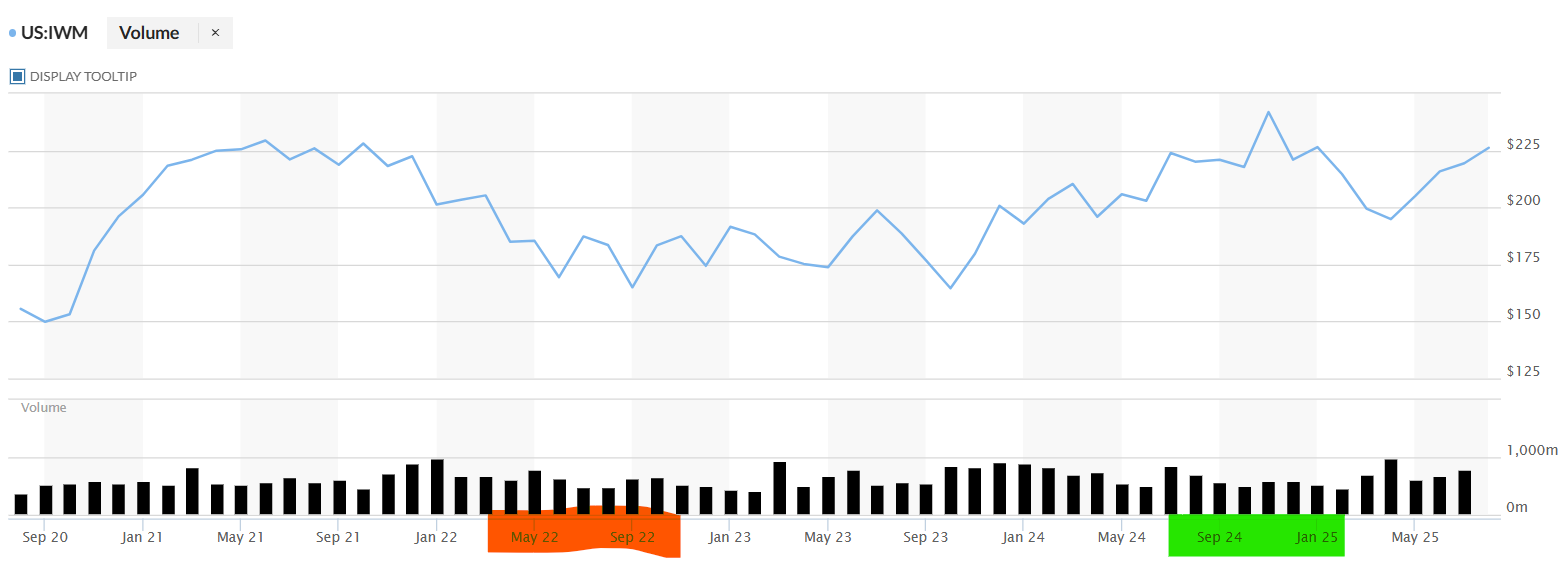
      With that said, as we get close(r) to rate cuts you'll see some consolidation in that and therefore the RSP(equal weight), the small caps(IWM) and Russell 2000 will go bid into it. 

      Typical behavior. Take some profit off the table, and buy into small caps for growth. Just consolidation, nothing like a crash.

      Crash at this point is only from a swan event. 

  • Bradley BuxtonBusiness Member
    Real Estate Agent · NV · Member since 2023 · 1k+ posts · 720 votes
    1y

    @Becca F.

    One advantage of real estate is that you can leverage the investment like a cash-out refinance. This is harder to put a price on, and it allows someone to continue to build wealth. An index fund and the like the money has to be put in up front, and to be able to "retire," either a person has to start early, have a high-earning job, or make some other large investment (inheritance). These are harder returns to measure. Overall, having some of both is likely the ideal scenario to maximize returns and tax benefits. 

    • Rental Property Investor · San Francisco Bay Area · Member since 2022 · 1k+ posts · 1k+ votes
      1y
      Quote from @Bradley Buxton:

      @Becca F.

      One advantage of real estate is that you can leverage the investment like a cash-out refinance. This is harder to put a price on, and it allows someone to continue to build wealth. An index fund and the like the money has to be put in up front, and to be able to "retire," either a person has to start early, have a high-earning job, or make some other large investment (inheritance). These are harder returns to measure. Overall, having some of both is likely the ideal scenario to maximize returns and tax benefits. 


       Absolutely agree with the leverage aspect of real estate. I did a cash out re-fi of the Indiana Class A home during COVID and took that money to help pay for renovations of my California property, increased the value of that home and it's all up to code and rented out. 

      One thing I've noticed is that non-RE people are very "pay off my mortgage on my primary" ASAP and at least the friends I've talked to aren't comfortable using leverage. They were horrified about me having multiple mortgages "all that debt" - for a RE investor I don't think I"m over leveraged and have significant equity, which is why I haven't bought anything in 2 years. 

      They equate mortgage debt on rental properties with consumer debt like credit cards and car loans, which is not in the same category. This is fine for them - I'm not going to change their mind. If they want to put 100% of the investments in S&P500, etc. and have a paid off house, it works for them. 

    • V.G JasonPro Member
      Investor · Member since 2022 · 3k+ posts · 3k+ votes
      1y
      Quote from @Becca F.:
      Quote from @Bradley Buxton:

      @Becca F.

      One advantage of real estate is that you can leverage the investment like a cash-out refinance. This is harder to put a price on, and it allows someone to continue to build wealth. An index fund and the like the money has to be put in up front, and to be able to "retire," either a person has to start early, have a high-earning job, or make some other large investment (inheritance). These are harder returns to measure. Overall, having some of both is likely the ideal scenario to maximize returns and tax benefits. 


       Absolutely agree with the leverage aspect of real estate. I did a cash out re-fi of the Indiana Class A home during COVID and took that money to help pay for renovations of my California property, increased the value of that home and it's all up to code and rented out. 

      One thing I've noticed is that non-RE people are very "pay off my mortgage on my primary" ASAP and at least the friends I've talked to aren't comfortable using leverage. They were horrified about me having multiple mortgages "all that debt" - for a RE investor I don't think I"m over leveraged and have significant equity, which is why I haven't bought anything in 2 years. 

      They equate mortgage debt on rental properties with consumer debt like credit cards and car loans, which is not in the same category. This is fine for them - I'm not going to change their mind. If they want to put 100% of the investments in S&P500, etc. and have a paid off house, it works for them. 

      Most people should be that way though. Most should have their house paid off, then most investments passive. They can't handle any volatility.

      If you really want to maximize all scenarios you leverage into everything at different amounts, and keep concentration RE wise which cash flow, have utility and excellent locations.

      Leverage into index funds off of a general base, and take the net proceeds(after reserves & margin fees) and take them into gold & Bitcoin. And always keep enough cash for not just a rainy day, but also to exploit the fall.

      Think how you would construct this backwards almost

      vacation str lake tahoe(30% ltv)- net cash flow into gold & Bitcoin after reserves and margin. Can occupy as 2nd home
      vacation str Sedona(30% ltv)- net cash flow into gold & Bitcoin after reserves & margin. Can occupy as 2nd home 
      2 ltrs of A quality in Phoenix or Vegas with 1.33 DSCR and pair with note for a % of the downpayment. net cash flow into gold and Bitcoin after reserves & margin.

      every home is distressed and immediate value adds go in. Great edge on capital.

      s&p 50% of your portfolio + 30% margin
      avde 20% of your portfolio + 20% margin
      avuv 10% of your portfolio + 20% margin
      20% stocks of your portfolio to trade more spec with sub 10% margin. 

      Take profit every 15-36 months of index funds and equities & take proceeds into gold and Bitcoin.

      I don't do this exactly, but the conceptual way is there. I play with more scale and way more color.

    • Rental Property Investor · San Francisco Bay Area · Member since 2022 · 1k+ posts · 1k+ votes
      1y
      Quote from @V.G Jason:
      Quote from @Becca F.:
      Quote from @Bradley Buxton:

      @Becca F.

      One advantage of real estate is that you can leverage the investment like a cash-out refinance. This is harder to put a price on, and it allows someone to continue to build wealth. An index fund and the like the money has to be put in up front, and to be able to "retire," either a person has to start early, have a high-earning job, or make some other large investment (inheritance). These are harder returns to measure. Overall, having some of both is likely the ideal scenario to maximize returns and tax benefits. 


       Absolutely agree with the leverage aspect of real estate. I did a cash out re-fi of the Indiana Class A home during COVID and took that money to help pay for renovations of my California property, increased the value of that home and it's all up to code and rented out. 

      One thing I've noticed is that non-RE people are very "pay off my mortgage on my primary" ASAP and at least the friends I've talked to aren't comfortable using leverage. They were horrified about me having multiple mortgages "all that debt" - for a RE investor I don't think I"m over leveraged and have significant equity, which is why I haven't bought anything in 2 years. 

      They equate mortgage debt on rental properties with consumer debt like credit cards and car loans, which is not in the same category. This is fine for them - I'm not going to change their mind. If they want to put 100% of the investments in S&P500, etc. and have a paid off house, it works for them. 

      Most people should be that way though. Most should have their house paid off, then most investments passive. They can't handle any volatility.

      If you really want to maximize all scenarios you leverage into everything at different amounts, and keep concentration RE wise which cash flow, have utility and excellent locations.

      Leverage into index funds off of a general base, and take the net proceeds(after reserves & margin fees) and take them into gold & Bitcoin. And always keep enough cash for not just a rainy day, but also to exploit the fall.

      Think how you would construct this backwards almost

      vacation str lake tahoe(30% ltv)- net cash flow into gold & Bitcoin after reserves and margin. Can occupy as 2nd home
      vacation str Sedona(30% ltv)- net cash flow into gold & Bitcoin after reserves & margin. Can occupy as 2nd home 
      2 ltrs of A quality in Phoenix or Vegas with 1.33 DSCR and pair with note for a % of the downpayment. net cash flow into gold and Bitcoin after reserves & margin.

      every home is distressed and immediate value adds go in. Great edge on capital.

      s&p 50% of your portfolio + 30% margin
      avde 20% of your portfolio + 20% margin
      avuv 10% of your portfolio + 20% margin
      20% stocks of your portfolio to trade more spec with sub 10% margin. 

      Take profit every 15-36 months of index funds and equities & take proceeds into gold and Bitcoin.

      I don't do this exactly, but the conceptual way is there. I play with more scale and way more color.


       I'm starting to agree more and more with that sentiment that a lot of people including people posting on BP shouldn't do real estate. I've stopped telling my friends how great real estate. Just like I'm highly unlikely to buy crypto, RE isn't a good choice for some people. I'm looking at RE as part of my overall investment portfolio. 

      When I talk to people at meet ups, when a few of them told me about their portfolios my thought was "how are you making money?" The things they've done are similar to me with the Class C Indy home but buying 10 more Class Cs or worse Class D hoping it'll appreciate in the future but they're spending so much money in repairs and tenant issues. Makes no sense to me. Not to mention all the time those types of properties take.

      A couple of experienced investors on BP said "You're not trying to be a property collector. You're trying to make money and build wealth." I think people get caught up in  Person A has 50 units, Person B has 200 units, etc. I just read a recent post by a newbie saying they want to own X number of properties in 5 years. 

      I haven't heard of AVDE and AVUV, Avantis ETFs that are classified as small cap - will look into those. I started buying gold. I don't understand bitcoin so haven't bought any. 

      It takes me a day to read and digest all the comments, lots of great insights.

    • V.G JasonPro Member
      Investor · Member since 2022 · 3k+ posts · 3k+ votes
      1y
      Quote from @Becca F.:
      Quote from @V.G Jason:
      Quote from @Becca F.:
      Quote from @Bradley Buxton:

      @Becca F.

      One advantage of real estate is that you can leverage the investment like a cash-out refinance. This is harder to put a price on, and it allows someone to continue to build wealth. An index fund and the like the money has to be put in up front, and to be able to "retire," either a person has to start early, have a high-earning job, or make some other large investment (inheritance). These are harder returns to measure. Overall, having some of both is likely the ideal scenario to maximize returns and tax benefits. 


       Absolutely agree with the leverage aspect of real estate. I did a cash out re-fi of the Indiana Class A home during COVID and took that money to help pay for renovations of my California property, increased the value of that home and it's all up to code and rented out. 

      One thing I've noticed is that non-RE people are very "pay off my mortgage on my primary" ASAP and at least the friends I've talked to aren't comfortable using leverage. They were horrified about me having multiple mortgages "all that debt" - for a RE investor I don't think I"m over leveraged and have significant equity, which is why I haven't bought anything in 2 years. 

      They equate mortgage debt on rental properties with consumer debt like credit cards and car loans, which is not in the same category. This is fine for them - I'm not going to change their mind. If they want to put 100% of the investments in S&P500, etc. and have a paid off house, it works for them. 

      Most people should be that way though. Most should have their house paid off, then most investments passive. They can't handle any volatility.

      If you really want to maximize all scenarios you leverage into everything at different amounts, and keep concentration RE wise which cash flow, have utility and excellent locations.

      Leverage into index funds off of a general base, and take the net proceeds(after reserves & margin fees) and take them into gold & Bitcoin. And always keep enough cash for not just a rainy day, but also to exploit the fall.

      Think how you would construct this backwards almost

      vacation str lake tahoe(30% ltv)- net cash flow into gold & Bitcoin after reserves and margin. Can occupy as 2nd home
      vacation str Sedona(30% ltv)- net cash flow into gold & Bitcoin after reserves & margin. Can occupy as 2nd home 
      2 ltrs of A quality in Phoenix or Vegas with 1.33 DSCR and pair with note for a % of the downpayment. net cash flow into gold and Bitcoin after reserves & margin.

      every home is distressed and immediate value adds go in. Great edge on capital.

      s&p 50% of your portfolio + 30% margin
      avde 20% of your portfolio + 20% margin
      avuv 10% of your portfolio + 20% margin
      20% stocks of your portfolio to trade more spec with sub 10% margin. 

      Take profit every 15-36 months of index funds and equities & take proceeds into gold and Bitcoin.

      I don't do this exactly, but the conceptual way is there. I play with more scale and way more color.


       I'm starting to agree more and more with that sentiment that a lot of people including people posting on BP shouldn't do real estate. I've stopped telling my friends how great real estate. Just like I'm highly unlikely to buy crypto, RE isn't a good choice for some people. I'm looking at RE as part of my overall investment portfolio. 

      When I talk to people at meet ups, when a few of them told me about their portfolios my thought was "how are you making money?" The things they've done are similar to me with the Class C Indy home but buying 10 more Class Cs or worse Class D hoping it'll appreciate in the future but they're spending so much money in repairs and tenant issues. Makes no sense to me. Not to mention all the time those types of properties take.

      A couple of experienced investors on BP said "You're not trying to be a property collector. You're trying to make money and build wealth." I think people get caught up in  Person A has 50 units, Person B has 200 units, etc. I just read a recent post by a newbie saying they want to own X number of properties in 5 years. 

      I haven't heard of AVDE and AVUV, Avantis ETFs that are classified as small cap - will look into those. I started buying gold. I don't understand bitcoin so haven't bought any. 

      It takes me a day to read and digest all the comments, lots of great insights.


       The crypto thread is a good study. Those Avantis ETFs one is international(avde) and the other is small caps(avuv).

      Its something different than s&p(small cap) and the usa(int'l).

      At this point RE is a wealth preservation not generator for the average folk. I don't see the barrier to entry resembling 2009-2016 or 2021-2022. Beyond utility, it's hard to make it work unless you really know how to underwrite and have the required patience. 

    • Rental Property Investor · New Braunfels, TX · Member since 2021 · 291 posts · 257 votes
      1y
      Quote from @V.G Jason:
      Quote from @Becca F.:
      Quote from @V.G Jason:
      Quote from @Becca F.:
      Quote from @Bradley Buxton:

      @Becca F.

      One advantage of real estate is that you can leverage the investment like a cash-out refinance. This is harder to put a price on, and it allows someone to continue to build wealth. An index fund and the like the money has to be put in up front, and to be able to "retire," either a person has to start early, have a high-earning job, or make some other large investment (inheritance). These are harder returns to measure. Overall, having some of both is likely the ideal scenario to maximize returns and tax benefits. 


       Absolutely agree with the leverage aspect of real estate. I did a cash out re-fi of the Indiana Class A home during COVID and took that money to help pay for renovations of my California property, increased the value of that home and it's all up to code and rented out. 

      One thing I've noticed is that non-RE people are very "pay off my mortgage on my primary" ASAP and at least the friends I've talked to aren't comfortable using leverage. They were horrified about me having multiple mortgages "all that debt" - for a RE investor I don't think I"m over leveraged and have significant equity, which is why I haven't bought anything in 2 years. 

      They equate mortgage debt on rental properties with consumer debt like credit cards and car loans, which is not in the same category. This is fine for them - I'm not going to change their mind. If they want to put 100% of the investments in S&P500, etc. and have a paid off house, it works for them. 

      Most people should be that way though. Most should have their house paid off, then most investments passive. They can't handle any volatility.

      If you really want to maximize all scenarios you leverage into everything at different amounts, and keep concentration RE wise which cash flow, have utility and excellent locations.

      Leverage into index funds off of a general base, and take the net proceeds(after reserves & margin fees) and take them into gold & Bitcoin. And always keep enough cash for not just a rainy day, but also to exploit the fall.

      Think how you would construct this backwards almost

      vacation str lake tahoe(30% ltv)- net cash flow into gold & Bitcoin after reserves and margin. Can occupy as 2nd home
      vacation str Sedona(30% ltv)- net cash flow into gold & Bitcoin after reserves & margin. Can occupy as 2nd home 
      2 ltrs of A quality in Phoenix or Vegas with 1.33 DSCR and pair with note for a % of the downpayment. net cash flow into gold and Bitcoin after reserves & margin.

      every home is distressed and immediate value adds go in. Great edge on capital.

      s&p 50% of your portfolio + 30% margin
      avde 20% of your portfolio + 20% margin
      avuv 10% of your portfolio + 20% margin
      20% stocks of your portfolio to trade more spec with sub 10% margin. 

      Take profit every 15-36 months of index funds and equities & take proceeds into gold and Bitcoin.

      I don't do this exactly, but the conceptual way is there. I play with more scale and way more color.


       I'm starting to agree more and more with that sentiment that a lot of people including people posting on BP shouldn't do real estate. I've stopped telling my friends how great real estate. Just like I'm highly unlikely to buy crypto, RE isn't a good choice for some people. I'm looking at RE as part of my overall investment portfolio. 

      When I talk to people at meet ups, when a few of them told me about their portfolios my thought was "how are you making money?" The things they've done are similar to me with the Class C Indy home but buying 10 more Class Cs or worse Class D hoping it'll appreciate in the future but they're spending so much money in repairs and tenant issues. Makes no sense to me. Not to mention all the time those types of properties take.

      A couple of experienced investors on BP said "You're not trying to be a property collector. You're trying to make money and build wealth." I think people get caught up in  Person A has 50 units, Person B has 200 units, etc. I just read a recent post by a newbie saying they want to own X number of properties in 5 years. 

      I haven't heard of AVDE and AVUV, Avantis ETFs that are classified as small cap - will look into those. I started buying gold. I don't understand bitcoin so haven't bought any. 

      It takes me a day to read and digest all the comments, lots of great insights.


       The crypto thread is a good study. Those Avantis ETFs one is international(avde) and the other is small caps(avuv).

      Its something different than s&p(small cap) and the usa(int'l).

      At this point RE is a wealth preservation not generator for the average folk. I don't see the barrier to entry resembling 2009-2016 or 2021-2022. Beyond utility, it's hard to make it work unless you really know how to underwrite and have the required patience. 

      At this point RE is a wealth preservation not generator for the average folk. 

      This is so true!! The sooner some people realize it the better off they will be.
    • Real Estate Broker · Minneapolis, MN · Member since 2011 · 5k+ posts · 6k+ votes
      1y
      Quote from @V.G Jason:
      Quote from @Becca F.:
      Quote from @V.G Jason:
      Quote from @Becca F.:
      Quote from @Bradley Buxton:

      @Becca F.

      One advantage of real estate is that you can leverage the investment like a cash-out refinance. This is harder to put a price on, and it allows someone to continue to build wealth. An index fund and the like the money has to be put in up front, and to be able to "retire," either a person has to start early, have a high-earning job, or make some other large investment (inheritance). These are harder returns to measure. Overall, having some of both is likely the ideal scenario to maximize returns and tax benefits. 


       Absolutely agree with the leverage aspect of real estate. I did a cash out re-fi of the Indiana Class A home during COVID and took that money to help pay for renovations of my California property, increased the value of that home and it's all up to code and rented out. 

      One thing I've noticed is that non-RE people are very "pay off my mortgage on my primary" ASAP and at least the friends I've talked to aren't comfortable using leverage. They were horrified about me having multiple mortgages "all that debt" - for a RE investor I don't think I"m over leveraged and have significant equity, which is why I haven't bought anything in 2 years. 

      They equate mortgage debt on rental properties with consumer debt like credit cards and car loans, which is not in the same category. This is fine for them - I'm not going to change their mind. If they want to put 100% of the investments in S&P500, etc. and have a paid off house, it works for them. 

      Most people should be that way though. Most should have their house paid off, then most investments passive. They can't handle any volatility.

      If you really want to maximize all scenarios you leverage into everything at different amounts, and keep concentration RE wise which cash flow, have utility and excellent locations.

      Leverage into index funds off of a general base, and take the net proceeds(after reserves & margin fees) and take them into gold & Bitcoin. And always keep enough cash for not just a rainy day, but also to exploit the fall.

      Think how you would construct this backwards almost

      vacation str lake tahoe(30% ltv)- net cash flow into gold & Bitcoin after reserves and margin. Can occupy as 2nd home
      vacation str Sedona(30% ltv)- net cash flow into gold & Bitcoin after reserves & margin. Can occupy as 2nd home 
      2 ltrs of A quality in Phoenix or Vegas with 1.33 DSCR and pair with note for a % of the downpayment. net cash flow into gold and Bitcoin after reserves & margin.

      every home is distressed and immediate value adds go in. Great edge on capital.

      s&p 50% of your portfolio + 30% margin
      avde 20% of your portfolio + 20% margin
      avuv 10% of your portfolio + 20% margin
      20% stocks of your portfolio to trade more spec with sub 10% margin. 

      Take profit every 15-36 months of index funds and equities & take proceeds into gold and Bitcoin.

      I don't do this exactly, but the conceptual way is there. I play with more scale and way more color.


       I'm starting to agree more and more with that sentiment that a lot of people including people posting on BP shouldn't do real estate. I've stopped telling my friends how great real estate. Just like I'm highly unlikely to buy crypto, RE isn't a good choice for some people. I'm looking at RE as part of my overall investment portfolio. 

      When I talk to people at meet ups, when a few of them told me about their portfolios my thought was "how are you making money?" The things they've done are similar to me with the Class C Indy home but buying 10 more Class Cs or worse Class D hoping it'll appreciate in the future but they're spending so much money in repairs and tenant issues. Makes no sense to me. Not to mention all the time those types of properties take.

      A couple of experienced investors on BP said "You're not trying to be a property collector. You're trying to make money and build wealth." I think people get caught up in  Person A has 50 units, Person B has 200 units, etc. I just read a recent post by a newbie saying they want to own X number of properties in 5 years. 

      I haven't heard of AVDE and AVUV, Avantis ETFs that are classified as small cap - will look into those. I started buying gold. I don't understand bitcoin so haven't bought any. 

      It takes me a day to read and digest all the comments, lots of great insights.


       The crypto thread is a good study. Those Avantis ETFs one is international(avde) and the other is small caps(avuv).

      Its something different than s&p(small cap) and the usa(int'l).

      At this point RE is a wealth preservation not generator for the average folk. I don't see the barrier to entry resembling 2009-2016 or 2021-2022. Beyond utility, it's hard to make it work unless you really know how to underwrite and have the required patience. 


      "The big money is not in the buying and selling, but in the waiting." Charlie Munger

  • Real Estate Broker · Minneapolis, MN · Member since 2011 · 5k+ posts · 6k+ votes
    1y

    @Becca F. 9% is the "magic PAR" ROI number to use when viewing and considering stock market investments.

    Now it's very important to take into context the time lens. 9% is as measured over a number of years, many years. And 9% is just that, PAR, as in 0. So if I look at say NVDA, and run an analysis, taking past years and projecting forward using assumptions, if I see a 5 yr hold bring 9%, that's 0. So I peg the price so I know when it "goes on sale" and I buy. 

    So many today use ridiculously short term lens of things, looking at months or a year or 2. 

    Someone mentioned to software, stay as far away from software as humanly possible. Software is assumed to be on a bullet-train to $0. 

    Yes, in years past software was great. Keyword "PAST". ai is changing that book. ai is, 1,000% factuality, replacing software. ALL software. It is the very nature of software. 

    Hardware is back to where it's all at. Proof? NVDA, why do you think it's valued over 4 Trillion dollars and growing. AMD's value equally running up, again hardware for ai. 

    Getting into software today is like getting into Yellowpages as the internet emerged. It's a dinosaur, the meteor called ai slammed into earth 4 seconds ago, the extinction event already happened, they are on death-row.

    What so many neglect in investment real estate is knowing there numbers. If you don't know your numbers and track your numbers, in FULL, you won't know things are rolling over until it's too late and your now deep into pain and trying to stop the bleeding vs knowing when it's time to get out BEFORE the pain starts. 

    The most paramount thing to know and track for this is capex. Not reactively but proactively. 

    That means from day 1 making a nice chart of every major component, jot down life expectancy, and the current age. From there it's a simple formula. Include inflation rate. This chart will tell you exactly what you need to be allocating for capex, when to expect what to be needing replacement etc.. 

    And with this, certain dates will pop out, times when your going to be getting deep into capex expenditures. Highlighting a best time to sell, before your into the expense of replacing an entire property worth of things. 

    And it is best to also project out future performance for a property based on solid data. Because if and when some big pop happens in the market, you'll notice it, by the numbers, and see the outsized gains that could be had taking advantage of it. Because your tracking the market and know what is appreciation on fundamentals, and what is a possible bubble forming. 

    Most don't invest by the numbers in real estate. Because real estate is very forgiving as an investment. 

    Over enough time, yes, one can DCA (Dollar Cost Average) in both real estate and wall street. But one can put in the simple energy and effort to do good analysis, good tracking, so can recognize when things are low and it's a buying season, and when there high and it's a selling season. Turning that flat DCA line over decades into more a hockey-stick up. 

    Today is a great example of this in wall street with NVDA. I track NVDA closely. My alerts went off as dropped. I already had my buy-zone marked and my SUPER-buy-zone, which it touched into. There was no reason for such drop that could change the analysis and metrics. It was just market movements. So I followed my plan. 

    Result, 28% return in 1 day. 

    Luck is the result of opportunity meeting good planning with the gut's to follow the plan. 

    Remove the good planning, and your just gambling on guesses, not investing. Investing is knowing, not guessing. If you don't know, your guessing. 

    True investing looks very boring. It's hours pouring over data and charts. Mapping things out. And then watching, waiting, watching and waiting some more, looking, looking, charting more, analyzing more, until BINGO you got one in the buy-box. 

    And for many this is where they hesitate. They doubt because "oh, how low/bad can it get". Same can happen at the top for exit. Opportunity wait's on nobody so often what separates the watchers and the winners is the gut's to pull the trigger. 

    Analysis, plan, monitor, action, rinse & repeat. 

    • Rental Property Investor · San Francisco Bay Area · Member since 2022 · 1k+ posts · 1k+ votes
      1y
      Quote from @James Hamling:

      @Becca F. 9% is the "magic PAR" ROI number to use when viewing and considering stock market investments.

      Now it's very important to take into context the time lens. 9% is as measured over a number of years, many years. And 9% is just that, PAR, as in 0. So if I look at say NVDA, and run an analysis, taking past years and projecting forward using assumptions, if I see a 5 yr hold bring 9%, that's 0. So I peg the price so I know when it "goes on sale" and I buy. 

      So many today use ridiculously short term lens of things, looking at months or a year or 2. 

      Someone mentioned to software, stay as far away from software as humanly possible. Software is assumed to be on a bullet-train to $0. 

      Yes, in years past software was great. Keyword "PAST". ai is changing that book. ai is, 1,000% factuality, replacing software. ALL software. It is the very nature of software. 

      Hardware is back to where it's all at. Proof? NVDA, why do you think it's valued over 4 Trillion dollars and growing. AMD's value equally running up, again hardware for ai. 

      Getting into software today is like getting into Yellowpages as the internet emerged. It's a dinosaur, the meteor called ai slammed into earth 4 seconds ago, the extinction event already happened, they are on death-row.

      What so many neglect in investment real estate is knowing there numbers. If you don't know your numbers and track your numbers, in FULL, you won't know things are rolling over until it's too late and your now deep into pain and trying to stop the bleeding vs knowing when it's time to get out BEFORE the pain starts. 

      The most paramount thing to know and track for this is capex. Not reactively but proactively. 

      That means from day 1 making a nice chart of every major component, jot down life expectancy, and the current age. From there it's a simple formula. Include inflation rate. This chart will tell you exactly what you need to be allocating for capex, when to expect what to be needing replacement etc.. 

      And with this, certain dates will pop out, times when your going to be getting deep into capex expenditures. Highlighting a best time to sell, before your into the expense of replacing an entire property worth of things. 

      And it is best to also project out future performance for a property based on solid data. Because if and when some big pop happens in the market, you'll notice it, by the numbers, and see the outsized gains that could be had taking advantage of it. Because your tracking the market and know what is appreciation on fundamentals, and what is a possible bubble forming. 

      Most don't invest by the numbers in real estate. Because real estate is very forgiving as an investment. 

      Over enough time, yes, one can DCA (Dollar Cost Average) in both real estate and wall street. But one can put in the simple energy and effort to do good analysis, good tracking, so can recognize when things are low and it's a buying season, and when there high and it's a selling season. Turning that flat DCA line over decades into more a hockey-stick up. 

      Today is a great example of this in wall street with NVDA. I track NVDA closely. My alerts went off as dropped. I already had my buy-zone marked and my SUPER-buy-zone, which it touched into. There was no reason for such drop that could change the analysis and metrics. It was just market movements. So I followed my plan. 

      Result, 28% return in 1 day. 

      Luck is the result of opportunity meeting good planning with the gut's to follow the plan. 

      Remove the good planning, and your just gambling on guesses, not investing. Investing is knowing, not guessing. If you don't know, your guessing. 

      True investing looks very boring. It's hours pouring over data and charts. Mapping things out. And then watching, waiting, watching and waiting some more, looking, looking, charting more, analyzing more, until BINGO you got one in the buy-box. 

      And for many this is where they hesitate. They doubt because "oh, how low/bad can it get". Same can happen at the top for exit. Opportunity wait's on nobody so often what separates the watchers and the winners is the gut's to pull the trigger. 

      Analysis, plan, monitor, action, rinse & repeat. 


       Great points. I'm not a natural spreadsheet and chart creator with projecting out life expectancy of HVAC, roofs, water heater, appliances etc of each property. I know how old the roof and HVAC are of each property. I think I'm guessing (gambling) when these will need to be replaced. Is there an app  where I could plug these numbers in for each property? 

      As far as DCA investing, I'm not great at that, I try to "time the market" when buying index funds in IRA and brokerage accounts or stocks in brokerage - I check every couple of days see, NVDA is down or this index fund is down, so I buy. I buy and hold but I've reallocated out of one index fund that was held for a while for something better performing.

    • Real Estate Broker · Minneapolis, MN · Member since 2011 · 5k+ posts · 6k+ votes
      1y
      Quote from @Becca F.:
      Quote from @James Hamling:

      @Becca F. 9% is the "magic PAR" ROI number to use when viewing and considering stock market investments.

      Now it's very important to take into context the time lens. 9% is as measured over a number of years, many years. And 9% is just that, PAR, as in 0. So if I look at say NVDA, and run an analysis, taking past years and projecting forward using assumptions, if I see a 5 yr hold bring 9%, that's 0. So I peg the price so I know when it "goes on sale" and I buy. 

      So many today use ridiculously short term lens of things, looking at months or a year or 2. 

      Someone mentioned to software, stay as far away from software as humanly possible. Software is assumed to be on a bullet-train to $0. 

      Yes, in years past software was great. Keyword "PAST". ai is changing that book. ai is, 1,000% factuality, replacing software. ALL software. It is the very nature of software. 

      Hardware is back to where it's all at. Proof? NVDA, why do you think it's valued over 4 Trillion dollars and growing. AMD's value equally running up, again hardware for ai. 

      Getting into software today is like getting into Yellowpages as the internet emerged. It's a dinosaur, the meteor called ai slammed into earth 4 seconds ago, the extinction event already happened, they are on death-row.

      What so many neglect in investment real estate is knowing there numbers. If you don't know your numbers and track your numbers, in FULL, you won't know things are rolling over until it's too late and your now deep into pain and trying to stop the bleeding vs knowing when it's time to get out BEFORE the pain starts. 

      The most paramount thing to know and track for this is capex. Not reactively but proactively. 

      That means from day 1 making a nice chart of every major component, jot down life expectancy, and the current age. From there it's a simple formula. Include inflation rate. This chart will tell you exactly what you need to be allocating for capex, when to expect what to be needing replacement etc.. 

      And with this, certain dates will pop out, times when your going to be getting deep into capex expenditures. Highlighting a best time to sell, before your into the expense of replacing an entire property worth of things. 

      And it is best to also project out future performance for a property based on solid data. Because if and when some big pop happens in the market, you'll notice it, by the numbers, and see the outsized gains that could be had taking advantage of it. Because your tracking the market and know what is appreciation on fundamentals, and what is a possible bubble forming. 

      Most don't invest by the numbers in real estate. Because real estate is very forgiving as an investment. 

      Over enough time, yes, one can DCA (Dollar Cost Average) in both real estate and wall street. But one can put in the simple energy and effort to do good analysis, good tracking, so can recognize when things are low and it's a buying season, and when there high and it's a selling season. Turning that flat DCA line over decades into more a hockey-stick up. 

      Today is a great example of this in wall street with NVDA. I track NVDA closely. My alerts went off as dropped. I already had my buy-zone marked and my SUPER-buy-zone, which it touched into. There was no reason for such drop that could change the analysis and metrics. It was just market movements. So I followed my plan. 

      Result, 28% return in 1 day. 

      Luck is the result of opportunity meeting good planning with the gut's to follow the plan. 

      Remove the good planning, and your just gambling on guesses, not investing. Investing is knowing, not guessing. If you don't know, your guessing. 

      True investing looks very boring. It's hours pouring over data and charts. Mapping things out. And then watching, waiting, watching and waiting some more, looking, looking, charting more, analyzing more, until BINGO you got one in the buy-box. 

      And for many this is where they hesitate. They doubt because "oh, how low/bad can it get". Same can happen at the top for exit. Opportunity wait's on nobody so often what separates the watchers and the winners is the gut's to pull the trigger. 

      Analysis, plan, monitor, action, rinse & repeat. 


       Great points. I'm not a natural spreadsheet and chart creator with projecting out life expectancy of HVAC, roofs, water heater, appliances etc of each property. I know how old the roof and HVAC are of each property. I think I'm guessing (gambling) when these will need to be replaced. Is there an app  where I could plug these numbers in for each property? 

      As far as DCA investing, I'm not great at that, I try to "time the market" when buying index funds in IRA and brokerage accounts or stocks in brokerage - I check every couple of days see, NVDA is down or this index fund is down, so I buy. I buy and hold but I've reallocated out of one index fund that was held for a while for something better performing.


      If do some google searching one will find all kinds of data of use lifespan for various items. Everything in a property has these specs for it, just takes some work to compile ones list as i don't know a single source that chart's these out. 

      To find cost, the easy-button is using annual cost vs value report. https://www.jlconline.com/cost-vs-value/2024/ 

      Get the lens as localized as possible and it will give a median price for assorted things, and at what quality level. 

      If you want to get highly accurate vs median, I'd use ClearEstimates. You can buy cost database, to get accurate #'s plugged in. From there I build out mock project estimates to get my numbers for various projects; roof replacement, siding, kitchen, bath etc etc.. 

      This takes some work, and just learning it for one with 0 experience, that will take some time. But as said, if you want accurate vs median, that's how you get it. 

      IMO your doing things wrong. I suggest picking out 1 company a day, and doing a deep dive analysis of it. Read the financial reports, look at last 10 years. Get to really know it, how it's performing, if it's getting better, by how much, how fast etc etc. Then make your assumptions on how the next few years should look based on your assumptions. For example, assuming it's going to keep doing what it's done last few years, or it will improve 10% or whatever.     Then from that, value it, based on the actual fundamentals. 

  • Rental Property Investor · Member since 2018 · 829 posts · 811 votes
    1y

    I don't think comparing IRRs in different years of the hold makes much sense. IRR is more of a cumulative measure over a period, and it's very sensitive to assumptions, such as initial capital outlay, annual CF, and your final exit cash out. The exit cash out can be a sale event, cash out refi, or even a terminal value if you continue to hold. Needless to say on forecast basis your IRR can vary, and it's only an accurate measure if you perform hindsight analysis after disposition. For your Indy cash-out property you should be able to have the most straight forward IRR calc.

    I primarily invest for appreciation, so IRR is the better metric for me to gauge asset performance. Majority of BP crowd will dog when hearing that most my investments have negative CF for first few years. My CoC is often negative or <5% in early years. On the flip side, most people don't realize that the present value of money is a high hurdle to clear for appreciation plays and IRR calcs.

    All that said, my assets have generally performed in the 20-25% IRR range over past 20 yrs (excluding tax shielding benefits). Perhaps not a large premium vs equity investing, but equity investing just doesn't excite me.

    Separate point, with the change in OBBB SALT allowances, you may want to rethinking having any material funds in HYSA. The AGI phase out can have a big impact for you.  

  • Member since 2021 · 4 posts · 3 votes
    1y

    You should be able to get 6% COC with 25% down less if you house-hack etc. Say another 1% in debt pay down. If the property is appreciating at 3.5% historical average I believe your around 21% a year. It fades over time but you can start enjoying more cash flow or refi or 1031. Real estate is the average persons best opportunity to build wealth.

  • Flipper/Rehabber · CA · Member since 2023 · 1k+ posts · 1k+ votes
    1y

    @James Hamling bingo, hardware...Moore's law isn't dead it just changed and since NAFTA Americans are out of touch

    @Becca F. residential infrastructure such as HVAC, Electrical etc. isn't just a matter of age, it's about the maintenance. I have systems that are over 35 years old, but very well maintained.

    Everyone; I don't think investment vehicles can be compared directly, to wit flipping in the Bay Area has been good to me because of high quality, permitting, energy efficiency but I don't think that would work in many other markets. Its alot of work though but it actually mitigates my risk. It may not actually be investing though.

    STR is the hospitality industry, if you provide the excellent experience you'll do well, but it takes some work.

    Gold has been pretty good to me lately. 

    Even with PE ratios so high Im not sure the stock market is bad, AI and many other emerging industries show alot of promise.

    • Real Estate Broker · Minneapolis, MN · Member since 2011 · 5k+ posts · 6k+ votes
      1y
      Quote from @Alan F.:

      @James Hamling bingo, hardware...Moore's law isn't dead it just changed and since NAFTA Americans are out of touch

      @Becca F. residential infrastructure such as HVAC, Electrical etc. isn't just a matter of age, it's about the maintenance. I have systems that are over 35 years old, but very well maintained.

      Everyone; I don't think investment vehicles can be compared directly, to wit flipping in the Bay Area has been good to me because of high quality, permitting, energy efficiency but I don't think that would work in many other markets. Its alot of work though but it actually mitigates my risk. It may not actually be investing though.

      STR is the hospitality industry, if you provide the excellent experience you'll do well, but it takes some work.

      Gold has been pretty good to me lately. 

      Even with PE ratios so high Im not sure the stock market is bad, AI and many other emerging industries show alot of promise.


      "I don't think investment vehicles can be compared directly"

      Kind of.... 

      I totally get where your coming from Alan and agree 100%, but it's not an issue of comparing 1 investment segment vs another, one can do that, the issue that comes up is HOW people are doing the analysis for a comparative analysis. 

      A simple way to make an example here is stocks on Wall Street. 

      Look at Ford, with a PE sub 18. 

      Now look at AMD, with a PE around 75-100. Or Apple around 35. 

      Comparing standard residential rental properties too STR, compared too say flipping properties, yes, it is like comparing Ford too AMD too Apple.

      These business segments are wildly different business segments. It requires a modifier to compare each to the other. 

      A flip is a very short-term thing, and it carries a whole different risk profile with it and thus it requires a totally different return metric to meet "par" for the risk exposure, operational impact etc etc.. This is kind of like your growth stocks, the AMD's that are something of emerging whatever, expected significant immediate term growth but one never expects it to clock 40% gains YOY into eternity. 

      Vs say a standard rental, the "Ford's" of things. Simple, steady. It's about length of time, the set-it-and-forget-it model of things and thus a "par" is much more acceptable in a much much lower return range because it's something measured in years and decades, not months and quarters. And with that is supposed to come a lot less risk, more simplicity, more reliability. 

      I mean look, there is a reason why treasuries are such a low return, AND why many investors still invest in them. 

      STR has it's place and market where it does good, best, amazing and horribly.

      One has to use a modifier to adjust the different business/investment segments when comparing against each other. 

      I like to define a "PAR" return for each. And than can judge the returns vs PAR, that deviation +/- vs the other segments which then shed's the light that ___ is performing +6% and ___ is at -4% over/under par. 

      PAR as in the golfing terminology of dead even, meeting as expected, a 5 on scale of 1-10. 

      For me, on wall street any LT position has a PAR of 9%. An option play PAR is 15%. 

      A standard rental PAR is aggregate 7%. A flip is 20%. 

      STR, for me in my eyes, PAR is 40%.

    • Flipper/Rehabber · CA · Member since 2023 · 1k+ posts · 1k+ votes
      1y
      Quote from @James Hamling:
      Quote from @Alan F.:

      @James Hamling bingo, hardware...Moore's law isn't dead it just changed and since NAFTA Americans are out of touch

      @Becca F. residential infrastructure such as HVAC, Electrical etc. isn't just a matter of age, it's about the maintenance. I have systems that are over 35 years old, but very well maintained.

      Everyone; I don't think investment vehicles can be compared directly, to wit flipping in the Bay Area has been good to me because of high quality, permitting, energy efficiency but I don't think that would work in many other markets. Its alot of work though but it actually mitigates my risk. It may not actually be investing though.

      STR is the hospitality industry, if you provide the excellent experience you'll do well, but it takes some work.

      Gold has been pretty good to me lately. 

      Even with PE ratios so high Im not sure the stock market is bad, AI and many other emerging industries show alot of promise.


      "I don't think investment vehicles can be compared directly"

      Kind of.... 

      I totally get where your coming from Alan and agree 100%, but it's not an issue of comparing 1 investment segment vs another, one can do that, the issue that comes up is HOW people are doing the analysis for a comparative analysis. 

      A simple way to make an example here is stocks on Wall Street. 

      Look at Ford, with a PE sub 18. 

      Now look at AMD, with a PE around 75-100. Or Apple around 35. 

      Comparing standard residential rental properties too STR, compared too say flipping properties, yes, it is like comparing Ford too AMD too Apple.

      These business segments are wildly different business segments. It requires a modifier to compare each to the other. 

      A flip is a very short-term thing, and it carries a whole different risk profile with it and thus it requires a totally different return metric to meet "par" for the risk exposure, operational impact etc etc.. This is kind of like your growth stocks, the AMD's that are something of emerging whatever, expected significant immediate term growth but one never expects it to clock 40% gains YOY into eternity. 

      Vs say a standard rental, the "Ford's" of things. Simple, steady. It's about length of time, the set-it-and-forget-it model of things and thus a "par" is much more acceptable in a much much lower return range because it's something measured in years and decades, not months and quarters. And with that is supposed to come a lot less risk, more simplicity, more reliability. 

      I mean look, there is a reason why treasuries are such a low return, AND why many investors still invest in them. 

      STR has it's place and market where it does good, best, amazing and horribly.

      One has to use a modifier to adjust the different business/investment segments when comparing against each other. 

      I like to define a "PAR" return for each. And than can judge the returns vs PAR, that deviation +/- vs the other segments which then shed's the light that ___ is performing +6% and ___ is at -4% over/under par. 

      PAR as in the golfing terminology of dead even, meeting as expected, a 5 on scale of 1-10. 

      For me, on wall street any LT position has a PAR of 9%. An option play PAR is 15%. 

      A standard rental PAR is aggregate 7%. A flip is 20%. 

      STR, for me in my eyes, PAR is 40%.


       Thanks again James, I really appreciate you (&VG) teaching me more! Sometimes it makes my brain squirm lol, but that's when im learning! 

  • Flipper/Rehabber · CA · Member since 2023 · 1k+ posts · 1k+ votes
    1y

    @V.G Jason @James Hamling

    Your thoughts on interpretation of the Russell 2000, particularly in the overall health of small businesses present & future? Is sort of a canary in a coal mine?

    Sort of the same question on the VIX? eager to learn more

    TIA

    • Real Estate Broker · Minneapolis, MN · Member since 2011 · 5k+ posts · 6k+ votes
      1y
      Quote from @Alan F.:

      @V.G Jason @James Hamling

      Your thoughts on interpretation of the Russell 2000, particularly in the overall health of small businesses present & future? Is sort of a canary in a coal mine?

      Sort of the same question on the VIX? eager to learn more

      TIA


      Good questions Alan. 

      The VIX is an entire multi-page post itself alone. 

      There is an entire art and science of dissemination for what certain VIX positions mean, how the VIX responding to certain things lends certain meanings and how the VIX being at certain places heralds certain potential next moves in the market. 

      It's not nearly as simple as VIX low =  good or VIX high = bad. 

      If i try to sort a simplest basic terms to explain the VIX, I'd have to use the analogy of a RPM gauge on a auto. 

      A very low VIX yes, it is a register of the market-motor at a state of more calm BUT that calm, at certain phases of calm, can indicate the "auto" is most likely at the starting line of the race track. 

      And in other cycles it indicates the "auto' is rolling off the race track and into the pit's. 

      Context makes all the difference. A lowering or low vix can be a good cooling down indicator or a "ruh-roh" loading to launch indicator. 

      Like I said, the VIX can be an entire posting alone. 

      In a similar'ish way the Russel 2000 is just an index, various meanings can be glimmered from such all dependent upon context. 

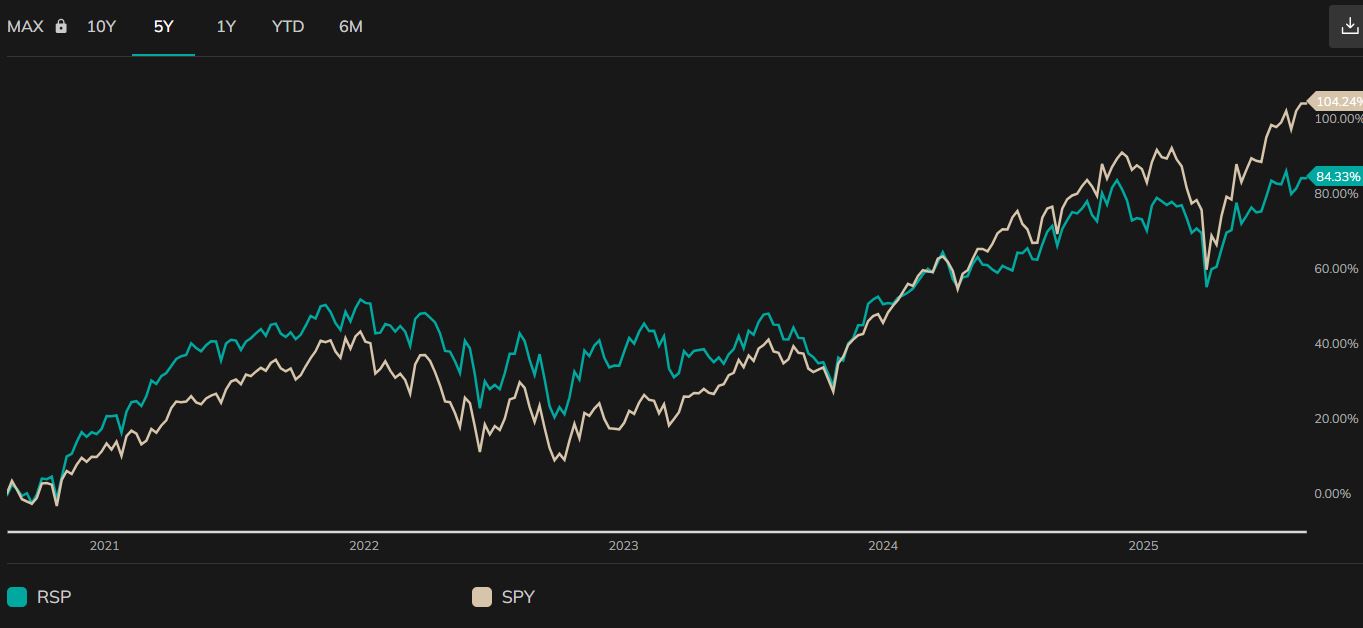
      One important context I'd point out to people is look at the Russel 2000 vs SPY or QQQ for the last 5yrs. 

      The very big difference in the charts should then meet the question of what's making the difference in these. It's about what industries, what sectors are concentrated in these. 

      The Russel 2000 shows how the market, the economy in general is NOT enjoying a big bull rally these last years. It's sideways, at best, just holding on, kinda. 

      It's the tech sector, specifically ai, that is the rocket. And it's lending a false sense of prosperity economic wide.  

      At least that's my generalized opinion. Which is same/similar of Warren Buffet's, Dr burry, Ray Dalio and many many other titans of investing opinion of things. 

      Is the growth fundamentally legitimate in tech, yes. Is much of the sector over valued and in a bubble, YES. And yes, both can be true at the same time. 

      The internet was both a fundamental major growth game changer AND way WAY over-valued and in bubble. 

      ai is following a mind blowing exact same path. Mind blowing for how it seems few see the obvious retracing, or just refuse to see were doing it again. 

      ai will change things just like the internet did, and more, much more. But were in euphoric bubble land again just throwing $ at the buzz word "ai" exactly as we did when "internet" was a buzz word. 

      It's going to be a process, of what was shiny-objects and what is the "amazon" of tomorrow. Not just in terms of company to invest in but in terms of how our lives radically change in how we do, what we do. 

    • V.G JasonPro Member
      Investor · Member since 2022 · 3k+ posts · 3k+ votes
      1y
      Quote from @Alan F.:

      @V.G Jason @James Hamling

      Your thoughts on interpretation of the Russell 2000, particularly in the overall health of small businesses present & future? Is sort of a canary in a coal mine?

      Sort of the same question on the VIX? eager to learn more

      TIA

      The VIX is really a future-indicator look-- pricing in 30 day volatility really. North of 30 is really a fear signal, south of 20 is stability, and in between can be a trending indicator. This would be more of a canary in the coalmine of danger than anything else. It's the heartbeat and pulse in the forward view of the S&P.

      Russell 2000 is very functional off of the the dollar via the fed funds rate and overall treasury policies. You can literally see the demise of it as we entered rate ramping and the rally following rate cutting. A strong dollar can eat at a small business's ability to grow.


      When the market is dovish and the pricing in a fed pivot it gets in front of the small cap play- the best two in my opinion are DFAT and AVUV. I do not like IWM, for what it's worth, I just use that as a metric or symbol of small caps. I would say it's more of a pulse of how interest rates impact growth; higher rates lead to lower growth. It's still "up" 7% over the past 3 years so the market has been able to withstand the headwinds some would say. Relative to other indices it's been stuck and low, so others would say it's an underperformer. 

      The canary in the coalmine, if any and unrelated to the VIX, would be the RSP(equal weight S&P) to actual S&P. Only very few times has the S&P actually outpaced the RSP, let alone by this margin. It just tells you concentration risk, and that is an evident issue but I don't know if it's a material risk. Nobody knows. My view on it is that's just the dollar devaluation syndrome after a strong dollar(esp. in 2022), and it'll be a consistent flight to quality unless we divest from a monopolistic tech society which I actually doubt. Think we see some  new tech companies in the mega cap sector, but all the powers will be concentrated.

      Lots of unknown events can derail the mega caps, I just don't know if dollars go to the equal weight. I would think if we see any defense played, it's sell NVIDIA or another mega cap and buy gold not necessarily ALGN(#300 in the S&P) or any stock in the back half of the S&P.

  • Dr · VA · Member since 2025 · 154 posts · 35 votes
    1y

    real estate and stock are two different things. 1) portfolio 2)investment

    1) portfolio is risky and needs expertise to management it properly and monitor the market all the time

    2) LTR & STR: each have its own benefit and help in reducing taxable income

    STR are good for high income taxpayers, that by involvement, the income shifts to "Non-passive income" and losses consider and reduce your active taxable income.

  • Eric FernwoodBusiness Member
    Realtor · Las Vegas, NV · Member since 2014 · 1k+ posts · 1k+ votes
    1y

    Hello @Becca F.,

    A client and I recently did an IRR comparison between real estate and stocks to help him decide his next investment move. Below are our calculations, shortened to make the post a reasonable length.

    IRR Comparison

    I've prepared the following comparison to illustrate how stocks and real estate investments are likely to perform over a five-year period. I limited the timeframe to five years because extending beyond that almost certainly involves some type of market correction (crash?), which greatly favors real estate. I will compare the IRR of investing $100,000 in stocks versus $100,000 in a rental property over this five-year period.

    Assumptions

    • Stocks: 8% annual price growth, no dividends, 15% capital gains tax at sale, no transaction costs, no market corrections.
    • Real Estate: $400,000 property, 25% down ($100,000), 30-year fixed mortgage at 7%, $2,000 monthly rent (growing 6% per year), 8% annual appreciation, $2,200 yearly property tax, $1,000 yearly insurance, 5% disposal cost, 25% depreciation recapture on improvements.

    Stock Results

    After five years, $100,000 grows to about $146,933. The capital gains tax would be $7,040, which leaves leaves $139,893. That's an IRR of roughly 6.9%.

    Real Estate Results

    Five years of 8% appreciation raises the property value to $587,731. After selling costs, depreciation recapture, and paying off the mortgage, net proceeds are about $261,481. In this scenario, annual cash flow starts negative due to mortgage payments but improves each year as rents rise. Total cash flows produce an IRR of 20.7%.

    Even with a $10,000 maintenance or vacancy hit in year two, the IRR only drops to 19.1%.

    If you want to see the detailed calculations, go here.

    Why Real Estate Wins

    Real estate benefits from:

    1. Leverage – Using a mortgage magnifies returns.
    2. Income Growth – Rents increase over time if you invest in a city with significant and sustained population growth.
    3. Tax Advantages – Depreciation shields income during ownership.

    Stocks rely solely on price appreciation, with limited cash flow and fewer tax benefits. Even at today’s interest rates, quality rental properties in strong markets outperform stocks. If rates fall, the gap widens.

    The numbers here use conservative estimates for the types of properties we target. In practice, actual returns can be higher, but the advantage of well-selected real estate over a comparable stock investment is clear.

    Debate aside, I genuinely believe that a good portfolio should include both real estate and stocks to balance.

    FERNWOOD Team, KW VIP Realty520 Reviews
  • Real Estate Agent · Chicago, IL · Member since 2017 · 2k+ posts · 2k+ votes
    1y

    This is an awesome post. I am a big fan on indexing. My portfolio is 70% VTI, 15% VIG, 15% VGSH it works great and should make around 10% IRR based on historical returns but whenever I see a real estate deal I withdrawal off the brokerage account. Real estate in good appreciating areas should hit around 30% IRR so its 3x the total return on stocks.

Join the conversationCreate a free account to reply, vote on answers and follow this thread.