How Do You Really Find & Analyze Investment Properties ?

How Do You Really Find & Analyze Investment Properties ?

Member since 2025 · 20 posts · 4 votes

I've been thinking a lot lately about the sheer amount of time and effort that goes into the front end of our business – identifying potential deals and doing that initial analysis before deciding if something is worth a deeper dive.

We all juggle different platforms (MLS, Zillow, Redfin, LoopNet, maybe specialized tools?), spreadsheets, market reports, city data, etc. It feels like a constant cycle of filtering, cross-referencing, calculating, and trying to connect the dots.

It got me wondering about efficiency and whether there's a smarter way. Imagine if you could skip some of the tedious filtering and data hunting. What if finding specific opportunities or getting quick answers was as simple as just... asking?

For example, instead of setting up complex filters across multiple sites, just asking: "Show me duplexes under $300k in Austin's 78704 zip code that likely need rehab but could cash flow post-renovation."

Or after finding a property, immediately asking: "What are the recent comps for similar renovated properties?" or "What's the average rent trend in this neighborhood for a 3/2?" or "Is this property in an opportunity zone?"

This leads me to a couple of questions for the community, as I'm curious about other's process:

  1. What's your go-to method/tool stack right now for finding potential investment properties? (e.g., MLS alerts, specific software, wholesaler lists, driving for dollars, networking, specific websites?)
  2. When you're filtering or searching, what are the top 3-5 specific criteria you find yourself using most often? (Beyond beds/baths/price - think cap rate targets, cash-on-cash goals, keywords like "fixer-upper" or "turnkey," specific locations/neighbourhoods, zoning, etc.)
  3. Once you identify a potentially interesting property, what are the first few critical questions you need answered to decide if it's worth pursuing further? (e.g., ARV, estimated rehab costs, rent comps, market vacancy rates, days on market trends?)
  4. What's the biggest time-sink or frustration point for you in this initial search and analysis phase?

Really interested to hear how others are tackling this. 

1Reply
51 views

10 Replies

Jump to latestLatest
  • Bradley BuxtonBusiness Member
    Real Estate Agent · NV · Member since 2023 · 1k+ posts · 713 votes
    1y

    @Harvey Gill

    We have created a platform to do just this type of specific search for investment properties. Sort by price, cashflow potential, rehab amount, condition, etc.. Current we have developed it only for the northern Nevada Reno Tahoe market. If you're considering Nevada as a market it's a powerful tool. 

    • Member since 2025 · 20 posts · 4 votes
      1y
      What is it ?


      Quote from @Bradley Buxton:

      @Harvey Gill

      We have created a platform to do juswht this type of specific search for investment properties. Sort by price, cashflow potential, rehab amount, condition, etc.. Current we have developed it only for the northern Nevada Reno Tahoe market. If you're considering Nevada as a market it's a powerful tool. 


  • Joe VilleneuvePro Member
    Plymouth, MI · Member since 2013 · 13k+ posts · 19k+ votes
    1y

    Answers to your questions:

    1 - My method is to analyze markets, not properties.  Properties are just pieces of a market.  Find the right market, with the right criteria, and when a property that matches the "buy" price that is set based on the criteria of that market, you buy.

    2 - Cash flow, based on the specific cash flow criteria in my plan at that time.  Potential flip profit, based on the specific cash flow criteria in my plan at that time. Purchase price, based on the specific cash flow or flip criteria in my plan at that time.

    3 - See above, except I don't identify a particularly interesting property, I identify markets, and the property just pops up when the criteria is met.

    4 - Time sink is easy.  Market analysis, however, since I'm analyzing the entire market, not just pa single property within that market, that's time well spent.  Frustration, that's also easy...none.


    • Member since 2025 · 20 posts · 4 votes
      1y
      Quote from @Joe Villeneuve:

      Answers to your questions:

      1 - My method is to analyze markets, not properties.  Properties are just pieces of a market.  Find the right market, with the right criteria, and when a property that matches the "buy" price that is set based on the criteria of that market, you buy.

      2 - Cash flow, based on the specific cash flow criteria in my plan at that time.  Potential flip profit, based on the specific cash flow criteria in my plan at that time. Purchase price, based on the specific cash flow or flip criteria in my plan at that time.

      3 - See above, except I don't identify a particularly interesting property, I identify markets, and the property just pops up when the criteria is met.

      4 - Time sink is easy.  Market analysis, however, since I'm analyzing the entire market, not just pa single property within that market, that's time well spent.  Frustration, that's also easy...none.


      Do you use any tools ? Do you rely on Zillow ? 

    • Joe VilleneuvePro Member
      Plymouth, MI · Member since 2013 · 13k+ posts · 19k+ votes
      1y
      Quote from @Harvey Gill:
      Quote from @Joe Villeneuve:

      Answers to your questions:

      1 - My method is to analyze markets, not properties.  Properties are just pieces of a market.  Find the right market, with the right criteria, and when a property that matches the "buy" price that is set based on the criteria of that market, you buy.

      2 - Cash flow, based on the specific cash flow criteria in my plan at that time.  Potential flip profit, based on the specific cash flow criteria in my plan at that time. Purchase price, based on the specific cash flow or flip criteria in my plan at that time.

      3 - See above, except I don't identify a particularly interesting property, I identify markets, and the property just pops up when the criteria is met.

      4 - Time sink is easy.  Market analysis, however, since I'm analyzing the entire market, not just pa single property within that market, that's time well spent.  Frustration, that's also easy...none.


      Do you use any tools ? Do you rely on Zillow ? 

      I use a number of different sources for market numbers.  I'm looking for up to the minute sold comps, rental comps and for properties for sale.  I don't rely on Zillow, but I use it.  When I say "use it", that doesn't include their Zestimates.
      As far as other tools go, I just designed my own software to take these numbers and analyze specific markets to find the good micro-markets to invest in.  My software incorporates different strategies to find the for sale properties that work.  All of this is put together in my Real Estate Investment Plan software, which tells me when to invest based on a predetermined set of numbers (with dollars signs, not $$$) that will allow me to reach a series of milestones working towards achieving my specific set of financial goals.
  • Joe VilleneuvePro Member
    Plymouth, MI · Member since 2013 · 13k+ posts · 19k+ votes
    1y

    When you say "what is it", what are you referring to?

  • Rene HosmanPro Member
    Rental Property Investor · Denver, CO · Member since 2024 · 583 posts · 653 votes
    1y
    Quote from @Harvey Gill:

    I've been thinking a lot lately about the sheer amount of time and effort that goes into the front end of our business – identifying potential deals and doing that initial analysis before deciding if something is worth a deeper dive.

    We all juggle different platforms (MLS, Zillow, Redfin, LoopNet, maybe specialized tools?), spreadsheets, market reports, city data, etc. It feels like a constant cycle of filtering, cross-referencing, calculating, and trying to connect the dots.

    It got me wondering about efficiency and whether there's a smarter way. Imagine if you could skip some of the tedious filtering and data hunting. What if finding specific opportunities or getting quick answers was as simple as just... asking?

    For example, instead of setting up complex filters across multiple sites, just asking: "Show me duplexes under $300k in Austin's 78704 zip code that likely need rehab but could cash flow post-renovation."

    Or after finding a property, immediately asking: "What are the recent comps for similar renovated properties?" or "What's the average rent trend in this neighborhood for a 3/2?" or "Is this property in an opportunity zone?"

    This leads me to a couple of questions for the community, as I'm curious about other's process:

    1. What's your go-to method/tool stack right now for finding potential investment properties? (e.g., MLS alerts, specific software, wholesaler lists, driving for dollars, networking, specific websites?)
    2. When you're filtering or searching, what are the top 3-5 specific criteria you find yourself using most often? (Beyond beds/baths/price - think cap rate targets, cash-on-cash goals, keywords like "fixer-upper" or "turnkey," specific locations/neighbourhoods, zoning, etc.)
    3. Once you identify a potentially interesting property, what are the first few critical questions you need answered to decide if it's worth pursuing further? (e.g., ARV, estimated rehab costs, rent comps, market vacancy rates, days on market trends?)
    4. What's the biggest time-sink or frustration point for you in this initial search and analysis phase?

    Really interested to hear how others are tackling this. 

     @Harvey Gill Just yesterday BiggerPockets launched BiggerDeals so your question is appropriately timed! Check it out and let me know your thoughts! https://www.biggerpockets.com/listings

    BiggerPockets
  • Eric FernwoodBusiness Member
    Realtor · Las Vegas, NV · Member since 2014 · 994 posts · 1k+ votes
    1y

    Hello @Harvey Gill,

    In my response to your post, I will describe how to narrow your rental property search and provide a source of reliable information.

    Finding Performing Rental Properties

    Searching for properties based on your or others' opinions and hoping they'll attract reliable tenants is both risky and time-consuming. There's a better approach. Like national retail store chains, start by identifying your "customer." Your customer is a high-performance tenant, or what I call a reliable tenant—someone who stays many years, pays rent on schedule, and takes good care of the property. However, reliable tenants are the exception, not the norm.

    You can increase your odds of always having a reliable tenant by only buying properties that attract tenant segments with a high concentration of reliable people and working with a property manager who can consistently select reliable tenants. This is a rare skill—in my 17 years of working with investment properties, I've only known two property managers with this ability.

    The Relationship Between Properties and Tenants

    Every tenant segment has specific housing requirements and won't rent properties that don't meet all their requirements. For example, on the left of the image below is a tenant segment and their housing requirements. On the right are four properties, but only one matches all the housing requirements—making it the only one they'll consider.
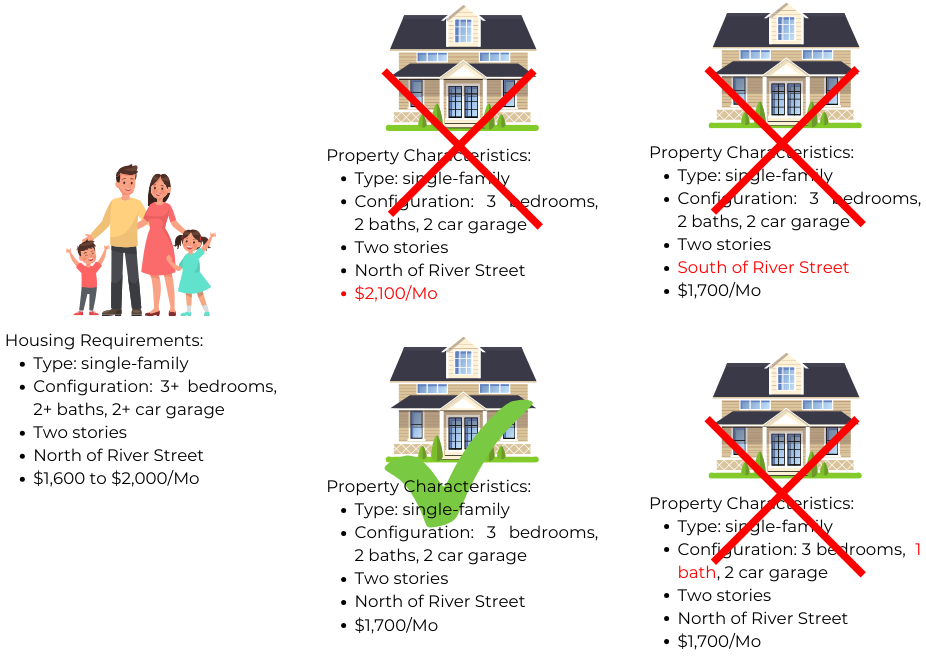
    You can leverage the housing requirements of a specific segment to attract tenants from your target segment.

    Start by identifying a tenant segment with a high percentage of reliable tenants. You can identify what properties this tenant segment rents, and where they rent them, by asking multiple experienced property managers a question like this: "If you wanted to buy rental properties that attract tenants who stay many years, pay rent on schedule, and take good care of the property, what properties would you buy?"

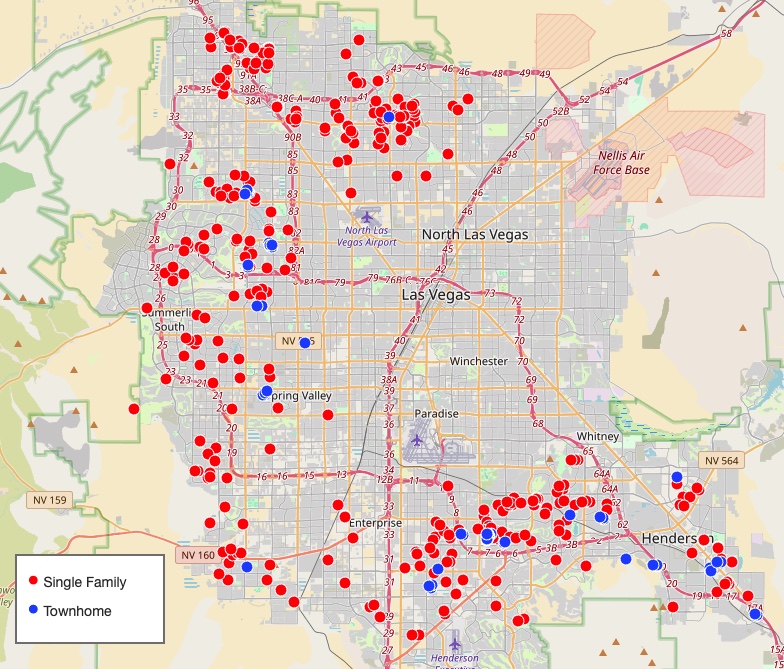
    Here's what I did: I asked about 15 property managers the same question, and 13 of them described the same properties. Once you know what properties and where they're located, you can build what I call a "property profile"—a physical description of properties that this tenant segment is willing and able to rent. For example, below is part of the property profile for the tenant segment we’ve targeted for over 17 years.

    • Type: Single-family and select townhomes
    • Configuration: 3+ bedrooms, 2+ baths, 2+ car garages, 1,100 to 2,400 SF, one or two stories, lot size 3,000 SF to 6,000 SF.
    • Rent range: $1,900/Mo to $2,300/Mo (Current numbers)
    • Location: See the map below

    Once you have a property profile for the tenant segment you want to occupy your rental property, you can hand it to any realtor who can find conforming properties. Instead of evaluating hundreds of properties based on opinions, you'll only need to evaluate a small set that will attract the segment with a high concentration of reliable tenants. The critical information you need to evaluate a property is the rent range and time to rent.

    Reliable Information

    Zillow, Rentometer, and other online sources do not provide sufficiently accurate information to be useful. Online sites calculate the average rent per square foot ($/SF) for an area based on the number of bedrooms. When you enter the address of a property along with the number of bedrooms and baths, Rentometer (and others) calculates the rent by multiplying the average area price per square foot by the subject property's square footage. Below is an example of Rentometer's failures.

    Rentometer predicts $1,900 to $2,200/Mo for this property. Would you expect this property to rent for the same amount as a similar property in good condition?
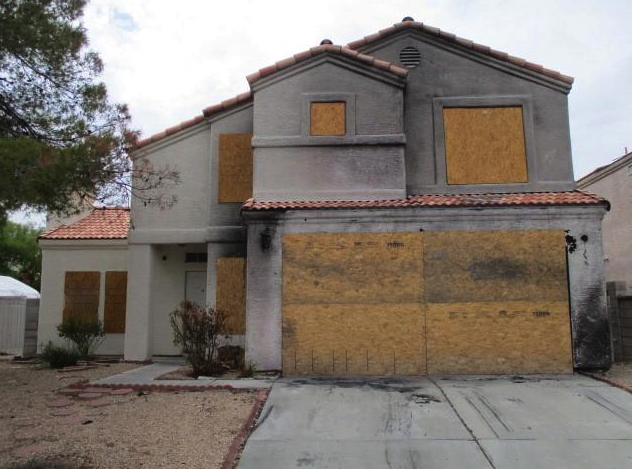
    You need to understand how a good property manager estimates rent. Property managers focus primarily on current market competition rather than just looking at rental history. For example, even if similar properties, in similar conditions, previously rented for $2,300/Mo, your property will likely rent for around $2,000/Mo when comparable/competing properties are currently listed between $1,950/Mo and $2,050/Mo. What matters most is the current market conditions, not the historical data that websites like Rentometer base their estimates.

    Everything you learn from podcasts, websites, books, and seminars provides only general information. When investing, you'll be purchasing a specific property in a specific condition and location, subject to specific local rules and regulations. The only reliable source for all the detailed information and resources you need to succeed is an experienced investment team.

    If you like, I can provide the process and interview questions for finding and vetting an investment team.

    Summary

    Instead of hoping to find a "good" property, turn the process around. Start by identifying a tenant segment with a high concentration of reliable people. Create a property profile based on what and where they are renting today. Work with an experienced investment team to select conforming properties. Have your team provide the information you need to make an informed decision.

    FERNWOOD Team, KW VIP Realty520 Reviews
  • Member since 2025 · 5 posts · 2 votes
    1y

    Hello @Eric Fernwood,

    Thanks for sharing your perspective—it's always helpful to hear different takes on the tools out there. I wanted to clarify how Rentometer works, as there’s a common misconception around how our rent estimates are calculated.

    Rentometer does not use a simple price-per-square-foot formula. Instead, it draws from a proprietary database of tens of millions of rent records—updated daily from public and verified sources. When you enter a property address, Rentometer pulls actual, nearby rental comps based on location, bedroom count, property type, and how recent the listings are.

    Our estimates reflect what similar rentals are actually going for, using a comps-based approach—much like how an agent or appraiser would evaluate a property. We’re not trying to “predict” rent for a single property, but rather provide a snapshot of the hyperlocal market to support better pricing decisions.

    It’s especially useful for investors, landlords, and property managers who want a data-driven starting point. Of course, no tool replaces on-the-ground research, but our goal is to put quality data in the hands of local experts like yourself.

    Appreciate the discussion and hope this clears things up!

    Best,

    Isabelle

Join the conversationCreate a free account to reply, vote on answers and follow this thread.